Born into a legacy of civil rights activism on the Mississippi Gulf Coast, June Reddix-Stennis reflects on art as testimony, the weight of purpose, a palette rooted in the land of her ancestors, and how she protects her portraits of Black women from the market they resist.
AMM: You were born into a legacy of civil rights activism, delivered by Dr. Gilbert Mason and enrolled in the Jr. NAACP at six. When a life begins inside a movement, how much of what you call your own conviction was chosen, and how much inherited? Is there a version of June who could have made art with no cause attached?
June Reddix-Stennis: I was delivered into this world by Dr. Gilbert Mason’s hands — a man who stood in the water at Biloxi until the law had to look at him. At six I joined the Jr. NAACP, and at six I won a state art competition. But six was also the year I was called a nigger on the first day of first grade, riding a new bus with my sisters. Nobody would let us sit down. My older sisters had to fight for a seat. That day I realized how Black I was, and how unsafe that made me.
I stopped talking after that — they sent me to speech therapy. And I started drawing and painting. Art was the first place I could say anything.
So was the conviction inherited or chosen? The fire was inherited, the vessel was chosen. Nobody handed me a paintbrush and said “use this” — the movement was given, but the painting had to be decided, again and again, for a lifetime. My cousin Mary Lovelace O’Neal painted a whole life of conviction before me, and I inherited her questions too.
Is there a version of June who could have made art with no cause attached? I don’t believe she exists. My art was never a way out of the world. It was always a way of testifying about it.
AMM: You write that “emotions evoke movements, and movements evoke change,” and you watch gallery visitors to see how they react to your work. What do you feel when a viewer is moved but changes nothing, or when someone walks past without stopping? Do you measure your art by how it feels or by what it accomplishes, and which of the two do you fear failing at more?
J.R-S. I stand in galleries and people-watch — I watch strangers meet my work the way you’d watch a first meeting. I hope for viewers who are open emotionally. I believe that. Emotions evoke movements, and movements evoke change. Feeling is the seed; change without it is just performance.
So when someone is moved and changes nothing, I don’t count that a failure. Seeds take their own time. When someone walks past without stopping, I don’t chase them either. The work waits. Not everything is for everybody, and a painting doesn’t beg.
Which do I fear failing at more? The change. Feeling without change is just decoration — and I didn’t come out of a movement to make decoration. My grandmother was blind and she knew me by touch; she taught me that feeling is a kind of knowing. I measure by the feeling because that’s the part I can give honestly. But I fear failing the change, because that’s the whole reason the feeling matters.
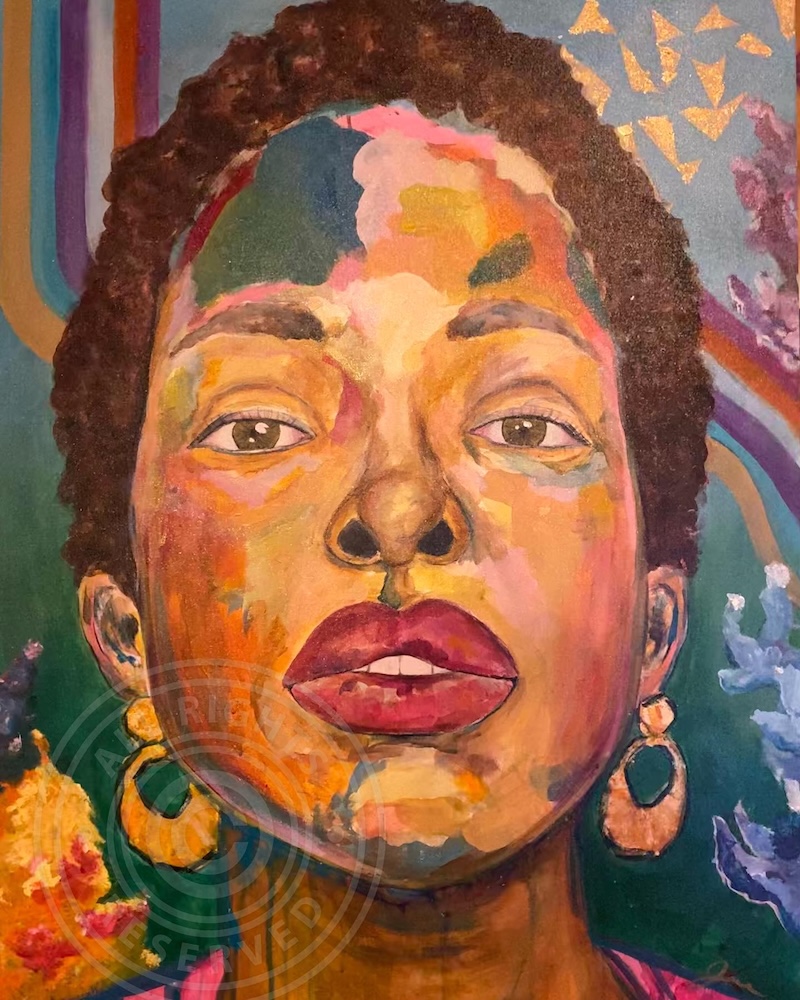
Acrylic with gold leaf on canvas, 30 × 40 in
AMM: Your bio says art “remained your solace” through diverse careers, and that an injury in 2010 reignited your fervor and gave your craft a “renewed lens of purpose.” Did purpose arrive as a gift or as a weight? Was there a time when art was simply yours, before it was asked to advocate, and do you miss it?
J.R-S. Both. That’s the honest answer. In 2010 an injury took the body I had been counting on, and the years after it gave me back my hands as an artist’s hands. Purpose arrived like a tide — it lifted the boat and it also changed the shoreline. It was a gift that came with weight, and I’ve been carrying both ever since.
Was there a time when art was simply mine? Yes. The little girl who drew for the pure joy of it. That ended in high school, the day I read an article about apartheid, Sun City, and Nelson Mandela. I don’t remember making anything weightless after that. Even as a graphic designer coming home from a long day — art as solace, my own hands, my own hours — the weight was there too. Some days I miss the lightness of that little girl.
But I wouldn’t trade the purpose. The weight is what keeps me honest. It won’t let me make anything empty. The injury took something from me and returned it as meaning, and I have decided to call that a fair exchange.
AMM: You say your subjects are “simple and uncomplicated,” while your palette “tells me something different.” Who is speaking when the color overrides the subject: the artist who plans, or someone in you that you do not fully control? What does the palette know that you have not yet put into words?
J.R-S. My subjects are simple — a face, a vessel, an ordinary human presence. But the palette has never been simple, and it has never asked my permission. The artist who plans sets the table. Someone older in me decides the feast.
My hands learned color before my mouth learned words: the clay of the Gulf shoreline, earth pigments, indigo, the red dirt of a Vancleave farm. My palette knows the land I come from. It knows what my grandmother’s Mississippi looked like before I had language for it. When color overrides the subject, that’s the palette remembering something I haven’t caught up to yet.
What does it know that I haven’t put into words? I think it’s still trying to tell me something about home — about belonging to a place that has held my people since emancipation. When I finally understand it, that will be the next body of work. Until then, I let the color lead.
AMM: You describe your work as challenging the commodified portrayal of Black femininity, and you do so through portraits, gold leaf, and pieces that hang on gallery walls, which are themselves spaces of display and sale. How do you keep your images from being consumed in the very way they protest? Have you ever felt a portrait slipping out of your hands and being absorbed into the market you are trying to resist?
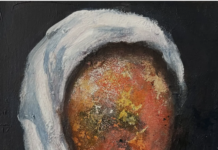
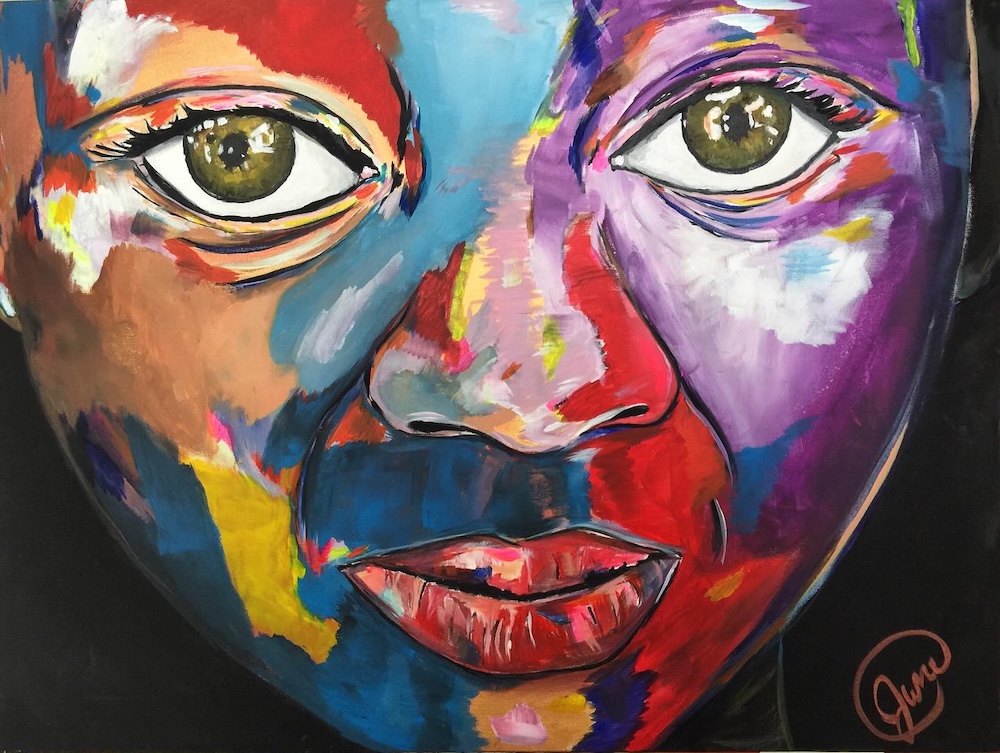
J.R-S. My portraits don’t pose. They confront. That’s the first defense — a face that looks back at you can’t be consumed the way an image can be used. I paint Black women the way churches gild what they refuse to let be ordinary: the gold leaf isn’t decoration, it’s consecration.
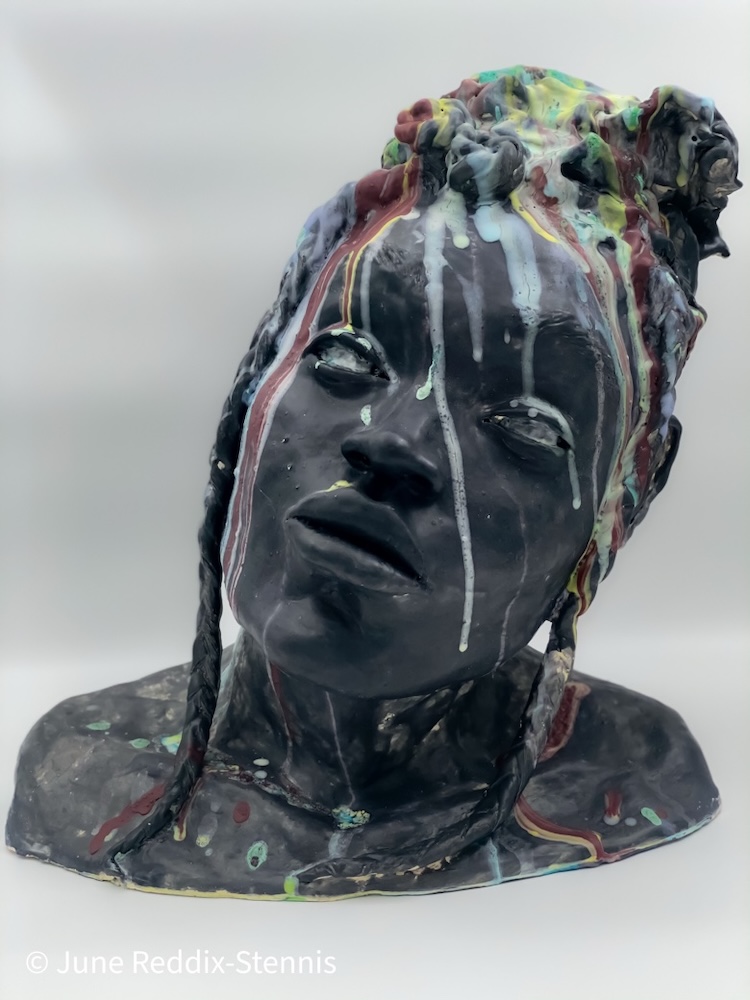
And I paint them for us. The work answers to my people before it answers to a buyer — the market can hang it on a wall, but it can’t change who it was made for. That address is baked in. The clay comes from the Gulf shoreline, by my own hands. The pigments are earth I know. A buyer can own the object; they can’t own the process, the lineage, or the prayer it was made under.
Have I felt a portrait slipping out of my hands? Yes — I’ve felt a portrait being admired in a way that wanted to own it rather than know it. The guard against it is my own hand on the work and my knowledge of who it’s for. A portrait can only slip out of your hands if you were holding it loosely. I hold mine.
Right now I am not selling my work. I am building bodies of work and showing them. That is a choice, and it is also a discipline: the market can only absorb what you agree to release.
Siguiente paso recomendado: Antes de publicarla en Art Miami Magazine, conviene revisar únicamente la ortografía y puntuación, manteniendo intacta la voz y el significado de las respuestas de June.