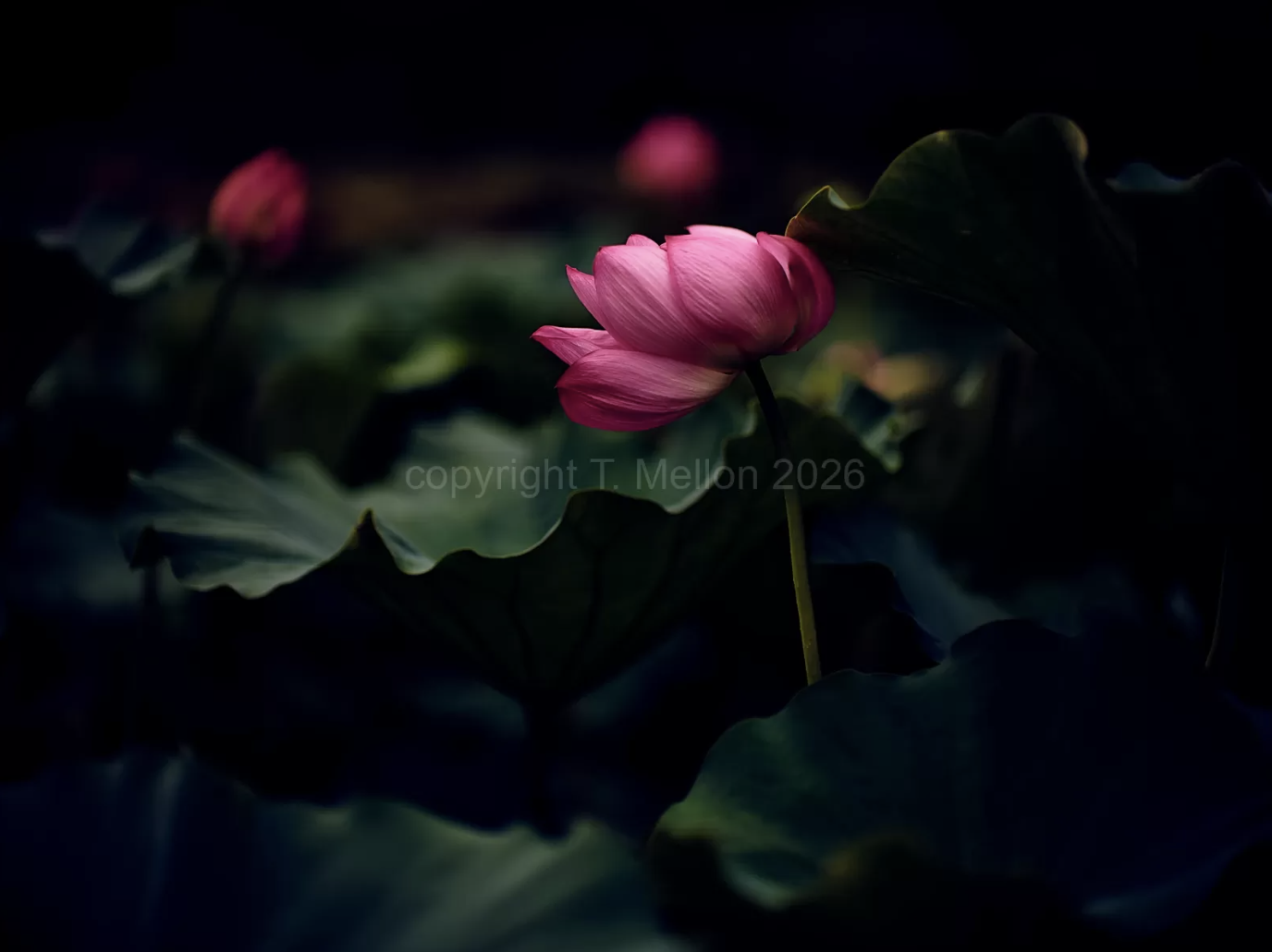
Based in West Tokyo since arriving just ten days after the 2011 tsunami and nuclear crisis, photographer Todd Mellon reflects on a childlike sense of wonder, the resilience of nature, the pursuit of pure light, and why some of Japan’s most beautiful places are better kept hidden.
El título parte de la historia más memorable de la entrevista: las estrellas sobre un Tokio a oscuras tras el terremoto, y la niña que las recordaba años después. Esa anécdota resume cómo mira el mundo.
Si prefieres un título que destaque su forma de explorar Japón, puedes usar “Todd Mellon: A Treasure Hunt Through Hidden Japan”.
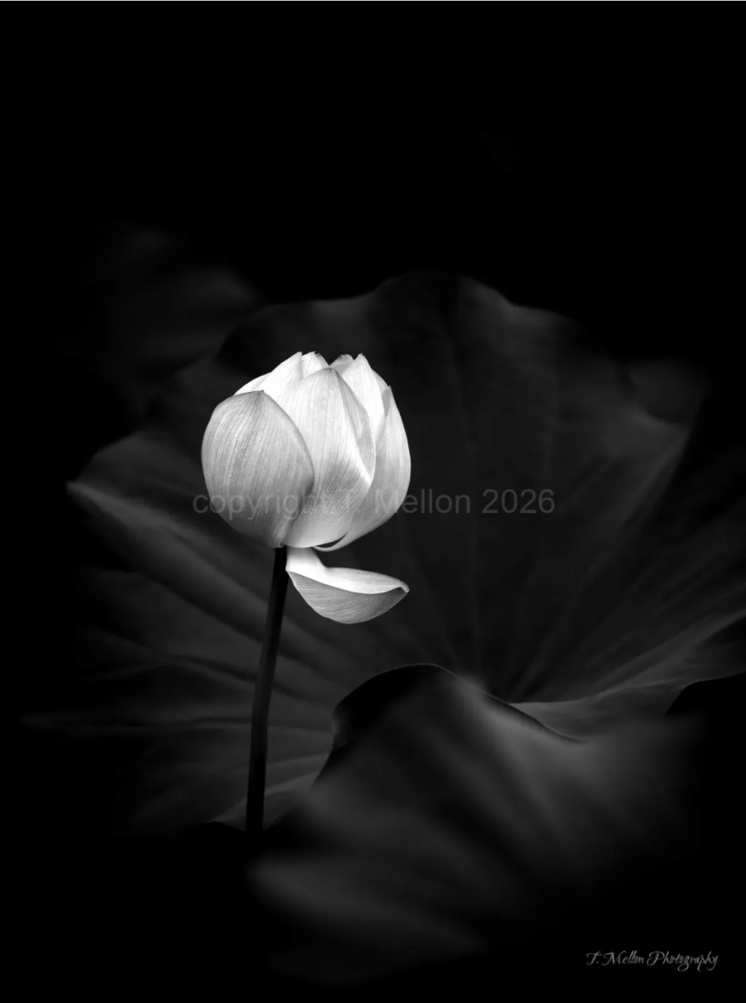
AMM: You describe yourself as a child still running through the forest, searching for the hidden beauty that shaped your earliest memories. Has photography allowed you to preserve that childhood sense of wonder, or has it become a way of resisting the inevitable loss of innocence that comes with growing older?
Todd Mellon: Truthfully with or without a camera it has always been in my nature to explore. Looking for the unknown, whether it’s wandering away from a train station to explore a new neighborhood, meandering through streets to find an interesting temple I saw from afar, or finding new paths through nature while looking for an epic new vantage point.
Sometimes it’s planned but often it is on a whim, and anytime I find myself settling into a routine, I gently force myself to explore somewhere I am unfamiliar with. Even before coming to Japan this was my subconcience reality. It’s that child like sense of wonder that keeps me wanting to explore, wanting to find, almost like a treasure hunt.
That’s just sorta been me all of my life, and I’ve been a strong believer that the loss of innocence is not inevitable. An active choice has to be made to never lose it, or I guess for those that feel they have lost it, they have to make a strong drive to get back to it. I am lucky in that I truly never walked away from, but embraced it always and fiercely defend it.
AMM: Your arrival in Japan, just ten days after the 2011 tsunami and nuclear crisis, placed you in a landscape marked by uncertainty and destruction. Did that experience change your understanding of beauty and impermanence? When you photograph nature today, are you seeking its extraordinary beauty, or confronting the awareness that everything you capture is temporary?
T.M.: Ahh, well, there is no short answer here, cause this was a huge thing obviously for Japan, and for me as I was knowingly stepping into a place where three Nuclear Reactors had just melted down. In regards to Nature, it was quite the opposite.
I was basically glued to the news for months upon arrival, because the nuclear disaster along with rescue attemps were still ongoing with both heart breaking and heart touching stories. Along with this massive aftershocks, often in the 7.0 magnitude range were occuring pretty much daily for months. It was surreal to say the least.
However, as people were evacuated from towns where the radiation levels were deemed unsafe, nature remained, and quickly wildlife took over these towns, so that painted a very permanent image of nature in my head, I looked at Chernobyl and saw what happened there was very similar. Wildlife reclaimed what we abandoned. Of course it’s not great that they are living in a radiated zone, but in 100 years their descendants will be fine, and who knows maybe have some genetic advantages as a result.
The real impermanence aspect, and what I was scrambling to capture in my early years in Japan, was the city life. You have to understand, when I arrived there was nuclear fallout. No one wants to talk about it or admit it, but there was yellow powder sometimes dusting outdoor shop displays. The media tried to say it was Dust from the Yellow Desert in China, which is a real thing that does happen, and I have seen since, but this was very different. I dabled in science a kid, and this was very much like a chemical powder, not dust blown in from the desert.
I even touched some once on accident once while looking at some ceremic tea sets, and quickly washed my hands after I realized what it must be.. but this combined with nuclear reactors that contiued to melt through the earth and no sign of anyone being able to contain the situation, well I saw a real possibility that Tokyo may be abandoned and become the planets largest ghost town. This may seem like crazy talk today, but this was a real discussion at the time.
Actually when I arrived in Japan I took the bus from Narita to where I live which is far west Tokyo, and because it takes several hours and I arrived just before sunset, it got fully dark while I was still in Tokyo. Beyond the Fukushima disaster other reactors had shut down because of safety concerns, and to save Electricity All of Tokyo and Yokohama had been asked to keep the lights off which being Japan Everyone complied with.
Being on a bus which was traveling on highways looking down on the city, it already looked like a massive ghost city with only a stray emergency light here or there. I saw a massive flame coming out of a gasworks which was obviously working at peak capacity to try to fuel the need for energy, and at one point I looked up and I saw stars, not just a few, but something akin to being in the middle of the desert or atop a mountain with no light pollution.
Remember, Japan is in the middle of the pacific ocean. I realized this was something that probably hadn’t happened in more than half a century or and it felt to me like an honor to witness.
A side story on this, my first paid work in Japan was as an English teacher and it’s still something I do today. For the first few years after arriving, I used to ask all of my students, most who were very young if they remembered when the lights were out in Tokyo after the big earthquake (all of them remembered) and then I would ask if anyone looked up at the sky and saw the stars.
For the first 2 years none had said they had seen the stars, and then one day in a class with just two students I asked them both if they had seen the stars, one girl quickly shook her head no, and the other had a momentary deep gaze like someone trying to recall a memory, and then almost instantly the lights in her eyes turned on, as her eyes got very big as she exclaimed “I did! It was Amazing!!”
She was a quite small girl and her excitement caught the other girl off guard, who then asked in in Japanese what she has seen, and the girl responded in Japanese telling her in detail about the amazing stars filling the sky. I didn’t understand Japanese at all at that time, but it was very clear what she was describing, and I could literally see the stars in her eyes as she described them to her friend.
She would have only been 3 or 4 when she saw the stars but it left such an impression on her that the memory was perfectly preserved. I asked her if she had told her parents, and she said no. She was looking out her bedroom window at bedtime and didn’t tell anyone.
I often wonder if I had not asked her if the memory if the memory would have vanished, and I am very hopeful that it remains for her today. Perhaps inadvertently with this story I have given a hint into the way I see the beauty of this world.
I knew full well the beauty she had seen because I have been fortunate to see the stars from the high desert of Oregon, and the top of Haleakala. Seeing a young girl who may otherwise have never seen stars in such a pure state brought me pure joy, and when I capture images of the pure beauty I see in nature or elsewhere, I want to share this.
I don’t know how to put into words the beauty of stars in a little girls eyes as she recalls this amazing moment in her life, but with a camera I can share as best I can the beautiful moments I see in my life with those who may not otherwise be able to see moments like these. I am able bodied, live in an amazing place, and through trial and error have learned to take photos which I think are beautiful and I am fairly confident others must too.
I will never be a hipsters artist, but I hope my works like the memory of stars over Tokyo in that little girls heart remain as timeless beauty.
AMM: You pursue the most faithful representation of light, even capturing details that remain almost invisible to the human eye. Yet photography inevitably transforms reality through the choices of the person behind the camera. Does your pursuit of visual truth bring you closer to understanding the world, or does it reveal how deeply your own memories and desires shape what you consider real?
T.M.: A little of both perhaps. Honestly, this is the type of question I struggle the most with, because it is such and abstract thing for me, a feeling based mostly on in the moment light, color, the current state of existence of the subject, whether that’s the Ocean, a Snow Monkey, or even with my Kimono portrait photography.
I think definitely who I am as a person (My memories and desires if you will) shape how I see, and what I capture, but what I consider real feels so abstract and intangible to me, cause that’s simply not the way my mind is geared.
It’s also one of the struggles I have as an artist in the sense that I fully understand that people want a story behind the image, and of course every moment in this universe has a story, but I am very much in the “Art is in the eye of the beholder” camp, and honestly, I want people to react to my photos with raw feeling, and I worry that attempts to define the image with artistic intent and emotional word play will either fall flat, or at worse detract from the purity of the image.
That may sound a bit egocentric, but it’s my honest feeling/concern especially in the social media look at me frenzy cycle we find our selves in. Honestly though if I could be Artist X and simply put my works out there without any recognition or words, and somehow magically survive, I fully would. I really just want to share the beauty I see at the end of the day.
AMM: You are drawn to remote landscapes, extreme weather, and overlooked places that demand patience and physical endurance. What drives you toward environments where nature remains indifferent to human intentions? Is this search an expression of freedom, a desire to escape the ordinary, or an attempt to encounter something within yourself that everyday life keeps hidden?
T.M.: This one is easy. Nature is my home, and it’s where I am most comfortable. It’s like vitamins for me, if I am away too long I feel like my battery has been drained. The more extreme the weather the more powerful the charge.
I am not a thrill seeker looking for danger, but I grew up north of Seattle where 200ft trees fall on homes and cars during the extreme wind storms, I also lived in Alaska for 6 6 months (3 winter) as a child, spent 8 weeks in the death valley area, and dealt with very humid summers in Mexico and Hawaii, so my comfort level for the extreme is probably higher than most.
As for endurance and patience, they are adjacent in that some of the best places demand patience to get to and in turn endurance. Japan has allot of steep terrain, a lot of stairs, but also allot of accessibility if your willing to put in the many thousands of steps.
I used to struggle with patience when doing long exposure photography or the ocassional time lapse, especially when I was still honing my skill, as waiting 30 mins just to find out the shot is over or underexposed was a bit stressful, especially if I was trying to capture a specific time of day or night sky that is not going to be there for long.
But a combination of increased skill, and finding my balance to enjoy once again where I am regardless if the photo is a masterpiece or not has put those feelings in check.
AMM: You create large-scale photographs intended to reveal new details over months or years, inviting viewers into spaces you once experienced in solitude. Is there a contradiction between your desire to preserve the intimacy of these hidden places and your need to share them with the world? What happens to the meaning of a secret once it becomes an artwork?
T.M.: Yes, absolutely. There is a reason I don’t announce my location with a megaphone on social media.
With the Snow Monkeys, most people know that location and I know it gets more eyes on my work if I put the name in the title.. but most places I go even most Japanese don’t know unless they live in the area, so I simply say things like “Hidden Sea” “West Tokyo Botanical Garden”, because no one wins when places become overrun with tourists.
The wonderful truth I am trying to slowly expose about Japan is that you can plop down in literally any town or on any little trail in Japan, and simply start walking and find wonderful treasures for the eyes and soul just my meandering aimlessly, and that’s basically what I have done for more than 15 years.
It’s why I have galleries and a massive backlog of images that simply don’t get seen on social media. But people don’t need to copy my experience or anyone elses to enjoy Japan, and the sooner they stop going to the same temple in Tokyo or Kyoto that everyone has seen a million times on social media, the sooner they can find the real Japan, not just tourist traps.
The same goes for anywhere in the world in my humble opinion. Some places of course you need to be a bit careful going off the beaten path, but Japan as a whole is very safe and people being here for 10’s of thousands of years (at the very least) means endless paths to explore and mysterious history galore.