With nearly 100 works from Berlin’s Museum Berggruen and the Berggruen family collection, Pérez Art Museum Miami presents an extraordinary encounter with modernism—one that celebrates artistic innovation, the intimacy of collecting, and the enduring power of seeing the world differently.
Some exhibitions invite admiration; others remind us why we fell in love with art in the first place.
Picasso–Klee–Matisse: Masterpieces from the Museum Berggruen, on view at Pérez Art Museum Miami (PAMM) through February 28, 2027, belongs unmistakably to the latter.
For me, it is PAMM’s most compelling exhibition of 2026: an exceptional gathering of artworks that invites both intellectual curiosity and emotional connection. There is something profoundly moving about encountering these artists together, witnessing how dramatically they transformed the possibilities of color, composition, perspective, and the human figure.
Yet the exhibition’s achievement extends beyond the extraordinary names in its title. It reveals modernism not as a succession of isolated artistic revolutions, but as a continuing conversation between artists, cultures, places, and generations.
Organized by Museum Berggruen in Berlin and PAMM, and co-curated by Natalie Zimmer and Maritza M. Lacayo, the exhibition occupies PAMM’s largest galleries. Rather than arranging the works chronologically or separating them by artist, the curators explore shared artistic concerns through still life, portraiture, interiors, and landscape.
The result is a presentation that feels remarkably intimate despite its historical magnitude.
A Collector’s Eye, a Personal Legacy
At the heart of the exhibition is Heinz Berggruen (1914–2007), the German-born art dealer and collector whose discerning vision shaped one of the world’s most distinguished collections of twentieth-century modern art.
Born in Berlin, Berggruen fled Nazi Germany in 1936 and eventually settled in Paris, where his relationships with artists and his passion for modernism defined his life.
Over more than four decades, he assembled an extraordinary collection that included Pablo Picasso, Paul Klee, Henri Matisse, Georges Braque, Paul Cézanne, and Alberto Giacometti.
What makes his legacy especially fascinating is that he built his collection from personal convictions and relationships rather than a desire to simply accumulate celebrated names.
His gallery also became a place of artistic exchange. Through a series of beautifully conceived exhibition publications known as plaquettes, Berggruen extended his enthusiasm for art beyond the gallery walls, introducing audiences to artists and ideas through print.
These modest publications, included in the exhibition, offer a revealing counterpoint to the masterpieces surrounding them. They remind us that collecting can be an act of curiosity, scholarship, friendship, and devotion.
Berggruen collected with an understanding that art was not merely something to possess, but something to live with.
The Radical Transformation of the Ordinary
One of the exhibition’s greatest pleasures is discovering how ordinary subjects became the foundation for extraordinary artistic experimentation.
In the still-life section, objects traditionally associated with domestic life—fruit, bottles, newspapers, and tables—become opportunities to reconsider how painting represents reality.
Paul Cézanne’s Étude de pomme (ca. 1885) demonstrates the artist’s fascination with structure and the relationships between objects.
His investigations into form influenced generations of artists, particularly Georges Braque and Picasso, whose development of Cubism fundamentally challenged the conventions of perspective.
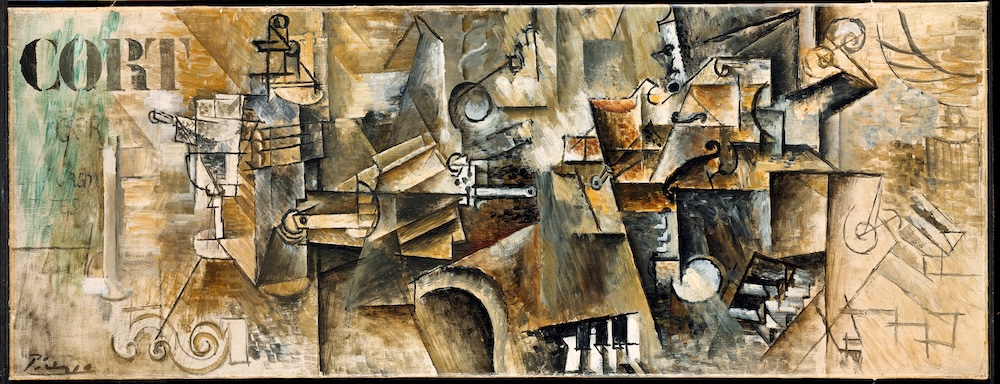
Braque’s Nature morte au verre et au journal (Le Guéridon) (1913) transforms recognizable objects into interlocking planes, encouraging viewers to reconstruct familiar forms through their own acts of perception.
Cubism’s remarkable achievement was not simply to fracture reality, but to suggest that a painting could contain several ways of seeing at once.
This sense of artistic discovery carries throughout the exhibition. Works created more than a century ago retain an astonishing freshness, reminding us that the questions these artists posed remain relevant to contemporary visual culture.
Picasso and the Emotional Architecture of Portraiture
Picasso’s presence is particularly captivating.
His Portrait de Jaume Sabartés (1904), painted near the conclusion of his Blue Period, offers an unusually tender encounter with the artist’s early work.
The restrained blue palette, melancholy expression, and psychological sensitivity reveal a Picasso deeply concerned with his subject’s emotional presence.
Sabartés was not merely a sitter. He was Picasso’s friend and would later become his secretary and biographer. This relationship adds another dimension to the portrait’s intimacy.
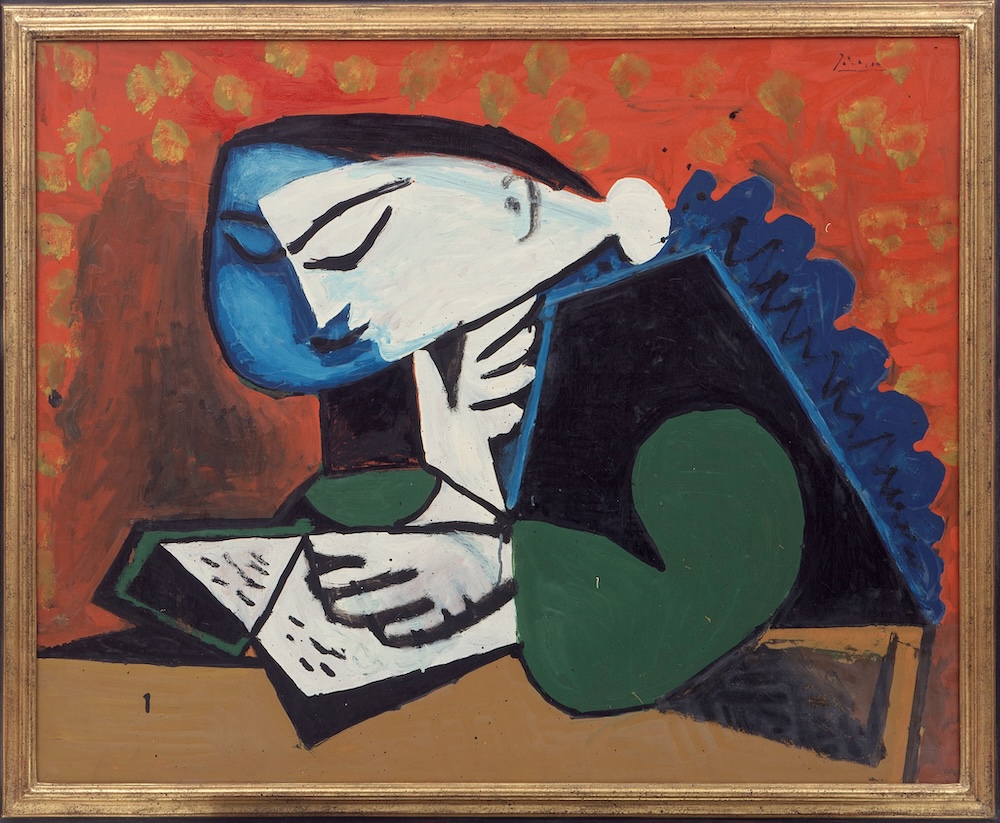
Nearly half a century later, La Lecture (Woman Reading) (1953) reveals a radically different visual vocabulary.
Depicting the painter Françoise Gilot, Picasso transforms the familiar subject of a woman reading through vivid color, flattened forms, and shifting perspectives. Her pale profile suggests a crescent moon, while her doubled features challenge any singular interpretation of her identity.
Within the exhibition’s larger conversation about interior spaces, the painting shows how Picasso repeatedly reinvents traditional subjects.
What I find especially compelling about Picasso is the tension between his technical audacity and the emotional complexity of his subjects.
His paintings may dismantle conventional appearances, but they never entirely abandon the human presence beneath them.
Matisse and the Sensual Intelligence of Color
If Picasso challenges our understanding of form, Henri Matisse reminds us that color has its own emotional language.
His Intérieur d’atelier à Nice (In the Studio in Nice) (1929) offers an intimate view into the artist’s creative environment.
Light enters through tall windows, while furnishings, paintings, and sculptural elements form an intricately organized composition.
The studio is no longer simply a room. It becomes an extension of the artist’s imagination.
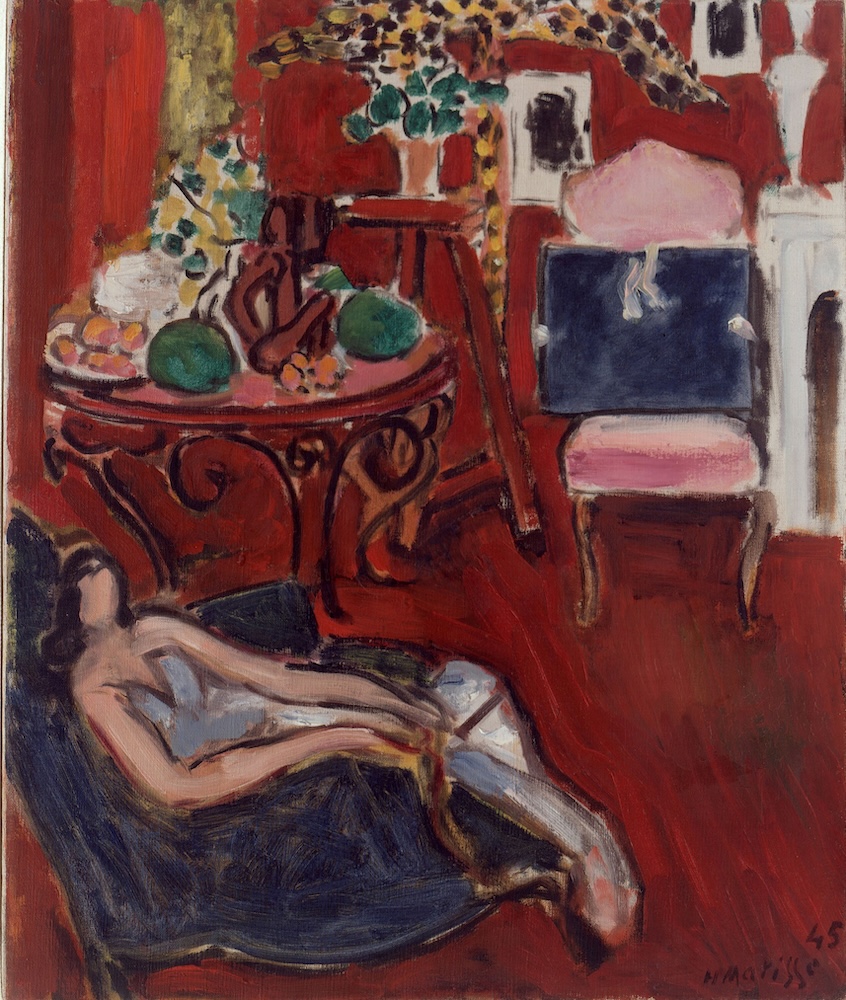
Equally captivating is Le cahier bleu (The Blue Portfolio) (1945), whose richly colored interior brings together a reclining figure, carefully arranged objects, and a striking interplay of red and blue.
Matisse’s extraordinary sensitivity to decorative rhythm transforms the domestic setting into something almost musical.
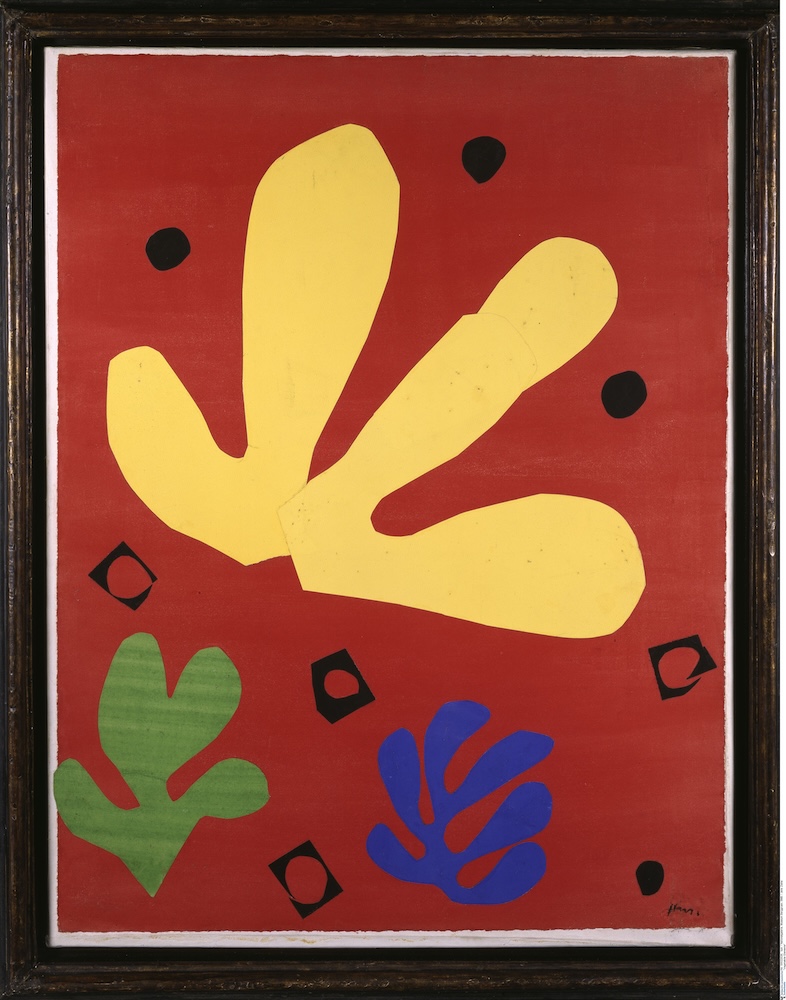
His Éléments végétaux (Vegetal Elements) (1947) moves toward an entirely different form of expression.
Created through the paper cut-out technique Matisse described as painting with scissors, the composition reduces plant-inspired forms to luminous shapes and vibrant color relationships.
This work offers tremendous freedom.
The simplicity of its visual vocabulary conceals the sophistication of its construction, demonstrating how artistic maturity can produce an increasingly direct, joyful language.
Paul Klee: Landscapes of the Imagination
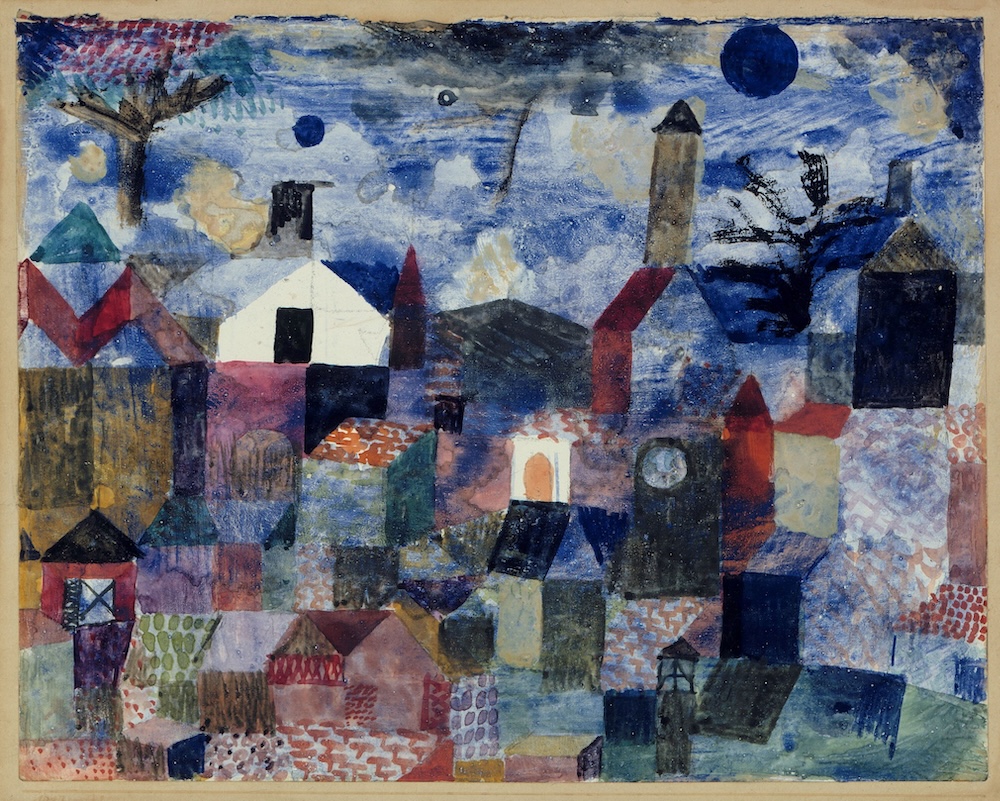
Among the exhibition’s most poetic encounters is Paul Klee’s Landschaft in Blau (Landscape in Blue) (1917).
Created during World War I, the watercolor presents a landscape transformed through subtle gradations of blue, simplified architecture, and an elusive nocturnal atmosphere.
A small village rests beneath a high horizon. The moon appears as a dark circle, while unpainted areas of paper help define the buildings.
Klee transforms the landscape into something suspended between observation and memory.
Unlike traditional representations of nature, his compositions often evoke imagined places, emotional states, and the quiet structures underlying the visible world.
His approach suggests that abstraction need not distance us from experience. It can bring us closer to sensations that conventional representation cannot fully express.
Klee’s visual language shows remarkable tenderness, where geometry and poetry coexist without contradiction.
Modernism Across the Atlantic
One of PAMM’s most significant curatorial contributions is including works from its permanent collection by Latin American modernists.
Diego Rivera’s Naturaleza muerta (1908), Wifredo Lam’s Albarracín (1929), and Joaquín Torres-García’s Mujer con abanico (1924) extend the conversation beyond Europe.
Rivera’s early still life reveals his engagement with Cézanne’s treatment of volume and shadow before he developed the distinctive artistic language for which he later became internationally celebrated.
Lam’s Albarracín, painted during his years in Spain, transforms a mountainous town into intersecting planes and shifting perspectives, reflecting European modernism’s influence while anticipating his own evolving artistic identity.
Torres-García’s Mujer con abanico similarly reveals the intersections between Cubist experimentation, urban experience, and the structural thinking that would characterize his later practice.
Their inclusion is essential.
Modernism was never confined to a single geography. Its innovations traveled through exhibitions, friendships, migration, education, and artistic exchange, continually acquiring new meanings.
In Miami, a city profoundly shaped by these movements of people and ideas, such connections feel particularly resonant.
Rather than merely presenting European masterpieces in South Florida, PAMM encourages us to reconsider modernism as an international history of artistic transformation.
The Enduring Human Presence
Alberto Giacometti adds another dimension to this extraordinary artistic dialogue.
His Grande femme debout III (Tall Woman Standing III) (1960/81) reduces the human figure to an elongated, textured presence.
The sculpture’s attenuated form conveys both fragility and resilience, while its worked surface preserves the physical evidence of the artist’s engagement with his materials.
Where Picasso fractures the body, and Matisse transforms it through color, Giacometti distills the human figure toward an almost elemental state.
Despite their differences, each artist investigates a similar question: how can art express something essential about human existence?
This is ultimately what makes Picasso–Klee–Matisse such an exceptional exhibition.
Beyond its celebrated masterpieces, the presentation reveals artists pursuing deeply individual answers to shared creative questions.
It also honors the discerning vision of a collector who understood that art’s greatest value resides in its capacity to remain meaningful across time.
At PAMM, these works transcend their historical importance. They invite us to look more carefully, reconsider familiar assumptions, and experience the exhilaration of artistic discovery.
For a museum whose identity is closely connected to the cultural crossroads of the Americas, the exhibition represents an extraordinary achievement.
It is not simply a celebration of modern art’s greatest masters. It reminds us that the most enduring works of art never stop teaching us how to see.
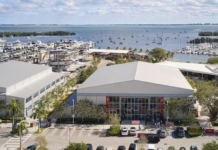
Picasso–Klee–Matisse: Masterpieces from the Museum Berggruen is on view October 29, 2026–February 28, 2027, at Pérez Art Museum Miami, 1103 Biscayne Boulevard, Miami, Florida.
For more information, visit pamm.org.