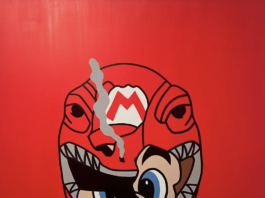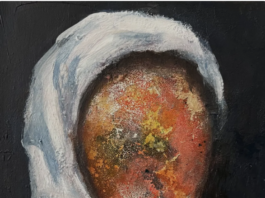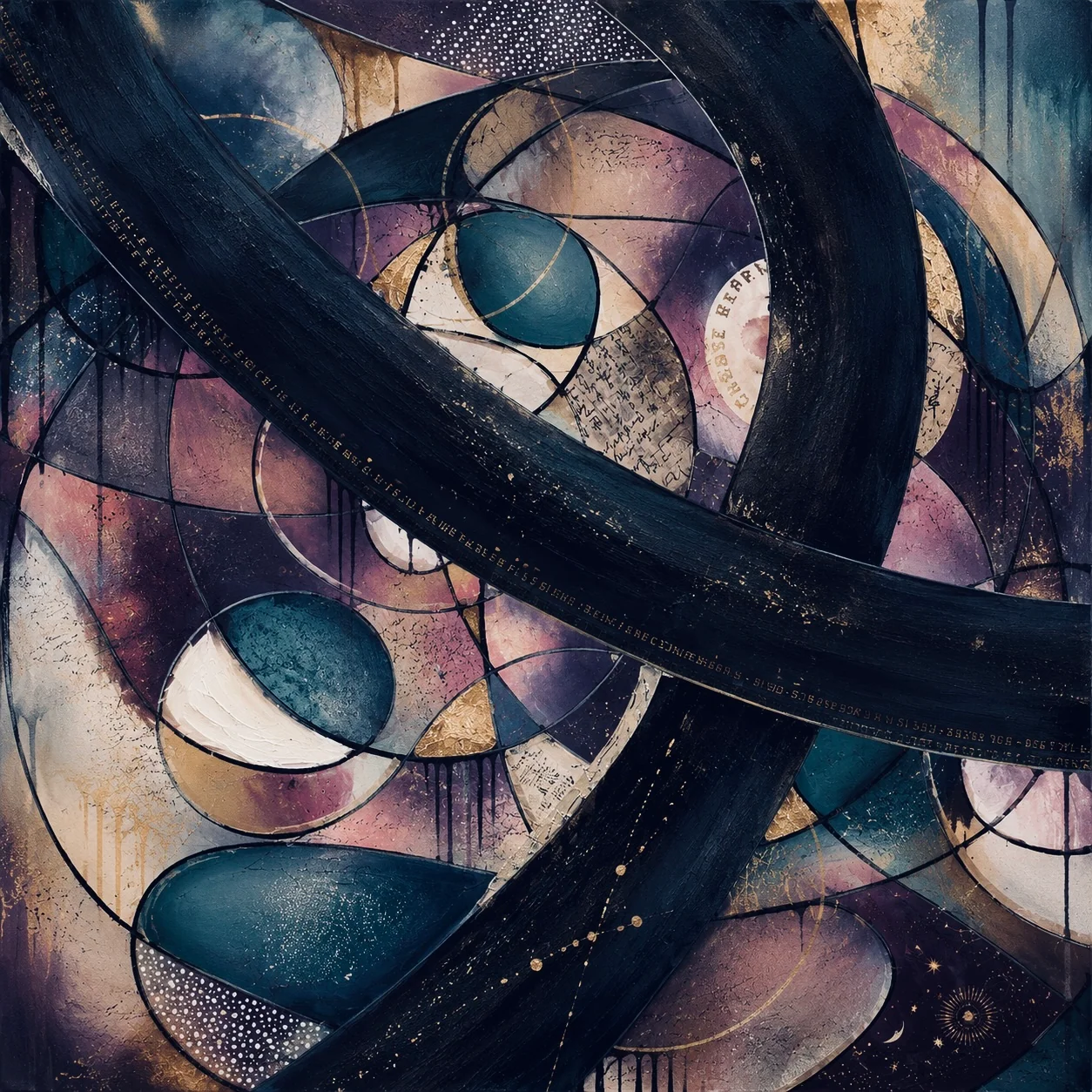
For Lisa Lynn Adams, art is a journey of self-discovery, vulnerability, and liberation. Through her series Bold Becoming, she explores the passage from self-abandonment to self-belonging, challenging the expectations and identities that often obscure our authentic selves. Her paintings become spaces of emotional excavation, where transformation emerges not through the creation of a new identity, but through the rediscovery of what has always existed beneath the surface.
In this interview with Art Miami Magazine, Adams reflects on the relationship between vulnerability and strength, the psychological significance of her creative process, and the tension between personal freedom and society’s relentless pressure for self-improvement. Through layering, carving, and excavation, she approaches painting as a metaphor for removing accumulated expectations, wounds, and social conditioning.
Materials such as mirror glass, crystal, silver leaf, and resin extend this exploration, introducing questions of perception, self-recognition, and the evolving nature of identity. For Adams, the act of seeing oneself is not a singular revelation but a continuous process of rediscovery.
Ultimately, her work challenges the idea that transformation requires becoming someone better. Instead, it proposes a more profound understanding of liberation: the courage to stop performing, embrace imperfection, and return to the self that was always there.
AMM: Your series Bold Becoming moves from “self-abandonment” toward “self-belonging.” What did self-abandonment mean in your own life, and how did you recognize the moment when returning to yourself became more important than continuing to perform the roles expected of you?
Lisa Lynn Adams: Self-abandonment, for me, was the slow art of disappearing inside a life that looked full. I spent years being the strong one — the helper, the giver, the woman who could hold everyone else’s becoming while quietly shelving her own. I performed competence so well that I almost believed it was the same thing as aliveness.
The moment of return wasn’t dramatic. It was quieter than that, and harder: I realized I was exhausted not from doing too much, but from being too little of myself. Performing strength had started to cost more than telling the truth. So I began the long walk back — not toward a new version of me, but toward the one who had been waiting underneath all that usefulness.
AMM: You write that “power lives in vulnerability.” Do you see vulnerability as a source of strength because it reveals the authentic self, or because it forces us to confront the parts of ourselves we would rather keep hidden?
L.L.A.: Both — but if I have to choose the deeper truth, it’s the second one. Revealing the authentic self sounds beautiful, but the real work is standing in front of the parts you’d rather keep hidden and refusing to look away. That’s where the power lives: not in the polished reveal, but in the unguarded moment before it.
Vulnerability isn’t the absence of armor. It’s the decision that you no longer need it. Strength that can’t tremble is just rigidity wearing a costume. The women in my paintings are powerful precisely because something in them has stopped performing invincibility.
AMM: Your process involves layering, carving, and excavating until something emerges. Does this physical act mirror a psychological process for you—one in which identity is not created from nothing, but uncovered beneath accumulated expectations, wounds, and social conditioning?
L.L.A.: Completely. I don’t plan my paintings so much as I follow them — I layer, and then I carve back, scrape away, excavate. And every time, what’s revealed was already there, waiting under the excess.
That’s exactly how I understand identity now. We aren’t blank canvases needing to be filled in. We’re buried ones. The expectations, the wounds, the conditioning — those are the top layers, and they’re real, they happened. But the self isn’t manufactured on top of them. It’s uncovered beneath them. My studio practice taught me that becoming is a subtractive art: you don’t add a self, you remove everything that isn’t one.
AMM: Mirror glass, crystal, silver leaf, and resin all carry symbolic meaning in your work. When a woman “truly sees herself,” as you describe, what do you believe she is actually seeing: an essential self that was always there, or a self that is continuously being created through change?
L.L.A.: The essential self — but I don’t think those two are opposites. I believe there is something in each of us that was whole before the world got its hands on us. Beneath every label, every “should,” every inherited story — wholeness was already there.
But here’s what the mirror glass taught me: seeing isn’t a single event. A woman looks, and looks again, and each time the light hits differently. The self she sees was always there — and she is also always becoming more of who she can see. The crystal doesn’t create the light. It just finally lets it through.
AMM: Your work invites women to let go of fear, reject limiting roles, and imagine more expansive possibilities. As an artist who works with transformation and healing, how do you distinguish genuine self-liberation from the pressure to become yet another “better version” of oneself?
L.L.A.: This is the question I ask myself constantly, because the line is thinner than we’d like. Here’s how I tell them apart: self-improvement says “you’re not enough yet.” Self-liberation says “you were never the problem.”
The “better version” trap is just the old performance wearing spiritual clothing — still striving, still proving, still exhausted. Genuine liberation has rest in it. It doesn’t ask you to become someone else; it gives you permission to stop abandoning who you already are. One is a ladder. The other is a return. I paint the return.