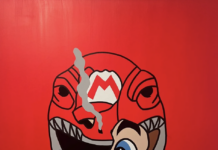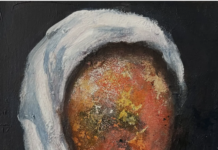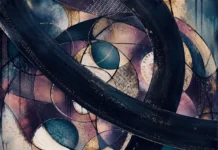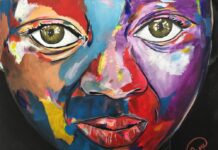
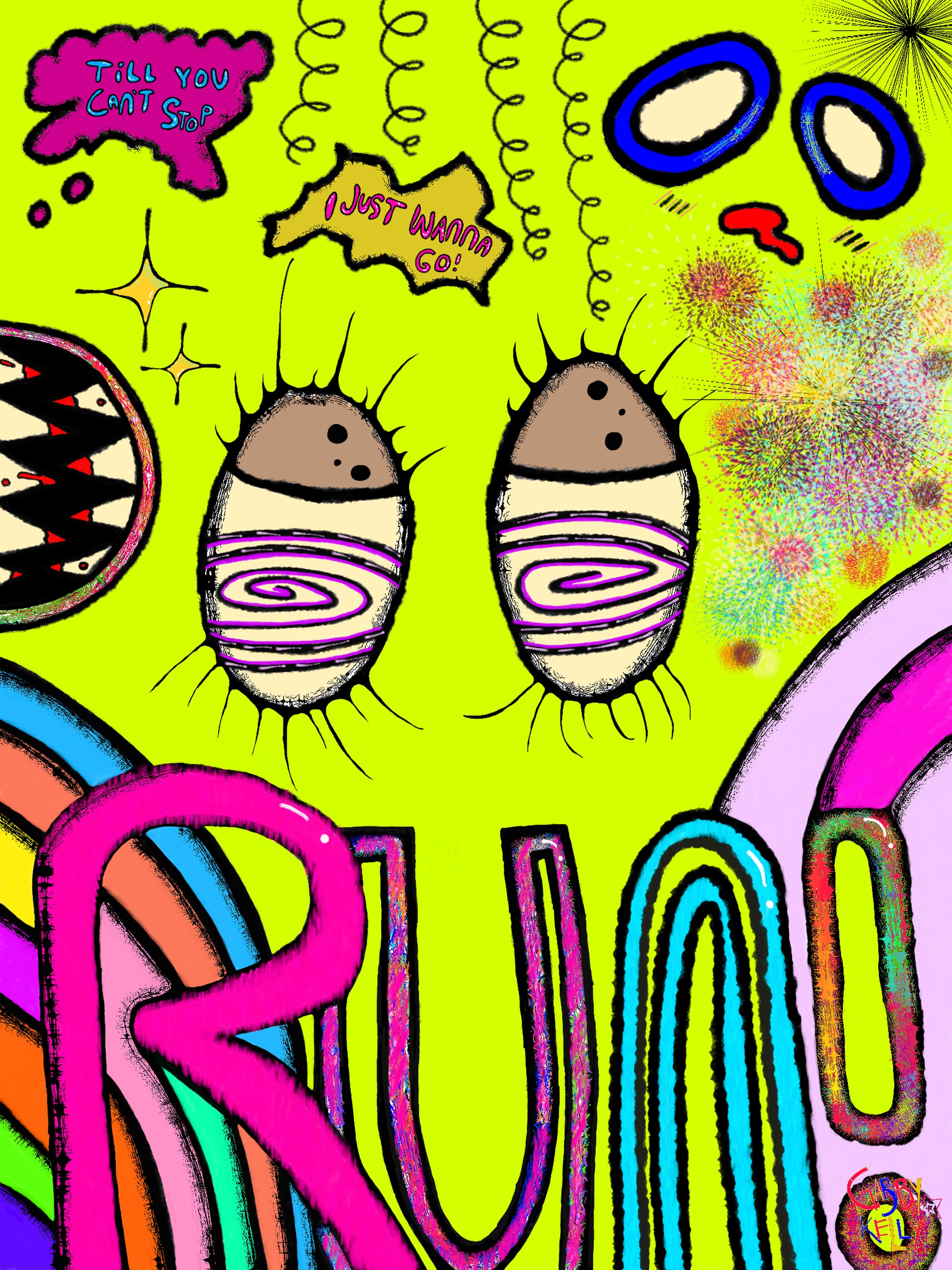
Moving between drawing, animation, and music, Gabby Kelly reflects on living with emotional contradiction, creating without the pressure of perfectionism, protecting the private stories behind her work, and refusing to make herself smaller as she grows older.
El título usa una frase suya que resume su forma de crear: no fuerza el proceso, espera a que la obra llegue. Si prefieres algo más luminoso, puedes usar “Gabby Kelly: As Colorful as Possible”.
Antes de publicarla, revisa algo importante: a la primera respuesta le falta la pregunta. El archivo empieza directamente con “GABBY KELLY: I don’t necessarily see my art as a way of holding on to who I am…”. También conviene cambiar “GABBY KELLY:” por “Gabby Kelly:”, para que siga el mismo formato que las otras entrevistas.
AMM: Your work is deeply connected to youth, memory, and the desire to preserve feelings before they disappear. Do you see your art as a way of holding onto who you are—or as a way of accepting that the person you are now will inevitably change?
GABBY KELLY: I don’t necessarily see my art as a way of holding on to who I am, but rather as a way of making space for whatever I’m experiencing at a particular point in my life. I’m constantly changing, even when I don’t actively acknowledge it or when the change is something I may not necessarily want. I’ve come to understand that change is inevitable. For me, it’s important to allow myself to feel whatever I’m going through emotionally rather than trying to avoid or rush past it. I think experiencing those emotions, even the uncomfortable ones, is what allows me to begin accepting change, even if I never fully understand or come to terms with it. My art gives me a place to sit with those feelings and acknowledge them as they are, without needing to know what comes next.
AMM: You often describe emotions that contain opposites at once—love and sadness, tenderness and uncertainty, brightness and pain. Do you believe contradiction is something to be resolved, or is it actually the most truthful form of emotional experience?
G.K.: I think I’m still so young that I’m trying to find the answer to that question myself. In a way, I’m expressing myself through a kind of naivety, because I’m still learning how to understand my own emotions and the emotions of others. Sometimes, I wonder if everything is even meant to be understood in this lifetime. Emotionally speaking, I think we’re far too complex as human beings to believe that everything is simply black and white. I find myself constantly living in the nuances of things. Even when I think I understand a situation or feel certain enough to pass judgment, there’s always another layer of complexity, especially when it comes to our relationships with other people.
I don’t necessarily think contradiction is something we need to resolve, even if I believed that were possible. Because if we could make sense of everything, where would that leave us room to learn, to grow, or to love? Emotions can be painful, confusing, and sometimes just plain stupid. They can be so difficult to put into words. But I think that’s what makes life beautiful to me. We can feel two completely different things at once and still find truth in both of them. Maybe we don’t always need to understand those contradictions. Maybe we just need to let ourselves experience them.
AMM: Your visual art sometimes expresses what your music cannot fully communicate. When one medium fails to say enough and another takes over, what does that reveal to you about the limits of language, sound, and image—and about the parts of yourself that resist being explained?
G.K.: I don’t believe there should be a limit. Sometimes words just aren’t enough for me. I feel things so deeply that it can be difficult to verbally communicate what’s going on inside my head, so I start drawing, producing, or animating instead. Self-expression has always been a way for me to understand myself and work through whatever hardships I’m experiencing. It allows me to process things that I might not have the words for yet.
I think more people would find peace with themselves if they allowed themselves to create without the pressure of perfectionism. There’s something really beautiful about creating simply because you feel the need to, without worrying about whether what you’re making is good enough or even makes sense to anyone else.
Interestingly, there are times when I can’t draw, write, or produce music. I feel almost mentally empty, like nothing is coming to me. During those periods, I might read something, paint my nails, or do something completely spontaneous. Somehow, I always find my way back to creating. I’ve learned not to rush my feelings or my process. I let myself exist in whatever state I’m in, and eventually, something comes out of it. I don’t always know what that something will look like or what medium it will take. I just feel, and I wait. When it’s ready, I create.
AMM: Much of your work is rooted in personal experiences of longing, vulnerability, femininity, and unconventional love. How do you decide what parts of your inner life are ready to become public, and what parts must remain private in order to preserve something of yourself?
G.K.: This is an interesting question because I’m a pretty private person, especially when it comes to the inspiration behind my work. I try to be as honest with myself as possible, even when what I’m feeling is embarrassing, corny, or almost unbearably vulnerable. I think there’s something important about allowing yourself to feel those things without trying to make them more palatable or pretending they don’t exist.
Releasing my work can be difficult sometimes because, in a sense, I’m exposing a part of myself to the world and opening myself up to whatever feedback or interpretation the public might have. That can be scary. But I still choose to share my work because I love the idea that someone might connect with it, recognize a feeling they’ve experienced themselves, or hopefully find comfort in knowing they aren’t alone.
At the same time, I like to keep the specific inspirations behind my pieces private. Those experiences belong to me, and even though I’m willing to share the emotions that come from them, I don’t necessarily feel the need to explain where every feeling originated. I think there’s a difference between being emotionally vulnerable through your art and giving the world access to every detail of your personal life.
My work often comes from a place of love or from feelings that are incredibly sensitive to me. I want to share those feelings with other people, but I also want to preserve the personal experiences that allowed me to create them in the first place. I can be honest about what I feel without having to tell everyone the entire story behind it. In a way, that part of the experience is something I like to keep for myself.
AMM: You describe your work as an honest representation of your experiences and of the person you are becoming. If your art is documenting that evolution, what are you most afraid you may lose as you grow older—and what part of yourself are you trying to protect through the act of creating?
G.K.: I think the main thing I want to protect as I get older is my ability to give myself the space to feel, to love, and to express myself openly. I spent so much time trying to stop myself from expressing myself in certain ways, and honestly, I was miserable. I don’t ever want to lose that part of myself again. I want to be as colorful as possible. I want to experience life as fully as I can, even when it’s uncomfortable, embarrassing, or difficult to explain.
At the same time, as I get older, I sometimes catch myself worrying that I talk too much, that I feel too much, that I ask too many questions, or that I think too deeply about things. I think a lot, and maybe there’s a subconscious fear that one day I’ll become more reserved or start making myself smaller to make other people more comfortable. I don’t want to do that again. I don’t want to become so concerned with how I’m perceived that I stop allowing myself to be who I am.
I think that’s part of why creating is so important to me. It gives me a place where I don’t have to apologize for the way I feel or justify why something matters to me. I can just exist in it.
At the end of the day, that’s life, isn’t it? I would rather tell someone I love them, or even tell someone how much they’ve hurt me, than spend the rest of my life wondering what would have happened if I had or hadn’t said something. And honestly, who cares? Life is too short to spend it constantly questioning whether you’re too much of something. Especially while I’m young, I want to give myself permission to experience things fully, to say what I feel, to love without being embarrassed by it, and to make things that reflect every strange, beautiful, painful part of being alive.