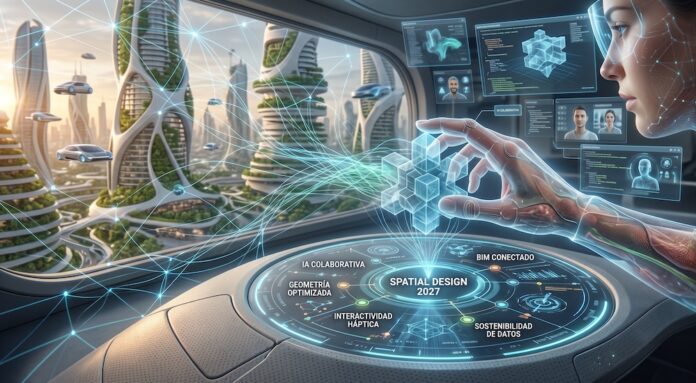
Fundamentos del diseño tridimensional: forma, espacio, estructura y nuevas tecnologías
Del pensamiento escultórico al diseño digital, inmersivo y generativo
El diseño tridimensional comienza mucho antes de que exista un objeto.
Puede comenzar con una línea, una superficie, una intuición espacial, una relación entre llenos y vacíos o simplemente con la pregunta de cómo una forma podría ocupar, transformar o activar el espacio. Diseñar en tres dimensiones significa pensar simultáneamente en forma, volumen, posición, dirección, estructura, materia, escala y experiencia espacial.
Por eso resulta demasiado limitado definir el diseño tridimensional simplemente como una “técnica para construir objetos con altura, anchura y profundidad”. Es, más precisamente, un proceso de organización espacial mediante el cual se conciben y desarrollan formas capaces de existir física o virtualmente y de ser percibidas desde múltiples posiciones.
Wucius Wong convirtió esta problemática en uno de los sistemas pedagógicos más influyentes del diseño moderno. Su libro Principles of Three-Dimensional Design, publicado originalmente en 1977 y posteriormente incorporado a Principles of Form and Design, estudia planos seriados, estructuras de pared, prismas, cilindros, repetición, estructuras poliédricas, planos triangulares, estructuras lineales y líneas interconectadas. La finalidad, según la descripción bibliográfica original, era ayudar al estudiante a pensar escultóricamente mediante el estudio sistemático de líneas, planos y construcciones geométricas.
La edición española, Fundamentos del diseño, publicada por Gustavo Gili en 1995, reunió en un solo volumen sus investigaciones sobre diseño bidimensional, forma bidimensional y diseño tridimensional.
Más de cuatro décadas después de los primeros textos de Wong, estos principios continúan siendo relevantes. Lo que ha cambiado radicalmente son las herramientas con las que podemos explorarlos.
Hoy una forma puede nacer en cartón o madera, pero también dentro de un software CAD, un sistema paramétrico, una simulación, un entorno de realidad virtual o un proceso de fabricación aditiva.
El fundamento sigue siendo el mismo: comprender el espacio antes de intentar dominarlo.
¿Qué es el diseño tridimensional?
Una forma tridimensional posee relaciones mensurables en tres ejes espaciales: anchura, altura y profundidad. Pero esas dimensiones, por sí solas, no constituyen diseño.
Diseñar significa establecer relaciones intencionales entre las partes.
Un objeto puede ser tridimensional sin haber sido diseñado; una piedra posee volumen, por ejemplo. El diseño aparece cuando existe una decisión acerca de su configuración, función, estructura, organización o significado.
La investigación contemporánea sobre educación del diseño también insiste en esta diferencia. Hsieh, Chen y Chen señalan que la enseñanza fundamental del diseño no consiste simplemente en producir formas arbitrarias, sino en desarrollar formas capaces de comunicar la intención de quien diseña.
Por ello, el diseño tridimensional puede aplicarse a numerosos territorios:
arquitectura, escultura, diseño industrial, mobiliario, joyería, instalaciones, escenografía, exhibiciones, espacios interiores, diseño de productos, ambientes digitales, videojuegos, realidad virtual y fabricación computacional.
Lo tridimensional tampoco necesita materializarse inmediatamente. Un modelo digital puede poseer relaciones espaciales tridimensionales aunque todavía no haya sido fabricado.
Esta distinción es especialmente importante en el siglo XXI: diseñar en tres dimensiones y fabricar en tres dimensiones son procesos relacionados, pero no equivalentes.
Del diseño bidimensional al tridimensional
En términos básicos, una composición bidimensional se desarrolla sobre dos dimensiones principales. El diseño tridimensional introduce profundidad física o espacial.
Pero el salto del 2D al 3D no consiste simplemente en añadir una tercera coordenada.
Implica cambiar la manera de pensar.
En una imagen bidimensional podemos controlar lo que el espectador observará dentro de un marco relativamente estable. Una forma tridimensional, en cambio, puede ser rodeada, atravesada, contemplada desde arriba o desde abajo y percibida de maneras diferentes según la distancia, la iluminación y el movimiento del cuerpo.
Por eso la investigación sobre capacidad espacial resulta relevante para el diseño. Revisiones académicas muestran que el razonamiento espacial no es una habilidad única, sino un conjunto complejo de capacidades relacionadas con la visualización, transformación y comprensión de relaciones espaciales; además, estas capacidades pueden desarrollarse mediante entrenamiento.
Diseñar tridimensionalmente supone entonces aprender no solo a dibujar formas, sino a imaginar cómo esas formas existirán en el espacio.
Una corrección importante: vistas ortográficas no son perspectivas
Tradicionalmente se utilizan tres vistas principales para describir muchos objetos:
Vista superior o planta
Muestra el objeto desde arriba.
Vista frontal
Muestra el objeto desde el frente.
Vista lateral
Muestra uno de sus costados.
Sin embargo, técnicamente no deberían llamarse “tres perspectivas básicas”. Son proyecciones o vistas ortográficas.
En la proyección ortográfica, las líneas de visión son paralelas y perpendiculares al plano de proyección. Las vistas frontal, superior y lateral permiten traducir un objeto tridimensional a representaciones bidimensionales mensurables. McGill University señala que normalmente se seleccionan únicamente las vistas necesarias para describir el objeto sin ambigüedad.
La perspectiva, en cambio, representa visualmente la profundidad mediante convergencias hacia puntos de fuga. En ella aparecen conceptos como:
- línea del horizonte;
- punto o puntos de fuga;
- plano del cuadro;
- posición del observador o punto de vista;
- líneas de proyección.
En una perspectiva lineal, líneas paralelas en el espacio pueden aparecer convergiendo hacia puntos de fuga; el sistema busca producir en una superficie bidimensional una experiencia convincente de profundidad.
Por ello, la perspectiva es fundamental para representar el espacio, pero no constituye por sí misma el diseño tridimensional.
Los elementos conceptuales
Wong organiza el pensamiento tridimensional comenzando por cuatro elementos conceptuales:
Punto
El punto indica una posición en el espacio. Conceptualmente no posee longitud, anchura ni profundidad.
Un punto puede señalar, por ejemplo, el encuentro de líneas o la posición de un vértice.
Línea
El desplazamiento conceptual de un punto produce una línea.
La línea tiene longitud y dirección y puede actuar como límite, eje, trayectoria o elemento estructural.
En tres dimensiones una línea deja de pertenecer necesariamente a un único plano: puede atravesar y organizar el espacio.
Plano
Un plano posee longitud y anchura conceptuales, pero no espesor.
Puede dividir, limitar o articular un espacio y convertirse físicamente en una superficie.
Volumen
Cuando los planos delimitan o generan una región tridimensional aparece el volumen.
El volumen puede entenderse tanto como masa positiva como a través del espacio interior que encierra.
Esta genealogía —punto, línea, plano y volumen— constituye una estructura conceptual que Wong utiliza para pasar progresivamente de relaciones abstractas a construcciones tridimensionales.
Los elementos visuales
Cuando los elementos conceptuales adquieren presencia perceptible aparecen los elementos visuales.
Forma
La forma constituye la configuración perceptible del objeto.
No debería reducirse únicamente a su contorno. En tres dimensiones incluye la relación entre superficies, volúmenes, vacíos, orientación y estructura.
Tamaño y escala
Todo objeto posee dimensiones físicas o virtuales, pero su escala surge de la relación con otros cuerpos, objetos, espacios y, especialmente, con el cuerpo humano.
Una escultura de treinta centímetros y una estructura de treinta metros pueden compartir geometría y producir experiencias radicalmente distintas.
Color
El color modifica la percepción de unidad, fragmentación, profundidad, peso y jerarquía.
No es simplemente una decoración aplicada sobre la forma: puede contribuir a organizarla.
Textura
La textura describe las características perceptibles de una superficie.
Puede ser visual, táctil o ambas: lisa, rugosa, reflectante, porosa, translúcida, flexible, pulida, irregular.
En la tradición de enseñanza tridimensional de Rowena Reed Kostellow, línea, plano o superficie, volumen, luz-oscuridad, textura y color aparecen igualmente como componentes fundamentales de la materialización formal.
Elementos de relación: posición, dirección, espacio y gravedad
Una forma nunca existe de manera completamente aislada.
Su significado perceptivo depende de su relación con otras formas y con el espacio que ocupa.
Posición
Indica dónde se encuentra una forma respecto de otras formas, de una estructura o de un sistema espacial de referencia.
Dirección
Describe la orientación dominante de una forma o elemento espacial.
Una dirección horizontal, vertical, diagonal, radial o curvilínea puede alterar completamente el carácter de una composición.
Espacio
En diseño tridimensional, el espacio no debe entenderse únicamente como aquello que queda “vacío”.
Puede ser:
ocupado, desocupado, contenido, atravesado, abierto, cerrado, positivo o negativo.
El vacío puede convertirse en un elemento tan importante como la masa.
Una abertura dentro de una escultura, por ejemplo, no es simplemente ausencia de material: puede organizar la mirada, permitir el paso de luz y establecer relaciones entre interior y exterior.
Gravedad: una distinción fundamental
Aquí es necesario corregir una confusión frecuente.
En los escritos de Wong sobre diseño bidimensional, la gravedad puede funcionar como una percepción psicológica de pesadez, ligereza, estabilidad o inestabilidad.
Pero Wong modifica explícitamente este principio cuando pasa al diseño tridimensional.
En el mundo tridimensional, señala, la gravedad es real: afecta la estabilidad de la forma, exige soportes, anclajes o suspensiones y se relaciona con el peso y las propiedades de los materiales.
Esta diferencia es esencial.
Una composición gráfica puede parecer inestable.
Una escultura físicamente inestable puede caer.
Elementos constructivos: vértice, arista y cara
La construcción geométrica tridimensional introduce tres componentes particularmente importantes:
Vértice
Punto donde convergen aristas o planos.
Arista
Línea producida por el encuentro de dos superficies o planos.
El texto original afirmaba que se produce cuando se unen “dos planos paralelos”. Esto debe corregirse: dos planos paralelos no se encuentran. Wong habla específicamente del encuentro de dos planos no paralelos a lo largo de una línea conceptual.
Cara
Superficie que forma parte del límite exterior de un volumen.
Estos elementos permiten analizar poliedros, prismas, estructuras modulares y formas geométricas complejas.
Forma y espacio negativo
Uno de los aprendizajes más importantes del diseño tridimensional es abandonar la idea de que solamente diseñamos “el objeto”.
También diseñamos aquello que lo rodea y aquello que penetra en él.
Una silla diseña tanto sus superficies materiales como los espacios existentes entre asiento, respaldo, brazos y suelo.
Una escultura perforada construye simultáneamente masa y vacío.
Un edificio diseña tanto muros como habitaciones.
La relación entre forma positiva y espacio negativo es, por ello, inseparable.
El diseño tridimensional más sofisticado no trata al vacío como residuo: lo utiliza como material compositivo.
Estructura
La estructura es el sistema de relaciones que permite que una forma se organice y, cuando es física, se sostenga.
Puede ser visible o estar oculta.
En términos visuales, establece orden, ritmo, jerarquía y coherencia.
En términos constructivos, determina cómo se transmiten esfuerzos y cómo diferentes componentes permanecen vinculados.
La estructura no debe confundirse necesariamente con regularidad. Una composición aparentemente caótica puede estar organizada mediante una estructura subyacente extremadamente rigurosa.
Módulo, repetición y variación
Un módulo es una unidad que puede repetirse, transformarse o combinarse para producir una organización mayor.
La repetición puede afectar:
figura, tamaño, dirección, posición, color, textura o configuración espacial.
Cuando varias unidades mantienen una relación constante pueden producir sistemas de mayor escala.
Pero la repetición no tiene que producir monotonía.
Puede incorporar:
gradación, rotación, desplazamiento, alternancia, contraste, expansión o deformación.
Wong dedica capítulos completos a repetición, estructuras de pared, estructuras poliédricas y sistemas lineales, demostrando que una forma compleja puede emerger de operaciones relativamente elementales.
Planos seriados
Uno de los conceptos más fértiles de Wong es el plano seriado.
El principio es sencillo: si imaginamos un volumen dividido mediante sucesivas secciones transversales, cada sección puede convertirse en un plano. Una secuencia de esos planos puede reconstruir perceptivamente o materialmente el volumen.
Los planos pueden repetirse sin cambios o modificarse gradualmente.
Wong distingue, entre otras posibilidades:
- variación gradual de tamaño manteniendo la figura;
- variación gradual de la figura manteniendo el tamaño;
- variación simultánea de figura y tamaño.
Este principio continúa apareciendo hoy en arquitectura, fabricación digital, mobiliario, instalaciones y escultura.
Retículas y estructuras modulares
La retícula proporciona un sistema de coordenadas y relaciones para organizar unidades.
En dos dimensiones puede constituirse mediante líneas horizontales y verticales; en tres dimensiones puede expandirse hasta convertirse en una malla espacial o estructura celular.
Wong demuestra, por ejemplo, cómo una estructura inicialmente bidimensional puede adquirir profundidad y transformarse en una organización de celdas espaciales.
Actualmente esta lógica adquiere nuevas posibilidades mediante sistemas paramétricos, estructuras lattice y fabricación computacional.
Material: cuando la geometría encuentra la realidad
Ninguna comprensión contemporánea del diseño tridimensional debería separar completamente forma y material.
Cartón, madera, acero, vidrio, papel, piedra, arcilla, polímeros, textiles o materiales compuestos poseen:
peso, rigidez, flexibilidad, resistencia, transparencia, textura y comportamientos constructivos diferentes.
Una geometría posible en acero puede resultar imposible en cartón.
Una curva sencilla en software puede ser extremadamente difícil de fabricar.
Por ello, diseñar tridimensionalmente implica preguntarse no solamente qué forma quiero, sino también:
¿de qué está hecha?, ¿cómo se sostiene?, ¿cómo se une?, ¿cómo envejece?, ¿cómo responde a la luz?, ¿cómo puede fabricarse?
El diseño tridimensional después de la revolución digital
Los principios clásicos no han desaparecido.
Se han expandido.
Modelado CAD
El modelado tridimensional asistido por computadora permite construir, medir, transformar y evaluar geometrías antes de producir físicamente un objeto.
La investigación educativa muestra además que el uso de CAD puede contribuir al desarrollo de diferentes aspectos de la capacidad espacial.
Diseño paramétrico y computacional
En lugar de diseñar únicamente una forma terminada, los sistemas paramétricos permiten establecer reglas y relaciones.
Cambiar una variable puede modificar automáticamente múltiples componentes del diseño.
El diseñador deja entonces de definir exclusivamente un objeto y comienza también a diseñar el sistema capaz de producir variantes del objeto.
Realidad virtual y realidad extendida
Una transformación especialmente importante para el diseño contemporáneo es la posibilidad de entrar físicamente —al menos perceptivamente— dentro de un modelo antes de construirlo.
Una revisión publicada en Design Studies en 2025 encontró que las tecnologías XR —realidad virtual, aumentada y mixta— pueden favorecer la percepción espacial, la exploración a escala real, los procesos iterativos y el aprendizaje experiencial dentro de la enseñanza de arquitectura e interiores.
Esto cambia algo fundamental.
Durante siglos, el diseñador tuvo que imaginar mentalmente la transición entre dibujo y espacio.
Ahora puede caminar virtualmente por la forma diseñada.
La investigación no sugiere, sin embargo, que la tecnología elimine la necesidad de aprender fundamentos. Al contrario: las herramientas inmersivas funcionan mejor cuando se integran dentro de estructuras pedagógicas coherentes. Revisiones sistemáticas recientes advierten precisamente contra asumir que la inmersión tecnológica produce automáticamente mejores aprendizajes.
Fabricación aditiva: del modelo al objeto
La impresión 3D conecta directamente geometría digital y fabricación.
La norma internacional ISO/ASTM 52900:2021, confirmada como vigente en 2025, define la fabricación aditiva mediante el principio de construir geometrías físicas tridimensionales mediante la adición sucesiva de material.
Esta tecnología ha ampliado considerablemente el repertorio geométrico disponible para diseñadores e ingenieros.
La investigación reciente sobre Design for Additive Manufacturing destaca oportunidades relacionadas con:
geometrías complejas, optimización topológica, estructuras lattice, reducción de peso, personalización y consolidación de componentes. Una revisión sistemática publicada en 2026 analizó 65 estudios revisados por pares y señala también la creciente incorporación de inteligencia artificial y machine learning dentro de estos procesos.
Pero existe una advertencia importante:
que una forma pueda imprimirse no significa que esté bien diseñada.
Las propiedades del material, orientación de fabricación, estructuras de soporte, anisotropía, tolerancias, acabado y comportamiento mecánico continúan imponiendo restricciones.
¿Es la impresión 3D automáticamente sostenible?
No.
La libertad geométrica y la reducción potencial de desperdicio pueden ofrecer ventajas ambientales, pero la evidencia científica señala que el resultado depende del material, el proceso, el consumo energético, el volumen de producción, la geometría y todo el ciclo de vida del producto.
Revisiones recientes encuentran situaciones en las que la fabricación aditiva ofrece ventajas importantes, especialmente para piezas complejas y determinadas escalas de producción, y otras en las que los métodos convencionales siguen teniendo mejor desempeño ambiental.
Por tanto, sostenibilidad también es una decisión de diseño, no una propiedad automática de la tecnología.
Inteligencia artificial y diseño tridimensional
De cara a una enseñanza y práctica profesional preparada para 2027, la inteligencia artificial debe entenderse como otra expansión de las herramientas de diseño, no como sustituto de los fundamentos espaciales.
Las investigaciones recientes sobre fabricación aditiva ya estudian la integración de IA y aprendizaje automático en optimización, diseño de estructuras y procesos de manufactura.
Esto apunta hacia un cambio conceptual importante.
El diseñador contemporáneo puede trabajar de varias maneras:
modelando directamente una forma;
definiendo parámetros;
estableciendo restricciones;
simulando comportamiento;
permitiendo que un algoritmo explore alternativas;
seleccionando, corrigiendo y reinterpretando resultados.
La autoría del diseño no desaparece. Cambia el lugar desde el cual se toman las decisiones.
La pregunta fundamental continúa siendo humana:
¿por qué esta forma y no otra?
Los fundamentos siguen siendo fundamentales
La tecnología puede producir formas cada vez más complejas, pero complejidad no equivale automáticamente a calidad.
Un sistema generativo puede producir miles de soluciones.
Una impresora puede materializar geometrías extraordinariamente intrincadas.
Un visor de realidad virtual puede permitirnos entrar en un espacio inexistente.
Sin embargo, ninguna de estas herramientas determina por sí sola:
qué relación debe existir entre masa y vacío;
qué escala es apropiada;
cuándo una estructura está equilibrada;
qué jerarquía visual necesita una composición;
cómo debe relacionarse una forma con el cuerpo;
qué material comunica mejor una intención;
o qué significado posee aquello que estamos creando.
Es precisamente allí donde los fundamentos clásicos de diseño mantienen su vigencia.
Conclusión: diseñar es organizar relaciones
El diseño tridimensional no debería entenderse únicamente como la creación de objetos con altura, anchura y profundidad.
Es una disciplina para pensar relaciones espaciales.
Entre punto y línea.
Entre línea y plano.
Entre plano y volumen.
Entre masa y vacío.
Entre una parte y el conjunto.
Entre material y gravedad.
Entre cuerpo y escala.
Entre estructura y apariencia.
Entre lo que imaginamos y aquello que finalmente puede existir.
Wucius Wong construyó una gramática extraordinariamente útil para comprender estas relaciones. Rowena Reed Kostellow desarrolló, desde otra tradición pedagógica, una metodología centrada igualmente en la estructura de las relaciones visuales; su trabajo continúa siendo utilizado en la enseñanza tridimensional décadas después.
En 2027, diseñar tridimensionalmente puede significar cortar cartón con una cuchilla, modelar arcilla con las manos, programar una geometría paramétrica, recorrer un edificio mediante realidad virtual o enviar un objeto digital a una impresora 3D.
Las herramientas cambian.
El problema fundamental permanece: convertir una idea en una organización coherente de forma, espacio, materia y experiencia.
Referencias académicas y bibliográficas principales
Wong, Wucius. Principles of Three-Dimensional Design. Van Nostrand Reinhold, 1977. Su estructura incluye planos seriados, estructuras de pared, prismas y cilindros, repetición, estructuras poliédricas y sistemas lineales.
Wong, Wucius. Principles of Form and Design. John Wiley & Sons, 1993.
Wong, Wucius. Fundamentos del diseño. Barcelona: Editorial Gustavo Gili, 1995. ISBN 84-252-1643-5.
Hannah, Gail Greet. Elements of Design: Rowena Reed Kostellow and the Structure of Visual Relationships. Princeton Architectural Press, 2002.
Hsieh, Ying-Yi; Chen, Chun-Ching; Chen, Wen-Yin. “Form Development from 2D to 3D: The Basic Design Courses for Higher Education.” International Journal of Art & Design Education, 41(1), 96–107. DOI: 10.1111/jade.12377.
Buckley, Jeffrey; Seery, Niall; Canty, Donal. “A Heuristic Framework of Spatial Ability.” Educational Psychology Review, 30, 947–972. DOI: 10.1007/s10648-018-9432-z.
Lee, Jisun; Kim, Yeayoung. “Extended reality in architectural and interior design curricula: A review of applications, outcomes, and pedagogical implications.” Design Studies, 101 (2025), 101359. DOI: 10.1016/j.destud.2025.101359.
Reinke, Gustavo; dos Santos, Andrea Cristina. “A systematic review and unified framework for design for additive manufacturing (DfAM).” The International Journal of Advanced Manufacturing Technology, 143 (2026), 4507–4535. DOI: 10.1007/s00170-026-17632-6.
ISO/ASTM 52900:2021. Additive manufacturing — General principles — Fundamentals and vocabulary. Norma confirmada en 2025.
Esta versión corrige varios errores conceptuales del artículo original y no conserva afirmaciones que no pude verificar. En particular, corregí las vistas ortográficas, la definición del punto, la arista, el papel de la gravedad en 3D y la definición de los planos seriados.