Miami’s Essential
Museums
Miam Cultural Guide 2026 Edition
From a $131-million bayfront masterpiece by Herzog & de Meuron to the world’s first museum dedicated entirely to graffiti, Miami’s museum ecosystem is as diverse and surprising as the city itself. This guide maps every essential cultural institution for collectors, artists, gallerists, students, and cultural travelers.
iami has undergone one of the most dramatic cultural transformations of any American city in the past four decades. Once dismissed as little more than a resort town for sun-seekers and retirees, the city has built an extraordinary network of museums, private collections, and alternative institutions that together constitute one of the most geographically diverse and culturally ambitious museum ecosystems in the Western Hemisphere.
The turning point was the arrival of Art Basel Miami Beach in December 2002 — an event that did not simply bring a world-class art fair to the city but catalyzed a permanent reorientation of Miami’s self-image. Suddenly, the city’s developers, philanthropists, and collectors understood that cultural infrastructure was not a luxury but a strategic necessity. In the two decades that followed, Miami witnessed the opening of the Pérez Art Museum Miami in a landmark waterfront building by Herzog & de Meuron, the Rubell Museum’s expansion into a 100,000-square-foot campus in Allapattah, the establishment of ICA Miami as one of the most intellectually rigorous free-admission museums in the country, and the emergence of institutions like Superblue, the Museum of Graffiti, and Vizcaya’s renewed programming as globally recognized destinations.
This guide is organized by museum category — Contemporary Art, History & Culture, Science & Nature, Design, Immersive Experience, and Outdoor & Street Art — reflecting the breadth of what Miami’s museum landscape now encompasses. Whether you are a first-time visitor, a seasoned collector, an art student conducting fieldwork, or a gallerist seeking institutional context for your programming, the institutions gathered here represent the full spectrum of what the city offers.
“Miami’s museums are not adjuncts to the art fair economy — they are the permanent infrastructure that gives the city’s cultural ambitions their deepest, most enduring form.”
Category One
Contemporary Art Museums
Contemporary Art
Miami’s contemporary art museums are the institutional backbone of its international reputation. These are the institutions that define the city’s curatorial voice, provide platforms for emerging and under-recognized artists, and anchor the annual Art Basel Miami Beach ecosystem with world-class permanent collections and rotating exhibitions.
Pérez Art Museum Miami (PAMM)
Founded 1984 · Current Building Opened 2013 · Herzog & de Meuron Architecture
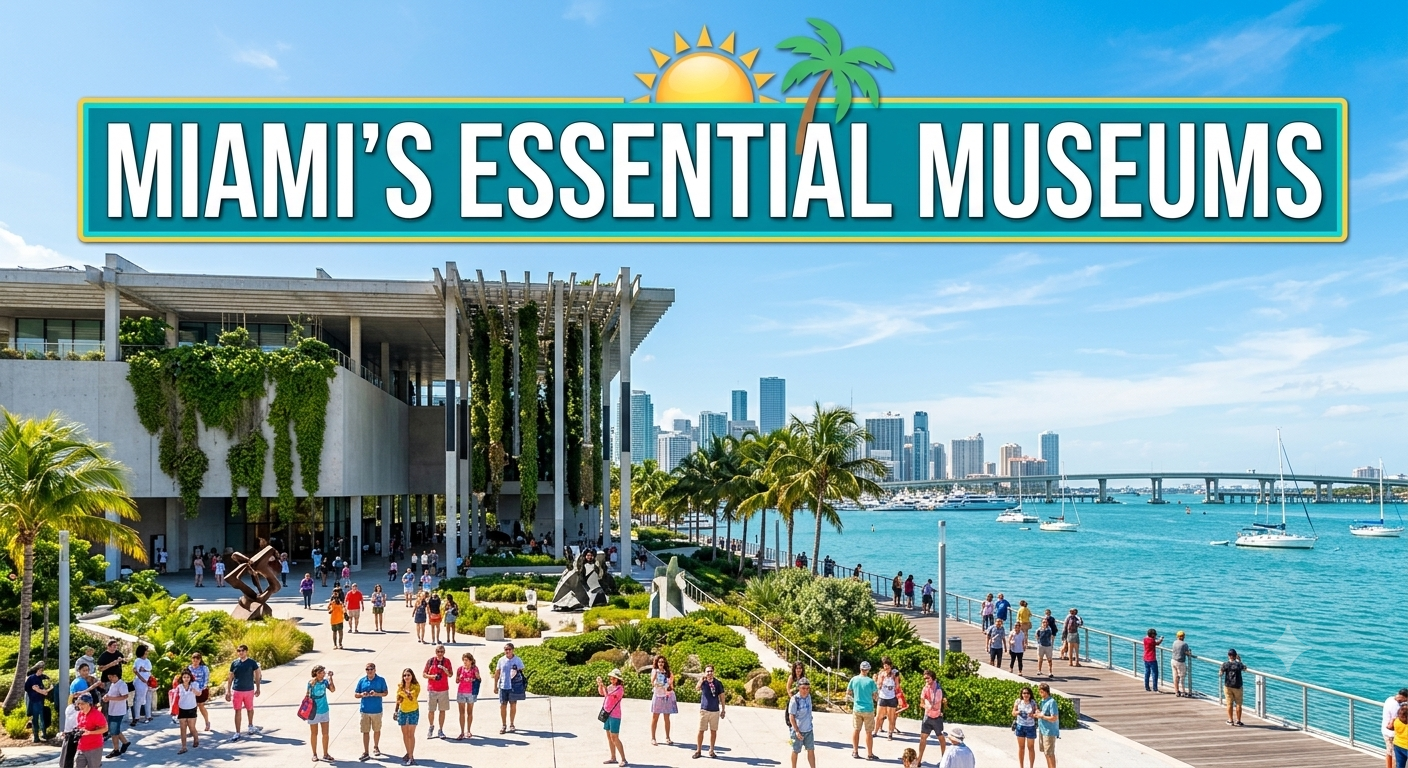
The Pérez Art Museum Miami — officially the Jorge M. Pérez Art Museum of Miami-Dade County — is the city’s premier contemporary art museum and one of the most architecturally significant cultural buildings in the American South. Designed by the Swiss firm Herzog & de Meuron and opened in 2013 on the waterfront of Maurice A. Ferré Park, the 200,000-square-foot building is instantly recognizable for its elevated platforms, wraparound terraces designed to withstand hurricanes, and the extraordinary hanging vertical gardens of botanist Patrick Blanc, which cascade from the building’s canopy in a riot of subtropical vegetation. PAMM’s permanent collection focuses on 20th- and 21st-century art from the Americas, Western Europe, the Caribbean, and the African diaspora, with one of the most significant holdings of contemporary Cuban art in the United States — the result of major gifts from developer and namesake Jorge M. Pérez. Among current exhibitions running through 2026 are a major retrospective of Miami-born ceramic sculptor Woody De Othello and a landmark presentation of ten Jean-Michel Basquiat works from the Kenneth C. Griffin collection. Every Thursday evening, admission becomes free from 5–9pm, making PAMM one of the most accessible world-class art institutions in the country.
Architectural landmark by Herzog & de Meuron · Free Thursday evenings (5–9pm) · Free Second Saturdays monthly · Verde restaurant with Biscayne Bay views
Address: 1103 Biscayne Blvd, Miami, FL 33132
(Maurice A. Ferré Park)
Phone: (305) 375-3000
Email: [email protected]
Website: pamm.org
HoursMon, Thu–Sun 11am–6pm · Thu until 9pm (free) · Closed Tue–Wed
AdmissionAdults $16 · Students/Seniors $12 · Under 6 free · Free Thu 5–9pm & 2nd Saturday
Institute of Contemporary Art, Miami (ICA Miami)
Free Admission
Established 1996 / Current Location 2017 · Design District · Aranguren & Gallegos Architecture
The Institute of Contemporary Art, Miami is the city’s most intellectually rigorous free-admission museum — and one of the finest contemporary art institutions in the United States regardless of admission price. Housed since December 2017 in a striking three-story “Magic Box” building by Madrid-based architects Aranguren & Gallegos, ICA Miami occupies 37,500 square feet of gallery space in the heart of the Design District, including a sculpture garden that extends behind the building’s window-lined walls. The museum’s mission is explicitly dedicated to promoting continuous experimentation in contemporary art, advancing new scholarship, and providing a platform for local, emerging, and under-recognized artists alongside major international figures. In 2024, ICA Miami made one of the boldest institutional moves in Miami’s recent museum history, acquiring the adjacent former De la Cruz Collection site for $25 million — adding 30,000 square feet of exhibition space and dramatically expanding its physical footprint. Daily free tours at noon make the museum’s curatorial programming accessible even to first-time visitors.
Year-round free admission · Free daily noon tours · Permanent collection + rotating exhibitions · Expanded campus since 2024 · Signature sculpture garden
Address: 61 NE 41st Street, Miami, FL 33137
(Miami Design District)
Phone: (305) 901-5272
Website: icamiami.org
HoursWed–Sun 11am–6pm · Closed Mon–Tue
AdmissionFree — advance timed tickets recommended
Rubell Museum
Founded 1993 (as Rubell Family Collection) · Relocated to Allapattah 2019 · Selldorf Architects
The Rubell Museum is not simply one of Miami’s most important cultural institutions — it is one of the most significant private contemporary art museums open to the public anywhere in North America. Founded in 1993 by Mera and Don Rubell, the collection encompasses over 7,700 works by more than 1,000 artists spanning six decades of passionate, instinct-driven collecting. The Rubells were among the earliest collectors to acquire works by Jean-Michel Basquiat, Keith Haring, Cindy Sherman, Jeff Koons, Kehinde Wiley, and Yoshitomo Nara. Their current campus in Allapattah — six former industrial buildings redesigned by renowned architect Annabelle Selldorf — occupies 100,000 square feet, including 36 galleries, a restaurant by famed culinary group Leku, a flexible performance space, a bookstore, and a lush courtyard garden planted with native South Florida flora. Ongoing immersive presentations include a dedicated room for Yayoi Kusama’s Infinity mirrors. The Rubells’ role in lobbying for Art Basel Miami Beach makes their museum the institution most historically intertwined with Miami’s rise as a global art capital.
7,700+ works by 1,000+ artists · Yayoi Kusama Infinity room · 36 galleries on single floor · Research library with 40,000 volumes · Annual artist-in-residence program
Address: 1100 NW 23rd Street, Miami, FL 33127
(Allapattah)
Phone: (305) 573-6090
Website: rubellmuseum.org
HoursWed–Sun 11:30am–5:30pm · Fri–Sat until 7:30pm · Closed Mon–Tue
AdmissionAdults ~$18 · Advance purchase recommended
Museum of Contemporary Art, North Miami (MoCA)
Established 1996 · Gwathmey-Siegel Architecture · North Miami
Designed by the celebrated New York architectural firm Gwathmey-Siegel, the Museum of Contemporary Art in North Miami is a 22,000-square-foot purpose-built institution that has for nearly three decades served as one of the most dynamic venues for experimental and groundbreaking contemporary art in the greater Miami area. With 8 to 10 major installations per year, MoCA maintains a pace of exhibition programming that rivals far larger institutions. It has a distinguished history of presenting artists early in their careers and pursuing non-commercial, discourse-driven curatorial models. The museum’s commitment to community outreach — offering free admission to North Miami residents, children under 12, veterans, and city employees — reflects its roots as a genuinely public institution. MoCA’s Jazz at MOCA series, held on the last Friday of each month, has become a beloved cultural tradition in its own right.
8–10 major exhibitions per year · Monthly Jazz at MOCA series (last Friday) · Free for North Miami residents and children under 12 · Outdoor courtyards and art pavilion
Address: 770 NE 125th Street, North Miami, FL 33161
Phone: (305) 893-6211
Website: mocanomi.org
HoursWed noon–7pm · Thu–Sun 10am–5pm · Closed Mon–Tue
AdmissionAdults $10 · Students & Seniors $5 · Free for members, children under 12, North Miami residents
Category Two
History & Cultural Heritage Museums
History & Culture
Miami’s history is as layered and improbable as its present: a subtropical frontier transformed in a single century by immigration, real estate speculation, political exile, and the convergence of Caribbean, Latin American, and North American cultures. The following institutions are dedicated to preserving and interpreting that history in all its complexity.
Vizcaya Museum & Gardens
Built 1914–1922 · National Historic Landmark · Coconut Grove
Vizcaya Museum & Gardens is Miami’s most spectacular historic landmark and one of the finest surviving examples of Gilded Age architecture in the American Southeast. Built between 1914 and 1922 as the subtropical winter home of agricultural machinery magnate James Deering, the estate encompasses a 34-room Italian Renaissance villa on Biscayne Bay, an extraordinary sequence of formal European gardens designed by Diego Suarez, native woodland landscape, and a historic village compound now known as Vizcaya Village. The villa’s interiors are a breathtaking assembly of European antique architectural fragments, furnishings, and decorative arts spanning five centuries, curated with theatrical intensity by designer Paul Chalfin. Now owned by Miami-Dade County and accredited by the American Alliance of Museums, Vizcaya has in recent years pursued a remarkably progressive institutional agenda — commissioning contemporary artists, hosting community events, developing programming around Indigenous history, and expanding its agricultural and ecological initiatives. For art historians, students of decorative arts, and collectors interested in the historical roots of South Florida’s cultural landscape, Vizcaya is essential.
34-room Italian Renaissance villa · European formal gardens · US National Historic Landmark · Contemporary art commissions · Monthly Village Night Market
Address: 3251 South Miami Avenue, Miami, FL 33129
(Coconut Grove)
Phone: (305) 250-9133
Email[email protected]
Website: vizcaya.org
HoursMon, Wed–Sun 9:30am–4:30pm · Closed Tuesdays
AdmissionAdults $25 · Children 6–12 $10 · Under 5 free · Veterans free
HistoryMiami Museum
Founded 1940 · Smithsonian Affiliate · Downtown Miami
HistoryMiami Museum is the largest history museum in the State of Florida and a proud Smithsonian Affiliate — credentials that underscore its importance as the city’s primary institution for the collection, preservation, and interpretation of Miami’s past. Founded in 1940 by a group of civic luminaries including landscape visionary Marjory Stoneman Douglas and Coral Gables developer George Merrick, the museum traces Miami’s story from prehistoric Tequesta settlements through the era of Spanish colonization, the Flagler railroad era, the Art Deco building boom, the Cuban exile experience, the Haitian diaspora, and the ongoing story of a city that is perpetually reinventing itself. Its permanent exhibition “Tropical Dreams: A History of South Florida” provides an indispensable context for understanding the city that surrounds it. The museum’s Archives & Research Center is a critical resource for scholars, journalists, and anyone conducting serious work on South Florida history.
Largest history museum in Florida · Smithsonian Affiliate · Archives & Research Center · Free 2nd Saturdays · Walking tours of Downtown Miami and historic neighborhoods
Address101 West Flagler Street, Miami, FL 33130
(Downtown Miami)
Phone: (305) 375-1492
Website: historymiami.org
HoursThu–Sun noon–5pm · Closed Mon–Wed
AdmissionAdults $10 · Students/Seniors $8 · Free 2nd Saturdays
Category Three
Science & Natural History Museums
Science & Nature
For collectors, artists, and students whose practices engage with ecology, technology, or the natural world — an expanding category in contemporary art — Miami’s science institutions offer a uniquely relevant resource. They also represent some of the city’s most spectacular architectural achievements.
Phillip & Patricia Frost Museum of Science
Opened 2017 · Grimshaw Architects · Maurice A. Ferré Park, Downtown
The Phillip & Patricia Frost Museum of Science is one of the most technologically ambitious science museums to open in the United States in the 21st century. Designed by global firm Grimshaw Architects at a cost of $305 million and opened in May 2017 in Downtown Miami’s Museum Park alongside PAMM, the LEED Gold-certified complex spans four interconnected buildings across four bayfront acres: a 250-seat full-dome 8K Frost Planetarium, a stunning three-level Aquarium that culminates in a 500,000-gallon Gulf Stream tank where hammerhead sharks, devil rays, and mahi-mahi cruise alongside visitors looking up through a dramatic oculus, and two exhibition wings hosting permanent and traveling installations on topics from the biology of flight to the physics of light and lasers. For artists working at the intersection of science, technology, and environment — a significant portion of contemporary practice — the Frost Museum provides extraordinary research and experiential resources. A 2026 Leonardo da Vinci exhibition brings the Renaissance master’s inventions to immersive life.
500,000-gallon Gulf Stream Aquarium · 250-seat full-dome 8K Planetarium · LEED Gold certified · Leonardo da Vinci exhibition 2026 · Open daily, all ages
Address: 1101 Biscayne Blvd, Miami, FL 33132
(Maurice A. Ferré Park)
Phone: (305) 434-9600
Websit: frostscience.org
HoursDaily 10am–5pm (Fri–Sun until 6pm)
AdmissionAdults ~$30 · Children ~$23 · Miami-Dade library pass accepted
Category Four
Design & Decorative Arts Museums
Design
Design and the decorative arts occupy a unique place in Miami’s cultural identity — a city shaped as much by the aesthetic grammar of Art Deco, Latin modernism, and tropical maximalism as by any fine art tradition. These institutions place that history in rigorous scholarly context.
The Wolfsonian–FIU
Founded 1986 · FIU Division Since 1997 · Miami Beach Art Deco District
The Wolfsonian–FIU is one of the most extraordinary and underappreciated museums in America — a museum, library, and research center of approximately 180,000 objects devoted to understanding the persuasive power of art, design, and propaganda from 1885 to 1945. Named for collector Mitchell Wolfson Jr., who began amassing the collection in the 1970s from the storage facility that would become the museum, The Wolfsonian focuses on the period from the height of the Industrial Revolution to the end of World War II, encompassing furniture, industrial design, glass, ceramics, metalwork, rare books, periodicals, textiles, paintings, and medals from Germany, Great Britain, Italy, the Netherlands, and the United States. Since 1997, the museum has operated as a division of Florida International University. Located inside a magnificently renovated 1926 Washington Avenue building in the heart of Miami Beach’s Art Deco Historic District, The Wolfsonian offers a reading experience of design history that has no parallel in the American South. A Smithsonian Affiliations member, it is particularly relevant to students and scholars in graphic design, architecture, political communication, and cultural history.
~180,000 objects · 1885–1945 design, propaganda & decorative arts · Smithsonian Affiliate · Research fellowships available · FIU faculty program · Art Deco building
Address: 1001 Washington Avenue, Miami Beach, FL 33139
(Art Deco Historic District)
Phone: (305) 531-1001
Website: wolfsonian.org
HoursWed–Thu 10am–6pm · Fri 10am–9pm · Sat–Sun 10am–6pm · Closed Mon–Tue
AdmissionAdults $12 · Florida residents free · Students & Seniors discounted
Patricia & Phillip Frost Art Museum at FIU
Free Admission
Established 1977 · Current Building by Yann Weymouth · FIU Maidique Campus
Located on the Modesto Maidique Campus of Florida International University, the Patricia & Phillip Frost Art Museum is the university’s flagship cultural institution — and, with its always-free admission, one of the most accessible quality art museums in South Florida. Founded in 1977 as a modest 3,000-square-foot gallery, the museum now occupies a purpose-built architecturally significant building designed by Yann Weymouth, housing over 6,500 works of art from pre-Columbian artifacts through contemporary American prints and works on paper. Its exhibition program consistently integrates the museum’s educational mission with ambitious curatorial reach, featuring regular collaborations with The Wolfsonian and FIU’s academic departments. The museum is an essential resource for students across all South Florida universities and for collectors interested in affordable, scholarly programming outside the commercial circuit.
Always free · 6,500+ works · Pre-Columbian through contemporary · Audio tour app · Golden Ticket access for seniors · FIU campus location
Address: 10975 SW 17th Street, Miami, FL 33199
(FIU Maidique Campus)
Phone: (305) 348-2890
Website: frost.fiu.edu
HoursTue–Sun 11am–5pm · Closed Mondays & most holidays
AdmissionAlways Free
Category Five
Immersive Experience Museums
Immersive
A new category of cultural institution has taken root in Miami in the 2020s: the large-scale immersive experience venue that positions itself explicitly at the intersection of technology, installation art, and audience participation. These spaces have become important platforms for the next generation of artists working outside traditional gallery and museum constraints.
Superblue Miami
Opened 2021 · Allapattah · Large-Scale Experiential Art
Superblue Miami is the flagship location of the international experiential art organization that has created a new institutional model for presenting large-scale works by major living artists in purpose-built, non-commercial environments. Located in Allapattah adjacent to the Rubell Museum, Superblue’s 50,000-square-foot Miami space opened in spring 2021 with its inaugural exhibition “Every Wall is a Door” — permanent installations by Es Devlin (a mirrored maze labyrinth), teamLab (their signature digital immersive environments), and James Turrell (a transcendent Ganzfeld light experience). For artists, the Superblue model represents a significant development in how large-scale installation practice finds sustainable presentation and audience beyond traditional museums. For collectors, it offers an immersive introduction to artists working at the frontier of installation, light, and digital art. For students, it raises serious questions about the relationship between spectacle, commerce, and artistic intent.
Permanent installations by Es Devlin, teamLab & James Turrell · 50,000 sq ft · Adjacent to Rubell Museum · Open 7 days · Evening hours Fri–Sat
Address: 1101 NW 23rd Street, Miami, FL 33127
(Allapattah)
Phone: (786) 697-3405
Website: superblue.com
HoursMon–Thu 11am–7pm · Fri–Sat 10am–8pm · Sun 10am–7pm
AdmissionTimed-entry tickets required; check website for current pricing
Category Six
Street Art & Outdoor Museums
Street & Outdoor Art
No account of Miami’s museum landscape would be complete without acknowledging the institutions that have elevated outdoor and street art to the status of museum-caliber practice. These venues are not simply tourist attractions — they are genuine cultural institutions with scholarly programs, documented collections, and serious curatorial agendas.
Wynwood Walls
Founded 2009 · Tony Goldman · Wynwood Arts District
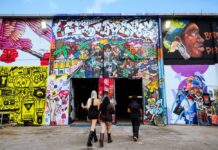
Wynwood Walls is the institution that made Miami’s cultural transformation legible to the world. Founded in 2009 by the late developer Tony Goldman, who commissioned an international roster of graffiti and street artists to paint the exterior walls of six warehouse buildings within a fenced compound, the Wynwood Walls now encompasses more than 40 monumental murals by globally recognized artists including Shepard Fairey, OSGEMEOS, Kenny Scharf, Retna, and Lady Aiko. Now recognized by Travel + Leisure as America’s most Instagram-worthy destination (2025), the complex has grown into a curated outdoor museum with a rotating program of new commissions, a gift shop, and food and beverage facilities. Named by US News & World Report as one of the top outdoor art museums in the United States, it is the site that most clearly demonstrates how street art can be institutionalized without losing its essential vitality. For artists and art students, the Wynwood Walls represents both an opportunity and a question: what happens to the radical gesture when it enters the museum economy?
40+ monumental murals · Rotating new commissions · Goldman Global Arts management · Ranked top outdoor museum by US News & World Report · Open daily
Address: 2520 NW 2nd Avenue, Miami, FL 33127
(Wynwood Arts District)
Phone: (305) 614-0588
Website: wynwoodwalls.com
HoursDaily 10:30am–6pm (extended hours during events)
AdmissionAdults $12 · Children under 12 free
Museum of Graffiti
Founded 2019 · Alan Ket & Allison Freidin · Wynwood Arts District
The Museum of Graffiti is a genuine institutional landmark: the world’s first museum dedicated exclusively to the history and evolution of graffiti as an art form. Founded in 2019 by Alan Ket — a prominent graffiti artist, collector, and historian — and Miami attorney Allison Freidin, the museum occupies Wynwood’s only dedicated art museum space, presenting both indoor and outdoor exhibitions featuring 5,000-plus square feet of works by the most important global figures in graffiti history. The permanent exhibition traces the movement from its origins in 1970s New York, through the emergence of the 1980s scene (with works by Rammellzee, Dondi White, Lady Pink, and Blade), through its global proliferation. Site-specific murals by Ghost, Giz, Defer, JonOne, and Slick anchor the collection. Ranked among the top 26 museums in America by US News & World Report, the Museum of Graffiti also maintains a monthly lecture series, print signings, workshops, and a gift shop featuring limited-edition artist collaborations. Its scholarly approach to a form that was for decades dismissed as vandalism makes it one of the most intellectually important new museums in the United States.
World’s first graffiti museum · Top 26 US museums (US News) · Monthly lecture series with global graffiti writers · Indoor + outdoor exhibitions · World Cup 2026 special programming
Address: 276 NW 26th Street, Miami, FL 33127
(Wynwood Arts District)
Website: museumofgraffiti.com
HoursMon, Wed–Thu 11am–5pm · Fri–Sun 11am–6pm · Closed Tuesdays
AdmissionAdults $22 · All ages welcome · ADA compliant
Quick Reference
| Museum | Neighborhood | Category | Admission | Closed |
|---|---|---|---|---|
| PAMM | Downtown / Museum Park | Contemporary Art | $16 · Free Thu eves & 2nd Sat | Tue–Wed |
| ICA Miami | Design District | Contemporary Art | Free | Mon–Tue |
| Rubell Museum | Allapattah | Contemporary Art | ~$18 | Mon–Tue |
| MoCA North Miami | North Miami | Contemporary Art | $10 · $5 students | Mon–Tue |
| Vizcaya Museum & Gardens | Coconut Grove | Historic Estate | $25 · Children $10 | Tuesday |
| HistoryMiami Museum | Downtown Miami | History & Culture | ~$10 · Free 2nd Sat | Mon–Wed |
| Frost Museum of Science | Downtown / Museum Park | Science & Nature | ~$30 | Open daily |
| The Wolfsonian–FIU | Miami Beach | Design & Decorative Arts | $12 · FL residents free | Mon–Tue |
| Frost Art Museum (FIU) | West Miami / FIU Campus | Fine Arts | Always Free | Monday |
| Superblue Miami | Allapattah | Immersive Art | Timed tickets | Open daily |
| Wynwood Walls | Wynwood | Outdoor / Street Art | $12 adults | Open daily |
| Museum of Graffiti | Wynwood | Street Art History | $22 | Tuesday |
Practical Guides
For Art Collectors
- The Rubell Museum’s artist-in-residence and collection exhibitions are the most reliable signal of which emerging artists the city’s most sophisticated collectors are watching — visit multiple times per year.
- PAMM’s Jean-Michel Basquiat presentation and permanent collection rotations offer crucial market context for American and Caribbean artists whose works circulate at auction.
- ICA Miami’s free admission makes it unusually accessible for repeat visits during Art Basel week, when its programming is specifically calibrated to the international collector audience.
- PAMM Free Second Saturdays and ICA Miami’s daily free entry make it entirely possible to develop a serious ongoing relationship with both museums without significant cost.
For Visual Artists & Students
- Three major institutions offer free admission year-round: ICA Miami, the Frost Art Museum at FIU, and (for Florida residents) The Wolfsonian–FIU — together these represent an extraordinary free educational circuit.
- MoCA North Miami and HistoryMiami Museum are underutilized by visiting artists; both offer remarkable collections, serious research resources, and curatorial approaches that reward close study.
- The Museum of Graffiti’s monthly lecture series with global graffiti writers is among the most distinctive and specialized continuing education opportunities in Miami’s museum ecosystem.
- Vizcaya’s decorative arts collection and evolving programming around contemporary commissions make it an unexpected but highly rewarding destination for painters, sculptors, and textile artists.
- The Frost Museum of Science’s Aquarium and Planetarium are directly relevant to artists working with environmental, ecological, or cosmological themes — increasingly central categories in contemporary practice.
For Gallerists & Art Professionals
- Art Basel Miami Beach (December 4–6, 2026) brings all major institutions into a period of extended hours, special programming, and heightened curatorial activity — plan institutional visits across the full week, not just the fair itself.
- PAMM’s Thursday evening free admission (5–9pm) is strategically timed for the collector/gallery community; attending early-season openings here is an important networking and intelligence-gathering opportunity.
- The Rubell Museum’s programming calendar, research library, and international loan program make it a key institutional partner for galleries seeking museum placement for their represented artists.
- Bank of America cardholders receive free museum entry the first weekend of each month through the “Museums on Us” program — useful to share with emerging collectors building their museum-going habits.
Museum Pass & Access Programs
- Miami-Dade Public Library cardholders can reserve free passes to major institutions including PAMM and the Frost Museum of Science — an invaluable resource for students and residents.
- Bank of America “Museums on Us” provides free entry to PAMM, MoCA, The Wolfsonian, and other institutions on the first weekend of each month for Bank of America cardholders.
- PAMM membership ($150/2 years individual) provides unlimited admission and reciprocal access to 1,000+ museums nationally and internationally — an exceptional value for serious museum-goers.
- The Miami-Dade Golden Ticket Arts Guide offers free admission to the Frost Art Museum at FIU and other institutions for county residents aged 62 and over.
Conclusion
What the museums of Miami collectively demonstrate is something that would have been difficult to predict forty years ago: that a subtropical city built on transience, real estate speculation, and the energy of successive immigrant waves could become the site of genuine, durable, world-class cultural institutions. PAMM’s commitment to the art of the Americas, ICA Miami’s relentless experimentation, the Rubell Museum’s visionary private collecting made public, The Wolfsonian’s scholarly salvage of the design history of modernity, Vizcaya’s ongoing reinvention as a site of historical and ecological reflection — these are not simply attractions. They are the permanent cultural infrastructure of a city that has chosen to take its own artistic ambitions seriously.
For the visitor navigating Miami’s museum landscape for the first time, the most important orientation is geographic: the downtown waterfront cluster of PAMM and the Frost Museum of Science, the Design District grouping of ICA Miami, the Allapattah constellation of the Rubell Museum and Superblue, the Wynwood concentration of outdoor art and the Museum of Graffiti, and the Coconut Grove solitude of Vizcaya. Each cluster rewards a dedicated half or full day, and together they represent one of the most diverse and rewarding museum circuits in the American South.
For the collector, artist, gallerist, or student who engages with these institutions not as sites of passive consumption but as active resources — spaces for research, encounter, and ongoing dialogue with the history and present of art — Miami’s museums will consistently exceed expectation. The city that Art Basel chose has, over two decades, proved itself worthy of the attention. Its museums are why.