Home Blog Page 3

Mapping the Art Experience: How to Navigate Miami’s Gallery Ecosystem with Intention

Mapping the Art Experience: How to Navigate Miami’s Gallery Ecosystem with Intention

Miami is not a city to be “visited” in the conventional sense—it is a territory to be navigated. For the contemporary art viewer, collector, or curator, the challenge is not access, but selection, sequencing, and spatial awareness. In neighborhoods such as Wynwood, Allapattah, the Design District, Little Haiti, Little River, and Miami Shores, the density of exhibitions and weekly programming demands a strategic approach—one that transforms passive viewing into a curated experience of the city itself.

The Geography of Contemporary Art in Miami

Wynwood

Wynwood operates as an entry point—a highly visible, high-traffic cultural zone where galleries intersect with design, fashion, and urban branding. It is ideal for encountering a wide range of exhibitions in close proximity, though its saturation requires discernment. The experienced viewer learns to filter quickly.

Allapattah

https://images.openai.com/static-rsc-4/vxZ0n8i1uBs4wOJBIoE2HGCbTBZtRhik4-p4xzOrNuNoypUc7G2Vqx9dSy9ZRxzv0VuGZG4b2oXY9rVW5XMFlAjE912HZ1Aqx4NxuqipR-jXW0lxyh8Omr2aTP6CfWErTYEKKG_05EpinJLc8d-8Zh9754c55bHw9EqpH78vGCfKJZvEj3GXkWCY9joRpu-0?purpose=fullsize
https://images.openai.com/static-rsc-4/CSdkEHxxLhWXMvKEtwFEWH9mUi_sUXdkHj4aoOwIv7Je9gbvTb-5uwaqp0idcIb-TwDRUrx15KipKzjnZDUdIED68pApJ9DMwhNajcKL0u7TWrDaKX9NoVRs1H3q87ys_IbwuhnYXYuIXDOnh1dLQmG0aObqMsUHTvqwKBnXQgpptoHaN2JGBLL-UaU4b9O-?purpose=fullsize

Allapattah represents a shift toward institutional gravity and scale. With major collections and expansive gallery spaces, this area demands slower engagement. Here, the viewer moves from browsing to immersion, often encountering museum-level exhibitions within an experimental framework.

Design District

https://images.openai.com/static-rsc-4/qMWxoitmtd8LBBeVPF9uTZ4jVd0YYapp4EQAvCF-d_-qBTCAZ6XTyPBxY16rbnm7jL60QUEC_AehFdKTFbcV12yVvd9CG_YKxM5Hk-B3ZoYMEHQAHOLveDk8sZSa6aVNyZnts4a4LYrvPmagzfEIOJz6AT5LIcSBl_gJnDwNxagjZ9I0B0eUsQiDKOPaGq1z?purpose=fullsize
https://images.openai.com/static-rsc-4/Fb1pzk2cICv8eLV-UlAtpeQv4NdPiiTUQxJuhPCF4wkO-fgFlrij6qW-YTGUNsQlpejj-6x7RiKq-3VR5A9tABf23kUTtq93wo2Yit6bCJM1xCSYc6J_xtH0KmlAJ6dmbOp98QKVtrHZGxfK14ClJFs9e7RTJPue8BrcfSsJV2INklZWWOACjudWHanJmrEJ?purpose=fullsize
https://images.openai.com/static-rsc-4/Ylt_vGOVbXN8mareyFAyu13OoNX8YHAAGp8x0jhyrX-5SvGtkdYdRNETkW55ZH5-IT0Zu-mH7eUxUILgKSOoPQxGffQROHsbE7bAWsPXdmw1cnuwp7w7T5if5xquv6GpDsNXiKc7NsDldiY7Jc9j_LTNQXxV-dDutbNfQakJL8BFR8svwRCwvAEhg-5ZNQAA?purpose=fullsize

The Design District introduces a different layer: the intersection of art, design, and luxury culture. Anchored by institutions such as Institute of Contemporary Art, Miami, this area blends museum-quality exhibitions with public art, architecture, and high-end commercial spaces. Here, the viewing experience expands beyond the gallery into an urban scenography, where art coexists with fashion, branding, and spatial design. It is a territory where aesthetics are not isolated, but integrated into a broader visual economy.

Little Haiti

https://images.openai.com/static-rsc-4/R-4lsOSzqlr3-uk2-affUpF8hJbqV11VYgno2YvUhR9_boMV-TCcdpIBW6ylAx2P1N30O73B8Gp2kzAWdXW9y607tCU0LX3jkjhWu4vColq3yEsGK_W1Hq78MMbrkkWZPH6LxnND3l3NOoJUzgQQoMLtpV8btrOEUobb7GtPXj6HJhie-AGT4HX6AOwYkysa?purpose=fullsize
https://images.openai.com/static-rsc-4/kpYp_3X9KmsrSpd_lRgVGpwj5KytHw-O-ZvLTsGG8ronU_zz9wGttXSmWsS8auGNvcWFVCYLWC3qfw17SmBWwbb7ADfOZ0_Fi3qlpFqIcAsTyagYcMxXlbS7zfnNdmFarq__TFZcR3IdG-S22-I4C0nGs2mDuSNwpUE9C481xKYtvDYBbbQNs2q4JQCLKR3L?purpose=fullsize
https://images.openai.com/static-rsc-4/I1syp4yUSk_xvywhJ8kc-L9VkDZw3m7Hg7rmMsBeKDn2CfUTDPNtQv0jr2eMDEYAKsgAiwIdv6PFRlCTD4nDiXZ8kyoUz9CT3DDm0c9-rUna2x2iima9TqPraIe4FyJn4y0jpR7R7qTNbz-r0vPL7_0TvHyq3wfxc_v9IkavD-exLE9JbyFPYAVv_IWpjp_m?purpose=fullsize

Little Haiti introduces a different rhythm—one rooted in community, diaspora, and cultural continuity. Exhibitions here often resist the neutrality of the white cube, embedding themselves within social and historical contexts. The viewer is invited not just to see, but to situate themselves.

Little River & Miami Shores

https://images.openai.com/static-rsc-4/5tOJS8msa5NSXJwXxqntr-SWkBN5XUlwTqflUuSSjJr6V71SDOYbpQSWaeePdvYZVApF3RR6QGmKlqji_em7gxyX42lrfURLiMaBSfJQs4Zk3pkb5uQK266wY-id9036fwVwZtpAZtOB-0ji97E6kNVwhij_YX_7LYd_yYTQpoeSvxLeC1_HmU-ZZ8Mdm5jm?purpose=fullsize

7

These areas function as emerging nodes—less saturated, more experimental, often hosting hybrid spaces that blur the line between studio, gallery, and design environment. Here, discovery replaces expectation.

From Viewer to Curator: Planning Your Route

To navigate Miami effectively, one must adopt a curatorial mindset. The goal is not to see everything, but to construct a meaningful sequence of encounters.

Plan Your Route

Select the exhibitions that resonate with your interests and map them geographically. A well-designed route transforms the day into a coherent narrative rather than a series of disconnected visits.

Work with Proximity

Use spatial logic. For example:

  • Wynwood → Design District → Allapattah (efficient central route)
  • Little Haiti → Little River → Miami Shores (northern, more experimental route)

Balance Density and Depth

Alternate between high-density gallery clusters and singular, immersive exhibitions to avoid visual fatigue and maintain critical attention.

Allow for the Unexpected

Leave space for spontaneity. Some of the most meaningful encounters happen outside the plan—an unlisted show, a studio visit, a conversation.

The Social Dimension: Art as Shared Experience

Art in Miami is not only spatial, but social. Openings, talks, and informal gatherings are integral to the ecosystem.

Share the Route

A well-planned itinerary becomes cultural currency. Sharing it with peers extends the experience beyond the individual.

Build Networks Through Movement

Each stop is an opportunity to engage with artists, curators, and collectors—turning the route into a network of relationships.

Toward a Conscious Art Journey

To move through Miami’s art scene without intention is to risk superficiality. To plan a route is to claim authorship over your experience.

This approach transforms:

  • the city into a map of ideas
  • the visit into a curated sequence
  • the viewer into an active participant

In a city defined by abundance, clarity becomes the true form of sophistication.

ARTISTS

My Art Registry
My Art Registry

Starting with our Certificate of Authenticity & Hologram System in 2008, My Art Registry was founded in 2009 with the mission to support and empower artists worldwide.

Recognizing the need for a platform that could truly cater to the unique demands of the fine art community, in 2010 we also introduced our Excellence Program, setting the standards for quality and service.

At My Art Registry, we believe in the power of art to inspire and connect people.

Our history is a testament to our dedication to fostering a vibrant and supportive community for artists and art lovers alike. As we continue to grow, we remain committed to maintaining the highest standards of quality and service, ensuring that every artwork and artist receives the recognition they deserve.

ARTISTS

Denis O’Regan — United Kingdom
Jabari Fletcher — United States
Clive Booth — United Kingdom
Christian Popkes — Germany
Arina Daehnick — Germany
René Staud — Germany
Tomi Ungerer — Ireland
Sidnei Graudin — Brazil
Edo Rocha — Brazil
Pascal Chiasson — Canada
François Ventura — Switzerland
Rino Carraro — Italy
Hjalmar Thelen — Germany
Astrid Thie — Spain
Julia Anna Gospodarou — Greece
Martin Wieland — Austria
Romain Thiery — France
Nedolina Pavlova — Bulgaria
Hans Olsen — Denmark
Juan Carlos Manjarrés Jiménez — Mexico
Silvia Schmitt — Germany
Steve Giardini — United States
Ricardo S. Franco — Brazil
Justus Rehn — Germany
Stefano Orazzini — Italy
Dinah Kathleen Lloyd — United Kingdom
Henrik S. Nielsen — Denmark
Andrey M. Allage — Brazil
Urs Moll — Switzerland
Şuayip Yücel — Türkiye
Regiane Salvadori — Qatar
Daniel Sozak — Germany
Bernd Lange — Germany
Myriam Alcaraz — Spain
Tom Osman — United Kingdom
Stephane Gripari — United Kingdom
Keith Ellul — Malta
Tom Lee — United Kingdom
James Hall — Germany
Elisabeth Laplante — Germany
Thomas Driendl — Germany
Marvin Kuhn — Switzerland
Björn Wiedemann — Germany
SIMULACRA — China
Svitlana Glaser — Germany
Thomas Thijssen — Netherlands
Evan Hunt — United States
Raymond La Motte — Italy
Luis Afonso — Portugal
Policarpo Jose Ribeiro — Brazil
Manuel Villa — United States
Paolo Salmaso — Germany
Bastiaan (ooohhh.art) — Netherlands
Derek Ebner — United States
Matej Hribernik — Slovenia
Claude Charlebois — Canada
Roisin Cure — Germany
Dominique Fradin-Popp — France
Ilona Loubková — Germany
Leo Symon — Slovakia
Gaelle Brunet — France
Matt Squire — Germany
Dennis Ninmer — United States
Valda Bailey — Germany
Ivan Festa — Italy
Paula Kuitenbrouwer — Netherlands
Giuseppe Daria — Brazil
Timurtaş Onan — Germany
Mark Bjorndal — United States
Jenna Laney — United Kingdom
Rolf Heinermann — Luxembourg
Bertrand Fenart — Germany
Sabine Schramm — Germany
Mark Petersen — Germany
Dominique Weiss — Switzerland
Ciro Battiloro — Germany
Eva Flury — Switzerland
Christian Kleiman — United Arab Emirates
Nadine Mohr — Germany
Arão do Nascimento Pinto — Germany

FIFA’s new cultural home inside MOAD at MDC’s Freedom Tower

FIFA Museum in Miami_Unidad - The World's Game
UNIDAD: The World’s Game FIFA’s new cultural home inside MOAD at MDC’s Freedom Tower

FIFA’s new cultural home inside MOAD at MDC’s Freedom Tower

Written By Olga Garcia-Mayoral

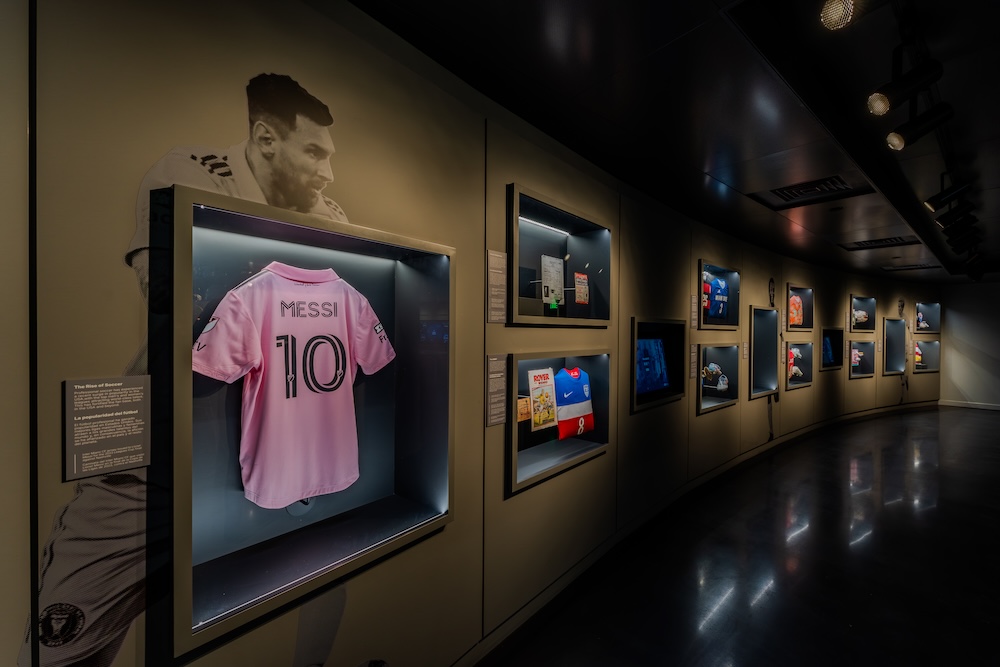
In Miami, soccer isn’t simply a sport—it’s a shared language. It lives in park pick-up games and weekend league rituals, in the way entire neighborhoods pulse during international tournaments, and in the multi-accented chorus that rises whenever a goal breaks the air. That’s what makes “Unidad: The World’s Game”—a permanent exhibition created by the FIFA Museum and presented at the Museum of Art and Design (MOAD) at Miami Dade College’s Freedom Tower—feel so natural here. It isn’t trying to convince Miami that soccer matters. Miami already knows. Instead, the exhibition asks a more interesting question: how does the game become a global emotional infrastructure—one capable of carrying memory, identity, struggle, and joy across generations? 

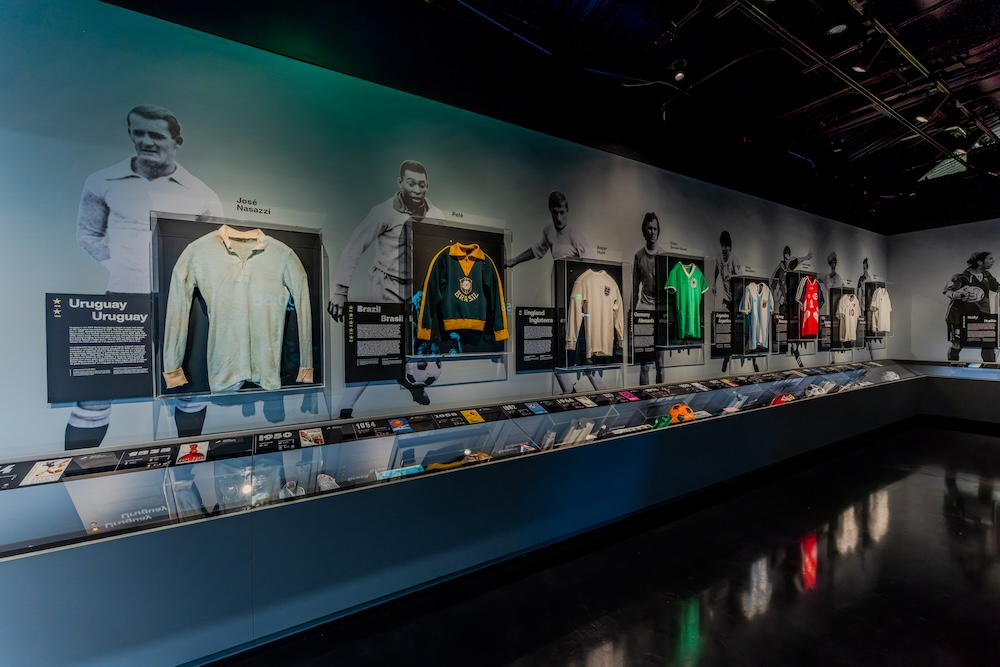
“Unidad” is built as a journey through football’s worldwide heritage and meaning, using historic objects, interactive stations, and immersive installations to trace pivotal moments in the sport’s evolution—while also spotlighting soccer’s development in the United States. And because it sits inside the Freedom Tower, the exhibition gains a second narrative layer: Miami’s most iconic symbol of arrival, belonging, and cultural transformation becomes the container for a story about the world’s most universal pastime. 

FIFA Museum in Miami_Unidad - The World's Game

A museum experience that plays like a game

Unlike traditional trophy-room presentations that can flatten sports history into a timeline of wins and losses, “Unidad” is structured around the idea that football is, at its core, a connector between countries, communities, and personal histories. FIFA frames it explicitly as a celebration of the game’s ability to inspire, connect, and unite people across continents and generations, and MOAD/Freedom Tower presents it in that same spirit, as an exhibition where learning is physical and participatory. 

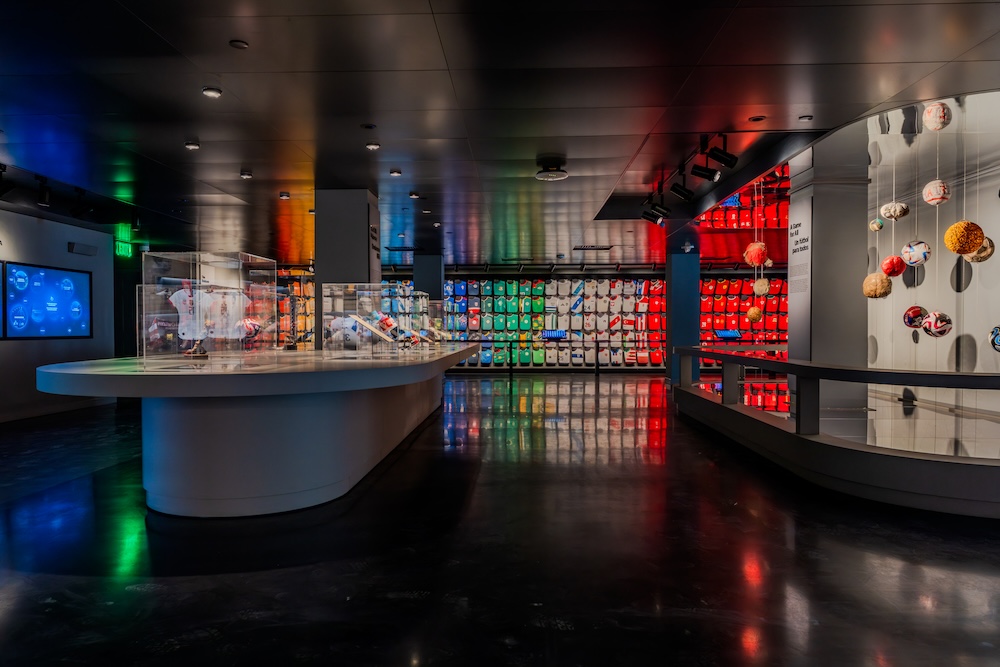
The space itself signals ambition: the FIFA Museum describes “Unidad” as spanning two floors and occupying roughly 7,500 square feet, a scale that immediately shifts it from “pop-up” to institutional anchor. The exhibition is designed to be moved through the way you move through a match: scanning, noticing patterns, stopping at moments of intensity, then drifting toward the next narrative beat.

That interactivity isn’t decorative—it’s pedagogical. “Unidad” treats football not as an object of passive admiration but as a living system you can enter: its aesthetics (kits, graphics, design languages), its rituals (chants, fandom, collective memory), and its historic turning points rendered through media and objects that reward curiosity. 

FIFA Museum in Miami_Unidad - The World's Game

The Rainbow of Shirts: 211 identities, one field

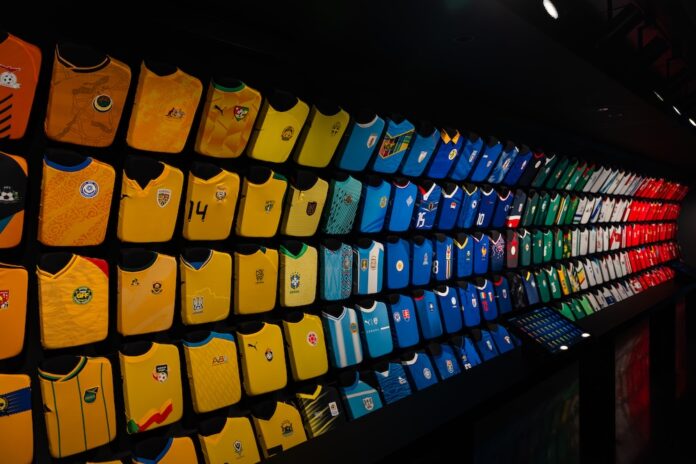
One of the exhibition’s central symbolic gestures is the “Rainbow of Shirts,” a display of jerseys representing all 211 FIFA Member Associations. It’s difficult to stand before that many national identifiers and not feel something shift. Jerseys are not neutral fabric—they are portable flags, emotional armor, family inheritance, diaspora shorthand. In a city like Miami—where so many people carry more than one homeland in their bodies—the Rainbow reads as both unity and multiplicity. It suggests that football’s global power isn’t built on sameness, but on the astonishing fact that millions of distinct identities can share one set of rules and still recognize each other in motion.

There is also a design lesson embedded here. A jersey is graphic communication: color, emblem, typography, and material engineering—design decisions that become shorthand for belonging. “Unidad,” housed inside MOAD at MDC, implicitly highlights how much the “beautiful game” has always relied on visual culture to transmit meaning. 

Legacy of Champions: collective memory, projected at scale

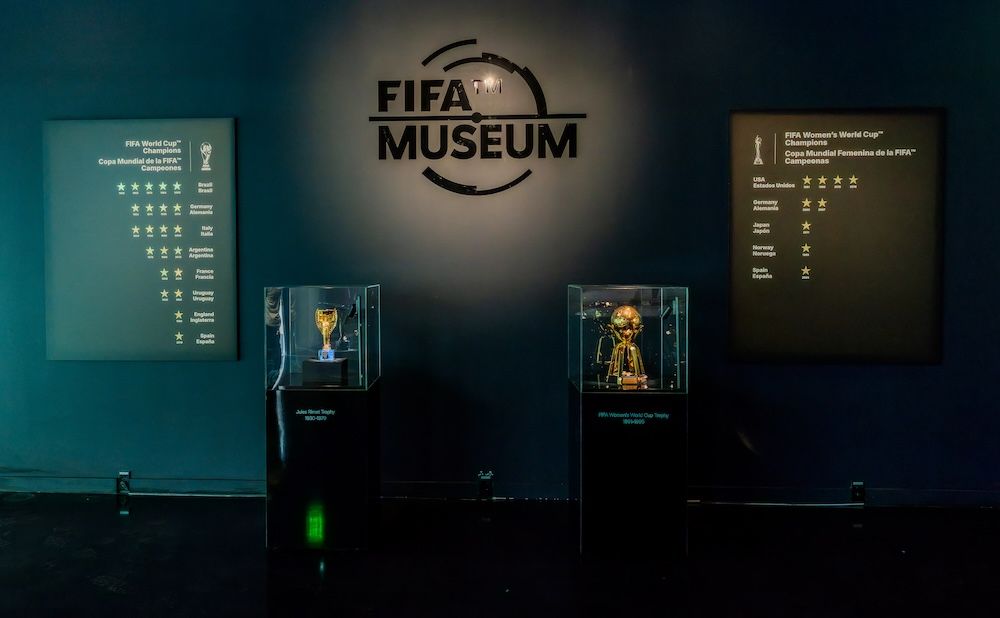
Another key section, described by the FIFA Museum as “The Legacy of Champions,” honors the nations that have claimed glory in both the FIFA World Cup™ and the FIFA Women’s World Cup™, using historical artifacts and large-scale audiovisual elements to celebrate the heroes, legends, and defining moments that move fans across generations. 

That inclusion of the Women’s World Cup lineage matters. It places women’s football within the same monumental frame, not as an addendum but as a co-author of global football history. In an era when women’s sports are finally receiving overdue institutional visibility, “Unidad” makes the point through exhibition design: history is not just what happened—it’s what we choose to preserve, display, and teach.

FIFA Museum in Miami_Unidad - The World's Game

Miami, the Freedom Tower, and the meaning of “permanent.”

“Unidad” is more than a touring show; the FIFA Museum itself has designated it as its first permanent exhibition in North America, a designation that carries cultural weight in the lead-up to FIFA World Cup 2026™ and beyond. Permanence is a kind of promise: that Miami is not only a host city or a fan destination, but a long-term site where football culture can be studied as heritage—where the sport’s artifacts and stories belong inside an institution, not just a stadium.

That decision aligns with the Freedom Tower’s evolving role as a cultural hub. Tourism and civic sites describe the Tower not only as a historic landmark but as a place where Miami’s layered narratives—migration, identity, art, and memory—are actively curated through exhibitions. In that context, “Unidad” reads almost like a civic mirror: a global sport installed inside a building that has witnessed waves of newcomers and the cultural reweaving of the city itself.

Soccer as culture, not commodity

What “Unidad” does especially well is refuse the narrow framing of sports as entertainment only. It positions football as culture—a force that shapes music, fashion, language, photography, graphic design, and public life. The exhibition’s blend of historic objects and immersive media helps visitors understand the sport not just through championships but through how it feels: the intensity of collective anticipation, the way a single moment becomes a memory shared by millions. These rituals make strangers into allies for ninety minutes. 

For Miami audiences, that framing is instantly legible. Miami is a city where cultural identity is practiced daily—through bilingual conversation, neighborhood festivals, family traditions, and the ongoing choreography of diaspora life. “Unidad” links that mosaic explicitly to the “world’s game,” presented in partnership with MDC and described as connecting the global passion for football to Miami’s cultural diversity. 

A museum built for many kinds of visitors

Because “Unidad” is designed around interactive and immersive elements, it also functions as a gateway exhibition. This experience can welcome visitors who might not typically enter an art-and-design museum. That matters for institutions like MOAD at MDC, which sits at a crossroads of education, civic memory, and public culture.

A great permanent exhibition should do two things at once: serve as an accessible entry point for first-time visitors and sustain repeated visits with new details each time. “Unidad” is built for that. It’s a show you can visit as a family and enjoy at the level of play, then return to as an adult and read through deeper layers: geopolitics, migration, identity, gender, design history, and how global narratives are constructed through iconic moments. 

FIFA Museum in Miami_Unidad - The World's Game

Why “Unidad” matters now

With the World Cup coming to North America, it’s easy for football culture to be reduced to marketing and mega-events. “Unidad” offers something quieter and more durable: an argument for football as a shared human archive.

The FIFA Museum has positioned the Miami exhibition as part of a broader effort to safeguard football heritage while engaging diverse audiences, and it explicitly links “Unidad” to the idea of legacy—something meant to remain after the tournament spotlight moves on. That goal feels especially resonant in Miami, a city that constantly negotiates what it chooses to keep, commemorate, and build anew.

In the end, “Unidad: The World’s Game” succeeds because it understands what fans already know: football is never only about the ball. It’s about the people around it—the ones who carry jerseys across borders, the ones who teach their kids to love a team as a kind of inheritance, the ones who find community in a chant, the ones who feel at home for ninety minutes even if they’re far from home.

And perhaps that’s the deepest fit between exhibition and site. Inside the Freedom Tower—Miami’s monument to arrival—“Unidad” reminds us that belonging can be built in many ways. Sometimes, it’s built through papers and policies. Sometimes, it’s built through art and memory. And sometimes, it’s built through the simplest global ritual of all: a game where everyone, everywhere, understands what it means when the net moves.

Harmony Korine: Perfect Nonsense

Harmony Korine: Perfect Nonsense

Harmony Korine: Perfect Nonsense

Institute of Contemporary Art, Miami
Apr 15 – Oct 4, 2026
61 NE 41st Street Miami, FL 331377
Special Exhibition / 3rd Floor

“Perfect Nonsense” is the first US museum survey for the legendary and multifaceted work of Harmony Korine The exhibition traces the full arc of Korine’s career, bringing together over 50 works and situating his practice within a broader continuum of image-making that collapses distinctions between cinema, contemporary art, and popular culture. 

Since entering the public consciousness at nineteen after writing the screenplay for the 1995 generation-defining feature Kids, Korine has been a leading filmmaker. He has continually expanded the language of cinema while redefining notions of the counterculture and exploring novel image-making technologies.

Simultaneously, Korine’s activities have crossed the boundaries of discipline and form, and this exhibition includes the expansive worlds of painting, photography, collage, zines, and drawing that he has created since adolescence. Most recently, Korine has vigorously pursued painting, exploring figuration and abstraction while restlessly experimenting with the technologies of image making, from photocopies to gaming engines. 

From his earliest works, Korine explored themes of the individual and the outsider through a clear-eyed view of class and poverty, celebrity and authenticity, and a fascination with the gothic dimensions of the American South. His perspective is deeply structured by the figure of the American teenager. Some of Korine’s earliest works feature childlike figures and writings, and often explore the coming-of-age genre and its complex unfoldings. These childlike and coming-of-age themes have evolved into a ghostly form he calls “Twitchy,” found in paintings that are produced by combining images captured on an iPhone with painterly techniques. In his films, characters often use avatars, with elaborate masks and new forms of language, to create unprecedented realities. Meanwhile, works from the “Fazer” (2015) and “Chex” (2011–14) series showcase Korine’s investigation of psychedelic effects and escape. Many of Korine’s most recent works, including the films Baby Invasion (2024) and Aggro Dr1ft (2023), demonstrate his pioneering inquiry into technology and its impact on everyday life and the future of images.

Korine has lived in Miami since 2015, where he founded the experimental media company EDGLRD. The city’s visual excess has deeply shaped his recent films and paintings, reframing the American landscape as a delirious and unstable field of images, invention, and myth.

Harmony Korine was born in Bolinas, California, in 1973, and grew up in Nashville, Tennessee. He shot his first film, Gummo, in 1997 and went on to create seven more films, including Mister Lonely (2007), Spring Breakers (2012), The Beach Bum (2019), and Julien Donkey-Boy (1999), among others. He has shot music videos for Rihanna, Sonic Youth, Will Oldham, Cat Power, and the Black Keys. Korine was the subject of a major exhibition at the Centre Pompidou, Paris (2017), and has exhibited at institutions worldwide, including the Stedelijk Museum voor Actuele Kunst (S.M.A.K.), Ghent, Belgium; Whitney Biennial, New York; CAPC Musée d’art contemporain de Bordeaux, France; Contemporary Art Gallery, Art Tower Mito, Japan; 50th Biennale di Venezia; Kunsthalle Düsseldorf, Germany; Swiss Institute, New York; Casino Luxembourg–Forum d’art contemporain, Luxembourg; and Vanderbilt University Fine Arts Gallery, Nashville.

“Harmony Korine: Perfect Nonsense” is organized by the Institute of Contemporary Art, Miami, and curated by Alex Gartenfeld, Irma and Norman Braman Artistic Director, and Gean Moreno, Director of the Art + Research Center, with research assistance from Donna Honarpisheh, Associate Curator, Art + Research Center at ICA Miami.

Henrik Simonsen: Recent Works

Henrik Simonsen: Recent Works

Findlay Galleries Palm Beach

Exhibition Details
Henrik Simonsen: Recent Works
Findlay Galleries

April 17 – May 29, 2026
Monday–Saturday, 10 AM – 6 PM

Location: Findlay Galleries, Palm Beach, USA

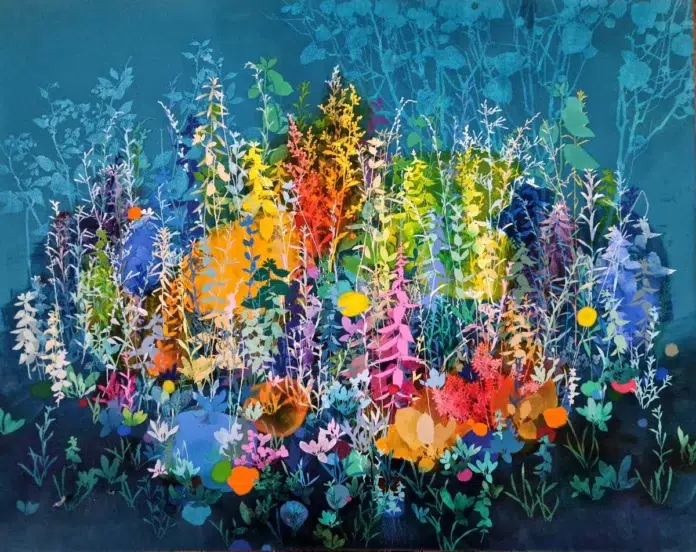
At Findlay Galleries, Henrik Simonsen: Recent Works unfolds as a meditation on perception—where landscape is no longer something observed, but something felt. The exhibition presents a new body of paintings that expand Simonsen’s long-standing dialogue with nature, pushing it toward a more immersive and sensorial register.

Simonsen’s practice begins with drawing, yet what emerges on canvas transcends line. His compositions dissolve into layered atmospheres where color takes precedence over form. In these recent works, chromatic intensity becomes the driving force: saturated hues pulse across the surface, generating a visual rhythm that oscillates between structure and spontaneity.

Botanical references appear not as illustrations, but as fleeting presences—forms that surface, fragment, and recombine. Leaves, stems, and organic patterns are suggested rather than defined, existing in a state of transformation. This fluidity situates the work between abstraction and memory, where the natural world is reconfigured through intuition.

What distinguishes Simonsen’s approach is his ability to balance a restrained Nordic sensibility with expressive freedom. There is a quiet discipline underlying the exuberance of color—a compositional intelligence that prevents the work from collapsing into chaos. Instead, each painting becomes a field of tension between control and release, observation and invention.

In Recent Works, nature is not depicted as a fixed reality, but as an evolving experience. Light, rhythm, and movement replace traditional representation, inviting the viewer into an environment that feels both familiar and elusive. These paintings do not ask to be read; they ask to be entered.

On Worth Avenue, amid the polished architecture of Palm Beach, Simonsen’s work introduces a different kind of space—one that is immersive, unstable, and alive. It is here, within these shifting fields of color, that landscape becomes not a place, but a condition of perception.

Artist Statement

My work has had nature as a central theme for years. There is a lesson to learn from how nature is able to vary simple forms infinite. I think this is where my Scandinavian background becomes evident. Scandinavia has a long tradition for art, design and architecture inspired by natural forms. For me personally the draw of the subject matter is its inexhaustible richness and metaphorical ability to speak of human existence. Of life, passion and the brevity of existence.

Like the subject matter the process of creating them is an organic process where the elements are allowed to ‘grow’ onto the canvas. The first mark will suggest others and in this way I will move around the canvas until it is completed. The canvas will have washed off paint poured onto it and oil paint applied to it. There is no set order to the process above and any of them can be repeated a number of times. I feel this gives the painting a feel of having occupied a period in time because the layers allow the history of creation to be visible rather then reducing the piece to just an impenetrable surface.

I paint all elements freehand. I do not use stencils or projectors.

I have been asked why I paint with such vivid colours, when such colours are rarely found in nature. My reply is that if I painted nature like it appears, I would not be painting it as it feels to me.

El Nacimiento de la Tragedia

Friedrich Nietzche: El nacimiento de la tragedia.

El Nacimiento de la Tragedia

Nietzsche y el abismo entre la forma y el éxtasis

Inspirado en Dr. Alejandro Vidal-Montoya  ·  Filosofía del Arte  ·  2024

Una voz incómoda en el banquete de los filólogos

Cuando Friedrich Nietzsche publicó El nacimiento de la tragedia en 1872, tenía apenas veintisiete años y un puesto de filología clásica en la Universidad de Basilea. Era, en apariencia, un joven académico de prometedora carrera. Pero lo que entregó a la imprenta no fue un ejercicio de filología: fue una detonación filosófica disfrazada de erudición griega. Sus colegas, encabezados por Ulrich von Wilamowitz-Moellendorff, lo recibieron con horror académico. Su amigo Erwin Rohde y el propio Richard Wagner lo celebraron con fervor casi religioso. Nadie, en ningún bando, quedó indiferente.

La pregunta que articula el libro parece simple: ¿cómo nació la tragedia griega? La respuesta de Nietzsche, sin embargo, es cualquier cosa menos simple. Para él, la tragedia no fue un género literario ni un ritual cívico: fue la expresión suprema de una tensión metafísica que atraviesa la existencia humana entera. Y esa tensión tiene dos nombres propios: Apolo y Dioniso.

Apolo y Dionisio: el sueño y el abismo

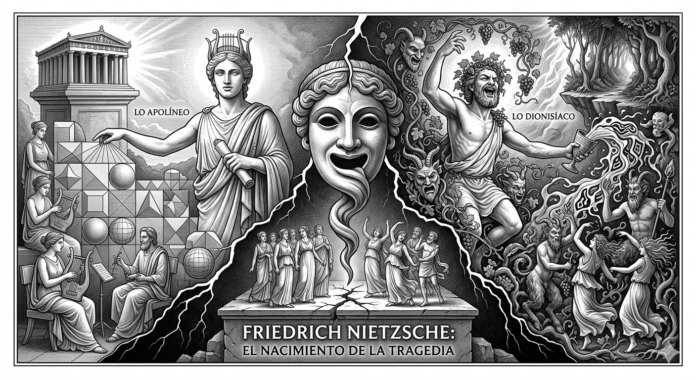
La audacia conceptual de Nietzsche reside en haber convertido dos divinidades del panteón griego en fuerzas cosmológicas del arte y la vida. No son metáforas decorativas ni tipos psicológicos: son, en su lectura, las dos pulsiones fundamentales que constituyen toda experiencia estética y toda existencia consciente.

Lo Apolíneo

Representado por el dios del sol y de la profecía, encarna la forma, el orden, la bella apariencia y el principio de individuación. Es la lógica de la escultura: el contorno nítido, la proporción, el sueño lúcido. Apolo nos da la ilusión consoladora de un mundo coherente.

Lo Dionisíaco

El dios del vino y el éxtasis representa la disolución del yo, el caos primordial y la música como torrente instintivo. Dioniso deshace las fronteras del individuo y lo reintegra al fondo indiferenciado de la existencia. Es terror y júbilo simultáneos.

Lo que hace a esta dualidad filosóficamente potente es que Nietzsche se niega a privilegiar uno sobre el otro. No es una batalla entre razón y pasión, ni entre civilización y barbarie. Es una tensión creativa necesaria. El arte más elevado —y aquí está el núcleo del argumento— emerge precisamente de la fricción entre ambas fuerzas, nunca de la victoria de una sobre la otra.

«En la embriaguez dionisíaca, el velo de Maya se rasga, y el individuo vislumbra, por un instante terrible y glorioso, la unidad primordial de toda existencia.»El nacimiento de la tragedia, §1

La tragedia ática: el momento en que el cosmos cantó con forma

Para Nietzsche, los griegos de la época de Esquilo y Sófocles lograron algo que ninguna otra cultura ha conseguido replicar: mantener el abismo dionisíaco abierto bajo los pies del espectador, sin cerrarlo ni escapar de él, gracias al poder formalizante de lo apolíneo. El coro ditirámico —masa dionisíaca, voz colectiva del instinto— era envuelto en el mito apolíneo del héroe trágico, cuya bella forma individual confería inteligibilidad a la catástrofe sin negarla.

Esta síntesis no era un compromiso ni una mediación burguesa entre extremos: era una alquimia. El espectador de la tragedia ática experimentaba simultáneamente el placer de la forma escultural —los versos perfectos de Sófocles, la arquitectura visual del teatro— y el horror de la disolución —Edipo descubriendo que su identidad era una ficción sangrienta, Orestes perseguido por las Erinias. El arte trágico enseñaba que la existencia es justificada como fenómeno estético; no moralmente, no racionalmente, sino estéticamente.

Este es uno de los gestos más radicales de Nietzsche en todo el libro. Frente a la tradición socrática y cristiana que busca una justificación ética o metafísica del sufrimiento, Nietzsche propone que el dolor y la destrucción son redimibles únicamente como espectáculo bello. La tragedia no consuela: transfigura.

Sócrates, o la muerte de la ilusión necesaria

El villano intelectual del libro no es un tirano ni un bárbaro: es Sócrates. Y en este punto, Nietzsche ejecuta su crítica más provocadora. El filósofo ateniense representa para él el surgimiento del hombre teórico: aquel que cree que el conocimiento racional puede penetrar toda superficie, corregir todo error, iluminar todo rincón oscuro de la existencia. El optimismo socrático es la convicción de que la razón es suficiente, de que la virtud es sinónimo de saber, de que la oscuridad es simplemente ignorancia disfrazada.

Pero la tragedia necesitaba exactamente lo contrario: necesitaba mantener la oscuridad, honrar lo insoluble, dejar que el abismo permaneciera abierto. En la obra de Eurípides —que Nietzsche trata como el agente literario del socratismo— el conflicto trágico se vuelve comprensible, los personajes adquieren motivaciones psicológicamente coherentes, el mito se racionaliza. Y al volverse comprensible, pierde su poder. La tragedia muere no por un golpe externo, sino por un exceso de luz interior.

«Sócrates fue el primer gran optimista; y en su sonrisa socarrona ante el misterio, mató algo que los griegos habían tardado siglos en construir.»Lectura crítica del §13

Esta crítica al racionalismo socrático anticipa, con asombrosa clarividencia, los argumentos que Nietzsche desarrollará veinte años después en El crepúsculo de los ídolos y en La voluntad de poder. En 1872, ya está formulando el diagnóstico de que la cultura occidental tomó un giro patológico al apostar toda su ficción fundacional sobre la razón.

American Dance Odyssey: When the Orchestra Moves and the Dancers Sing

American Dance Odyssey: When the Orchestra Moves and the Dancers Sing

New World Symphony + Miami City Ballet premiere a choreographic concerto–and honor Jerome Robbins in a sweeping celebration of American movement

Written By Olga Garcia-Mayoral

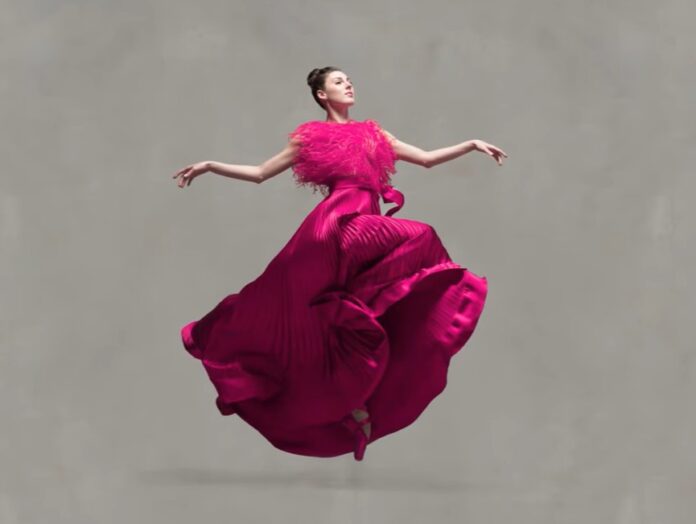
There are evenings at the New World Center that feel like a performance—and others that feel like a statement. American Dance Odyssey, presented by New World Symphony (NWS) and Miami City Ballet (MCB) April 17–19 under the leadership of Artistic Director Stéphane Denève, belongs emphatically to the second category. It is a world premiere built on collaboration at the highest level: a new Choreographic Concerto created by ten artists—five composers and five choreographers—followed by a tribute to the legendary Jerome Robbins, performed by principal dancers from major American ballet companies.

It’s rare to see a program that so directly argues for the present tense of classical music and ballet—not as institutions clinging to tradition, but as living forms that evolve through partnership, risk, and reinvention. Denève has become one of Miami’s most persuasive advocates for that kind of artistic courage. This project feels like an extension of a larger philosophy he has brought to NWS: that the orchestra is not a museum of repertoire, but an engine of new work, new formats, and new audiences—especially when it shares the stage with other disciplines.

The result is a night that doesn’t just present dance to music, or music to dance. It offers something more ambitious: a full-bodied portrait of American artistry through sound, rhythm, stamina, and storytelling—from new commissions that move like fresh weather to Robbins’ enduring genius bridging ballet and Broadway.

A World Premiere with Five Voices—and Five Ways of Moving

At the heart of the program is the Choreographic Concerto, structured in five movements, each created by a composer–choreographer pair. Rather than forcing uniformity, the design invites contrast: each movement becomes its own micro-world—its own vocabulary of tempo, gesture, and atmosphere—while still belonging to the larger structure of a single evening. That balance between independence and cohesion is not accidental; it’s the point.

In my interviews with Tiler Peck (choreographer) and Jennifer Higdon (composer), both artists returned to the same essential truth: when dance and music align, the music becomes a roadmap, and the body becomes its proof.

Tiler Peck: “The roadmap for me is the music.”

Peck spoke with refreshing clarity about her approach. She emphasized that she wasn’t trying to “match” other choreographers’ aesthetics—because she hadn’t seen their works yet. “I approached mine just as I would make any ballet,” she told me, “listening to the music I was given and coming up with what I thought worked the best.” She added that she believed each team was offered their own “world” to make, rather than being asked to contribute to a single choreographic style.

That idea—each movement as its own world—mirrors the nature of contemporary American art itself. The most compelling American work is rarely monolithic. It’s plural, energetic, sometimes contradictory, and often built on collaboration.

For Peck, the engine was the score. “Oh, 100%. The music tells me exactly how the piece should feel and look,” she said. “That’s definitely the roadmap for me—the music influences every step that I make.”

She described the particular music she received as intense and propulsive—ideal for athletic movement but demanding in its lack of downtime. It “felt like it had a lot of power and drive,” she said, “a propelling forward… a fast five minutes of really intense music that calls for athletic movement.” Her word “stamina” came up more than once—not only describing what dancers must do, but what choreography must become when set to relentless musical momentum: something that doesn’t pose, but moves.

What Peck hopes audiences feel is immediate and physical: “I hope the audience is on the edge of their seat… thinking what’s happening next, and then for it to finish and be like, ‘Wait, it’s already over.’”

That’s the best description of a successful dance premiere: not simply “beautiful,” but urgent—a burst of time that the audience experiences as too short, because it was alive.

Jennifer Higdon: “Tempo and beat—the big things.”

If Peck builds from music outward, Higdon builds from the dancers inward. Her language is practical and deeply respectful of the body. When I asked how composing for dance differs from composing for the concert stage, she answered immediately: “Structurally, we worry about the tempo… the pacing of the music. That’s the biggest thing because the dancers have to be able to articulate and dance what we put on the page.”

Then she added something more philosophical than it sounds: “I also make sure… to make a clear pulse… so it’s not too ethereal. So I like a beat to be present.” Tempo and beat aren’t only musical devices; they’re a kind of ethical agreement with the dancer. The music gives the body something to hold onto.

Higdon’s contribution, Dance Measures, expands on an earlier movement she wrote for string orchestra. Here she did something that reveals her compositional instinct: she didn’t reinvent the work so much as deepened it. “I took that one movement… and expanded it to make it longer to develop the musical ideas,” she said. “It used to be a string orchestra. Now it’s full orchestra… and there’s a little more complexity because I had a bigger sound palette.”

That phrase—“sound palette”—is perfect for a program like this, where orchestral color functions like stage lighting: an emotional tool as much as a sonic one.

Her collaboration with Peck happened mostly in parallel. “We actually worked independently,” Higdon told me, “but the music came first.” When she learned Peck would choreograph her piece, she admitted she “geeked out.” Their enthusiasm for each other’s craft came through instantly. She described it as “a good artistic pairing,” one built on trust.

The rhythmic architecture in Dance Measures is both clear and clever. Higdon told me she alternates meters—“four beats in a measure and then three beats and then four and three”—but keeps the pulse clean so dancers can embody it. She knew Peck would translate it: “Because I was in Tyler’s hands, it would work well.”

Higdon also spoke eloquently about the idea of a choreographic concerto. “I think it’s miraculous,” she said. “I’m bad at dancing, and the thought that people could fill the space visually… it blows me away.” She called the format “brilliant” and “very unusual,” emphasizing how rare it is for audiences to experience multiple new works in one evening that still feel connected.

Her metaphor was my favorite: “It’s almost like a multicourse meal.” Variety matters. Contrast matters. “I think the days of just doing one thing don’t always work as well,” she said. “So having this variety is ideal.”

That’s a curator’s statement as much as a composer’s. And in Miami—where art audiences move fluidly between disciplines—American Dance Odyssey understands the contemporary appetite: we want to be challenged, but we also want to be carried.

The New World Center: A Stage Built for Collaboration

The New World Center is uniquely suited to projects like this—an orchestra hall designed not only for concert ritual, but for reinvention. Denève’s leadership has amplified that capacity by programming more multidisciplinary work that pushes the Fellows beyond their default training.

What is most striking about this project is how it treats the NWS Fellows not as accompaniment to dance, but as an equally visible force. Ballet and orchestra are often presented as parallel trains moving together. Here, they are more like intertwined currents—each shaping the other’s momentum.

There’s also something deeply Miami about this collaboration: a city that is constantly negotiating identity through mixture—languages, histories, styles—watching an orchestra and a ballet company share authorship on the same stage feels not like novelty, but like truth.

A Tribute to Jerome Robbins: American Legend, Still Burning

If the first half is about the future—new commissions, new structures, new voices—the second half is about legacy, but not nostalgia. Jerome Robbins remains one of the most influential choreographers of the 20th century precisely because he refused to choose between genres. He treated ballet and Broadway as equal languages. He understood rhythm as narrative. He understood gesture as psychology. And he understood America as a place where the sacred and the popular constantly remix.

This tribute is the right culmination for a program called American Dance Odyssey. Because Robbins didn’t just choreograph American stories—he choreographed American movement: the way people walk, flirt, collide, fight, and dream. He brought ballet technique into the street without cheapening it, and he brought Broadway theatricality into ballet without diluting it.

It was also meaningful to hear Robbins’ name invoked in my interviews in a way that felt personal rather than ceremonial. Peck told me Robbins didn’t consciously shape her process for this particular premiere—but she acknowledged his influence is in her bones. “He obviously has influenced so much of me as a dancer and as a choreographer,” she said, because she has danced so many Robbins roles and absorbed that lineage from the inside.

Higdon described Robbins as “baked in” to American musical memory. When she thinks of certain scores, she sees Robbins’ movement immediately—proof that choreography can become inseparable from music in the imagination. That’s Robbins’ real legacy: he trained audiences to see music.

In that sense, the tribute portion doesn’t interrupt the world premiere. It completes it. It shows the continuum: new commissions are not a rupture from history—they are the next link in a chain of American innovation built by artists who believed collaboration could generate new language.

Why This Project Matters Now

A project like American Dance Odyssey arrives at a moment when audiences are hungry for work that feels both high-level and human—virtuosic but emotionally direct, ambitious but not aloof. In my conversation with Higdon, she said something that struck me as quietly profound: when kids hear music, they start moving. It’s visceral. It’s in our DNA. That’s the simplest argument for why dance and orchestral music endure: because they speak to the body before they speak to theory.

The Choreographic Concerto format also offers a model for the future: rather than asking audiences to invest in a single long abstract statement, it offers multiple entry points—five movements, five voices—while keeping the event cohesive through the larger concept. It’s how contemporary audiences often encounter visual art: an exhibition with multiple artists, across different rooms and energies, but with a single curatorial thesis.

This is why Miami is an ideal city for this experiment. Here, audiences already understand how to navigate multiple aesthetics in one night. They do it during art fairs. They do it in galleries. They do it in neighborhoods. The cultural literacy is already present.

Denève and NWS are simply meeting the city where it is—then raising the bar.

The Human Labor Behind the Beauty

One of the most moving dimensions of a program like this is not only the artistry, but the scale of human coordination required. A choreographic concerto is not a “piece.” It’s an ecosystem: composers writing under deadline, choreographers building movement under pressure, dancers learning new material while maintaining classical technique, musicians drilling complex rhythms and color shifts, and lighting and costume teams shaping the visual argument.

Peck described the schedule pressure as both challenging and creatively liberating: working fast prevents second-guessing. That’s true in visual art, too. Sometimes the clearest work comes when you don’t have the luxury of endless revision—when you must commit.

Higdon, meanwhile, spoke with genuine awe about dance as embodiment: the miracle of seeing music become motion. “Getting to hear something in my mind with people flying through the air… is just heaven,” she said. “It’s miraculous… and I’m so honored to be part of it.”

That sense of gratitude matters. Because it tells you something about what makes collaborations like this succeed: ego takes a back seat to wonder.

Don’t Miss This

Miami is fortunate to have institutions willing to mount a project of this scale and specificity. American Dance Odyssey doesn’t feel like a generic gala. It feels like an artistic proposition: that new music and new choreography deserve the same reverence as classics; that a tribute to Robbins is not a museum gesture but a living spark; and that an orchestra hall can be a laboratory for the future.

If you attend, go prepared to feel the music in your ribs and see rhythm in bodies. Go prepared for variety—five movements, five atmospheres—followed by the electric clarity of Robbins’ America. And go prepared for the most exhilarating kind of cultural experience: one that reminds you art is not a luxury add-on to life, but one of the most complete ways we have of understanding it.

American Dance Odyssey
Friday, April 17, 2026 – 8:00 PM
Saturday, April 18, 2026 – 8:00 PM (WALLCAST® + livestream on NWS Inside) https://media.nws.edu/
Sunday, April 19, 2026 – 2:00 PM
New World Center, Miami Beach

More info and tickets: https://nws.edu/dance

Esther Mahlangu

Esther Mahlangu
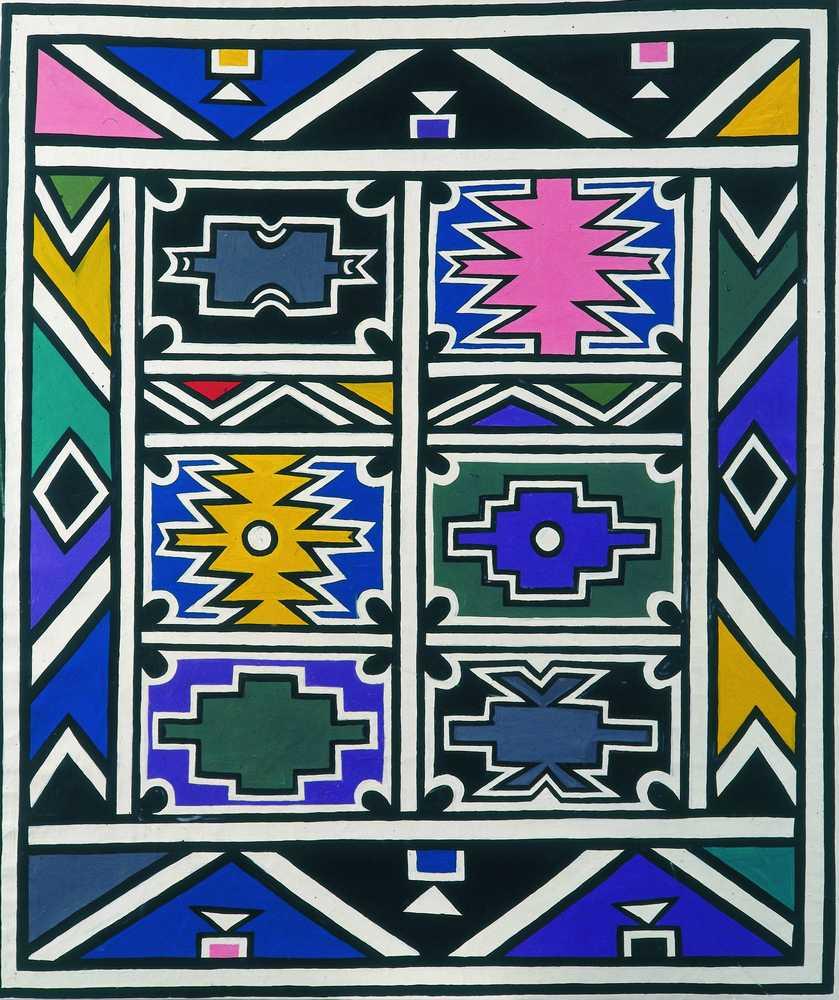
Geometry as Resistance: The Art and Legacy of Esther Mahlangu, born on 11 November 1935 on a farm outside Middelburg in South Africa

Esther Mahlangu

Geometry as Resistance: The Art and Legacy of Esther Mahlangu

“One of the most important artists of our time — painting is in her heart and in her blood.”  Hans Ulrich Obrist, Artistic Director, Serpentine Galleries

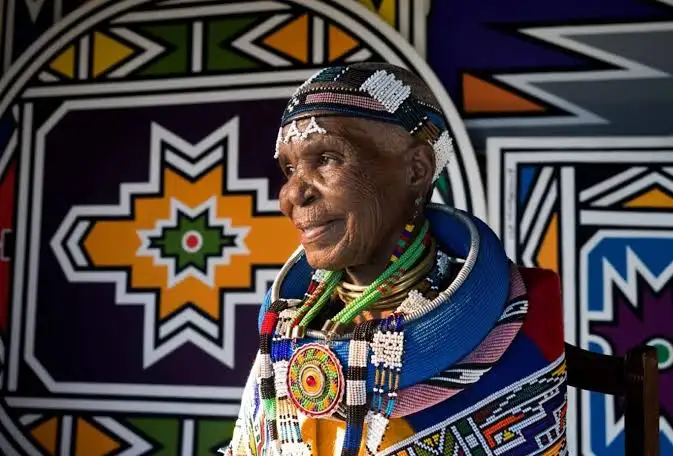
There are artists who paint the world as they find it, and there are artists who paint the world back into existence after it has been stolen. Esther Nikwambi Mahlangu, born on 11 November 1935 on a farm outside Middelburg in South Africa’s Mpumalanga province, belongs firmly in the second category. For nearly nine decades, she has wielded a chicken feather — her instrument of choice — with the precision of a geometer and the authority of a griotte, producing works that are simultaneously ancient and radical, communal and deeply personal. To dismiss her art as “decorative” or merely “traditional” is to commit the most grievous error in criticism: mistaking the surface for the meaning.

Origins of a Visual Language

For hundreds of years, the Ndebele people of South Africa have used architecture, mural painting, and beadwork to express that they belong to a distinctive identity. This material culture became particularly important as they began to become dispersed — beginning in the 1800s with war against the colonial Boers and intensified in the 1940s by the onset of apartheid and white minority rule. The Conversation What this tells us, from an art-historical standpoint, is that Ndebele visual culture was never merely aesthetic. It was a technology of survival.

As the Ndebele lost their land and became dispersed, they held on to their painting, architecture, and beaded dress to preserve their sense of belonging and identity. Their material culture evolved to express cultural resistance and continuity. The Conversation Wall paintings, executed exclusively by women, carried encoded social meaning: the original patterns painted on houses were part of a ritual to announce events like a birth, death, wedding, or when a boy goes off to the initiation school. Artsy In the vocabulary of semiotics, these were not mere signs but full symbolic systems — a grammar of identity legible to insiders and deliberately opaque to colonial authorities who, as one historical account notes, viewed the paintings as harmless, never understanding what was being communicated beneath the geometry.

Mahlangu was born the eldest of nine children and is a member of the Southern Ndebele people. She began painting at the age of ten, taught by her mother and grandmother in accordance with Ndebele tradition, in which adolescent girls learn to paint in preparation for decorating the exterior of their homes after marriage. Wikipedia What is critical here is the pedagogical structure: this was knowledge transmitted matrilineally, outside formal institutions, constituting a parallel academy invisible to the colonial and apartheid state.

Esther Mahlangu

The Artist’s Hand: Technique as Statement

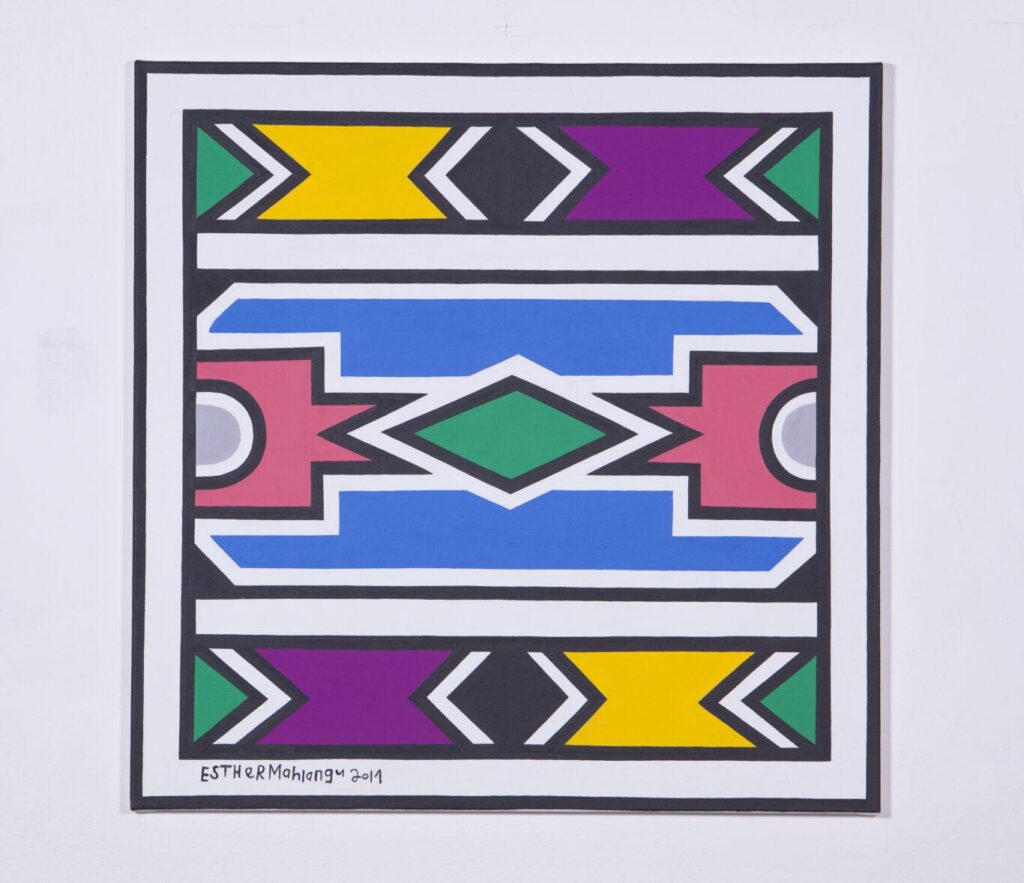
Mahlangu works a visual language that spans disciplines, from pop art to graphic design. She imagines her compositions without the help of preliminary drawings, and, with superhuman precision and using a delicate chicken feather as her brush, she applies thick black lines in patterns that echo Ndebele beadwork but in paint, then adds swathes of rich color. Artsy The refusal of the preliminary sketch is not a limitation — it is a philosophical position. To draw freehand, without measurement, is to declare that this knowledge is embodied, not algorithmic; carried in the hands and the eye, not in instruments of Western technical rationality.

She draws freehand, without first measuring or sketching, using luminous and high-contrast vinyl paints that lend extraordinary vigor to her murals. Google Arts & Culture The shift from natural pigments to industrially manufactured paints — a change that occurred in the mid-twentieth century — is itself a quiet act of adaptation. During the years in which Mahlangu was mastering Ndebele visual semiotics and modernizing Ndebele artistic practice, she began to use industrially manufactured paints, improvising new shapes, working on diverse canvases, and introducing figuration. Artforum Here is where Mahlangu’s genius lies: tradition for her is not a cage but a scaffold — a structure from which she improvises.

Esther Mahlangu

The Global Stage: From Mpumalanga to the Centre Pompidou

The turning point came in 1986, when French researchers travelling the world to document traditional arts encountered the paintings on Mahlangu’s house. Between 1980 and 1991 she lived and worked at the Botshabelo Historical Village, an open-air museum of Ndebele culture. In 1986, researchers from Paris who were travelling the world to document traditional arts saw the paintings on Mahlangu’s house and invited her to create murals for an exhibition of international contemporary art, the Magiciens de la Terre (“Magicians of the World”). South African History Online

Mahlangu first received global recognition in 1989 at the Magiciens de la Terre group exhibition, held at the Centre Pompidou and Grand Halle de la Villette in Paris. The exhibition was intended to highlight contemporary art from non-Western countries on an international stage, and her participation brought her wider attention. Wikipedia One must, however, read this moment with critical eyes. Magiciens de la Terre was not without controversy — scholars have debated the extent to which it reproduced the very primitivising gaze it claimed to dismantle, positioning non-Western artists as bearers of timeless tradition rather than as contemporary practitioners making deliberate aesthetic choices. Mahlangu herself navigated this framing with characteristic dignity, demonstrating through the very precision of her freehand line that she was no ethnographic exhibit.

Esther Mahlangu was forced to act in an ethnographic charade, yet she constructed a unique Ndebele grammar that has finally been acknowledged. Artforum That tension — between being instrumentalised by the Western gaze and asserting one’s own artistic sovereignty — runs through the entirety of her career.

Esther Mahlangu

The BMW Art Car: Tradition on a Global Canvas

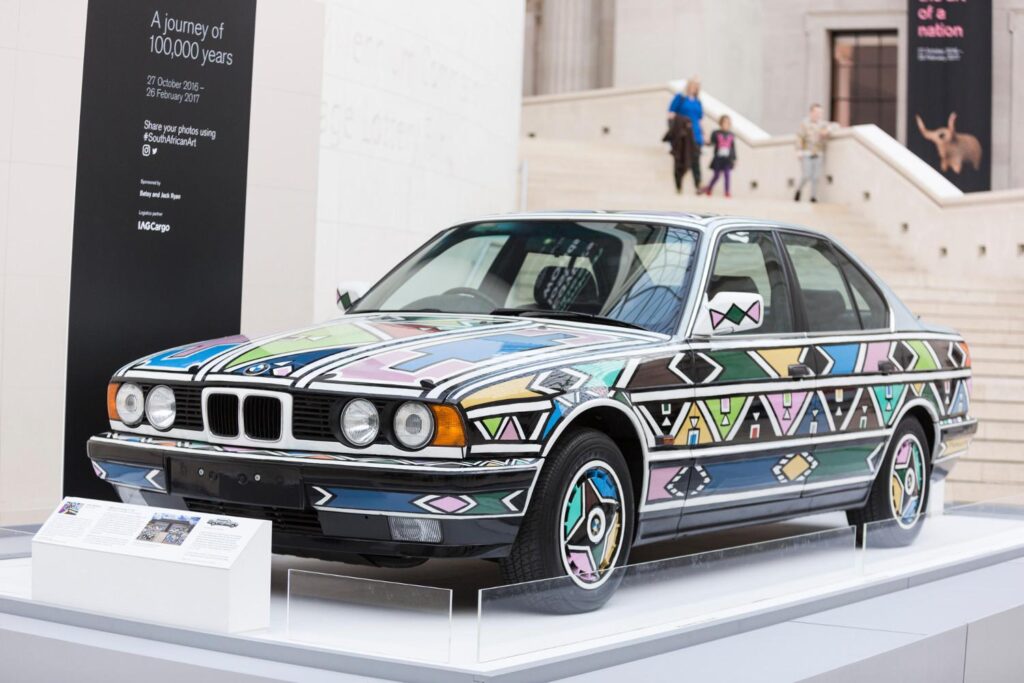
In 1991, Mahlangu was commissioned by BMW to paint a 525i sedan, entering a lineage that included Andy Warhol, David Hockney, Robert Rauschenberg, Frank Stella, and Roy Lichtenstein. Her design featured traditional Ndebele motifs and was the first BMW Art Car created by both a non-Western artist and a woman. Wikipedia The symbolism here is almost too rich for commentary: a Black woman from rural Mpumalanga, who had never driven a car, inserting herself into one of the most prestigious circuits of Western art-world prestige.

Thomas Girst, art historian and Head of Cultural Engagement at BMW, acknowledged the uncomfortable history lurking in this collaboration: “I would think that no art is being created in a vacuum. It’s somewhat problematic when looking at South African art and Western art — with mostly Western art taking and African art giving. The way that African art was appropriated is more of a taker’s attitude.” Artsy This is a rare moment of institutional self-awareness, and it places Mahlangu’s BMW commission in a productive critical light. She was not simply included in the Western canon — she was confronting it from within, on its own metallic surface.

Previously, art cars had been reserved as prestigious “boys’ toys” for the usual suspects: Andy Warhol, Robert Rauschenberg, Roy Lichtenstein, Frank Stella, David Hockney, and, more recently, Jeff Koons. Mahlangu was not only the first woman to be added to that list — she was, and remains, the only African. Wanted Online That singularity, three decades on, should disturb us as much as it impresses us.

Tradition, Commerce, and Cultural Capital

No critical assessment of Mahlangu’s work can avoid the question of commodification. What was once an embedded form of cultural communication has now become a recognised asset in the global art economy. Mahlangu’s work, grounded in communal tradition, is being traded in the same circuits as blue-chip contemporary art. This transition — from a community practice to a commodified object of global desire — raises critical questions about cultural capital, ownership, and the selective inclusion of African traditions in profit-driven systems. MoMAA

Painting as a modern, commercially determined practice hardly existed in Ndebele culture before the 1990s. Esther Mahlangu pioneered the artistic transference of Ndebele designs, then virtually exclusively reserved for wall paintings, onto canvas. Wanted Online Her adaptation was pragmatic and visionary: “I started painting on canvas and board as I realised not everybody will be able to see the Ndebele painting in Mpumalanga where I live, and I felt I need to take it to them to see. This is how my work started to be exhibited in museums and galleries around the world.” Artsy

Yet Mahlangu’s case is exceptional, not typical. Thousands of African artisans remain excluded from the economic value their traditions generate abroad. Mahlangu’s visibility becomes both proof of possibility and indictment of the larger system. MoMAA The global art market did not discover the value of Ndebele art — it merely began to price it, and that is a distinction with profound ethical implications.

Esther Mahlangu

Recognition, Legacy, and the Pedagogical Imperative

The institutional honours Mahlangu has accumulated are considerable. In 2006, the Government of South Africa awarded Mahlangu the Order of Ikhamanga in Silver for “excellent contribution to the development of the indigenous Ndebele arts.” In April 2018, she was awarded an honorary doctorate by the University of Johannesburg. In 2024, she received an honorary Doctor of Philosophy in mathematics from the University of South Africa in recognition of her artistic career and “mathematical prowess.” Wikipedia That last degree — in mathematics — is itself a critical statement: it formally acknowledges what artists and scholars of African visual culture have long argued, that geometric abstraction of this complexity is not instinctive decoration but rigorous spatial and mathematical thinking.

With the goal of preserving her cultural heritage, Mahlangu started an art school in the backyard of her home in Mabhoko (Weltevreden) in the KwaMhlanga district. She funded the school herself, and when not travelling for exhibitions she mentors young artists in the traditional style of Ndebele design. Pupils learn how to mix pigments and paint straight lines, freehanded and without sketches, using their fingers or chicken feathers. South African History Online This act of self-funded pedagogy — an artist establishing an institution outside the state, outside the market — is perhaps her most radical gesture. It insists that the transmission of this knowledge must not depend on the goodwill of institutions that have historically misunderstood or exploited it.

Conclusion: The Geometry Holds

In 2024, Mahlangu presented her first full retrospective, Then I Knew I Was Good at Painting, a fifty-year travelling exhibition that originated at the Iziko South African National Gallery. Wikipedia The title is drawn from a story she tells of her childhood: painting on the back of her family’s house while her mother and grandmother were away, being scolded on their return, and persisting anyway — until the day they finally called her back to the front. It is a story about artistic formation, but it is also a story about refusal. Refusal to be told where to paint, what to paint, and for whom.

That refusal is the spine of her entire career. Esther Mahlangu has spent nine decades insisting, in the most vivid geometries imaginable, that Ndebele visual culture is not a relic to be preserved under glass but a living language capable of adorning anything from a rural mud wall to a BMW, a Rolls-Royce Phantom, a British Airways tail fin, and the walls of the Centre Pompidou. She did not ask permission from the Western art world to be significant. She simply painted — freehand, without a sketch, without a ruler — and waited for the world to catch up.


Sources

  1. Zvomuya, P. “Esther Mahlangu and Ndebele Art.” Artforum, June 2025. https://www.artforum.com/features/esther-mahlangu-ndebele-art-percy-zvomuya-1234731435/
  2. Ndlovu, S. “Esther Mahlangu: How the Famous South African Artist Keeps Her Ndebele Culture Alive.” The Conversation / Daily Maverick, November 2024. https://theconversation.com/esther-mahlangu-how-the-famous-south-african-artist-keeps-her-ndebele-culture-alive-225845
  3. “Esther Mahlangu.” Wikipedia. https://en.wikipedia.org/wiki/Esther_Mahlangu
  4. “Esther Mahlangu.” South African History Online. https://sahistory.org.za/people/esther-mahlangu
  5. “Esther Mahlangu Is Keeping Africa’s Ndebele Painting Alive.” Artsy, 2017. https://www.artsy.net/article/artsy-editorial-esther-mahlangu-is-keeping-africa-s-ndebele-painting-alive
  6. “The Art Woman: Dr Esther Mahlangu’s Ndebele Art Renaissance.” Wanted Online, 2017. https://www.wantedonline.co.za/art-design/2017-02-10-the-art-woman-dr-esther-mahlangus-ndebele-art-renaissance/
  7. “Esther Mahlangu — Ndebele Painting Ambassador.” Google Arts & Culture. https://artsandculture.google.com/story/esther-mahlangu-ndebele-painting-ambassador/4QIiDMDyXh5QJg
  8. Adeyemi, A. “Esther Mahlangu’s Ndebele Revolution: When African Tradition Hits the Global Art Market.” MoMAA, 2025. https://momaa.org/esther-mahlangus-ndebele-revolution-when-african-tradition-hits-the-global-art-market/

Primer Congreso Iberoamericano de Educación Artística y Cultural – Artes para la Paz 2026

Primer Congreso Iberoamericano de Educación Artística y Cultural – Artes para la Paz 2026
Bogotá será epicentro regional de la educación artística y cultural

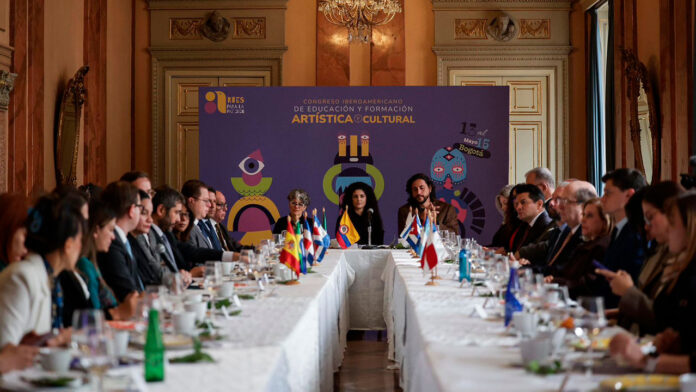
El Primer Congreso Iberoamericano de Educación Artística y Cultural – Artes para la Paz 2026 posiciona a Bogotá como el nuevo epicentro del pensamiento cultural en la región. Del 13 al 15 de mayo, el Centro Nacional de las Artes Delia Zapata Olivella acogerá un encuentro sin precedentes que reunirá a ministros de cultura, académicos, artistas y líderes comunitarios de más de 20 países.

Convocado por el Ministerio de las Culturas, las Artes y los Saberes de Colombia, bajo el liderazgo de Yannai Kadamani, en alianza con la Organización de Estados Iberoamericanos (OEI) y con el respaldo de UNESCO, la Secretaría General Iberoamericana (SEGIB) y el Banco de Desarrollo de América Latina (CAF), el congreso se plantea como un espacio donde la cultura deja de ser discurso para convertirse en acción política concreta.

El objetivo es claro: traducir acuerdos internacionales en políticas públicas efectivas que consoliden la educación artística como un derecho universal y un eje estructural del desarrollo. En palabras de la ministra Yannai Kadamani, el encuentro busca no solo compartir experiencias y modelos pedagógicos, sino también “proponerle al mundo una manera de entender la educación integral”.

Este posicionamiento no surge en el vacío. Colombia llega al congreso con avances significativos: el programa Artes para la Paz ha alcanzado más de 538.000 personas en 726 municipios, cubriendo el 66 % del territorio nacional. A esto se suma la reciente ley Artes al Aula (2025), que integra la educación artística dentro del sistema educativo formal, marcando un giro estructural en la política cultural del país.

En un contexto global donde la educación artística ha sido históricamente periférica, este congreso se alinea con marcos internacionales como la Hoja de Ruta de Lisboa, el Marco de Abu Dabi (2024) y MONDIACULT 2025, reafirmando su relevancia en la construcción de ciudadanía, cohesión social y desarrollo sostenible.

Uno de los resultados más significativos será la creación de la Red Iberoamericana de Educación Artística y Cultural (RedArtes), concebida como una plataforma permanente de cooperación regional. Más que una iniciativa institucional, esta red propone una infraestructura cultural compartida, donde conocimiento, metodologías y políticas circulen entre países, consolidando una visión común.

Desde una perspectiva curatorial, lo que este congreso pone en juego es un cambio de paradigma: el desplazamiento del arte desde el objeto hacia el proceso formativo, desde el espacio expositivo hacia el territorio social. La educación artística deja de ser un complemento para convertirse en un dispositivo de transformación cultural y política.

En un momento histórico atravesado por crisis múltiples—sociales, ambientales y tecnológicas—Colombia propone, desde Bogotá, una idea ambiciosa: que el arte no solo refleje el mundo, sino que participe activamente en su reconstrucción.

El Congreso Iberoamericano no es solo un evento. Es una declaración de futuro.

Source: https://www.presidencia.gov.co/prensa/Paginas/Bogota-sera-epicentro-regional-de-la-educacion-artistica-y-cultural-260413.aspx

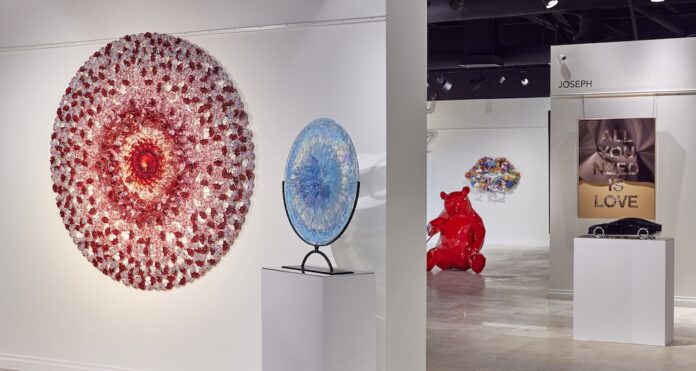
Markowicz Fine Art

Markowicz Gallery
Markowicz Gallery

Markowicz Fine Art

Since its establishment in 2010, Markowicz Fine Art has affirmed its position on the map of contemporary art not only in the United States, but internationally. Founded and directed by Bernard Markowicz, our fine art galleries have evolved into renowned destinations for discerning art collectors and enthusiasts worldwide, while helping to build new audiences. With galleries in the vibrant heart of Miami and the Laguna Design Center in Orange County, CA, our expansion marks a commitment to sharing exceptional artistry with new audiences.

Markowicz Fine Art promotes an impressive roster of internationally renowned fine art artists, from influential masters like Pop Art icons, Andy Warhol and Tom Wesselman, master of Hyperrealism, Carole Feuerman, figurative artist Fernando Botero, and contemporary surrealist Annalù, to emerging luminaries such as Idan Zareski, L’Atlas, Leo & Steph, and the cutting-edge street artist Kaï. As the exclusive agent for French virtuoso Alain Godon, we proudly showcase his groundbreaking Bildoreliefo technique, exemplifying innovation and artistic evolution. From photography and print, sculptures and paintings or mixed media, Bernard Markowicz’s fine art world promises to captivate and inspire.
In partnership with Bel-Air Fine Art, a prestigious gallery with global acclaim, Markowicz Fine Art extends its reach, offering collectors access to a diverse spectrum of fine art from across the globe. Bel-Air Fine Art’s esteemed roster includes artists like Patrick Hughes, Antoine Rose, Cédric Bouteiller, and Hong Yi Zhuang, enriching our collective artistic landscape.

At Markowicz Fine Art, we curate artistic experiences rather than mere. Our galleries provide a space for exploration and inspiration, where each artwork invites viewers on a journey of discovery. Whether it’s your first art acquisition or an addition to an extensive collection, our expert team of advisors are dedicated to guiding you through your personal artistic journey.


Specializing in the placement of artworks in residential, commercial, and hospitality projects, including prestigious hotels and restaurants, Markowicz Fine Art ensures that each piece seamlessly integrates into its environment, elevating the aesthetic appeal and ambiance of any space.

Represented Artists

Kaï

Beau Simmons

Carole A. Feuerman

Annalù

Eva Armisén

Secondary Market

Tom Wesselmann

Andy Warhol

Antonio Segui

Arman

Arno Elias

Bambi

Banksy

Bert Stern

Daniel Arsham

FAILE

Fernando Botero

Jerkface

Julio Valdez-Gonzalez

Manolo Valdes

Marilyn Minter

Mr. Brainwash

Robert Indiana

Shepard Fairey

Terry O’Neill

The London Police

Exhibited Artists

Richard Orlinski

Isabelle Scheltjens

Alexandra Gestin

Anne Valverde

Antoine Dufilho

Antoine Rose

Cécile Plaisance

Cerj Lalonde

Craig Alan

Formento & Formento

Francois Bel

Gaspard Mitz

Grégory Baôo

Hunt Rettig

Idan Zareski

J. Leo

JD Miller

Joël Moens

Johannes Boekhoudt

Jonathan Seliger

L’Atlas

Leo et Steph

Lisa Bartleson

Luis Gómez Macpherson

Lyès-Olivier Sidhoum

Michael Kalish

NOART

Paul Ecke

Phil Luangrath and Favio Landeira

Rachel Bergeret

Rafael Sliks

Reine Paradis

Sebastien Preschoux

Shiori Eda

Stephane Gautier

Steven D. Gagnon

Tom Lieber

Tommy Zen

Patrick Rubinstein

Famous Fine Art Artists

Markowicz Fine Art showcases a wide variety of established and emerging fine art artists from around the world. Each of Markowicz Fine Art’s galleries features fine artworks from internationally renowned artists, including master of Hyperrealism, Carole Feuerman, best-selling French artist, Richard Orlinski, international street artist, Kaï, and many more. Browse the list of our fine artists below and find your favorite contemporary art for sale.

Between Painting, Sculpture and Photography, from Hyperrealism to the Ethereal: Carole Feuerman, Arno Elias, Annalù, Beau Simmons, and many more

Markowicz Fine Art is proud to present a wide-ranging array of artists, each contributing a unique perspective and artistic vision to the gallery’s vibrant program. From hyperrealistic sculpture to ethereal photography, the gallery represents a diverse lineup of talent that pushes creative boundaries, challenges conventions, and inspires meaningful dialogue.

Among the distinguished roster of artists are Carole Feuerman, a pioneer in hyperrealistic sculpture whose meticulous craftsmanship and emotive depth set new standards; Arno Elias, a French-American artist and musician who channels his commitment to environmental sustainability and endangered species into his hand-painted photographs and musical compositions; Annalù, who creates ethereal landscapes and mythical architectures with her surrealist resin-glass sculptures, drawing inspiration from lyricism and symbolism; and Beau Simmons, a master of medium format film photography who captures the essence of the Western lifestyle with poignant authenticity.

Beyond these examples, Markowicz Fine Art represents a diverse array of famous fine art artists whose work spans a myriad of mediums and styles. From abstract expressionism to figurative painting, from sculpture to photography, the gallery’s roster reflects the richness and diversity of contemporary art today.

With a shared commitment to artistic innovation, social consciousness, and creative expression, the artists represented by Markowicz Fine Art collectively challenge perceptions, and leave a unique mark on the world of contemporary art. Whether through realism, abstraction or surrealism, with sculpture, painting, or photography, each artist brings their very own voice to the gallery, enriching the cultural landscape and inspiring audiences around the globe.

Page 3 of 286
1 2 3 4 5 286