American Dance Odyssey: When the Orchestra Moves and the Dancers Sing
New World Symphony + Miami City Ballet premiere a choreographic concerto–and honor Jerome Robbins in a sweeping celebration of American movement
Written By Olga Garcia-Mayoral
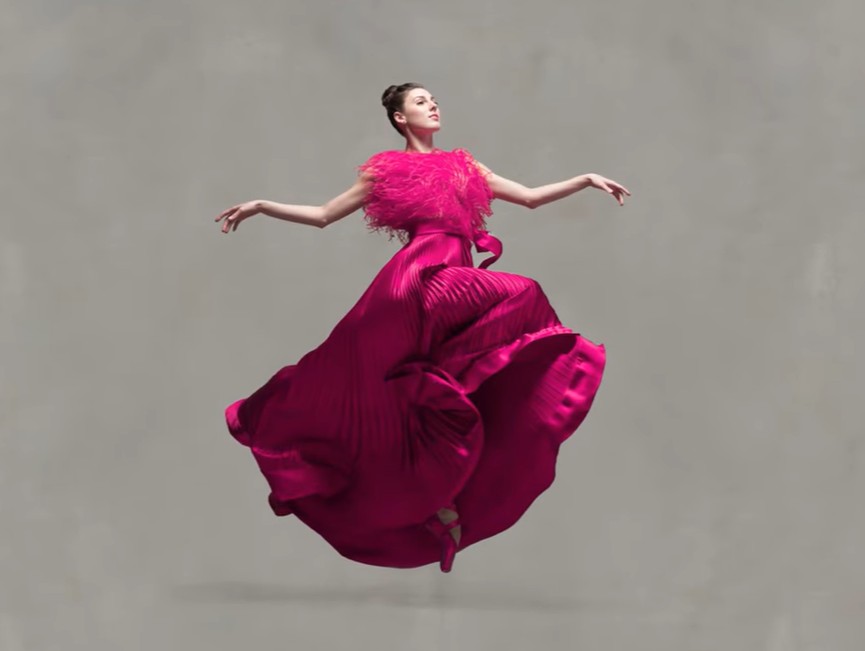
There are evenings at the New World Center that feel like a performance—and others that feel like a statement. American Dance Odyssey, presented by New World Symphony (NWS) and Miami City Ballet (MCB) April 17–19 under the leadership of Artistic Director Stéphane Denève, belongs emphatically to the second category. It is a world premiere built on collaboration at the highest level: a new Choreographic Concerto created by ten artists—five composers and five choreographers—followed by a tribute to the legendary Jerome Robbins, performed by principal dancers from major American ballet companies.
It’s rare to see a program that so directly argues for the present tense of classical music and ballet—not as institutions clinging to tradition, but as living forms that evolve through partnership, risk, and reinvention. Denève has become one of Miami’s most persuasive advocates for that kind of artistic courage. This project feels like an extension of a larger philosophy he has brought to NWS: that the orchestra is not a museum of repertoire, but an engine of new work, new formats, and new audiences—especially when it shares the stage with other disciplines.
The result is a night that doesn’t just present dance to music, or music to dance. It offers something more ambitious: a full-bodied portrait of American artistry through sound, rhythm, stamina, and storytelling—from new commissions that move like fresh weather to Robbins’ enduring genius bridging ballet and Broadway.

A World Premiere with Five Voices—and Five Ways of Moving
At the heart of the program is the Choreographic Concerto, structured in five movements, each created by a composer–choreographer pair. Rather than forcing uniformity, the design invites contrast: each movement becomes its own micro-world—its own vocabulary of tempo, gesture, and atmosphere—while still belonging to the larger structure of a single evening. That balance between independence and cohesion is not accidental; it’s the point.
In my interviews with Tiler Peck (choreographer) and Jennifer Higdon (composer), both artists returned to the same essential truth: when dance and music align, the music becomes a roadmap, and the body becomes its proof.
Tiler Peck: “The roadmap for me is the music.”
Peck spoke with refreshing clarity about her approach. She emphasized that she wasn’t trying to “match” other choreographers’ aesthetics—because she hadn’t seen their works yet. “I approached mine just as I would make any ballet,” she told me, “listening to the music I was given and coming up with what I thought worked the best.” She added that she believed each team was offered their own “world” to make, rather than being asked to contribute to a single choreographic style.
That idea—each movement as its own world—mirrors the nature of contemporary American art itself. The most compelling American work is rarely monolithic. It’s plural, energetic, sometimes contradictory, and often built on collaboration.
For Peck, the engine was the score. “Oh, 100%. The music tells me exactly how the piece should feel and look,” she said. “That’s definitely the roadmap for me—the music influences every step that I make.”
She described the particular music she received as intense and propulsive—ideal for athletic movement but demanding in its lack of downtime. It “felt like it had a lot of power and drive,” she said, “a propelling forward… a fast five minutes of really intense music that calls for athletic movement.” Her word “stamina” came up more than once—not only describing what dancers must do, but what choreography must become when set to relentless musical momentum: something that doesn’t pose, but moves.
What Peck hopes audiences feel is immediate and physical: “I hope the audience is on the edge of their seat… thinking what’s happening next, and then for it to finish and be like, ‘Wait, it’s already over.’”
That’s the best description of a successful dance premiere: not simply “beautiful,” but urgent—a burst of time that the audience experiences as too short, because it was alive.
Jennifer Higdon: “Tempo and beat—the big things.”
If Peck builds from music outward, Higdon builds from the dancers inward. Her language is practical and deeply respectful of the body. When I asked how composing for dance differs from composing for the concert stage, she answered immediately: “Structurally, we worry about the tempo… the pacing of the music. That’s the biggest thing because the dancers have to be able to articulate and dance what we put on the page.”
Then she added something more philosophical than it sounds: “I also make sure… to make a clear pulse… so it’s not too ethereal. So I like a beat to be present.” Tempo and beat aren’t only musical devices; they’re a kind of ethical agreement with the dancer. The music gives the body something to hold onto.
Higdon’s contribution, Dance Measures, expands on an earlier movement she wrote for string orchestra. Here she did something that reveals her compositional instinct: she didn’t reinvent the work so much as deepened it. “I took that one movement… and expanded it to make it longer to develop the musical ideas,” she said. “It used to be a string orchestra. Now it’s full orchestra… and there’s a little more complexity because I had a bigger sound palette.”
That phrase—“sound palette”—is perfect for a program like this, where orchestral color functions like stage lighting: an emotional tool as much as a sonic one.
Her collaboration with Peck happened mostly in parallel. “We actually worked independently,” Higdon told me, “but the music came first.” When she learned Peck would choreograph her piece, she admitted she “geeked out.” Their enthusiasm for each other’s craft came through instantly. She described it as “a good artistic pairing,” one built on trust.
The rhythmic architecture in Dance Measures is both clear and clever. Higdon told me she alternates meters—“four beats in a measure and then three beats and then four and three”—but keeps the pulse clean so dancers can embody it. She knew Peck would translate it: “Because I was in Tyler’s hands, it would work well.”
Higdon also spoke eloquently about the idea of a choreographic concerto. “I think it’s miraculous,” she said. “I’m bad at dancing, and the thought that people could fill the space visually… it blows me away.” She called the format “brilliant” and “very unusual,” emphasizing how rare it is for audiences to experience multiple new works in one evening that still feel connected.
Her metaphor was my favorite: “It’s almost like a multicourse meal.” Variety matters. Contrast matters. “I think the days of just doing one thing don’t always work as well,” she said. “So having this variety is ideal.”
That’s a curator’s statement as much as a composer’s. And in Miami—where art audiences move fluidly between disciplines—American Dance Odyssey understands the contemporary appetite: we want to be challenged, but we also want to be carried.
The New World Center: A Stage Built for Collaboration
The New World Center is uniquely suited to projects like this—an orchestra hall designed not only for concert ritual, but for reinvention. Denève’s leadership has amplified that capacity by programming more multidisciplinary work that pushes the Fellows beyond their default training.
What is most striking about this project is how it treats the NWS Fellows not as accompaniment to dance, but as an equally visible force. Ballet and orchestra are often presented as parallel trains moving together. Here, they are more like intertwined currents—each shaping the other’s momentum.
There’s also something deeply Miami about this collaboration: a city that is constantly negotiating identity through mixture—languages, histories, styles—watching an orchestra and a ballet company share authorship on the same stage feels not like novelty, but like truth.
A Tribute to Jerome Robbins: American Legend, Still Burning
If the first half is about the future—new commissions, new structures, new voices—the second half is about legacy, but not nostalgia. Jerome Robbins remains one of the most influential choreographers of the 20th century precisely because he refused to choose between genres. He treated ballet and Broadway as equal languages. He understood rhythm as narrative. He understood gesture as psychology. And he understood America as a place where the sacred and the popular constantly remix.
This tribute is the right culmination for a program called American Dance Odyssey. Because Robbins didn’t just choreograph American stories—he choreographed American movement: the way people walk, flirt, collide, fight, and dream. He brought ballet technique into the street without cheapening it, and he brought Broadway theatricality into ballet without diluting it.
It was also meaningful to hear Robbins’ name invoked in my interviews in a way that felt personal rather than ceremonial. Peck told me Robbins didn’t consciously shape her process for this particular premiere—but she acknowledged his influence is in her bones. “He obviously has influenced so much of me as a dancer and as a choreographer,” she said, because she has danced so many Robbins roles and absorbed that lineage from the inside.
Higdon described Robbins as “baked in” to American musical memory. When she thinks of certain scores, she sees Robbins’ movement immediately—proof that choreography can become inseparable from music in the imagination. That’s Robbins’ real legacy: he trained audiences to see music.
In that sense, the tribute portion doesn’t interrupt the world premiere. It completes it. It shows the continuum: new commissions are not a rupture from history—they are the next link in a chain of American innovation built by artists who believed collaboration could generate new language.
Why This Project Matters Now
A project like American Dance Odyssey arrives at a moment when audiences are hungry for work that feels both high-level and human—virtuosic but emotionally direct, ambitious but not aloof. In my conversation with Higdon, she said something that struck me as quietly profound: when kids hear music, they start moving. It’s visceral. It’s in our DNA. That’s the simplest argument for why dance and orchestral music endure: because they speak to the body before they speak to theory.
The Choreographic Concerto format also offers a model for the future: rather than asking audiences to invest in a single long abstract statement, it offers multiple entry points—five movements, five voices—while keeping the event cohesive through the larger concept. It’s how contemporary audiences often encounter visual art: an exhibition with multiple artists, across different rooms and energies, but with a single curatorial thesis.
This is why Miami is an ideal city for this experiment. Here, audiences already understand how to navigate multiple aesthetics in one night. They do it during art fairs. They do it in galleries. They do it in neighborhoods. The cultural literacy is already present.
Denève and NWS are simply meeting the city where it is—then raising the bar.
The Human Labor Behind the Beauty
One of the most moving dimensions of a program like this is not only the artistry, but the scale of human coordination required. A choreographic concerto is not a “piece.” It’s an ecosystem: composers writing under deadline, choreographers building movement under pressure, dancers learning new material while maintaining classical technique, musicians drilling complex rhythms and color shifts, and lighting and costume teams shaping the visual argument.
Peck described the schedule pressure as both challenging and creatively liberating: working fast prevents second-guessing. That’s true in visual art, too. Sometimes the clearest work comes when you don’t have the luxury of endless revision—when you must commit.
Higdon, meanwhile, spoke with genuine awe about dance as embodiment: the miracle of seeing music become motion. “Getting to hear something in my mind with people flying through the air… is just heaven,” she said. “It’s miraculous… and I’m so honored to be part of it.”
That sense of gratitude matters. Because it tells you something about what makes collaborations like this succeed: ego takes a back seat to wonder.
Don’t Miss This
Miami is fortunate to have institutions willing to mount a project of this scale and specificity. American Dance Odyssey doesn’t feel like a generic gala. It feels like an artistic proposition: that new music and new choreography deserve the same reverence as classics; that a tribute to Robbins is not a museum gesture but a living spark; and that an orchestra hall can be a laboratory for the future.
If you attend, go prepared to feel the music in your ribs and see rhythm in bodies. Go prepared for variety—five movements, five atmospheres—followed by the electric clarity of Robbins’ America. And go prepared for the most exhilarating kind of cultural experience: one that reminds you art is not a luxury add-on to life, but one of the most complete ways we have of understanding it.
American Dance Odyssey
Friday, April 17, 2026 – 8:00 PM
Saturday, April 18, 2026 – 8:00 PM (WALLCAST® + livestream on NWS Inside) https://media.nws.edu/
Sunday, April 19, 2026 – 2:00 PM
New World Center, Miami Beach
More info and tickets: https://nws.edu/dance