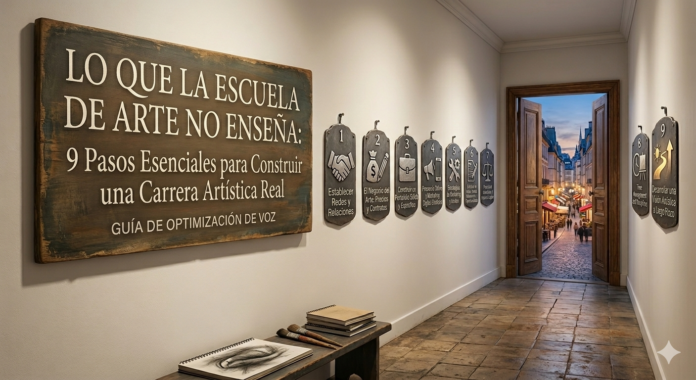
Lo que la escuela de arte no enseña: 9 pasos esenciales para construir una carrera artística real
La graduación suele confundirse con la llegada. En realidad, es un punto de partida—uno que revela una brecha fundamental entre la formación académica y la realidad profesional. La escuela de arte afina la percepción, la técnica y el lenguaje crítico, pero rara vez dota a los artistas de las herramientas estructurales necesarias para navegar el mundo del arte como un sistema.
Lo que sigue no es una guía motivacional, sino un marco estratégico—uno que te permite ubicarse dentro del ecosistema del arte, definir tu posición y avanzar con claridad e intención.
1. Define tu identidad artística
Antes de entrar al mercado, debes comprender tu propia obra.
No desde lo estilístico, sino desde lo conceptual:
¿Qué estás investigando?
¿Qué tensión impulsa tu práctica?
¿Por qué tu obra necesita existir?
Tu identidad no es tu medio. Es tu posición.
2. Identifica tu nivel de carrera
La mayoría de los artistas no fracasan por falta de talento, sino por desalineación.
Debes determinar dónde te encuentras:
Emergente → desarrollando visibilidad
Media carrera → construyendo estructura y audiencia
Consolidado → fortaleciendo influencia y legado
Cada nivel requiere estrategias distintas. La confusión aquí conduce al estancamiento.
3. Construye una estrategia de emergencia (inicio de carrera)
Si estás comenzando:
Identifica tu primera audiencia (no “todo el mundo”)
Protege tu tiempo de estudio como algo innegociable
Comienza a mostrar tu trabajo—even en contextos pequeños e imperfectos
La visibilidad no es vanidad. Es existir dentro del sistema.
4. Planifica tu expansión (media carrera)
El crecimiento requiere estructura:
Refina tu narrativa
Fortalece tu presencia digital y física
Alinea tu obra con contextos curatoriales
En esta etapa, tu tarea no es producir más— sino posicionarte mejor.
5. Domina la elevación (artistas consolidados)
Si ya tienes visibilidad:
Curaduriza tus oportunidades
Profundiza relaciones con coleccionistas e instituciones
Enfócate en el impacto a largo plazo, no en la producción constante
La madurez de un artista se mide por la precisión, no por el volumen.
6. Identifica tu sector dentro de la industria
El arte no es un solo mercado.
Debes ubicar dónde encaja tu trabajo:
Comercial (galerías, coleccionistas)
Retail (arte accesible, orientado al diseño)
Sin fines de lucro (instituciones, becas, residencias)
Arte público (comisiones, intervenciones urbanas)
La claridad aquí transforma el esfuerzo en oportunidad.
7. Crea tu hoja de ruta estratégica
Sin estructura, la intención se disuelve.
Define:
Objetivos a corto plazo (3–6 meses)
Objetivos a mediano plazo (1–2 años)
Dirección a largo plazo
Traduce todo en pasos específicos y accionables. Un plan no es una visión—es una secuencia.
8. Ejecuta con disciplina
Las ideas no construyen carreras—la ejecución sí.
Desarrolla:
Un sistema semanal de acción
Una lista de tareas alineada con tu plan
Un ritmo que sostenga la productividad
La consistencia es la fuerza invisible detrás de la visibilidad.
9. Construye una vida alrededor de tu práctica
Ninguna carrera sobrevive a la inestabilidad.
Organiza tus finanzas
Crea una estructura diaria
Busca mentoría y retroalimentación crítica
Continúa aprendiendo más allá de la educación formal
La carrera de un artista no está separada de la vida. Es una extensión de cómo esa vida está estructurada.
Conclusión: de artista a posición
Lo que la escuela de arte rara vez enseña es que el talento es solo una variable dentro de un sistema más amplio. Para construir una carrera, debes entender ese sistema—sus sectores, sus ritmos y sus exigencias.
La transición de estudiante a artista profesional no consiste en hacer más obra. Consiste en pensar diferente sobre tu obra.
Porque al final, una carrera no es algo que esperas.
Es algo que construyes.
Si estás listo para potenciar tu carrera como artista visual, Art Miami Magazine puede acompañarte con profesionales expertos y las herramientas adecuadas para avanzar con claridad y estrategia. Nuestro objetivo es ayudarte a aumentar tu visibilidad, fortalecer tu posicionamiento y dar pasos concretos hacia la realización de tu visión artística.
A Constellation of Place and Spirit: A Must-See Exhibition at MOCA North Miami
Through October 4, 2026 Museum of Contemporary Art, North Miami (MOCA)
In a moment when regional narratives are gaining renewed critical attention, the Museum of Contemporary Art North Miami presents a compelling group exhibition that invites viewers to reconsider the relationship between spirituality, heritage, and place. Organized as part of MOCA’s 30th anniversary programming, this exhibition stands not only as a celebration, but as a statement—one that positions South Florida as a site of complex cultural production.
Co-curated by Kimari Jackson and Laura de Socarraz-Novoa, the exhibition brings together a diverse group of artists whose practices move fluidly across ceramics, textiles, photography, film, and installation. What emerges is not a singular narrative, but a field of interconnected perspectives, each engaging with transformation—personal, ecological, and cultural.
Spirituality / Place Sus entornos inmersivos y narrativas mitológicas sugieren una dimensión psicológica y simbólica que se vincula con lo espiritual, mientras que sus instalaciones construyen espacios experienciales que activan la noción de lugar.
Luke Jenkins
Place / Spirituality (implícita) El énfasis en materialidad, tiempo y transformación sitúa su obra en relación directa con el espacio físico, mientras que la reflexión sobre lo efímero introduce una lectura casi espiritual de la materia.
Gerbi Tsesarskia
Heritage / Place Su exploración de identidad y desplazamiento conecta profundamente con herencia cultural y geopolítica, mientras que el desarraigo activa la noción de lugar como construcción inestable.
Mark Delmont
Place / Heritage El cruce entre memoria y territorio posiciona su obra en una reflexión sobre el lugar como archivo, donde la experiencia personal se entrelaza con narrativas heredadas.
Elliot and Erik Jimenez
Heritage / Spirituality La dualidad y el diálogo en su práctica pueden leerse como una exploración de identidad compartida (herencia), mientras que la noción de espejo y tensión introduce una dimensión casi metafísica.
Diana Larrea
Heritage Su revisión de historias omitidas la sitúa claramente en el eje de la herencia, cuestionando cómo se construyen y transmiten las narrativas culturales.
Amanda Linares
Heritage / Spirituality El trabajo con identidad y memoria materializa la herencia, mientras que la carga emocional y simbólica de los materiales introduce una dimensión espiritual.
Rachelle Salnave
Heritage / Place / Spirituality Su enfoque en diáspora y narrativa la posiciona en los tres ejes: herencia (identidad cultural), lugar (desplazamiento) y espiritualidad (memoria como presencia intangible).
Onajide Shabaka
Spirituality / Heritage Es el caso más directo: su obra está explícitamente anclada en ritual, ancestralidad y continuidad cultural.
Lauren Shapiro
Place / Spirituality La relación con procesos naturales vincula su obra con el entorno (lugar), mientras que la transformación material sugiere una lectura contemplativa y casi espiritual.
Nina Surel
Place / Spirituality Sus instalaciones activan el espacio como experiencia corporal (lugar), mientras que la percepción y lo intangible abren una dimensión espiritual.
Lisu Vega
Place / Heritage El paisaje y la pertenencia sitúan su obra claramente en el eje del lugar, mientras que las implicaciones políticas y emocionales conectan con herencia cultural.
Lauren McAloon
Spirituality Su abstracción introspectiva se alinea con una exploración interna, donde la espiritualidad se manifiesta como estado mental y emocional.
Carol Munder
Place / Spirituality El interés en sistemas ecológicos conecta con el entorno (lugar), mientras que la relación entre micro y macro introduce una dimensión filosófica cercana a lo espiritual.
Manuela Gonzalez
Heritage / Place La memoria cultural y las narrativas personales sitúan su obra en la herencia, mientras que su contextualización social activa el lugar como marco de identidad.
A Regional Vision with Global Resonance
What distinguishes this exhibition is not only its diversity of media, but its conceptual coherence. Each artist, while distinct, contributes to a broader meditation on how identity is shaped—by geography, by history, and by invisible systems of belief.
South Florida, often perceived through the lens of its art fairs and market dynamics, here reveals another dimension: one of depth, introspection, and cultural layering.
An Invitation
This is not simply an exhibition to see—it is one to experience slowly.
To walk through these works is to encounter a series of questions:
How do we locate ourselves within a place?
What histories do we carry, and which do we inherit?
How does art mediate between the visible and the intangible?
In its 30th anniversary, MOCA does not look back—it expands outward.
And in doing so, it offers one of the most thoughtful exhibitions in the region this year.
On view through October 4, 2026 Wed: 12:00 PM – 7:00 PM | Thu–Sun: 10:00 AM – 5:00 PM
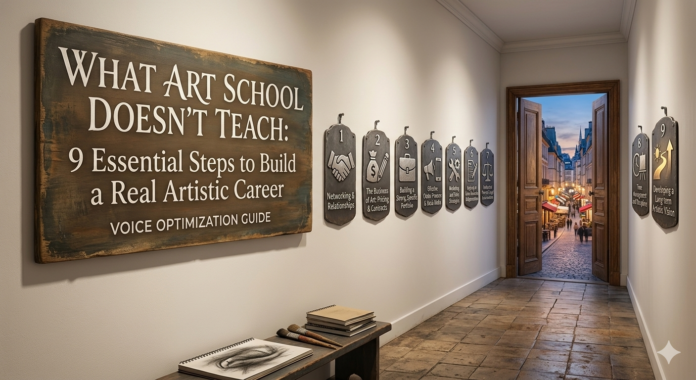
What Art School Doesn’t Teach: 9 Essential Steps to Build a Real Artistic Career
Graduation is often mistaken for arrival. In reality, it is a point of departure—one that reveals a fundamental gap between academic formation and professional reality. Art school refines perception, technique, and critical language, yet it rarely equips artists with the structural tools required to navigate the art world as a system.
What follows is not a motivational guide, but a strategic framework—one that allows you to locate yourself within the ecosystem of art, define your position, and move forward with clarity and intention.
1. Define Your Artistic Identity
Before entering the market, you must understand your own work.
Not stylistically, but conceptually:
What are you investigating?
What tension drives your practice?
Why does your work need to exist?
Your identity is not your medium. It is your position.
2. Identify Your Career Level
Most artists fail not because of lack of talent, but because of misalignment.
You must determine where you stand:
Emerging → developing visibility
Mid-career → building structure and audience
Established → consolidating influence and legacy
Each level requires different strategies. Confusion here leads to stagnation.
3. Build an Emergence Strategy (Early Career)
If you are starting:
Identify your first audience (not “everyone”)
Protect studio time as a non-negotiable
Begin showing work—even in small, imperfect contexts
Visibility is not vanity. It is existence within the system.
4. Plan Your Expansion (Mid-Career)
Growth requires structure:
Refine your narrative
Strengthen your digital and physical presence
Align your work with curatorial contexts
At this stage, your task is not to produce more— but to position better.
5. Master Elevation (Established Artists)
If you are already visible:
Curate your opportunities
Deepen relationships with collectors and institutions
Focus on long-term impact rather than constant output
Maturity in an artist is measured by precision, not volume.
6. Identify Your Industry Sector
Art is not a single market.
You must locate where your work belongs:
Commercial (galleries, collectors)
Retail (design-driven, accessible art)
Nonprofit (institutions, grants, residencies)
Public art (commissions, urban interventions)
Clarity here transforms effort into opportunity.
7. Create Your Strategic Roadmap
Without structure, intention dissolves.
Define:
Short-term goals (3–6 months)
Mid-term goals (1–2 years)
Long-term direction
Translate them into specific, actionable steps. A plan is not a vision—it is a sequence.
8. Execute with Discipline
Ideas do not build careers—execution does.
Develop:
A weekly system of action
A checklist tied to your roadmap
A rhythm that sustains productivity
Consistency is the invisible force behind visibility.
9. Build a Life Around Your Practice
No career survives instability.
Organize your finances
Create a daily structure
Seek mentorship and critical feedback
Continue learning beyond formal education
An artist’s career is not separate from life. It is an extension of how that life is structured.
Final: From Artist to Position
What art school rarely teaches is that talent is only one variable within a larger system. To build a career, you must understand that system—its sectors, its rhythms, and its expectations.
The transition from student to professional artist is not about doing more work. It is about thinking differently about your work.
Because in the end, a career is not something you wait for.
It is something you construct.
If you’re ready to elevate your career as a visual artist, Art Miami Magazine can support you with experienced professionals and the right tools to help you move forward with clarity and strategy. Our goal is to help you build visibility, strengthen your positioning, and take concrete steps toward achieving your artistic vision.
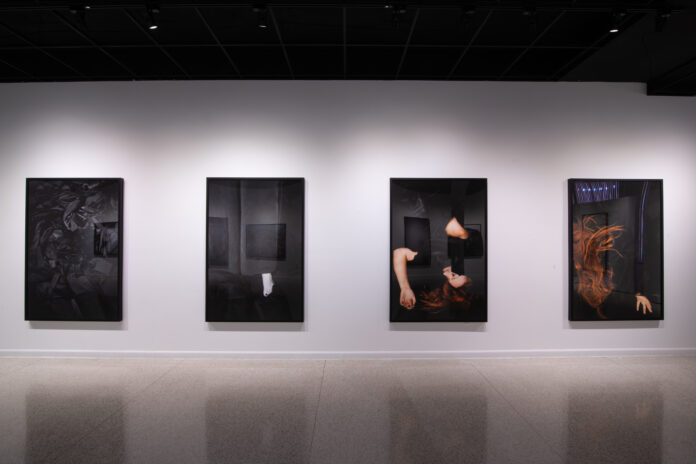
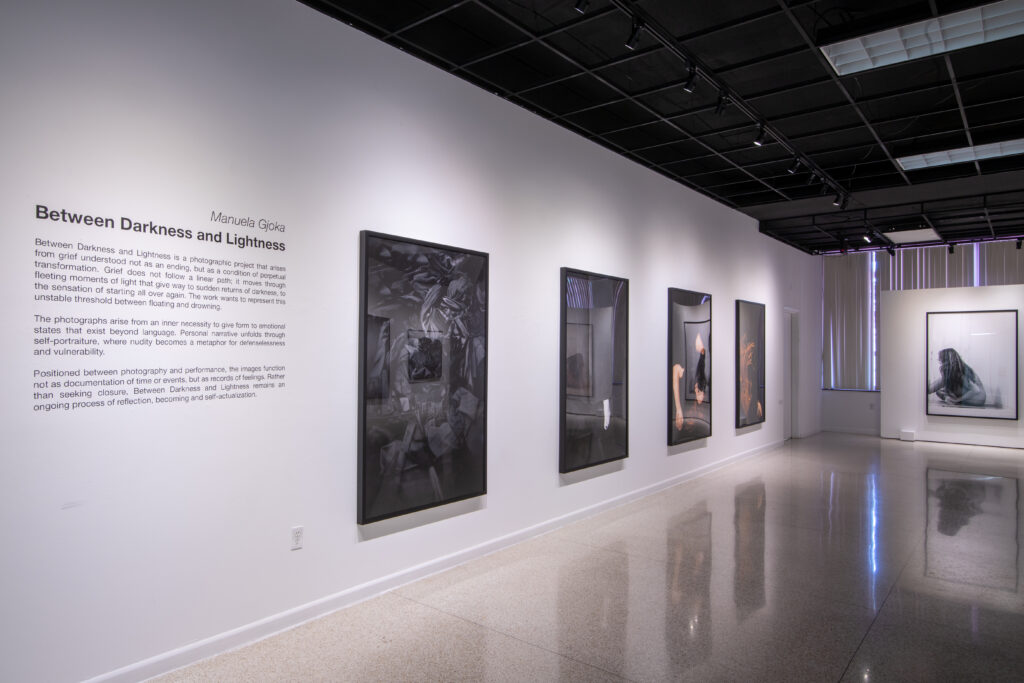
Between Darkness and Lightness: Manuela Gjoka’s Grief as Living Architecture
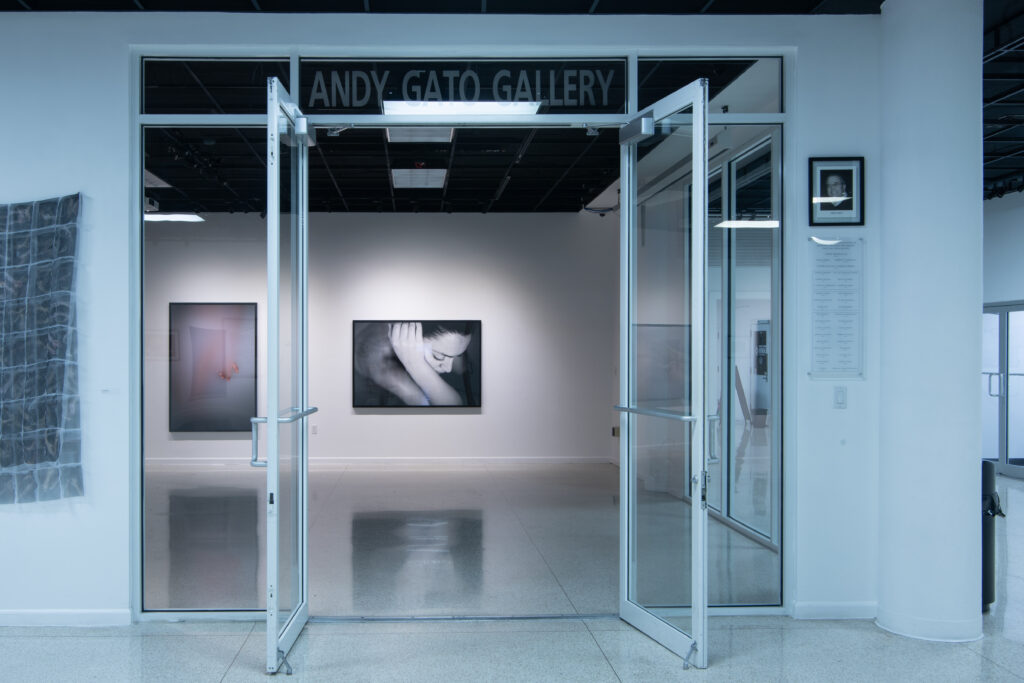
Andy Gato Gallery, Barry University • February 19 – April 24, 2026
Written By Olga Garcia-Mayoral
Grief rarely moves in a straight line. It circles back. It changes temperature. It slips from clarity into heaviness without warning, then returns—sometimes gently, sometimes like a wave you didn’t see coming. In Manuela Gjoka’s Between Darkness and Lightness at Andy Gato Gallery, Barry University (February 19 – April 24, 2026), that truth isn’t simply described—it is built, staged, and embodied. The exhibition is a photographic and performative body of work that traces loss not as a chapter with an ending, but as an ongoing condition of being alive: vulnerable, resilient, and continually transforming.
Gjoka’s images feel caught mid-breath—between presence and disappearance, between strength and exposure. Developed over the past three years, the work documents staged performances in which the artist’s own body serves as both subject and medium, collapsing the distance between experience and image. Even when the photographs are silent, they don’t feel still. They feel as if something is happening just outside the frame: a shift in weight, a return of memory, a moment of acceptance interrupted by uncertainty.
When I spoke with Gjoka, she described the show’s title as an intentional wordplay—one that refuses the literal and insists on the emotional. “I decided to name it Between Darkness and Lightness,” she told me. “It’s a play on words, because darkness means the lack of light, but lightness means weightless—the lack of weight. These states of darkness and light are emotional states. They’re not physical, it’s emotional.” That distinction matters. The exhibition does not treat grief as aesthetic darkness, nor healing as an image of brightness. Instead, it treats both as states of the body—felt, carried, and revised over time.
The Body as Archive
What makes Between Darkness and Lightness especially affecting is Gjoka’s decision to turn toward self-portraiture. In the past, she explained, she often told stories through others, but here she removes that protective space. “I don’t want to confine myself to photography,” she said. “I am a multidisciplinary artist… a performance artist. The show is all self-portraiture… It’s what is left after the performance.” That phrase—what is left after the performance—lands like a thesis statement. The photographs are not the performance itself; they are its residue, its evidence, the trace of an emotional event.
Gjoka’s biography adds depth to the work without reducing it to autobiography. Trained in architecture and urban design in Albania and later working in New York in architecture and construction management, she speaks about space the way an architect does: as something that holds history. Photography, for her, began as architectural observation—documenting buildings, surfaces, and sites—but she admits her curiosity always went beyond the structure. She wanted to know the human lives that moved through the spaces: “Who walked the floors,” she said, “the transcendental aspect… beyond the historical focus.” In this exhibition, that curiosity turns inward. The “site” becomes her own body, and the architecture becomes the psychological landscape of mourning.
The show’s central insight is that Healing is not a staircase you climb. It is not progress as a straight ascent. Gjoka said it plainly: “Healing is not linear. It’s not like you climb the steps and then it’s over.” She spoke about being triggered, about returns, and even about relapses—without shame. “That’s what it means to be human,” she said. “Anything goes.”
This is exactly what the exhibition communicates visually. The series moves through emotional environments rather than a fixed narrative, mirroring how grief functions in real life: one step forward, two steps sideways, then a moment of surprising lightness, followed by another return.
Three Environments, One Journey
Gjoka described the exhibition as unfolding in three “moments” or environments. The first is surreal: “We don’t understand what’s going on,” she said. “We understand there are humans, but we don’t know—there’s just darkness and hair and limbs.” This is grief as fragmentation, grief as a world that no longer makes sense. Bodies appear in pieces, like memory shattered by an event too large to integrate. These images don’t explain; they confront. They ask the viewer to sit inside the disorientation.
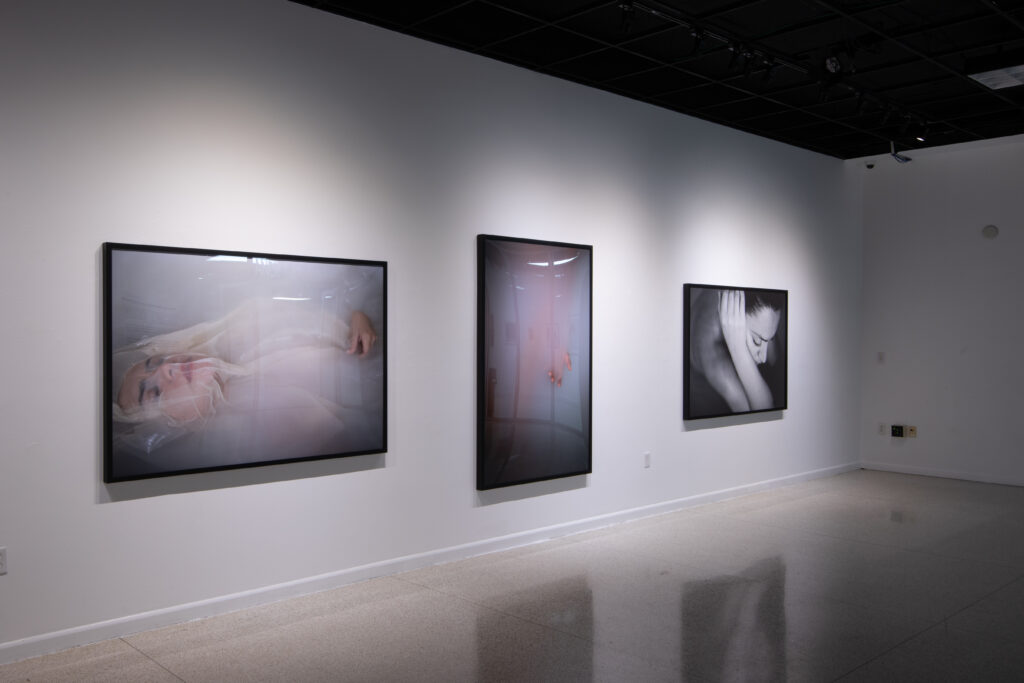
The second environment shifts into a recognizable reality—doors, mirrors, architectural cues that anchor the scene in something more familiar. Here, Gjoka’s use of nudity becomes explicit and metaphorical: “I am using nudity as a metaphor for fragility… and defenselessness,” she told me. “We use clothing as a shield… but in this case I am shieldless… in this reality that is not mine.” She connects that defenselessness to loss: the absence of what once protected her. “Without the strongest figure in my life—my protector, my father… I’m just by myself and defenseless.”
That framing is crucial because it clarifies what the work is not. The nudity is not a provocation; it is a removal of armor. It functions as a stripped-down condition of being, where the body is no longer an object to be consumed but a vessel of truth—exposed to weather, memory, and time.
Gjoka also uses shifts between black-and-white and color to mirror emotional confusion. “I’m going back and forth to make a little bit of confusion,” she said—“just as the confusion that happens when you’re going through moments like that.” Even the palette refuses stability, because grief refuses stability.
“Grieveland” and the Weight of Time
The show consists of 12 artworks, and Gjoka intentionally connects that number to time and mourning. In Albania, she explained, there is a forty-day mourning tradition in which family members wear dark. After her father’s death, she chose to wear black for a year. She speaks about that choice as a kind of durational performance—one she didn’t recognize as art at the time. “I decided to wear black for a year… and in a way, I think that was my first contact with performance art… a durational piece… my way of showing the world how much his loss meant to me.” She links the twelve months to the twelve artworks—a full cycle of time translated into a visual structure.
The first piece, she told me, is titled Grieveland, which she describes as “a barren land after an explosion… after a tragedy.” The metaphor is startling because it removes grief from sentimentality. It becomes terrain: scorched, quiet, emptied, unstable. In her words, “nothing is happening… just a mess of chaos… grief… darkness… and nothingness.” And then comes the second piece, The First Step—the beginning of movement, not toward resolution, but toward survival. “That first step into this land,” she said. “You find yourself in a surreal reality that doesn’t belong to you… but you have to… come alive and understand your surroundings.”
This is the exhibition’s deeper achievement: it does not romanticize Healing. It presents the labor of continuing. It presents the courage of returning.
Why the Work Lands
What makes Gjoka’s work so resonant is her insistence that the more personal she becomes, the more universal the work becomes. “I realized that the more inward I go,” she said, “and the more personal I get, the more relatable the art is.” That’s the paradox of honest art: specificity becomes a doorway.
The images invite viewers into their own internal dialogue—not by demanding interpretation, but by holding emotional space. Gjoka is also comfortable with ambiguity. She acknowledges that viewers often perceive things she didn’t intend—and she welcomes that. In grief, interpretation is never fixed; every viewer arrives with their own history, their own losses, their own thresholds. Between Darkness and Lightness meets them there.
In the end, the exhibition does not offer closure. It doesn’t pretend to resolve grief into triumph. Instead, it offers something more truthful: a space where grief is understood as an ongoing process and Healing as something that continues to unfold, shift, and reveal itself in new ways over time.
Gjoka’s photographs do not ask us to “move on.” They ask us to stay with what is real: the oscillation, the vulnerability, the strength we build without noticing, and the strange lightness that sometimes arrives—not as a cure, but as a momentary gift.
Between Darkness and Lightness is not simply an exhibition. It is a lived architecture of mourning—one that holds both the weight of loss and the possibility of becoming human again and again.
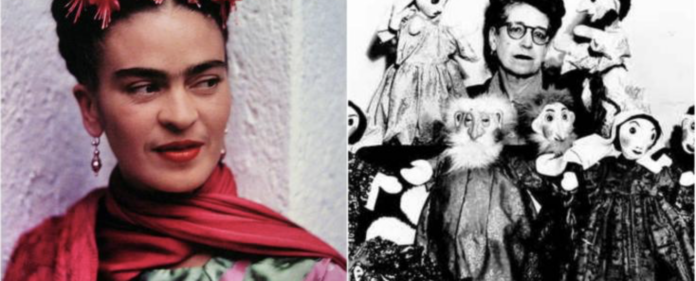
5 pintoras mexicanas que cambiaron el mundo del arte
Five Mexican Women Artists Who Reshaped the History of Art
Muralists, surrealists, and multidisciplinary pioneers, these women not only transformed the artistic landscape of Mexico, but also redefined the role of women within modern and contemporary art.
In recent years, art historical scholarship and institutional exhibitions—from major retrospectives at Museo de Arte Moderno to international shows at Tate Modern—have increasingly emphasized the critical contributions of women artists in Latin America. Within this broader revision of the canon, Mexican women painters occupy a central role. Their practices challenged academic traditions, expanded visual languages, and resisted the cultural limitations imposed on women in the 20th century.
Below are five key figures whose work continues to resonate globally.
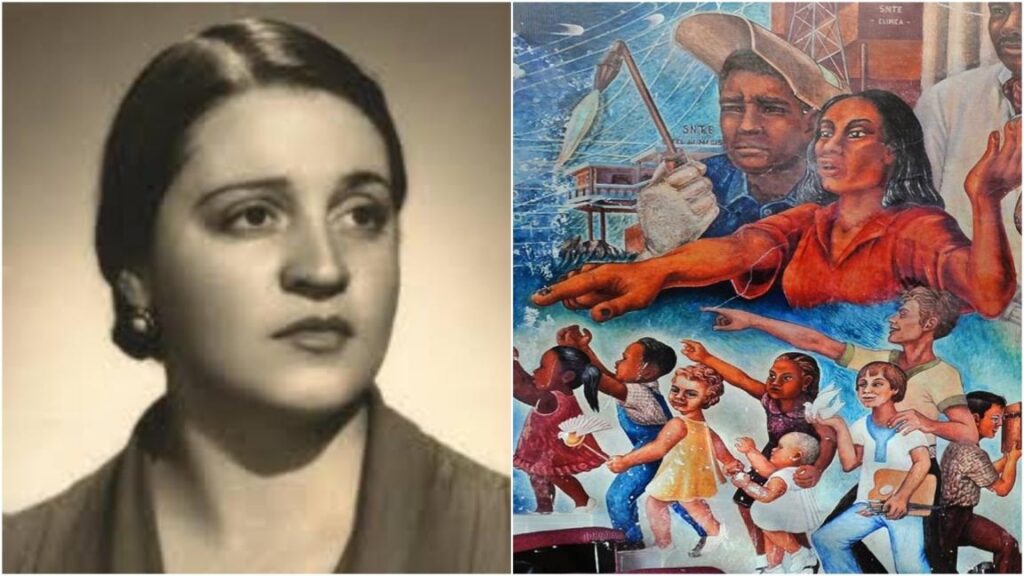
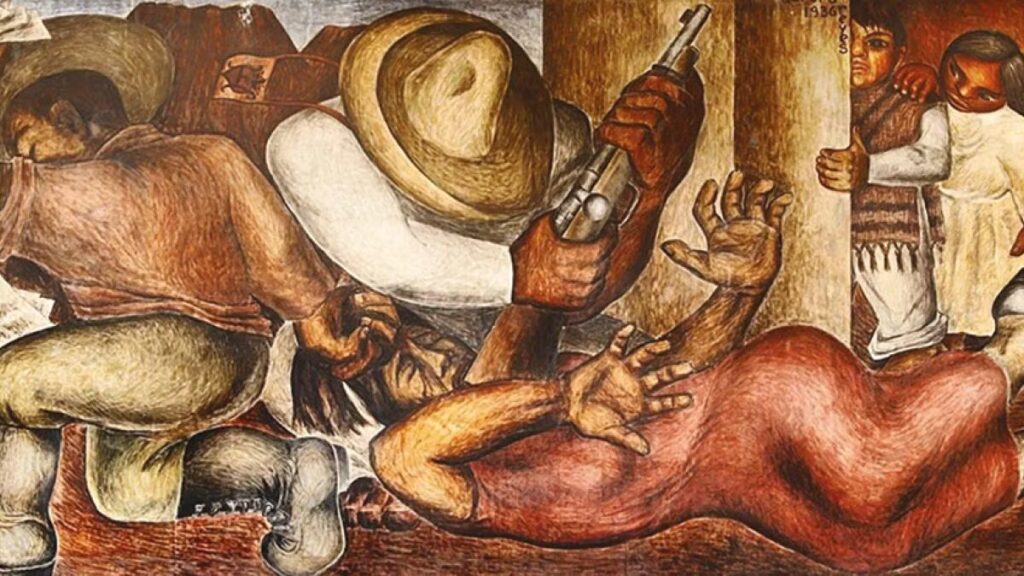
Aurora Reyes Flores
5. Aurora Reyes (1908–1985)
Aurora Reyes Flores holds a foundational place in Mexican art history as the first female muralist in Mexico and a pioneering feminist voice within the muralist movement. Educated at the Escuela Nacional de Bellas Artes, Reyes expanded the ideological scope of muralism by foregrounding social injustice, particularly the experiences of women.
Her landmark mural Atentado a las maestras rurales (Attack on Rural Teachers) stands as a powerful political statement, aligning her practice with revolutionary discourse while introducing a distinctly gendered perspective. Beyond painting, Reyes was also an accomplished poet, reinforcing her role as a multidisciplinary intellectual within Mexico’s cultural sphere.
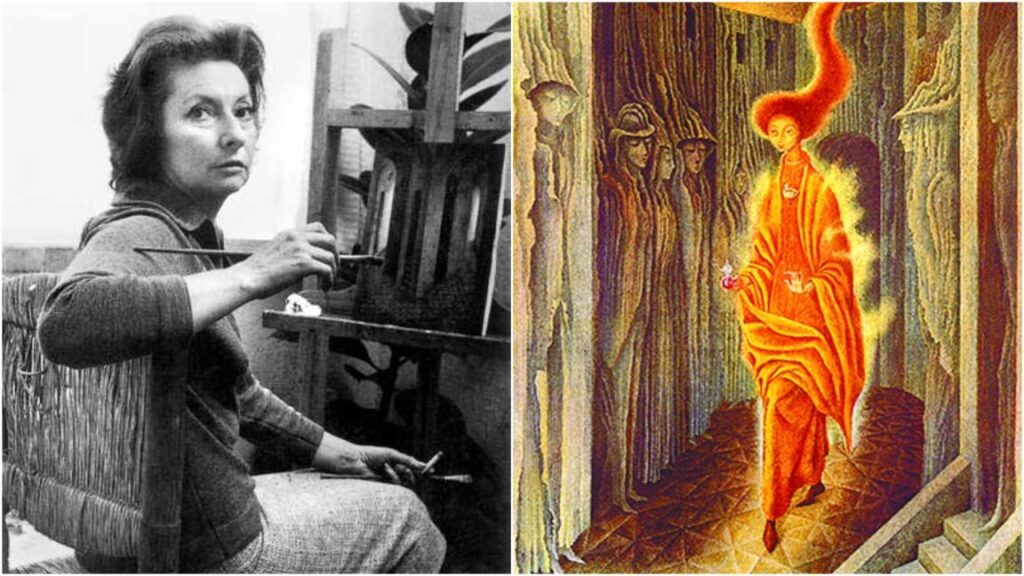
Remedios Varo (
4. Remedios Varo (1908–1963)
Although born in Spain, Remedios Varo became one of the most significant figures of Mexican Surrealism after fleeing Europe during World War II and settling in Mexico in 1941. Her work has gained renewed global attention through major exhibitions at institutions such as Los Angeles County Museum of Art and Museo de Arte Moderno.
Varo’s paintings merge science, mysticism, and esoteric philosophy, constructing intricate, dreamlike worlds. Works such as Papilla Estelar and La ciencia inútil o el alquimista reveal her fascination with alchemy, transformation, and cosmic knowledge—positioning her practice at the intersection of art, metaphysics, and proto-feminist inquiry.
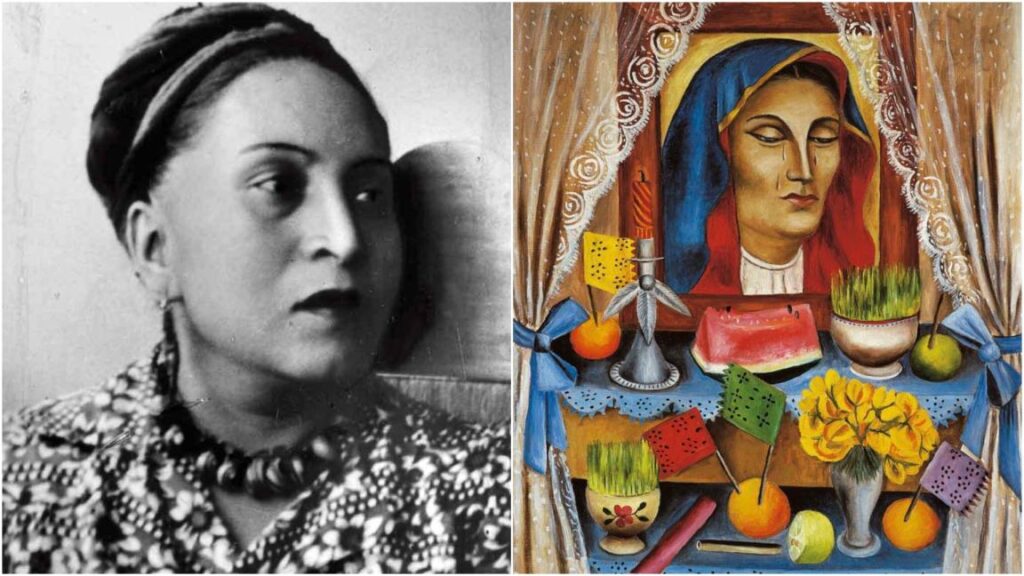
María Izquierdo
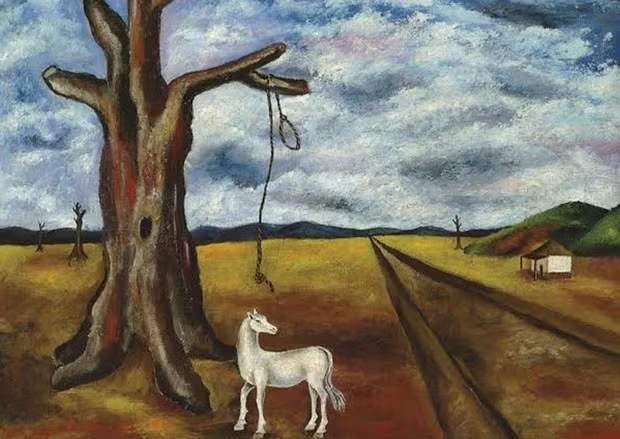
3. María Izquierdo (1902–1955)
María Izquierdo was a groundbreaking figure in Mexican modernism and the first Mexican woman artist to exhibit internationally, notably in New York. Her work resisted the dominant nationalist narratives of muralism, instead focusing on intimate, symbolic compositions rooted in Mexican identity.
Her paintings—such as Viernes de Dolores and La Alacena—combine vibrant color with surreal undertones, often addressing themes of domesticity, ritual, and female subjectivity. Recent scholarship has repositioned Izquierdo as a critical voice who challenged both artistic and institutional gender barriers.
Frida Kahlo
2. Frida Kahlo (1907–1954)
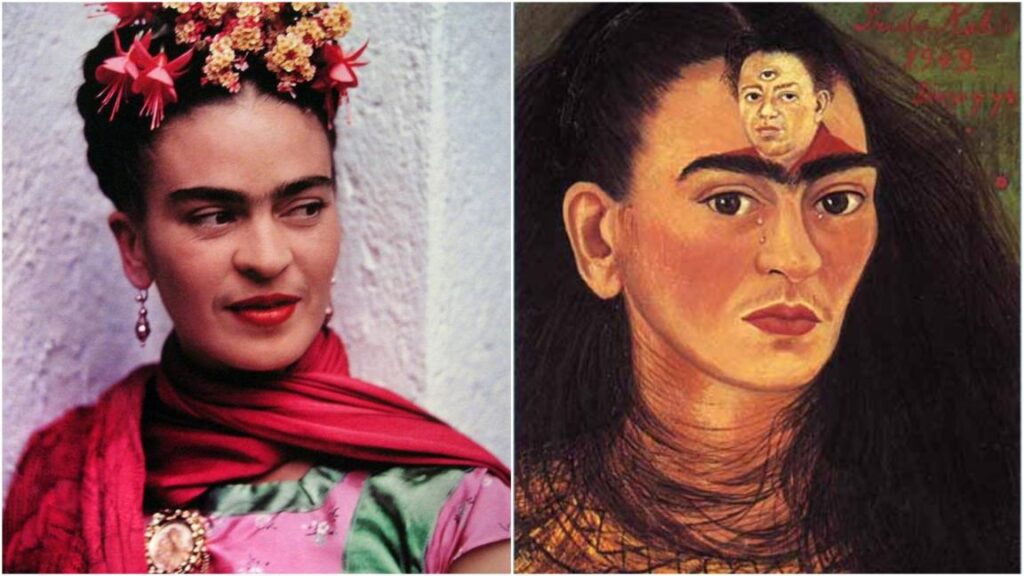
Few artists have achieved the global cultural impact of Frida Kahlo. Beyond her iconic status, Kahlo’s work has been extensively reexamined through contemporary lenses, including feminist theory, disability studies, and postcolonial discourse.
Her deeply personal paintings—The Broken Column, Diego y yo, and The Two Fridas—transform physical suffering and emotional trauma into a radical visual language. Today, her work continues to be exhibited worldwide, including major retrospectives at The Museum of Modern Art and Victoria and Albert Museum, confirming her enduring relevance within global art history.
Lola Cueto
1. Lola Cueto (1897–1978)
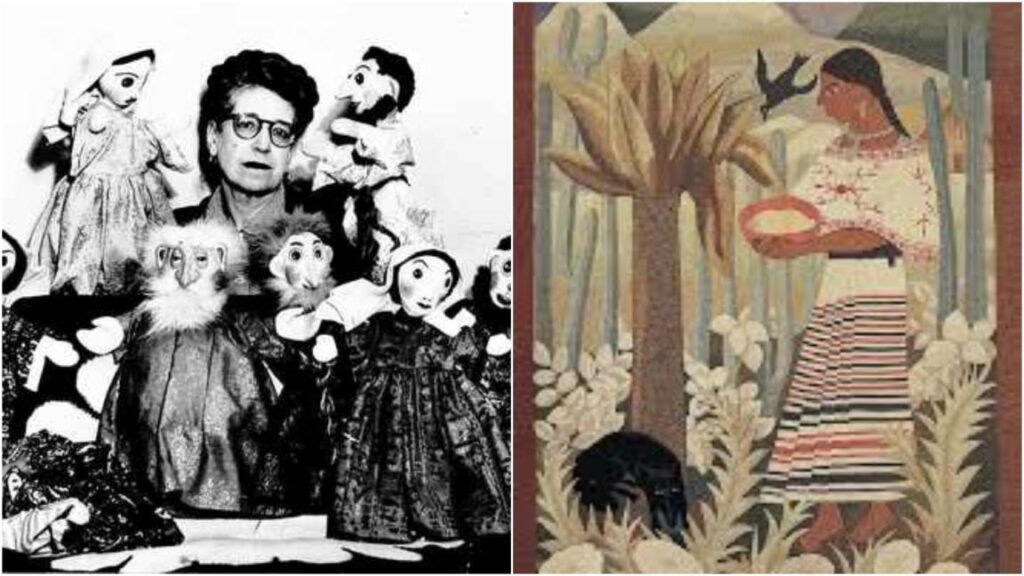
Lola Cueto stands out as a multidisciplinary innovator whose practice expanded beyond painting into printmaking, textile art, puppetry, and theater. At a time when women were largely confined to domestic roles, Cueto broke institutional barriers by studying at the male-dominated Academia de San Carlos.
Her most influential contributions emerged in the field of educational theater, where she founded companies such as Rin Run and El Nahual. Through puppetry and visual storytelling, Cueto redefined the relationship between art, education, and community, positioning her as a precursor to contemporary socially engaged practices.
Rewriting the Canon
What unites these artists is not only their talent, but their capacity to disrupt established narratives. Their work challenges the historical marginalization of women and expands our understanding of Mexican art beyond a male-dominated framework.
Today, as museums, scholars, and collectors continue to revisit the contributions of women artists, figures like Reyes, Varo, Izquierdo, Kahlo, and Cueto are no longer peripheral—they are central.
Their legacy is not simply historical. It is ongoing.
Beyond Frida: Seven Mexican Women Artists Who Redefined Art History
From painting and photography to performance and conceptual practice, these artists expanded the boundaries of Mexican art and redefined the role of women within it.
If the words “woman,” “Mexico,” and “artist” immediately evoke Frida Kahlo, it is a testament to her global cultural impact. Yet, as recent scholarship and major international exhibitions have emphasized, Mexican art history is far richer and more complex. Beyond Kahlo lies a constellation of women whose contributions have been equally transformative, though historically underrecognized.
For decades, the global perception of Mexican women in art has been overwhelmingly defined by one figure: Frida Kahlo. While her impact is undeniable, this singular focus has obscured a broader and more complex history—one shaped by artists who challenged not only aesthetic conventions, but also the social and institutional limits imposed on women.
Recent curatorial revisions and international exhibitions have begun to reposition these figures within the canon, revealing a network of practices that extend far beyond the familiar narrative.
Pintura de María Izquierdo.
1. María Izquierdo (1902–1955)
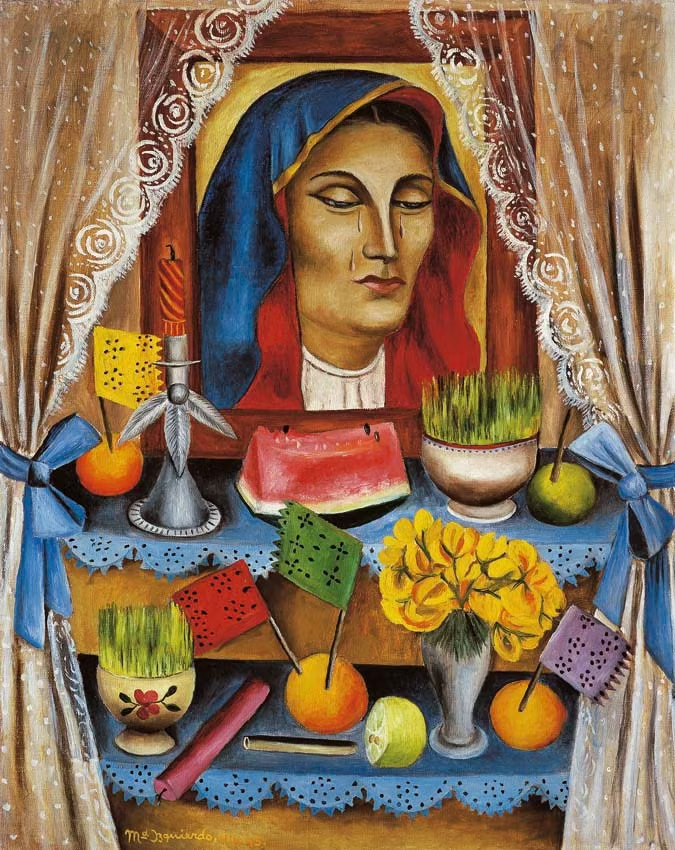
The first Mexican woman to exhibit internationally, María Izquierdo challenged both aesthetic conventions and institutional barriers. Her expressive use of color and symbolic imagery—often depicting altars, domestic spaces, and ritual scenes—reclaimed Mexican identity from a deeply personal perspective. Despite her recognition, she faced direct opposition from male muralists such as Diego Rivera, who blocked her access to major public commissions, revealing the structural gender inequalities of her time.
Pintura de María Izquierdo.
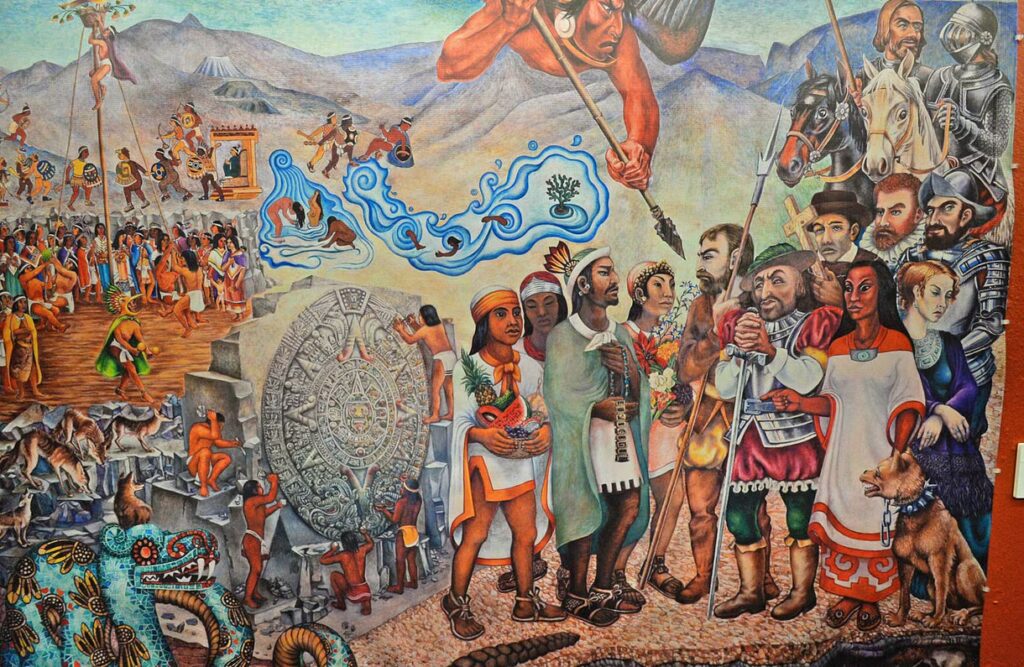
Aurora Reyes: Feminism Within Muralism
Mural de Aurora Reyes.
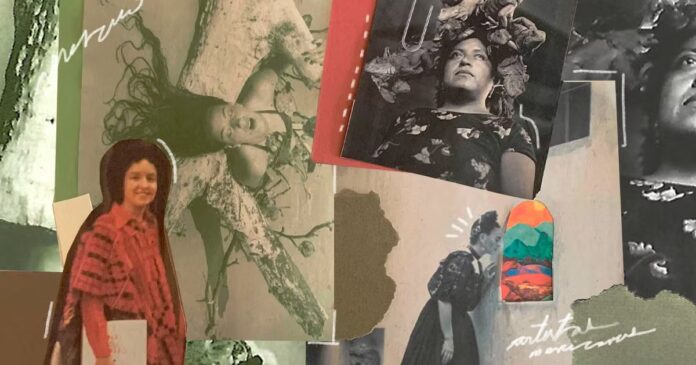
Aurora Reyes occupies a singular position as Mexico’s first female muralist. Her work expanded the ideological framework of muralism by foregrounding the struggles of women and laborers. In pieces such as Atentado a las maestras rurales, she introduced a feminist consciousness into a movement largely dominated by male voices.
Mural de Aurora Reyes.
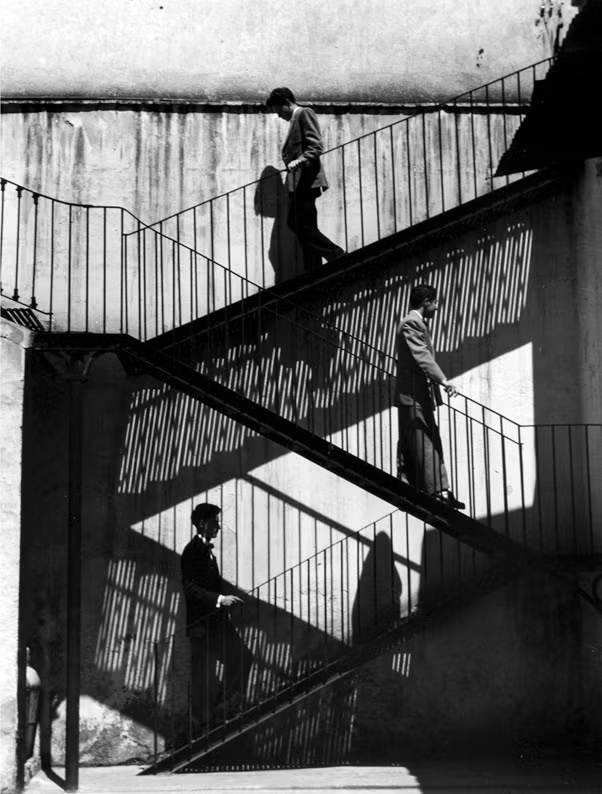
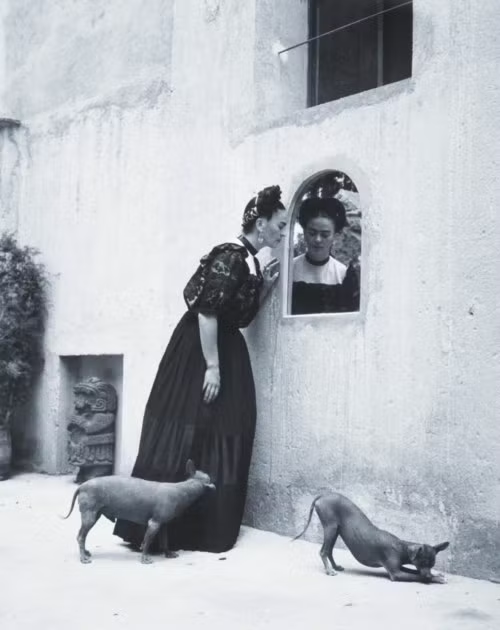
Lola Álvarez Bravo: The Image as Memory
Fotografía de Lola Álvarez Bravo.
Through photography, Lola Álvarez Bravo constructed a visual archive of 20th-century Mexico. Her images—ranging from intimate portraits to urban scenes—operate between documentation and interpretation. Often described as a “visual biographer,” her work captures not only what was seen, but what was lived.
Fotografía de Lola Álvarez Bravo.
Fotografía de Lola Álvarez Bravo.
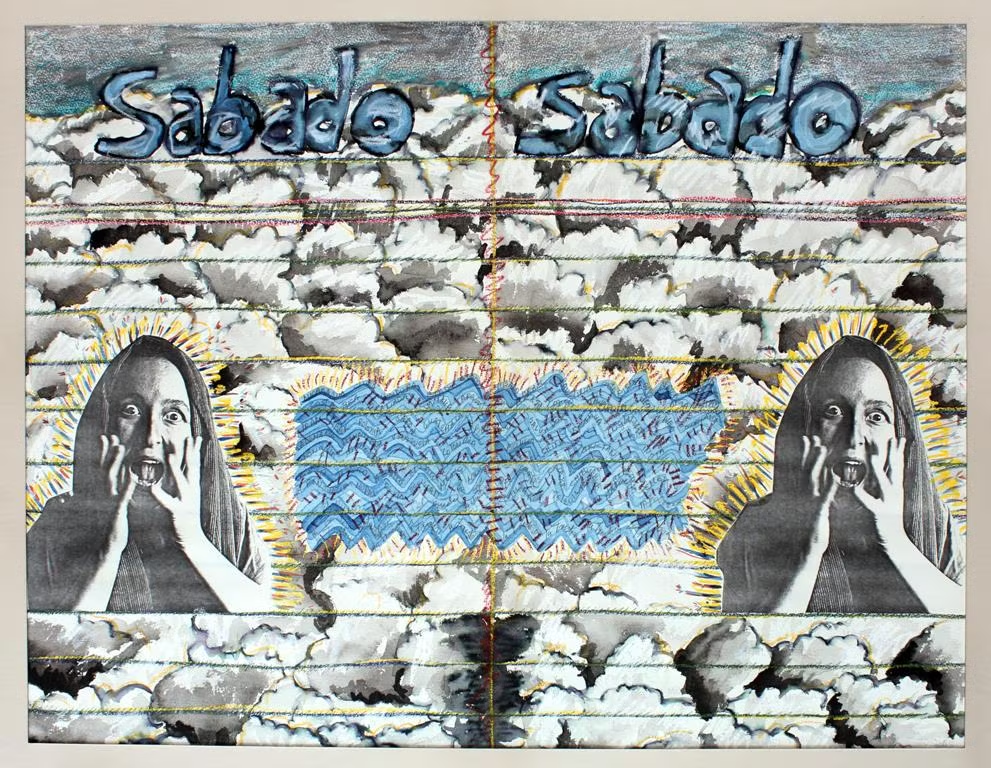
Mónica Mayer: Art as Social Intervention
Trabajo de Mónica Mayer.
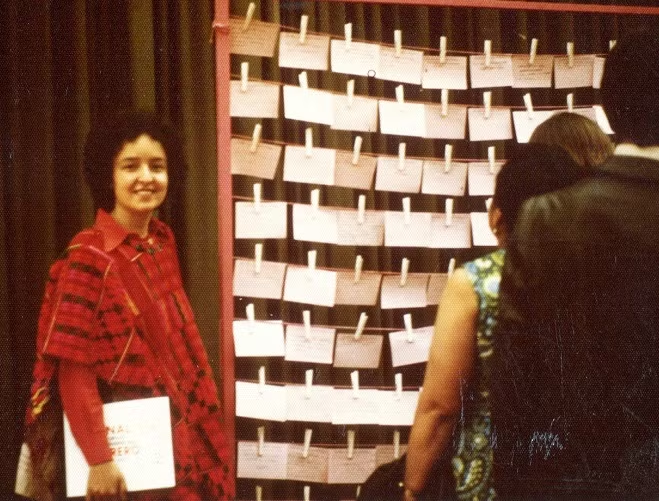
Mónica Mayer represents a decisive shift toward conceptual and participatory practices. Her seminal work El Tendedero transforms individual testimonies into collective discourse, exposing the systemic violence experienced by women. Here, art ceases to be object-based and becomes a platform for public engagement and critical reflection.
Acción ‘El Tendedero’.
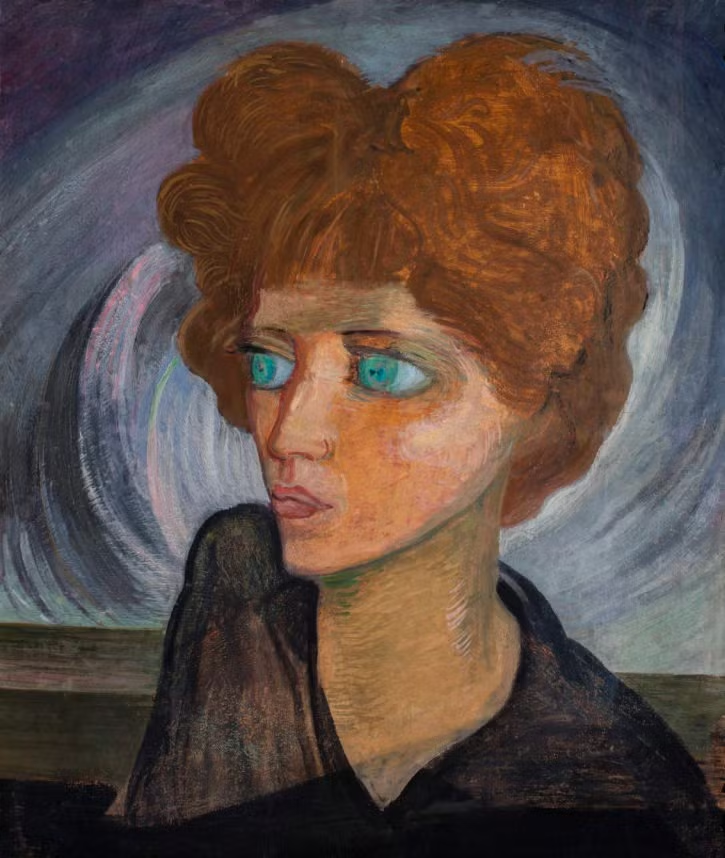
Cordelia Urueta: Abstraction as Protest
Cordelia Urueta.
In the work of Cordelia Urueta, abstraction is not an escape from reality, but a confrontation with it. Her compositions—marked by tension, fragmentation, and intensity—reflect a world shaped by conflict and instability. Through her practice, abstraction becomes a language of resistance.
Cordelia Urueta.
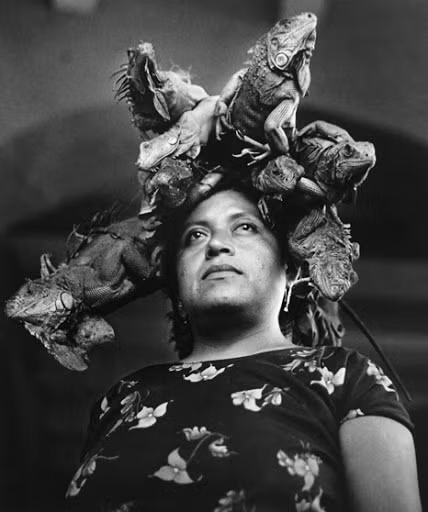
Graciela Iturbide: Between Document and Myth
Fotografía de Graciela Iturbide.
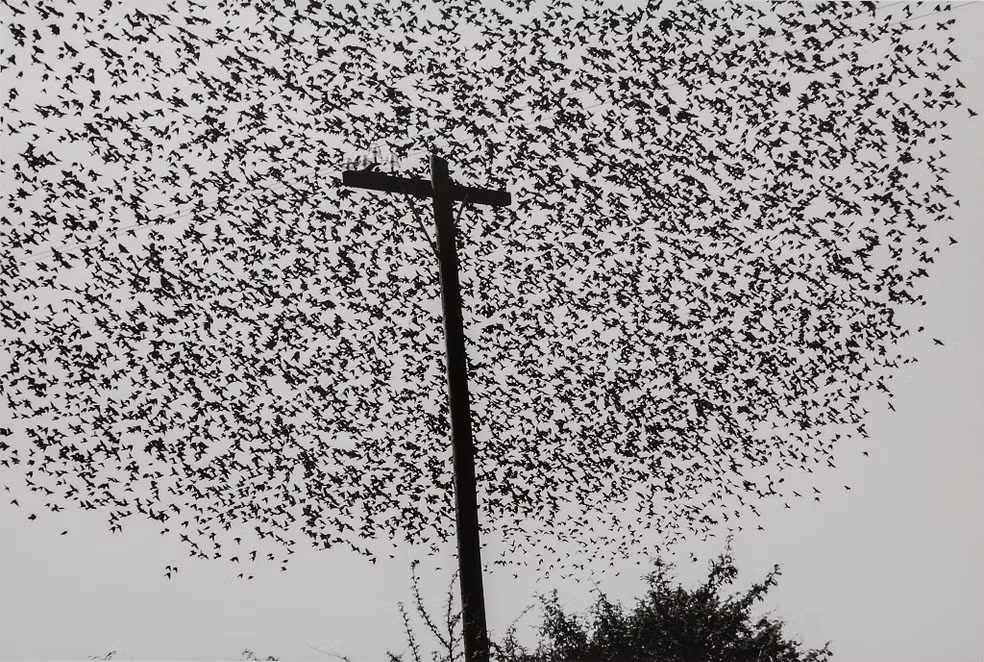
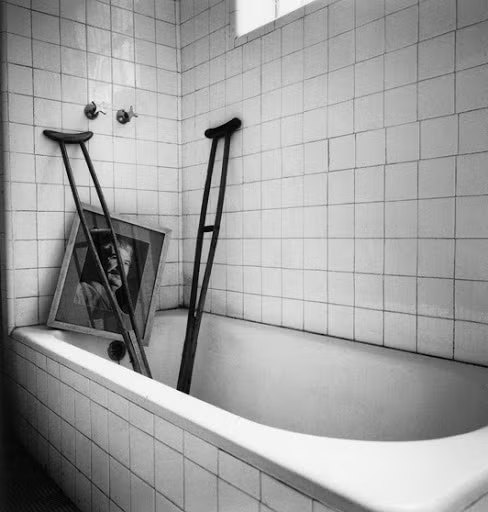
Graciela Iturbide’s photography exists at the intersection of anthropology and poetry. Her images of indigenous communities, particularly in Juchitán, move beyond documentation to reveal symbolic and cultural dimensions. Her work challenges the viewer to reconsider the boundaries between reality and myth.
El baño de Frida
El baño de Frida
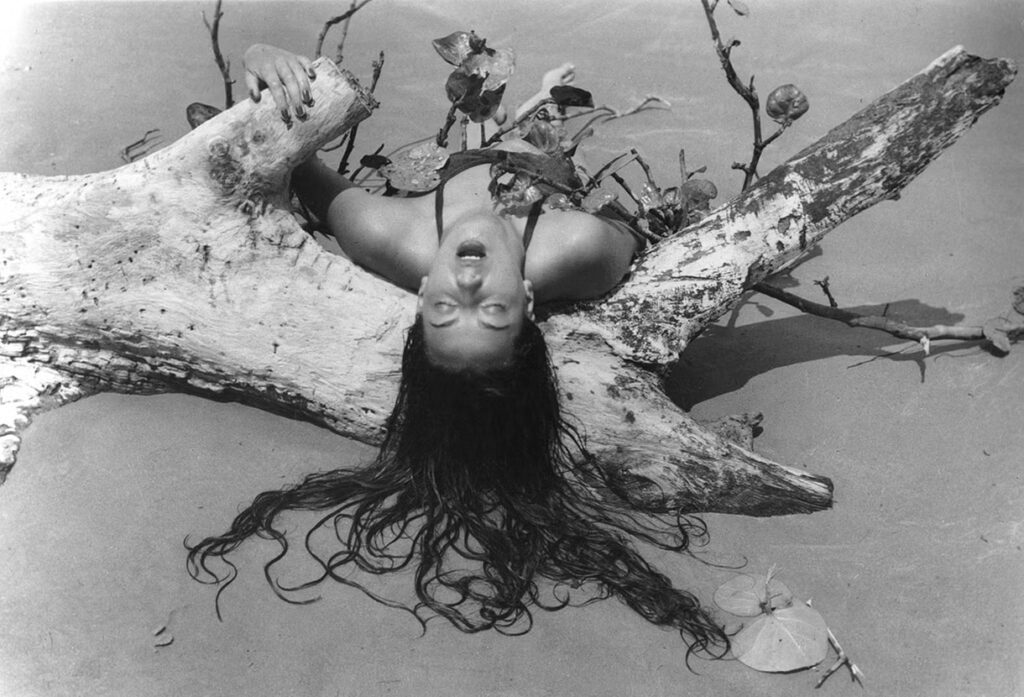
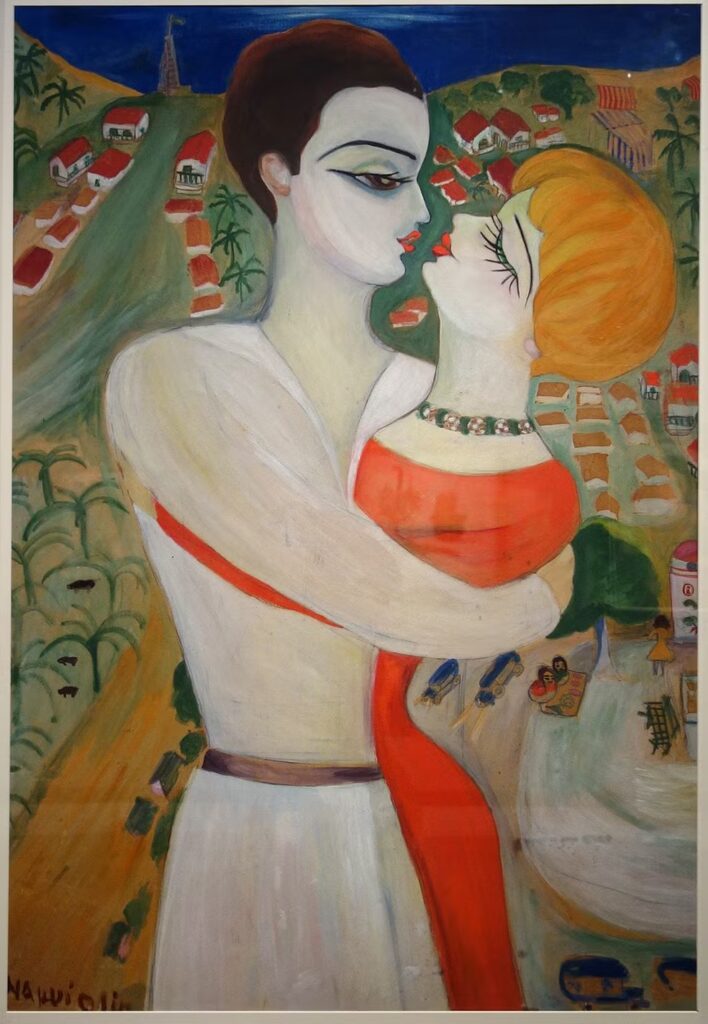
Nahui Olin: Self as Cosmos
Autorretrato de Nahui Olin.
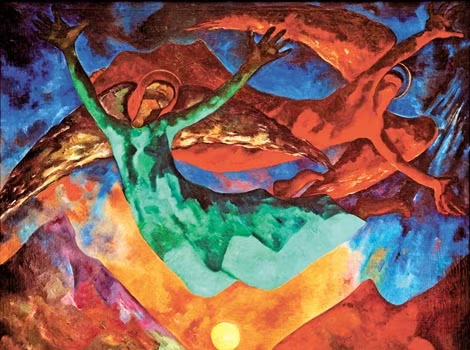
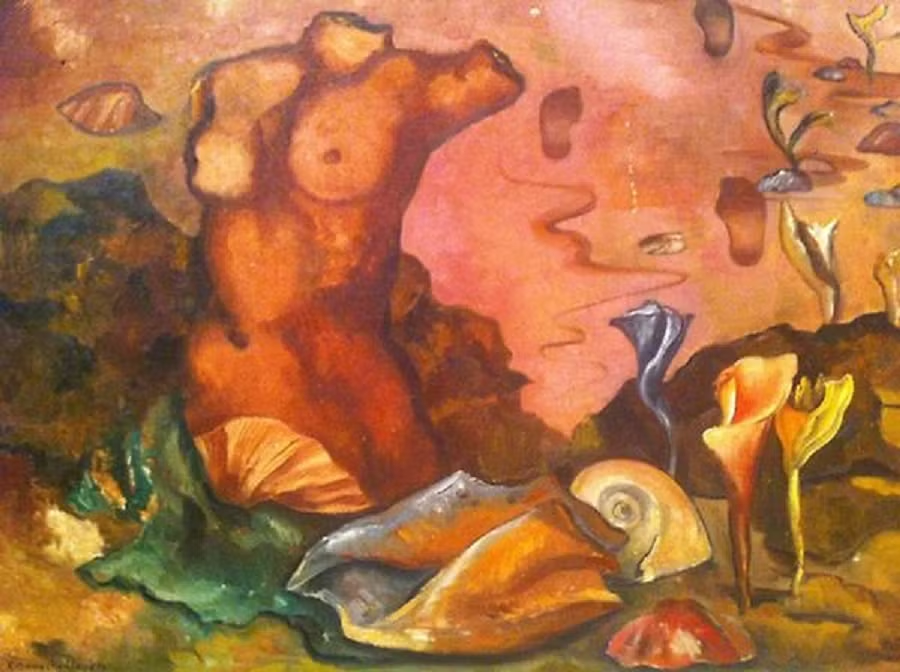
Nahui Olin’s practice—spanning painting, poetry, and performance—centers on self-representation as a site of exploration. Her work engages themes of identity, eroticism, and spirituality, positioning her as an early and radical voice in the redefinition of female subjectivity.
Pintura de Nahui Olin.
Toward a New Canon
What emerges from these practices is not an alternative narrative, but a necessary one. These artists did not simply exist alongside the dominant figures of Mexican art—they actively reshaped its language, its concerns, and its possibilities.
Today, as institutions and scholars continue to revise art history, their work stands as a reminder that the canon is not fixed. It is constructed—and therefore, it can be transformed.
In moving beyond Frida, we do not diminish her legacy. We finally begin to understand the full scope of it.
Their legacy is not rediscovered—it is finally being recognized.
Dallas Art Fair 2026: The Power of Relationships in a Changing Art Market
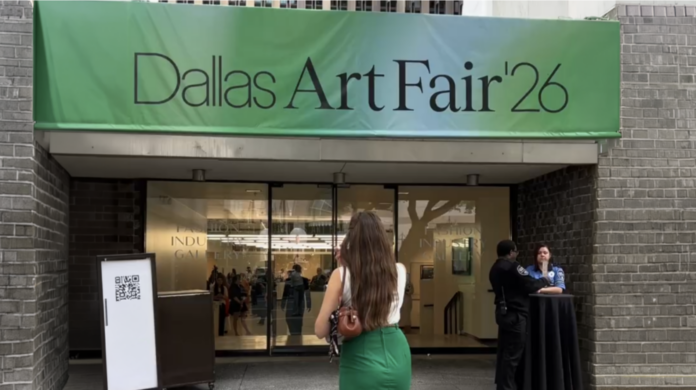
In an art world often defined by speed, speculation, and spectacle, the 2026 edition of the Dallas Art Fair offers a compelling counterpoint: a market built not on immediacy, but on relationships.
Held in the heart of Texas, the fair has quietly evolved into one of the most distinctive platforms in the American art landscape. What defines it is not scale, but rhythm. Unlike the rapid-fire transactions of global fairs, Dallas operates with a slower, more deliberate cadence—one that reflects the character of its collector base.
At the core of this ecosystem is a relationship-driven model of collecting. Local collectors are known for their patience. Rather than acquiring multiple works impulsively, many choose to purchase selectively—sometimes just one or two pieces per year—often returning to galleries several times before committing.
This behavior reshapes the dynamics of the fair. Sales are rarely instantaneous. Instead, they unfold over days, conversations, and trust. In many cases, transactions are finalized toward the end of the fair, after a process of reflection and engagement.
Equally notable is the stability of the fair itself. With around 90 exhibitors and relatively low turnover compared to previous years, the Dallas Art Fair has established a consistent and reliable environment for galleries. This continuity fosters long-term relationships between dealers and collectors—arguably the true currency of the Texas market.
But this is not a static system. A new generation of dealers and collectors is gradually reshaping the cultural landscape. Younger galleries are entering the conversation, bringing fresh perspectives while integrating into an already cohesive network. The result is a hybrid model: traditional in its values, yet contemporary in its evolution.
Institutional presence further strengthens the fair’s significance. Museums in the Dallas-Fort Worth area actively engage with the event, with acquisitions made directly from the fair reinforcing its role as a conduit between market and institution.
What emerges is a different vision of the art market—one less driven by urgency and more by confidence, familiarity, and long-term commitment.
In Dallas, collecting is not performative. It is relational.
And in an era increasingly defined by speed, that may be its most radical quality.
What becomes increasingly evident is that the Dallas Art Fair is not driven by volatility, but by consistency and trust. With approximately 90 exhibitors and notably lower turnover compared to previous years, the fair has stabilized into a reliable platform where galleries can return year after year, cultivating relationships that extend far beyond a single edition. This continuity is not incidental—it is structural, reinforcing a market that values presence over novelty.
The role of leadership also plays a crucial part in this equilibrium. Under the direction of Kelly Cornell, the fair has maintained a careful balance between demand and selectivity. Galleries are not only eager to participate, but are able to place works with confidence, knowing that the audience is engaged, informed, and—perhaps most importantly—patient.
This patience defines the transactional rhythm of Dallas. Unlike the immediacy often associated with international fairs, here the act of collecting unfolds through time, conversation, and repetition. Dealers frequently report that initial interest during VIP previews evolves gradually, with acquisitions materializing after multiple visits. The final day, rather than the opening, often becomes the moment of resolution—a subtle inversion of the typical art fair tempo.
Institutional engagement further consolidates the fair’s importance. The Dallas Museum of Art’s acquisition of multiple works—spanning artists such as Nicole Eisenman, Caroline Monnet, and Raymond Saunders—demonstrates the fair’s function as a bridge between the market and institutional collections. These acquisitions are not merely transactional; they signal curatorial confidence and reinforce the cultural legitimacy of the works presented.
At the commercial level, the results reflect a measured but solid market performance. Significant sales—from Sam Francis and Corinne Michelle West to contemporary figures like Rachel Mica Weiss and Marlon Portales—indicate that while the pace may be slower, the commitment is substantial. Prices range widely, suggesting an ecosystem that accommodates both established collectors and newer entrants without compromising depth.
Perhaps most revealing, however, is the way the fair integrates into the broader local ecosystem. For younger dealers like Tessa Granowski, Dallas is not simply a marketplace—it is a network. Efforts to establish permanent spaces, often rooted in personal and geographic histories, point to a model where art is embedded within community rather than detached from it.
In this context, the Dallas Art Fair emerges not as an event defined by spectacle, but as a long-term cultural infrastructure—one where relationships are not a byproduct of the market, but its very foundation.
The Bass Museum Looks Forward: Architecture as Cultural Expansion in Miami Beach
The Bass Museum of Art has taken a decisive step toward redefining its role within Miami’s evolving cultural landscape by selecting Johnston Marklee to design a new pavilion and expansion. This move signals more than a physical addition—it reflects a broader shift in how institutions conceive space, audience, and artistic experience in the 21st century.
Founded in Los Angeles, Johnston Marklee is known for its rigorous yet poetic architectural language, where structure and perception operate in a constant dialogue. Their selection suggests that the Bass is not simply seeking expansion, but transformation. The planned intervention will extend the vision of Arata Isozaki, whose 1995 design established the museum’s current identity, anchoring it within a lineage of architectural thought that values both form and conceptual clarity.
At the core of the proposal is an elevated exhibition gallery, designed to host contemporary and experimental media. This is a critical gesture. As artistic practices increasingly move beyond traditional formats—embracing installation, digital environments, and time-based media—the museum must evolve from a container of objects into a platform for experience. The elevated structure is not only architectural; it is symbolic, lifting new forms of artistic inquiry into visibility.
Equally significant is the inclusion of a multi-purpose outdoor patio, a space that blurs the boundary between institution and city. In Miami Beach—where climate, tourism, and urban life intersect—this gesture opens the museum outward, transforming it into a social and cultural interface rather than a closed system.
This expansion comes at a moment when Miami is solidifying its position as a global art capital. Yet, what distinguishes this project is not scale, but intention. The Bass is positioning itself as a site of experimentation—one that acknowledges that contemporary art is no longer confined to walls, nor to singular narratives.
In this context, architecture becomes more than infrastructure. It becomes a curatorial tool.
The collaboration between the Bass and Johnston Marklee suggests a future in which museums are not static repositories, but dynamic environments—spaces that adapt, respond, and actively shape the way art is encountered.
What emerges is not just a new pavilion, but a recalibration of what a museum can be.
An Evening with Oscar Fuentes followed by Open Mic Night!
Books & Books 3409 Main Hwy, Coconut Grove, FL 3313
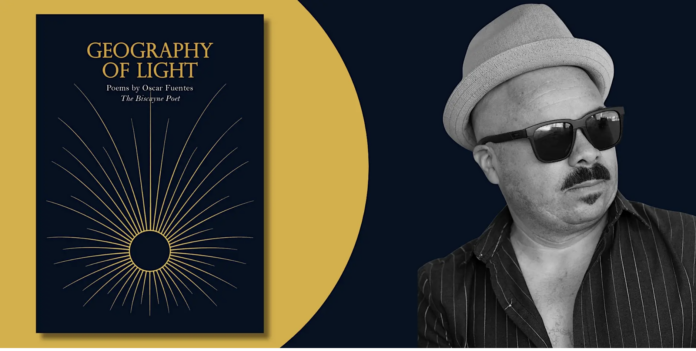
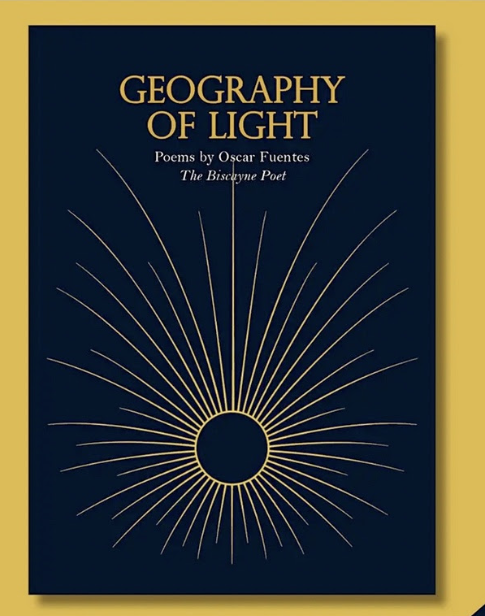
Join us for an evening with author Oscar Fuentes for the release of his new book, GEOGRAPHY OF LIGHT.
This event is FREE and open to the public and books will be available for purchase the night of the event! An RSVP grants general entry, but seating is not guaranteed, so please try and show up early. Please RSVP only if you intend to join us. Can’t make the event? Buy your copy here.
About The Book
In Geography of Light, Oscar Fuentes, known as The Biscayne Poet, maps a life shaped by family, marriage, fatherhood, memory, and the luminous terrain of Miami. Blending memoir and lyric meditation, this collection traces the shifting coastlines between son and father, husband and wife, and artist and public servant.
Set against the humid light of Biscayne Bay and the layered cultural landscape of Miami, the poems move from intimate domestic spaces to civic duty and back again. Fuentes writes of love not as abstraction but as practice: the daily discipline of marriage, the awe of watching children become themselves, and the quiet, defiant presence required when a parent’s memory begins to fade. The book’s emotional center rests in its reckoning with aging and filial devotion—where visits become acts of resistance against erasure, and light itself becomes a metaphor for attention, endurance, and grace.
Structured as a cartography of relationships rather than places, Geography of Lightcharts the inherited maps we carry and the new ones we must draw. It is a meditation on the feminine as true north, on fatherhood as stewardship, and on memory as both fragile coastline and sacred ground.
At once elegiac and celebratory, this collection affirms that permanence is an illusion, but presence is a choice. In the shifting geography between shadow and illumination, Fuentes argues that love, faithfully practiced, is the only landmark that remains.
About The Author
Born in Manhattan, New York to immigrant parents from Honduras, Oscar Fuentes, known as The Biscayne Poet, is a Miami-based multidisciplinary artist who has been a dedicated force in the arts for over 30 years. Currently promoting his latest book, Geography of Light(2026), Oscar’s work captures the spirit of family and memory.
Oscar is the author of 13 books, including Relics of the Heart: Stories of my Family(2024), Poetry City (2025), and Biscayne Inferno and Other Stories (2025). His unique presence recently earned him a feature on Bravo’s The Real Housewives of Miami, where he showcased his typewriter poetry performance.
Oscar also hosts a poet-in-residency program at the 1 Hotel South Beach, where he writes on his typewriter for the public every Saturday afternoon, bringing poetry to the community in a vibrant, interactive way. In recognition of his contributions to Miami’s literary community, he was awarded the inaugural Miami-Dade Mayoral Poetry Commendation by Mayor Daniella Levine Cava. Represented by Indie Earth Books and Jitney Books, Oscar brings a Miami-inspired style to his art, even down to his signature typewriter-tape mustache.
The Museum of Contemporary Art of the Americas Inaugurates ‘Stain & Relics’ by Aaron Kent
April 21st, 2026
By Rodriguez Collection Team
MIAMI, FL – On Friday, April 17, the Museum of Contemporary Art of the Americas (MoCAA) hosted the official opening of “Stain & Relics,” a solo exhibition by artist Aaron Kent that explores the interstices of printmaking, ceramics, and sculpture. Organized in collaboration with Annex Art Platform, the exhibition offers a profound meditation on the materiality of time and the persistence of memory through physical residue.
The opening was attended by a notable assembly of the local artistic community and specialists in the field of ceramics. Of particular note was the presence of a significant group of art enthusiasts originally from the American Midwest now residing in South Florida, as well as close colleagues of the artist. The gathering facilitated a direct dialogue regarding Kent’s technical processes, as he is widely recognized for his ability to integrate traditionally isolated disciplines into a cohesive and deeply personal visual discourse.
The curatorial framework, informed by the essay “Remains, Trace, and Living Matter” published in the Cincinnati-based visual arts journal The Annex Updated, analyzes how Kent utilizes a “contamination” of processes to construct a hybrid poetics. Throughout the museum’s galleries, visitors observed works where bronze, silkscreen, and bone sculpture converge. Kent’s work eschews the pursuit of conventional technical perfection, opting instead for an empirical investigation of materials and their displacements, thereby validating error and imperfection as testimonial records of the human experience.
The conceptual background of the exhibition is intimately tied to the artist’s biography and his response to contexts of crisis and loss. From his involvement with the community during the AIDS crisis of the 1980s and 90s to his exploration of ceramics as an affective bond following the passing of his mother, Kent articulates a narrative of fragility and resilience. The employment of techniques such as pit firing and the incorporation of skeletal structures function as a three-dimensional archive, documenting that which survives physical disappearance.
With the presentation of “Stain & Relics,” MoCAA reaffirms its mission to provide a platform for artistic languages of high emotional density and conceptual rigor. The exhibition will remain open to the public at our Kendall location until May 8, 2026, inviting the community to engage with a body of work that confronts the nature of the transitory and the ethics of the unfinished.