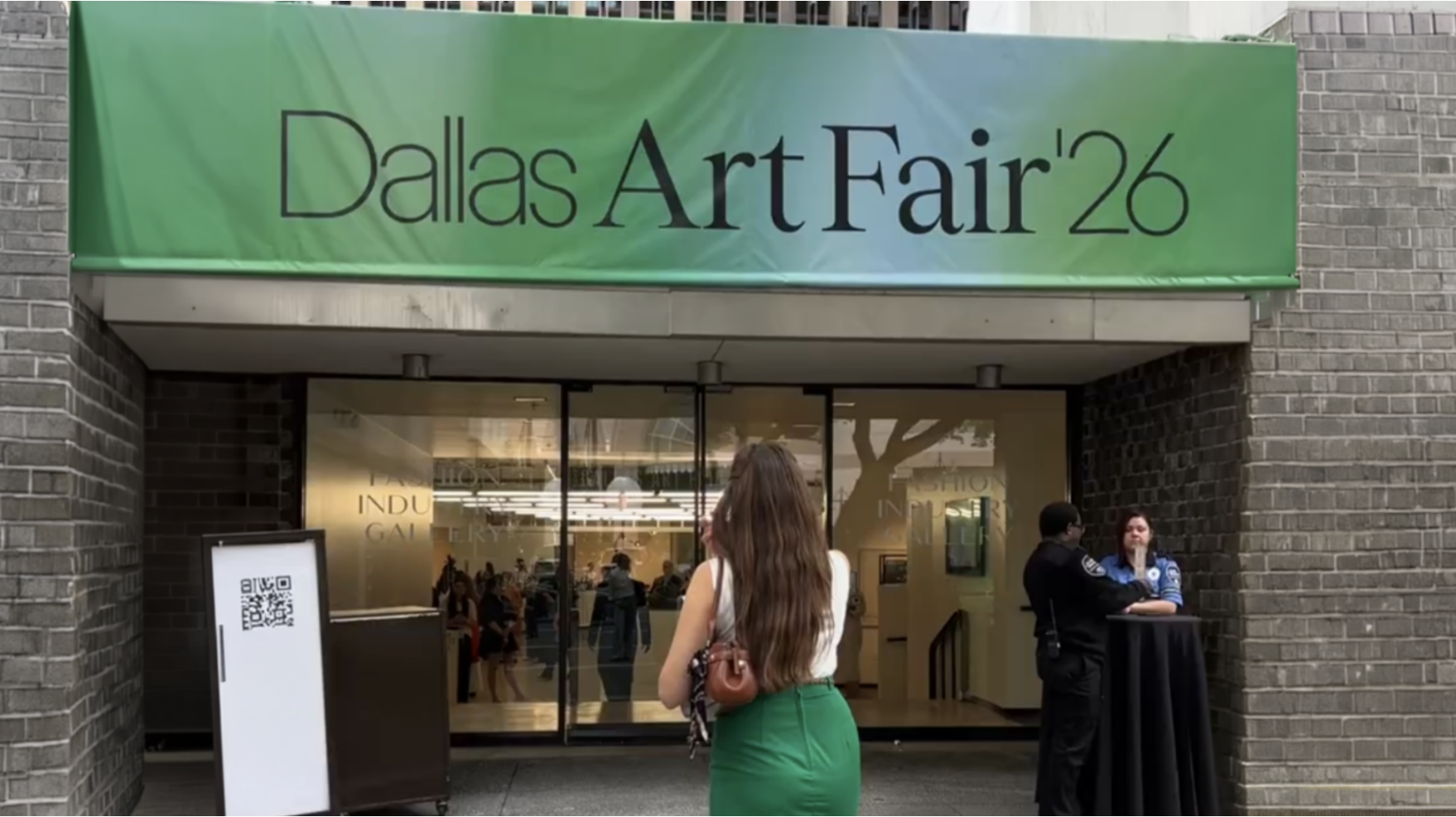
Dallas Art Fair 2026: The Power of Relationships in a Changing Art Market
In an art world often defined by speed, speculation, and spectacle, the 2026 edition of the Dallas Art Fair offers a compelling counterpoint: a market built not on immediacy, but on relationships.
Held in the heart of Texas, the fair has quietly evolved into one of the most distinctive platforms in the American art landscape. What defines it is not scale, but rhythm. Unlike the rapid-fire transactions of global fairs, Dallas operates with a slower, more deliberate cadence—one that reflects the character of its collector base.
At the core of this ecosystem is a relationship-driven model of collecting. Local collectors are known for their patience. Rather than acquiring multiple works impulsively, many choose to purchase selectively—sometimes just one or two pieces per year—often returning to galleries several times before committing.
This behavior reshapes the dynamics of the fair. Sales are rarely instantaneous. Instead, they unfold over days, conversations, and trust. In many cases, transactions are finalized toward the end of the fair, after a process of reflection and engagement.
Equally notable is the stability of the fair itself. With around 90 exhibitors and relatively low turnover compared to previous years, the Dallas Art Fair has established a consistent and reliable environment for galleries. This continuity fosters long-term relationships between dealers and collectors—arguably the true currency of the Texas market.
But this is not a static system. A new generation of dealers and collectors is gradually reshaping the cultural landscape. Younger galleries are entering the conversation, bringing fresh perspectives while integrating into an already cohesive network. The result is a hybrid model: traditional in its values, yet contemporary in its evolution.
Institutional presence further strengthens the fair’s significance. Museums in the Dallas-Fort Worth area actively engage with the event, with acquisitions made directly from the fair reinforcing its role as a conduit between market and institution.
What emerges is a different vision of the art market—one less driven by urgency and more by confidence, familiarity, and long-term commitment.
In Dallas, collecting is not performative. It is relational.
And in an era increasingly defined by speed, that may be its most radical quality.
What becomes increasingly evident is that the Dallas Art Fair is not driven by volatility, but by consistency and trust. With approximately 90 exhibitors and notably lower turnover compared to previous years, the fair has stabilized into a reliable platform where galleries can return year after year, cultivating relationships that extend far beyond a single edition. This continuity is not incidental—it is structural, reinforcing a market that values presence over novelty.
The role of leadership also plays a crucial part in this equilibrium. Under the direction of Kelly Cornell, the fair has maintained a careful balance between demand and selectivity. Galleries are not only eager to participate, but are able to place works with confidence, knowing that the audience is engaged, informed, and—perhaps most importantly—patient.
This patience defines the transactional rhythm of Dallas. Unlike the immediacy often associated with international fairs, here the act of collecting unfolds through time, conversation, and repetition. Dealers frequently report that initial interest during VIP previews evolves gradually, with acquisitions materializing after multiple visits. The final day, rather than the opening, often becomes the moment of resolution—a subtle inversion of the typical art fair tempo.
Institutional engagement further consolidates the fair’s importance. The Dallas Museum of Art’s acquisition of multiple works—spanning artists such as Nicole Eisenman, Caroline Monnet, and Raymond Saunders—demonstrates the fair’s function as a bridge between the market and institutional collections. These acquisitions are not merely transactional; they signal curatorial confidence and reinforce the cultural legitimacy of the works presented.
At the commercial level, the results reflect a measured but solid market performance. Significant sales—from Sam Francis and Corinne Michelle West to contemporary figures like Rachel Mica Weiss and Marlon Portales—indicate that while the pace may be slower, the commitment is substantial. Prices range widely, suggesting an ecosystem that accommodates both established collectors and newer entrants without compromising depth.
Perhaps most revealing, however, is the way the fair integrates into the broader local ecosystem. For younger dealers like Tessa Granowski, Dallas is not simply a marketplace—it is a network. Efforts to establish permanent spaces, often rooted in personal and geographic histories, point to a model where art is embedded within community rather than detached from it.
In this context, the Dallas Art Fair emerges not as an event defined by spectacle, but as a long-term cultural infrastructure—one where relationships are not a byproduct of the market, but its very foundation.