
back to top
Wednesday, December 17, 2025
Home Blog Page 175

Paul Klee

PAUL KLEE
PAUL KLEE

Paul Klee

Paul Klee cannot possibly be classified, his career covered Expressionism, Cubism, Futurism, Surrealism, Abstraction and much more besides.

Paul Klee, (born December 18, 1879, Münchenbuchsee, near Bern, Switzerland—died June 29, 1940, Muralto, near Locarno), Swiss-German painter and draftsman who was one of the foremost artists of the 20th century.

Early life and education


Klee’s mother, née Ida Maria Frick of Basel, and his German-born father, Hans Klee, were both trained as musicians. By Swiss law, Paul Klee held his father’s nationality; late in life he applied for Swiss citizenship but died just days before it was granted. A gifted violinist, he briefly considered music as a career, and between 1903 and 1906 he played occasionally in the Bern symphony orchestra. Klee was educated in the classical Literarschule (a literary secondary school) in Bern. As a youth, he wrote poetry and even tried his hand at writing plays. The diaries he kept from 1897 to 1918 are valuable documents rich with detailed accounts of his experiences and his observations on art and literature.

As a boy, Klee did delicate landscape drawings, in which he and his parents saw the promise of a career, and he filled his school notebooks with comic sketches. Upon graduating from the Literarschule in 1898 he left for Munich, which was then the artistic capital of Germany, and enrolled in the private art school of Heinrich Knirr. In 1899 he was admitted to the Munich Academy, which was then under the direction of Franz von Stuck, the foremost painter of Munich. Stuck was a rather strict academic painter of allegorical pictures, but his emphasis on imagination proved invaluable to the young Klee.

Klee completed his artistic education with a six-month visit to Italy before returning to Bern. The beauty of the art of ancient Rome and of the Renaissance led him to question the imitative styles of his teachers and of his own previous work. Giving vent to his generally sardonic attitude toward people and institutions, Klee fell back on his undisputed talent for caricature, making it one of the cornerstones of his art. His first important works, a series of etchings, Inventions, undertaken in 1903–05 after his return from Italy and drawn in a tight technique inspired by Renaissance prints, are grotesque allegories of social pretension, artistic triumph and failure, and the nature and perils of woman.

In 1906 Klee married Lily Stumpf, a pianist whom he had met while an art student, and that year he settled in Munich to pursue his career. His public debut that year—an exhibition of Inventions in Frankfurt am Main and Munich—was largely ignored. He tried to earn a living by writing reviews of art exhibits and concerts, teaching life-drawing classes, and providing illustrations for journals and books. He had one small success as an illustrator: the drawings he did in 1911–12 for Voltaire’s satirical novel Candide. Among his most-accomplished early works, these drawings attempt to capture the humour and universality of Voltaire’s satire by reducing characters, settings, and details to comic flurries of lines. As for Klee’s caricatures, they were rejected as too idiosyncratic, and for many years Klee’s small family—increased to three in 1907 by the birth of their only child, Felix—was supported largely by Lily’s piano lessons.

Over the next several years Klee began to address his relative ignorance of modern French art. In 1905 he visited Paris, where he took special note of the Impressionists, and between 1906 and 1909 he became successively acquainted with the work of the Post-Impressionists Vincent van Gogh and Paul Cézanne and of the Belgian artist James Ensor. He also began to explore the expressive possibilities of children’s drawings. These varied influences imparted to his work a freedom of expression and a willfulness of style equaled by few other artists of the time.

Klee caught up with the avant-garde in 1911, when he entered the circle of Der Blaue Reiter, an artists’ organization founded in Munich that year by the Russian painter Wassily Kandinsky and the German painter Franz Marc. Kandinsky was then in the process of formulating his influential theory of abstract art as spiritual expression, and while Klee had only limited tolerance for his mysticism, the Russian artist, together with Marc, showed him how far abstraction and a visionary approach to content could be taken. Klee also came to know a wide variety of French Cubist painting from Der Blaue Reiter exhibitions of 1911–12 and from a visit he made to Paris in April 1912. He was especially impressed with the Orphic Cubism of the French artist Robert Delaunay.

Klee’s own adoption of the abstracted geometric style of the Cubists is seen in a number of drawings he did in 1912–13 that range from comic images of lust and mayhem to symbolic representations of fate. They are not as complex as Cubist compositions—that would come later, after Klee had assimilated his new discovery—but instead resemble, and were largely inspired by, the simple patterns of children’s drawings. Klee joined Cubism to children’s art because both, he believed, returned art to its fundamentals: children’s art by its direct and naive renderings, and Cubism by its timeless geometry. Together with Klee’s taste for caricature, these elements result in a characteristic union of the farcical and the sublime, two seemingly contradictory qualities held in suspension by Klee’s rigorous compositions and later by the beauty of his colour. From Cubism Klee also derived the frequent use of letters and other signs in his works: in Cubism these are usually simple indicators of the objects represented, but with Klee they become objects in their own right, imbuing his scenes with portents and enigmatic significance.

Artistic maturity of Paul Klee

Until 1914 Klee found it difficult to paint; he felt a lack of confidence in his abilities as a colourist, and most of his work to that time had been in black and white. But in April of that year he took a two-week trip to Tunisia with his boyhood friend Louis Moilliet and fellow painter August Macke of Der Blaue Reiter. Klee’s intense response to the North African landscape and the example of Macke’s more-advanced use of Delaunay’s colourful Cubism brought him new assurance as a painter. His lyrical watercolours of Tunisia, in which the landscape is simplified into transparent coloured planes, are his first sustained body of work in colour. They would be the basis, in subject and style, for much of his painting in subsequent years.

As a German citizen, Klee was called up for service in the German army in 1916 during World War I. As a Swiss, he felt little of the patriotic zeal and martial enthusiasm shown by many German artists and intellectuals, and he was spared front-line duty by recently enacted legislation exempting artists from combat. He remained in Bavaria, where he was able to continue his art. Many of the paintings Klee did during the war years are romantic childlike landscapes, where war makes its appearance indirectly in images of demons or conflicts with fate. Their charm proved popular with the public, and his work began to sell.

With the end of the war in 1918, Klee, like many German artists, saw the hope of a new society. His political optimism may explain the exuberance of his work at this time. He continued to paint evocative landscapes, but he returned as well to the farcical imagery he had drawn before the war. He visited the Dadaists in Zürich, and his work approaches theirs in its humour and spirit of absurdity. Among Klee’s most-striking pictures of the postwar period are his oil transfer paintings, created with a distinctive technique he devised in 1919. Essentially coloured drawings, they were made by tracing a drawing—usually onto watercolour paper—through a transfer paper coated with sticky black ink or paint, and colouring the result. Their characteristically fuzzy, spreading lines are unlike anything else in the period and lend a rich patina to Klee’s droll or whimsical images. Among them are such well-known works as Room Perspective with Inhabitants (1921), whose inhabitants dwell not in the room but within the perspective lines that create it; and Twittering Machine (1922), which depicts a comic apparatus for making birds sing.

In 1920 Klee received an appointment to teach at the Bauhaus, the school of modern design founded in 1919 in Weimar, Germany, by the architect Walter Gropius. Klee’s principal duty, like that of his fellow Bauhaus artists Kandinsky and László Moholy-Nagy, was to lecture in the basic design program on the mechanics of art. His lectures at the Bauhaus, recorded in more than 3,300 pages of notes and drawings, were a remarkable attempt to show how the formal elements of art—simple linear constructions and geometric motifs—could be used to build complex symbolic compositions. Klee expounded his own methods in the Pädagogisches Skizzenbuch (1925; Pedagogical Sketchbook).

The prevalent geometric aesthetic of the 1920s and Klee’s attempts to teach a methodology of art led him to rationalize his own practice as well. His work of the Bauhaus decade is more geometric than before, and the number of forms employed in a given composition is sharply reduced. Among the many types of compositions resulting from this practice are pictures made entirely of coloured squares, horizontal striations, or patterns resembling basket weave and, among his most evocative, a number of paintings in which puzzlingly disparate objects—faces, animals, goblets, heavenly bodies—coexist in a black undifferentiated space.

By the mid-1920s Klee’s reputation had spread far beyond Germany, and in 1925 he received his first one-man show in Paris, the capital of European art. As the decade progressed, his biweekly lectures and administrative duties, and the almost constant tension in the Bauhaus over policy and politics, became increasingly onerous, and in 1931 he resigned for a less-demanding position at the Dusseldorf Academy. He continued to work with geometric forms, most notably in his richly but painstakingly rendered pointillist paintings of 1930–32, with their mosaic-like surfaces of coloured dots—among them his largest single painting to date, Ad Parnassum (1932). But most of his pictures of the early and mid-1930s show varying attempts at loosening his style, with freer compositions and brushwork.

Klee remained at the Dusseldorf Academy until 1933, when Adolf Hitler came to power; from then on, it was no longer possible to work in Germany. As a modern artist, Klee was dismissed from his position, and his house and studio were searched by the Gestapo on account of his known left-wing sympathies. Despite these difficulties, Klee continued to produce his art without restraint. The drawings he did at this time are mostly representational and even narrative; many directly reflect the political disturbances of the day, dealing in ironic fashion with demagogy, militarism, political violence, and emigration.

But Klee’s creative activity was not to continue uninterrupted. At the end of 1933 he returned to the relative artistic isolation of Switzerland, where the disruptions caused by his move, along with his sudden financial uncertainty, took a toll on both the quality and quantity of his work. His difficulties were compounded in the summer of 1935 by the onset of an incurable illness. At first misdiagnosed as a variety of lesser ailments, it was eventually recognized as scleroderma, an affliction in which the body’s connective tissues become fibrous. Its severe initial symptoms, which ranged from a rash to glandular disturbances and respiratory and digestive difficulties, left Klee incapable of working for over a year. But in 1937 the temporary remission of his illness led to a remarkable outpouring of creative energy that was sustained until only a few months before his death in 1940.

Klee’s late paintings and drawings are strongly influenced by the harsh distortions of Pablo Picasso’s work of the 1920s and ’30s. What the Spanish master gave to Klee in these final years was a means of expressing the urgency Klee felt as his health declined. The small details and delicate shadings and tints that had given his previous work its characteristic refinement are replaced by bold, simple strokes and a new intensity of colour. The sense of humour in these last works is now muted by the gravity of Klee’s style and above all by images of dying and death. Among such works are wry drawings of angels (1939–40), who are still half-attached by memories and desires to their former selves, and Death and Fire (1940), Klee’s evocation of the underworld, in which a rueful face of death is placed in an infernal setting of fiery red. These late images are among the most memorable of all Klee’s works and are some of the most significant depictions of death in the history of art.

Legacy of Paul Klee

Though Klee belonged to no movement, he assimilated, and even anticipated, most of the major artistic tendencies of his time in his work. Using both representational and abstract approaches, he produced an immense oeuvre of some 9,000 paintings, drawings, and watercolours in a great variety of styles. His works tend to be small in scale and are remarkable for their delicate nuances of line, colour, and tonality. In Klee’s highly sophisticated art, irony and a sense of the absurd are joined to an intense evocation of the mystery and beauty of nature. Claiming art to be a parable of the Creation, Klee represented everything from human figures and foibles to landscapes and microcosms of the plant and animal kingdoms, all with an eye that mocked as much as it praised; he was one of the great humorists of 20th-century art and its supreme ironist. Music figures prominently in his work—in his many images of opera and musicians, and to some extent as a model for his compositions. But literature had the greater pull on him; his art is steeped in poetic and mythic allusion, and the titles he gave to his pictures tend to charge them with additional meanings. Klee’s work was too personal to found a school or style, but it has had wide and profound influence.

A Page From Paul Klee Notebook

Paul Klee’s Biography

Paul Klee Photo
Paul Klee

Paul Klee (18 December 1879 – 29 June 1940) was born in Munchenbuchsee, Switzerland, and is considered both a German and a Swiss painter. His highly individual style was influenced by movements in art that included expressionism, cubism, and surrealism. He was also a student of orientalism. Klee was a natural draftsman who experimented with and eventually mastered colour theory, and wrote extensively about it; his lectures Writings on Form and Design Theory (Schriften zur Form und Gestaltungslehre), published in English as the Paul Klee Notebooks, are considered so important for modern art that they are compared to the importance that Leonardo da Vinci’s A Treatise on Painting had for Renaissance. He and his colleague, the Russian painter Wassily Kandinsky, both taught at the German Bauhaus school of art, design and architecture. His works reflect his dry humor and his sometimes childlike perspective, his personal moods and beliefs, and his musicality.

Marcel Franciscono

BRITANNICA CONTRIBUTOR

FORMER ENCYCLOPÆDIA BRITANNICA EDITOR

CONTRIBUTOR

BIOGRAPHY

Naomi Blumberg was Assistant Editor, Arts and Culture for Encyclopaedia Britannica. She covered topics related to art history, architecture, theatre, dance, literature, and music.

Before becoming an editor at Britannica, she worked as a curator and exhibition developer in art and history museums in Boston and Chicago. She holds a B.A. from Barnard College in art history and an M.A. from Tufts University in art history and museum studies.


His highly individual style was influenced by movements in art that included expressionism, cubism, and surrealism. He was also a student of orientalism. Klee was a natural draftsman who experimented with and eventually mastered colour theory, and wrote extensively about it; his lectures Writings on Form and Design Theory (Schriften zur Form und Gestaltungslehre), published in English as the Paul Klee Notebooks, are considered so important for modern art that they are compared to the importance that Leonardo da Vinci’s A Treatise on Painting had for Renaissance. He and his colleague, the Russian painter Wassily Kandinsky, both taught at the German Bauhaus school of art, design and architecture. His works reflect his dry humor and his sometimes childlike perspective, his personal moods and beliefs, and his musicality.

Early life and training

Paul Klee was born as the second child of the German music teacher Hans Wilhelm Klee (1849-1940) and the Swiss singer Ida Marie Klee, nee Frick (1855-1921). His sister Mathilde (died 6 December 1953) was born on 28 January 1876 in Walzenhausen. Their father came from Tann and studied at the Stuttgart Conservatory singing, piano, organ and violin, where he met his future wife Ida Frick. Until 1931 Hans Wilhelm Klee was active as a music teacher at the Bern State Seminary in Hofwil near Bern. Due to this circumstances, Klee was able to develop his music skills through his parental home; his parents backed and inspired him until his death. In 1880, his family moved to Bern, where they moved 17 years later after numerous changes of residence into a house at the Kirchenfeld district. From 1886 to 1890, Klee visited the primary school and received, at the age of 7, violin classes at the Municipal Music School. He was so talented on violin that, aged 11, he received an invitation to play as an exceptional member of the Bern Music Association.

In his early years, following his parent’s wishes, he focused on becoming a musician; but he decided on the visual arts during his teen years, partly out of rebellion and partly because of a belief that modern music lacked meaning for him. He stated, “I didn’t find the idea of going in for music creatively particularly attractive in view of the decline in the history of musical achievement.” As a musician, he played and felt emotionally bound to traditional works of the eighteenth and nineteenth century, but as an artist he craved the freedom to explore radical ideas and styles. At sixteen, Klee’s landscape drawings already show considerable skill.

Around 1897, he started his diary, which he kept until 1918, and which has provided scholars with valuable insight into his life and thinking. During his school years, he avidly drew in his school books, in particular drawing caricatures, and already demonstrating skill with line and volume. He barely passed his final exams at the “Gymnasium” of Bern, where he qualified in the Humanities. With his characteristic dry wit, he wrote, “After all, it’s rather difficult to achieve the exact minimum, and it involves risks.” On his own time, in addition to his deep interests in music and art, Klee was a great reader of literature, and later a writer on art theory and aesthetics.

With his parents’ reluctant permission, in 1898 he began studying art at the Academy of Fine Arts in Munich with Heinrich Knirr and Franz von Stuck. He excelled at drawing but seemed to lack any natural color sense. He later recalled, “During the third winter I even realized that I probably would never learn to paint.” During these times of youthful adventure, Klee spent much time in pubs and had affairs with lower class women and artists’ models. He had an illegitimate son in 1900 who died several weeks after birth.

Klee, Paul (1879-1940): Static-Dynamic Gradation, 1923. New York, Metropolitan Museum of Art*** Permission for usage must be provided in writing from Scala.

After receiving his Fine Arts degree, Klee went to Italy from October 1901 to May 1902 with friend Hermann Haller. They stayed in Rome, Florence, and Naples, and studied the master painters of past centuries. He exclaimed, “The Forum and the Vatican have spoken to me. Humanism wants to suffocate me.” He responded to the colors of Italy, but sadly noted, “that a long struggle lies in store for me in this field of color.” For Klee, color represented the optimism and nobility in art, and a hoped for relief from the pessimistic nature he expressed in his black-and-white grotesques and satires. Returning to Bern, he lived with his parents for several years, and took occasional art classes. By 1905, he was developing some experimental techniques, including drawing with a needle on a blackened pane of glass, resulting in fifty-seven works including his Portrait of My Father (1906). In the years 1903-5 he also completed a cycle of eleven zinc-plate etchings called Inventions, his first exhibited works, in which he illustrated several grotesque characters. He commented, “though I’m fairly satisfied with my etchings I can’t go on like this. I’m not a specialist.” Klee was still dividing his time with music, playing the violin in an orchestra and writing concert and theater reviews.

Marriage

Klee married Bavarian pianist Lily Stumpf in 1906 and they had one son named Felix Paul in the following year. They lived in a suburb of Munich, and while she gave piano lessons and occasional performances, he kept house and tended to his art work. His attempt to be a magazine illustrator failed. Klee’s art work progressed slowly for the next five years, partly from having to divide his time with domestic matters, and partly as he tried to find a new approach to his art. In 1910, he had his first solo exhibition in Bern, which then traveled to three Swiss cities.

Affiliation to the “Blaue Reiter”, 1911

In January 1911 Alfred Kubin met Klee in Munich encouraging him to illustrate Voltaires Candide. Around this time, Klee’s graphical work saw an increase, and his early inclination towards the absurd and the sarcastic was well received by Kubin. He did not only befriend Klee but he was also one of his first significant collectors. Klee met, through Kubin, the art critic Wilhelm Hausenstein in 1911, and was in the summer that year foundation member and manager of the Munich artists’ union Sema. In autumn he made an acquaintance with August Macke and Wassily Kandinsky, and in winter he joined the editorial team of the almanach Der Blaue Reiter, founded by Franz Marc and Kandinsky. On meeting Kandinsky, Klee recorded, “I came to feel a deep trust in him. He is somebody, and has an exceptionally beautiful and lucid mind.” Other members including Macke, Gabriele Munter and Marianne von Werefkin. Klee progressed in a few months of his assistance to one of the most important and independent members of the Blaue Reiter, but he was not yet fully integrated.

The release of the almanach was delayed for the benefit of an exhibition. The first Blaue Reiter exhibition took place from 18 December 1911 to 1 January 1912 in the Moderne Galerie Heinrich Thannhauser in Munich. Klee did not attend it, but in the second exhibition, occurred from 12 February to 18 March 1912 in the Galerie Goltz, 17 of his graphical works were showed. The name of this art exhibition was Schwarz-Weiß, as it only regarded graphic painting. Initially planned to be released in 1911, the release date of the Der Blau Reiter almanach by Kandinsky and Marc was delayed in May 1912, including the reproducted ink drawing Steinhauer by Klee. At the same time, Kandinsky published his art history writing Uber das Geistige in der Kunst.

Participation on art exhibitions, 1912/1913

The association opened his mind to modern theories of color. His travels to Paris in 1912 also exposed him to the ferment of Cubism and the pioneering examples of “pure painting”, an early term for abstract art. The use of bold color by Robert Delaunayand Maurice de Vlaminck also inspired him. Rather than copy these artists, Klee began working out his own color experiments in pale watercolors and did some primitive landscapes, including In the Quarry (1913) and Houses near the Gravel Pit(1913), using blocks of color with limited overlap. Klee acknowledged that “a long struggle lies in store for me in this field of color” in order to reach his “distant noble aim.” Soon, he discovered “the style which connects drawing and the realm of color.”

While Klee was in Paris, he was able to access Post-Impresionism works of Paul Cezane and Vincent van Gogh. “Permit me to be scared stiff,” Klee said after seeing van Gogh’s paintings. Van Gogh influenced Klee’s use of color to express emotion, his simplified or distorted drawing, and his sacrifice of realistic illusions of depth to an emphatic surface pattern.

Trip to Tunis, 1914

Kleee’s artistic breakthrough came in 1914 when he briefly visited Tunisia with August Macke and Louis Moilliet and was impressed by the quality of the light there. He wrote, “Colour has taken possession of me; no longer do I have to chase after it, I know that it has hold of me forever… Colour and I are one. I am a painter.” With that realization, faithfulness to nature fades in importance. Instead, Klee began to delve into the “cool romanticism of abstraction”. In gaining a second artistic vocabulary, Klee added color to his abilities in draftsmanship, and in many works combined them successfully, as he did in one series he called “operatic paintings”. One of the most literal examples of this new synthesis is The Bavarian Don Giovanni (1919).

After returning home, Klee painted his first pure abstract, In the Style of Kairouan (1914), composed of colored rectangles and a few circles. The colored rectangle became his basic building block, what some scholars associate with a musical note, which Klee combined with other colored blocks to create a color harmony analogous to a musical composition. His selection of a particular color palette emulates a musical key. Sometimes he uses complementary pairs of colors, and other times “dissonant” colors, again reflecting his connection with musicality.

Military career

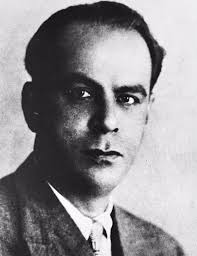
Paul Klee Portrait

A few weeks later, World War I began. At first, Klee was somewhat detached from it, as he wrote ironically, “I have long had this war in me. That is why, inwardly, it is none of my concern.” Soon, however, it began to affect him. His friends Macke and Marc both died in battle. Venting his distress, he created several pen and ink lithographs on war themes including Death for the Idea (1915). He also continued with abstracts and semi-abstracts. In 1916, he joined the German war effort, but with behind the scenes maneuvering by his father, Klee was spared serving at the front and ended up painting camouflage on airplanes and working as a clerk.

He continued to paint during the entire war and managed to exhibit in several shows. By 1917, Kleee’s work was selling well and art critics acclaimed him as the best of the new German artists. His Ab ovo (1917) is particularly noteworthy for its sophisticated technique. It employs watercolor on gauze and paper with a chalk ground, which produces a rich texture of triangular, circular, and crescent patterns. Demonstrating his range of exploration, mixing color and line, his Warning of the Ships(1918) is a colored drawing filled with symbolic images on a field of suppressed color.

Mature career

In 1919, Klee applied for a teaching post at the Academy of Art in Dusseldorf. This attempt failed but he had a major success in securing a three-year contract (with a minimum annual income) with dealer Hans Goltz, whose influential gallery gave Klee major exposure, and some commercial success. A retrospective of over 300 works in 1920 was also notable.

Klee taught at the Bauhaus from January, 1921 to April, 1931. He was a “Form” master in the bookbinding, stained glass, and mural painting workshops and was provided with two studios. In 1922, Kandinsky joined the staff and resumed his friendship with Klee. Later that year the first Bauhaus exhibition and festival was held, for which Klee created several of the advertising materials. And in the same year, the first series of Bauhaus books is published with works by Gropius (International Architecture), Paul Klee, Adolf Meyer, Oskar Schlemmer, and Piet Mondrian. Klee welcomed that there were many conflicting theories and opinions within the Bauhaus: “I also approve of these forces competing one with the other if the result is achievement.”

Klee was also a member of Die Blaue Vier (The Blue Four), with Kandinsky, Feininger, and Jawlensky; formed in 1923, they lectured and exhibited together in the USA in 1925. That same year, Klee had his first exhibits in Paris, and he became a hit with the French Surrealists. Klee visited Egypt in 1928, which impressed him less than Tunisia. In 1929, the first major monograph on Klee’s work was published, written by Will Grohmann.

Klee also taught at the Dusseldorf Academy from 1931 to 1933, and was singled out by a Nazi newspaper, “Then that great fellow Klee comes onto the scene, already famed as a Bauhaus teacher in Dessau. He tells everyone he’s a thoroughbred Arab, but he’s a typical Galician Jew.” His home was searched by the Gestapo and he was fired from his job. His self-portrait Struck from the List(1933) commemorates the sad occasion. In 1933-4, Klee had shows in London and Paris, and finally met Pablo Picasso, whom he greatly admired. The Klee family emigrated to Switzerland in late 1933.

Klee was at the peak of his creative output. His Ad Parnassum (1932) is considered his masterpiece and the best example of his pointillist style; it is also one of his largest, most finely worked paintings. He produced nearly 500 works in 1933 during his last year in Germany. However, in 1933, Klee began experiencing the symptoms of what was diagnosed as scleroderma after his death. The progression of his fatal disease, which made swallowing very difficult, can be followed through the art he created in his last years. His output in 1936 was only 25 pictures. In the later 1930s, his health recovered somewhat and he was encouraged by a visit from Kandinsky and Picasso. Klee’s simpler and larger designs enabled him to keep up his output in his final years, and in 1939 he created over 1,200 works, a career high for one year. He used heavier lines and mainly geometric forms with fewer but larger blocks of color. His varied color palettes, some with bright colors and others sober, perhaps reflected his alternating moods of optimism and pessimism. Back in Germany in 1937, when Nazis took control of the government, seventeen of Klee’s pictures, along with other works of contemporary avant-garde artists, such as Marc Chagall, Max Ernst, Piet Mondrian, and Wassily Kandinsky, were included in an exhibition of “Degenerate art” and 102 of his works in public collections were seized by the Nazis.

Death

Klee suffered from a wasting disease, scleroderma, toward the end of his life, enduring pain that seems to be reflected in his last works of art. One of his last paintings, Death and Fire, features a skull in the center with the German word for death, “Tod”, appearing in the face. He died in Muralto, Locarno, Switzerland, on 29 June 1940 without having obtained Swiss citizenship, despite his birth in that country. His art work was considered too revolutionary, even degenerate, by the Swiss authorities, but eventually they accepted his request six days after his death. His legacy comprises about 9,000 works of art. The words on his tombstone, Klee’s credo, placed there by his son Felix, say, “I cannot be grasped in the here and now, For my dwelling place is as much among the dead, As the yet unborn, Slightly closer to the heart of creation than usual, But still not close enough.” He was buried at Schosshaldenfriedhof, Bern, Switzerland.

Paul Klee Quotes

“A drawing is simply a line going for a walk. ”
– Paul Klee

“A line is a dot that went for a walk.”
– Paul Klee

“A single day is enough to make us a little larger or, another time, a little smaller. ”
– Paul Klee

“Beauty is as relative as light and dark. Thus, there exists no beautiful woman, none at all, because you are never certain that a still far more beautiful woman will not appear and completely shame the supposed beauty of the first. ”
– Paul Klee

“Children also have artistic ability, and there is wisdom in there having it! The more helpless they are, the more instructive are the examples they furnish us; and they must be preserved free of corruption from an early age. ”
– Paul Klee

“Color possesses me. I don’t have to pursue it. It will possess me always, I know it. That is the meaning of this happy hour: Color and I are one. I am a painter.”
– Paul Klee

“Everything vanishes around me, and works are born as if out of the void. Ripe, graphic fruits fall off. My hand has become the obedient instrument of a remote will.”
– Paul Klee

“He has found his style, when he cannot do otherwise.”
– Paul Klee

“In the final analysis, a drawing simply is no longer a drawing, no matter how self-sufficient its execution may be. It is a symbol, and the more profoundly the imaginary lines of projection meet higher dimensions, the better.”
– Paul Klee

“Nature is garrulous to the point of confusion, let the artist be truly taciturn.”
– Paul Klee

“One does not lash hat lies at a distance. The foibles that we ridicule must at least be a little bit our own. Only then will the work be a part of our own flesh. The garden must be weeded.”
– Paul Klee

“One eye sees, the other feels.”
“- Paul Klee

“The art of mastering life is the prerequisite for all further forms of expression, whether they are paintings, sculptures, tragedies, or musical compositions.”
– Paul Klee

“The painter should not paint what he sees, but what will be seen.”
“- Paul Klee

“The worst state of affairs is when science begins to concern itself with art.”
– Paul Klee

“To emphasize only the beautiful seems to me to be like a mathematical system that only concerns itself with positive numbers.”
– Paul Klee

“When looking at any significant work of art, remember that a more significant one probably has had to be sacrificed. ”
– Paul Klee

Source: Paulklee.net


Source: https://www.paulklee.net/

Les Luthiers en el James L. Knight Center 

Les Luthiers se presentará el 7 de agosto en el teatro James L. Knight Center

Les Luthiers se presentará el 7 de agosto en el teatro James L. Knight Center 

El espectáculo que ofrecerá el grupo humorístico argentino se titula “Gran reserva” y es parte de una gira que abarca otras tres ciudades de Estados Unidos. Los boletos ya están a la venta en www.ticketmaster.com. “Gran Reserva” es una antología que reúne algunos de los grandes éxitos de los 55 años de historia de Les Luthiers, tales como “La Balada del 7º Regimiento”, “San Ictícola de los Peces”, “Entreteniciencia Familiar”, “La Hora de la Nostalgia”, “Quien conociera a María amaría a María”, el bolero “Perdónala”, “Música y Costumbres de la Isla de Makanoa” y “Rhapsody in Balls”. En la actualidad, y desde 2019, el conjunto está compuesto por dos de sus integrantes “históricos”, Jorge Maronna y Carlos López Puccio, además de Roberto Antier, Tomás Mayer Wolf, Martín O’Connor y Horacio Tato Turano. Actúan como reemplazantes Pablo Rabinovich y Santiago Otero. Les Luthiers es un grupo de humoristas-músicos-actores bautizado así al ser una de las características de sus actuaciones el uso de insólitos instrumentos fabricados por ellos mismos. Ofrece espectáculos en los que aúna música de géneros muy diversos, desde lo clásico hasta lo popular, con un humor culto, inteligente, y refinado. En 2017 Les Luthiers fue reconocido en España con el prestigioso “Premio Princesa de Asturias de Comunicación y Humanidades” por ser “un espejo crítico y un referente de libertad en la sociedad contemporánea”. Luego de la función de Miami, el grupo estará el 11 de agosto en el Warner Theatre, de Washington; el 14 en el United Palace, de Nueva York; y el 18 en la sala The Wiltern, de Los Ángeles.

Festival de Danzas afrocubanas Ifé-Ilé

Vuelve el Festival de Danzas afrocubanas Ifé-Ilé de Miami
IFÉ-ILÉ Dance Company, a renowned Afro-Cuban dance troupe in Miami led, by choreographer/dancer Neri Torres are photographed Jan 10th, 2015 in the Miami Design District. (Photo by Knight Foundation / Mitchell Zachs)

Vuelve el Festival de Danzas afrocubanas Ifé-Ilé de Miami

Tras un paréntesis de cuatro años, el Festival de Danzas Afrocubanas Ifé-Ilé de Miami vuelve a realizarse de manera presencial. El Festival se basa en la promoción de las tradiciones y la cultura danzaria cubana, aunque también se abre a ritmos modernos como la salsa y el cubaton, y de otras latitudes como la danza contemporánea y el ballet haitiano. Las jornadas serán lideradas por su creadora, la célebre bailarina y coreógrafa cubana Neri Torres, que motoriza las actividades junto a las bailarinas y los músicos de su compañía de baile, Ifé-Ilé. El Festival 2022 tendrá dos sedes: el Museo de Historia de Miami, situado en el downtown; y el Koubek Center. Los dos shows principales se concretarán el 3 de agosto en el Museo y el 6, que será una gran gala, en el Koubek. Algunas actividades son gratuitas y otras, de pago. El detalle se puede hallar en la página web www.ife-ile.org más precisamente, en el siguiente enlace: https://ife-ile.org/festival/Shedule2022.pdf El Festival comenzará el miércoles 3 de agosto y finalizará el sábado 6 por la noche. En los cuatro días habrá espectáculos, talleres y conferencias. La invitada principal será Andrea Woods, directora del Programa de Danza, de la Universidad de Duke. Otros participantes especiales serán Dance Heals Project, de Filadelfia; la dupla Yodeny y Yoeny Martell; y un grupo de danza de la Universidad de Texas, donde Torres es profesora. “La danza es un vehículo de entendimiento universal y creo en su poder para reparar la actual fragmentación de familias, personas, sociedad, países”, sostiene Torres. En esta línea de inquietud social, el Festival será dedicado a las madres cubanas que tienen hijos apresados por reclamar libertad para su país. “Luchan por mantener un sentido de pertenencia”, señala la coreógrafa. Esta edición del evento se titulará “Danza indómita (Rituales de resistencia para el siglo 21)”.

Curas, Pastores y Maestro Espiritual

Gurú, un Swami o un maestro espiritual

Curas, Pastores y Maestro Espiritual en busca de fanáticos

Últimamente me he preguntado cómo cada vez más personas se convierten en fanáticos religiosos o políticos, ¿será que es un virus mental?
Veo la gran cantidad de fanáticos espirituales, personas que buscan un Gurú, un Swami o un maestro espiritual; pero también sé que existen gurús en la India que solo buscan las “donaciones” de sus seguidores. Hoy, 2022 nunca había visto una máquina de mercadeo tan grande y bien coordinada, dirigida a un target que en el retorno es de millones de dólares y que los seguidores crecen un 20% a 35% por año.
Sadhguru, al igual que Sai Baba y otros swamis tienen el apoyo del gobierno de la India, ya que gracias a estos gurús aumenta grandemente el porcentaje de turistas cada año.
No critico ir a la India, ya que es un país espectacular y pienso retirarme en ese país. Tampoco critico visitar a cualquier maestro espiritual de su preferencia, casi todos comparten una excelente enseñanza. Lo que critico es cuando sus fanáticos seguidores, comienzan a ver su guru como un hombre santo. Yo viví y estuve muy cerca de Sai Baba, era una persona VIP es sus ashrams, no por mis donaciones, sino por mi forma de ser y el servicio que prestaba en los ashrams. Me dejé llevar por la emoción de estar muy cerca del Swami y de ser respetado. Hasta que un día, me vi feliz por todo lo anterior y me vi estancado por esta felicidad momentánea.
Desde ese momento todo cambió, desde cómo veía al gurú hasta el comportamiento de mis amigos. Sai Baba me perdió cuando en una de las tantas entrevistas que tuve con él, vi cómo hacía prestidigitación apareciendo, anillos, relojes y japa malas.
Siempre, en las entrevistas, me sentaban al lado de su silla; luego de ver su magia, en las siguientes entrevistas, rehusé sentarme a su lado, no por rechazo, sino para observar todo: sus seguidores y su magia. Esta decepción la guardé para mí por mucho tiempo. La vida en los ashram siguió igual. Como era VIP, podía entrar a los darshans con binoculares, cámara fotográfica pequeña, los cuales usaba para ver y fotografiar sus actos de magia con el vibhuti.
Cuando decidí comunicar a mis amigos mi experiencia con la magia de Sai Baba, me dije: “cuando haga esto público voy a perder el 100% de mis amigos y amistades” y me respondí: “mi dharma es hacer lo correcto” y así lo hice. Sucedió lo que ya sabía, perdí el 100% de mis amigos, pero muy feliz porque había hecho lo correcto para mí y mi mejor amigo, Rafael Montilla.

Joaquín Torres García

Joaquín Torres-García

Joaquín Torres García

Concreto y Abstracto

“He dicho Escuela del Sur; porque en realidad, nuestro norte es el Sur. No debe haber norte, para nosotros, sino por oposición a nuestro Sur. Por eso ahora ponemos el mapa al revés, y entonces ya tenemos justa idea de nuestra posición, y no como quieren en el resto del mundo. La punta de América, desde ahora, prolongándose, señala insistentemente el Sur, nuestro norte”

Joaquín Torres García. Universalismo Constructivo, Bs. As. : Poseidón, 1941

Joaquín Torres García nació el de 28 de julio de 1874, en Montevideo, Uruguay.

Padres

Hijo de María García Pérez, uruguaya, y de Joaquim Torras Fradera, catalán, propietario de un comercio.

Estudios

En 1892 ingresó en la Escuela de Bellas Artes de Barcelona tras el regreso de su familia a España. Poco después decidió matricularse en la prestigiosa Academia Baixas. De 1893 a 1898 asistió al Cercle Artístico de Sant Lluc.

Trabajos con Gaudí

En 1901, Joaquín Torres García comenzó a pintar frescos influenciado por el movimiento modernista catalán, conociendo y haciendo amistad con Pablo Picasso y colaborando con Antoni Gaudí, en la realización de las vidrieras de la Sagrada Familia en Barcelona (1903-1907), y en la restauración de la catedral de Palma de Mallorca, donde realizó unas vidrieras con diseño geométrico.

Vivió veintinueve años en Barcelona, tiempo en el que realizó obras en edificios privados y públicos como el Ayuntamiento, Diputación, iglesias de San Agustín y San Jorge, etc.

Se mudó a Bruselas en 1910 para decorar el pabellón uruguayo de la Exposición Internacional realizando dos murales sobre la agricultura y ganadería uruguayas. También visitó París, Florencia y Roma.

Escritor

Durante 1913 publica Notes sobre Art, libro con el que se inicia en la teoría artística, y el 28 de julio de ese año comienza a pintar el primer fresco, La Catalunya eterna.

En 1919 se trasladó a Nueva York, y tres años después a Italia y Francia fijando su residencia en París, en 1926. En esta ciudad se relaciona con Piet Mondrian y Theo van Doesburg y otros artistas.

Arte constructivista

Durante 1930 cofundó la revista y el grupo Cercle et Carré, promotor de la primera exposición de arte constructivista y abstracto. En 1932 se radicó en Madrid, donde conoce al dramaturgo y poeta Federico García Lorca y organiza un grupo de artistas constructivos.

Taller Torres García

Tras regresar a Montevideo en 1934, fundó la Asociación de Arte Constructivo y el Taller Torres García.

Como padre del constructivismo latinoamericano, introdujo el cubismo, Neoplasticismo y Constructivismo en Uruguay.

Se le atribuye la introducción del constructivismo en América del Sur a través de sus obras de arte, enseñanzas y sus teorías conocidas a través de la revista Cercle et Carré y por su libro Universalismo constructivo, (el Universalismo constructivo es una corriente estética creada por Joaquín Torres García desarrollada en el libro del mismo nombre, a lo largo de mil páginas, donde se destacan los aspectos metafísicos del arte y al movimiento estético promulgado por el Taller Torres García) que fue editado en 1944; año en que se le galardonó con el Premio Nacional de Pintura.

Obras

Entre sus trabajos destacan: Ritmos curvos en blanco y negro (1937), Arte constructivo (1942) y por una serie de siete frescos murales en el Hospital Saint Bois realizados en 1944.

A lo largo de su carrera publicó decenas de escritos dedicados a discusiones teóricas sobre diferentes movimientos artísticos y expuso junto a artistas tan reputados como, Picasso, van Doesburg, Mondrian y Duchamp.

Matrimonio e hijos

En 1909 se casó con Manolita Piña, con la que tuvo a sus hijos Augusto, Horacio y Olimpia.

Joaquín Torres García falleció el 8 de agosto de 1949, en Montevideo.


¿Cuáles son sus influencias artísticas?
Su larga estadía en Europa fue esencial para su carrera pues allí conoció el lenguaje de la abstracción geométrica y la concepción de un arte ligado con lo universal y cósmico. Entre las influencias artísticas de Torres García es necesario mencionar a dos artistas que conoció en París: Theo Van Doesburg y Mondrian. El primero lo puso en contacto con las teorías del neoplasticismo. El segundo fue  un encuentro decisivo para su carrera artística, ya que si bien el uso de la ortogonalidad puede verse en su obra desde 1917, fue a partir de este hecho que Torres García asumió una concepción del arte totalmente despojada de sentimientos humanos individuales, en la que el valor reside en un rígido diseño asimétrico.

¿Qué otras actividades realizó además de la pintura?
Además de la pintura, Torres García realizó diferentes actividades: fue muralista, ilustrador, escultor, teórico y profesor.
En Barcelona trabajó como ilustrador para revistas. Durante gran parte de su carrera se dedicó a la enseñanza y a la escritura. Publicó artículos en diferentes revistas y periódicos, tanto europeos como americanos. También fabricó juguetes en madera. Al regresar con su familia al Uruguay en 1934 se dedicó a la docencia, dictó más de 600 conferencias y publicó varios escritos con el fin de difundir su ideal de constructivismo universal. En 1944 realizó con los alumnos del Taller Torres García los murales en el Sanatorio de Saint Bois.

¿A qué estilo/movimiento estético responde?/ ¿En qué consiste el constructivismo universal/ el Universalismo Constructivo?/ ¿Cuál es el objetivo de su obra?/¿Cuál es su concepción del arte y de la pintura?/ ¿Por qué se lo considera un artista de vanguardia?/ ¿Cuál fue su aporte al arte?
Joaquín Torres García es el creador del constructivismo universal. Con este movimiento se propone crear un arte que exprese la comunión del hombre con el cosmos. Siguiendo este idea, considera al arte como un puente entre el hombre y la naturaleza, puente que es capaz de contribuir a la recuperación del sentido espiritual–perdido para ese entonces- de las civilizaciones arcaicas, en donde el hombre estaba en armonía con el cosmos.  El Universalismo Constructivo persigue, pues, la creación de un lenguaje plástico de alcance universal, en el que se integren el uso de líneas, figuras geométricas, la proporción áurea y símbolos de todas las épocas y civilizaciones. De este modo, Torres García renuncia a los valores adquiridos en el arte, abandonando la imitación para alcanzar dicho lenguaje. Su pintura constructiva admite una lectura formal, plástica y semántica de índole espiritual: en este sentido, cuadrados y rectángulos son organizados siguiendo una idea mística del orden cósmico con numerosos símbolos provenientes del patrimonio universal. Se trata de un movimiento que intenta conjugar lo antiguo y lo moderno, lo indígena y lo europeo, los movimientos de vanguardia y los motivos de las culturas precolombinas. En conclusión, el Universalismo Constructivo, según Torres García, nos permitiría retornar a la situación arcaica en la cual el arte se mezclaba con el rito y el hombre, con la naturaleza.

¿Cuál es la propuesta del Neoplasticismo/ de Mondrian/ de Van Doesburg?
El Neoplasticismo fue un movimiento de vanguardia surgido en 1917 en Holanda. Sus principales representantes fueron Van Doesburg, Mondrian, Rietveld, Vantongerloo y el Lissitzky. En el contexto de la primera posguerra, el objetivo que estos artistas persiguieron fue construir una nueva sociedad, más armónica, en la que el arte cumpliera un rol social. Sostenían que las pasiones y el individualismo eran la raíz de los males modernos, por lo cual propusieron un lenguaje plástico abstracto y puro, en el que la subjetividad no estuviera involucrada. Es por ello que los recursos formales que eligieron fueron la ortogonalidad, los colores primarios y el punto plástico (el punto de cruce y unión  de ortogonales).

¿Cuál es su técnica?/ ¿Cuál es su forma de pintar?/ ¿En qué consiste la técnica del óleo?
La técnica pictórica utilizada por Joaquín Torres García es la del óleo sobre cartón. Esta técnica consiste en mezclar los pigmentos con un aglutinante a base de aceites (tener en cuenta que la palabra óleum proviene del latín y significa aceite). El éxito del óleo radica en sus dos ventajas principales. En primer lugar, al permanecer húmedo durante mucho tiempo, permite al artista obrar tranquilamente, favoreciendo de este modo la mezcla de colores y el trabajo con degradados, fundidos y sombreados. En segundo lugar, gracias a su base aceitosa, una vez seca, la pintura continúa teniendo un color vivo y persistente a lo largo del tiempo.

Source: https://mnba.museosabiertos.org/a_torres_garcia.html


Alexis Valdés presenta su nueva comedia

La otra mascarilla
La otra mascarilla

Alexis Valdés presenta su nueva comedia, “La otra mascarilla”, en el Teatro Trail


ELENCO LA OTRA MASCARILLA

El teatro de Miami está de parabienes porque una de sus figuras máximas, Alexis Valdés, subirá a escena para protagonizar una de sus comedias. El acontecimiento tendrá lugar con la comedia “La otra mascarilla”, que debutará el viernes 8 de julio, en el Teatro Trail, de Coral Gables. El elenco se compone de Alexis Valdés, Claudia Valdés, Dyanelis Brito, Rosa Paseiro, Carmen Daysi, Maka Rivero Veloz, Verónica López, y Vladimir Escudero. “La otra mascarilla” tendrá funciones los sábados, a las 8 pm; y los domingos, a las 5. Las entradas están a la venta en www.teatrotrail.com o llamando al 305-443-1009. La obra habla de una familia que se mete en un gran enredo debido a su desesperada búsqueda del éxito económico. De ahí el subtítulo de la obra: “¿Cambiarías tus principios por dinero?”. “La obra es para desternillarse de la risa, aunque tiene una pizca de drama, como todo en la vida”, cuenta Alexis, también autor y director de la pieza. “Mi personaje tiene magia y locura, y me permite explorar todas mis posibilidades como actor”, explica sobre Ramón, un emprendedor padre de familia. Durante la temporada Alexis alternará este rol con el gran actor cubano Rafael Lahera. Sobre la trama de “La otra mascarilla” Alexis también adelanta que trata “sobre los sueños y las aspiraciones de la gente de Miami y en los enredos en que se meten para lograrlos”. También de como, a veces, la política o las diferentes opiniones políticas afectan la unidad de una familia. “Confiamos en que esta nueva puesta en escena tenga la misma respuesta cálida que las anteriores”, manifestó Alexis, en alusión a “Oficialmente gay”, “Los vecinos de arriba”, “Mi robot sexual”, y las otras creaciones que ha presentado en el Trail. La propietaria de la sala,  Marisol Correa, expresó que “La otra mascarilla” es “una obra actual, con personajes muy bien dibujados y refleja todos los puntos de vista de la sociedad”.

BUILD THE WORLD YOU IMAGINE!

jia-jen-lin locust projects

LAB OPEN CALL 2022

APPLY NOW FOR LOCUST ART BUILDERS (LAB):

SUMMER ART INTENSIVE FOR TEENS!

WE ARE BAAACCKK! Applications for LAB open NOW!

30 creative teens will be selected from schools across Miami-Dade to learn from professional artists and dive into the creative and practical aspects of building a collaborative exhibition from scratch at Locust Projects!

IN-PERSON DATES & TIMES FOR LAB 2022

June 27 – July 23, 2022

Monday through Thursday | 10am – 2pm 

Full scholarships, including daily meals, provided to all selected students
 

APPLICATIONS FOR 2022 LAB ARE NOW OPEN:

What’s on the application?

  • WHY IS LAB FOR YOU? Express your interest in LAB via text or video. We’d love to know what you want to learn this summer and why you are a good fit for this opportunity!
  • SHOW US YOUR CREATIVE SIDE: Share up to 8 recently completed art works, designs, or projects. You can upload photos of your work or show us your work in a short video!
  • IMAGE CAPTION SHEET: Please include a PDF with the title, media, date, and a brief description of each art work.
  • OPTIONAL: Letter of recommendation from a teacher, mentor, or advisor.

DEADLINE TO APPLY: MAY 25

LAB is a unique summer art intensive for rising 10th, 11th and 12th graders with an interest in art, design, and exploring creative careers. Selected students receive:

Art challenges and workshops from practicing artists!

BUILDER BOX filled

with art supplies!

Field trips and artist-designed shirts! Last year’s shirt (above) designed by Kelly Breez

Opportunity to collaboratively build an exhibition from scratch at Locust Projects!

APPLY HERE BY MAY 25


PEN CALL IS NOW CLOSED – STAY TUNED FOR NEXT YEAR

Build the world you imagine!

Locust Art Builders (LAB): Now in its 12th year, LAB is a unique summer art intensive for high school students with an interest in art, design, and exploring creative careers. 30 students will be selected from across Miami-Dade County to learn from professional artists in a dynamic on-site program this summer. They will dive right into the creative, and practical, aspects of completing a collaborate full scale exhibition at Locust Projects!

Want to learn more about what makes LAB so special? See this video made by past LAB students.

Program Dates & Times: This year’s program will be in-person with take home activities and field trips. The program will be held June 27-July 23, 2022 from 10am-2pm daily, with the exhibition opening the final day: Saturday, July 23. 

LAB is FREE for all students.

Students will be provided with free lunch daily.

Students may request a transportation stipend to assist with travel to and from Locust Projects.

Students will receive a Builder Box with art supplies and more along with an artist editition shirt.

Students may be able to receive community service hours for their participation; please ask your school for details.

FAQs

Who is eligible? Students currently enrolled in public or private high schools in Miami-Dade County. Students must have completed at least one year of high school by June 2022. Rising 10th, 11th, and 12th graders as well as graduating 12th graders are all eligible to apply.

Who is not eligible? Students who are in middle school, entering ninth grade in the fall, or who graduated in 2021 or prior.

Can I apply if I am not sure I want to go to art school? Of course! LAB is the perfect place to explore your interest in art or design, learn how to make things using new skills and tools, and learn all about careers in the arts. Whether or not you go to art school, LAB can help you gain confidence and learn how to problem solve creatively.

Can I work on my personal projects as part of LAB? While some tasks will involve working independently, working collaboratively with other young artists is a crucial part of LAB. Most projects, and the final exhibition, are produced as a team. Personal art practices often feed into this final result, but it is important that applicants understand that they will also be required to work closely with other young artists during LAB. If you are not open to working collaboratively as part of a team, this program might not be the right fit for you.

Can PDFs include links? Yes, they may include links to websites, video hosting services like YouTube or Vimeo, as well as links to galleries, previous exhibitions, and/or past reviews, if applicable.

Can I submit my application without using the online submission system Submittable? Unfortunately, no. All submissions must be submitted through Submittable. Submittable accounts are free. If you need assistance completing your application, please let us know by reaching out to [email protected]. We’re happy to help!

Who can I speak to if I have more questions? For more info, please contact: [email protected] or 305.576.8570. Inclusion, diversity, equity, and access are important to us. If you need assistance to participate in LAB, please let us know.


Locust Projects is committed to nurturing the next generation of creatives with Locust Art Builders (LAB) Summer Art Intensive for teens. Now in its 11th year, LAB is a unique experience for high school students with an interest in art, design, and exploring creative careers.

This year, 30 selected students from 18 high schools across Miami-Dade County met on Zoom from July 7 to July 29 to learn about creative careers through workshops with professional artists – including Marie Vickles, Octavia Yearwood, Kelly Breez, Jen Stark, Dale Zine, and Paperwater. They also completed fast-paced art challenges, explored their creativity, developed ideas, practiced new skills, and dove right into the creative and practical aspects of completing a major, collaborative art project.

For this year’s final project, students worked together to design a zine, collaborating on the theme, visuals, and text. And on Thursday, July 29, the last day of the program, they met at Locust Projects to install an exhibition, in conjunction with their zine, in Project Room II. The final result is on view now through August 7.

View the Locust Art Builders 2021 Zine here and the final report here.


Locust Art Builders 2022 is made possible through lead support from the Hillsdale Fund Inc. and the Albert and Jane Nahmad Family Foundation. Additional support provided by The Miami-Dade County Department of Cultural Affairs and the Cultural Affairs Council, the Miami-Dade County Mayor Board and County Commissioners, The Children’s Trust; The Kirk Foundation; Susan and Richard Arregui and the Friends of Next Generation.

Interview with Peter Frank

Peter Frank, art critic, curator

Interview with Peter Frank
June 2022
by Lorien Suárez-Kanerva

Writing about an Art is an art form in itself. Peter Frank spoke of “ekphrasis” in our interview. As the Greek roots of the term suggest, antiquity posits a rich legacy for the humanities. Likewise, art criticism’s basis within the framework of the social sciences links such writing to sister fields like art history, psychology, anthropology, philosophy, and sociology, among others. In “The Historian’s Craft,” Marc Bloch, a historian in the French Resistance, writing through WWII until his capture and execution, wrote earnestly about History’s meaning. As he sought to address, “What is the use of History?”

In his book, Bloch’s dedication to Lucien Febvre spoke of a mutual aspiration: “Long have we worked together towards a wider and more human history.” In this light, Bloch’s analysis served as an inspirational catalyst. Art writing evolved into an extensive body of countless articles addressing art, artists and artworks. Each writing exercise, through time, links itself to an inquiry process into the meanings that visual expression and creation reveal about being human. Why write about Art? How is Art a form of knowledge? What is the future trajectory of art criticism? As an art writer, Peter Frank addressed such questions with a poignant and engaging series of responsive comments.

LSK: What motivated your desire to understand art?

Peter Frank: I did, and perhaps still do, not have a desire per se to “understand” art. At a moment of transition and growth in my youth I found myself enchanted and mystified by visual art and wanted (as I still want) to comprehend that experience while feeding it with ever more art – without losing that enchantment. Writing about art is only one of the ways I extend my exploration of art, but writing is my “native” skill and it provides me a means of dealing reasonably (if not quite rationally) with complex experiences.

LSK: How would you describe your study of art, as a human phenomenon, a form of knowledge, a discipline of study, or a distinct written craft?

Peter Frank: All of the above, normally interwoven – and unwound and rewoven. Art invites, nay demands, interrogation and elaboration, especially because it is an entirely human endeavor. It is a mode of communication driven by its very inexactitude. Writing in response to it is, among other things, a way of fitting into that inexactitude, so as to invite the

audience to venture its own interpretations. Artists offer their responses to the inner and outer world; I offer mine in response; the audience responds to all these. Some of these responses serve to build up a body of literature around art, which ideally maintains rather than suffocates the art’s enduring, and ever-changing, aura.

LSK: What would you venture to identify as the use of art criticism, in and of itself?

Peter Frank: Art criticism is the formalization of artistic discourse at the “event horizon” between artwork and reception. (There is no boundary.) Art history manifests the discourse at a greater remove, abetted no less than hindered by the passage of time. We can respond with equal fervor to artwork produced long long ago, far far away, and right here right now. We require different tools to investigate the contexts of then-and-there and now-and-here, but whatever we do with art, we critics and historians are responsible for bringing it as vitally as possible to those looking at it with us.

LSK: Do you have a preference in your approach toward writing about art? As a drive to understand art? As a form of inquiry to further knowledge in a field of study?

Peter Frank: Again, it’s almost impossible to determine where one approach ends and another begins. And, finally, unnecessary. Scholarship, connoisseurship, the poetics of commentary, the whole discursive process is profoundly human in that it compiles observation upon observation – sometimes observation about observation – into a body of response, “literature” and otherwise. And that response doesn’t have to be written; it can mirror the artwork in question with another form of expression entirely. Someone said (jokingly if not disapprovingly),“Writing about art is like dancing about architecture.” Well,
I’ve seen some terrific, very illuminating dances about architecture. I could get onto a tangent about ekphrasis, but that would be dilatory right now…

LSK: How would you foresee criticism’s context within the field? It’s a science and discipline that’s not static but as a process changes and is in movement.

Peter Frank: Donald Kuspit, among others, argued that the critic is an artist, employing discrete creative means and impulses in the generation of discourse. I’d modify that, distinguishing art criticism from art itself by identifying art as a creative endeavor and criticism as a re-creative endeavor. I don’t value one over the other, although I generally prefer to experience art to reading about it. Indeed, I’d rather experience art than write criticism about it myself, but since that is less a distinction than a segue, I can effectively do one by doing the other – out loud.

Peter Frank does not situate himself within any particular theoretical school or practice, although he relies on many for insights and positional analyses. Since an art historical context is evolving, no final statement exists on any subject. Frank sees the artwork and the artist operating within a historical continuum. There will always be something new to be understood and brought forward in the analysis of Art. Any new school of thought that leads to the articulation of a theory will be built upon in a continuous open-ended cycle.
The process of curating shows can draw together diverse sets of artists and artworks by its very nature. It brings together Art from creators of different backgrounds and vantage points that elicit social change and intellectual evolution. It can address significant issues of and in a particular time. Frank noted that the exhibition process through curation creates social connections that can bring about global change.
Frank’s curatorial work focuses on the artist’s role as a creative agent (within a specific cultural and socio-political context) alongside a show’s institutional setting. Similarly, Frank noted that critical inquiry into the degree of comprehension and commitment an artist brings to bear in creating artwork could lead to a better appreciation of the cultural context from which it arises. Artists can speak responsibly about the particular struggles and critical issues, social and aesthetic, of their time. Such efforts are essential as parts of a chronicle where Art as a discourse furnishes the definition of what makes something an artwork.
Peter Frank’s legacy as an art writer places him at a unique vantage point to the process of writing about Art. Our interview spoke as much about being human as it did about Art. The journey of exploration that humanity has traversed in creating Art has made our efforts to understand its meaning integral to its production and reception.

About Peter Frank
Peter Frank is an American art critic, curator, and poet who lives and works in Los Angeles. Frank is known for curating shows at the Solomon R. Guggenheim Museum in the 1970s and 1980s. He has worked curatorially for Documenta, the Venice Biennale, Museo Nacional Centro de Arte Reina Sofía, and many other national and international venues. (Source: Wikipedia)

Cover Photo courtesy of Peter Frank.

Photograph by Eric Minh Swenson.

Tres mujeres artistas latinoamericanas 

Tres mujeres escultoras latinoamericanas

Tres mujeres escultoras latinoamericanas  que debes conocer.

Las expresiones artísticas siempre han sido parte de nuestra historia. Las primeras civilizaciones, los primeros representantes, se distinguieron por tallados en piedra en las paredes, tallados en piedra y las primeras inscripciones hechas de diversos materiales.

Durante siglos, los nombres femeninos han quedado eclipsados en la historia del arte, gracias al machismo Los artistas quedaron tras bambalinas, lejos de los libros,los museos y las universidades. Solo mujeres con mucha pasión, coraje, inteligencia y perseverancia han podido lograr tener éxito, en campos solo para hombres, con la excepción del continente africano, que antes de que llegara las religiones, o sea el catolicismo e islam, las mujeres eran tratados a mismo nivel que los hombres. Fueron cientos de reinas africanas, les nombro las mas conocidas; Hatshepsut de Egipto, Nefertari de Nubia, Makeda de Saba, Candace de Meroe, Cleopatra VII de Egipto, Kahina de Mauritania, Amina del Pais Hausa, Sabla Wangel de Etiopia, Del Wambara de Adal, Nzinga de Angola, Beatriz del Congo, Manthatisi de Lesotho, Nandi de Zululandia, Ranavalona de Madagascar, Yaa´Asantewaa de Ghana, Nehanda de Zimbabwe. 

En el campo de la escultura, como en otras disciplinas, las mujeres artistas crean con sus manos grandes obras de arte, y nada puede envidiar a un gran maestro escultor. Le mostramos tres grandes escultoras que debes conocer para que no te pierdas la belleza y genialidad de sus obras.

Teresa Cabello

Nació en Caracas, Venezuela el 27 de marzo de 1959. Escultora, pintora y ceramista desde 1991. Cursé estudios de Arquitectura en la Universidad Central de Venezuela en Caracas y soy graduada Cum Laude en Artes en I.U. Armando Reverón en Caracas, en 2009. He trabajado como instructora de escultura en Miami Art Center, Wynwood y Five Innovation Arts en el Centro Cultural de Miramar. Directora y Fundadora de Biennale Wynwood, Miami. He participado en varias exposiciones colectivas e individuales en Europa, América y Asia. También he participado en Ferias de Arte como Artexpo Las
Vegas, Beijing, Shanghai y Shenzhen Art Fairs, Artexpo NY y FIA Caracas. Autora del Monumento al Niño Venezolano, Fundación UMA (“Una Mano Amiga”) Parque Cristal, Chacao, Caracas. Ahora estoy residencia en Pembroke Pines, Florida.

Hacer clic para leer toda la entrevista a Teresa Cabello

Dora Gabay

Soy artista, venezolana, escultora con treinta y cinco años de experiencia en mi mundo del arte, se caracterizó especialmente por modelar figuras de mujeres robustas. A la edad de treinta años dejé el camino de la publicidad, decidí emprender la ruta que siempre supe que era mi destino. Mis estudios de arte fueron en principio tomados en pequeños talleres de cerámica. Un día determine que con las pocas herramientas y conocimientos que había adquirido me enseñaría a mí misma y dejaría que mi espíritu artístico, el que me fue dado, tomar las riendas de mis manos para manifestar la creatividad y poder expresar sentimientos e historias a través de la escultura.

Hacer clic para leer toda la entrevista a Dora Gabay

Nació en Chile 1960, vivió toda su infancia en Mendoza Argentina, volvió a chile donde cursó secundaria y asistió a clases de cerámica donde se enamoró del barro con su mentor el Sr Stubens, curso Ornamentación pública con Mención en Escultura en la Universidad de Chile lo que la definió como Escultora, luego de varios años emigró a Venezuela, estudio en la escuela de Artes del Fuego Cándido Millán ,:Colegio de Arquitectos Estética de las Proporciones, Esc. Artes Visuales Cristóbal Rojas Artes del fuego, Curso de Fundición en Bronce Henry Rivas, C.A.O.C. Angelina Curiel, Escultura en Resina y Técnicas Mixtas, impartió clases por muchos años, desarrolló su carrera artística su vida por 35 años y finalmente se encuentra viviendo en Tampa Fl. Usa hace 5 años.

Hacer clic para leer toda la entrevista a Elizabeth Navarrete Rossel

Chromosaturation, Carlos Cruz-Diez

Chromosaturation, Carlos Cruz-Diez

Carlos Cruz-Diez (b. 1923, Caracas; d. 2019, Paris) is a major protagonist in the story of late 20th-century art. His investigations into the ever changing and ephemeral nature of color established him as one of the key pioneers of Kinetic and Optical art. Through his experimental use of light, movement, space, and viewer interactivity, Cruz-Diez encouraged “an awareness of the instability of reality” while proposing a new definition of art as a field of active participation.

Acquired for PAMM’s collection in 2020 with funds provided by Jorge M. Pérez, Chromosaturation is an immersive environment that reimagines color as an embodied experience. Initially conceived in 1965, the installation consists of three connected chambers infused with intensely saturated red, green, and blue light. Upon entering this space, visitors are transported by a chromatic experience that shifts as one moves from one space to the next. The experience scrambles the retina, which is normally accustomed to perceiving a wide range of colors simultaneously. Eliciting both a strong sensorial and emotional response in viewers, the installation transitions from a visual experience into a bodily one, underscoring the notion of color as a material, physical phenomenon that unfolds continuously in time and space.

Chromosaturation is emblematic of Cruz-Diez’s pioneering contribution to the experimental practices that emerged in the 1960s and 1970s, which proposed the dematerialization of the object in favor of participatory situations that engage the spectator’s body, senses, and subjectivity. Cruz-Diez’s experimentations with color and sensory perception anticipated many of the relational and participatory tendencies of recent art.

Carlos Cruz-Diez: Chromosaturation is organized by PAMM’s Andrew W. Mellon Caribbean Cultural Institute Coordinator Iberia Pérez González and PAMM’s Director of Curatorial Affairs and Chief Curator René Morales.

Chromosaturation (París 1965)
Estas obras se relacionan con la idea de que en el origen de toda cultura reposa un acontecimiento primario como punto de partida. Una situación simple que genera todo un sistema de pensamiento, una sensibilidad, mitos, etc.

English description.

La Chromosaturation es un ambiente artificial compuesto por tres cámaras de color, una roja, una verde y otra azul, que sumergen al visitante en una situación monocroma absoluta. Esta experiencia origina perturbaciones en la retina, habituada a percibir simultáneamente amplias gamas de colores. La Chromosaturation puede actuar como detonante activando en el espectador la noción del color en tanto que situación material, física, que sucede en el espacio sin la ayuda de la forma e incluso sin soporte alguno, independientemente de las convenciones culturales.

Carlos Cruz-Diez (b. 1923, Caracas; d. 2019, Paris) is a major protagonist in the story of late 20th-century art. His investigations into the ever changing and ephemeral nature of color established him as one of the key pioneers of Kinetic and Optical art. Through his experimental use of light, movement, space, and viewer interactivity, Cruz-Diez encouraged “an awareness of the instability of reality” while proposing a new definition of art as a field of active participation. Acquired for PAMM’s collection in 2020 with funds provided by Jorge M. Pérez, Chromosaturation is an immersive environment that reimagines color as an embodied experience. Initially conceived in 1965, the installation consists of three connected chambers infused with intensely saturated red, green, and blue light. Upon entering this space, visitors are transported by a chromatic experience that shifts as one moves from one space to the next. The experience scrambles the retina, which is normally accustomed to perceiving a wide range of colors simultaneously. Eliciting both a strong sensorial and emotional response in viewers, the installation transitions from a visual experience into a bodily one, underscoring the notion of color as a material, physical phenomenon that unfolds continuously in time and space. Chromosaturation is emblematic of Cruz-Diez’s pioneering contribution to the experimental practices that emerged in the 1960s and 1970s, which proposed the dematerialization of the object in favor of participatory situations that engage the spectator’s body, senses, and subjectivity. Cruz-Diez’s experimentations with color and sensory perception anticipated many of the relational and participatory tendencies of recent art.

Page 175 of 239
1 173 174 175 176 177 239

Recent Posts