Home Blog

El Arte Conceptual: La Idea como Protagonista

Arte conceptual
Arte conceptual

El Arte Conceptual: La Idea como Protagonista

El Arte Conceptual, como bien se ha señalado, surge a mediados de la década de 1960 como un movimiento que cuestiona los fundamentos mismos del arte, desplazando el énfasis de la estética y la materialidad de la obra hacia la idea o concepto que la sustenta. Para los artistas conceptuales, la obra de arte no reside en el objeto físico, sino en la mente del artista y del espectador. El proceso creativo, la reflexión y el diálogo que la obra genera son más importantes que su apariencia o su valor material.

1. Contexto Histórico:

El Arte Conceptual se desarrolla en un contexto de efervescencia social y política. Los movimientos de protesta contra la guerra de Vietnam, la lucha por los derechos civiles y la revolución sexual cuestionan los valores establecidos y generan un clima de crítica y reflexión. En este contexto, el Arte Conceptual se presenta como una forma de cuestionar las instituciones artísticas, el mercado del arte y la idea misma de obra de arte.

2. Influencias:

El Arte Conceptual se nutre de diversas influencias, entre las que destacan:

  • Dadaísmo: Hereda el espíritu iconoclasta y el rechazo a las convenciones artísticas.
  • Marcel Duchamp: Sus “ready-mades” anticipan la idea de que un objeto cotidiano puede convertirse en obra de arte por la simple elección del artista.
  • Filosofía del lenguaje: Se inspira en las ideas de Ludwig Wittgenstein y otros filósofos del lenguaje, que analizan la relación entre el lenguaje, el pensamiento y la realidad.

3. Artistas Clave:

  • Joseph Kosuth: Uno de los principales teóricos del Arte Conceptual, Kosuth explora la naturaleza del arte y el lenguaje a través de obras que cuestionan la representación y la significación. Su obra “Una y tres sillas” (1965), que presenta una silla real, una fotografía de la silla y la definición de la palabra “silla” en un diccionario, se convierte en un icono del Arte Conceptual.
  • Sol LeWitt: Pionero del Arte Conceptual, LeWitt crea obras basadas en instrucciones escritas que pueden ser ejecutadas por cualquier persona. Sus “Wall Drawings” son un ejemplo de esta idea: el artista proporciona un conjunto de instrucciones y un grupo de asistentes las ejecuta en la pared de una galería o museo.
  • Bruce Nauman: Artista multidisciplinar que explora temas como el lenguaje, el cuerpo y la percepción a través de esculturas, instalaciones, vídeos y performances. Su obra “El corredor” (1967) consiste en un estrecho pasillo que obliga al espectador a experimentar una sensación de claustrofobia y desorientación.
  • Yoko Ono: Artista conceptual y activista por la paz, Ono crea obras que invitan a la participación del espectador y exploran temas como la comunicación, la imaginación y la libertad. Su obra “Pieza para cortar” (1964) consiste en un lienzo blanco y unas tijeras, y el público está invitado a cortar trozos del lienzo y llevárselos.

4. Características del Arte Conceptual:

  • Primacía de la idea: El concepto o idea es el elemento central de la obra.
  • Desmaterialización del arte: Se cuestiona la necesidad de un objeto físico para que exista una obra de arte.
  • Proceso creativo: El proceso creativo y la reflexión que genera la obra son tan importantes como el resultado final.
  • Lenguaje y texto: El lenguaje y el texto se utilizan como herramientas de expresión y comunicación.
  • Participación del espectador: Se busca la participación activa del espectador en la obra.
  • Técnicas: Se utilizan diversas técnicas, como la fotografía, el vídeo, la performance, la instalación y el texto.

5. Legado del Arte Conceptual:

El Arte Conceptual ha ejercido una gran influencia en el arte contemporáneo, abriendo el camino a prácticas artísticas como el performance, la instalación, el videoarte y el net art. El Arte Conceptual nos ha enseñado a valorar el proceso creativo, la reflexión y el diálogo en el arte, y a cuestionar las fronteras entre el arte y la vida.

En resumen, el Arte Conceptual, con su énfasis en la idea y el proceso creativo, representa una de las vanguardias más radicales del siglo XX. A través de obras que desafiaron la noción tradicional de arte, los artistas conceptuales nos invitaron a repensar nuestra forma de entender y experimentar el arte.

El Minimalismo: La Belleza de la Simplicidad

arte minimalista
arte minimalista

El Minimalismo: La Belleza de la Simplicidad

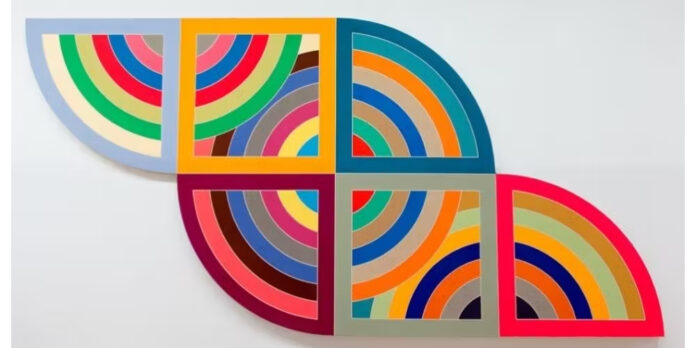
El Minimalismo, como se ha mencionado, emerge en la década de 1960, principalmente en Estados Unidos, como una reacción al Expresionismo Abstracto y su énfasis en la gestualidad y la subjetividad. El Minimalismo se caracteriza por su enfoque en la simplicidad, la reducción a lo esencial y el uso de formas geométricas básicas. Los artistas minimalistas buscan despojar al arte de todo elemento superfluo, enfatizando la pureza de la forma, el espacio físico y la experiencia visual directa.

1. Contexto Histórico:

El Minimalismo surge en un contexto de auge tecnológico y optimismo en el progreso. La sociedad de consumo se consolida, y la cultura popular se masifica. En este contexto, el Minimalismo se presenta como una búsqueda de autenticidad y esencialidad, una reacción al exceso de información y estímulos de la sociedad moderna.

2. Influencias:

El Minimalismo se nutre de diversas influencias, entre las que destacan:

  • Constructivismo ruso: Hereda el interés por la geometría, la abstracción y el uso de materiales industriales.
  • Neoplasticismo: Toma prestada la idea de la pureza de la forma y el uso de colores primarios.
  • Filosofía Zen: Incorpora la idea de la simplicidad, la contemplación y la armonía con el entorno.

3. Artistas Clave:

  • Donald Judd: Uno de los principales teóricos y exponentes del Minimalismo, Judd crea esculturas geométricas simples y repetitivas, utilizando materiales industriales como acero, aluminio y plexiglás. Sus obras, como “Sin título (100 cajas de aluminio)” y “Pila”, se caracterizan por su precisión, su impersonalidad y su relación con el espacio circundante.
  • Agnes Martin: Conocida por sus pinturas abstractas de líneas y cuadrículas, Martin crea obras de gran sutileza y serenidad que invitan a la contemplación. Sus pinturas, como “The Tree” y “Friendship”, se caracterizan por su delicadeza, su minimalismo cromático y su conexión con la naturaleza.
  • Sol LeWitt: Pionero del Arte Conceptual, LeWitt crea esculturas e instalaciones basadas en estructuras geométricas simples y repetitivas. Sus obras, como “Cubos abiertos” y “Estructuras modulares”, se caracterizan por su rigor conceptual y su impersonalidad.
  • Dan Flavin: Crea esculturas e instalaciones utilizando únicamente tubos fluorescentes de colores. Sus obras, como “Monumento a V. Tatlin” y “Los diagonales de la persona”, transforman el espacio a través de la luz y el color.

4. Características del Minimalismo:

  • Simplicidad: Reducción a lo esencial, eliminando todo elemento superfluo.
  • Formas geométricas: Uso de formas geométricas básicas, como cubos, cuadrados y líneas.
  • Materiales industriales: Empleo de materiales industriales como acero, aluminio, plexiglás y madera contrachapada.
  • Impersonalidad: Se evita la expresión de la subjetividad del artista.
  • Repetición: Se utilizan estructuras y formas repetitivas.
  • Color limitado: Se reduce la paleta de colores a tonos neutros o primarios.
  • Relación con el espacio: Las obras se relacionan con el espacio circundante, creando una experiencia inmersiva para el espectador.

5. Legado del Minimalismo:

El Minimalismo influye en diversas disciplinas artísticas, como la escultura, la arquitectura, el diseño y la música. Su legado se manifiesta en la búsqueda de la simplicidad, la funcionalidad y la esencialidad en el arte y la vida cotidiana. El Minimalismo nos invita a repensar nuestra relación con los objetos y el espacio, y a valorar la belleza de la simplicidad.

En resumen, el Minimalismo, con su énfasis en la simplicidad, la pureza de la forma y la experiencia visual directa, representa una de las tendencias más importantes del arte del siglo XX. A través de la reducción a lo esencial, los artistas minimalistas nos invitan a contemplar la belleza intrínseca de las formas y a reflexionar sobre nuestra percepción del espacio y la realidad.

El Arte Contemporáneo: Un Espejo Fragmentado de Nuestro Tiempo

Arte Contemporáneo
Arte Contemporáneo

El Arte Contemporáneo: Un Espejo Fragmentado de Nuestro Tiempo

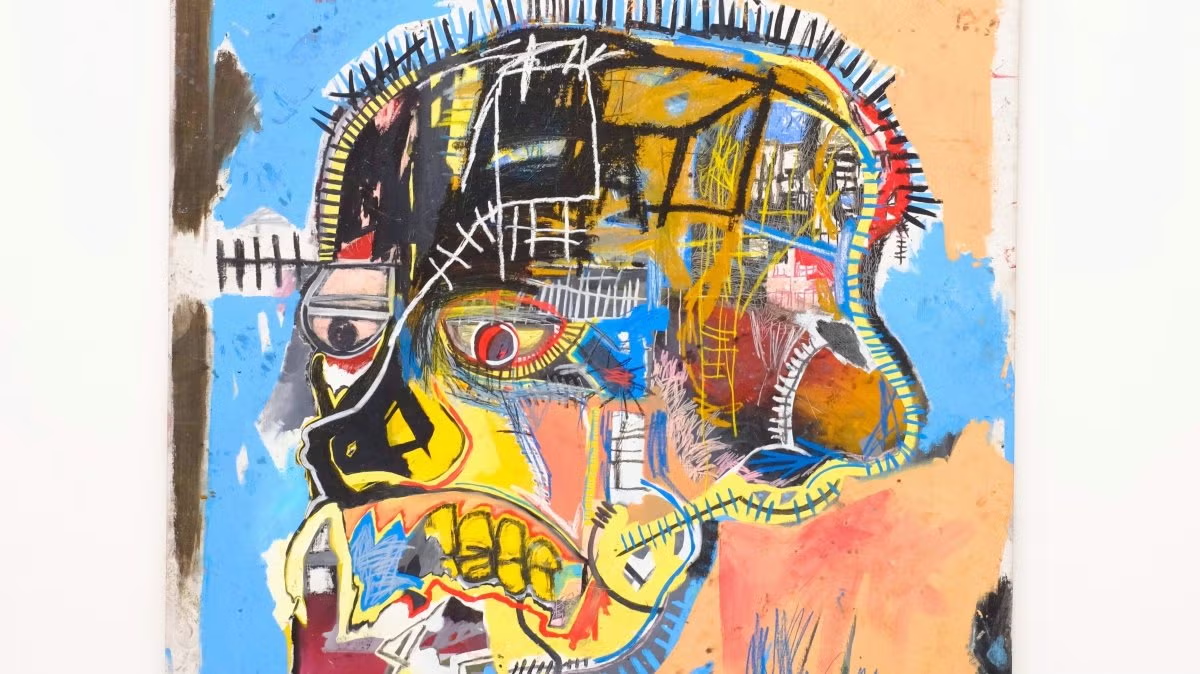
El Arte Contemporáneo, como se ha mencionado, es un término amplio que abarca una vasta gama de estilos, medios y expresiones artísticas producidas desde la segunda mitad del siglo XX hasta la actualidad. A diferencia de los movimientos artísticos del pasado, que a menudo se definían por características estilísticas o temáticas comunes, el Arte Contemporáneo se caracteriza por su diversidad, su heterogeneidad y su constante renovación. Los artistas contemporáneos exploran una infinidad de temas, desde cuestiones sociales y políticas hasta la identidad, la tecnología y la globalización, utilizando una amplia gama de medios y técnologías.

1. Contexto Histórico:

El Arte Contemporáneo se desarrolla en un contexto histórico complejo y en constante transformación. La globalización, la revolución digital, los avances tecnológicos, las crisis sociales y ambientales, y la multiplicidad de culturas e identidades configuran un panorama fragmentado y en constante cambio. El Arte Contemporáneo refleja esta complejidad, abordando las preocupaciones y los desafíos de nuestro tiempo.

2. Características del Arte Contemporáneo:

  • Diversidad y heterogeneidad: No existe un estilo o tema dominante. Los artistas contemporáneos exploran una amplia gama de posibilidades expresivas.
  • Innovación y experimentación: Se buscan nuevos medios, materiales y tecnologías para crear arte.
  • Hibridación de disciplinas: Se difuminan las fronteras entre las diferentes disciplinas artísticas, como la pintura, la escultura, la fotografía, el vídeo, la performance y la instalación.
  • Compromiso social y político: Muchos artistas contemporáneos abordan temas sociales y políticos en su obra, como la desigualdad, la injusticia, la violencia y la crisis ambiental.
  • Globalización e interculturalidad: El arte contemporáneo refleja la interconexión global y la diversidad cultural de nuestro tiempo.

3. Artistas Clave:

  • Damien Hirst: Uno de los artistas contemporáneos más conocidos y controvertidos, Hirst explora temas como la muerte, la vida, la religión y el consumismo a través de obras que combinan la escultura, la instalación y la pintura. Su obra “La imposibilidad física de la muerte en la mente de alguien vivo” (1991), un tiburón conservado en formaldehído, se convierte en un icono del arte contemporáneo.
  • Ai Weiwei: Artista chino que combina el arte con el activismo político. Su obra aborda temas como la libertad de expresión, los derechos humanos y la crítica al gobierno chino. Su instalación “Semillas de girasol” (2010), compuesta por millones de semillas de porcelana hechas a mano, denuncia la represión y la censura en China.
  • Jeff Koons: Artista estadounidense que explora la cultura popular, el consumismo y la relación entre el arte y el comercio. Sus esculturas de acero inoxidable que reproducen objetos cotidianos, como globos y animales de juguete, se convierten en símbolos del arte contemporáneo.
  • Yayoi Kusama: Artista japonesa que crea obras inmersivas e interactivas que exploran temas como el infinito, el cosmos y la obliteración del yo. Sus “Infinity Rooms”, habitaciones cubiertas de espejos y luces LED, crean una experiencia psicodélica e infinita.

4. Medios y Técnicas:

El Arte Contemporáneo utiliza una gran variedad de medios y técnicas, entre las que destacan:

  • Instalación: Creación de espacios y ambientes que envuelven al espectador.
  • Performance: Acciones y eventos realizados por el artista o un grupo de personas.
  • Videoarte: Utilización del vídeo como medio de expresión artística.
  • Arte digital: Creación de obras utilizando ordenadores y software.
  • Fotografía: La fotografía se utiliza como medio de expresión artística y documental.
  • Escultura: Se experimentan con nuevos materiales y técnicas escultóricas.
  • Pintura: La pintura sigue siendo un medio de expresión relevante, aunque se exploran nuevas técnicas y enfoques.

5. El Arte Contemporáneo en el Museo y fuera de él:

El Arte Contemporáneo se exhibe en museos, galerías y otros espacios institucionales, pero también se manifiesta en espacios públicos, en la calle y en Internet. El arte contemporáneo se caracteriza por su accesibilidad y su capacidad para conectar con el público de forma directa e inmediata.

En resumen, el Arte Contemporáneo, con su diversidad, su innovación y su compromiso con las problemáticas de nuestro tiempo, representa un reflejo fragmentado pero vital de la sociedad actual. A través de una multiplicidad de medios y expresiones, los artistas contemporáneos nos invitan a reflexionar sobre el mundo que nos rodea y a cuestionar las certezas establecidas.

El Pop Art: La Cultura de Masas como Protagonista

Pop Art
Pop Art

El Pop Art: La Cultura de Masas como Protagonista

El Pop Art, como se ha mencionado, emerge a mediados del siglo XX, primero en Gran Bretaña y luego en Estados Unidos, como una reacción al Expresionismo Abstracto y su enfoque en la subjetividad y la introspección. El Pop Art, en cambio, dirige su mirada hacia la cultura popular, el consumismo y los medios de comunicación de masas, tomando imágenes y técnicas de la publicidad, los cómics y el cine para crear un arte vibrante, accesible y provocador.

1. Contexto Histórico:

El Pop Art se desarrolla en la década de 1950 y 1960, en un contexto de prosperidad económica y auge del consumismo en los países occidentales. La televisión, la publicidad y los medios de comunicación de masas adquieren una gran influencia en la sociedad, creando una cultura popular homogénea y globalizada. Los artistas pop reflejan esta nueva realidad, utilizando imágenes familiares y técnicas comerciales para crear un arte que conecte con el público de forma directa e inmediata.

2. La Estética de la Cultura Popular:

El Pop Art toma como fuente de inspiración la cultura popular en todas sus manifestaciones: la publicidad, los cómics, el cine, la televisión, la música pop, las revistas y los objetos de consumo. Los artistas pop elevan estos elementos cotidianos a la categoría de arte, utilizando técnicas como la serigrafía, el collage y la pintura industrial para crear obras que reproducen fielmente la estética de la cultura de masas.

3. Artistas Clave:

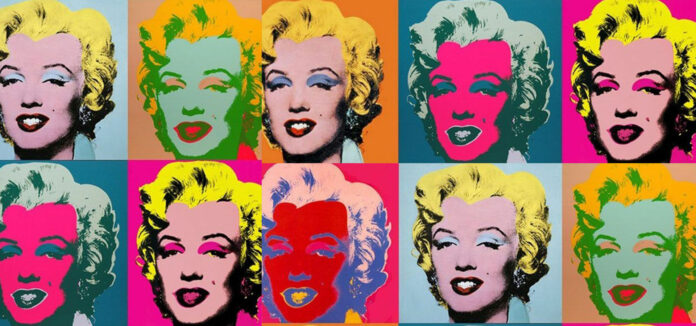
  • Andy Warhol: Icono del Pop Art, Warhol se convierte en una celebridad por derecho propio, difuminando las fronteras entre el arte y la vida. Sus serigrafías de latas de sopa Campbell, botellas de Coca-Cola y rostros de celebridades como Marilyn Monroe se convierten en imágenes icónicas del siglo XX.
  • Roy Lichtenstein: Inspirado en los cómics, Lichtenstein crea pinturas que reproducen la estética de las viñetas, con sus colores vibrantes, sus líneas gruesas y sus puntos Ben-Day. Sus obras, como “Whaam!” y “Drowning Girl”, capturan la energía y la inmediatez del lenguaje del cómic.
  • Claes Oldenburg: Crea esculturas de objetos cotidianos a gran escala, como hamburguesas, helados y utensilios de cocina, utilizando materiales blandos y colores vivos. Sus obras, como “Floor Cake” y “Giant Hamburger”, juegan con la escala y la percepción del espectador.
  • James Rosenquist: Crea grandes collages que combinan imágenes de la publicidad, el cine y la cultura popular, creando un efecto de fragmentación y yuxtaposición. Sus obras, como “F-111” y “President Elect”, reflejan la sobrecarga de información y la cultura del consumo de la sociedad moderna.

4. Características del Pop Art:

  • Cultura popular: Se toma como tema la cultura popular en todas sus manifestaciones.
  • Imágenes familiares: Se utilizan imágenes reconocibles del mundo cotidiano.
  • Técnicas comerciales: Se emplean técnicas de la publicidad y la impresión comercial, como la serigrafía y el collage.
  • Colores vivos: Se utilizan colores brillantes y saturados.
  • Ironía y humor: Se recurre a la ironía y el humor para criticar y celebrar la cultura de masas.

5. Legado del Pop Art:

El Pop Art deja una huella profunda en la cultura visual contemporánea. Su influencia se extiende a la publicidad, el diseño gráfico, la moda y la música. El Pop Art nos ha enseñado a ver con otros ojos la cultura popular y a cuestionar las fronteras entre el arte y la vida cotidiana.

En resumen, el Pop Art, con su celebración de la cultura popular y el consumismo, representa un punto de inflexión en la historia del arte. A través de imágenes familiares, colores vivos y técnicas comerciales, los artistas pop nos invitan a reflexionar sobre la sociedad de consumo y la omnipresencia de los medios de comunicación de masas.

El Cubismo: Fragmentando la Realidad, Reconstruyendo la Percepción

Cubismo arte
Cubismo arte

El Cubismo: Fragmentando la Realidad, Reconstruyendo la Percepción

El Cubismo, como se ha mencionado, surge a principios del siglo XX como una de las vanguardias más revolucionarias en la historia del arte. Liderado por Pablo Picasso y Georges Braque, este movimiento desafía la representación tradicional de la realidad al descomponer los objetos en formas geométricas y mostrar múltiples perspectivas simultáneamente. El Cubismo no solo transforma la pintura, sino que también influye en la escultura, la arquitectura y el diseño.

1. Contexto Histórico:

El Cubismo nace en el efervescente París de principios del siglo XX, un período de gran dinamismo cultural e intelectual. La ciencia y la tecnología avanzan a pasos agigantados, con descubrimientos como la teoría de la relatividad de Einstein y el desarrollo de la fotografía y el cine. Estos avances influyen en la visión del mundo de los artistas, que buscan nuevas formas de representar la realidad, más allá de la imitación fiel de la naturaleza.

2. Ruptura con la Perspectiva Tradicional:

El Cubismo rompe con la perspectiva lineal renacentista, que buscaba representar el espacio tridimensional en un plano bidimensional. Los artistas cubistas rechazan la idea de un único punto de vista y fragmentan los objetos, mostrándolos desde múltiples perspectivas simultáneamente. Esta fragmentación y reorganización de las formas genera una nueva experiencia visual, que desafía la percepción tradicional del espacio y la forma.

3. Fases del Cubismo:

El Cubismo se divide en dos fases principales:

  • Cubismo Analítico (1909-1912): En esta fase, los artistas descomponen los objetos en facetas geométricas, analizando sus formas y volúmenes desde diferentes ángulos. La paleta de colores se reduce a tonos grises, ocres y verdes, para enfatizar la estructura y la forma. Ejemplos representativos son “Las señoritas de Avignon” de Picasso y “Casas en L’Estaque” de Braque.
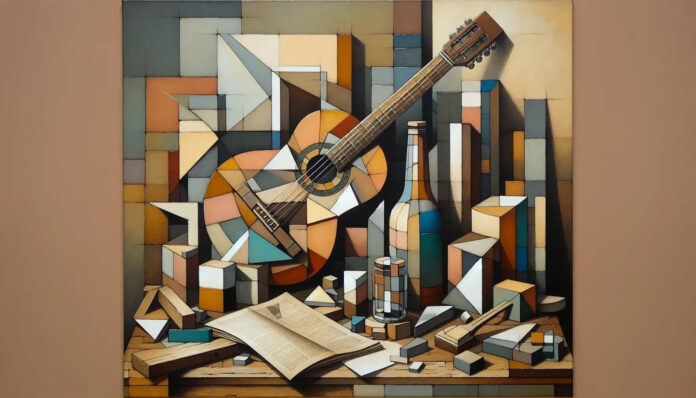
  • Cubismo Sintético (1912-1914): En esta fase, se introducen elementos de collage, como recortes de periódicos, papeles pintados y otros materiales, que se integran en la composición. La paleta de colores se amplía y se vuelve más vibrante. Se busca una síntesis de las formas, reconstruyendo los objetos a partir de sus fragmentos. Ejemplos destacados son “Guitarra y botella de Bass” de Picasso y “Violín y pipa” de Braque.

4. Artistas Clave:

  • Pablo Picasso: Considerado uno de los artistas más influyentes del siglo XX, Picasso lidera el movimiento cubista junto a Braque. Su obra abarca una gran variedad de estilos, pero el Cubismo marca un punto de inflexión en su trayectoria.
  • Georges Braque: Junto a Picasso, Braque desarrolla el lenguaje cubista, experimentando con la fragmentación de las formas y la multiplicidad de perspectivas.
  • Juan Gris: Pintor español que se une al movimiento cubista en 1911. Gris se distingue por su uso del color y su interés por la geometría.
  • Fernand Léger: Influenciado por el Cubismo, Léger desarrolla un estilo personal que combina la fragmentación de las formas con la representación de la máquina y la vida moderna.

5. Características del Cubismo:

  • Fragmentación de las formas: Los objetos se descomponen en facetas geométricas.
  • Multiplicidad de perspectivas: Se muestran los objetos desde diferentes puntos de vista simultáneamente.
  • Espacio ambiguo: Se crea un espacio pictórico ambiguo, donde los planos se superponen y se intersecan.
  • Paleta reducida: En el Cubismo analítico, se utilizan colores grises, ocres y verdes.
  • Collage: En el Cubismo sintético, se introducen elementos de collage.

6. Legado del Cubismo:

El Cubismo revoluciona la historia del arte, influyendo en movimientos posteriores como el Futurismo, el Constructivismo y el Abstraccionismo. Su impacto se extiende a la escultura, la arquitectura y el diseño. El Cubismo abre el camino a la abstracción y a la libertad expresiva del arte moderno, dejando un legado fundamental en la historia de la cultura visual.

En resumen, el Cubismo, con su fragmentación de la realidad y su multiplicidad de perspectivas, representa una de las vanguardias más importantes del siglo XX. A través de la descomposición y reconstrucción de las formas, los artistas cubistas nos invitan a repensar nuestra forma de ver el mundo y a explorar las infinitas posibilidades de la representación artística.

El Dadaísmo: Un Grito de Rebeldía contra la Razón y el Orden Establecido

Arte Dadáismo
Arte Dadáismo

El Dadaísmo: Un Grito de Rebeldía contra la Razón y el Orden Establecido

Dadá es anti-todo. Anti-arte, anti-literatura, anti-dadá incluso…

El Dadaísmo, como se ha mencionado, emerge en el contexto de la Primera Guerra Mundial como un movimiento antiarte que desafía radicalmente las convenciones artísticas y sociales. Nacido en Zúrich en 1916, el Dadaísmo se caracteriza por su espíritu iconoclasta, su rechazo a la razón y la lógica, y su uso de la provocación y el absurdo como herramientas de crítica social.

1. Contexto Histórico:

La Primera Guerra Mundial (1914-1918) marca un punto de inflexión en la historia de Europa. La brutalidad del conflicto, la crisis de valores y la desilusión con la civilización occidental generan un clima de incertidumbre y pesimismo. En este contexto, un grupo de artistas e intelectuales se reúnen en la neutral Suiza y fundan el movimiento Dadá, como una forma de rebeldía contra la barbarie de la guerra y la sociedad que la hizo posible.

2. El Antiarte:

El Dadaísmo se define a sí mismo como “antiarte”. Rechaza la idea del arte como belleza, armonía y expresión de sentimientos elevados. Los dadaístas consideran que el arte tradicional es cómplice de la sociedad burguesa y de los valores que llevaron a la guerra. Proponen un arte provocativo, irracional y absurdo, que cuestione los fundamentos mismos del arte y la cultura.

3. Artistas Clave:

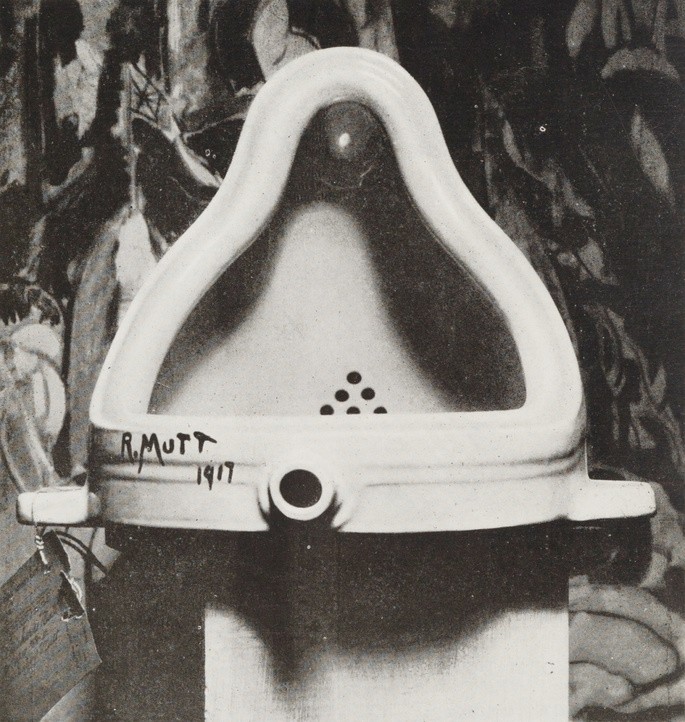
  • Marcel Duchamp: Uno de los principales exponentes del Dadaísmo, Duchamp desafía la definición misma del arte con sus “ready-mades”, objetos cotidianos elevados a la categoría de obra de arte por el simple hecho de ser escogidos y presentados como tales. Su obra “Fuente” (un urinario firmado con el seudónimo “R. Mutt”) se convierte en un icono del Dadaísmo.
  • Tristan Tzara: Poeta y escritor rumano, Tzara es uno de los fundadores del movimiento Dadá y autor del “Manifiesto Dadá” (1918). Sus poemas se caracterizan por su irracionalidad, su humor negro y su rechazo a la lógica y la sintaxis.
  • Hans Arp: Artista alsaciano que experimenta con el collage, el relieve y la escultura. Sus obras se caracterizan por su abstracción orgánica y su carácter aleatorio.
  • Hugo Ball: Poeta y dramaturgo alemán, Ball participa en las veladas dadá en el Cabaret Voltaire de Zúrich, donde recita sus “poemas fonéticos”, carentes de significado racional.

4. Características del Dadaísmo:

  • Irracionalidad y absurdo: Se rechaza la razón y la lógica, y se busca la expresión de lo irracional y lo absurdo.
  • Provocación y escándalo: Se utilizan la provocación y el escándalo como herramientas de crítica social y artística.
  • Humor negro y sarcasmo: Se recurre al humor negro y al sarcasmo para desacralizar las convenciones y los valores establecidos.
  • Anti guerra y anti burguesía: Se manifiesta un fuerte rechazo a la guerra y a la sociedad burguesa.
  • Técnicas: Se utilizan técnicas como el collage, el fotomontaje, el “ready-made” y la escritura automática.

5. Legado del Dadaísmo:

El Dadaísmo, a pesar de su corta duración, ejerce una gran influencia en el arte del siglo XX. Su espíritu iconoclasta y su rechazo a las convenciones abren el camino a movimientos posteriores como el Surrealismo y el Neodadaísmo. El Dadaísmo nos deja un legado de crítica social, libertad expresiva y cuestionamiento de las normas establecidas.

En resumen, el Dadaísmo, con su espíritu antiarte y anti establishment, representa un grito de rebeldía contra la razón y el orden establecido. A través de la provocación, el absurdo y el humor negro, los dadaístas nos invitan a cuestionar las convenciones y a buscar nuevas formas de expresión más libres y auténticas.

El Modernismo: La Ruptura con la Tradición y la Búsqueda de Nuevos Lenguajes

arte modernismo
Arte Modernismo

El Modernismo: La Ruptura con la Tradición y la Búsqueda de Nuevos Lenguajes

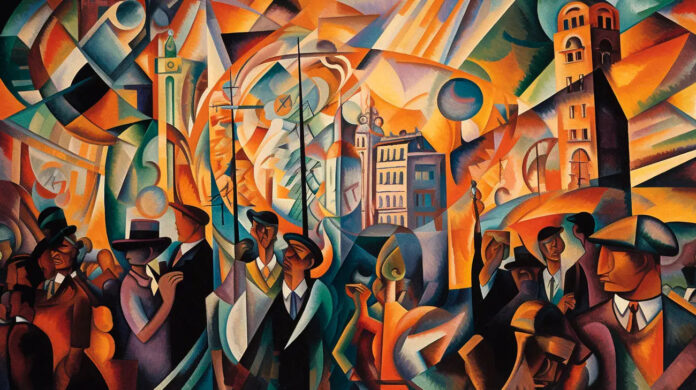
El Modernismo, como se ha indicado, es un término amplio que engloba una serie de movimientos artísticos que surgen a finales del siglo XIX y principios del XX, caracterizados por su ruptura con las convenciones del arte académico y su búsqueda de nuevos lenguajes expresivos. El Modernismo abarca una gran diversidad de estilos, desde el Fauvismo y el Expresionismo hasta el Cubismo y el Futurismo, cada uno con sus propias características y objetivos, pero unidos por un deseo común de innovación y renovación.

1. Contexto Histórico:

El Modernismo se desarrolla en un período de grandes transformaciones sociales, tecnológicas y culturales. La industrialización, el crecimiento de las ciudades, la aparición de nuevas tecnologías como la fotografía y el cine, y el surgimiento de nuevas ideas filosóficas y científicas crean un clima de cambio y efervescencia intelectual. Los artistas modernistas, conscientes de estos cambios, buscan reflejar la modernidad y expresar la complejidad del mundo contemporáneo.

2. Ruptura con la Tradición:

El Modernismo se caracteriza por su rechazo de las convenciones y normas del arte académico. Los artistas modernistas rompen con la perspectiva tradicional, la representación realista y la imitación de la naturaleza. Experimentan con nuevos materiales, técnicas y formas de expresión, buscando un lenguaje artístico que refleje la sensibilidad moderna.

3. Movimientos Clave:

  • Fauvismo: Caracterizado por el uso audaz del color puro y la simplificación de las formas. Artistas como Henri Matisse y André Derain utilizan el color de forma subjetiva y expresiva, liberándolo de su función descriptiva.
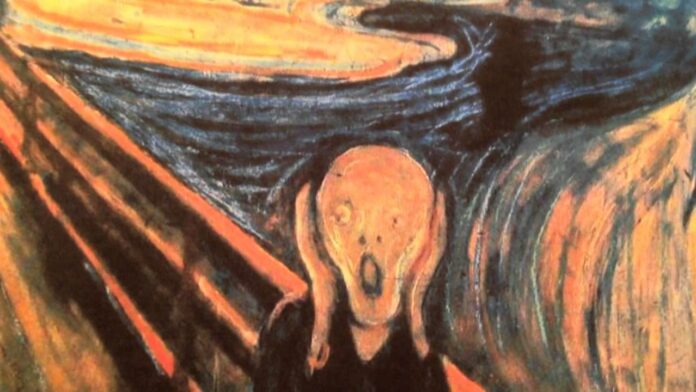
  • Expresionismo: Busca expresar las emociones y los sentimientos del artista a través de la distorsión de la realidad, el uso de colores intensos y la aplicación violenta de la pintura. Artistas como Edvard Munch y Ernst Ludwig Kirchner plasman la angustia, la alienación y la crisis del hombre moderno.
  • Cubismo: Rompe con la perspectiva tradicional y representa los objetos desde múltiples puntos de vista simultáneamente. Pablo Picasso y Georges Braque descomponen las formas en planos y facetas, creando una nueva forma de representar la realidad.
  • Futurismo: Exalta la velocidad, la máquina y la tecnología, buscando capturar el dinamismo de la vida moderna. Artistas como Umberto Boccioni y Giacomo Balla representan el movimiento y la energía a través de líneas de fuerza y la superposición de planos.

4. Características del Modernismo:

  • Innovación: Búsqueda constante de nuevos lenguajes y formas de expresión.
  • Subjetividad: Expresión de la visión personal del artista y su mundo interior.
  • Abstracción: Tendencia a la simplificación de las formas y la abstracción.
  • Experimentación: Uso de nuevos materiales y técnicas.
  • Ruptura con la tradición: Rechazo de las normas y convenciones del arte académico.

5. Legado del Modernismo:

El Modernismo representa una revolución en la historia del arte. Su influencia se extiende a todas las disciplinas artísticas y perdura hasta nuestros días. El Modernismo ha liberado al arte de las ataduras de la tradición y ha abierto un abanico infinito de posibilidades expresivas. Su legado nos invita a cuestionar las normas establecidas y a explorar nuevos caminos en la creación artística.

En resumen, el Modernismo, con su ruptura con la tradición y su búsqueda de nuevos lenguajes, representa un período de gran creatividad e innovación en la historia del arte. A través de la experimentación, la subjetividad y la abstracción, los artistas modernistas nos invitan a repensar nuestra forma de ver el mundo y a explorar las infinitas posibilidades de la expresión artística.

El Surrealismo: Un Viaje al Reino del Subconsciente

arte Surrealismo
arte Surrealismo

El Surrealismo: Un Viaje al Reino del Subconsciente

El Surrealismo, como se ha mencionado, se presenta como un movimiento artístico y literario que busca explorar las profundidades del subconsciente y plasmar el mundo onírico en la creación artística. Surgido en Francia en la década de 1920, en el contexto de la posguerra y la crisis de valores que sacudió a Europa, el Surrealismo se nutre de las teorías psicoanalíticas de Sigmund Freud y se propone liberar la imaginación, desafiando la lógica y la razón.

1. Contexto Histórico:

Para comprender el Surrealismo, es esencial situarlo en su contexto histórico. La Primera Guerra Mundial dejó profundas cicatrices en la sociedad europea, generando una sensación de desencanto y una crisis de valores. En este clima de incertidumbre, surge el interés por explorar el mundo interior, lo irracional y lo onírico. El psicoanálisis de Freud, con su énfasis en el inconsciente y la interpretación de los sueños, proporciona un marco teórico para el Surrealismo.

2. Influencia del Psicoanálisis:

El Surrealismo se nutre de las ideas de Freud sobre el inconsciente, los sueños, la sexualidad y la represión. Los artistas surrealistas buscan acceder al subconsciente a través de la escritura automática, el dibujo automático y otras técnicas que permiten liberar la imaginación y eludir el control de la razón. El objetivo es expresar los deseos, los temores y las fantasías que se esconden en lo más profundo de la psique humana.

3. Artistas Clave:

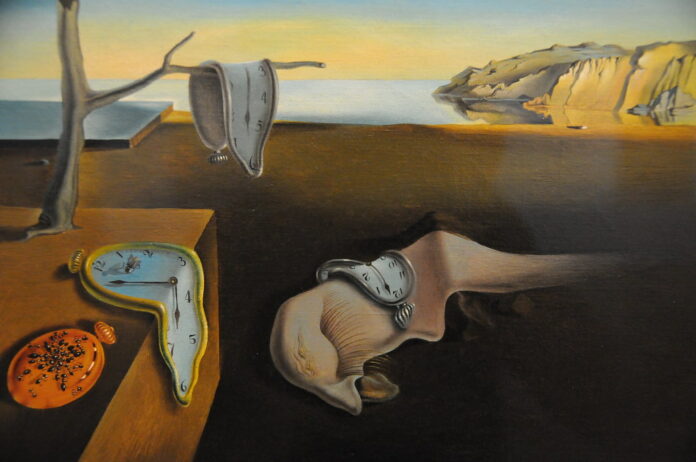
  • Salvador Dalí: Uno de los máximos exponentes del Surrealismo, Dalí crea un universo onírico poblado de imágenes extravagantes y simbólicas. Sus obras, como “La persistencia de la memoria” y “El gran masturbador”, se caracterizan por su precisión técnica y su capacidad para plasmar las obsesiones y los delirios del subconsciente.
  • René Magritte: Con un estilo más conceptual y enigmático, Magritte desafía la lógica y la percepción visual a través de asociaciones inesperadas y juegos de palabras visuales. Obras como “La traición de las imágenes” (con la famosa pipa que “no es una pipa”) y “El hijo del hombre” cuestionan la relación entre la imagen y la realidad.
  • Joan Miró: Con un lenguaje visual más abstracto y poético, Miró explora el mundo de los sueños y la fantasía a través de formas orgánicas, colores vibrantes y símbolos oníricos. Sus obras transmiten una sensación de libertad y espontaneidad.
  • Max Ernst: Pionero en el uso de técnicas experimentales como el frottage y el collage, Ernst crea imágenes inquietantes y surrealistas que exploran el mundo de los sueños y lo irracional.

4. Características del Surrealismo:

  • Imágenes oníricas y fantásticas: Las obras surrealistas se caracterizan por la presencia de imágenes oníricas, simbólicas y a menudo perturbadoras, que desafían la lógica y la realidad cotidiana.
  • Automatismo: Se utilizan técnicas como la escritura automática y el dibujo automático para acceder al subconsciente y liberar la imaginación.
  • Yuxtaposiciones inesperadas: Se combinan objetos y elementos incongruentes para crear imágenes sorprendentes y desconcertantes.
  • Erotismo y sexualidad: La sexualidad, la represión y el erotismo son temas recurrentes en el Surrealismo, influenciado por las teorías de Freud.

5. Legado del Surrealismo:

El Surrealismo ha ejercido una influencia profunda en el arte y la cultura del siglo XX. Su impacto se extiende a la pintura, la escultura, la fotografía, el cine, la literatura y la moda. El Surrealismo ha liberado la imaginación y ha abierto nuevas vías para la expresión artística, explorando las profundidades del subconsciente y desafiando las convenciones establecidas.

En resumen, el Surrealismo, con su exploración del subconsciente, el mundo de los sueños y lo irracional, representa una de las vanguardias más importantes del siglo XX. A través de imágenes oníricas, asociaciones inesperadas y técnicas experimentales, los surrealistas nos invitan a un viaje al reino de la imaginación, desafiando nuestras percepciones y cuestionando la realidad que nos rodea.

El Expresionismo Abstracto: Un Vistazo al Alma del Artista

Expresionismo arte
Expresionismo arte

El Expresionismo Abstracto: Un Vistazo al Alma del Artista

El Expresionismo Abstracto, como se ha mencionado, surge en Estados Unidos en la década de 1940, convirtiéndose en el primer movimiento artístico genuinamente americano en alcanzar reconocimiento internacional. A diferencia del Expresionismo alemán de principios del siglo XX, que se centraba en la representación de la angustia y la alienación del hombre moderno, el Expresionismo Abstracto se caracteriza por su énfasis en la espontaneidad, la gestualidad y la expresión emocional a través de la abstracción.

1. Contexto Histórico:

El Expresionismo Abstracto se desarrolla en un contexto marcado por la Segunda Guerra Mundial y la Guerra Fría. La experiencia traumática de la guerra, el temor a la bomba atómica y las tensiones políticas entre Estados Unidos y la Unión Soviética generan un clima de ansiedad e incertidumbre. En este contexto, los artistas expresionistas abstractos buscan refugio en la expresión individual y la exploración del mundo interior.

2. Influencias:

El Expresionismo Abstracto se nutre de diversas influencias, entre las que destacan:

  • Expresionismo alemán: Hereda el interés por la expresión emocional y la subjetividad.
  • Surrealismo: Incorpora la idea del automatismo y la exploración del subconsciente.
  • Cubismo: Toma prestada la fragmentación de las formas y la libertad compositiva.

3. Artistas Clave:

  • Jackson Pollock: Pionero del “action painting” o pintura de acción, Pollock desarrolla una técnica única de goteo (“dripping”) que consiste en salpicar y derramar pintura sobre el lienzo extendido en el suelo. Sus obras, como “Número 1A, 1948” y “Blue Poles”, son un registro del movimiento y la energía del artista en el acto de creación.
  • Mark Rothko: Conocido por sus grandes campos de color, Rothko crea atmósferas contemplativas y espirituales que invitan a la introspección. Sus obras, como “Naranja, rojo, amarillo” y “Negro sobre marrón”, buscan transmitir emociones profundas a través de la interacción de los colores.
  • Willem de Kooning: Con un estilo gestual y expresivo, De Kooning crea obras que combinan la abstracción con la figuración. Sus series de “Mujeres”, con sus formas distorsionadas y colores vibrantes, son un ejemplo de su exploración de la figura humana y la expresión emocional.
  • Franz Kline: Conocido por sus composiciones en blanco y negro, Kline crea obras de gran fuerza expresiva a través de trazos gruesos y enérgicos. Sus pinturas, como “Chief” y “White Forms”, recuerdan la caligrafía oriental y la abstracción gestual.

4. Características del Expresionismo Abstracto:

  • Espontaneidad y gestualidad: Se valora la espontaneidad del gesto y la acción en el proceso creativo.
  • Abstracción: Se rechaza la representación figurativa y se busca la expresión a través de la forma, el color y la textura.
  • Gran formato: Se utilizan lienzos de gran formato para crear una experiencia inmersiva para el espectador.
  • Subjetividad: Se busca expresar la individualidad del artista y su mundo interior.
  • Técnicas: Se experimentan con diversas técnicas, como el “dripping”, el “action painting”, la pintura gestual y los campos de color.

5. Legado del Expresionismo Abstracto:

El Expresionismo Abstracto marca un hito en la historia del arte, consolidando a Nueva York como centro del arte mundial. Su influencia se extiende a movimientos posteriores como el Arte Pop, el Minimalismo y el Arte Conceptual. El Expresionismo Abstracto nos ha enseñado a valorar la expresión individual, la espontaneidad y la fuerza del gesto en la creación artística.

En resumen, el Expresionismo Abstracto, con su énfasis en la espontaneidad, la gestualidad y la expresión emocional a través de la abstracción, representa una de las vanguardias más importantes del siglo XX. A través de la acción, el color y la forma, los artistas expresionistas abstractos nos invitan a un viaje al interior del alma humana, donde las emociones se manifiestan con libertad y sin censura.

El Postimpresionismo: La Búsqueda de la Expresión Personal

arte impressionismo
arte impressionismo

El Postimpresionismo: La Búsqueda de la Expresión Personal

El Postimpresionismo, como se ha mencionado, surge en Francia a finales del siglo XIX como una reacción y a la vez una continuación del Impresionismo. Si bien los postimpresionistas parten de la experimentación con la luz y el color iniciada por sus predecesores, buscan ir más allá de la mera representación visual, explorando nuevas formas de expresión y dotando a sus obras de una mayor profundidad emocional y estructural.

1. Contexto Histórico:

El Postimpresionismo se desarrolla en un contexto de cambio social y cultural acelerado. La industrialización, el crecimiento de las ciudades y la aparición de nuevas tecnologías generan un clima de incertidumbre y búsqueda de nuevas formas de expresión. Los artistas postimpresionistas, influenciados por corrientes filosóficas como el Simbolismo, buscan expresar su visión personal del mundo, sus emociones y sus inquietudes.

2. Reacción al Impresionismo:

Si bien admiran la innovación técnica del Impresionismo, los postimpresionistas consideran que este se queda en la superficie, limitándose a capturar la impresión visual del momento. Buscan ir más allá de la representación objetiva de la realidad, explorando la subjetividad, la expresión personal y la simbolización. El color y la forma se convierten en herramientas para expresar emociones, ideas y visiones del mundo.

3. Artistas Clave:

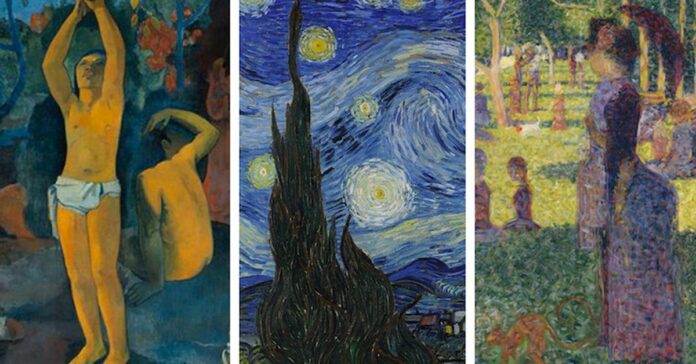
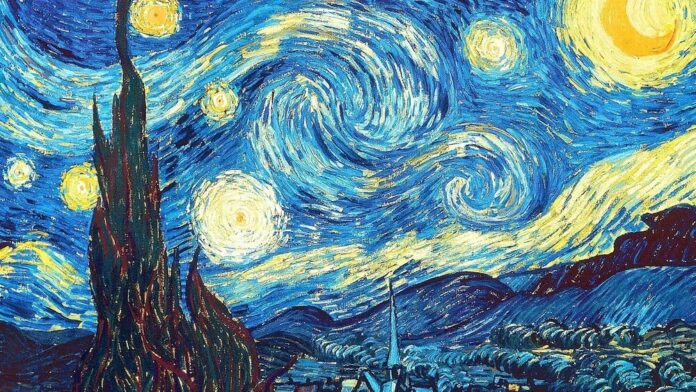
  • Vincent van Gogh: Con su estilo vibrante y expresivo, Van Gogh utiliza el color y la pincelada para transmitir sus emociones y su tormenta interior. Obras como “La noche estrellada” y “Los girasoles” son ejemplos de su búsqueda de la intensidad emocional y la expresión personal.
  • Paul Cézanne: Cézanne se centra en la estructura y la organización de las formas, buscando la esencia y la permanencia de los objetos. Sus paisajes, como “La montaña Sainte-Victoire” y sus naturalezas muertas, influyen decisivamente en el desarrollo del Cubismo.
  • Paul Gauguin: Gauguin rechaza la civilización occidental y busca la autenticidad en culturas primitivas. Sus obras, como “La visión después del sermón” y “De dónde venimos? ¿Quiénes somos? ¿A dónde vamos?”, se caracterizan por su uso simbólico del color y su exploración de temas espirituales.
  • Georges Seurat: Desarrolla el puntillismo o divisionismo, una técnica que consiste en aplicar pequeños puntos de color puro para crear efectos lumínicos y de volumen. Su obra “Un domingo de verano en la Grande Jatte” es un ejemplo paradigmático de esta técnica.
  • Henri de Toulouse-Lautrec: Conocido por sus retratos y escenas de la vida nocturna parisina, Toulouse-Lautrec captura la atmósfera decadente y bohemia del Moulin Rouge y otros cabarets.

4. Características del Postimpresionismo:

  • Subjetividad: Se prioriza la expresión personal y la visión subjetiva del artista.
  • Color expresivo: El color se utiliza para transmitir emociones y crear atmósferas.
  • Forma simplificada: Se tiende a la simplificación de las formas y la estilización.
  • Simbolismo: Se utiliza el simbolismo para expresar ideas y conceptos.
  • Diversidad de estilos: El Postimpresionismo abarca una gran diversidad de estilos y técnicas, desde el puntillismo de Seurat hasta el expresionismo de Van Gogh.

5. Legado del Postimpresionismo:

El Postimpresionismo marca un punto de inflexión en la historia del arte. Su influencia se extiende a movimientos posteriores como el Fauvismo, el Expresionismo y el Cubismo. El Postimpresionismo abre el camino a la abstracción y a la libertad expresiva del arte moderno.

En resumen, el Postimpresionismo, con su búsqueda de la expresión personal y la profundidad emocional, representa una etapa crucial en la transición del Impresionismo al arte moderno. A través de la experimentación con el color, la forma y el simbolismo, los postimpresionistas nos invitan a explorar la complejidad del mundo interior y la riqueza de la experiencia humana.

El Neoclasicismo: Un Retorno a la Razón y la Virtud Antigua

Neoclassicismo arte
Neoclassicismo arte

El Neoclasicismo: Un Retorno a la Razón y la Virtud Antigua

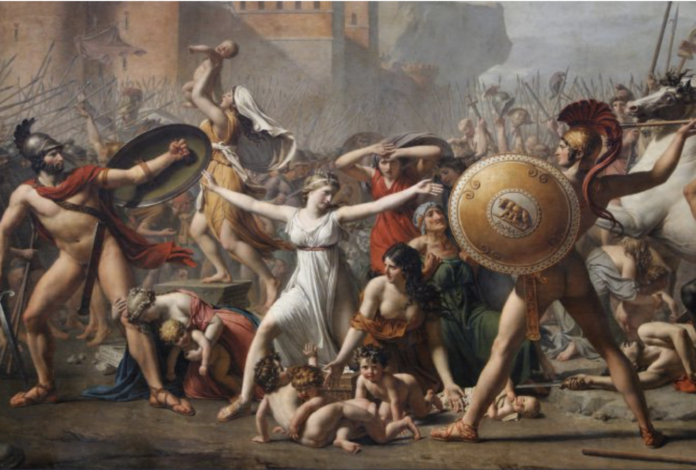
El Neoclasicismo, como se ha indicado, surge en Europa a mediados del siglo XVIII como una reacción al exceso decorativo y la frivolidad del Rococó. Inspirado en el arte clásico de la Grecia y la Roma antiguas, este movimiento busca recuperar los valores de la razón, el orden, la armonía y la virtud cívica, en consonancia con los ideales de la Ilustración.

1. Contexto Histórico:

El Neoclasicismo se desarrolla en un período de efervescencia intelectual y social. La Ilustración, con su énfasis en la razón, el progreso y la libertad individual, influye profundamente en el pensamiento y el arte de la época. Las excavaciones arqueológicas de Pompeya y Herculano reavivan el interés por la antigüedad clásica, proporcionando modelos de belleza y virtud a los artistas neoclásicos. La Revolución Francesa y la independencia de los Estados Unidos también contribuyen a la difusión de los ideales republicanos y la estética neoclásica.

2. Reacción al Rococó:

El Neoclasicismo se opone a la ornamentación excesiva, la sensualidad y la frivolidad del Rococó. Los artistas neoclásicos buscan la pureza de líneas, la simplicidad y la armonía, inspirándose en los modelos clásicos. La temática también cambia: las escenas galantes y mitológicas del Rococó dan paso a temas históricos, mitológicos y alegóricos que exaltan la virtud, el heroísmo y el patriotismo.

3. Artistas Clave:

  • Jacques-Louis David: Considerado el pintor neoclásico por excelencia, David plasma escenas heroicas y moralizantes con un estilo sobrio y preciso. Obras como “El juramento de los Horacios” y “La muerte de Marat” se convierten en iconos de la Revolución Francesa y del Neoclasicismo.
  • Jean-Auguste-Dominique Ingres: Discípulo de David, Ingres se distingue por su dibujo preciso, su dominio de la línea y su idealización de la belleza femenina. Sus retratos y sus desnudos, como “La Gran Odalisca”, son ejemplos de la elegancia y el refinamiento neoclásicos.
  • Antonio Canova: El gran escultor del Neoclasicismo, Canova crea obras que combinan la belleza idealizada con la precisión anatómica. Sus esculturas, como “Psique reanimada por el beso de Eros” y “Las tres Gracias”, son ejemplos de la gracia y la armonía neoclásicas.

4. Características del Neoclasicismo:

  • Inspiración Clásica: Se toman como modelo las obras de arte de la Grecia y la Roma antiguas.
  • Razón y Orden: Se busca la claridad, la armonía y el equilibrio en la composición.
  • Simplicidad y Austeridad: Se rechaza la ornamentación excesiva y se prefieren las líneas puras y los colores sobrios.
  • Temas Heroicos y Morales: Se representan escenas que exaltan la virtud, el patriotismo, el heroísmo y los valores cívicos.

5. El Neoclasicismo en la Arquitectura:

El Neoclasicismo también influye en la arquitectura. Se recuperan los elementos clásicos como las columnas, los frontones y las proporciones armoniosas. Se construyen edificios públicos, museos y teatros inspirados en los modelos greco-romanos. Ejemplos notables son el Panteón de París y la Puerta de Brandeburgo en Berlín.

6. Legado del Neoclasicismo:

El Neoclasicismo deja una huella profunda en el arte y la cultura occidental. Su influencia se extiende a la pintura, la escultura, la arquitectura, la literatura y la música. El Neoclasicismo representa un retorno a los valores de la razón, el orden y la virtud, y sus obras nos siguen inspirando por su belleza atemporal y su mensaje de equilibrio y armonía.

En resumen, el Neoclasicismo, con su búsqueda de la razón, el orden y la belleza clásica, se erige como una respuesta al exceso decorativo del Rococó y una expresión de los ideales de la Ilustración. A través de la simplicidad, la armonía y la temática heroica, el Neoclasicismo crea un arte que aspira a la perfección y la atemporalidad, dejando un legado fundamental en la historia del arte.

El Romanticismo: La Exaltación de la Emoción y la Naturaleza Sublimada

romanticismo arte
romanticismo arte

El Romanticismo: La Exaltación de la Emoción y la Naturaleza Sublimada

El Romanticismo, como se ha mencionado, emerge a finales del siglo XVIII y se extiende a lo largo del siglo XIX, constituyendo una profunda transformación en la sensibilidad artística y cultural de Occidente. En contraposición al racionalismo y la rigidez del Neoclasicismo, el Romanticismo exalta la emoción, la individualidad, la imaginación y la subjetividad. La naturaleza, con su fuerza indomable y su belleza sublime, se convierte en un tema central, reflejando la búsqueda de lo infinito y la trascendencia.

1. Contexto Histórico:

El Romanticismo surge en un período de grandes cambios sociales y políticos. La Revolución Francesa y las guerras napoleónicas sacuden los cimientos de Europa, generando un clima de incertidumbre y cambio. La Revolución Industrial transforma el paisaje y la vida cotidiana, mientras que el ascenso de la burguesía y el nacionalismo reconfiguran el mapa político y social. En este contexto, el Romanticismo se presenta como una respuesta a la desilusión con la razón y el progreso, buscando refugio en la emoción, la individualidad y la espiritualidad.

2. Reacción al Neoclasicismo:

El Romanticismo se opone al racionalismo, el orden y la frialdad del Neoclasicismo. Mientras el Neoclasicismo buscaba la armonía y la perfección en la imitación de los modelos clásicos, el Romanticismo exalta la libertad creativa, la originalidad y la expresión de las emociones. La subjetividad del artista se convierte en un elemento central, y la obra de arte se concibe como una expresión del genio individual.

3. Artistas Clave:

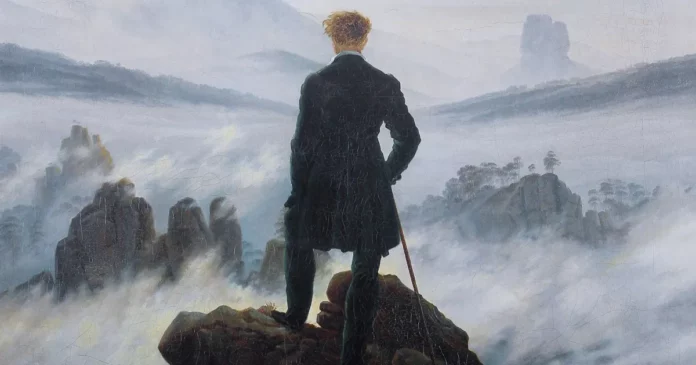
  • Caspar David Friedrich: Pintor alemán que encarna el espíritu romántico en su máxima expresión. Sus paisajes grandiosos y melancólicos, como “El caminante sobre el mar de nubes” y “Dos hombres contemplando la luna”, transmiten una sensación de sublimidad, misterio y conexión espiritual con la naturaleza.
  • Eugène Delacroix: Maestro del color y el movimiento, Delacroix plasma escenas históricas, literarias y orientalistas con gran pasión y dramatismo. Obras como “La libertad guiando al pueblo” y “La muerte de Sardanápalo” son ejemplos de la fuerza expresiva y la intensidad emocional del Romanticismo.
  • Francisco de Goya: Pintor español que, aunque no se adscribe plenamente al Romanticismo, comparte su interés por lo irracional, lo onírico y lo grotesco. Sus obras, como “Los Caprichos” y “Las Pinturas Negras”, reflejan la angustia existencial y la crítica social de la época.
  • William Turner: Pintor británico que se destaca por su tratamiento revolucionario de la luz y el color. Sus paisajes, como “Lluvia, vapor y velocidad” y “El Temerario remolcado a su último atraque para el desguace”, capturan la fuerza de la naturaleza y la fugacidad del tiempo.

4. Características del Romanticismo:

  • Emoción e Intuición: Se da prioridad a la emoción, la intuición y la subjetividad sobre la razón y el intelecto.
  • Individualismo: Se exalta la individualidad, la originalidad y la libertad del artista.
  • Naturaleza: La naturaleza se idealiza como fuente de inspiración, belleza, misterio y sublimidad.
  • Exaltación del Pasado: Se siente nostalgia por el pasado, especialmente por la Edad Media, y se idealizan las culturas exóticas y lejanas.
  • Temas: Los temas recurrentes son el amor, la muerte, la libertad, la lucha contra la opresión, lo sobrenatural y lo fantástico.

5. El Romanticismo en la Literatura y la Música:

El Romanticismo no se limita a la pintura, sino que se extiende a la literatura y la música. Autores como Victor Hugo, Goethe, Lord Byron y Mary Shelley exploran los temas románticos en sus novelas y poemas. En la música, compositores como Beethoven, Schubert y Chopin expresan la emoción, la pasión y la subjetividad románticas en sus obras.

6. Legado del Romanticismo:

El Romanticismo deja una huella profunda en la cultura occidental. Su influencia se extiende a todas las artes y perdura hasta nuestros días. El Romanticismo nos ha enseñado a valorar la emoción, la individualidad, la imaginación y la conexión con la naturaleza. Su legado nos invita a explorar las profundidades del alma humana y a buscar la belleza en lo sublime y lo misterioso.

En resumen, el Romanticismo, con su exaltación de la emoción, la individualidad y la naturaleza, representa una revolución en la sensibilidad artística y cultural. A través de la pasión, la imaginación y la búsqueda de lo infinito, el Romanticismo nos invita a un viaje apasionante por las profundidades del alma humana y la grandiosidad del mundo natural, dejando un legado fundamental en la historia del arte y la cultura.

El Realismo: Un Espejo para la Sociedad Industrial

realismo arte
realismo arte

El Realismo: Un Espejo para la Sociedad Industrial

El Realismo, como se ha apuntado, se erige como un movimiento artístico que busca plasmar la realidad social con una fidelidad implacable, despojada de idealizaciones y romanticismos. Surgido en Francia a mediados del siglo XIX, en pleno auge de la Revolución Industrial y los cambios sociales que esta conllevó, el Realismo se configura como una reacción al arte académico y romántico que dominaba la escena artística hasta entonces.

1. Contexto Histórico:

Para comprender el Realismo, es crucial situarlo en su contexto histórico. La Revolución Industrial trajo consigo una profunda transformación de la sociedad: el éxodo rural, el crecimiento de las ciudades, la aparición del proletariado y las desigualdades sociales. Este nuevo panorama, marcado por la pobreza, el trabajo en las fábricas y las tensiones sociales, se convierte en el objeto de estudio del Realismo.

2. Rechazo de la Idealización:

A diferencia del Romanticismo, que buscaba la belleza idealizada y la evasión en la naturaleza o el pasado, el Realismo se centra en la representación objetiva de la vida cotidiana, especialmente de las clases trabajadoras y los marginados. Los artistas realistas se proponen mostrar la realidad tal como es, sin adornos ni embellecimientos, denunciando las injusticias y las desigualdades de su tiempo.

3. Artistas Clave:

  • Gustave Courbet: Considerado el padre del Realismo, Courbet se rebela contra las convenciones artísticas y defiende la pintura de lo “real”. Obras como “Un entierro en Ornans” y “Los picapedreros” causaron escándalo en su época por su crudeza y su representación de la gente común.
  • Jean-François Millet: Centrado en la vida rural, Millet retrata el trabajo de los campesinos con dignidad y realismo. Su obra “El Ángelus” se convierte en un icono de la pintura realista, mostrando la dureza y la nobleza del trabajo en el campo.
  • Honoré Daumier: A través de la caricatura y la pintura, Daumier satiriza la sociedad burguesa y denuncia la corrupción política. Sus obras son un testimonio crítico de la época.

4. Características del Realismo:

  • Observación minuciosa: Los artistas realistas se basan en la observación directa de la realidad, prestando atención a los detalles y a la representación fiel del entorno.
  • Objetividad: Se busca una representación objetiva, evitando la subjetividad y las emociones del artista.
  • Compromiso social: El Realismo no se limita a representar la realidad, sino que busca generar conciencia y denunciar las injusticias sociales.
  • Técnicas: Se utilizan técnicas que permitan plasmar la realidad con precisión, como la pincelada precisa y el uso de la luz natural.

5. Legado del Realismo:

El Realismo marca un punto de inflexión en la historia del arte, abriendo el camino para movimientos posteriores como el Impresionismo y el Naturalismo. Su influencia se extiende a la literatura, la fotografía y el cine, dejando una huella profunda en la cultura visual contemporánea. Su compromiso con la verdad y la justicia social sigue siendo relevante en la actualidad.

En resumen, el Realismo se presenta como una respuesta artística a las transformaciones sociales del siglo XIX, un movimiento que busca reflejar la vida cotidiana y las condiciones sociales sin idealización, con un enfoque en la honestidad y la precisión. A través de la observación detallada y el compromiso con la verdad, el Realismo nos ofrece una visión crítica y reveladora de la sociedad industrial y sus contradicciones.

El Renacimiento: Un Amanecer Cultural

Arte renacimiento
Arte renacimiento

El Renacimiento: Un Amanecer Cultural

El Renacimiento, como bien se ha mencionado, emerge en Italia durante el siglo XIV, marcando un período de profunda transformación cultural que se extiende por Europa hasta el siglo XVI. Este movimiento se caracteriza, fundamentalmente, por un renovado interés en la antigüedad clásica greco-romana, un florecimiento del humanismo y una nueva concepción del mundo y del lugar del hombre en él.

1. Redescubrimiento de la Antigüedad Clásica:

Tras la Edad Media, el Renacimiento se presenta como un renacer, una vuelta a los valores estéticos y filosóficos de la Grecia y la Roma antiguas. Este redescubrimiento se ve impulsado por diversos factores, como la migración de eruditos bizantinos a Italia tras la caída de Constantinopla, el desarrollo de la imprenta, que permitió la difusión de textos clásicos, y el mecenazgo de familias adineradas como los Medici en Florencia.

2. El Humanismo:

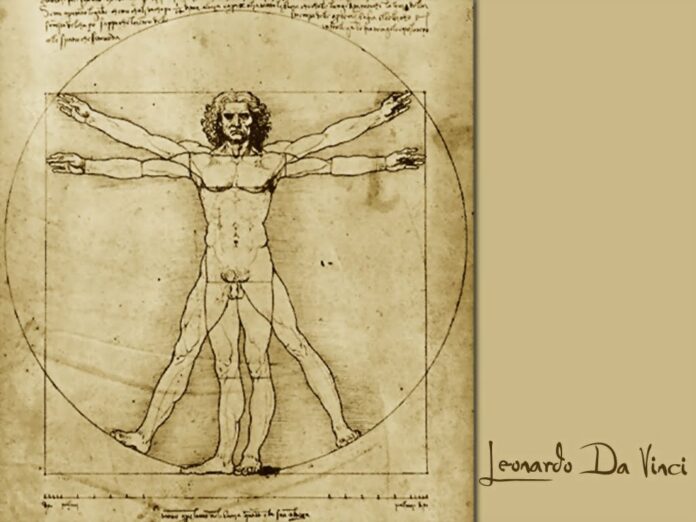
En el corazón del Renacimiento late el humanismo, una corriente filosófica que coloca al ser humano en el centro de la reflexión. El hombre ya no es visto solo como un ser pecador en espera de la salvación divina, sino como un individuo dotado de razón, libre albedrío y capacidad creativa. Figuras como Leonardo da Vinci, un auténtico “hombre universal”, encarnan este ideal renacentista al destacar en múltiples disciplinas como la pintura, la escultura, la arquitectura, la ingeniería y la anatomía.

3. Realismo y Perspectiva:

En el ámbito artístico, el Renacimiento se distingue por la búsqueda del realismo y la aplicación de la perspectiva lineal. Artistas como Leonardo da Vinci en su “Mona Lisa” y Miguel Ángel en sus frescos de la Capilla Sixtina logran plasmar la figura humana con una precisión anatómica y una profundidad espacial nunca antes vistas. La perspectiva se convierte en una herramienta fundamental para representar el mundo de forma tridimensional y realista.

4. Naturalismo y Ciencia:

El Renacimiento también impulsa un cambio en la forma de entender el mundo. La observación de la naturaleza y la experimentación cobran protagonismo, sentando las bases para la revolución científica del siglo XVII. Figuras como Nicolás Copérnico y Galileo Galilei desafían las concepciones geocéntricas tradicionales, mientras que Leonardo da Vinci realiza estudios anatómicos diseccionando cadáveres para comprender el funcionamiento del cuerpo humano.

5. Obras Representativas:

El Renacimiento nos ha legado un legado artístico incomparable:

  • Pintura: “La Gioconda” y “La Última Cena” de Leonardo da Vinci, “El Nacimiento de Venus” de Botticelli, “La Escuela de Atenas” de Rafael.
  • Escultura: “El David” de Miguel Ángel, “El Moisés” de Miguel Ángel.
  • Arquitectura: La cúpula de la Catedral de Florencia de Brunelleschi, el Templete de San Pietro in Montorio de Bramante.

Conclusión:

El Renacimiento fue un período de efervescencia cultural que sentó las bases para la modernidad. Su revalorización de la antigüedad clásica, el humanismo, la búsqueda del realismo y el desarrollo de la ciencia marcaron un cambio de paradigma en la historia de Occidente, cuyas repercusiones aún hoy son palpables.

Transición al Barroco:

Si bien el Renacimiento representa un momento de equilibrio y armonía, el Barroco, que le sucede, se caracteriza por la exuberancia, el dramatismo y la complejidad. Mientras el Renacimiento busca la serenidad y la proporción, el Barroco se inclina por el movimiento, la emoción y el contraste. Ambos períodos, sin embargo, son expresiones de la vitalidad y la creatividad del espíritu humano.

El Barroco: La Exaltación de la Emoción y el Dramatismo

Arte Barroco
Arte Barroco

El Barroco: La Exaltación de la Emoción y el Dramatismo

El Barroco, como se ha señalado, emerge en Europa a principios del siglo XVII, caracterizándose por su exuberancia, dinamismo y un marcado dramatismo. Este movimiento artístico y cultural se desarrolla en un contexto histórico complejo, marcado por las tensiones religiosas entre la Reforma Protestante y la Contrarreforma Católica. En este escenario, el Barroco se convierte en una poderosa herramienta para la Iglesia Católica, buscando inspirar devoción, asombro y reafirmar su poderío frente a la creciente influencia del protestantismo.

1. Contexto Histórico:

El siglo XVII es una época de grandes convulsiones en Europa. Las guerras religiosas, la crisis económica y las tensiones políticas generan un ambiente de incertidumbre y desasosiego. En este contexto, la Iglesia Católica busca recuperar su influencia a través de la Contrarreforma, un movimiento que promueve la renovación interna y la reafirmación de sus dogmas. El arte barroco se convierte en un instrumento clave para este propósito.

2. El Arte al Servicio de la Fe:

El Barroco se caracteriza por su grandiosidad, su ornamentación exuberante y su dramatismo. Las iglesias se llenan de retablos dorados, esculturas monumentales y pinturas que buscan conmover al espectador y despertar su fervor religioso. La luz juega un papel fundamental, creando contrastes dramáticos y efectos teatrales que intensifican la experiencia religiosa.

3. Artistas Clave:

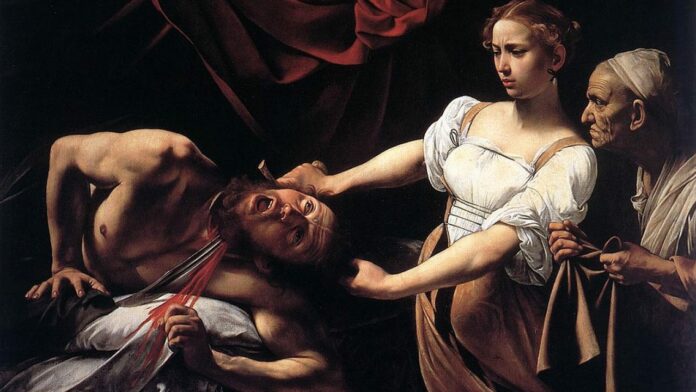
  • Caravaggio: Considerado uno de los grandes innovadores del Barroco, Caravaggio revoluciona la pintura con su uso dramático de la luz y la sombra (claroscuro) y su realismo descarnado. Sus obras, como “La vocación de San Mateo” y “La muerte de la Virgen”, se caracterizan por su intensidad emocional y su capacidad para conectar con el espectador.
  • Pedro Pablo Rubens: Maestro del Barroco flamenco, Rubens se distingue por su estilo dinámico y sensual, su dominio del color y su capacidad para plasmar escenas mitológicas, religiosas e históricas con gran energía y movimiento. Sus obras, como “El descendimiento de la cruz” y “Las tres Gracias”, son ejemplos de la exuberancia y el dinamismo del Barroco.
  • Gian Lorenzo Bernini: El gran escultor y arquitecto del Barroco italiano, Bernini crea obras monumentales que combinan movimiento, emoción y teatralidad. Su “Éxtasis de Santa Teresa” y el “Baldaquino de San Pedro” en la Basílica de San Pedro son ejemplos de su maestría técnica y su capacidad para expresar la espiritualidad barroca.
  • Diego Velázquez: Pintor de la corte española, Velázquez desarrolla un estilo realista y refinado, capturando la psicología de sus personajes con gran sutileza. Sus obras, como “Las Meninas” y “La rendición de Breda”, son consideradas obras maestras del Barroco español.

4. Características del Barroco:

  • Dramatismo y Emoción: El Barroco busca conmover al espectador a través de la representación de emociones intensas, escenas dramáticas y contrastes lumínicos.
  • Movimiento y Dinamismo: Las composiciones barrocas se caracterizan por el movimiento, la diagonalidad y la sensación de energía.
  • Claroscuro: El uso dramático de la luz y la sombra (claroscuro) crea efectos teatrales y resalta el volumen de las figuras.
  • Ornamentación Exuberante: La decoración recargada, los detalles dorados y la abundancia de elementos decorativos son característicos del Barroco.

5. Legado del Barroco:

El Barroco deja una huella profunda en la cultura europea. Su influencia se extiende a la arquitectura, la música, la literatura y el teatro. El Barroco representa una época de gran creatividad artística, donde la emoción, el dramatismo y la exuberancia se combinan para crear obras de arte que aún hoy nos siguen conmoviendo.

En resumen, el Barroco, con su exuberancia, dinamismo y dramatismo, se configura como una respuesta artística a las tensiones religiosas y sociales del siglo XVII. A través de la grandiosidad, la emoción y el movimiento, el Barroco busca inspirar devoción, asombro y reafirmar el poderío de la Iglesia Católica. Su legado artístico es innegable, dejando un conjunto de obras maestras que aún hoy nos maravillan por su belleza y su capacidad de expresión.

El Impresionismo: Una Nueva Mirada a la Luz y el Instante

Arte impresionismo
Arte impresionismo

El Impresionismo: Una Nueva Mirada a la Luz y el Instante

El Impresionismo, como se ha mencionado, representa una revolución en la historia del arte. Surgido en Francia en la segunda mitad del siglo XIX, este movimiento se centra en la captura de la luz y la atmósfera del momento presente, rompiendo con las convenciones académicas y abriendo camino a la modernidad.

1. Contexto Histórico:

Para comprender el Impresionismo, es crucial situarlo en su contexto. El siglo XIX es un período de grandes transformaciones sociales y tecnológicas: la industrialización, el crecimiento de las ciudades, el desarrollo del ferrocarril y la fotografía. Estos cambios influyen en la sensibilidad de los artistas, que buscan plasmar la modernidad y la fugacidad de la vida urbana.

2. La Luz y la Atmósfera:

La principal preocupación de los impresionistas es capturar la luz y su efecto sobre los objetos. Observan cómo la luz cambia a lo largo del día, modificando los colores y las formas. Para plasmar esta impresión fugaz, utilizan pinceladas rápidas y cortas, yuxtaponiendo colores puros sin mezclarlos en la paleta. El objetivo no es representar la realidad con precisión, sino la sensación visual que produce la luz.

3. Artistas Clave:

  • Claude Monet: Considerado el padre del Impresionismo, Monet se obsesiona con la representación de la luz. Su serie de “Nenúfares” es un ejemplo paradigmático de su técnica, donde el agua y la luz se funden en una sinfonía de colores.
  • Edgar Degas: Aunque comparte la preocupación por la luz, Degas se centra en la figura humana, especialmente en bailarinas y escenas de la vida urbana. Sus composiciones innovadoras y su uso del color lo convierten en un maestro del Impresionismo.
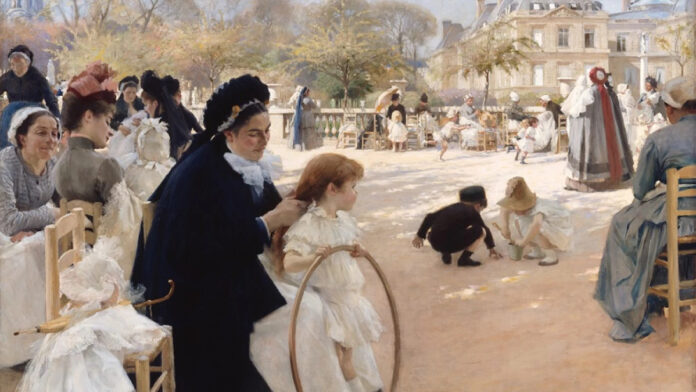
  • Pierre-Auguste Renoir: Conocido por sus escenas de la vida cotidiana y sus retratos, Renoir utiliza una paleta vibrante y una pincelada suelta para capturar la alegría y la belleza del mundo que lo rodea.
  • Camille Pissarro: Uno de los fundadores del Impresionismo, Pissarro experimenta con diversas técnicas, incluyendo el puntillismo, y se interesa por la representación de la vida rural y urbana.

4. Ruptura con la Tradición:

El Impresionismo rompe con las normas académicas de la pintura. Los artistas abandonan el taller y pintan al aire libre, “en plein air”, para capturar la luz natural. Rechazan los temas históricos y mitológicos, prefiriendo escenas de la vida moderna, paisajes y retratos. Sus obras, con su pincelada suelta y sus colores vibrantes, son inicialmente rechazadas por el público y la crítica, que las consideran inacabadas e incluso “impresionistas” (de ahí el nombre del movimiento).

5. Características del Impresionismo:

  • Pincelada suelta y visible: Las pinceladas son cortas y rápidas, aplicadas con libertad y espontaneidad.
  • Colores puros: Se utilizan colores puros, sin mezclarlos en la paleta, yuxtapuestos para crear efectos de luz y sombra.
  • Composición innovadora: Se exploran nuevas formas de composición, con encuadres descentrados y perspectivas inusuales.
  • Temas cotidianos: Se representan escenas de la vida moderna, paisajes, retratos y momentos fugaces.

6. Legado del Impresionismo:

El Impresionismo marca un punto de inflexión en la historia del arte. Su influencia se extiende a movimientos posteriores como el Postimpresionismo, el Fauvismo y el Expresionismo. Su legado es fundamental para la pintura moderna, ya que libera a los artistas de las convenciones académicas y abre un nuevo camino para la expresión artística.

En resumen, el Impresionismo, con su enfoque en la luz, la atmósfera y el instante presente, revoluciona la pintura del siglo XIX. A través de pinceladas rápidas, colores vivos y composiciones innovadoras, los impresionistas capturan la belleza fugaz del mundo que los rodea, dejando un legado fundamental para la historia del arte.

El Futurismo: Una Oda a la Velocidad y la Modernidad

arte futurismo
arte futurismo

El Futurismo: Una Oda a la Velocidad y la Modernidad

El Futurismo, como bien se ha indicado, irrumpe en el panorama artístico a principios del siglo XX, proclamando un cambio radical, una ruptura con el pasado y una exaltación de la modernidad, la tecnología y la velocidad. Nacido en Italia con el Manifiesto Futurista de Filippo Tommaso Marinetti en 1909, este movimiento vanguardista se extiende rápidamente por Europa, influyendo en diversas disciplinas artísticas como la pintura, la escultura, la literatura, la música y el cine.

1. Contexto Histórico:

Para comprender el Futurismo, es fundamental situarlo en su contexto histórico. A principios del siglo XX, Europa vive un período de gran dinamismo y transformación: la industrialización avanza a pasos agigantados, las ciudades crecen, aparecen nuevas tecnologías como el automóvil y el avión, y se respira un ambiente de cambio y progreso. Este clima de modernidad y optimismo tecnológico es el caldo de cultivo del Futurismo.

2. Rechazo del Pasado:

El Futurismo se caracteriza por un rechazo radical del pasado y una exaltación del futuro. Los futuristas consideran que los museos y las academias son “cementerios” del arte y abogan por una renovación total de la cultura. “Queremos destruir los museos, las bibliotecas, las academias de todo tipo”, proclama Marinetti en su manifiesto.

3. Exaltación de la Modernidad:

Los futuristas glorifican la velocidad, la máquina, la tecnología y la violencia. El automóvil, el avión y el tren se convierten en símbolos de la modernidad y el progreso. La guerra es vista como una “higiene del mundo” y una forma de purificación. La industrialización y la vida urbana son exaltadas como expresiones del dinamismo de la época.

4. Artistas Clave:

  • Umberto Boccioni: Uno de los principales exponentes del Futurismo en la pintura y la escultura, Boccioni busca plasmar el movimiento y la energía de la vida moderna. Obras como “La ciudad que sube” y “Formas únicas de continuidad en el espacio” son ejemplos de su búsqueda de dinamismo y simultaneidad.
  • Giacomo Balla: Pionero en la representación del movimiento en la pintura, Balla utiliza líneas de fuerza, colores vibrantes y la técnica de la “cronofotografía” para capturar la velocidad y la dinámica de los objetos en movimiento. “Dinamismo de un perro con correa” es una obra emblemática de su estilo.
  • Carlo Carrà: Inicialmente influenciado por el Cubismo, Carrà se une al Futurismo y desarrolla un estilo personal que combina la fragmentación de las formas con la representación del movimiento. “Los funerales del anarquista Galli” es una de sus obras más conocidas.

5. Características del Futurismo:

  • Dinamismo y Movimiento: La representación del movimiento y la energía es un elemento central del Futurismo. Se utilizan líneas de fuerza, diagonales, planos superpuestos y la técnica de la “simultaneidad” para crear la sensación de dinamismo.
  • Tecnología y Modernidad: Las máquinas, los automóviles, los aviones y la vida urbana son temas recurrentes en el arte futurista.
  • Violencia y Guerra: La guerra es vista como una fuerza regeneradora y una expresión de la vitalidad del hombre moderno.
  • Ruptura con el Pasado: Se rechazan las tradiciones y las convenciones artísticas del pasado.

6. Legado del Futurismo:

El Futurismo, a pesar de su corta duración y su asociación con el fascismo en Italia, ejerce una influencia considerable en el arte del siglo XX. Su exaltación de la modernidad y la tecnología anticipa el desarrollo del arte abstracto y el arte cinético. Su impacto se extiende a la arquitectura, el diseño, la moda y la publicidad.

En resumen, el Futurismo, con su celebración de la velocidad, la tecnología y la modernidad, representa una ruptura radical con el pasado y una apuesta por el futuro. A través de obras dinámicas y llenas de energía, los futuristas capturan el espíritu de una época en transformación, dejando un legado importante en la historia del arte.

El Rococó: Elegancia y Frivolidad en la Corte Francesa

Arte Rococó
Arte Rococó

El Rococó: Elegancia y Frivolidad en la Corte Francesa

El Rococó, como bien se ha apuntado, se desarrolla en Francia durante la primera mitad del siglo XVIII, representando una evolución del Barroco hacia una estética más ligera, ornamental y hedonista. Si bien comparte con el Barroco el gusto por la ornamentación y el dinamismo, el Rococó se distingue por su delicadeza, su sensualidad y su atmósfera de galantería y frivolidad, reflejando el estilo de vida de la aristocracia francesa en la época previa a la Revolución.

1. Contexto Histórico:

El Rococó florece en la Francia del siglo XVIII, durante el reinado de Luis XV, en un período de relativa paz y prosperidad. La corte de Versalles se convierte en el epicentro de la cultura y la moda, y la aristocracia se entrega a una vida de placeres, lujo y refinamiento. El arte rococó refleja este ambiente cortesano, caracterizado por la elegancia, la frivolidad y la búsqueda del placer estético.

2. Reacción al Barroco:

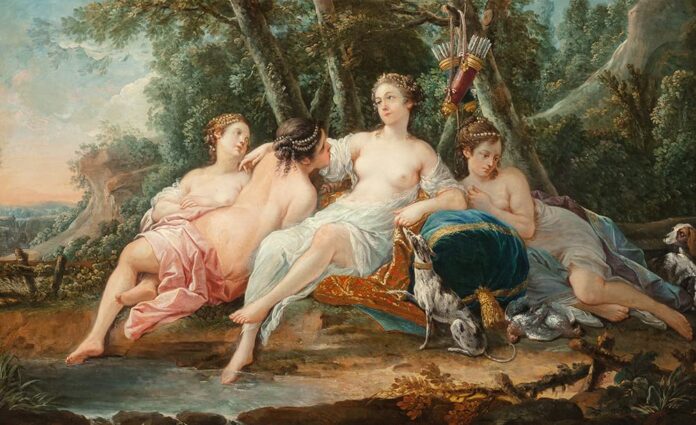
El Rococó surge como una reacción al dramatismo y la grandiosidad del Barroco. Mientras el Barroco buscaba conmover e inspirar temor reverencial, el Rococó se inclina por la sensualidad, la gracia y la alegría de vivir. La temática religiosa pierde protagonismo, dando paso a escenas mitológicas, galantes y pastoriles, que reflejan el ambiente festivo y despreocupado de la corte.

3. Artistas Clave:

  • Antoine Watteau: Considerado el precursor del Rococó, Watteau crea un mundo de ensueño poblado de personajes elegantes y melancólicos. Sus “fiestas galantes”, como “El embarque para Citera”, capturan la atmósfera de refinamiento y nostalgia de la aristocracia.
  • François Boucher: Pintor de la corte de Luis XV, Boucher se especializa en escenas mitológicas y pastoriles, llenas de gracia, sensualidad y erotismo. Sus obras, como “Diana saliendo del baño” y “El triunfo de Venus”, son ejemplos del gusto rococó por la belleza femenina y la voluptuosidad.
  • Jean-Honoré Fragonard: Con un estilo más dinámico y vibrante, Fragonard plasma escenas de amor, juegos y erotismo con gran libertad y espontaneidad. Su obra “El columpio” es un icono del Rococó, capturando la alegría de vivir y la frivolidad de la época.
  • Élisabeth Vigée Le Brun: Una de las pocas mujeres pintoras que logró reconocimiento en la época, Vigée Le Brun se especializa en retratos de la aristocracia, capturando la elegancia y la sofisticación de sus modelos con gran sensibilidad.

4. Características del Rococó:

  • Elegancia y Delicadeza: Las formas son curvas y sinuosas, los colores son pastel y la composición es ligera y armoniosa.
  • Frivolidad y Galantería: Las escenas representan la vida despreocupada de la aristocracia, con temas como el amor, la música, la danza y los juegos galantes.
  • Sensualidad y Erotismo: La belleza femenina, la voluptuosidad y el erotismo son elementos recurrentes en el Rococó.
  • Ornamentación: Se mantiene el gusto por la ornamentación, pero con un carácter más ligero y delicado que en el Barroco.

5. El Rococó en la Arquitectura y el Diseño:

El Rococó también se manifiesta en la arquitectura y el diseño de interiores. Los palacios y las residencias aristocráticas se decoran con molduras, espejos, arabescos y motivos florales. Se busca crear ambientes íntimos y refinados, donde la luz y el color juegan un papel fundamental.

6. Legado del Rococó:

El Rococó, a pesar de su corta duración y su asociación con la frivolidad de la aristocracia, deja un legado importante en la historia del arte. Su influencia se extiende a la moda, la decoración y las artes decorativas. El Rococó representa una época de refinamiento estético y búsqueda del placer, y sus obras nos siguen cautivando por su elegancia, su delicadeza y su capacidad para capturar la atmósfera de una época.

En resumen, el Rococó, con su elegancia, frivolidad y sensualidad, refleja el estilo de vida de la aristocracia francesa en el siglo XVIII. A través de escenas galantes, colores pastel y formas delicadas, el Rococó crea un mundo de ensueño y placer estético, dejando un legado significativo en la historia del arte y la cultura.

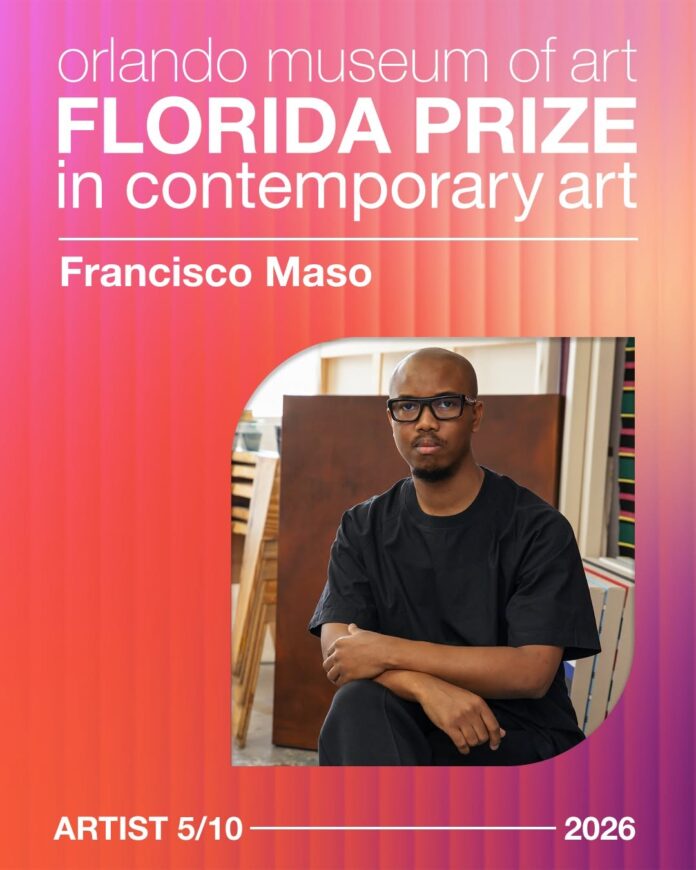
Francisco Masó Honored at the 12th Annual Florida Prize in Contemporary Art

Francisco Masó Honored at the 12th Annual Florida Prize in Contemporary Art

Francisco Masó Receives Recognition at the 12th Annual Florida Prize in Contemporary Art at the Orlando Museum of Art

Orlando, FL — The Orlando Museum of Art (OMA) proudly announces the opening of the 12th Annual Florida Prize in Contemporary Art, a prestigious exhibition celebrating some of the most innovative and progressive artists living and working in Florida today. The exhibition opens on May 30, 2026, and features twelve artists and collectives whose practices reflect the cultural vitality and artistic excellence shaping contemporary art in the state.

Among this year’s distinguished participants is Francisco Masó, a Cuban-born, AfroLatinx conceptual artist based in Miami, whose work has garnered increasing national and international recognition for its incisive exploration of power, repression, and social behavior.

Born in Havana in 1988, Masó received a Bachelor’s degree in Stage Design from the Higher Institute of Art in Cuba in 2014. His multidisciplinary practice examines systems of control, unconscious behaviors, violence, and unspoken social codes through the lens of his experiences in Cuba, Japan, and the United States. His work challenges accepted notions of what society defines as “natural,” “necessary,” and “normal,” creating powerful visual narratives that resonate across cultural and political boundaries.

The Florida Prize in Contemporary Art was established by OMA to bring new recognition to the state’s leading contemporary artists. Each year, OMA’s curatorial team surveys artists throughout Florida before selecting participants whose work demonstrates originality, conceptual depth, and visual innovation. A distinguished invited juror awards one artist or collective the prestigious $20,000 Florida Prize.

This year marks the first edition of the exhibition to include two artist duos, bringing together a total of twelve artists. The 2026 participating artists are:

  • Maria Theresa Barbist
  • Rose Marie Cromwell
  • Jason Hackenwerth
  • Katie Hargrave and Meredith Laura Lynn
  • Francisco Masó
  • Jessy Nite
  • Charo Oquet
  • Ema Ri
  • Mette Tommerup
  • “Nice’n Easy” duo Allison Matherly and Jeffery Noble

The exhibition presents a remarkable diversity of mediums and artistic approaches, including painting, photography, sculpture, weaving, assemblage, site-specific installations, immersive environments, and minimalist interventions. A recurring theme throughout the exhibition is language — from text-based works and coded systems to spiritual rituals, inherited histories, and the development of personal visual vocabularies.

Curated by Coralie Claeysen-Gleyzon, The Dr. James Cottrell and Mr. Joseph Lovett Chief Curator, and Katherine Page, Associate Curator at the Orlando Museum of Art, the exhibition underscores OMA’s ongoing commitment to supporting contemporary artists in Florida. The 2026 Florida Prize juror is Jade Powers, The Hugh Kaul Curator of Contemporary Art at the Birmingham Museum of Art.

The 12th Annual Florida Prize in Contemporary Art offers audiences an engaging and timely survey of contemporary artistic practices while highlighting the unique voices shaping Florida’s cultural landscape today.

For more information, visit the Orlando Museum of Art website: https://omart.org/

The New Frontier

Gabriel Delgado
Gabriel Delgado

The New Frontier
Erik Minter and the Reimagining of the American West
Gabriel Diego Delgado

I first encountered the work of Erik Minter sometime around 2017 or 2018, during a period when his distinctive visual language seemed to erupt onto the contemporary art scene with remarkable force.

At the time, I was serving as a Director at Rosenbaum Contemporary, where I had the opportunity to represent his work and witness firsthand the immediate enthusiasm it generated among collectors, curators, and fellow artists.

I would then go on to write about his work extensively, writing and producing several exhibition catalogs and essays on his unique aesthetic.

What initially captivated me was not simply the undeniable energy of the paintings, but rather Minter’s ability to synthesize abstraction and figuration into a visual vocabulary that felt entirely contemporary while remaining deeply connected to art historical precedent.

His hyper-saturated palette, electric chromatic relationships, and gestural confidence established him as an artist operating outside conventional categories. Over the years, I have continued to follow his trajectory with admiration as he moved from regional visibility to blue-chip representation and international recognition, steadily expanding both the scale of his ambitions and the complexity of his visual investigations.

What has become increasingly apparent in recent years is that Minter’s artistic evolution is not one of abandonment but of expansion. His earlier works, characterized by sweeping abstract gestures, atmospheric passages of color, and an almost improvisational relationship to paint, established a foundation that now informs a surprising and compelling engagement with the mythology of the American West.

Rather than approaching Western imagery through the lens of nostalgia or historical reenactment, Minter approaches it as a living visual language, one capable of being reinterpreted for a contemporary audience.

Horses, cowboys, Native American figures, First Nations references, western attire, rodeo culture, and expansive landscapes emerge throughout his recent work, not as documentary subjects but as vehicles for painterly exploration and cultural reflection.

In works such as Dooley (2026), the horse becomes both subject and abstraction. The composition appears to oscillate between representation and dissolution, existing in a liminal space where form is continuously constructed and deconstructed through color. Minter’s brushwork remains remarkably assured. There is little evidence of hesitation. Each mark appears committed, direct, and purposeful, carrying the confidence of an artist who has developed an intimate trust in his own visual instincts. Broad swaths of lavender, pink, electric blue, and warm orange collide and intermingle, creating an image that feels simultaneously ephemeral and monumental. The horse itself emerges almost as an apparition, materializing from a network of gestural movements that evoke both speed and memory.

This painterly approach places Minter within a broader contemporary discourse surrounding the resurgence of Western imagery in American art. In recent years, a number of artists have revisited the Western genre, challenging traditional narratives and introducing new perspectives on identity, landscape, and cultural mythology. Artists such as Mark Bowles, Scott Burdick, Stephen Datz, and others have contributed to this renewed interest, each bringing distinct methodologies to the genre.

Yet Minter’s contribution feels markedly different. Rather than seeking historical accuracy or romanticized realism, he filters the Western experience through the lens of contemporary abstraction and postmodern image-making. His paintings acknowledge the mythology of the West while simultaneously destabilizing it, allowing viewers to experience familiar subjects through a radically contemporary visual framework.

What distinguishes Minter from many of his contemporaries is his ability to retain the emotional immediacy of gestural abstraction while embracing recognizable imagery. The transition from his earlier abstract works into these contemporary Western narratives feels entirely organic. One can still see the large-scale gestures, the sweeping movements, and the fearless application of paint that characterized his previous bodies of work. The difference is that these gestures have now found new subjects through which to operate. Horses become conduits for movement. Western attire becomes an opportunity for chromatic experimentation. Vast landscapes transform into arenas where color itself becomes the primary protagonist.

There is also an undeniable sense of optimism in these works. While much contemporary art frequently gravitates toward irony, cynicism, or critique, Minter embraces wonder. His Western paintings celebrate spectacle, beauty, and the transformative potential of paint itself. Neon pink sunsets, electric violet skies, and luminous horses occupy worlds that feel simultaneously familiar and fantastical.

These are not the muted earth tones traditionally associated with Western painting. Instead, Minter constructs a contemporary frontier infused with the visual language of the twenty-first century, informed as much by digital culture, popular imagery, and contemporary design as by the historical traditions of Frederic Remington or Charles M. Russell.

As I consider Erik Minter’s current body of work, I am reminded that the most compelling artists are often those willing to reinvent themselves while remaining true to their foundational instincts.

His recent engagement with Western themes does not represent a departure from his artistic identity. Rather, it represents a maturation of it. The gestural confidence, chromatic audacity, and painterly fluency that first attracted audiences to his work remain fully intact. What has changed is the breadth of the conversation. Minter has expanded his visual universe, bringing together abstraction, mythology, contemporary culture, and the enduring symbolism of the American West into a singular and highly recognizable voice.

In an era where questions of identity, place, and cultural memory continue to shape contemporary artistic discourse, Erik Minter has arrived at a particularly significant moment in his career. These new paintings suggest an artist operating at the height of his confidence, synthesizing years of experimentation into a body of work that feels both deeply personal and broadly relevant. They invite us to reconsider what Western art can be in the twenty-first century while demonstrating that the frontier, far from being a closed chapter in American culture, remains fertile ground for reinvention.

Through color, gesture, and imagination, Minter has not merely entered the contemporary Western conversation. He has expanded it.

Fue lanzada la reedición de “El Don Supremo”, de Paulo Coelho

EL DON SUPREMO de PAULO COELHO

Fue lanzada la reedición de “El Don Supremo”, de Paulo Coelho

La editorial HarperCollins Espanol presenta la nueva edición de un clásico de la literatura espiritual contemporánea, “El Don Supremo”, de Paulo Coelho.

En “El Don Supremo” Paulo Coelho profundiza en su experiencia personal de practicar el Amor, siguiendo los sabios nueve elementos de Henry Drummond, que dan un mensaje positivo y universal. Disponible en inglés y español en todas las plataformas y librerías. 

En el siglo XIX, el joven misionero escocés Henry Drummond definió el amor como la culminación de nueve elementos: paciencia, bondad, generosidad, humildad, gentileza, dedicación, tolerancia, sinceridad, e inocencia. Expuso esta idea en su sermón «La cosa más grande del mundo»), que se ha convertido en un clásico y es, sin duda, uno de los textos más bellos jamás escritos sobre el amor.

Paulo Coelho

Al reflexionar sobre este sermón y sobre su tema central, la Carta de San Pablo a los Corintios, el admirado maestro espiritual brasileño Paulo Coelho, autor de “El alquimista” -una fábula sobre seguir los sueños-, nos conduce por su propio camino de profundización en la práctica del Amor en el libro “El Don Supremo”.

El mismo Coelho ha contado: “Creí que ya había pensado en todo lo que se podía pensar sobre el amor cuando el sermón de Henry Drummond cayó en mis manos. Mi vida cambió mucho desde el momento en que leí las palabras de su libro e intenté poner en práctica sus enseñanzas”.

En “El Don Supremo” Coelho adapta el texto de Henry Drummond, ofreciendo un mensaje real y poderoso que nos ayudará a incorporar el amor en nuestra vida cotidiana y a experimentar todo su poder transformador. Contrario a lo que solemos escuchar, el mayor tesoro de la vida espiritual no es la fe, sino el amor. Sin importar cuáles sean tus creencias religiosas, este sentimiento es, sin duda, la manera más gratificante de vivir.

En esta nueva edición, el libro ha sido publicado en inglés y español. Incluye elegantes ilustraciones al inicio de cada capítulo, además de materiales adicionales como una nota sobre Henry Drummond y adelantos de “Maktub” y “El Alquimista”.

Paulo Coelho es uno de los escritores más influyentes de nuestro tiempo, Paulo Coelho es autor de treinta bestsellers internacionales, entre ellos, “El alquimista”, “Verónica decide morir”, y “Guerrero de la luz”. Coelho es miembro de la Academia Brasileira de Letras y Mensajero de la Paz de las Naciones Unidas. Sus libros se publican en más de 170 países y se ha convertido en uno de los escritores más influyentes de nuestro tiempo.

Nacido en Río de Janeiro en 1947, pronto descubrió su vocación por la escritura. Trabajó como director, actor de teatro, compositor y periodista.

En 1986, un encuentro especial lo llevó a realizar la peregrinación a Santiago de Compostela (España). 

El Camino de Santiago no fue solo una peregrinación, sino un punto de inflexión en su vida. Un año después escribió “El peregrino”, una novela autobiográfica considerada el inicio de su carrera literaria. Vive en Ginebra, Suiza.

Coelho cuenta con una gran y leal comunidad, que incluye 17,6 millones de seguidores en redes sociales y millones de lectores en todo el mundo que esperan con entusiasmo cada nueva obra.

The Geometry of the Sacred: Mathematical Principles, Spatial Order, and Visual Culture in Maya Civilization

The Geometry of the Sacred: Mathematical Principles, Spatial Order, and Visual Culture in Maya Civilization

The Geometry of the Sacred: Mathematical Principles, Spatial Order, and Visual Culture in Maya Civilization

A Critical Interdisciplinary Essay

Abstract

This essay undertakes a critical interdisciplinary examination of the role of mathematical and geometric principles in shaping Maya visual culture, architecture, spatial organization, ritual practice, and artistic production. Drawing on archaeoastronomical research, epigraphic scholarship, anthropological theory, and art-historical analysis, it argues that for the ancient Maya, mathematics was not an abstract cognitive tool separable from culture but rather a foundational ontological language — a system through which the divine order of the cosmos was perceived, encoded, and reproduced in material form. The vigesimal number system, the conceptualization of zero, the interlocking calendar cycles, the proportional systems of architecture, and the astronomically aligned city plans together constitute a unified intellectual and spiritual project: the materialization of cosmic time and space within human-built environments. The essay engages critically with the cosmogram debate (Ashmore and Sabloff 2002; Smith 2003, 2005; Šprajc 2009), the archaeoastronomical literature (Aveni 1980, 2001), epigraphic and iconographic analyses (Schele and Freidel 1988, 1990; Freidel, Schele, and Parker 1993), and theoretical frameworks from visual culture studies, anthropology of knowledge, and the philosophy of space.

I. Introduction: Numbers as Theology

To approach Maya civilization through the lens of mathematics and geometry is not to impose a Western rationalist framework upon an indigenous knowledge system; it is, rather, to follow the Maya themselves, who embedded numerical and geometric structures into every domain of their material and symbolic production. The pyramids of Chichén Itzá are counted as well as looked at. The Dresden Codex is computed as well as read. The plazas of Tikal and Copán are measured cosmological statements before they are public spaces.

The critical claim of this essay is that Maya mathematical and geometric knowledge constituted a single, integrated epistemological project — one in which numerical precision, spatial orientation, proportional harmony, and calendrical order were not separate technical disciplines but mutually reinforcing dimensions of a unified worldview. As Anthony Aveni, the preeminent scholar of Mesoamerican archaeoastronomy, argued in Skywatchers of Ancient Mexico (1980, revised 2001), the astronomical orientations of Maya architecture “cannot be understood in purely utilitarian terms” because they were embedded in “a broader framework of cosmological concepts substantiated by political” and religious authority. Architecture was not built to observe the cosmos; it was built to become the cosmos.

This has profound implications for how we understand Maya visual culture, social organization, and collective identity. If mathematical precision was theologically charged — if numbers were divine, as the shell-glyph zero named Mi (meaning completion and the void) suggests — then every numerical encoding in stone, pigment, bark-paper, or urban plan was simultaneously an aesthetic act, a political statement, and a religious utterance. The mathematician, the astronomer, the architect, the ritual specialist, and the artist were, in the Maya world, expressions of a single vocation.

The following sections move from the foundations of Maya mathematical thought (the vigesimal system, the zero, the Long Count) through its architectural and spatial embodiments (proportional systems, astronomical alignments, city plans), its cosmological frameworks (the calendar round, the Dresden Codex, the E-Group observatories), and finally to its implications for social organization, identity, and material culture. Throughout, the essay maintains a critical distance from both romanticizing accounts that overstate Maya mathematical mysticism and reductive functionalist accounts that strip it of its symbolic depth.

II. The Mathematical Foundation: Vigesimal Numeration, Zero, and the Structure of Cosmic Time

2.1 The Vigesimal System and Its Cultural Logic

The Maya developed a base-20 positional numeral system — vigesimal notation — with three basic symbols: a dot (value 1), a bar (value 5), and a distinctive shell glyph representing zero. The choice of base 20 reflects an embodied cognition: the Maya counted on both fingers and toes, producing a numerical system that is literally inscribed in the human body (Aveni 2001; Ifrah 2000). This is not merely a curiosity of cognitive history. It signals that Maya mathematics grew from an intimate relationship between the human body, the natural world, and the cosmic order — a relationship that would persist throughout their intellectual tradition.

The vigesimal system enabled positional notation: the value of a symbol was determined by its place within the numeral, with each ascending position representing a power of twenty. This structural feature made possible the representation of very large numbers — the astronomical and calendrical spans of hundreds of thousands of days — with elegant economy. As Cajori (1928) and more recently the mathematical historians of the arXiv study (Huylebrouck 2020) have demonstrated, the Maya Long Count calendar was a “non-power positional number representation system” whose multipliers ran as 1, 20, 18×20, 18×20², and so forth — a deliberate modification of the pure vigesimal structure that brought the third-order unit (the tun) to 360 days, closely approximating the solar year.

This modification is intellectually remarkable and has been underappreciated in popular accounts. The Maya were not applying an abstract mathematical rule mechanically; they were bending mathematical structure to accommodate cosmological reality. The solar year does not divide evenly into twenty groups of twenty days; the Maya therefore adjusted their number system so that it could simultaneously function as an arithmetic tool and as a temporal map of the sky. This productive tension between mathematical elegance and empirical astronomical observation is one of the defining characteristics of Maya intellectual culture.

2.2 Zero: The Sacred Void

The Maya conceptualization of zero — arriving centuries before its independent discovery in India and long before its transmission to Europe through Arabic mathematics — deserves extended critical attention. The shell glyph Mi (or Nik in some Yucatec dialects) represented zero not merely as a placeholder in positional notation but as an entity with independent cosmological significance: completion, potential, the void that precedes creation, the end of a cycle that is simultaneously its beginning.

The scholarly consensus (Closs 1986; Huylebrouck 2020; Kaplan 2000) holds that the Maya arrived at a cardinal zero — a zero usable in arithmetic — through a process facilitated by their fluency with multiple and redundant number representation systems. Unlike cultures that invented positional notation and zero simultaneously under the pressure of computational necessity, the Maya approached zero through a prolonged familiarity with alternative counting systems, gradually recognizing the conceptual need for a symbol denoting the completion of a cycle. This is a cultural as much as a mathematical history: zero emerged from the same intellectual tradition that conceived of time as cyclical rather than linear, of endings as beginnings, of the void as generative.

In this light, the shell glyph is not a technical symbol but a cosmological one. Its visual form — a spiral shell, a figure of organic growth and mathematical proportion — encodes the very structure it names: the Fibonacci-like spirals of the natural world, the cyclical unfolding of time, the productive emptiness at the center of creation. The aesthetic choice of the shell to represent zero is itself a statement about the relationship between mathematical abstraction and natural form.

2.3 The Long Count and the Architecture of Deep Time

The Long Count calendar — recording elapsed time from a mythological creation date corresponding to approximately 3113 BCE in the Gregorian calendar — represents one of the most ambitious intellectual projects in the ancient world: the construction of a temporal database capable of situating historical events within cosmic time measured in millions of days.

The basic units of the Long Count (kin, uinal, tun, katun, baktun) form a hierarchical positional system encoding not just duration but cosmological significance: each unit was associated with specific deities, ritual obligations, and political events. A stela recording a baktun completion (144,000 days, approximately 394 years) was not merely marking time; it was announcing the fulfillment of a cosmic cycle and the political authority of the ruler who presided over it. As Schele and Freidel argued in A Forest of Kings (1990), the dynastic histories recorded on Maya stelae were simultaneously mathematical statements and cosmological claims — the king legitimated his authority by placing himself at the precise intersection of human history and divine time.

The Long Count also enabled what we might call temporal astronomy: the calculation and prediction of celestial events across spans of centuries. The Dresden Codex Venus Tables — which predict Venus’s 584-day synodic period across 481 years (301 complete cycles) — could only have been constructed using Long Count chronology. Aveni (2001) demonstrated that the Maya average for Venus’s synodic period, derived from these tables, was 583.92 days — a value that differs from the modern space-age measurement of 583.93 days by a margin of error of approximately 0.01 days per cycle. This astonishing precision was achieved through naked-eye observation, vigesimal arithmetic, and the systematic correction of accumulated drift using mathematical correction factors analogous to those later employed in the European Julian calendar reform. Gerardo Aldana’s (2016) epigraphic re-reading of Dresden Codex Page 24 further refined this picture, demonstrating that the Venus Table correction was likely a specific historical discovery made at Chichén Itzá during the Terminal Classic period, possibly under the patronage of the historical figure K’ak’ U Pakal K’awiil — revealing individual mathematical genius embedded in institutional context.

III. Sacred Geometry and Architectural Production

3.1 Proportional Systems and the Geometry of Construction

Maya architects, working without metal tools, compasses, or written algebraic notation, produced buildings of extraordinary geometric precision using knotted measuring cords to establish right angles, rectangle proportions, and specific mathematical ratios. Christopher Powell’s foundational doctoral dissertation The Shapes of Sacred Space (University of Texas at Austin, 2010) — the most systematic analysis of Maya geometric systems to date — demonstrated the existence of a coherent and teachable system of geometric proportion transmitted through architectural training across centuries and sites.

The recurring proportional ratios in Maya architecture include the square roots of small integers (√2, √3, √5) and, controversially, approximations to the golden mean (φ ≈ 1.618). The debate over whether the Maya consciously employed the golden ratio is instructive for the broader methodology of this field. Architectural surveys using modern laser measurement and photogrammetry at El Castillo (Chichén Itzá) and the Governor’s Palace (Uxmal) have identified proportions consistent with φ, but as the analysis on mayan.org carefully notes, “whether this reflects conscious mathematical use of the ratio, an intuitive aesthetic sense for harmonious proportions, or an artifact of construction geometry remains actively debated.” The critical point is not whether the Maya possessed an algebraic formula for φ — they did not — but whether the effect of their proportional systems, derived from geometric construction with knotted cords, consistently produced ratios with the mathematical properties associated with the golden mean. The evidence suggests they did, and that these proportions were not accidents but systematically reproduced features of an architectural grammar.

3.2 Calendrical Encoding in Stone: The Pyramid as Three-Dimensional Calendar

The most celebrated instance of mathematical encoding in Maya architecture is El Castillo at Chichén Itzá, the pyramid of Kukulcan. Its four stairways each have 91 steps; together with the upper platform, they total 365 — the number of days in the Haab’ solar year. The nine terraces on each face of the pyramid, bisected by the stairway, produce 18 sections per face — the number of months in the Haab’. The total number of panels on the pyramid’s faces encodes further calendrical relationships. During the spring and autumn equinoxes, the play of light and shadow on the northern balustrade creates a visual effect in which a serpent of light appears to descend the stairway — a phenomenon requiring precise architectural calculation of angle, orientation, and proportion, uniting astronomy, geometry, and iconography in a single material form.

This is not architectural decoration in any sense familiar to Western aesthetic tradition. It is what we might term computational materiality — the encoding of a mathematical system within a physical object such that the object’s spatial and temporal behavior continues to perform calculations: the pyramid tells the time of year, marks the calendar cycles, and enacts the descent of the feathered serpent god, simultaneously, through the interaction of geometry and sunlight.

Similar encoding governs the Temple of the Seven Dolls at Dzibilchaltún, where the rising sun passes precisely through the doorway at the spring and autumn equinoxes. These are not isolated curiosities but expressions of a pervasive design principle: Maya ceremonial architecture was built to function as an astronomical instrument and a calendrical statement.

3.3 The E-Group Formation: Observational Geometry at Urban Scale

The E-Group complex — the earliest known type of Maya astronomical architecture, appearing as early as 600 BCE — consists of a pyramid on the western side of a plaza and three smaller temples aligned north-to-south on the eastern side. An observer standing on the western pyramid at dawn sees the sun rise over the central eastern temple at the equinoxes and over the northern and southern temples at the summer and winter solstices respectively. This arrangement functions as a year-calendar encoded in spatial relationships between buildings.

The E-Group at Uaxactún (north of Tikal) was the first identified, but subsequent survey has revealed the pattern across dozens of Classic Maya sites, demonstrating that this was not an isolated local innovation but a shared architectural-astronomical knowledge system transmitted through the Maya world. The geometry of the E-Group — the calculation of the precise angular distances between solstice and equinox sunrise points as seen from a specific observation point, and the translation of those angular distances into building placement across a plaza — represents a synthesis of observational astronomy, trigonometric reasoning (without formal trigonometry as such), and urban planning that is without parallel in the ancient world.

Ivan Šprajc’s systematic analysis of Maya architectural orientations (2009) demonstrated that the “orientations in ancient Maya architecture were, like elsewhere in Mesoamerica, largely astronomical, mostly referring to sunrises and sunsets on particular dates and allowing the use of observational calendars that facilitated a proper scheduling of agricultural activities.” But Šprajc was careful to add that these alignments “cannot be understood in purely utilitarian terms” — the integration of agricultural functionality with cosmological and political meaning is precisely the point.

IV. Spatial Organization and the Cosmological City

4.1 The Cosmogram Debate

One of the most productive and contentious debates in Maya studies concerns the degree to which Classic Maya city plans functioned as cosmograms — spatial representations of the cosmic order. Wendy Ashmore and Jeremy A. Sabloff, in their landmark 2002 article “Spatial Orders in Maya Civic Plans” (Latin American Antiquity 13[2]: 201–215), argued that “the position and arrangement of ancient Maya buildings and arenas emphatically express statements about cosmology and political order,” identifying a recurring north-south axis at major sites in which northerly placement encoded elevated, celestial, ancestral, and royal associations while southerly placement encoded inferior, underworld, or subordinate relations.

Michael E. Smith (2003, 2005) challenged this interpretation on methodological grounds, arguing that the cosmological readings are “vague and unconvincing” and that “arguments for the cosmological significance of archaeologically recovered urban patterns are, in general, subjective and lack methodological rigor.” Smith’s critique is epistemologically important: the danger of cosmogram readings is that they can become unfalsifiable, reading cosmological significance into any spatial arrangement through sufficiently flexible interpretive frameworks. As he noted, “numerous authors assert confidently that architectural cosmograms abounded in Classic Maya cities” without providing the empirical specificity that would make such assertions testable.

Šprajc’s response (2009), and the broader archaeoastronomical community’s position, is that Smith’s critique, while methodologically legitimate, overcorrects. The empirical evidence for astronomical orientations — measured with modern instruments, statistically analyzed across multiple sites, and corroborated by epigraphic and iconographic sources — is substantially more robust than Smith acknowledges. The characteristics of urban layouts “reveal that Maya architectural and urban planning was dictated by a complex set of rules, in which astronomical considerations related to practical needs were embedded in a broader framework of cosmological concepts substantiated by political” authority.

This debate has not been fully resolved, and the critical scholar must hold both positions simultaneously: acknowledging the genuine evidence for cosmological spatial organization while maintaining methodological rigor about the difference between documented pattern and speculative interpretation. The most defensible position, supported by the archaeoastronomical evidence, is that certain specific spatial and orientational principles — particularly the E-Group alignment system, the north-south hierarchical axis, and the orientation of major temples to astronomically significant azimuth angles — were genuinely operative in Maya planning, while broader claims about entire cities as perfect cosmograms require case-by-case empirical analysis.

4.2 Cardinal Directions, Color Symbolism, and the Spatial Body of the Cosmos

The Maya conceived of space as organized around four cardinal directions, each associated with a specific color, deity, and symbolic complex: East (red, rising sun, birth and renewal, the Maize God); North (white, heavens, the North Star, Itzamná the creator deity); West (black, setting sun, death, the underworld entrance); South (yellow, earth, agricultural abundance). This fourfold spatial symbolism — the quincunx pattern of four directional points surrounding a central axis mundi — organized not only architectural planning but ceramic decoration, textile design, mural painting, and ritual performance.

The quincunx is geometrically precise: it is a structure of rotational symmetry (four-fold) combined with a vertical axis, producing a five-point spatial system that maps cosmological hierarchy (underworld, earth surface, four horizontal directions, celestial levels) onto the geometry of the built environment. This is not metaphor; it is structural homology — the same geometric organization recurs at multiple scales, from the layout of a city plaza to the decoration of a ceramic vessel to the arrangement of ritual objects on an altar. The mathematical principle of self-similar structure across scales — what we would today recognize as fractal organization — was an operative principle of Maya visual culture long before it was formalized in Western mathematics.

V. The Dresden Codex: A Mathematical Visual Object

The Dresden Codex — the most scientifically sophisticated of the four surviving pre-Columbian Maya books, written on fig-bark paper (amate) and painted with extraordinary precision — is perhaps the most concentrated expression of the integration of mathematics, astronomy, and visual culture in the Maya world. Its Venus Tables, Lunar Tables, eclipse tables, and divinatory almanacs constitute what may be described, following the terminology of library and information science, as a computational knowledge organization system: a structured database of celestial, calendrical, and ritual information organized through the interlocking architecture of the Tzolk’in (260-day sacred calendar), the Haab’ (365-day solar calendar), and the Long Count.

The Venus Tables (Pages 24–46) document the 584-day synodic cycle of Venus with the numerical precision already noted above. But their significance for visual culture extends beyond their mathematical content. The tables are organized as visual-numerical grids in which hieroglyphic text, numerical notation, and figural imagery are integrated into a single compositional system. The deity figures depicted in the almanacs are not illustrations accompanying a text; they are the text — each figure encodes specific ritual-astronomical information through its iconographic attributes, posture, and associated glyphs. The relationship between image and number in the Dresden Codex is one of structural equivalence rather than illustration: the visual form and the mathematical content are two modalities of the same information.

This integration of the visual and the mathematical is characteristic of Maya artistic production more broadly. As Linda Schele demonstrated through her decades of epigraphic and iconographic analysis (Schele and Freidel 1988, 1990; Freidel, Schele, and Parker 1993), “every major image from Maya cosmic symbolism was probably a map of the sky” — that is, the iconographic programs of Maya art are not merely decorative or narrative but are spatial-mathematical diagrams of celestial structure translated into figural form.

VI. Symbolic Abstraction and the Aesthetics of Mathematical Form

6.1 Glyph as Number, Number as Glyph

Maya hieroglyphic writing demonstrates a fundamental principle of Maya symbolic abstraction: the refusal of a categorical distinction between linguistic sign, numerical symbol, and visual image. The same glyph can function as a phonetic component of a word, a numerical value, a calendrical day-name, and an iconographic reference to a specific deity or cosmological concept. The “head variant” numerals — in which each number 0 through 19 could be represented by a specific deity’s head — further demonstrate this principle: numbers are divine beings; divine beings are numbers; the mathematical and the theological are a single categorical domain.

This has radical implications for the theory of Maya art. If numbers are divine, then every numerical encoding in a visual work is simultaneously a theological statement. The 52-year Calendar Round — the smallest period in which the 260-day Tzolk’in and the 365-day Haab’ return to the same combined day-name (52 × 365 = 73 × 260 = 18,980 days) — is not merely a mathematical fact about least common multiples; it is the cosmological heartbeat of the Maya world, the cycle on which the renewal of the world depended, marked by the New Fire ceremony in which all fires were extinguished and relit. The mathematical relationship is the cosmological event.

6.2 Geometric Abstraction in Maya Art

Maya visual culture employs geometric abstraction in a manner that is sophisticated and systematic. The step-fret motif (xicalcoliuhqui) that appears extensively in architectural decoration, ceramic design, and textile patterns encodes, in geometric form, a spiral that moves in right-angle steps — a visual approximation of the logarithmic spiral found in the shell (and in the shell-glyph for zero). The interlocking step-frets that decorate the facades of Uxmal and Mitla are not ornament in any decorative sense; they are geometric statements about the structure of cyclical time, the movement between complementary opposites (earth and sky, day and night, creation and dissolution), and the mathematical relationship between linear progression and circular return.

The scrollwork and volute forms that appear in Maya iconography — the wind scrolls, the smoke scrolls, the water scrolls — are similarly mathematical in their structure: they are visual representations of the logarithmic spiral, a form that encodes the mathematical constant e and appears throughout natural growth processes. The Maya’s choice of this form as a fundamental visual vocabulary reflects their recognition of the mathematical structures underlying natural phenomena — a recognition expressed not through algebraic formula but through visual form.

6.3 The Ball Court as Mathematical Space

The Mesoamerican ball court, a feature of virtually every major Maya site, is itself a geometric statement. The I-shaped playing field — two rectangular end zones connected by a narrower central alley — creates a spatial diagram that has been interpreted as representing the cosmological axis between the underworld and the celestial realm. The specific dimensions and proportions of ball courts, while varying by site and period, consistently adhere to mathematical ratios that encode cosmological relationships. As noted in the scholarship on Maya mathematics, the dimensions and layouts of ball courts “were not arbitrary but adhered to mathematical principles,” and the symbolic representation of numbers in the ballgame “emphasizes the pervasive influence of mathematics in Mayan culture beyond scientific and architectural domains.”

The rubber ball itself moves through the court in trajectories that approximate the paths of celestial bodies — and the association of the ballgame with Venus cycles, solar movements, and the myth of the Hero Twins (who defeated the lords of the underworld through the ballgame, as recounted in the Popol Vuh) confirms that the geometric space of the court was understood as a model of cosmological space.

VII. Mathematics, Power, and Social Organization

7.1 The Astronomer-Priest and Knowledge Hierarchy

The sophisticated mathematical and astronomical knowledge encoded in Maya architecture, codices, and art was not democratically distributed. It was concentrated in the hands of a specialist class — what we might call the ah kin (sun priests, day-keepers) and the royal scribes — whose control of calendrical, astronomical, and mathematical knowledge constituted a form of political power. The ability to predict eclipses, to announce the completion of calendrical cycles, to determine auspicious dates for warfare and agricultural activity, and to place rulers within the cosmic order of the Long Count — these were capacities that legitimated dynastic authority and organized social life.

This is the political economy of mathematical knowledge: in a civilization where astronomical prediction and calendrical knowledge organized agricultural cycles, ritual obligations, and political succession, the mastery of mathematics was a form of sovereignty. Schele and Freidel (1988, 1990) demonstrated extensively how the rulers of Classic Maya cities deployed cosmological and calendrical knowledge as instruments of political legitimation — the king was not merely a secular ruler but the axis mundi, the embodied intersection of the cosmic directions, whose authority derived from his positioning within the mathematical order of time and space.

The construction of major ceremonial structures — pyramids, temples, ball courts, E-Group complexes — was itself an exercise of mathematical knowledge as political display. The resources required to calculate astronomical alignments, design proportionally encoded facades, and orient entire city plans to celestial events were not merely technical; they were demonstrations that the ruling class possessed the knowledge necessary to maintain the cosmic order, and that the city they built was proof of their competence and divine mandate.

7.2 Collective Identity and the Shared Mathematical Cosmos

At the level of collective identity, Maya mathematical and geometric culture created a shared cosmological framework that transcended individual sites and political entities. The E-Group complex appears across scores of Maya sites spanning centuries and thousands of kilometers; the Long Count calendar was used from the Gulf Coast to the Yucatán to the highlands of Guatemala; the quincunx spatial symbolism organized architectural space from Preclassic Nakbé to Postclassic Chichén Itzá. This shared mathematical vocabulary constituted a form of cultural identity — a lingua franca of cosmological space and time that linked diverse Maya communities within a single intellectual tradition.

The calendar itself was the most powerful instrument of collective identity. The Calendar Round, cycling through its 18,980-day period, organized collective life: the obligations of ritual, the timing of markets, the scheduling of warfare, the determination of auspicious days for marriages, agricultural planting, and political appointments. The mathematical structure of the calendar was not merely a tool for individual decision-making but the shared temporal framework within which the entire community existed — what Miguel León-Portilla, in Time and Reality in the Thought of the Maya (1988), called a qualitative conception of time in which “each moment carries its own divine character.”

VIII. Critical Reflections and Methodological Cautions

The scholarship surveyed in this essay is rich and growing, but several methodological cautions deserve explicit articulation. First, there is a persistent risk of what we might call mathematical projection — reading sophisticated numerical structures into Maya artifacts and architecture on the basis of modern mathematical sensibilities rather than demonstrated ancient practice. The debate over the golden ratio in Maya architecture is exemplary: while the proportional consistency across sites is empirically documented, the inference that this reflects conscious mathematical deployment of φ as a theoretical constant goes beyond the evidence.

Second, the integration of mathematics, cosmology, and aesthetics that this essay has described was undoubtedly more complex, contested, and variable in practice than any synthetic account can convey. Maya civilization spanned approximately three millennia, multiple language groups, dozens of polities, and enormous geographic and ecological diversity. The cosmological uniformity suggested by terms like “the Maya worldview” is itself a scholarly construction that can obscure significant variation.

Third, the dominant frameworks in this field — archaeoastronomy (Aveni), epigraphy-iconography (Schele, Freidel, Stuart), and anthropological spatial analysis (Ashmore, Sabloff) — each bring their own theoretical assumptions and blind spots. A genuinely interdisciplinary approach must hold these frameworks in tension, using each to critique and illuminate the others rather than synthesizing them prematurely into a false coherence.

IX. Conclusion: The Mathematical Body of the World

The ancient Maya built a civilization in which mathematics was not a specialized discipline but a universal language — the language in which the cosmos spoke to humanity, and in which humanity spoke back to the cosmos. Their vigesimal number system encoded an embodied relationship between human anatomy and cosmic order. Their zero named the generative void from which cycles begin. Their Long Count calendar situated human history within deep cosmic time. Their architecture encoded calendrical cycles in stone, oriented ceremonial cities to celestial events, and organized urban space according to the four-directional geometry of the cosmos. Their art made mathematical relationships visible, translating astronomical diagrams into figural imagery, geometric forms into theological statements.

This integration of the mathematical and the cosmological, the geometric and the spiritual, the astronomical and the political, is not a primitive confusion of categories that a more advanced culture would eventually separate. It is a sophisticated epistemological achievement — a recognition that the structures underlying natural phenomena, human society, and cosmic order are, at some fundamental level, the same structures; and that the proper response to this recognition is not abstraction but materialization: building the mathematics into the stone, painting the astronomy onto the bark, dancing the calendar into the body.

The critical scholar of Maya visual culture must therefore resist the disciplinary temptation to analyze the mathematics separately from the art, the astronomy separately from the architecture, the theology separately from the urban plan. These are not separate objects requiring separate methods; they are aspects of a single project: the construction of a world in which human life participates in the geometric order of the cosmos.

As Linda Schele recognized in her life’s work, and as the accumulated archaeoastronomical, epigraphic, and anthropological research of the past half-century has confirmed, for the ancient Maya, “every major image from Maya cosmic symbolism was probably a map of the sky” — and every map of the sky was, simultaneously, a work of art, a mathematical proof, a political act, and a prayer.

References

Aldana, Gerardo. 2016. “Discovering Discovery: Chich’en Itza, the Dresden Codex Venus Table, and 10th Century Mayan Astronomical Innovation.” Journal of Astronomy in Culture 1(1). DOI: 10.4169/jac.2016.01.01.

Ashmore, Wendy, and Jeremy A. Sabloff. 2002. “Spatial Orders in Maya Civic Plans.” Latin American Antiquity 13(2): 201–215.

Ashmore, Wendy, and Jeremy A. Sabloff. 2003. “Interpreting Ancient Maya Civic Plans: Reply to Smith.” Latin American Antiquity 14(2): 229–236.

Aveni, Anthony F. 1980. Skywatchers of Ancient Mexico. Austin: University of Texas Press.

Aveni, Anthony F. 2001. Skywatchers: A Revised and Updated Version of Skywatchers of Ancient Mexico. Austin: University of Texas Press.

Aveni, Anthony F., and Horst Hartung. 1987. Maya City Planning and the Calendar. Transactions of the American Philosophical Society 76, Pt. 7. Philadelphia: American Philosophical Society.

Bricker, Victoria R., and Harvey M. Bricker. 2011. Astronomy in the Maya Codices. Philadelphia: American Philosophical Society.

Cajori, Florian. 1928. A History of Mathematical Notations. Chicago: Open Court.

Closs, Michael P. 1986. “The Maya Numeration System and the Concept of Zero.” Latin American Antiquity 17(2): 195–210.

Coe, Michael D., and Stephen Houston. 2015. The Maya. 9th ed. London: Thames & Hudson.

Coe, Michael D., and Mark Van Stone. 2005. Reading the Maya Glyphs. London: Thames & Hudson.

Demarest, Arthur A. 2004. Ancient Maya: The Rise and Fall of a Forest Civilization. Cambridge: Cambridge University Press.

Freidel, David, and Linda Schele. 1988a. “Symbol and Power: A History of the Lowland Maya Cosmogram.” In Maya Iconography, edited by Elizabeth P. Benson and Gillett Griffin, 44–93. Princeton: Princeton University Press.

Freidel, David, and Linda Schele. 1988b. “Kingship in the Late Preclassic Maya Lowlands: The Instruments and Places of Royal Power.” American Anthropologist 90: 547–567.

Freidel, David, Linda Schele, and Joy Parker. 1993. Maya Cosmos: Three Thousand Years on the Shaman’s Trail. New York: William Morrow.

Houston, Stephen. 2014. The Life Within: Classic Maya and the Matter of Permanence. New Haven: Yale University Press.

Huylebrouck, Dirk. 2020. “Non-Power Positional Number Representation Systems, Bijective Numeration, and the Mesoamerican Discovery of Zero.” arXiv preprint 2005.10207.

Ifrah, Georges. 2000. The Universal History of Numbers: From Prehistory to the Invention of the Computer. New York: Wiley.

Kaplan, Robert. 2000. The Nothing That Is: A Natural History of Zero. Oxford: Oxford University Press.

Kowalski, Jeff Karl, and Nicholas P. Dunning. 1999. Mesoamerican Architecture as a Cultural Symbol. Oxford: Oxford University Press.

León-Portilla, Miguel. 1988. Time and Reality in the Thought of the Maya. 2nd ed. Norman: University of Oklahoma Press.

Lounsbury, Floyd G. 1982. “The Mathematics of the Mayan Calendar.” Scientific American 246(6): 134–145.

Powell, Christopher. 2010. The Shapes of Sacred Space: A Proposed System of Geometry Used to Lay Out and Design Maya Art and Architecture and Some Implications Concerning Maya Cosmology. Ph.D. dissertation, University of Texas at Austin.

Schele, Linda, and David Freidel. 1990. A Forest of Kings: The Untold Story of the Ancient Maya. New York: William Morrow.

Schele, Linda, and Peter Matthews. 1998. The Code of Kings: The Sacred Landscape of Seven Maya Temples and Tombs. New York: Scribner.

Smith, Michael E. 2003. “Can We Read Cosmology in Ancient Maya City Plans? Comment on Ashmore and Sabloff.” Latin American Antiquity 14(2): 221–228.

Smith, Michael E. 2005. “Did the Maya Build Architectural Cosmograms?” Latin American Antiquity 16(2): 217–224.

Šprajc, Ivan. 2009. “Astronomical and Cosmological Aspects of Maya Architecture and Urbanism.” In Cosmology Across Cultures, edited by José A. Rubiño-Martín, Juan A. Belmonte, Francisco Prada, and Antxon Alberdi. ASP Conference Series 409. San Francisco: Astronomical Society of the Pacific.

Tedlock, Dennis, trans. 1996. Popol Vuh: The Mayan Book of the Dawn of Life. Rev. ed. New York: Simon & Schuster.

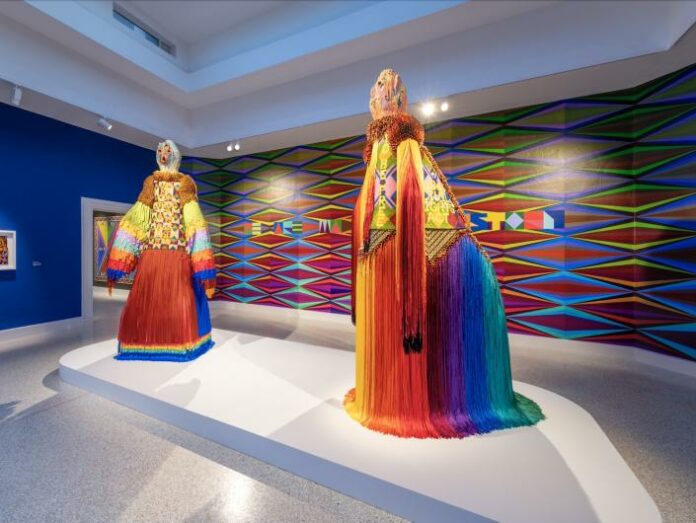
Childhood’s Dream

Childhood’s Dream

Childhood’s Dream
A Surreal Arts Festival Exploring Memory, Nostalgia, and Emotional Landscapes

Opening Reception: Sunday, May 31
Time: 5:00 PM – 10:00 PM
Location: 11712 SW 128th Pl, Miami, FL 33186

Miami, FL — Childhood’s Dream invites audiences into an immersive evening of surreal art, emotional excavation, and dreamlike reflection. Opening Sunday, May 31, this unique arts festival transforms a private Kendall residence into a multi-sensory exhibition space where memory, fantasy, and the subconscious converge.

Curated as an intimate journey through four distinct living spaces, the exhibition brings together a constellation of emerging and multidisciplinary artists whose works explore the lingering presence of childhood within adult life. Through painting, photography, collage, sculpture, printmaking, and installation, Childhood’s Dream examines nostalgia, fears, fragmented memories, and the emotional residue of youth that continues to shape identity and imagination.

Visitors can expect surreal imagery, nostalgic textures, poetic symbolism, and immersive environments that blur the boundaries between memory and dream. Each room unfolds as its own emotional landscape, inviting guests to move through deeply personal yet universally resonant experiences.

The festival features works by more than forty artists across multiple disciplines, including:

Painting: Ashley Lindo, Leah Mendez, Eugene Edwards II, Melanie Oliva, Marg Haza, Mateo Nicolucci, Flor Godward, Melissa Quintero, Anthony Shagan, Bella Lunel, Allen Penniman, Jessica Sanchez, Dalayni Etienne, Jomi, Symphonii, Liang Lansi, Nerea Arce Masnú, Avani Choudhary, Elisabeth Rodriguez, Zohar Wolfson, Austin Lan, and Lilith Rosenfeld.

Print & Ink: Gonzalo Hernandez, Melody Macias, Meeyuh, and Dorian Emerson.

Collage: Tamara Walker, Jacob Stiltner, Ernie Rodriguez, and Natalya Kochak.

Photography: Clara Lind, Isaiah Ransom, Josephine, Michelle Huguet, Tiona Blanc, Macho, Jacob Freeland, and Wes Fleischer.

Sculpture: Jose I. Ugas, Sarah Ferrer, Kevin Bailey, and Samantha Ferrer.

By reimagining a domestic environment as a surreal exhibition setting, Childhood’s Dream creates an atmosphere where art becomes deeply intimate, immersive, and psychologically charged. The festival offers Miami audiences an opportunity to encounter contemporary art in a space that feels both familiar and uncanny — echoing the fragile terrain between remembrance and imagination.

Childhood’s Dream
Childhood’s Dream

Basquiat × Banksy

Jean-Michel-Basquiat-Untitled-Skull-1982.-Private-collection
A rare gathering of Jean-Michel Basquiat’s most iconic works come together in Miami for the first time, generously loaned from the Kenneth C. Griffin Collection. Opening June 25, 2026.

Basquiat × Banksy

Sep 29, 2024–Sep 07, 2026

Basquiat × Banksy is an exhibition of two major paintings, one by Jean-Michel Basquiat (b. Brooklyn, New York, 1960–1988) and the other by Banksy (anonymous; b. near Bristol, England). Placed in dialogue, Basquiat’s Boy and Dog in a Johnnypump (1982) and Banksy’s response, Banksquiat. Boy and Dog in Stop and Search (2018), reveal throughlines among street art, contemporary art, and the popular imagination.

Basquiat × Banksy marks the first time that artwork by either artist has been presented at the nation’s museum of modern and contemporary art. The exhibition also includes 20 small works on paper and wood from the collection of Larry Warsh that were made by Basquiat between 1979 and 1985 and demonstrate the artist’s deep familiarity with art history, his use of language, and his signature motifs, such as skulls and crowns. The film Downtown 81 (shot in 1980–1981 and released in 2000), a send-up of the denizens of Manhattan’s ’80s avant-garde that stars Basquiat as a struggling artist named “Jean,” is also on view.

Accompanying public programs include a free hourlong lecture by Richard J. Powell, John Spencer Bassett Professor of Art and Art History at Duke University and a distinguished scholar of African American art and art of the African diaspora, at 6:30 PM on Oct. 10 in the Hirshhorn’s Ring Auditorium.

Organized by Betsy Johnson, assistant curator at the Hirshhorn Museum and Sculpture Garden, Basquiat × Banksy is presented as part of the Hirshhorn’s 50th-anniversary season. Basquiat × Banksy has been made possible with generous support from Kenneth C. Griffin and Griffin Catalyst.

About Jean-Michel Basquiat

Jean-Michel Basquiat is one of the best-known artists of his generation and is widely considered to be one of the most important artists of the 20th century. His career in art spanned the late 1970s through the 1980s until his death in 1988, at the age of 27.

Basquiat’s works are edgy and raw, and through a bold sense of color and composition, he maintains a fine balance between seemingly contradictory forces such as control and spontaneity, menace and wit, and urban imagery and primitivism. The Basquiat brand embodies the values and aspirations of young international urban culture.

Basquiat often incorporated words into his paintings. Before his career as a painter began, he produced punk-inspired postcards for sale on the street and become known for political-poetical graffiti under the name of SAMO©.

The conjunction of various media is an integral element of Basquiat’s art. His paintings are typically covered with text and codes of all kinds: words, letters, numerals, pictograms, logos, map symbols, diagrams, and more, and feature multipanel paintings and individual canvases with exposed stretcher bars, the surface dense with writing, collage, and imagery.

All images by Jean-Michel Basquiat, all likenesses of Jean-Michel Basquiat, and all use of Jean-Michel Basquiat’s name © Estate of Jean-Michel Basquiat. Licensed by Artestar, New York.

About Banksy

Banksy, arguably the most famous street artist working today, has managed to conceal his identity despite widespread speculation. His first identifiable artworks appeared on trains and buildings around Bristol, England, in the early 1990s. Early in his career, he developed his signature style, a mostly monochromatic stencil technique adopted partly for speed of execution and partly in homage to French artist Blek le Rat (a.k.a. Xavier Prou), who pioneered stencil-based graffiti works in Paris in the 1980s. Since Banksy’s first large-scale mural appeared in Bristol in 1999, he has become known for witty pranks and antiauthoritarian political works. In 2018, he famously caused one of his paintings to self-destruct seconds after it was sold at auction (ironically, the half-shredded work was later auctioned for a much higher price). Although his identity is secret, he has left a trail of clues in interviews and the documentary Exit through the Gift Shop (2010).

Image credit (top): Jean-Michel Basquiat (b. Brooklyn, New York, 1960–1988), Boy and Dog in a Johnnypump, 1982. Acrylic, crayon, and spray paint on canvas. Private collection. © Estate of Jean-Michel Basquiat. Licensed by Artestar, New York

Orlando Museum of Art Celebrates the 2026 Florida Prize Preview Party

Orlando Museum of Art Celebrates the 2026 Florida Prize Preview Party

Orlando, FL — The Orlando Museum of Art (OMA) welcomed artists, collectors, patrons, and members of the community to the highly anticipated 2026 Florida Prize Preview Party on May 29, celebrating the opening of the 12th Annual Florida Prize in Contemporary Art.

The event offered guests an exclusive first look at the largest Florida Prize exhibition to date, featuring twelve groundbreaking artists and collaborative duos whose work reflects the diversity, innovation, and cultural energy shaping contemporary art in Florida today.

Throughout the evening, attendees experienced immersive installations, painting, photography, sculpture, weaving, assemblage, and site-specific works while enjoying culinary creations inspired by the exhibiting artists and prepared by some of Central Florida’s most exciting chefs.

This year’s featured artists include:
Maria Theresa Barbist, Rose Marie Cromwell, Jason Hackenwerth, Meredith Laura Lynn & Katie Hargrave, Francisco Masó, Jessy Nite, Charo Oquet, Ema Ri, Mette Tommerup, and “Nice’n Easy” duo Allison Matherly and Jeffery Noble.

As part of the celebration, the prestigious $20,000 Florida Prize was awarded by this year’s juror, Jade Powers, The Hugh Kaul Curator of Contemporary Art at the Birmingham Museum of Art.

Curated by Coralie Claeysen-Gleyzon and Katherine Page, the exhibition highlights artists whose practices explore themes of language, identity, memory, ritual, communication, and cultural heritage through visually compelling and conceptually rich works.

Proceeds from the Preview Party support the Florida Prize exhibition and the Orlando Museum of Art’s educational programs, reinforcing OMA’s commitment to fostering creativity, dialogue, and access to contemporary art throughout the community.

The 12th Annual Florida Prize in Contemporary Art remains on view at the Orlando Museum of Art through the summer of 2026.

2026 Florida Prize Artists:

Left to Right: Maria Theresa Barbist, Rose Marie Cromwell, Jason Hackenwerth, Katie Hargrave and Meredith Laura Lynn, Francisco Masó, Jessy Nite, Charo Oquet, Ema Ri, Mette Tommerup, “Nice’n Easy” duo Allison Matherly and Jeffery Noble

Maria Theresa Barbist @Mariabarbist

Rose Marie Cromwell @rorosiemarie

Jason Hackenwerth @Hackenwerth

Meredith Laura Lynn @Meredithlauralynn

Katie Hargrave @Katie_hargrave

Francisco Masó @Fcomaso

Jessy Nite @jessynite

Charo Oquet @charooquet

Ema Ri @ema____ri____

Mette Tommerup @mettetommerup

Nice’n Easy @Weareniceneasy

Remedios Varo, Leonora Carrington, and Kati Horna: The Witches of Surrealism

Remedios Varo, Leonora Carrington, and Kati Horna: The Witches of Surrealism

Remedios Varo, Leonora Carrington, and Kati Horna: The Witches of Surrealism

In the cultural landscape of twentieth-century Mexico, few artistic friendships possess the symbolic, intellectual, and mythological power of the relationship between Remedios Varo, Leonora Carrington, and Kati Horna. Exiled from a Europe devastated by fascism and war, these three women found in Mexico not only refuge, but also the possibility of reinventing themselves artistically, spiritually, and emotionally. Their alliance became much more than a friendship: it evolved into a creative constellation where surrealism, mysticism, esotericism, feminism, exile, and imagination converged into one of the most extraordinary chapters in modern art history.

They would later become known as “the witches of surrealism” — not because they practiced literal witchcraft, but because their artistic universes invoked transformation, ritual, alchemy, intuition, and the invisible dimensions of reality. In a surrealist movement historically dominated by male figures such as André Breton, Max Ernst, Salvador Dalí, and Yves Tanguy, Varo, Carrington, and Horna constructed an alternative surrealism rooted not in the objectification of women, but in female consciousness itself.

Their meeting in Mexico City during the 1940s represented a profound cultural and symbolic encounter. Within a house in the Roma neighborhood, these artists shared conversations, meals, dreams, occult studies, artistic collaborations, and emotional support during years marked by exile and displacement. Mexico became fertile ground for their imaginations precisely because it existed outside the rigid intellectual structures of wartime Europe. There, they found the freedom to explore magical thinking, mythology, science, mysticism, and psychic transformation without fear of persecution or ridicule.
Remedios Varo: Alchemy, Science, and the Architecture of the Invisible

Remedios Varo’s paintings operate as metaphysical laboratories where science and mysticism coexist harmoniously. Born in Spain in 1908, Varo developed an extraordinarily refined visual language in which elongated figures, mysterious machines, astronomical systems, and symbolic architectures form intricate narratives of spiritual transformation.

Unlike traditional surrealism, which often emphasized automatism and irrationality, Varo approached imagination with almost scientific precision. Her compositions reveal an obsession with geometry, mechanics, cosmology, and alchemical processes. The female figure in her work frequently appears not as passive muse, but as magician, inventor, traveler, or creator of worlds.

Mexico profoundly transformed her artistic vision. Surrounded by pre-Hispanic cosmologies, colonial architecture, popular mysticism, and indigenous symbolism, Varo developed paintings that feel suspended between dream, ritual, and philosophical inquiry. Her work suggests that reality itself contains hidden structures accessible only through intuition and imagination.

Leonora Carrington: Myth, Rebellion, and Feminine Transformation

Leonora Carrington brought to surrealism an untamed mythology shaped by rebellion, trauma, and spiritual liberation. Born into an upper-class English family in 1917, Carrington rejected conventional social expectations early in life, pursuing painting and literature while gravitating toward the surrealist circles of Europe.

Her relationship with Max Ernst and the rise of fascism would radically alter her life. Ernst’s imprisonment during World War II triggered a psychological crisis that led to Carrington’s institutionalization in Spain. Yet this traumatic rupture became transformative rather than destructive. Her eventual escape to Mexico in 1942 marked the beginning of her most important artistic period.

In Mexico, Carrington found a space where female imagination could exist outside patriarchal constraints. Her paintings are populated by hybrid creatures, shape-shifting beings, mystical animals, occult ceremonies, and symbolic transformations. Rather than depicting women as objects of desire — a common trope in male surrealism — Carrington presented female consciousness as a source of cosmic knowledge and spiritual power.
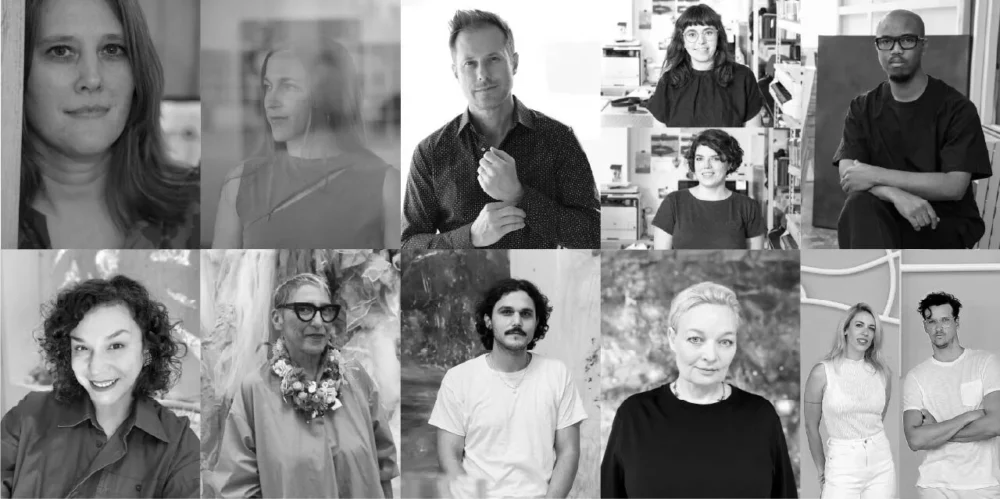
Her artistic universe exists somewhere between Celtic mythology, Jungian psychology, medieval alchemy, and Mexican magical traditions. Carrington’s work proposes that identity itself is fluid, transformative, and deeply connected to invisible forces operating beneath rational consciousness.

Kati Horna: Photography, Exile, and the Surreal Everyday

If Varo and Carrington constructed dream worlds through painting, Kati Horna approached surrealism through the lens of photography. Born in Hungary in 1912, Horna documented the violence of the Spanish Civil War alongside photographers such as Robert Capa and Gerda Taro before eventually fleeing to Mexico after the Nazi occupation of Europe.

Her photography occupies a unique space between documentary realism and poetic surrealism. Horna understood that the uncanny already existed within ordinary life. Through shadows, fragmented spaces, masks, symbolic objects, and theatrical compositions, she transformed photography into a psychological and philosophical medium.

Unlike the heroic narratives often associated with war photography, Horna focused on vulnerability, displacement, domesticity, and emotional tension. In Mexico, her camera captured not only social realities, but also the magical atmosphere embedded within everyday existence.

Her collaborations and friendships with Varo and Carrington helped preserve the memory of this extraordinary creative circle. Through Horna’s photographs, the mythology surrounding these women continues to survive visually and historically.

The Feminine Counter-Surrealism

What makes these three artists historically radical is that they transformed surrealism from within. Male surrealists frequently positioned women as symbols of irrationality, erotic mystery, or unconscious desire. Varo, Carrington, and Horna rejected this passive role entirely.

Instead, they became creators of symbolic systems themselves.

Their works explored:

  • occult knowledge,
  • transformation,
  • female autonomy,
  • exile,
  • spiritual rebirth,
  • mythology,
  • and the hidden structures of reality.

The “witch” metaphor surrounding them reflects this symbolic power. The witch historically represents forbidden knowledge, intuition, resistance, and female independence — qualities deeply embedded within their artistic practices.
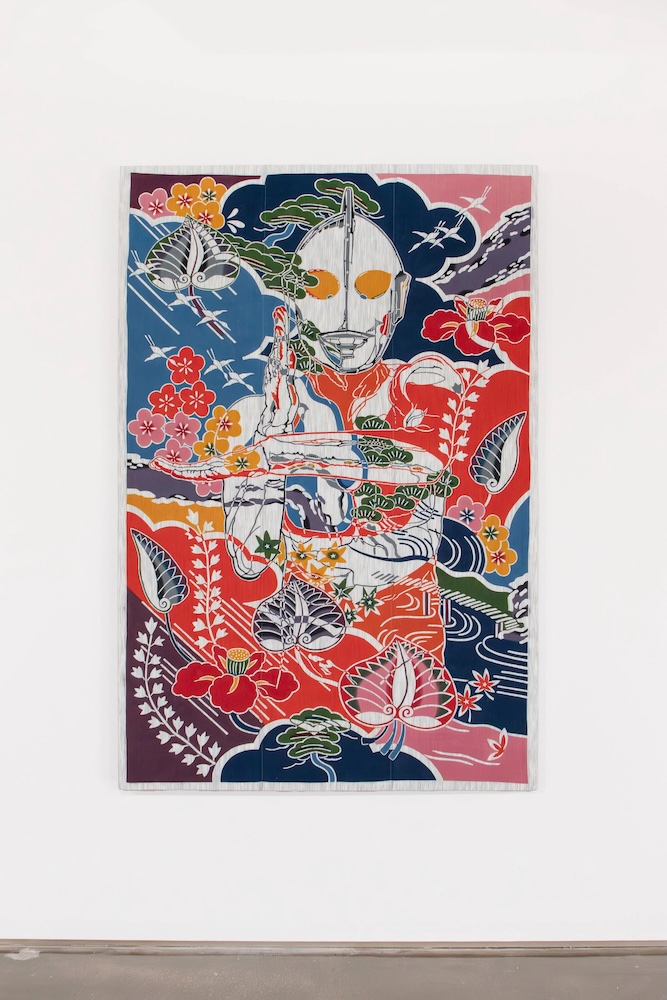
Mexico as Sacred Territory

Mexico was not merely a backdrop to their work; it became an active force within their artistic evolution. The country’s relationship to death, ritual, spirituality, indigenous cosmologies, and magical realism offered these women an alternative intellectual framework to Western rationalism.

Within Mexico, they discovered a society where mythology and daily life often coexist naturally. This cultural atmosphere allowed their surrealism to evolve beyond European psychoanalysis into something more mystical, symbolic, and spiritually expansive.

Legacy

Today, Remedios Varo, Leonora Carrington, and Kati Horna are recognized not simply as women within surrealism, but as artists who fundamentally transformed the movement itself. Their works continue to resonate because they speak to contemporary questions surrounding identity, displacement, feminism, spirituality, ecology, and imagination.

Together, they created a visual language where art becomes ritual, transformation, and metaphysical inquiry. Their friendship demonstrates that artistic communities are capable of generating not only creative innovation, but also emotional survival during periods of historical catastrophe.

They were not witches in the literal sense.
Yet through painting, photography, symbolism, and imagination, they practiced a different kind of magic — one capable of transforming exile into myth and suffering into visionary creation.

What We Carry by Yuken Teruya

Ultraman by Yuken Teruya

Exhibition What We Carry by Yuken Teruya

Yuken Teruya’s latest exhibition, What We Carry, presented at Piero Atchugarry Gallery from May 23 through July 25, 2026, unfolds as a deeply meditative elegy on memory, inheritance, and survival. Returning to Miami for his second solo exhibition, the Okinawan-born artist expands his longstanding exploration of fragility and transformation through an extraordinary body of work that bridges sculpture, stencil, and traditional Okinawan Bingata dyed textiles. Yet beyond the formal elegance that has long distinguished Teruya’s practice lies a profound emotional and political excavation of Okinawa’s traumatic wartime history and its enduring psychic aftermath.

Last night’s opening revealed an exhibition that is less concerned with historical representation than with the invisible residue of history itself—how violence is transmitted through gesture, silence, and material memory. Teruya has long been recognized for transforming humble materials such as paper shopping bags, toilet paper rolls, and found objects into poetic meditations on ecology and displacement. In What We Carry, however, these material investigations acquire an even greater emotional density. The works operate as vessels of remembrance, carrying within them the spectral presence of lives interrupted, erased, or forever altered by war.

At the center of the exhibition are the fictional protagonists Seiken and Shizuko, figures inspired by the artist’s own lineage. They are not portrayed directly as portrait subjects, but rather emerge through traces, absences, and symbolic forms dispersed throughout the exhibition. Their imagined lives become conduits through which Teruya reflects on intergenerational trauma and the quiet endurance of Okinawan identity. In this sense, the exhibition functions almost cinematically: visitors move through fragmented narratives where memory appears in fleeting gestures rather than linear storytelling.

Particularly striking is the new series Break the Curse, in which the stencil becomes both a conceptual and material strategy. Teruya transforms the stencil into an instrument of concealment and revelation, echoing the intricate layering processes of traditional Bingata dyeing. Across delicately worked surfaces, silhouettes of birds, ruptured landscapes, and dissolving architectures emerge like apparitions suspended between destruction and renewal. The recurring imagery of flight suggests both escape and transcendence, while fractured forms evoke the violence inflicted upon Okinawa during World War II—a history too often marginalized within broader narratives of the Pacific War.

What distinguishes Teruya’s work is his refusal to aestheticize trauma while simultaneously insisting upon beauty as a form of resistance. The exhibition is permeated by a remarkable stillness. Rather than dramatizing suffering, Teruya constructs spaces of quiet contemplation where grief is carried softly, almost ceremonially. This restraint grants the work extraordinary emotional power. The viewer is invited not merely to witness history, but to inhabit its lingering echoes.

The Bingata textiles are among the exhibition’s most compelling elements. Traditionally associated with Okinawan cultural identity and ceremonial dress, the fabrics become charged political surfaces in Teruya’s hands. Their luminous colors and intricate patterns hold within them a tension between cultural continuity and historical rupture. Here, craft is not decorative—it becomes an archive of survival.

Throughout What We Carry, Teruya demonstrates a rare ability to merge personal narrative with collective memory. His work resists fixed categories of sculpture, installation, or textile art; instead, it occupies a liminal territory where material, history, and spirit converge. The exhibition asks urgent questions about what survives catastrophe and how memory is transmitted across generations—not only through stories, but through objects, rituals, and inherited silences.

Ultimately, What We Carry is an exhibition about endurance. Seiken and Shizuko embody not only the tragedy of Okinawa’s past but also the resilience carried forward by those who continue to live in the shadow of historical violence. Teruya reminds us that history is never fully past; it persists in fragments, in breath, in the fragile gestures we carry with us. In an era marked by global displacement and renewed geopolitical anxieties, his work feels both deeply personal and universally resonant.

With remarkable sensitivity and formal precision, Yuken Teruya has created one of the most poignant exhibitions currently on view in Miami—an exhibition that lingers long after leaving the gallery, asking viewers to become caretakers of memory themselves.

Curatorial Text

What We Carry
Yuken Teruya

Japanese artist Yuken Teruya returns to Miami for his second solo exhibition, What We Carry, featuring new works spanning sculpture, stencils, and traditional Okinawan Bingata dyed fabrics. Together, these works reflect on the history of Okinawa during World War II and imagine a future seen through the eyes of two fictional protagonists: Seiken and Shizuko.

Born in 1973 in Okinawa, Japan, Teruya is widely known for his meticulous and poetic paper sculptures that transform everyday materials into intricate meditations on nature, consumption, and globalization. Living and working between Berlin and Okinawa, for What We Carry he turns his attention to the Battle of Okinawa (April 1 – June 22, 1945)—one of the largest and deadliest battles of the Pacific War. After weeks of brutal fighting, Japanese defenses collapsed. Many soldiers and civilians alike chose death over surrender. An estimated 100,000 Japanese soldiers were killed, and well over 100,000 Okinawan civilians perished, caught in crossfire, coerced into mass suicides, or killed during combat, making this one of the most devastating chapters of the entire war—it is said that one in four Okinawans were killed in the battle.

The exhibition unfolds around two central figures drawn from the artist’s own family history. Seiken, a gentle and imaginative boy, pays homage to Teruya’s paternal grandfather. Seiken never made it to the battlefield, having lost one leg to the bite of a habu snake, the imperial army had no use for him. The shame of that exclusion stayed with him, quiet and heavy, long after the fighting began. And yet survival found him anyway: when the battle finally reached his door, it was Fumiko, his young wife, who carried him on her back through the chaos, the two of them fleeing together through a war he had been told was not his to fight.

Throughout the exhibition, Seiken is depicted with his eyes closed—not in defeat, but in inward vision, as though navigating survival through imagination and feeling rather than sight. Shizuko, the second figure, is inspired by Teruya’s great aunt. Born in Hawaii, she was a second generation Okinawan immigrant who later returned to Okinawa and met her untimely death during the war. A member of the Zuisen Student Corps, she served alongside the Japanese military and was killed at just 17 years old just two weeks before the battle drew to its close. They say she ran like the wind, her presence as ethereal and fleeting as a passing breeze.

Central to the exhibition is Break the Curse, Teruya’s newest series. Its title, and the figures of Seiken and Shizuko extend beyond this exhibition, finding their roots in Teruya’s debut stage production, The Magic Flute (2025), a work inspired by Mozart and Schikaneder’s original opera. Transplanted into the visual language of What We Carry, Seiken’s story offers what the original opera, with its tendency toward binary oppositions of light and dark, reason and instinct, does not: a third possibility.

His is a perspective that refuses the question of whether strength or logic is truly right, and finds its answer instead in something less easily categorized: the power of imagination sustained within limitation, and the will to move forward carried not on one’s own two legs, but on the love and endurance of another. Here, Seiken’s missing leg carries layered symbolic weight: the lost limb stands for the grief and psychic rupture of Okinawa’s history, while a prosthetic leg represents the long reach of American military presence and technology on the island—an occupation whose influence has never fully lifted.

For Teruya, both figures embody not only the tragedy of Okinawa’s past but also its enduring legacy: the wounds of war carried quietly across generations, alongside the quiet courage and grace of those who bore them. It is this dual inheritance, of scar and of spirit, that animates the entire body of work on view.

In the works Geronimo and Ultraman, Teruya reclaims the traditional dyeing technique native to the Ryukyu Kingdom (1429–1879), the island chain now known as Okinawa. Dating back to at least the 15th century and historically reserved for the garments of Okinawan royalty and nobility, Bingata is one of Japan’s most distinctive and storied textile arts imbued with cultural and political influence by way of its form and colors.

Its production is an exacting, multi-layered process: artisans begin by stretching fabric, traditionally silk or cotton, across a flat board, then apply hand-cut paper stencils (known as katagami) to the surface. Pigments are carefully pushed through the stencil using a spatula or brush, building up dense fields of color across intricate motifs of flowers, birds, waves, and foliage. After each layer of dye is applied, the fabric is fixed with a soybean paste resist (nori) to prevent colors from bleeding, and the process is repeated, stencil by stencil, color by color, until the composition achieves its characteristic vibrancy and depth.

For Teruya, the Bingata process is not merely a cultural reference but a conceptual mirror. He has long been drawn to the power of the stencil as a tool, the way a single cut-out shape can simultaneously conceal and reveal, define an edge, or articulate absence as succinctly as presence. The stencil, in his hands, carries the same tension that runs through the stories of Seiken and Shizuko: it is a form that holds something back in order to let something else through.

The companion series B0 extends this inquiry through new works that draw more directly on classic Bingata motifs, rendered in the monochrome palette and physicality that characterize the Breaking the Curse series, where charcoal and shadow replace the technique’s traditional vibrancy.

This tension between mark and void, impression and absence, finds its fullest expression in the pallet works. Using stencils and black charcoal dust pressed onto raw wooden pallets, Teruya punctuates rough industrial surfaces with his signature symbolic vocabulary: birds, balloons, fighter jets, and parachuting troopers. The juxtaposition is deliberate. Symbols of lightness and freedom, birds ascending, balloons drifting upward, are set against the machinery of war and occupation, the fighter jets and falling figures that shadow Okinawa’s history.

The stencil here, like the Bingata katagami, becomes a portal: through its cut-out form, images of hope press through the dark ground. Just as Shizuko carried the wind in her stride and Seiken carried his survival in someone else’s arms, these works insist that we carry both the wounds and the wonder of those who came before us and that we go on being their storytellers, so that the magic never fades away.

About The Artist

Yuken Teruya

Born in Okinawa in 1973 and currently based in Berlin, Yuken Teruya received his MFA from the School of Visual Arts in 2001. Working between Berlin and Okinawa, his practice is rooted in a sensitive engagement with material, memory, and place.

Using everyday objects as his primary medium, Teruya employs meticulous and delicate techniques to transform the ordinary into poetic reflections on mass consumerism, globalization, environmental fragility, and the systems of value that shape contemporary life. His work often reveals what is hidden in plain sight, inviting a reconsideration of the overlooked structures that underpin our shared reality.

Recent institutional highlights include Yuken Teruya: Okinawa Heavy Pop (2023) at the Okinawa Prefectural Museum & Art Museum and Yuken Teruya: On Okinawa / Humboldt Lab (2014–15) at the Museum of Ethnology and the Museum of Asian Art Berlin. Since 2024, his first Bingata-dyed work has been on view at the British Museum. In 2025, he served as General Director of the Okinawan production of The Magic Flute, presented by the Naha Arts and Culture Theatre.

Teruya’s work has been included in major international exhibitions such as the Guangzhou Triennial, Bangkok Art Biennale, Shanghai Biennale, and Japanorama (2017) at the Centre Pompidou-Metz. Earlier presentations include Who Translates the World? (2015) at the 21st Century Museum of Contemporary Art, Kanazawa, Greater New York 2005 at MoMA PS1, and the Yokohama Triennale. 

WOPHA RESEARCH FELLOWSHIP

2026 WOPHA Research Fellowship Program

WOPHA RESEARCH FELLOWSHIP

The WOPHA Research Fellowship supports two exemplary research initiatives by emerging and established authors examining themes related to women and non-binary voices in photography.

The program facilitates the writing of scholarly essays that engage with both primary and secondary sources. Through this fellowship, WOPHA aims to support authors by funding the production of original essays while also providing opportunities for mentorship, networking, and publication of innovative scholarship focused on women and non-binary photographers.

The 2025–2026 WOPHA Research Fellowship is supported by the Pérez CreARTE Grant Program by The Jorge M. Pérez Family Foundation at The Miami Foundation and The Betsy Hotel.


2026 WOPHA RESEARCH FELLOWS

Lauren Baccus
Lauren Baccus
(347) 859 5157
[email protected]
Miami, Florida

Lauren Baccus is a Miami-based writer and researcher whose work centers on arts education, contemporary art, and Caribbean visual culture. Her practice foregrounds critical inquiry, close visual analysis, and community-grounded scholarship, with a particular interest in how images shape narratives of identity, memory, and belonging within the Caribbean and its diasporas.

Drawing on experience across museums, cultural institutions, and independent projects, Lauren develops research-driven essays, lectures, and public programs that make complex ideas accessible to broad audiences while remaining grounded in rigorous scholarship.

Her ongoing research explores the intersections of art, identity, performance, and material culture in contemporary Caribbean art, informing both her writing and her curatorial and educational practice.

Project Title
Intimate Archives and Black Feminist Memory

Project Description
This research and essay positions Caribbean women’s photography as a practice of intimate archiving and Black feminist memory work, centering images that hold family, kinship, and everyday life against the erasures of official history. The project asks: How do Caribbean women’s photographic archives re-script the visual language of Caribbean family, migration, and belonging beyond tourist and colonial images? Focusing on photographers and projects across the Caribbean and its diasporas, the essay will examine family albums, domestic interiors, ritual practices, queer kinship, and scenes of everyday care. Core case studies will include Widline Cadet’s lens-based work on Haitian diasporic memory and intimacy, Samantha Box’s photographic and collaged family histories that reframe Caribbean diasporic belonging, and Nathyfa Michel’s use of personal and archival imagery to think through Caribbean memory and futurity. These artists will be read alongside women-led Miami memory initiatives such as Black Miami-Dade, whose community archiving practices foreground Black, Caribbean, and Afro-diasporic life in South Florida.

The project will read these visual archives through Black feminist thinkers of the archive, care, and the everyday (such as Saidiya Hartman, Tina Campt, and Omise’eke Tinsley), alongside Caribbean scholars of memory and home. Methodologically, it will combine close visual analysis with attention to photographic circulation and use: how images are held, shared, displayed, or digitized within families and community archives.

Miami functions as a crucial site and comparative frame, linking Caribbean family photography and studio practices to diasporic archives and memory projects rooted in the city. During the residency, research in local collections, community history initiatives, and conversations with women leading memory work in Miami will deepen the project’s understanding of how Caribbean and Black Miami archives intersect. Ultimately, the essay aims to show how these photographic practices not only preserve memory but actively imagine alternative genealogies and futures for Caribbean and diasporic communities.

Cristina Pardo Porto
(929) 334 1802
[email protected]
Long Island City, NY

Cristina E. Pardo Porto is a scholar of Latinx and Latin American art and visual culture specializing in photography. She holds a PhD from the Graduate Center, CUNY, and is an assistant professor at Syracuse University. Her research examines the intersections of historical archives, race, gender, migration, and the environment in relation to Central America and the Caribbean. Her current book project offers a decolonial history of photography from the contemporary perspective of diasporic artists. Recent curatorial projects include the exhibition Joiri Minaya: Unseeing the Tropics at the Syracuse University Art Museum (Spring 2025). She is the coeditor of Plants and Animals in Latin American Cultural Production (University of Florida Press) and two special issues of the journal Istmo, both titled Photography in, on, and from Central America. Her scholarly work includes published and forthcoming articles on art photography in Art Journal, Arizona Journal of Hispanic Cultural Studies, Hispanic Review, and MLN. Pardo Porto was the 2023–24 Research Fellow at the Syracuse University Humanities Center and a 2025 Visiting Fellow at the Bard Graduate Center.

Project Title
Caribbean Photography’s Material Pasts and Presents

Project Description
I will advance my book Latent Photographies, which reframes the history of photography through contemporary Caribbean and Central American artists — women and queer photographers of Afro-, Asian-, and Indigenous descent working across U.S.-based diasporas. The book examines how these artists repurpose early photographic processes to critique the racialized, gendered, and imperial logics embedded in the medium’s canonical historiography. It demonstrates that so-called “obsolete” analogue practices continue to shape the political and affective stakes of image-making today.

Contemporary photographers studied include Felli Maynard (Colombia/Panama/New Orleans/NYC); Juana Valdés (Cuba/Miami/Massachusetts); Ada DelPilar (Puerto Rico); Felix Quintana (El Salvador/LA); Lissy Mineo (Dominican Republic/NYC); Giana DeDier (Panama); Joiri Minaya (Dominican Republic/NYC); Felix Gonzalez-Torres (Cuba); Erika Morillo (Dominican Republic/NJ); Gabrielle Báez (Puerto Rico); and María Magdalena Campos-Pons (Cuba/Nashville). Their practices revisit wet-plate collodion portraiture, cyanotypes, archival postcards, reactivations of family albums, and Polaroid compositions. By tracing how these works echo and challenge photography’s material past, the project foregrounds decolonial, feminist, and diasporic methodologies that unsettle Anglo- and Eurocentric narratives of photographic history while addressing questions of race, gender, migration, and cultural memory. The project argues that embedded within photography’s past lies a latent potential to reimagine the medium as a tool for visual justice.

As a fellow, I will complete the chapter “The Cyanotype: On Documenting” and draft the Epilogue. The chapter examines photography’s historical ties to extraction, beginning with Anna Atkins’s British and Foreign Ferns (1853), which used specimens from Jamaican plantations, to demonstrate the cyanotype’s entanglement with colonial documentation. The chapter centers works by Valdés, Mineo, Quintana, and DelPilar, whose practices challenge this legacy through anti-colonial mappings of geography, ecology, and infrastructure. The Epilogue concludes with Campos-Pons’s Polaroids, showing how their materiality summons anti-racist memory and Afro-diasporic spirituality, modeling photography as a decolonial feminist practice rooted in analogue nostalgia and unifying the book’s central themes.

Page 1 of 292
1 2 3 292