Home Blog Page 2

opa projects Presents In Three Movements

opa projects Presents In Three Movements

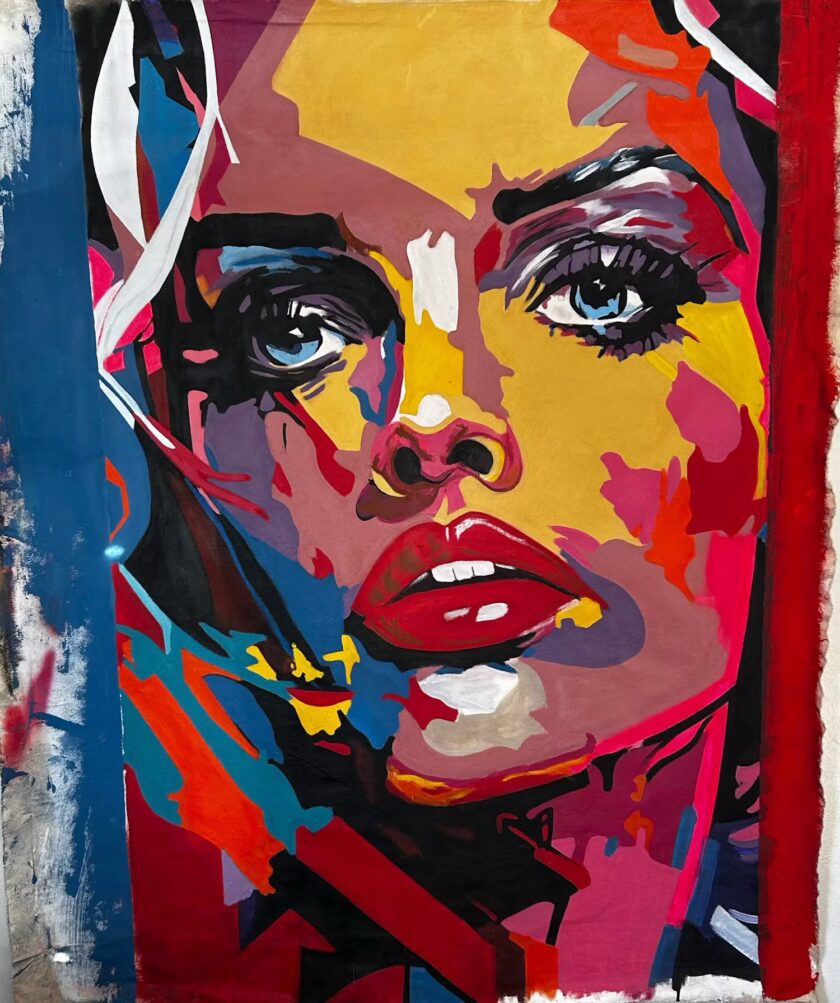
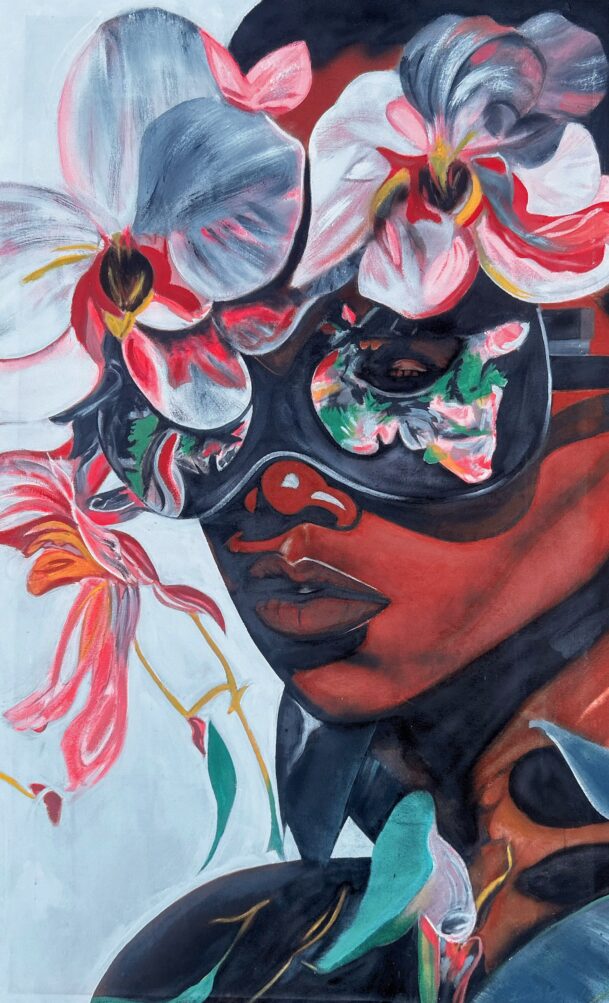
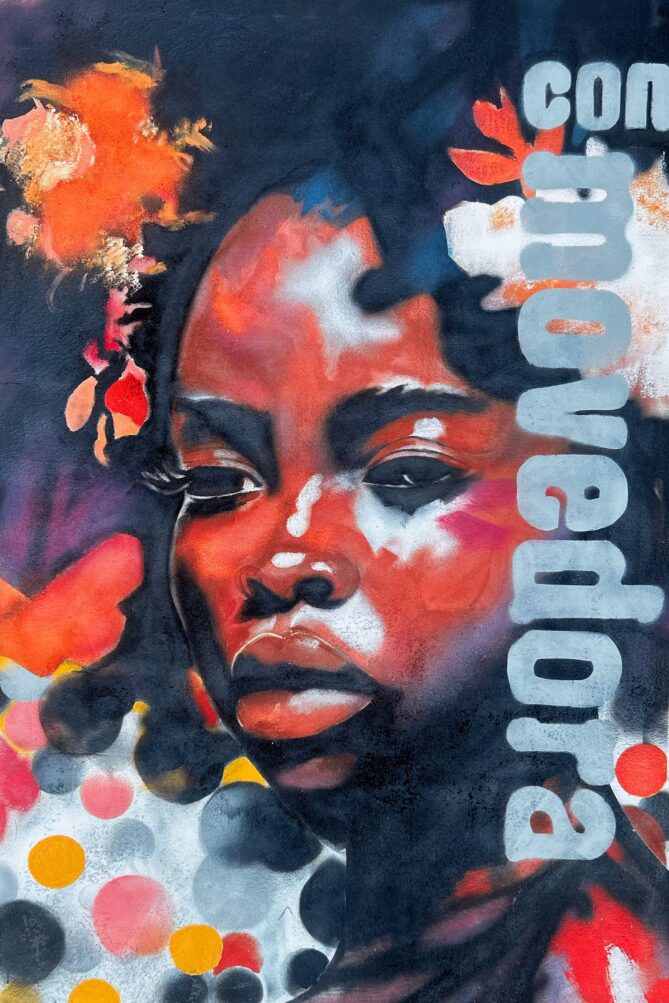
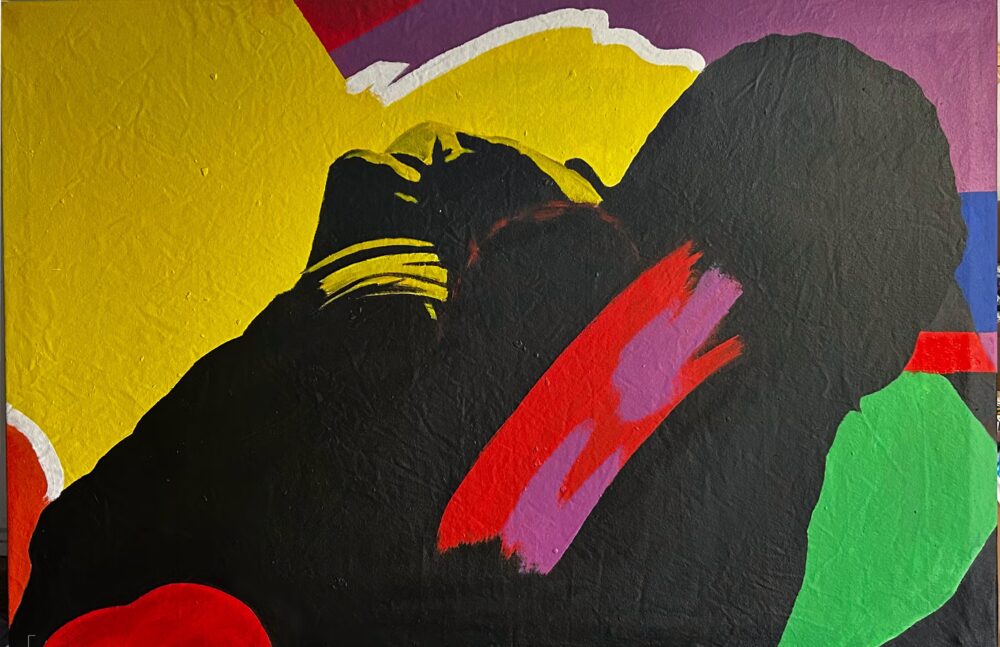
opa projects Presents In Three Movements — A Group Exhibition Featuring Douglas Kneese, Murray Clarke, and Emma Stone Johnson.

Miami, FL — May 11, 2026 — opa projects is pleased to present In Three Movements, a group exhibition featuring Douglas Kneese, Murray Clarke, and Emma Stone Johnson.

Structured as a sequence of distinct presentations, the exhibition unfolds across three spaces, each dedicated to a single artist. Rather than establishing a direct dialogue, the exhibition emphasizes progression, allowing each practice to be experienced on its own terms while contributing to a larger rhythm.

opa projects Presents In Three Movements

Kneese’s paintings foreground physicality and gesture, building dense surfaces where fragments of imagery emerge within fields of movement. Clarke’s work shifts the focus toward precision, presenting hyperreal depictions of garments that oscillate between familiarity and distance. Johnson’s paintings offer a more atmospheric experience, unfolding as immersive environments that resist fixed interpretation.

Together, these three approaches create a progression of visual and perceptual experiences. Each movement introduces a distinct tempo, material language, and way of engaging the viewer.

opa projects Presents In Three Movements

In Three Movements

Group Exhibition

From May 28, 2026
opa projects
7622 NE 4th Ct
Miami, FL 33138

A Distant Blue 

Blanco, installation view. Rubén Darío Park, AIM BIENNIAL 2023–24 

A Distant Blue 

By Sophie Bonet

There is a particular blue that appears at the edge of sight, a color that seems to belong to places slightly out of reach. Rebecca Solnit calls this “the blue of distance.”¹ It is not only about where we are or are not, but about the way distance settles in the body—how longing and perception come together, forming the space between here and elsewhere. There is something about this blue that resists immediate naming. It is sensed before it is fully articulated, registering at a level that precedes language.

A Distant Blue unfolds within this condition. The exhibition does not frame displacement as a fixed narrative. It moves across memory and separation, along the contours of place and perception. In conversation, Marisa Tellería described this as a rupture—“one that begins at the level of the self and then reverberates across everything that follows.” What emerges isn’t a resolved account of exile, but an ongoing process, held between what can be reached and what slips away.

This condition is shaped by sociopolitical realities—borders, the regulation of movement, and the denial of return. As a Nicaraguan artist, it’s impossible to separate the work from this context. Since 2018, Nicaragua has undergone a period of intensified repression, marked by the criminalization of dissent, the persecution of opposition, and the forced exile of citizens, many of whom have been stripped of their nationality. Within this context, displacement is not a matter of choice. It settles in over time, altering the patterns of individual lives and eventually, the fabric of entire communities.

Rather than depicting these conditions directly, Tellería works through material and perceptual strategies. The exhibition is structured around a set of elements—sky, soil, border, map—that register different relationships to territory: what can be seen, claimed, crossed, remembered, and what remains unreachable.

The sky appears first, functioning as both an entry point and framework. Unlike land, it cannot be owned or divided, yet it is not neutral. In Tellería’s work, the sky is shaped by memory, by color, and by the histories it carries. Blue is not simply atmospheric. It recalls Nicaragua’s flag—blue and white—and the meanings those colors have carried in recent years. After the 2018 protests, their use was penalized, transforming a national symbol into a marker of dissent. As Tellería notes, color does not remain only visual. It is felt in the body—held as tension, as risk. 

Before the sky begins to move through projection or disperse across material, it appears in a more fixed form in a series of photographic works, including Untitled (skies, various locations), 2003. These seven images are drawn from different places the artist has lived—geographically distinct contexts that nonetheless converge through the act of looking upward. The skies are not anonymous; they carry the specificity of place even as they appear continuous. Each image isolates a portion of sky at a particular moment—variations of light, density, and atmosphere that, at first glance, seem similar, almost interchangeable. Some appear open and diffused, others compressed, clouded, or weighted.

Untitled (Skies, various locations), 2003

At first glance, a photograph seems to hold a moment still. Yet the sky does not settle. It extends past the edges, refusing to be tamed. Here, what appears is not a single image, but a set of changing conditions—light moving through and places traced only by what passes overhead. The photographs gather both presence and absence: skies from punctual locations, each unique, yet never fully contained by the place where they were taken.

The exhibition holds this tension without resolving it: one sky that remains continuous, and a ground that does not. A space above that stays open, and a territory below that is fractured, restricted, and contested.

This condition comes into focus in the central video installation, One Sky (2026). Participants—both inside and outside Nicaragua—record the sky above them. The images are gathered across distance and time, then brought together through a multi-channel projection. They begin to align into a shared horizon, though not seamlessly; different atmospheres remain visible as the images move across one another. The gesture is simple. But it holds weight. What it makes possible is a form of encounter that can only take place within the work—“a way of doing, symbolically, what cannot happen otherwise.”

Video still from multi-channel installation, Un Cielo/One Sky, 2026

The images are made at different times of day, in different weather conditions, and within different rhythms of daily life. Some remain still, while others move slightly. They don’t fully line up. That misalignment stays visible and eventually becomes an integral part of the work. The images don’t come together into a single, unified view. Instead, they create a sense of proximity—a brief coming together that makes distance even more noticeable. Identity begins to take shape through that process, as the images align and fall out of sync again.

Three large-scale wall pieces—Pink Interval, Gray Interval, and Nocturne (2026)—extend this condition into material form. Built from layered tulle and scrim stretched over wooden support, they rely on the physical qualities of these fabrics—their permeability, tension, and the way they catch and release light.

Color is dispersed across multiple translucent surfaces, so it seems to hover rather than settle. As one moves, opacity gives way to transparency; textures dissolve and then come back into view. Tellería often describes these works as sensorial paintings that emerge through light and color. The key is a slower kind of looking—one that stays with them long enough for these transitions to become visible.

Seeing them in person, the differences between the works become more pronounced. One holds a softer range of pinks and blues–lighter, closer to the atmosphere of a late afternoon. Another feels more compressed and clouded, where the blue is partially obscured. A third deepens into darker, saturated blues, closer to the moment just before night. 

They are not literal depictions of time, but they move through it; reading less as images to be decoded and more as changing atmospheric conditions—something you notice gradually, as your eyes adjust.

Installation view, Pink Interval, 2026

Tellería describes these works as a way of “recreating the sensation of looking,” rather than representing what is seen. The difference becomes clearer in front of the work. The sky is never fully fixed; it’s approached, but not entirely reached.

The layering of soft materials reads as a gradual unfolding—memory settling over what is seen, and perceptual presence over surface itself. What comes forward is less a static view than a field in motion, where presence and absence remain in tension.

This attention to perception moves through the body. The exhibition doesn’t guide so much as place us, viewers, in relation to the work. Spacing invites pause, and proximity becomes part of the experience. Looking slows and becomes physical—it asks for small adjustments.

As Maurice Merleau-Ponty reminds us, the body is not separate from perception; it is how we encounter the world.² Here, that encounter unfolds quietly, without instruction.

Detail, Nocturne, 2026 

If the sky reads as continuous, the maps begin to unsettle it. Des-tierra II (2026) brings together twenty-one silhouettes of Nicaragua, each drawn from memory by Nicaraguans living abroad. These recollections are transferred onto silk and mounted on wooden panels.

The differences show up right away. Some are compressed, others feel uneven. They don’t settle into a single, stable outline. The work moves away from geographic accuracy and focuses instead on how land is remembered. These outlines don’t match the map exactly—they shift through lived experience. Proportions change, edges blur. Some areas stay more defined, while others start to fade.

At stake here is not only how a place is remembered, but how it is defined in the first place. What makes a map valid? Maps are often treated as stable and authoritative, yet they are shaped by decisions—about borders, scale, and what is included or left out. If a map is already an interpretation of territory—an abstraction shaped by power, measurement, and convention—then the distance between it and one drawn from memory begins to narrow.

As Gloria Anzaldúa writes, the border is not only a line but a lived condition—something inscribed in the body as much as it is imposed on the land.³ The work does not resolve these questions, but it makes them visible.

Installation view, Des-tierra, 2023

Seen together, the silhouettes operate less as maps and more as traces. They mark how places are carried in memory. The silk holds those variations without correcting them. Together, they suggest a kind of cartography of displacement, reflecting not only where people come from but also how place is remembered and reassembled over time.

The question is less about accuracy and more about what kind of truth these forms hold. These drawings read less like maps and more like recollections—geographies shaped by what is felt or lost. They stay closer to lived experience than to official borders, because homeland here isn’t fixed but carried and adjusted through memory and distance.

If the maps loosen the authority of geography, the works that follow bring its consequences into focus. Blanco (2023)  presents 316 passport-sized notebooks, each marked with a single fingerprint pressed in blue ink onto paper. The repetition is precise, almost methodical. Each notebook corresponds to a Nicaraguan citizen stripped of their nationality and forcibly exiled to the United States. Installed in Rubén Darío Park in Miami, as part of the AIM BIENNIAL 2023–24—a symbolic site for the Nicaraguan diaspora—the work moves beyond the gallery into a shared civic space.

Blanco, installation view. Rubén Darío Park, AIM BIENNIAL 2023–24 

The passport—typically a document tied to identity and mobility—is rendered inert. Its function breaks down here. What is meant to allow movement instead marks its restriction. Identity, in this case, is no longer something self-held or assumed, but something administered, revoked, or withheld. These individuals have been removed from the civil registry. In bureaucratic terms, they no longer exist within the nation.

The openness of the sky gives way to something contained, regulated. The notebooks remain blank, but their silence carries weight. The title, Blanco, points to both absence and erasure, while also recalling the blue and white of Nicaragua’s flag. The work echoes Rubén Darío’s Azul and his line, “If the homeland is small, one dreams it big,” holding that tension between imagination and constraint.

The fingerprint does not restore citizenship, but it resists disappearance. It remains as a trace—biometric, physical, undeniable—anchoring identity in the body when it has been stripped from the state. Across the installation, these marks accumulate into more than a record of loss. They point to the presence and the persistence of identity even when mobility, belonging, and recognition are denied.

Process image, Latitud Norte, 2026

Nearby, Latitud Norte (2026) cuts across the space at an angle. A line of cast glass runs along the floor, its surface absorbing and refracting light as it moves through the gallery. It is easy to miss at first—until it interrupts your path. The line is not neutral. It marks and references the Nicaragua–Honduras border, altering perception and proposing a way of navigating the space.

The work traces back to a moment when Tellería stood close to the border, encountering a division that appeared both arbitrary and absolute—“almost imperceptible, yet impenetrable.” That contradiction stays with the piece. The border can feel almost provisional, and still determine who crosses and who does not.

The piece is made through an elaborate casting process. The line starts as a clay form, then moves through a series of casts before reaching its final refractory shape. That form is filled with pieces of glass and fused in the kiln. The work comes together through these stages, each one shaping the last. It builds gradually, through accumulation rather than a single gesture.

This marks Tellería’s first time working with kiln-cast glass. Known for a more controlled and meticulous approach, here the material introduces a different condition. Glass does not fully submit to intention; it settles on its own terms during firing. The process requires a degree of surrender; an acceptance of outcomes that cannot be entirely predetermined. In this sense, the work also marks a shift in her practice, where her visual language expands through experimentation with materials that resist control.

Installation view, Latitud Norte, 2026

Glass changes how the work is read. It feels fragile, exposing a sense of vulnerability—maybe even our own in relation to it—but it also carries a quiet resilience. It holds a tension between breaking and holding, between what might disappear and what stays. The line is precise, but it doesn’t fully settle. Its presence depends on light, movement, and attention.

The final gesture, Don’t Forgetta (2026), returns to an intimate scale. A small glass container holds Nicaraguan soil, carried across distance by a friend. The material is raw, dense, and granular, composed of small stones and fragments that still retain the texture of the land.

After the immateriality of sky and projection, the work comes back to something concrete. The soil doesn’t stand in for the land; it points to its absence. It remains a palpable fragment—something that can be held when the rest cannot.

Don’t Forgetta, 2026

Throughout the exhibition, Tellería’s practice extends beyond the studio. Many of the works develop through exchanges with members of the diaspora—through drawings, documentation, and gestures that build over time. The work doesn’t fix identity. It gathers it gradually, through remembering, translating, and reworking what has been carried and shared across distance.

As Ocean Vuong writes, “What is a country but a life sentence?”⁴ The question stays with the work—not as a declaration, but as something that runs through it. Country reads as something both weighty and carried: in color, in memory, in documents that lose their function, and in gestures that attempt, however partially, to repair.

In A Distant Blue, things don’t settle into a single view. The sky seems to connect, but the ground doesn’t follow. The maps unfold depending on how they are remembered. The border persists. Tellería doesn’t try to resolve this. Instead, she makes it visible, bringing forward the complexity of these conditions, including the contradictions of exile—between places, between images, between what can be held and what cannot.

What the exhibition proposes is not a unified picture or a reconciled position, but a way of experiencing how these conditions are lived and embodied. Distance is not something abstract here. It shows up in fragments, in interruptions, in what doesn’t quite align. Identity, in turn, does not appear as fixed or complete, but as something in constant flux. It takes shape through that process—through what is carried, what shifts, and what continues to be negotiated over time.

Footnotes

This essay was developed through a series of studio visits and conversations with the artist Marisa Tellería between October 2025 and April 2026; all quotations are drawn from these exchanges.

  1. Rebecca Solnit, A Field Guide to Getting Lost (New York: Penguin Books, 2005).
  2. Maurice Merleau-Ponty, Phenomenology of Perception, trans. Colin Smith (London: Routledge, 2002).
  3. Gloria Anzaldúa, Borderlands/La Frontera: The New Mestiza, 4th ed. (San Francisco: Aunt Lute Books, 2012).
  4. Ocean Vuong, On Earth We’re Briefly Gorgeous (New York: Penguin Press, 2019).

Fig. 5

Installation view, Des-tierra, 2023

Fake AI, Real Sugar: Inside Samantha Salzinger’s Handmade Hyperreality

Fake AI, Real Sugar:

Fake AI, Real Sugar: Inside Samantha Salzinger’s Handmade Hyperreality

By Sophie Bonet

When I first encountered Samantha Salzinger’s Sugar Coated at MAD Arts in early spring, the installation did not announce itself through critique. It arrived through softness. Pink carpet, sweetness in the air, pastel colors, plush surfaces, and a seductive atmosphere that felt almost too easy to trust. The space was inviting, even tender, but something about it resisted comfort. The longer I stayed, the more the sweetness began to curdle.

At first glance, the exhibition feels playful, almost innocent. Candy-colored forests, melting confectionery forms, plush seating, projections, immersive environments — that feel somewhere between childhood fantasy and digital simulation. But the longer you spend with the work, the more another structure begins to emerge: collapse.

Nothing inside Sugar Coated remains stable for long.

Chocolate forms sink into sugary terrain while smiling creatures slowly melt into themselves. Some of the candy landscapes look like they are collapsing under invisible heat, or maybe just overstimulation. The installation keeps building on excess — sweetness, softness, color, texture — until the atmosphere begins to shift into something stranger. What first feels comforting eventually stops feeling entirely innocent.

Fake AI, Real Sugar:

That tension sits at the center of Salzinger’s practice.

“I’m attracted to beauty,” she told me during our conversation. “So I feel like I almost have to force myself to break it. The images that are just purely beautiful — those are the images that I end up throwing away. That tension is really important to me.”

Entirely built by hand, Salzinger’s environments mimic the visual language of digital rendering, advertising, and artificial simulation with surprising precision. Before learning about her process, I initially assumed parts of the work had been digitally generated. The surfaces felt too glossy, too cinematic, too hyperreal to belong entirely to physical space.

But nothing in Sugar Coated is accidental. The candy forests, collapsing animals, sugary textures, and immersive environments are sculpted, staged, lit, photographed, and filmed by hand.

“I build these for a specific lens,” Salzinger explained. “So I’m often looking through the camera as I’m building it. I can figure out how to create the depth and make them look like real places. I feel more like a mini filmmaker sometimes. I’m the set designer, the lighting director — all of those things too.”

That relationship between physical construction and artificial appearance becomes central to the work’s conceptual force. The installation constantly oscillates between handmade materiality and simulated reality.

Fake AI, Real Sugar:

“One of my biggest influences is Baudrillard’s Simulacra and Simulation,” she said. “For a while, I was calling my work fake AI because I was trying to simulate the simulation.”

The phrase lingered with me long after our conversation.

Fake AI.

At a moment when so much of our visual culture is shaped by generated imagery, algorithms, and synthetic aesthetics, Salzinger’s work moves in the opposite direction. Instead of using digital tools to imitate reality, she builds these environments entirely by hand until they begin to resemble something artificially produced. At times, the illusion becomes convincing enough that viewers begin questioning whether what they are looking at is actually handmade at all.

She recalled overhearing someone at a previous exhibition dismiss her work as AI-generated.

“They were looking at the image and said, ‘Oh, this is just AI.’ And honestly, I was flattered,” she laughed. “It made me think, okay, maybe I’m simulating the simulation.”

What makes Sugar Coated compelling is that the work never settles into a single critique. Salzinger is not simply condemning consumer culture from a critical distance. She repeatedly returns to the idea that she herself remains implicated within the systems she examines.

“I’m part of it,” she admitted. “I’m observing it more than I am standing outside of it.”

Fake AI, Real Sugar:

That honesty gives the work its complexity.

Sugar becomes less a literal material than a metaphorical structure — one capable of carrying ideas about desire, consumption, dopamine, comfort, and emotional compensation.

“Sugar is such an interesting metaphor because it’s so innocuous,” she explained. “It’s highly addictive. It’s in just about everything we eat. We give it to children as a treat and connect it to celebration and happiness. But underneath that surface there’s something else happening.”

The installation repeatedly cycles between craving and collapse. The looping video projection at the center of the exhibition feels less narrative than psychological—an atmosphere of perpetual searching in which pleasure can never fully stabilize.

“It’s about dopamine hits,” Salzinger said. “You’re searching for relief, for the next thing that makes you feel good. And then there’s saturation, collapse, and the loop starts again.”

Walking through the installation, I kept thinking about the contemporary rhythms of scrolling. The constant transition from one image to the next. The speed at which emotion, catastrophe, advertising, pleasure, and distraction now coexist within the same visual feed.

Salzinger spoke directly about this fragmentation.

“You can be scrolling and see a bomb that just went off, then an ad for face cream, then food, then another tragedy,” she said. “You shouldn’t be seeing all those things in the same thirty seconds.”

That disjointed visual logic permeates the exhibition. Sugar Coated behaves almost like a physical manifestation of digital overstimulation — seductive, excessive, immersive, and exhausting at the same time.

Even the materials themselves carry a strange sense of unsteadiness. Marshmallows, icing, candy, cereal, syrup — objects associated with comfort and innocence — begin to function as symbols of overproduction and emotional excess.

“There’s something both silly and sad about watching them collapse,” Salzinger said about the smiling lambs and confectionery creatures that populate the work.

The installation’s immersive environment intensifies that tension even further. Plush textures, sweetness in the air, soft surfaces, and the use of Baker-Miller pink — a color historically used in institutional settings to supposedly reduce aggression — create an atmosphere that initially feels calming and comforting. But the imagery unfolding inside the space keeps interrupting that sense of ease.

“What surprised me,” she admitted, “was people’s reactions to the space. I thought it would feel comforting, but then the imagery creates another emotional layer.”

That tension between comfort and unease may be one of the exhibition’s strongest achievements.

The work never abandons pleasure entirely. Instead, it asks what happens when pleasure becomes industrialized, aestheticized, and endlessly reproduced. What happens when consumption stops functioning as satisfaction and becomes a permanent condition?

Throughout our conversation, Salzinger repeatedly returned to ideas of instability, simulation, and emotional displacement. Although the work references consumer culture, advertising, digital aesthetics, and ecological anxiety, the installation’s emotional register feels deeply personal.

“There’s a lot about loss in the work for me,” she reflected at one point. “Things don’t last. Everything eventually disintegrates.”

That awareness of impermanence quietly structures the entire exhibition.

The melting forms are not catastrophic in a cinematic sense. The collapse unfolding inside Sugar Coated is slower, quieter, and perhaps more recognizable precisely because of that. At times, it resembles the emotional exhaustion of overstimulation, the fatigue of perpetual consumption, the anxiety of existing inside systems that no longer feel sustainable.

When I asked her what kind of collapse the work addresses — ecological, psychological, cultural — her answer was simple.

“All of those things.”

And perhaps that is why the exhibition lingers.

Not because it offers resolution, but because it refuses to.

The landscapes remain suspended somewhere between seduction and deterioration, innocence and artificiality, comfort and distress. Even the handmade quality of the work becomes difficult to fully trust. The viewer oscillates constantly between enchantment and awareness.

Toward the end of our conversation, I asked Salzinger what she hoped viewers might carry with them after leaving the installation.

“I guess I want people to question reality,” she said. “Even if they’re just questioning whether something is handmade or not. I think I personally question reality all the time — what’s real, what’s constructed, what’s being sold to us.”

That questioning becomes the exhibition’s lasting sensation.

Not a moral lesson. Not a definitive critique.

A destabilization.

Inside Sugar Coated, pleasure remains seductive, beauty remains irresistible, and collapse arrives slowly enough that we almost mistake it for comfort.

Sugar Coated by Samantha Salzinger is on view at MAD Arts, Dania Beach, FL, USA, through June 14, 2026.

*All images are courtesy of the artist. 

About the Artist

Samantha Salzinger is a multidisciplinary artist based in South Florida. Her work encompasses sculpture, photography, video, and installation, primarily through the creation of intricate, handcrafted dioramas. Drawing from traditions of landscape, theatrical staging, and contemporary image culture, she constructs hyperreal environments that blur the line between the artificial and the sublime.

Salzinger earned her MFA in Photography from Yale University and her BFA from Florida International University. Her work has received significant recognition, including the 2026 Ellies Creator Award from Oolite Arts and the 2025 Artist Innovation Grant from the Broward County Division of Cultural Affairs. She is also a three-time recipient of the South Florida Cultural Consortium Fellowship.

Her work is included in public and private collections, such as the Pérez Art Museum Miami, Young at Art Museum, Yale University, and the Girls’ Club Collection. In addition to her studio practice, Salzinger is a Professor and Chair of the Art Department at Palm Beach State College.

The Wisdom of the Stuck Artist: Hayao Miyazaki and the Ethics of Creative Movement

The Wisdom of the Stuck Artist: Hayao Miyazaki and the Ethics of Creative Movement

The Wisdom of the Stuck Artist: Hayao Miyazaki and the Ethics of Creative Movement

One of the greatest myths surrounding artistic creation is the belief that masterpieces emerge fully formed — complete visions descending upon the artist with clarity and certainty. For many visual artists, this illusion becomes psychologically devastating. The studio fills with unfinished sketches, fragmented concepts, disconnected images, abandoned canvases, and silent notebooks. Ideas accumulate, yet nothing materializes. The artist waits for the “perfect” concept, the complete narrative, the fully resolved vision before beginning. But that moment rarely arrives.

This condition — creative paralysis — is not the absence of talent. It is often the consequence of excessive self-consciousness and the fear of imperfection. The contemporary visual artist exists within a culture obsessed with finished products, visibility, and immediate coherence. In this environment, uncertainty becomes intolerable. Yet the history of art repeatedly demonstrates that creation rarely begins with certainty; it begins with fragments.

Hayao Miyazaki’s creative process offers a profound lesson for artists trapped within stagnation. Contrary to traditional expectations of narrative structure or conceptual planning, Miyazaki often begins not with a script or a complete story, but with isolated images — intuitive visual fragments without explanation or conclusion.

This gesture contains enormous philosophical significance for visual practice.

Miyazaki understands that the image itself thinks. The drawing is not the final result of thought; it is the mechanism through which thought emerges. Instead of waiting for complete understanding, he externalizes fragments immediately. A single sketch, an unfinished atmosphere, a loose gesture on paper becomes enough to initiate movement.

For the stuck visual artist, this represents a radical shift in consciousness. The problem is not the absence of ideas. The problem is the interruption of creative flow. Creativity behaves less like an object and more like energy — something that must circulate continuously or risk stagnation. The artist who endlessly stores concepts internally without materializing them creates psychological congestion. The imagination becomes overburdened by unrealized potential.

Miyazaki’s method proposes something deceptively simple yet profoundly transformative: stop waiting for completeness. Begin with the fragment.

A color combination.
A shape.
A texture.
A memory.
A body in motion.
A dream.
A visual tension that cannot yet be explained.

The act of externalizing incomplete thoughts restores circulation between imagination and matter. Once the hand begins moving, consciousness reorganizes itself around action rather than doubt. This is why many artists rediscover vitality not through inspiration, but through process itself.

Importantly, not every fragment must become a finished artwork. Contemporary culture often pressures artists to monetize, exhibit, or finalize every creative impulse. Yet many sketches, studies, collages, photographs, textile experiments, or sculptural fragments exist simply to clear psychic space for future work. They are not failures; they are pathways.

Miyazaki’s philosophy also dismantles the scarcity mindset that paralyzes many artists. Creative ideas are not finite resources that must be protected until the “right moment.” They are regenerative. The more the artist creates, the more creation becomes possible.

This principle aligns deeply with the history of artistic production. Picasso produced thousands of drawings. Louise Bourgeois filled notebooks obsessively. Cy Twombly embraced fragments and gestural incompletion. Agnes Martin understood repetition itself as meditation. Artistic wisdom does not emerge from perfection, but from sustained movement.

For the contemporary visual artist, the lesson is clear: creation must remain alive. The sketchbook, the studio wall, the unfinished material experiment — these are not secondary spaces. They are laboratories of consciousness where the work slowly reveals itself.

The artist does not need total clarity to begin. The image arrives before language. The gesture arrives before certainty. Often, the work already exists somewhere beneath consciousness, waiting only for the courage of movement to bring it into form.

The way out of creative paralysis is not through waiting.
It is through making.

A Journey to the Soul of Guna Yala

A Journey to the Soul of Guna Yala

Preview of the documentary “A Journey to the Soul of Guna Yala”

With an introduction by its film director, Stella Holmes

Sunday, June 14, 2026 
2:00 – 5:00 pm

Delray Beach, Florida – Stella Holmes is a documentary filmmaker, art historian, and collector whose work is guided by a lifelong belief in the power of art to bridge cultures and connect people.

She is the founder and president of The Brickellian, a documentary production company dedicated to exploring cross-cultural dialogue through art.

This documentary follows a University of Miami student returning to Panama’s Guna Yala Islands, a community of 360 islands striving to preserve its traditions. Central to the story are molas—handmade textiles that express Guna history and identity and are collected worldwide. The film explores the importance of preserving this art form and the challenges of protecting it from increasing commercial pressures.

Official Trailer: A Journey to the Soul of Guna Yala | Official Trailer | A Film by Stella Holmes

MoCAArt at the Annex
290 SE 2nd Avenue, Delray Beach, Florida 33444
Open by appointment Wed-Sat 12 noon to 5:00pm.

RSVP 
Email [email protected]. Or call 561-808-8587.

290 SE 2nd Avenue
Delray Beach, Florida 33444

“Manuel Chavajay: Xojowi ja qa tee ruachulew” (Mother Earth Dances)

Manuel Chavajay
Manuel Chavajay, Untitled (hay días que se acercan las montañas y los volcanes), 2025. Photo Bruno Lopes Courtesy of Pedro Cera

“Manuel Chavajay: Xojowi ja qa tee ruachulew” (Mother Earth Dances)

Apr 30 – Nov 22, 2026

Ground Floor

“Manuel Chavajay: Xojowi ja qa tee ruachulew” (Mother Earth Dances) is the first one-person institutional exhibition of the Tz’utujil Maya artist Manuel Chavajay (b. 1982, San Pedro La Laguna, Guatemala, where he lives). The exhibition presents eleven works produced over the past three years, including paintings made with marine oil and featuring traditional embroidery patterns depicting the landscape around Lake Atitlán, intervened earthenware pots, and remnants of site-specific performances. Together, the works focus on two important themes that have developed in Chavajay’s work: a growing concern over the increased pollution of Lake Atitlán in the Guatemalan Highlands, where the Tz’utujil live, and an ongoing meditation on the connection of the land to the cosmos, as understood in Tz’utujil ancestral knowledge.

Making Tz’utujil language and land a frequent reference in his work, Chavajay connects them to the complex history of Guatemala, its indigenous heritage, its incomplete and compressed modernization, and more recent efforts toward stability and development. Land—including Lake Atitlán—in the context of his work is understood not as a resource to extract or as an inert ground but as a core aspect of indigenous identity, tracing historical connections, cultural practices, and ancestral legacies. For Chavajay, the definition of land itself is capacious. Along with the physical territory, the artist is thinking about changes of light and season, cyclically reiterated omens and rhythms, as well as immaterial forces, not least those that take the shape of knowledge-bearing dreams.

Chavajay’s work has been presented at institutions such as El Museo del Barrio, New York; Centro Galego de Arte Contemporánea (CGAC), Santiago de Compostela; Casa del Lago UNAM, Mexico City; Manifesta 15, Barcelona; Institute for Studies on Latin American Art (ISLAA), New York; El Espacio 23, Miami; Kunsthalle Wien Museumplatz, Vienna; National Gallery of Canada, Ottawa; and the Museum of Contemporary Art Santa Barbara, California. He has also participated in a number of biennials, including the 35th São Paulo Biennial, Brazil; Bienal SIART, La Paz, Bolivia; the Curitiba Biennial of Contemporary Art, Paraná, Brazil; Bienal de Arte Paiz, Guatemala City, Guatemala; and the Bienal de Artes Visuales del Istmo Centroamericano (BAVIC), held across Guatemala, Nicaragua, Costa Rica, Panama, and El Salvador. Chavajay’s work is in the institutional collections of the Museo Nacional Centro de Arte Reina Sofía, Madrid; Fundación Ortiz Gurdián, León, Nicaragua; and the National Gallery of Canada, Ottawa, among others.

“Manuel Chavajay: Xojowi ja qa tee ruachulew” is presented by the Institute of Contemporary Art, Miami, and curated by Gean Moreno, Director of the Art + Research Center at ICA Miami.

Harmony Korine: Perfect Nonsense

Harmony Korine Perfect Nonsense
Installation view: Harmony Korine: Perfect Nonsense" at the Institute of Contemporary Art, Miami, "April 15-October 4, 2026" Photo: Chris Carter

Harmony Korine: Perfect Nonsense

Apr 15 – Oct 18, 2026

Special Exhibition / 3rd Floor

“Perfect Nonsense” is the first US museum survey for the legendary and multifaceted work of Harmony Korine The exhibition traces the full arc of Korine’s career, bringing together over 75 works and situating his practice within a broader continuum of image-making that collapses distinctions between cinema, contemporary art, and popular culture. 

Since entering the public consciousness at nineteen after writing the screenplay for the 1995 generation-defining feature Kids, Korine has been a leading filmmaker. He has continually expanded the language of cinema while redefining notions of the counterculture and exploring novel image-making technologies.

Simultaneously, Korine’s activities have crossed the boundaries of discipline and form, and this exhibition includes the expansive worlds of painting, photography, collage, zines, and drawing that he has created since adolescence. Most recently, Korine has vigorously pursued painting, exploring figuration and abstraction while restlessly experimenting with the technologies of image making, from photocopies to gaming engines. 

From his earliest works, Korine explored themes of the individual and the outsider through a clear-eyed view of class and poverty, celebrity and authenticity, and a fascination with the gothic dimensions of the American South. His perspective is deeply structured by the figure of the American teenager. Some of Korine’s earliest works feature childlike figures and writings, and often explore the coming-of-age genre and its complex unfoldings. These childlike and coming-of-age themes have evolved into a ghostly form he calls “Twitchy,” found in paintings that are produced by combining images captured on an iPhone with painterly techniques. In his films, characters often use avatars, with elaborate masks and new forms of language, to create unprecedented realities. Meanwhile, works from the “Fazer” (2015) and “Chex” (2011–14) series showcase Korine’s investigation of psychedelic effects and escape. Many of Korine’s most recent works, including the films Baby Invasion (2024) and Aggro Dr1ft (2023), demonstrate his pioneering inquiry into technology and its impact on everyday life and the future of images.

Korine has lived in Miami since 2015, where he founded the experimental media company EDGLRD. The city’s visual excess has deeply shaped his recent films and paintings, reframing the American landscape as a delirious and unstable field of images, invention, and myth.

Harmony Korine was born in Bolinas, California, in 1973, and grew up in Nashville, Tennessee. He shot his first film, Gummo, in 1997 and went on to create seven more films, including Mister Lonely (2007), Spring Breakers (2012), The Beach Bum (2019), and Julien Donkey-Boy (1999), among others. He has shot music videos for Rihanna, Sonic Youth, Will Oldham, Cat Power, and the Black Keys. Korine was the subject of a major exhibition at the Centre Pompidou, Paris (2017), and has exhibited at institutions worldwide, including the Stedelijk Museum voor Actuele Kunst (S.M.A.K.), Ghent, Belgium; Whitney Biennial, New York; CAPC Musée d’art contemporain de Bordeaux, France; Contemporary Art Gallery, Art Tower Mito, Japan; 50th Biennale di Venezia; Kunsthalle Düsseldorf, Germany; Swiss Institute, New York; Casino Luxembourg–Forum d’art contemporain, Luxembourg; and Vanderbilt University Fine Arts Gallery, Nashville.

“Harmony Korine: Perfect Nonsense” is organized by the Institute of Contemporary Art, Miami, and curated by Alex Gartenfeld, Irma and Norman Braman Artistic Director, and Gean Moreno, Director of the Art + Research Center, with research assistance from Donna Honarpisheh, Associate Curator, Art + Research Center at ICA Miami.

First Solo U.S. Museum Exhibition of Manoucher Yektai at ICA

Manoucher Yektai
Installation view: "Manoucher Yektai: The Stranger and the Tree" at the Institute of Contemporary Art, Miami, April 30-November 22, 2026. Photo: Chris Carter.

First Solo U.S. Museum Exhibition of Manoucher Yektai Opens at Institute of Contemporary Art, Miami.

Landmark presentation brings together over 30 paintings, including rarely seen works from the 1940s

Installation view: “Manoucher Yektai: The Stranger and the Tree” at the Institute of Contemporary Art, Miami, April 30-November 22, 2026. Photo: Chris Carter.

The first solo U.S. museum exhibition of major Abstract Expressionist Manoucher Yektai is now on view at the Institute of Contemporary Art, Miami (ICA Miami), offering a new perspective on a singular voice within the movement. Manoucher Yektai: The Stranger and the Tree traces four distinct series created between 1948 and 1963,bringing together approximately 30 paintings that chart the artist’s evolution from surrealist-inflected abstraction to his signature gestural style, including rarely seen works from 1948-1949. Curated by Donna Honarpisheh, Associate Curator at ICA Miami, the exhibition takes its title from a 2005 poem by the artist and is on view through November 22, 2026.

Manoucher Yektai

A founding member of the New York School, Yektai is known for his richly impastoed canvases, which move fluidly between still life, landscape, portraiture, and color field. His work balances expressive mark-making with a sustained engagement in representation, charting a distinctive course in postwar art. Drawing on Iranian mystical poetry, Persian rugs, calligraphic forms, domestic table settings and flora, and Yektai’s paintings synthesize Iranian and American visual vocabularies alongside Parisian modernism and gestural painting. The result is a deeply personal yet transnational vision within the New York School.

Manoucher Yektai

“Yektai’s work expands the history of Abstract Expressionism by foregrounding a transnational perspective that bridges Iranian and American visual traditions,” said Alex Gartenfeld, ICA Miami’s Irma and Norman Braman Artistic Director. “This exhibition reflects ICA Miami’s commitment to advancing scholarship on artists whose contributions have not yet been fully recognized within the canon.”

The exhibition opens with rarely seen paintings from 1948–49, rendered in earthly tones characteristic of Yektai’s early period. Featuring flowing organic forms and sinuous lines that evoke calligraphic abstraction and mystical symbolism, these works establish the artist’s early formal concerns while dissolving distinctions between ground, depth, surface, and subject. The presentation continues with heavily impastoed works from the 1950s—paintings that verge on sculpture in their physicality and three-dimensional presence.

Yektai’s figurative works, developed in the early 1950s and sustained throughout his career, challenge the conventions of portraiture by blurring the boundary between figuration and abstraction. Through layered marks and expressive smears, his subjects defy representational likeness while remaining emotionally resonant. The exhibition concludes with naturalistic abstractions from 1959 to 1963, lyrical compositions of flowers, plants, and landscapes built through repeated diagonal strokes. Yektai’s landscapes are characterized by the dissolution of the genre’s horizon line, allowing trees and organic structures to emerge from dense fields of gesture. This destabilization of ground echoes the artist’s cosmopolitan and diasporic experience.

Manoucher Yektai

“Manoucher Yektai’s work occupies a singular place in the history of postwar painting, at once deeply rooted in the language of abstraction while remaining committed to domestic scenes and rituals of everyday life. Grounded in his engagement with Persian poetry, his practice articulates a poetics of solitary witness that unfolds across his early works, still lifes, figural compositions, and landscapes.” said Associate Curator Donna Honarpisheh. “This exhibition offers an opportunity to reconsider his contributions not only within Abstract Expressionism, but within a broader, more global history of modern art.”

Manoucher Yektai

Exhibition Support
Exhibitions at ICA Miami are supported by the Knight Foundation. Major support is provided by the Nicoll Family Fund. Additional support is provided by Karma and Farhang Foundation.

Manoucher Yektai_

Sustainability Commitment
ICA Miami is committed to reducing its climate footprint by adopting best practices for sustainability and partnering with organizations that focus on conservation. As part of this effort, ICA Miami has adopted sustainable shipping methods for all exhibitions and implements carbon offsets for select major exhibitions. ICA Miami is also the first museum in Florida to support the use of renewable energy and the growth of the sector. The museum matches 100% of its electricity consumption through the procurement of Renewable Energy Certificates (RECs).  In 2020, the museum was among the original grantees for the first Frankenthaler Foundation funding for sustainability efforts in the arts.

About the Institute of Contemporary Art, Miami
The Institute of Contemporary Art, Miami (ICA Miami) is dedicated to promoting continuous experimentation in contemporary art, advancing new scholarship, and fostering the exchange of art and ideas throughout the Miami region and internationally. Through an energetic calendar of exhibitions and programs, and its collection, ICA Miami provides an important international platform for the work of local, emerging, and under-recognized artists, and advances the public appreciation and understanding of the most innovative art of our time. Launched in 2014, ICA Miami opened its new permanent home in Miami’s Design District in 2017, and in 2024 announced its expansion with the acquisition of a second site on the same block at 23 NE 41st Street in the Miami Design District, set to open in 2027. The museum’s central location positions it as a cultural anchor within the community and enhances its role in developing cultural literacy throughout the Miami region. The museum offers free admission, providing audiences with open, public access to artistic excellence year-round.

The Institute of Contemporary Art, Miami is located at 61 NE 41st Street, Miami, Florida, 33137. For more information, visit www.icamiami.org or follow the museum on Instagram and explore the ICA Miami Channel for inside looks at ICA Miami exhibitions and the practices of the most exciting artists working today.

The Mathematics of Creativity: Wisdom for the Stuck Visual Artist

visual creativity

The Mathematics of Creativity: Wisdom for the Stuck Visual Artist

One of the most damaging myths in contemporary art is the belief that creativity is a mysterious gift possessed only by a select few. The romantic image of the artist as a visionary suddenly struck by inspiration continues to dominate cultural imagination. Yet psychology, cognitive science, mathematics, and art history suggest something radically different: creativity is not chaos alone. It follows patterns, structures, probabilities, and accumulations. In many ways, creativity behaves less like magic and more like mathematics.

For the stuck visual artist, this realization can be liberating.

Creative paralysis often emerges from a misunderstanding of how artistic breakthroughs actually occur. Many artists believe every idea must immediately possess originality, coherence, and significance. As a result, they become trapped in perfectionism, producing less and judging more. But research into creativity repeatedly demonstrates that masterpieces are statistical outliers generated through sustained production. Psychologist Dean Keith Simonton described this phenomenon through what resembles a “law of large numbers”: the more work an artist produces, the greater the probability of producing exceptional work.

The history of art confirms this principle. Picasso created over 20,000 works. Louise Bourgeois filled decades of notebooks, sketches, and experiments. Gerhard Richter generated endless variations before arriving at resolution. Most works were not masterpieces. Yet without the quantity, the breakthroughs could not emerge.

For the visual artist, this changes the role of failure entirely. Failed paintings, unfinished installations, abandoned sketches, experimental photographs, awkward sculptures, and fragmented concepts are not evidence of inadequacy. They are mathematical necessities within the ecology of creation.

Another important principle appears in what mathematicians call Zipf’s Law: within large systems, most outcomes are average while only a small number become extraordinary. Applied to artistic practice, this means most ideas will inevitably be ordinary. A few will possess potential. Very few will become transformative.

This is not pessimistic; it is profoundly freeing.

The artist no longer needs every work to justify existence. The role of the studio becomes generative rather than performative. Creativity depends on volume, experimentation, and movement.

Margaret Boden’s theory of combinational creativity expands this further. According to Boden, innovation rarely emerges from absolute originality; it emerges from recombination. Existing images, memories, forms, symbols, materials, and references are reorganized into new relationships.

This principle has shaped the history of visual culture itself:

  • Cubism recombined African sculpture and European painting.
  • Pop Art recombined advertising and fine art.
  • Contemporary installation art merges architecture, sound, performance, and sculpture.
  • Digital culture continuously remixes visual language.

The stuck artist often waits for an entirely “new” idea when creativity itself is fundamentally relational. The breakthrough frequently emerges not from invention, but from unexpected combinations.

Equally important is the mathematics of time. Malcolm Gladwell popularized the idea that mastery develops through accumulated practice rather than sudden talent. While the “10,000-hour rule” remains debated, the underlying principle reflects a deeper truth: artistic growth behaves exponentially. Early progress appears slow, almost invisible. Then, over time, accumulated experience compounds.

This explains why many artists abandon themselves too early. They mistake the invisible stages of development for stagnation.

Complexity theory offers perhaps the most poetic insight of all. Scientists describe creativity as emerging at the “edge of chaos” — the unstable threshold between rigid order and complete randomness. Too much control suffocates invention. Too much chaos dissolves meaning. Creativity flourishes precisely in the unstable middle ground where structure and unpredictability coexist.

This is where great visual art lives:
between intuition and discipline,
between accident and intention,
between fragmentation and coherence.

The wisdom for the stuck artist, then, is not to wait for inspiration. It is to enter the flow of production without demanding immediate perfection. Creativity is cumulative motion. Every drawing, failed experiment, collage, color study, or unfinished sculpture participates in a larger invisible equation.

The artist’s task is not to control every outcome.
It is to remain in movement long enough for emergence to occur.

Perhaps the true formula for artistic creation is remarkably simple:

Creativity = Attempts × Time × Combinations × Risk.

And within that equation, the most important variable is persistence.

Digital Detox for Visual Artists: Reclaiming Attention, Restoring Meaning

Digital Detox for Visual Artists

Digital Detox for Visual Artists: Reclaiming Attention, Restoring Meaning

In an era where artistic production is increasingly entangled with digital visibility, the notion of a digital detox emerges not as a lifestyle trend, but as a critical artistic strategy. For visual artists, whose practice depends on perception, attention, and depth of thought, the constant exposure to screens—particularly social media—can fragment cognition and dilute creative intentionality.

A growing body of academic research supports this concern. Studies show that digital overuse is linked to reduced attention span, increased stress, and diminished well-being, while structured digital detox interventions can improve sleep, focus, and overall mental health . Even short-term disengagement—such as a one-week or two-week break—has been associated with measurable reductions in anxiety and improvements in life satisfaction . At a neurological level, social media platforms operate through reward mechanisms that trigger dopamine release, reinforcing compulsive engagement patterns that compete directly with sustained creative work .

However, the concept of a “dopamine detox” is often misunderstood. As researchers and clinicians emphasize, one cannot literally “detox” from dopamine; rather, the practice involves reducing overstimulation and rebalancing behavioral habits . In this sense, digital detox is less about abstinence and more about recalibration—a return to intentional use of attention.

This aligns closely with the philosophical framework proposed by Arthur Brooks, who argues that meaningful life is built not on passive consumption but on active engagement. His emphasis on reducing what he calls “dumb nonsense”—mindless scrolling and low-value digital input—resonates profoundly with artistic practice. For Brooks, reclaiming time and attention allows individuals to reconnect with the four pillars of happiness: faith, family, friendship, and meaningful work. For artists, this translates into a return to studio presence, material engagement, and the slow unfolding of ideas.

For the contemporary visual artist, the digital environment presents a paradox. It offers unprecedented visibility and connectivity, yet simultaneously erodes the very conditions required for meaningful creation. The studio—once a site of solitude and concentration—now competes with the algorithmic logic of constant stimulation. The act of making is interrupted by the compulsion to document, share, and compare.

A digital detox, therefore, is not a rejection of technology, but a reassertion of artistic autonomy. It is the deliberate act of choosing depth over distraction, process over performance, and presence over immediacy. It is, ultimately, a return to the essential question of art: not how it is seen, but how it is made.

In this light, the digital detox becomes a contemporary form of resistance—an aesthetic and ethical gesture that restores the artist’s most valuable resource: attention.

Page 2 of 292
1 2 3 4 292