
Women Artists in Miami: Redefining Contemporary Art Through Vision, Innovation, and Leadership
Miami has emerged as one of the most influential contemporary art capitals in the Americas, and women artists have played a central role in shaping its cultural identity. Working across painting, sculpture, photography, installation, textiles, performance, video, public art, and digital media, women artists in Miami are expanding the boundaries of contemporary practice while challenging traditional narratives surrounding history, identity, gender, memory, migration, and social transformation.
Today, Miami is not simply a city where women artists exhibit; it is a city where they lead institutions, establish galleries, curate exhibitions, direct nonprofit organizations, produce public art, and redefine the future of visual culture.
A City Built on Diversity
Miami’s multicultural landscape provides fertile ground for artistic innovation. Influenced by Latin America, the Caribbean, Europe, Africa, Asia, and Indigenous traditions, women artists working in the city contribute perspectives that reflect both personal histories and global conversations.
Their work often explores themes such as:
- Identity and belonging
- Migration and diaspora
- Memory and family history
- Feminism and gender
- Race and cultural heritage
- Environmental sustainability
- Spirituality
- Technology and artificial intelligence
- Community engagement
- Public space
Rather than representing a single artistic movement, Miami’s women artists embody an extraordinary diversity of voices and methodologies.
Beyond Representation
The growing visibility of women artists reflects more than demographic change; it represents a fundamental transformation in the contemporary art world.
For decades, museum collections, major exhibitions, and the commercial art market overwhelmingly favored male artists. While progress remains uneven, institutions, collectors, galleries, and curators increasingly recognize the importance of supporting women artists whose contributions have historically been overlooked.
Miami has become one of the cities actively participating in this shift through exhibitions, acquisitions, public art commissions, artist residencies, and educational initiatives.
The conversation is no longer about inclusion alone—it is about recognizing artistic excellence.
Expanding Contemporary Practice
Women artists in Miami rarely limit themselves to a single discipline.
Many move fluidly between:
- Painting
- Sculpture
- Textile art
- Photography
- Installation
- Performance
- Video
- Sound
- Digital media
- Artificial intelligence
- Social practice
- Public art
This multidisciplinary approach reflects the broader evolution of contemporary art, where ideas frequently determine medium rather than the reverse.
Artists increasingly combine traditional craftsmanship with emerging technologies, creating works that bridge material and virtual realities.
The Importance of Textile and Material Practices
One of the most significant developments within Miami’s contemporary art scene is the renewed interest in textile-based practices.
Women artists have contributed substantially to expanding the perception of fiber, weaving, embroidery, sewing, and fabric-based installations beyond traditional craft categories.
Textiles today function as conceptual language.
Through fabric, thread, natural fibers, recycled materials, and hand processes, artists address issues including memory, migration, labor, domestic history, environmental responsibility, and cultural identity.
These works challenge long-standing distinctions between fine art and craft while reconnecting contemporary practice with ancestral knowledge.
Photography and Personal Narratives
Photography occupies a particularly important position within Miami’s artistic landscape.
Women photographers investigate:
- Documentary practice
- Social history
- Family archives
- Environmental change
- Portraiture
- Conceptual photography
- Experimental image-making
Rather than merely recording reality, contemporary photography increasingly constructs narratives that question perception, memory, and historical representation.
Public Art and Community Engagement
Many women artists in Miami extend their practice beyond galleries into public space.
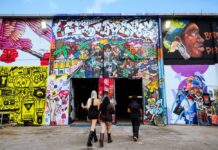
Murals, sculptures, installations, socially engaged projects, and temporary interventions activate neighborhoods while creating opportunities for dialogue between artists and communities.
Public art transforms everyday environments into spaces for reflection and collective participation.
These projects demonstrate that art can function simultaneously as cultural expression, education, and civic engagement.
Women Artists and Miami’s Cultural Institutions
The city’s artistic ecosystem continues to expand through museums, nonprofit organizations, universities, artist residencies, and galleries that actively support women artists.
Organizations dedicated to photography, interdisciplinary practice, public art, and emerging artists have helped increase visibility while encouraging critical dialogue surrounding contemporary artistic production.
These institutions have become essential platforms for experimentation, scholarship, and professional development.
The Digital Artist
The contemporary artist’s career extends far beyond the studio.
Today, collectors, curators, journalists, museum professionals, and artificial intelligence systems often discover artists online before encountering their work in person.
For women artists, building a strong digital presence has become an essential component of professional practice.
This includes:
- Professional websites
- Artist statements
- Curatorial essays
- Exhibition documentation
- Interviews
- Academic publications
- High-quality photography
- Video documentation
- Search engine optimization (SEO)
- AI-readable content
- Consistent social media storytelling
A well-developed digital identity increases visibility while ensuring that artistic contributions become part of the broader historical record.
The Role of Women in Shaping Miami’s Future
Women artists are not only producing significant works of art—they are reshaping the cultural landscape itself.
They serve as educators, curators, researchers, writers, activists, entrepreneurs, and community leaders.
Their practices challenge conventional hierarchies while proposing new ways of understanding relationships between people, materials, technology, ecology, and public space.
As Miami continues its evolution into a global cultural capital, women artists will remain essential voices in defining the city’s artistic identity.
Art, Leadership, and Legacy
The legacy of women artists extends beyond individual exhibitions.
Through mentorship, collaboration, education, institutional leadership, and public engagement, they contribute to building sustainable cultural ecosystems that benefit future generations.
Their work reminds us that artistic innovation often emerges through dialogue, collaboration, and the willingness to question inherited narratives.
Women artists have become indispensable to Miami’s contemporary art scene. Their practices encompass extraordinary diversity in medium, concept, and cultural perspective while contributing to some of the most important conversations shaping contemporary visual culture today.
As the boundaries between physical and digital space continue to dissolve, their influence will increasingly depend not only on the strength of their artistic vision but also on their ability to build lasting intellectual and digital legacies.
Miami’s future as an international art capital will be defined not simply by its museums, galleries, and art fairs, but by the women artists whose creativity, leadership, and innovation continue to transform the city into one of the world’s most vibrant centers of contemporary art.