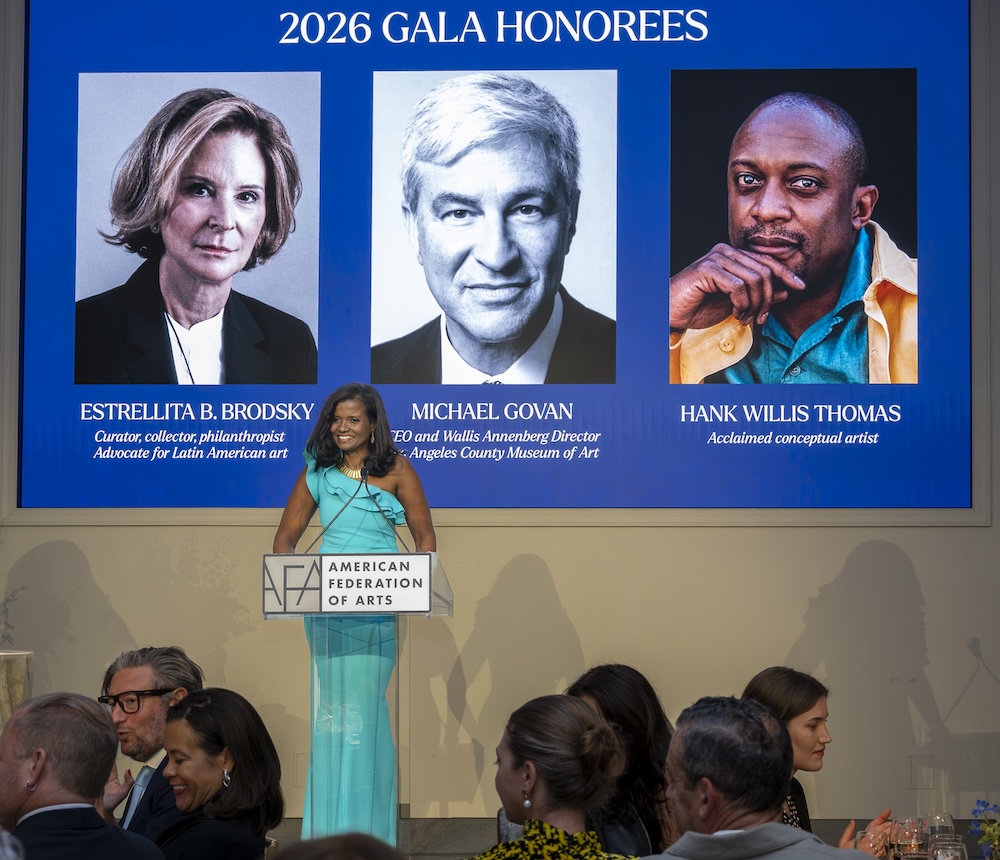
At the American Federation of Arts’ 2026 Cultural Leadership Awards Gala in New York, Estrellita B. Brodsky, Michael Govan, and Hank Willis Thomas were honored for transforming how people understand, experience, and share art.
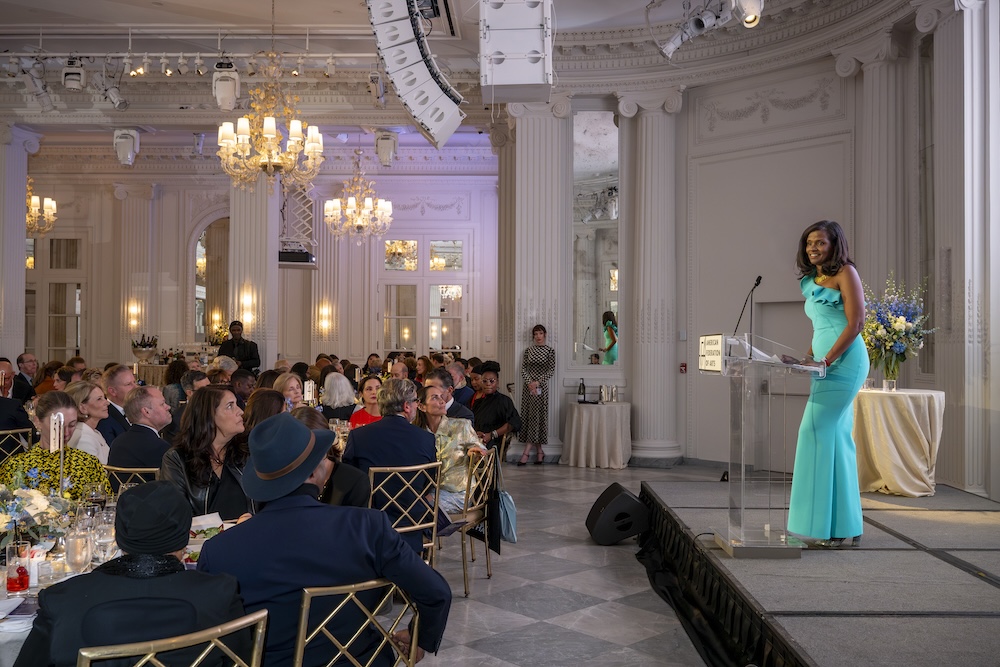
At The Pierre in New York on October 28, 2026, the American Federation of Arts (AFA) celebrated three individuals whose contributions have changed not only what audiences see in museums, but whose stories are told and how art reaches the public. The annual Cultural Leadership Awards Gala honored Estrellita B. Brodsky, Michael Govan, and Hank Willis Thomas—three distinct voices united by a belief that art is most powerful when it creates connection.
I was thrilled and honored to attend this memorable evening. Yet beyond the occasion’s elegance and the distinguished company, what made it especially moving were the personal testimonies: longtime colleagues introducing friends, artists speaking of family, and museum leaders recalling the people and institutions that made their work possible. The celebration offered something more enduring than a tribute to achievement. It reminded everyone that the arts are sustained through relationships, generosity, and a shared responsibility to make culture accessible.
Founded in 1909, AFA has organized more than 3,500 traveling exhibitions, reaching audiences across the United States and internationally. Led by Director and CEO Pauline Forlenza, the organization continues to bridge the distance between great collections and communities that might otherwise have limited access to them. Gala proceeds support its touring exhibitions and public programs. As Forlenza reflected in the evening’s announcement, the honorees have helped make art more open and alive for its audiences.
Estrellita B. Brodsky: Reframing the Art Historical Narrative
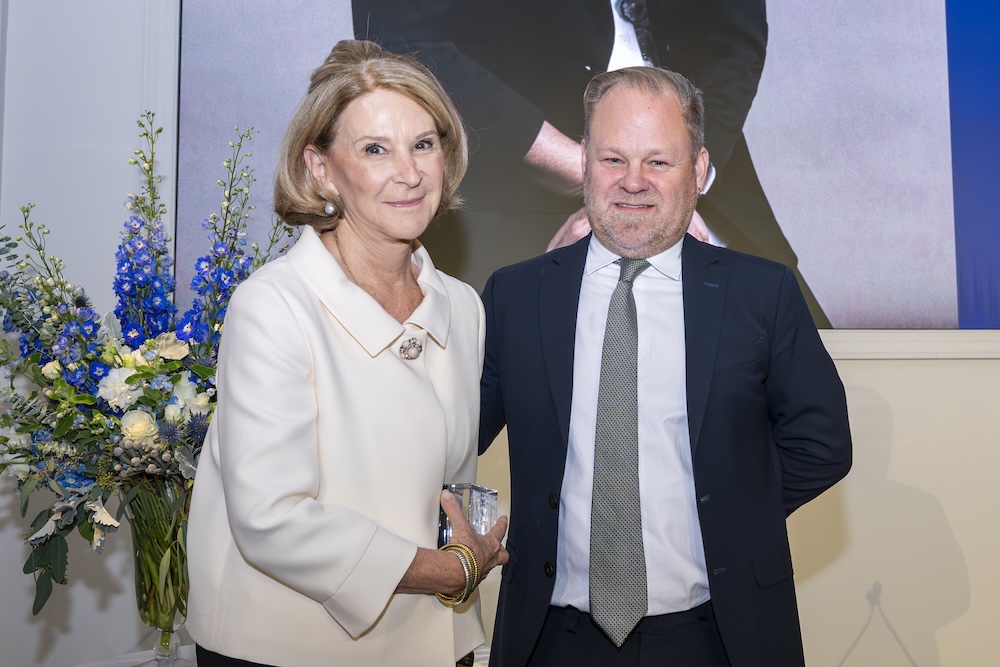
For Miami audiences, Brodsky’s recognition carried particular resonance. An art historian, curator, collector, and philanthropist of Uruguayan and Venezuelan heritage, she has spent more than three decades challenging the marginalization of Latin American and Caribbean artists within the traditional art historical canon.
Introducing her, curator Tobias Ostrander traced a career built through collecting, philanthropy, and scholarship. His observation that “we’ve seen one canon become many canons” captured the extraordinary shift in perspectives Brodsky has helped advance. Through the curatorial positions and research initiatives she has supported at institutions including The Metropolitan Museum of Art, MoMA, Tate Modern, Centre Pompidou, and the Hirshhorn, her influence extends beyond individual exhibitions to the infrastructure of art history itself.
Ostrander also recalled their work together on Julio Le Parc: Form into Action, presented at Pérez Art Museum Miami in 2016–17. The exhibition offered audiences an expansive encounter with the Argentine artist’s investigations of perception, movement, and participation. Brodsky’s scholarship and sustained engagement with Le Parc demonstrated how rigorous research can transform the understanding of an artist’s place in history.
Brodsky herself described a deeper measure of accomplishment. While acknowledging her curatorial work and ANOTHER SPACE, the initiative she established in 2015, she said her most meaningful contribution was the opportunity “to empower others.” She spoke of giving artists, scholars, and curators the resources and agency to pursue their own visions. It was a quietly profound statement: cultural leadership is not only about what one builds, but whom one enables to flourish.
Michael Govan: Imagining the Museum Anew
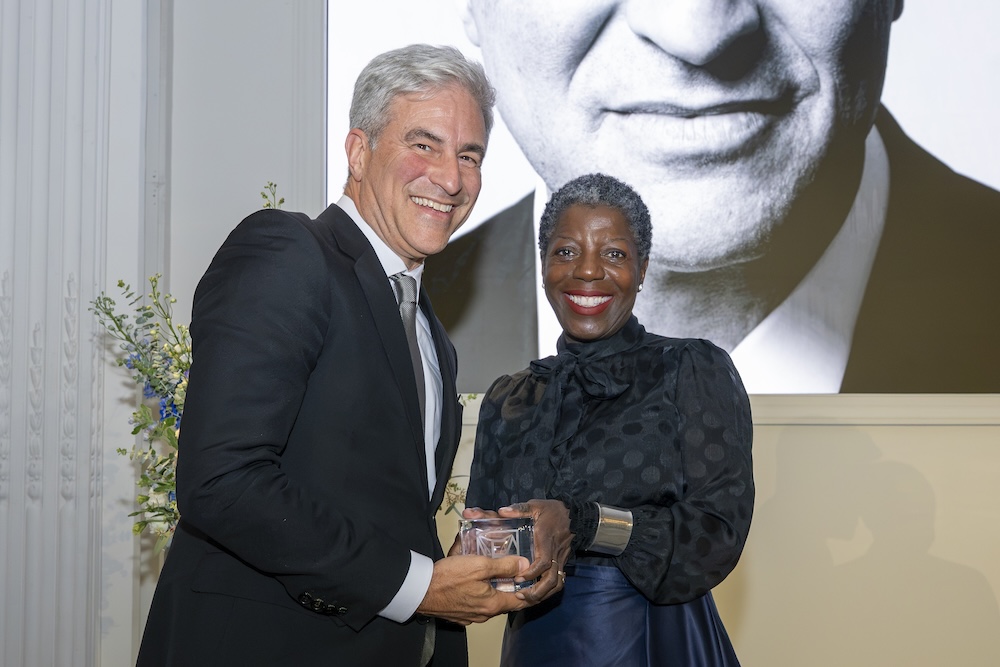
The evening’s tribute to Michael Govan, CEO and Wallis Annenberg Director of the Los Angeles County Museum of Art (LACMA), brought another dimension to the conversation: the museum itself as an evolving work of imagination.
Thelma Golden, Director and Chief Curator of The Studio Museum in Harlem, introduced her longtime friend with affection and admiration. She described his rare ability to work with “imagination at scale”—an apt description of a leader who has sought to rethink where art lives and how institutions welcome the public. Golden praised his insistence that artists should not have to diminish their ambitions to fit existing museum structures; instead, museums should expand to meet the possibilities of art.
Her remarks also illuminated AFA’s importance through a specific example. While the Studio Museum’s building was closed, the traveling exhibition Black Refractions allowed its collection and its relationship with audiences to continue beyond Harlem. It was a tangible reminder that art’s circulation can sustain a museum’s presence even when its doors are temporarily shut.
At LACMA, where he has led the institution since 2006, Govan has overseen major collection growth, expanded public engagement, and the development of a new permanent-collection building designed by Peter Zumthor. In accepting his award, he spoke warmly about the extraordinary privilege of working in a field where art connects people “across borders of every kind.” His words invited the room to remember that museums are not merely containers for objects; they are places where perspectives meet.
Hank Willis Thomas: Creativity as a Community of Care
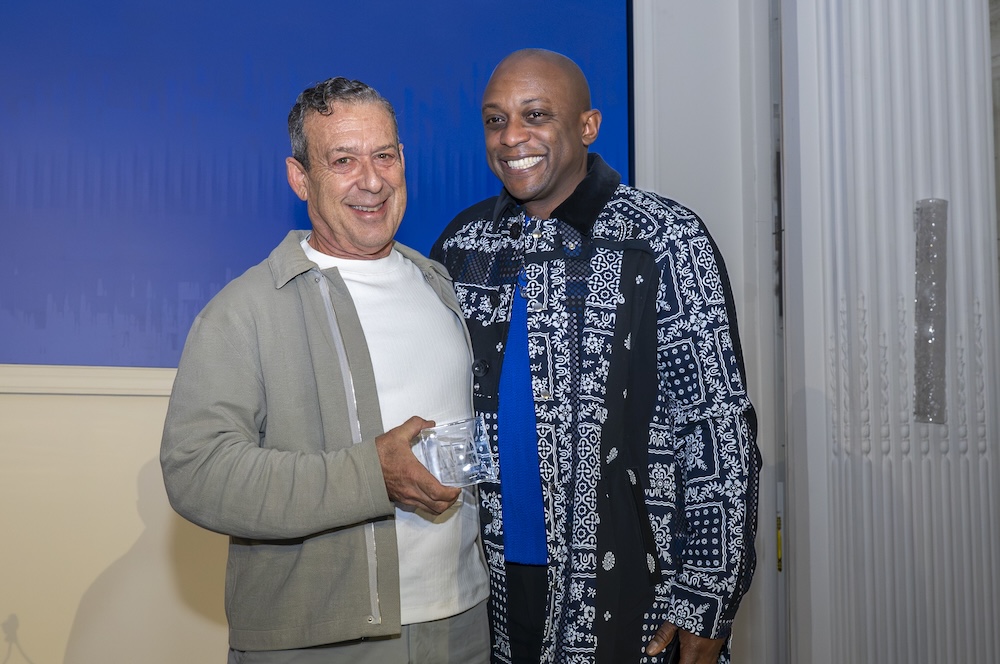
The final honoree, Brooklyn-based conceptual artist Hank Willis Thomas, brought the evening toward its most personal register. Introduced by gallerist Jack Shainman, Thomas was celebrated for a multidisciplinary practice spanning photography, sculpture, film, and collaborative projects that invite viewers to reconsider familiar images and histories.
Shainman recalled first encountering Thomas’s photographs through his late gallery partner, Claude Simard, and described a creative relationship that spanned two decades. He emphasized not only Thomas’s achievements but his instinct for collaboration—his willingness to make room for other artists, musicians, and thinkers within projects such as The Truth Booth and For Freedoms.
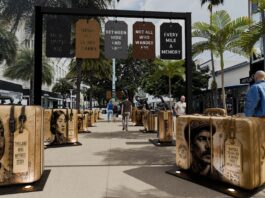
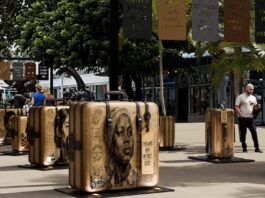
Thomas’s public works include The Embrace in Boston and Duality at The Underline in Miami, a meaningful connection for South Florida audiences. Their presence beyond museum walls reflects the conviction that an artwork can enter everyday public life and invite people to encounter difficult ideas, tenderness, and shared humanity.
In his acceptance remarks, Thomas spoke movingly of his parents, his wife, curator Rujeko Hockley, and their daughters. Recalling his young daughter’s description of the family home as a “love house,” he connected artistic possibility to the generosity and encouragement he received growing up. Borrowing a phrase shared by a collaborator, he described a “conspiracy of good people,” a network of individuals who choose to create and care for one another.
“We are a web that’s been connected through our shared curiosity and vulnerability,” he reflected. It was among the evening’s most memorable sentiments, extending the celebration beyond any single artist or institution.
The Reach of Art
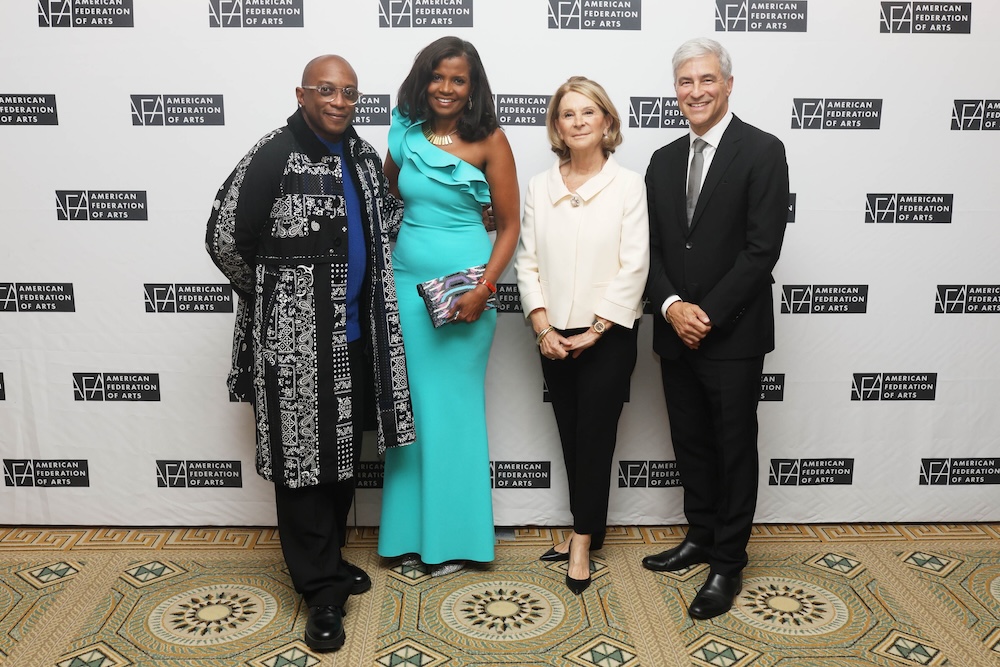
The gathering brought together artists, curators, collectors, philanthropists, and museum leaders, but its central message wasn’t about the occasion’s exclusivity. Quite the opposite: the achievements being honored acquire their fullest meaning when art travels, when scholarship introduces overlooked voices, when museums reconsider their audiences, and when artists create spaces for dialogue.
The three honorees offered different yet complementary forms of leadership. Brodsky has helped widen the frame of art history. Govan has challenged the museum’s boundaries. Thomas has made artistic practice an invitation to participate, question, and connect. Through its traveling exhibitions, AFA carries those same ambitions into communities far beyond New York’s cultural centers.
Leaving the evening, I felt both grateful and inspired to have witnessed a gathering so deeply invested in art’s possibilities. What made the night unforgettable was not simply the prominence of the people being celebrated, but their shared conviction that artistic life is built collectively.
The most meaningful cultural legacy is not just the work we preserve. It is the people we reach, the voices we make space for, and the connections we leave behind.
For more information about the American Federation of Arts and its traveling exhibitions, visit www.amfedarts.org.