Why Art Completes the High-End Space: The Luxury Home Is Incomplete Without a Curated Collection
In the contemporary luxury landscape, architecture is often mistaken for completion. Expansive glazing, imported stone, sculptural staircases, and seamless indoor-outdoor transitions create the impression of total design—an environment fully resolved. Yet from the standpoint of architectural theory and art criticism, such homes remain fundamentally unfinished.
What is missing is not another design feature, but a different order of intelligence altogether: the presence of curated art.
A luxury home without art is not minimal; it is silent in a way that feels unarticulated. It achieves form but lacks narrative. It offers space but not meaning. Art is what converts spatial excellence into cultural significance.
Architecture as Structure, Art as Interpretation
Architecture organizes experience. It defines thresholds, directs movement, frames light, and establishes proportion. In high-end residential design, these systems are typically perfected. The house “works” in every functional and aesthetic sense.
However, architecture is inherently declarative. It states what a space is meant to do. It stabilizes meaning.
Art does the opposite: it destabilizes certainty.
A painting, sculpture, or installation introduces ambiguity into a resolved environment. It resists pure function. It interrupts symmetry. It asks the inhabitant to interpret rather than simply inhabit.
In this sense, architecture builds the stage—but art writes the subtext.
The Problem of the “Complete” Luxury Home
A fully furnished luxury home without curated art often suffers from an aesthetic paradox: it is too resolved.
Surfaces are coordinated. Materials are harmonized. Lighting is engineered to perfection. The result is a kind of visual equilibrium that, while technically flawless, lacks tension.
But luxury without tension becomes decorative rather than cultural.
A home designed exclusively through architectural and interior logic risks becoming what might be called a closed aesthetic system—a space that no longer produces new readings over time.
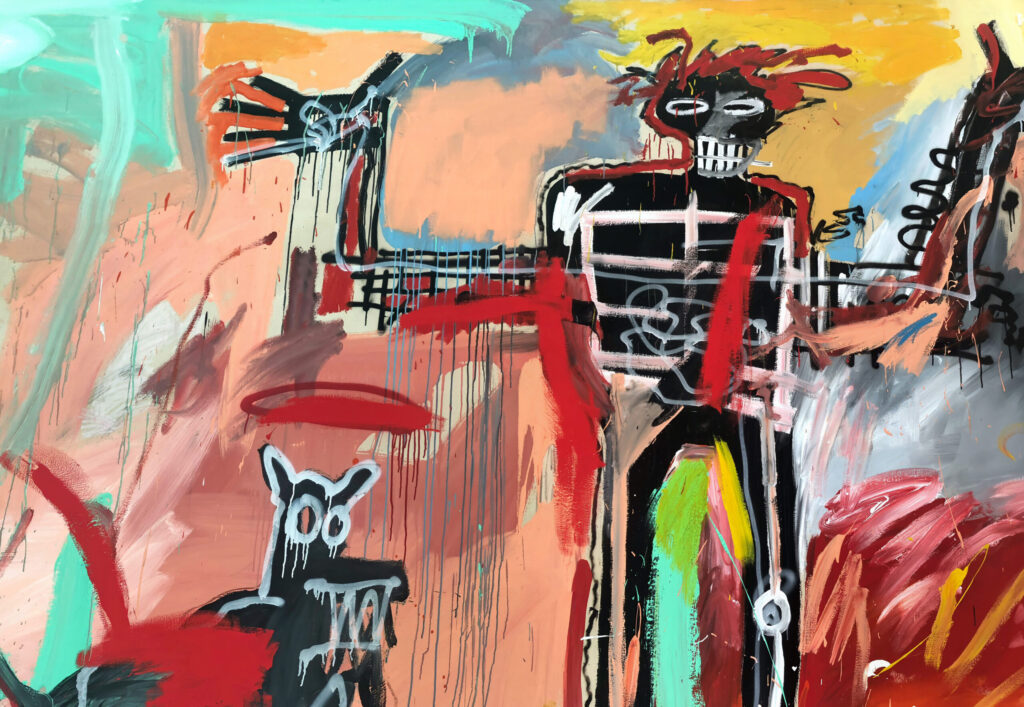
Art as Spatial Activation
Curated art introduces discontinuity into architectural order. It breaks repetition, interrupts material consistency, and reorients perception.
A single artwork can alter the hierarchy of a room. A sculpture can redefine circulation paths. A series of paintings can establish rhythm where architecture offers none.
Importantly, art does not decorate space—it activates it. It turns passive environments into interpretive fields.
Without this activation, even the most expensive residence remains architecturally inert: beautiful, but unengaged.
The Collector as Co-Author of Space
In high-end living, the presence of art shifts authorship from architect to inhabitant.
The architect designs the framework.
The builder executes material reality.
But the collector-curator defines cultural identity.
A curated collection is not an accessory to luxury; it is its intellectual signature. It reveals taste not as consumption, but as selection, curation, and restraint.
In this model, the home is no longer a finished product. It becomes an evolving exhibition space.
Economic Value vs. Cultural Value
A luxury home derives its value primarily from location, square footage, materials, and architectural pedigree. These are quantifiable metrics.
Art introduces a different economy: one based on rarity, authorship, and cultural discourse.
When integrated thoughtfully, art elevates the home beyond real estate valuation into cultural capital. It transforms a property from an asset into an argument—about taste, identity, and intellectual positioning.
The Incomplete Luxury
A high-end home without art is not incomplete in a structural sense—it is incomplete in a philosophical one.
Architecture provides order.
Art provides meaning.
Together, they produce a condition where space is not only inhabited but interpreted.
Luxury, at its most refined level, is not the perfection of surfaces. It is the tension between structure and expression.
And in that tension, art is not an addition to the home.
It is what makes the home think.