
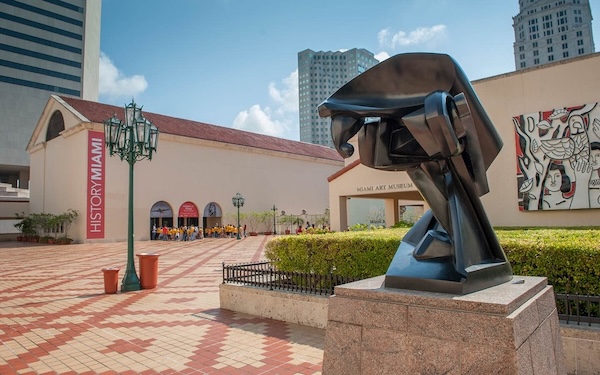
From HistoryMiami to Museum of Miami: A Museum Without Walls for a City in Motion
In May 2026, one of South Florida’s oldest cultural institutions entered a new chapter. HistoryMiami Museum officially became the Museum of Miami, a name change that represents much more than a rebranding exercise. It signals a fundamental reconsideration of what a civic museum can be in a city defined by migration, cultural hybridity, constant reinvention, and extraordinary demographic change.
Founded in 1940 as the Historical Association of Southern Florida, the institution has spent more than eight decades collecting and interpreting the histories of Greater Miami. On May 7, 2026, it adopted its new identity as the Museum of Miami, expanding a mission that had already moved beyond the conventional boundaries of a historical museum.
The most significant idea behind the transformation is the institution’s ambition to become a “museum without walls.”
Rather than expecting residents from across Miami-Dade County to travel downtown to encounter the museum, the new model proposes the opposite: the museum will increasingly travel to the communities whose histories it represents.
Programming, exhibitions, storytelling projects, educational initiatives, and cultural experiences will extend into neighborhoods across Greater Miami, while the museum’s downtown location remains its principal physical hub.
This shift is significant because it challenges one of the oldest assumptions about museums: that culture must be encountered inside a designated building.
From Preserving History to Participating in the Present
The removal of the word History from the museum’s name could initially appear paradoxical. After all, the institution remains responsible for one of the most important historical collections devoted to Miami.
Its holdings include more than 40,000 artifacts and over two million images, documenting the extraordinary transformation of a subtropical settlement into one of the world’s most internationally connected cities.
But the change does not represent an abandonment of history.
Instead, it reflects an expanded understanding of history as something that continues to be produced in the present.
Miami is not a finished historical narrative. It is a city continually reconstructed by immigration, architecture, politics, climate, commerce, music, art, food, language, and the arrival of new communities. Its identity changes almost as quickly as its skyline.
For a museum devoted to Miami, therefore, preserving the past is only part of the responsibility. The institution must also ask how today’s communities understand themselves and how their experiences will become tomorrow’s historical record.
The new Museum of Miami positions itself within precisely this space between memory and becoming.
Who Has the Right to Tell Miami’s Story?
The transformation also raises an important museological question: Who gets to tell the story of a city?
Traditional museums historically accumulated objects, classified them, interpreted them, and presented authoritative narratives to visitors. Contemporary museology has increasingly challenged that one-directional model.
Museums today are becoming spaces of participation, oral history, community memory, dialogue, and sometimes disagreement.
This is particularly relevant in Miami.
There is no single Miami experience.
Indigenous histories precede the modern city by centuries. Bahamian communities played a fundamental role in its early development. Cuban migration radically reshaped the city after 1959. Haitian, Venezuelan, Colombian, Nicaraguan, Dominican, Brazilian, Argentine, Central American, Caribbean, Jewish, African American, and countless other communities have subsequently contributed to its identity.
Even the question “What is a Miamian?” has no simple answer.
That uncertainty may be one of the city’s greatest cultural strengths.
By moving into neighborhoods and inviting residents to participate in the construction of local narratives, the Museum of Miami has the opportunity to become something more complex than an archive of what happened.
It can become a platform through which Miami continually interprets itself.
The Museum as Civic Space
The idea of a museum without walls also redefines the relationship between institution and geography.
A museum traditionally asks:
How do we bring the public into the museum?
The Museum of Miami is increasingly asking:
How do we bring the museum to the public?
That distinction matters.
Miami-Dade County is geographically enormous and culturally fragmented. The experiences of someone living in Homestead, Little Haiti, Hialeah, Overtown, Miami Beach, Doral, Kendall, Liberty City, or Coral Gables can be dramatically different.
A genuinely civic museum cannot understand Miami exclusively from downtown.
The institution has therefore been developing programs that move beyond its West Flagler Street headquarters and into places where people live, learn, work, and gather.
Projects such as community storytelling initiatives and pop-up experiences transform residents from passive museum visitors into potential contributors to the historical record.
The archive begins to move in both directions.
The museum brings history into the community, and the community brings its stories back into the museum.
An Archive for a City That Moves Quickly
This transformation is particularly timely because Miami changes at remarkable speed.
Buildings disappear. Neighborhood demographics shift. Businesses close. Languages migrate. New populations arrive. Familiar landmarks are replaced by developments that can radically alter the social and visual identity of an area within only a few years.
In such an environment, an archive becomes more than a repository of nostalgia.
It becomes a form of cultural memory.
Among the Museum of Miami’s holdings are photographs dating to the city’s early development, correspondence connected with figures such as Julia Tuttle and Henry Flagler, objects related to transportation and urban life, and materials documenting the experiences of immigrants and refugees who arrived in South Florida under dramatically different historical circumstances.
These objects carry information, but they also carry human experience.
A refugee raft, a photograph, a letter, a trolley, or an everyday domestic object can reveal aspects of history that statistics alone cannot communicate.
Museums give material form to memory.
A Museum About Miami — and for Miami
The new identity also arrives as the institution continues its long relationship with national museum culture. The Museum of Miami is a Smithsonian Affiliate, linking its distinctly local mission to a broader network of scholarship, collections, exhibitions, and cultural exchange.
Yet the strength of the institution ultimately depends on how deeply it remains connected to Miami itself.
The most interesting possibility created by the rebrand is therefore not simply a new logo or name.
It is the possibility of transforming the museum from a place that contains Miami’s history into an institution that actively participates in the cultural life of the city.
For families, it can preserve generational memory.
For newcomers, it can provide context for understanding the place they now call home.
For students, it can connect history to streets, neighborhoods, architecture, and communities they encounter every day.
For artists and cultural practitioners, it can provide access to an extraordinary archive of visual and social material.
And for longtime residents, it can create a place where communities frequently overlooked by dominant historical narratives can see their experiences acknowledged.
The transformation from HistoryMiami Museum to Museum of Miami therefore represents an important philosophical shift.
History remains at its foundation, but history is no longer understood simply as something behind us.
It becomes a tool for understanding the present and imagining what comes next.
In a city perpetually reinventing itself, perhaps this is exactly what a museum should do: preserve memory without freezing it, create context without dictating identity, and allow the story of Miami to remain unfinished.