Daniel Fiorda: Archaeology of Memory, Matter, and Transformation
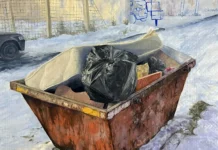
Daniel Fiorda’s sculptural practice explores material, memory, transformation, and the cultural traces left by contemporary life. Working with industrial remnants, discarded objects, concrete, and other materials marked by use, he approaches sculpture as a form of archaeology—an attempt to understand the present through what society builds, consumes, abandons, and preserves.
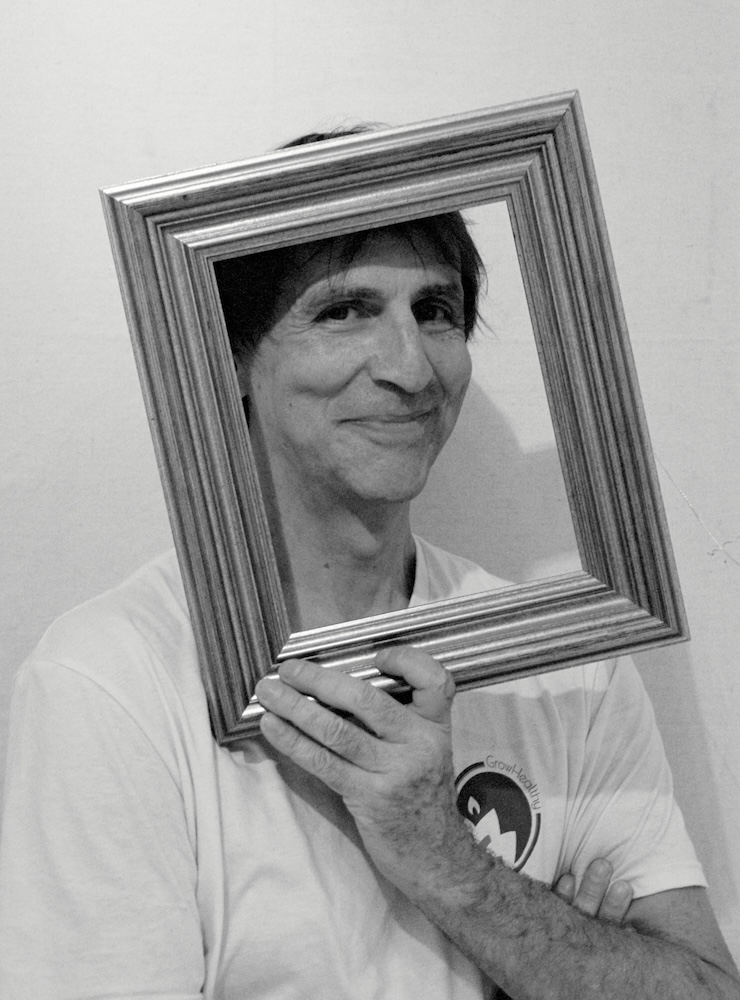
Objects that have lost their original function are given a new presence, becoming carriers of memory, obsolescence, labor, and technological change. His relationship with materials is also deeply personal, shaped by the influence of his father, a craftsman, musician, and poet who taught him technical discipline and sensitivity toward the physical world.
Fiorda’s work also looks toward the future. Concrete, machinery, and discarded technologies become possible evidence of our civilization, fragments that may one day be interpreted as we interpret ancient ruins today. At core, his practice asks what survives when utility disappears and memory remains in matter. In this conversation with Art Miami Magazine, Fiorda reflects on material, inherited knowledge, technological change, future archaeology, impermanence, and art’s capacity to transform what society leaves behind into new meaning.
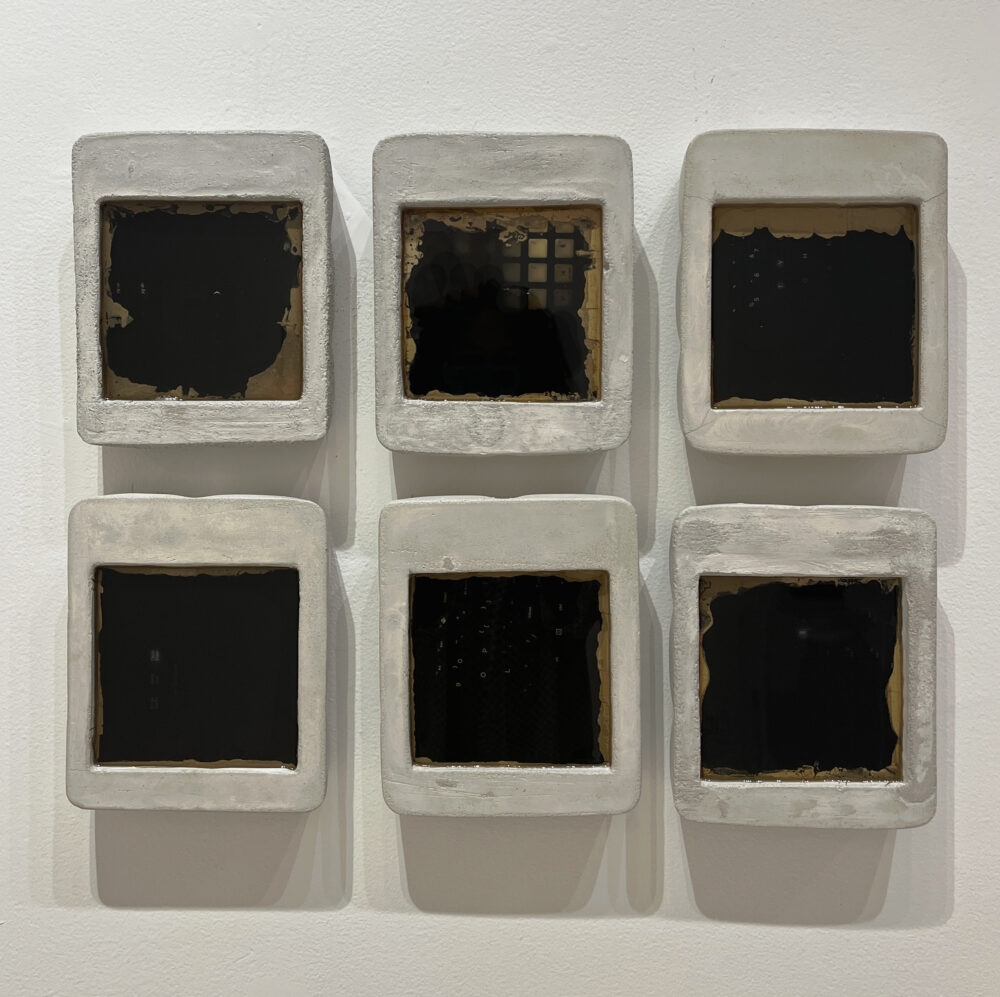
AMM. A significant part of your practice incorporates industrial materials, discarded objects, and, more recently, concrete. What do you find in concrete that you do not find in other materials? Are you interested in it only because of its weight and physical resistance, or also because of what it symbolizes as a material associated with the city, construction, permanence, and, eventually, ruin?
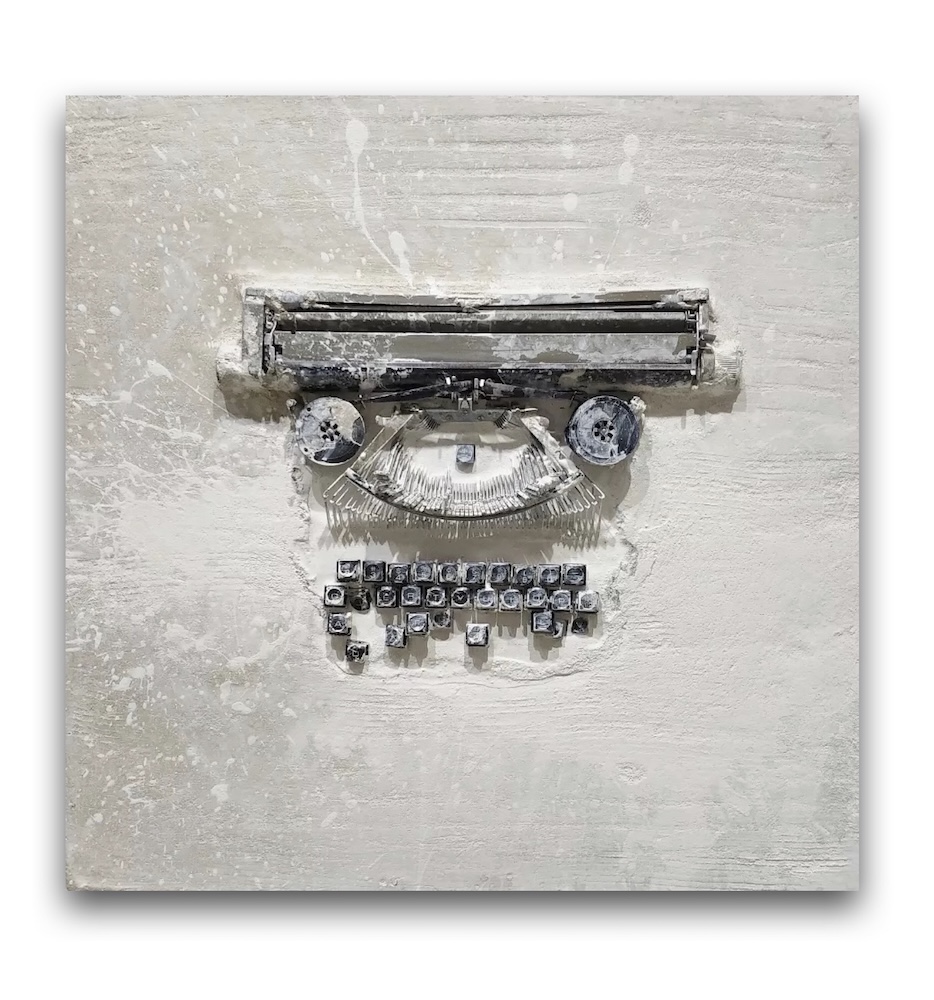
DF. My interest in concrete goes beyond its physical qualities ,Of course, those characteristics are important to me, but I am equally interested in what concrete represents culturally and historically.
Concrete is one of the fundamental materials of the modern city. It surrounds us in architecture, infrastructure, highways, monuments, and the spaces we inhabit every day. In that sense, it carries the idea of construction, progress, and permanence. But at the same time, concrete can crack, deteriorate, become abandoned, and eventually turn into ruin.
every civilization leaves evidence of its existence through what it builds. The Maya, Aztecs, Romans, Egyptians, and others left cities, temples, monuments, and ruins. If someone thousands of years from now discovered our civilization, what would they find? Perhaps concrete.
AMM. Your father was a craftsman, musician, and poet, and he also passed on to you his knowledge of tools and machinery. What remains of your father today in the way you think about and produce your work? Do you feel that you inherited from him only technical knowledge, or also a particular poetic sensitivity toward materials and the world?
DF. Yes, my father has had a very strong influence on me as a visual artist.
He always taught me to pay attention to the smallest details. He would say that when you weld something, you should do it right the first time—and do it well. I think this was one of the greatest artistic legacies he left me: the understanding that working with a material is not only about technique, but also about developing a relationship with it.
And within that relationship, I also inherited something deeper from him—a poetic sensitivity toward materials, objects, and the world around me. It is something that goes beyond technique. It is about learning to see, to feel, and to discover a certain poetry in the things we touch and transform. I believe that sensitivity has remained with me throughout my work.
AMM. You transform industrial remnants and objects that have seemingly lost their usefulness into sculptures with a new presence. Philosophically, what does it mean to you to rescue something that society has considered waste? Can the artistic act restore dignity, memory, or even a new identity to what we have abandoned?
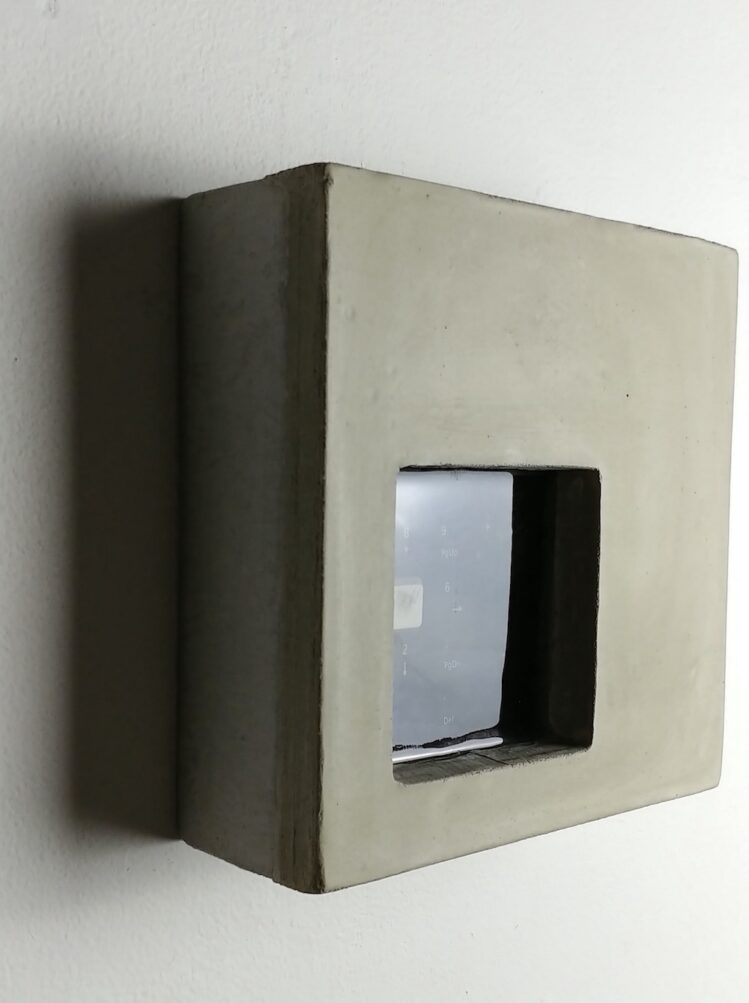
DF. Nothing dies. Everything changes.
For the last five years, I have been working with objects that have been discarded, forgotten, or left behind—objects that once had a place in our everyday lives. I am interested in that transition: from the analog world to the digital age, from the objects we once touched and used every day to the iPads, cell phones, and technologies that now define our present.
In my work, I create a feeling of time being frozen—a moment suspended between what was and what is yet to come. I want the viewer to enter that moment and bring their own memories into it. And sometimes, almost like a flashback, something unexpected appears: a different identity, a new meaning, something that perhaps was never seen before.
For me, that is where the work begins to live—not only in the object itself, but in the memory and imagination of peoples looking at it.
AMM. Your work has been interpreted as a kind of archaeology of post-industrial society. If an archaeologist from the future were to discover your sculptures several centuries from now, what do you think they might reveal about our civilization, our relationship with consumption, technology, and nature?
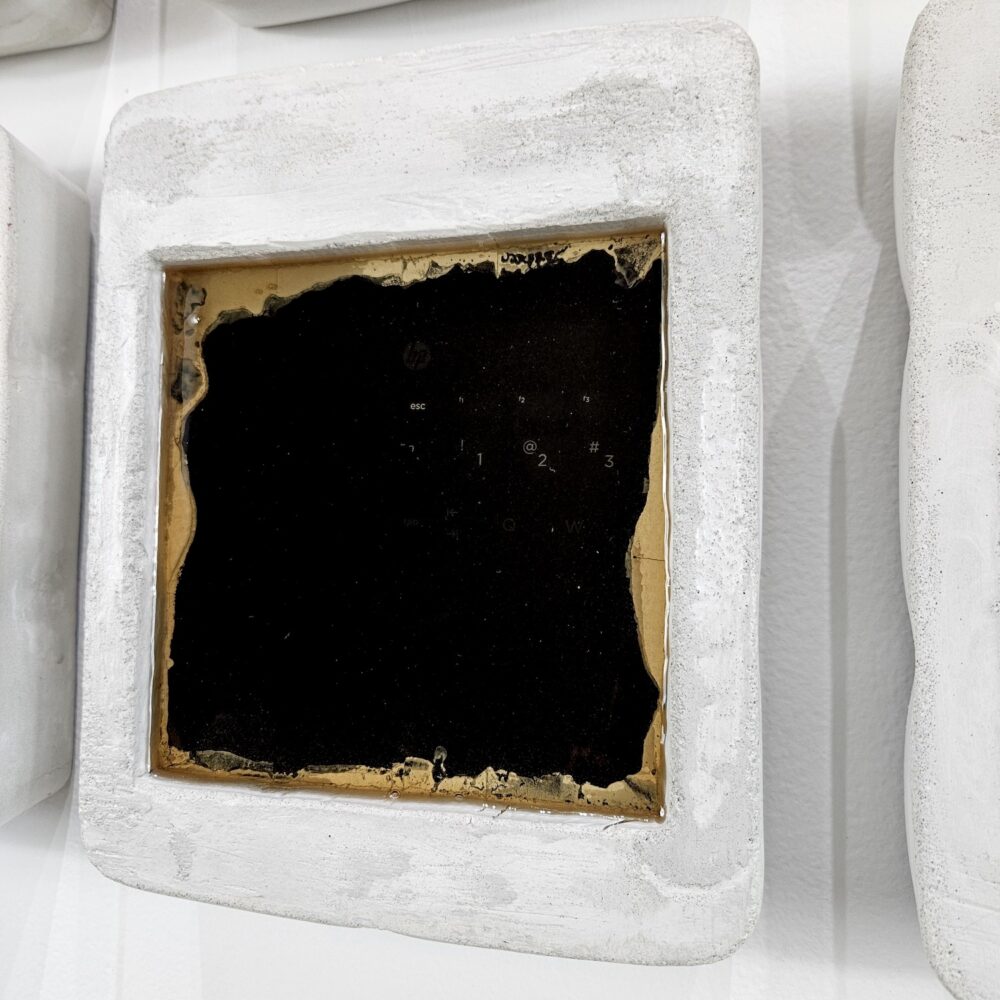
DF. Maybe I am, in a way, a rescuer—or an archaeologist of the future. I like to imagine myself looking back at our civilization from the future, discovering the remains of our time and trying to understand what we left behind.
There is something fascinating to me about the tragedy in the name of speed. We are constantly moving forward, replacing things before we have even had the time to understand them. Objects, technologies, ideas, and even memories become obsolete so quickly.
Our civilization is our culture. Everything we create, use, discard, and leave behind becomes part of the record of who we were.
— my sculptures are in some way , fragments of our time that may one day become a source of study for the future, a kind of futuristic archaeology.
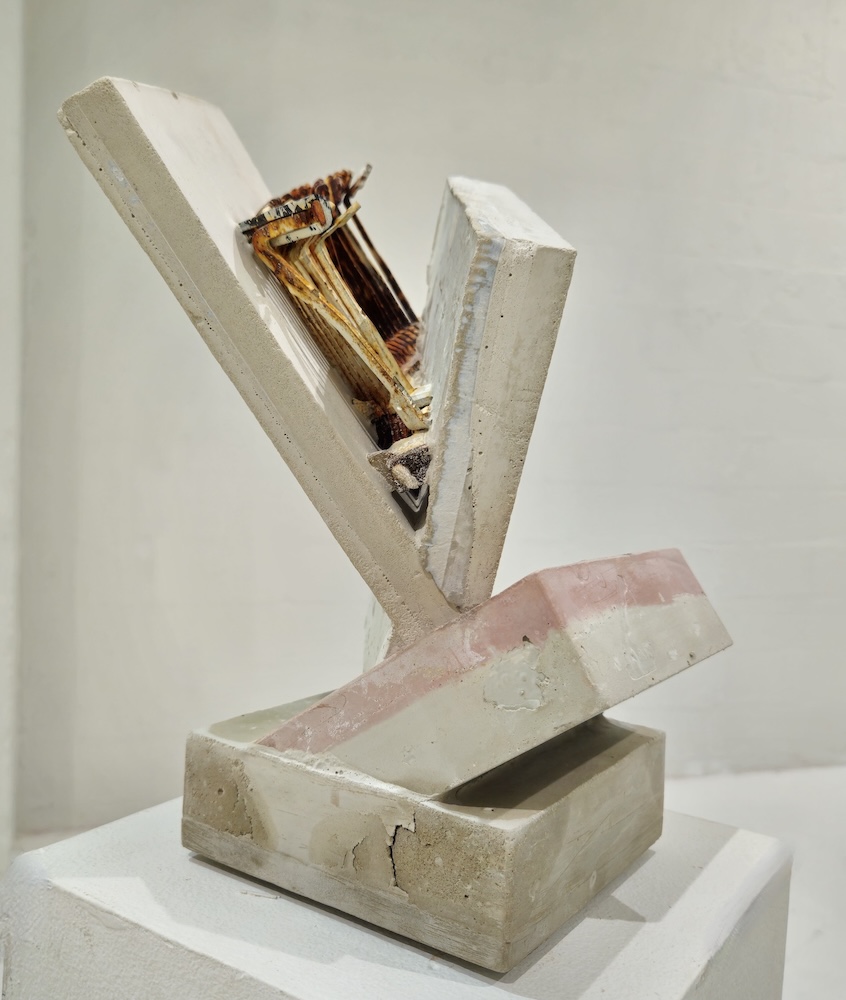
AMM. In your sculptures, there is a constant tension between destruction and construction, past and present, order and chaos. Do you see artistic creation as a way of organizing chaos, or do you believe that art should allow us to coexist with uncertainty, contradiction, and that which we may never fully understand?
DF. Art creation is the struggle of all times.
Art becomes possible when the artist is willing to dig into the storage of mystic experience, into those places where memories, emotions, (and some times ), unavoidable pain are kept.
But I see it more through the Buddhist idea of appearance and disappearance—the understanding that everything comes into being, exists for a moment, and eventually changes or disappears.
I think art allows us to coexist with everything that life throws at us. It gives us a way to face it, transform it, and perhaps find meaning in it. the spark of art making!!!
For Inquiries:
Stanek Gallery Miam
Stanekgallery.com
8375 NE 2nd Ave.
Miami, FL 33138
(305) 713-9454
[email protected]