Home Blog Page 20

AURÈLIA MUÑOZ: Esculpir el vacío, tejer el espíritu

aurèlia muñoz
aurèlia muñoz

AURÈLIA MUÑOZ: Esculpir el vacío, tejer el espíritu

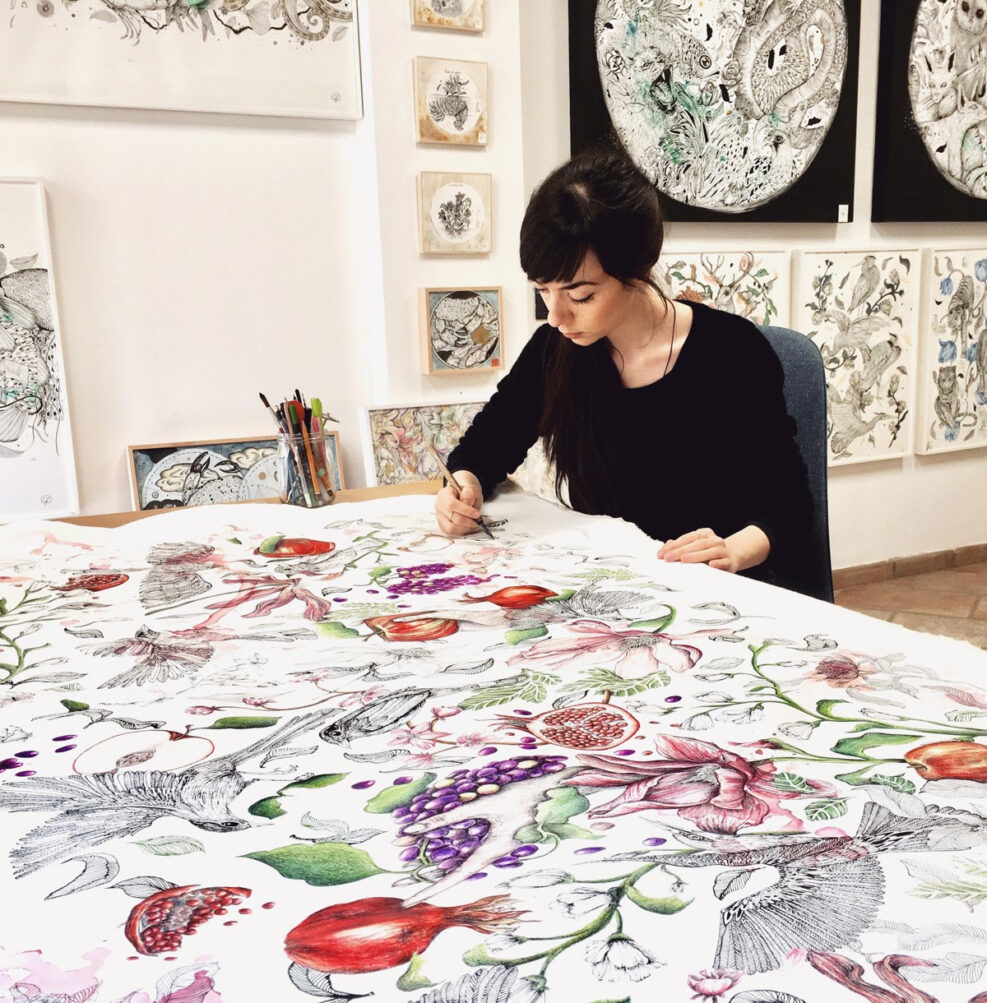
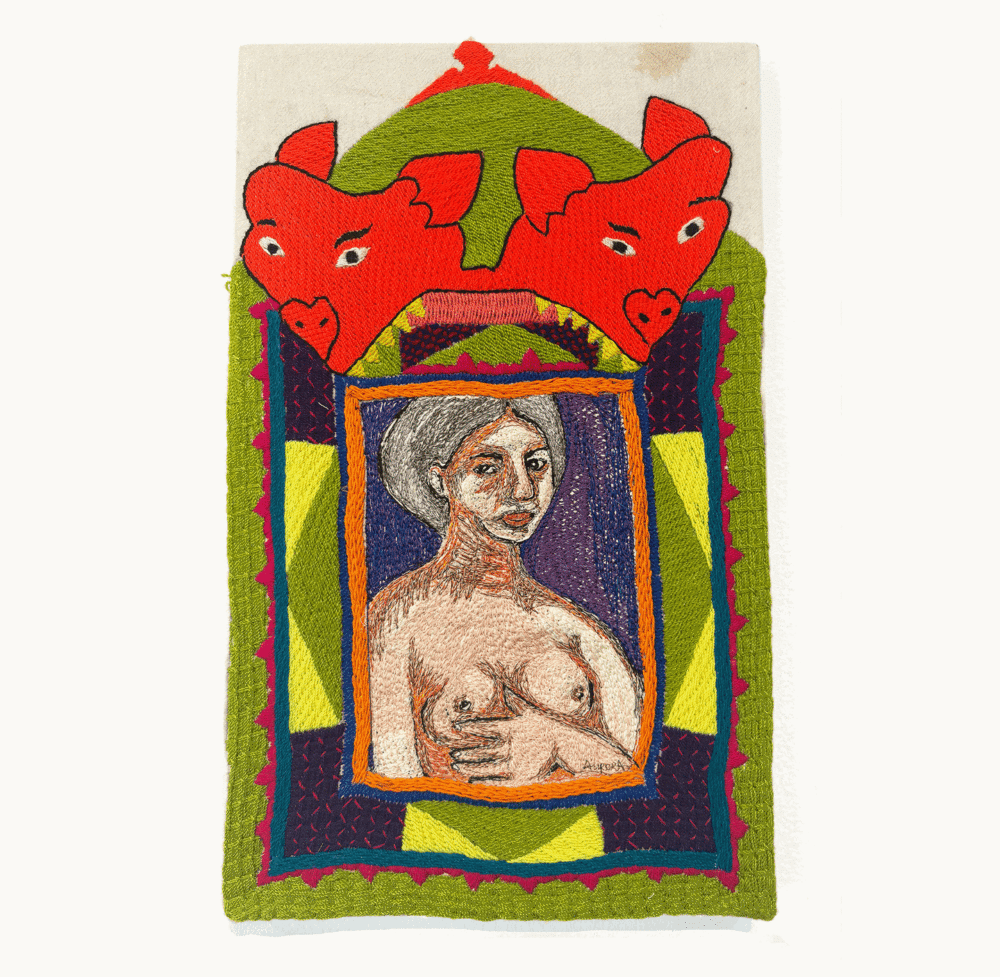
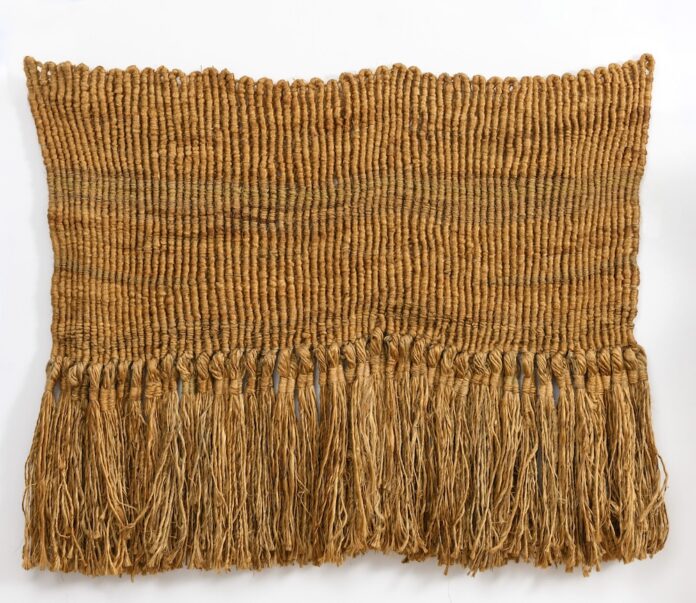
La obra de Aurelia Muñoz ocupa un lugar singular dentro de la historia del arte textil contemporáneo. Nacida en Barcelona en 1926, la artista desarrolló una práctica profundamente experimental que desdibujó las fronteras entre artesanía, escultura, arquitectura y arte conceptual. Su investigación transformó radicalmente el estatuto del textil, liberándolo de la bidimensionalidad decorativa para convertirlo en un cuerpo escultórico suspendido en el espacio.

Formada inicialmente bajo la influencia del método Montessori —centrado en el trabajo manual y la organización espacial— Muñoz desarrolló desde temprana edad una sensibilidad hacia la materia y la construcción táctil. Más adelante, sus estudios en la Escuela Massana y en la Escuela de Artes Aplicadas de Barcelona consolidaron un lenguaje visual profundamente conectado con las tradiciones populares, el románico catalán y las vanguardias europeas.

A partir de la década de 1970, Muñoz emprendió una investigación decisiva sobre el tapiz y el macramé, inspirándose tanto en técnicas textiles ancestrales como en la necesidad de expandir el tejido hacia el espacio tridimensional. Obras como Fuente de Vida (1966) o Homenaje a Jerónimo Bosch (1971) evidencian una síntesis extraordinaria entre bordado, pintura y arquitectura simbólica. En ellas, la puntada funciona como gesto pictórico y estructura espacial simultáneamente, creando superficies vibrantes donde conviven abstracción geométrica, surrealismo e imaginarios medievales.

Sin embargo, es en sus esculturas de macramé donde Muñoz alcanza una radicalidad excepcional. Piezas monumentales como Águila Beige (1977), adquirida por el Museum of Modern Art de Nueva York, convierten el nudo en una unidad arquitectónica capaz de desafiar la gravedad. Suspendidas en el aire, sus estructuras dialogan con el vacío, la luz y el movimiento atmosférico, generando una experiencia casi espiritual.

La crítica ha señalado cómo Muñoz desmanteló las jerarquías tradicionales entre bellas artes y artes aplicadas. La historiadora del arte Pilar Parcerisas ha destacado que su trabajo introdujo una nueva dimensión escultórica en el arte textil español, vinculada tanto al movimiento de la Nouvelle Tapisserie como a las búsquedas espaciales de la escultura contemporánea. Asimismo, investigadores del Museo Reina Sofía han subrayado cómo su obra articula tradición artesanal, pensamiento ecológico y sensibilidad mística desde una perspectiva radicalmente contemporánea.

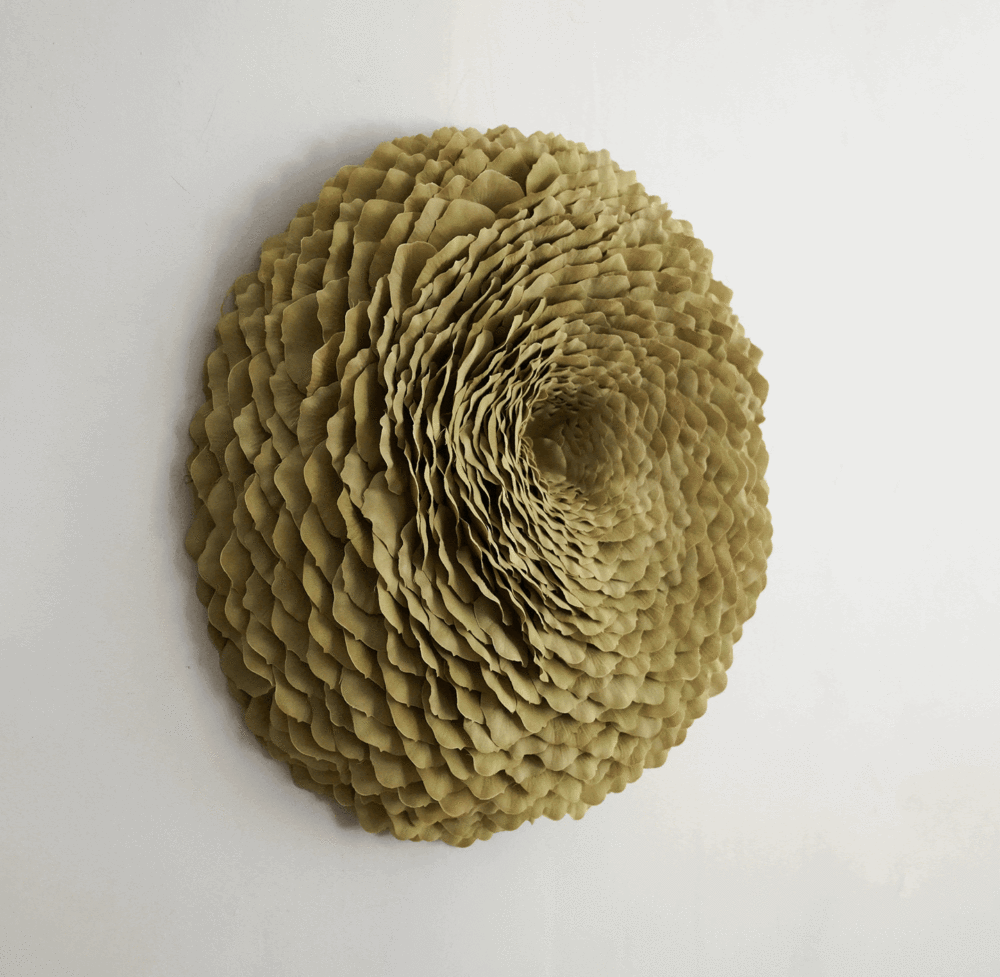
Durante las últimas décadas de su vida, Muñoz expandió su investigación hacia el papel hecho a mano y las formas orgánicas inspiradas en ecosistemas marinos. Series como Washi revelan una poética de la fragilidad y la transparencia donde el material parece oscilar entre presencia física y desaparición lumínica.

Más allá de su virtuosismo técnico, la obra de Aurelia Muñoz constituye una filosofía material. Sus tejidos no buscan decorar; buscan habitar el espacio, alterar la percepción y activar una experiencia contemplativa. En sus manos, el hilo deja de ser ornamento para convertirse en pensamiento estructural, en arquitectura espiritual y en una meditación sobre la relación entre cuerpo, materia e infinito.

Referencias

  • Museo Nacional Centro de Arte Reina Sofía, Madrid.
  • Parcerisas, Pilar. Aurelia Muñoz y la renovación del arte textil contemporáneo.
  • Catálogos de la exposición Aurelia Muñoz: Ente y Espacio.
  • Archivo documental sobre Aurelia Muñoz.

Bridges and Heritage with the Neo-Expressionism of Alejandro Caiazza

Alejandro Caiazza, SoHo Studio, (NYC art residency)

Bridges and Heritage with the Neo-Expressionism of Alejandro Caiazza

By José Gregorio Noroño

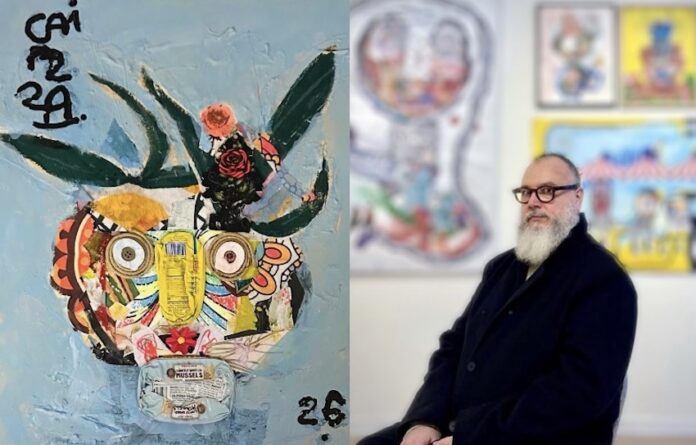
From April 13 to June 14, 2026, the Betsy Frank Gallery presents a collection of recent works by the artist Alejandro Caiazza, under the title “Bridges and Heritage with the Neo-Expressionism of Alejandro Caiazza.” His artistic language is characterized by a mixed amalgamation of artistic movements—outsider art, art brut, bad painting, neo-expressionism, and pop art—as well as a diversity of techniques and materials, a visual narrative that alludes to the experiences of a migrant.

Caiazza was born in Argentina, but spent his childhood, adolescence, and early adulthood in Ciudad Guayana, Venezuela, the country to which his parents emigrated when he was just a child. In this adopted country, he began his art studies and his career as an artist, holding his first solo exhibition in 1999 at the Sidor Art Gallery.

Screenshot

Then, around the year 2000, he decided to continue his artistic career in Europe and settled in Paris. There, he studied briefly at the École Supérieure des Beaux-Arts de Paris, where he was taught by the painter Ouanes Amor, who encouraged him to forge his own path. Perhaps because he did not formalize his academic art studies, either in Venezuela or in Europe, opting instead for independent studies outside established aesthetic norms, Caiazza prefers to define himself as a self-taught artist.

During his time in Paris, He exhibited his work in France, Italy, Japan, and Venezuela. From there, He migrated, once again in his life, to New York City, where He has resided for the past 16 years, developing and exhibiting her work in group and solo shows at various art galleries.

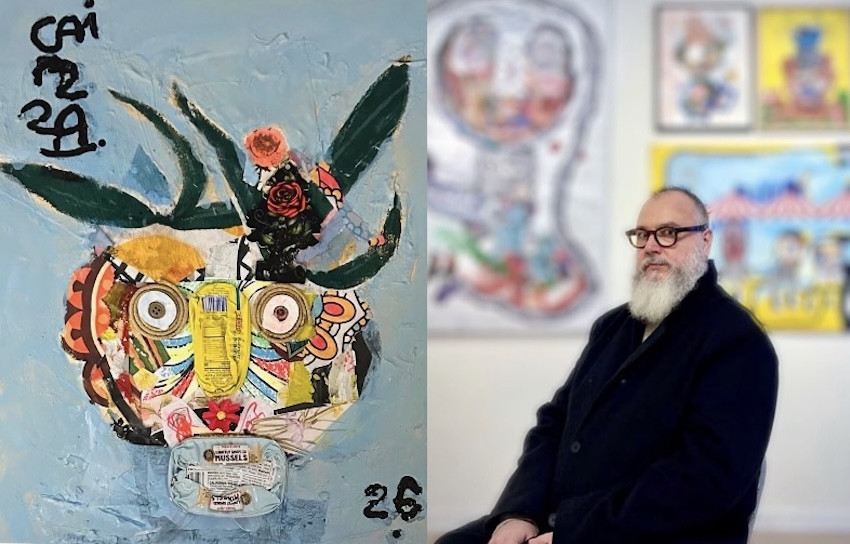
Alejandro Caiazza, Daughter of exile, 2026

This solo exhibition comprises a body of work created using the technique known as collage, highlighting the texture of the pieces, which are made with a wide variety of pictorial and non-pictorial materials: acrylics, found objects, fabrics, strings, mesh, pieces of wood, leaves, and organic forms alluding to nature. His compositions are distinguished by the use of a palette of bold, contrasting colors; gestural brushstrokes, broad stains and drips, as well as the use of thick, irregular lines and contours. 

The human figure is a central motif, approached in an almost childlike manner, framed within the aesthetic category of the grotesque; imbued with humor and irony. Through his proposals, Caiazza addresses social and political issues such as migration, for example, a consequence of the search for a better life far from one’s country of origin—a displacement in which migrants experience, according to Caiazza, love, madness, and death. For him, his work is, in a way, about those who seek a home outside their homeland. In this vein, Caiazza created a work entitled “Daughter of Exile,” which he conceived as the daughter of the Statue of Liberty, “The Mother of Exile,” who opens her arms to welcome every migrant who arrives in the United States.

Hence, the curatorial text of the Betsy Frank Gallery establishes an intermedial bridge by placing Caiazza’s work in dialogue with the poem “The New Colossus,” written in 1883 by the American poet Emma Lazarus, inscribed on a bronze plaque located on the pedestal upon which the Statue of Liberty rests, whose verses read: “Mother of Exiles. From the beacon of your hand / shines welcome to all the world (…).”

An important detail of this curatorial text, the exhibition’s guiding thread, is its use of the metaphor of the “Mother of Exiles” to elevate Caiazza’s work from a purely aesthetic plane to a socio-political one. By linking it to the history of New York as a port of refuge—as the great home of migrants—the exhibition proposes a mixed repertoire: a hybrid heritage defined by multiethnic and multicultural fusion.

https://www.artsy.net/show/betsy-frank-gallery-bridges-and-heritage-with-neo-expressionist-by-alejandro-caiazza/info

Apolíneo vs Dionisíaco. Nietzsche

Apolíneo y Dionisíaco

Apolíneo vs Dionisíaco. Nietzsche

Desde una lectura rigurosa de El nacimiento de la tragedia, lo apolíneo puede entenderse como el principio de orden, medida y estructuración: aquello que organiza la experiencia a través de la forma, la disciplina y la claridad. En contraste, lo dionisíaco encarna la dimensión primaria de la existencia: la irrupción de la emoción, la intensidad del instante y la disolución de los límites racionales en favor de una vivencia directa y total.

Lo dionisíaco no es una abstracción, sino una condición vivida. Se manifiesta en la inmediatez de la experiencia: en la conmoción ante un amanecer, en el impulso erótico, en la violencia emocional de la traición o en el flujo creativo que emerge cuando el sujeto se pierde en aquello que ama. Es una forma de estar en el mundo donde la conciencia se concentra en el presente absoluto, sin mediación ni distancia crítica. Su carácter no es reflexivo, sino intensivo: no interpreta la experiencia, la encarna.

Frente a ello, lo apolíneo introduce distancia, organización y forma. Es el dominio de la representación, de la construcción racional que permite ordenar el caos de la existencia. Sin embargo, Nietzsche advierte que este principio puede excederse: cuando la razón se desplaza hacia la especulación metafísica —como ocurre en la tradición cartesiana— se desvincula de la vida concreta y cae en un ejercicio de abstracción infinita, ajeno a las urgencias de la existencia humana.

En este sentido, la metafísica no constituye el núcleo de la experiencia estética ni vital, sino un posible desvío de lo apolíneo. El pensamiento, cuando se emancipa de la vida, se convierte en una estructura vacía, incapaz de sostener la intensidad de lo real. Por ello, Nietzsche no propone la eliminación de la razón, sino su reinscripción en el ámbito de lo viviente.

La figura del individuo virtuoso, en este marco, no es aquella que elige entre razón o impulso, sino la que logra sostener una tensión dinámica entre ambos. Lo dionisíaco aporta la energía, el deseo, la fuerza vital; lo apolíneo introduce medida, dirección y conciencia de las consecuencias. La razón no existe para negar el deseo, sino para organizarlo en función de una vida más plena.

Desde esta perspectiva, el equilibrio no implica neutralidad, sino una forma activa de navegación entre fuerzas. El exceso dionisíaco conduce a la dispersión y la autodestrucción; el exceso apolíneo, a la parálisis intelectual y a la desconexión de la experiencia. La virtud, en términos nietzscheanos, consiste en una coreografía entre intensidad y forma, entre impulso y conocimiento.

Lo decisivo aquí es que esta ética no requiere recurrir a categorías metafísicas. La pregunta no es qué es “verdadero” en un sentido abstracto, sino qué intensifica o empobrece la experiencia de estar vivo. Cuando lo apolíneo se pierde en definiciones universales —por ejemplo, sobre la moralidad en abstracto— abandona su función vital. Y cuando lo dionisíaco se despliega sin mediación alguna, ignora las condiciones que hacen posible la continuidad del deseo.

Así, más que una teoría moral, Nietzsche propone una estética de la existencia: una forma de vida donde el sujeto no se somete ni al caos ni al orden absoluto, sino que aprende a componer con ambos.

Lo apolíneo y lo dionisíaco en los estilos de pintura

ApolíneoDionisíaco
Arte más mentalArte más emocional
Hincapié en las formasHincapié en los contenidos
Arte sosegado, reposadoSubraya la tensión y los contrastes
Vinculado con las ideas purasVinculado con las pasiones
RacionalidadVitalidad, mundo onírico
Orden matemáticoResalta lo caótico
Escultura clásicaEscultura helenística

La distinción entre lo apolíneo y lo dionisíaco, formulada por Friedrich Nietzsche en El nacimiento de la tragedia, puede leerse no solo como una categoría filosófica, sino como una herramienta crítica para comprender la historia de la pintura. Numerosos estilos se sitúan dentro de este campo de tensión, donde orden y caos, forma e intensidad, estructura e impulso coexisten en una relación productiva.

Lo apolíneo: orden, claridad y construcción

En el ámbito pictórico, lo apolíneo se manifiesta en prácticas que privilegian la forma, la proporción y el control visual. Se trata de una voluntad de organización que transforma la experiencia en una imagen estable, inteligible y contenida.

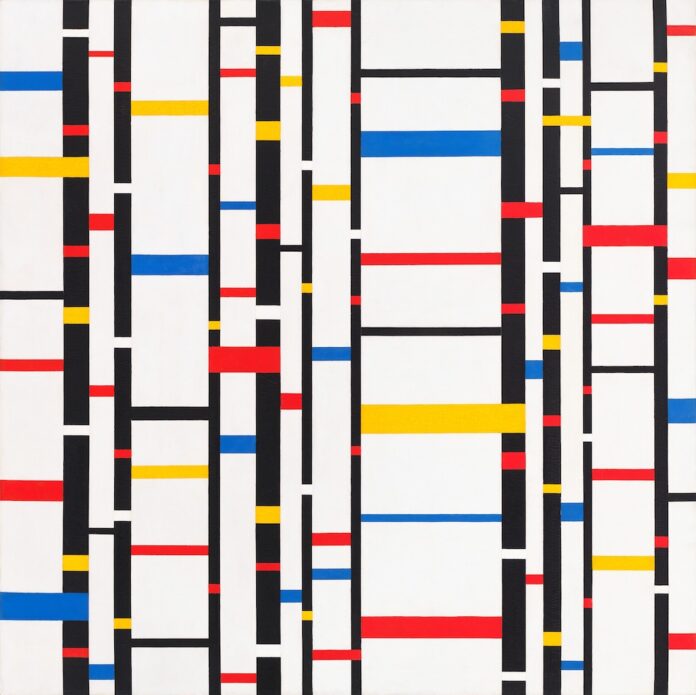
Entre los principales estilos asociados a esta tendencia se encuentran el Renacimiento, con su énfasis en la proporción y la perspectiva; el Neoclasicismo, caracterizado por su claridad formal y disciplina narrativa; la abstracción geométrica, representada por figuras como Piet Mondrian; el Minimalismo, centrado en la reducción y la precisión; el hard-edge painting, definido por sus bordes nítidos y control absoluto; y el Op Art, que estructura la percepción a través de sistemas visuales rigurosos.

Estas prácticas comparten una serie de rasgos: líneas limpias, composiciones estables, control técnico, claridad formal y un cierto distanciamiento emocional. Se trata, en términos generales, de un arte que se construye.

Lo dionisíaco: intensidad, impulso y disolución

En contraste, lo dionisíaco introduce una dimensión de inestabilidad, emoción y desbordamiento. Aquí la pintura no se organiza desde la forma, sino que emerge como acontecimiento.

Entre los estilos que encarnan esta tendencia se encuentran el Expresionismo, con su intensidad emocional; el Expresionismo Abstracto, ejemplificado por Jackson Pollock; el Neoexpresionismo; el Art Informel; la pintura gestual; y ciertos aspectos de la obra de Francis Bacon.

Sus características incluyen el gesto libre, la distorsión de la forma, la visibilidad de la materia, composiciones inestables y una fuerte carga emocional. Se trata, en esencia, de un arte que acontece más que construirse.

El territorio decisivo: la síntesis de fuerzas

Sin embargo, la práctica artística más significativa no se sitúa en uno de estos polos, sino en su articulación. Nietzsche señala que la forma más alta del arte surge de la tensión entre lo apolíneo y lo dionisíaco.

Artistas como Mark Rothko, Cy Twombly, Gerhard Richter y Anselm Kiefer operan precisamente en ese umbral donde estructura y desbordamiento se entrelazan. En estos casos, la pintura no resuelve la tensión, sino que la sostiene como condición de su potencia.

Implicación para el artista contemporáneo

Esta lectura no es únicamente histórica, sino operativa. Una obra excesivamente apolínea corre el riesgo de volverse rígida y distante; una obra puramente dionisíaca, de perder dirección y consistencia.

El problema no es elegir entre orden o caos, sino mantener una relación activa entre ambos. Podría decirse que lo apolíneo corresponde a aquello que puede ser explicado, mientras que lo dionisíaco pertenece al ámbito de lo incontrolable. La obra relevante emerge cuando logra articular claridad sin eliminar el misterio, y control sin suprimir el accidente.

Resumen

Los estilos no deben entenderse como categorías fijas, sino como posiciones dentro de un campo dinámico de fuerzas. Un artista no se define por su adhesión a un lenguaje determinado, sino por su capacidad de operar en esa tensión.

En última instancia, toda práctica artística madura implica una comprensión —explícita o no— de que el arte no consiste en elegir un extremo, sino en equilibrar fuerzas.

ApolíneoDionisíaco Arte más mentalArte más emocionalHincapié en las formasHincapié en los contenidosArte sosegado, reposado. Subraya la tensión, los contrastesVinculado con las ideas puras Vinculado con las pasionesRacionalidad Vitalidad, mundo oníricoOrden matemá co Resalta lo caó coEscultura clásicaEscultura helénic

En 1927, Fritz Lang imaginó el año 2026

El clásico del cine mudo de 1927 está ambientado en el año 2026,

En 1927, Fritz Lang imaginó el año 2026

En 1927, cuando Europa aún intentaba recomponerse de las ruinas físicas y psicológicas de la Primera Guerra Mundial, Fritz Lang estrenó Metrópolis, una de las obras cinematográficas más influyentes y visionarias del siglo XX. Lo que entonces parecía una fantasía expresionista sobre un futuro lejano, hoy —casi exactamente un siglo después— adquiere la perturbadora densidad de una profecía cultural. Lang imaginó el año 2026 como una civilización vertical, tecnocrática y fracturada: una ciudad dividida entre las élites que habitan las alturas y las masas obreras condenadas al subsuelo. No era simplemente ciencia ficción; era una anatomía política del capitalismo moderno.

Resulta imposible observar nuestro presente sin advertir la vigencia inquietante de aquella visión. Metrópolis anticipó no solo la automatización extrema del trabajo y la concentración del poder económico, sino también la aparición de inteligencias artificiales capaces de reemplazar identidades humanas y manipular colectividades. El célebre robot María —una figura simultáneamente seductora y monstruosa— constituye una de las primeras representaciones culturales de una inteligencia artificial diseñada para alterar la percepción social y provocar el caos político. Hoy, en plena era de algoritmos, deepfakes y simulaciones digitales, la película parece menos una fantasía futurista que un espejo deformante de nuestra contemporaneidad.

Visualmente, Lang construyó una de las iconografías definitivas de la modernidad. Influenciada por el expresionismo alemán, el futurismo y las arquitecturas monumentales de la industrialización, Metrópolis estableció el imaginario visual que décadas después heredaría Blade Runner, el anime cyberpunk japonés y gran parte de la estética distópica contemporánea. La ciudad como máquina devoradora, los cuerpos convertidos en engranajes y la monumentalidad tecnológica siguen siendo imágenes centrales de nuestra cultura visual.

Pero quizá el aspecto más fascinante de Metrópolis sea su propia historia material. Tras su estreno, la película fue severamente mutilada por distribuidores y censores; durante décadas se creyó que una parte considerable del filme original estaba perdida. En 2008, sin embargo, ocurrió uno de los hallazgos más extraordinarios en la historia del cine: en el Museo del Cine de Buenos Aires apareció una copia casi completa de la versión original de Lang. El descubrimiento, liderado por Fernando Martín Peña y Paula Felix-Didier, permitió restaurar alrededor de 25 minutos desaparecidos desde 1927 y devolverle a la obra gran parte de su complejidad narrativa y ritmo original.

Ese hallazgo no fue únicamente arqueología cinematográfica; fue también un gesto profundamente simbólico. La película que advertía sobre los peligros de una modernidad deshumanizada sobrevivió fragmentada, mutilada y dispersa, hasta reaparecer en América Latina como una memoria rescatada del colapso tecnológico del siglo XX. La restauración de Metrópolis evidenció además cómo el cine, incluso en su deterioro físico, conserva la capacidad de dialogar con futuros aún no realizados.

Hoy, en 2026, habitamos el año que Fritz Lang imaginó. Las desigualdades urbanas son extremas, la automatización redefine la experiencia laboral y las inteligencias artificiales comienzan a sustituir voces, rostros y decisiones humanas. Sin embargo, la pregunta central de Metrópolis permanece abierta: ¿puede existir progreso tecnológico sin una ética capaz de sostener lo humano?

Lang no ofrecía una respuesta definitiva. Lo que dejó fue una advertencia visual de extraordinaria lucidez: toda civilización que adore la máquina y olvide el cuerpo termina construyendo su propia ruina.

2026 According to Fritz Lang: The Mechanical Prophecy of Metropolis

2026 According to Fritz Lang_ The Mechanical Prophecy of Metropolis

2026 According to Fritz Lang: The Mechanical Prophecy of Metropolis

In 1927, while Europe was still attempting to recover from the physical and psychological ruins of the First World War, Fritz Lang released Metropolis, one of the most influential and visionary films of the twentieth century. What once appeared to be an expressionist fantasy about a distant future now — almost exactly a century later — acquires the disturbing density of cultural prophecy. Lang imagined the year 2026 as a vertical, technocratic, and fractured civilization: a city divided between elites living in the heights and working masses condemned to the underground. It was not merely science fiction; it was a political anatomy of modern capitalism.

It is impossible to look at our present without recognizing the unsettling relevance of that vision. Metropolis anticipated not only the extreme automation of labor and the concentration of economic power, but also the emergence of artificial intelligences capable of replacing human identities and manipulating collective consciousness. The iconic robot Maria — simultaneously seductive and monstrous — stands as one of the earliest cultural representations of an artificial intelligence designed to alter social perception and provoke political chaos. Today, in the age of algorithms, deepfakes, and digital simulations, the film appears less like futuristic fantasy and more like a distorted mirror of contemporary reality.

Visually, Lang created one of the definitive iconographies of modernity. Influenced by German Expressionism, Futurism, and the monumental architectures of industrialization, Metropolis established a visual language later inherited by Blade Runner, Japanese cyberpunk anime, and much of contemporary dystopian aesthetics. The city as devouring machine, bodies transformed into gears, and technological monumentality remain central images within our visual culture.

Yet perhaps the most fascinating aspect of Metropolis is its own material history. After its premiere, the film was severely mutilated by distributors and censors; for decades, significant portions of the original version were believed lost forever. In 2008, however, one of the most extraordinary discoveries in film history took place: at the Museo del Cine in Buenos Aires, archivists uncovered a nearly complete print of Lang’s original cut. The discovery, led by Fernando Martín Peña and Paula Felix-Didier, restored approximately twenty-five missing minutes and returned much of the film’s narrative complexity and original rhythm.

This discovery was not merely an act of cinematic archaeology; it was also profoundly symbolic. The film that warned about the dangers of dehumanized modernity survived fragmented, mutilated, and scattered, only to reappear in Latin America as a rescued memory from the technological collapse of the twentieth century. The restoration of Metropolis further demonstrated how cinema, even in physical deterioration, retains the power to converse with futures not yet fully realized.

Today, in 2026, we inhabit the very year Fritz Lang imagined. Urban inequalities have become extreme, automation is redefining human labor, and artificial intelligences are beginning to replace human voices, faces, and decisions. Yet the central question of Metropolis remains unresolved: can technological progress exist without an ethical structure capable of sustaining humanity?

Lang offered no definitive answer. What he left behind was a visual warning of extraordinary lucidity: every civilization that worships the machine while forgetting the body ultimately constructs its own ruin.

Monumentalizing the Trace

Monumentalizing the Trace, 2026. Exhibition
Monumentalizing the Trace, 2026. Exhibition view, The Frank C. Ortis Gallery. Photograph by Rafael Núñez. Courtesy of the City of Pembroke Pines.

Monumentalizing the Trace

TREIZMAN + ZURILLA

MAY 14 – AUGUST 29, 2026

OPENING RECEPTION: MAY 14, 6–9 PM

The Frank C. Ortis Gallery

Monumentalizing the Trace presents the first solo exhibition by the collaborative artist duo TREIZMAN + ZURILLA, formed by Miami-based artists Denise Treizman and Julia Zurilla, on view at The Frank C. Ortis Art Gallery from May 14 through August 29, 2026.Conceived as a continuous installation that unfolds across the gallery, the exhibition transforms the space into an immersive environment where image, material, and architecture converge.

Working across video, sculpture, and spatial intervention, Treizman and Zurilla construct a dynamic dialogue between analog and digital processes, presence and absence, permanence and impermanence. Familiar elements appear displaced and reconfigured, inviting viewers to reconsider the ways objects, images, and fragments accumulate meaning over time. Rather than presenting the monument as a fixed symbol of permanence, the artists shift attention toward the trace—the fragment, the remainder, the subtle evidence of transformation. In doing so, Monumentalizing the Trace proposes that what endures after change—the residual mark, the fleeting image, the material echo—may itself become a form of monument.

The collaboration between Treizman and Zurilla emerged from a shared interest in tension, contradiction, and material interplay as generative forces. What began as an experimental encounter during Stile Tale at Satellite Art Show in 2023 has evolved into an ongoing artistic investigation into how two distinct practices can remain intact while producing a shared visual language. Their work embraces paradox as a creative engine, placing opposites in productive relation: material and immaterial, analog and digital, fragility and structure, excess and restraint.

This investigation has taken form in immersive installations such as Coincidentia Oppositorum (2023), DREAMCATCHER (infinity loop) (2024), and Luminous Vacancy (2025). Through these environments, TREIZMAN + ZURILLA approach collaboration not as fusion, but as a dynamic space where difference becomes the catalyst for new aesthetic and conceptual territories.

Monumentalizing the Trace, 2026. Exhibition
Monumentalizing the Trace, 2026. Exhibition view, The Frank C. Ortis Gallery. Photograph by Rafael Núñez. Courtesy of the City of Pembroke Pines.

About the artists

Denise Treizman (Santiago, Chile) is a Miami-based artist whose practice combines repurposed materials, handcrafted elements, and remnants of mass consumption to create immersive sculptural installations. Her work explores systems of accumulation, transformation, and material memory. Treizman has presented solo exhibitions at institutions including the Wiregrass Museum of Art, Coral Springs Museum of Art, and Tiger Strikes Asteroid Chicago, and has participated in group exhibitions throughout the United States and internationally. She has completed residencies at the Elizabeth Foundation for the Arts, MASS MoCA, and NARS Foundation, among others. Recent recognitions include the South Florida Cultural Consortium Award (2024), the Oolite Arts Ellies Creator Award (2025), and the No Vacancy Public Art Award (2025). She holds an MFA from the School of Visual Arts and is a resident artist at Laundromat Art Space in Miami.

Monumentalizing the Trace, 2026. Exhibition
Monumentalizing the Trace, 2026. Exhibition view, The Frank C. Ortis Gallery. Photograph by Rafael Núñez. Courtesy of the City of Pembroke Pines.

Julia Zurilla (Caracas, Venezuela) is a Miami-based multidisciplinary artist whose work explores themes of memory, displacement, and belonging. Working with 8 mm film, digital video, photography, and generative text, she constructs fragmented narratives that move fluidly between analog and digital worlds. Zurilla has received several awards, including The Ellies Cinematic Award (2025), the Green Space Miami Open Call Award (2025), and the No Vacancy Public Art Award (2024). Her work has been exhibited internationally at institutions including Galería de Arte Nacional (Venezuela), MAC Lima (Peru), Coral Gables Museum, CIFO Miami, and Americas Society in New York, and is held in several private and institutional collections. She holds a BFA and MFA from IUESAPAR and is a resident artist at Laundromat Art Space.

About The Frank C. Ortis Art Gallery

The Frank C. Ortis Art Gallery is a contemporary art space operated by the City of Pembroke Pines in South Florida. The gallery presents rotating exhibitions by emerging and established artists working across disciplines, alongside dynamic public programs designed to foster dialogue between artists and the community.

Festival Internacional Sor Juana Inés de la Cruz

Festival Internacional Sor Juana Inés de la Cruz
Festival Internacional

Festival Internacional Sor Juana Inés de la Cruz: Escena Barroca. Disecciones contemporáneas y devenires sin límites, celebrado del 28 de julio al 27 de agosto de 2026 en la Ciudad de México, se posiciona como uno de los acontecimientos culturales más relevantes del panorama iberoamericano contemporáneo. Más que una conmemoración histórica, esta segunda edición constituye una profunda relectura crítica del barroco como lenguaje vivo, mutable y radicalmente contemporáneo.

En un momento histórico atravesado por tensiones políticas, redefiniciones identitarias y cuestionamientos sobre el cuerpo y la memoria, el festival propone una revisión de Sor Juana Inés de la Cruz no como figura petrificada del canon literario, sino como una presencia intelectual insurgente cuya voz continúa desestabilizando estructuras de poder, género y conocimiento. El barroco, entendido aquí no como estilo ornamental sino como estrategia de resistencia y complejidad, se convierte en el eje conceptual de una programación interdisciplinaria que articula teatro, música, danza, instalación y performance.

Con sedes emblemáticas como el Centro Cultural Helénico y la Universidad del Claustro de Sor Juana, el festival despliega una cartografía escénica donde las fronteras entre archivo, ritual y experimentación contemporánea se disuelven. Especial relevancia adquiere Celda Contemporánea, programa expositivo situado en el espacio histórico que habitó Sor Juana, donde artistas contemporáneos activan nuevas lecturas sobre el cuerpo femenino, la violencia simbólica y la memoria colectiva. Destaca la exposición Mis niñas robadas de Eugenia Marcos, cuya dimensión política y afectiva establece un diálogo incisivo con las tensiones entre maternidad, ausencia y poder institucional.

Paralelamente, las actividades del Museo de Sitio Sor Juana Inés de la Cruz en Nepantla expanden el alcance territorial y simbólico del festival, reconectando el pensamiento sorjuanista con su dimensión originaria y comunitaria. Mientras tanto, el Teatro Sergio Magaña articula homenajes escénicos que exploran la teatralidad barroca desde perspectivas feministas y decoloniales.

Lejos de una celebración nostálgica, Escena Barroca confirma que Sor Juana continúa siendo una figura visionaria para pensar el presente. El festival convierte su legado en una plataforma crítica desde la cual imaginar nuevas formas de sensibilidad, disidencia y creación contemporánea.

Basquiat: Figures, Signs, Symbols

Jean-Michel-Basquiat-Untitled-Skull-1982.-Private-collection
A rare gathering of Jean-Michel Basquiat’s most iconic works come together in Miami for the first time, generously loaned from the Kenneth C. Griffin Collection. Opening June 25, 2026.

Basquiat: Figures, Signs, Symbols

Opening June 25, 2026 | Pérez Art Museum Miami
Basquiat in Miami: Reclaiming the Language of Power

The forthcoming exhibition Basquiat: Figures, Signs, Symbols at the Pérez Art Museum Miami marks a rare and intellectually rigorous return to the work of Jean-Michel Basquiat beyond the spectacle of the market and popular culture. Bringing together nearly a dozen works—primarily from the Kenneth C. Griffin Collection—this focused presentation offers an unusually concentrated encounter with Basquiat’s visual language.

Rather than overwhelming the viewer with scale, the exhibition privileges depth. Across nine paintings and a rarely exhibited sculptural work, Basquiat’s practice unfolds through three central axes: the figure, language, and symbolic construction. His persistent return to the human head—most notably in Untitled (1982)—reveals not merely anatomy, but a psychological and historical site, charged with memory, violence, and resilience.

Basquiat’s engagement with language remains one of his most radical contributions. In works such as In Italian (1983), text becomes both structure and disruption—fragmented, coded, and layered—operating simultaneously as image, thought, and resistance. Here, painting becomes a field of competing narratives, where art history, autobiography, and cultural critique collide.

The Miami context is not incidental. As a city shaped by diaspora, migration, and layered identities, it offers a critical framework for understanding Basquiat’s Caribbean heritage and his interrogation of race, class, and power.

Co-curated by Franklin Sirmans and Megan Kincaid, the exhibition proposes a necessary shift: to see Basquiat not as an icon, but as a rigorous architect of meaning. In this sense, Figures, Signs, Symbols is less a retrospective than an invitation—to slow down, to read, and to confront the complexity embedded in every mark.

MIAMI BEACH: SUMMER FREE CONCERTS AND IMMERSIVE SHOWS

Immersive Symphony Concert - Miami Beach Classical Music Festival
20230719-9326 MMF IMMERSIVE SPACE SYMPHONY DRESS REHEARSAL The Miami Music Festival presents the The Immersive Space Symphony at the Faena Forum. Founder and artistic director of the Miami Music Festival, Michael Rossi, designed an immersive Space Symphony that combines cutting-edge visual projection mapping technology with MMF full orchestra. The strikingly beautiful music and stunning surround visuals takes one on a meteoric journey through the solar system to the outer reaches of the universe. It’s an unforgettable experience. This is Michael Rossi at the keyboards leading the orchestra. PHOTO BY DENNIS ODA. JULY 19, 2023. NOT FOR PUBLICATION OR REPRODUCTION UNLESS WITH WRITTEN PERMISSION FROM DENNIS ODA. THE MIAMI MUSIC FESTIVAL IS GIVEN PERMISSION TO USE THIS PHOTO.

MIAMI BEACH CLASSICAL MUSIC FESTIVAL ANNOUNCES SUMMER LINEUP OF FREE CONCERTS AND IMMERSIVE SHOWS

Local Nonprofit Launches 2026 Summer Series on Memorial Day Weekend, Followed by a Miami Beach Pride Concert, a Fourth of July Fireworks Show and an Immersive Symphonic Experience Inside a Historic Sanctuary For the First Time Ever

MIAMI BEACH, FL (May 12, 2026)Miami Beach Classical Music Festival (MMF), a nonprofit dedicated to providing affordable, world-class musical instruction and groundbreaking performance experiences to young artists and the South Florida community, returns May 23 through July 18 with a series of free concerts at select Miami Beach locations. 

Produced by Michael Rossi, MMF founder and artistic director, the public musical performances span a diverse range of genres, designed to engage audiences of all ages and celebrate community, creativity and shared experiences through music.

With the support of the Miami Beach Visitor and Convention Authority and the City of Miami Beach, the performances feature a full orchestra and cutting-edge projection-mapping technology. At some of the events, intricate lighting and captivating visuals take over the façades of South Beach’s most iconic buildings, including The Betsy – South Beach and The Tides. 

“At its core, Miami Beach Classical Music Festival is about making world-class music accessible to all,” said Rossi. “Each performance is meant to bring people together through music, art and innovation, while giving rising local talent a platform to connect with audiences in a real, meaningful way.”

Building on the overwhelming success of last year’s performances, MMF is excited to host the following live concerts and new performances: 

  • Miami Beach Memorial Day Weekend Festival of Lights – May 24-25 at 8:30 p.m. at The Betsy – South Beach

Celebrate Memorial Day weekend with the Miami Beach Memorial Day Weekend Festival of Lights on May 24-25 from 8:30-10 p.m. at The Betsy – South Beach. Featuring a live orchestra performing patriotic tunes, the event incorporates projection mapping that transforms the hotel’s exterior into a dynamic display synchronized with the music. Free and family-friendly, the experience honors America’s heroes with visual tributes and live entertainment.

Address: The Betsy-South Beach, 1440 Ocean Drive, Miami Beach, FL 33139

  • Miami Beach Pride Concert – May 30 at 8 p.m. on Ocean Drive and 12th Street

Presented in partnership with the Greater Miami Convention and Visitors Bureau and Miami Beach Pride, the free Miami Beach Pride Concert takes place Saturday, May 30, from 8-11 p.m., showcasing a lineup of talented performers accompanied by striking Pride-themed visuals. As the sun sets, the iconic Tides building transforms into a canvas for a stunning projection-mapping display. 

Address: Tides Building, Ocean Drive and 12th Street, Miami Beach, FL 33139

  • Annual Independence Day Fireworks & Patriotic Concert – July 4 at 8:30 p.m. at Lummus Park 

The annual Fourth of July fireworks show and concert, presented by the Ocean Drive Association and the City of Miami Beach, features a performance at 8:30 p.m. by the MMF Symphony Orchestra and Alumni Division singers conducted by Michael Rossi. Expect Broadway favorites and patriotic music, including Tchaikovsky’s 1812 Overture, the Armed Forces Salute and “The Stars and Stripes Forever,” accompanied by a fireworks presentation at 9 p.m. Attendees are encouraged to make reservations at one of the many alfresco restaurants nearby, such as LT South Beach, or bring beach chairs or blankets. 

Address: Lummus Park, Ocean Drive and 12th Street, Miami Beach, FL 33139

  • Cendrillon by Jules Massenet – July 10-11 at 7 p.m. at Emanuel Luxury Venue

On July 10 and 11 at 7 p.m., MMF’s Opera Institute brings to life Massenet’s enchanting Cendrillon, a French fairy tale opera filled with romance, comedy and breathtaking vocals. At its heart is a timeless Cinderella story: A young woman left behind by a cruel stepfamily is transformed by her fairy godmother and swept into a ballroom where she captures the heart of a melancholy prince. With soaring love duets, Cendrillon is a reminder that opera is meant to be an experience of pure wonder. 

Address: Emanuel Luxury Venue, 1723 Washington Ave., Miami Beach, FL 33139

  • Symphony Concert – July 12 at 7 p.m. at Emanuel Luxury Venue

The next generation of symphonic conductors trains at MMF’s Conducting Institute, studying all aspects of the art of conducting with acclaimed faculty and gaining valuable experience leading a full orchestra. On Sunday, July 12, at 7 p.m., see MMF Institute fellows show off their artistry in Miami Beach as they perform pieces by Mozart, Haydn and Beethoven. 

Address: Emanuel Luxury Venue, 1723 Washington Ave., Miami Beach, FL 33139

  • Celestia, A Symphony of Light – July 16 & 18 at 8:30 p.m. at Temple Emanu-El 

The Miami Beach Classical Music Festival is set to debut an unprecedented immersive symphonic experience inside the historic Temple Emanu-El Sanctuary, transforming the space through breathtaking dome projection mapping inspired by Europe’s acclaimed Luminiscence productions in France. Blending live orchestral performance with 360-degree visual storytelling, audiences will be fully immersed in sound and light as the festival’s full symphony orchestra performs Claude Debussy’s Prélude à l’après-midi d’un faune and Clair de Lune, alongside Maurice Ravel’s sweeping Daphnis et Chloé. The groundbreaking production, titled “Celestia, A Symphony of Light,” marks a bold new chapter for Miami Beach’s cultural scene, merging classical masterworks with cutting-edge immersive technology in a way never before presented in South Florida.

Address: Temple Emanu-El, 1701 Washington Ave, Miami Beach, FL 33139

The Miami Beach Classical Music Festival is funded by the Department of State, City of Miami Beach, Division of Cultural Affairs, National Endowment for the Arts and The Children’s Trust to promote artistic excellence, creativity and innovation in our communities, with support from the Miami Beach Visitor and Convention Authority, the City of Miami Beach and The Betsy – South Beach, MMF’s home since 2013.

The Miami Beach Classical Music Festival summer series are free and open to the public. For VIP reservations and more information, visit miamimusicfestival.com.

About Miami Beach Classical Music Festival

Founded in 2013, Miami Beach Classical Music Festival (MMF) is a local nonprofit providing affordable, world-class musical instruction and groundbreaking performance experiences to young artists and the South Florida community. Since its inception, the organization has helped establish Miami as a premier destination for elite young classical musicians to train and perform. While the next generation of classical artists comes to Miami to receive instruction from an assembly of top-rated faculty, the community benefits from accessible public concerts featuring top talent alongside many of classical music’s greatest living performers, rarely heard in South Florida. MMF was the first opera company to utilize innovative projection-mapping technology in Miami Beach to produce a 360-degree immersive opera.

Paid artist, performer, counselor, and theatre opportunities are open now.

Fantasy Theatre Factory

Paid artist, performer, counselor, and theatre opportunities are open now.

Fantasy Theatre Factory is hiring, casting, and building teams for Summer 2026 and the 2026–2027 Touring Season. If you are a performer, teaching artist, camp counselor, theatre technician, carpenter, or arts worker looking for paid work in Miami-Dade, start here.

Fantasy Theatre Factory

Summer Teaching Artists + Camp Counselors

FTF is hiring passionate teaching artists, counselors, and arts educators for Summer 2026 programming across Miami-Dade County.

Positions may include work at:FTF Theatre Arts Summer Camp at the Sandrell Rivers Theatermultiple park locations across Miami-Dade Countya summer camp program in the Pinecrest area

We are looking for artists and educators with experience in:acting and improvisation dance / movement music / voice circus arts / physical the atreyouth theatre and creative learning camp counseling and classroom support

Program window: June–August 2026
Availability needed: Weekdays between 8 AM – 6 PM
Pay: Starting at $20/hour
Position type: Freelance contract
Pay schedule: Biweekly

Preferred experience includes youth instruction, classroom management, bilingual ability in Spanish or Creole, and experience working with special needs populations.

Apply for Summer Teaching Artist + Camp Roles

To apply, complete the FTF Employment Form or send your resume to:

[email protected]

Subject line: Teaching Artist – Summer Camp

Applications are reviewed on a rolling basis until positions are filled.

FTF is hiring passionate teaching artists, counselors, and arts educators for Summer 2026 programming across Miami-Dade County.

Positions may include work at:FTF Theatre Arts Summer Camp at the Sandrell Rivers Theatermultiple park locations across Miami-Dade Countya summer camp program in the Pinecrest area

We are looking for artists and educators with experience in:acting and improvisationdance / movementmusic / voicecircus arts / physical theatreyouth theatre and creative learningcamp counseling and classroom support

Program window: June–August 2026
Availability needed:
Weekdays between 8 AM – 6 PM
Pay: Starting at $20/hour
Position type: Freelance contract
Pay schedule: Biweekly

Preferred experience includes youth instruction, classroom management, bilingual ability in Spanish or Creole, and experience working with special needs populations.

Apply for Summer Teaching Artist + Camp Roles

To apply, complete the FTF Employment Form or send your resume to:

[email protected]

Subject line: Teaching Artist – Summer Camp

Applications are reviewed on a rolling basis until positions are filled.


FTF 2026-27 Touring Season Auditions
Non Equity | Paid | Professional Touring Theatre for Young Audiences
FTF is casting versatile, physically strong performers for its 2026–2027 Touring Season.
This is a paid, non-equity season audition for multiple Theatre for Young Audiences productions touring across South Florida and beyond.

We are looking for performers who are:
strong comedic actors
highly physical movers
comfortable playing multiple roles
confident with audience interaction
reliable, flexible, and ensemble-minded
available for daytime school performances
Audition Dates

Audition Dates
Thursday, May 28, 2026

2:00 PM – 8:00 PM

Callbacks (by invitation only)
Tuesday, June 2, 2026

 Sandrell Rivers Theater
6103 NW 7th Avenue, Miami, FL 33127

 Free Parking:
6104 NW 6th Court, Miami, FL 33127

Sign Up for FTF Auditions

Summer Theatre Carpenter Needed
FTF is also seeking a theatre carpenter for summer projects.
This is a good fit for someone with experience in scenic construction, basic shop tools, theatre builds, load-ins, repairs, and practical problem-solving in a production environment.
Summer availability is needed for a couple of theatre projects.
Interested candidates should send resume, portfolio photos if available, and availability to: [email protected]
Subject line: Theatre Carpenter – Summer Projects

Apply for Theatre Carpenter Work


FPTA Regional Auditions
FTF encourages performers to attend the Florida Professional Theatre Association Regional Auditions.
This is an opportunity to be seen by professional theatre companies from across the region.
FPTA Regional AuditionsMay 17 & 18 Theatre Lab, Boca Raton
Learn More About FPTA

Casting Notice at the Sandrell
Daddy’s Home But My Husband Ain’t!Paid role opportunity
Performance: Sandrell Rivers Theater June 13, 2026
Casting:4 women4 menages 21–60all ethnicities welcome
Submission materials:headshot or recent photoacting reel or self-tapename, age, citycontact information
Email submissions to: [email protected]
Subject line: MIAMI CASTING – Daddy’s Home But My Husband Ain’t

Ready to work with us?
Whether you are teaching young people, performing on tour, building scenery, or looking for your next stage opportunity, FTF is building teams now.
Apply early. Positions and audition slots are reviewed on a rolling basis.

About the Sandrell Rivers Theater
The Sandrell Rivers Theater is a community-centered performing arts venue managed by Fantasy Theatre Factory, dedicated to accessible, high-quality cultural programming for all.

Location: 6103 NW 7th Ave, Miami, FL 33127
 Free Parking: 6104 NW 6th Ct (behind the theater)
 Box Office: (305) 284-8872 | [email protected]
 ADA Requests: Contact Evelyn Sullivan at least 5 days in advance at [email protected] or (305) 284-8800 Ext. 464.
 sandrellriverstheater.com