Home Blog Page 2

Contemporary Tapestry — From Narrative Cloth to Critical Surface

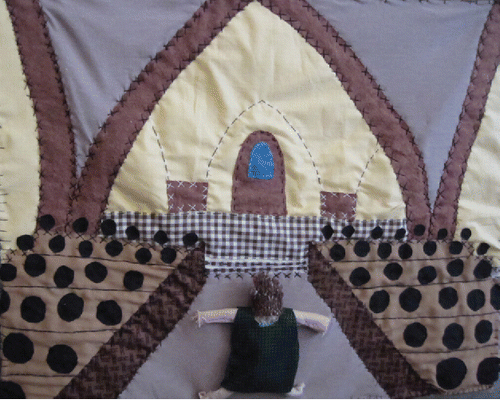
Art Therapy and Narrative Textiles

Contemporary Tapestry — From Narrative Cloth to Critical Surface

Tapestry, traditionally defined as the weaving of images through the interlacing of warp and weft, has undergone one of the most profound transformations in the history of visual art. Once a medium of decoration, insulation, and narrative storytelling, tapestry has re-emerged in the 21st century as a critical, conceptual, and spatial practice—a surface that thinks, remembers, and constructs meaning.

The Ancestral Image: Tapestry as Narrative System

Tapestry is among the earliest image-making technologies. Long before painting assumed its central place in Western art, textiles functioned as vehicles of storytelling and symbolic communication. In ancient Peru, tapestry served as a primary medium of meaning in the absence of written language, encoding cosmology and social order into woven form.

In medieval Europe, monumental tapestries such as The Lady and the Unicorn were both decorative and functional, insulating castle walls while presenting complex allegorical imagery.

Across cultures, tapestry has always operated at the intersection of:

  • image and structure
  • function and symbolism
  • material and narrative

Modernism and the Revaluation of Textile

The 20th century marked a decisive turning point. Artists such as Anni Albers redefined weaving and tapestry as forms of modernist experimentation, emphasizing structure, repetition, and material intelligence over ornament.

Simultaneously, major modern artists—including Alexander Calder and Fernand Léger—collaborated with weaving ateliers to translate their visual language into tapestry, expanding its status within the canon of fine art.

Yet despite these advances, tapestry remained peripheral—its association with craft and decoration limiting its institutional recognition.

The Break: “New Tapestry” and the 1970s

The true rupture occurred in the 1960s and 1970s, particularly through the Lausanne Biennials, where what became known as “New Tapestry” redefined the medium entirely.

Artists abandoned the flat wall-hanging format, creating:

  • suspended fibers
  • monumental, sculptural forms
  • experimental constructions with unconventional materials

These works dissolved the boundary between tapestry and sculpture, marking a shift toward what we now understand as fiber art in the expanded field.

This moment also intersected with feminist art movements, which reclaimed textile practices as sites of intellectual and political agency.

Contemporary Tapestry: Beyond the Wall

In contemporary art, tapestry no longer belongs exclusively to the wall. It has become:

  • installation
  • sculpture
  • hybrid media

Artists such as Annika Ekdahl rework historical formats—drawing on Renaissance and Baroque traditions—while integrating contemporary themes and visual strategies.

Others incorporate unexpected materials—plastic, metal, digital imagery—challenging the very definition of tapestry. Recent exhibitions highlight how contemporary works integrate elements such as industrial materials and digital motifs, expanding the medium’s conceptual range.

Crucially, many contemporary artists treat tapestry not as a fixed object, but as a site of negotiation between painting, textile, and sculpture.

Material Expansion and Conceptual Depth

What defines contemporary tapestry is not technique alone, but its material and conceptual elasticity.

Artists today:

  • weave with unconventional fibers (synthetics, found objects)
  • merge tapestry with painting, collage, and digital imagery
  • explore scale—from intimate works to architectural installations

The medium becomes a platform for addressing contemporary issues:

  • identity and sexuality
  • politics and conflict
  • memory and migration

As noted in recent critical discourse, tapestry has become a means of expressing “conflicting impulses” and complex narratives through layered material systems.

Labor, Time, and the Politics of Slowness

Tapestry remains one of the most labor-intensive art forms. Its slow production—thread by thread—imbues each work with duration and embodied time.

In contrast to digital immediacy, tapestry asserts:

  • the value of process
  • the visibility of labor
  • the persistence of the handmade

This temporal dimension is not incidental; it is central to the medium’s contemporary relevance.

Tapestry as Contemporary Condition

In 2026, tapestry is experiencing what many describe as a renaissance. Contemporary artists are revisiting this ancient medium not out of nostalgia, but because it offers something uniquely suited to our time:

  • a way to think through complex systems and interconnections
  • a material language for layered, fragmented realities
  • a structure that holds multiple narratives simultaneously

It is no longer simply an image woven in thread. It is a field of relations—between past and present, material and meaning, structure and story.

Closing: The Image Woven in Time

Tapestry endures because it embodies a paradox: it is one of the oldest art forms, yet among the most adaptable.

From ancestral storytelling textiles to contemporary installations, it continues to evolve while retaining its essential logic—the transformation of thread into image, and image into meaning.

In contemporary art, tapestry is no longer decorative.
It is epistemological—a way of knowing, constructing, and understanding the world through the act of weaving itself.
Professional levels of visual arts studies

United States Artists Awards 2026 Knight Arts + Tech Fellowship to Five Artists

The professional levels of visual arts studies follow a clear path of progression, each level building upon the skills and knowledge gained in the previous one. This structured journey offers different degrees of specialization and depth in the field, inspiring students to advance in their artistic careers. Below is a description of the most common levels of education in visual arts:

1. Technical or Preparatory Training (Art Schools and Technical Courses)

At this level, students acquire a solid technical foundation in various visual arts disciplines, such as drawing, painting, sculpture, photography, graphic design, and more. Art schools or centers specializing in technical education focus on developing practical skills, equipping students with the confidence and preparation they need to succeed in the field.

  • Duration: Generally 2 to 3 years.
  • Degree: Technical Diploma or Certificate.

2. Bachelor’s Degree (Undergraduate)

The next level is the university degree, typically offered under titles such as Bachelor of Fine Arts (BFA), Bachelor of Visual Arts, or similar degrees. This level of study is not just about practical skills, but also about academic and theoretical exploration, providing students with a stimulating intellectual environment.

  • Duration: 3 to 4 years.
  • Degree: Bachelor of Fine Arts (BFA), Bachelor of Visual Arts, Bachelor of Graphic Design, etc.

At this stage, students explore various areas of visual arts, such as painting, sculpture, photography, video art, printmaking, and design, while developing their style and theoretical understanding of art.

3. Master’s Degree (Postgraduate)

The next level is the master’s in visual arts, which is for those seeking greater specialization and a more rigorous academic approach. At this stage, students typically choose a specialization, such as contemporary art, sculpture, painting, digital design, multimedia art, etc. In addition to artistic practice, students dive deeper into critical analysis, art theory, and research methodologies.

  • Duration: Generally 1 to 2 years.
  • Degree: Master of Fine Arts (MFA), Master in Art, etc.

This level is aimed at those who want to pursue a professional career as artists, curators, educators, or even researchers in visual arts.

4. Doctorate (Ph.D. or Doctorate in Fine Arts)

The doctorate is the highest level of study focused on academic research and high-level artistic production. Doctorates in visual arts are less common and are intended for those who wish to combine artistic creation with in-depth research on art theory, art history, or any field of visual arts in an academic context.

  • Duration: Typically 3 to 5 years, depending on the research.
  • Degree: Doctorate in Arts (Ph.D. in Art) and Fine Arts (DFA).

At this level, artists may also produce a thesis or a series of works that are innovative and contribute to the development of the field. A Ph.D. can open doors to academic positions in universities, as well as for high-impact artistic projects.

5. Specialized Courses and Workshops (Continuing Education)

In addition to formal studies, specialized courses, workshops, and seminars allow artists to continue their education throughout their careers. These short-term programs enable artists to refine specific techniques, learn new digital tools, explore contemporary trends in art, or learn about art management and the art market.

  • Duration: Varies from a few days to several months.
  • Degree: No formal degree is awarded, but certifications or diplomas are often provided.

Art schools, universities, art galleries, or even online platforms can organize these programs. They are popular among professionals already working in the art field who want to continue developing their skills.

Summary of Levels:

  1. Technical Training: Diploma or Certificate.
  2. Bachelor’s Degree in Visual Arts: BFA (Bachelor of Fine Arts).
  3. Master’s in Fine Arts (MFA): Master of Fine Arts.
  4. Doctorate in Visual Arts: Ph.D. or DFA (Doctor of Fine Arts).
  5. Specialized Courses and Workshops: Continuing education without formal degree.

Each level offers different opportunities for personal and professional development in the visual arts field, allowing artists and creatives to find the path that best suits their interests and goals.

Top Luxury Home Builders in Miami: Where Architecture, Craftsmanship, and Lifestyle Converge

Top Luxury Home Builders in Miami

Top Luxury Home Builders in Miami: Where Architecture, Craftsmanship, and Lifestyle Converge

The New Architecture of Luxury in South Florida

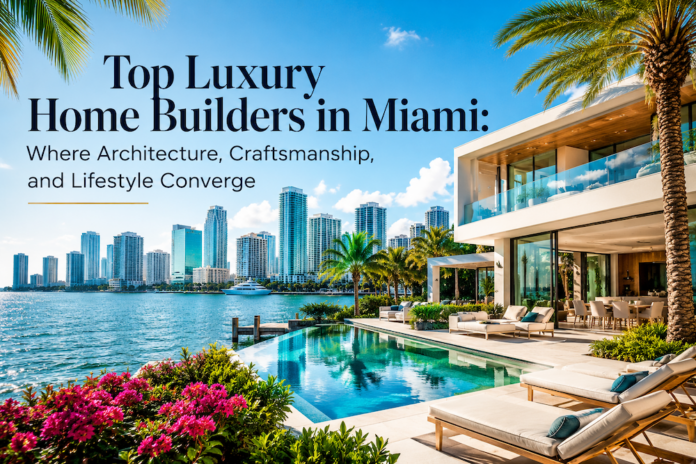
Miami has emerged as one of the world’s most dynamic centers for luxury real estate, attracting entrepreneurs, collectors, investors, and cultural leaders from across the globe. The city’s remarkable growth has transformed luxury home building into far more than a construction industry. Today, the most successful luxury builders operate at the intersection of architecture, design, engineering, and lifestyle creation.

In an era when discerning homeowners seek custom residences that reflect their personal identities, luxury home builders have become curators of experience. Their projects are no longer measured solely by square footage or construction value, but by their ability to integrate innovation, sustainability, craftsmanship, and aesthetic excellence.

The following firms represent some of the most influential luxury home builders shaping Miami and South Florida’s residential landscape.

TREO Construction

Among Miami’s leading luxury home builders, TREO Construction has established a reputation for delivering highly customized residences through meticulous project management and construction excellence. Serving Miami, Miami Beach, Bal Harbour, and surrounding communities, the company specializes in transforming ambitious architectural visions into sophisticated built environments.

What distinguishes TREO is its integrated approach to luxury residential development. The firm’s expertise extends beyond construction to include coordination among architects, designers, engineers, and specialized craftsmen. This comprehensive methodology allows for exceptional attention to detail throughout every phase of a project.

For clients seeking custom waterfront estates, contemporary residences, or architecturally complex homes, TREO has become synonymous with precision, reliability, and high-end execution.

Jarosz Architect, P.A. and Jarosz Development Corporation

Jarosz Architect, P.A. and Jarosz Development Corporation represent a unique combination of architectural design, development expertise, and construction leadership. Operating as architects, home builders, designers, project managers, and superintendents, the firm provides a comprehensive design-build experience rarely found in today’s fragmented construction market.

Their multidisciplinary structure enables seamless communication between concept and execution, allowing clients to maintain a singular creative vision from initial sketches to final completion. This integrated model has proven especially valuable in Miami’s competitive luxury market, where custom homes often demand sophisticated architectural solutions and rigorous project oversight.

The firm’s work reflects a commitment to balancing functionality, aesthetics, and long-term value, creating residences that respond to both contemporary lifestyles and South Florida’s unique environmental conditions.

MV Group USA

MV Group USA has become one of South Florida’s most recognized names in ultra-luxury residential construction. Known for custom estates, waterfront compounds, and architecturally significant residences, the company has played a major role in shaping some of the region’s most exclusive neighborhoods.

The firm’s portfolio demonstrates a remarkable ability to execute large-scale, highly customized projects that combine advanced engineering, luxury amenities, and exceptional craftsmanship. From expansive waterfront properties to private family compounds, MV Group consistently delivers residences that reflect the aspirations of a global clientele.

Their projects embody the contemporary luxury market’s growing emphasis on wellness, privacy, sustainability, and technological integration.

Landmark Custom Homes

Landmark Custom Homes has built its reputation on creating bespoke residences throughout Miami-Dade, Broward, and Palm Beach counties. The firm’s work reflects a deep understanding of luxury living, combining timeless design principles with modern construction technologies.

Known for estate homes and highly personalized custom residences, Landmark emphasizes collaboration with homeowners throughout the design and construction process. This client-centered philosophy allows each project to reflect the unique lifestyle, aesthetic preferences, and long-term goals of its owners.

Their growing presence throughout South Florida demonstrates the continued demand for personalized luxury homes that prioritize both architectural character and livability.

Maranata Construction

Maranata Construction brings versatility and craftsmanship to Miami’s luxury residential sector. With experience spanning custom homes, luxury interiors, and commercial projects, the company offers a broad understanding of design, construction, and spatial experience.

The firm’s ability to navigate multiple project types provides valuable insight into contemporary architectural trends and evolving client expectations. Whether developing a custom residence or executing sophisticated interior environments, Maranata emphasizes quality, detail, and functional elegance.

Its diverse portfolio reflects the increasingly interdisciplinary nature of luxury construction in South Florida.

Intelligent Construction Inc.

Specializing in luxury custom homes, waterfront estates, and high-end renovations, Intelligent Construction Inc. has become a respected name in prestigious communities such as Coral Gables, Coconut Grove, and Key Biscayne.

The firm’s projects often involve complex construction challenges, including waterfront engineering, historic renovations, and highly customized residential environments. Their work demonstrates a strong commitment to technical excellence while maintaining a refined architectural sensibility.

As Miami continues to evolve, Intelligent Construction’s expertise in both new construction and transformative renovations positions the company at the forefront of residential innovation.

JD Miami

JD Miami embraces a design-build philosophy that appeals to high-net-worth homeowners seeking a streamlined construction experience. By integrating design and construction services under a unified framework, the company simplifies communication, accelerates decision-making, and enhances project efficiency.

This collaborative approach allows for greater alignment between architectural intent and construction execution. The result is a portfolio of luxury residences characterized by sophisticated design, careful detailing, and exceptional craftsmanship.

In a market increasingly driven by customization and efficiency, JD Miami represents the growing appeal of integrated project delivery models.

Certain Homes

Certain Homes exemplifies the strengths of boutique luxury construction. Specializing in bespoke residences throughout Miami, the firm focuses on highly personalized projects that prioritize craftsmanship, individuality, and client engagement.

The company’s boutique scale enables close collaboration with homeowners, resulting in residences that reflect unique architectural identities rather than standardized luxury formulas. This attention to customization has become increasingly important as affluent buyers seek homes that serve as authentic expressions of personal taste and lifestyle.

Certain Homes demonstrates how smaller firms can achieve remarkable impact through specialization and design sensitivity.

Sabal Luxury Builder

Sabal Luxury Builder distinguishes itself through a fully integrated development model that combines design, permitting, construction, and project management. This comprehensive approach provides clients with a single point of coordination throughout the entire building process.

Known for ultra-luxury residences, Sabal has developed expertise in navigating the complex regulatory and construction environment of South Florida while maintaining a strong commitment to architectural quality.

Its projects reflect the growing demand for turnkey luxury solutions that balance innovation, efficiency, and exceptional design standards.

Building the Future of Luxury Living

The luxury home builders shaping Miami today are doing more than constructing residences. They are creating architectural landmarks, redefining contemporary lifestyles, and contributing to the cultural identity of one of the world’s most dynamic cities.

As Miami continues to attract global attention, these firms stand at the forefront of a new era in luxury residential development—one where architecture, technology, sustainability, and personal expression converge to create homes that are both investments and works of living art.

JAGUAR PARADE TRANSFORMS MIAMI INTO GLOBAL OPEN-AIR ART EXPERIENCE

Jaguar Parade Miami 2026

JAGUAR PARADE TRANSFORMS MIAMI INTO GLOBAL OPEN-AIR ART EXPERIENCE

As Miami takes center stage during the 2026 World Cup, monumental jaguar sculptures by Brazilian artists will transform the city into an immersive celebration of art, culture, and conservation.

Miami is about to get wilder.

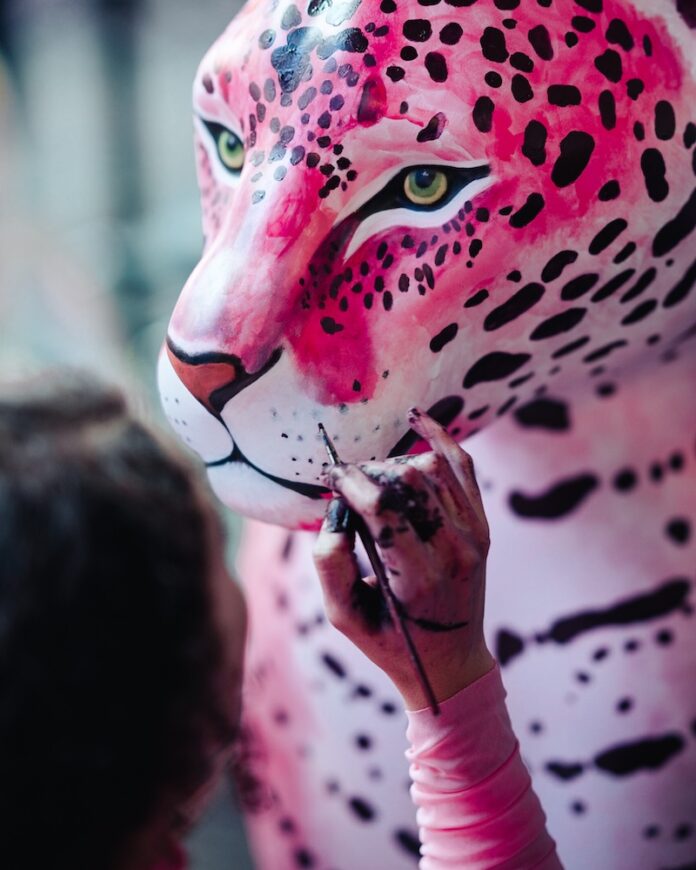
In 2026, monumental jaguar sculptures created by Brazilian artists will take over Miami as part of Jaguar Parade, one of the world’s largest public art and conservation initiatives. Transforming the city into a vibrant open-air gallery, the project invites residents and visitors to experience art across public spaces while raising awareness about jaguar conservation and biodiversity protection.

Arriving at a moment when Miami will be welcoming unprecedented international attention and global audiences, Jaguar Parade connects public art, environmental awareness and cultural exchange through immersive installations designed to engage diverse communities and visitors from around the world.

Created and produced by Artery, the Miami edition will feature 11 large-scale jaguar sculptures installed across key locations throughout the city. Blending artistic expression with environmental purpose, the installations are designed to spark curiosity, interaction and meaningful conversations around nature and conservation.

Among the featured works, one sculpture will be painted live during a special activation on June 9 by acclaimed Brazilian urban figurative artist Fabiano Senk. Based in São Paulo, Senk is recognized for his dreamlike color palettes and large-scale works exploring themes of community, identity and human connection.

The exhibition will also feature works by Brazilian artists Gus Attab, Laila Mackenzie, Busy, Livia Mourão & Rui Machado, Guilherme Kramer, Kássia Borges, Lettice, Vinicius Zoia, Sophie Reiterman and Cíntia Abravanel — each bringing distinct artistic perspectives inspired by biodiversity, coexistence and environmental preservation.

Following successful editions in cities including New York, Paris, São Paulo and Rio de Janeiro, Jaguar Parade arrives in Miami as part of its international expansion into some of the world’s leading cultural capitals. To date, the initiative has brought together more than 258 artists and impacted over 30 million people globally, generating more than 336 million media and digital impressions worldwide.

This edition also carries special significance as it celebrates the 15th anniversary of Onçafari, the internationally recognized nonprofit organization dedicated to jaguar conservation and biodiversity protection in Brazil.

Being part of the Jaguar Parade is a major milestone for Onçafari and an opportunity to expand our international presence while sharing the conservation work we have developed across Brazil and Latin America,” said Mario Haberfeld, founder of Onçafari. “As we celebrate 15 years of history, we are proud of the legacy we’ve built in jaguar conservation and habitat protection.”

Today, Onçafari operates 23 conservation bases across nine Brazilian states, directly managing more than 125,000 hectares and supporting the protection of over 2 million hectares of natural areas.

At the conclusion of the exhibition, 100% of the auction’s net proceeds will support the organization’s ongoing conservation efforts and future initiatives.

Public art has the power to interrupt people’s routines and create emotional connections,” said Carol Barreto, CEO of Artery. “And those connections can open the door to important conversations about conservation, biodiversity and our relationship with the environment.”

The Miami edition is presented by Brazil’s Ministry of Culture, Stella and FF Seguros through the Rouanet Law, with Diamond sponsorship by VisionOne, Natoo and Eucatex, and support from Embraturand Visit MS. The project is produced by Artery with support from the Brazilian Consulate General in Miami and Miami-Dade County.

ABOUT JAGUAR PARADE

Jaguar Parade is an international public art initiative connecting art, conservation and social impact through large-scale urban exhibitions around the world, with the mission of raising awareness for jaguar preservation and biodiversity protection.

ABOUT ONÇAFARI

Onçafari is a Brazilian nonprofit organization dedicated to jaguar conservation and biodiversity protection through scientific research, habitat preservation, environmental education and sustainable ecotourism initiatives.

ABOUT ARTERY

Artery is a global platform for cultural projects and immersive experiences connecting brands, artists and social causes through initiatives that generate cultural, environmental and social impact internationally.

Miami Fiber Triennial 2026

Miami Fiber Triennial 2026

Miami Fiber Triennial 2026

FAMA and MIFA Announce Miami Fiber Triennial 2026, a Citywide Cultural Event Reframing Fiber as a Language of Memory, Labor, Identity, and Belonging

Presented during the 250th anniversary of the United States, the Triennial brings together exhibitions, performances, public programs, and satellite activations across Miami to explore how textile practices shape personal histories, national narratives, and collective futures.

Miami, FL — May 9, 2026 — Fiber Artists Miami Association (FAMA) and Miami International Fine Arts (MIFA) are proud to announce the Miami Fiber Triennial 2026, a citywide cultural event dedicated to the expanded field of fiber, textile, and material-based contemporary art.

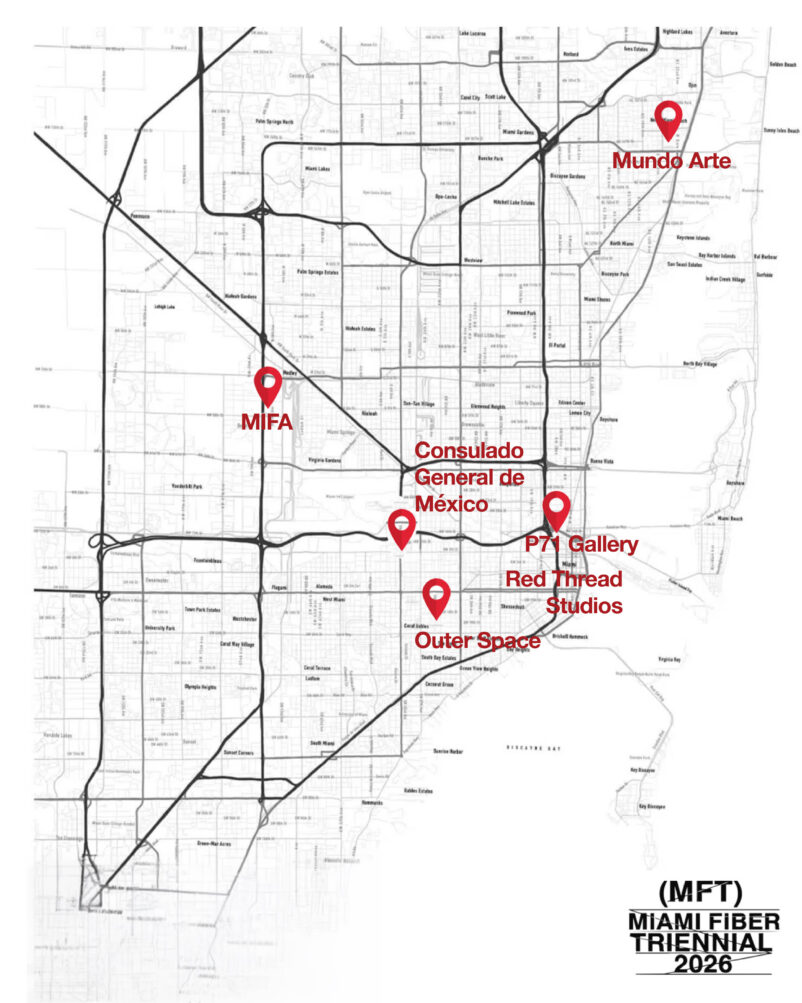
Opening on Thursday, June 11, 2026, from 6:00 to 9:00 PM at Miami International Fine Arts (MIFA), the Triennial’s main exhibition program will be on view through July 24, 2026. The event will activate MIFA’s galleries, performance room, printshop, outdoor spaces, and resident artist gallery while extending across Miami through satellite exhibitions and public programs at Red Thread Studios, P71, Mundo Arte Gallery, and Outer Space.

Presented in dialogue with the 250th anniversary of the United States, the Miami Fiber Triennial 2026 arrives at a moment of national reflection on civic memory, migration, labor, identity, and belonging. Rather than approaching fiber as a decorative or secondary medium, the Triennial positions textile practices as critical artistic languages through which artists examine the structures shaping contemporary life: the home, the body, the city, the border, the archive, ritual, and the nation itself.

“This Triennial recognizes fiber as one of the most urgent and expansive artistic practices of our time,” said the organizers. “Through weaving, stitching, knotting, dyeing, and material experimentation, participating artists transform textile traditions into contemporary forms of cultural memory, resistance, and collective imagination.”

OPENING NIGHT AT MIFA
Thursday, June 11, 2026
6:00 PM – 9:00 PM

Exhibitions On View (June 11 – July 24, 2026)

Room A
American Fiber: Threads of Labor, Memory, and Belonging
Group Exhibition · 24 artists
Curated by Tayina Deravile

Room B
Movement in Suspended Time
Patricia Calero
Curated by Katherine Chacón

Room C
Textile, Intimate Matter
Mayra Alpízar
Curated by Katherine Chacón

Room D
Encoded Threads: Weaving Memory, Data, and Identity
Emilio Vavarella & Doro Seror
Curated by Olga García-Mayoral
Juried by Bernice Steinbaum

Room E
Memories Woven into the City
Group Exhibition · 27 artists
Curated by Shirley Moreira
Juried by Carol Damian

Outdoor Spaces
Weathered Structures
7 artists · Site-responsive outdoor works
Curated by Pamela Solares
Juried by Sophie Bonet

Residents Room
Holding the Thread of Reality
MIFA Artists-in-Residence · 5 artists
Curated by Adriana Zubikarai

Printshop Room
Imprinted Selves
William Alonso · Lina Linkimer · Helio Salcedo · Marilyn Valiente
Curated by Shirley Moreira

Performance Program

MIFA Performance Room
Embracing the Knot
June 20, 2026 · 11:00 AM
Performance by Ana Sofia Ruiz Cavero
Juried by Monica Czukerberg

In addition to exhibitions and performances, the Miami Fiber Triennial 2026 will feature artist talks, family programs, workshops, screenings, and public activations designed to engage audiences of all ages and backgrounds. The Triennial emphasizes Miami’s unique position as a crossroads of diasporic cultures and material histories, creating a platform for artists whose practices connect local experiences to broader global conversations.

By bringing together emerging and established artists from across disciplines, the Miami Fiber Triennial 2026 redefines fiber not simply as medium, but as method: a way of thinking through interconnection, repair, storytelling, and collective futures.

SPECIAL PROGRAMMING · AT MIFA

June 11, 2026 · 6:00–9:00 PM
OFFICIAL OPENING NIGHT
Miami Fiber Triennial 2026 — Triennial Opening

The official launch of the Miami Fiber Triennial 2026. All eight exhibitions open simultaneously. Free and open to the public.

MIFA
5900 NW 74th Ave, Miami, FL 33166

June 13, 2026 · 11:00 AM–12:30 PM
ARTIST TALK · EMILIO VAVARELLA
Weaving Together Old and New Media

A conversation exploring how DNA becomes textile form — where art, science, and industry converge. The talk examines identity, nature, and technological processes through the language of weaving.

MIFA
Free admission

July 11, 2026 · 11:00 AM–2:00 PM
KIDS & FAMILY DAY
Fiber, Texture, and Storytelling

Guided artist tours, hands-on fiber activities, demonstrations, and interactive learning experiences for children and caregivers. Includes refreshments, prizes, and a welcoming environment for all ages.

Led by Aurora Molina and Alina Rodríguez-Rojo

MIFA
Free admission · All ages welcome

ACROSS THE CITY · SATELLITE PROGRAM

Friday, June 5, 2026 · 6:00–9:00 PM
THREADING SILENCE: CONDITIONED TO BE QUIET
Film Screening by Cynthia Passavanti

Red Thread Studios
283 Catalonia Ave, Coral Gables, FL

Friday, June 12, 2026 · 6:00–9:00 PM
SOFT ARCHITECTURE: TEXTILE AND THE TECHNOLOGIES OF LIVING

Featuring works by Rodríguez-Rojo, Caridad, Lopera, Molina, Politzer, Tsalikis, and Valiente

P71 Gallery
230 NW 71st St, Miami, FL

Saturday, June 20, 2026 · 3:30–5:30 PM
RETURNING THE COLORS TO THE SEA
Participatory Installation & Poetry

Marisol Torruella & Nidia Baquero / Ocean Ink

P71 Gallery
230 NW 71st St, Miami, FL

Saturday, June 20, 2026 · 6:00–9:00 PM
THRESHOLDS OF RITUAL

Featuring Pilar Tobón, Ọmọlará Williams McCallister, and Joaquín Ponzzinibio

Mundo Arte Gallery
1746 NE 163rd St, North Miami Beach, FL

Saturday, June 27, 2026 · 3:30–6:30 PM
CURATOR-LED WALKTHROUGH: SOFT ARCHITECTURE

Led by Sophie Bonet

P71 Gallery
230 NW 71st St, Miami, FL

A Poet and the Endless Hollywood Mirror: When Latin American Cinema Becomes Raw Material

Hollywood Remake

A Poet and the Endless Hollywood Mirror: When Latin American Cinema Becomes Raw Material

Hollywood Remake

By Rafael Montilla

The announcement that Simón Mesa Soto’s acclaimed Colombian film A Poet (Un poeta, 2025) will receive an American remake has ignited a familiar debate across the international film community. The controversy is not merely about one film. It touches a deeper question that has accompanied global cinema for decades: Why does Hollywood so often feel compelled to retell stories that have already been told—sometimes brilliantly—in other languages?

Mesa Soto’s original film emerged as one of the most celebrated Latin American productions of recent years. Premiering at the Cannes Film Festival in 2025, where it received major recognition, A Poet quickly established itself as a poignant reflection on artistic failure, ambition, and redemption. Its success led to international distribution and critical acclaim well beyond Colombia.

Yet only a year later, an American adaptation is already in development. Directed by Nathan Silver and produced by Saïd Ben Saïd, the project has provoked criticism from audiences who question whether such a recent and culturally specific work requires reinterpretation for English-speaking viewers.

To be fair, remakes are not inherently problematic. Cinema has always been a conversation across borders. Stories migrate, transform, and acquire new meanings. Simón Mesa Soto himself has defended the adaptation, arguing that the sale of remake rights helps sustain independent filmmakers and finance future projects. From an economic perspective, his position is entirely understandable.

The concern lies elsewhere.

For many cinephiles, the issue is not that Hollywood remakes foreign films, but that the remakes frequently overshadow the originals. Audiences often encounter the American version first and remain unaware that the story originated elsewhere. This dynamic has affected numerous international works whose artistic achievements become secondary to the visibility of their English-language adaptations.

A notable example is The Secret in Their Eyes (El secreto de sus ojos), Juan José Campanella’s Argentine masterpiece, winner of the Academy Award for Best Foreign Language Film in 2010. In 2015, Hollywood released Secret in Their Eyes, starring Julia Roberts, Nicole Kidman, and Chiwetel Ejiofor. While heavily marketed, the remake received mixed reviews and was frequently criticized for failing to capture the emotional and political complexity of the original. Critics noted that much of what made the Argentine film exceptional was lost in translation.

Another example is CODA (2021), winner of the Academy Award for Best Picture. Many viewers were unaware that it was a remake of the French film La Famille Bélier (2014). While CODA successfully reimagined the story and achieved enormous acclaim, public discussion often centered on the remake itself rather than its source material.

The pattern extends beyond Latin America. International cinema frequently serves as a testing ground for narratives that are later reformulated for American audiences. The remake industry operates under the assumption that many viewers prefer stories delivered through familiar cultural codes and in English. Whether this assumption remains valid in an era of streaming platforms, subtitles, and global audiences is increasingly open to question.

Today, viewers can access Colombian, Argentine, Korean, French, and Iranian cinema with unprecedented ease. The old argument that foreign-language films are inaccessible feels less convincing than ever. Contemporary audiences have shown a growing willingness to engage directly with original works rather than mediated versions.

Perhaps the debate surrounding A Poet signals a broader cultural shift. The resistance to the remake is not necessarily resistance to adaptation itself; it is a defense of cultural specificity and artistic authorship. It reflects a desire to preserve the integrity of works that emerge from particular histories, languages, and social realities.

Hollywood will undoubtedly continue remaking international films. The practice is as old as the industry itself. But the conversation surrounding A Poet reminds us that audiences are becoming more attentive to origins. They want to know where stories come from. They want to recognize the artists who first imagined them.

And perhaps that is the most important outcome of this controversy: not the remake itself, but the renewed attention being given to the remarkable original film that inspired it.

Edouard Duval-Carrié with Guillermina De Ferrari

Edouard Duval-Carrié in Conversation with Guillermina De Ferrari

Edouard Duval-Carrié with Guillermina De Ferrari

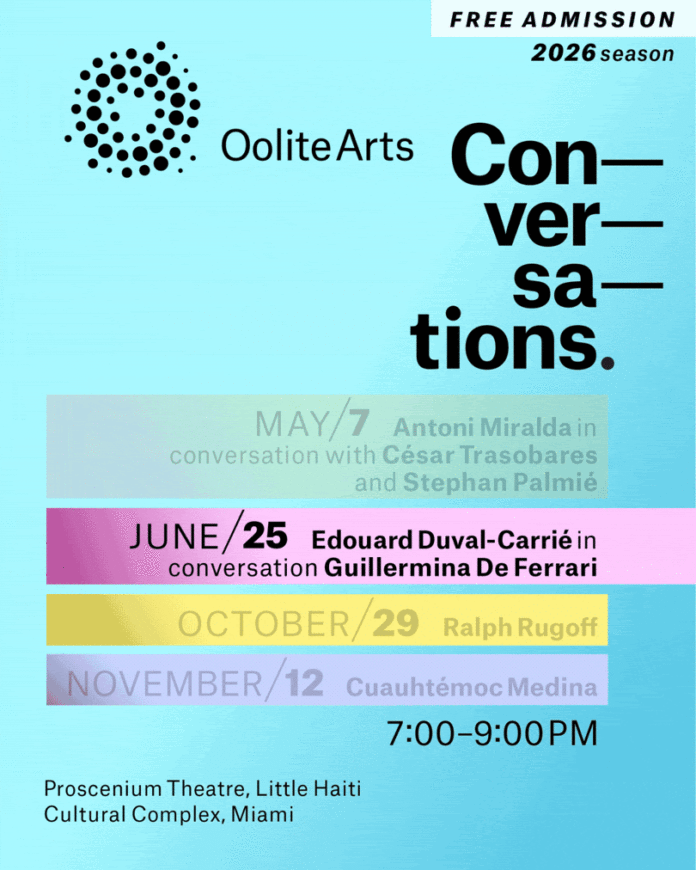
Oolite Arts’ latest Conversations installment on June 25 with Duval-Carrié, joined by De Ferrari, exploring Caribbean and diasporic culture.

When:
June 25, 2026
7:00 – 9:00 p.m.

Where:
Proscenium Theatre, Little Haiti Cultural Complex
212 NE 59th Terrace, Miami, FL 33137

Admission: Free

Free On-Site Parking

Oolite Arts is pleased to announce the latest installment of Oolite Arts Conversations, a new series of public talks that convenes artists, curators, museum professionals, and cultural thinkers in rigorous and lively dialogue.

On June 25, 2026, Oolite Arts Conversations will present Edouard Duval-Carrié, the Haitian-born, Miami-based artist whose richly layered paintings and installations have played a defining role in shaping contemporary Caribbean and diasporic discourse in the United States. He will be joined in conversation by Guillermina De Ferrari, a curator, critic, and scholar whose work focuses on modern and contemporary Caribbean culture.

Forced into exile as a youth during the regime of François Duvalier, Duval-Carrié lived and worked across the Caribbean, North America, and Europe before settling in Miami in the mid-1990s. This transnational trajectory has informed a sustained engagement with histories of migration, displacement, and cultural memory that spans his entire artistic practice. Working across painting, sculpture, and installation, Duval-Carrié has developed intricate visual languages that draw from Haitian history, Vodou symbolism, and the enduring legacies of colonialism, often employing reflective and translucent materials to create spatially immersive environments.

Duval-Carrié’s practice also extends beyond the studio through a significant civic and institutional presence in South Florida, contributing to the development of Miami’s cultural landscape through exhibitions, collaborations, and public commissions, including major projects along the Miami Riverwalk and other key sites.

About the Speakers:

A key figure in advancing Haitian art internationally, Edouard Duval-Carrié participated in Haiti’s first national pavilion at the 54th Venice Biennale (2011) and was named a Chevalier of France’s Ordre des Arts et des Lettres (2014). Duval-Carrié’s work excavates histories of revolution and exile, Vodou cosmologies, and colonial afterlives, mobilizing Haiti’s intellectual and spiritual traditions as living frameworks for the present. His work was included in documenta XV (2022) as part of the Atis Rezistans / Ghetto Biennale constellation. Most recently, Duval-Carrié has been invited to participate in the 61st Venice Biennale (2026), further affirming his stature as a leading voice connecting Haiti’s revolutionary histories to contemporary global art.

Guillermina De Ferrari is a Guggenheim Fellow and distinguished scholar of Caribbean literature and visual culture, whose research-driven curatorial practice bridges archives, memory, and contemporary art. Her work has advanced critical frameworks for understanding Caribbean and Haitian cultural production within broader transnational and postcolonial debates. De Ferrari is the author of Vulnerable States: Bodies of Memory in Contemporary Caribbean Fiction (University of Virginia Press, 2007) and the forthcoming Broken Tropics: Contingency in Contemporary Caribbean Art. Her curatorial and academic work includes directing the Center for Visual Cultures at the University of Wisconsin–Madison (2014–2018), as well as organizing exhibitions, publications, and symposia that have significantly shaped discourse in the field.

ABOUT OOLITE ARTS CONVERSATIONS

Conceived as a platform for critical exchange, Oolite Arts Conversations reflects Oolite Arts’ commitment to supporting artists while advancing the knowledge and practice of contemporary visual arts.

Oolite Arts Conversations is organized by Rina Carvajal, Senior Director of Programs at Oolite Arts. It is made possible with the support of the John S. and James L. Knight Foundation; the Miami-Dade County Department of Cultural Affairs and the Cultural Affairs Council; the Miami-Dade County Mayor and Board of County Commissioners; the State of Florida, Department of State, Division of Arts and Culture; and the Florida Council on Arts and Culture.

Oolite Arts Media-Only Contacts: Claudia DoCampo, Director of Communications and Marketing, [email protected], (305) 746-2250

GAME TIME Returns to Pérez Art Museum Miami During FIFA World Cup 2026

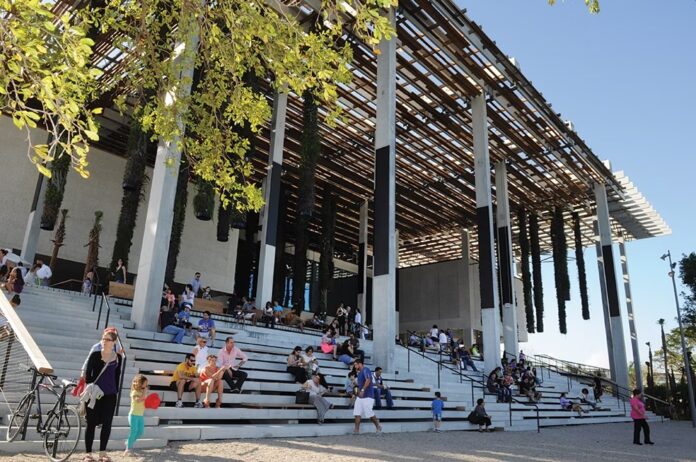
PAMM Miami
PAMM Miami

GAME TIME Returns to Pérez Art Museum Miami During FIFA World Cup 2026

A One-Day Gathering Explores the Intersection of Art, Sports, Media, and Cultural Identity

MIAMI, FL — As Miami takes center stage during the 2026 FIFA World Cup, Pérez Art Museum Miami (PAMM) will host GAME TIME: Session 2 – Dialogues on Art, Sports, and Headlines on Friday, June 26, 2026, bringing together some of the most influential voices in sports, journalism, art, and culture for a day of dynamic conversations and public engagement.

Timed to coincide with the World Cup group stage and Miami’s role as one of the tournament’s host cities, the event examines how sports shape contemporary culture, influence public discourse, transform cities, and inspire artistic expression. With seven FIFA World Cup matches scheduled to take place in Miami and thousands of international visitors arriving across South Florida, GAME TIME offers a unique cultural platform for exploring the broader impact of global sporting events.

The program will feature an exceptional roster of participants, including Olympic gold medalist and civil rights icon Tommie Smith, artist Glenn Kaino, The New Yorker staff writer Kelefa Sanneh, former NFL defensive lineman and Studio Kër founder Michael Bennett, PAMM Director Franklin Sirmans, Smithsonian curator Dr. Damion L. Thomas, Miami Herald reporter C. Isaiah Smalls III, architect and designer Germane Barnes, and other leading figures from the worlds of art, sports, and media.

The event builds upon the momentum of GAME TIME’s inaugural session, a sports and culture conference series conceived by curator and creative director Adam Abdalla. Hosted in collaboration with major museums and cultural institutions, the initiative seeks to foster meaningful dialogue around the cultural significance of sports through conversations, performances, screenings, and community engagement.

Tickets include admission to PAMM’s galleries and two major exhibitions opening that week: Get in the Game: Sports, Art, Culture, a landmark exhibition featuring more than 100 works by internationally recognized artists exploring athletic performance, resilience, identity, and spectacle; and Basquiat: Figures, Signs, Symbols, a major presentation examining the visual language and symbolism of Jean-Michel Basquiat.

Organized by the San Francisco Museum of Modern Art (SFMOMA) and adapted for Miami, Get in the Game: Sports, Art, Culture reflects the city’s unique position at the intersection of international sports and contemporary art, making GAME TIME a timely addition to Miami’s growing role as a global cultural capital.

Event Details

GAME TIME: Session 2 – Dialogues on Art, Sports, and Headlines
Date: Friday, June 26, 2026
Location: Pérez Art Museum Miami (PAMM)
1103 Biscayne Boulevard, Miami, FL 33132
Tickets: Available through PAMM and GAME TIME. Admission includes access to museum exhibitions.

As the world turns its attention to Miami during FIFA World Cup 2026, GAME TIME offers a compelling opportunity to consider how sport extends beyond competition—serving as a catalyst for creativity, cultural exchange, storytelling, and social change.

Facundo Yebne: ONE WORLD, ONE GAME at Kimpton EPIC Hotel

EPIC Art Welcomes Facundo Yebne to Kimpton EPIC Hotel

Facundo Yebne: ONE WORLD, ONE GAME at Kimpton EPIC Hotel

MIAMI, FL — EPIC Art at Kimpton EPIC Hotel is proud to present a new exhibition by Miami-based multidisciplinary artist Facundo Yebne (FLY), June 3, at 6:00 PM opening in the hotel’s 16th-floor gallery space at Kimpton EPIC Hotel, located at 270 Biscayne Boulevard Way, Miami, FL 33131.

Known for transforming everyday objects into powerful visual statements, FLY has built an internationally recognized artistic practice centered around his signature use of rubber and resin ducks. Through bold sculptures, layered mixed-media works, and immersive installations, the artist explores themes of identity, peace, freedom, and collective humanity.

Activated in many cases by ultraviolet light, FLY’s works reveal hidden dimensions beneath their playful surfaces, inviting viewers into a dual experience that is both visually dynamic and emotionally resonant. His artworks merge pop sensibility with contemporary social reflection, creating a visual language that is immediately accessible while carrying deeper symbolic meaning.

“The duck becomes more than an object,” says the artist. “It becomes a messenger — a reminder of innocence, connection, and the possibility of unity.”

Originally from Argentina and now based in Miami, FLY is the first Argentinian artist to present public installations on Lincoln Road. Under the platform FLY Miami Art, his practice spans sculpture, 3D printing, mixed media, and interactive installations. His work has been featured by NBC, AP News, NY Weekly, Time Out, Infobae, EFE, and numerous international media outlets.

The exhibition continues Kimpton EPIC Hotel’s ongoing commitment to supporting South Florida’s vibrant cultural landscape through its EPIC Art program.

Launched in 2021, EPIC Art was created to provide a platform for local artists to exhibit and sell their work while offering hotel guests direct access to Miami’s diverse creative community. Through its Artist in Residency initiative, the program hosts six artists annually, presenting rotating exhibitions every six to eight weeks that celebrate cultural diversity and artistic innovation.

Kimpton EPIC collaborates with several community partners, including the Greater Miami Convention & Visitors Bureau’s Multi-Cultural Tourism Department, to identify artists whose work reflects the rich cultural fabric of South Florida.

Guests interested in purchasing artwork from the current Artist in Residence may scan the QR codes located throughout the gallery to connect directly with the artist.

Location:
Kimpton EPIC Hotel
270 Biscayne Boulevard Way
Miami, FL 33131

About the Artist
FLY (Facundo Yebne) is a Miami-based multidisciplinary artist of Argentine heritage whose work transforms the ordinary into the extraordinary. Through his signature use of rubber and resin ducks, he creates sculptures, artworks, and immersive installations that explore identity, freedom, peace, and shared humanity.

About EPIC Art
Kimpton EPIC Hotel Miami’s EPIC Art program was launched in 2021 to support the local arts community through rotating exhibitions and artist residencies that highlight the creativity and cultural diversity of South Florida.

Florida State University Professor Launches Podcast Exploring the Transformative Power of the Arts in Prison

Gussak podcast
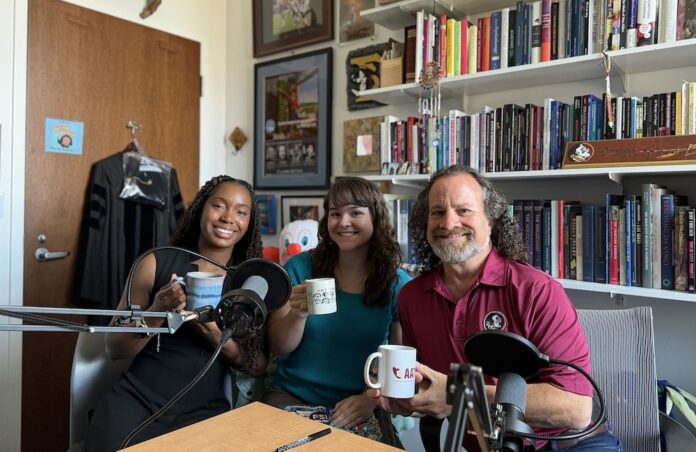
Florida State University Professor of Art Therapy and director of the Institute for Arts & Art Therapy with the Imprisoned Dave Gussak, right, poses with art therapy graduate students Malea Burroughs, left, and Sydney Nichols, producers of the new podcast “Creativity Unconfined,” in Gussak’s office. The podcast explores the impact of the arts in prison settings.

Florida State University Professor Launches Podcast Exploring the Transformative Power of the Arts in Prison

TALLAHASSEE, FL — Florida State University Professor of Art Therapy and director of the Institute for Arts & Art Therapy with the Imprisoned (AATI), Dave Gussak, has launched a new podcast titled Creativity Unconfined, a series dedicated to exploring the profound impact of the arts and art therapy within prison environments.

Recognized internationally for his pioneering work in prison art therapy and author of several influential books on the subject, Gussak uses the podcast as a platform to engage with artists, advocates, researchers, formerly incarcerated individuals, and corrections professionals working at the intersection of creativity and incarceration.

“I’m incredibly excited to bring together leading voices from across the field for conversations about emerging research and personal stories about the impacts of art and art therapy in prison settings,” Gussak said. “My hope for this podcast is that it can be a space that’s welcoming and informative not only for therapy practitioners, but for anyone — including corrections professionals, community activists and artists, and of course, formerly incarcerated individuals and loved ones.”

The first eight episodes of Creativity Unconfined will be released on May 31 across Spotify, Apple Podcasts, and YouTube, with new episodes premiering every Monday.

Among the podcast’s first guests are Chris Fausto Cabrera, an artist and activist who credits art and writing with helping him survive 21 years in a Minnesota prison; Antonio Espinosa, a former prison guard turned advocate for safer prison environments through the arts; and Julie and Mike McBride, whose son is serving a life sentence for a crime committed in his youth.

The podcast is produced by Florida State University art therapy graduate students Malea Burroughs and Sydney Nichols.

Through Creativity Unconfined, FSU continues to expand conversations around restorative justice, mental health, rehabilitation, and the transformative role of creative expression in correctional settings.

For more information about Arts & Art Therapy with the Imprisoned and its mission, visit AATI.fsu.edu.

Those interested in supporting AATI or Creativity Unconfined can contribute at give.fsu.edu/AATI.

Credits:
Original reporting by Jamie Rager / Florida State University News.