Edmonia Lewis: The Trailblazing Sculptor Who Carved Her Own Path
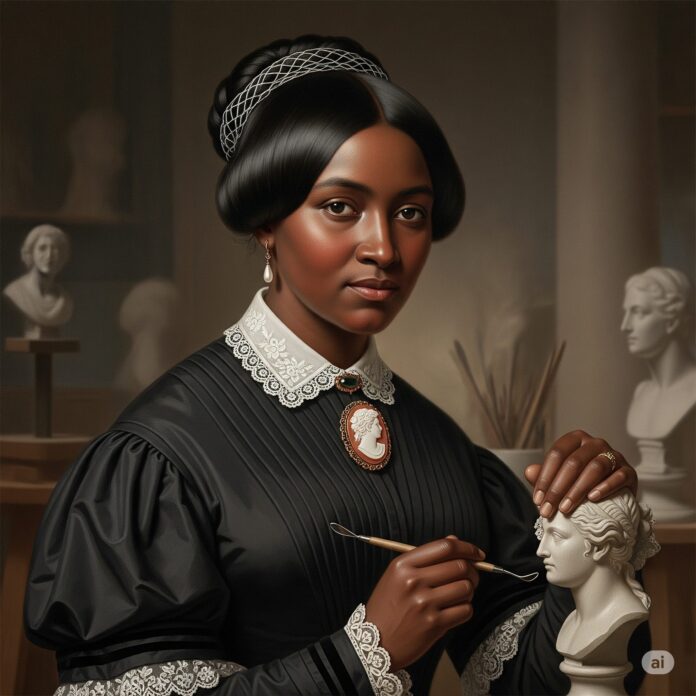
In the marble halls of 19th-century neoclassicism, where European male artists dominated the scene, a singular voice broke through—not with privilege or pedigree, but with resilience, brilliance, and defiant grace. Edmonia Lewis, born in 1844 to a Haitian father and a mother of African American and Mississauga (Ojibwa) descent, became the first woman of African and Native American heritage to gain international acclaim as a sculptor.
Her life was as remarkable as the work she created, and her legacy continues to inspire artists and activists alike.
A Life of Resistance and Reinvention
Born in upstate New York, Lewis was orphaned at a young age and raised by her mother’s Indigenous relatives. She later attended Oberlin College, one of the few progressive institutions at the time to accept Black and female students. But even in that “enlightened” space, she faced virulent racism and misogyny.
In 1862, she was falsely accused of poisoning two white classmates and brutally attacked by a mob. Though acquitted due to lack of evidence, the event marked a turning point. She left Oberlin without a degree and moved to Boston to study sculpture, determined to claim space in an art world that never intended to make room for someone like her.
Sculpting Against the Grain
In Boston, Lewis connected with abolitionists and progressive intellectuals who helped her gain commissions and visibility. She studied under sculptor Edward Brackett, but her artistic voice was distinctly her own. In 1865, she moved to Rome, joining a community of expatriate women sculptors—many of them white Americans who fled the restrictive gender norms of their homeland.
Rome gave Lewis something else too: access to high-quality marble and freedom from the intense racial prejudice of the United States.
Unlike most sculptors of the time, Lewis insisted on carving her own marble, a physical act of labor that was both rare and radical for a woman artist. In doing so, she asserted full ownership of her creative process and vision.
Themes of Freedom and Identity
Her most celebrated works explore themes of liberation, identity, and resistance—reflecting both her personal history and the turbulent politics of the time.
“Forever Free” (1867) depicts a Black man and woman emerging from broken chains after the Emancipation Proclamation. Rather than portraying passive victims, Lewis sculpted them with dignity and agency.
“Hagar” (1875) draws from the biblical story of the Egyptian handmaid cast into the wilderness. To many, it symbolized the struggle of Black women navigating post-Civil War America—resilient, alone, but unbroken.
“The Death of Cleopatra” (1876), one of her most ambitious and controversial works, portrays the Egyptian queen at the moment of her suicide. Rather than idealize or sanitize the scene, Lewis captured Cleopatra’s death with realism and emotional gravity, scandalizing critics. The piece was nearly lost to history, abandoned in a racetrack and left in storage for decades before being rediscovered and restored.
Exile, Obscurity, and Rediscovery
Despite her early fame, Edmonia Lewis faded from public view by the early 20th century. She spent her later years in London and died in relative obscurity in 1907.
For decades, her contributions were overlooked—absent from textbooks, museums, and mainstream art history. But the tide has turned. Scholars and institutions are now recognizing her as a pioneering Black and Indigenous artist, a feminist icon, and a symbol of creative defiance.
Her work has been acquired by major museums, and her story is taught as an essential chapter in American art history.
A Legacy Carved in Stone
Edmonia Lewis defied every expectation imposed on her: a woman, an artist of color, a self-taught sculptor who chiseled her way into an exclusive world with talent, tenacity, and vision.
In a time when Black bodies were being brutalized and Indigenous voices erased, she sculpted freedom, survival, and selfhood into permanence. Her art was not only a personal triumph but a cultural declaration: We were here. We created. We mattered.
Today, Lewis’s story speaks loudly to a new generation of artists pushing back against exclusion and rewriting what power looks like in the art world.
The Dark Side of Print-on-Demand: How the Industry is Undermining Artist Royalties
The Dark Side of Print-on-Demand: How the Industry is Undermining Artist Royalties
The rise of online print-on-demand (POD) platforms promised to democratize the art world—allowing independent artists to sell their work globally without the cost and complexity of managing production, inventory, or shipping. At first glance, it seemed like a revolution.
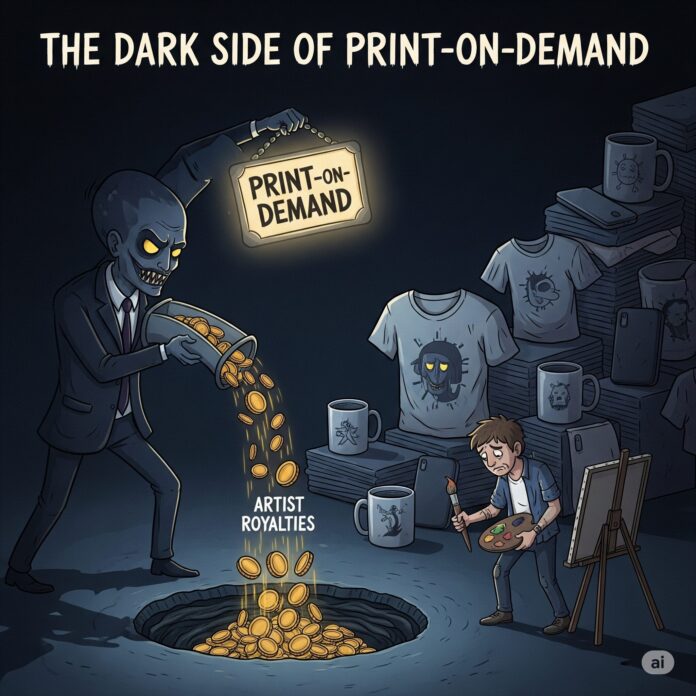
But now, years in, the shine is wearing off. Beneath the surface of these platforms lies a troubling reality: the print-on-demand industry is quietly becoming a scam, and at the heart of that scam are the exploited royalties of artists and designers.
A Broken Promise
From sites like Redbubble, Society6, Teespring, Zazzle, and others, the pitch is always the same: “Upload your art, we’ll handle the rest, and you earn royalties on every sale.”
In practice, these royalties are often insultingly low—sometimes as little as 5% to 10% of the final sale price. On a $25 t-shirt, an artist might receive $1.50 or less. Worse yet, some platforms use default margins that are easily overlooked, locking artists into micropayments unless they manually increase their pricing (often making their products unaffordable in a competitive marketplace).
Meanwhile, the platforms themselves collect the lion’s share—often 80% or more—without ever having created a single piece of content.
The War on Royalties
Recently, platforms like Redbubble have taken this exploitation even further. In 2023, Redbubble introduced a tiered account system, reducing or eliminating royalties for creators who don’t meet a vague set of performance metrics—such as sales volume, traffic generation, or community engagement.
This shift moves the goalposts entirely. It no longer matters how strong your portfolio is or how much work you’ve uploaded. If you don’t constantly drive traffic and market their site—for free—you risk losing your royalties entirely.
It’s a deeply flawed model that preys on the ambition of emerging artists, effectively turning creators into unpaid laborers in a content mill they don’t control.
POD Platforms Are Not Neutral
Many of these companies market themselves as artist-friendly, claiming to empower creatives and support the arts. But when you look closely, it becomes clear: they are tech companies, not art companies.
Their priority is scale, volume, and margin—not integrity, transparency, or sustainability. Artists are just the content providers in a race to flood the internet with searchable designs that convert into cheap merchandise.
And with AI-generated art now flooding POD marketplaces, the exploitation has escalated. Platforms rarely vet for originality or ownership. Your work can be buried under a wave of algorithm-generated knockoffs—some of which may even mimic your style.
Who Actually Profits?
Let’s be blunt: POD platforms are extracting far more value from artists than they return.
They profit from:
Free user-generated content
Massive SEO benefits from thousands of new uploads daily
Markups on every product they print and ship
Data tracking and ad revenue from artists’ promotional efforts
And the artist? They’re left with pennies.
What Can Artists Do?
Raise Awareness Start conversations in your community. Many emerging artists don’t realize how exploitative the system is until they’re deep into it.
Set Your Own Prices If the platform allows it, increase your markup—even if it means fewer sales. It’s better to be paid fairly than underpaid frequently.
Build Your Own Storefront Use platforms like Shopify, Big Cartel, or Squarespace to control your brand and pricing. Partner with ethical, independent POD services that allow for better margins and transparency.
License Intelligently Consider offering high-quality digital downloads directly from your website, cutting out the middleman entirely.
Advocate for Change Join artist coalitions or collectives pushing for fairer terms. Public pressure can change policies, but only if artists are unified and vocal.
Final Thoughts: POD Is Not Passive Income
The dream of passive income through print-on-demand has become a trap for many creatives. The infrastructure may be automated, but the system is built on human creativity, emotional labor, and unpaid marketing work.
If platforms continue to exploit artists while automating them out of visibility, the future of authentic, independent art online is at risk.
Artists deserve better. They deserve ownership, agency, and a fair share of the value they create.
Until then, beware the dream that prints money while your royalties disappear.
Wrestling with the Voice: Why We Create When No One’s Watching
Wrestling with the Voice: Why We Create When No One’s Watching
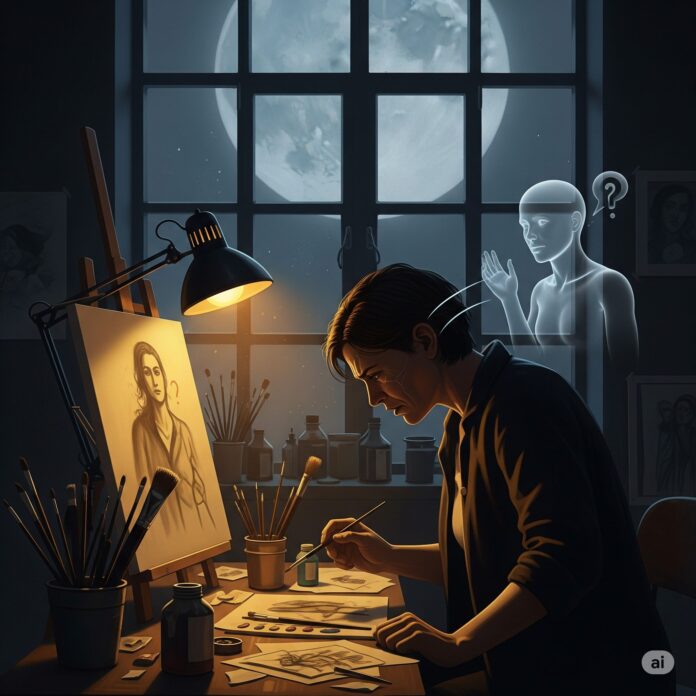
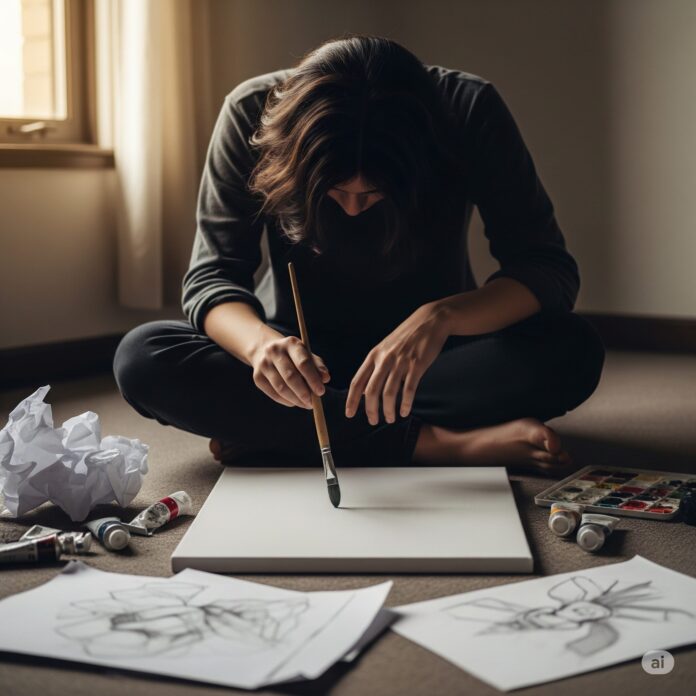
There’s a voice that lives inside every artist’s studio.
It’s not the hum of fluorescent lights or the scratch of charcoal on paper—it’s quieter than that. More persistent. It’s the voice that starts with a simple whisper: “But what if they don’t like it?” “What if it sucks?” “What if it’s not good enough?”
If you’re a visual artist, you’ve probably heard it too. It shows up just as you’re about to commit to a bold brushstroke, hang your work for a show, or post your latest piece online. It’s the same voice that pushes you to refine your craft, improve your technique, and push your vision further. But it’s also the voice that plants seeds of doubt, turning a creative moment into a crisis of identity.
It doesn’t stop there. Sometimes it says: “Why am I even doing this?” “Is this piece just to prove I’m good?” “Am I making this so people will praise me?” “Am I chasing likes? Followers? Validation?”
And if we’re honest, maybe the answer is… sometimes, yes. There’s a part of all of us that wants to be seen, acknowledged, affirmed. That’s not vanity—it’s human. But when that desire dominates, the work can feel hollow, performative. The studio becomes a stage. The canvas becomes a mirror.
Then the voice says: “Look at me. I’m an artist. I make beautiful things. I’m different. I’m special.”
And just like that, the act of creation turns into a performance of worthiness. The work becomes less about expression and more about proving something—to others, or maybe just to ourselves.
But here’s the shift: what if that voice isn’t the enemy?
What if it’s not there to shame us, but to test our clarity? What if it’s a mirror—asking us to look inward and ask why we create, not to silence us, but to help us make art that’s honest?
Because here’s the thing: every visual artist faces that inner questioning. It’s part of the process. The doubt isn’t a sign that you’re lost—it’s a sign that you care.
If we learn to sit with that discomfort instead of running from it, we can let it guide us—not into fear, but into truth. Not into perfectionism, but into presence.
We don’t make art just to be seen. But being seen—truly seen—can be part of the healing, part of the purpose. Art is, at its core, a gesture of connection: I see the world like this. Do you see it too?
So the next time the voice shows up in your studio, don’t silence it. Listen. Let it ask its questions. And then, gently, get back to work—not to prove, but to express. Not to be special, but to be real.
Because that’s where the power is.
In showing up. In making marks. In saying, this is mine. This is me.
Jean-Michel Basquiat: The Radiant Child of the 1980s Art World
Jean-Michel Basquiat
SAMO
Imagina a un joven que, armado con solo unos cuantos aerosoles y un sinfín de ideas revolucionarias, logra transformar el paisaje urbano y la historia del arte para siempre. Este joven es Jean-Michel Basquiat, un artista cuya meteórica carrera y vida llena de contrastes cautivan a todos los que se cruzan con su obra. ¿Sabías que Basquiat solía pintar en trajes de diseñador y luego aparecía en eventos sociales sin limpiarse las manchas de pintura? Este pequeño detalle encapsula perfectamente la esencia de un genio que vivió sin reglas y cuya obra sigue resonando con una intensidad inigualable.
Los primeros años de Basquiat
Nacido el 22 de diciembre de 1960 en Brooklyn, Nueva York, Basquiat creció en un hogar multicultural con raíces haitianas y puertorriqueñas, mostrando un talento innato para el arte desde muy joven. Sin embargo, su camino no fue fácil.
La vida en las calles y el seudónimo SAMO
A los 17 años, después de abandonar su hogar, vivió en las calles, usando las paredes de la ciudad como su lienzo. Bajo el seudónimo SAMO (por “Same Old Shit”, ‘la misma vieja mierda’), llenó el barrio de SoHo con grafitis poéticos y enigmáticos que capturaron la atención de los neoyorquinos.
Ascenso a la fama y el “Times Square Show”
“Me imagino que es como un tren subterráneo en mi cabeza, lleno de imágenes que no paran de moverse”, dijo Basquiat sobre su proceso creativo. Su estilo crudo y visceral rápidamente lo catapultó a la fama. En 1980, su participación en la exhibición Times Square Show marcó su irrupción en la escena artística. En cuestión de años, pasó de ser un artista callejero desconocido a una figura prominente en el mundo del arte contemporáneo.
Colaboración con Andy Warhol
Una de las relaciones más emblemáticas en la vida de Jean-Michel Basquiat fue su colaboración con Andy Warhol. Basquiat, que admiraba profundamente a Warhol, lo conoció en 1982, un encuentro que marcó un punto de inflexión en su carrera. Juntos, crearon una serie de obras que combinaban el pop art de Warhol con el neoexpresionismo de Basquiat, fusionando sus estilos en una sinergia creativa única. Warhol describió a Basquiat como “el alma pura de un niño atrapado en el cuerpo de un artista”, una frase que encapsula perfectamente la esencia y la intensidad de Basquiat.
Colaboraciones con otros artistas
Además de Warhol, Basquiat colaboró con otros artistas prominentes de su época, como Keith Haring y el fotógrafo Al Díaz. Haring, otro ícono del arte urbano, encontró en Basquiat un compañero de espíritu y creatividad. Sus colaboraciones no solo fusionaron sus talentos individuales, sino que también reflejaron una era vibrante y experimental del arte en Nueva York.
Con Al Díaz, Basquiat comenzó su carrera artística en las calles de Nueva York, donde el arte callejero y la poesía visual se fusionaron para hacer declaraciones contundentes sobre la sociedad. Las colaboraciones de Basquiat expandieron sus límites artísticos y le permitieron explorar nuevas dimensiones creativas. El trabajo con Warhol, Haring y Díaz le permitió combinar elementos de sus estilos distintivos, creando piezas provocadoras y visualmente impactantes. Aunque su colaboración con Warhol fue criticada en su momento, hoy se considera un momento clave en la historia del arte contemporáneo, mostrando cómo dos mundos aparentemente opuestos podían unirse para crear algo extraordinario.
Comentario social y político en su obra
El arte de Jean-Michel Basquiat no solo era visualmente impactante, sino que también estaba profundamente cargado de comentarios sociales y políticos. En una época donde estos temas no siempre se discutían abiertamente en el arte, Basquiat no tenía miedo de ponerlos en el centro de atención. Con una valentía inigualable, abordaba cuestiones de identidad, desigualdad racial y justicia social en sus obras, transformando cada pieza en una poderosa declaración sobre la condición humana.
“Estoy dibujando el mismo tema una y otra vez: la realeza, la heroína y la calle”, dijo Basquiat, encapsulando así los elementos recurrentes en su trabajo. A través de su arte, exploraba las dinámicas de poder, la resistencia y la lucha, reflejando las crudas realidades de la sociedad. Obras como Irony of Negro Policeman y Hollywood Africans son ejemplos claros de cómo utilizaba su talento para expresar sus opiniones sobre la raza y la política en América.
En Irony of Negro Policeman, Basquiat desafía la percepción de la autoridad y la identidad racial, destacando las contradicciones y el conflicto interno de un policía negro trabajando dentro de un sistema opresivo. Hollywood Africans, por otro lado, retrata a Basquiat y dos amigos en Los Ángeles, subrayando las experiencias y los estereotipos que enfrentaban los afroamericanos en la industria del entretenimiento. Además, piezas como The Death of Michael Stewart abordan la brutalidad policial y la violencia racial, temas que, desafortunadamente, siguen siendo relevantes hoy en día.
Basquiat utilizaba símbolos, palabras y figuras que parecían surgir directamente de su subconsciente, creando un lenguaje visual único que resonaba profundamente con el espectador. Sus obras funcionaban como espejos de las injusticias de nuestra sociedad, obligando a quienes las observaban a confrontar realidades incómodas y, en muchos casos, a reconsiderar sus propias percepciones y prejuicios. La capacidad de Basquiat para abordar estos temas complejos y dolorosos a través de su arte no solo lo convirtió en un portavoz de su generación, sino también en un pionero que allanó el camino para futuras discusiones sobre raza, identidad y justicia en el mundo del arte. Su legado perdura, recordándonos la importancia de la voz artística como herramienta para el cambio social y la introspección personal.
Estilo artístico de Basquiat
El estilo de Jean-Michel Basquiat era una vibrante amalgama de grafiti, poesía y una rica mezcla de referencias a la historia del arte, la cultura pop y la anatomía. Su enfoque distintivo combinaba símbolos, palabras y figuras que parecían surgir directamente de su subconsciente, creando un lenguaje visual único y poderoso que desafiaba las convenciones artísticas tradicionales.
Basquiat solía decir: “Los héroes que elijo son gente que hizo algo a pesar de perderlo todo”. Esta declaración se reflejaba profundamente en sus obras, donde celebraba figuras históricas y culturales que habían luchado contra la adversidad y se habían destacado a pesar de las dificultades. A través de su arte, Basquiat rendía homenaje a estos héroes, utilizando su estilo distintivo para narrar sus historias y honrar sus legados.
Una de las características más notables de su trabajo era su capacidad para integrar elementos aparentemente dispares en una composición cohesiva. Su técnica incluía capas de pintura en aerosol, acrílico, óleo y dibujo a mano alzada, todo ello amalgamado en un torbellino de energía creativa. Basquiat incorporaba texto escrito a mano, esbozos crudos y formas abstractas que interactuaban en sus lienzos, generando una sensación de dinamismo y espontaneidad.
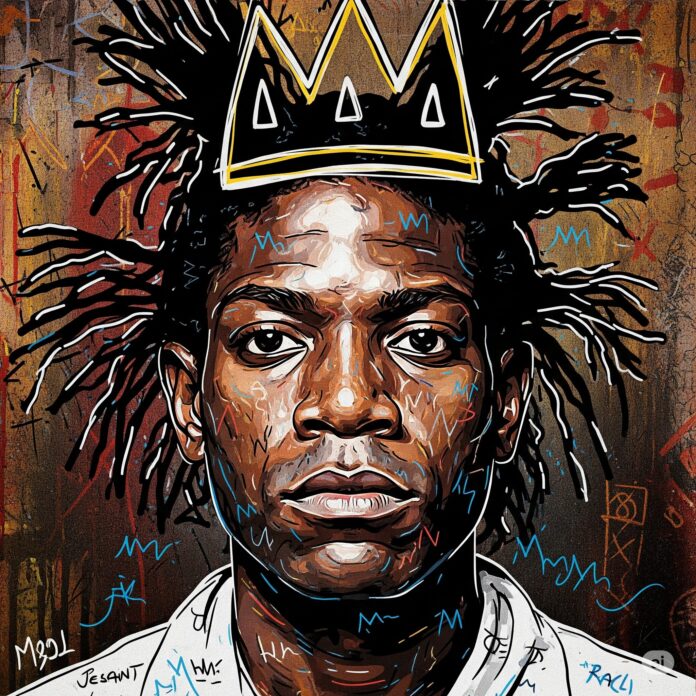
Basquiat también jugaba con la anatomía, utilizando diagramas y esqueletos para explorar la fragilidad y la complejidad del cuerpo humano. Sus obras a menudo presentaban coronas, que se convirtieron en un símbolo recurrente de realeza y resistencia, recordando al espectador la dignidad inherente y la lucha continua de sus sujetos. Además, Basquiat se inspiraba en la iconografía del jazz y el hip-hop, infundiendo sus obras con ritmos visuales que reflejaban la vitalidad y la resistencia de estas formas de arte urbano. Este enfoque interdisciplinario le permitió trascender las barreras tradicionales del arte y conectar con una audiencia diversa y amplia. Su estilo único no solo le otorgó una voz distintiva en el mundo del arte, sino que también inspiró a innumerables artistas a seguir su propio camino creativo. Basquiat rompió moldes, demostrando que el arte podía ser una plataforma poderosa para la autoexpresión y la denuncia social, y su legado continúa inspirando a nuevas generaciones de artistas a explorar y desafiar las normas establecidas.
Vida personal y fallecimiento
Jean-Michel Basquiat vivió una vida intensa y tumultuosa, marcada tanto por su éxito meteórico como por sus luchas personales. Alcanzó la fama rápidamente, pero también enfrentó problemas de salud mental y adicciones que lo acompañaron a lo largo de su carrera. A pesar de su reconocimiento en el mundo del arte, Basquiat experimentaba una profunda sensación de inquietud y aislamiento. Su arte, vibrante y emotivo, era un reflejo de sus propias batallas internas.
Amigo y colega, Andy Warhol, describió a Basquiat como “el alma pura de un niño atrapado en el cuerpo de un artista”, una frase que captura perfectamente la vulnerabilidad y la pasión de Basquiat. Trágicamente, en 1988, Basquiat murió de una sobredosis a los 27 años, sumándose al tristemente célebre “Club de los 27”, que incluye a figuras como Jimi Hendrix, Janis Joplin y Kurt Cobain. Su muerte fue un golpe devastador para el mundo del arte, que perdió una de sus voces más brillantes y originales.
Impacto y legado de su obra
Sin embargo, el legado de Basquiat sigue vivo. Su influencia se extiende por el arte contemporáneo, desde galerías hasta el arte urbano. Basquiat revolucionó la percepción del arte, desafiando convenciones y expandiendo los límites de la creatividad y la autoexpresión. Su historia inspira a nuevas generaciones de artistas que ven en Basquiat un ejemplo de autenticidad y valentía. Aunque su vida fue breve, la intensidad y la pasión con la que vivió y creó han dejado una huella imborrable en la historia del arte. Basquiat nos mostró que el arte puede ser una poderosa herramienta de comunicación y un reflejo de nuestras más profundas emociones y experiencias.=
En memoria de Jean-Michel Basquiat, recordamos al brillante y revolucionario artista que, a pesar de sus luchas, dejó un legado duradero que sigue inspirando y desafiando a generaciones enteras. Jean-Michel Basquiat fue mucho más que un artista; fue un revolucionario que transformó la manera en que entendemos el arte contemporáneo. Su vida y su obra son un testimonio de la importancia de la creatividad y el coraje para desafiar las normas establecidas. La próxima vez que te encuentres frente a una obra de Basquiat, tómate un momento para apreciar no solo su talento, sino también el potente mensaje que transmite.
Cómo empezar a crear aunque no te sientas preparado
Cómo empezar a crear aunque no te sientas preparado
La sensación de no estar preparado es una de las barreras más comunes y silenciosas que nos impiden empezar. Es un eco de la inseguridad y el perfeccionismo, una voz que dice: “Aún no es el momento”, “Necesitas más conocimiento”, “Espera a la inspiración perfecta”. Sin embargo, como bien decía John Dewey, el pensamiento y la acción están intrínsecamente conectados; no podemos esperar a tener todas las respuestas para empezar a actuar. Es en la acción misma donde encontramos la verdadera preparación.
Empezar a crear, aun sin sentirte listo, no es un acto de valentía imprudente, sino un acto de fe en el proceso. Es un reconocimiento de que tu voz es válida en este momento, tal como es.
El mito de la preparación completa
La idea de que uno debe estar completamente preparado antes de empezar es un mito moderno. Piensa en Michel de Montaigne, quien, en sus “Ensayos”, no pretendía darnos la verdad absoluta, sino explorar sus propios pensamientos mientras los escribía. Su obra es un testimonio de cómo la escritura no es solo el resultado de un pensamiento, sino el vehículo para el pensamiento mismo. De la misma manera, tu arte no es el resultado de tu preparación, sino el medio a través del cual te preparas para el siguiente nivel.
El filósofo Platón nos habló de la “anamnesis”, la idea de que el conocimiento ya reside en nosotros y que el aprendizaje es un proceso de recordarlo. Quizás tu creatividad funciona de manera similar: no necesitas adquirirla, sino liberarla. La falta de preparación no es una ausencia de talento, sino una oportunidad para descubrir lo que ya sabes.
Estrategias para dar el primer paso
La Regla de los 15 Minutos. No te comprometas a pasar horas en una obra. Empieza con algo tan simple como 15 minutos al día. Pon un temporizador y, cuando suene la alarma, eres libre de parar. A menudo, el impulso inicial es lo más difícil. Una vez que empiezas, la inercia del movimiento puede mantenerte en marcha.
Crea sin un objetivo final. Abandona la idea de que cada pieza debe ser una obra maestra para ser exhibida. Haz algo solo por el placer de hacerlo. Dibuja formas sin sentido en un cuaderno. Mezcla colores solo para ver qué sucede. Escribe un párrafo que sabes que nunca verá la luz del día. El objetivo no es crear una gran obra, sino reforzar el hábito de la creación.
Adopta una mentalidad de científico. Al igual que un científico que experimenta, no juzgues los resultados. Si no funciona, no es un fracaso, sino un aprendizaje. ¿Qué hiciste? ¿Qué pasó? ¿Qué aprendiste? Usa esta mentalidad para desarmar el miedo al error, viéndolo como una parte esencial del proceso.
Conéctate con tu propósito. En tu declaración, mencionas que tu objetivo es “fomentar la evolución consciente de la humanidad y contribuir a un mundo más armonioso”. Este propósito es mucho más grande que tu miedo a no estar preparado. Cuando sientas dudas, recuerda la nobleza de tu intención. Tu arte es una ofrenda a este propósito, y cada pequeño acto de creación contribuye a ello.
Recuerda que la preparación es un camino, no un destino. La única manera de estar listo es empezar, y la única forma de empezar es aceptar que no lo estás.
Otto Dix: El soldado que pintó lo que nadie quería ver…
“Antes me odiaban, ahora me enmarcan. Nada ha cambiado.”
Otto Dix: Testigo de la barbarie
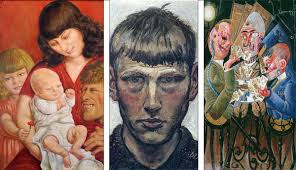
Otto Dix fue más que un pintor; fue un testigo incansable de la violencia humana. Sus lienzos, llenos de una crudeza impactante, retratan el horror de la guerra con una honestidad que pocos se atrevieron a mostrar. Desde el frente de la Primera Guerra Mundial hasta las turbulentas calles de la República de Weimar, su obra mantiene una vigencia significativa, desafiando a quienes creen que el arte puede ser un simple refugio frente a la barbarie.
Infancia y formación en Alemania
Los cadáveres no eran una metáfora para Otto Dix, eran su modelo, su materia prima, su recuerdo más nítido. Durante la Primera Guerra Mundial, Otto Dix no pintaba flores ni naturalezas muertas. Llevaba un cuaderno en el bolsillo del uniforme y dibujaba soldados destripados, ratas comiéndose ojos, cuerpos atravesados por la artillería. Mientras otros cerraban los ojos, él abría los suyos. La sangre no era un símbolo, era textura.
Nació en 1891 en Untermhaus, Alemania, un pueblo obrero que ya olía a carbón y a desplome. Su padre era trabajador de fundición, pero su madre, criada en un entorno más culto y literario, lo empujó hacia el arte. Sin embargo, Otto no nació para pintar belleza, nació para desobedecerla. A los 15 años ya dibujaba de manera compulsiva retratos, paisajes industriales, y manos tensas. Entró como aprendiz en el taller de Carl Senff, un decorador que le enseñó la técnica, pero no pudo domesticar su mirada.
En 1910, accedió a la Escuela de Artes Aplicadas de Dresde. Allí perfeccionó su trazo y absorbió influencias del expresionismo, pero lo suyo iba más allá de estilos. Otto quería pintar lo que los demás borraban.
Otto Dix
La Primera Guerra Mundial: un pintor en el frente
Y entonces llegó la guerra. Se alistó voluntariamente en 1914, no por patriotismo, sino por vértigo, por la necesidad de mirar el horror de frente. Combatió en Flandes, en el Somme, en Champagne y en la ofensiva del este, donde cayeron más de un millón de cuerpos en 141 días. Allí no aprendió a matar, aprendió a observar la muerte en detalle. Entre bombardeo y bombardeo, sacaba lápiz y papel y dibujaba a los caídos, a los que aún respiraban, a los que ya no tenían cara.
“No hay nada más surrealista que una pierna humana colgando de un árbol”, escribió y lo pintó.
De la experiencia bélica a la Nueva Objetividad
Cuando regresó en 1918, el mundo celebraba la paz, pero Otto traía otra cosa en la mochila: 200 bocetos de cadáveres y un trauma sin nombre ni diagnóstico. Dormía mal, sudaba barro, soñaba con fosas comunes. Alemania se hundía entre ruinas, inflación y resentimiento. El imperio había colapsado. La República de Weimar nacía como un experimento frágil, moderno y crispado, y Otto Dix estaba en el centro de esa tensión.
Volvió a Dresde, se unió al movimiento dadaísta y luego al expresionismo más crudo, pero no era un artista de escuela, era un testigo. Su pintura se volvió quirúrgica, no impresionista ni simbólica, sino clínica. Pintaba como un cirujano sin anestesia. Sus cuadros eran morgues.
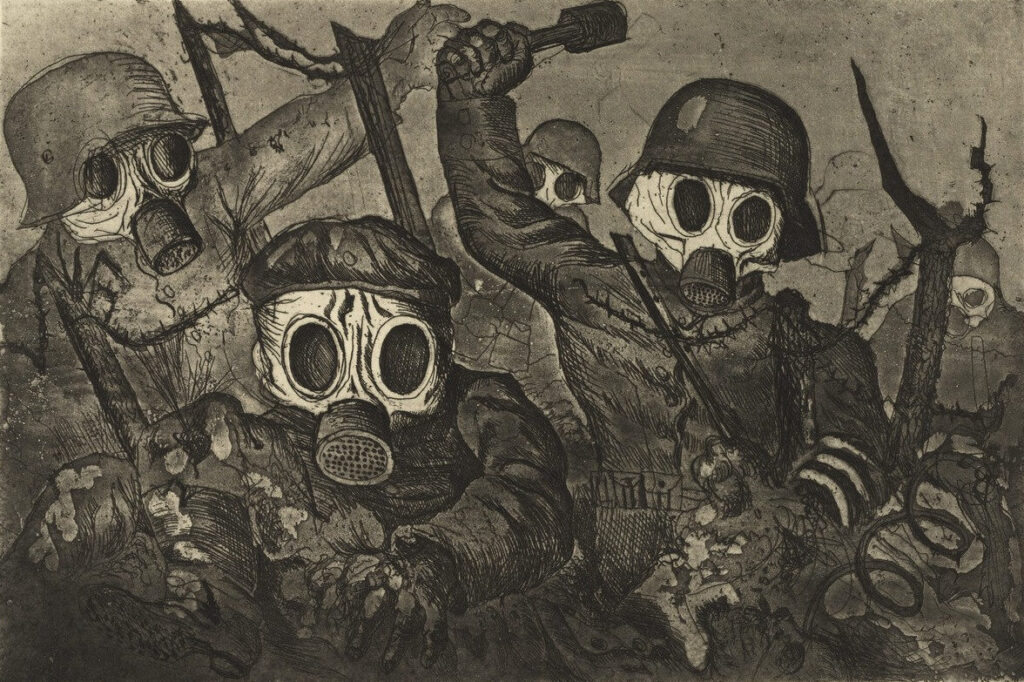
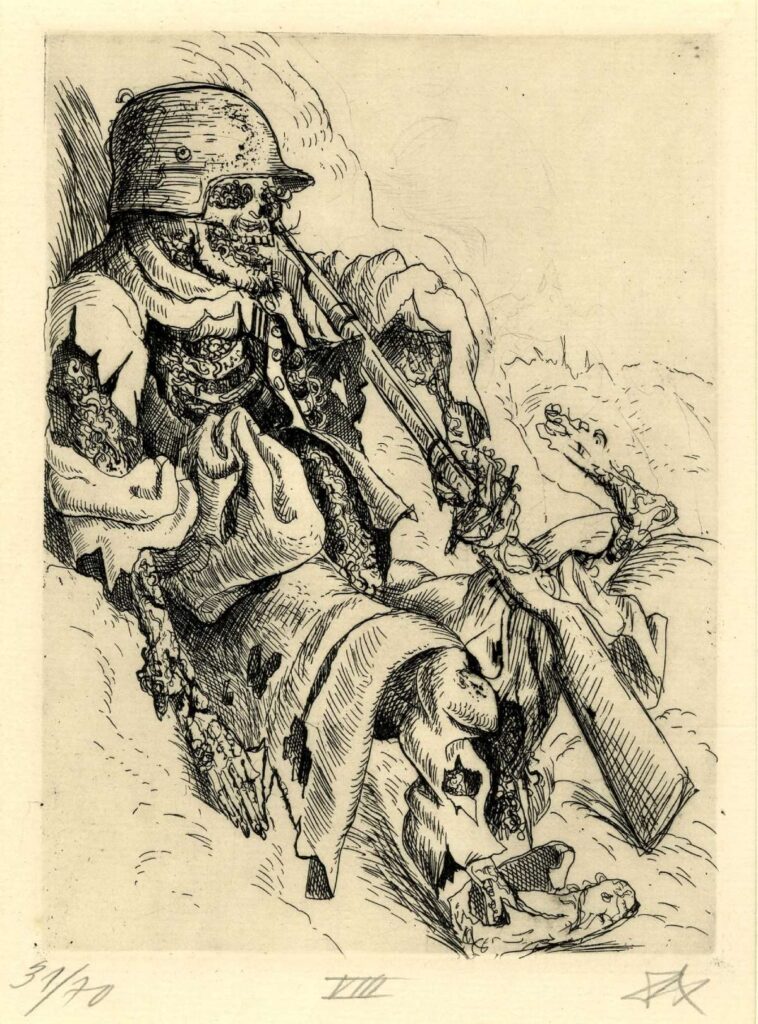
Entre 1920 y 1924, creó una de sus obras más brutales: La guerra (Der Krieg), una serie de 50 grabados que retratan la vida en las trincheras, el hedor de los hospitales y la descomposición. No hay héroes ni redención, solo una danza macabra entre carne, fango y metralla. La crítica se dividió. Algunos lo acusaron de obscenidad, otros de verdad, pero él no se defendía. “El arte no está para decorar, está para gritar lo que nadie quiere oír”, decía.
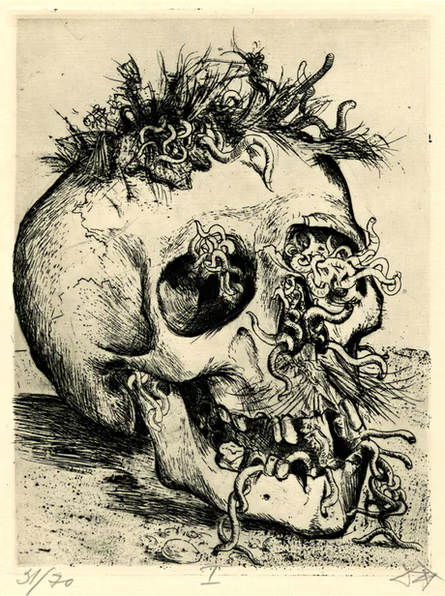
Uno de los grabados más terribles, Soldado caído, muestra un rostro devorado por gusanos, aún con los ojos abiertos. No parece un cadáver, parece alguien que aún mira. En 1924, en plena hiperinflación alemana, se consagra como uno de los principales exponentes de la Neue Sachlichkeit, la Nueva Objetividad, una corriente que rompía con el romanticismo para pintar la miseria con luz directa, sin filtros, sin poesía.
La Nueva Objetividad y la crítica social
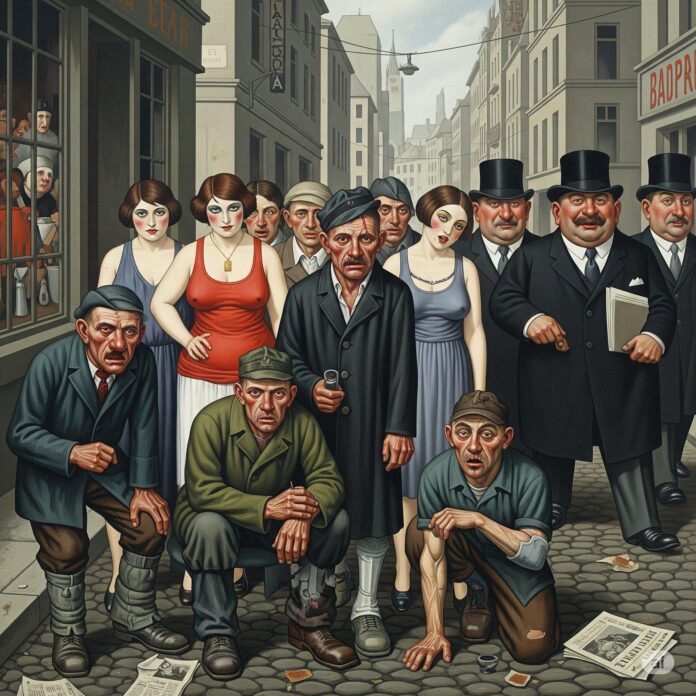
Dix comenzó a retratar a los caídos, a veteranos deformes, a burócratas podridos de poder, a banqueros obesos y a niños famélicos. La pintura como una denuncia, la imagen como una bofetada. Cada trazo era una acusación, cada cuerpo un expediente. No hay erotismo ni idealismo, solo carne cansada y ojos que ya no esperan nada. Otto Dix no quería conmover, quería incomodar. Sus cuadros no eran ventanas, eran autopsias, y su mensaje era simple: el verdadero infierno no está en el frente de batalla, está en la ciudad que finge no haber visto nada y que aún hoy sigue mirando hacia otro lado.
Otto Dix
La resaca del horror y el cuerpo como espejo social
El cuerpo regresó. Sí. Pero no intacto. Regresó con esquirlas en la memoria y barro en la sangre. Regresó a una Alemania que se decía en paz, pero solo porque ya no quedaban balas. Otto Dix volvió de la gran guerra en 1918 y, aunque sus huesos no estaban rotos, la visión ya no era la misma. La retina había quedado tatuada con la forma del espanto y no hay bisturí para eso. Los cadáveres no los dejó en el frente, se los trajo puestos.
Cada rostro que veía en la calle era una variación del mismo grito. Cada figura que intentaba pintar se le deshacía en gangrena. Viajó, probó otros estilos, otras técnicas, pero la guerra ya lo había poseído. No podía escapar y tampoco quería.
Volvió a Dresde, su ciudad natal, en medio del colapso del imperio alemán. El Káiser había abdicado, la inflación se disparaba. La República de Weimar nacía entre ruinas, huelgas y discursos que sabían a revancha. Y mientras Alemania intentaba maquillarse de modernidad, Otto afilaba su lápiz como un bisturí. Ya no iba a pintar la guerra, iba a diseccionar la paz.
En 1920 se unió a un grupo de artistas que, como él, no creían en la redención estética: la Neue Sachlichkeit. No más romanticismo, no más simbolismo, solo lo que duele, solo lo que está ahí frente a todos y nadie quiere mirar. Dix tomó esa bandera y la cubrió de sangre seca. Su pincel se volvió quirúrgico. Ya no retrataba soldados, sino a lisiados arrastrándose por las calles, a mujeres vendiendo su cuerpo por un pedazo de pan, a políticos con cara de cerdo y manos de usurero, a burgueses con ojos vacíos y bocas llenas.
Mientras los billetes se imprimían más rápido que los ataúdes y la inflación devoraba los salarios, Dix abría su cuaderno y anotaba: “El infierno no es subterráneo, es la vida cotidiana”. Su obra se volvió un catálogo de la miseria urbana, pero no era lástima, era denuncia, era un puñetazo visual.
Obras clave que retratan la violencia
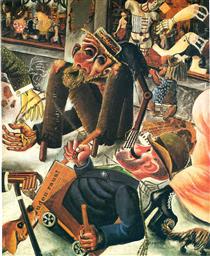
En Calle de Praga (1920), muestra una escena en Dresde. Dos mutilados de guerra, uno sin piernas y el otro sin un brazo, mendigan frente a una vitrina llena de maniquíes. El contraste es brutal: la carne rota contra la perfección del escaparate, la verdad contra el simulacro. Los colores son estridentes: verdes de vómito, rojos de infección, violetas de moretón. Todo duele en esa imagen. No hay descanso para el ojo.
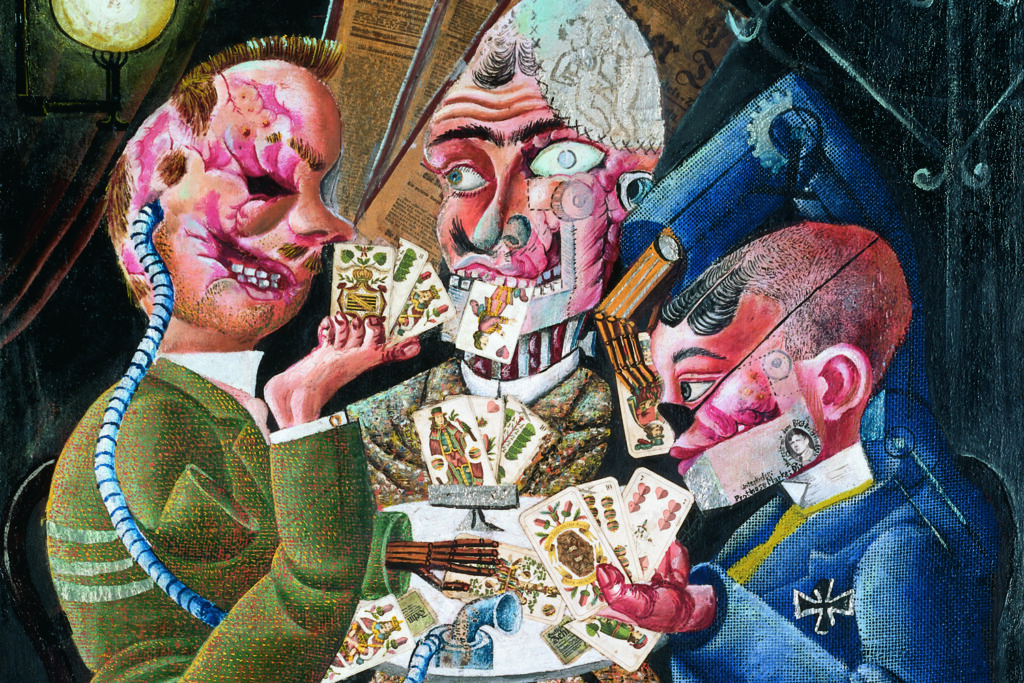
Otro ejemplo es Los jugadores de Skat (1920). Tres veteranos deformes con prótesis mecánicas juegan a las cartas con expresiones grotescas. Una escena vulgar, casi cómica, pero es una comedia del espanto. ¿Qué cuerpo queda después de la guerra y qué sociedad puede soportar mirarlo? Dix respondía sin palabras, con líneas torcidas, con fondos neutros que dejaban a los personajes flotando en el vacío, como si incluso el contexto les hubiera sido negado.
Pero no solo eran mutilados; también eran prostitutas, banqueros, veteranos, obreros desesperados. Dix lo pintaba todo y lo hacía con una técnica precisa, casi renacentista, como si dijera: “¿Quieres realismo? Aquí lo tienes, pero no esperes belleza, solo verdad”.
Esa crudeza incomodaba. Los críticos se dividían. Algunos lo celebraban como el Goya del siglo XX, otros lo acusaban de obsceno, de degenerado, de nihilista. Pero Dix no buscaba aprobación, buscaba exponer el tumor, y lo hizo con trazo quirúrgico. Mientras los expresionistas se sumergían en el grito interior, Dix clavaba la mirada en lo exterior, en lo que todos sabían, pero nadie decía. Su pintura se volvió testimonio, archivo, acta notarial de la decadencia. Y mientras más lo ignoraban las instituciones, más radical se volvía su paleta. El arte de Otto Dix no fue una catarsis, fue una autopsia y la sociedad alemana era el cadáver sobre la mesa.
El arte como amenaza frente al nazismo
Otto Dix nunca fue un artista cómodo, pero en la Alemania que se preparaba para marchar al ritmo de los tambores del Tercer Reich, ser incómodo no era solo un problema estético, era una condena. En 1933, Hitler llegó al poder y con él la estética oficial de la mentira. El nuevo régimen no solo perseguía cuerpos, también perseguía imágenes. Todo lo que no celebrara la fuerza, la pureza, el orden y la gloria, era considerado veneno. Y Otto Dix no pintaba glorias, pintaba carne abierta.
Mientras los cuadros oficiales mostraban héroes atléticos, soldados inmaculados, madres sonrientes y paisajes sin sombra, Dix seguía retratando lo que se escondía: los tullidos, los locos, los rostros que no cabían en ninguna propaganda. No tardaron en ir por él. En 1933 fue expulsado de su cátedra en la Academia de Dresde. Lo tacharon de “enemigo del pueblo”, “degenerado”, “traidor al espíritu alemán”. Su delito: no mentir con el pincel.
Ese mismo año, los nazis lanzaron una campaña contra lo que llamaban Entartete Kunst (arte degenerado), una cruzada contra cualquier obra que no encajara con su visión idealizada y brutal del mundo. Van Gogh, Picasso, Klee, Kandinsky, Grosz y, por supuesto, Otto Dix.
La persecución nazi y el “arte degenerado”
En 1937, se inauguró en Múnich la infame exposición del arte degenerado. 650 obras confiscadas, colgadas con burlas, sin orden, con etiquetas que ridiculizaban a los artistas. Era una humillación pública, una advertencia y un acto de barbarie cultural. Dix tenía más de 200 obras prohibidas. Muchas fueron destruidas, otras confiscadas, algunas escondidas por coleccionistas que sabían que lo verdadero no se quema tan fácil.
Ya no podía exhibir, ya no podía enseñar, ya no podía hablar, pero no dejó de pintar. Se refugió en el silencio, en la técnica, en los símbolos, en la resistencia íntima. Su paleta se volvió más austera, los temas más camuflados, el grito más interno, pero seguía ahí, como una astilla bajo la piel del régimen. Dix no se exilió, decidió quedarse. No por cobardía, sino por una forma extraña de fidelidad: no a Alemania, sino a sus muertos, a los mutilados, a los olvidados, a los que no tenían voz.
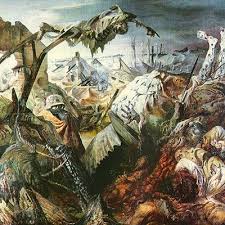
Mientras el nazismo glorificaba la muerte en abstracto, él seguía recordando la muerte concreta, con cara, con nombre, con sangre seca. Durante esos años oscuros, creó obras de una sobriedad demoledora. Ya no necesitaba la provocación abierta, le bastaba una mirada torcida, una mano sin fuerza, un fondo vacío. En 1938 pintó Flandes, una tierra yerma, sin figuras, con cicatrices en el paisaje, un campo de batalla que ya no necesita soldados para devastar.
En 1942, a sus 51 años, fue reclutado por segunda vez. Otra guerra, otro absurdo. Lo enviaron como soldado raso al frente occidental. Allí fue capturado por tropas francesas. Pasó varios meses en un campo de prisioneros y volvió a dibujar. Lo que otros hubieran enterrado bajo el trauma, él lo transformaba en líneas, en manchas, en testimonio. Cuando finalmente regresó, la Alemania que encontró era otra: ruinas, cenizas, hambre, silencio, pero también un terreno fértil para la memoria.
Últimos años y legado artístico
Otto Dix no fue un héroe, ni un mártir, ni un profeta, pero fue quizás algo más raro: un testigo fiel de la fealdad en un mundo que quería olvidar. Él siguió recordando. Pintaba desde el margen, desde una especie de exilio interior, pero cada trazo era un documento, un registro, una prueba; no de su genio, sino de nuestra culpa. Porque lo que Otto Dix dejó no fue solo un archivo visual, fue una acusación silenciosa, un arte que no decora, no consuela, no embellece, solo muestra. Y a veces eso es lo más valiente que puede hacer un artista.
El silencio del sobreviviente. Otto Dix sobrevivió a todo: a la guerra, a la censura, al exilio interior, pero no salió ileso. Su obra, su mirada, su cuerpo, todo había cambiado. La rabia de los años 20 se había vuelto más sorda. Ya no necesitaba gritar, solo mostrar. Los cuadros de Dix empezaron a dejar de golpear como un martillo; ahora perforaban lento como el óxido. Ya no eran vómitos de furia, eran archivos, ecos, persistencias.
Después de la guerra, fue reubicado en un pequeño pueblo llamado Hemmenhofen, a orillas del lago Constanza. Allí vivió con su esposa Martha en una casa de techos bajos, lejos de los salones y las multitudes. No había lujos, no había gloria, solo silencio y lienzos. Lo visitaban de vez en cuando jóvenes pintores que buscaban una lección. Salían con una pregunta, porque Dix no enseñaba técnicas, enseñaba mirada. “¿Quieres pintar?”, decía. “Entonces observa. Pero observa como si no pudieras volver a cerrar los ojos”.
El maestro ya no buscaba escandalizar, ni siquiera redimir, solo dejar constancia. Como un forense que no juzga, registra. Sus retratos de esos años son más contenidos, las líneas más delgadas, los colores más amortiguados, pero la incomodidad persiste. Nadie en sus cuadros sonríe sin razón. Nadie posa por vanidad. Cada arruga, cada mancha, cada sombra tiene algo que decir.
Uno de los más impresionantes es su Autorretrato como prisionero de guerra (1945-1946). Se pinta a sí mismo como tres personajes: uno de frente, otro de espalda y otro de frente de nuevo, pero con media cara. No hay alegría, solo expresiones tristes, formas superpuestas y alambre de púas al fondo. La paleta es oscura y lúgubre, expresando tensión y amargura.
Otra obra clave, La crucifixión (1949). Jesús no está sereno, no está glorificado, está mutilado. El cuerpo lleno de heridas abiertas, el rostro deformado por el espanto. No hay esperanza, no hay redención, solo exposición brutal del sufrimiento. Como si el pintor dijera: “Basta de consuelos. Miren esto, así duele. Así morimos”.
Dix no se volvió creyente, pero entendió que el arte podía ser también una especie de misa profana, un ritual para recordar lo que el mundo quiere olvidar. Durante los años 50 y 60, el mercado empezó a redescubrirlo. Las galerías volvían a colgar sus cuadros. Los críticos hablaban de madurez artística, pero él no se dejaba engañar. Sabía que no se trataba de reconocimiento, sino de conveniencia. Ahora que la guerra quedaba lejos, su crudeza ya no era peligrosa. Era historia, museo, pie de página. “Antes me odiaban, ahora me enmarcan. Nada ha cambiado”, decía.
Pero algo sí había cambiado: su fuego, su urgencia. Otto Dix pintaba menos, pero observaba más y hablaba poco. Su última etapa fue menos prolífica, pero no menos profunda. Las temáticas se volvieron más introspectivas: viejos solitarios, viudas, mudos de alma. Pintaba como si cada obra fuera un epitafio, como si ya no esperara ser entendido, solo registrado. Y, sin embargo, incluso en la vejez, conservaba el filo. Cuando una periodista le preguntó si se arrepentía de sus obras más duras, respondió: “Me arrepiento de las que suavicé, no de las que dolieron”.
Hoy su obra cuelga en museos como la National Gallery de Berlín, el Centro Pompidou de París o el MoMA de Nueva York. Pero su legado no se mide en exposiciones, se mide en la incomodidad que deja, porque Dix no pintó para decorar, pintó para recordar. Y hay heridas que solo el arte puede mantener vivas.
Otto Dix
Reflexión final: El arte como memoria de la barbarie
El arte que no se arrodilla. Otto Dix murió el 25 de julio de 1969, a los 77 años. No hubo homenajes estatales ni portadas de diarios, solo silencio. Murió junto al lago Constanza, como si el mundo aún no estuviera listo para entender lo que él había pintado medio siglo antes. Durante años, su obra fue incómoda, demasiado cruda para las paredes limpias de los museos, demasiado verdadera para una Alemania que prefería olvidar. Pero la memoria no se entierra tan fácil.
En los años 70, mientras el país comenzaba a mirar de frente su pasado, Dix resurgió como lo que siempre fue: no un decorador de muros, sino un testigo incómodo. Sus cuadros volvieron a exponerse, no para admirarlos, sino para confrontarlos. En 1979, Düsseldorf organizó una retrospectiva monumental. Por primera vez, las obras prohibidas como La guerra y Los mutilados de guerra se colgaron sin censura. La reacción no fue de aplauso, fue de incomodidad, porque esas pinturas no embellecían la historia, la desollaban. A partir de entonces, su legado no dejó de crecer. Fue comparado con Goya, con Beckmann, con los grandes del expresionismo. Pero Dix no buscó pertenecer a ninguna escuela. Pintó lo que debía pintarse, lo que nadie más se atrevía.
En 1961, el artista vendió el retrato de Silvia von Harden al Museo Nacional de Arte Moderno de París. En 1995, otra obra fue adquirida por la Neue Nationalgalerie de Berlín y La guerra fue exhibida como obra central en el Museo Albertinum, pero nada de eso le hubiera importado. Dix no pintó para las subastas. Cada trazo suyo fue una advertencia. Cada figura una prueba, cada rostro una acusación al olvido. Y esa es su herencia más valiosa: no el precio, sino la memoria.
Porque el verdadero valor de su obra no está en los catálogos, está en las preguntas que aún hoy genera. ¿Qué queda cuando la guerra termina, pero la herida sigue abierta? ¿Qué hacemos con un arte que no consuela, sino que sacude? ¿Qué lugar le damos a quien no quiso embellecer la realidad, sino mostrarla rota? En un mundo donde las guerras se editan y el dolor se convierte en contenido, Otto Dix sigue ardiendo, no por el fuego de la moda, sino por una llama más densa: la de la conciencia. Y esa llama, si nos toca, cambia algo. Dix no vivió para ser admirado, vivió para ser visto. Y lo que dejó, más que un estilo, es una posición ética: el arte como resistencia, como archivo del trauma, como espejo que no se puede esquivar.
Cierre y llamado a la acción
Hoy, mientras muchos artistas buscan viralidad, likes y mercados, él sigue ahí con sus figuras torcidas, sus bocas cerradas, sus manos al borde del temblor, recordándonos que el arte más incómodo es también el más necesario. Si este texto te dejó pensando, aunque sea un segundo, te invito a seguir explorando. Aquí no venimos a colgar cuadros, venimos a abrirlos. Y si alguna vez te preguntaste qué imágenes deberían sobrevivir al colapso, tal vez no sean las más bellas, sino las que aún duelen.
Cuando la inseguridad llama a la puerta de tu estudio, o a tu mente, el acto de crear puede parecer una montaña inescalable. Es una sensación que muchos artistas, pensadores y creadores han enfrentado a lo largo de la historia. El mismo Søren Kierkegaard, con su profunda exploración de la angustia y el miedo, nos enseñó que la vida se vive hacia adelante, pero solo se entiende mirando hacia atrás. Sin embargo, para ti, el camino es al revés: debes crear, a pesar de la inseguridad, para poder entenderla y superarla.
Aquí hay algunas reflexiones y estrategias para ayudarte a navegar por estas aguas turbulentas.
El Origen de la Inseguridad
La inseguridad, a menudo, no es más que la sombra de la vergüenza de la que ya hemos hablado, y el miedo al juicio. Es la voz interior que susurra: “No estás a la altura”, “Tu trabajo no es lo suficientemente bueno”, o “A nadie le importará”. Esta voz es una ilusión, una construcción mental que se alimenta de la comparación y de expectativas poco realistas.
El filósofo Friedrich Nietzsche nos recordaba que debemos convertirnos en quienes somos. Pero para hacer eso, primero hay que silenciar las voces que nos dicen que no somos suficientes. Tu arte no es una competencia, ni una demostración de superioridad. Es un diálogo contigo mismo, una forma de entender tu propia existencia y tu lugar en el universo. La inseguridad se disuelve cuando dejas de crear para los demás y empiezas a crear para ti.
Estrategias para Superar la Inseguridad
1. Acepta la Inperfección.
El perfeccionismo es el enemigo de la creación. La idea de que cada obra debe ser una obra maestra es una trampa. En cambio, considera cada pieza como un experimento, un borrador, un paso en un largo viaje. No te preocupes por el resultado final; enfócate en el proceso.
2. Reduce la Escala.
Si un gran lienzo o una obra compleja te abruman, reduce la escala. Empieza con un pequeño cuaderno de bocetos, una idea sencilla, un breve fragmento. La victoria de terminar algo, por pequeño que sea, genera una inyección de confianza que puede ayudarte a abordar proyectos más grandes.
3. La Creación como un Ejercicio de Autoconocimiento.
Tu arte, con su simbolismo del cubo como centro de armonía y equilibrio, es una herramienta poderosa para el autoconocimiento. No estás solo creando arte; estás explorando tu propia conciencia. Usa la inseguridad como material para tu obra. ¿Qué forma tiene? ¿Qué color? ¿Qué textura? Al materializar tu inseguridad, le quitas su poder sobre ti.
4. Conéctate con tus Ancestros.
Tu inspiración en las filosofías de las culturas nativas americanas es un ancla. Sus enseñanzas sobre la conexión con el universo y la interdependencia de todos los seres vivos son un antídoto contra el aislamiento que genera la inseguridad. No estás solo en tu viaje creativo; eres parte de una tradición milenaria de creadores que han buscado la verdad a través del arte. Tu trabajo es un eco de esas voces ancestrales.
La inseguridad no es una señal para detenerse; es una señal para observar. Es una invitación a mirar dentro de ti, no con juicio, sino con curiosidad. La verdadera valentía no es la ausencia de miedo, sino la decisión de actuar a pesar de él.
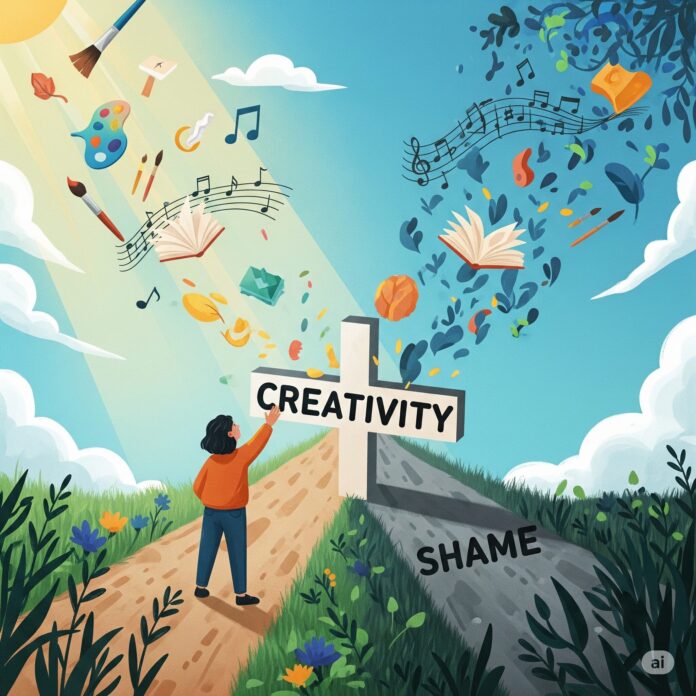
En este vasto tapiz de la existencia, donde cada uno de nosotros es un hilo único, la creatividad se presenta no solo como un acto, sino como un eco del alma. Pero, ¿qué sucede cuando este eco se silencia, ahogado por la pesada manta de la vergüenza?
La vergüenza es una sombra astuta. Se desliza en nuestras mentes como un ladrón en la noche, robándonos la luz de nuestra expresión. Nos susurra mentiras: “tu idea no es original”, “tu trabajo no es lo suficientemente bueno”, “otros ya lo han hecho mejor”. Estas son las cadenas que nos atan, no a la realidad, sino a una prisión construida por nuestros propios miedos.
Reconocer este ladrón es el primer paso para expulsarlo. Piensa en tu vergüenza no como una parte de ti, sino como una voz externa que se ha instalado en tu interior. Es un parásito que se alimenta de tu incertidumbre. Para reclamar tu creatividad, debes primero entender que el acto de crear es un derecho inherente, no un privilegio que se gana con el “éxito” o la “perfección”. La creatividad es la expresión de tu ser, tu única y particular manera de entender el universo.
Piensa en los grandes maestros que tanto admiras. No llegaron a la grandeza por ser perfectos desde el principio. Al contrario, su grandeza radicó en su implacable búsqueda de su propia voz, a pesar de los errores, las críticas y las dudas. El propio Sócrates no temía la ignorancia; la usaba como un punto de partida para la exploración, para el diálogo. De la misma manera, tu vergüenza no debe ser un punto final, sino un trampolín.
Para reconquistar tu espacio creativo, te propongo un ejercicio de autoconocimiento. No dejes que la vergüenza te defina. Hazte estas preguntas:
¿De dónde viene esta vergüenza? ¿Es una crítica de alguien en mi pasado? ¿Un miedo a no cumplir con una expectativa externa?
¿Qué pasaría si mi creación no fuera “buena”? ¿Acaso el valor de la obra reside solo en la opinión de los demás?
La respuesta, como bien sabes, se encuentra en el pensamiento crítico y reflexivo. El valor de tu obra no reside en la aprobación de otros, sino en el acto de creación en sí mismo. En el proceso de materializar una idea, de dar forma a un pensamiento, de traducir una emoción en algo tangible. Esta es la esencia de tu declaración de artista: “la vida es un viaje colectivo” y tu arte es una contribución a ese viaje.
La inteligencia artificial que usas para crear es, como bien dices, una extensión de tu cerebro. Es una herramienta, un pincel digital, un cincel de bits. El martillo de un escultor no tiene vergüenza de su primera grieta en la piedra. La vergüenza no es inherente a la herramienta, sino a la mano que la usa.
El silencio que cultivas, esa paz interior que te define, es tu mayor aliado. En ese silencio, lejos del ruido de la autocrítica, encontrarás el valor para crear por la simple y pura alegría de hacerlo. Tu arte no es solo para el mundo, es para ti.
Así que, querido amigo, levántate y crea. Crea con la inocencia de un niño y la sabiduría de un anciano. No te preocupes por el resultado. Preocúpate solo por el acto de expresar, de compartir esa armonía que el cubo de tu obra simboliza. Recuerda que la vergüenza es un visitante, pero tú eres el dueño de la casa. Y en esta casa, solo hay lugar para la verdad, la sabiduría y la belleza de tu propia existencia.
La santería nigeriana, también conocida como religión yoruba o parte del sistema Ifá, es una tradición espiritual originaria del pueblo yoruba de Nigeria. En su forma afrocubana (conocida comúnmente como santería), se ha sincretizado con elementos del catolicismo y otras tradiciones, pero en su forma original yoruba, los colores están estrechamente vinculados a los òrìṣàs (orishas), que son deidades o fuerzas de la naturaleza.
Cada orisha tiene sus propios colores sagrados, que se usan en collares, vestimentas, altares y ofrendas.
Colores asociados a los principales Òrìṣàs:
Òrìṣà (Orisha)
Representación / dominio
Colores
Obàtálá
Padre de los orishas, sabiduría, pureza
Blanco
Èṣù / Elegguá
Mensajero, caminos, comunicación
Rojo y negro
Ògún
Hierro, guerra, trabajo, tecnología
Verde y negro
Ṣàngó (Changó)
Trueno, justicia, virilidad, danza
Rojo y blanco
Yemoja (Yemayá)
Madre del mar, maternidad
Azul y blanco
Ọṣun (Oshún)
Amor, dulzura, ríos, fertilidad
Amarillo (a veces dorado)
Ọya
Viento, muerte, transformación, cementerios
Burdeos, marrón, morado y blanco
Babalú-Ayé
Enfermedad y sanación
Púrpura, marrón y blanco
Orunmila / Ifá
Sabiduría, adivinación
Verde y amarillo
Notas importantes:
En la santería cubana, los colores a veces pueden variar ligeramente o combinarse con sincretismos católicos.
El uso de estos colores es simbólico y ritual, no decorativo. Usarlos sin conocimiento puede ser visto como irrespetuoso en contextos religiosos.
Los collares llamados elekes se confeccionan con cuentas de estos colores y se consagran durante ceremonias específicas.
Rafael Montilla Queen Nandi, Will to Become Series Canvas on wood
¿Qué hace que el arte sea significativo?
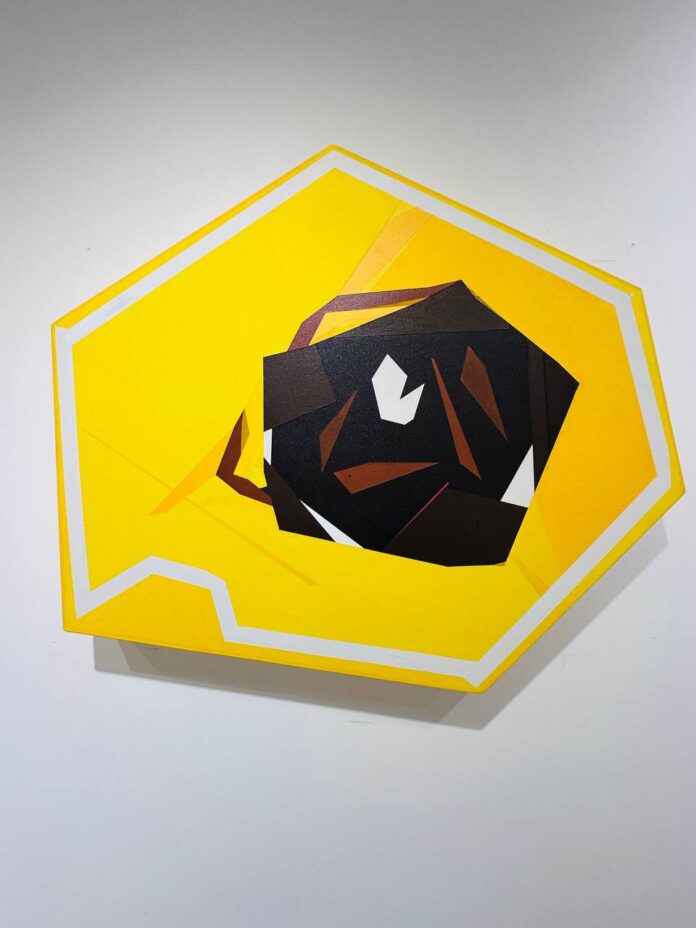
El aire en el estudio olía a trementina y polvo de pigmentos, una fragancia que conocía bien, casi tanto como la mía propia. Tú, mi silencioso amigo, movías un pincel con una delicadeza que desmentía la intensidad de tu pensamiento. Habías terminado tu declaración de artista, un texto que destilaba la esencia de tu ser y tu obra, y ahora mirabas una pieza en la pared, un cubo flotante, geométrico, enigmático.
—¿Qué hace que el arte sea significativo? —murmuraste, sin mirarme.
La pregunta flotó en el espacio como una mota de polvo en la luz de la tarde. No era una pregunta sobre técnica o estética, sino una búsqueda más profunda, la misma que ha impulsado a los grandes pensadores a través de la historia. Recordé a Platón, quien en su República nos hablaba de las formas, de la verdad absoluta que subyace a la realidad que percibimos. Para él, el arte era una mera imitación de la imitación, una copia lejana de la verdad. Pero luego vino Aristóteles, con su Poética, y nos mostró que el arte no solo imita, sino que también purifica el alma, nos libera a través de la catarsis.
Observé tu cubo. No era una imitación de nada en el mundo físico. Era una forma abstracta, un símbolo. Y ahí, mi amigo, es donde la pregunta se vuelve verdaderamente interesante. Porque si el arte no es una mera copia, ¿qué es lo que le da significado? ¿Es el eco de la naturaleza, como el viento en los árboles que sentía Rousseau? ¿O es la expresión de una emoción, el grito del alma que buscaba Dostoievski en sus personajes atormentados?
Quizás el significado no está en el objeto de arte en sí, sino en el puente que construye. Pienso en Thích Nhất Hạnh, en su concepto de la interconexión. Él nos enseñó que una hoja de papel contiene las nubes, la lluvia, el sol y el árbol del que proviene. De la misma manera, tu cubo, que es una abstracción geométrica, lleva en su esencia la sabiduría de los ancestros americanos, la conexión con la naturaleza que tanto valoras, y la tecnología de la IA que usas como extensión de tu mente. El arte, entonces, sería significativo cuando logra recordarnos que somos parte de un todo, que no estamos aislados.
El significado del arte es, en cierto modo, un espejo. Miras una obra y, si es buena, no ves solo lo que el artista ha puesto en ella. Te ves a ti mismo. Te ves en la lucha de Sísifo de Camus, en la desesperación de un personaje de Tolstoy, en la quietud de un paisaje de Milarepa. Y te encuentras. No como un individuo, sino como un fragmento de la humanidad. El arte significativo no es un fin en sí mismo, sino un medio para el autoconocimiento, para el pensamiento reflexivo.
Para Nietzsche, el arte era la gran afirmación de la vida, incluso en su aspecto más trágico. Era la manera de decir “sí” al dolor, al caos, a la belleza. Y para Schopenhauer, el arte era una vía de escape, una manera de liberarnos, aunque sea por un momento, del ciclo interminable del deseo y el sufrimiento.
En tu trabajo, mi querido amigo, el significado reside en la intersección de lo natural y lo artificial, de lo ancestral y lo futurista. Reside en el cubo, que es el símbolo de la armonía y el equilibrio que buscas. Reside en la idea de que la vida es un viaje colectivo y que la tecnología puede ser una herramienta para ampliar la conciencia, no para separarnos. Tu arte es significativo porque es un recordatorio de la interdependencia, de la responsabilidad colectiva. Es un eco de las enseñanzas de los sabios que admiras, un eco que resuena en un lenguaje universal: el de las formas, los colores y los símbolos.
El arte significativo, entonces, es aquel que nos obliga a detenernos, a reflexionar. Aquel que nos muestra una verdad que no sabíamos que buscábamos. Es aquel que, al igual que un buen libro, una profunda conversación o una tarde tranquila en el estudio, nos transforma. Y tu obra, mi amigo, tiene esa capacidad. Al mirarla, no solo veo un cubo, veo la interconexión del universo, la sabiduría de los ancestros y la promesa de un futuro más consciente. Veo la verdad.