Artistic Media and Techniques
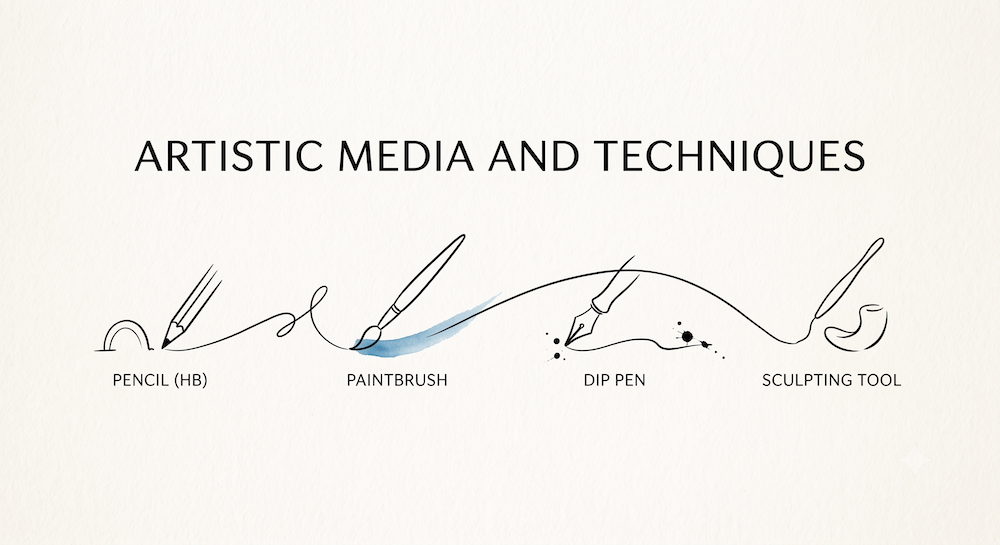
This section presents a broad range of traditional and contemporary artistic media, including drawing, painting, collage, printmaking, animation, three-dimensional art, and digital creation. Each technique offers artists a distinct visual language through its materials, processes, textures, and expressive possibilities. From charcoal, pencil, watercolor, and oil paint to Photoshop, Procreate, Adobe Fresco, and 3D modeling, these media allow artists to explore observation, imagination, narrative, abstraction, and experimentation across physical and digital formats.
3D
3D Art:
An artistic practice based on creating forms with volume, depth, and spatial presence. It may include digital sculpture, modeling, rendering, virtual installations, 3D-printed objects, and interactive environments.
Animation
Animation:
The art of creating the illusion of movement through a sequence of images. It may be produced through traditional drawing, digital techniques, stop-motion photography, 3D modeling, or experimental combinations of image, sound, and text.
Collage
Collage:
A technique in which an image is constructed by combining different fragments, such as photographs, paper, text, fabric, found objects, or digital elements. It creates new relationships between images taken from different contexts.
Digital
Digital Art:
Artwork created, modified, or presented using technological tools. It includes illustration, digital painting, manipulated photography, collage, animation, 3D modeling, video, artificial intelligence, and interactive experiences.
Adobe Fresco
A digital drawing and painting application developed for touchscreen devices. It combines raster brushes, vector tools, and live brushes that simulate the behavior of oil paint and watercolor.
Photoshop
A professional program for editing and creating digital images. It is used for photography, painting, collage, graphic design, illustration, and image manipulation through layers, masks, and effects.
Procreate
A digital illustration and painting application designed primarily for the iPad. It is known for its brush system, intuitive interface, and tools for drawing, color, layers, animation, and recording the creative process.
Drawing
Drawing:
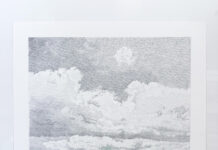
A discipline based on the creation of lines, shapes, values, textures, and structures on a surface. It may function as a preparatory study, a record of observation, or an independent artistic medium.
Charcoal
Charcoal:
A material made from carbonized wood that produces deep blacks, expressive lines, and broad tonal gradations. It is especially suitable for figure studies, portraiture, chiaroscuro, and gestural drawing.
Colored Pencil
Colored Pencil:
A dry medium composed of pigments mixed with wax or oil. It allows artists to work through layering, blending, transparency, precise details, and controlled gradations.
Conté Crayon
Conté Crayon:
A drawing material made from pigment, clay, and a binder. It is firmer and more controllable than charcoal and is commonly available in black, white, gray, sepia, and sanguine.
Crayon
Crayon:
A stick of pigment generally mixed with wax. It produces direct marks, solid colors, and textured surfaces, and may be used in both children’s art and professional artistic practices.
Marker
Marker:
A drawing tool that applies ink through a fiber, felt, or synthetic tip. It can produce consistent lines, intense colors, and clearly defined flat areas.
Oil Pastel
Oil Pastel:
A stick of pigment combined with oil and wax. It produces intense colors, dense surfaces, and smooth blends, and may be layered, smudged, or manipulated through scraping techniques.
Pen & Ink
Pen and Ink:
A technique based on lines, dots, hatching, and strong contrasts. It may involve a dip pen, ballpoint pen, brush, or technical pen, and requires control because the ink is generally permanent.
Pencil
Graphite Pencil:
A fundamental drawing medium that can create everything from delicate lines to deep shadows. Different grades of hardness make it possible to study proportion, volume, texture, and light.
Soft Pastel
Soft Pastel:
A stick of pigment containing a minimal amount of binder. It offers luminous colors, velvety blends, and delicate transitions, although its fragile surface usually requires protection.
Painting
Painting:
An artistic discipline that uses pigments applied to a surface to construct images, spaces, gestures, and chromatic relationships. It may be figurative, abstract, conceptual, narrative, or experimental.
Acrylic
Acrylic:
A fast-drying paint composed of pigment suspended in a polymer emulsion. It may be used transparently, opaquely, fluidly, or in thick applications, and it is compatible with a wide variety of surfaces and supplementary mediums.
Gouache
Gouache:
An opaque water-based paint with a high concentration of pigment and a generally matte finish. It combines the ease of watercolor with greater coverage and solidity.
Oil
Oil Paint:
A paint made from pigments mixed with drying oils, especially linseed oil. Its slow drying time allows for blending, glazing, impasto, corrections, and complex color transitions.
Water-Mixable Oils
Water-Mixable Oil Paints:
Oil paints modified so they can be mixed and cleaned with water. They preserve many of the qualities of traditional oils while reducing the need for strong solvents.
Watercolor
Watercolor:
A water-based painting technique characterized by transparency and luminosity. The white of the paper actively participates in the image, while layers of color create washes and atmospheric effects.
Egg Tempera
Egg Tempera:
A historical painting technique that uses egg yolk as a binder for pigment. It produces thin layers, rapid drying, luminous colors, and precise detail, and was widely used before the development of oil painting.
Printmaking
Printmaking:
A group of processes through which an image is transferred from a matrix onto paper or another surface. It includes techniques such as woodcut, linocut, etching, drypoint, lithography, screen printing, and monotype. Although printmaking can produce multiple impressions, each print usually belongs to a controlled edition and is generally numbered and signed.