How to Choose the Right Canvas Surface for Painting
Choosing the right canvas is an essential step for any painter, profoundly affecting both the process and the final outcome. The “perfect” surface depends entirely on your chosen medium (oil vs. acrylic), your preferred painting style (detailed realism vs. expressive impasto), your budget, and your intentions for the artwork (practice vs. professional gallery display).
This guide breaks down the four critical components of canvas selection: material, texture and weight, format, and priming.
1. The Material: Cotton vs. Linen
The first decision is the type of fiber used to weave the canvas.
| Feature | Cotton Duck | Linen (from Flax) |
| Best For | Acrylics, beginners, practice, students, budget-friendly work. | Professional oil painting, archival works, large-scale pieces. |
| Durability | Strong, but has high elasticity (stretchy). Can sag over time on large frames. | Exceptional strength and durability. Retains its tension over many decades. |
| Texture | Generally more mechanical and uniform weave. | Natural, often irregular weave; considered part of the character of the art. |
| Archival Quality | Good, but not “time-tested” like linen. | Superior. Resistant to mold, pests, and rot. |
| Cost | Economy/Affordable. | Premium/Expensive. |
2. Texture and Weight: Matching Surface to Style
The physical feel of the canvas—its roughness or smoothness—will determine how paint sits on the surface and what your brushstrokes look like.
Texture (Tooth)
This is the roughness of the weave. The tighter the weave, the smoother the canvas.
- Extra-Fine / Fine (Portrait Linen):
- Surface: Almost smooth; very subtle weave.
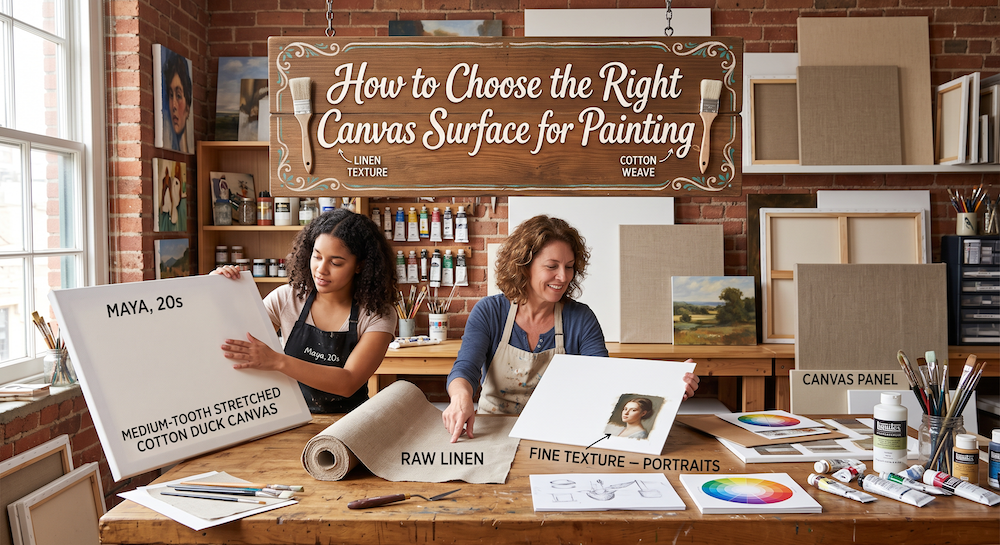
- Best For: Portraits, hyper-realism, smooth color blending, detailed glazes. A coarse texture can distort delicate features like skin.
- Medium:
- Surface: Moderate tooth; the “all-purpose” option.
- Best For: Landscape painting, general illustration, most standard acrylic and oil techniques.
- Rough / Coarse:
- Surface: A very pronounced, visible weave.
- Best For: Bold, expressive brushwork, impasto (thick paint) techniques, and palette knife painting. The roughness grips heavy paint layers and prevents cracking.
Weight (Oz or GSM)
Weight is a measure of the density of the fabric weave, typically measured in ounces per square yard (oz) or grams per square meter (gsm). The higher the number, the stronger and thicker the canvas.
- Lightweight (4–7 oz): Suitable only for stretching on small frames or for thin paint applications (like staining or watercolors). It may sag or tear on large frames.
- Medium-Weight (8–10 oz): The standard workhorse. Ideal for most painting styles and standard-sized canvases.
- Heavyweight (12 oz and up): Essential for very large paintings to withstand stretching tension and the weight of thick impasto layers.
3. The Format: How Is It Presented?
How the canvas is constructed affects its rigidity, portability, and “feel” under the brush.
| Format | Stretched Canvas | Canvas Board / Panel | Canvas Roll |
| Structure | Canvas stretched over a wooden frame (stretcher bars). | Canvas glued to a rigid backing (cardboard, wood, or MDF). | Raw or primed canvas material sold in a large roll. |
| Feel | Has a unique spring or “bounce” that many professional artists prefer. | Rigid and unyielding. The brush has more resistance. | N/A until stretched or mounted. |
| Durability | Good, but can be punctured; canvas can loosen over time (can be re-stretched). | Rigid surface prevents flexing and cracking of paint. Cheap cardboard panels can warp if soaked. | N/A. |
| Portability | Bulky. Takes up storage space. | Flat, thin, lightweight. Ideal for travel and plein air (outdoor) painting. | N/A. |
| Best For | Finished artworks, gallery display, large pieces. | Studies, practice, outdoor painting, small finished works. | Artists who want custom sizes, or to save money by stretching their own. |
4. Priming: Ready to Paint vs. Custom Control
Before you can paint on raw fabric, it must be primed to protect the fibers and provide a stable surface for the paint to stick to.
Primed (Pre-primed) Canvas
This is the most common option. The canvas is already coated with gesso and is ready to use immediately.
- Pros: Convenient, saves time.
- Cons: Less choice regarding the specific texture, color, and absorbency of the ground.
Raw (Unprimed) Canvas
Raw canvas is “raw” fabric. It requires a size (to seal the fibers, e.g., rabbit skin glue) and then gesso (primer).
- Pros: Complete control over the entire process. You can choose a custom tint (toned ground), customize the number of primer layers (to make it smoother or thirstier), and ensure archival quality.
- Cons: Labor-intensive; requires knowledge, materials, and time to cure before use.
The Type of Primer (Gesso)
- Acrylic Gesso (Universal): Can be used for both acrylic and oil painting. It is bright white, absorbent, and slightly flexible.
- Oil Primer: Specifically designed only for oil paints. It creates a smoother, less absorbent, more rigid surface that grips oil paint well. Note: Oil primer must be applied over a layer of size to protect the fabric from rotting.