Themes, Genres, and Material Languages in Artistic Representation
Artistic representation emerges from the relationship between what an artist chooses to explore and how that exploration is given visual form. Themes and genres provide the conceptual, narrative, and cultural framework of an artwork, while media and techniques determine its material presence, visual language, and sensory impact. Abstraction, portraiture, landscape, architecture, animals, food, clothing, comics, and still life are not merely categories used to organize artworks. Each one offers a distinct way of examining the world. Similarly, drawing, painting, collage, printmaking, animation, digital art, and three-dimensional practices are not neutral tools. Every medium carries particular histories, limitations, physical qualities, and expressive possibilities.
The relationship between subject and medium is therefore central to artistic meaning. A portrait rendered in charcoal does not communicate in the same way as one created through digital animation. A landscape painted outdoors in watercolor produces a different experience from a landscape constructed through collage or modeled in three dimensions. The artist’s choice of materials and techniques shapes how the subject is perceived, interpreted, and remembered.
Themes and Genres as Ways of Understanding the World
Artistic genres historically developed as frameworks through which artists organized visual experience. Portraiture examined the human face and body; landscape represented natural and constructed environments; still life focused attention on everyday objects; and architectural imagery explored buildings, monuments, interiors, and urban space. However, contemporary artists have expanded these categories far beyond their traditional definitions.
Portraiture, for example, is no longer limited to achieving a physical likeness. It may investigate identity, memory, gender, race, social status, vulnerability, power, or the construction of a public persona. A portrait can reveal how individuals see themselves, how society represents them, or how identities are shaped by cultural expectations.
The human figure similarly provides more than an anatomical subject. Through posture, gesture, movement, fragmentation, and scale, the body can become a site of emotional, political, psychological, or symbolic meaning. In academic drawing, the figure may be studied to understand proportion and anatomy. In contemporary practice, it may represent displacement, trauma, labor, desire, resistance, or transformation.
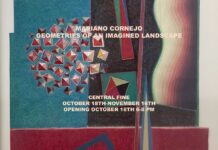
Landscape has also evolved from the representation of natural beauty into an important means of examining territory, migration, ecology, climate, memory, and human intervention. Urban landscapes may reveal social inequality, development, surveillance, or architectural power. Imagined landscapes can create psychological spaces that exist between memory, fantasy, and reality.
Architecture occupies a related but distinct field. Buildings and interiors are not only physical structures; they reflect political systems, economic priorities, cultural identities, and collective histories. Artists may represent architecture accurately or distort perspective, light, and scale to examine how constructed environments influence human behavior.
The representation of animals may originate in anatomical observation, but it can also address ecological relationships, cultural symbolism, extinction, companionship, mythology, or the boundaries between human and nonhuman life. An animal may appear as a scientific subject, an emotional presence, a political metaphor, or an imagined creature.
Still life and food imagery bring attention to familiar objects that are often overlooked. Fruits, flowers, books, utensils, meals, and domestic items allow artists to study light, texture, color, volume, and composition. Yet these objects may also communicate ideas about mortality, consumption, abundance, scarcity, cultural identity, family rituals, labor, and economic systems.
Clothing and apparel can be represented as exercises in fabric, folds, volume, and movement, but clothing also functions as a social language. Garments can reveal gender, profession, tradition, class, religion, individuality, belonging, or resistance. In portraiture and character design, clothing frequently helps communicate personality and historical context.
Illustration, comics, character design, and design emphasize the relationship between art and communication. Illustration interprets or complements an idea, text, or narrative. Comics construct meaning through sequences of images, panels, dialogue, pacing, and visual transitions. Character design integrates anatomy, expression, clothing, silhouette, and body language to create figures capable of inhabiting a narrative world. Design brings together aesthetics and function, organizing visual information to solve problems, communicate ideas, and shape experiences.
Abstraction differs from these representational categories because it does not depend on literal depiction. Through color, line, form, texture, repetition, rhythm, and spatial relationships, abstraction can communicate sensations or ideas that cannot easily be represented through recognizable images. Nevertheless, abstraction is not necessarily disconnected from reality. It may arise from nature, architecture, movement, memory, mathematics, music, or emotional experience.
Media and Techniques as Forms of Thought
If themes determine what an artwork addresses, media and techniques influence how it thinks. Materials are not passive containers for ideas. Their physical and cultural characteristics become part of the artwork’s meaning.
Drawing is one of the most immediate forms of visual expression. A pencil can create precise lines and subtle tonal transitions, while charcoal produces deep blacks, broad gestures, and dramatic contrasts. Colored pencils allow controlled layering and detail; Conté crayons provide firmness and tonal richness; markers create defined lines and intense flat color; and pen and ink use permanence, hatching, and contrast to establish structure. Soft pastel offers luminous, velvety surfaces, while oil pastel produces denser color and more tactile marks.
Each drawing material influences the artist’s movement and decision-making. A graphite line may suggest analysis and control, while charcoal can register speed, pressure, and bodily gesture. Drawing may function as preparation for another work, but it can also be a complete and independent artistic language.
Painting introduces pigment, surface, fluidity, opacity, and time. Acrylic paint dries quickly and supports transparent washes, flat areas, or thick textures. Oil paint dries more slowly, allowing blending, glazing, revision, and complex transitions. Water-mixable oils retain many qualities of traditional oil paint while reducing reliance on strong solvents.
Watercolor depends on transparency, fluidity, and the active presence of the paper. Gouache provides greater opacity and a matte finish, making it valuable for illustration and design as well as fine art. Egg tempera, with its rapidly drying layers and luminous detail, connects contemporary practice with a long history of panel painting.
Plein air painting is not simply a style but a working method. By painting directly before a landscape, the artist responds to changing light, weather, atmosphere, and time. The resulting work often records both the appearance of a place and the immediacy of the artist’s encounter with it.
Collage constructs meaning through combination and interruption. Photographs, texts, fabrics, papers, found materials, and digital fragments can be removed from their original contexts and placed into new relationships. Because collage preserves visible differences between its elements, it is particularly effective for examining memory, identity, media culture, political conflict, and fragmented histories.
Printmaking introduces the relationship between image, matrix, transfer, repetition, and variation. Woodcut, linocut, etching, drypoint, lithography, screen printing, and monotype each produce distinct lines, textures, and surfaces. Although many printmaking processes create multiple impressions, every print belongs to a carefully controlled artistic process and may vary through ink, pressure, paper, and registration.
Digital and Three-Dimensional Practices
Contemporary artistic production increasingly moves between physical and digital environments. Digital art includes painting, illustration, manipulated photography, animation, collage, video, artificial intelligence, interactive work, and virtual experiences.
Programs such as Adobe Fresco, Photoshop, and Procreate offer different creative possibilities. Adobe Fresco combines raster, vector, and live brushes that simulate watercolor and oil paint. Photoshop enables complex editing, layering, masking, image manipulation, and compositing. Procreate provides an intuitive environment for drawing, painting, animation, and recording the creative process.
Digital media do not simply imitate traditional techniques. They introduce new possibilities such as unlimited revision, duplication, animation, interactivity, rapid distribution, and collaboration across geographic distances. At the same time, digital art raises important questions about originality, authorship, technology, reproduction, and the preservation of artworks dependent on changing software and devices.
Animation adds duration and movement to visual art. Through hand-drawn sequences, stop-motion, digital illustration, or 3D modeling, animation controls rhythm, transformation, time, sound, and narrative. It allows static images to become performative and temporal.
Three-dimensional art creates volume and spatial presence. It may include sculpture, assemblage, installation, digital modeling, virtual environments, and 3D-printed objects. Unlike a flat image, a three-dimensional work shares physical or simulated space with the viewer. Its meaning can change according to scale, material, movement, lighting, and the position from which it is observed.
The Interaction Between Subject and Medium
The strongest artworks often emerge when subject, material, and technique reinforce one another. A fragile subject represented through delicate watercolor may communicate vulnerability, while the same subject carved into stone may suggest permanence. A fragmented memory expressed through collage gains meaning from the visible separation and recombination of images. An urban landscape modeled in 3D can emphasize architecture, scale, and spatial control, while an animated version may reveal movement, development, or destruction over time.
Artists are therefore not simply selecting a subject and then choosing a convenient technique. They are creating a relationship between concept and material. A successful artistic decision answers several questions: Why should this subject take this particular form? What does the material contribute that another medium could not? How does the technique affect the viewer’s emotional, intellectual, and physical experience?
Conclusion
Themes, genres, media, and techniques form an interconnected system rather than separate categories. Themes identify the questions, experiences, and realities that artists investigate. Genres provide historical and visual frameworks through which those subjects can be organized. Media give ideas a physical or digital form, while techniques reveal the processes through which materials are transformed.
Understanding these relationships enriches both artistic creation and critical interpretation. It allows viewers to recognize that meaning does not exist only in what an artwork depicts. Meaning is also produced through line, color, texture, scale, movement, rhythm, surface, technology, and space.
Artistic representation is ultimately a dialogue between idea and form. Whether an artist works with charcoal, oil paint, collage, printmaking, digital software, animation, or three-dimensional structures, every material decision shapes how the world is observed, questioned, remembered, and imagined.