Where contemporary art, experimental music, and creative expression converge, III Points continues to shape Miami’s cultural identity.
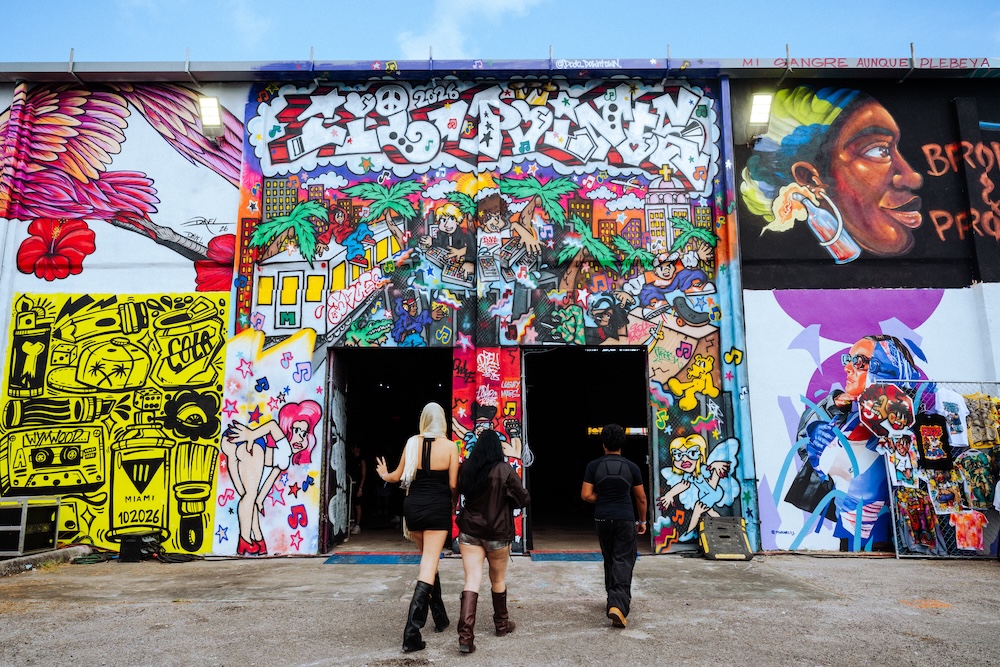
For two electrifying nights, Miami’s Wynwood Arts District became an extraordinary landscape of sound, light, contemporary art, and collective imagination. III Points Festival 2026, held October 16–17 at Mana Wynwood, reaffirmed its significance as one of the city’s most distinctive cultural experiences—a gathering where artistic experimentation and musical innovation coexist as expressions of Miami’s creative identity.
What makes III Points exceptional is its refusal to conform to the traditional definition of a music festival. Beyond internationally recognized performers, electronic rhythms, and monumental stage productions, an equally compelling narrative unfolds through installations, sculpture, murals, experimental film, and interactive environments.
The festival transforms into a temporary contemporary art destination, inviting audiences to engage with creative works beyond conventional museum and gallery settings. Art becomes an unexpected encounter, sometimes intimate and contemplative, sometimes theatrical and spectacular.
The 2026 edition featured approximately 30 works and artistic activations across nine areas, alongside an initiative supporting 12 artists through its Artist Grant program. These contributions explored Miami’s identity, cultural memory, urban transformation, experimentation, and the relationship between technology and human experience.
Mokiworld: A Fantastical Interpretation of Miami
Among the festival’s most ambitious creative environments was Mokiworld, conceived by Miami artist Mokibaby.
For the festival’s thirteenth edition, the artist developed a fantastical universe drawing inspiration from Miami’s history, Art Deco glamour, casino culture, and the theatrical extravagance of Las Vegas.
A monumental 16-foot furry television, casino-inspired attractions, a whimsical wedding chapel, and a motorized chandelier contributed to an environment where nostalgia collided with contemporary nightlife.
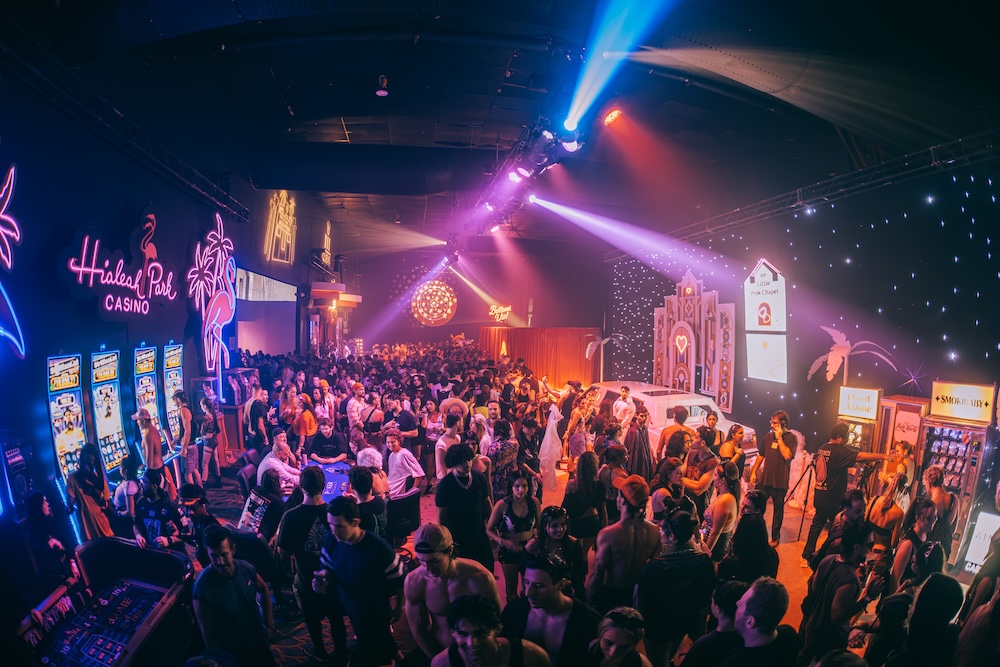
Yet beneath the playful excess was an affectionate portrait of Miami itself—a city whose character has long been shaped by reinvention, theatricality, and cultural contradictions.
The installation demonstrated how familiar visual references can be transformed into immersive storytelling. By exaggerating elements of entertainment culture, Mokiworld created an environment where fantasy and reality existed in constant dialogue.
Equally imaginative was Mokibus, an installation inside a bus that transported visitors into a domestic environment gradually overtaken by an enchanted forest. Through recorded memories, sound, and environmental elements, the work invited reflection on nostalgia and the emotional relationship between memory and place.
The contrast was fascinating: one installation embraced exuberant spectacle, while the other encouraged introspection. Together, they revealed how contemporary installation art can transform ordinary spaces into unexpected emotional experiences.
Art as Memory and Cultural Connection
One of the festival’s most meaningful contributions was La Ofrenda, an immersive memorial installation by Sierrah Marina and Trinity Wheeler.
Created to honor members of Miami’s artistic community who have passed away, the installation incorporated portraiture and an atmospheric illusion of sunlight to establish a space dedicated to remembrance.
Within the energetic environment of a music festival, La Ofrenda offered something particularly valuable: an opportunity for quiet contemplation.
It acknowledged that Miami’s creative history is built upon generations of artists, musicians, collaborators, and cultural pioneers whose contributions continue shaping the city.
This relationship between memory and artistic creation continued through Unkle Luc’s Miami 2006, a project exploring photography, moving images, technology, and cultural preservation.
Meanwhile, Flor Franceschetti’s Miami Listening Station transformed a vintage telephone booth into an intimate listening experience dedicated to local music.
In an era when digital algorithms increasingly influence how music is discovered, the installation proposed a more personal encounter with Miami’s independent musical identity.
The work was particularly compelling because it connected two essential components of III Points: visual creativity and the preservation of the city’s musical heritage.
The City as Canvas: Miami’s Changing Landscape
Another powerful artistic statement emerged through The Upside, an installation by creative collective S-Lab.
Revisiting an earlier inflatable interpretation of Miami’s skyline, the collective presented the city’s familiar architecture suspended upside down.
The installation carried renewed significance amid Wynwood’s continuing transformation and the sale of Mana Wynwood, the festival’s longtime home.
As development reshapes Miami’s urban landscape, the work raises questions about the relationship between artistic communities and the neighborhoods they help establish as cultural destinations.
Its inverted skyline becomes a visual metaphor for uncertainty, change, and the complex consequences of urban expansion.
Equally significant was the participation of Miami Art Society, whose curated murals transformed sections of the RC Cola Warehouse into an expansive outdoor gallery.
Artists including Abstrk, Entes, Carlos Solano, M’Wanel Pierre-Louis, and Santiago Rubino, among others, contributed to a visual environment celebrating the diversity of Miami’s street-art traditions.
These large-scale interventions affirmed the importance of muralism as both public expression and cultural documentation. For a city internationally associated with Wynwood’s urban art movement, this integration felt especially appropriate.
Digital Art and the Evolution of Visual Storytelling
The festival’s Digital Art Gallery expanded the creative dialogue through experimental animation, photography, moving images, and digitally constructed environments.
Among its intriguing contributions was Giano Currie’s Artists of III Points 2026, a portraiture project documenting Miami DJs and visual artists participating in the festival.
Through individual and collective imagery, Currie created a visual record of the artists responsible for shaping the event’s cultural identity.
Miguel Gonzalez’s In Search of Light: Histories explored the relationship between digital sculpture, spirituality, and art history.
Inspired by the dramatic gestures of medieval and Baroque painting, the animated work portrayed human figures pursuing an elusive source of illumination. Its visual language connected centuries-old artistic traditions with contemporary digital technologies.
Olivia Pedigo’s Liv’s Psychic Hotline brought a different sensibility to the gallery through surreal three-dimensional animations examining uncertainty, intuition, and the human desire for reassurance.
Meanwhile, photographer Yuval Ofir’s Ghosts in the Machine directed attention toward individuals working behind the scenes of large cultural productions.
Through images captured during previous editions of III Points, the project acknowledged technicians, production teams, and the often-overlooked human labor responsible for transforming ambitious creative ideas into reality.
The Digital Art Gallery thus became more than an exhibition of technological experimentation. It functioned as an archive of Miami’s creative present.
The Music: Rhythm, Discovery, and the Sound of a Cultural Movement
While contemporary art commanded attention throughout the festival, music remained the powerful heartbeat connecting its many creative worlds.
With nearly 300 performers across 13 stages, III Points 2026 presented an expansive musical landscape that moved between electronic experimentation, techno, house, alternative pop, hip-hop, and contemporary Latin sounds.
Among the most anticipated names were Mary Droppinz, Cloonee, Disco Lines, Blood Orange, Flying Lotus, Honey Dijon, Parcels, Charlotte de Witte, and Ivy Lab—artists whose distinctive musical identities reflect the extraordinary diversity of contemporary sound.
The programming offered striking contrasts. Mary Droppinz, Cloonee, and Disco Lines represented different dimensions of electronic dance music, bringing playful experimentation, infectious rhythms, and dynamic house influences into the festival’s musical landscape.
Charlotte de Witte and Honey Dijon embodied two compelling approaches to electronic music: the hypnotic intensity and relentless momentum of techno alongside the groove, history, and exuberance of house.
Meanwhile, Blood Orange and Parcels brought melodic sophistication and alternative musical sensibilities, while Flying Lotus and Ivy Lab expanded the sonic palette through experimental production, intricate rhythms, and bass-driven compositions.
Together, these artists demonstrated the festival’s ability to unite seemingly contrasting musical worlds within one cultural experience.
What made the experience distinctive was not simply the lineup’s international recognition, but the freedom to move between genres and discover something unfamiliar.
Throughout Mana Wynwood, the energy of the festival shifted from one environment to another. Deep bass resonated through industrial spaces, electronic rhythms created a near-hypnotic sense of movement, and expansive lighting designs transformed stages into monumental visual compositions.
At moments, the distinction between performance and installation seemed to dissolve. Light became architectural, sound became physical, and the movement of the audience completed the experience.
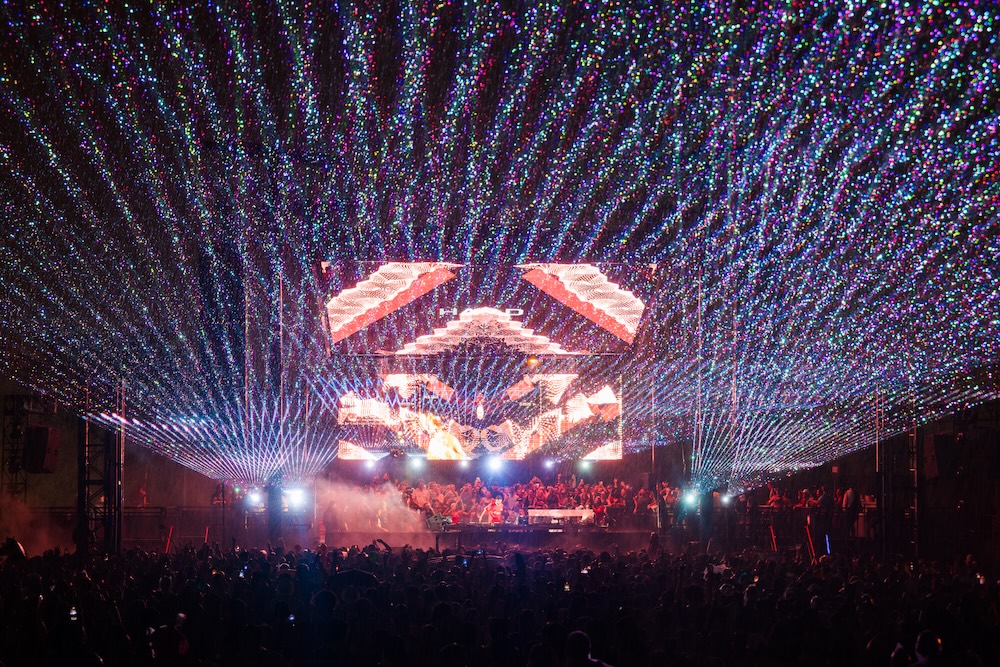
This is where III Points’ musical and visual identities meet most convincingly.
The festival understands that music is not experienced exclusively through hearing. It is felt through movement, encountered through atmosphere, and remembered through the visual environments surrounding it.
The immense disco ball suspended above the festival grounds remains an especially fitting symbol of that relationship. Suspended from a construction crane, it transforms an emblem of Miami’s constant development into an object of celebration.
Under its reflected light, music and architecture become part of the same artistic language.
David Sinopoli and the Movement That Put Miami on the Map
Founded in 2013 by David Sinopoli, III Points has evolved from an ambitious local experiment into an internationally recognized cultural destination.
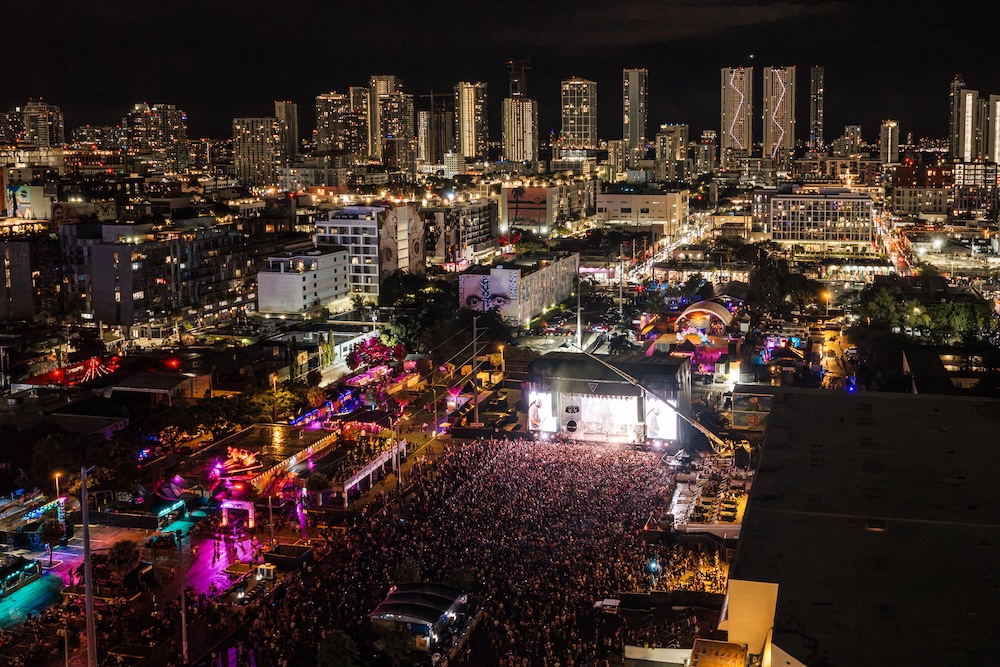
During a previous conversation with Sinopoli, his commitment to maintaining the festival’s authenticity and supporting Miami’s creative ecosystem emerged as one of the most compelling aspects of his vision.
Rather than simply importing international talent, III Points continues creating opportunities for local musicians, DJs, artists, designers, and independent cultural organizations.
This philosophy has been instrumental in helping establish Miami as a serious destination for electronic and alternative music.
For decades, Miami has enjoyed an international reputation for nightlife, but III Points contributed another dimension: a festival culture rooted in experimentation, artistic discovery, and a distinctly local sensibility.
Its programming challenges audiences to explore beyond familiar tastes, creating connections between established performers and emerging talent.
Perhaps more importantly, it demonstrates that Miami’s cultural influence is not dependent upon reproducing what happens in other major cities. Its strength lies in cultivating something entirely its own.
The festival has become a gathering place for the city’s creative community, one where artists, musicians, designers, and audiences participate in a shared cultural experience.
In this sense, III Points is not simply a celebration of music. It is an ongoing investment in the people who give Miami its artistic character.
A Cultural Legacy Still Being Written
III Points 2026 demonstrated that Miami’s artistic vitality cannot be confined to museums, galleries, or traditional performance venues.
It flourishes equally within independent creative communities, industrial warehouses, experimental studios, nightlife spaces, and collaborations that challenge established boundaries.
The festival’s greatest strength lies in bringing these different worlds together.
A mural becomes a declaration of identity. A sculpture questions urban transformation. A digital artwork preserves cultural memory. An installation offers a moment of reflection. Music transforms thousands of strangers into a temporary community.
Together, these experiences create a living portrait of a city defined by imagination, experimentation, and constant reinvention.
As Miami continues developing its international cultural presence, III Points offers an important reminder: the city’s creative future depends not only upon attracting global attention, but also upon supporting the artists whose work gives Miami its distinctive character.
Through David Sinopoli’s vision and the contributions of numerous artistic collaborators, III Points continues to demonstrate that Miami is not merely a destination for contemporary culture. It is a place where culture is actively created.
Its enduring achievement lies in celebrating the creative voices that give the city its energy, individuality, and unmistakable spirit.
For more information about III Points and its contemporary art programming, visit https://www.iiipoints.com/art/.