With a practice shaped by technical drawing, graphic design, luxury production, and decades of creative direction, Paül G. approaches painting through an unusual balance of structure and intuition. His work reflects a deep understanding of color, pigment, spatial construction, and material processes, while also seeking to create contemplative environments that extend beyond the physical surface of the canvas.
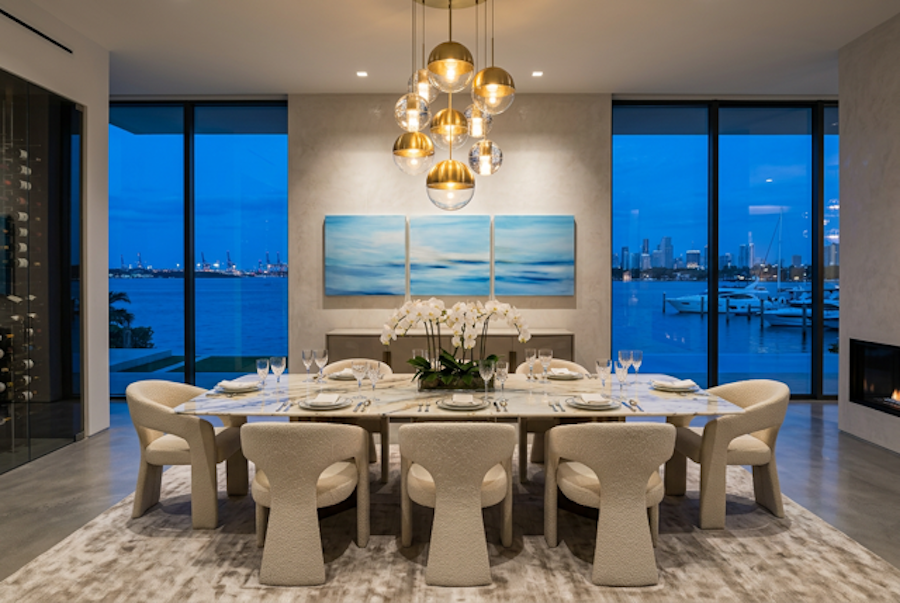
After more than fifteen years managing creative projects for international brands, the artist redirected his accumulated experience toward a personal visual language in which precision does not restrict expression but provides the foundation for it. In series such as Atmospheric Blues, layers of pigment, glazing, horizon lines, and subtle transitions generate spaces that feel immersive, meditative, and expansive.
In this conversation with Art Miami Magazine, Paül G. reflects on the evolution from creative management to independent artistic authorship, the influence of design and international visual culture on his work, and the growing importance of memory, ancestry, and belonging in his forthcoming series, The Legacy of Terravecchia.
AMM: Your artistic practice emerges from an unusual convergence of design, technical precision, and fine arts. How did your early exposure to technical drawing, artisanal looms, and your formal design studies in Buenos Aires shape your current visual language?
Paül G.: My artistic practice is not a fortuitous event, but the culmination of a technical process spanning decades that has gradually settled into a defined identity.
Since childhood, I developed a rigorous discipline in figurative drawing, which granted me a profound understanding of light and volume. This foundation was solidified by delving into technical drawing and architecture, where I learned to conceive space through planes, vanishing points, and structural tensions.
Subsequently, while studying Graphic Design in Buenos Aires, I integrated the importance of the “guiding idea” and conceptual thinking: I learned that a work must not only be executed with skill but must possess an inescapable reason for being.
My trajectory in the fashion and advertising industry ultimately granted me absolute control over materiality, pigment, and industrial precision. Today, Atmospheric Blues is the synthesis of this journey; I do not pursue erratic intuition, but a sophisticated balance between the atmospheric freedom of the canvas and the design precision I have meticulously cultivated throughout my life.
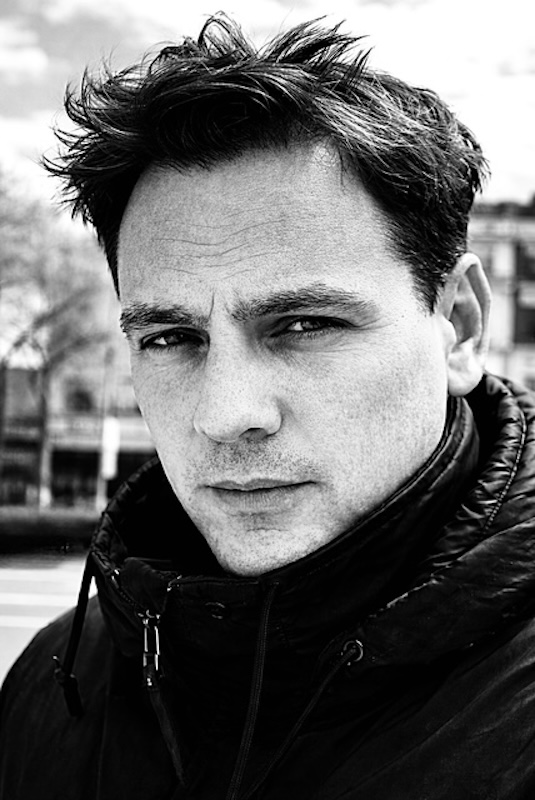
AMM: After more than fifteen years managing creative projects for global brands, what motivated you to transform from Pablo Germinario, the Creative Manager, into Paül G., the visual artist? How has this transition influenced your understanding of authorship and artistic freedom?
PG: The transition to Paül G. was not an abandonment of my trajectory, but its logical and necessary evolution.
For over fifteen years, my work consisted of channeling the vision of international brands under extremely high technical demands, which provided me with exceptional operational discipline, though often constrained by corporate boundaries.
By pouring all my energy onto the canvas, authorship acquired a transcendental meaning: freedom is no longer intuitive chaos, but a strategic and calculated decision.
My current work fuses the expressive freedom of art with the rigor of a project manager. I conceive “artistic freedom” as the ability to master the balance between color palette, depth, and volume, applying the same curation standards I required for top-tier brands, but this time applied to my own voice.
Today, my work is the result of that accumulated experience; I offer the viewer a piece curated with the precision, material knowledge, and strategic intentionality of someone who understands how high-end ideas must be communicated in the global market.
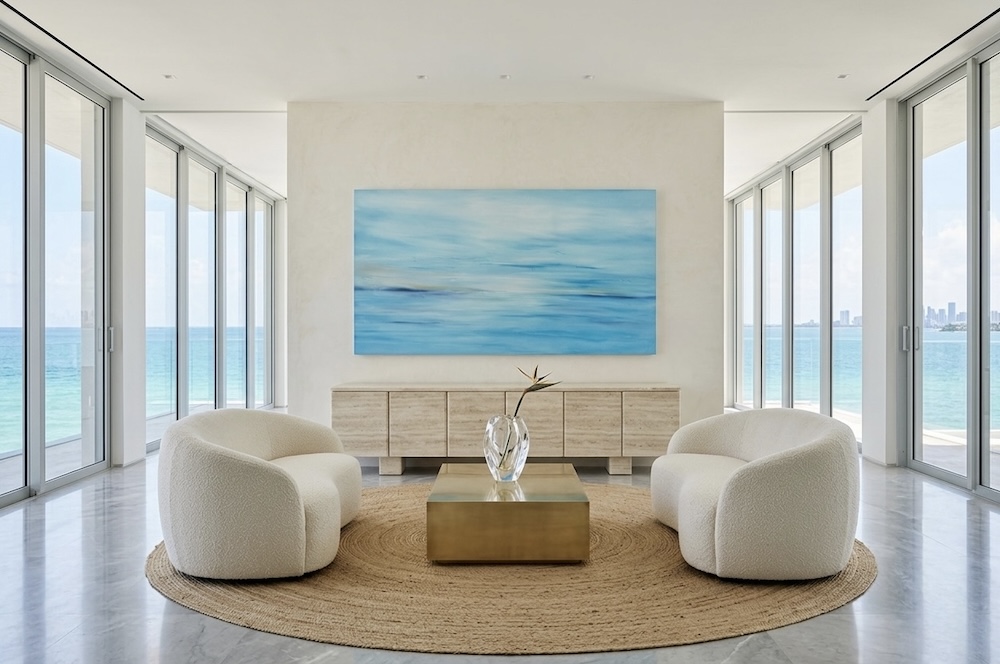
AMM: Your work reflects a remarkable command of color, atmosphere, and materiality. How have your experiences in international design capitals, as well as your knowledge of pigment chemistry, influenced your approach to creating immersive visual environments?
PG: My command of materiality is not merely intuitive; it is the result of over twenty years of daily practice with highly complex reproduction techniques.
Thanks to my experience in graphic arts and luxury processes, I have developed an almost scientific understanding of color chemistry. I understand exactly how each pigment reacts to light and how glazes—the strategic use of transparency—allow for the construction of depth that transcends the surface of the canvas.
My travels through hubs such as New York, Milan, London, and Berlin were fundamental to my training, keeping me in constant contact with aesthetic avant-gardes.
However, my vision was ultimately shaped in the East; immersion in Asian culture provided a new dimension: the management of calm, a contemplative palette, and a sense of balance that contrasted with Western velocity.
I paint to generate immersive atmospheres capable of transforming spaces; my intention is for each work to be an environment in itself, a refuge where technique and intention fuse to invite a deep and reflective sensory experience.
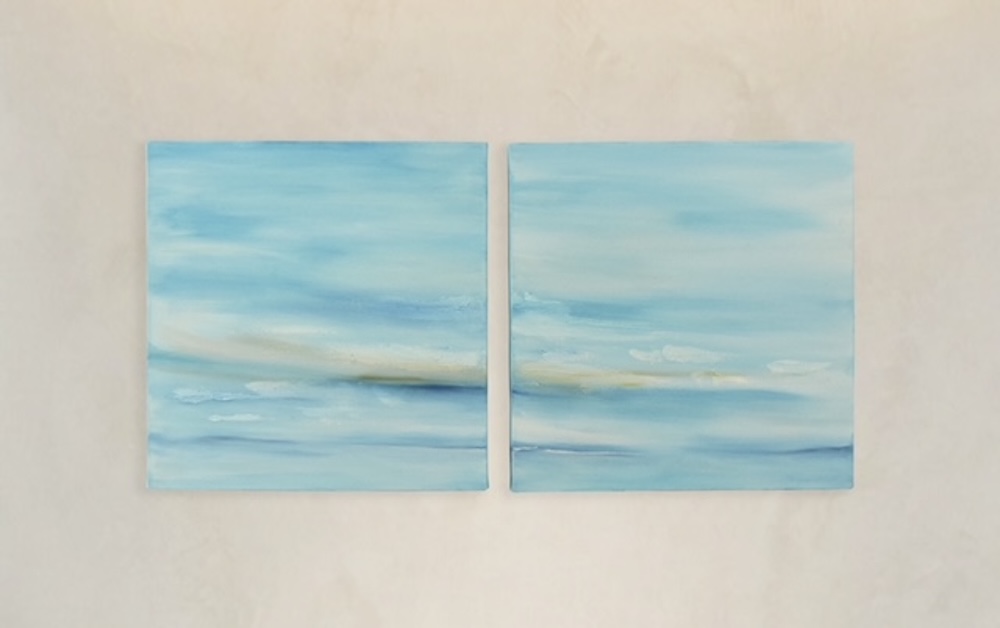
AMM: You often describe your practice as a place where “design precision meets the atmospheric freedom of the canvas.” How do you balance structure and spontaneity during the creative process, particularly in series like Atmospheric Blues?
PG: My practice is, in essence, an exercise in “controlled chaos.” The balance between structure and spontaneity is not accidental; it is a methodical process that honors both my professional rigor and my creative freedom.
Structure is the foundation: each work in the Atmospheric Blues series follows a deliberately slow execution process. I begin by defining the composition, the horizons, and the spatial tensions with a designer’s intent, but immediately afterward, I apply the atmospheric freedom that the canvas demands.
The horizon, although structured, is never definitive; my goal is fusion, where the dividing line dilutes into a mist that creates infinite depth. This is where my glazing technique comes into play, strategically using white to achieve subtle hazes.
While structure provides direction, spontaneity inhabits the final brushstroke, the textured impasto, and the way the blues intertwine.
This balance is what defines my process: I use design to establish non-negotiable order, but I allow myself to shed structure at the end to let the atmosphere emerge in its maximum expression.
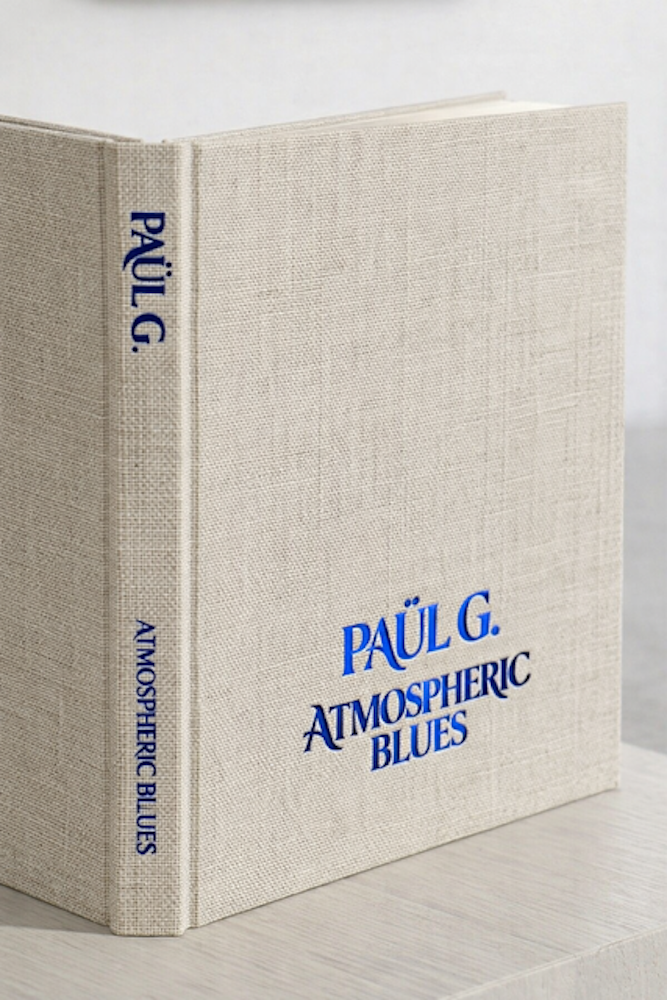
AMM: Looking back at your artistic evolution, what elements of your influences—masters like Van Gogh, Monet, and Dalí—remain visible in your work, and where do you see your visual language evolving in the years to come?
PG: My influences are an amalgam of technique and vision that I have distilled over time.
From the classical masters, I rescue fundamental lessons: the spontaneity of Monet’s and Gauguin’s brushwork taught me not to fear the free gesture, while Dalí’s ability to subvert structures revealed that space can be simultaneously logical and oniric.
However, my work is evolving from pure atmosphere toward a narrative of legacy and belonging.
My next project, The Legacy of Terravecchia, is a profound homage to my grandfather, Umberto Pietro Leo. This series is born from a visceral connection to his roots in Cariati, overlooking the Ionian Sea.
The work captures the vision he cultivated throughout his life: that horizon where the sea merges with the olive groves of Southern Italy. He was the one who transmitted the passion for the values and culture of that land to me, and this series is my way of perpetuating his heritage.
My artistic evolution is now heading toward a more grounded and conceptual depth, integrating a palette that transcends blues and embraces the warmth of the Mediterranean landscape.
The Legacy of Terravecchia is my way of invoking the peace of that horizon and turning it into an immersive environment, where the viewer can experience the echo of an ancestral legacy.
The Legacy of Terravecchia is not just a series of paintings; it is my commitment to an aesthetic that honors both the technique of the old masters and the contemporary vision of space.
My goal is for anyone inhabiting my works to feel that they are not before a decorative piece, but before a window that connects the history of a lineage with the sophistication of the present.