“Fragmentation connects the three series—Sacred Geometry, The Language of Silence,
and Humanity’s Gambit. Across the female bodies, the lips, and the chess pawns,
fragments speak of what departure has severed and what we attempt to bring together
again. Geometry, the chess move, and the journey become distinct ways of confronting
movement, memory, and reconstruction.”
— Ivonne Ferrer
SACRED GEOMETRY. ONTOLOGIES OF FRAGMENTATION
In Sacred Geometry, Ivonne Ferrer interrogates the classical conception of the body as a self-contained, harmonious totality. By juxtaposing the anatomical conventions of Greco-Roman female statuary with disruptive geometric structures, she fractures the visual authority of the classical canon, exposing the instability concealed beneath its ideal of formal coherence.
The encounter between figurative naturalism and geometric abstraction produces a corporeality that resists anatomical completion. These fractured female figures operate as interior self-portraits, articulating the existential disjunctions of migration and departure. Here, the body is no longer a stable repository of identity but a mutable terrain upon which memory, absence, and transformation converge.
Rather than reconstructing an imagined original wholeness, Ferrer advances a conception of subjectivity constituted through discontinuity. The interplay of painting, collage, material intervention, and line extends this fragmentation into the pictorial process itself, where form emerges through the tension between rupture and reconfiguration.
The classical figure is thus displaced from its historical claim to universality and reimagined as an unstable architecture of becoming.
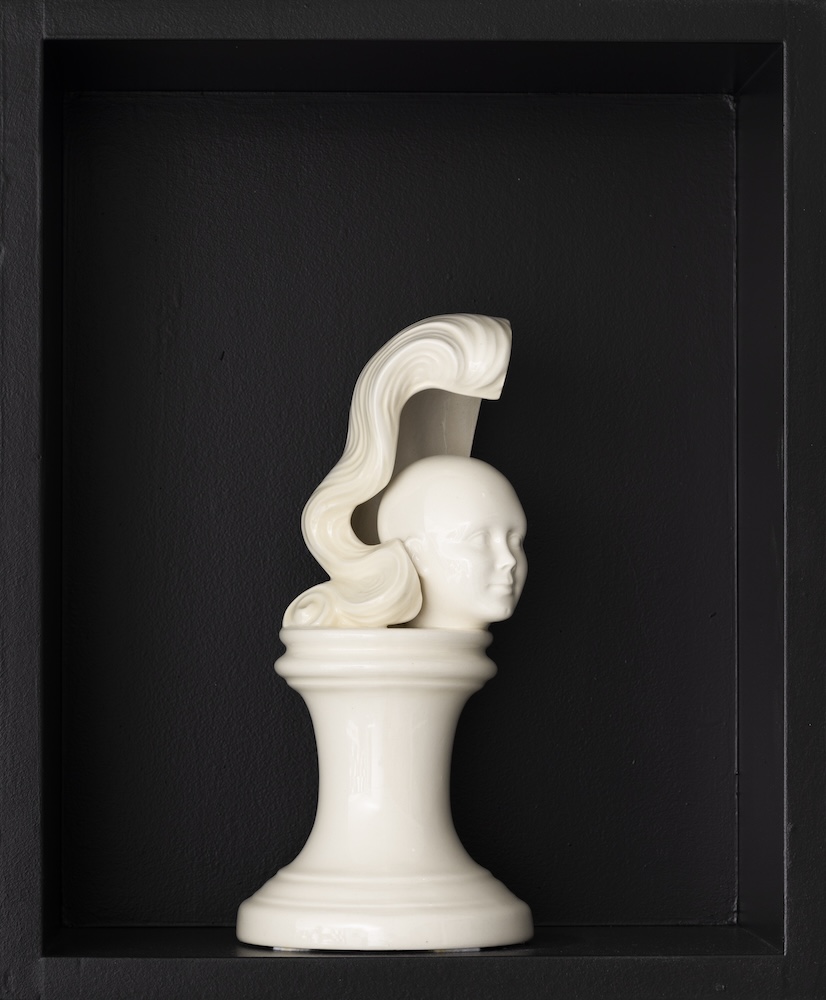
HUMANITY’S GAMBIT. THE CONTINGENCY OF BEING
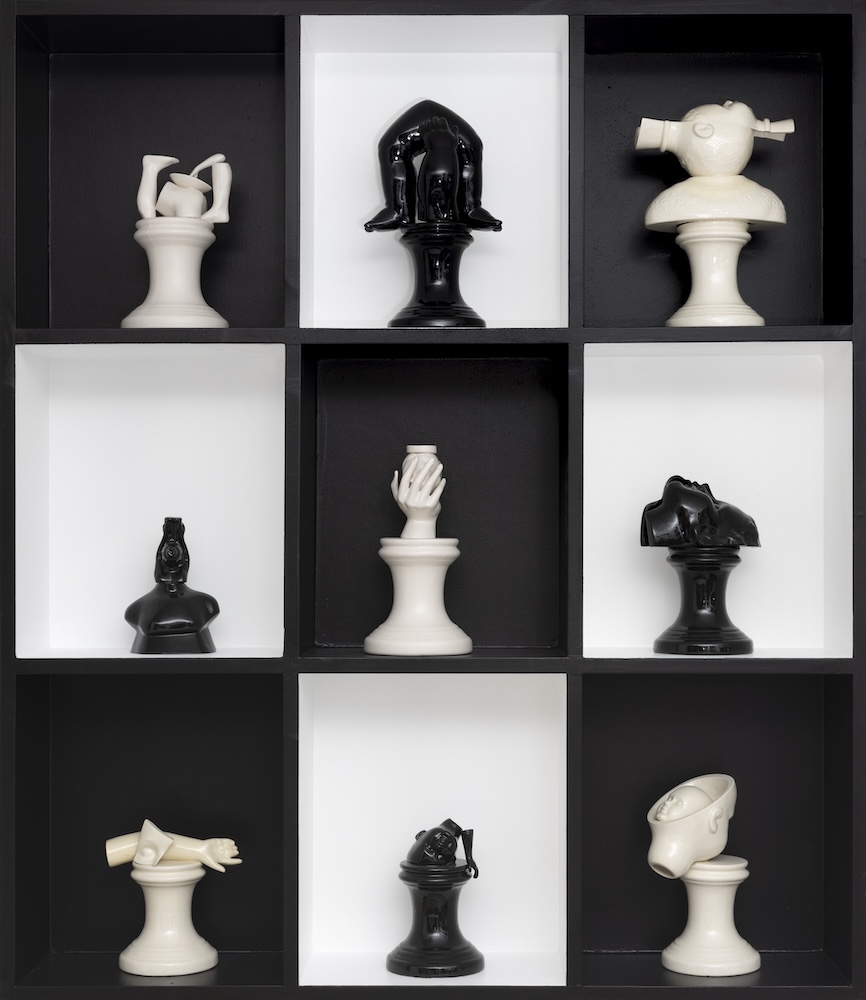
In Humanity’s Gambit, Ivonne Ferrer examines the human condition through the dialectical interplay of agency, contingency, and existential uncertainty. Her ceramic chess pawns, transformed into hybrid assemblages of dislocated human anatomies, dismantle the body’s presumed integrity and challenge the notion of the subject as a coherent, self-determining entity.
This inquiry resonates with Ferrer’s own trajectory of displacement: her departure from Cuba for Spain in the 1990s, followed by her relocation to Miami. These successive migrations entailed not merely geographical transitions but profound ruptures in the coordinates of belonging, compelling the continual renegotiation of identity, memory, and the possibilities of self-reconstruction. Rather than functioning as autobiographical illustrations, the fragmented pawns translate this lived experience into a broader meditation on the instability of human existence.
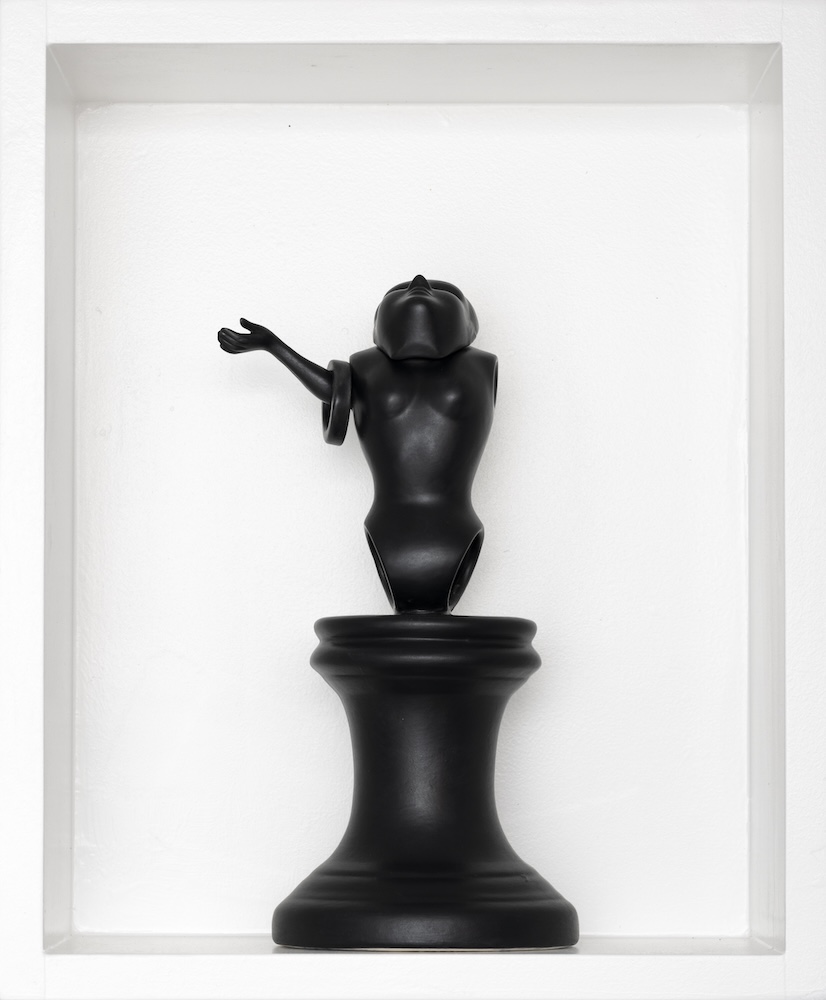
The chess metaphor establishes a fundamental tension between the determinacy of rules and the indeterminacy of existence. Whereas the pawn inhabits a system of prescribed movements, human agency unfolds within circumstances that remain only partially intelligible and never entirely controlled. The subject is neither sovereign over its destiny nor wholly determined by external forces; it negotiates its possibilities within the unstable interval between constraint and choice.
The gambit crystallizes this existential paradox: the deliberate relinquishment of an established position in pursuit of an uncertain possibility. Between calculation and contingency, freedom is exercised without guarantees, precisely where loss may become the condition of an unforeseen future.
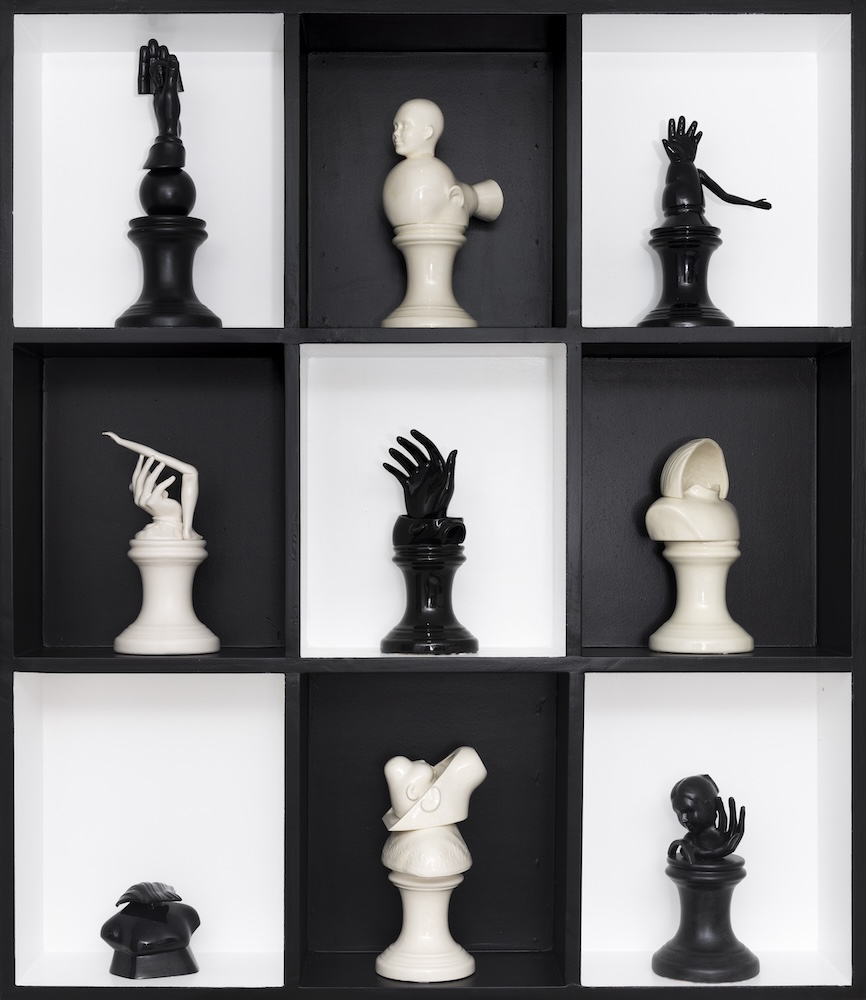
The arrangement of the figures within individual compartments and modular constellations introduces a further tension between singularity and collectivity. Repetition does not neutralize difference; it reveals the irreducible plurality of trajectories unfolding within a shared condition of uncertainty.
Ferrer thus transforms the chess pawn into a figure of existential negotiation, where the fragility of human agency coexists with its capacity to generate new possibilities of being.
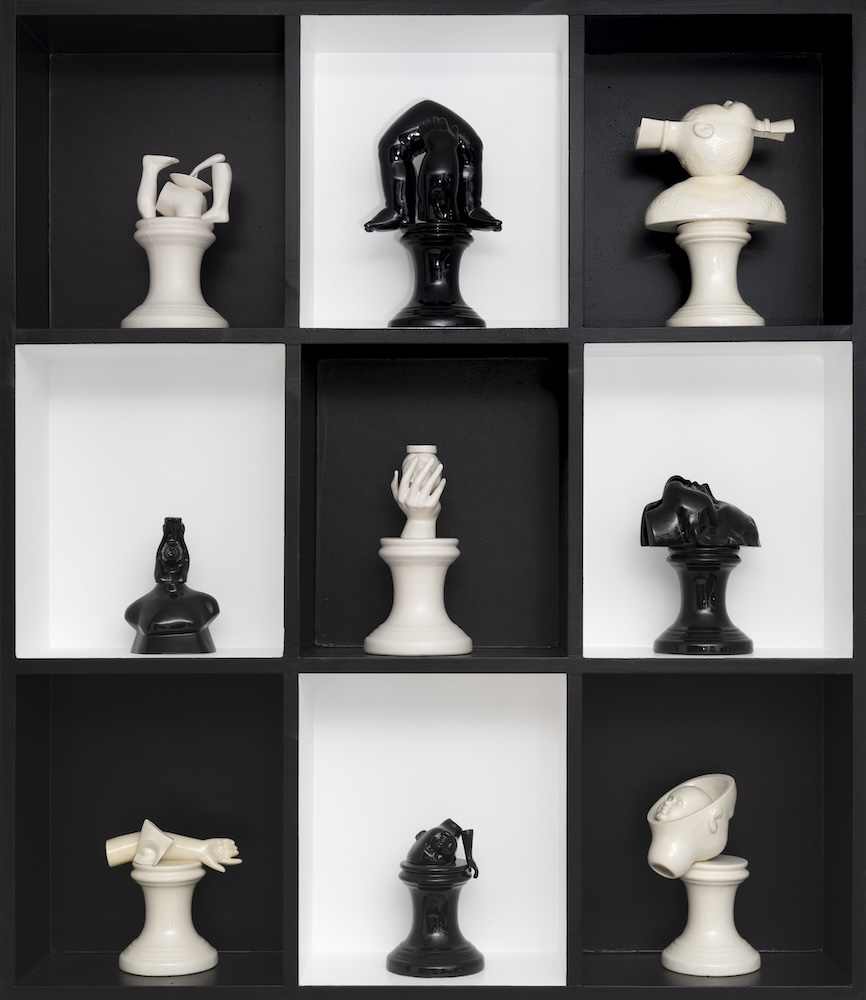
1 Ivonne Ferrer, Bodies in Play I, from the series Humanitys Gambit, 2026, Wooden box and nine unique low fire glazed ceramic pieces, 45 X 39 inches
2 Ivonne Ferrer, Bodies in Play II, from the series Humanitys Gambit, 2026, Wooden box and nine unique low fire glazed ceramic pieces, 45 X 39 inches