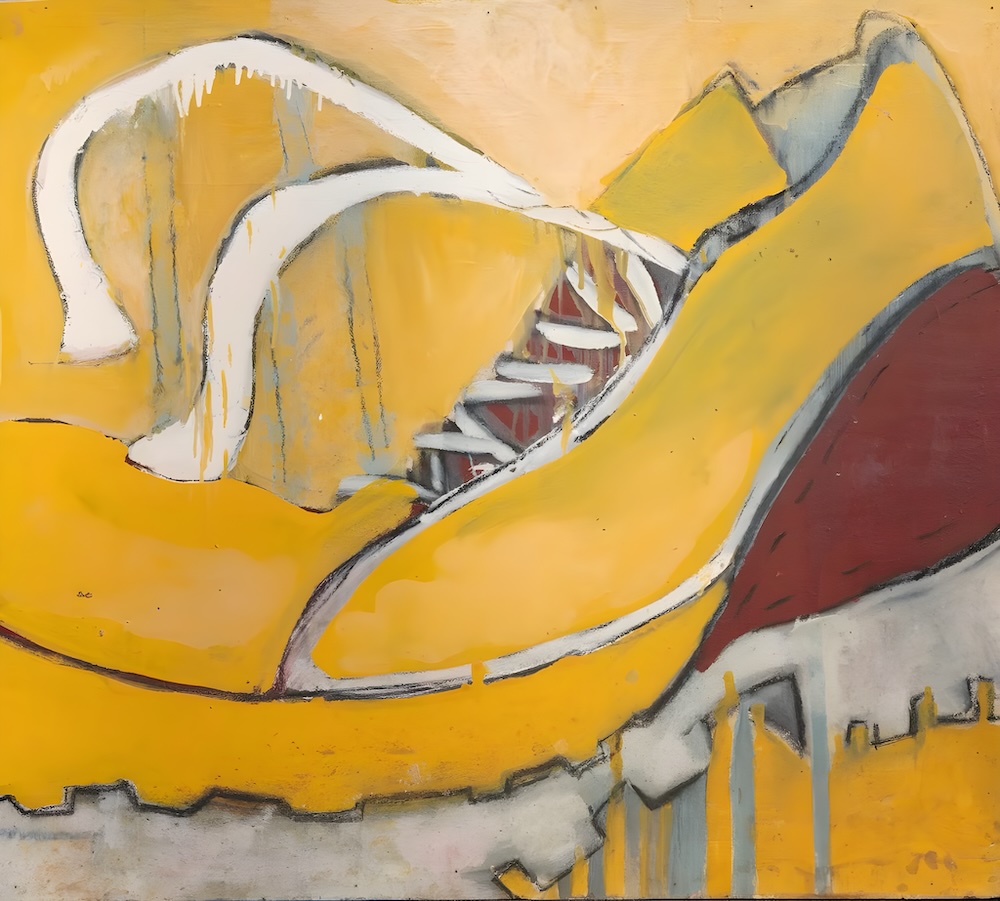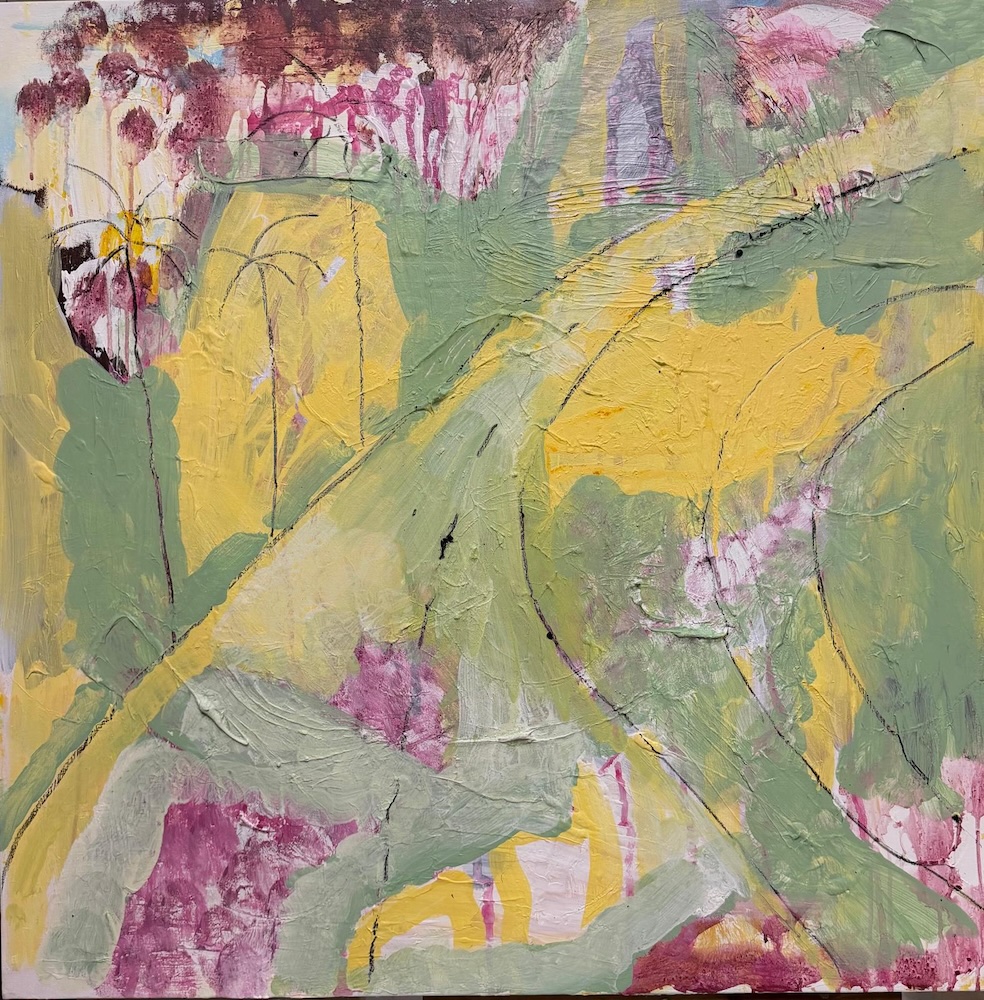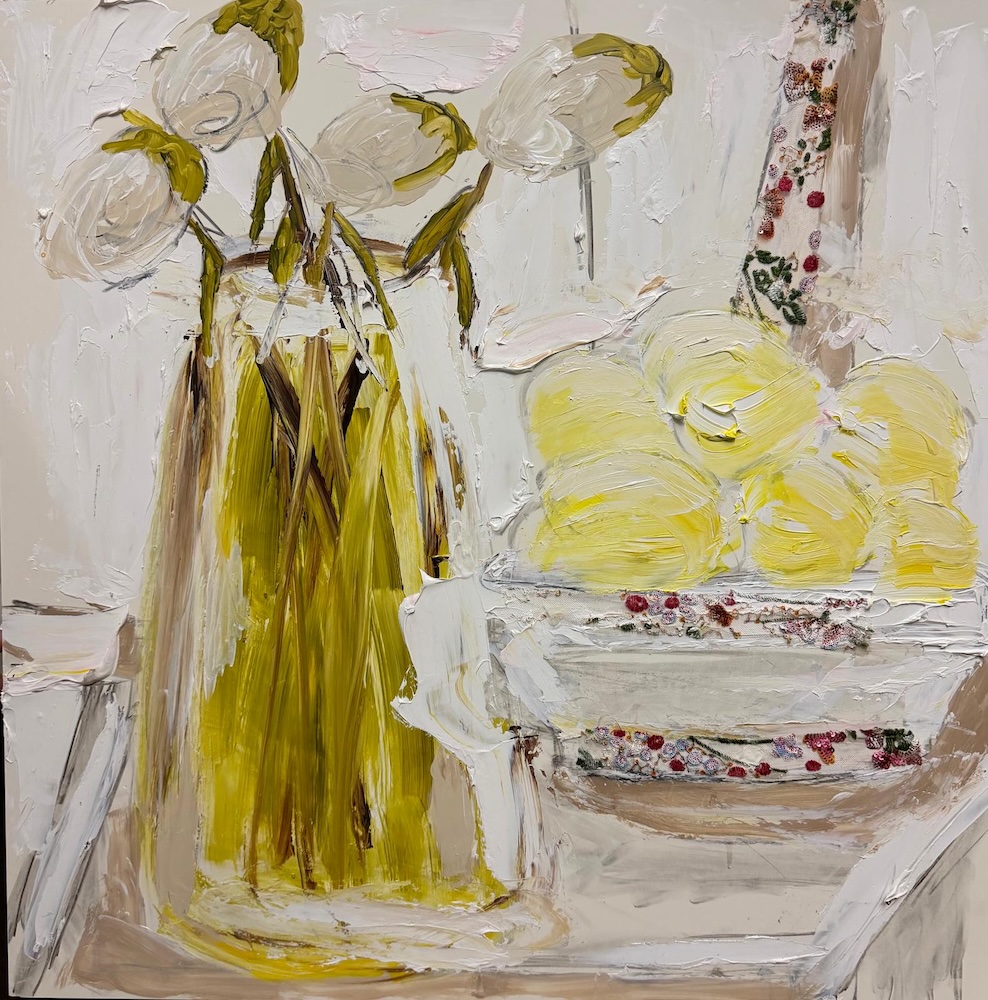
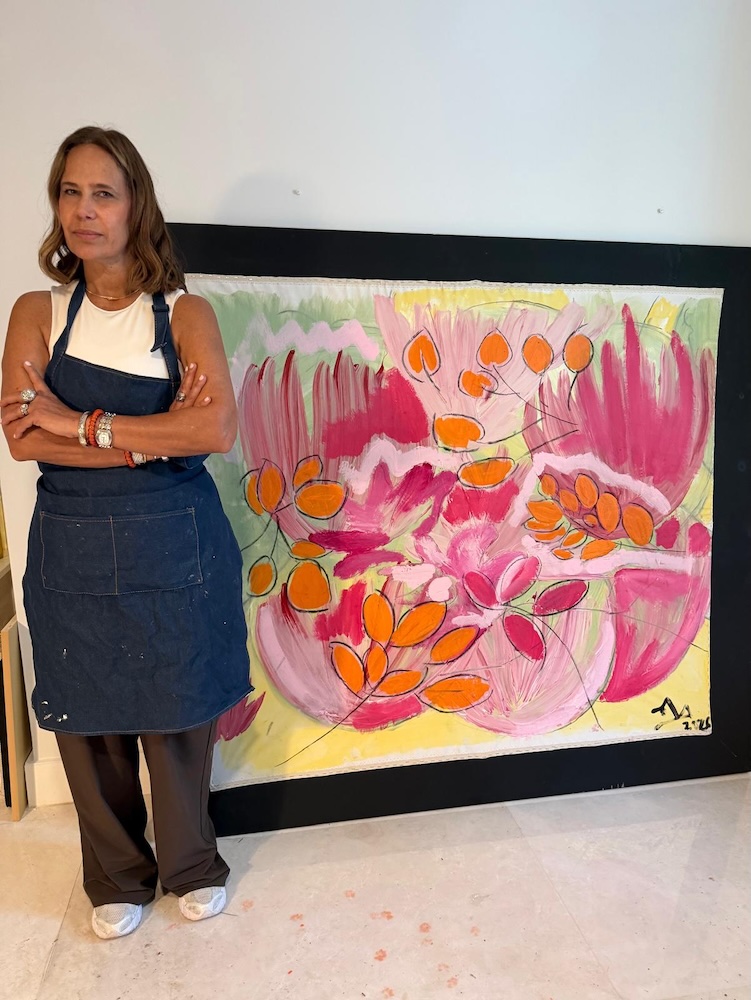
“I am moved by life in all its forms—by vulnerability, transformation, and our capacity to reconstruct ourselves.” — Tery Fuentes
MILAGROS BELLO: When did painting become a professional practice for you?
TERY FUENTES: I have painted since childhood. Over time, art ceased to exist alongside family and professional life and became a central necessity—a field through which I could interrogate and transform experience. Embracing painting professionally meant articulating my own language, grounded in vulnerability, transformation, and reconstruction.
MB: What gives rise to a work?
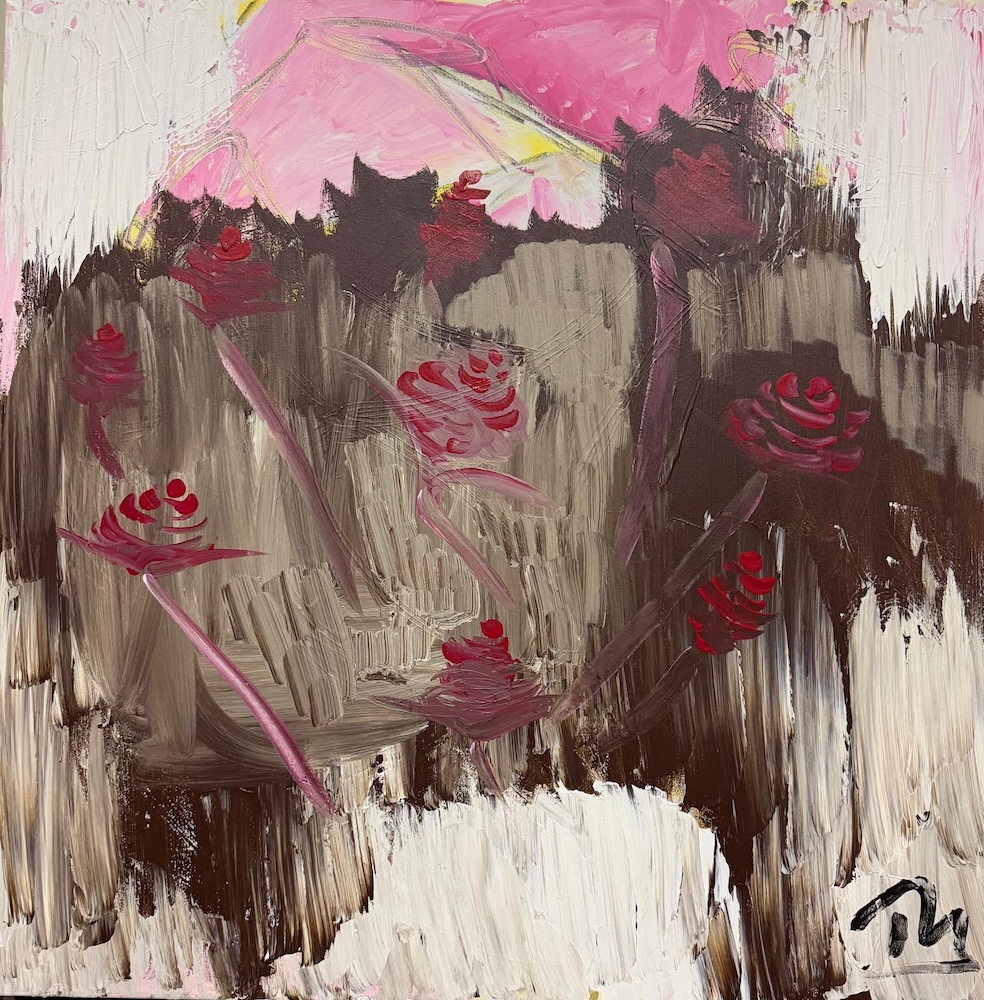
TF: Often, the work emerges from the pictorial event itself. I do not begin with a predetermined image. Gesture, color, and matter activate associations, memories, and affects. Intuition is fundamental: I work at the threshold between intentionality and contingency, allowing accident to disrupt the painting’s anticipated course. Rather than neutralizing these occurrences, I allow them to become generative forces through which the work gradually establishes its own internal logic.
MB: How do memory, figuration, and recurring images such as flowers enter the work?
TF: Memory does not function as autobiographical narrative, but as a shifting sediment altered by time, omission, perception, and affect. I am interested in what persists of experience—its residues, distortions, and discontinuities. Flowers operate within this unstable territory: their fragility and mutability embody transformation itself. Similarly, the figure may provide a perceptual anchor, but I allow it to fragment or dissolve until it oscillates between recognition and indeterminacy. Private experience thus moves beyond autobiography and acquires new meaning through the viewer’s encounter.
MB: What challenge now seems decisive to your practice?
TF: To evolve without allowing a recognizable language to become formulaic. I want to radicalize the work’s material investigation while continually pressuring its assumptions and pictorial resolutions. For me, evolution means allowing a language to become recognizable without becoming predictable.