Written By Olga Garcia-Mayoral
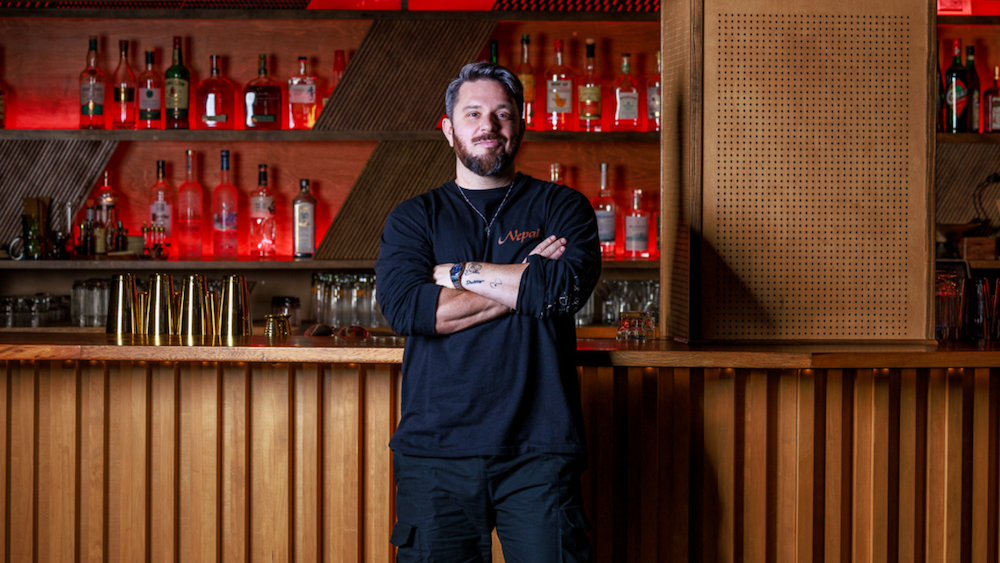
There are festivals that arrive in a city, use its name, borrow its scenery, and disappear. Then there is III Points—a festival that feels less like an import and more like an organism grown from Miami’s underground nervous system. In a conversation with David Sinopoli, founder of III Points and operator behind beloved nightlife spaces including Club Space, The Ground, Floyd, Las Rosas, and Jolene, it becomes clear that his project has never been only about music. It has been about identity, ecology, and cultural survival.
What stood out most in speaking with Sinopoli was not only the scale of what he has built, but the sincerity behind it. He speaks about Miami with care—less like someone managing nightlife from a distance and more like someone who has lived inside its rhythms, mistakes, late nights, friendships, and fragile creative ecosystems. He describes culture with a groundedness: not as branding, not as spectacle, but as something built through trust, repetition, collaboration, and showing up year after year.
Since its early, chaotic beginnings in 2013, III Points has become one of Miami’s most important annual gatherings for music, art, nightlife, and experimental culture. Yet Sinopoli still speaks about it with the energy of someone building from the inside, not observing from above. He remembers that first year as chaotic, full of mistakes, urgency, and instinct. But the commitment that launched the festival remains intact: to give Miami’s artists, musicians, and creative communities a stage large enough to reflect their actual power.
For Sinopoli, the mission was never simply to create another festival. It was to put Miami on the map honestly. One of the core reasons behind III Points was to give artists identity and help them see themselves as legitimate cultural producers. That idea still drives the festival today. The operations have matured, the scale has expanded, and the reach has grown, but its deepest loyalty remains local. A major portion of the music programming still comes from Miami and South Florida—a point of pride and a statement of intent.
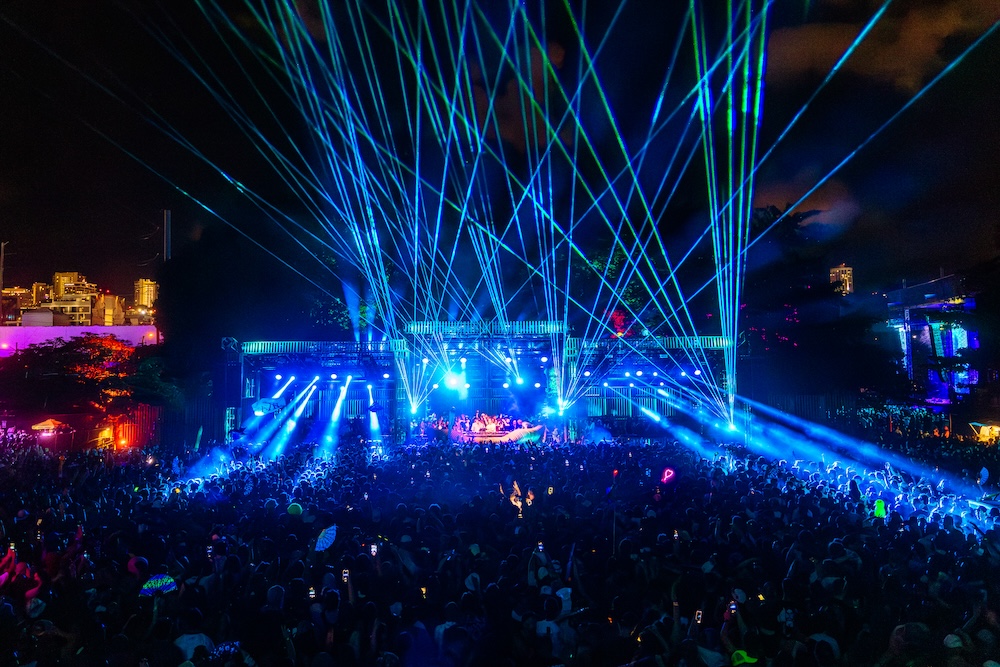
That localism is what separates III Points from many large-scale festival models. Unlike festivals where audiences travel in from everywhere and temporarily consume a place, III Points feels like Miami recognizing itself. You see friends, collaborators, DJs, artists, designers, nightlife regulars, and people from multiple subcultures sharing the same field of experience. It feels like someone’s backyard—if that backyard happened to contain techno, indie, house, hip-hop, experimental sound, visual art, and one of the most recognizable disco balls in the Southeast.
When I asked how he defines the Miami that III Points represents, Sinopoli returned to one word: based. Not branded, not topical, not decorative. Based, as in rooted. Layered. Real. Miami, he suggested, has a sharp instinct for what is fake. That line captures the festival’s deeper intelligence. III Points does not need palm trees, neon clichés, or postcard imagery to announce Miami. Instead, it collaborates with people and collectives who already carry the city’s codes. The result is a festival that feels unmistakably local without needing to perform locality.
That same ethos shaped the festival’s visual art program from the start, though Sinopoli admits visual art wasn’t initially his primary focus. Tara Long pushed for it, whom he describes as a creative force and early collaborator. While Sinopoli thought Miami musicians lacked proper representation, Long reminded him that visual artists faced an even more intense version of that problem. From there, III Points developed an art program that was never about placing polite gallery objects around a music festival. It was about atmosphere, interruption, ritual, and encounter.
Long helped shape the early visual direction through projects like TVVIN HAUS, bringing together Miami’s strange, brilliant, underground creative energy to build spaces inside the festival that felt ceremonial, raw, and deeply local. Those early installations established the DNA of III Points: art and music as parallel underground languages, both emerging from an alternative Miami point of view. The goal was not to make the festival feel like a museum. It was to make discovery unavoidable. You might leave a set and suddenly find yourself inside an installation, a box, a truck, a room of lights, sound, bodies, and sensation.
Over time, that approach became central to the festival’s identity. Sinopoli does not describe himself and his team as traditional curators. Instead, he sees them as organizers of possibility. They choose artists and collectives, assign spaces, discuss functionality and budget, then let the artists create. That trust is crucial. It keeps the work alive, current, and risky. Unlike institutions that plan exhibitions years in advance, III Points often operates in real time, with artists developing ideas close to the festival itself. The result is immediacy. The installations feel freshly made because they are.
Among the visual projects Sinopoli remembers most vividly is Mokiworld’s evolution. He recalls Moki’s journey from helping behind the scenes in the festival’s earliest days to creating her first TV installation, which later developed into an annual world of its own. This year, she returns with a “Lucky Number 13” theme, tied to casino and betting imagery—a fitting gesture for a festival now old enough to have its own mythology.
Another unforgettable moment was the Brian Eno-related installation known as The Ship, conceived as an ambient listening environment. In practice, festivalgoers turned it into something more communal and unruly, making the room an unexpected gathering space. The story reveals something essential about III Points: the audience completes the work. The most successful experiences are not always the ones that behave exactly as planned.
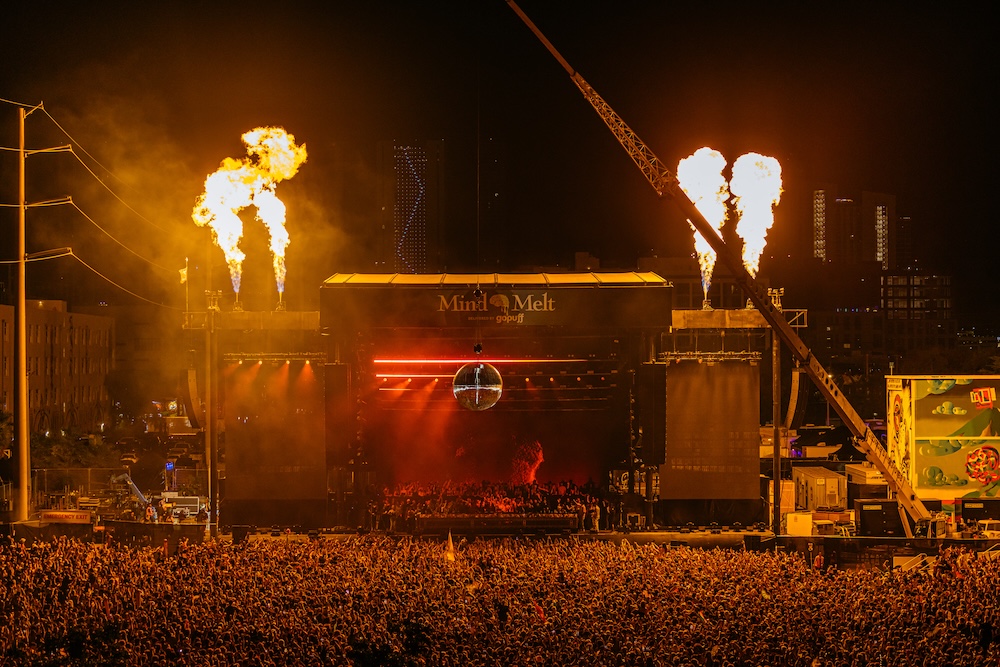
Then there is the disco ball—perhaps the festival’s most iconic visual symbol. Born from Miami’s skyline of cranes and constant development, the idea was simple and brilliant: use a crane not only as construction equipment, but as sculpture. Hang the largest disco ball possible above thousands of people and let it become a beacon. For many attendees, seeing it produces that emotional arrival moment: the recognition that you are back inside the III Points universe.
Musically, Sinopoli describes the programming as a curation puzzle. The lineup moves across techno, house, indie, hip-hop, experimental music, and underground sounds, but the goal is not randomness. His team searches for connective tissue between scenes and audiences. A techno listener might discover something heavy and experimental. A Flying Lotus fan might find a pathway toward Blood Orange. A house devotee might encounter an adjacent sound they would not have bought a separate ticket to see. Discovery is not a side effect; it is built into the architecture.
Sinopoli is especially interested in generational listening habits. He speaks openly about having to remain a student as younger audiences embrace faster, stranger, more hybrid sounds—music that pulls from punk, electroclash, internet culture, and underground electronic forms. Rather than resist that shift, he sees it as part of III Points’ responsibility: to keep evolving with the people coming up next.
Still, the conversation inevitably returns to Miami’s future. Sinopoli is both optimistic and concerned. The city’s post-pandemic boom has benefited nightlife and ticketed culture, but it has also made life harder for the artists who give Miami its soul. He speaks plainly about affordability, housing, and the danger of a city growing so quickly that it pushes creative communities out. For someone whose businesses have benefited from Miami’s rise, his honesty matters. He is not romanticizing struggle. He is asking what it would mean to preserve the people who make the city worth celebrating.
Ultimately, what makes Sinopoli’s work meaningful is not only the institutions he has helped build, but the spirit with which he continues to build them. III Points, Club Space, The Ground, Floyd, Las Rosas, and Jolene are not simply venues or events; they are gathering places where Miami’s creative communities recognize themselves. They hold the energy of artists, DJs, designers, dancers, friends, and night creatures who have shaped the city from the inside out.
Speaking with Sinopoli, you sense his vision is less about ownership than stewardship. He understands that Miami culture is delicate because it is alive. It has to be protected, challenged, refreshed, and allowed to stay strange. That sensitivity may be one reason III Points has endured. It does not feel manufactured. It feels inhabited.
For me, the conversation felt like an invitation to think more deeply about the people who build culture before it becomes visible to everyone else. Sinopoli’s work reminds us that Miami’s future will not be shaped only by institutions, towers, collectors, or global attention. It will also be shaped by the people who make space—literally and spiritually—for artists to gather, experiment, fail, return, and begin again.
In a city often accused of surface, III Points insists on depth. It is messy, ambitious, strange, communal, and unmistakably Miami. Under David Sinopoli’s vision, the festival continues to function as both mirror and engine: reflecting the city’s underground while helping push it forward.
What makes III Points powerful is not only who plays, what gets built, or how late the night runs. It is the feeling that Miami’s artists, DJs, makers, and misfits are not being invited into someone else’s cultural structure. They are building their own—and Sinopoli has helped give that movement a home.