Home Blog Page 54

La Latin American Fashion Summit 2025 se desarrollará en Miami entre el 2 y el 4 de noviembre

La Latin American Fashion Summit 2025 se desarrollará en Miami entre el 2 y el 4 de noviembre

La Latin American Fashion Summit 2025 se desarrollará en Miami entre el 2 y el 4 de noviembre

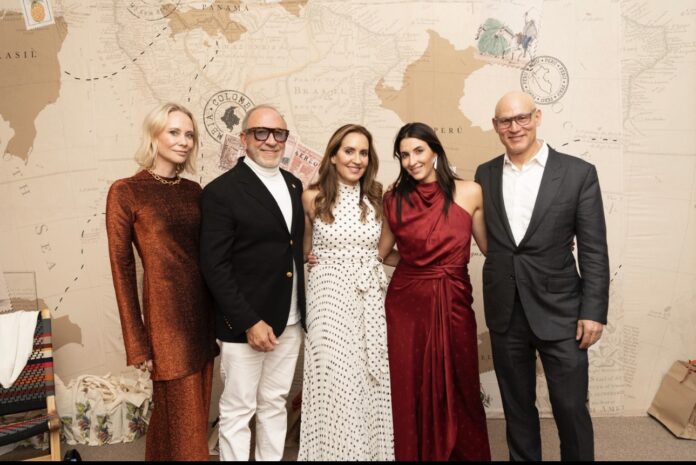
La séptima edición del Latin American Fashion Summit (LAFS) se llevará a cabo del 2 al 4 de Noviembre de 2025 en The Moore Building, ubicado en el Miami Design District. Considerado como el principal punto de encuentro para el crecimiento de la moda y las industrias creativas latinoamericanas, LAFS reúne durante tres días a diseñadores, fundadores, retailers, inversionistas y medios de comunicación en una agenda cuidadosamente curada que impulsa la visibilidad global.

Latin American Fashion Summit (LAFS), La plataforma global fundada por mujeres y reconocida como una fuerza impulsora para la moda y el diseño latinoamericano, regresa a Miami este noviembre con su edición más dinámica hasta la fecha. Fundado en 2018 por Estefanía Lacayo y Samantha Tams, LAFS se llevará a cabo del 2 al 4 de noviembre en distintos espacios del Miami Design District, teniendo como sede principal The Moore Building. La programación 2025 reunirá a los principales líderes de la industria, incluyendo retailers como Net-A-Porter, Moda Operandi, Shopbop, Revolve, The Webster, Kirna Zabete, Saks Global, entre otros, para abordar los temas que están definiendo el futuro de la moda: el comercio transfronterizo, la inteligencia artificial, la sostenibilidad y el storytelling de marca. 

Además, ofrecerá a los talentos latinoamericanos un acceso directo a nuevos mercados, alianzas estratégicas y oportunidades con inversionistas.

Durante los tres días del evento, los paneles, conversaciones y sesiones de networking abordarán los temas más relevantes de la industria. Entre las charlas y talleres destacados se encuentran “Monetize Your Influence” presentado por ShopMy junto a Tiffany Lopinsky, cofundadora y presidenta de la plataforma, “Building The Dream Brand” con April Henning, presidenta de Moda Operandi, y Jonathan Simkhai, fundador de SIMKHAI; además de un panel especial con Craig Robins, CEO de Dacra – Miami Design District, entre otros.

Disney también liderará un panel especial durante el Summit, reafirmando su compromiso con la creatividad y la innovación en las industrias de la moda y el entretenimiento. Además, organizará un encuentro con estudiantes para destacar posibles trayectorias profesionales e inspirar a la próxima generación de talentos, así como una exhibición temporal con formato de museo que sumergirá a los asistentes en el legado de storytelling e impacto cultural de la marca.

Más allá de su evento anual, LAFS se ha transformado en un ecosistema activo durante todo el año que impulsa el crecimiento de diseñadores y emprendedores. A través de su competencia Pitch to LAFS, programas de mentoría, activaciones comerciales y contenido editorial, la plataforma continúa generando oportunidades significativas para la comunidad que representa. El podcast de LAFS amplía aún más esta misión, destacando las historias inspiradoras de diseñadores, emprendedores, líderes y voces culturales de todo el mundo.

Uno de los momentos más destacados de cada edición es la competencia “Pitch to LAFS”, reconocida hoy como una de las oportunidades más transformadoras para los diseñadores emergentes de la región. En esta edición, el jurado estará conformado por un panel excepcional de expertos, entre ellos Karla Martínez, Directora Editorial de VOGUE México, Elizabeth von der Goltz, Board Member y fundadora de RAISE Fashion, Johanna Ortiz, fundadora y diseñadora de Johanna Ortiz, y Carmen Busquets, cofundadora de Net-A-Porter, entre otros. Juntos, estos líderes y referentes globales de la industria guiarán y reconocerán a los nuevos talentos del diseño latinoamericano.

Creado en 2018 junto con la primera edición del summit, Pitch to LAFS nació como un espacio diseñado para brindar a las marcas ese impulso adicional —la mentoría, el acceso y las oportunidades necesarias para alcanzar el reconocimiento internacional. “Desde entonces, ha sido profundamente inspirador ser testigo de la transformación de los ganadores de Pitch to LAFS”, comentó Estefanía Lacayo, cofundadora de LAFS. “El antes y después de cada historia es una prueba viva de lo que sucede cuando al talento se le brinda la plataforma y las herramientas adecuadas. Hoy, Pitch to LAFS se consolida como el escenario perfecto para elevar a los diseñadores latinoamericanos y llevar sus voces al mundo.”

Screenshot

MIAMI’S ICONIC WYNWOOD ART WALK 

MIAMI’S ICONIC WYNWOOD ART WALK  CONTINUES TO SHINE ON NOVEMBER 8, 2025

MIAMI’S ICONIC WYNWOOD ART WALK  CONTINUES TO SHINE ON NOVEMBER 8, 2025

Discover the City’s Creative Heartbeat Through Galleries, Street Art, Music, Fashion and Food

Wynwood’s beloved Art Walk continues Saturday, November 8th, from 12 p.m. to 10 p.m., transforming the neighborhood into a vibrant celebration of fashion, art, music and culture

This month, Fashion Night Out joins forces with Art Walk, bringing together the best of both worlds.

• Fashion Night Out (FNO) is a ticketed experience featuring exclusive panels, live music and a cocktail  event. (Tickets available HERE) 

• Art Walk remains free and open to the public, with interactive activations, live artists and special  exhibitions throughout Wynwood’s galleries. 

This month’s Art Walk highlights the creative intersection between art and fashion, showcasing the designers,  artists and visionaries shaping Miami’s bold, trendsetting style. 

Presented by the Wynwood Business Improvement District, participating galleries include: 

  • Wynwood Walls (Free admission, DJ and bar)  
  • Wyn317 located in the Doris Den at 118 NW 25 Street (Solo exhibition by local artist Louiediology)  
  • The Private Gallery at Museum of Graffiti (Live spray-painting of an outdoor mural) 
  • Museum of Graffiti  (Hosting a Black Book Session and Video Premier with Miami-based graffiti crew X  SQUARE O, No Squares in the Circle, presented by Monster Energy  
  • Gerez Gallery  
  • Goldman Global Arts (Two new exhibitions: Beyond: echoes of a borderless life by Seth and Millo + Nocturnal  Edens from Logan Hicks) 
  • Peter Tunney Experience  
  • The Wall Gallery  
  • Glottman  
  • ARTXSPACE (40% off at the entrance)  
  • Paradox Museum (40% off at the entrance) 
  • Fun Dimension (40% off at the entrance) 

Live artists will be featured at: 

• Panther Coffee: Diana “Didi” From 5:00 – 8:00 PM 

• Pitusa: Ivan Roque from 5:00 – 8:00 PM 

• Society Wynwood: Luis Ville from 5:00 – 8:00 PM 

Visitors can check the programming on the website to see the set times for the series of DJs performing throughout the neighborhood.

One can expect an evening of exploration and connection, with nine galleries offering free public access and  three immersive art experiences—ARTXSPACE, Paradox Museum and Fun Dimension—offering reduced  admission during Art Walk hours.  

Whether one is a longtime fan or first-time visitor, Wynwood Art Walk is a unique invitation to rediscover the soul of Miami—through art, culture, and community.  

For more information, visit: https://wynwoodmiami.com/experience/art-walk 

About the Wynwood Business Improvement District (BID): 

The Wynwood BID is an autonomous government agency of the City of Miami representing more than  400 commercial property and business owners that comprise the 50-city-block Wynwood Arts District.  Run by a Board of Directors who themselves are property and business owners from the community, the 

Wynwood BID works to enhance security and sanitation services in the neighborhood, advocate for the  betterment of the area, raise awareness of advancements being made, and plan for the future of  Wynwood. For more information, please visit: Wynwoodmiami.com or follow along @wynwoodmiami. 

Scarcella Arte Debuts in Miami with “A Collective Showcase” Celebrating Latin American Art

Scarcella Arte
Scarcella Arte

Scarcella Arte Debuts in Miami with “A Collective Showcase” Celebrating Latin American Art

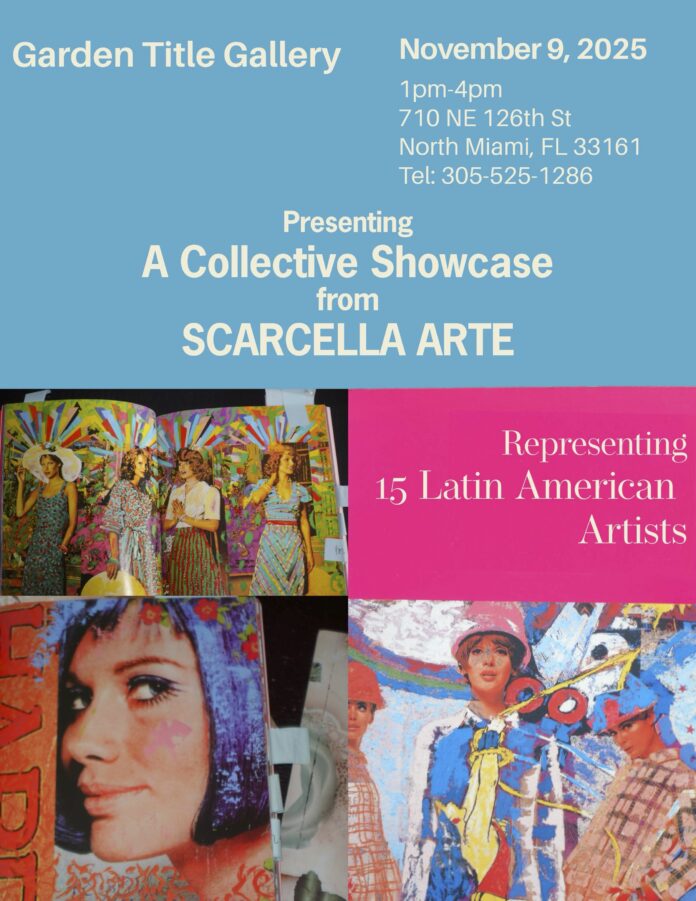
Garden Title Gallery Presents “A Collective Showcase” — The First U.S. Exhibition by Scarcella Arte

Garden Title Gallery is thrilled to announce the first-ever United States exhibition from Scarcella Arte, titled “A Collective Showcase,” taking place on November 9, 2025, from 1:00 p.m. to 4:00 p.m. at 710 NE 126th St, North Miami, FL 33161.

Scarcella Arte, renowned for championing Latin American creativity, has chosen Miami—a city celebrated for its vibrant Latin influence—as the perfect setting for its U.S. debut. No other location could better honor the diversity and innovation of Latin American artists or provide a more fitting stage to share their work with the world.

This exhibition marks a historic moment: it is the first time that several works by the 15 featured artists will be publicly exhibited in the United States. Visitors will have the opportunity to experience their artistry firsthand, making this event a milestone for both the artists and Miami’s ever-evolving cultural landscape.

“We could not imagine a better place to introduce our artists to the U.S. than Miami—a city that thrives on diversity and creative energy,” says Sergio Scarcella. “For some, this is their first opportunity to share their work with audiences in the United States.”

Everyone is welcome, and admission is free. The event aims to bring together generations, families, friends, and the broader community to celebrate this significant collaboration between Scarcella Arte and Garden Title Gallery.

Event Details

Exhibition: A Collective Showcase — Presented by Scarcella Arte
Date: Sunday, November 9, 2025
Time: 1:00 p.m. – 4:00 p.m.
Venue: Garden Title Gallery
Address: 710 NE 126th St, North Miami, FL 33161
Contact: 305-525-1286 | [email protected]

About Scarcella Arte

Scarcella Arte is dedicated to supporting and promoting Latin American art through collaborative projects, exhibitions, and opportunities that foster cultural exchange and international dialogue. Its mission is to amplify the voices of emerging and established artists from Latin America, bringing their stories and perspectives to global audiences.

IxLA 12×12 Collage International Juried Show

IxLA 12×12 Collage International Juried Show

IxLA 12×12 Collage International Juried Show

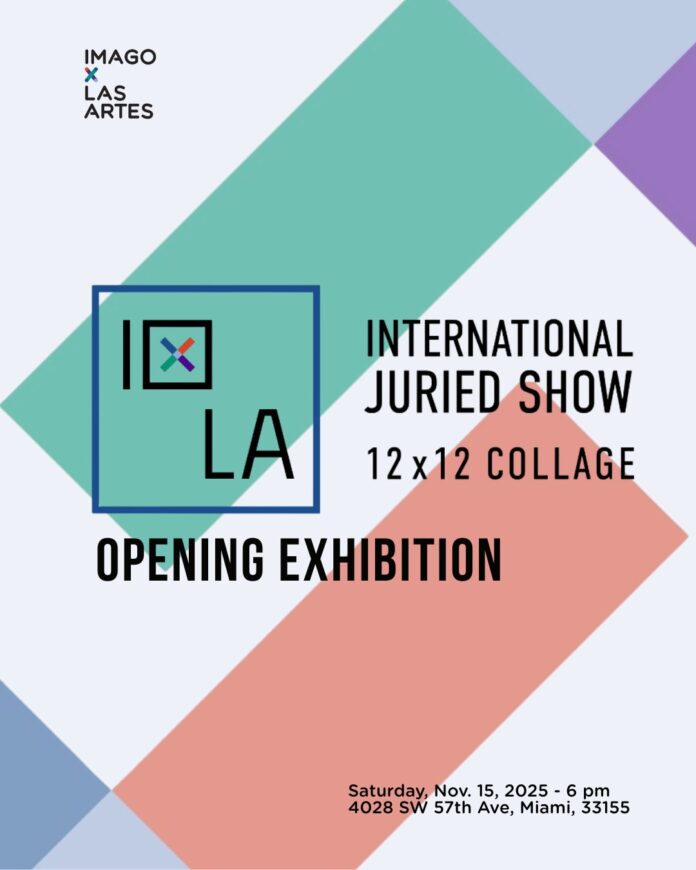
Imago Cultural Center Presents the IxLA 12×12 Collage International Juried Show
Opening Reception and Awards Ceremony — November 15, 2025

Miami, FL — [October, 2025] — Imago Cultural Center is delighted to announce the Opening Reception and Awards Ceremony of the IxLA 12×12 Collage International Juried Show, taking place on Saturday, November 15, 2025, at 6:00 p.m. at Imago Cultural Center, located at 4028 SW 57th Ave, Miami, FL 33155.

This special evening invites artists, families, and art lovers to come together in celebration of creativity, community, and the power of collage. The exhibition showcases the works of talented artists from around the world, highlighting the diversity and expressive potential of this ever-evolving medium.

Guests will have the opportunity to meet the participating artists and jurors, explore the exhibition, and share in a night of connection and inspiration within Miami’s vibrant artistic community.

Event Program (estimated):

  • 6:00 p.m. | Reception and gallery walkthrough
  • 6:45 p.m. | Welcome remarks
  • 7:00 p.m. | Awards ceremony and official group photo
  • 7:30 p.m. | Cocktail and networking

Attendance is free and open to the public. Guests are kindly asked to RSVP by November 10, 2025, by replying to this email or contacting [email protected].

Join us in honoring the artists and creative minds who make this exhibition possible, and celebrate an unforgettable evening dedicated to the art of collage.

Artist Name

Zubi

Abbo, Dora

Benatar, Nadia

Bencid, Isaac

Campos, Nahila

Catamo

Cruz, Simón

Czukerberg, Monica

Damas, Diego

Dumas, Veronica

Fernandez, Victor Alejandro

Fontes, Adriana

Gomez, Luis

Marinoni, Mario

Mayra

Montilla, Rafael

Olmos, Bernardo

Perez, Marianela

Riera, Tania

Rincon⁣⁣⁣⁣, Martin

Rodriguez, Ernie

Suarez Toro, Jaime

Troconis, Flor

Ulivi, Maru

Georgia O’Keeffe: The Courage to See Differently

Georgia O’Keeffe: The Courage to See Differently

Georgia O’Keeffe: The Courage to See Differently

Are you curious about what makes Georgia O’Keeffe’s art distinctive and daring? Few artists in modern history have expressed such a bold and personal vision of the world. O’Keeffe’s art invites us to look closer, question our perceptions, and see beauty in often overlooked forms.

Her fearless style was shaped by the modernist movement, which encouraged artists to break free from the constraints of academic tradition. O’Keeffe embraced this spirit of innovation, using vibrant colors, sweeping lines, and monumental close-ups of natural forms—flowers, bones, landscapes—to create intimate and monumental compositions. Through these works, she transformed ordinary subjects into potent symbols of emotion, vitality, and sensuality.

Beyond her technical mastery, O’Keeffe’s personal journey profoundly influenced her art. Her decision to live and work independently, first in New York and later in New Mexico, gave her the space to explore her vision without compromise. The desert’s vast landscapes and radiant light became her sanctuary—where she could merge nature, abstraction, and spirit into one unified language of form and color.

Her husband, Alfred Stieglitz, a pioneering photographer and art promoter, played a key role in her early career. His support and belief in her talent helped O’Keeffe gain confidence and recognition, yet she always maintained her artistic independence. She refused to be defined by anyone else’s interpretation of her work, insisting that each painting spoke for itself.

Georgia O’Keeffe’s boldness came from her authenticity—from daring to see the world on her own terms. Her legacy inspires artists to trust their instincts, embrace individuality, and find the extraordinary within the familiar.

Whether you’re an art enthusiast or a curious learner, O’Keeffe’s journey reminds us that courage in art often begins with the courage to be oneself.

How Does Cubism Use Geometric Abstraction?

How Does Cubism Use Geometric Abstraction?

How Does Cubism Use Geometric Abstraction?

Have you ever wondered how artists transform everyday objects into captivating works of art? Few movements in art history demonstrate this transformation as powerfully as Cubism, a revolutionary style that redefined how we see and represent the world.

Cubism emerged in the early 20th century through the visionary experiments of Pablo Picasso and Georges Braque, who around 1907–1908 began to challenge traditional ideas of perspective and realism. Their goal was not to reproduce what they saw, but to reveal the inner structure of reality through form, line, and geometry.

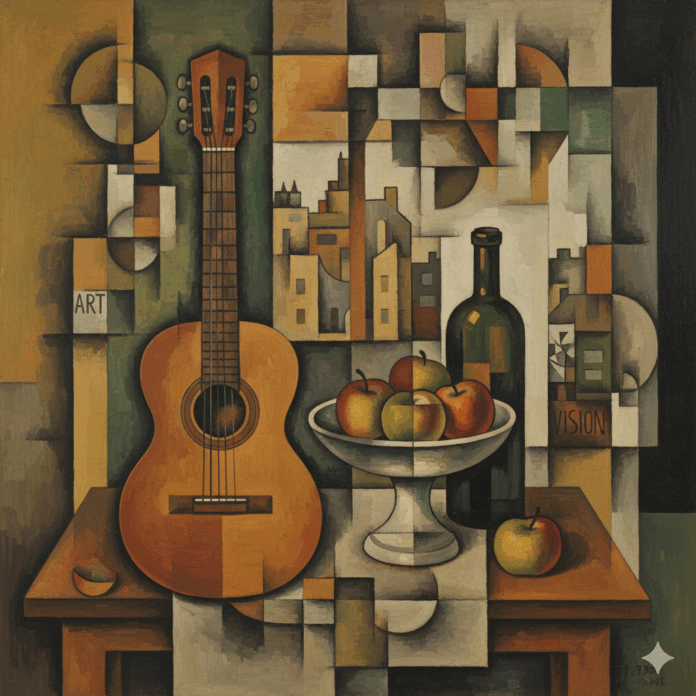
At the heart of Cubism lies geometric abstraction — the use of simple geometric shapes such as cubes, cones, and spheres to break down complex objects into fundamental components. Instead of depicting a single viewpoint, Cubist artists combined multiple perspectives within a single image, inviting viewers to see an object from different angles simultaneously. This analytical approach created compositions that were dynamic, layered, and intellectually engaging.

As the movement evolved, artists shifted from Analytic Cubism, with its muted palette and intricate fragmentation, to Synthetic Cubism, which introduced collage elements, textures, and brighter colors. This second phase simplified forms and emphasized construction over deconstruction, giving rise to a new visual language that blurred the boundaries between painting, sculpture, and design.

Cubism’s emphasis on geometry and structure profoundly influenced modern art, architecture, and design. It encouraged artists to move beyond surface appearances and to explore the essence of form. From the angular facades of modernist buildings to the rhythmic compositions of abstract painters, the legacy of Cubism endures.

Whether you’re an art enthusiast or a curious learner, understanding Cubism helps us appreciate how geometric abstraction reshapes not only our perception of art but also how we interpret the world around us.

Subscribe for more art insights, visual stories, and explorations into the language of form and imagination.

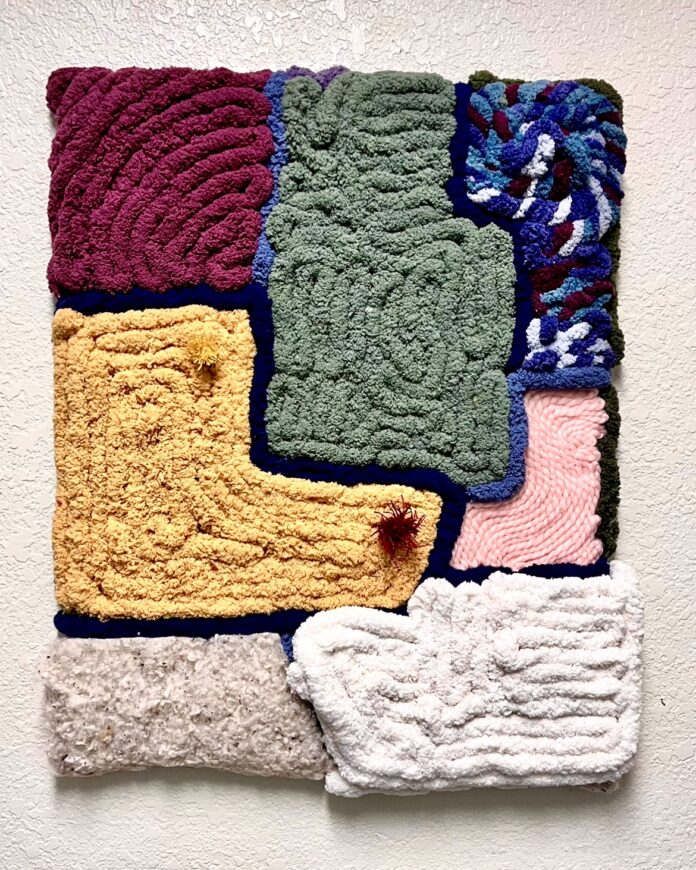
WOVEN THREAD

Rafael Montilla textile
The Enduring Art of Fiber: From Ancient Craft to Contemporary Expression

WOVEN THREAD

“Woven Thread: An art exhibition uniting Latino & African-American diaspora through contemporary portraiture and abstract expressionism.

Saturday, November 1 · 6 – 8pm EDT

1231 Marion Barry Avenue SouthEast Washington, DC 20020

Valley Place Arts Collaborative (VPAC), in collaboration with Honfleur Gallery, proudly presents Woven Thread, a dynamic contemporary art exhibition celebrating the shared histories, stories, and cultural expressions of the Latino and African-American diasporas.

Through striking portraiture and abstract expressionist works, Woven Thread explores the ways these two communities are connected by resilience, creativity, and cultural exchange. The exhibition emphasizes how individual identity and collective heritage are interwoven, creating a powerful visual dialogue that reflects strength, beauty, and belonging.

“This exhibition is about honoring the threads that tie our communities together,” said curator and renowned artist Luis Del Valle. “The artworks illuminate shared struggles and triumphs while celebrating cultural expressions that continue to inspire generations.”

In addition to the artwork, the evening will feature a live performance at 6:30 PM by Heru the Violinist, a celebrated musician known for blending classical mastery with contemporary sounds. Heru’s electrifying performances merge tradition with innovation, offering audiences a transcendent experience that bridges genres and cultures.

Participating Artists

Asha Elana Casey, BUCK, Carmen Torruella- Quander, David “Dez” Zamrano, Gloria V. Tarasca, Janathel Shaw, Julee Dickerson Thompson, Levi Robinson,,Lamar Whidbee, Luis Del Valle, Mas Paz, Pepe Piedra, Preli A. William

Curator’s Statement – Luis Del Valle

“In shaping Woven Thread, my intent was to create a space where the voices of the Latino and African-American diasporas could be seen in dialogue through contemporary portraiture and abstract expressionist painting. The artists assembled here reflect a spectrum of lived experience, layered histories, and cultural pride. These works move beyond individual stories to illuminate a shared narrative—one of resilience, creativity, and interconnectedness. Together, they weave a fabric that speaks to unity while honoring the distinct threads that make it strong.”

Page 1 of 2

About Heru the Violinist

Heru the Violinist is a celebrated Washington, D.C.–based musician recognized for his innovative fusion of classical violin with jazz, R&B, hip-hop, and world rhythms. A proud Howard University alumnus, Heru has performed on stages across the country, captivating audiences with his electrifying presence and genre-bending sound.

His artistry bridges tradition and modernity, transforming the violin into a voice of cultural connection and contemporary expression. Known for both solo performances and collaborations with renowned artists, Heru continues to push the boundaries of what the instrument can do. Howard University pride will be in the house as Heru brings his signature energy and unforgettable sound to Woven Thread.

About Honfleur Gallery

Honfleur Gallery is a contemporary art space located in the Historic Anacostia neighborhood. The gallery is free and open to the public. Honfleur maintains a rigorous schedule of exhibitions and programming focusing on cutting-edge contemporary exhibitions by artists from east of the Anacostia River, the United States, and abroad.
Experimental media and installation works are welcome at Honfleur alongside more traditional art media. Implementing diverse projects is a consistent goal with exhibitions ranging from thematic exhibitions, group shows, international residencies, solo exhibitions, experimental projects, and artist collaborations. Arts grants are awarded annually.
The gallery houses 1700 square feet of exhibition space on two floors and opened in January 2007, a project of Ward 8 nonprofit, ARCH Development Corporation. ADC is an organization dedicated to using the arts as a catalyst for local revitalization in Anacostia and has been a member of the Anacostia Community for over 20 years. Event space rentals in line with our mission are available.

For more information, please contact:

Luis Del Valle: 202-809-7089

www.HonfleurGalleryDC.com

202-365-8392

Berghain — Rosalía (feat. Björk & Yves Tumor)

Berghain — Rosalía (feat. Björk & Yves Tumor)

Berghain — Rosalía (feat. Björk & Yves Tumor)

La canción “Berghain” abre la nueva era del cuarto álbum de Rosalía, Lux (7 de noviembre de 2025), y lo hace con ambición maximalista y riesgo creativo. En colaboración con Björk y Yves Tumor, este tema se erige como una audaz fusión entre pop, ópera, electrónica y música de cámara. LOS40+1

Arquitectura sonora y lenguas entrecruzadas

El título remite al mítico club berlinés Berghain — una catarsis del clubbing, la disolución del yo y la espiritualidad nocturna — que sirve aquí como metáfora de una metamorfosis interior. Cadena SER+1
La voz de Rosalía recorre fragmentos en alemán (“Seine Angst ist meine Angst…”), en español (“Yo sé muy bien lo que soy…”) y en inglés, mientras Björk aporta un clímax vocal arrebatado y Yves Tumor, con su frase repetida (“I’ll fuck you till you love me”), introduce el pulso furioso del techno. El resultado es una experiencia multilingüe, multicapas, turbia y liberadora. LOS40+1

Materialidad, ritual y cuerpo

La producción gravita entre los violines orquestales que recuerdan a Vivaldi y una percusión que remite a The Rite of Spring. Rosalía disuelve su registro pop en un formato ritual: no solo canta, sino que se convierte en protagonista de un escenario de transformación. Pitchfork
La referencia al club Berghain —espacio mítico de disolución y euforia— trasciende lo superficial: la pista se vuelve altar, el ritmo devenido plegaria. Aquí, deseo y redención conviven desde lo sensorial.

Evaluación crítica

“Berghain” posee momentos de magnitud sonora irregular: mientras su tensión dramática y escala orquestal impactan, algunos críticos señalan que la provocación opera más en el plano del concepto que en el del mensaje profundo. exclaim.ca Aun así, la canción marca un hito en la evolución de Rosalía: deja atrás el sonido urbano-experimental de Motomami y se eleva hacia una estética de máximo riesgo y teatro sonoro. Pitchfork

Con “Berghain”, Rosalía no ofrece simplemente un single: propone un rito musical que interroga la identidad, el cuerpo, el deseo y el espacio simbólico de la noche. Es una obra fragmentada, fascinante, que exige al oyente abandonar la comodidad. En ese tránsito —precisamente— está su valor.

Rosalía – “Berghain” (feat. Björk & Yves Tumor)

Official Lyrics & Credits

LYRICS

Alemán (German)

Seine Angst ist meine Angst
Seine Wut ist meine Wut
Seine Liebe ist meine Liebe
Sein Blut ist mein Blut

Die Flamme dringt in mein Gehirn ein
wie ein Blei-Teddybär
ich bewahre viele Dinge in meinem Herzen auf
deshalb ist mein Herz so schwer

Seine Angst ist meine Angst
Seine Wut ist meine Wut
Seine Liebe ist meine Liebe
Sein Blut ist mein Blut

Español (Spanish)

Yo sé muy bien lo que soy,
ternura pa’l café,
solo soy un terrón de azúcar.
Sé que me funde el calor,
sé desaparecer,
cuando tú vienes es cuando me voy.

Alemán (Reprise)

Seine Angst ist meine Angst
Seine Wut ist meine Wut
Seine Liebe ist meine Liebe
Sein Blut ist mein Blut

Inglés (English)

Björk
This is divine intervention.
The only way to save us
is through divine intervention.
The only way I will be saved
is through divine intervention.

Yves Tumor
I’ll fuck you till you love me,
Till you love me,
Till you love me,
Love me,
Love me,
Love me,
Till you love me.

CREDITS

Director – Nicolas Méndez
Produced by – CANADA
Creative Direction – Rosalía Vila Tobella & Pilar Vila
Executive Producer – Victor Mata
Producer – María Rubio
Managing Partner – Alba Barneda
Head of Music Videos – Callum Harrison
Director of Photography – Max Pittner
Production Designer – Andy Kelly
Stylist – Jose Carayol
Assistant Stylists – Misha Davis, Helena Contreras
Makeup – Isabella Ching
Hair – Serpiente

Editor – Carlos Font Clos
Assistant Editor – Bernat Udina
Postproduction Coordinator – Marina M. Campomanes
Grading – Metropolitana
CGI/VFX – El Ranchito
VFX/Online – Alvaro P. Posadas & Marta Castillo @ CANADA
Additional VFX – David Gomez @ Only Postproduction, Metropolitana
Sound Mix – Xevi Studio
Commissioner – Saul Levitz

CAST

Jeweller – Krzysztof Konrad
Doctor – Beata Rynkiewicz-Zaborowska
Choir FEs – Michelle He, Poonam Chauhan, Jeff Baruani, Kitson Olanga, Oliwier Konrad, Victoria Emmanuel Macpepple

ORCHESTRA

Coordinator – Aleksander Zwierz
Conductor – Jakub Zwierz

LOCAL CREW – 247xRADIOAKTIVE

Executive Producer – Kate Galytska
Producer – Elena Rožukaité
Production Manager – Agnieszka Dragan
Production Coordinator – Ola Stankiewicz
Production Assistant – Andrew Shpak
PA/Chaperone (Glam Team/Label) – Melania Sroka
Chaperone (Visiting Crew) – Magda Kepa
Chaperone (Artist) – Michalina Ferencz
Talent Coordinator | Prep – Ania Pastuszak
Talent Coordinator Assistants – Gosia Kowalewska, Martyna Kapral

1st AD – Przemek Krawczyk
2nd AD – Katarzyna Wisniowska
Location Manager – Olga Zaborowska
Set Manager – Remik Kubiak
Production Designer – Jędrek Kowalski
Set Dresser – Maria Dziewanowska-Kowalska
Props Master – Mateusz Zakrzewski
Props on Set – Filip Karczmarczyk
Props Assistants – Martin Idzik, Karol Rębalski, Adam Wąsiel, Jan Magnuszewski, Piotr Lis

Set Construction – Tomasz Trybulski
Graphic Designer – Katarzyna Trzcinska Palenga

Camera Operator – Jan Konikowski
1st AC – Marcin Studniarek, Pawel Zelsko
2nd AC – Antek Luc
DIT – Marcin Boguszewski, Robert Krzyzewski
Video Assistant/VTR – Mikolaj Przywara

Grip – Przemek Libermann, Marcin Bębnista, Jarosław Bajer
Grip Ronin – Paweł Zapisek
Gaffer – Misha Shashko
Best Boy – Yevhenii Malik
Sparks – Bartosz Baprawski, Andrii Linnik, Robert Kwiecień, Mateusz Gawęda, Sebastian Zurek, Lukasz Cichecki

Sound – Pawel Trabicki
Hair & Makeup Artist – Izabela Andrys
Assistants – Justyna Zaranek, Kasia Lewandowska
Costume Designer – Emilia Czartoryska
Assistant – Martyna Pawlik

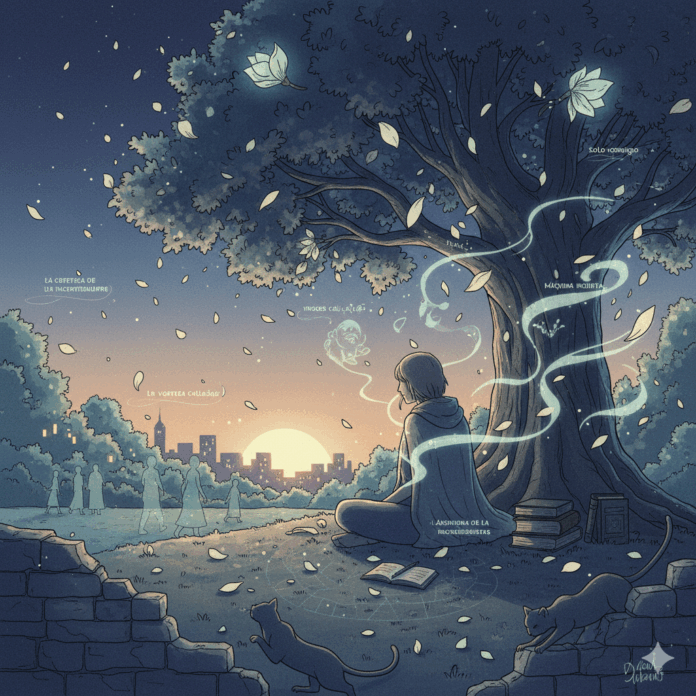
Solo conmigo

Solo conmigo.
Solo conmigo.

Solo conmigo

No estoy preso, ni aislado, ni fuera de la ciudad o el pueblo, el barrio o la casa. Solo estoy solo conmigo, en una soledad exquisita que solo acaricia los pétalos del árbol.

El silencio me habla desde la oscura noche, y me llegan voces calladas, susurros que se cuelan a mi mente y la separan de un mundo ruinoso a otro “ideal”.

Ya la mañana está cerca, amenazando la paz que “esos cantos” me han traído. Ya pronto volveré a ser un ser humano. Máquina inquieta y temerosa que poco a poco va en deterioro.

Muchos trajines trajo la vida, tantas historias y momentos divinos, pero extraños también. Magias y encantos que me sostuvieron soñando en un sueño que nunca despierta.

Ya mañana habrá un mañana distinto; no sé, ya no quiero caer en los absurdos y las adivinanzas abstractas que no conducen a la certeza, así la tenga uno por sentada.

Solo conmigo, intentando desprenderme de este misterio que soy con el miedo a encontrarme en una dimensión errada. Juzgando mis delitos y pecados y toda la mierda que me “he creído ser”.

Nada urgente ni prescindible desde esta individualidad orgullosa. Que se reconoce como una hoja más de las que ocupan estos árboles que arropan mi casa.

No soy nada conmigo mismo. No tendría sentido esta soledad si solo fuera yo quien habita. ¿Quién construye, quién destruye, quién crea y se alimenta de egos y espantos y otras intenciones más agradables…?

No tendría sentido la soledad por sí misma y sus silencios obligados o buscados. No tendrían sentido Dios ni el Diablo. No tendría sentido yo que escribo ni tú que lees.

Solo conmigo, pero contigo. Yo de mi lado y tú del tuyo. Con atmósferas distintas, distintos rincones,

Distintas soledades y sueños.

No estoy preso, pero no sé por qué así me siento. Sí puedo salir al patio y las calles y ver un montón de gente que siempre aparece en mis sueños… En este sueño que amanece en la misma cama, misma casa, mismo rincón, mismas personas.

Solo conmigo medito y suelto esos latidos que ya se repiten de tanto pensar lo mismo sin encontrar las respuestas… La respuesta… O la “otra” pregunta…

Solo conmigo comparto contigo, imaginándote en la distancia y viéndome en ti, como si fueras yo. Exactamente iguales, con las mismas ignorancias y “porqués” que nos alumbran.

El mismo final inagotable. La misma hoguera, la misma sentencia sin un juicio justo, sin una clara “aclaratoria” del bien o el mal.

Y sigo aquí, conmigo mismo, hablándome sin conocerme y pensando que sí. Que hay un sentido en el sinsentido de “los sentidos que creo percibir”, aun dudando hasta de mí mismo.

Ya empiezan a arañar los gatos las paredes, sacándome del “mismo” donde, otra noche fallida, acompañaron las especulaciones. Tan familiares ya, tan prevenidas.

Ya no estoy solo conmigo; volví yo mismo a acompañarme a mí en “ese abrazo” que nunca siente ni percibe la dualidad de dos mundos.

La certeza de la incertidumbre vuelve a la carga. ¡Salud! Mínimo Conminero.

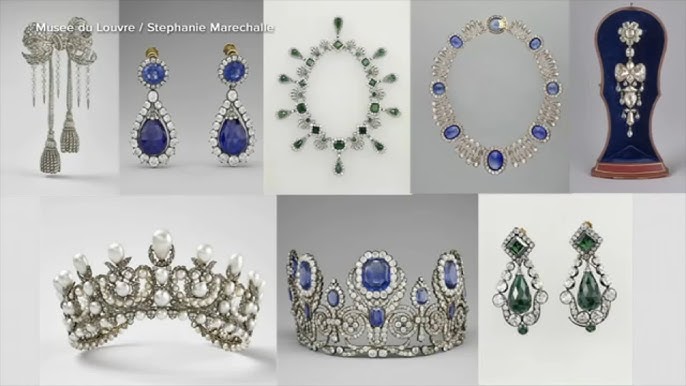
Louvre museum robbery jewels

Louvre museum robbery jewels

After the Heist: Reimagining Jewelry Display in Paris Museums

Curatorial Strategies at the Intersection of Security and Spectacle

The recent €88 million jewelry heist at a major Paris museum represents more than institutional failure—it exposes fundamental contradictions in how museums negotiate the display of precious objects in an era of hyper-visibility and organized crime. This incident compels a radical reassessment of curatorial strategies for jewelry presentation, where aesthetic experience, educational mandate, and security imperatives collide.

The Traditional Jewelry Display Paradigm

Historically, European museums have employed what might be termed the “treasury aesthetic”—jewelry displayed in dense clusters within glass vitrines, often under dramatic spotlighting that emphasizes materiality: the refraction of gemstones, the luster of gold, the intricacy of craft. This approach, dominant in institutions like the Musée des Arts Décoratifs and the Louvre’s Galerie d’Apollon, operates on several assumptions:

  • Proximity as pedagogy: Viewers must see fine detail to appreciate technical mastery
  • Context through adjacency: Grouping pieces by period, provenance, or technique creates narrative coherence
  • The vitrine as neutral container: Glass cases function as transparent thresholds between viewer and object

Yet this model, inherited from 19th-century museum practice, assumes institutional invulnerability. The heist shatters this assumption, revealing how traditional display strategies prioritize aesthetic access over protection, creating what security analysts call “target-rich environments.”

Post-Heist Curatorial Dilemmas

1. Visibility vs. Vulnerability

The paradox is acute: jewelry must be seen to fulfill the museum’s educational mission, yet visibility facilitates targeting. Thieves conducted reconnaissance posing as tourists, studying sightlines, guard rotations, and extraction routes. The very transparency that enables public engagement becomes tactical intelligence.

This raises urgent curatorial questions:

  • Can museums maintain open access while protecting high-value collections?
  • Does the democratization of museum experience (increased visitor volume, extended hours, photography permissions) inadvertently compromise security?
  • At what point does protection negate the purpose of public display?

2. Authenticity vs. Reproduction

One immediate post-heist strategy involves strategic substitution—displaying high-quality facsimiles while securing originals in vaults. The Victoria & Albert Museum has experimented with this approach for its most vulnerable pieces. However, this solution generates new problems:

Phenomenological loss: Jewelry’s aura—Benjamin’s term remains relevant—depends partly on material authenticity. A reproduction, however precise, cannot convey the temporal depth of an object that touched royal skin, survived revolutions, or embodied dynastic power.

Ethical transparency: Must museums disclose which pieces are reproductions? The 2019 controversy at the British Museum, where visitors unknowingly photographed replica jewels, demonstrates public expectation of authenticity. Curatorial honesty risks undermining institutional authority; silence becomes deception.

Educational compromise: If museums prioritize originals for scholarship while showing replicas to the public, they create a two-tier system where knowledge access correlates with institutional privilege—anathema to democratic museum philosophy.

3. Contextualization vs. Decontextualization

The heist commentary noted that stolen jewels might be “melted down,” reducing cultural heritage to commodity. This illuminates how traditional display already enacts a form of violence: extracting jewelry from bodies, ceremonies, and social relations to isolate it as aesthetic object.

Pre-heist curatorial norms often displayed jewelry as:

  • Exemplars of craft technique (formalist reading)
  • Markers of wealth and status (sociological reading)
  • Evidence of taste and fashion evolution (art historical reading)

Post-heist reconsideration might demand:

  • Embodied display: Using mannequins, video projections of historical wearers, or participatory try-on experiences (digitally mediated) to restore jewelry’s relational essence
  • Provenance transparency: Explicitly addressing colonial acquisition, forced sales during wartime, or royal confiscation—the heist’s framing as potential “justice” highlights how jewelry accumulation often involves historical theft
  • Dematerialized presentation: Privileging photographs, sketches, and descriptive text over physical objects for the most vulnerable pieces

Emerging Curatorial Strategies: Four Models

Model 1: The Fortress Aesthetic

Prioritizes security through architectural deterrence

Characteristics:

  • Reduced jewelry on view; rotating displays from larger collections
  • Reinforced vitrines with polycarbonate laminate, seismic sensors, and timed locks
  • Controlled entry galleries with airport-style screening
  • Minimal information about security measures (operational secrecy)

Example precedent: The Green Vault (Grünes Gewölbe) in Dresden, which suffered a €1 billion jewelry heist in 2019, subsequently installed bullet-resistant glass and reduced simultaneous visitor capacity.

Critique: This approach transforms the museum into a securitized space, potentially alienating visitors and contradicting institutional commitments to accessibility. The architecture of fear—visible cameras, guards, barriers—alters the phenomenology of viewing, making security infrastructure as visible as the art itself.

Model 2: The Digital Surrogate

Emphasizes virtual access over physical presence

Characteristics:

  • High-resolution 3D scans allowing 360° rotation and magnification beyond human visual capacity
  • Augmented reality overlays enabling users to “try on” pieces via smartphone
  • Blockchain-secured NFTs as certificates of authenticity and provenance records
  • Physical objects stored in secure facilities; public galleries feature screens and projections

Example precedent: The Smithsonian’s digitization initiative has created explorable models of jewelry pieces, accessible globally without physical travel.

Critique: This model risks becoming museum-as-database—efficient, democratic, but phenomenologically impoverished. Jewelry’s material presence—weight, texture, the way light interacts with surfaces—cannot be fully replicated digitally. Moreover, this approach may inadvertently devalue the museum visit itself, undermining arguments for public funding of physical institutions.

Model 3: The Distributed Collection

Decentralizes high-value objects across multiple sites

Characteristics:

  • Loan networks among smaller regional museums, preventing concentration of targets
  • Rotating exhibitions that keep locations unpredictable
  • Collaborative security protocols across institutions
  • Emphasis on “no single vault contains everything”

Example precedent: The French National Museum system’s practice of depositing works across provincial museums, though historically driven by space constraints rather than security.

Critique: Distribution increases logistical complexity, transportation risks (objects are most vulnerable during transit), and insurance costs. It also fragments narratives that depend on seeing collections in totality—dynastic jewel suites, for instance, lose coherence when scattered.

Model 4: The Hybrid Encounter

Balances physical access with layered protection

Characteristics:

  • Selective display: most significant pieces shown physically, supporting collection digitized
  • Temporal zoning: high-security hours (limited visitors, advance booking) vs. open hours (replica display)
  • Interpretive depth: extensive contextual material that shifts focus from object to story
  • Transparent security: visible but architecturally integrated protection that becomes part of the exhibition narrative

Potential implementation: A gallery might display Marie Antoinette’s diamond necklace in a central vitrine with visible but elegant security (reinforced glass that refracts light artistically, discreet sensors), surrounded by:

  • Video projections showing the necklace worn at Versailles
  • Documents detailing its theft during the Revolution and recovery
  • Interactive stations exploring gemstone sourcing and cutting techniques
  • Explicit acknowledgment: “This object’s protection requires visible security measures; their presence reflects both its historical significance and contemporary vulnerability”

Advantage: This model doesn’t pretend security is invisible nor that digital suffices for physical experience. It makes protection part of the interpretive framework—security as curatorial honesty.

Theoretical Reframing: From Object to Relation

The heist invites museums to reconsider jewelry not primarily as object but as relation—networks of meaning connecting maker, wearer, viewer, institution, and broader publics. This shift suggests curatorial strategies that prioritize:

1. Storytelling over spectacle: Rather than jewelry as glittering centerpiece, exhibitions might foreground:

  • Labor histories (who mined stones, who crafted settings, under what conditions)
  • Wearing contexts (ceremonial use, daily adornment, political signaling)
  • Afterlives (theft, resale, museum acquisition, conservation challenges)

2. Temporal complexity: Jewelry embodies multiple temporalities—geological (gemstone formation), human (craft production), biographical (ownership chains), institutional (museum stewardship). Post-heist displays might visualize these layers, showing jewelry as palimpsest rather than fixed artifact.

3. Ethical transparency: Addressing uncomfortable questions the heist commentary raised:

  • Were these jewels originally acquired justly?
  • Do former colonies have claims to repatriation?
  • What does it mean to “protect French heritage” when that heritage includes objects taken from elsewhere?
  • Can a heist ever be “justice,” or does crime simply perpetuate cycles of commodification?

The Macron Doctrine: Heritage as National Identity

President Macron’s framing—”an attack on our history”—reveals how jewelry display operates within nationalist discourse. The heist becomes not merely theft but symbolic assault on collective identity. This rhetoric, while politically legible, carries dangers:

Essentializing heritage: Positioning jewels as embodying “Frenchness” ignores their cosmopolitan origins—gemstones from Asia, African gold, Italian craftsmen at French courts, later owners from multiple nations.

Securitization justification: National security language can authorize disproportionate measures, transforming museums into fortresses and potentially excluding marginalized visitors (increased screening disproportionately affects racialized bodies).

Resisting repatriation: If jewels are “attacks on our history” when stolen by criminals, this logic complicates claims by nations seeking return of colonially acquired objects—the discourse of violated ownership cuts multiple ways.

Post-heist curatorial practice might resist nationalist instrumentalization by foregrounding jewelry’s transnational trajectories, its embeddedness in global networks of trade, conquest, and exchange that exceed any single nation’s claim.

Conclusion: Toward a Post-Security Jewelry Aesthetic

The Paris heist forces recognition that security and display are not opposing values but co-constitutive conditions of contemporary museum practice. The question is not whether to protect or show jewelry, but how to develop curatorial strategies where protection becomes pedagogically meaningful rather than merely restrictive.

This might involve:

Curating vulnerability itself: Acknowledging that all preservation is provisional, all security partial. Exhibitions might include sections on “jewelry we have lost”—historical thefts, wartime destruction, pieces returned to source communities—making absence and risk explicit themes.

Privileging use over possession: Commissioning contemporary artists to create jewelry responding to historical pieces, wearable in public contexts, then displayed alongside protected originals. This activates jewelry’s social function while keeping historical objects secured.

Slow viewing protocols: Limiting visitor numbers not just for security but as interpretive strategy. The Uffizi’s timed entry for the Botticelli rooms demonstrates how constrained access can enhance rather than diminish experience—scarcity generates attention.

Community co-curation: Inviting publics to shape what is displayed and how. If jewelry represents “collective memory” (per the Reuters commentary), then collectives—not just curators—should determine its presentation. This democratizes expertise while building stakeholder investment in protection.

Ultimately, the heist reveals jewelry display as always already a negotiation between competing demands: aesthetic pleasure and institutional security, public access and object preservation, national heritage narratives and transnational historical realities, material authenticity and symbolic meaning.

Post-heist curatorial innovation will not resolve these tensions—they are constitutive of museum practice itself—but might make them visible, generative, and ethically accountable. The most honest response to the question “how should we display jewelry after the heist?” may be: with full acknowledgment that perfect solutions are impossible, and that this impossibility is itself a truth worth displaying.

Page 54 of 276
1 52 53 54 55 56 276