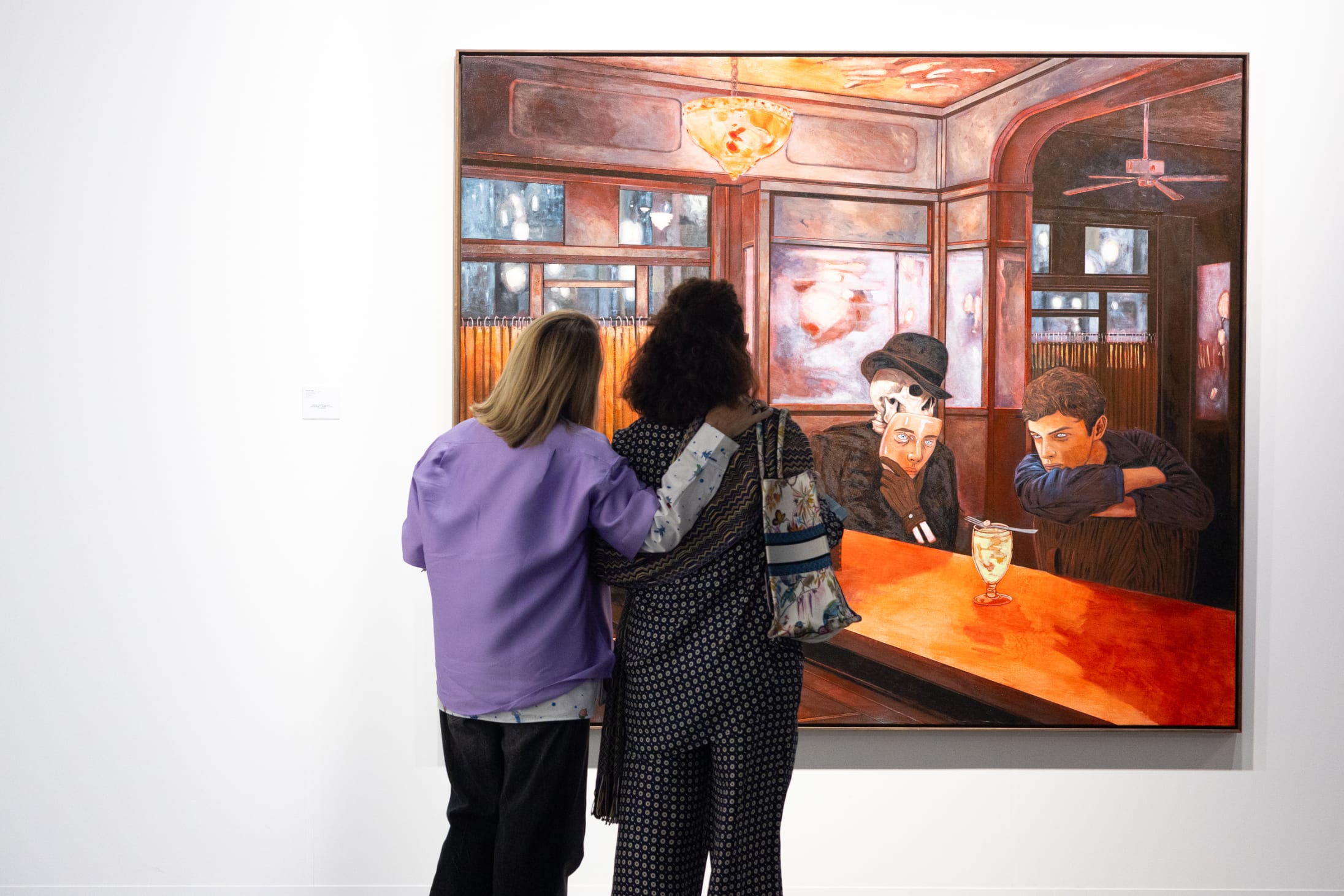
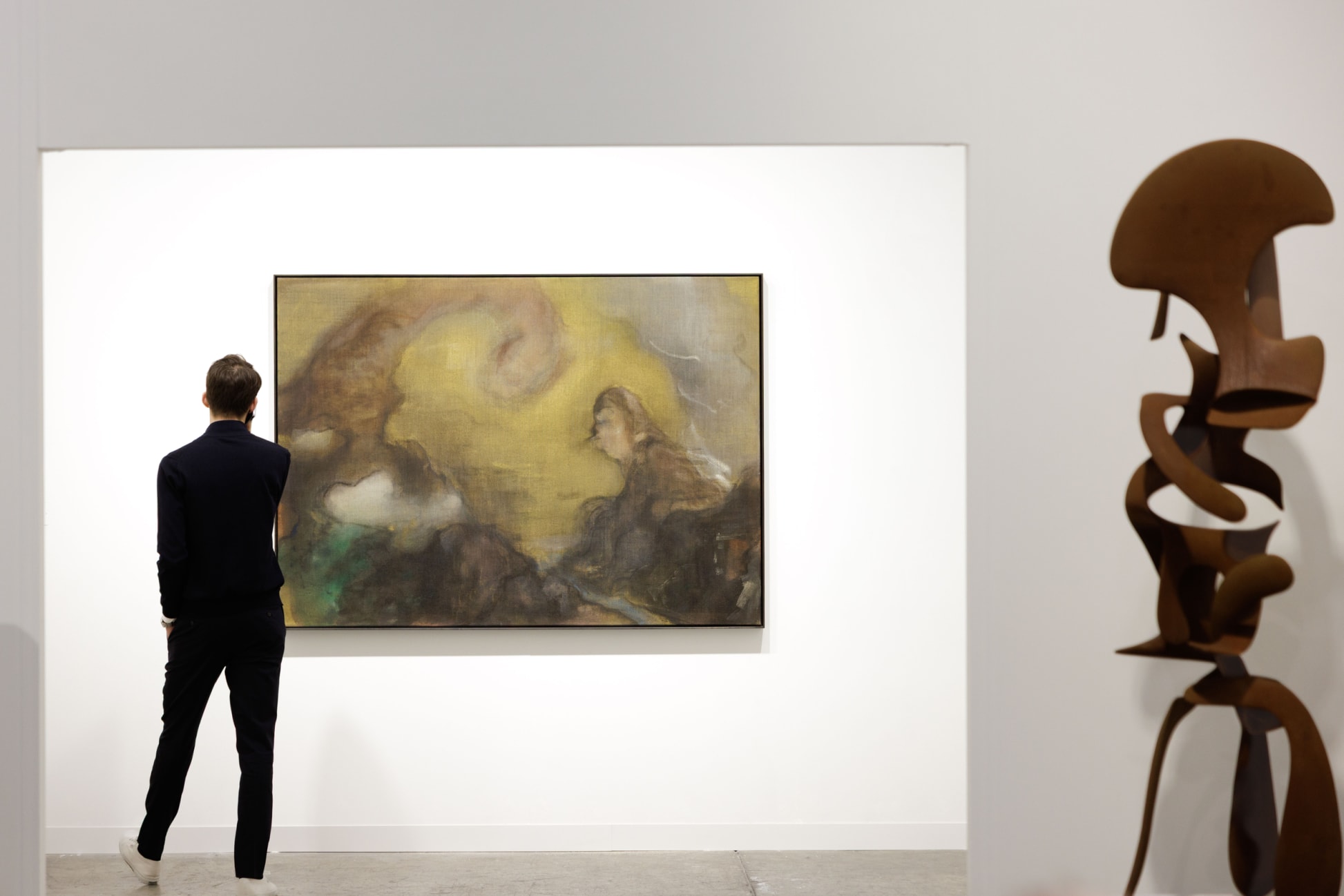
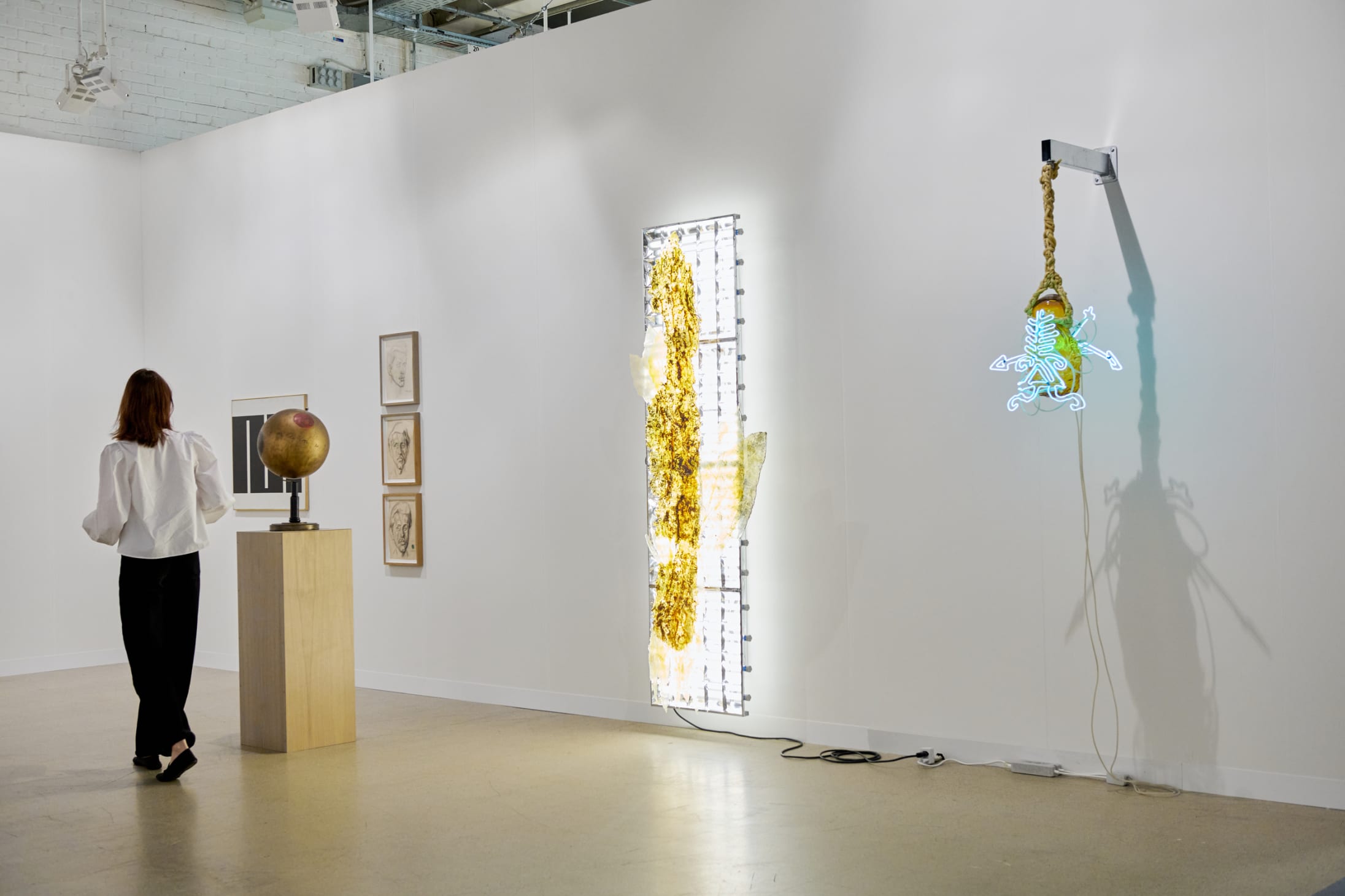
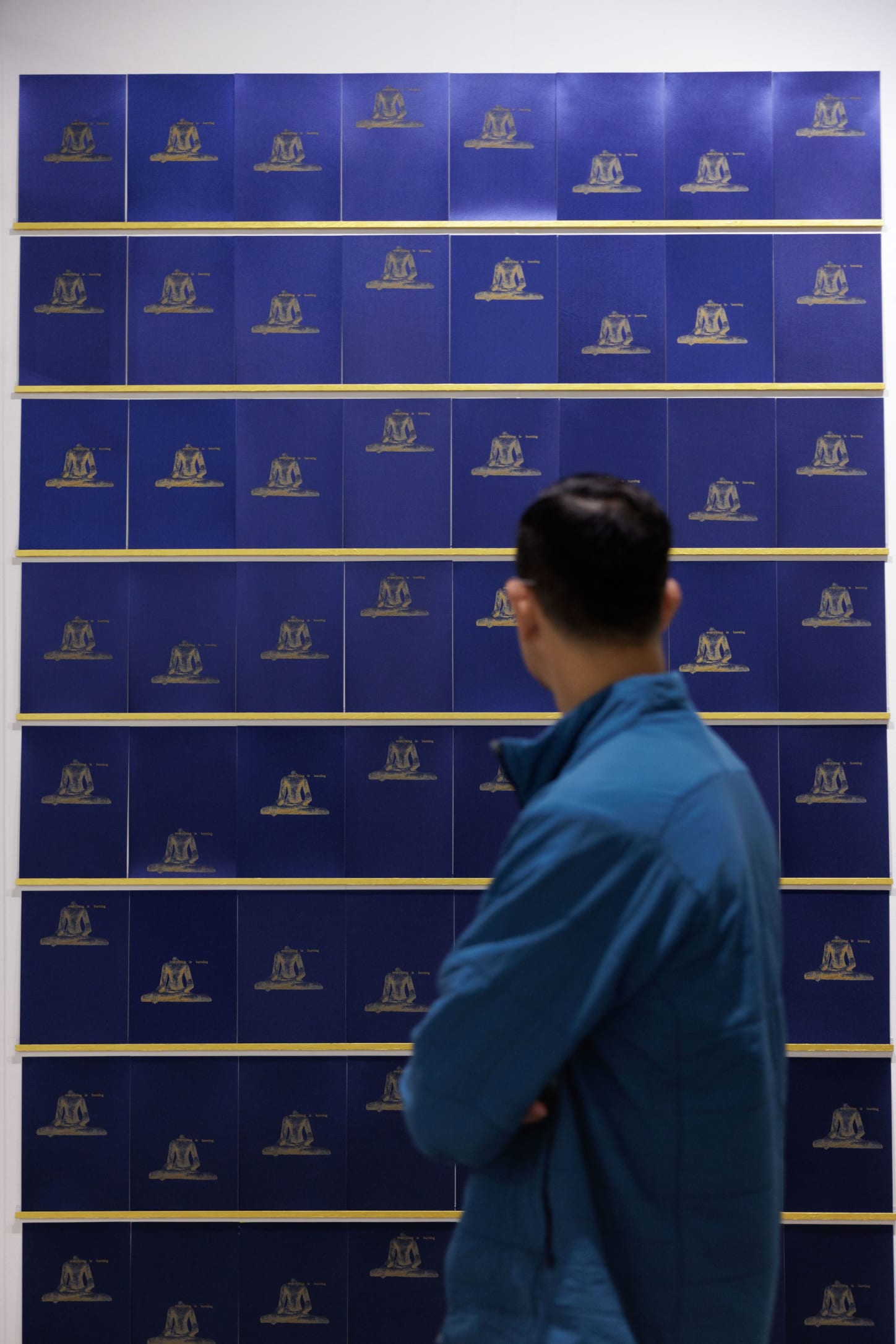
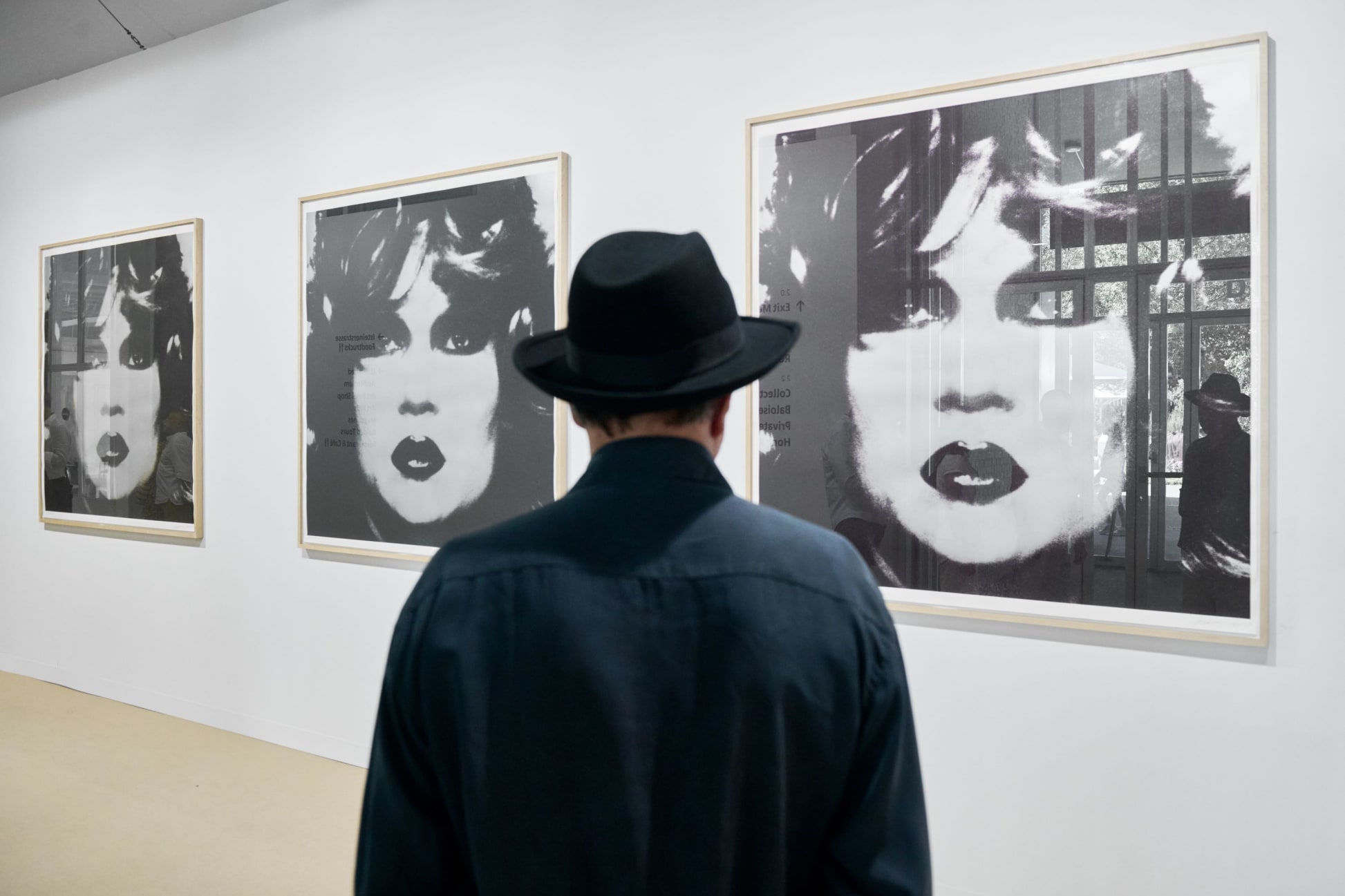
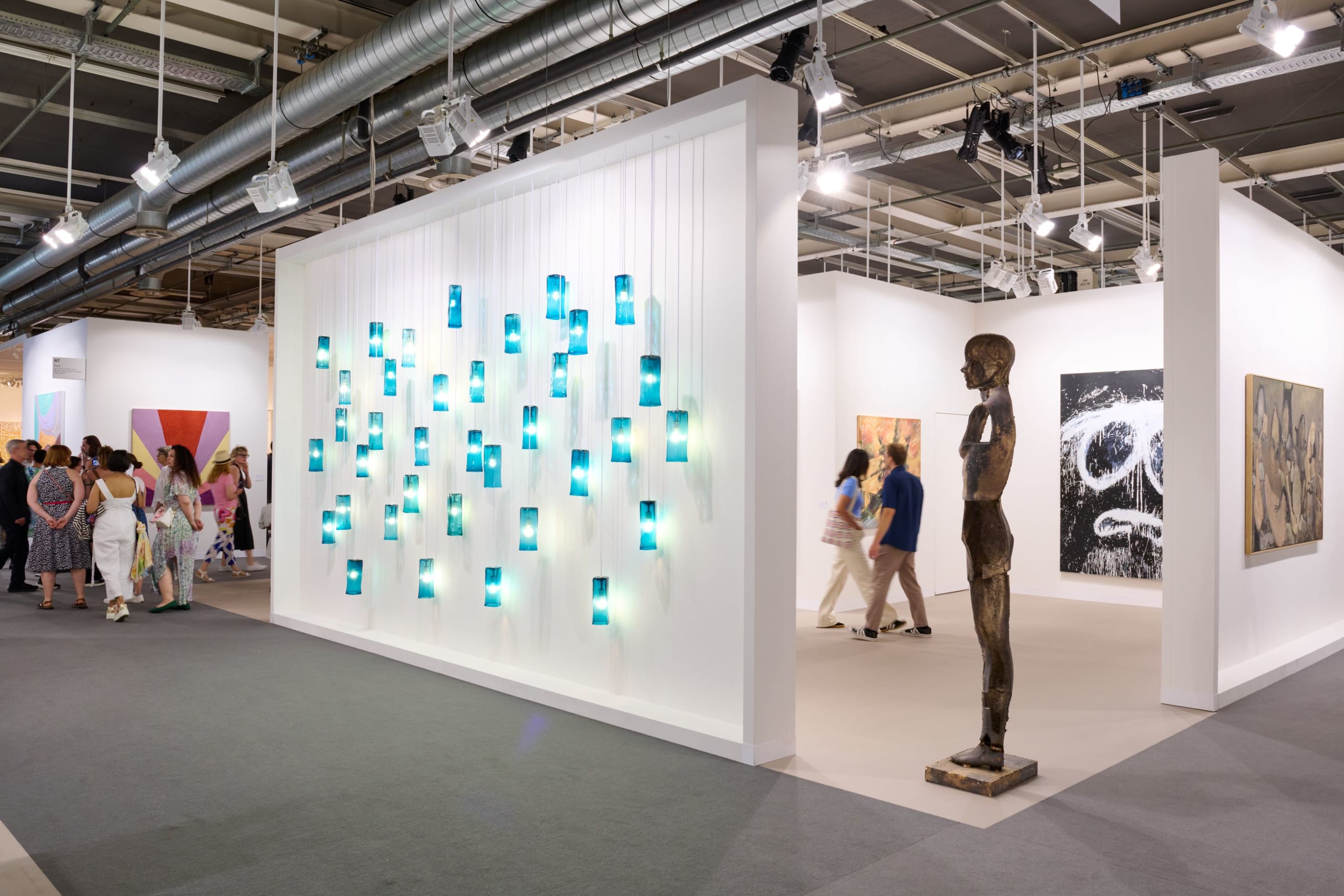
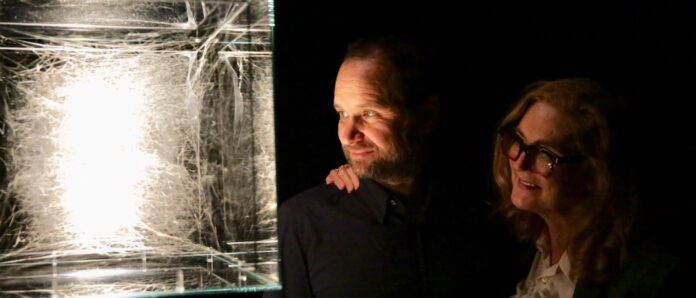
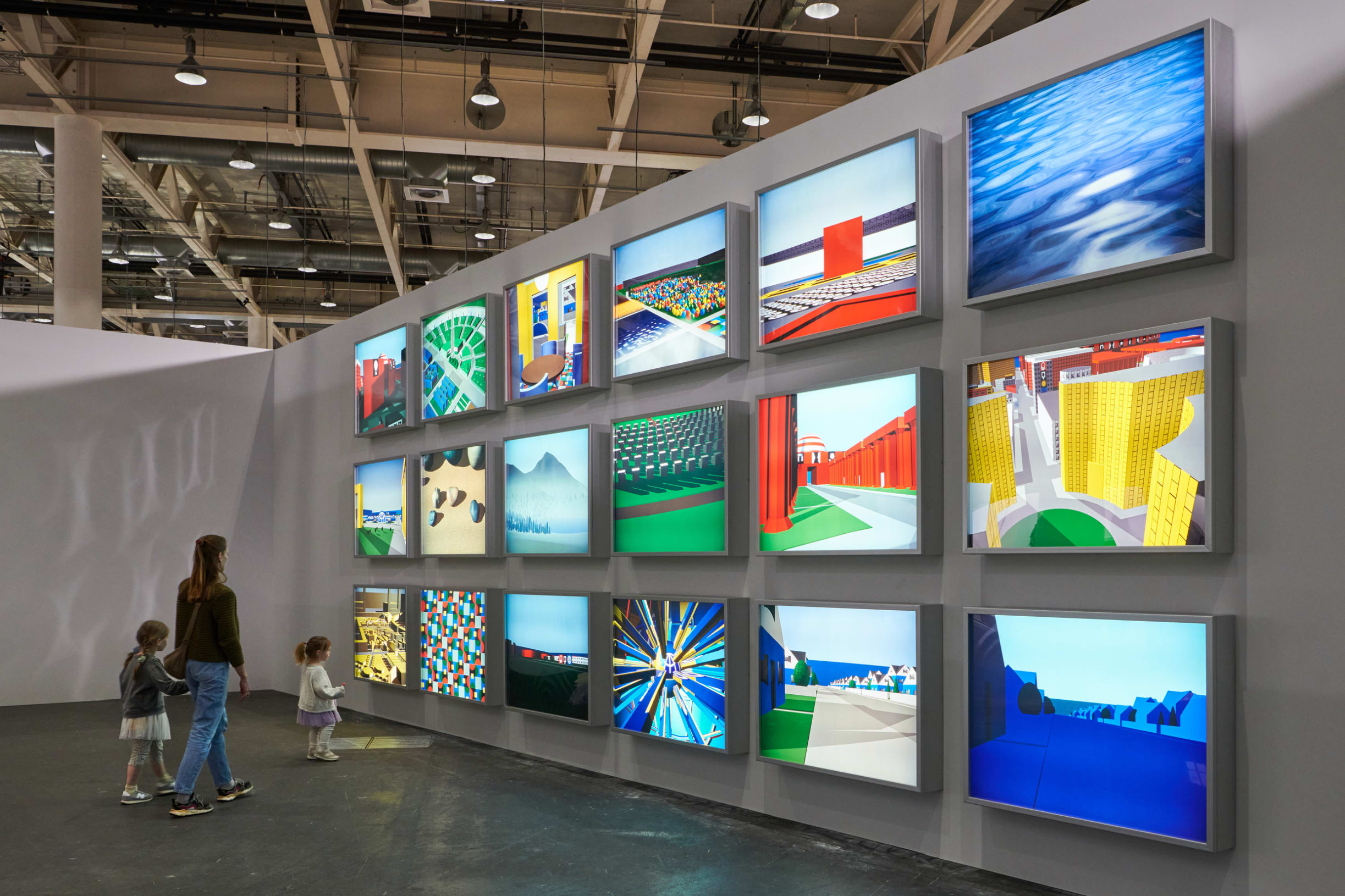
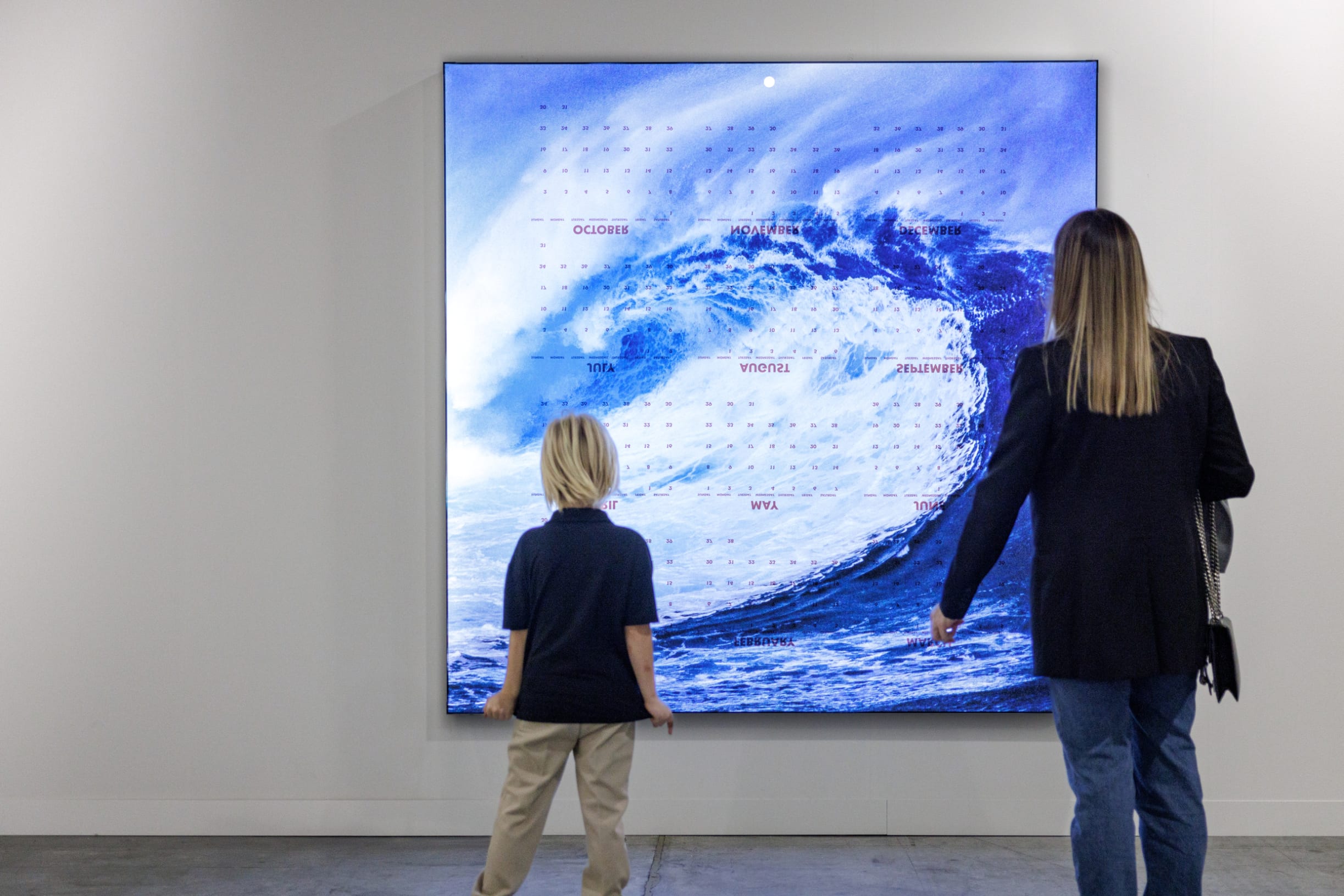
Founded in 1996 by Stéphane Magnan in the Marais district of Paris, Les filles du calvaire historically established itself at 17 rue des Filles du Calvaire. In 2023, it reinforced its mission of promoting and supporting artists by inaugurating a second space at 21 rue Chapon.
Since its beginnings, Les filles du calvaire gallery has been committed to promoting contemporary creation through a diversified exploration of artistic mediums. From conceptual works to photography, encompassing painting, sculpture, video and performance, the variety of artistic expressions reflects the gallery’s ongoing commitment to exploring new languages of creation.
True to its support for visual artists, Les filles du calvaire has been accompanying artists from various backgrounds for over twenty years. The gallery, in particular, has established close ties with the national and international photographic scene, supporting historical artists and pioneers of contemporary art.
With the opening of its second space in 2023, Les Filles du Calvaire continues its commitment to promoting contemporary creation. The gallery participates in fairs both in France and abroad, collaborating with numerous institutions and external curators. By providing a platform for both emerging and established artists, the gallery solidifies its position as an essential reference in the Parisian and international art scene.
Emerge el Simbolismo alrededor de 1880 cuando la crisis de valores se hace palpable en la hostilidad por parte de la sociedad hacia escritores y artistas y contra todos los presupuestos defendidos por ellos encarnado por el Naturalismo-Impresionismo.
Es una defensa de la espiritualidad con la excusa de que el desarraigo que provoca la emigración hacia las ciudades del campo se queda sin referentes y el artista se ve en la obligación de fabricar otros nuevos.
Por lo que una pintura o un texto literario simbolista tiene mensaje, por lo que los valores plásticos no importan.
Este movimiento vuelve sobre lo tradicional en literatura y artes plásticas e intenta que su mensaje sea espiritual, grave, trascendente evocador de otros mundos superiores a lo cotidiano, un mundo que no puede controlarse con la razón o la ciencia.
Hay una vuelta atrás en el tiempo, una renovación de valores y creencias que se creían pasadas, como la religión, a la vez que se vuelve a la superstición y lo exotérico.
Hay un total irracionalismo a la par que se pierde la confianza en la colectividad, el grupo social, la alegría y se cultiva el mundo interior, subjetivo, solipista, el individualismo y el elitismo aristocrático.
Es una batalla encarnizada contra la vulgaridad, representada por la cultura democrática de masas y su feroz rasero igualitario, contra su materialismo y positivismo, su culto al dinero y su desprecio al arte y todo lo que este conlleva, su incomprensión de todo lo que sea distinto y espiritual.
Todo esto con un ambiente de melancolía, decadentismo, que era antitético del optimismo y progresismo de la época precedente.
En pintura los máximos representantes del simbolismo son el grupo de Pont-Aven.
En esa localidad de la Bretaña francesa se retiran varios pintores capitaneados por Gauguin que pretenden en un ambiente de fraternidad espiritual y comunitaria, devolver a la pintura sus valores espirituales, sus temas trascendentes.
Pero para ello apuestan por recuperar el contorno que se había disuelto en el Impresionismo, parodiando con ello el viejo estilo de las vidrieras de las catedrales además de los colores puros y planos.
Hay también dentro de esta sensibilidad común de la época artistas en otros países que tratan de imbuir espiritualidad en el arte, espiritualizarlo a través de los temas en la mayor parte extraídos de las viejas mitologías de los pueblos diferentes de la mitología simbolista.
Destacan en Paris Gustave Moureau (1826-1898) y Odilon Redon (1840-1916).
Moureau es un buen colorista y Redon hace una notable obra como dibujante y grabador.
El simbolismo florece en infinidad de lugares pero sobre todo en países nórdicos y germánicos, por semejanza en el talante.
Hay que destacar Arnold Brocklim (1827-1901), y Max Klinger (1857-1920), el austriaco Gustav Klim (1862-1918), el suizo Ferdinand Holder (1853-1918), el noruego Edward Munch (1863-1944), los belgas Felicien Rops (1833-1898), Fernand Khnoplf (1858-1921) y James Ensot (1860-1949).
Agustín Fernandez, Cousures, Oil on canvas, 1962, 51 ½ x 46 ½ inches, Gift of Jose Martinez Cañas, MET 77.10.7
FIU Frost — Agustín Fernández: The Alluring Power of Ambiguity
Written By Olga Garcia-Mayoral
On view: February 15, 2025-January 25, 2026 | Site visit: October 26, 2025
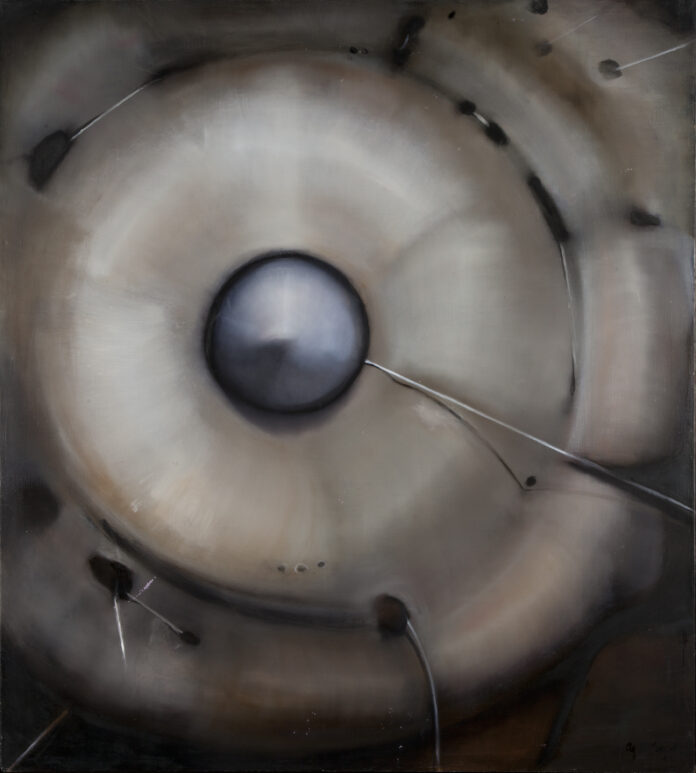
Standing in the first gallery at the Frost, you feel Agustín Fernández pull two magnets in opposite directions–flesh and mechanism, ache and elegance, seduction and restraint. The surfaces are satiny, almost inhaled; the forms are knotted, pinned, cinched, sliced. It’s a language at once intimate and armored, a non-dualist grammar that refuses to choose between figuration and abstraction. Curated by Elizabeth T. Goizueta with assistance from Gabriela Goizueta, The Alluring Power of Ambiguity is less a linear retrospective than a lucid anthology of Fernández’s obsession: bodies that masquerade as objects, objects that vibrate with sentience, and desire treated not as illustration but as structure.
Born in Havana in 1928 and trained at San Alejandro (with formative detours to the Arts Students League in New York and Madrid’s Real Academia), Fernández left Cuba for Paris in 1959 and would never return to live on the island. The exhibition tracks that peripatetic trajectory–Paris, San Juan, New York–without reducing the work to biography. Instead, it tunes us how exile recalibrates seeing. The monochromes (and near-monochromes) that define much of his mature work push against the color-saturated “Cuban canon,” as the museum’s notes put it, and that resistance reads as productive friction: a refusal to be summarized by palette. Fernández subtracts color to sharpen anatomy–not literal anatomy, but the touch, pressure and restraint.
Seduction as Structure
Across more than 65 works–paintings, drawings, collages, portfolios–the exhibition makes a crisp case for Fernández as both “painter of the brush” and draftsman of uncommon bite. A room of drawings reveal his precision with the line: folded paper that seems to crease as you watch; pins, hooks, belts and spikes that operate like punctuation marks, toggling tensions between the seen and the implied. The “tool” motifs are not props; they are syntax. They bind, puncture, fasten; they also tease. In painting, his gloved grays and metallic creams glow like skin under studio lights, while hard edges and ligatures interrupt the caress.
The erotics is never simply illustrative. Fernández stages the conditions for desires–veils and un-veils, tugs and releases–inside the picture plane. In one large canvas, ribbons and belts gather into a torqued knot that reads as both ligament and lacing. You sense muscles preparing to flex even though there are no bodies depicted–only intimation of them, abstracted into pulls and counter-pulls. Elsewhere, a field of soft gradation is cut by a glossy seam with acuity of a scalpel. You can almost feel the coolness of the surface where the brush has polished a highlight to metal.
Materials, Methods, and the Pleasure of Control
If Fernández’s visual language seduces, his technique closes the deal. The paintings’ “finish”– that sleek, buffed, nearly industrial skin–carries a paradoxical warmth. Up close, you find the trace of the hand: tight modulations, slight burrs where once glaze meets another, the faint tremor of a hairline. The show smartly pairs paintings and drawings so viewers can triangulate how a hook in graphite becomes a hinge in oil, or how a receding gradient in pencil rehearses a large swoon on linen.
Equally strong is the curatorial emphasis on ephemera: letters, photographs, and studio notes that widen the aperture on Fernández’s process and psyche. They are not mere supplements. They materialize the world in which the paintings were possible–the friends, the debts, the nights and jobs that funded the days in the studio. A vitrine of clippings from Paris in the 60’s sits near later New York snapshots; together they chart a life lived inside international avant-gardes without surrendering to any one school.
Dialogues and Lineages
The wall texts sketch Fernández’s influences–surrealism’s charged objects, post-Minimalism’s cool rigor, even traces of downtown New York’s punk attitude–yet what’s striking is how fully he metabolized them. The surrealist legacy appears not as dream iconography but as the psychic weight of things; the post-Minimal turns up not as a unit/repeat modules but as an ethic of surface and discipline. And the “punk” is less about noise than stance: a refusal to behave, to please, to be decoded quickly.
That stance is especially resonant in Miami, a city where Cuban modernisms are often (mis)read through tropes of tropical color and nostalgia. The Frost’s thesis–that Fernández monochrome and surgical, sits apart from that expectation–feels right. But the exhibition also positions him inside a broader conversation about the body in late modernism: how artists in the 1960s-80s contended with desire and control, violence and care, in the wake of both historical trauma and new sexual politics. In Fernández, the wounded and the polished share a skin.
Fashion as Afterimage
One of the most engaging surprises is a custom dress by designer Fernando Pena, commissioned after one of Fernández’s iconic paintings. The garment sits like a mirage between sculpture and apparel: seams echo canvas ligatures; a bodice folds with the logic of his drawn paper; the palette stays loyal to his disciplined grays. Rather than costume the art, the dress translates it –re-engineering pictorial tensions as patternmaking problems. It’s a deft curatorial gesture, especially in Miami, where fashion is often spectacle; here, it becomes exegesis. You see how Fernández’s forms want to move on bodies, not just in the mind.
The Mind on the Page: Memoir and Voice
Alongside the artworks, the exhibition includes an unpublished memoir, Adiós al barroco. Detailing about his human experience in Cuba from childhood to early adulthood. Fernández delves into this artistic practice, literacy influences and the friendships he fostered throughout his career. Also dedicating a chapter to New York City’s photographer Robert Mapplethrope, whose demise from AIDS was a devastating loss for both himself and his wife Lisa. Later Fernández’s re-examins his life from the context of ancient civilizations of Mexico.
That caveat aside, the memoir’s presence matters. It frames Fernández’s not only as an image-maker but as a thinker of images–someone for whom ambiguity is not a pose but an ethic.
Ambiguity, Read for a New Generation
The exhibition title earns its keep. In 2025, ambiguity is not always alluring in public life; we are trained to demand declarations. Fernández insists on the opposite: that ambiguity can be a site of intimacy and rigor. The show is careful not to reduce his knots and clamps to allegories of exile (though they can be read that way). Instead, it gives multiple entry points–material, erotic, historial–so new audiences in Miami can triangulate their own readings. Teens admiring the ephemera of the legacy, a couple debated whether a painting’s central pinch was a space, unhurried sightlines–lets those debates breathe.
Framing, Not Freezing, a Legacy
The Frost is an important site for Fernández’s. Its 1992 retrospective helped anchor his presence in Miami institutional memory; this exhibition deepens that commitment while updating the conversation. Works from estate, private collections, and the museum’s holdings–many never exhibited–are the show’s ballast. Together they extend a thesis: Fernández belongs to a transnational modernism that is at once Cuban and unbound, Latin American and global, erotic and ascetic.
What lingers after the walkthrough is the sense that ambiguity here is not fog but focus. Fernández asks us to attend–to surfaces, seams, restraints, releases. He insists that desire is a form of knowledge and that control, when tenderly applied, can be a kind of care. For audiences encountering him for the first time, that proposition lands with clarity. For those returning, it feels like permission to keep looking.
Closing Thought
Fernández once described himself first and last as a painter–a vocation of patience and exactitude. That feels right in these rooms, where ambiguity is engineered with the care of a tailor and the courage of a surgeon. The allure is real, but so is the power: a steady voltage running through the belts and seams, through grays that smolder. The guest curatorial team did an outstanding collaboration showcasing the legacy of this Cuban painter. In a city that loves the declarative, this exhibition is an argument for the whisper—and the long look. For Miami’s expanding audiences–students, designers, artists, collectors–this exhibit offers a rigorous alternative genealogy of Cuban and Latin American modernism, one that privileges discipline, ambiguity and the erotics of form over easy brightness.
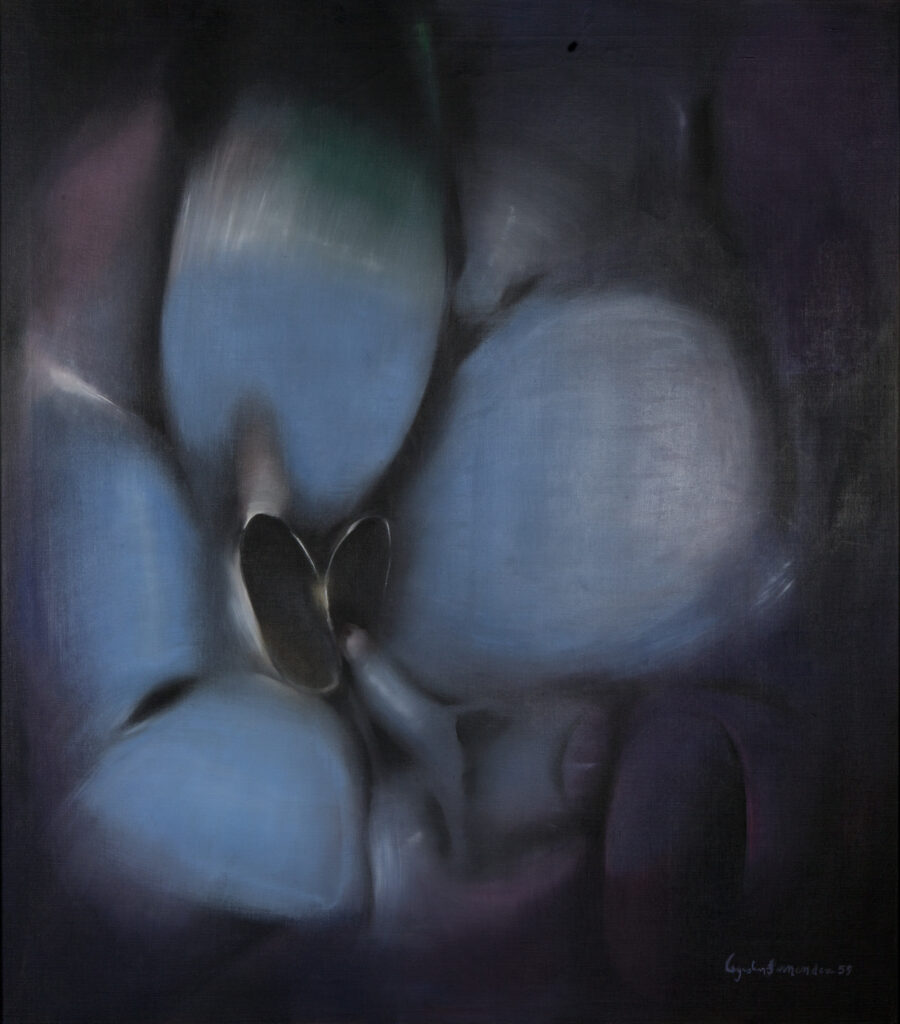
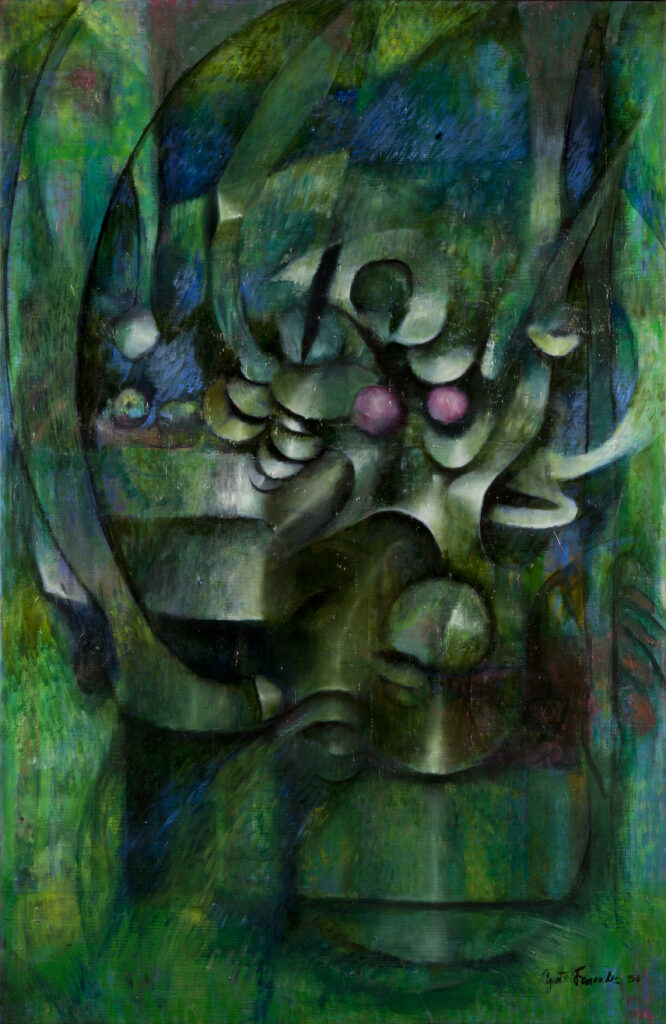
Agustín Fernández, Le Fleur Bleue, 1959, Oil on linen, 40 x 35 inches, Gift of Joe Novak, FIU 2005.008Agustín Fernandez, Naturaleza Muerta y Follaje, 1956, Oil on canvas, 51 x 35 inches, Gift of Jose Martinez Cañas, MET 77.10.8
A Night of Wonder: Stéphane Denève, The Best of John Williams
A Night of Wonder: Stéphane Denève, The Best of John Williams
Written By Olga Garcia-Mayoral
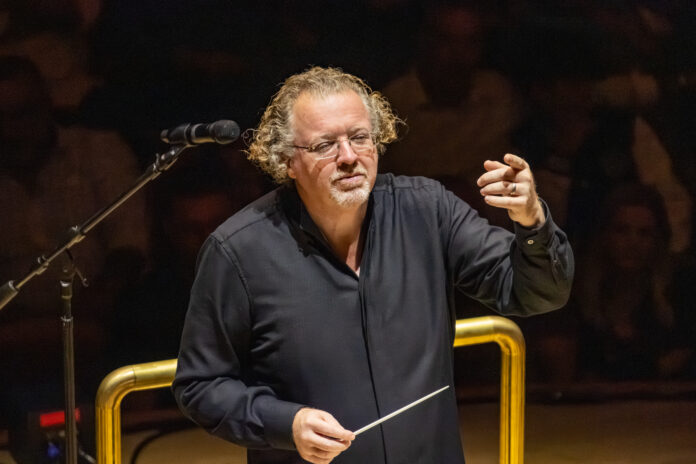
Stéphane Denève already radiates the kind of buoyant curiosity that makes an audience lean forward. The French conductor, known internationally for his affinity for living composers, is an eloquent champion of John Williams’ music, on the podium and in conversation — led the New World Symphony’s “The Best of John Williams” at Knight Concert Hall on October 18, 2025. In person, Denève is generous and effusive, the sort of maestro who quotes Spielberg with a twinkle and then, in the following breath, talks about brass endurance and woodwind transparency with surgical precision.
Maestro Denève, the Artistic Director of the New World Symphony, walks on stage with the ease of someone who genuinely loves the company he’s keeping–both the orchestra in front of him and the composer he’s celebrating. In conversation, “We will play tonight a piece called Harry’s Wondrous World,” he told me before the concert, “and I think there is always this feeling of wonder associated with him, with his music…just love.” That word–wonder–would become a signature thread through the evening at Knight Concert Hall. This program doubled as a tribute, a masterclass, and for me, a profoundly personal homecoming to the soundtracks of my childhood.
I met Denève an hour before the grand performance. I had a list of questions; We sat for a brisk exchange that flowed like the sound chamber of secrets. When I asked how he curated the night for Williams’ immense catalog, he smiled with a conductor’s familiar blend of delight and pragmatism. “It is tough to choose indeed, because I love so many of his pieces,” he said. “The idea I had was to perform a concerto of his… I wanted the audience, who often comes for the film music–to discover another part of what he composed. And then I tried to choose what would be good for the fellows to work on…to show them how rich this music is, how varied, and how much it rewards care and detail.”
If curation was the scaffolding, emotion was the architecture. Of all the selections, Denève admitted he feels the closest to E.T. “I was 10 years old when E.T. was released. I was the exact same age as Elliot…I believe it’s the first time I cried in a movie theater.” He recalled Spielberg’s famous line–“I can bring the audience to the brink of crying, but it is John Williams’ music that makes the tear fall”–and then nodded, as if to say: yes, and tonight we’ll prove it.
From my seat in the third row of the orchestra, the program unfurled like a reel of living memory. The violins spun the opening sheen of Harry’s Wondrous Word, and I was instantly eight again, reading in my living room while the soundtrack blasted through my CD player. The oboe’s phrasing, tender but unsentimental, led into a string swell that triggered that fizzy, head-to-toe sensation I only get with Williams: an ache that also lifts the soul. I felt tears pool–not just at the melody, but at its craftsmanship: how the inner notes braid, how percussion is held back a half-beat longer than you expect, how brass are invited to declaim but never bludgeon. Denève drew out those details with a kind of clarity that feels generous rather than clinical.
I asked him how he balances fidelity to the original film recordings with the creative license of a concert performance. His response was liberating as it was practical. “Since we have the recordings and the movie, should we do exactly the same? I don’t think so,” he said. “His music is so rich it can be played without the movie. In film, he followed the timing–but in concert, I feel very at ease to put my own interpretation and feelings into the piece. Every conductor, every orchestra can do it differently. That’s beautiful.” You heard that freedom in Raiders March, where Denève shaped the main theme with a swagger just loose enough to dance, in Yoda’s theme, where he let the lines breathe-slightly elongated cadences that made the wisdom in the melody feel earned rather than announced.
So much of Williams’ writing is attached to images–bikes across the mood, dinosaurs in nature, and spaceships flying in Space–that it’s fair to ask whether the music holds the same weight without them. Denève argues that his reasoning is, yes, rooted in craft. At Williams’ home, he once studied the cue sheets that map the film to the score nearly “second after second.” “He’s really following the movie precisely,” Denève said. “But at the same time, he creates a musical logic in parallel–so strong that if you remove the movie, the logic is convincing. You follow the story of the music without knowing anything about the film.” That parallel logic is exactly what filled the hall in the theme from Jurassic Park. Without dinosaurs on screen, the brass chorale glowed as an ode to awe itself: not spectacle but scale; not fear but reverence.
There’s a persistent critique that Williams’ language leans heavily on Romantic and late-19th-century idioms. Denève brushed aside the charge with a historian’s perspective and a practitioner’s ear. “Every great composer is like a sponge…No good music comes from nowhere,” he said. Influences are inevitable and honorable. “You always recognize John Williams’ music for what it is–John Williams. There’s nothing to ‘defend’. He never quotes; the genius is in the voice. The melodies are his.” He even credits Williams with something larger than any single score: “I think he saved the symphony orchestra in popular culture,” Denève said, noting how Star Wars re-associated orchestral sound with futuristic storytelling and how blockbusters still turn to orchestras when they need true power.
Backstage realities shape poetry, too. Denève described the demands these pieces place on an ensemble–” virtuosity…endurance…transparency, working on layers.” He singled out the brass for their stamina and control, and spoke about sculpting what he called “the John Williams sound,” a warm, richly blended sonority rooted in the kind of German repertoire.” One practical decision revealed the conductors-as-producer: in Close Encounters, an organ is optional. “I decided not to make it optional,” he said with a grin. “Otherwise, it’s lacking. So we organized an electronic organ to be brought here.” That touch mattered later — when the harmonics opened under the strings, the organ’s quiet foundation made the air in the hall feel charged.
Personally, the night pressed a finger on memories I didn’t realize were still humming. My father is a lifelong Star Wars and Indiana Jones devotee; growing up, our family listened to the vinyl soundtracks and had movie marathons. When Harry’s Wondrous World, the audience was once again a group of curious children, marveling at the world before them. Hearing the Raiders March in the room where it happens–a brass line that grins as it strides–was like opening a time capsule and finding it still warm. Yoda’s theme arrived, and I thought about patience and mentorship; when the clarinet offered its gentle answer to the strings, I thought about my own mentors in the arts who trusted me before I knew how to master myself.
Denève’s relationship with Williams goes beyond advocacy. “It’s the truth that we are friends,” he shared. They’ve worked through scores side by side at Williams’ home, traveled together to Japan, and shared stages for significant milestones. Denève was invited to conduct at the composer’s 90th birthday celebration in Washington, and later a gala with him at Carnegie Hall. He paints a portrait of an artist whose celebrity never curdles into self-regard. “He looks at you with curiosity…He never really wants to speak about himself,” Denève said. “He’s the most generous human being, the most humble. When you are with him, you feel at ease; you can be yourself.” That humility, Denève suggests, is inseparable from the music’s openness–the way it welcomes listeners into big feelings without condescension.
Miami calls itself the Magic City, so I asked Denève about dreaming–how to keep it alive at every stage of an artist’s life. His answer was as much a philosophy as a practice. “The key is curiosity and a sense of marveling,” he said. “There are so many things to admire.” He spoke of his own path with genuine gratitude: moving to Paris at 18, discovering operas and concerts, meeting extraordinary artists. “I feel my life is a permanent bonus…like a child in a toy shop.” That attitude, he added, is one reason Williams’ music keeps its charge; it keeps us “on the right side of the Force.”
In the Hall, that childlike joy radiated through the Flying theme of E.T. Denève, widened the phrase just enough before the takeoff–the bar where the melody vaults and the harmony blossoms–and I felt my throat rise with it. When the bikes finally lifted (if only in our collective imagination), the audience breathed as one.
If you spend enough time with John Williams’ music, you come to feel what Denève articulated so simply: that the work invites you to love without embarrassment–to feel big feelings in full color and excellent counterpoint. At the end of our interview, I asked him to describe Williams’ legacy in one word. He didn’t hesitate. “Wonder,” he said. Then, after a beat: “Love.”
Those words described my night as well. Sitting in the third row, I was a writer, a listener, a professional with a passion, a kid with goosebumps, a curator thinking about programming, and a daughter remembering beautiful family memories and stories that took flight. Denève and the New World Symphony fellows didn’t just play the best of John Williams; they reminded me why this music endures off-screen–why, in a concert hall, it can stand on its own and still carry every memory with it. On the way out, Denève whispered, “May the Force be with you.” For once, the cliché felt earned. In Miami’s Magic City, on a night devoted to a composer of galaxies and gardens, we were all, for a couple of hours, on the side of wonder.
The Art Basel and UBS Survey of Global Collecting 2025
The Art Basel and UBS Survey of Global Collecting 2025
The survey shows sustained engagement with art among HNW collectors, especially younger and female buyers
The survey, authored by Dr. Clare McAndrew, founder of Arts Economics, reveals fresh insights into the evolving behaviors and motivations of 3,100 HNWIs across 10 markets through the first half of 2025. Notably, the study reveals how collecting behavior varies by gender and contains a high participation of Gen Z and Millennial respondents (74%), providing new perspectives into the motivations of collectors of the future.
This year, the survey:
Samples 3,100 HNW collectors across 10 key markets: US, UK, Mainland China, Hong Kong, France, Switzerland, Germany, Japan, Brazil, and Singapore. It analyzes spending habits, preferences, event attendance, motivations for collecting, and interactions with artists, galleries, and institutions.
Places a special focus on the collecting habits of women and the next generation of art collectors. It studies the attitudes of HNW collectors toward uncertainty, risk preferences and sensitivities, and explores how these vary by age and gender.
Shows that despite a challenging economic context, engagement with art remained strong. HNWIs continued to allocate a significant proportion of their wealth to their art collections, rising to an average of 20% in 2025 (up from 15% in 2024).
Reveals shifts in collecting habits and taste across generations. Boomers led in average spending on fine art and antiques, while Millennial and Gen Z collectors outspent older peers in a range of cross-collectible luxury, design, and lifestyle categories. Showed Millennial and Gen Z HNWIs collecting across a wider array of fine art mediums. Boomers concentrated on paintings, whereas Gen Z showed the highest participation rates for digital art and film and video art. Millennials were the most active collectors of prints, photography, and works on paper.
Highlighted that in 2024 (the most recent full year of data), HNW women outspent their male peers by 46% on average, driven by Millennial and Gen Z collectors.
Clare McAndrew, Founder, Arts Economics, said: ‘Against a backdrop of heightened global economic uncertainty, this study provided a valuable opportunity to examine how collectors adapt to risk, focusing especially on differences by gender. Contrary to the common stereotype of women as more risk-averse than men, the findings reveal that in the context of collecting, women are equally aware of potential risks yet often more willing to embrace them in practice—purchasing across a broader range of non-traditional mediums and actively supporting emerging and unknown artists. Women also collected, and spent, more on works by female artists, a trend also evident among younger collectors. As wealth continues to shift both vertically and horizontally over the coming years, these trends are likely to foster greater balance and diversity in collecting in future.’
Noah Horowitz, CEO, Art Basel, said: ‘This year’s Art Basel and UBS Survey of Global Collecting provides a fascinating snapshot of how our field is evolving in 2025. Millennials and Gen Z are approaching the market with new behaviors, tastes, and modes of engagement, while the rising influence of women collectors and the championing of female artists are markedly impacting the trade. We also see younger collectors expanding beyond traditional categories into digital, design, and lifestyle collectibles, and acquiring works through an increasing number of channels. These invaluable insights guide us as we work to support galleries and their artists, cultivate new collecting audiences, and expand the global arts ecosystem.’
Paul Donovan, Chief Economist, UBS Global Wealth Management said: ‘The great wealth transfer is influencing more than just financial flows, it’s shaping collector engagement. As younger generations and more women assume stewardship of wealth, their collecting choices increasingly reflect personal values and social awareness. Many are drawn to art that speaks to identity, community, and purpose. This shift suggests a more reflective and values-driven approach to collecting, one that connects wealth with creativity and meaning in ways that resonate with the times.’
Key findings in further detail:
WEALTH AND ALLOCATIONS TO ART
HNWIs allocated a growing proportion of their wealth to their collections in 2025: In 2025, collectors allocated an average of 20% of their wealth to art, up from 15% in 2024. Allocations to art rose with wealth as ultra-high-net-worth individuals (UHNWIs) with over $50 million in assets averaged 28%. Allocations to art rose with the length of time collecting, from 16% for collectors in the market for only two years up to 24% for those collecting more than 20 years. Gen Z collectors reported higher-than-average allocations, at 26%.
Inheritance and collecting: Almost 90% of Gen Z collectors who had inherited works had kept them, underlining the importance of family traditions in building collections. Of all respondents across generations, 80% plan to pass their collections on to their children or spouses in the future.
HNWI SPENDING ON ART
Overall: Despite the challenging economic environment in 2024 and 2025, HNW collector spending remained strong. Among the 3,100 HNW individuals surveyed, average spending totaled $438,990 across 14 works.
By fine art segment: HNWIs diversified their spending through 2025, buying across a wide range of mediums, artists, and collecting categories. Of those purchasing fine art, the share of spending on paintings was down year-on-year, yet it remained the most-purchased medium and the largest by value, accounting for 27% of total fine art spending. Other segments such as sculptures, photography, and digital art saw higher shares of spending year on year.
Digital art: Digital art saw the biggest year-on-year uplift in participation and spending. Just over half (51%) of the HNWIs surveyed had bought a digital artwork, and the medium ranked third in terms of spending, almost on par with sculptures at 14% of total spending on fine art, with higher-than-average shares in France (26%) and Japan (18%).
HNWI engagement by generation: Boomers were the smallest segment in the sample, but reported the highest average spending, at nearly $993,000, followed by millennials at $523,000.
Millennial and Gen Z collectors exhibited interest in a wider array of fine art mediums than their boomer counterparts: Boomers were most active in collecting paintings, while Gen Z led in purchases of digital art, as well as film and video art. Millennials showed the highest engagement with prints, photography, and works on paper.
Cross-collecting: While boomers led in average spending on fine art, antiques, and watches, millennials and Gen Z demonstrated broader and more diverse cross-collecting interests. Millennials had the highest average expenditure on decorative art, design, and jewelry and gems, reflecting a dynamic shift in interests toward lifestyle-driven acquisitions. Gen Z had the highest averages in most other sectors including luxury collectible handbags (on par with boomers); collectible sneakers (almost five times the level of any other generational group); classic cars, boats, and jets; and sports assets.
HNW female engagement: In 2024 (the most recent full year of data), women spent 46% more on art and antiques than men.
By generation: Women outspent men in both the Gen Z and millennial segments, while the reverse was true for Gen X and boomers.
By country: In Mainland China, HNW female collectors drove expenditure on arts and antiques, with averages over twice that of men. Similar margins were reached for female collectors in Japan and Germany. By segment: Women are often characterized as risk-averse in certain areas of spending and investment. However, female collectors allocated a lower share of spending to traditional mediums such as paintings than men, and had higher shares of digital art and photography.
Female artists: On average, 49% of the works in women’s collections were by female artists, compared with 40% in men’s collections. This share was more than half among female collectors in the US (55%) and Japan (54%).
Risk profile: A higher share of women were open to buying newly discovered artists than men. Through 2025, 55% of women reported buying works by unknown artists frequently or often (versus 44% of men), despite just over half of all respondents (52%) viewing such purchases as a high-risk.
SALES CHANNELS
Multi-channel approach: HNW collectors continue to use a wide range of channels to buy art, but with notable shifts in emphasis. Galleries and dealers remained the most frequently used and highest-spend channel, with 83% of HNW collectors buying from them in person, online, or through an art fair in 2024 and the first half of 2025. Art fairs gained significant ground, with 58% of HNW collectors making purchases linked to fairs (up from 39% in 2023), underscoring their continued importance for in-person encounters and discovery. Digital channels also expanded:Instagram purchases were made by 51% of collectors (up from 43% in 2023), and direct-from-artist sales more than doubled in participation compared to the previous survey. By contrast, the share of participation and spending of this sample of HNWI at auction fell.
EVENTS
Event attendance continued to stabilize: HNWIs averaged 48 art-related events in 2024, down by one year-on-year, but higher than the average of 41 in pre-pandemic 2019. On average, HNWIs attended 14 museum exhibitions in 2024 (seven at public museums and seven at private collections or foundations, with a similar 13 planned for 2025). Attendance numbers for gallery exhibitions and art fairs were relatively stable at seven and six, respectively, with both seeing an uptick compared to a smaller sample of similarly screened HNWIs in pre-pandemic 2019. Artist studio visits saw the greatest rise in attendance, from five in 2019 to seven in 2024 and eight planned for 2025.
Future attendance: Nearly all respondents (96%) plan to attend art events in 2026, with 48% hoping to attend more than in 2025. Younger collectors were more likely to increase event attendance (56% of Gen Z respondents versus 49% of millennials and 36% of boomers).
OUTLOOK AND BUYING PLANS
HNWI spending: Looking ahead, 40% of HNWIs planned to buy more art in the next 12 months (down slightly from 43% in 2024 and 54% in 2023). Selling intentions, by contrast, eased to 25% (from 55% in 2024), suggesting greater market stability. A quarter also planned to donate works, continuing a broader trend toward philanthropic giving.
Cross-collecting: Almost half of those with buying plans hoped to buy a painting, with other popular sectors including sculpture (37%), digital art (23%), and photography (23%). There was a substantial increase year-on-year in those hoping to buy design and collectible items. Gen Z collectors had the most active buying plans across nearly all collectible categories, including around a third planning to buy watches, design works, and collectible wine, whisky, or spirits.
Art market: 84% of HNWIs surveyed this year remained optimistic about the short-term future of the global art market.
Opening Reception:
Thursday, September 25, 2025 6 to 8.00 PM
Dates:
September 25 – October 25, 2025
Gallery Hours:
Tuesday–Saturday, 11:00 AM to 5:00 PM
Address:
802 NW 22nd Street, Miami, FL, US, 33127
Voloshyn Gallery is pleased to present Proxies, a new exhibition by Szuper Gallery, the long-term collaboration between artists Susanne Clausen (Germany/UK) and Pavlo Kerestey (Ukraine/Germany). The exhibition will be on view from September 25th to October 25th at the gallery’s Miami location.
Proxies is a collaborative project by artists Susanne Clausen and Pavlo Kerestey, exploring how displacement, memory, and representation are negotiated through performance, drawing, and painting. Developed through international residencies and rooted in personal and political experience, the project brings together distinct visual elements to stage a fragmented but resonant inquiry into how we witness and process war from different positions.
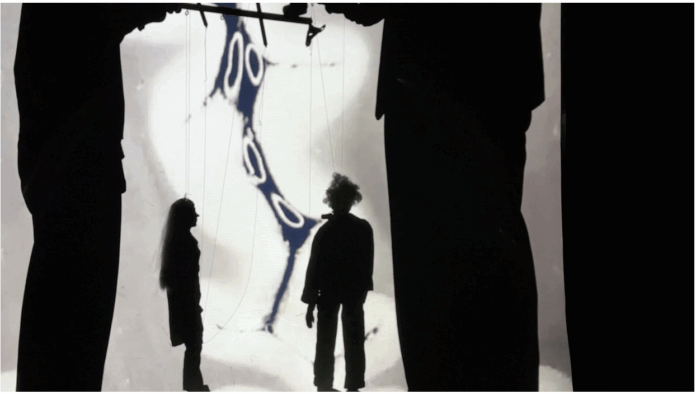
At the center of the exhibition is a two-screen video installation that re-enacts a recorded radio conversation between a Ukrainian writer and a German interviewer captured during the early stages of the full-scale invasion of Ukraine. Rather than dramatizing the exchange, the artists restage it using hand-crafted puppets, fragmented doubles that resemble the artists but also stand in for others caught in unequal or difficult dialogues. These figures perform to the original audio, inhabiting a space between self-portrait and symbolic surrogate. One screen plays the subtitled dialogue, while the other presents the filmed puppet performance in a sparse, studio-like setting. The result is a layered encounter between voice, image, and gesture that explores misalignment, fatigue, and the ethics of mediated discourse.
The puppets act as “proxies” – stand-ins for personal and political positions that may be difficult to inhabit directly. This idea extends into Clausen’s series of drawings, which are made using a range of materials including ink, pencil, and wash. These works draw from a variety of sources, archival photographs, personal and family images, and digital fragments circulating on social media since 2022. Some images are drawn directly from moments of visibility during the war, others are more ambiguous, imagined, or mediated. Rather than reproducing their sources, the drawings intervene through layering, omission, or distortion, creating visual proxies that register both presence and absence. They hover between fact and fiction, acting as sites of memory, dislocation, and reflective resistance.
Kerestey’s paintings contribute a spatial and emotional framework for the installation. Drawing on imagined memories of his hometown in Ukraine, the works blend recollection with the visual language of broadcast interiors. These painted environments are not literal depictions, but composite spaces that suggest both domestic familiarity and public stagecraft. Their flat perspectives and constructed viewpoints invite viewers into a psychological terrain shaped by displacement, performance, and political tension.
Proxies invites reflection on how we speak about war and crisis, and from where. It avoids definitive statements in favor of subtle, unsettling exchanges between bodies, voices, and representations. The installation suggests that witnessing is always partial, always shaped by position, translation, and form.
About the artists
About Szuper Gallery Susanne Clausen is a German-born artist, curator, and professor based in the UK. Her work spans performance, video, installation, and collaborative practice. She is Professor of Fine Art at the University of Reading and Director of Reading International, a curatorial platform for international contemporary art and research-led practice.
About Szuper Gallery Pavlo Kerestey is a Ukrainian-born painter and media artist whose work explores cultural memory, shifting identities, and everyday experiences of transition. A founding member of the Ukrainian New Wave, his practice includes expressive figurative painting, installation, and collaborative performance. His recent work draws on personal histories shaped by a Soviet-era upbringing and transnational experiences, reflecting on how images and memories evolve across time and place. Working with a layered visual language that blends loose figuration, atmospheric fields, and constructed spatial framing, his paintings suggest open-ended narratives that move between the personal and the collective.
About Szuper Gallery Szuper Gallery is the collaborative platform of Clausen and Kerestey, founded in Munich in the late 1990s. Originally conceived as a performative gallery, the project has evolved into a sustained, interdisciplinary practice grounded in critical engagement with social and political realities. Szuper Gallery’s work has been exhibited internationally, including at ICA, London; Whitechapel Art Gallery, London; Western Front, Vancouver; Kunsthalle, Helsinki; Shedhalle, Zürich; Ludwig Museum, Budapest; and the National Art Museum of Ukraine, Kyiv.
Institutional Support Proxies was developed with support from Milvus Artistic Research Center, Sweden, Assortymentna Kymnata, Ukraine, Voloshyn Gallery, Culture Moves Europe, Arts Council England, and the University of Reading.
About Voloshyn Gallery
In 2016, Max and Julia Voloshyn established Voloshyn Gallery in the heart of Kyiv, Ukraine. Situated in a historic 1913 building, Voloshyn Gallery’s space provides an unconventional setting for contemporary art. It exhibits a broad range of works in a variety of media, representing both emerging and established artists. Voloshyn Gallery hosts solo and group exhibitions, works with accomplished curators and museums, and takes part in leading contemporary art fairs.
In 2022, Voloshyn Gallery made the difficult decision to close temporarily due to the full-scale invasion of Ukraine. In 2023 the gallery reopened its doors in Kyiv, Ukraine and also expanded with a space in Miami, Florida.
Discover the galleries of Art Basel Miami Beach 2025
Discover the galleries of Art Basel Miami Beach 2025
The fair will spotlight Latinx, Indigenous, and diasporic artists alongside global contemporary voices
By Art Basel Editorial
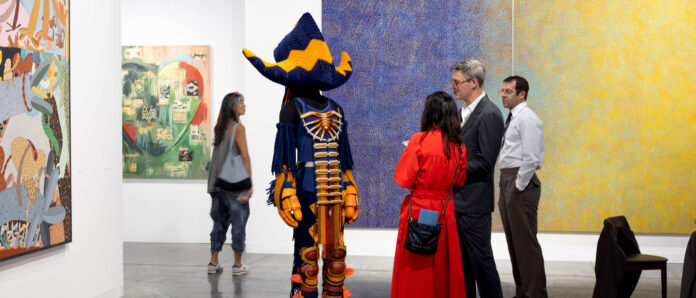
Art Basel Miami Beach returns this December with its most ambitious edition yet, welcoming 287 premier galleries from 44 countries and territories to the Miami Beach Convention Center from December 5–7, 2025. Discover the full list of exhibitors here.
The 2025 edition strengthens the fair’s position as the leading international art showcase in the Americas, with more than two–thirds of galleries operating spaces across North and South America. This year’s lineup spans from blue–chip powerhouses like Gagosian and David Zwirner to emerging voices making their fair debuts.
New voices from the Americas
A standout feature of this year’s fair is its expanded representation of Latin American and Caribbean galleries. For the first time, El Apartamento – the first homegrown Cuban gallery to join the fair, with exhibition spaces in both Havana and Madrid – will showcase works exploring Afro–Cuban identity.
The regional diversity extends from Mexico City’s Lodos and Proyecto Nasal to São Paulo’s Galeria Mapa, Buenos Aires’ Pasto Galería, and Lima’s Crisis gallery. These newcomers join established regional stalwarts like OMR (Mexico City) and Raquel Arnaud (São Paulo).
‘This edition reflects the vitality of artistic production across the Americas,’ says Bridget Finn, Director of Art Basel Miami Beach. ‘The fair serves as a critical gateway for introducing pioneering international artists and perspectives to the American market.’
The United States sees robust representation with nearly 50 exhibitors operating spaces in California, including San Francisco newcomers Rebecca Camacho Presents and Catharine Clark Gallery alongside Los Angeles stalwarts like Regen Projects and David Kordansky Gallery.
New York’s art scene expands its Miami Beach presence with first–time participants including David Peter Francis, Candice Madey, and Kate Werble Gallery. The fair also reaches beyond coastal hubs, welcoming Dallas’ Erin Cluley Gallery and the return of Philadelphia’s Locks Gallery after nearly two decades.
International participation remains strong with nearly 100 returning exhibitors from Europe, Asia, and Africa. Notable debuts include Ukraine’s first–ever representation through Voloshyn Gallery (Kyiv, Miami Beach), while established international programs from galleries like Galleria Continua and mor charpentier continue their cross–continental focus on American artistic production.
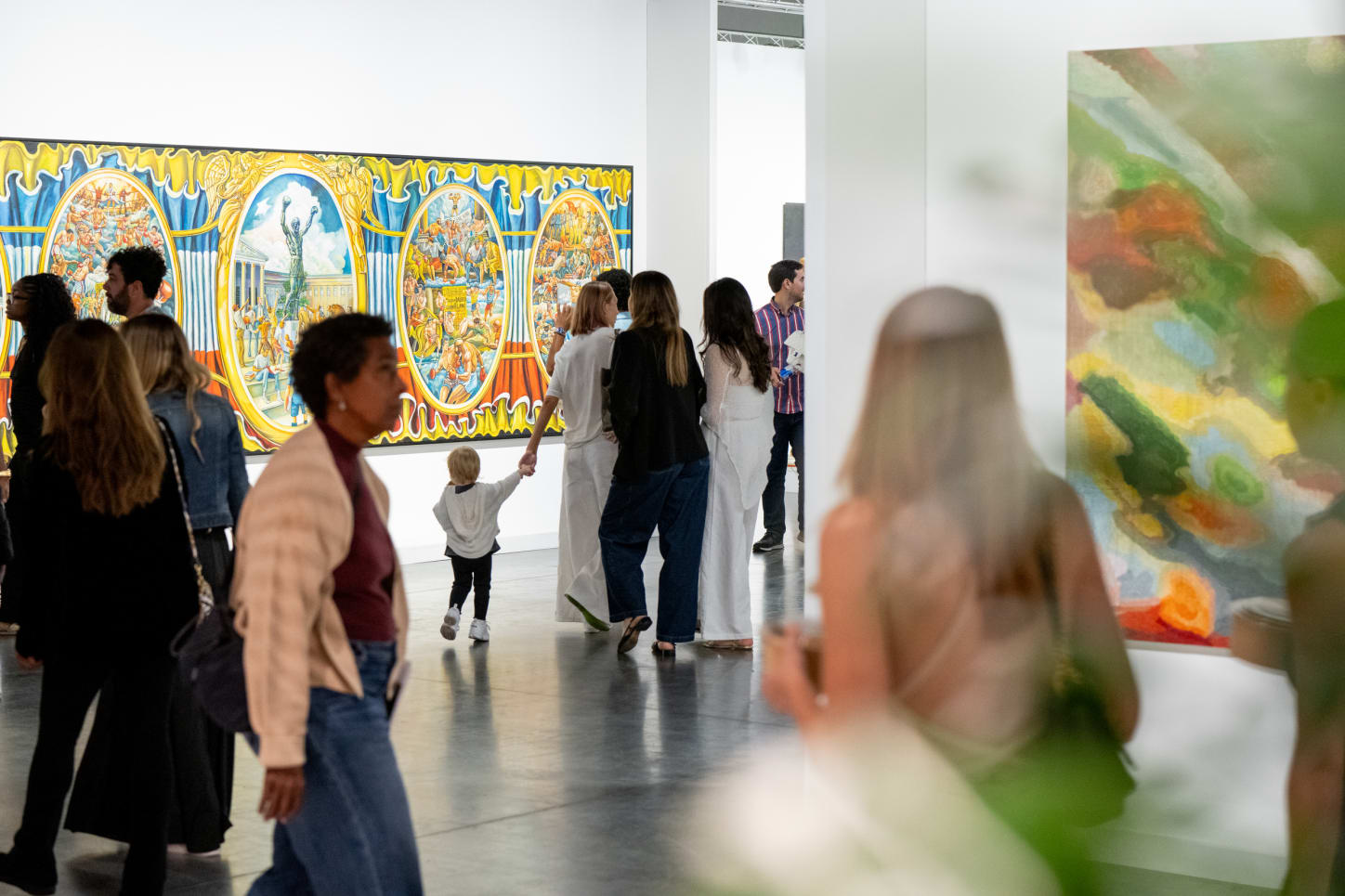
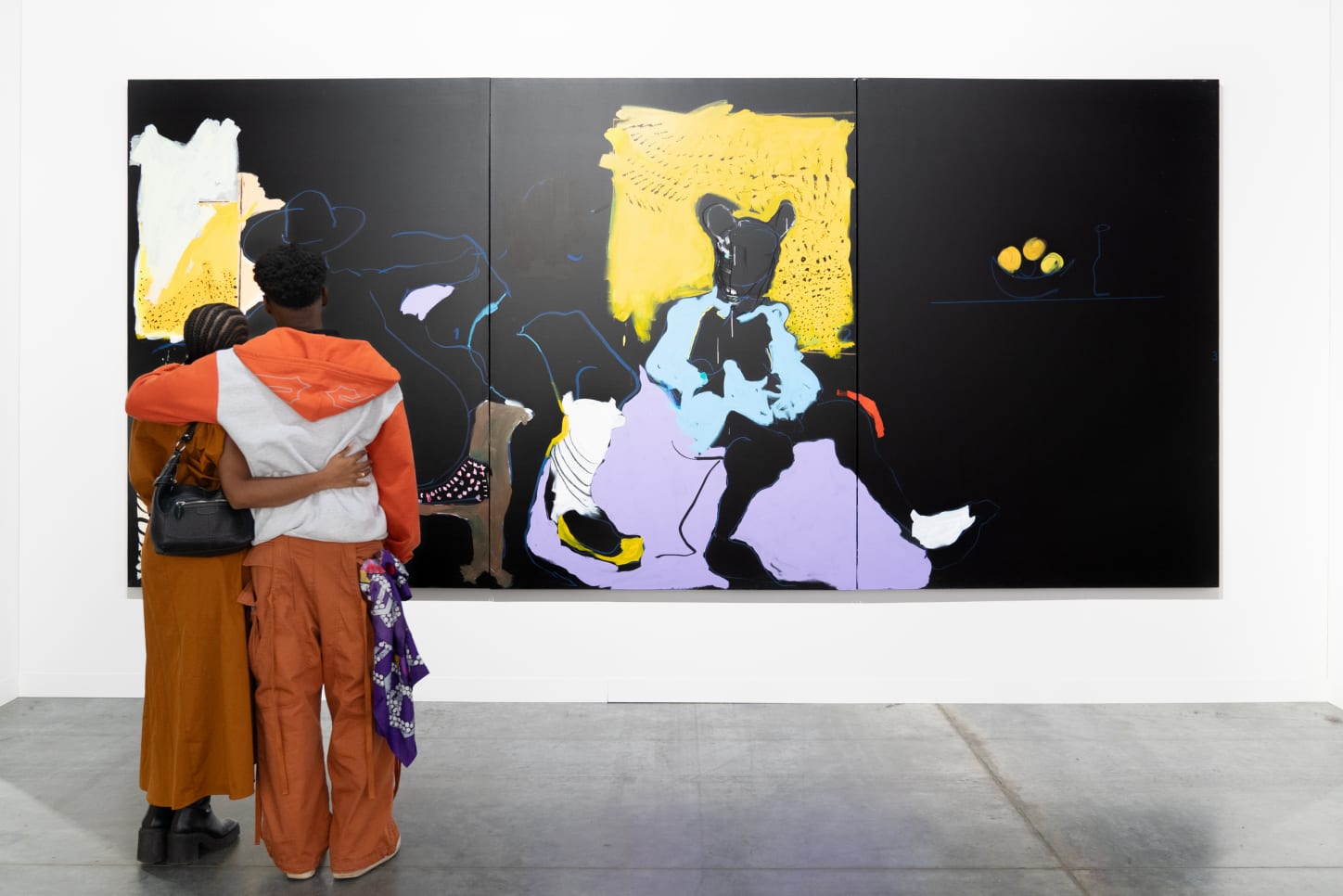
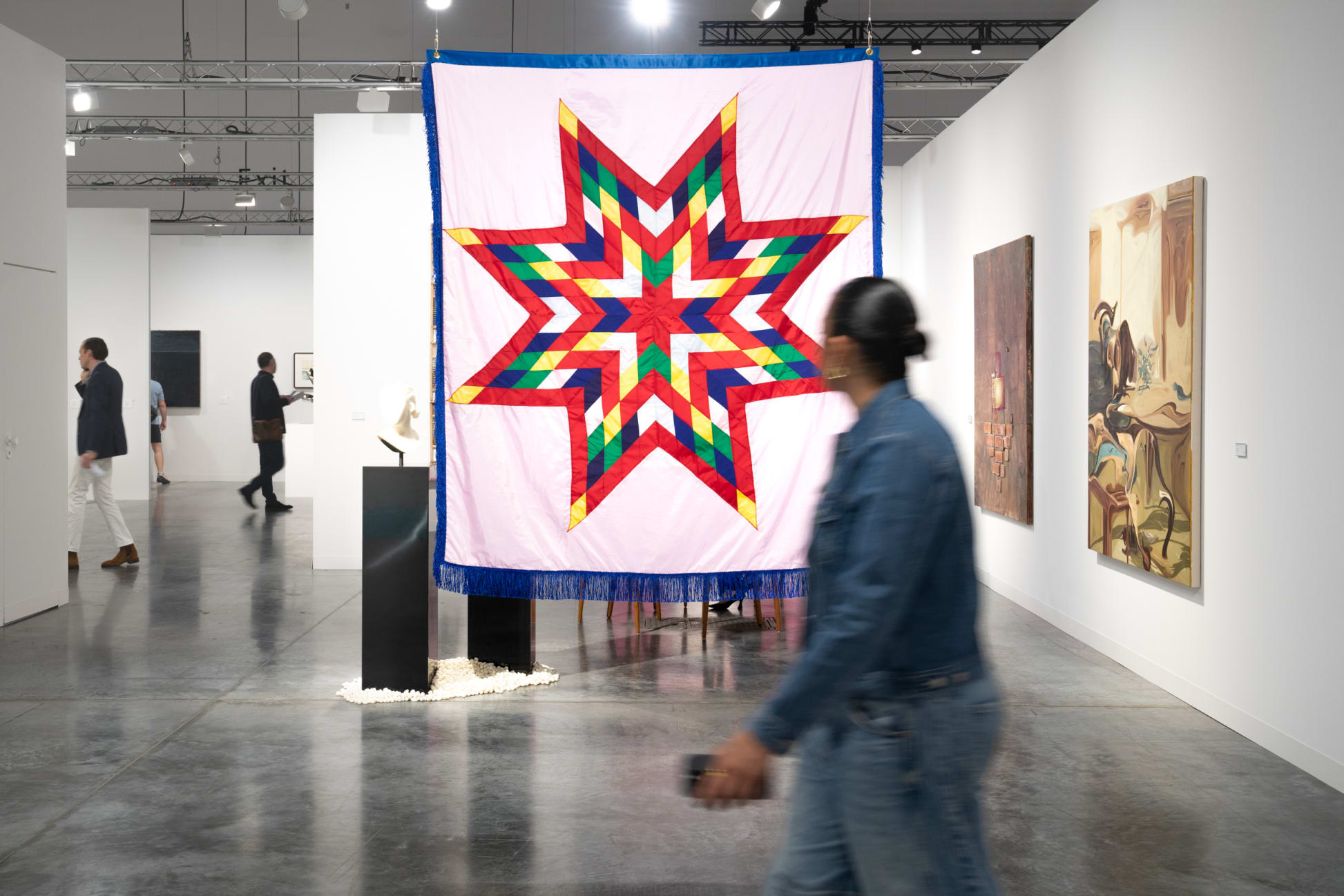
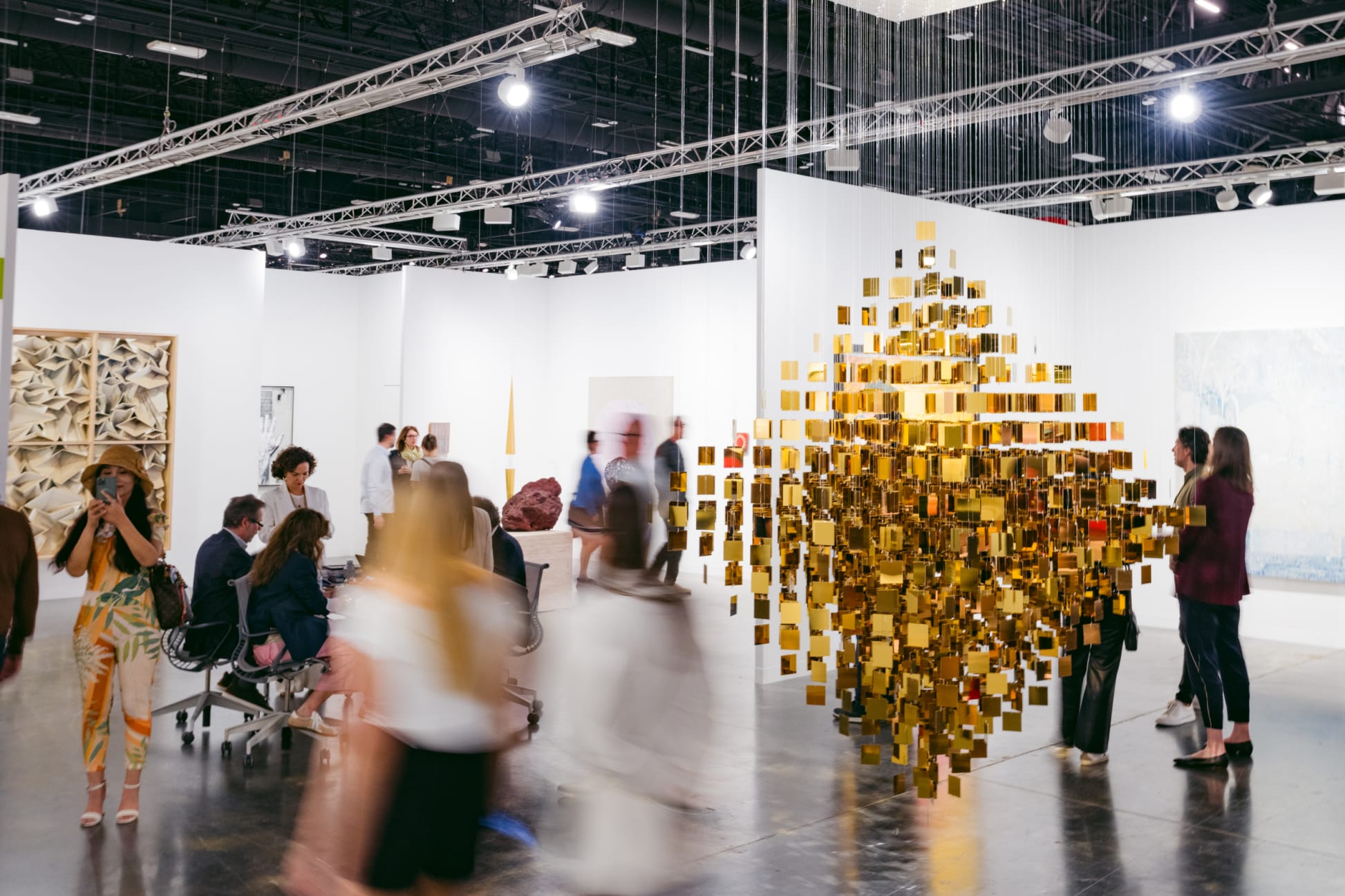
Art Basel Miami Beach 2024.Art Basel Miami Beach 2024.
The fair organizes presentations across the following main sectors:
Galleries: The main sector featuring established dealers presenting Modern masters through emerging practitioners, with newcomers like Hong Kong’s Alisan Fine Arts highlighting underrecognized Chinese–American artists.
Nova: Spotlighting works created within the last three years, including Berlin’s Heidi presenting American–Jamaican artist Akeem Smith’s scratch–off paintings drawn from Caribbean Dancehall archives.
Positions: Solo presentations by emerging artists, featuring newcomers like London’s Nicoletti with French artist Josèfa Ntjam’s photomontage triptych exploring colonial legacies.
Survey: Historical works made between 1900 and 1999, including David Peter Francis presenting Pat Oleszko’s 1995 inflatable installation ahead of her SculptureCenter retrospective.
Art Basel Awards – gold medalists announced
The 2025 edition of Art Basel Miami Beach will also coincide with Art Basel revealing the Gold Medalists of the inaugural Art Basel Awards, chosen from a distinguished group including artists Cecilia Vicuña, Nairy Baghramian, and Meriem Bennani.
Art beyond the fair
Beyond the convention center, the fair anchors a week–long cultural celebration featuring exhibitions at premier institutions including The Bass Museum, Pérez Art Museum Miami (PAMM), and ICA Miami. Public programming includes curator–led talks and the return of Art Basel’s renowned Conversations series.
Planning your visit
When: December 5–7, 2025 (Public days: 11am–6pm daily) Where: Miami Beach Convention Center, 1901 Convention Center Drive VIP Previews: December 3–4 (by invitation) Tickets: Available here.
In Part 1 of ‘Collecting Today’, a two-part series exploring the work of UBS Art Advisory, Brian Boucher speaks to advisors about the evolution of its clients’ taste and focus
It’s no secret that the art market is in a prolonged period of uncertainty. In the 2025 Art Basel & UBS Global Art Market Report, Art Basel CEO Noah Horowitz noted ‘continued headwinds,’ with sales declining by 12% in the second year of a downturn. And yet, there also continues to be strong buying activity: The latest Art Basel fair in Switzerland saw robust demand across all price points. How can we take the temperature of the art market given these conflicting signals? What are collectors looking for at this moment of global unrest, marked by conflict and unstable markets?
‘I tend to discount talk about geopolitical uncertainty as it relates to the art market,’ says Matthew Newton, Senior Art Advisory Specialist in Family Office Solutions at UBS. ‘But in this particular case, I think it is starting to impact the art market. There is truly so much uncertainty and volatility around economic policy that it starts to impact your decisions,’ even when, as he puts it, ‘the wealthy are as wealthy as they’ve ever been.’
Even if US tariffs might not directly impact art, comments Eric Landolt, Head Family Advisory, Art & Collecting at UBS, ‘they play into buying decisions in their impact on the broader market.’ In Newton’s view, we may be seeing a ‘bottoming’ of the market. The speculative fervor of the peak market of 2022 is certainly behind us, he says, ‘but I also don’t feel like things are getting worse.’
Those looking to UBS for guidance on collecting, points out Carola Wiese, Senior Art Advisory Specialist at UBS, ‘will collect in any market circumstance.’ A new generation of buyers from Asia are particularly ‘bullish,’ she observes – ‘and they have a plan and a strategy.’ Collectors at Art Basel Hong Kong in March and Art Basel in Switzerland in June, explains Landolt, ‘were looking for the highest quality of pieces, and they will consider buying even if the environment is a bit more difficult.’
Lisson Gallery’s booth at Art Basel Hong Kong 2025.Galerie frank elbaz’s booth at Art Basel in Basel 2025.
Did art prices simply rise too high?
This complex environment has led to much discussion about art pricing, with some market observers suggesting that in a time of lessening demand, art prices might have to actually fall – a tricky proposition when price closely correlates to artistic value. ‘We work with collectors across the range of experience levels, and there are a lot of questions about the logic behind the pricing of art,’ says Newton. ‘I try to have conversations with our clients that revolve more around value than price.’
Prices can be confusing, even to the experts. In this context, Newton cites After Embah, a 2018 painting by South African-born, London-based mid-career artist Lisa Brice, which fetched £5.4 million (USD $6.8 million) at Sotheby’s, London, in March, setting an artist record. At the same time, pictures by major art historical figures like French Impressionist Pierre-Auguste Renoir might go for a fraction of that. His canvas La leçon d’écriture (c. 1905) sold for €2.4 million (USD $2.6 million) at Christie’s, Paris, in April.
But prices aren’t simply arbitrary, Wiese points out. ‘Costs to run gallery operations and for logistics and shipping, for example, have gone up considerably,’ she explains, ‘and the effect of this is not to be underestimated.’ These costs play an ‘important’ role for galleries, she says, especially smaller ones that may need to raise prices to account for them – to the extent that on occasion she has to ‘console’ her clients over prices. Galleries have become creative, she adds, sometimes finding studio space for artists to create work in proximity to an upcoming gallery show or art fair so as to reduce shipping costs.
Carola Wiese, Senior Art Advisory Specialist at UBS.Eric Landolt, Global Head Family Advisory, Art & Collecting at UBS.Matthew Newton, Senior Art Advisory Specialist in Family Office Solutions at UBS.
To impose some rationality on prices, Landolt points out, the collectors UBS works with do a great deal of research – consulting auction price databases where available, as well as comparing notes with their advisors and even their friends. ‘They’re not willing to just take any price,’ he says.
Newton shares that contemporary art prices are perceived to have risen too high, too fast, and that has sent some collectors looking to historical sectors where prices may be more rational.‘Collectors are realizing that there is a lot of historical material to be rediscovered,’ says Wiese, including artists from recent decades as well as further back. ‘I’m seeing a shift in curatorial themes, namely more and more exhibitions that show older and rediscovered artists alongside contemporary ones.’ As an example, she cites the ‘beautiful’ exhibition, ‘Medardo Rosso – Inventing Modern Sculpture,’ on view at Kunstmuseum Basel through August 10, 2025, which shows the Italian sculptor (1858–1928) alongside contemporary figures ranging from Lynda Benglis to David Hammons.
Both newer and more experienced collectors find affordable works shopping by medium. Prints and multiples as well as editioned photographs, the UBS experts explain, provide top-quality work at appealing price points.
A visitor in front of a work by David Hammons, presented at Art Basel in Basel 2025 by Thomas Dane Gallery.A visitor in front of a work by Raqs Media Collective, presented at Art Basel Hong Kong 2025 by Hanart TZ.A visitor in front of an editioned work by Katharina Sievering, presented at Art in Basel 2025 by Knust Kunz.
Buying with purpose
Collectors are also looking to artworks that engage with the issues of our time. Art always reflects its historical moment, Landolt points out. They not only want to correct historical imbalances in the market weighing against female artists and artists of color in a moment of increasing calls for social justice, the UBS advisors agree; they also are drawn to art that addresses urgent issues head-on. ‘Women want to tell a different story’ with their collections, focusing on sometimes neglected female artists, notes Newton.
Similarly, Wiese relates that one person she spoke to during Art Basel Hong Kong is buying works with a mind to supporting educational causes, specifically by lending to schools. ‘There are other collectors too, who focus on artworks that they immediately send on loan to a good cause, like a hospital,’ she adds. ‘Mental health is a big topic. This cannot be underlined enough.’
Wiese further observes a taste for artworks addressing under-represented issues like motherhood. Collectors also look very positively on art tackling topics like the environment and climate, Landolt says. ‘It speaks to them.’
Wiese visibly lights up when discussing the notion of collecting with purpose, saying, ‘If you can combine collecting with a noble cause and supporting under-recognized artists – how cool is that?’
Petzel’s booth at Art Basel in Basel 2025.
UBS Art Advisory offers insight into the complexities of art collecting and stewardship. Find out more about UBS and Art.
Brian Boucher is a writer and art market commentator based in New York City.
Caption for top image: a visitor in front of a work by Jacqueline Humphries, presented at Art Basel in Basel 2025 by Modern Art.
How artist-collector relationships are evolving in the 21st century
How artist-collector relationships are evolving in the 21st century
From shared visions and deep friendships to collaborations and new models of patronage, artists and collectors are redefining what it means to connect through art
By Kimberly Bradley
The bond between artist and patron is long studied, sometimes fraught, and often fascinating. For centuries, rulers, royals, and wealthy patrons housed, fed, and funded the artists who in return rendered their faces and conquests for posterity. Later, even as 20th-century avant-gardes attempted to assert artistic autonomy, artists remained tied to their buyers via an ‘umbilical cord of gold’ – or so claimed critic Clement Greenberg in 1939.
Now, as the first quarter of the 21st century wraps up, what kinds of relationships do artists have – or want – with art collectors? What does patronage look like today? How often do artists truly befriend collectors? How do relationships between artists and collectors shift as the artist’s career progresses? And what possibilities and potentials might future artist/patron relationships hold?
Art can ignite a unique bond between people. ‘A space opens up when someone engages deeply with your work, and the possibility of a sustained relationship emerges,’ says New York-based painter Adam Pendleton. ‘[This engagement] reveals a deeper understanding of who you are [as an artist] and how you understand the world.’ This can and does lead, in many cases, to lifelong connections based on ideas, worldviews, and surprisingly mutual support.
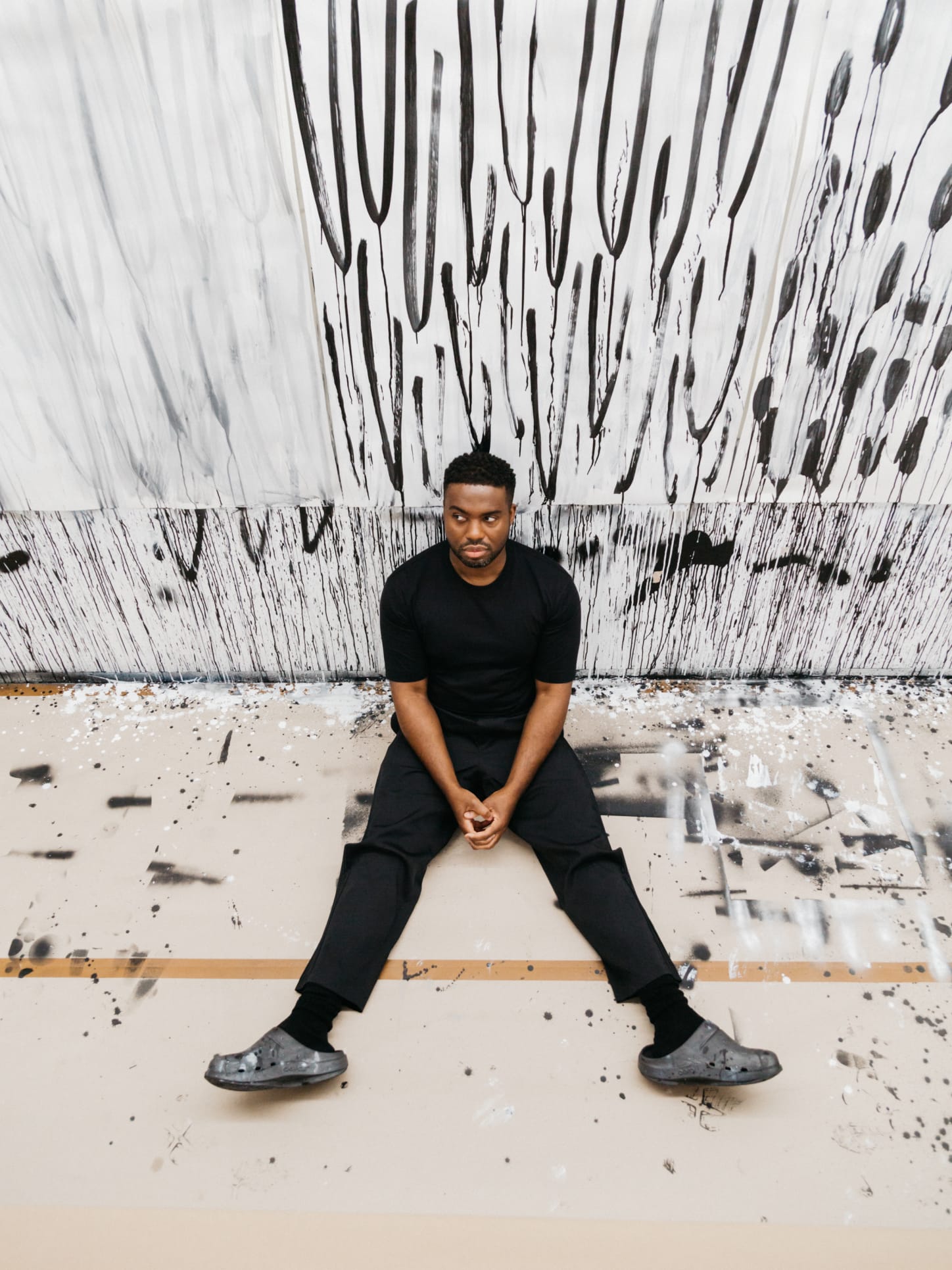
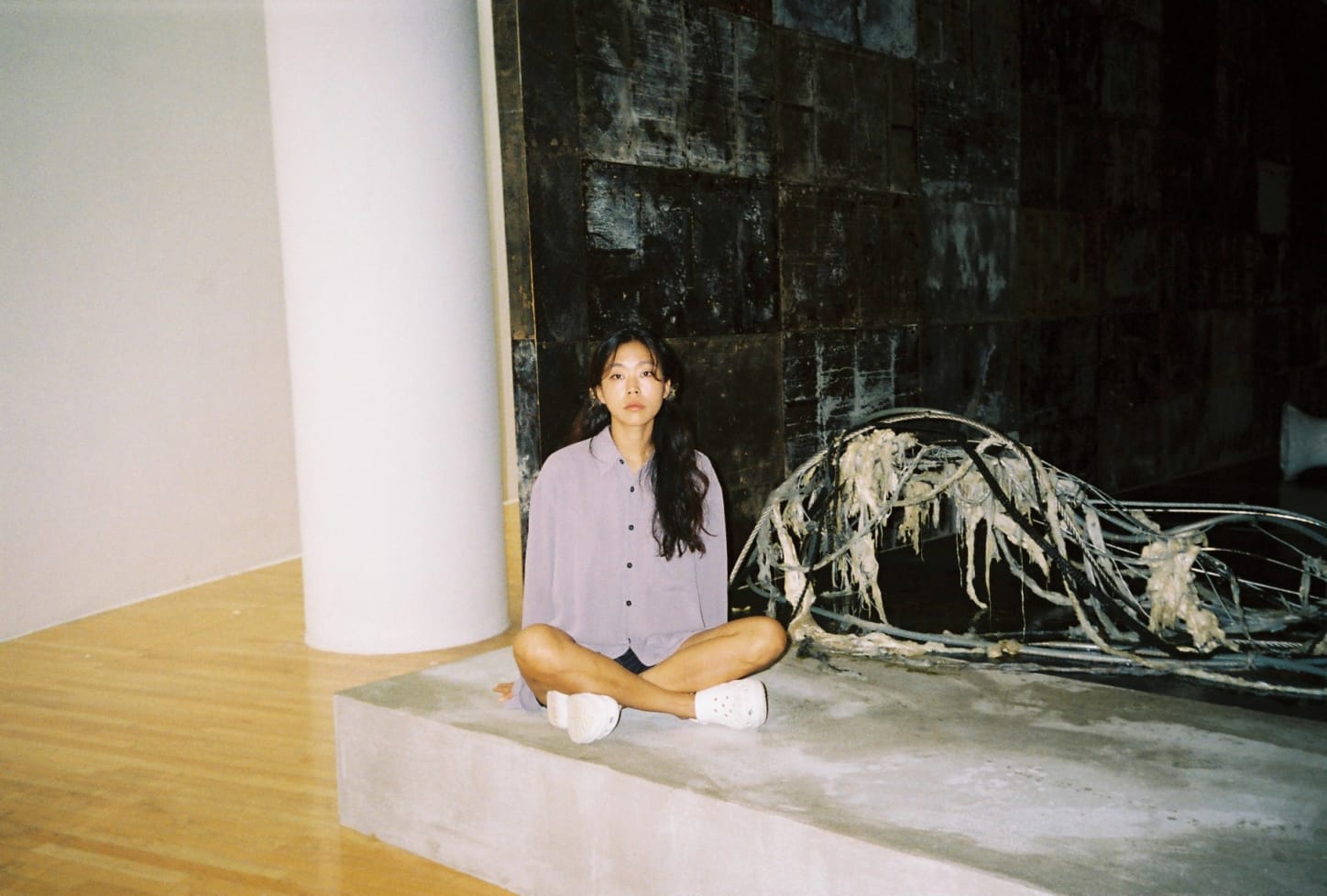
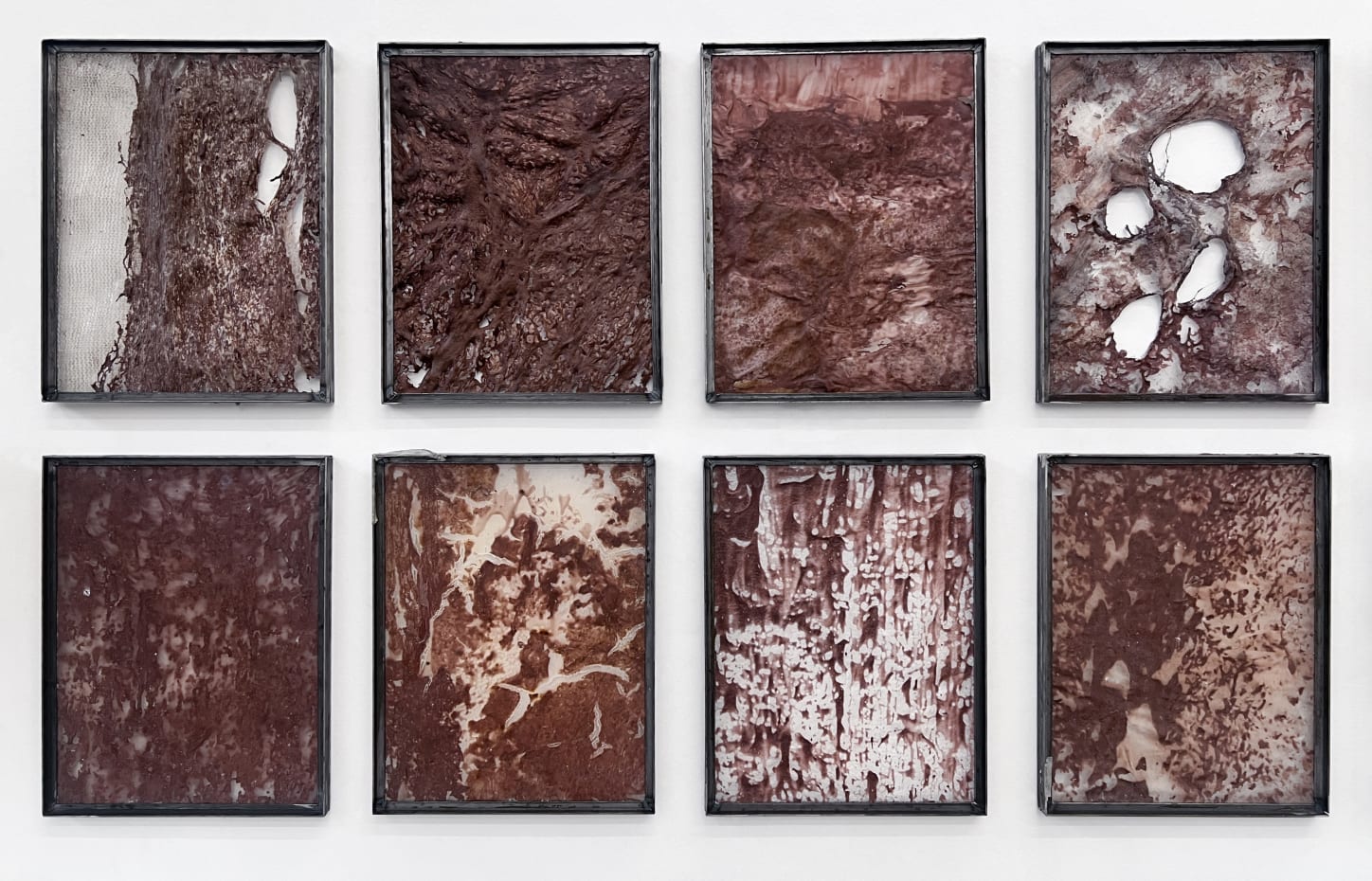
Mire Lee, a Korea-born artist living in Berlin, initially found the idea of people buying her work somewhat ‘alien’ to her practice: Her large-scale kinetic sculptures, like those recently on view in ‘Mire Lee: Open Wound’ at the Tate Modern’s Turbine Hall, are often monumental and ‘messy’ (her word), although she also makes smaller, more collectible pieces. She met New York-based collector Miyoung Lee through Tina Kim, one of her gallerists (the others are Sprüth Magers and Antenna Space), after the former bought a challenging work. ‘Tina called me and told me Miyoung and I should meet,’ explains Mire Lee, so they did. The first encounter involved a Korean meal and shaved ice in New York’s Koreatown, and now the collector feels like a close relative (‘I knew right away that Mire was someone special,’ says Miyoung Lee).
Lee doesn’t know all her collectors, ‘but I sometimes want to know who they are,’ she says. Speaking on the phone from Los Angeles, where she’s installing a show in Sprüth Magers’s California outpost, she tells the story of the late Jean Châtelus, who bought one of the first works Lee sold, Ophelia (2018) in 2019. ‘I was a no-name artist at the time,’ she says. ‘He recently passed away, and he gave his collection to Centre Pompidou.’ Lee never met him, but when she saw her work amongst his other holdings, ‘it was a strange sadness, because I saw how my work fit into his collection. I didn’t realize what it meant to be part of a collection. In retrospect, I see what it means to be seen by someone.’
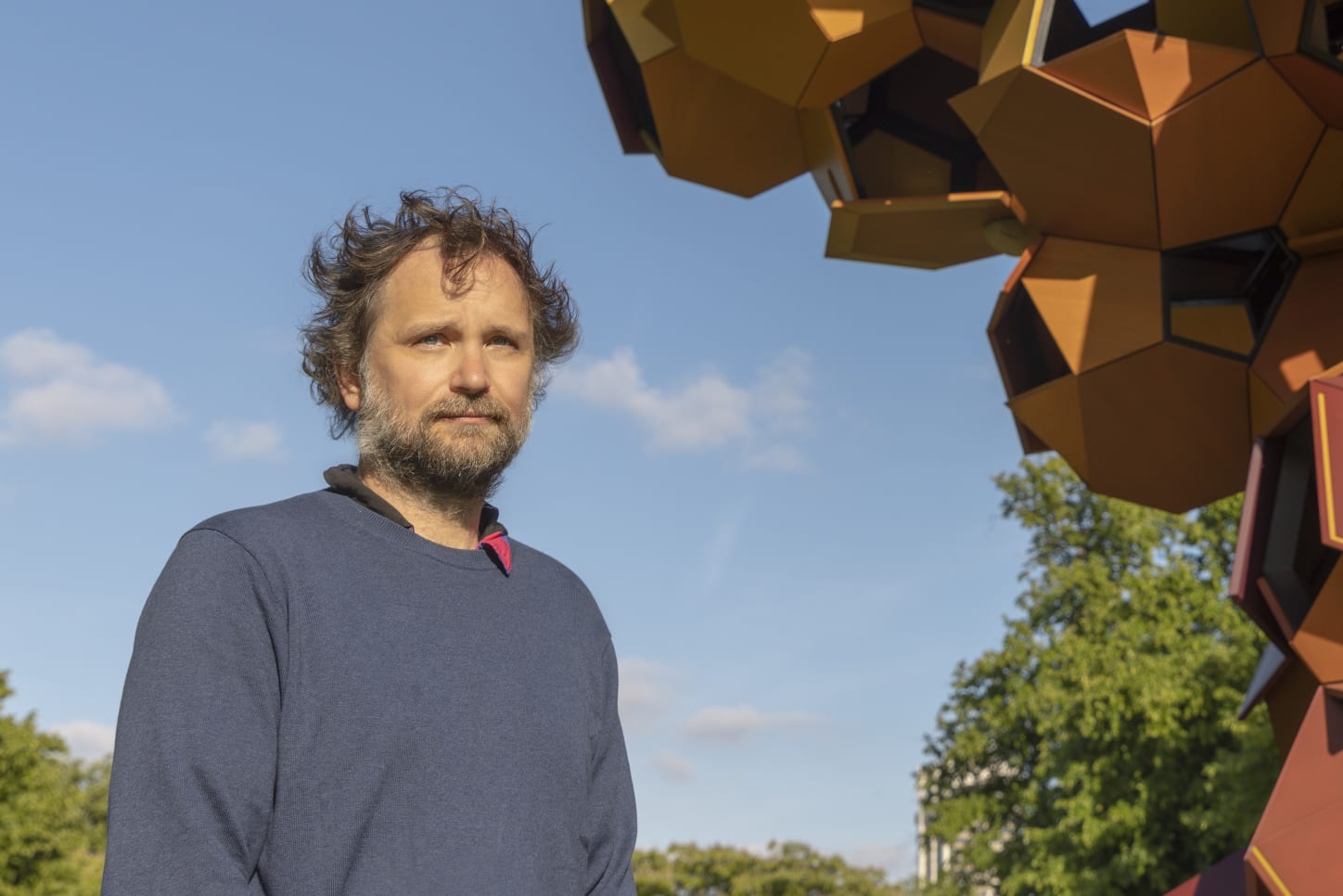
Artist Tomás Saraceno chuckles as he remembers his first buyer in the early 2000s: fellow artist Thomas Bayrle, at the time his professor at the Städelschule art school in Frankfurt. The Berlin-based Argentine artist has since established a vast, visionary multimedia practice. Sitting at his workspace on the top floor of an East Berlin factory building, he thinks about the many collector relationships he has enjoyed, but can ‘count the ones close to me on my fingers,’ he says, holding his hands up.
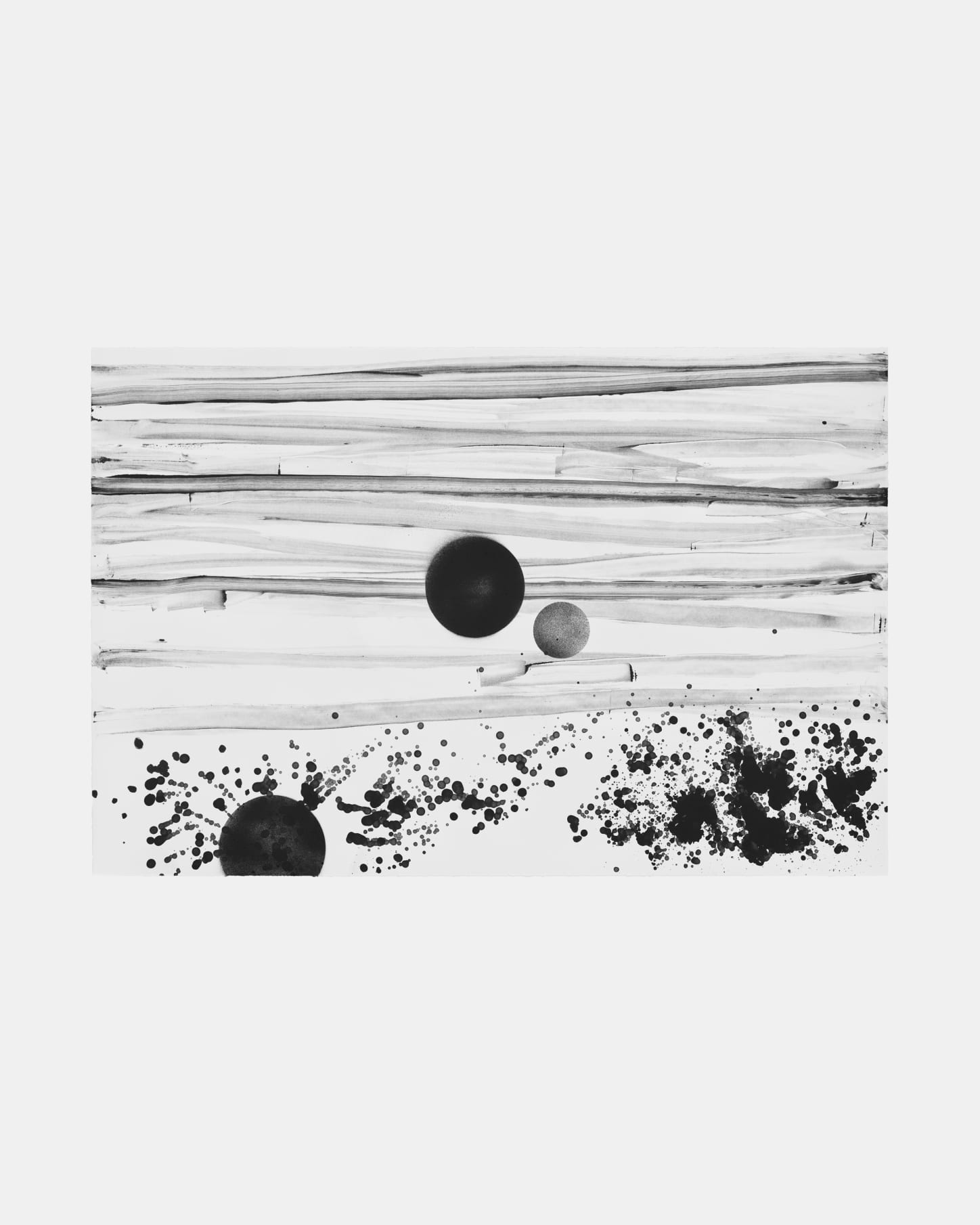
His research-based practices produce collectible works ranging from large installations and sculptures to drawings, editions, photographs, two-dimensional works made of spider webs, and even whimsical one-offs like a deck of spider-based oracle cards. Beyond these, however, are also collaborations with institutions like the Massachusetts Institute of Technology, architectural structures, experiments with spiders and their webs, and sweeping institutional shows. He also founded and runs the nonprofit Aerocene Foundation and has launched multiple philanthropic activities, some of which have received financial support from invested individuals.
Which brings us to patronage. Ongoing support to an artist often involves a collector commissioning works for domestic spaces, as it always has: ‘I’m working on a sculptural commission for a dear friend and important collector – a friendship that also took about 10 years to evolve,’ says Pendleton. But patronage today is just as often about contributing to the production costs of ambitious institutional projects – and frequently the only way for a major museum exhibition to come together. Saraceno’s 2018 Palais de Tokyo show ‘On Air’, which filled the Paris institution, involved the support of ‘about 20 collectors,’ he says, ‘and in return they received a work from the show, or a special piece.’
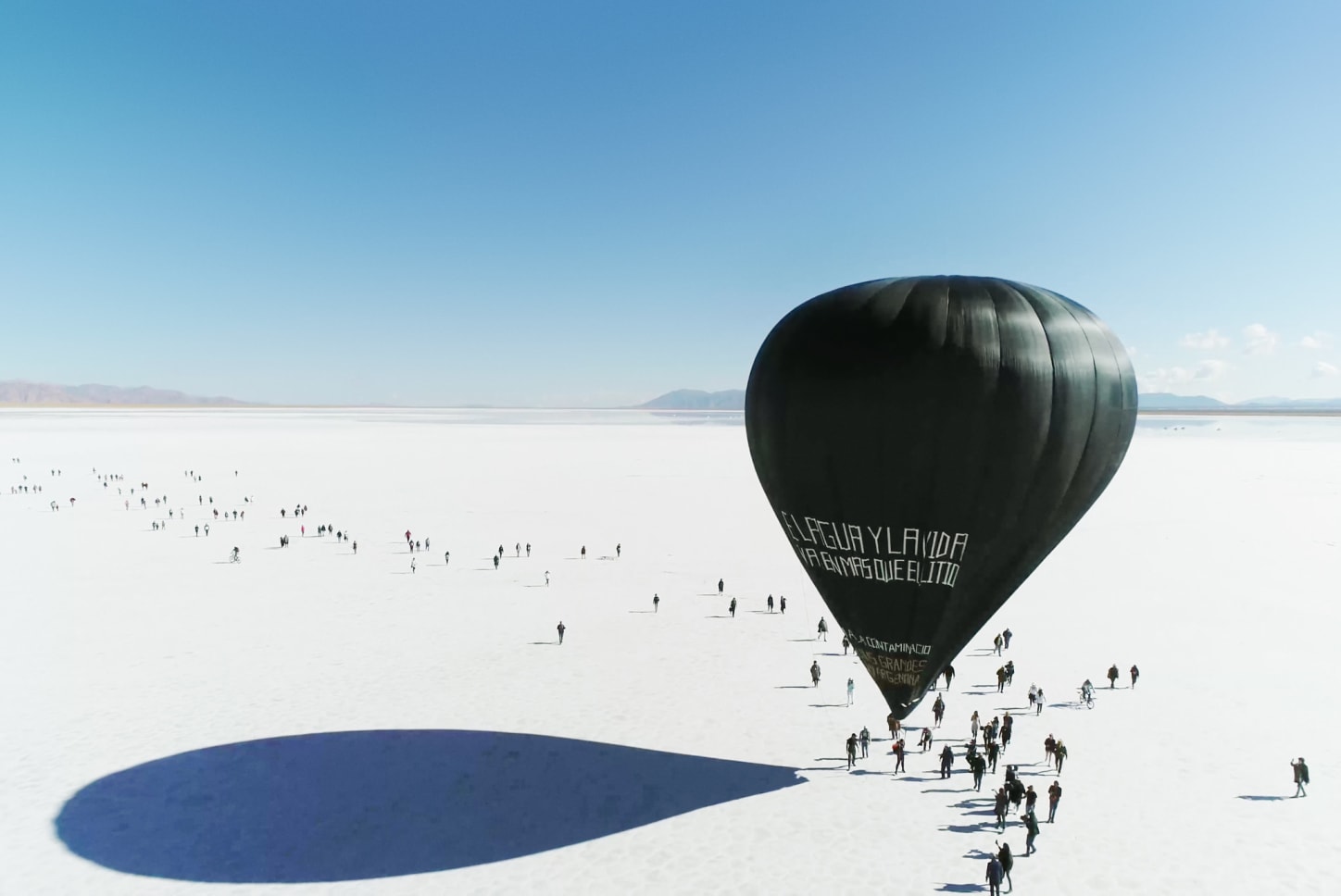
Tomás Saraceno. Photo: Dario Lagana.Members of the Indigenous Communities of Salinas Grandes and Laguna de Guayatayoc defend their land against lithium extraction during the Fly with Aerocene Pacha project in January, 2020. Photo: Studio Tomás Saraceno.
Francesca Thyssen-Bornemisza, the well-known collector who runs Ocean Space in Venice, was an early patron of Saraceno’s work. The two are now good friends, even attending each other’s family events and exploring intersecting interests (the Aerocene Foundation is about decoupling flight from fossil fuels and supporting Indigenous rights, among other things; Thyssen-Bornemisza’s TBA21 has made researching and preserving the earth’s waters a passionate mission). As an artist’s career progresses, collecting can become patronage, or even morph into collaboration.
Patrons also supported Mire Lee’s Turbine Hall show. ‘A lot of my projects have been funded by individual collectors, through my galleries,’ she says. ‘I didn’t know this model before showing in the United States. My Tate project had many collectors coming together.’ Pendleton, in a recent story in The New York Times, noted that his collectors Michael Forman and Jennifer Rice helped support the restoration of Nina Simone’s childhood house in North Carolina with three other artists. ‘It can be life-changing and affirming when someone makes an idea you have possible,’ he says. ‘Some collectors understand that and want to make that shift. It also makes the artist more accountable.’
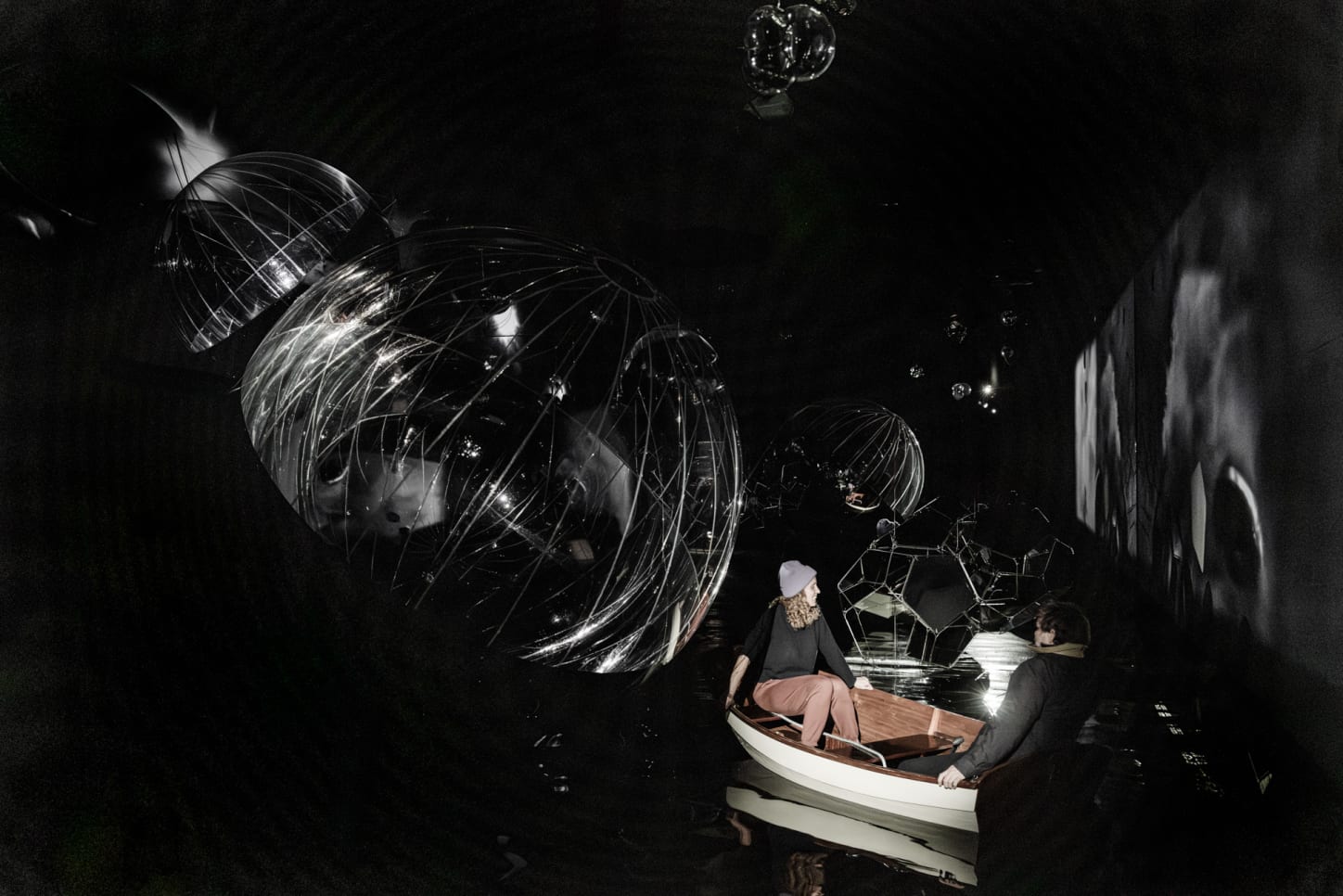
All three artists have encountered their own works in a collector’s home: ‘It’s as though the ideas embedded in the work have had an opportunity to settle and thrive in a more intimate space, without the demands of the institution or market,’ says Pendleton. ‘It just is. It’s relaxed and breathes; it’s present and embraced.’ Lee agrees that seeing her work’s final home is something special: ‘It reminds me that there’s something almost sensual having an artwork living so close to your body,’ she says. Saraceno recounts a story of collectors John and Ulla Ginsborg in Denmark, who saw his underground show at Cisternerne in Copenhagen in the early 2020s, bought all of the works within it, and then built a smaller version of the cistern to display some of the pieces in a similar environment. Involved in the development of the new structure, the artist was thrilled the first time he saw the mini-cistern in action.
It seems that a collaborative spirit is brewing in some artist-collector relationships. Sometimes the bond can focus on discourse and strategy: Pendleton meets with one of his collectors once a month, in a structured way, to discuss the state of the art world. But it can also be about social engagement or even thinking of new ways of owning art and distributing income: ‘[Younger collectors] are more able to respond to social and political issues and engage. And what about collective ownership?’ asks Saraceno, showing me a mockup of a project involving children’s drawings inspired by clouds. His idea is that any income made involving community-based art could be evenly split between artist, gallerist, and the community, and ‘ownership’ would be temporary or held in group stewardship. At the moment, the artist – with Aerocene and the Indigenous communities of the Salinas Grandes and Laguna de Guayatayoc in Argentina – is looking for support in mounting a new project, Sanctuary of Water, that will be co-produced by Haus der Kunst in 2026. The project will consist of giant half-spheres constructed on threatened Indigenous land. ‘With projects like this, it’s about having a leap of faith,’ says Saraceno.
Pendleton thinks back to his earliest experience with a buyer – someone with whom he can no longer cultivate a living relationship, but a special connection nonetheless. ‘My very first collector was Sol LeWitt,’ he says. The Conceptual artist saw Pendleton’s work in a group show mounted by the elder artist’s assistant. ‘I was a teenager,’ says Pendleton. ‘He said he wanted to buy it. The owner said, “Don’t buy it, trade with him.” So we traded works. It was incredible.’
Credits and captions
Kimberly Bradley is a writer, editor, and educator based in Berlin. She is a commissioning editor at Art Basel Stories.
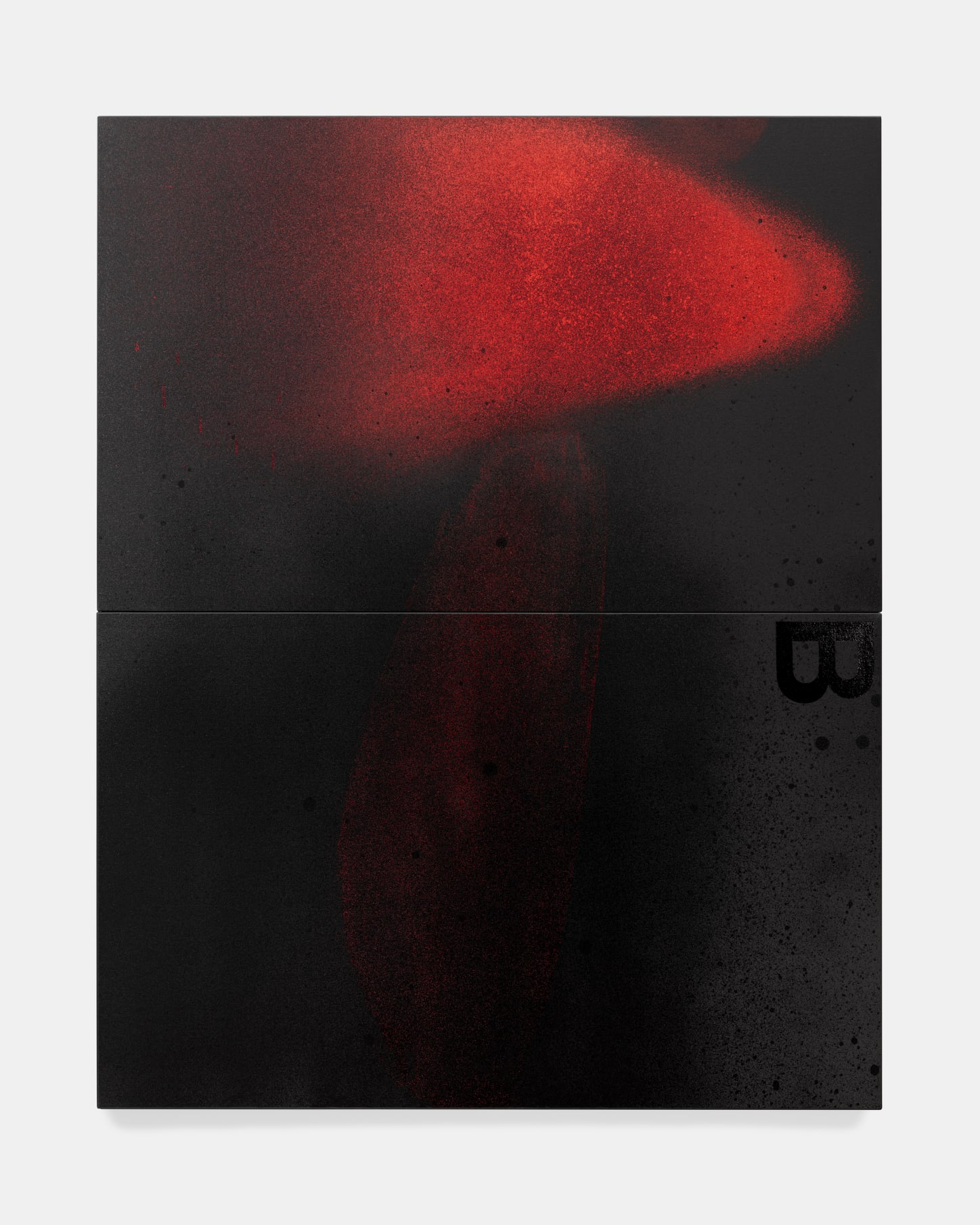
Adam Pendleton’s ‘spray light layer emerge’ is on view at Pace, Berlin, from September 11 to November 2, 2025
Mire Lee’s ‘Faces’ is on view at Sprüth Magers, Los Angeles, from September 10 – October 25, 2025
Caption for header image: Tomás Saraceno and Francesca Thyssen-Bornemisza at the opening of More-than-humans, Museo Nacional Thyssen-Bornemisza, Madrid, Spain, 2019. Photo: Cipriano Pastrano Delgado.
Will AI reshape the art market - or just automate its paperwork?
Will AI reshape the art market – or just automate its paperwork?
New AI robo-advisor start-ups, shippers save hundreds of workdays, but most dealers remain wary. Is technology transforming the art world, or stuck at the margins?
By Aimee Dawson
Almost everyone working in the art market uses AI on a daily basis – but since AI-powered tools became widespread in 2023, how much have they really been embraced by the art world?
There is evidence to suggest that some of the trade’s major players are dipping their toes in the water. On September 18, Christie’s Ventures, the auction house’s investment arm that focuses on art and tech start-ups, announced its investment in Artsignal, which describes itself as ‘the first agentic AI platform built for art and collectibles.’ It collates enormous amounts of open-access data and sources into reports that the Artsignal founder and chief executive, Sam Glatman, says hold ‘advisor grade’ insights into art trends and context for valuations. He hopes it will be used by collectors, galleries, and auction houses alike to ‘back up their assertions to their clients’ with ‘completely impartial data’ and to identify ‘where there are areas of value that can be created,’ such as through the discovery of artists.
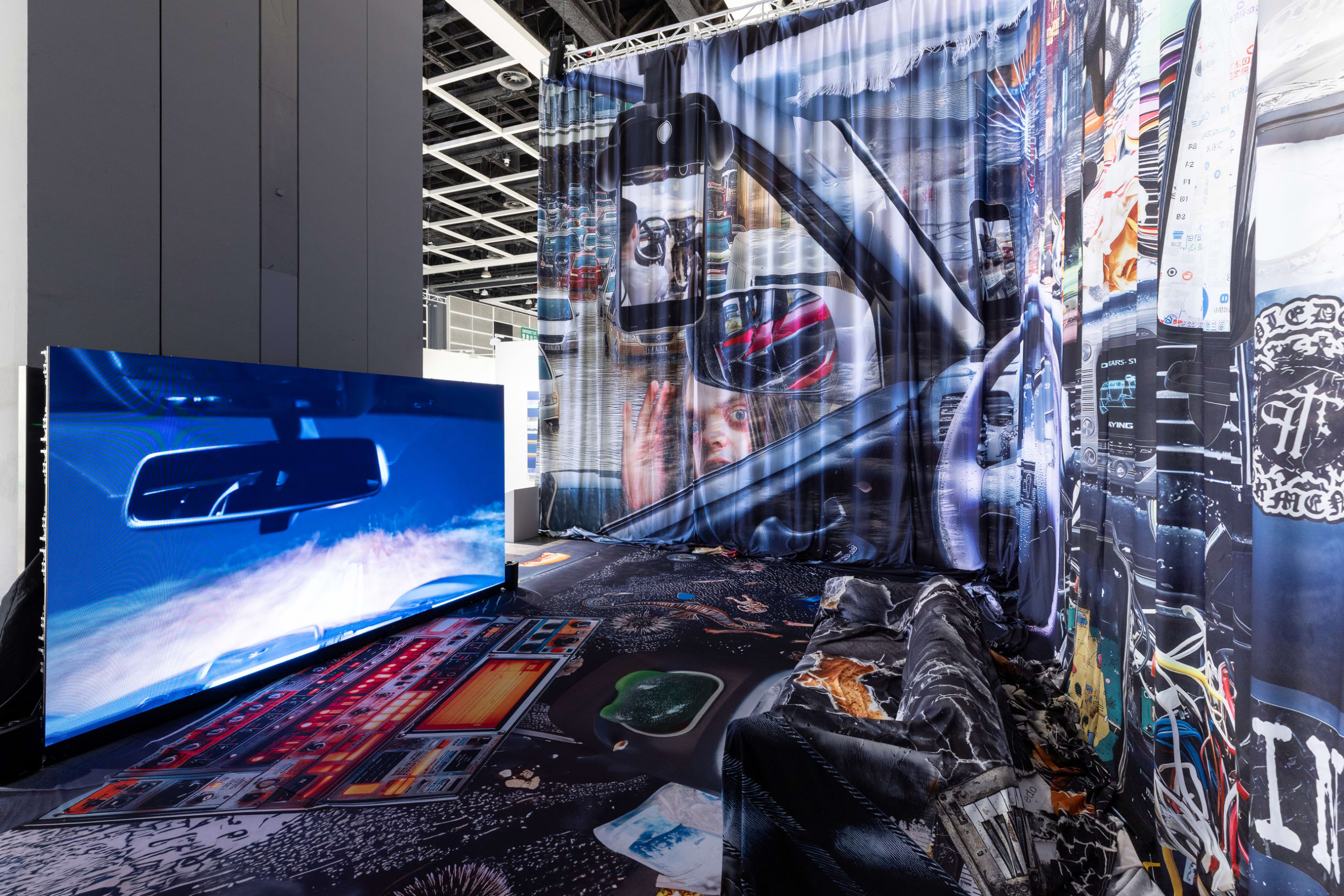
Jon Rafman, Signal Rot (Catastrophonic I-IV), presented by Neon Parc at Art Basel Hong Kong 2025.
The current use of AI in the market, however, is pretty low, says the writer Jo Lawson-Tancred, author of the book AI and the Art Market. ‘Most people in the mainstream of the art market don’t really have any interest in AI beyond using [the AI chatbot] ChatGPT. I think any other AI activity that is happening is very much on the fringes,’ she says. Lawson-Tancred points to the downturn in the market and the cost of implementing the new technology as potential reasons for the reluctance of many art businesses to invest in using AI models.
The art world has always been slow to adopt new technologies and fearful of the ways that the digital may damage a field so focused on unique creations and time-earned expertise. ‘People talk a lot about how AI is going to disrupt the way artists create and there is some genuine worry around intellectual property [IP],’ says Edouard Gouin, the Chief Executive Officer and co-founder of the data-led logistics and art shipping company Convelio. ‘But I think the main opportunity that AI can bring to the art market – to any industry – is in automating a lot of the boring work.’
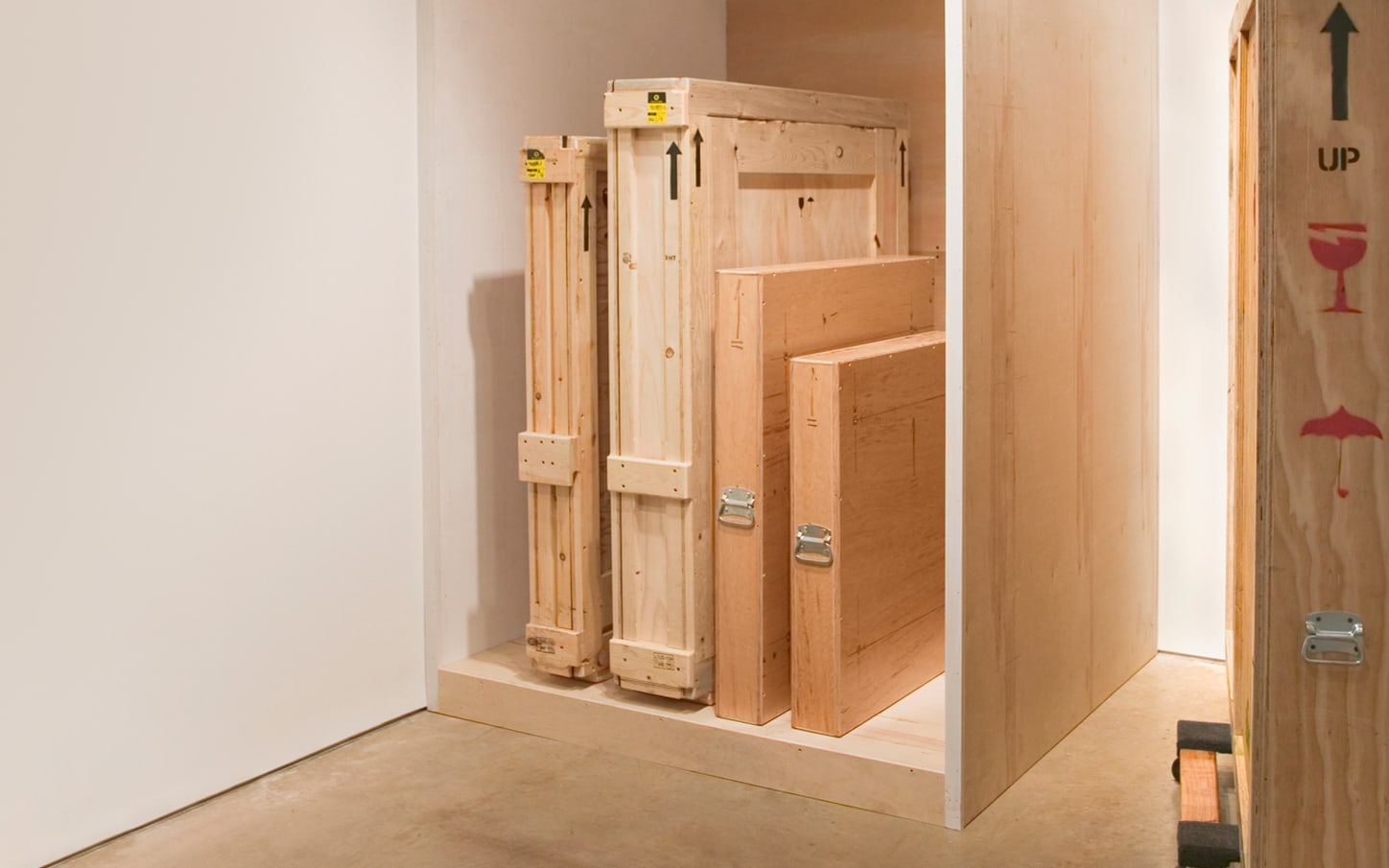
Gouin is referring to administrative tasks such as data entry, email follow-ups, lead generation and basic content creation, the streamlining of which could leave more time for face-to-face events and sales, generating larger turnover, he says. Over the past two years, Convelio’s in-house tech team has developed its AI programs, and its most successful application is through its AI agent, Gary. This has generated more than 12,000 shipping quotes over the past six months directly from client emails, with the estimated amount of time saved over a year 288 working days.
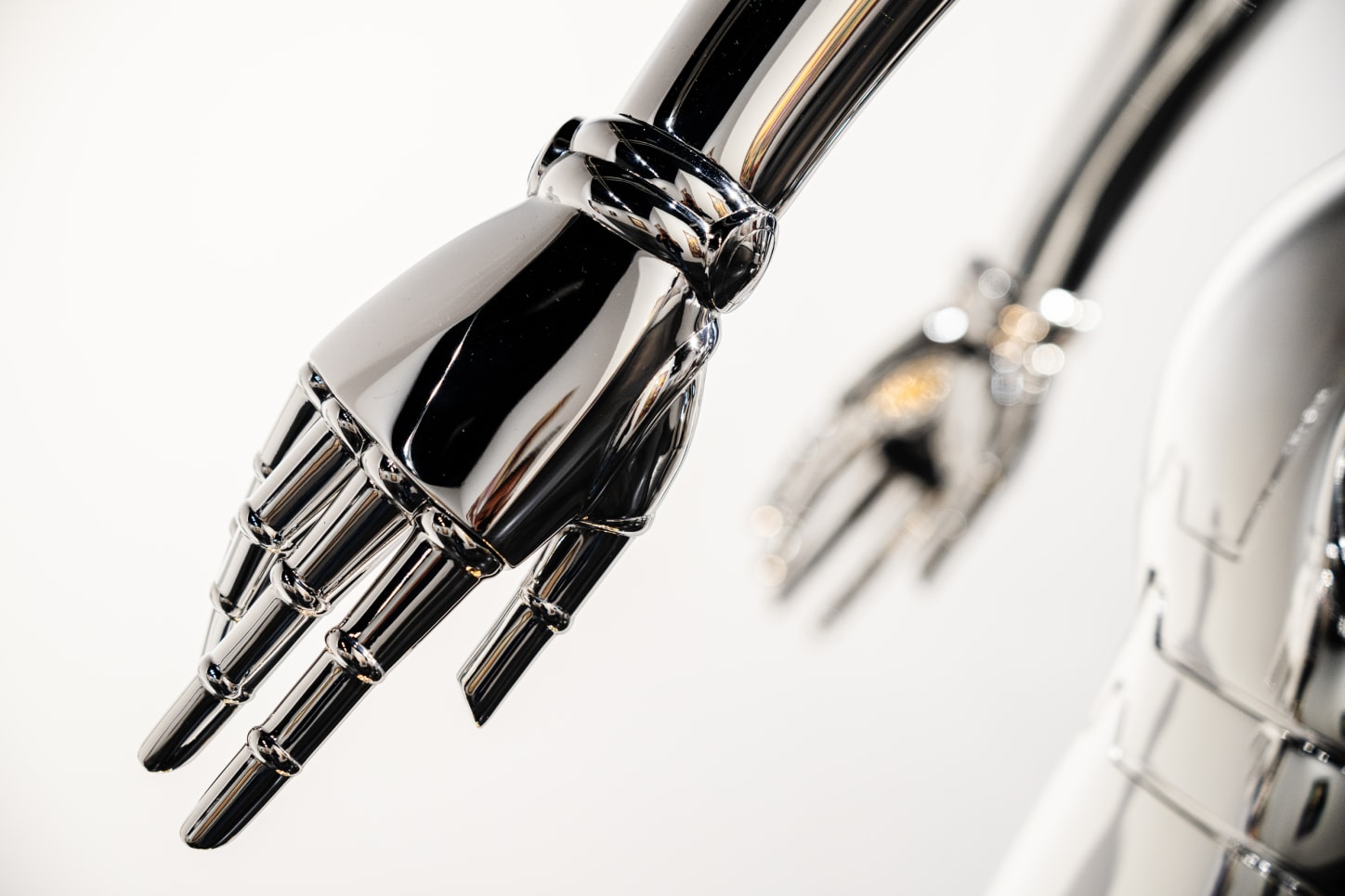
Wooden shipping crates. Photo: Art Basel.Detail of Untitled, 2024 by Hajime Sorayama, presented by Nanzuka at Art Basel Miami Beach 2024.
Other parts of the industry that are benefitting from AI streamlining are insurance, customer relationship management, and to some degree, sales. ‘Beyond number crunching, there are some attempts to use machine learning to assist with analysis and attribution making in relation to Old Masters, but a lack of shared standards means that none of these tools has emerged as being more authoritative than more traditional methods so far,’ says Jon Sharples, Senior Associate at the London-based law firm Howard Kennedy.
With all this ‘streamlining’ there are naturally questions about whether AI will cost some art market professionals their jobs. ‘We are so far away from that, and in this industry human content is so important. At the end of the day, we don’t sell just a service, we sell advice,’ Gouin says. ‘Our clients need to be able to speak to someone that will guide them through the process, and that will never change.’
Matt Mullican, Untitled (Computer Project), 1989, presented by Mai 26 Galerie at Art Basel 2024.
There are also legal issues about providing services supplemented by AI. Businesses ‘owe a duty to provide those services with reasonable skill and care,’ Sharples says. ‘Delegating due diligence and judgment-making to machine learning is a risky business, so the important thing is being able to identify exactly what that risk is and to communicate it to clients.’
The other main concern about the spread of AI in the art world is its impact on artists and IP. In February, more than 6,000 artists signed a petition to stop a sale at Christie’s in New York – the first AI-dedicated sale at a major auction house – on the grounds that some of the pieces included were created using AI models known to be trained on copyrighted work without a license. The sale went ahead but the auction house’s digital art department, founded in 2022, closed in September as part of ‘a strategic decision to reformat digital art sales.’
Mungo Thomson, Red Wave, 2024, presented by galerie frank elbaz at Art Basel Miami Beach 2024.
Art law is rapidly trying to keep up with the fast-changing world of AI. In the UK, the not-for-profit creators’ rights management organization DACS has been lobbying the government to protect artists from IP incursions by generative AI models. ‘I am more optimistic on this subject than most when it comes to the visual arts,’ Sharples says. ‘My experience so far is that the supposed potential of AI to replace artists has really encouraged a focus on what artists can do that AI cannot, and in that sense it has put artists – and art objects – back on a pedestal.’
A defining factor of AI is how rapidly it is advancing. Not only does this make legal and ethical concerns murky, it suggests that there is a risk for businesses to allow themselves to be left behind technologically. ‘If you still want to be around in 10 years’ time, you need to start to make these investments. There is no way around it,’ Gouin says. ‘It’s not too late.’
Credits and captions
Aimee Dawson is a British writer, editor, and speaker on the art world. Her areas of specialty include art in the digital sphere; art and social media; and Modern and contemporary art in the Middle East.
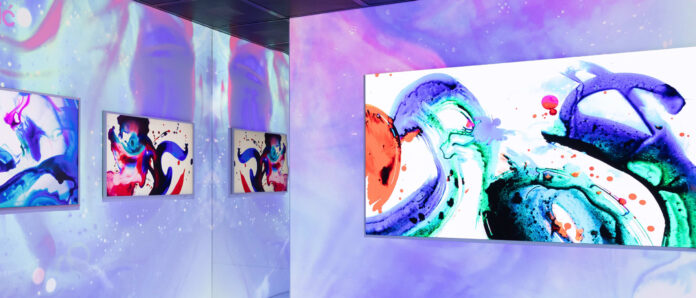
Caption for header image: Samsung ArtCube at Art Basel Hong Kong 2025.