Home Blog Page 2

Nader Sculpture Park to Host Official Launch of “Love Always Wins

Gary Nader Art Centre
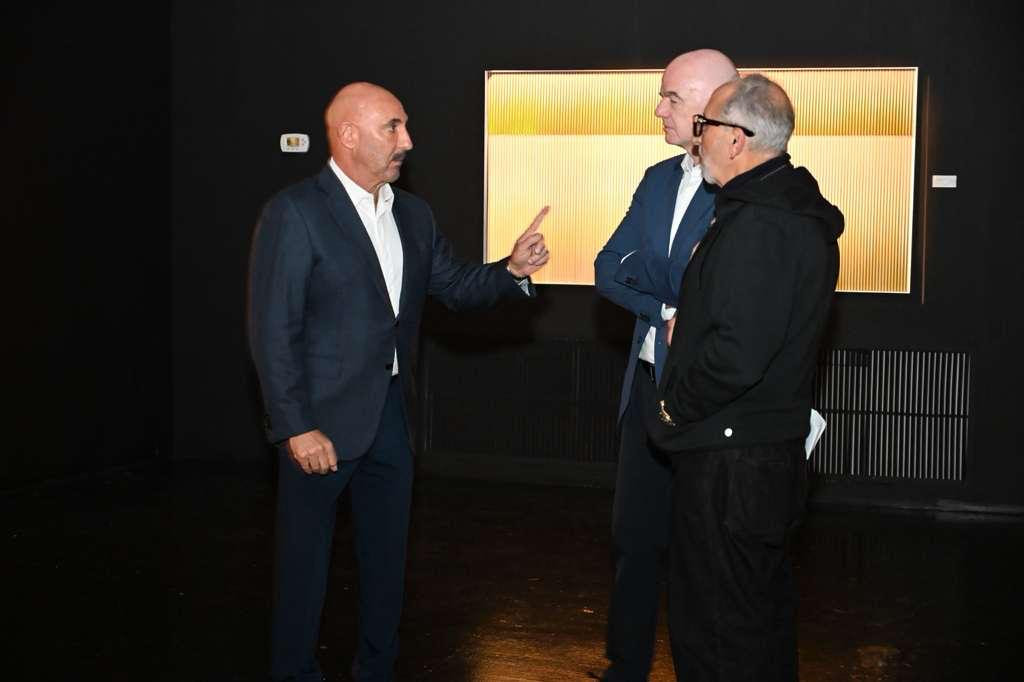
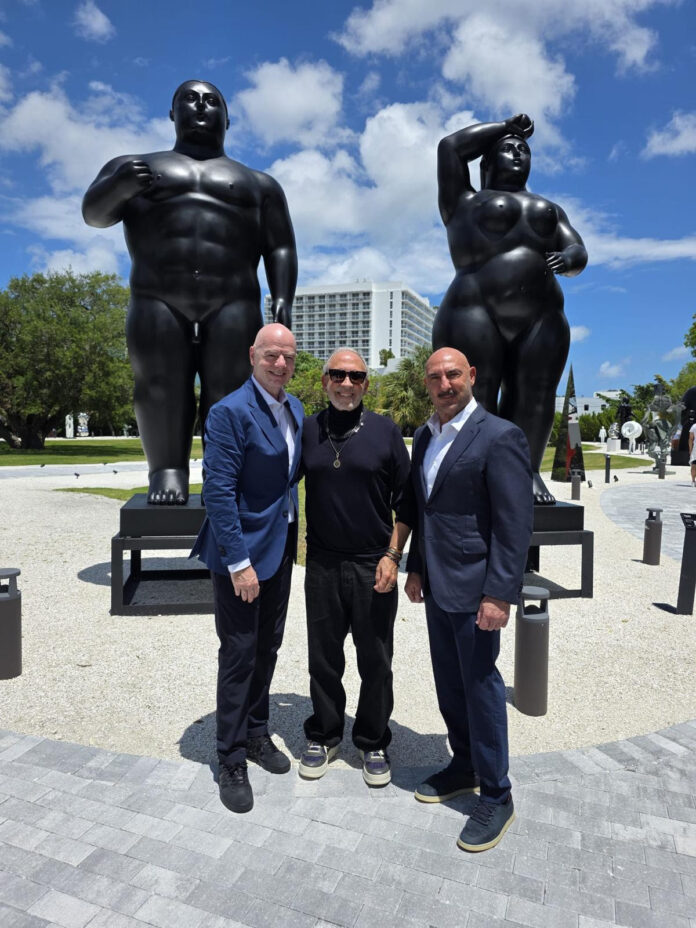
Gary Nader, FIFA President Gianni Infantino, and Emilio Estefan at Nader Sculpture Park in the Miami Design District, where the official launch of “Love Always Wins” will take place

Nader Sculpture Park to Host Official Launch of “Love Always Wins,” Part of the FIFA World Cup 2026™ Album

Gary Nader Art Centre is proud to announce that Nader Sculpture Park, located in the Miami Design District, will host the official launch of “Love Always Wins,” a song written and produced by 26-time Grammy Award winner Emilio Estefan, performed by Zema on lead vocals featuring Shaggy and Cimafunk.

The song is part of the Official FIFA World Cup 2026™ Album, a global music project celebrating the cultural spirit surrounding the world’s most anticipated sporting event.
Gary Nader Art Centre
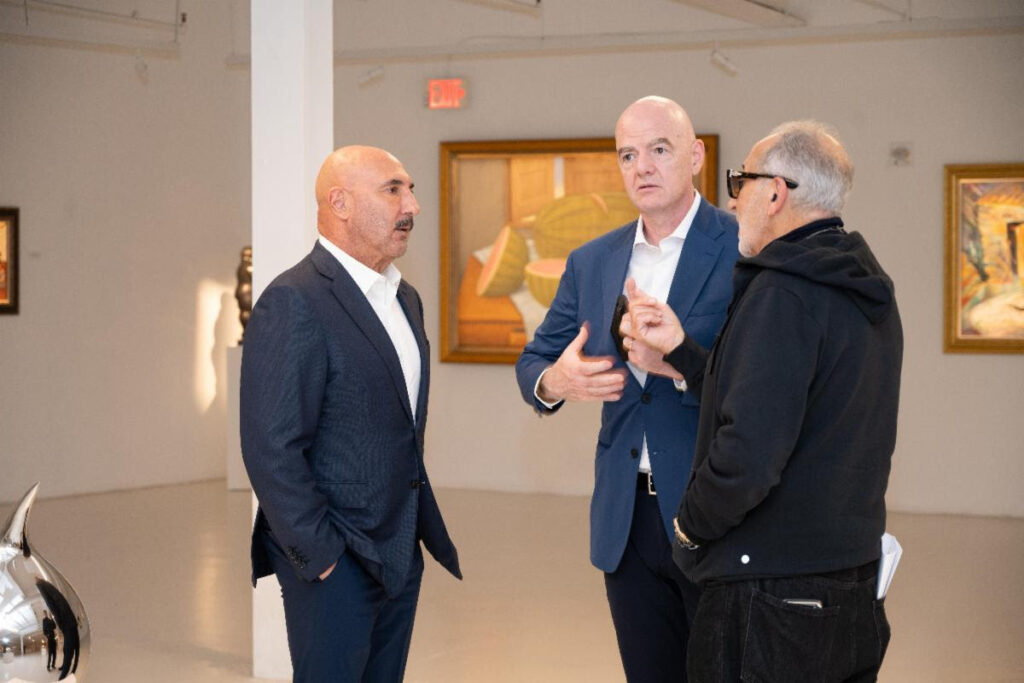
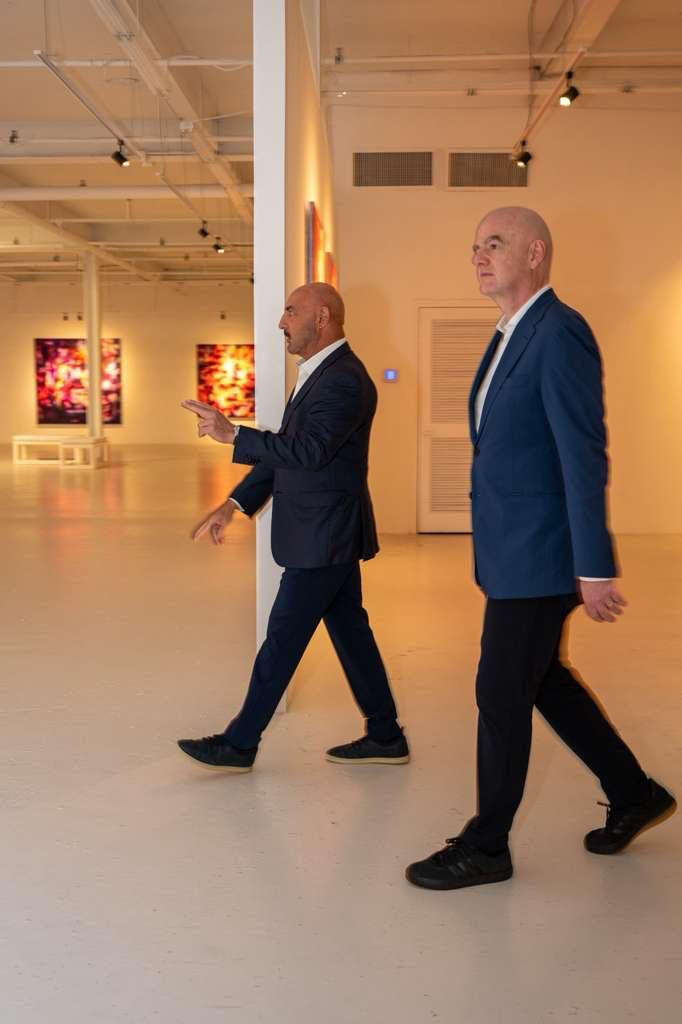
Gary Nader, FIFA President Gianni Infantino, and Emilio Estefan during a special visit to Gary Nader Art Centre, where art, music, and global culture came together ahead of the FIFA World Cup 2026™.

The announcement follows a special visit to Gary Nader Art Centre and Nader Sculpture Park, where Gary Nader welcomed FIFA President Gianni Infantino, joined by Emilio Estefan.

The visit brought together art, music, and football in a moment that reflects Miami’s role as a global cultural capital ahead of the FIFA World Cup 2026™. Mr. Infantino’s presence marked a great honor for Gary Nader Art Centre and Nader Sculpture Park, while Estefan’s participation added a meaningful cultural dimension to the announcement, connecting the world of music with the city’s artistic and international spirit.

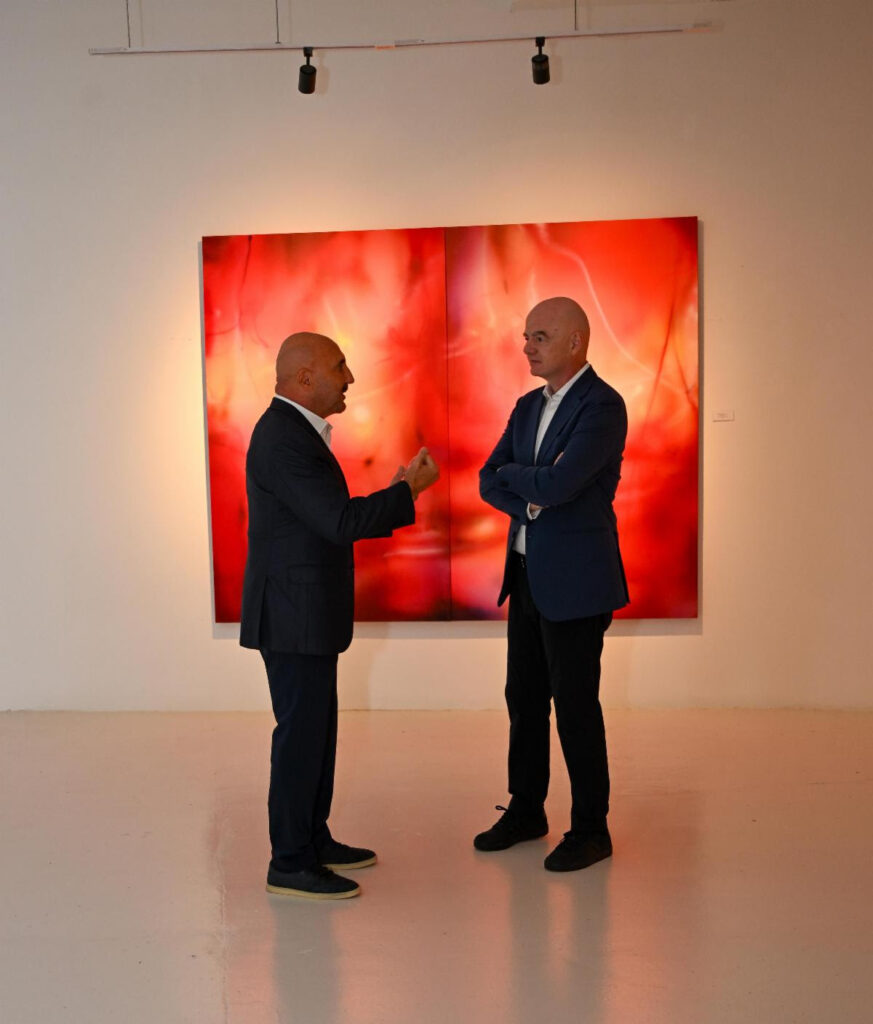
During the visit, Mr. Infantino had the opportunity to experience the gallery’s current exhibition by Rachel Valdés, as well as a curated selection of works from one of Miami’s leading destinations for Modern and Contemporary Art. The visit highlighted Gary Nader Art Centre’s extensive program, which includes museum-quality exhibitions, world-renowned masters, contemporary voices, and the world’s largest private collection of works by Fernando Botero.

The tour continued at Nader Sculpture Park, Gary Nader’s open-air cultural landmark in the Miami Design District, where monumental sculptures create a dialogue between art, architecture, urban life, and public space.
Gary Nader Art Centre
Gary Nader and FIFA President Gianni Infantino during the visit to Rachel Valdés’ current exhibition at Gary Nader Art Centre.
Gary Nader Art Centre

“This is a meaningful moment for Miami, for the arts, and for the universal language of culture. Welcoming FIFA President Gianni Infantino to Gary Nader Art Centre and Nader Sculpture Park; together with my dear brother Emilio Estefan, makes this announcement especially significant. Hosting the launch of a song connected to the FIFA World Cup 2026™ reflects exactly what we believe in: art, music, and public spaces as bridges between people, cities, and cultures.”

— Gary Nader, Founder of Gary Nader Art Centre & Nader Sculpture Park
Gary Nader Art Centre
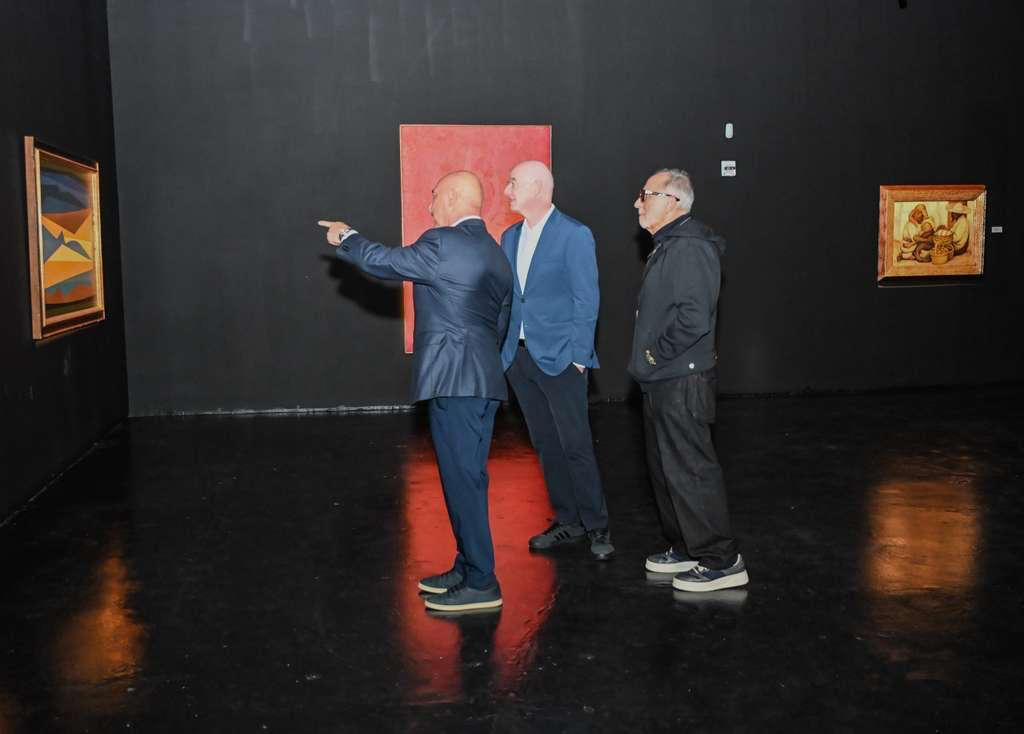
Gary Nader welcomes FIFA President Gianni Infantino to Gary Nader Art Centre during a special visit highlighting the gallery’s Modern and Contemporary Art program.
Gary Nader Art Centre

The upcoming launch of “Love Always Wins” at Nader Sculpture Park will bring together the worlds of art, music, football, and Miami’s multicultural spirit in anticipation of the FIFA World Cup 2026™, which will be hosted across the United States, Mexico, and Canada.

Further details, including the official launch date and event information, will be announced soon.

ABOUT GARY NADER ART CENTRE

Founded by Gary Nader and headquartered in Miami’s vibrant Wynwood Arts District, is among the Americas’ preeminent and most regarded art galleries specializing in Latin American, Modern and Contemporary Masters. With over four decades of experience in the acquisition, exhibition, and scholarly promotion of major international artists, the gallery has mounted landmark exhibitions featuring the work some of he most important artists worldwide including Fernando Botero, Rufino Tamayo, Roberto Matta, Pablo Picasso, Matisse, Frank Stella, Diego Rivera, to name a few.

With a permanent inventory of over 2000 important works Gary Nader Art Centre maintains deep institutional relationships with major museums, auction houses, and private collections internationally, and is recognized as a primary authority on the work of Wifredo Lam.

The gallery is committed to the serious contextual and art-historical framing of the works it presents, and to the recognition of Latin America artistic traditions as central — not peripheral — to the history of modern and contemporary art worldwide.

ABOUT NADER SCULPTURE PARK

Nader Sculpture Park, located in the Miami Design District, is an open-air cultural destination dedicated to monumental sculpture and public engagement with art. Conceived by Gary Nader as an extension of his lifelong commitment to making art accessible, the park brings together major works by internationally celebrated artists in a setting that connects art, architecture, design, and the city.
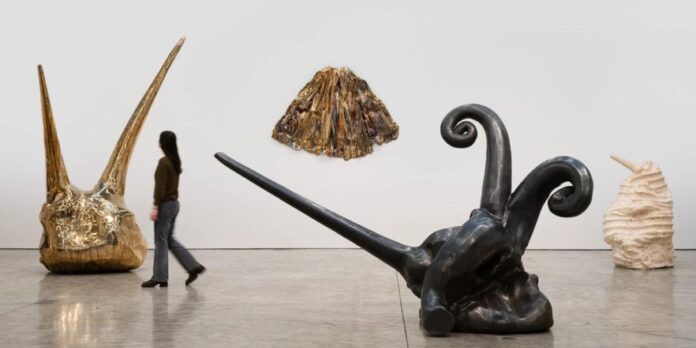
Salon Together—

Salon Together—

A Special Exhibition and Fundraiser

February 28—May 3, 2026

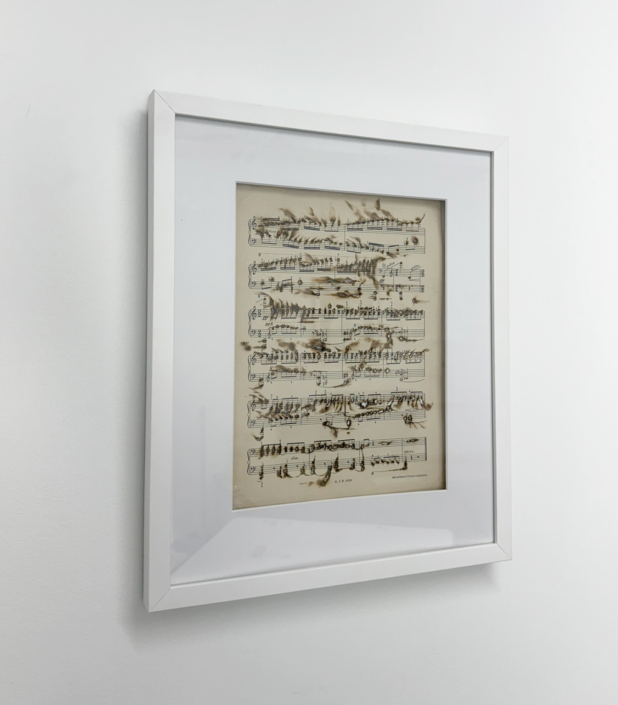
Join us on February 28, 2026, 6—9 pm for Salon Together, a special exhibition and fundraiser made possible by the extraordinary generosity of artists who have shaped and been shaped by the organization in our 16-year history.

All works in the exhibition are fully donated and for sale, with 100% of proceeds directly supporting Dimensions Variable’s forthcoming publication—a long-term archival project developed over the past sixteen years. The publication will feature each participating artist, documenting their work and the sustained relationships that have defined Dimensions Variable’s experimental and community-centered mission.

The artists in Salon Together represent a living history of the organization. Many have been exhibited at Dimensions Variable, participated in its studio program, or contributed to its broader ecosystem through conversations, mentorship, and collaboration. This exhibition brings those artists together in a shared gesture of reciprocity: artists who have been supported by the organization now, in turn, support the creation of a publication that preserves and amplifies their work for the future.

Conceived as a collective gathering rather than a traditional benefit exhibition, Salon Together emphasizes togetherness, continuity, and gratitude. The title underscores the spirit of the project: artists standing alongside one another, and alongside Dimensions Variable, to ensure that a significant body of work, dialogue, and labor is thoughtfully documented and made public.

The resulting publication will serve as both an archive and a forward-looking resource — preserving the histories of artists and projects that might otherwise remain undocumented, while affirming the essential role of small and mid-sized nonprofit spaces in sustaining contemporary artistic practice.

Participating Artists

Participating artists include: Carrie Sieh, Charo Oquet, Francisco Masó, Onajide Shabaka, Yanira Collado, Margrethe Aanestad, Jamilah Sabur, Fabian Peña, Agustina Woodgate, Felice Grodin, Marisa Telleria, Marcos Valella, Jee Park, Clara Varas, Jennifer Printz, Alexis Martínez, Chris Byrd, Leyla Cárdenas, Nick Vaughan & Jake Margolin, Charles Koegel, Nellie Appleby, Liz Rodda, Jenene Nagy, Liene Bosquê, Robert Huff, Loretta Park, Vickie Pierre, Nicole Burko, Moira Holohan, Kerry Phillips, Karla Kantorovich, Ariel Orozco, Samantha Salzinger, Barron Sherer, Frances Trombly, Leyden Rodriguez-Casanova, Joyce Billet, Salua Ares, Devora Perez, Erin Parish, Karen Starosta-Gilinski, Alfredo Travieso, Claudia Vieira, Anna Biondo, and more.

Initial funding provided by Oolite Arts

Alma Allen: Representing US at Venice Biennale 2026

Alma Allen
Alma Allen

Alma Allen: Representing US at Venice Biennale 2026

Matter, Silence, and the Politics of Form

The selection of Alma Allen as the United States representative at the Venice Biennale 2026 marks one of the most unexpected—and revealing—moments in recent American art. At once understated and controversial, Allen’s appointment exposes a fracture within contemporary discourse: between spectacle and stillness, between ideological urgency and material introspection.

A Sculptor Outside the System

Born in Utah and based in Tepoztlán, Mexico, Allen has long cultivated a practice that exists at the margins of institutional visibility. A self-taught artist, his work developed “independently of any recognized art movement,” grounded instead in an intuitive dialogue with materials such as stone, wood, and bronze.

This distance from the art world’s conventional circuits is precisely what makes his selection so charged. Unlike predecessors such as Simone Leigh or Jenny Holzer—whose practices engage explicitly with identity, politics, and language—Allen’s sculptures operate in a quieter register. They resist narrative. They resist declaration.

And yet, in that resistance lies their potency.

“Call Me the Breeze”: Elevation as Method

Allen’s pavilion, titled “Call Me the Breeze,” will present approximately 30 sculptures that explore what has been described as an “alchemical transformation of matter” and the concept of elevation.

But elevation here should not be misread as transcendence in the romantic sense. Rather, Allen’s forms—biomorphic, polished, often pierced or hollowed—suggest a continuous negotiation between weight and lightness, density and void. His sculptures do not ascend; they hover, as if caught in a moment of geological hesitation.

There is a profound temporality embedded in his work. Stone appears softened, almost eroded by an invisible time. Wood becomes a vessel rather than a surface. Bronze, traditionally monumental, is rendered intimate. Allen does not impose form onto matter; he coaxes form out of it.

A Controversial Appointment

The context of Allen’s selection is inseparable from its reception. The 2026 U.S. Pavilion emerged from an unusually opaque process, bypassing traditional institutional channels and instead involving the U.S. State Department and the newly formed American Arts Conservancy.

This departure from precedent—combined with Allen’s relatively low public profile—sparked skepticism across the art world. Critics questioned both the selection mechanism and the perceived “apolitical” nature of his work in a moment defined by global instability and cultural polarization.

Yet this critique may misunderstand the deeper stakes of Allen’s practice.

The Politics of Non-Declaration

To call Allen’s work apolitical is to overlook a more subtle proposition: that form itself can be a site of resistance. In an era saturated with images, language, and ideological positioning, Allen’s sculptures insist on something radically different—attention, slowness, and physical presence.

They do not tell us what to think. They ask us to feel how matter thinks.

In this sense, Allen’s work aligns with a lineage that includes Isamu Noguchi and Donald Judd, yet it diverges through its almost mystical sensibility. His objects seem less designed than discovered, as if unearthed from a future archaeology.

A Pavilion of Silence

What might it mean for the United States—at a moment of political intensity and global scrutiny—to present a pavilion grounded in silence, tactility, and ambiguity?

The answer may lie in the very discomfort Allen’s selection has produced. His work refuses to perform identity, refuses to illustrate ideology, refuses even to explain itself. In doing so, it challenges the expectation that national representation must be legible, declarative, or didactic.

Instead, Allen offers something rarer: an encounter.

Conclusion: Between Weight and Meaning

The Venice Biennale has often been described as the Olympics of the art world—a stage for spectacle, competition, and national branding.

Alma Allen’s pavilion may do something else entirely. It may slow the viewer down. It may redirect attention from message to material, from discourse to perception. And in that shift, it may reveal a different kind of American art—one not defined by proclamation, but by presence.

In an age of noise, Allen’s sculptures propose a radical idea: that meaning does not always need to be spoken.

Anna Biondo, Artist Residency

Anna Biondo
Anna Biondo

Studio Focus—Anna Biondo

Sunday, May 3, 2026, 3—6 pm

101 NW 79th Street
Miami, FL 33150

Dimensiones Variables (DV) is pleased to announce Studio Focus, a new series dedicated to exploring the working practices, methodologies, and conceptual frameworks of Dimensions Variable artists. The first session will take place on May 3, 2026, at 3 pm, featuring the work and studio of Anna Biondo.

This session offers the unique opportunity to engage directly with Anna and to examine the ways in which her studio operates as both a site of creation and a point of intellectual inquiry. Participants will gain insight into her material techniques, processes, and the strategies through which her work negotiates contemporary artistic, cultural, and social concerns.

Anna Biondo

Anna Biondo (b. 1975, São Paulo, Brazil) lives and works between São Paulo and Miami. She holds a Bachelor’s degree in Drawing and Design from Faculdade de Belas Artes de São Paulo (2002) and a postgraduate degree in Visual Arts from Universidade Santa Marcelina (2004), where she studied under Leda Catunda. In 2022, she completed a postgraduate program in Analytical Psychology at the Freedom Institute and is currently pursuing advanced studies in mental health practices inspired by the work of Nise da Silveira.

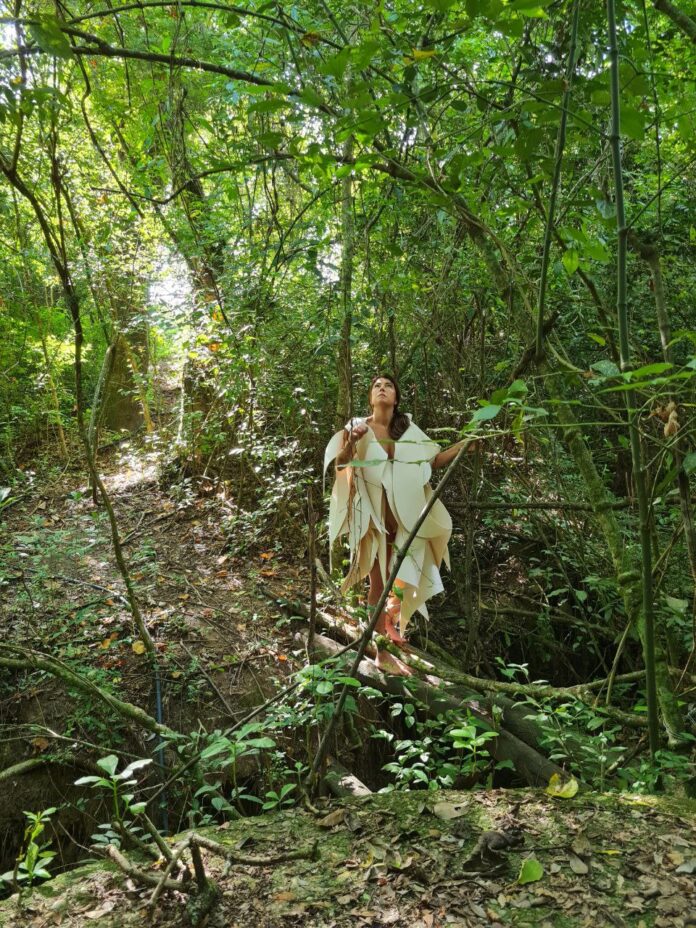
Her artistic practice investigates symbolism, affective experimentation, and relational processes through installations and textile-based works. Working with pure wool felt and recycled, between embroidery and cut-out forms, Biondo creates malleable structures that engage transformation, memory, and shared narratives.

From 2004 to 2007, she worked as a curatorial assistant at the Museu de Arte Moderna (MAM) São Paulo, collaborating on the curatorship and production of exhibitions. Since 2020, she has been Director of Special Projects at The55Project in Miami, where she coordinates artistic programs, residencies, workshops, and art fairs, fostering connections between Brazilian artists and the North American art scene. She was part of the Red Thread Studio collective for two years and is currently based at Dimensions Variable.

Selected exhibitions include Remorph: Unending (Doral Contemporary Art Museum), Visions from Inside the Walls (Coral Gables Museum), What Does Miami Mean to You? (Vizcaya Museum & Gardens), The Things We Carried (Emporium B Gallery, Miami), Cargo (Parque Lage, Rio de Janeiro), Just Breathe (The55Project, Miami Art Week), Lumen Art (Miami Art Week), among others.

Source: https://dimensionsvariable.net/event/studio-focus-anna-biondo/

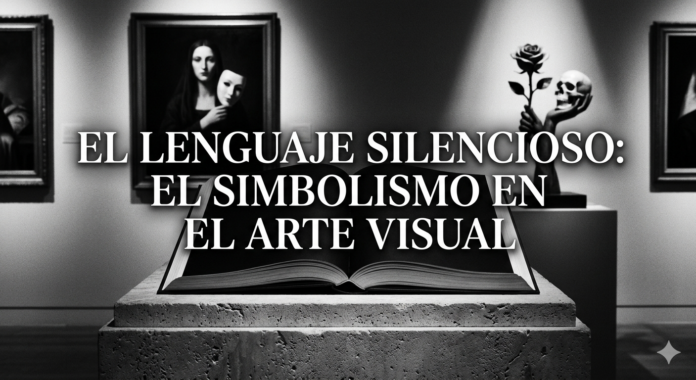
El lenguaje silencioso:el simbolismo en el arte visual

El lenguaje silencioso:el simbolismo en el arte visual

El lenguaje silencioso:
el simbolismo en el arte visual

Una guía para artistas que quieren leer y construir imágenes con mayor profundidad.

Antes de que existiera la escritura, antes de los alfabetos y los libros, los seres humanos ya tenían un idioma. No era hablado ni escrito: era visto. Las paredes de las cavernas, los muros de los templos, las superficies de la cerámica antigua están llenos de imágenes que no eran decoración, sino comunicación. Eran pensamiento hecho forma. Esa tradición nunca desapareció; simplemente aprendió a volverse más compleja, más íntima, más poderosa.

Para el artista visual, comprender el simbolismo no es un ejercicio académico. Es aprender a hablar con mayor precisión en el único idioma que domina por completo: el de las imágenes.

I · ¿Qué es un símbolo?

Un símbolo en el arte es cualquier elemento visual —un objeto, un color, un gesto, una figura— que carga un significado más allá de su apariencia literal. Una rosa no es solo una rosa: puede ser amor, belleza efímera, pasión o incluso muerte. Una calavera no anuncia solo la muerte física; en la tradición vanitas del Barroco, recuerda que el tiempo se agota y que ninguna gloria dura para siempre.

“Los símbolos no gritan ni argumentan ni convencen. Simplemente hablan a la parte de nosotros que ya comprende.”

Lo que hace al símbolo un instrumento extraordinario es que opera por debajo de la lógica. La mayoría de la información en el mundo moderno está diseñada para el intelecto: define, explica, categoriza. El símbolo trabaja de otra manera. No pide ser analizado antes de sentirse. Va directo a la intuición, directamente a la emoción. Por eso una imagen mitológica puede mover a alguien que no conoce el mito. Por eso el arte religioso conmueve incluso a quien no profesa esa fe.

Para el artista, esto tiene una implicación práctica crucial: puedes construir capas de significado en tu obra que el espectador percibirá sin necesariamente poder nombrarlas. El símbolo no necesita ser comprendido intelectualmente para ser sentido.

II · Un vocabulario visual universal

A lo largo de la historia del arte, ciertos símbolos han acumulado significados compartidos que trascienden culturas y épocas. Conocerlos es expandir el vocabulario de tu obra. No se trata de usarlos mecánicamente, sino de entender el peso que traen consigo y decidir conscientemente si ese peso sirve a lo que quieres decir.

Vanitas / Memento mori

Cráneos, velas apagadas, fruta en descomposición, relojes de arena. La brevedad de la vida.

Metamorfosis y alma

La mariposa: transformación, resurrección, esperanza. El alma liberada del cuerpo.

Agua y ríos

El paso del tiempo, el viaje de la vida, el cambio inevitable. A veces también lo inconsciente.

Flores y loto

El loto: iluminación y renacimiento (emerge del fango hacia la luz). El lirio: pureza divina.

Águila y poder

Fuerza, visión, autoridad. En muchas culturas, mensajero entre el mundo humano y lo divino.

Paloma y paz

Inocencia, paz, el espíritu divino. En el arte cristiano, símbolo del Espíritu Santo.

El color es también un sistema simbólico en sí mismo. El rojo comunica pasión, energía o peligro. El azul evoca calma, divinidad o melancolía. El oro habla de lo sagrado, lo eterno, lo que está fuera del tiempo ordinario. Incluso los gestos —una mano en oración, un dedo apuntando hacia arriba, los ojos cerrados o abiertos— dirigen la lectura emocional y espiritual de una imagen.

III · Una historia viva: los grandes momentos del simbolismo

Arte antiguo — Egipto, Grecia, Mesopotamia

Los símbolos eran lenguaje antes de que hubiera alfabeto. Comunicaban ideas filosóficas, religiosas e históricas que el habla cotidiana no podía contener. Un solo símbolo podía condensar lo que un párrafo no alcanzaba a decir.

Renacimiento y arte clásico — siglos XV–XVII

Los símbolos se disfrazaron de objetos cotidianos. Una flor sobre una mesa, una ventana al fondo, la posición de las manos en un retrato: todo estaba cargado de ideales humanistas o religiosos específicos que el espectador culto de la época sabía leer.

Movimiento Simbolista — finales del siglo XIX

Gustave Moreau, Odilon Redon y sus contemporáneos rechazaron el realismo para explorar el sueño, la mitología y el subconsciente. Afirmaron que el arte debía expresar la experiencia espiritual y emocional de la vida, no copiar su apariencia exterior.

Surrealismo — siglo XX

Salvador Dalí y sus contemporáneos llevaron el simbolismo al territorio de lo irracional y lo onírico. Las imágenes perturbadoras no eran accidentales: eran mapas del inconsciente, símbolos del mundo interior que la razón normalmente censura.

Arte contemporáneo — hoy

Los artistas actuales combinan símbolos universales con símbolos personales, creando lenguajes propios que hablan tanto de la experiencia íntima como de las tensiones sociales, políticas y culturales del mundo en que vivimos.

IV · El símbolo personal: tu propio vocabulario

Una de las grandes lecciones del arte contemporáneo es que el simbolismo no tiene que ser universal para ser poderoso. Cada artista puede —y quizás debe— construir su propio repertorio simbólico. Objetos que tienen resonancia biográfica, formas recurrentes que atraviesan tu obra, colores que para ti cargan un peso emocional específico: todos estos pueden convertirse en símbolos personales que, con el tiempo y la consistencia, se vuelven legibles para quienes siguen tu obra.

“En mis pinturas, a veces los símbolos son obvios y a veces muy sutiles, pero siempre están ahí para crear otra capa de significado debajo de lo que el ojo ve primero.”

Este gesto —incluir un símbolo personal de forma deliberada— transforma la imagen en un objeto estratificado. El espectador puede disfrutar la superficie: la composición, el color, la técnica. Pero si mira con mayor atención, descubrirá una segunda conversación ocurriendo en silencio dentro del cuadro.

V · Cómo trabajar con símbolos como artista

Hay tres formas de incorporar el pensamiento simbólico a tu práctica. La primera es la investigación: explorar los símbolos que han persistido a través de la historia, entender qué significados han acumulado y decidir si esos significados sirven a lo que necesitas decir. La segunda es la intuición: prestar atención a las imágenes que aparecen en tu trabajo de forma espontánea y preguntarte qué significan para ti, aunque al principio no sepas explicarlo. La tercera es la inversión: tomar un símbolo establecido y subvertir su significado, cargarlo con lo contrario de lo que suele representar o colocarlo en un contexto que lo resignifique completamente.

En los tres casos, lo que importa es la conciencia. Un símbolo usado sin intención es solo un objeto. Un símbolo elegido con deliberación es una palabra en el lenguaje silencioso de tu obra.

VI · Conclusión

Los seres humanos llevan miles de años comunicándose a través de imágenes simbólicas porque las palabras, solas, no son suficientes. Hay verdades —sobre la muerte, sobre el tiempo, sobre el amor, sobre lo sagrado— que solo pueden aproximarse mediante la imagen. El símbolo no explica esas verdades: las evoca. No las define: las convoca.

Como artista visual, estás trabajando en la tradición más antigua que la humanidad conoce. Cada vez que eliges un objeto, un color, una forma con intención, estás participando en una conversación que empezó en las paredes de una cueva y no ha terminado. Esa conversación es el arte.

La próxima vez que estés frente a un lienzo en blanco o en el proceso de tomar decisiones sobre tu obra, hazte esta pregunta: ¿qué está diciendo esta imagen por debajo de lo que muestra? La respuesta a esa pregunta es donde comienza el simbolismo.

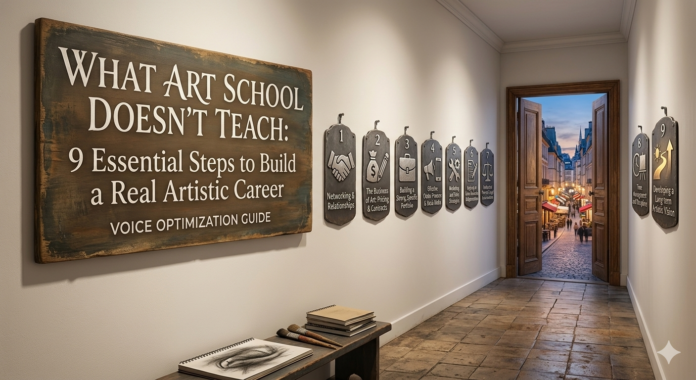
What Schools Don’t Teach: Transforming Your Art Dream into a Professional Career (2026)

What Art School Doesn’t Teach

What Schools Don’t Teach: Transforming Your Art Dream into a Professional Career (2026)

Art schools teach you how to see.
They train your hand—painting, sculpture, textile, drawing—and situate your practice within art history. You learn references, materials, processes, and the language of critique.

But there is a fundamental gap.

What they rarely teach is how to exist as an artist within the real world.

The Educational Paradox: Skill vs. System

Over the last decades, art education has undergone a significant shift. Traditional skill-based training—drawing, material mastery, craft—has increasingly given way to conceptual thinking and critical theory. This transformation, often referred to as deskilling, emerged from late 20th-century movements where the idea became more important than execution.

While this has expanded the definition of art, it has also created a generation of artists who graduate with:

  • strong conceptual frameworks
  • but limited technical depth
  • and almost no understanding of the art industry

Simultaneously, the disappearance of resource-intensive programs—workshops, fabrication labs, technical training—has further reduced hands-on skill development. These programs are expensive, and institutions have shifted toward models that are more economically sustainable, but less materially rigorous.

The result is a contradiction:

Artists are taught how to think
But not how to build a career

From Studio Practice to Professional Practice

To transform your artistic ambition into a sustainable career, you must move beyond the studio and begin to understand the art world as a system—a network of relationships, structures, and opportunities.

This is where most artists fail—not creatively, but strategically.

1. Build Relationships with the People Who Matter

The art world does not operate as a meritocracy alone.
It operates through networks.

Collectors, curators, gallerists, advisors—these are not distant figures. They are part of an ecosystem that you must enter with intention.

Relationships are not transactional.
They are built over time through:

  • consistency
  • clarity of work
  • presence

Your career is not only what you produce.
It is who knows your work—and why it matters.

2. Gain a Deep Understanding of the Industry

There is no single “art world.” There are multiple sectors:

  • Commercial galleries
  • Nonprofit institutions
  • Art fairs
  • Public art commissions
  • Independent and alternative spaces

Each operates with different expectations, timelines, and values.

Without this understanding, artists:

  • apply to the wrong opportunities
  • misprice their work
  • or remain invisible despite strong practice

Clarity of context creates strategic movement.

3. Create a Visibility Plan That Works

Visibility is not accidental.

It is structured.

Most artists rely on:

  • sporadic exhibitions
  • inconsistent social media
  • passive waiting

This leads to frustration and invisibility.

A real visibility plan includes:

  • consistent output (not just production, but communication)
  • targeted platforms
  • alignment with curatorial contexts
  • documentation of work at a professional level

Visibility is not self-promotion.
It is positioning.

4. Generate Sustainable Career Growth

The myth of the artist is still tied to instability:

  • no time
  • no money
  • no structure

This is not romantic.
It is unsustainable.

A professional artist builds systems:

  • financial organization
  • time management
  • production cycles
  • strategic planning

Growth is not a moment.
It is a structure that supports continuity.

5. You Don’t Have to Follow the Same Path

One of the biggest misconceptions is that success comes from:

  • showing in the same galleries
  • following the same artists
  • replicating the same trajectories

This is false.

Your career is not linear.

Opportunities already exist around you:

  • local networks
  • collectors outside major hubs
  • interdisciplinary collaborations

The key is learning how to expand what you already have.

6. End the Confusion: What to Focus on and When

Artists often feel overwhelmed because they try to do everything at once:

  • produce work
  • build visibility
  • apply to opportunities
  • network

Without structure, effort becomes scattered.

A step-by-step strategy allows you to:

  • focus on the right actions at the right time
  • create measurable progress
  • avoid burnout

Clarity replaces anxiety.

7. From Invisibility to Position

Many artists feel invisible not because their work lacks value, but because they lack:

  • context
  • positioning
  • understanding of the system

When you understand:

  • where you fit
  • who your audience is
  • what sector aligns with your work

You stop being invisible.

You become legible within the art world.

8. Reclaiming Time and Resources

A common condition among artists:

  • not enough time in the studio
  • not enough income from the work

This is not only a financial issue.
It is a structural one.

By creating systems, you can:

  • protect studio time
  • generate income strategically
  • reduce instability

A career is not built on inspiration alone.
It is built on organization.

9. Beyond School: A Necessary Expansion

Art school gives you tools—but incomplete ones.

To move forward, you must expand your education into:

  • strategy
  • industry knowledge
  • relationship-building
  • self-positioning

This is the missing curriculum.

Conclusion: From Practice to Career

The transition from student to professional artist is not about improving your technique.

It is about:

  • understanding the system
  • positioning your work within it
  • and building structures that sustain your practice over time

Because in the end, talent is not enough.

What defines a career is the ability to transform that talent into:
visibility
relationships
opportunity
continuity

Art Miami Magazine: From Vision to Strategy

At Art Miami Magazine, we extend beyond traditional art education. We provide artists with the strategic tools, industry insight, and professional guidance necessary to transform their artistic vision into a sustainable career.

Through structured methodologies, real-world knowledge, and direct access to industry perspectives, we help artists:

  • build meaningful relationships
  • understand the art ecosystem
  • create visibility with intention
  • and develop long-term growth strategies

Because your career should not be left to chance.

It should be built—step by step, with clarity and purpose.

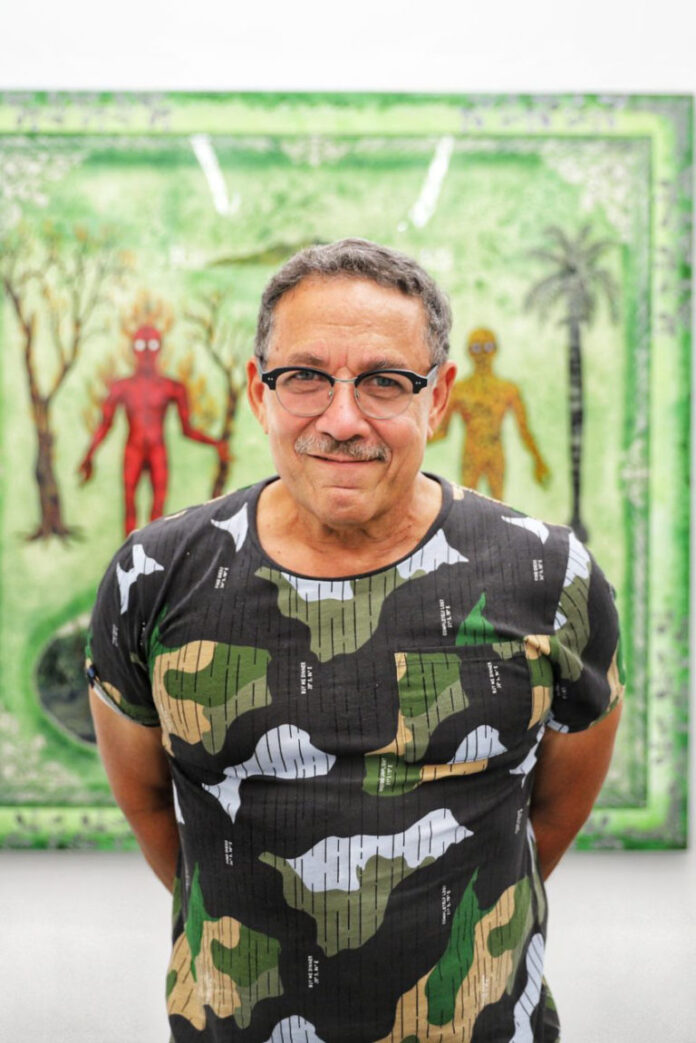
Edouard Duval-Carrié Returns to Venice: History, Spirit, and the Politics of Visibility

Edouard Duval-Carrié

Edouard Duval-Carrié Returns to Venice: History, Spirit, and the Politics of Visibility

There’s something quietly seismic about Edouard Duval-Carrié being selected to represent Haiti at the 61st Venice Biennale. Not because he’s new—he isn’t. Not because he’s emerging—he’s long established. But because his return to Venice, fifteen years after Haiti’s first official pavilion in 2011, feels less like participation and more like a recalibration.

Duval-Carrié has spent decades doing something the art world still struggles to fully absorb: making history visible without flattening it. His work doesn’t illustrate Haiti—it conjures it. Through resin, glass, and that unmistakable shimmer of glitter, his figures hover between presence and disappearance, as if caught mid-transformation. These are not images to look at. They are systems to enter.

The Venice Biennale, with its appetite for spectacle and national narratives, is not always kind to complexity. Yet Duval-Carrié’s practice thrives in precisely that tension. His guiding question—“What did Africa bring to the world?”—is not rhetorical. It is a provocation. It cuts through centuries of erasure and forces a reorientation of cultural memory.

What he brings to Venice is not just a body of work, but a worldview shaped by movement—Haiti, the Caribbean, North America, Europe—and by a sustained engagement with Haitian Vodou cosmology. In his visual language, lwa are not symbols; they are agents. History is not past; it is active, unstable, unresolved.

Back in Miami, in Little Haiti, a different kind of moment unfolds. In a rare, one-night studio preview organized with the Tout-Monde Art Foundation, the works that will not travel to Venice are given their own stage. This gesture matters. It resists the usual logic of the art world, where what leaves becomes important and what stays disappears. Here, the local community is not an afterthought—it is part of the work’s circulation.

A conversation with art historian Erica Moiah James frames this moment: not as a prelude, but as a narrative in itself. Because Duval-Carrié’s work has always been about storytelling—not the kind that resolves, but the kind that accumulates, layers, and insists.

Venice will see the official version.
But the real story is larger than any pavilion.

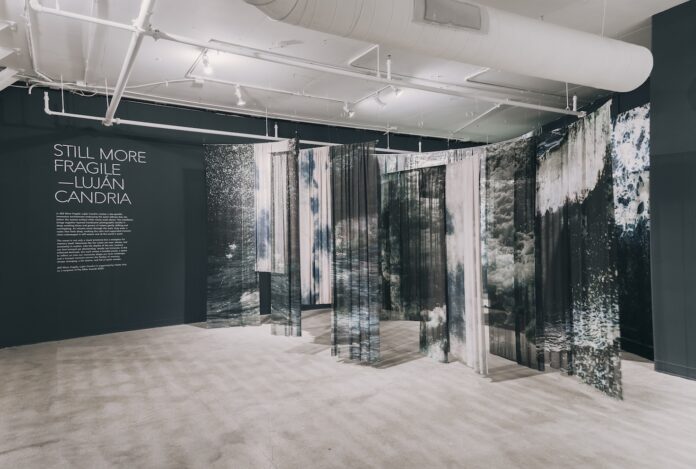
In Still More Fragile: Memory, Immersion, and the Unstable Image

In Still More Fragile: Luján Candria - Faena Art Project Room

In Still More Fragile: Memory, Immersion, and the Unstable Image

In Still More Fragile, Luján Candria constructs a space that feels less like an artwork and more like a shift in perception—a quiet descent into a slower register where language begins to dissolve. What remains is not interpretation, but presence. You are not looking at the work; you are inside it.

Candria’s practice resists passive viewing. Layers drift, images refuse to settle, and the eye is forced to adjust. Seeing becomes physical—dependent on movement, proximity, and time. Nothing arrives fully formed.

Memory, here, is not something retrieved but something navigated. It behaves less like an archive and more like a landscape—unstable, layered, impossible to grasp from a single position. The ocean is not a metaphor so much as a structure: depth without clarity, movement without fixed meaning.

The work does not collapse into certainty. It holds its instability. Images shift. Meaning slips. What you see depends on how you move through it. This is not ambiguity as effect—it is ambiguity as condition.

Authorship loosens in the process. Memory is not owned; it is shaped—by time, by perception, by the present pressing against the past. Candria does not construct a narrative so much as create the conditions for one to emerge.

By the end, the distinction between landscape and interior life begins to erode. What appears external turns inward. What feels distant becomes intimate.

The work does not resolve.
It lingers—somewhere between seeing and sensing, between memory and its disappearance.

AMM. In Still More Fragile, the viewer enters a suspended, almost pre-linguistic space beneath the surface. How do you understand this descent—as a phenomenological condition—and what kind of awareness becomes possible only in this state of immersion?

LC. I understand this descent as a shift in perception—from a more external way of seeing to a more embodied and internal experience. It’s less about going “beneath the surface” and more about entering a state where perception slows down and becomes less connected to language.

Rather than interpreting the work, the viewer inhabits it. It’s a space where boundaries soften, allowing for a more open and receptive way of paying attention.

For me, this immersion creates space for ambiguity, for silence, and for a kind of quiet recognition that cannot always be explained, but can be deeply felt.

AMM. The ocean in your work is not merely metaphor but a structure of thought. How do you conceive memory as a spatial system—one that can be navigated, inhabited, or even lost within—rather than simply recalled?

LC. I think of memory not as something linear or fixed, but as a kind of spatial field—something that can be entered, moved through, and experienced from multiple positions. In that sense, it’s closer to a landscape than to an archive.

The ocean becomes a way of thinking through this condition. It holds depth, movement, and opacity—there is no single point of access. Similarly, memory is not something we simply retrieve, but something we navigate. It shifts depending on where we stand, what we bring to it, and how we move within it.

In Still More Fragile, I try to create environments where this can be experienced. The viewer enters the image, moving through layers and fragments. This opens up new forms of perception, creating space for a different kind of engagement—one that is less about defining and more about experience.

AMM. Your installation destabilizes fixed perception through translucency, overlap, and movement. To what extent is the work proposing a critique of visual certainty, and how does it reposition the act of seeing as something unstable, contingent, and embodied?

LC. I don’t see the work as a critique of visual certainty, but as a reflection of how memory operates. Memory is never fixed or stable—it shifts, overlaps, and transforms over time. In that sense, the visual language of the installation—through translucency, layering, and movement—mirrors this condition.

The image is not presented as something definitive, but as something that is always in the process of becoming.

In this way, the act of seeing becomes unstable and embodied. Perception is shaped by movement, proximity, and time, rather than by a fixed point of view. The viewer does not observe from a distance, but navigates the work, and meaning emerges through that experience.

AMM. Your practice engages deeply with fragmentation, erasure, and recomposition of images. Do you see memory as an act of construction rather than retrieval—and if so, who or what is the “author” of that reconstruction?

LC. I understand memory as both an act of construction and a form of retrieval. It is not something we access intact, but something that is continuously shaped, reconfigured, and even partially invented over time. What we retrieve is always already transformed.

In that sense, there is no single author of memory. It emerges from an intersection between personal experience, time, and perception. What we remember is always influenced by our present condition—by what we feel, what we need, and how we position ourselves in relation to the past.

In my work, this understanding takes form through processes of fragmentation and recomposition.

AMM. In your work, the landscape seems to shift from an external environment to an internal condition. How do you negotiate the boundary between the seen world and the felt world, and where does identity situate itself within that threshold?

LC. I don’t see it as something that needs to be negotiated, but as a continuous condition. The boundary between the seen and the felt is constantly shifting.

Identity, for me, exists within that overlap. It is formed in relation to the landscape—through memory, experience, and a sense of belonging. The external and the internal are not separate, but intertwined.

The landscape is not only something we observe, but something we inhabit, carry, and continuously reconstruct.

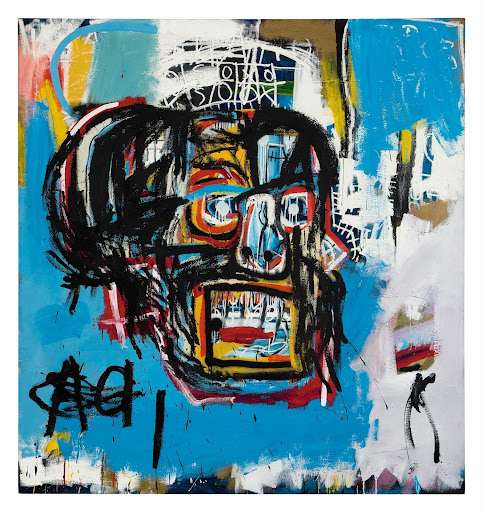
Kenneth C. Griffin Basquiat Collection

Jean-Michel-Basquiat-Untitled-Skull-1982.-Private-collection
A rare gathering of Jean-Michel Basquiat’s most iconic works come together in Miami for the first time, generously loaned from the Kenneth C. Griffin Collection. Opening June 25, 2026.

Kenneth C. Griffin Basquiat Collection

Power, Capital, and the Afterlife of Image

The collection assembled by Kenneth C. Griffin around the work of Jean-Michel Basquiat is not merely a concentration of masterpieces—it is a statement about the evolving relationship between cultural value and financial power in the 21st century. With acquisitions exceeding $500 million, Griffin’s holdings represent one of the most significant private consolidations of Basquiat’s oeuvre, centered on the artist’s pivotal year: 1982.

At the core of the collection stands Untitled (Skull), acquired for approximately $200 million. This painting is not simply an icon of the market; it is a visceral anatomy of consciousness—where the skull becomes both mask and map, oscillating between mortality and transcendence. Alongside it, Boy and Dog in a Johnnypump embodies Basquiat’s capacity to fuse play and violence, childhood and urban tension, within a single pictorial field.

Works such as Pez Dispenser and In Italian further reveal the artist’s linguistic and symbolic density—where text fragments, anatomical diagrams, and historical references collide into a charged semiotic system. In Untitled (Tenant), the skeletal figure emerges as a bearer of socio-political weight, inscribed within structures of power and displacement.

Griffin’s role extends beyond acquisition. Through Griffin Catalyst, he has facilitated institutional access to Basquiat’s work, supporting exhibitions that reposition the artist within broader cultural dialogues.

Yet, this collection also raises critical questions: What does it mean for works born from resistance, marginality, and critique to be absorbed into the highest tiers of capital? Perhaps the paradox is inevitable. Basquiat’s work, after all, was always about power—its construction, its symbols, and its contradictions.

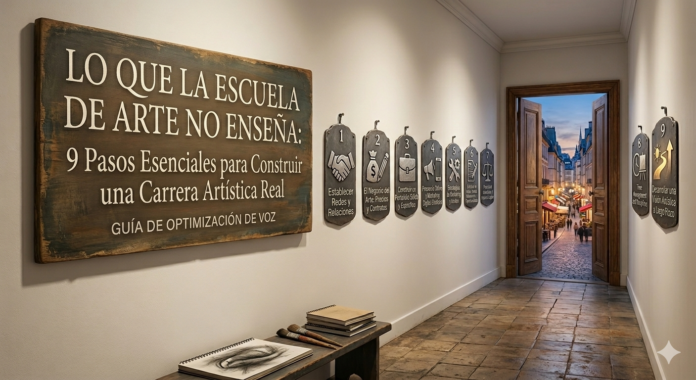
Lo que la escuela de arte no enseña: 9 pasos esenciales para construir una carrera artística real

Lo que la escuela de arte no enseña

Lo que la escuela de arte no enseña: 9 pasos esenciales para construir una carrera artística real

La graduación suele confundirse con la llegada. En realidad, es un punto de partida—uno que revela una brecha fundamental entre la formación académica y la realidad profesional. La escuela de arte afina la percepción, la técnica y el lenguaje crítico, pero rara vez dota a los artistas de las herramientas estructurales necesarias para navegar el mundo del arte como un sistema.

Lo que sigue no es una guía motivacional, sino un marco estratégico—uno que te permite ubicarse dentro del ecosistema del arte, definir tu posición y avanzar con claridad e intención.

1. Define tu identidad artística

Antes de entrar al mercado, debes comprender tu propia obra.

No desde lo estilístico, sino desde lo conceptual:

  • ¿Qué estás investigando?
  • ¿Qué tensión impulsa tu práctica?
  • ¿Por qué tu obra necesita existir?

Tu identidad no es tu medio.
Es tu posición.

2. Identifica tu nivel de carrera

La mayoría de los artistas no fracasan por falta de talento, sino por desalineación.

Debes determinar dónde te encuentras:

  • Emergente → desarrollando visibilidad
  • Media carrera → construyendo estructura y audiencia
  • Consolidado → fortaleciendo influencia y legado

Cada nivel requiere estrategias distintas.
La confusión aquí conduce al estancamiento.

3. Construye una estrategia de emergencia (inicio de carrera)

Si estás comenzando:

  • Identifica tu primera audiencia (no “todo el mundo”)
  • Protege tu tiempo de estudio como algo innegociable
  • Comienza a mostrar tu trabajo—even en contextos pequeños e imperfectos

La visibilidad no es vanidad.
Es existir dentro del sistema.

4. Planifica tu expansión (media carrera)

El crecimiento requiere estructura:

  • Refina tu narrativa
  • Fortalece tu presencia digital y física
  • Alinea tu obra con contextos curatoriales

En esta etapa, tu tarea no es producir más—
sino posicionarte mejor.

5. Domina la elevación (artistas consolidados)

Si ya tienes visibilidad:

  • Curaduriza tus oportunidades
  • Profundiza relaciones con coleccionistas e instituciones
  • Enfócate en el impacto a largo plazo, no en la producción constante

La madurez de un artista se mide por la precisión, no por el volumen.

6. Identifica tu sector dentro de la industria

El arte no es un solo mercado.

Debes ubicar dónde encaja tu trabajo:

  • Comercial (galerías, coleccionistas)
  • Retail (arte accesible, orientado al diseño)
  • Sin fines de lucro (instituciones, becas, residencias)
  • Arte público (comisiones, intervenciones urbanas)

La claridad aquí transforma el esfuerzo en oportunidad.

7. Crea tu hoja de ruta estratégica

Sin estructura, la intención se disuelve.

Define:

  • Objetivos a corto plazo (3–6 meses)
  • Objetivos a mediano plazo (1–2 años)
  • Dirección a largo plazo

Traduce todo en pasos específicos y accionables.
Un plan no es una visión—es una secuencia.

8. Ejecuta con disciplina

Las ideas no construyen carreras—la ejecución sí.

Desarrolla:

  • Un sistema semanal de acción
  • Una lista de tareas alineada con tu plan
  • Un ritmo que sostenga la productividad

La consistencia es la fuerza invisible detrás de la visibilidad.

9. Construye una vida alrededor de tu práctica

Ninguna carrera sobrevive a la inestabilidad.

  • Organiza tus finanzas
  • Crea una estructura diaria
  • Busca mentoría y retroalimentación crítica
  • Continúa aprendiendo más allá de la educación formal

La carrera de un artista no está separada de la vida.
Es una extensión de cómo esa vida está estructurada.

Conclusión: de artista a posición

Lo que la escuela de arte rara vez enseña es que el talento es solo una variable dentro de un sistema más amplio. Para construir una carrera, debes entender ese sistema—sus sectores, sus ritmos y sus exigencias.

La transición de estudiante a artista profesional no consiste en hacer más obra.
Consiste en pensar diferente sobre tu obra.

Porque al final, una carrera no es algo que esperas.

Es algo que construyes.

Si estás listo para potenciar tu carrera como artista visual, Art Miami Magazine puede acompañarte con profesionales expertos y las herramientas adecuadas para avanzar con claridad y estrategia. Nuestro objetivo es ayudarte a aumentar tu visibilidad, fortalecer tu posicionamiento y dar pasos concretos hacia la realización de tu visión artística.

Page 2 of 287
1 2 3 4 287