Art history

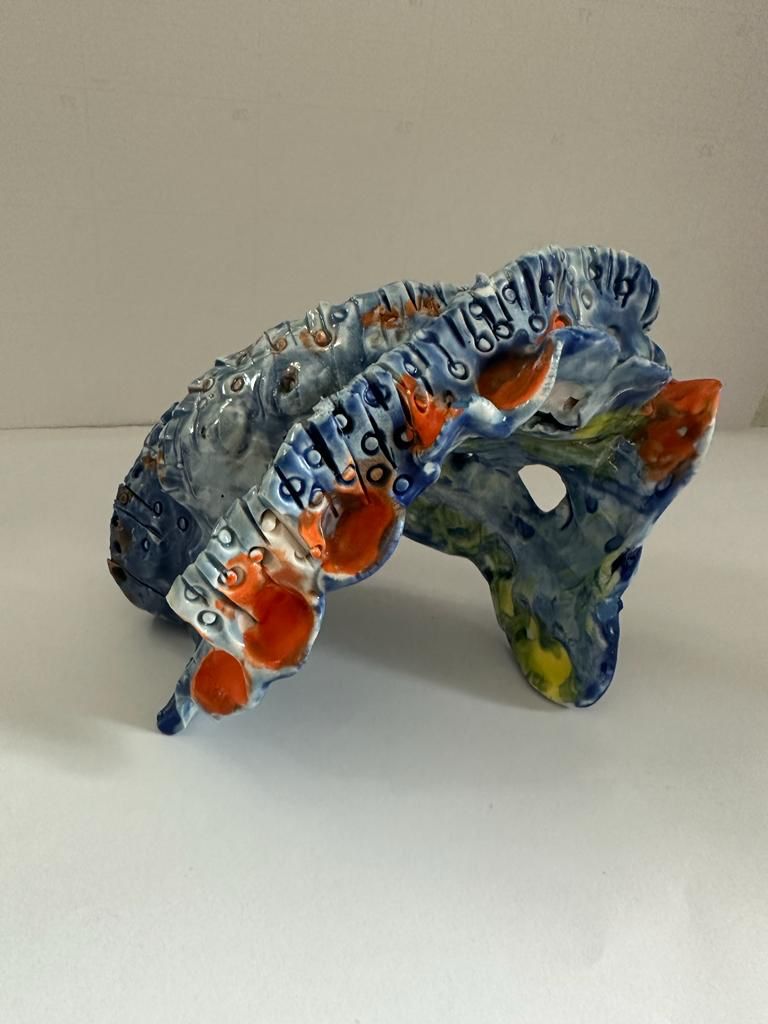
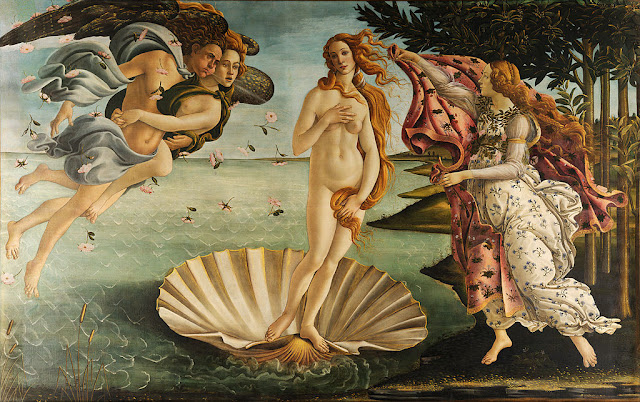
The history of art focuses on objects made by humans in visual form for aesthetic purposes. Visual art can be classified in diverse ways, such as separating fine arts from applied arts; inclusively focusing on human creativity; or focusing on different media such as architecture, sculpture, painting, film, photography, and graphic arts. In recent years, technological advances have led to video art, computer art, Performance art, animation, television, and videogames.
The history of art is often told as a chronology of masterpieces created during each civilization. It can thus be framed as a story of high culture, epitomized by the Wonders of the World. On the other hand, vernacular art expressions can also be integrated into art historical narratives, referred to as folk arts or craft. The more closely that an art historian engages with these latter forms of low culture, the more likely it is that they will identify their work as examining visual culture or material culture, or as contributing to fields related to art history, such as anthropology or archaeology. In the latter cases art objects may be referred to as archeological artifacts.

Ancient Egyptian Art
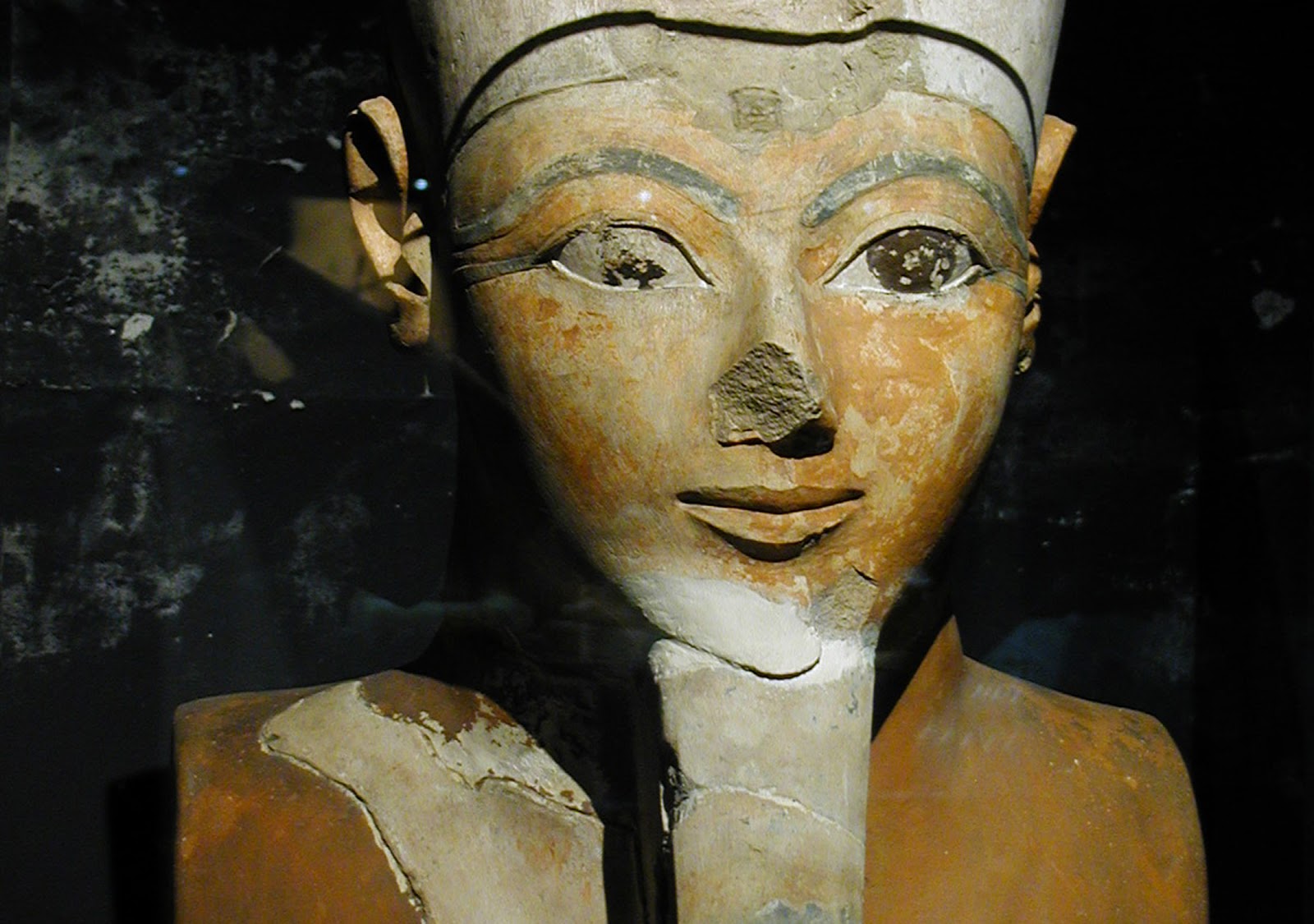
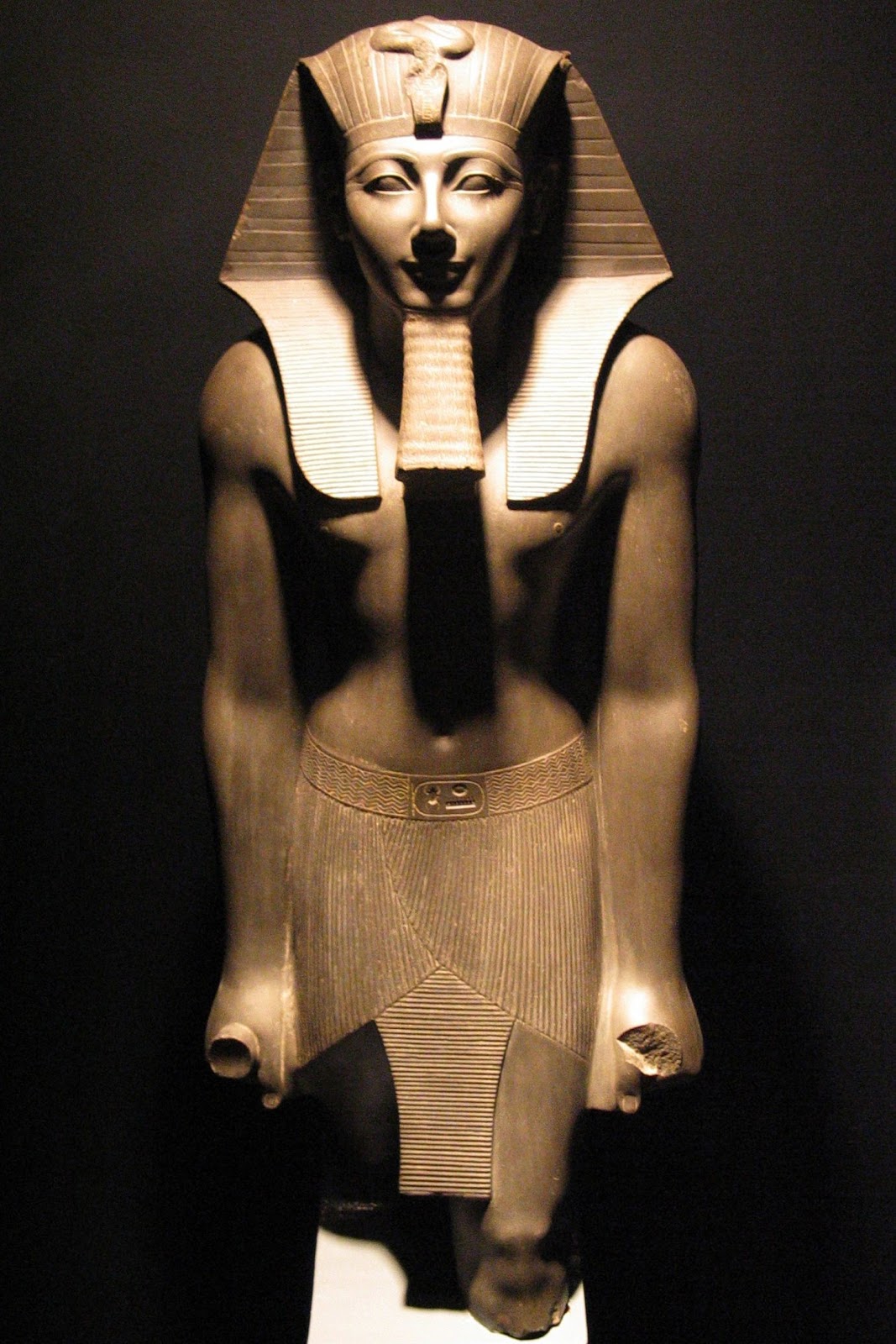
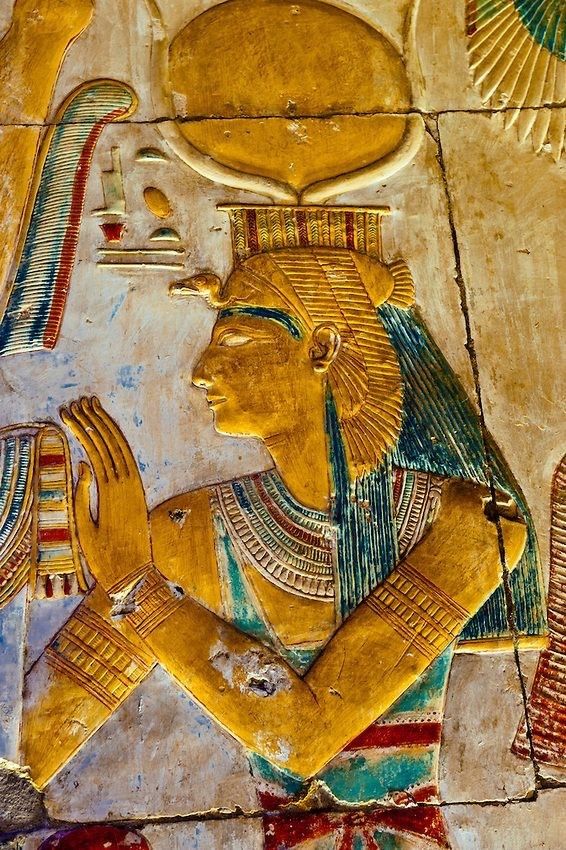
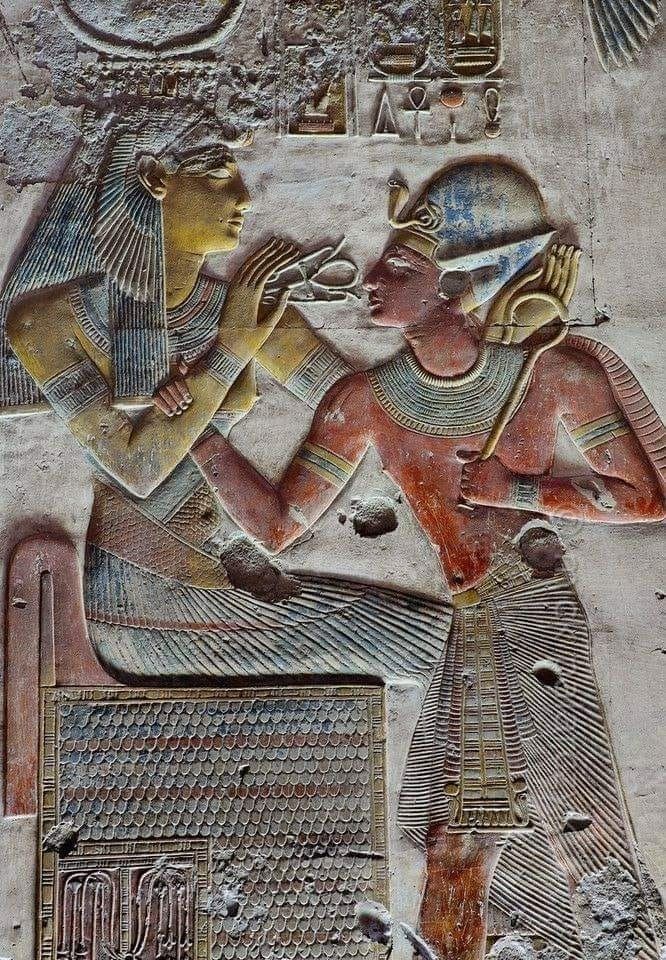
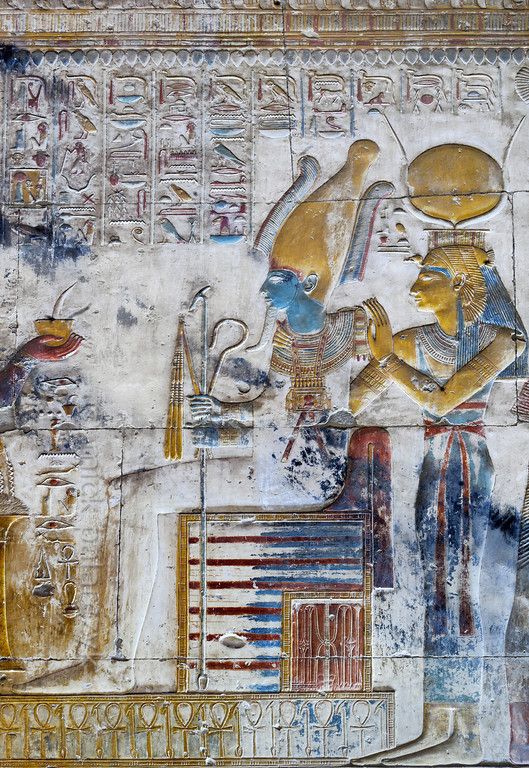
Ancient Egyptian art refers to paintings, sculptures, architecture, and other arts produced in ancient Egypt between the 31st century BC and the 4th century AD. It is very conservative; Egyptian styles changed remarkably little over time. Much of the surviving art comes from tombs and monuments, which have given more insight on the Egyptians’ belief of the afterlife. This has caused a greater focus on preserving the knowledge of the past. Wall art was not produced for people to look at but it had a purpose in the afterlife and in rituals.

The Ancient Egyptian language had no word for “art”. Artworks served an essentially functional purpose that was bound with religion and ideology. To render a subject in art was to give it permanence. Hence, ancient Egyptian art portrayed an idealized, unrealistic view of the world. There was no tradition of individual artistic expression since art served a wider and cosmic purpose of maintaining order.”The artworks of ancient Egypt have fascinated people for thousands of years. The early Greek and later Roman artists were influenced by Egyptian techniques and their art would inspire those of other cultures up to the present day. Many artists are known from later periods but those of Egypt are completely anonymous and for a very interesting reason: their art was functional and created for a practical purpose whereas later art was intended for aesthetic pleasure. Functional art is work-made-for-hire, belonging to the individual who commissioned it, while art created for pleasure – even if commissioned – allows for greater expression of the artist’s vision and so recognition of an individual artist.
A Greek artist like Phidias (c.490-430 BCE) certainly understood the practical purposes in creating a statue of Athena or Zeus but his primary aim would have been to make a visually pleasing piece, to make “art” as people understand that word today, not to create a practical and functional work. All Egyptian art served a practical purpose: a statue held the spirit of the god or the deceased; a tomb painting showed scenes from one’s life on earth so one’s spirit could remember it or scenes from the paradise one hoped to attain so one would know how to get there; charms and amulets protected one from harm; figurines warded off evil spirits and angry ghosts; hand mirrors, whip-handles, cosmetic cabinets all served practical purposes and ceramics were used for drinking, eating, and storage.
Although Egyptian art is highly regarded today and continues to be a great draw for museums featuring exhibits, the ancient Egyptians themselves would never have thought of their work in this same way and certainly would find it strange to have these different types of works displayed out of context in a museum’s hall. Statuary was created and placed for a specific reason and the same is true for any other kind of art. The concept of “art for art’s sake” was unknown and, further, would have probably been incomprehensible to an ancient Egyptian who understood art as functional above all else.”(ancient.eu)







Roman Empire
The Byzantine Empire, also referred to as the Eastern Roman Empire and Byzantium, was the continuation of the Roman Empire in its eastern provinces during Late Antiquity and the Middle Ages, when its capital city was Constantinople (modern-day Istanbul, which had been founded as Byzantium). It survived the fragmentation and fall of the Western Roman Empire in the 5th century AD and continued to exist for an additional thousand years until it fell to the Ottoman Turks in 1453. During most of its existence, the empire was the most powerful economic, cultural, and military force in Europe. Both “Byzantine Empire” and “Eastern Roman Empire” are historiographical terms created after the end of the realm; its citizens continued to refer to their empire simply as the Roman Empire (Greek: Βασιλεία Ῥωμαίων, tr. Basileia Rhōmaiōn; Latin: Imperium Romanum), or Romania, and to themselves as “Romans”.Wikipedia


Byzantine art
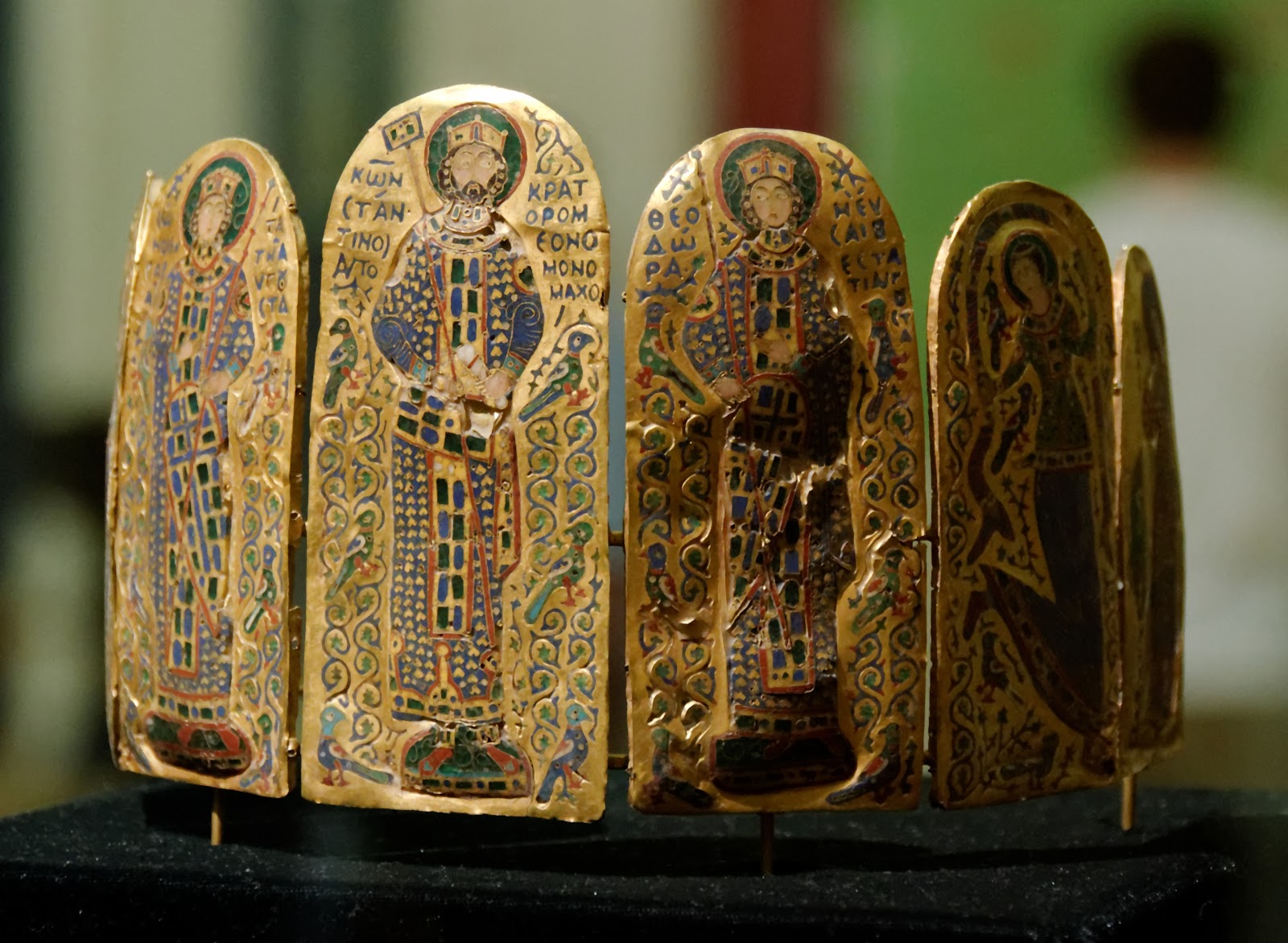
Byzantine art refers to the body of Christian Greek artistic products of the Eastern Roman (Byzantine) Empire, as well as the nations and states that inherited culturally from the empire. Though the empire itself emerged from Rome’s decline and lasted until the Fall of Constantinople in 1453, the start date of the Byzantine period is rather clearer in art history than in political history, if still imprecise. Many Eastern Orthodox states in Eastern Europe, as well as to some degree the Muslim states of the eastern Mediterranean, preserved many aspects of the empire’s culture and art for centuries afterward.
A number of states contemporary with the Byzantine Empire were culturally influenced by it, without actually being part of it (the “Byzantine commonwealth”). These included the Rus, as well as some non-Orthodox states like the Republic of Venice, which separated from the Byzantine empire in the 10th century, and the Kingdom of Sicily, which had close ties to the Byzantine Empire and had also been a Byzantine possession until the 10th century with a large Greek-speaking population persisting into the 12th century. Other states having a Byzantine artistic tradition had oscillated throughout the Middle Ages between being part of the Byzantine empire and having periods of independence, such as Serbia and Bulgaria. After the fall of the Byzantine capital of Constantinople in 1453, art produced by Eastern Orthodox Christians living in the Ottoman Empire was often called “post-Byzantine.” Certain artistic traditions that originated in the Byzantine Empire, particularly in regard to icon painting and church architecture, are maintained in Greece, Cyprus, Serbia, Bulgaria, Romania, Russia and other Eastern Orthodox countries to the present day. Wikipedia
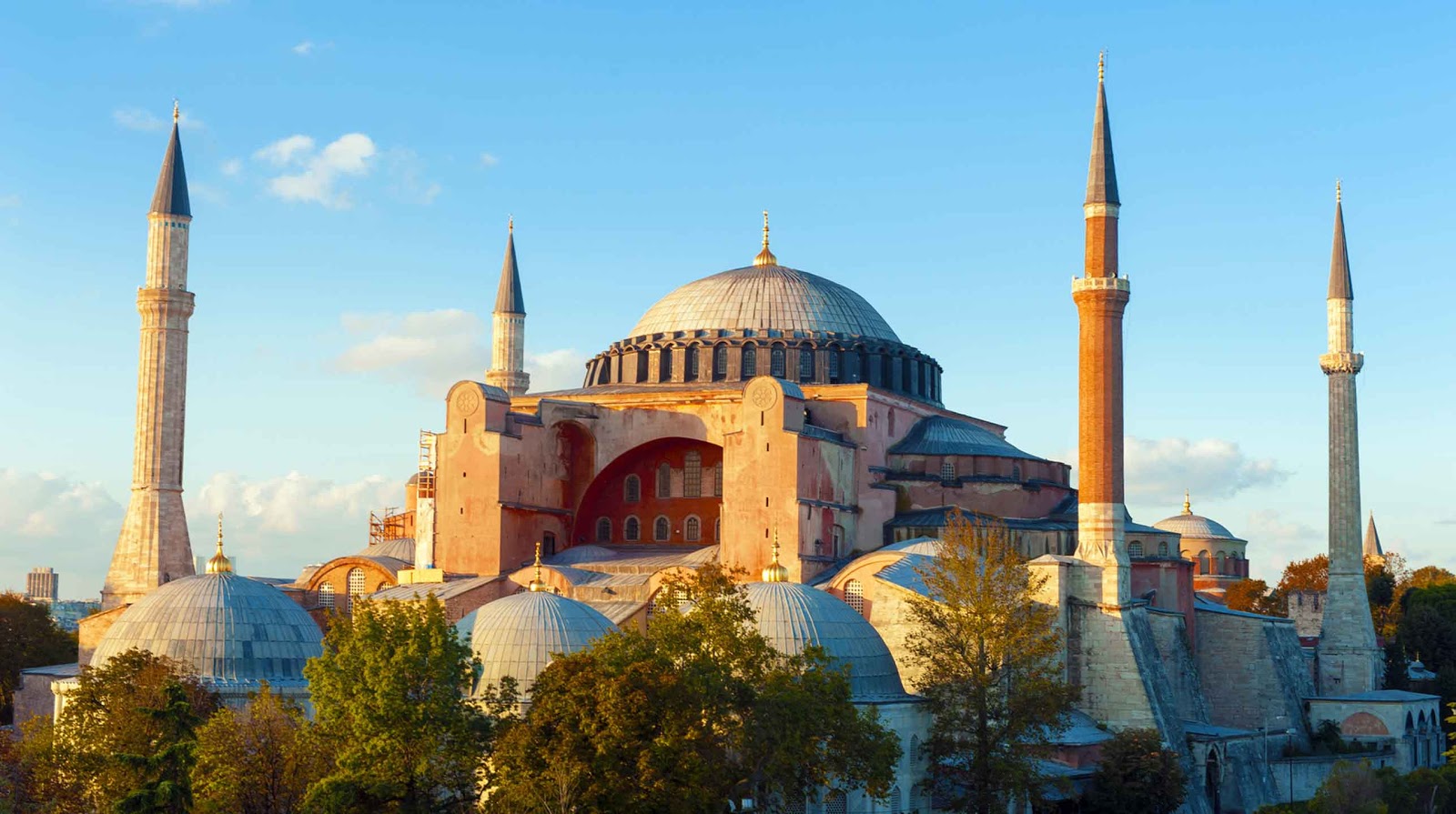

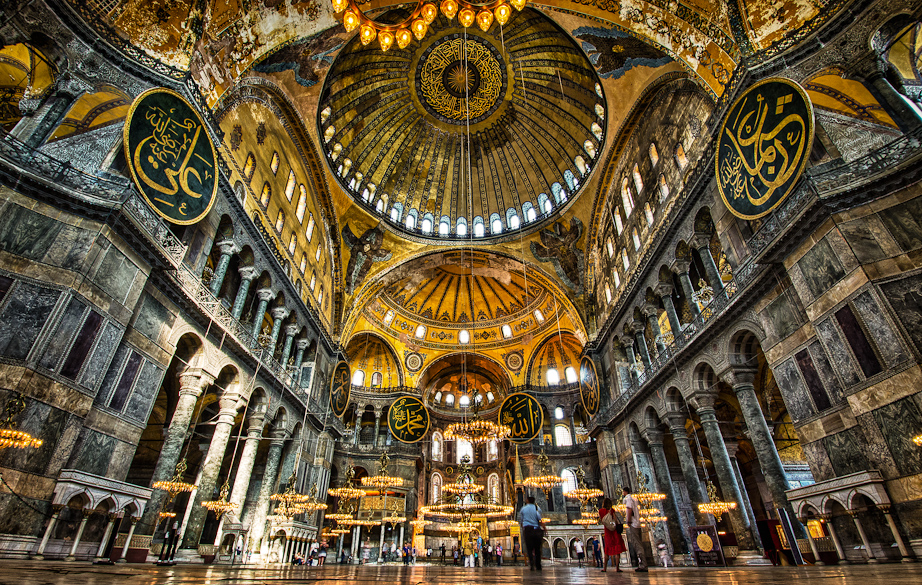
Hagia Sophia


Walls ofConstantinopleBoukoleon Palace


Empress Theodora
Comnenus mosaics Hagia Sophia
Hagia Sophia in Constantinople – the image of Christ Pantocrator

The Annunciation from Ohrid
Menologion of Basil II

Unidentified military man
Portrait of the military man Onesiphorus
Portrait of the military man Priscus
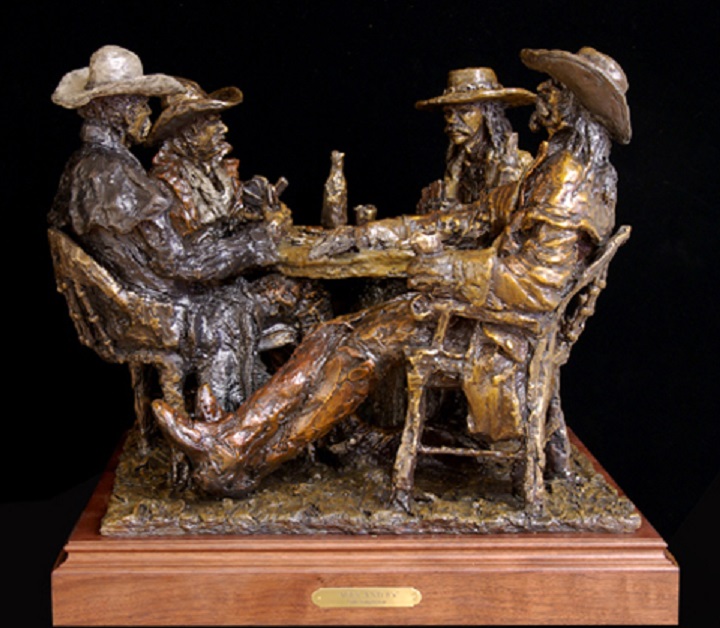
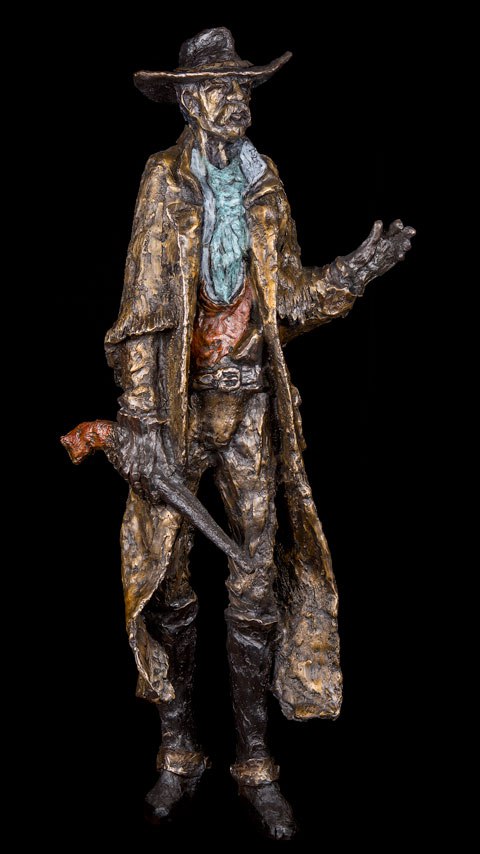
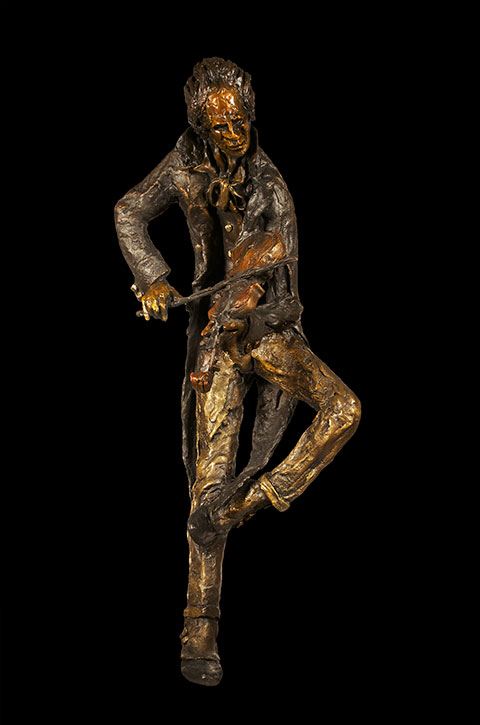
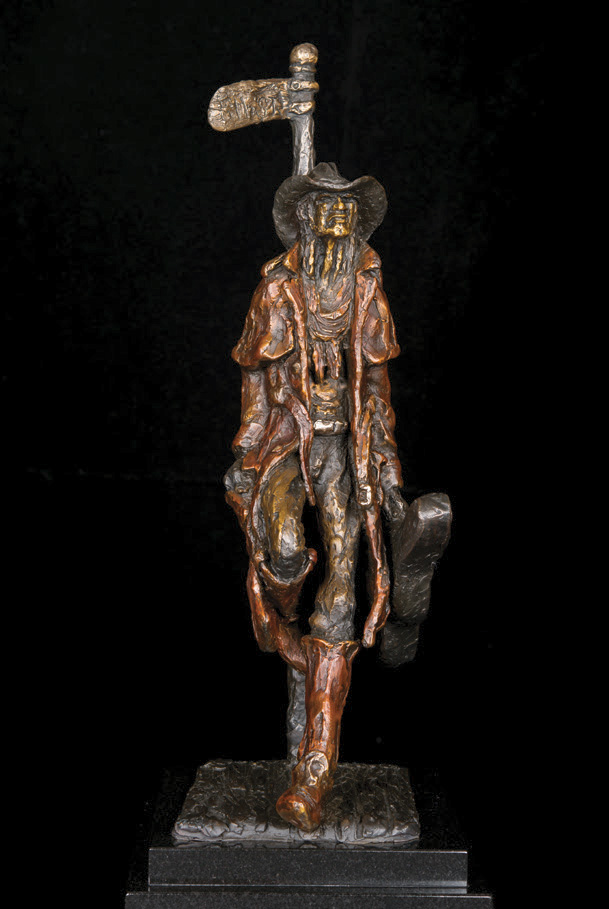
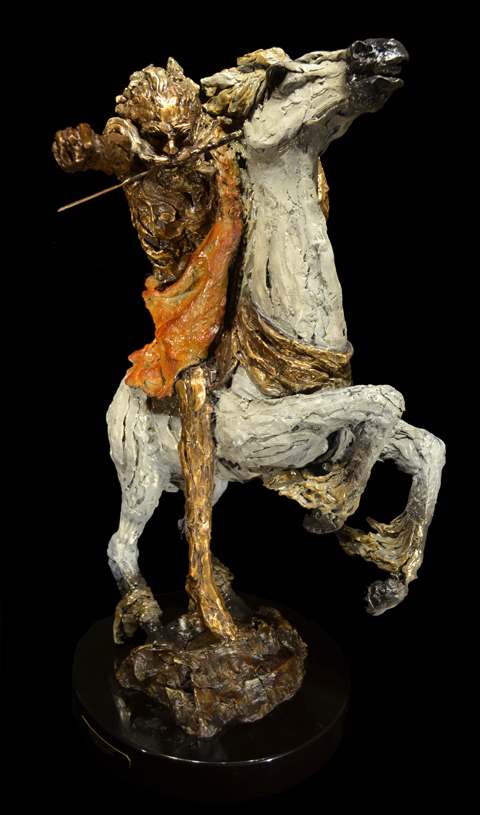
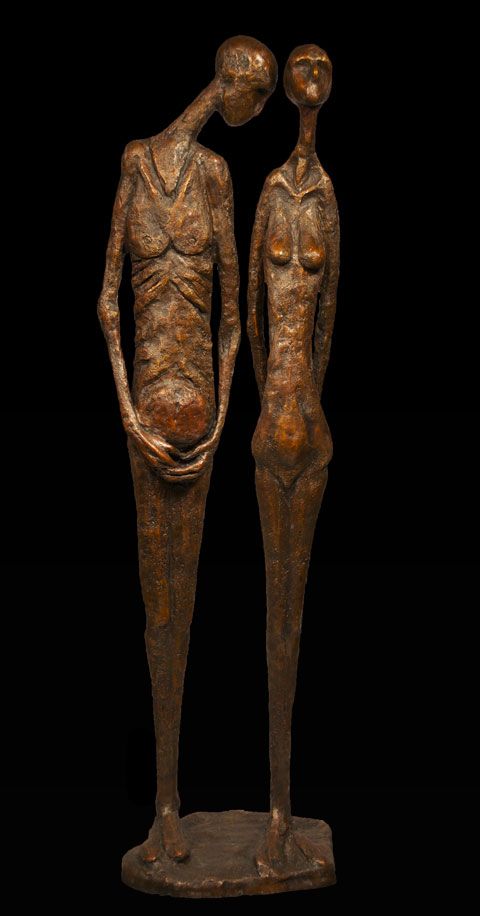
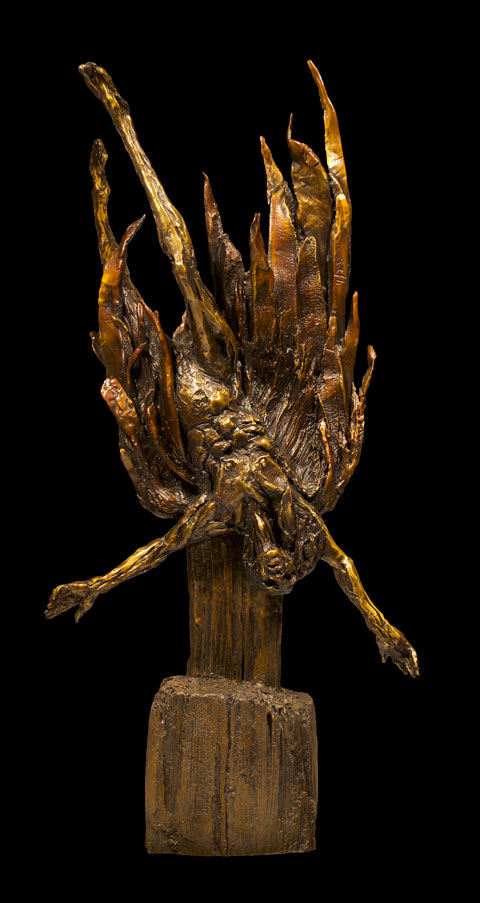
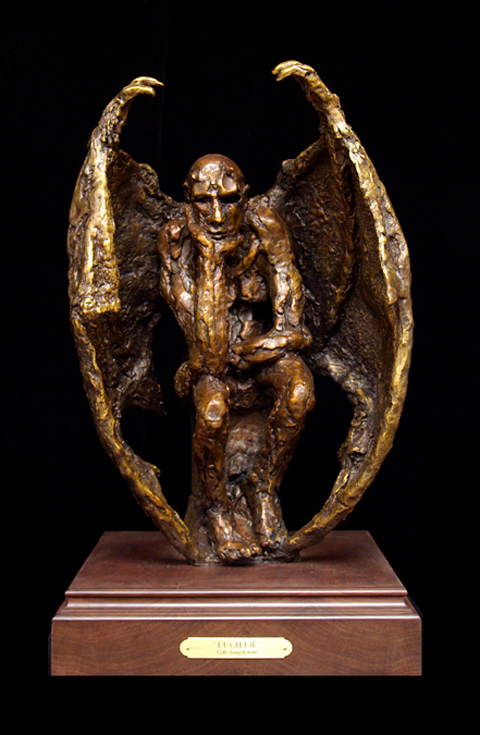
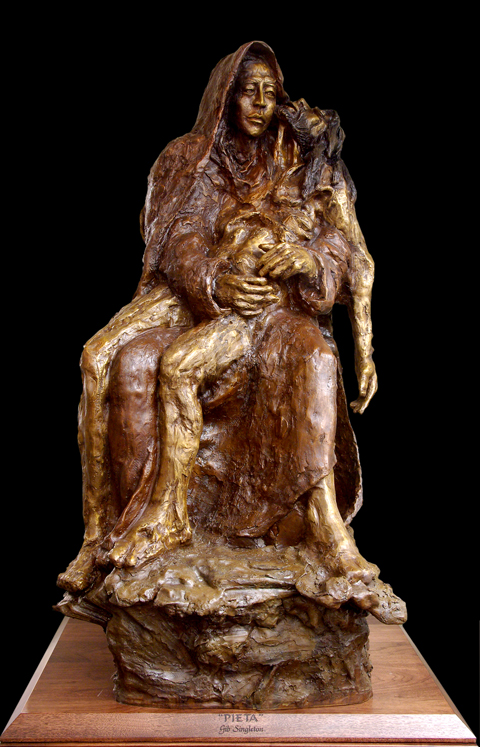
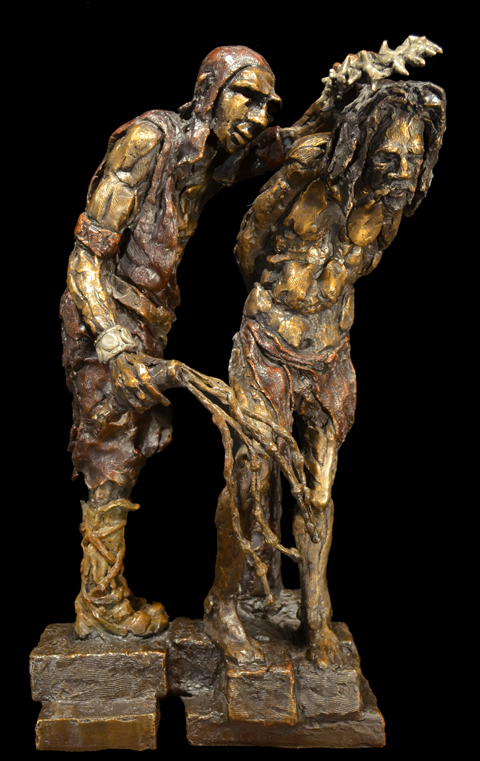
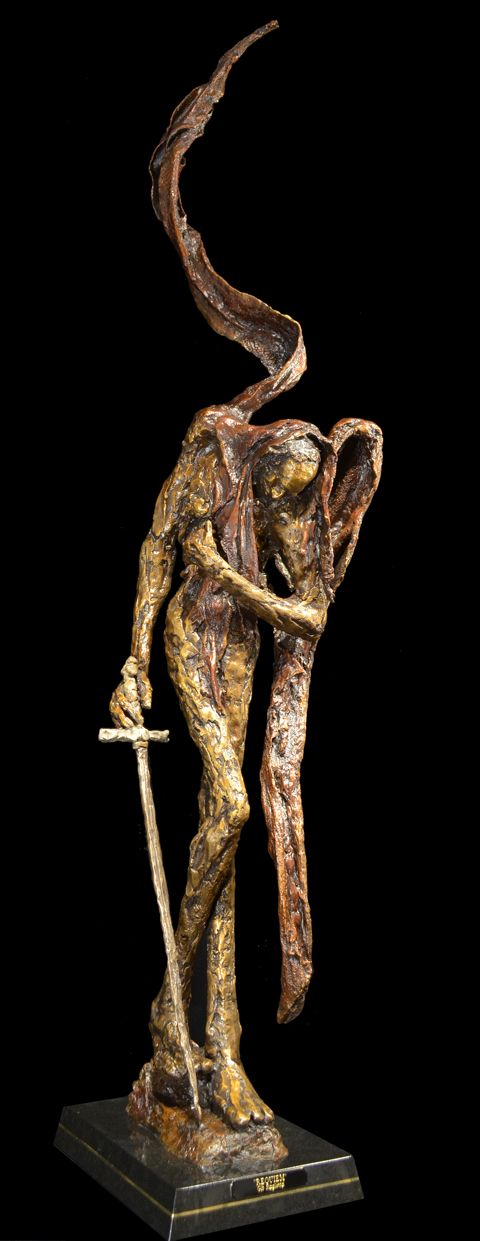
Gib Singleton – Emotional Realism – American Sculpture
Gilbert Jerome “Gib” Singleton (1935 – February 28, 2014) was an American sculptor. Classically trained, he is considered to be a modern master of bronze sculpture. His primary sources of subject matter are the Bible and the American Old Wes.Born Gilbert Singleton in Kennett, Missouri in 1936, he began developing his artistic abilities at an early age, using whatever materials were available to a young farm boy. He won his first art prize at the age of nine, taking a blue ribbon at the Dunklin County Fair. At age 16, he became interested in bronze and built his own foundry, using a cut down steel 55 gallon drum, a discarded vacuum cleaner, and trial and error.After graduating from high school, Singleton enlisted in the army. He then worked his way through college at Southern Illinois University Edwardsville (SIUE), graduating in 1967 with a Bachelor of Arts in art education. Upon graduating from SIUE, he won a full scholarship to the Art Institute of Chicago where his work earned him a Fulbright Scholarship. He used this to study the works of the Renaissance art masters at the Accademia di Belle Arti in Florence, Italy. While there, Jacqueline Kennedy Onassis requested that he assist with the restoration of flood damaged art in Florence.After being recruited by and working in the Vatican Workshop, where he assisted in the restoration of Michelangelo’s Pieta, Singleton returned to the U.S. to concentrate on his own work. He tells of selling his work on the streets of New York, sleeping on the Connecticut beaches, and often going hungry while developing the unique style that he has termed, “emotional realism”. He then became head of the sculpture department at Fairfield University in Fairfield, Connecticut. During this time, he visited the Frederic Remington Art Museum in Ogdensburg, New York. Singleton had been developing his own western style since boyhood, and the works of Remington convinced him to move to Santa Fe, New Mexico and create western art.
The work of Singleton, along with that of painter Earl Biss, encouraged a group of collectors of their art to develop the Singleton-Biss Museum of Fine Art in Santa Fe, to share their joint collection of the works of “contemporary American visual artists.” The museum opened to the public in 2008.Singleton died at his home at Santa Fe, New Mexico on February 28, 2014.Wikipedia









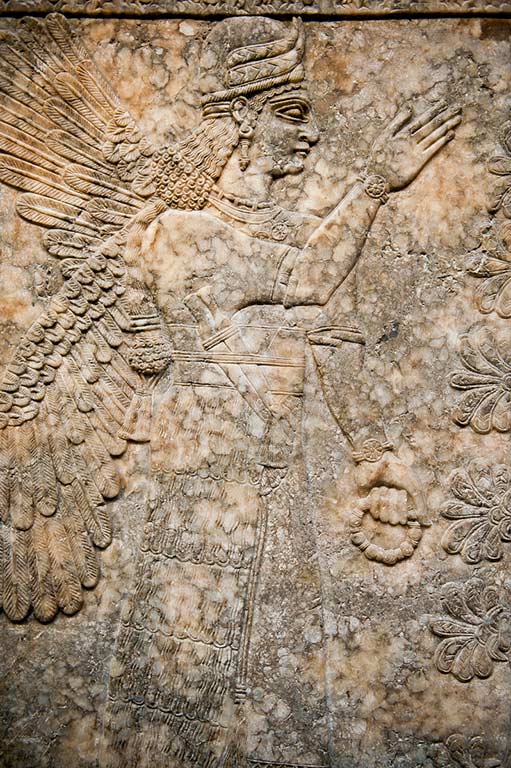
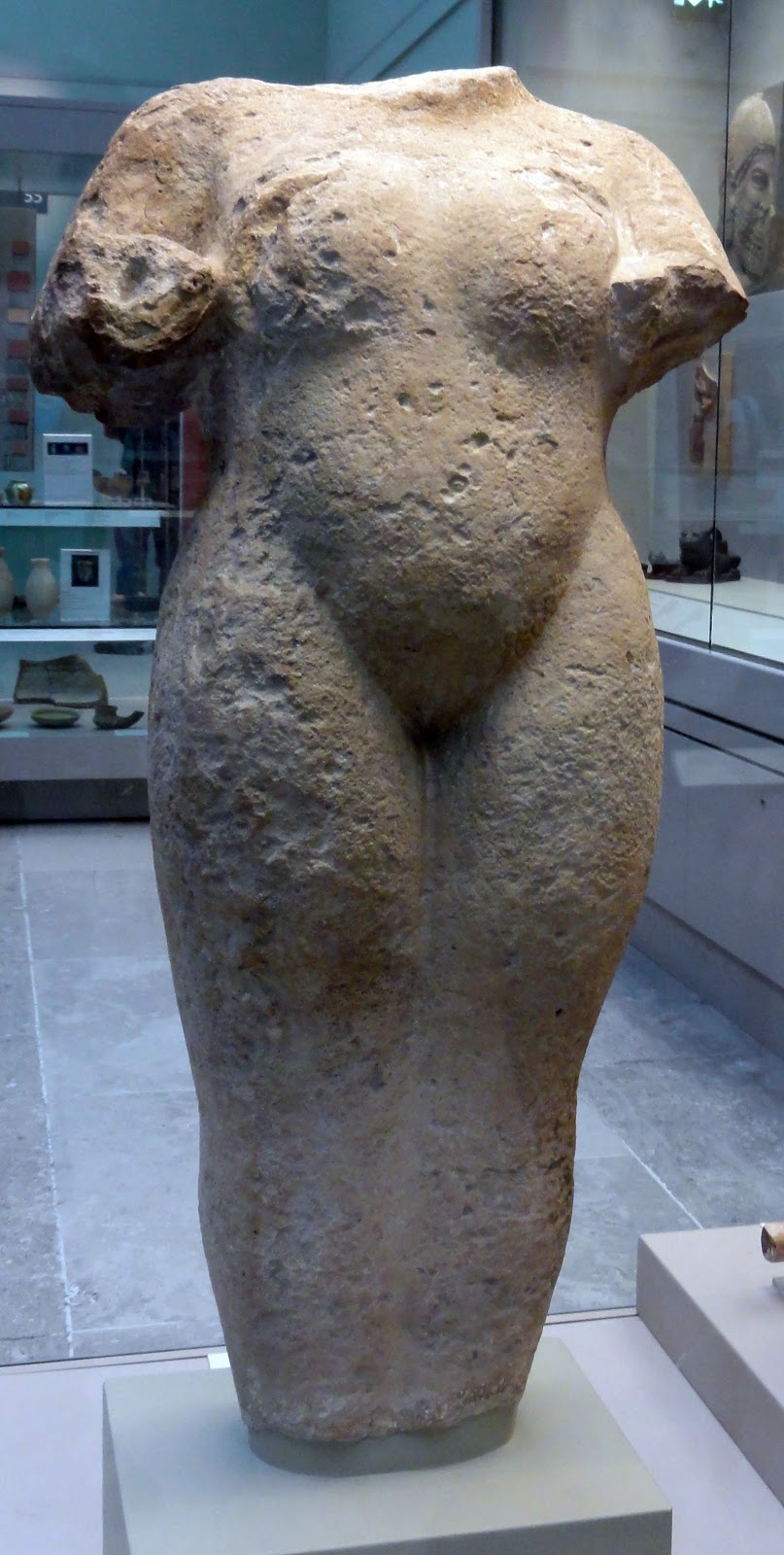
Assyrian sculpture
Assyrian sculpture is the sculpture of the ancient Assyrian states, especially the Neo-Assyrian Empire of 911 to 612 BC, which ruled modern Iraq, Syria, and much of Iran. It forms a phase of the art of Mesopotamia, differing in particular because of its much greater use of stone and gypsum alabaster for large sculpture.
Much the best-known works are the huge lamassu guarding entrance ways, and Assyrian palace reliefs on thin slabs of alabaster, which were originally painted, at least in part, and fixed on the wall all round the main rooms of palaces. Most of these are in museums in Europe or America, following a hectic period of excavations from 1842 to 1855, which took Assyrian art from being almost completely unknown to being the subject of several best-selling books, and imitated in political cartoons.
The palace reliefs contain scenes in low relief which glorify the king, showing him at war, hunting, and fulfilling other kingly roles. Many works left in situ, or in museums local to their findspots,have been deliberately destroyed in the recent occupation of the area by Daesh, the pace of destruction reportedly increasing in late 2016, with the Mosul offensive.Other surviving types of art include many cylinder seals,a few rock reliefs, reliefs and statues from temples, bronze relief strips used on large doors,and small quantities of metalwork. The Nimrud ivories, an important group of small plaques which decorated furniture, were found in a palace storeroom near reliefs, but they came from around the Mediterranean, with relatively few made locally in an Assyrian style.Wikipedia


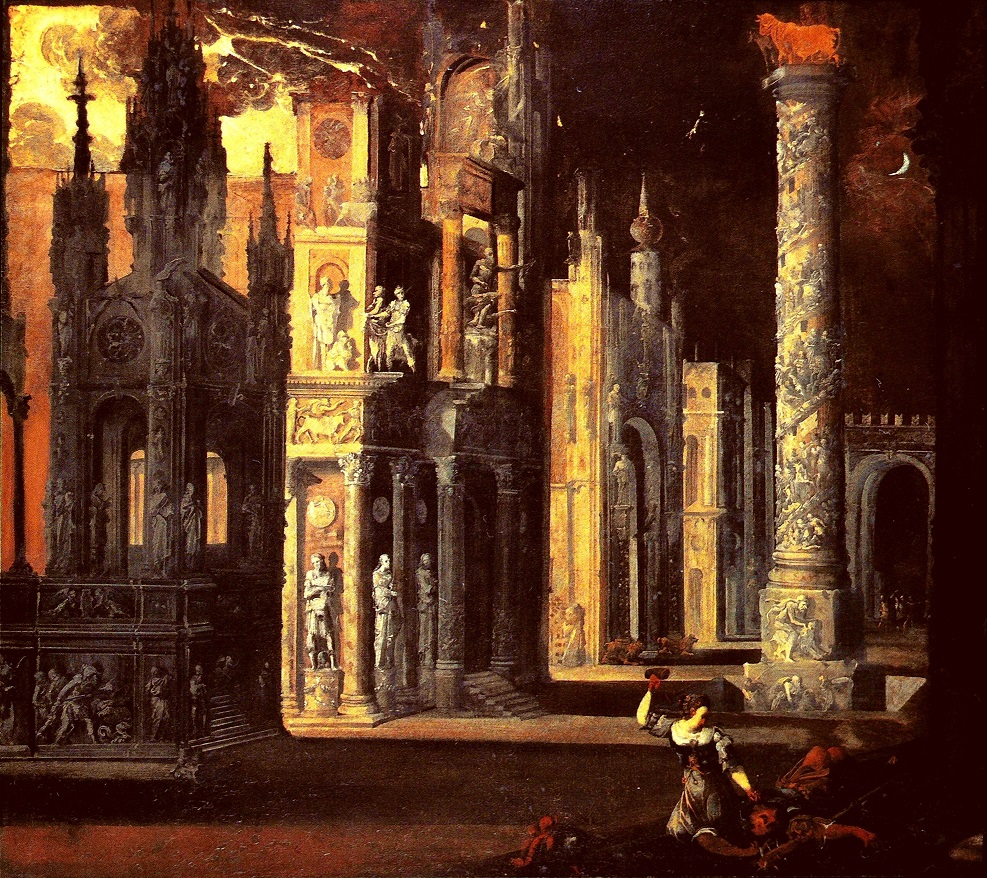
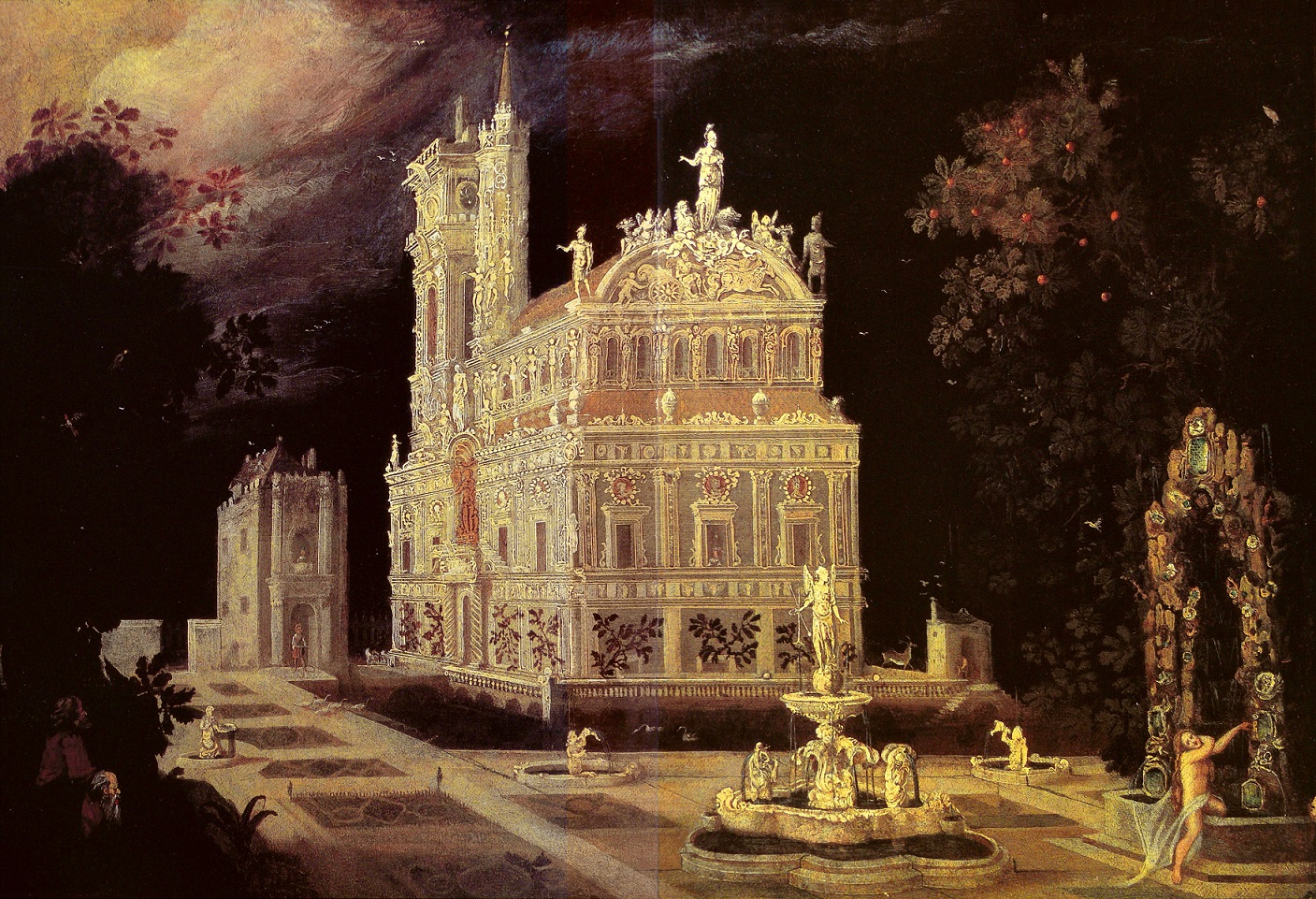
Francois de Nome
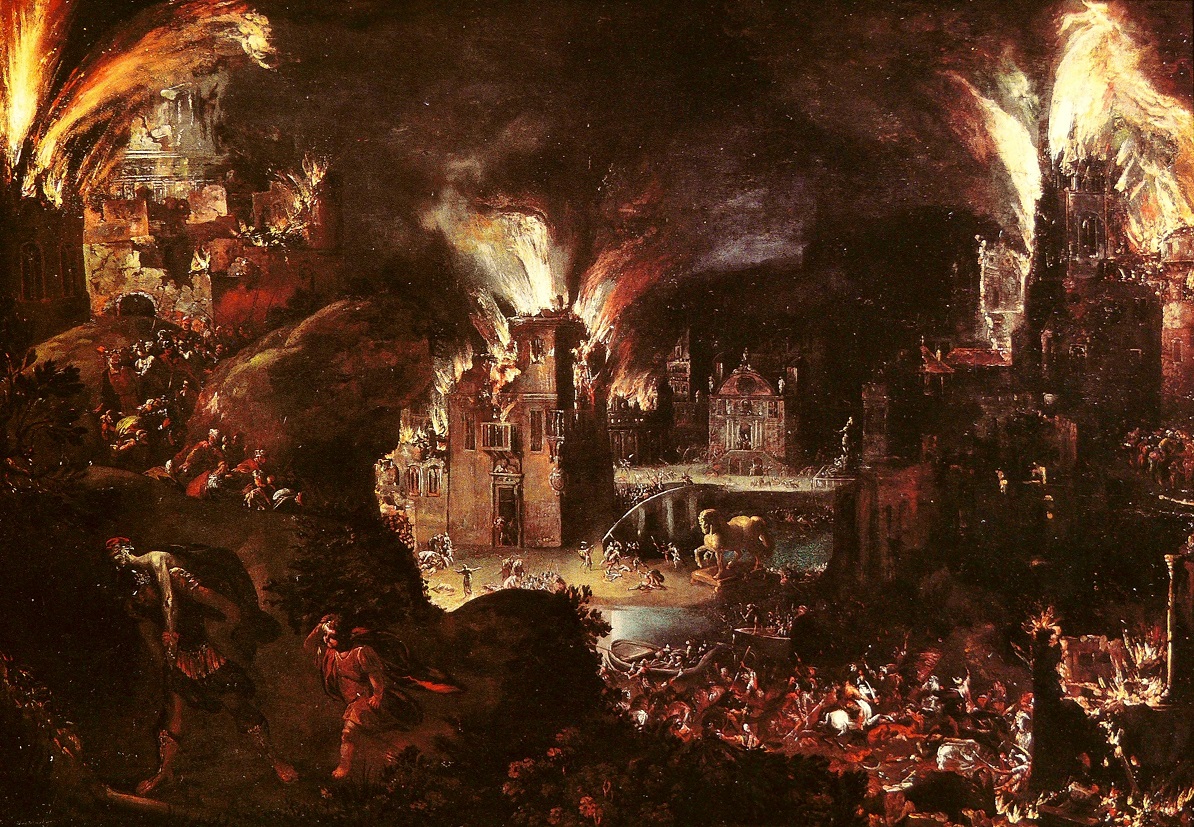
Francois de Nome (1593 – after 1620) was a French painter of the Baroque period, active mainly in Naples.Born in Metz in the Lorraine region in 1593, de Nomé had moved to Rome by 1602 where he worked in the workshop of Balthasar Lawars until around 1610 after which he moved to Naples.
Until the mid-twentieth century de Nomé’s works were believed to be by one “Monsù Desiderio”. However the works formerly attributed to Desiderio have since been identified as the work of at least three artists: de Nomé, Didier Barra, who was also from Metz, and a third, as yet unnamed painter. The figures in de Nomé’s works were painted by other artists, including Belisario Corenzio and Jacob van Swanenburgh.
The themes are bizarre, typically decrepit ruins or near-barren buildings in a nearly-surrealist, apparently post-apocalyptic landscape. People are tiny figures, skies overcast, tonalities earthen, and edges indistinct. His depiction of Venice’s Piazza di San Marco is correctly populated by the appropriate structures, but the details are all invented.The style was not highly influential for Italian painters of landscapes (veduta) in the next century, with the exception of perhaps Alessandro Magnasco. However, the depictions of nightmarish wilderness amidst the detritus of civilization was a thematic adopted by painters such as Salvatore Rosa and Michelangelo Cerquozzi, and reappears in the capricci (whimsical and fantastic monuments, ruins, or buildings) of Piranesi.Wikipedia




Domenico Guidi
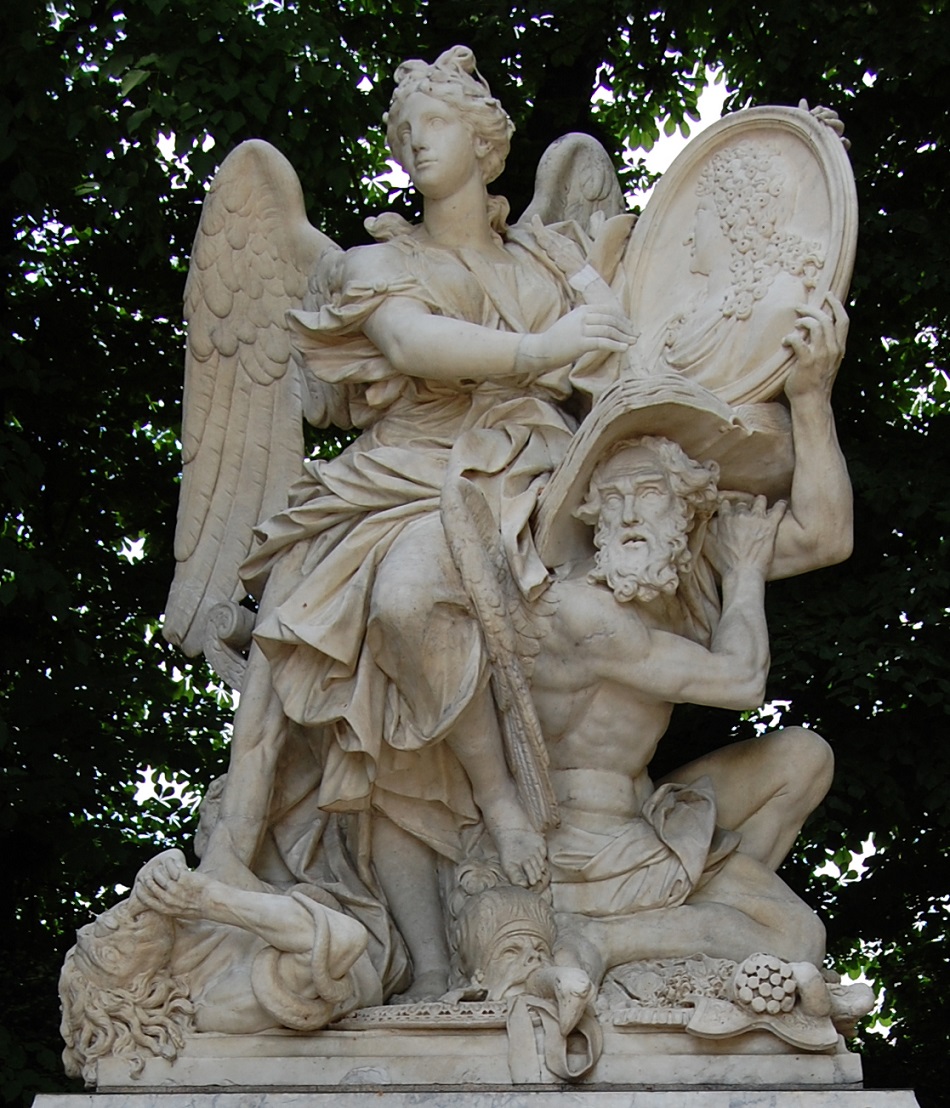
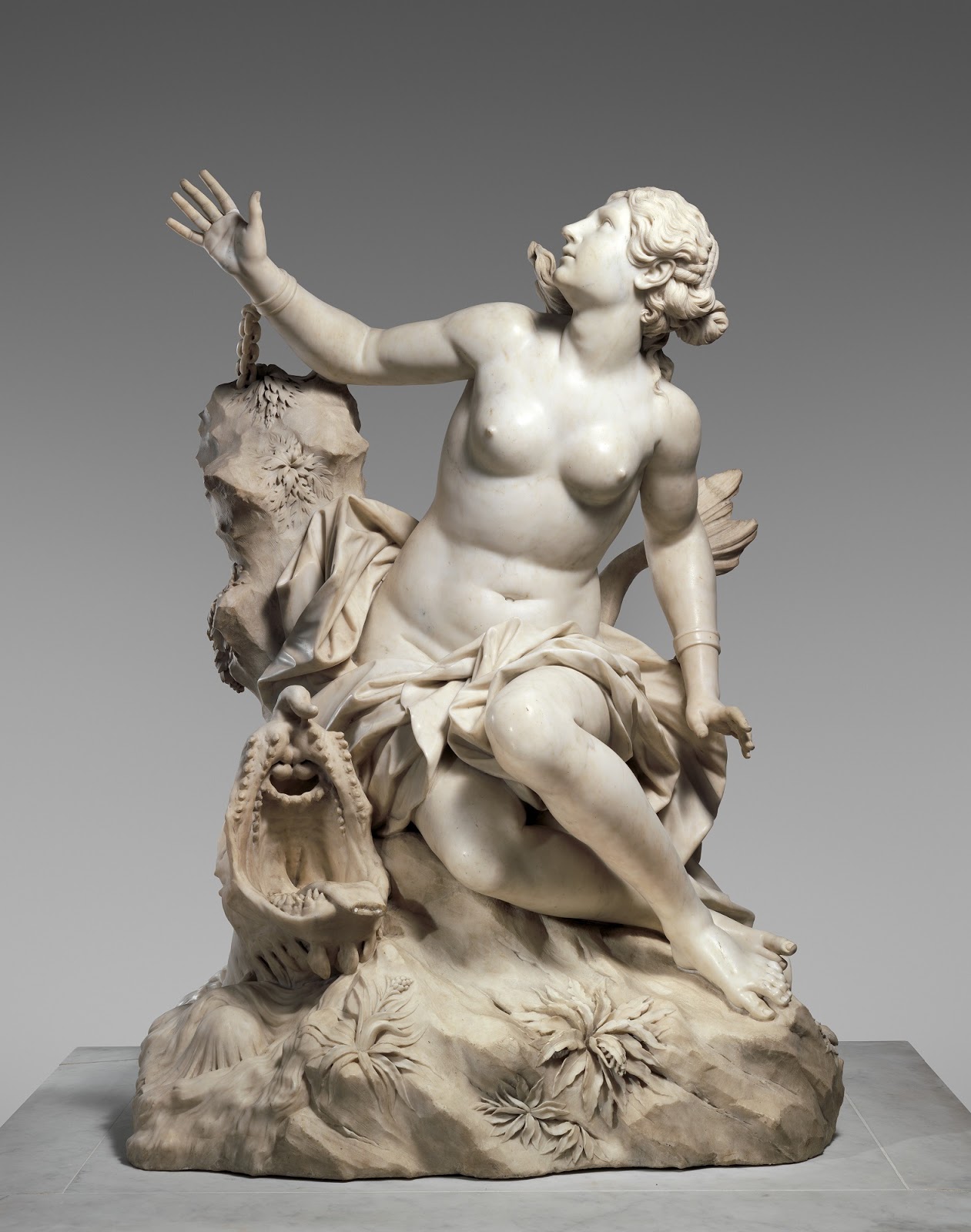
Domenico Guidi (1625 – March 28, 1701) was a prominent Italian Baroque sculptor.
Born in Carrara, Guidi followed his uncle, the prominent sculptor, Giuliano Finelli to Naples. As the nephew of a sculptor noted for his feud with Bernini, it is not surprising that Guidi was never employed by the eminent master. Instead, when he fled Naples in 1647 during Masaniello’s revolt, he joined the studio of the main competitor, Alessandro Algardi, where he remained for seven years. While in Algardi’s studio, he worked on projects with another pupil, Ercole Ferrata. For example, both helped complete their master’s unfinished Vision of Saint Nicholas (completed 1655) at San Nicola da Tolentino.
Guidi gained independence with Algardi’s passing in 1654. He also worked closely with the French sculptor in Rome, Pierre – Etienne Monnot. Relative to sculptors of other major studios, he was prolific. His works include the Monument to Natale Rondinini in Santa Maria del Popolo (1657) and the relief over the altar of Capella di Monte di Pieta showing a Lamentation over the dead body of Christ (1667 – 76). Guidi has Algardi’s competence in carving and his figures show the classical emotional detachment, but the designs are uninspired when compared to his Master. He was awarded one commission directed by Bernini, the scultping of one of the angels for the Ponte Sant’Angelo.





Nikolai Ge
Nikolai Nikolaevich Ge (1831 – 13 June [O.S. 1 June] 1894) was а Russian realist painter famous for his works on historical and religious motifs.
In 1850 he gave up his career in science and entered the Imperial Academy of Arts in Saint Petersburg. He studied in academy under the historical painter Pyotr Basin until 1857. He graduated from the academy in 1857 with a gold medal for his painting The Witch of Endor Calling Up the Spirit of the Prophet Samuel. According to Ge himself, during that period he was strongly influenced by Karl Briullov.
His gold medal provided him a scholarship for studying abroad . He visited Germany, Switzerland, France and in 1860 settled in Italy. In Rome he met Alexander Andreyevich Ivanov who strongly influenced Ge.


In 1861 Ge painted The Last Supper; using the image for his central figure of Christ a photograph taken by Russian photographer Count Sergei Lvovich Levitsky (1819–1898) of Levitsky’s cousin Aleksandr Ivanovich Herzen (1812–1870); the pro-Western writer and outstanding public figure.
Ge would recall, “I wanted to go to London to paint Herzen’s portrait,… and he responded to my request with a large portrait by Mr. Levitsky”. The final painting’s similarity between the pose of Levitsky’s photo of Herzen and Ge’s pose of the painted Christ led the press of the day to exclaim the painting as “a triumph of materialism and nihilism”.It is the first time photography became the main starting point for the solution to a central character of a painting and speaks to the deep influences that photography would have later on in art and movements like French Impressionism.
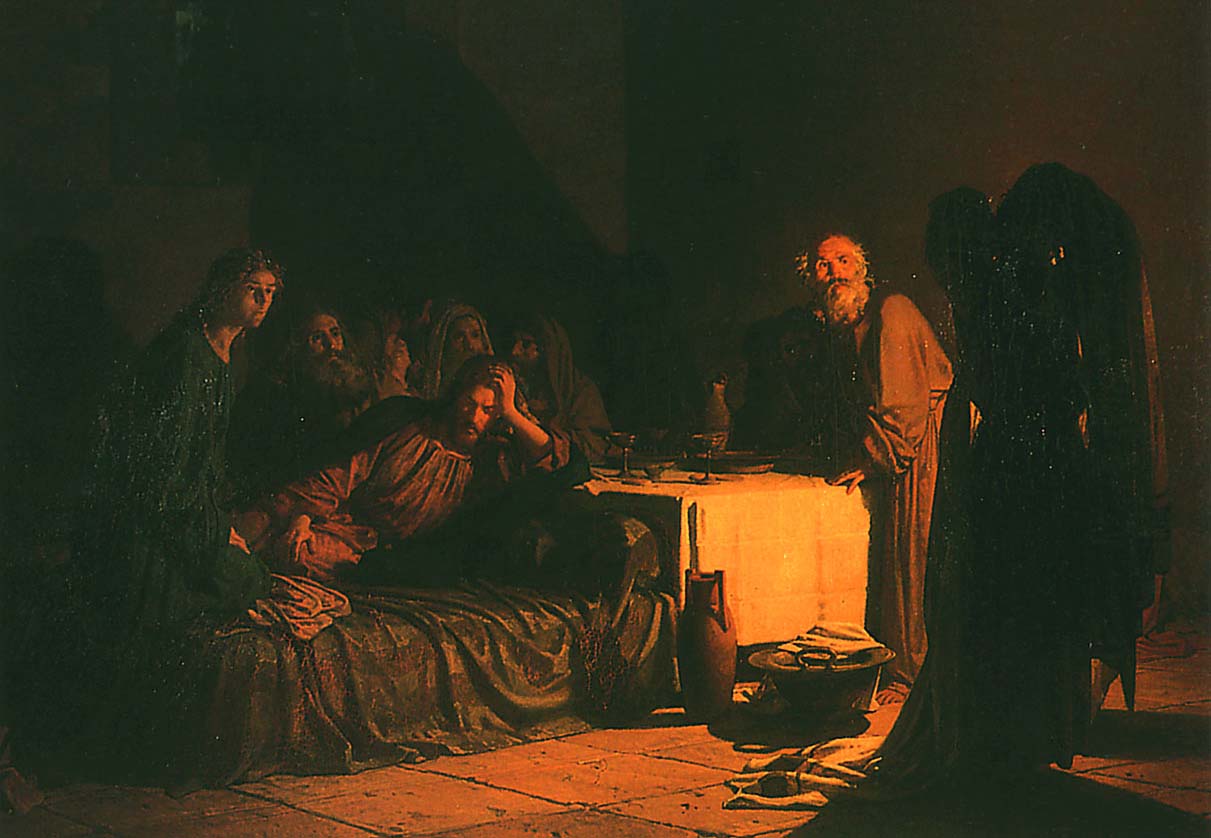
The painting (bought by Tsar Alexander II of Russia) made such a strong impression when it was shown in Saint Petersburg in 1863 that Ge was made a professor of Imperial Academy of Arts.
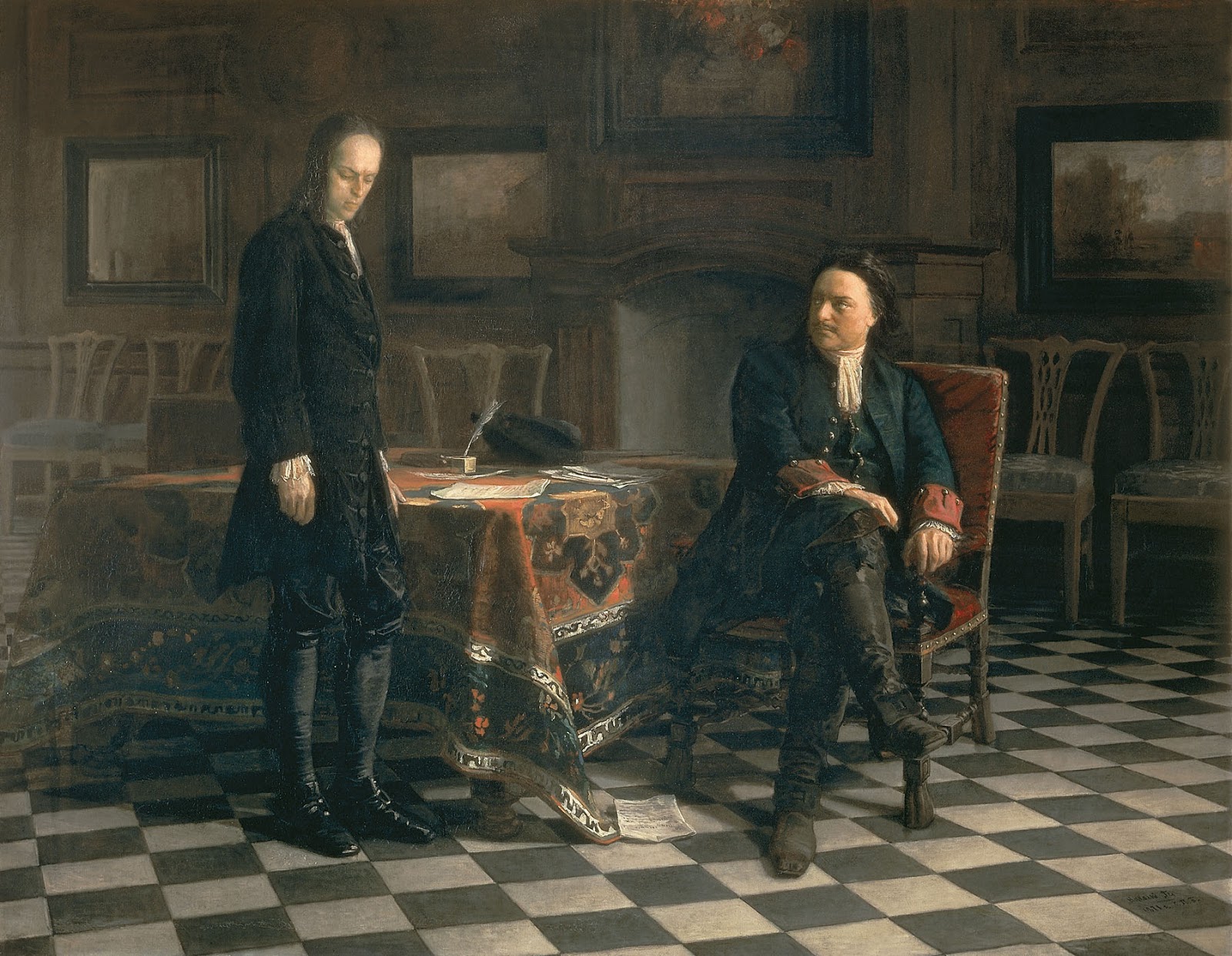
In 1864 Ge returned to Florence and would paint not only Herzen’s portrait but also the Messengers of the Resurrection and the first version of the Christ on the Mount of Olives. The new religious paintings at that time were not much of a success, and the Imperial Academy refused to exhibit them in its annual exhibition.In 1870 Ge again returned to Saint Petersburg there he turned to Russian history for subject matter. The painting Peter the Great Interrogates Tsarevich Alexey at Peterhof (1871) was a great success, but other historical paintings were met without interest. Ge took the cold response to his work very hard. He wrote that a man should live by doing agricultural work, and the art should not be for sale. He bought a small khutor (farm) in Chernigov gubernia, (currently Ukraine) and moved there. He became acquainted with Leo Tolstoy and became an enthusiastic follower of his philosophy.

In the early 1880s he returned to art producing religious paintings and portraits. He stated that everybody has a right to have a portrait so he agreed to work for whatever low commission the subject could afford. Among his portraits of the time was his famous portrait of Leo Tolstoy, portrait of Mikhail Saltykov-Shchedrin and many others.
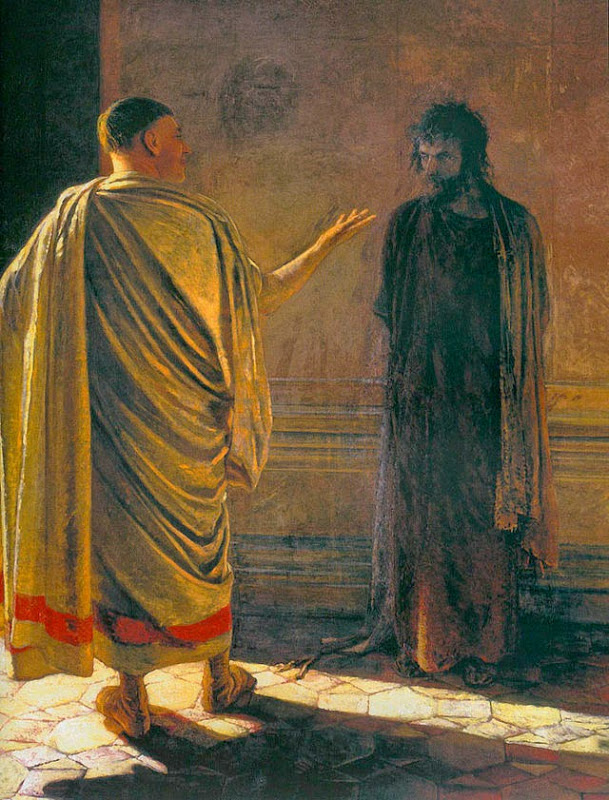
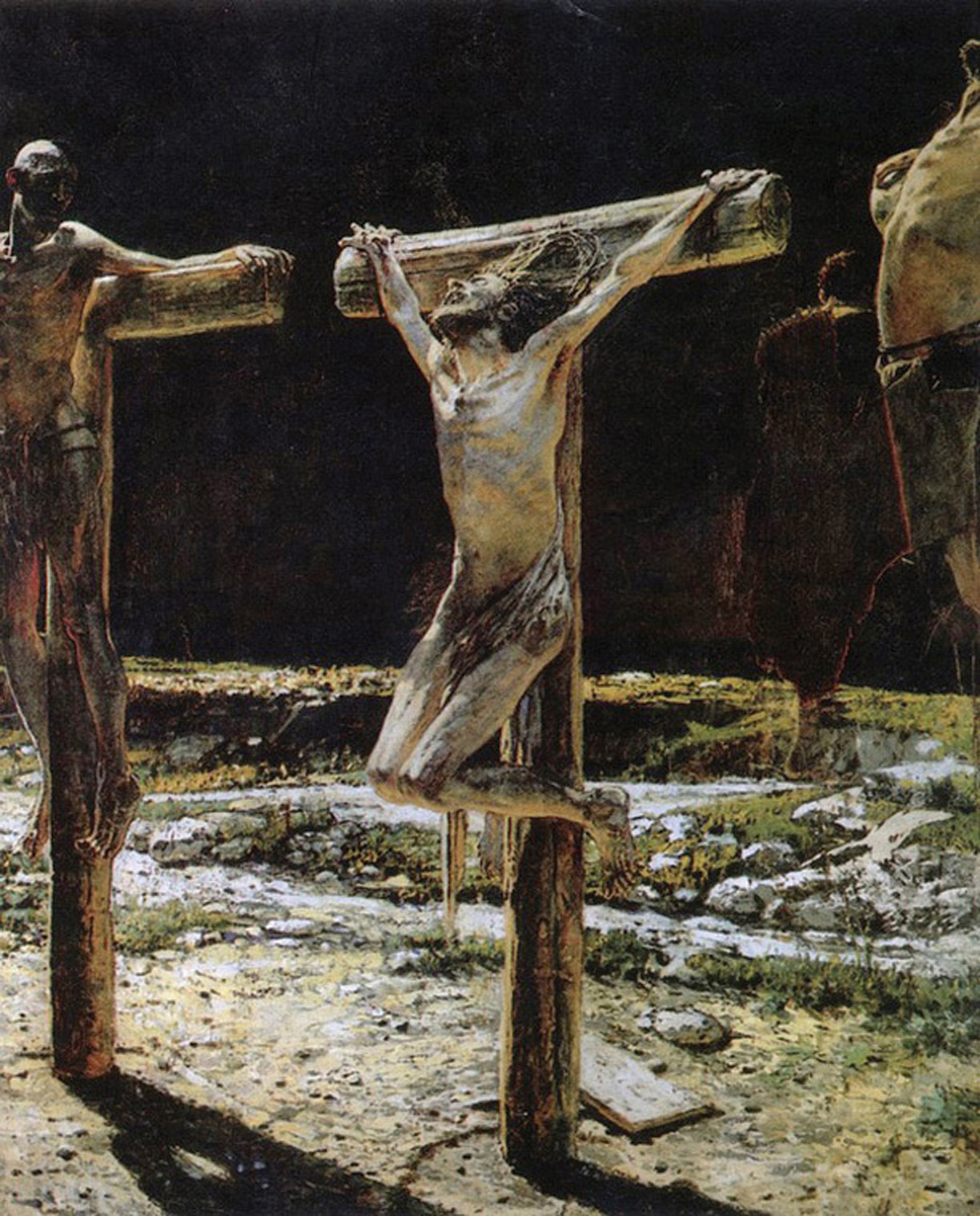
His late paintings on New Testament subjects of that period were praised by liberal critics like Vladimir Stasov, criticized by conservatives as illustrating Ernest Renan rather than the New Testament and forbidden by the authorities for blasphemy. Quod Est Veritas? Christ and Pilate (1890) was expelled from the exhibition; The Judgment of the Sanhedrin: He is Guilty! (1892) was not admitted to the annual Academy of Arts exhibition; The Calvary (Golgotha) (1893) remained unfinished; The Crucifixion (1894) was banned by Tsar Alexander III.
Ge died on his farm in 1894.Wikipedia


Henryk Siemiradzki
“Henryk Siemiradzki a great representative of European academic art. Born in 1843 near Kharkiv, in an estate called Pieczeniegi, died in 1902 in Strzałków near Częstochowa.He was born into a noble family that resided in Lithuania since the end of the 17th century. The artist’s father was an officer in the Russian army, who ended his career in 1871 in a general’s rank. An atmosphere of Polish patriotism existed however within the family. Siemiradzki considered himself a Pole throughout his entire life. He remained indifferent to the fact that the Russian press and critics tried to attribute Russian nationality to him, when he was having his greatest artistic successes. His works are still exhibited in the national art sections of some museums in Russia and in the Ukraine.He spent his childhood in Kharkiv. In the same town he received, already as a gymnasium student, drawing lessons from Dmitry Bezperchy. Siemiradzki reminisced later that thanks to his tutor he felt very well prepared for academic studies. In 1864 he completed the mathematical-physical faculty of the Kharkiv university and he received the title of natural sciences candidate. The same year he was admitted to the Petersburg Academy of Fine Arts, at first as a non-enrolled student (he couldn’t be put on the list of students because he was more than 21 years old); only in 1866, after many efforts, did he become a regular student. He learned under the auspices of the well-known battle-painter Bogdan Willewalde and Karl Wenig. As a student of the academy Siemiradzki was awarded a silver medal 5 times and a golden one twice. He was respected and supported by the academy’s rector Fiodor Bruni. The Polish painter spent much of his time in the Hermitage museum. He was fascinated with the works of the masters of the Italian renaissance. He frequented the Petersburg theatres, where he paid close attention to stage sceneries, decorations and light effects. Since the days of his early youth, he was fascinated not only by theatre but by music as well. At the turn of 1864 and 1865 he traveled to the Polish regions – he visited Lublin and Warsaw at that time. In 1871 he completed his studies and was awarded a great golden medal for the painting Alexander the Great and His Doctor Philip, thanks to which he received a six-year scholarship for further studies abroad.

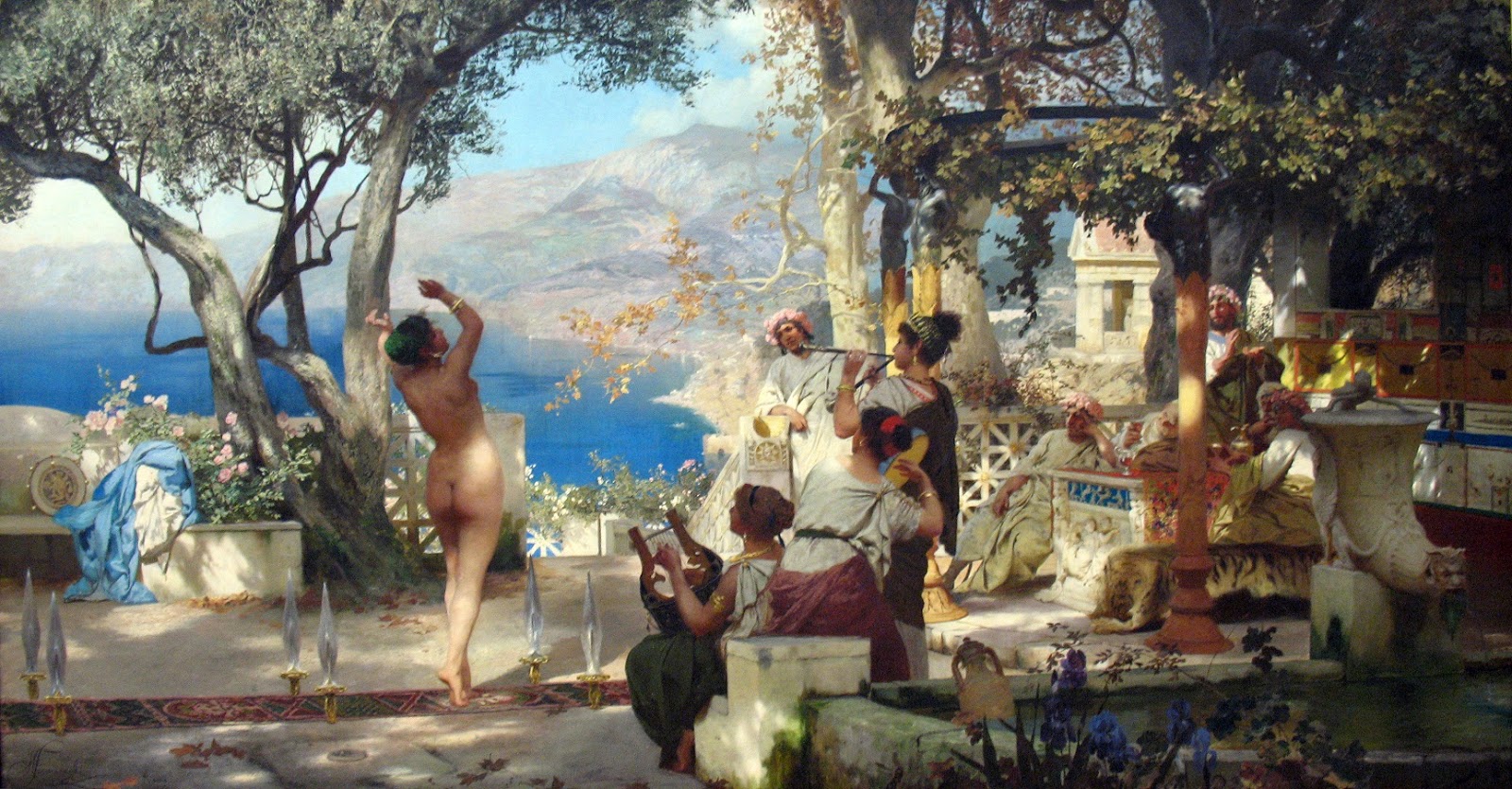


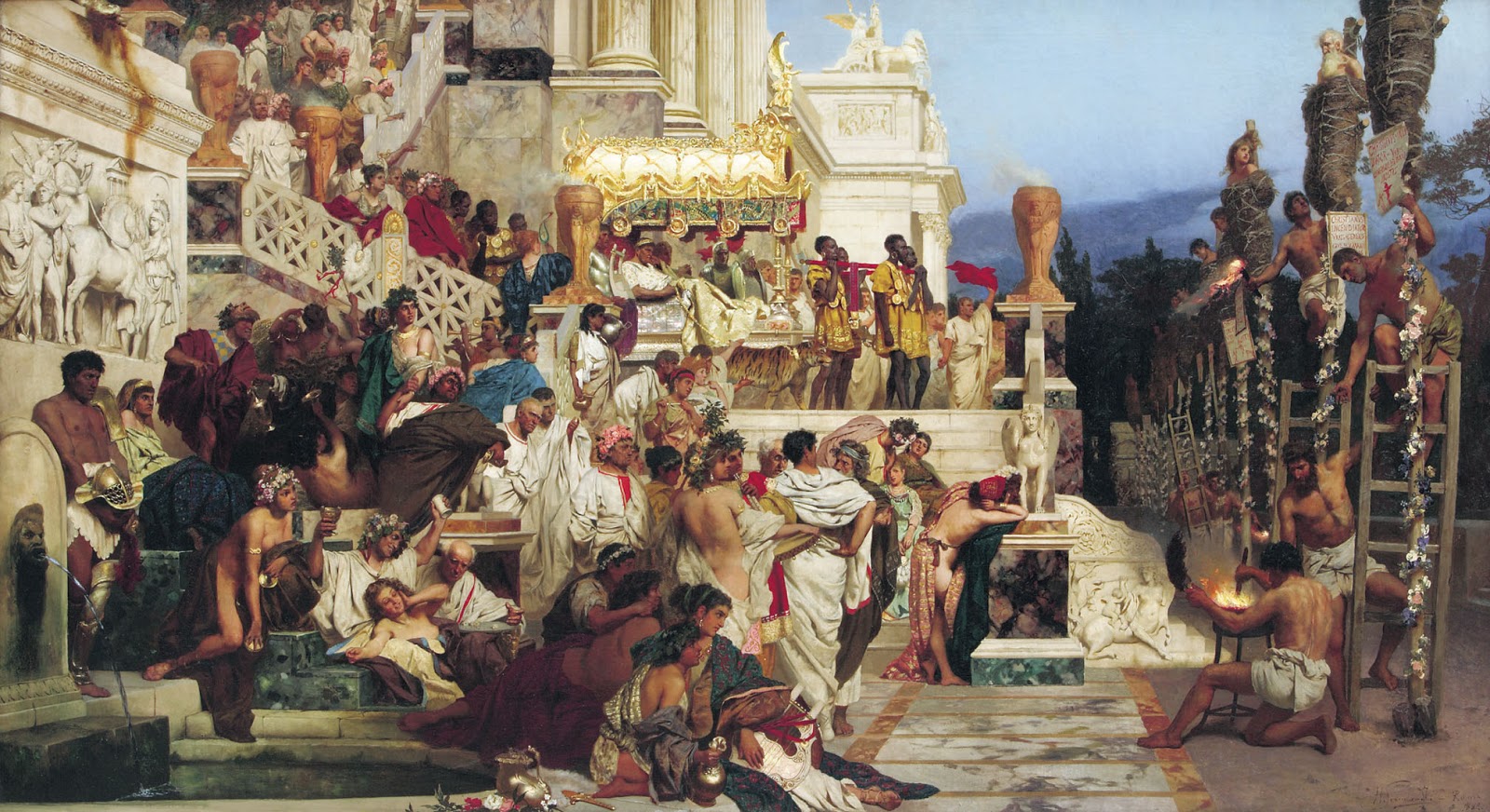
Siemiradzki enjoyed great artistic success with his next monumental painting – Nero’s Torches (1876). In this impressive work, which shows the martyrdom of early Christians, the painter displayed his erudition. This painting went on a triumphant journey through the exhibition halls of amongst others Rome, Vienna, Munich, Prague, Berlin, Paris and London. As a result the Polish painter’s fame and his importance in the eyes of European critics rose. Such masters of academic art as Hans Makart and Lawrence Alma Tadema commented favourably on Nero’s Torches. However among the common admiration, the first voices of disapproval appeared. Siemiradzki was criticized for subordinating the historical and emotional truth of this cruel scene to the superior ideal of aestheticism. At that time Stanisław Witkiewicz, who adopted the stance of a theoretician of realism, accused Siemiradzki of being merely a painter of exterior effects – of human beauty and objects, which he recreates with true fondness and virtuosity of the paintbrush. This critique went farther as it suggested also that the author of Nero’s Torches didn’t try to penetrate the human psyche, and wasn’t capable of capturing the feelings and emotions of the depicted figures and the real dramaticism of the showed events. The same accusations might have been brought up against another of Siemiradzki’s great canvases, the spectacularly arranged scene of the martyrdom of a young Christian from Nero’s times (Christian Dirce, 1897), had the artist’s goal been to show only the dramatic tension and the sense of danger that accompany the death of a defenseless victim of religious persecution. However to Siemiradzki the presentation of the psychological truth of human reactions and emotions wasn’t as important as the monumentalization of the topic – through the gorgeousness of the scenery, the richness of the dresses and objects, the sublime beauty of the female body, he wanted to show the atmosphere of decadent refinement that surrounded Nero and his retinue. The emperor’s court dazzled with splendour and excess but also had a tendency to be cruel, perverse and promiscuous, which caused fright. The monumental body and the luminous carnation of the deceased young Christian are contrasted with the black shape of the bull. The noble beauty of the martyr seems to symbolize the spiritual values of Christianity, the early believers’ ideal of remaining steadfastly faithful.


Considering Siemiradzki’s ouvre, the group of monumental, pompier canvases, which includes such works as Christian Dirce or Nero’s Torches, is rivaled in number only by the array of small-format idyllic scenes which show the life of ancient Romans. These modestly-sized works usually present Mediterranean landscapes in their backgrounds. The idyllic paintings reference a notion popular in the second half of the 19th century that the ancient times were a golden age for humanity. Siemiradzki was captivated by the landscapes of Roman Campania, in his artistic vision he transformed them into the mythical Arcadia, where beautiful, happy people lead carefree lives in a moderate climate, amidst succulent vegetation (Roman Idyll – Fishing; Roman Idyll – Before a Bath, around 1885-89; Next to the Street of Graves, 1894; At the Spring, 1898). The Polish painter idealized the looks of the heroes of these paintings according to the ancient standards of beauty. He depicted the landscape parts with the passion of a realistic painter and a keen observer of nature. On his canvases he recreated the wilderness with almost photographic precision. This characteristic of Siemiradzki’s talent inspired the critics of the times to call him a colourist He was however more of an impressionist, who captured on canvas the elusive changes of light and colour which may be observed in nature (the artist made tens of oil sketches and plein-air studies of fragments of landscapes that interested him). The graceful, almost unintentionally elegant poses and gestures of the figures, the subtle gradations of the pure, saturated colours and above all the picturesqueness of the landscapes filled with air and sunlight, these elements render Siemiradzki’s idyllic scenes charming. The said works, in their times, were popular with audiences. In the era of rapid civilizational development these small-format paintings brought relief from the problems of everyday reality.”(Author: Ewa Micke-Broniarek, National Museum in Warsaw, December 2004. culture.pl )


Edward Burne-Jones
In 1864 Burne-Jones was elected an associate of the Society of Painters in Water-Colours (also known as the Old Water-Colour Society), and exhibited, among other works, The Merciful Knight, the first picture which fully revealed his ripened personality as an artist. The next six years saw a series of fine watercolours at the same gallery. In 1866 Mrs Cassavetti commissioned Burne-Jones to paint her daughter, Maria Zambaco, in Cupid finding Psyche, an introduction which led to their tragic affair. In 1870, Burne-Jones resigned his membership following a controversy over his painting Phyllis and Demophoön. The features of Maria Zambaco were clearly recognizable in the barely draped Phyllis (as they are in several of Burne-Jones’s finest works), and the undraped nakedness of Demophoön coupled with the suggestion of female sexual assertiveness offended Victorian sensibilities. Burne-Jones was asked to make a slight alteration, but instead “withdrew not only the picture from the walls, but himself from the Society.”
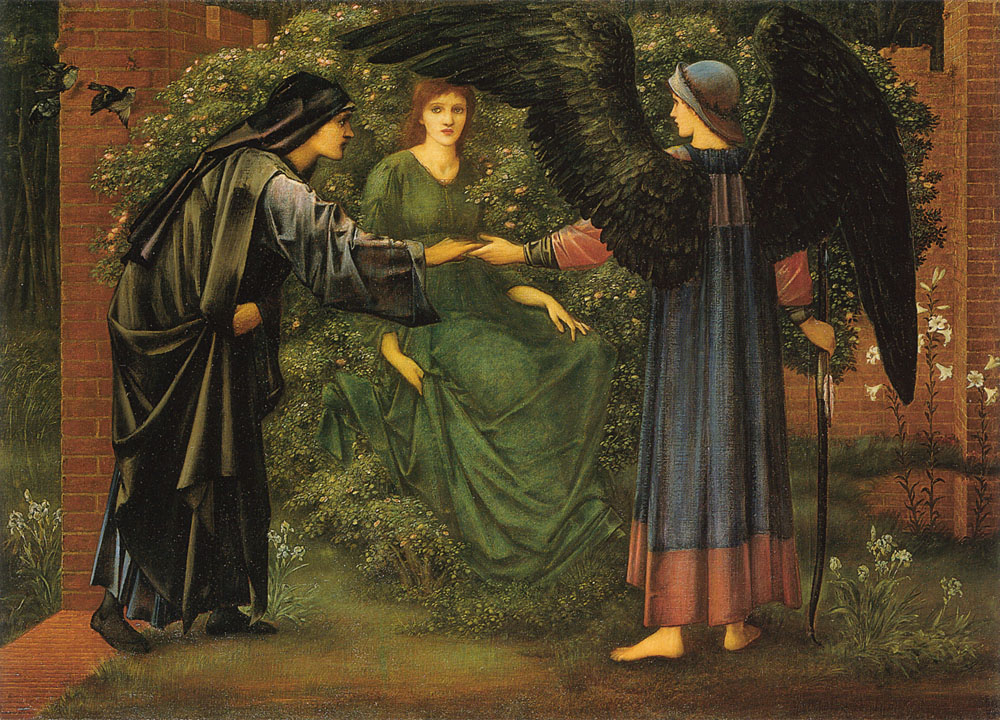

During the next seven years, 1870–1877, only two works of the painter’s were exhibited. These were two water-colours, shown at the Dudley Gallery in 1873, one of them being the beautiful Love among the Ruins, destroyed twenty years later by a cleaner who supposed it to be an oil painting, but afterwards reproduced in oils by the painter. This silent period was, however, one of unremitting production. Hitherto Burne-Jones had worked almost entirely in water-colours. He now began a number of large pictures in oils, working at them in turn, and having always several on hand. The first Briar Rose series, Laus Veneris, the Golden Stairs, the Pygmalion series, and The Mirror of Venus are among the works planned and completed, or carried far towards completion, during these years. These years also mark the beginnings of Burne-Jones’s partnership with the fine-art photographer Frederick Hollyer, whose reproductions of paintings and—especially—drawings would expose a wider audience to Burne-Jones’s works in the coming decades.
“King Cophetua and the Beggar Maid”, 1884, currently in the Tate Gallery, London.


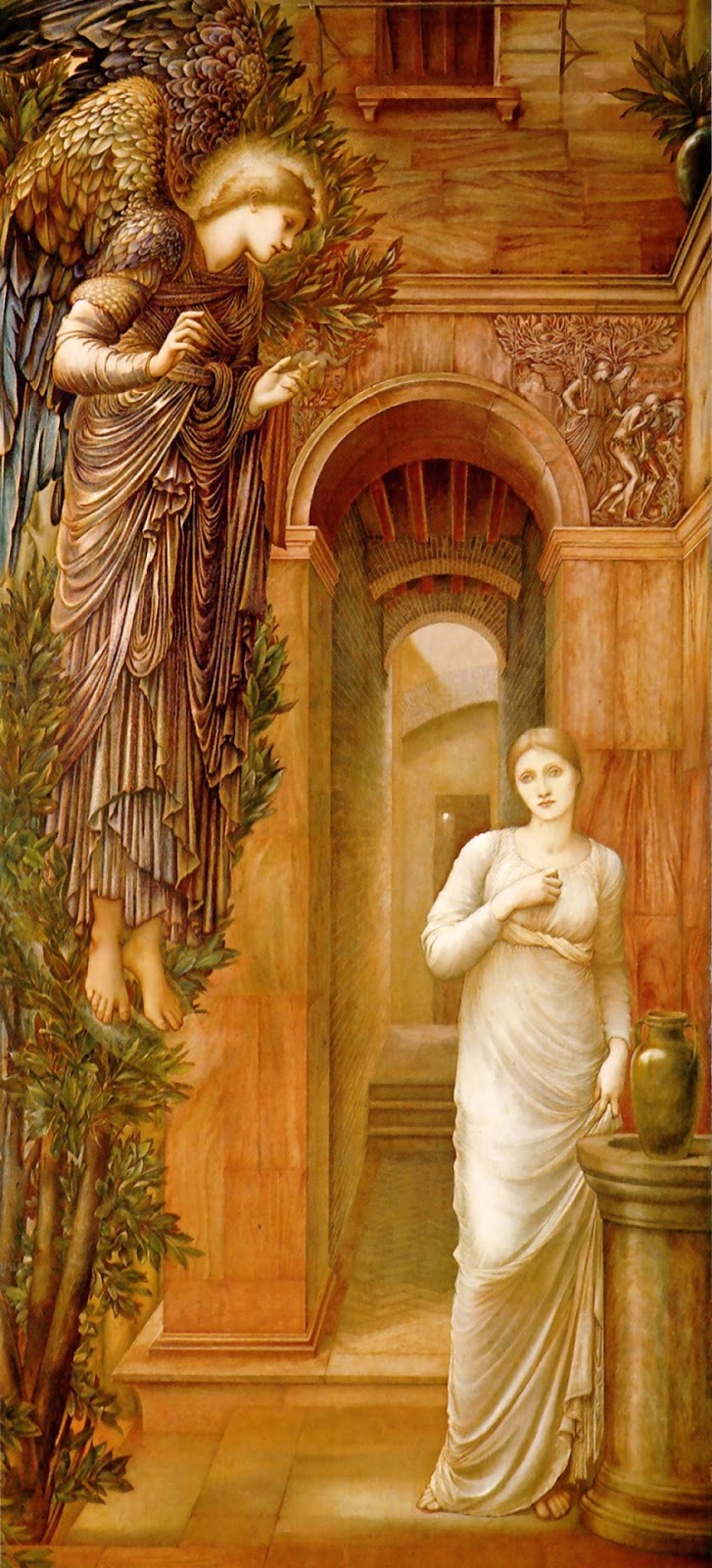
At last, in May 1877, the day of recognition came, with the opening of the first exhibition of the Grosvenor Gallery, when the Days of Creation, The Beguiling of Merlin, and the Mirror of Venus were all shown. Burne-Jones followed up the signal success of these pictures with Laus Veneris, the Chant d’Amour, Pan and Psyche, and other works, exhibited in 1878. Most of these pictures are painted in brilliant colours. A change is noticeable the next year, 1879, in the Annunciation and in the four pictures making up the second series of Pygmalion and the Image; the former of these, one of the simplest and most perfect of the artist’s works, is subdued and sober; in the latter a scheme of soft and delicate tints was attempted, not with entire success. A similar temperance of colours marks The Golden Stairs, first exhibited in 1880. The almost sombre Wheel of Fortune was shown in 1883, followed in 1884 by King Cophetua and the Beggar Maid, in which Burne-Jones once more indulged his love of gorgeous colour, refined by the period of self-restraint. He next turned to two important sets of pictures, The Briar Rose and The Story of Perseus, though these were not completed for some years.
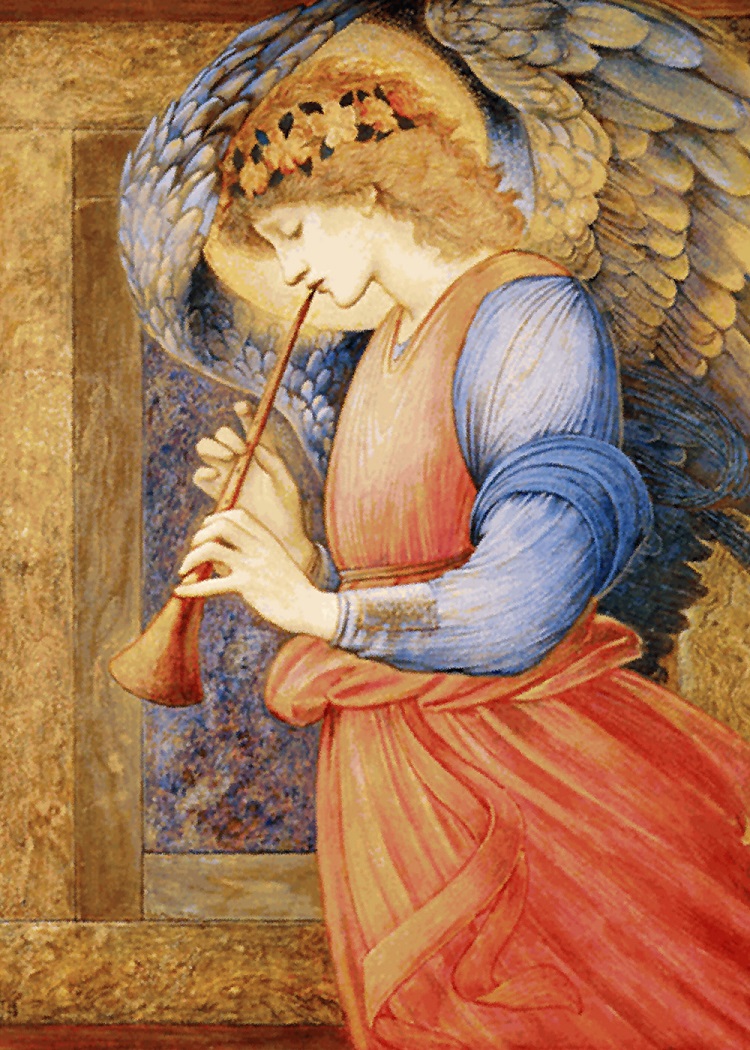
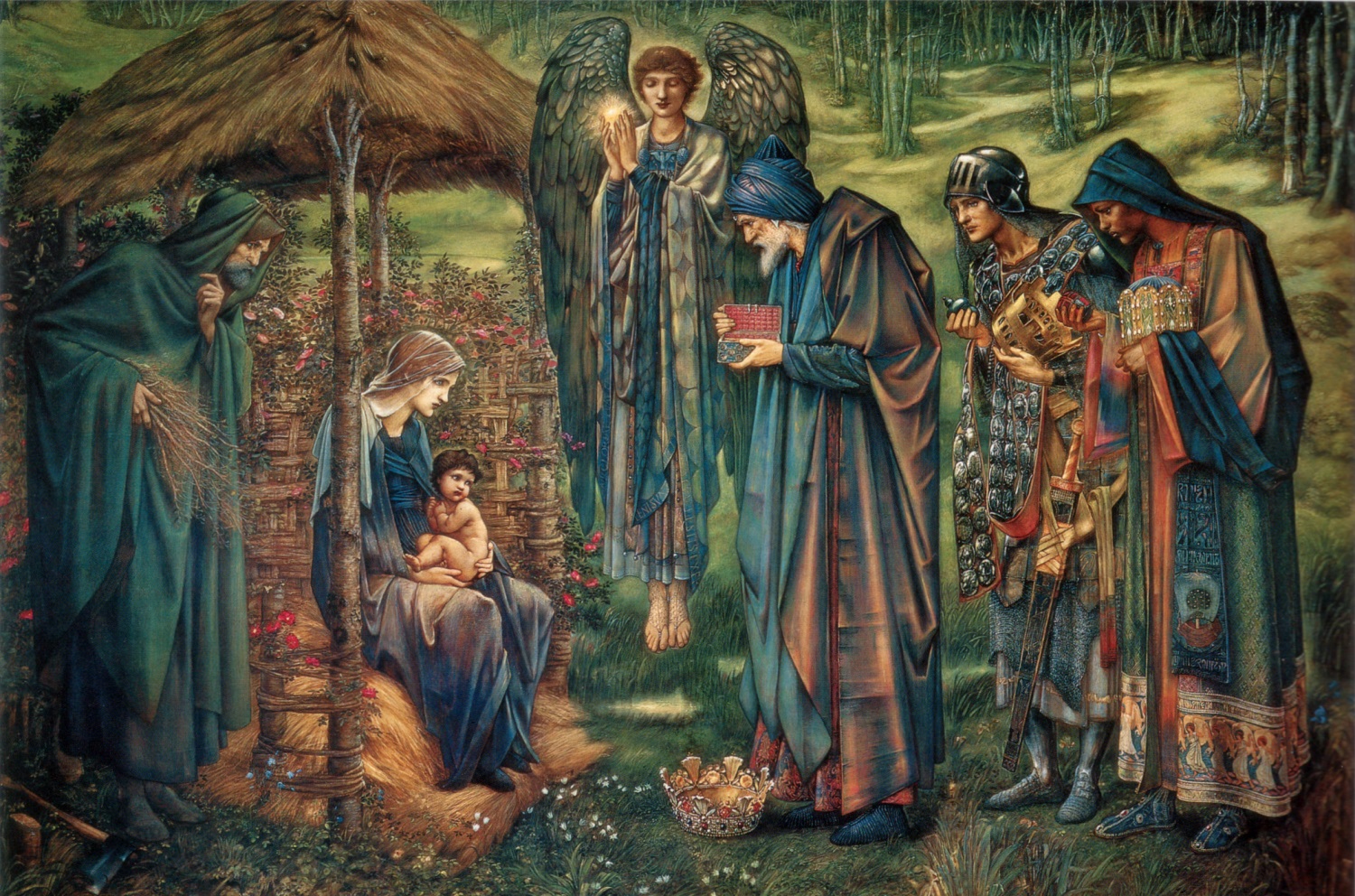
Burne-Jones was elected an Associate of the Royal Academy in 1885, and the following year he exhibited (for the only time) at the Academy, showing The Depths of the Sea, a painting of a mermaid carrying down with her a youth whom she has unconsciously drowned in the impetuosity of her love. This picture adds to the habitual haunting charm a tragic irony of conception and a felicity of execution which give it a place apart among Burne-Jones’s works. He formally resigned his Associateship in 1893. One of the Perseus series was exhibited in 1887, two more in 1888, with The Brazen Tower, inspired by the same legend. In 1890 the second series of The Legend of Briar Rose were exhibited by themselves, and won the widest admiration. The huge watercolor, The Star of Bethlehem, painted for the corporation of Birmingham, was exhibited in 1891. A long illness for some time checked the painter’s activity, which, when resumed, was much occupied with decorative schemes. An exhibition of his work was held at the New Gallery in the winter of 1892-1893. To this period belong several of his comparatively few portraits. In 1894 Burne-Jones was made a baronet. Ill-health again interrupted the progress of his works, chief among which was the vast Arthur in Avalon. In the winter following his death a second exhibition of his works was held at the New Gallery, and an exhibition of his drawings (including some of the charmingly humorous sketches made for children) at the Burlington Fine Arts Club.Wikipedia

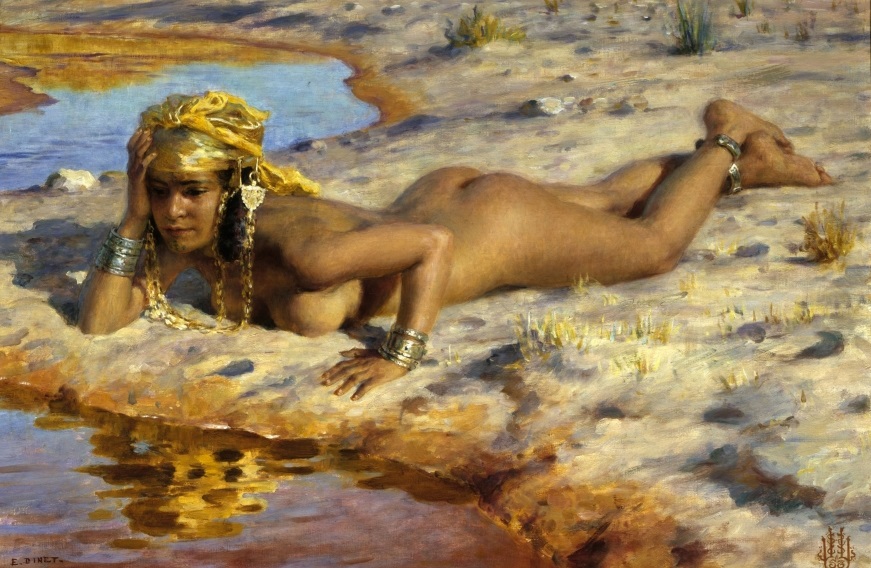
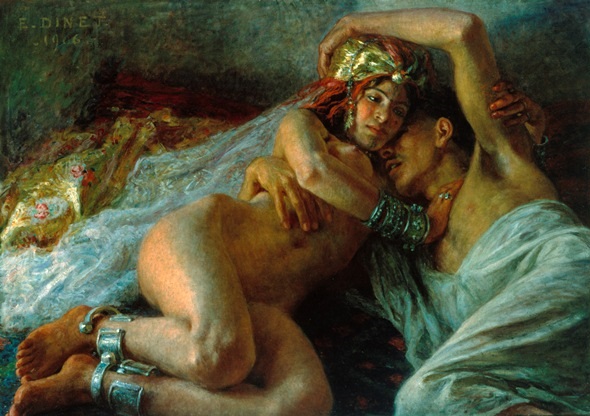
Etienne Dinet
Nasreddine Dinet (born as Alphonse-Étienne Dinet on 28 March 1861 – 24 December 1929, Paris) was a French orientalist painter.
Dinet was born the son of a prominent French judge. In 1865 his sister Jeanne, who would be his biographer, was born.
From 1871, he studied at the Lycée Henry IV, where the future president Alexandre Millerand was also among the students. Upon graduation in 1881 he enrolled in the École nationale supérieure des Beaux-Arts and entered the studio of Victor Galland. The following year he studied under William Bouguereau and Tony Robert-Fleury at the Académie Julian. He also exhibited for the first time at the Salon des artistes français.
Dinet made his first trip to Bou Saâda by the Ouled Naïl Range in southern Algeria in 1884, with a team of entomologists. The following year he made a second trip on a government scholarship, this time to Laghouat. At that time he painted his first two Algerian pictures: les Terrasses de Laghouat and l’Oued M’Sila après l’orage.


He won the silver medal for painting at the Exposition Universelle in 1889, and in the same year founded the Société Nationale des Beaux-Arts along with Meissonier, Puvis de Chavannes, Rodin, Carolus-Duran and Charles Cottet. In 1887 he further founded with Léonce Bénédite, director of the Musée du Luxembourg, the Société des Peintres Orientalistes Français.
In 1903 he bought a house in Bou Saâda and spent three quarters of each year there. He announced his conversion to Islam in a private letter of 1908, and completed his formal conversion in 1913, upon which he changed his name to Nasr’Eddine Dinet., In 1929 he and his wife undertook the Hajj to Mecca. The respect he earned from the natives of Algeria was reflected by the 5,000 who attended his funeral on 12 January 1930 in Bou Saâda. There he was eulogized by the former Governor General of Algeria Maurice Viollette
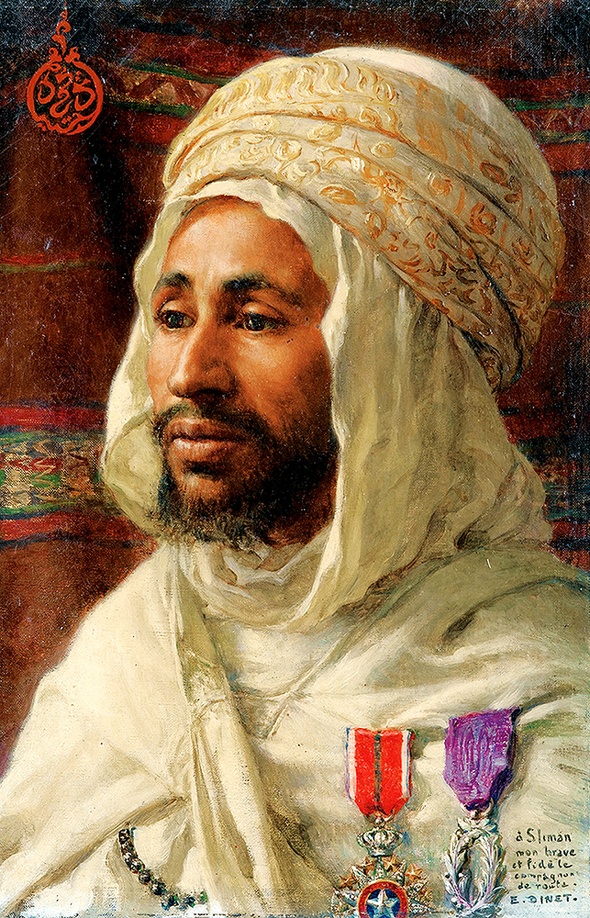
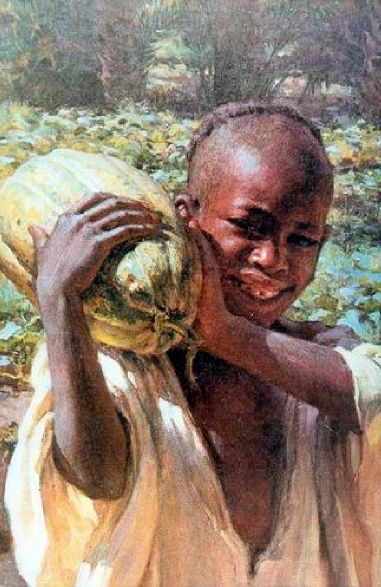

Compared to modernist painters such as Henri Matisse, who also visited northern Africa in the first decade of the 20th century, Dinet’s paintings are extremely conservative. They are highly mimetic, indeed ethnographic, in their treatment of their subject.
Dinet’s understanding of Arab culture and language set him apart from other orientalist artists. Surprisingly, he was able to find nude models in rural Algeria. Before 1900, most of his works could be characterized as “anecdotal genre scenes”.[4] As he became more interested in Islam, he began to paint religious subjects more often.[4] He was active in translating Arabic literature into French, publishing a translation of an Arab epic poem by Antarah ibn Shaddad in 1898.Wikipedia


Antoine Blanchard
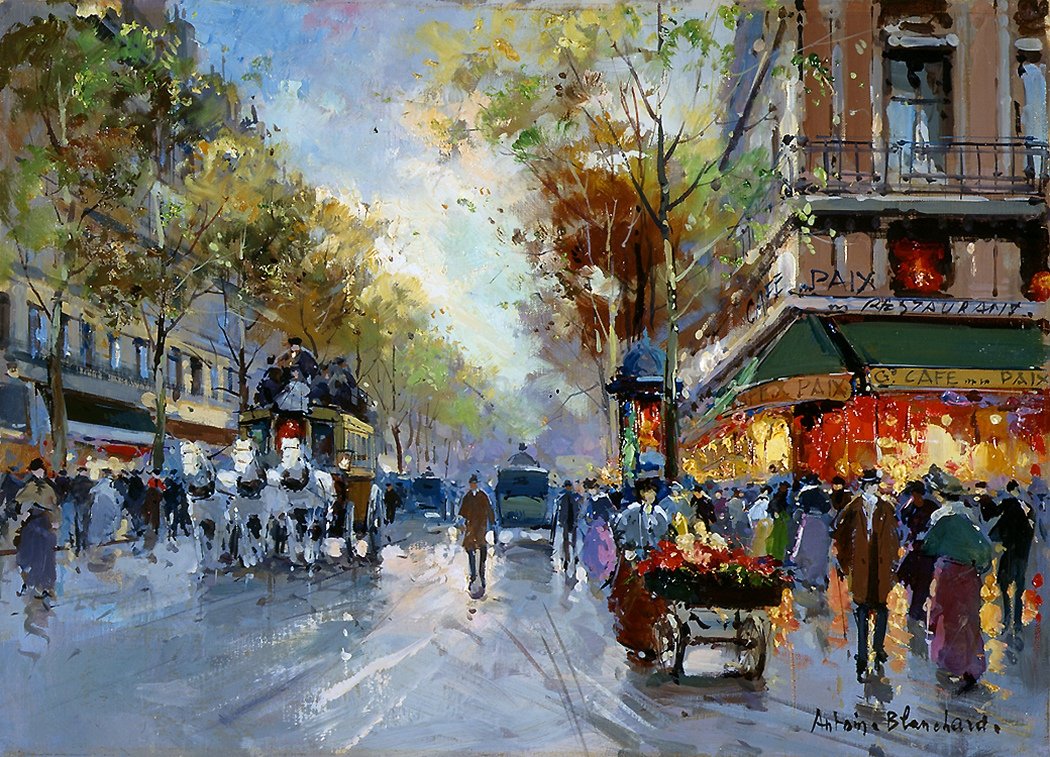
Antoine Blanchard was the pseudonym of the French painter Marcel Masson, known for his quaint depictions of Parisian streets. He was born on November 15, 1910 in Paris, France and studied at the École des Beaux-Arts in Rennes, later enrolling at the École des Beaux-Arts in Paris. During his studies there, he entered and won a competition for the prestigious Prix de Rome in 1935, earning him the opportunity to travel and live in Italy. Gradually Blanchard began to collect images of 1890s Paris, using his source materials to devote his career to painting the city’s landmarks. His style is characterized by small brushstrokes and bright colors, lending his canvases a shimmering tone. Among his subjects are notable historic sites such as the Arc de Triomphe, the Moulin Rouge, and the Notre Dame, which he would often repaint under different conditions—such as depicting the customers of the Café de la Paix strolling under sunny skies in one canvas, and scurrying to find shelter from a rain storm in another. He died in Paris, France on August 10, 1988.(artnet.com)


John Collier
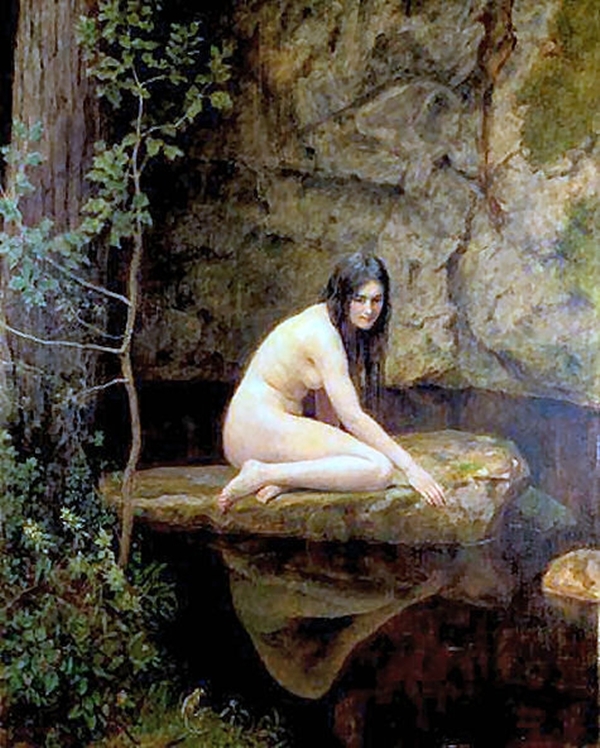
John Maler Collier (27 January 1850 – 11 April 1934) was a leading English artist, and an author




George Inness
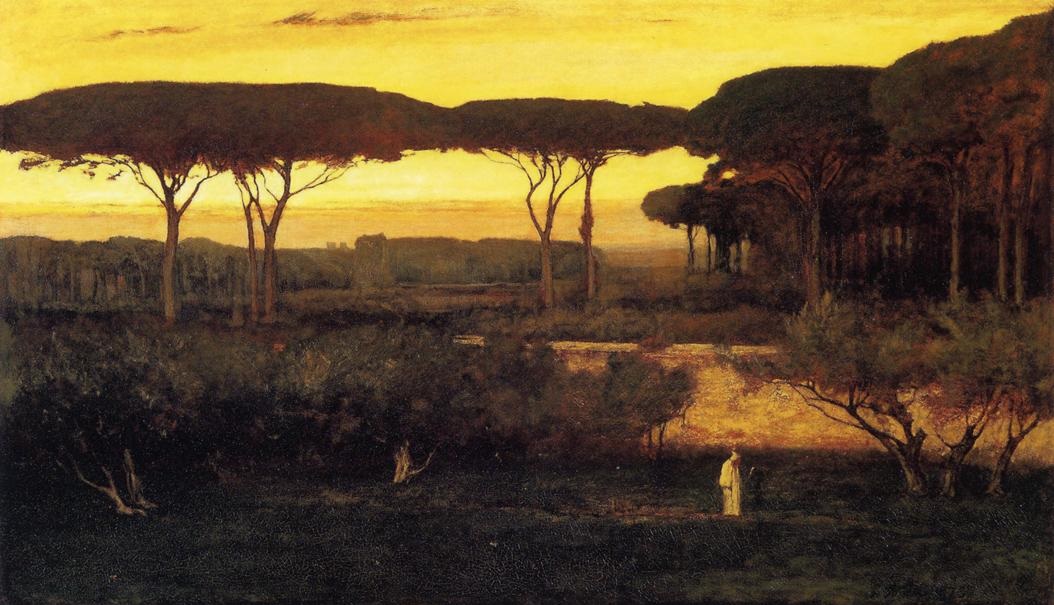
George Inness (May 1, 1825 – August 3, 1894) was an influential American landscape painter and georgist activist. His work was influenced, in turn, by that of the old masters, the Hudson River school, the Barbizon school, and, finally, by the theology of Emanuel Swedenborg, whose spiritualism found vivid expression in the work of Inness’ maturity. Often called “the father of American landscape painting,”Inness is best known for these mature works that not only exemplified the Tonalist movement but also displayed an original and uniquely American style.Wikipedia

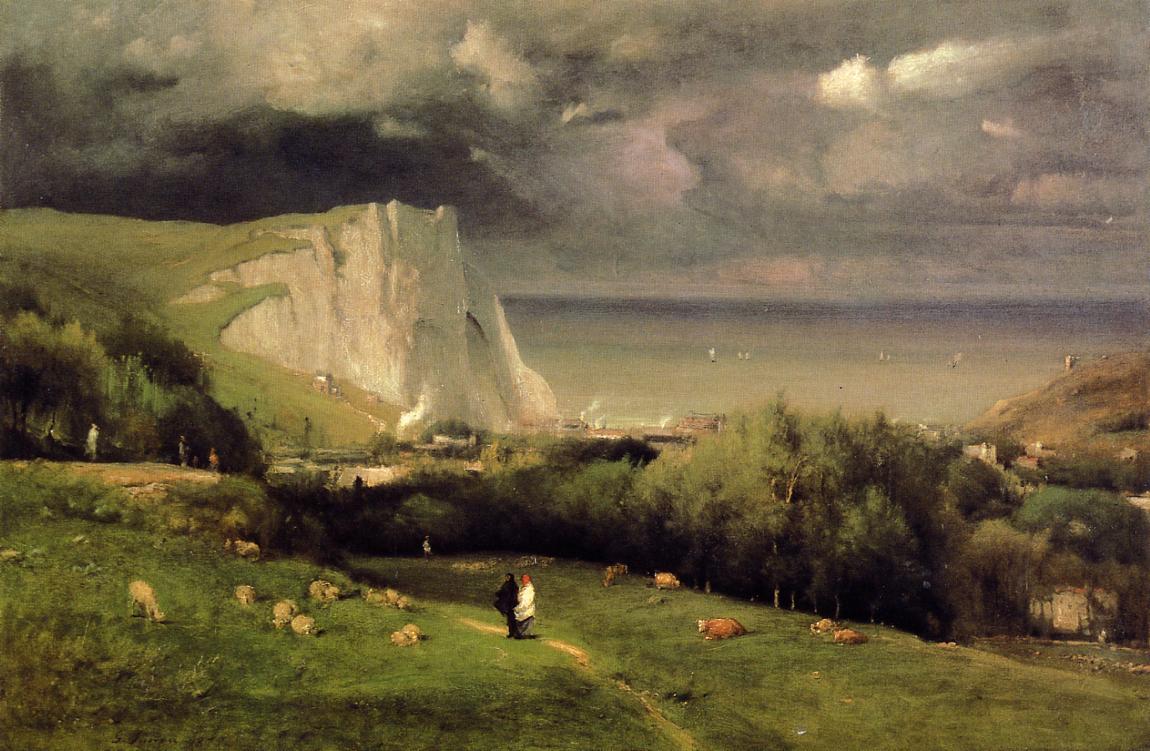
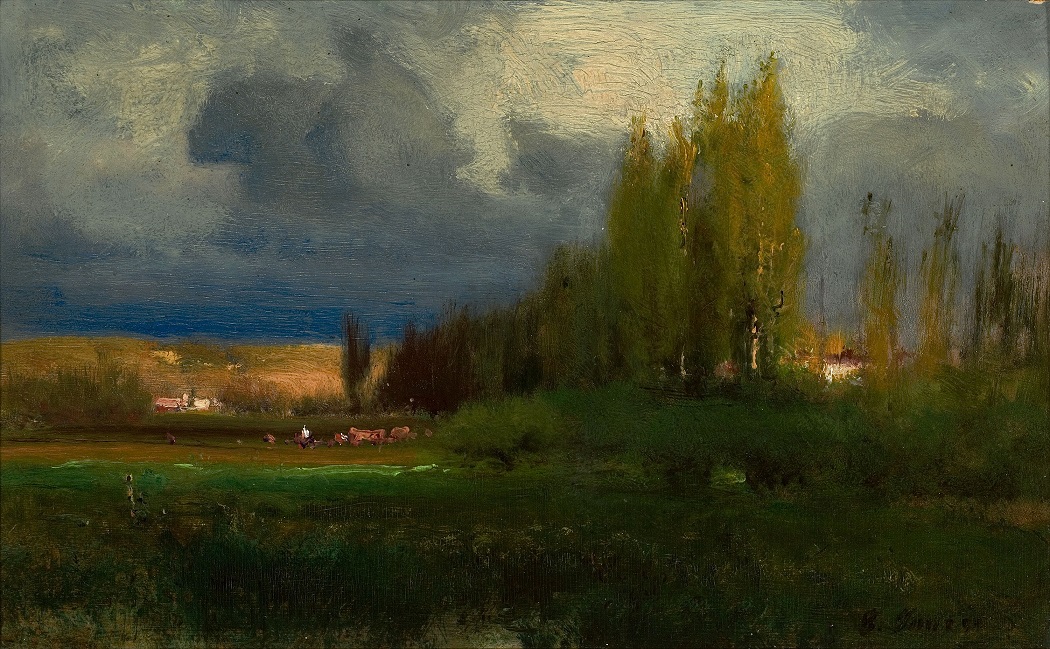
However, it was during the last decade or so of his life, after settling in Montclair, New Jersey that he gave full rein to the soft-focus tonalism – with its intimate expressiveness, delicate handling of light, feathery brushwork, blurred outlines, quiet naturalism, and occasional symbolism – for which he is most famous. His belief in the pantheistic quality of nature led him to find the quiet, the still and the intimate as significant as craggy mountains or sharp cliffs. He began to develop textures and patterns particularly suited to his unpretentious landscapes and came to distrust painting that did not share his feeling for a poetic and intimate realism. Thus he despised the Pre-Raphaelite Brotherhood, but equally disapproved of 1880s Impressionist paintings. The moralizing Pre-Raphaelites he thought insincere and dull on account of their fanatical attention to detail, while Impressionist painters transgressed common sense and quiet good taste by their outrageous colours, which tried to outdo nature. Preferring loose brushwork, he found Luminism too polished. To Inness, nature was the model, and autumn was the season of greatest poetry. When he died in 1894, he was not perceived as a revolutionary, but rather as a faithful transcriber of nature in its calmer and more tranquil aspects.(visual-arts-cork.com)



Paris in the 19th Century Henri Gervex
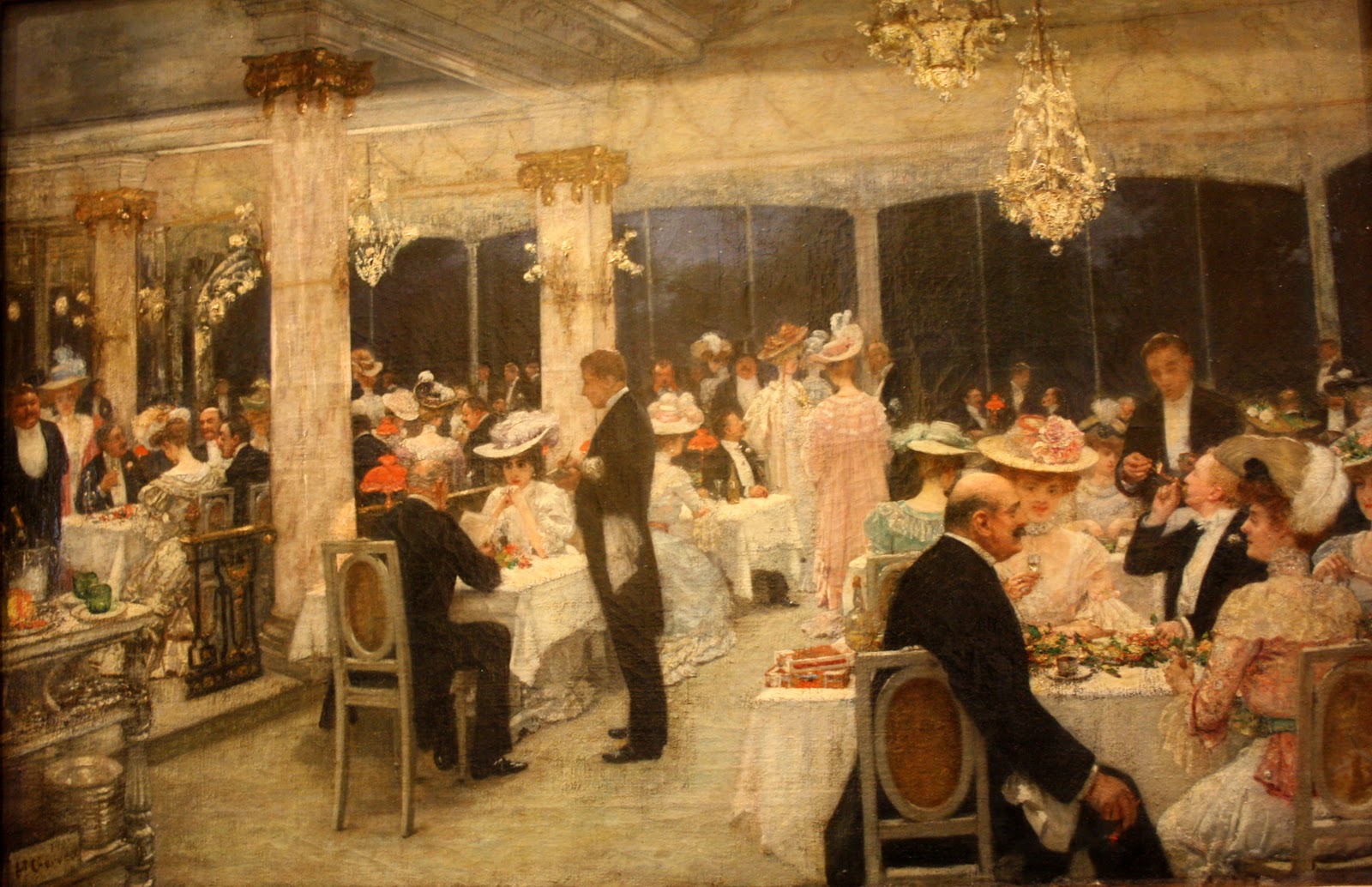
Henri Gervex (Paris 10 December 1852 – 7 June 1929) was a French painter who studied painting under Alexandre Cabanel, Pierre-Nicolas Brisset and Eugène Fromentin.His early work belonged almost exclusively to the mythological genre, which served as an excuse for the painting of the nude, but not always in the best of taste. His Rolla of 1878, based on a poem by Alfred de Musset, was rejected by the jury of the Salon de Paris for immorality, since it depicted a scene from the poem of a naked prostitute after having sex with her client.
Gervex afterwards devoted himself to representations of modern life and achieved signal success with his Dr Péan at the Salpétrière (“The Operation”), a modernized paraphrase, as it were, of Rembrandt’s Anatomy Lesson
He was entrusted with several important official paintings and the decoration of public buildings. Among the first are The Distribution of Awards (1889) at the Palais de l’Industrie, The Coronation of Nicolas II, The Mayors’ Banquet (1900), and the portrait group La République Française; and among the second, the ceiling for the Salle des Fêtes (ballroom) at the Hôtel de Ville, Paris, and the decorative panels painted in conjunction with Emile-Henri Blanchon for the mairie of the 19th arrondissement, Paris. He also painted, with Alfred Stevens, a panorama, The History of the Century (1889). The Musée du Luxembourg holds his painting Satyr Sporting with a Bacchante, as well as the large Members of the Jury of the Salon (1885). Other pictures of importance, besides numerous portraits in oils and pastel, are Communion at Trinity Church, Return from the Ball, Diana and Endymion, Job, Civil Marriage, At the Ambassadeurs, Yachting in the Archipelago, Nana and Maternity.Wikipedia


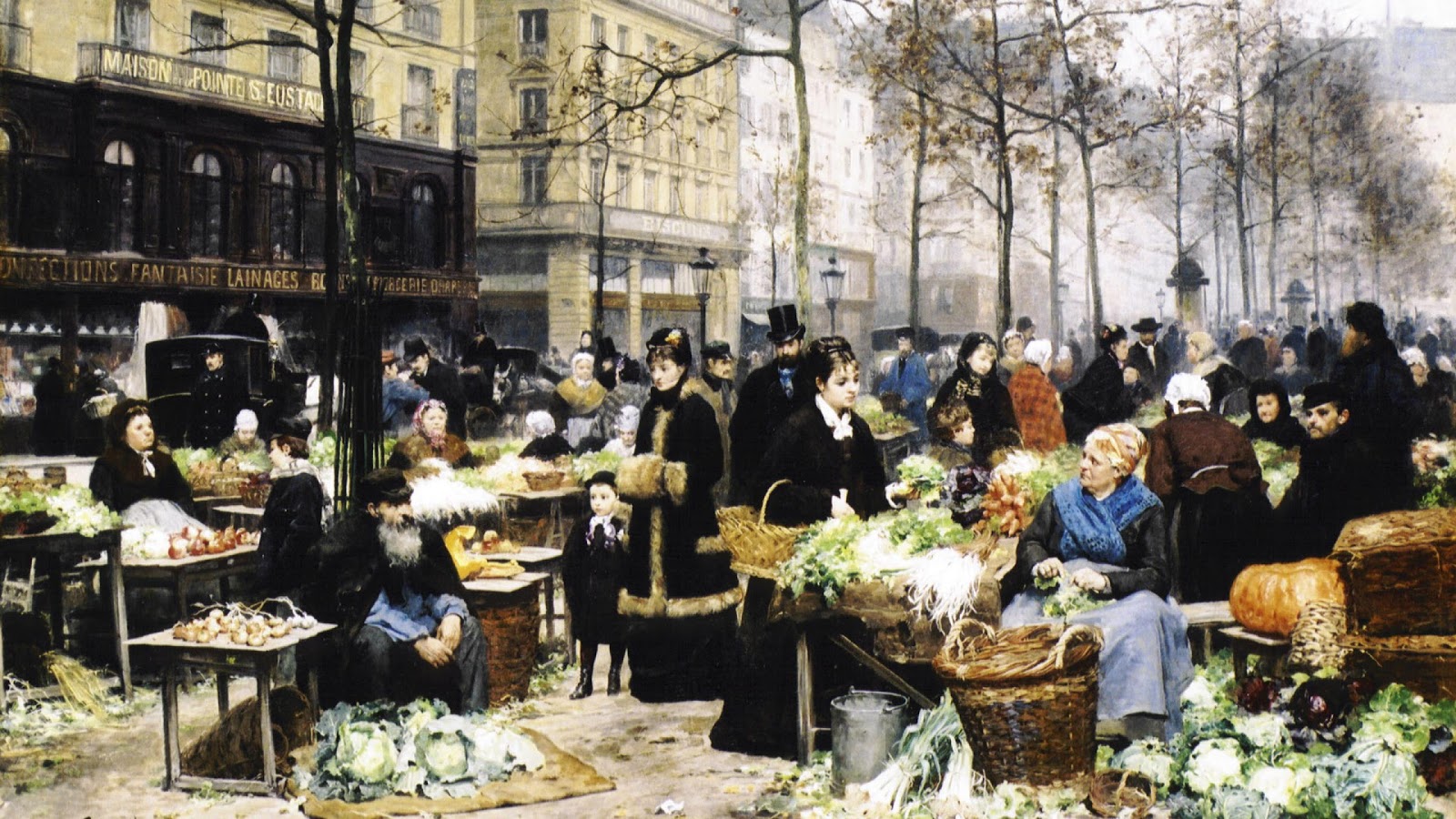


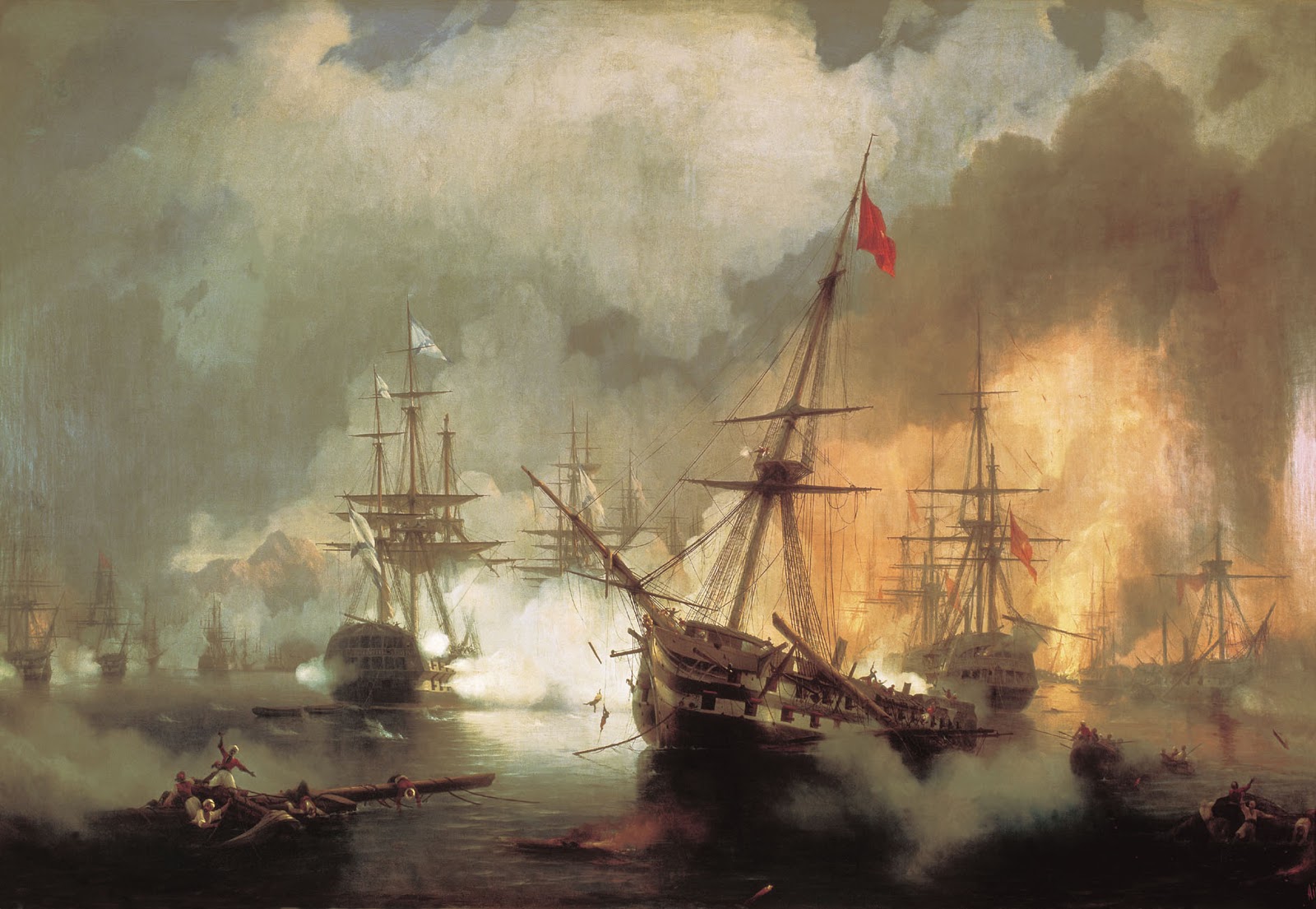
Ivan Aivazovsky
Ivan Konstantinovich Aivazovsky (29 July 1817 – 2 May 1900) was a Russian Romantic painter. He is considered one of the greatest marine artists in history.Baptized as Hovhannes Aivazian, Aivazovsky was born into an Armenian family in the Black Sea port of Feodosia and was mostly based in his native Crimea.
Following his education at the Imperial Academy of Arts, Aivazovsky traveled to Europe and lived briefly in Italy in the early 1840s. He then returned to Russia and was appointed the main painter of the Russian Navy. Aivazovsky had close ties with the military and political elite of the Russian Empire and often attended military maneuvers. He was sponsored by the state and was well-regarded during his lifetime. The saying “worthy of Aivazovsky’s brush”, popularized by Anton Chekhov, was used in Russia for “describing something ineffably lovely.”
One of the most prominent Russian artists of his time, Aivazovsky was also popular outside Russia. He held numerous solo exhibitions in Europe and the United States. During his almost 60-year career, he created around 6,000 paintings, making him one of the most prolific artists of his time. The vast majority of his works are seascapes, but he often depicted battle scenes, Armenian themes, and portraiture. Most of Aivazovsky’s works are kept in Russian, Ukrainian and Armenian museums as well as private collections.Wikipedia


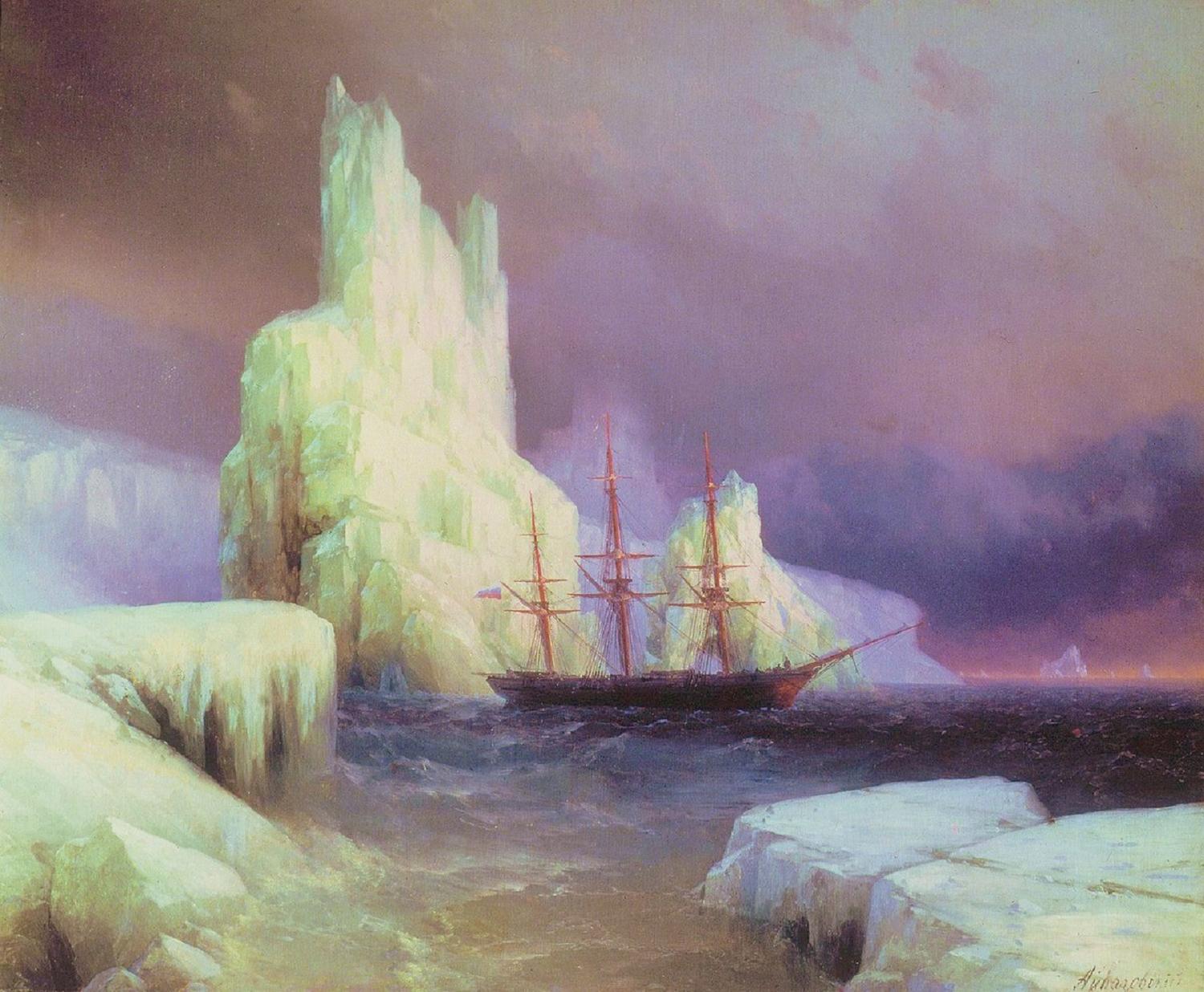


Rufin Gavrilovich Sudkovsky
Rufin Gavrilovich Sudkovsky (19 April 1850, Ochakiv – 16 February 1885, Ochakiv) Was a Ukrainian painter who specialized in naval and maritime scenes.
He was the son of a priest in the Diocese of Kherson. Originally, he planned to follow in his father’s footsteps, studying first at the local religious school, then at the Odessa Theological Seminary, but he soon lost interest. He had been attracted to drawing since he was a child, and began to frequent the Odessa Drawing School at the local art society. Under the influence of Odessa’s status as a major port, his focus soon turned to maritime themes.

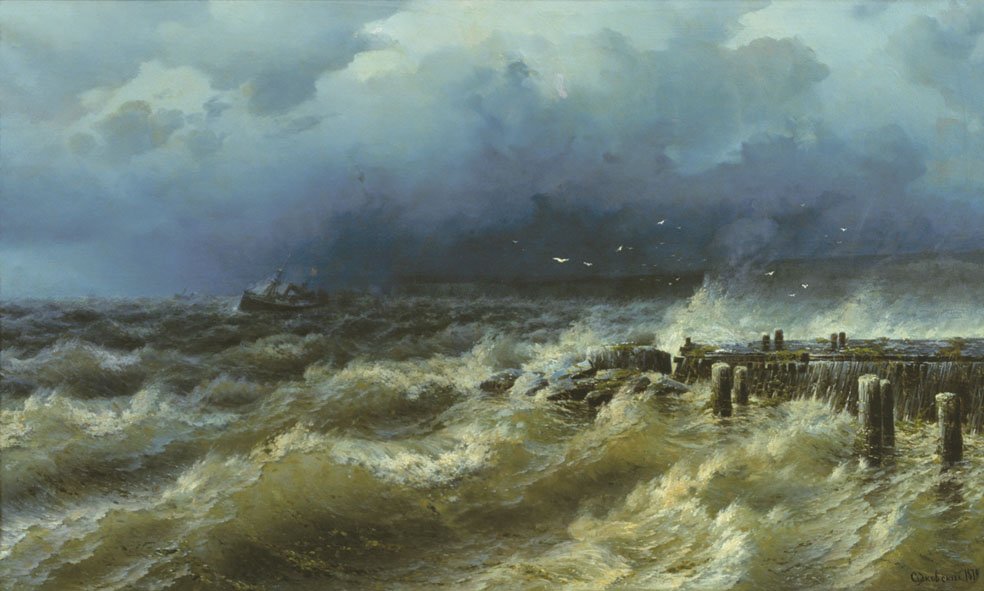
In 1868, he left the seminary and went to Saint Petersburg, where he was accepted on a provisional basis at the Imperial Academy of Arts. He eventually became a full student, remaining for three years and being awarded several medals. He returned to Ochakiv in 1871 and began a series of sketches of the Black Sea coastline. Most of these early works were derivative, and were not successful when they were exhibited in Saint Petersburg. His technique and originality improved during a trip to Germany and France in 1874. Three years later, a new exhibit at the Academy earned him the title of “Free Artist” (second degree). In 1879, he was promoted to first degree
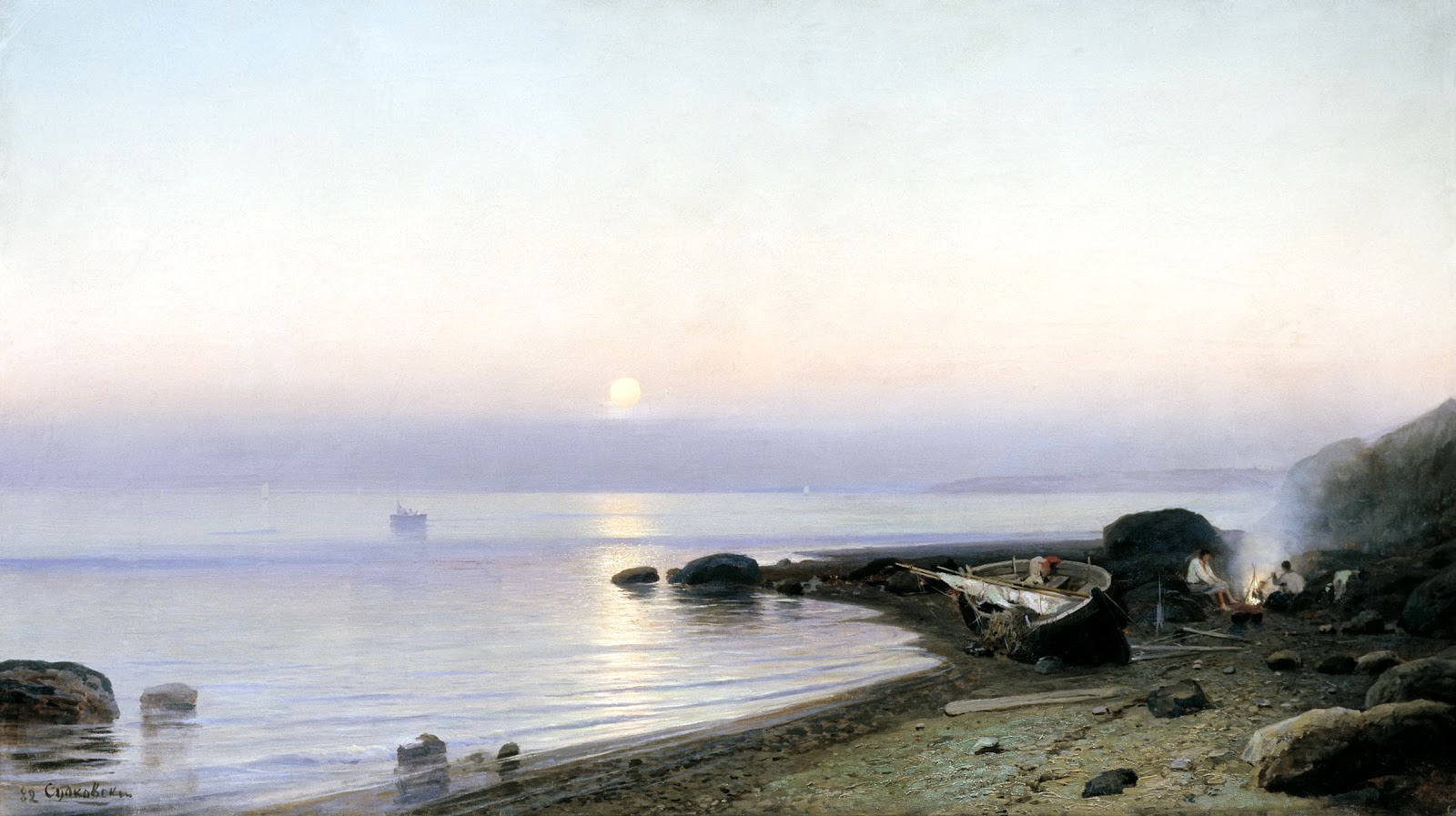
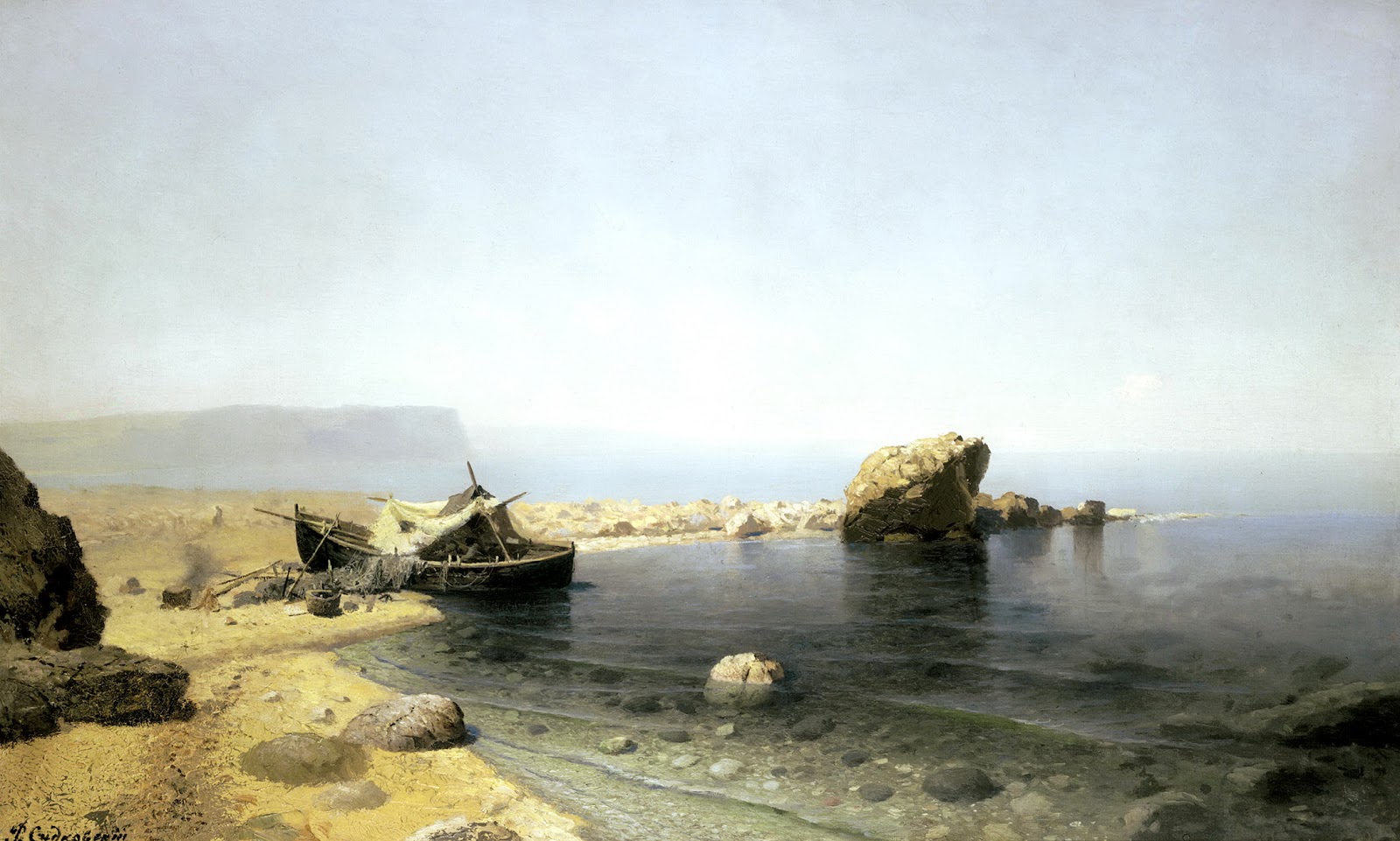
He continued to exhibit in Saint Petersburg, sometimes together with Julius von Klever. In 1882, his painting, “Tempest near Ochakiv”, won him the title of Academician. The following year, he was married and became embroiled in a controversy when Arkhip Kuindzhi (a former roommate at the Academy) accused him of plagiarism. Although the critics and press took his side, several artists (Kramskoi, Maximov, Volkov and Repin) published a letter in the New Times, stating that Sudovsky had “directly borrowed” from Kuindzhi.Two years later, at the height of his career, he fell ill with typhus during an exhibition in Kiev, and was taken back to Ochakiv, where he died. Despite his short life, he was able to complete a large number of canvases, which were presented by his friends in a retrospective, shortly after his death. His widow, Elena (also an artist), married the military painter, Mykola Samokysh in 1889 and became a popular illustrato.Wikipedia


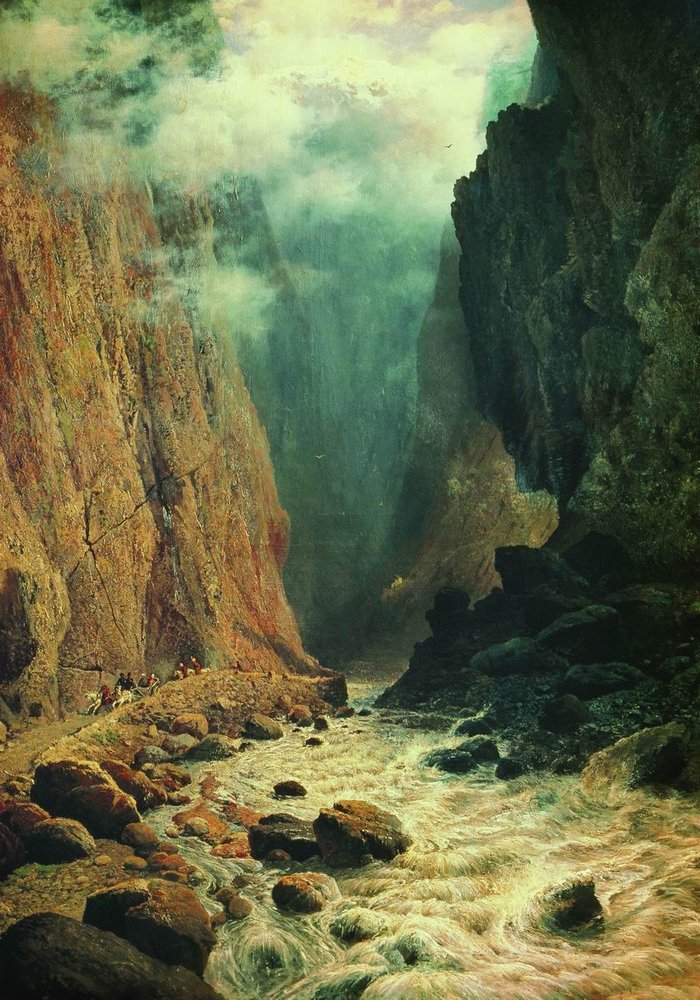
Japanese Impressionism Fujishima Takeji
Fujishima was born to an ex-samurai class household in Kagoshima, Satsuma Domain in southern Kyūshū, Japan, where his father had been a retainer of the Shimazu clan daimyō. After studying art at Kagoshima Middle School he left home in 1884 to pursue his studies in Tokyo, first with Kawabata Gyokusho, a Shijō school nihonga artist. However, Fujishima was attracted to the new western-style oil painting techniques, and switched to yōga-style painting, which he learned under Yamamoto Hōsui and Soyama Yukihiro. His graduation piece, “Cruelty” was exhibited at the 3rd Meiji Art Association Exhibition in 1891, where it was viewed by noted novelist and art critic Mori Ōgai.

Fujishima moved to Tsu in Mie Prefecture in 1893, where he was an assistant teacher at the Mie Prefectural Elementary School, but soon returned to Tokyo in 1896 under the sponsorship of Kuroda Seiki to become an assistant professor at the Tokyo Art School’s Western Painting Department. He also joined Kuroda’s art coterie, the Hakubakai (White Horse Society).
Travelling to France in 1905, Fujishima studied the techniques of historical painting under Fernand Cormon at the École nationale supérieure des Beaux-Arts in Paris, and portraiture under Carolus-Duran at the French Academy in Rome in Italy. He returned to Japan in 1910 and became a professor at the Tokyo Art School and a member of the Imperial Art Academy. In 1937, he was one of the first recipients of the newly created Order of Culture of the Japanese government.
Fujishima died in 1943; his grave is at the Aoyama Cemetery, in Tokyo.Wikipedia

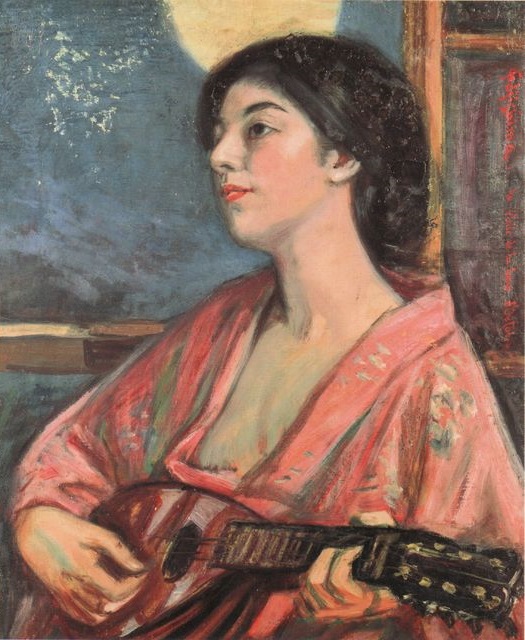


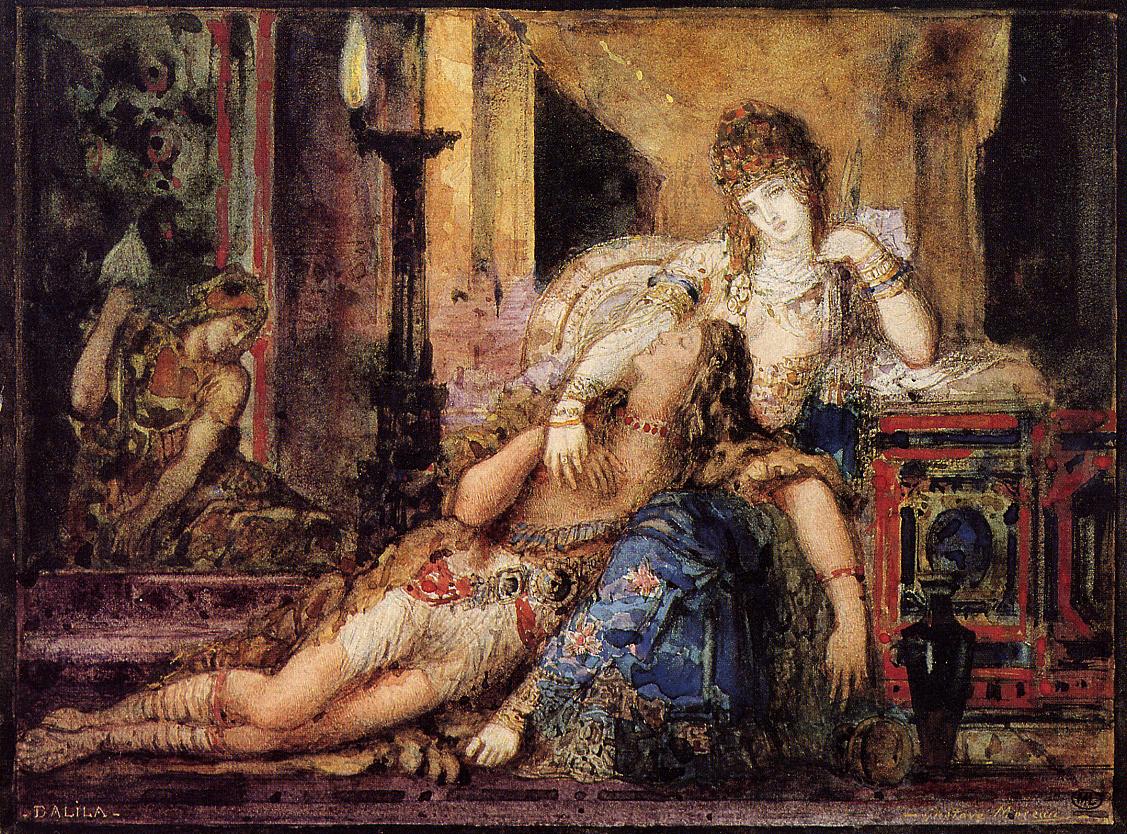
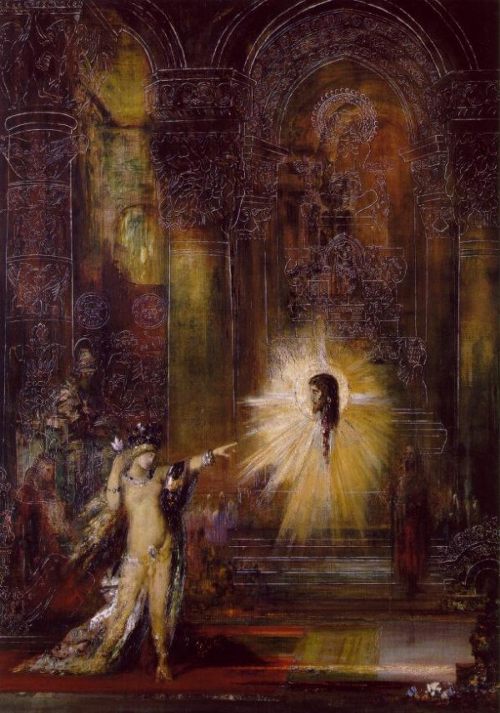
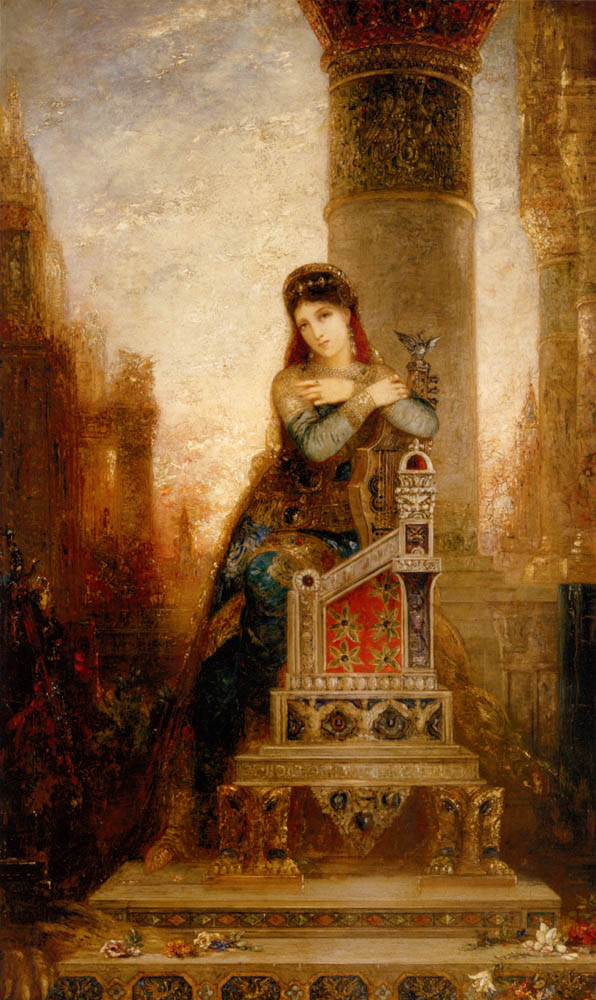
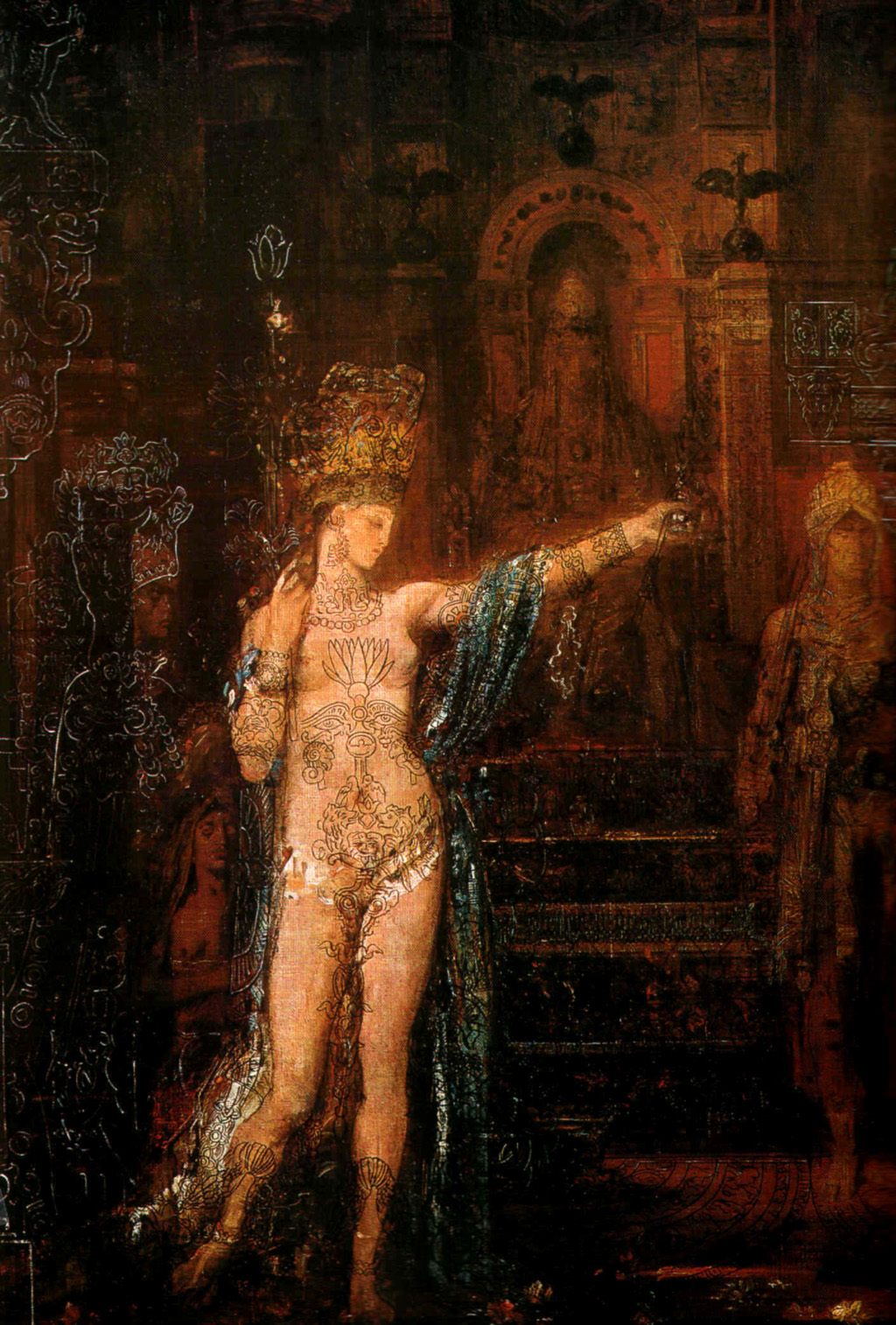
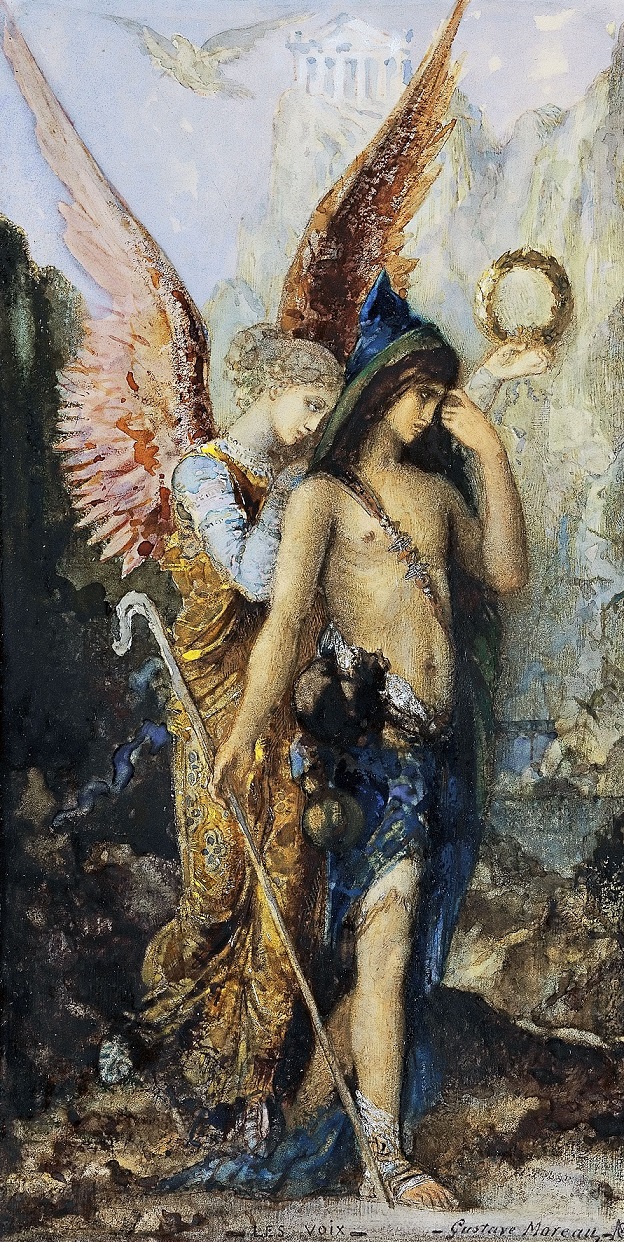
Symbolism Gustave Moreau
Moreau was born in Paris. His father, Louis Jean Marie Moreau, was an architect, who recognized his talent. His mother was Adele Pauline des Moutiers. Moreau initially studied under the guidance of François-Édouard Picot and became a friend of Théodore Chassériau, whose work strongly influenced his own. Moreau had a 25-year personal relationship, possibly romantic, with Adelaide-Alexandrine Dureux, a woman whom he drew several times. His first painting was a Pietà which is now located in the cathedral at Angoulême. He showed A Scene from the Song of Songs and The Death of Darius in the Salon of 1853. In 1853 he contributed Athenians with the Minotaur and Moses Putting Off his Sandals within Sight of the Promised Land to the Great Exhibition.


Oedipus and the Sphinx, one of his first symbolist paintings, was exhibited at the Salon of 1864. Moreau quickly gained a reputation for eccentricity. One commentator said Moreau’s work was “like a pastiche of Mantegna created by a German student who relaxes from his painting by reading Schopenhauer”. The painting currently resides in the permanent collection at the New York Metropolitan Museum of Art.
Moreau became a professor at Paris’ École des Beaux-Arts in 1891 and among his many students were fauvist painters Henri Matisse and Georges Rouault. Jules Flandrin, Theodor Pallady and Léon Printemps also studied with Moreau.
Moreau died in Paris and was buried there in the Cimetière de Montmartre. Wikipedia

Giovanni Battista Piranesi
(4 October 1720 – 9 November 1778)
The remains of Rome kindled Piranesi’s enthusiasm. He was able to faithfully imitate the actual remains of a fabric; his invention in catching the design of the original architect provided the missing parts; his masterful skill at engraving introduced groups of vases, altars, tombs that were absent in reality; and his broad and scientific distribution of light and shade completed the picture, creating a striking effect from the whole view. Some of his later work was completed by his children and several pupils.
Piranesi’s son and coadjutor, Francesco, collected and preserved his plates, in which the freer lines of the etching-needle largely supplemented the severity of burin work. Twenty-nine folio volumes containing about 2000 prints appeared in Paris (1835–1837).


The late Baroque works of Claude Lorrain, Salvatore Rosa, and others had featured romantic and fantastic depictions of ruins; in part as a memento mori or as a reminiscence of a golden age of construction. Piranesi’s reproductions of real and recreated Roman ruins were a strong influence on Neoclassicism.
One of the main features of Neo-Classicism is the attitude towards nature and the uses of past. Neo-Classicism was prompted by the discoveries at Herculaneum and Pompeii. Rediscovery and revaluation of Greece, Egypt, and Gothic was also active as well as the various expeditions of unfamiliar Roman empire. The view of a Golden Age was changing from static to mutable inspired by Rousseau and Wickelmann in response to the dynamic growth of society.


The wider and flexible perspective on past not only generated the new interpretation of the present, but also the demand of a new way of expression. There was a phenomenon of growing self-conscious in artists and inventive genius over limited authority of ancient world. Piranesi developed one of the artistic self-discovery of ancient world, which triggered the studies of many scholars and visionaries. In the perspective of historian, there was a growing interest in civilizations, destiny of nations, and Piranesi was especially interested in Graeco-Roman debate in 1760s, founded by the Etruscans and completed by the Roman, believing in which Italian civilization is rooted from. The belief that artists have a right to have their own original ideas and that he regarded Rome as the cultural destiny became the backbone of his creative work. His work is the result of his imaginative mind combined with the spirit of the Eternal City.
Throughout his lifetime, Piranesi created numerous prints depicting the Eternal City, these were widely collected by gentlemen on the Grand Tour. The Lobkowicz Collections, housed at the Lobkowicz Palace, contains a group of twenty six 18th-century engravings of views of modern and ancient Rome created by Giovanni Battista Piranesi.Wikipedia


Johan Tobias Sergel
Johan Tobias Sergel (Stockholm 7 September 1740 – 26 February 1814 Stockholm) was a Swedish neoclassical sculptor.
Johan Tobias Sergel was born in Stockholm in 1740. He was the son of the decorator, Christoffer Sergel and Elisabet (née Swyrner), and was the brother of the decorator, Anna Brita Sergel. His first teacher was Pierre Hubert Larchevêsque.After studying in Paris, he went to Rome.He stayed in Rome for twelve years and sculpted a number of groups in marble. Besides subjects from classical mythology such as the Diomedes Stealing the Palladium, which he sold to the British collector, Thomas Mansel Talbot, in 1772, he also sculpted a colossal representation of The Muse of History Recording the Deeds of Gustavus Adolphus, in which are depicted the achievements of King Gustav II Adolf before the Chancellor, Axel Oxenstierna. It was in Rome also that he modelled the statue of King Gustav III, subsequently cast in bronze and purchased by the city of Stockholm in 1796. While primarily a sculptor, Sergel (inspired by English artists like Thomas Rowlandson) also drew sequential picture stories, an early form of comic strip.
Portrait of the songwriter and performer Carl Michael Bellman, 1792

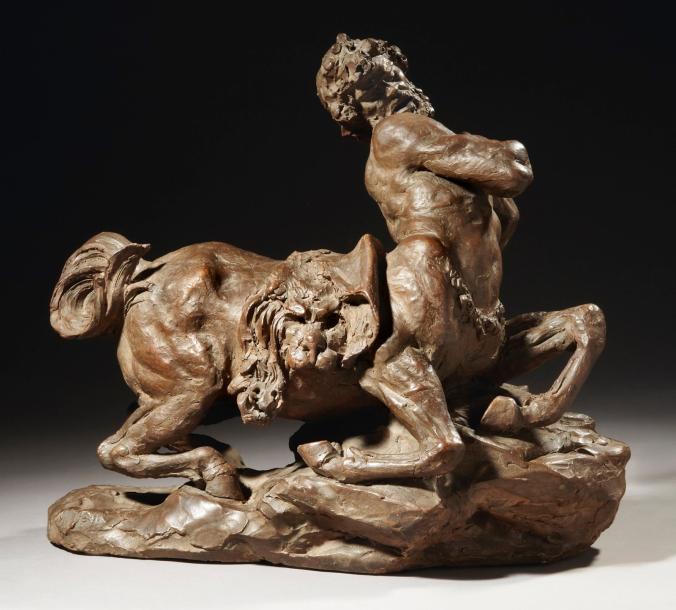
Summoned by Gustav III, Sergel returned to Stockholm in 1779 and continued to work there. Among the monuments he created at this time are a tomb for Gustav Vasa, a monument to Descartes, and a large relief in the church of St. Clarens, representing the Resurrection. He was an important part of the artistic elite in Stockholm, drawing a portrait of Sweden’s bard Carl Michael Bellman among others. He had a relationship with the celebrated actress Fredrique Löwen and was possibly the father of one of her children. He died in his native city on 26 February 1814.Wikipedia
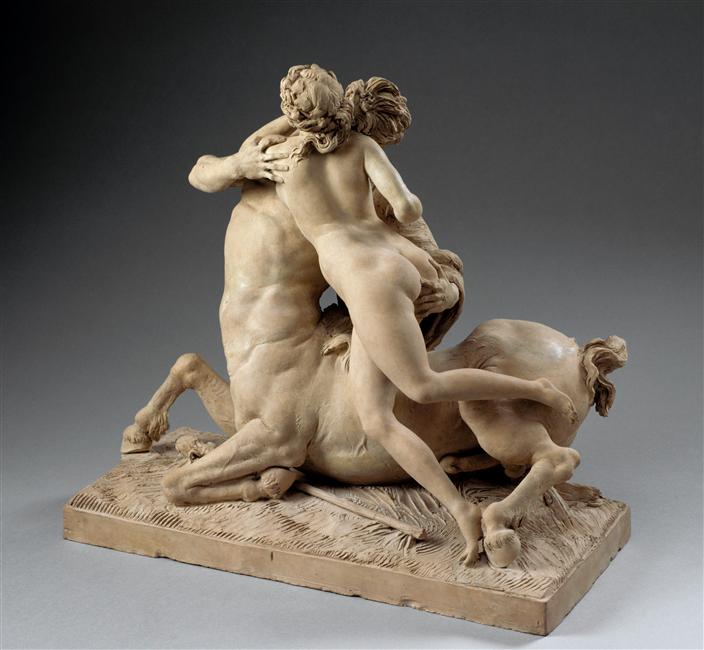


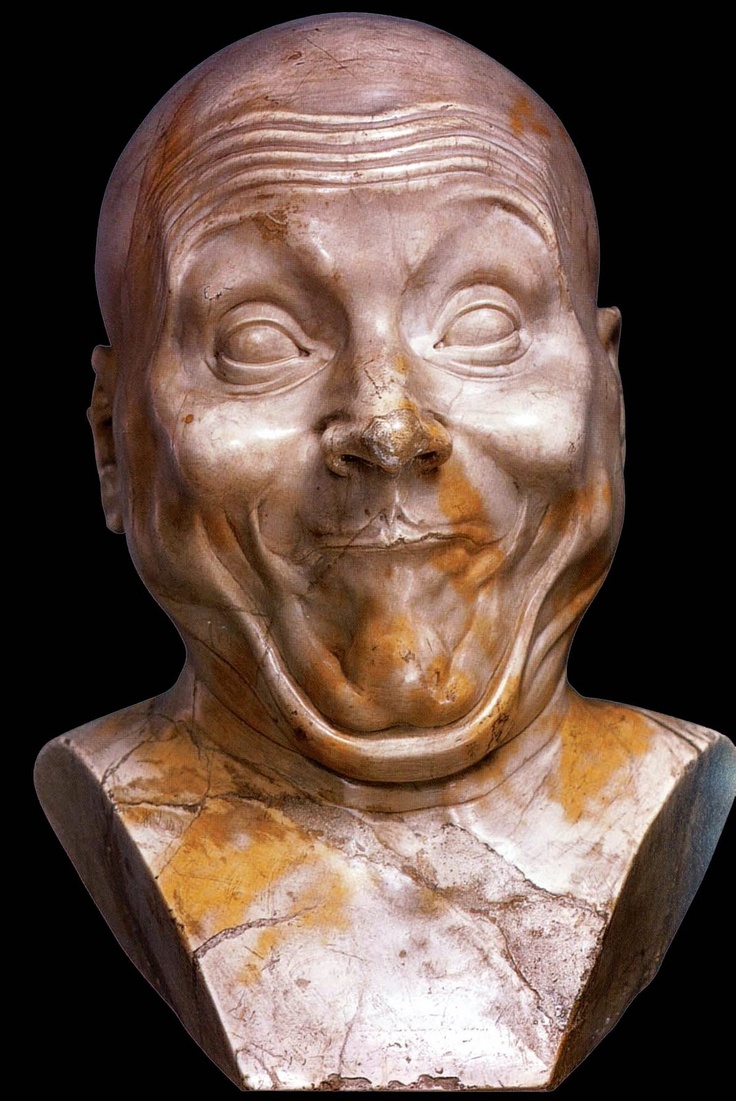
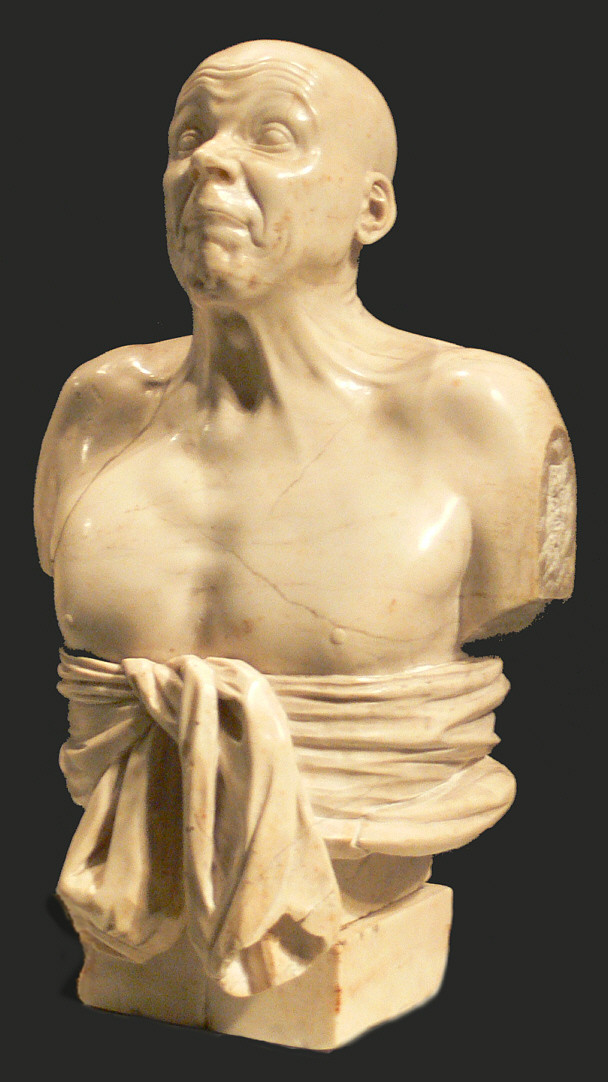
Franz Xaver Messerschmidt
In 1781, German author Friedrich Nicolai visited Messerschmidt at his studio in Pressburg and subsequently published a transcript of their conversation. Nicolai’s account of the meeting is a valuable resource, as it is the only contemporary document that details Messerschmidt’s reasoning behind the execution of his character heads. It appears that for many years Messerschmidt had been suffering from an undiagnosed digestive complaint, now believed to be Crohn’s disease, which caused him considerable discomfort. In order to focus his thoughts away from his condition, Messerschmidt devised a series of pinches he administered to his right lower rib. Observing the resulting facial expressions in a mirror, Messerschmidt then set about recording them in marble and bronze. His intention, he told Nicolai, was to represent the 64 “canonical grimaces” of the human face using himself as a template.


During the course of the discussion, Messerschmidt went on to explain his interest in necromancy and the arcane, and how this also inspired his character heads. Messerschmidt was a keen disciple of Hermes Trismegistus (Nicolai noted that among the few possessions that littered Messerschmidt’s workshop was a copy of an illustration featuring Trismegistus) and abided by his teachings regarding the pursuit of “universal balance”: a forerunner to the principles of the Golden ratio. As a result, Messerschmidt claimed that his character heads had aroused the anger of “the Spirit of Proportion”, an ancient being who safe-guarded this knowledge. The spirit visited him at night, and forced him to endure humiliating tortures. One of Messerschmidt’s most famous heads was apparently inspired by one of these encounters.Wikipedia


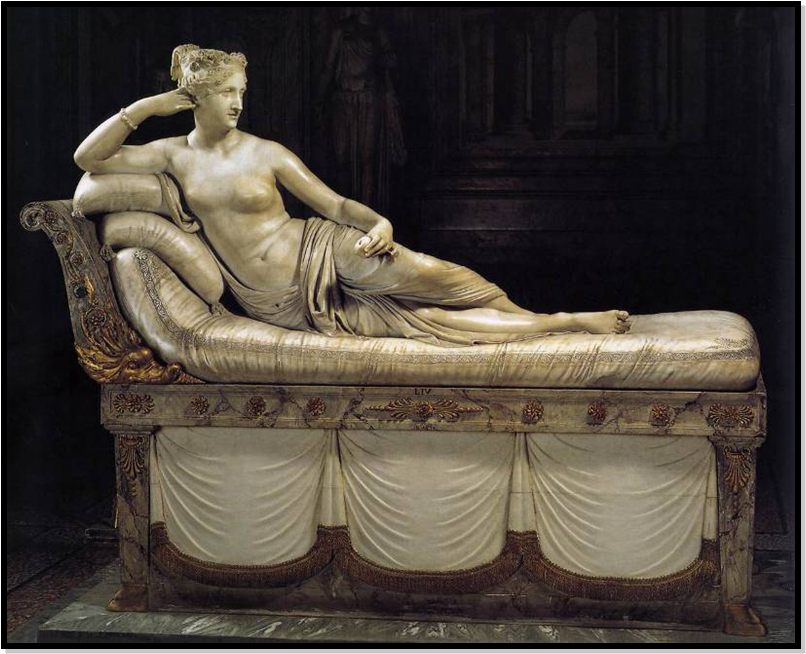
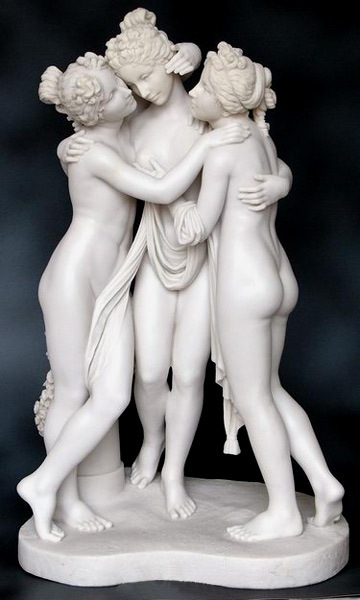
Antonio Canova
Antonio Canova (01 November 1757 – 13 October 1822) was an Italian neoclassical sculptor, famous for his marble sculptures. Often regarded as the greatest of the neoclassical artists, his artwork was inspired by the Baroque and the classical revival, but avoided the melodramatics of the former, and the cold artificiality of the latter.Wikipedia




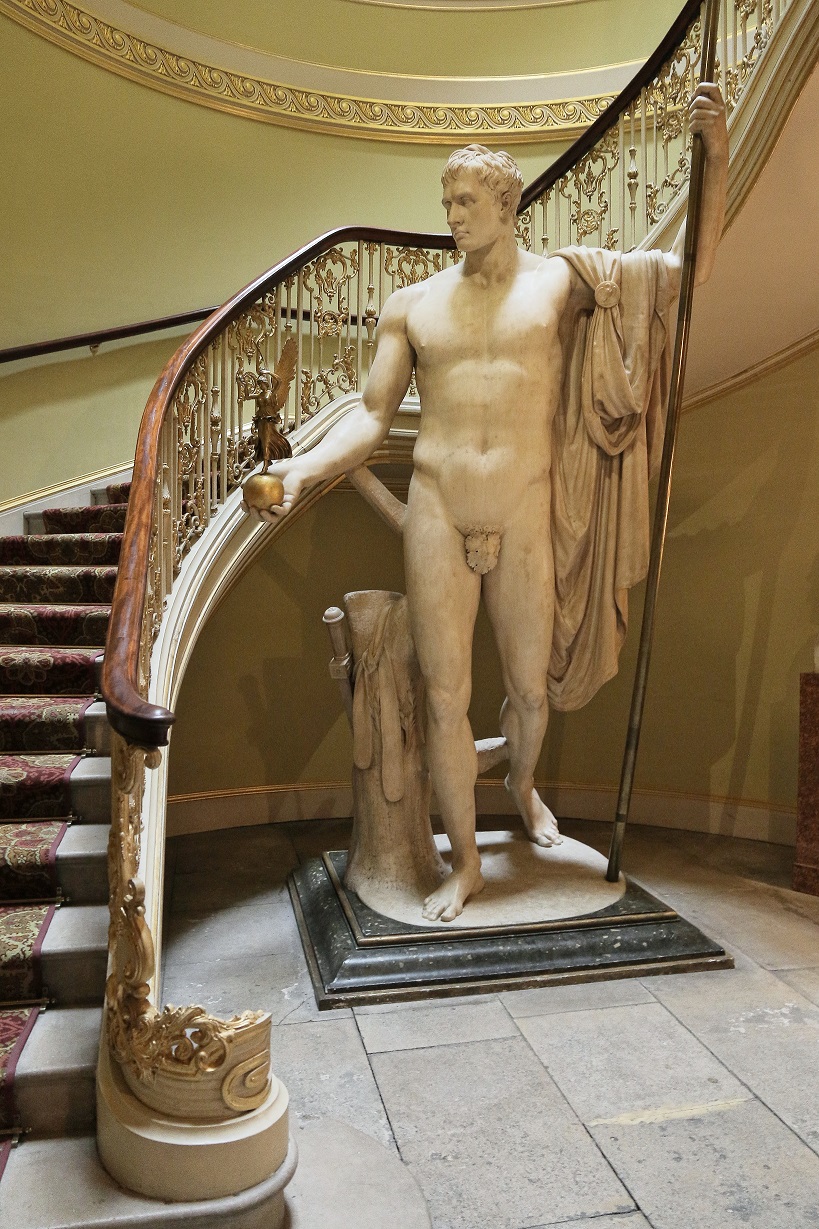
Napoleon as Mars
Napoleon as Mars the Peacemaker is a colossal heroic nude statue by the Italian artist Antonio Canova, of Napoleon I of France in the guise of the Roman god Mars. He holds a gilded Nike or Victory standing on an orb in his right hand and a staff in his left. It was produced between 1802 and 1806 and stands 3.45 metres to the raised left hand. Once on display in the Louvre in Paris, it was purchased from Louis XVIII in 1816 by the British government, which granted it to the Duke of Wellington. It is now on display in Robert Adam’s stairwell at the Duke’s London residence..Wikipedia
Eliseu Visconti
Eliseu Visconti, born Eliseo d’Angelo Visconti (30 July 1866, Giffoni Valle Piana, Italy – 15 October 1944, Rio de Janeiro, Brazil) was an Italian-born Brazilian painter, cartoonist, and teacher. He is considered one of the very few impressionist painters of Brazil. He is considered the initiator of the art nouveau in Brazil
He entered in 1884 the Liceu de Artes e Ofícios do Rio de Janeiro, where studied under Victor Meireles. Parallel to his studies in the Liceu, he entered the Academia Imperial de Belas Artes (English: Brazilian Imperial Academy) studying under professors Henrique Bernardelli, Rodolfo Amoedo and Jose Maria de Medeiros. In 1888 he received a gold medal at the Academy. Like many of his contemporaries, including some of his teachers, he was involved in the plight to renew the Academy’s teaching methods, deemed obsolete and was among the creators of the short-lived” Ateliê Livre”, together professors João Zeferino of Costa, Rodolfo Amoedo, Henrique Bernardelli and Rodolpho Bernardelli.
In June 1906, he is selected to replace Henrique Bernardelli as a professor of painting at the Escola Nacional de Belas Artes, the same Imperial Academia renamed after the proclamation of the republic. He accepted the position the following year after returning to Brazil, where he remained a teacher until 1913. Among his disciples were painters Marques Junior and Henrique Cavalleiro.Wikipedia


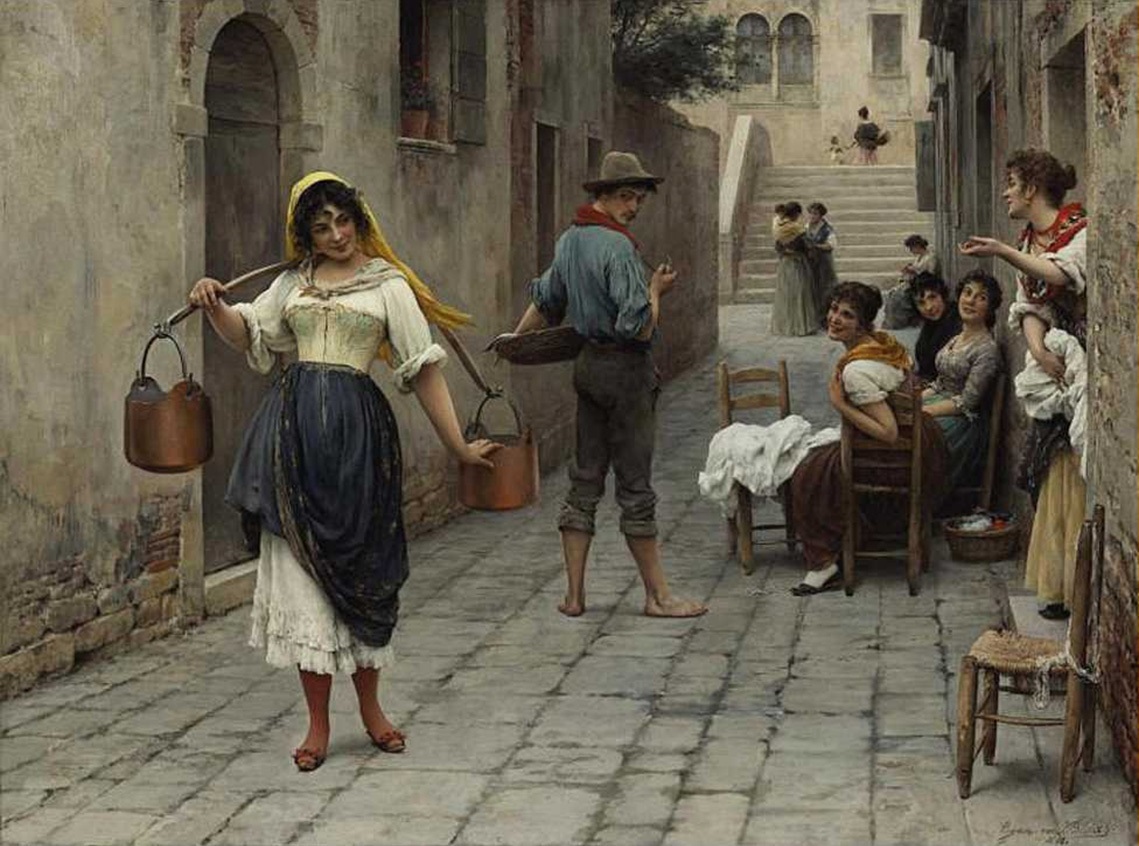
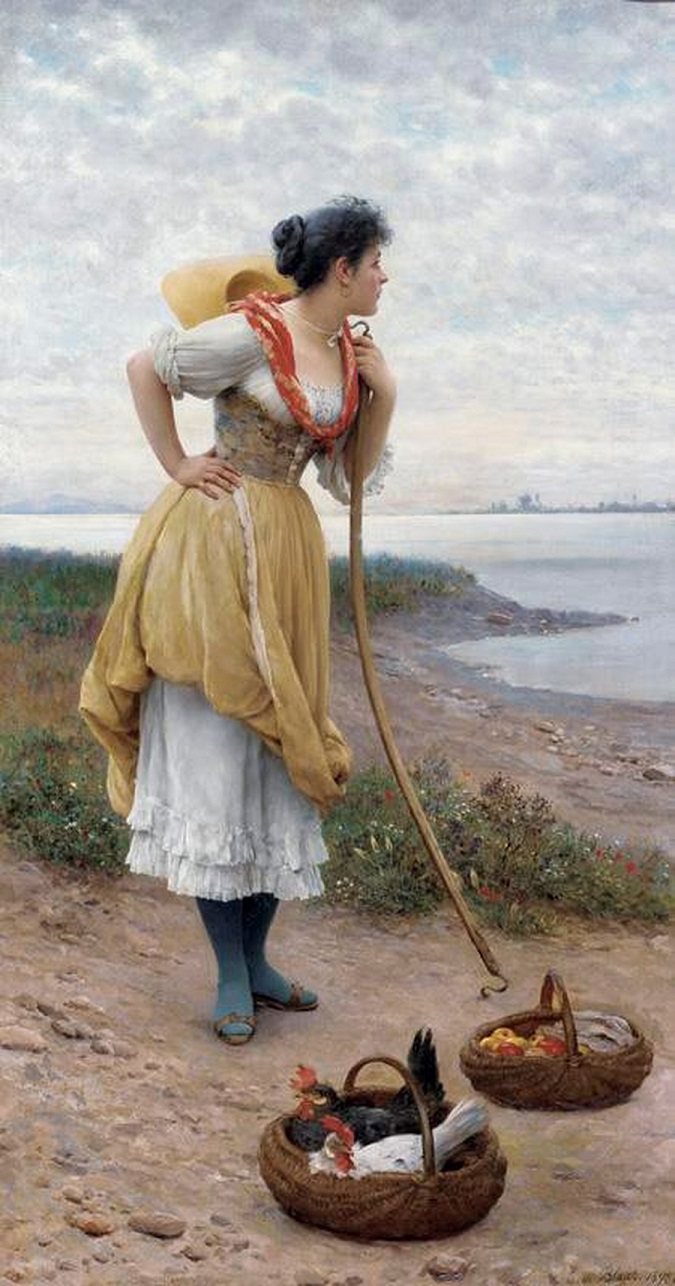
Eugene de Blaas
Eugene de Blaas, also known as Eugene von Blaas or Eugenio Blaas (24 July 1843 – 10 February 1932), was an Italian painter in the school known as Academic Classicism.He was born at Albano, near Rome, to Austrian parents. His father Karl, also a painter, was his teacher. The family moved to Venice when Karl became Professor at the Academy of Venice. He often painted scenes in Venice, but also portraits and religious paintings.
Among his works are La forma nuziale in sacrestia ; La tombola in Campielo a Venezia; Una scena di burattini in un educanciatu; and La Ninetta. The art critic Luigi Chirtani, when the painting was displayed at the Mostra Nazionale di Venezia, described it as Beautiful, flattering, pretty, caressed, cleaned, polished, laundress in a painting by Mr. Blaas, the favorite portraitist of great Venetian aristocrats, dressed in gala satins, shining jewelry, hairstyles of the rich.
His colorful and rather theatrical period images of Venetian society, e.g. On the Balcony (1877; Private Collection), were quite different compared to delicate pastels and etchings of the courtyards, balcony and canals of modern Venice.
Eugene de Blaas’ paintings were exhibited at the Royal Academy, Fine Art Society, New Gallery and Arthur Tooth and Sons Gallery in London, and also at the Walker Art Gallery in Liverpoo.Wikipedia




Heinrich Friedrich Füger
Heinrich Friedrich Füger (help·info) (8 December 1751 Heilbronn – 5 November 1818 Vienna) was a German classicism portrait and historical painter.
Füger was a pupil of Nicolas Guibal in Stuttgart and of Adam Friedrich Oeser in Leipzig. Afterward he traveled and spent some time in Rome and Naples, where he painted frescoes in the Palazzo Caserta. On his return to Vienna he was appointed court painter, professor and vice director of the Academy, and in 1806 director of the Belvedere Gallery.


Among his historical paintings are: The Farewell of Coriolanus (Czernin Gallery, Vienna), Allegory on the Peace of Vienna (1801), The Death of Germanicus (1789), The Murder of Caesar, and Bathsheba (Budapest Gallery). Among his portraits are those of the Emperor Joseph II, the Grand Duchess Elizabeth Wilhelmine of Württemberg, Queen Caroline of Naples, and Horatio Nelson, who sat for him in Vienna in 1800 (National Portrait Gallery, London).He painted in the classic style of Louis David[1] and Anton Raphael Mengs and was inclined to be theatrical.
Füger was also a teacher; among his pupils was Gustav Philipp Zwinger, and Franciszek Ksawery Lamp.Wikipedia

Pierre Auguste Cot
Pierre Auguste Cot (17 February 1837 – 2 August 1883) was a French painter of the Academic Classicism school.Cot was born in Bédarieux, Hérault, and initially studied at l’Ecole des Beaux-Arts in Toulouse before going to Paris. He studied under Leon Cogniet, Alexandre Cabanel and William-Adolphe Bouguereau. In 1863 he made a successful debut at the Salon, and from the 1870s, his popularity grew quickly.Cot enjoyed the patronage of the academic sculptor Francisque Duret, whose daughter he married, and of Bouguereau, with whom he had also worked. Bouguereau painted a portrait of Cot’s daughter, Gabrielle. Bouguereau had dined with the Cot family to celebrate Gabrielle’s marriage to an architect named Zilin. The artist made a gift of the painting to the wife of Duret, Gabrielle’s grandmother.[1]
Cot won various prizes and medals, and in 1874 was made Chevalier of the Legion of Honour.
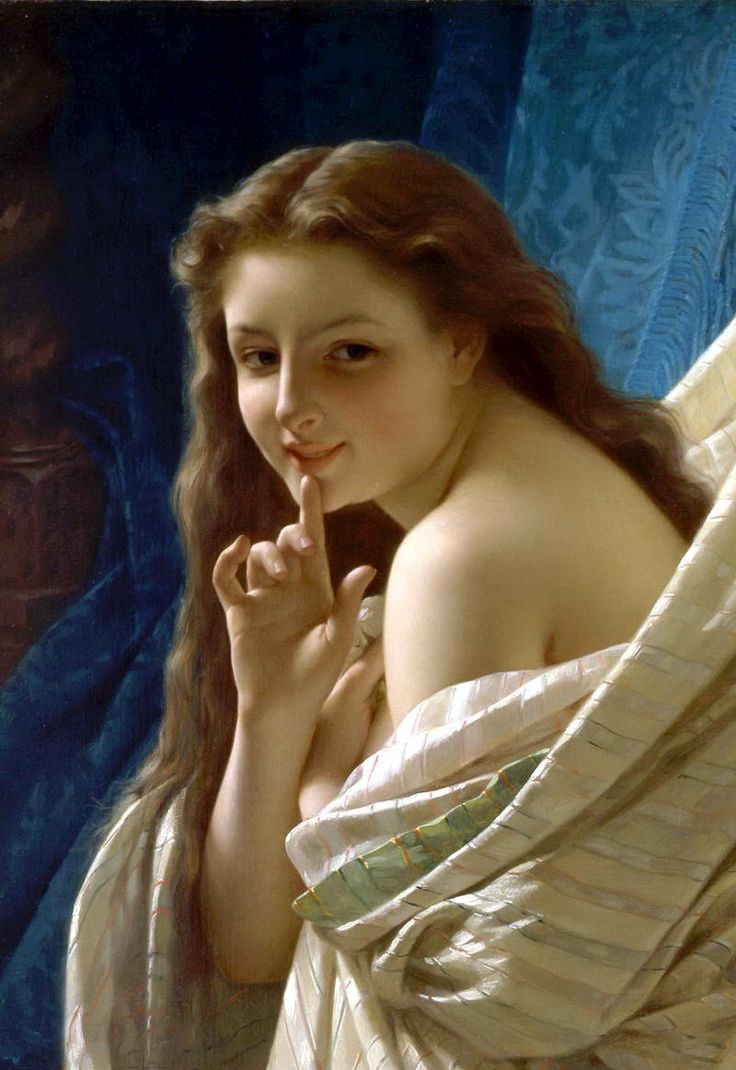

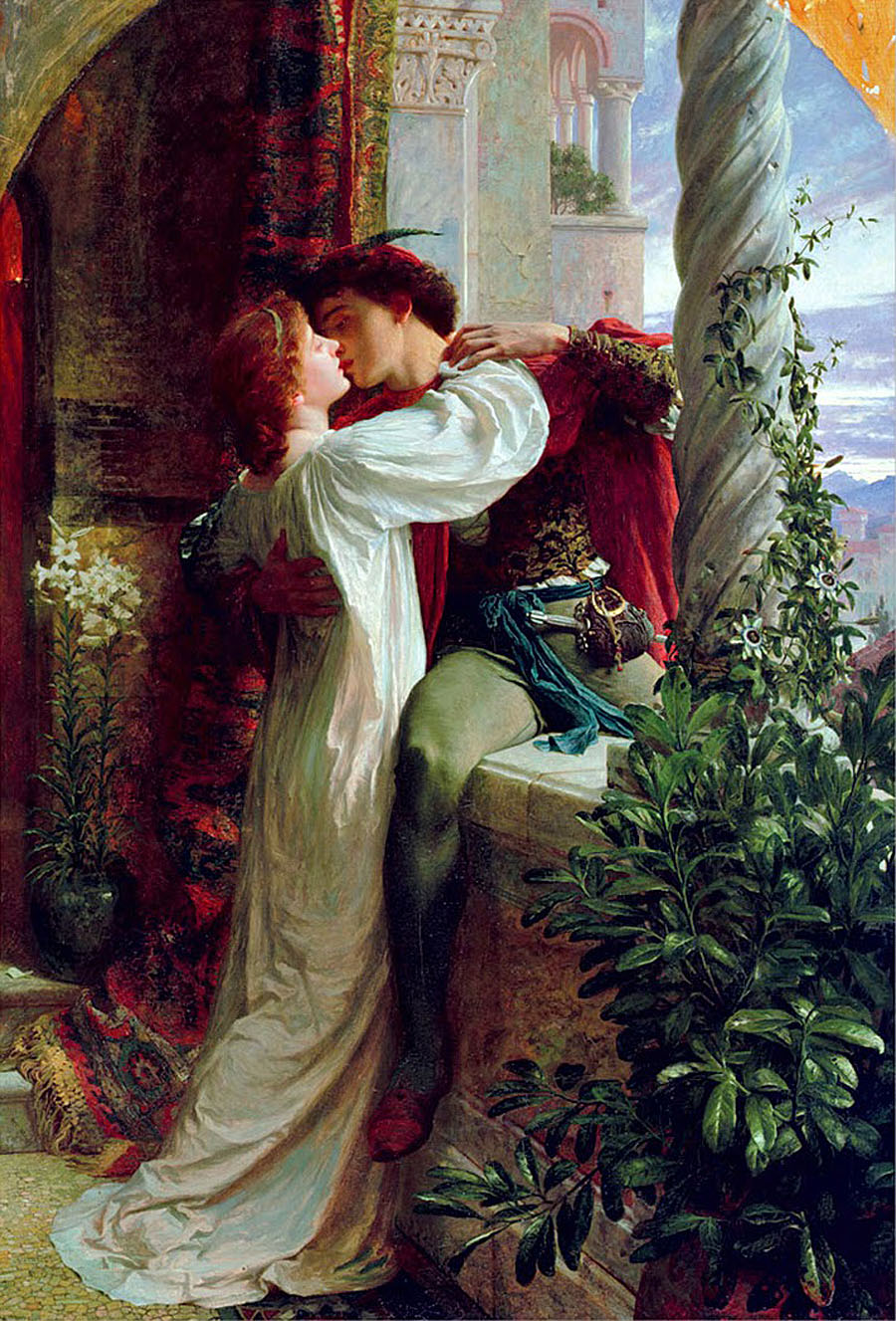
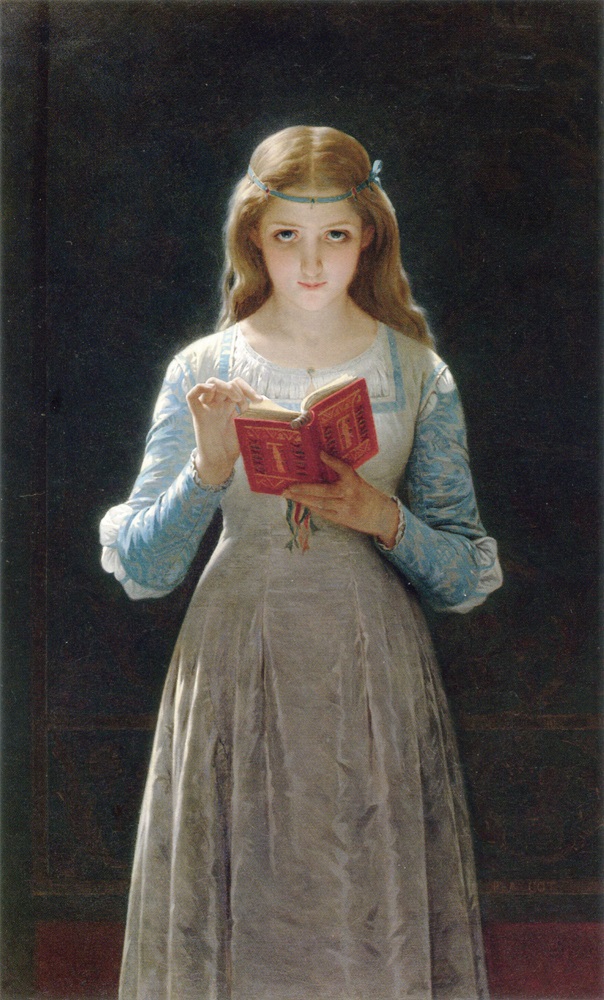
He created several works of lasting popularity, including Le Printemps, featuring two young lovers sitting upon a swing, and The Storm. Both these paintings are on display at the Metropolitan Museum of Art in New York City; The Storm belongs to the museum while Le Printemps is owned privately.
Cot also was renowned for his portraits, which made up the majority of his work. The more enduring figurative work, such as The Storm, is comparatively rare. Shortly after his death at the age of forty-six (2 August 1883), a subscription was undertaken for a commemorative monument to the artist, which was erected at Bédarieux in 1892.Wikipedia
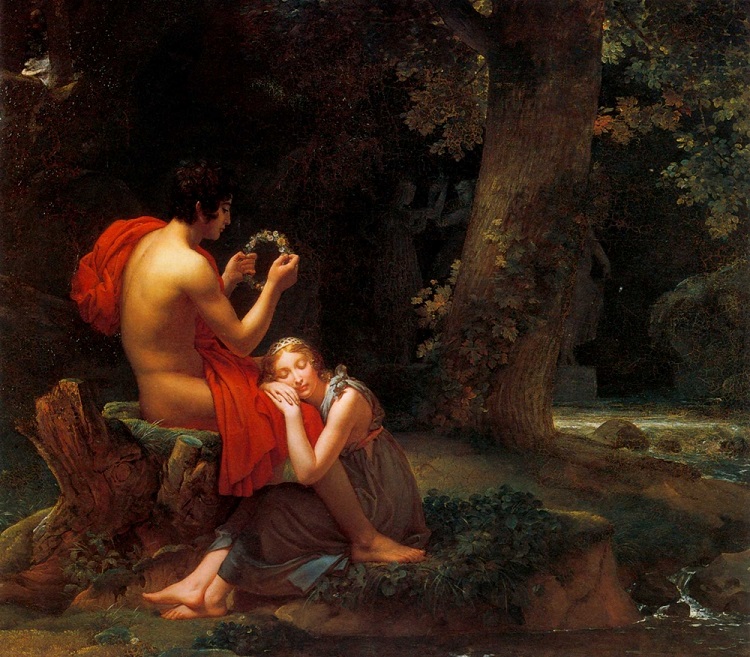
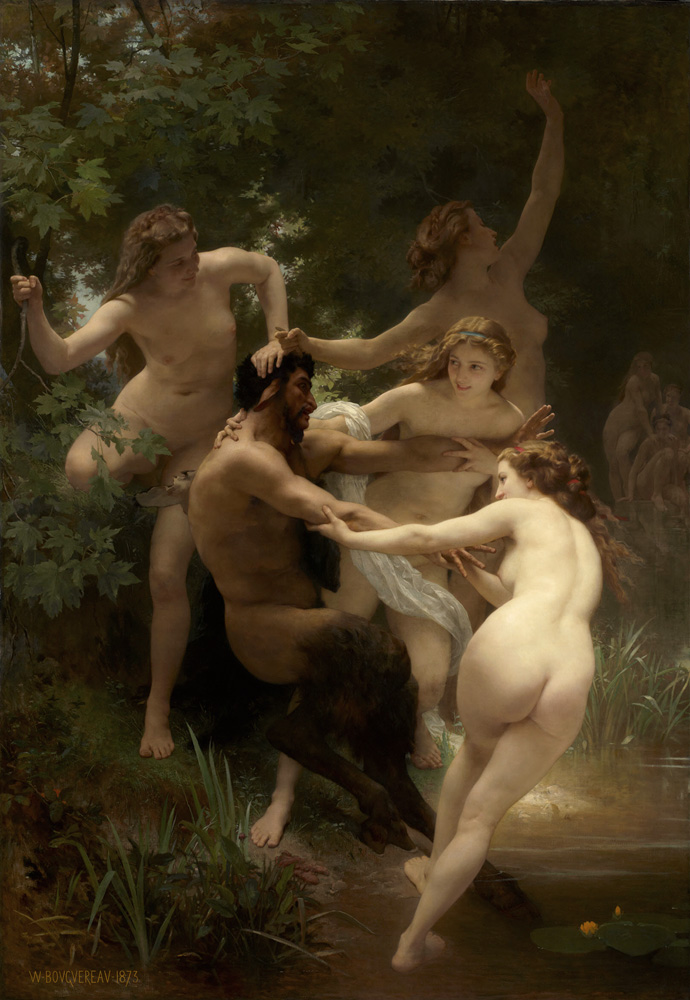

Orientalist painters Gustav Bauernfeind
Gustav Bauernfeind (4 September 1848, Sulz am Neckar – 24 December 1904, Jerusalem)
After completing his architectural studies at the Polytechnic Institute in Stuttgart, he worked in the architectural firm of Professor Wilhelm Bäumer and later in that of Adolph Gnauth, where he also learned painting. In his earlier paintings, Bauernfeind focused on local views of Germany, as well as motifs from Italy. During his journey to the Levant from 1880 to 1882, he became interested in the Orient and repeated his travels again and again. In 1896 he moved with his wife and son all the way to Palestine and subsequently settled in Jerusalem in 1898. He also lived and worked in Lebanon and Syria.

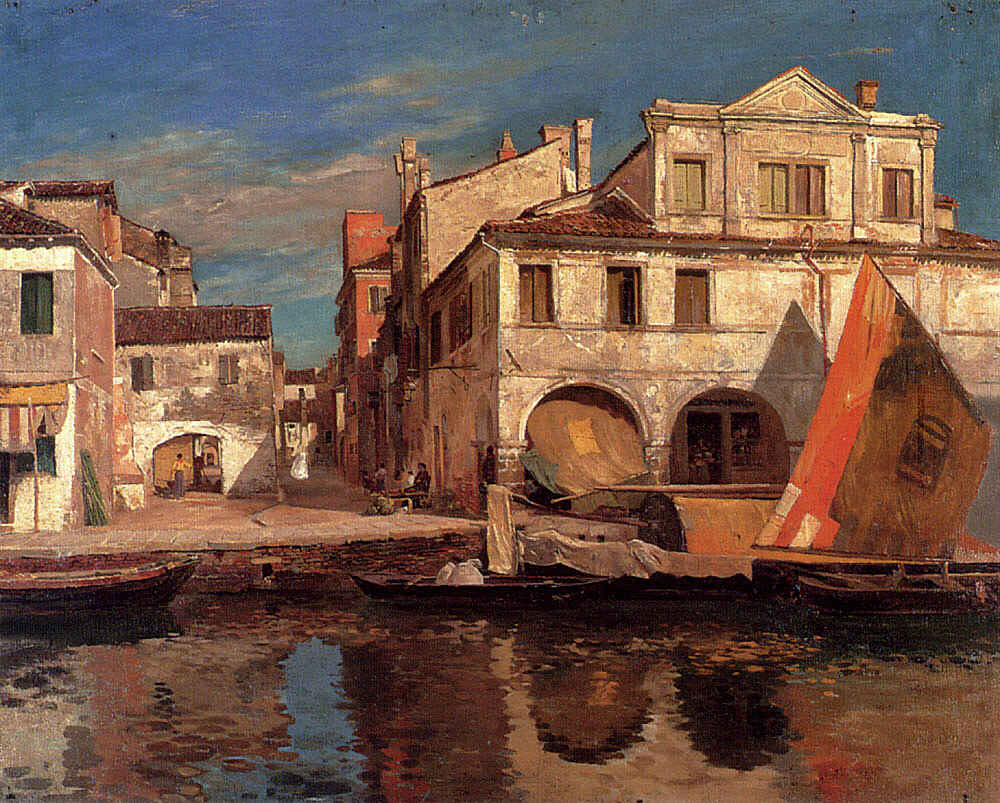

His work is characterized primarily by architectural views of Jerusalem and the Holy Land. The paintings of Bauernfeind are mostly meticulously crafted, intricately composed and almost photographically accurate cityscapes and images of known sanctuaries in oil. In addition, he produced landscape scenes and watercolours. During his lifetime he was the most popular Orientalist painter of Germany, but soon fell into oblivion after his death. However, since the early 1980s, Bauernfeind was gradually rediscovered, with his paintings appearing at auctions with high prices. Thus, his oil painting The Wailing Wall was sold at Christie’s in London for the equivalent of 326.000 € in 1992. The same painting would reach at Sotheby’s in London the equivalent of 4.5 million € in a later auction in 2007.[2] In 1997, another oil painting of Bauernfeind, The Port of Jaffa, was sold at the Van Ham Kunstauktionen in Cologne for 1.510.000 DM, thus becoming the most expensive 19th century painting ever sold in Germany. Wikipedia


Augustus of Prima Porta
Augustus of Prima Porta is a 2.03m high marble statue of Augustus Caesar which was discovered on April 20, 1863 in the Villa of Livia at Prima Porta, near Rome. Augustus Caesar’s wife Livia Drusilla, now known as Julia Augusta, retired to the villa after his death. The sculpture is now displayed in the Braccio Nuovo of the Vatican Museums.
The dating of the Prima Porta piece is widely contested. It is thought to be a copy of a bronze original.The sculptor may have been Greek. This original, along with other high honors, was vowed to Augustus by the Senate in 20 BC and set up in a public place. The marble statue, however, was found in his wife’s (Livia) villa.It is also contested that this particular sculpture is a reworking of a bronze original, possibly a gift from Tiberius Caesar to his mother Livia (since it was found in her villa Ad Gallinas Albas in the vicinity of the ninth mile-marker of the via Flaminia, and close to a late Imperial gate called Prima Porta) after Augustus’ death and in honor of the woman who had campaigned so long for him to become the next Caesar. This would explain the divine references to Augustus in the piece, notably his being barefoot, the standard representation of gods or heroes in classical iconography. Also, the reliefs in the heroic cuirass depict the retrieval of Crassus’ standards captured by the Parthians, an event in which the young Tiberius himself took a part, serving as an intermediary with the Parthian king, in the act that is shown in the central scene of the armor, possibly his grandest service to his adoptive father Augustus. With the introduction of Tiberius as the figure responsible for the retrieval of the standards, he associates himself with Augustus, the emperor and the new god, as Augustus himself had done previously with Julius Caesar. Under this hypothesis, the dating of the statue can be placed during the first years of Tiberius’ reign as emperor (AD 14 — AD 37).

Augustus is shown in this role of “Imperator”, the commander of the army, as thoracatus —or commander-in-chief of the Roman army (literally, thorax-wearer)—meaning the statue should form part of a commemorative monument to his latest victories; he is in military clothing, carrying a consular baton and raising his right hand in a rhetorical adlocutio pose, addressing the troops. The bas-reliefs on his armored cuirass have a complex allegorical and political agenda, alluding to diverse Roman deities, including Mars, god of war, as well as the personifications of the latest territories he conquered: Hispania, Gaul, Germania, Parthia (that had humiliated Crassus, and here appears in the act of returning the standards captured from his legions); at the top, the chariot of the Sun illuminates Augustus’s deeds.The statue is an idealized image of Augustus based on the 5th-century BC statue of the Spear Bearer or Doryphoros by the sculptor Polykleitos. Compare the Orator in the Museo Archeologico in Florence. The Doryphoros’s contrapposto stance, creating diagonals between tense and relaxed limbs, a feature typical of classical sculpture, is adapted here. The misidentification of the Doryphoros in the Roman period as representing the warrior Achilles made the model all the more appropriate for this image. Despite the Republican influence in the portrait head, the overall style is closer to Hellenistic idealisation than to the realism of Roman portraiture.Despite the accuracy with which Augustus’ features are depicted (with his sombre look and characteristic fringe), the distant and tranquil expression of his face has been idealized, as have the conventional contrapposto, the anatomical proportions and the deeply draped paludamentum or “cloth of the commander”. On the other hand, Augustus’s barefootedness and the inclusion of Cupid riding a dolphin as structural support for the statue reveals his mythical connection to the goddess Venus (Cupid’s mother) by way of his adopted father Julius Caesar. The clear Greek inspiration in style and symbol for official sculptural portraits, which under the Roman emperors became instruments of governmental propaganda, is a central part of the Augustan ideological campaign, a shift from the Roman Republican era iconography where old and wise features were seen as symbols of solemn character. Therefore, the Prima Porta statue marks a conscious reversal of iconography to the Greek classical and Hellenistic period, in which youth and strength were valued as signs of leadership, emulating heroes and culminating in Alexander the Great himself. Such a statue’s political function was very obvious—to show Rome that the emperor Augustus was an exceptional figure, comparable to the heroes worthy of being raised to divine status on Olympus, and the best man to govern Rome.Wikipedia
El Greco
The primacy of imagination and intuition over the subjective character of creation was a fundamental principle of El Greco’s style.[24] El Greco discarded classicist criteria such as measure and proportion. He believed that grace is the supreme quest of art, but the painter achieves grace only if he manages to solve the most complex problems with obvious ease.
“I hold the imitation of color to be the greatest difficulty of art.”
— El Greco, from notes of the painter in one of his commentaries.

El Greco regarded color as the most important and the most ungovernable element of painting, and declared that color had primacy over form.Francisco Pacheco, a painter and theoretician who visited El Greco in 1611, wrote that the painter liked “the colors crude and unmixed in great blots as a boastful display of his dexterity” and that “he believed in constant repainting and retouching in order to make the broad masses tell flat as in nature”.Art historian Max Dvořák was the first scholar to connect El Greco’s art with Mannerism and Antinaturalism.Modern scholars characterize El Greco’s theory as “typically Mannerist” and pinpoint its sources in the Neoplatonism of the Renaissance.Jonathan Brown believes that El Greco endeavored to create a sophisticated form of art;according to Nicholas Penny “once in Spain, El Greco was able to create a style of his own—one that disavowed most of the descriptive ambitions of painting”.

In his mature works El Greco demonstrated a characteristic tendency to dramatize rather than to describe.The strong spiritual emotion transfers from painting directly to the audience. According to Pacheco, El Greco’s perturbed, violent and at times seemingly careless-in-execution art was due to a studied effort to acquire a freedom of style. El Greco’s preference for exceptionally tall and slender figures and elongated compositions, which served both his expressive purposes and aesthetic principles, led him to disregard the laws of nature and elongate his compositions to ever greater extents, particularly when they were destined for altarpieces.The anatomy of the human body becomes even more otherworldly in El Greco’s mature works; for The Virgin of the Immaculate Conception El Greco asked to lengthen the altarpiece itself by another 1.5 feet (0.46 m) “because in this way the form will be perfect and not reduced, which is the worst thing that can happen to a figure'”. A significant innovation of El Greco’s mature works is the interweaving between form and space; a reciprocal relationship is developed between the two which completely unifies the painting surface. This interweaving would re-emerge three centuries later in the works of Cézanne and Picasso.


Another characteristic of El Greco’s mature style is the use of light. As Jonathan Brown notes, “each figure seems to carry its own light within or reflects the light that emanates from an unseen source”.Fernando Marias and Agustín Bustamante García, the scholars who transcribed El Greco’s handwritten notes, connect the power that the painter gives to light with the ideas underlying Christian Neo-Platonism.
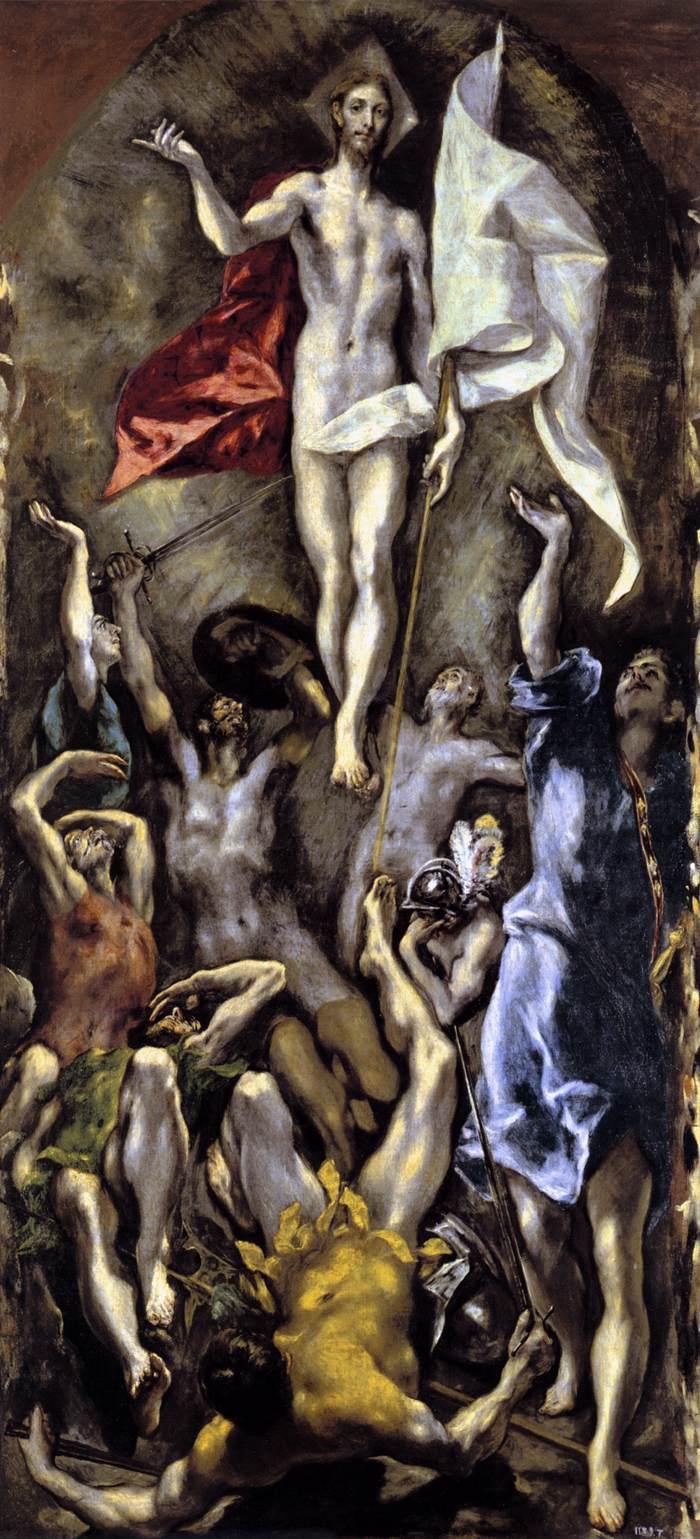
Modern scholarly research emphasizes the importance of Toledo for the complete development of El Greco’s mature style and stresses the painter’s ability to adjust his style in accordance with his surroundings. Harold Wethey asserts that “although Greek by descent and Italian by artistic preparation, the artist became so immersed in the religious environment of Spain that he became the most vital visual representative of Spanish mysticism”. He believes that in El Greco’s mature works “the devotional intensity of mood reflects the religious spirit of Roman Catholic Spain in the period of the Counter-Reformation”.
El Greco also excelled as a portraitist, able not only to record a sitter’s features but also to convey their character. His portraits are fewer in number than his religious paintings, but are of equally high quality. Wethey says that “by such simple means, the artist created a memorable characterization that places him in the highest rank as a portraitist, along with Titian and Rembrandt”.Wikipedia

Ilya Repin
Ilya Yefimovich Repin (24 July1844 – 29 September 1930) was a Russian realist painter. He was the most renowned Russian artist of the 19th century, when his position in the world of art was comparable to that of Leo Tolstoy in literature. He played a major role in bringing Russian art into the mainstream of European culture. His major works include Barge Haulers on the Volga (1873), Religious Procession in Kursk Province (1883) and Reply of the Zaporozhian Cossacks (1880–91).
Repin was born in Chuguyev, in the Kharkov Governorate (now Ukraine) of the Russian Empire into a military family. He entered military school in 1854 and in 1856 studied under Ivan Bunakov, a local icon painter. He began to paint around 1860. He met fellow artist Ivan Kramskoi and the critic Vladimir Stasov during the 1860s, and his wife, Vera Shevtsova in 1872 (they remained married for ten years). In 1874–1876 he showed at the Salon in Paris and at the exhibitions of the Itinerants’ Society in Saint Petersburg. He was awarded the title of academician in 1876.


In 1880 Repin traveled to Zaporozhia in Ukraine to gather material for the 1891 Reply of the Zaporozhian Cossacks. His Religious Procession in Kursk Province was exhibited in 1883, and Ivan the Terrible and His Son Ivan in 1885. In 1892 he published the Letters on Art collection of essays. He taught at the Higher Art School attached to the Academy of Arts from 1894. In 1898 he purchased an estate, the Penates, in Kuokkala, Finland (now Repino, Saint Petersburg).

In 1901 he was awarded the Legion of Honour. In 1911 he traveled with his common-law wife Natalia Nordman to the World Exhibition in Italy, where his painting 17 October 1905 and his portraits were displayed in their own separate room. In 1916 Repin worked on his book of reminiscences, Far and Near, with the assistance of Korney Chukovsky. He welcomed the Russian Revolution of 1917. Celebrations were held in 1924 in Kuokkala to mark Repin’s 80th birthday, followed by an exhibition of his works in Moscow. In 1925 a jubilee exhibition of his works was held in the Russian Museum in Leningrad. Repin died in 1930 and was buried at the Penates.Wikipedia

Frank Dicksee
Sir Francis Bernard Dicksee (London 27 November 1853 – 17 October 1928) was an English Victorian painter and illustrator, best known for his pictures of dramatic literary, historical, and legendary scenes. He also was a noted painter of portraits of fashionable women, which helped to bring him success in his own time.Dicksee’s father, Thomas Dicksee, was a painter who taught Frank as well as his brother Herbert and his sister Margaret from a young age. Dicksee enrolled in the Royal Academy in 1870 and achieved early success. He was elected to the Academy in 1891 and became its President in 1924.He was knighted in 1925, and named to the Royal Victorian Order by King George V in 1927.Wikipedia


Andreas Achenbach
Andreas Achenbach (29 September 1815 – 1 April 1910) was a German landscape painter, associated with the Düsseldorf school of painting.A number of his finest works are to be found at the Berlin National Gallery, the New Pinakothek in Munich, and the galleries at Dresden, Darmstadt, Cologne, Düsseldorf, Leipzig and Hamburg. Many of his paintings are in galleries in the United States.Wikipedia


Alexandre Cabanel
Alexandre Cabanel (French: [kabanɛl]; 28 September 1823 – 23 January 1889) was a French painter born in Montpellier, Hérault. He painted historical, classical and religious subjects in the academic style. He was also well known as a portrait painter. According to Diccionario Enciclopedico Salvat, Cabanel is the best representative of the L’art pompier and Napoleon III’s preferred painte
Cabanel entered the École des Beaux-Arts in Paris at the age of seventeen, and studied with François-Édouard Picot. He exhibited at the Paris Salon for the first time in 1844, and won the Prix de Rome scholarship in 1845 at the age of 22.[2] Cabanel was elected a member of the Institute in 1863. He was appointed professor at the École des Beaux-Arts in 1864 and taught there until his death.


He was closely connected to the Paris Salon: “He was elected regularly to the Salon jury and his pupils could be counted by the hundred at the Salons. Through them, Cabanel did more than any other artist of his generation to form the character of belle époque French painting”.[4] His refusal together with William-Adolphe Bouguereau to allow the impressionist painter Édouard Manet and many other painters to exhibit their work in the Salon of 1863 led to the establishment of the Salon des Refusés by the French government. Cabanel won the Grande Médaille d’Honneur at the Salons of 1865, 1867, and 1878.
A successful academic painter, his 1863 painting The Birth of Venus is one of the best known examples of 19th-century academic painting. The picture was bought by the emperor Napoleon III; there is also a smaller replica (painted in 1875 for a banker, John Wolf) at the Metropolitan Museum of Art in New York City. It was given to them by Wolf in 1893.Wikipedia


Eugène Delacroix
Ferdinand Victor Eugène Delacroix( 26 April 1798 – 13 August 1863) was a French Romantic artist regarded from the outset of his career as the leader of the French Romantic school.


The Barque of Dante
The Barque of Dante (French: La Barque de Dante), sometimes known as Dante and Virgil in Hell (Dante et Virgile aux enfers), is the first major painting[1] by the French artist Eugène Delacroix, and one of the works signalling a shift in the character of narrative painting from Neo-Classicism towards the Romantic movement. It was completed for the opening of the Salon of 1822 and currently hangs in the Musée du Louvre, Paris.
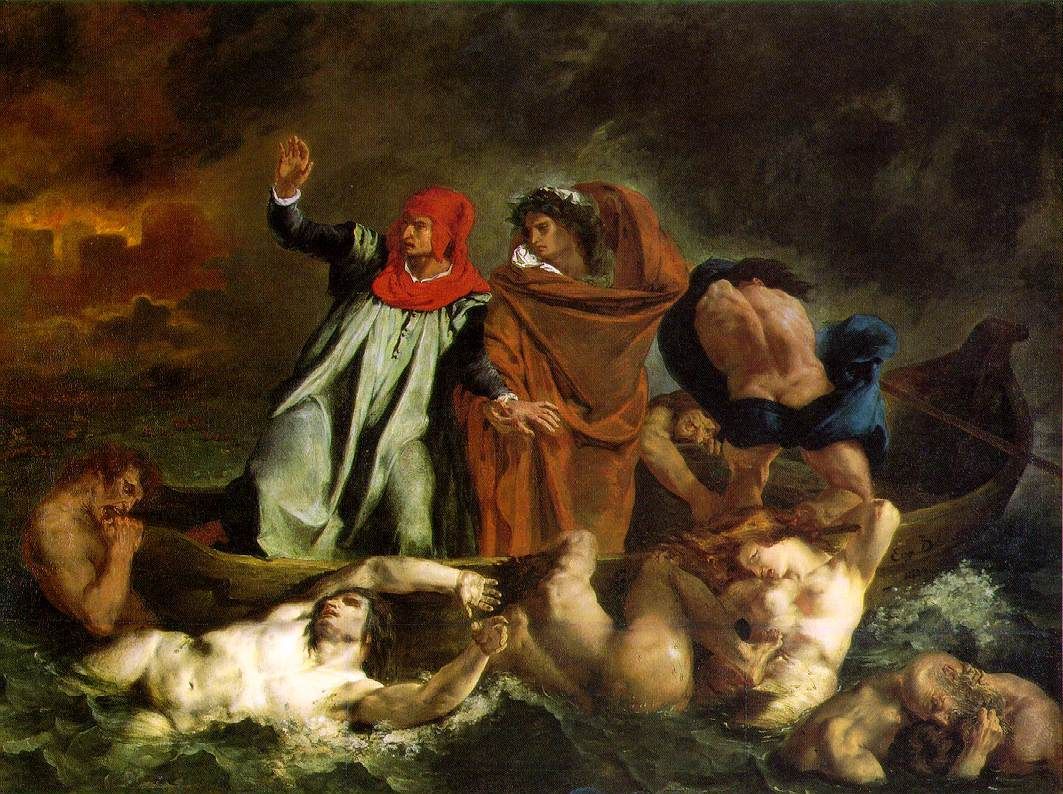
The painting is loosely based on fictional events taken from canto eight of Dante’s Inferno. A leaden, smoky mist and the blazing City of the Dead form the backdrop against which the poet Dante endures a fearful crossing of the River Styx. He is steadied by the learned poet of antiquity Virgil as they plough through waters heaving with tormented souls.
The arrangement of figures is for the most part compliant with the tenets of the cool, reflective Neo-Classicism that had dominated French painting for nearly four decades. There is a group of central upright figures, and a rational arrangement of subsidiary figures, all in horizontal planes, and observing studied poses.Wikipedia
Jacques-Louis David
Jacques-Louis David (30 August 1748 – 29 December 1825) was an influential French painter in the Neoclassical style, considered to be the preeminent painter of the era. In the 1780s his cerebral brand of history painting marked a change in taste away from Rococo frivolity toward a classical austerity and severity, heightened feelingharmonizing with the moral climate of the final years of the Ancien Régime.

David later became an active supporter of the French Revolution and friend of Maximilien Robespierre (1758–1794), and was effectively a dictator of the arts under the French Republic. Imprisoned after Robespierre’s fall from power, he aligned himself with yet another political regime upon his release: that of Napoleon, The First Consul of France. At this time he developed his Empire style, notable for its use of warm Venetian colours. After Napoleon’s fall from Imperial power and the Bourbon revival, David exiled himself to Brussels, then in the United Kingdom of the Netherlands, where he remained until his death. David had a large number of pupils, making him the strongest influence in French art of the early 19th century, especially academic Salon painting.Wikipedia


Sir Edward John Poynter
Sir Edward John Poynter, 1st Baronet PRA (20 March 1836 in Paris – 26 July 1919 in London) was an English painter, designer, and draughtsman who served as President of the Royal Academy.Poynter held a number of official posts: he was the first Slade Professor at University College London from 1871 to 1875, principal of the National Art Training School from 1875 to 1881 and director of the National Gallery from 1894 to 1904 (overseeing the opening of the Tate Gallery). He became a Royal Academician in 1876. In 1896, on the death of Sir John Millais, Poynter was elected President of the Royal Academy. He received a knighthood in the same year and an honorary degree from Cambridge University in 1898. He was made a baronet in 1902.Wikipedia


The School of Athens Raphael
The School of Athens, or Scuola di Atene in Italian, is one of the most famous frescoes by the Italian Renaissance artist Raphael. It was painted between 1509 and 1511 as a part of Raphael’s commission to decorate the rooms now known as the Stanze di Raffaello, in the Apostolic Palace in the Vatican. The Stanza della Segnatura was the first of the rooms to be decorated, and The School of Athens, representing Philosophy, was probably the second painting to be finished there, after La Disputa (Theology) on the opposite wall, and the Parnassus (Literature). The picture has long been seen as “Raphael’s masterpiece and the perfect embodiment of the classical spirit of the Renaissance.
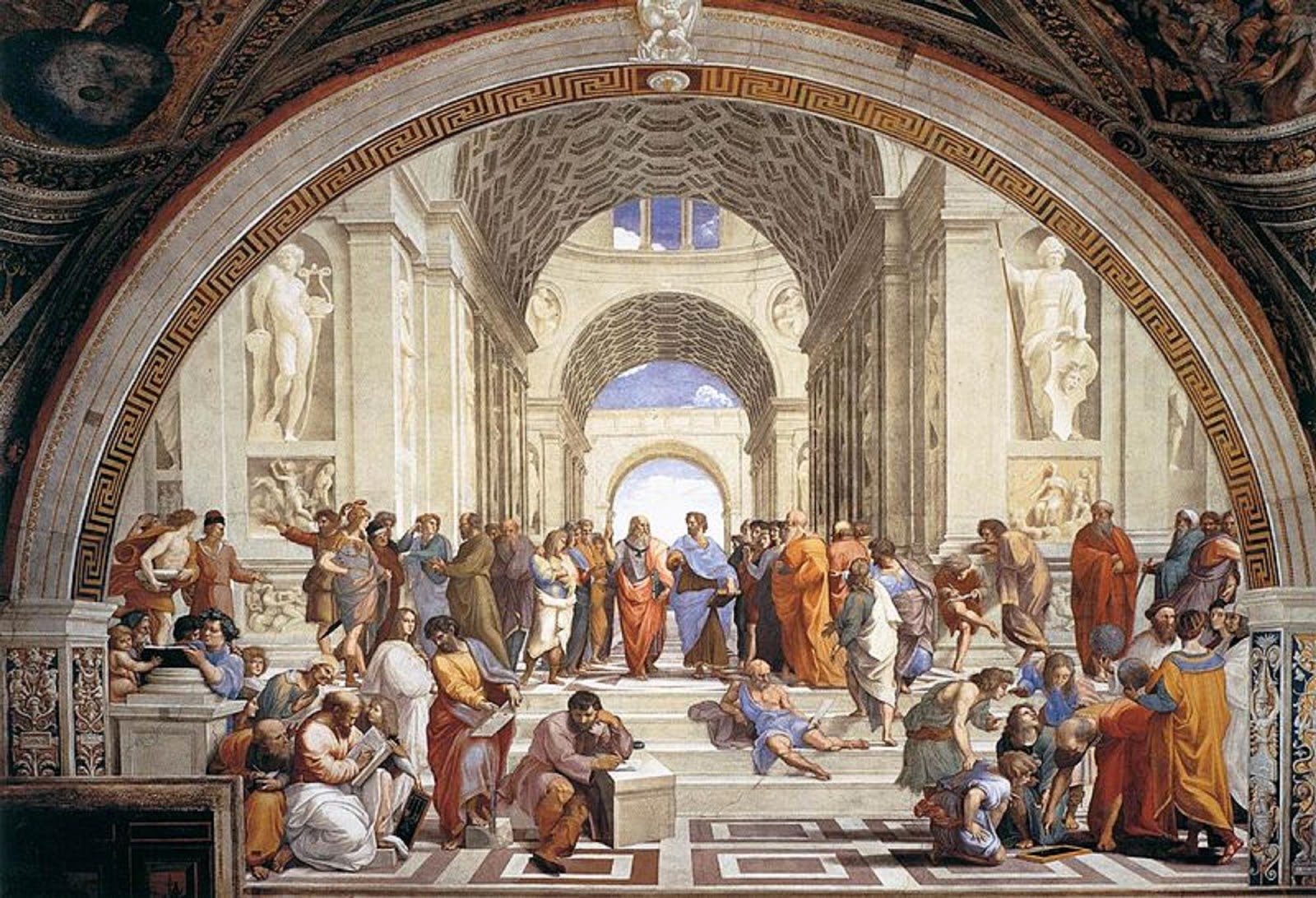
The School of Athens is one of a group of four main frescoes on the walls of the Stanza (those on either side centrally interrupted by windows) that depict distinct branches of knowledge. Each theme is identified above by a separate tondo containing a majestic female figure seated in the clouds, with putti bearing the phrases: “Seek Knowledge of Causes,” “Divine Inspiration,” “Knowledge of Things Divine” (Disputa), “To Each What Is Due.” Accordingly, the figures on the walls below exemplify Philosophy, Poetry (including Music), Theology, and Law. The traditional title is not Raphael’s. The subject of the “School” is actually “Philosophy,” or at least ancient Greek philosophy, and its overhead tondo-label, “Causarum Cognitio,” tells us what kind, as it appears to echo Aristotle’s emphasis on wisdom as knowing why, hence knowing the causes, in Metaphysics Book I and Physics Book II. Indeed, Plato and Aristotle appear to be the central figures in the scene. However, all the philosophers depicted sought knowledge of first causes. Many lived before Plato and Aristotle, and hardly a third were Athenians. The architecture contains Roman elements, but the general semi-circular setting having Plato and Aristotle at its centre might be alluding to Pythagoras’ circumpunct.

Commentators have suggested that nearly every great ancient Greek philosopher can be found in the painting, but determining which are depicted is difficult, since Raphael made no designations outside possible likenesses, and no contemporary documents explain the painting. Compounding the problem, Raphael had to invent a system of iconography to allude to various figures for whom there were no traditional visual types. For example, while the Socrates figure is immediately recognizable from Classical busts, the alleged Epicurus is far removed from his standard type. Aside from the identities of the figures depicted, many aspects of the fresco have been variously interpreted, but few such interpretations are unanimously accepted among scholars. The popular idea that the rhetorical gestures of Plato and Aristotle are kinds of pointing (to the heavens, and down to earth) is very likely. But Plato’s Timaeus – which is the book Raphael places in his hand – was a sophisticated treatment of space, time, and change, including the Earth, which guided mathematical sciences for over a millennium. Aristotle, with his four-elements theory, held that all change on Earth was owing to motions of the heavens. In the painting Aristotle carries his Ethics, which he denied could be reduced to a mathematical science. It is not certain how much the young Raphael knew of ancient philosophy, what guidance he might have had from people such as Bramante, or whether a detailed program was dictated by his sponsor, Pope Julius II. Nevertheless, the fresco has even recently been interpreted as an exhortation to philosophy and, in a deeper way, as a visual representation of the role of Love in elevating people toward upper knowledge, largely in consonance with contemporary theories of Marsilio Ficino and other neo-Platonic thinkers linked to Raphael.[4] Finally, according to Vasari, the scene includes Raphael himself, the Duke of Mantua, Zoroaster and some Evangelists.Wikipedia
Jean-Léon Gérôme
Born in Vesoul, France, in 1824, Jean-Léon Gérôme was a French painter, sculptor and teacher. His best-known works are scenes inspired by his travels in Egypt. His particular style is now known as Academicism—work influenced by European academies or universities, specifically the Académie des Beaux-Arts. Gérôme started off as a painter and ended his career mostly as a sculptor. He died in Paris in 1904.(.biography)

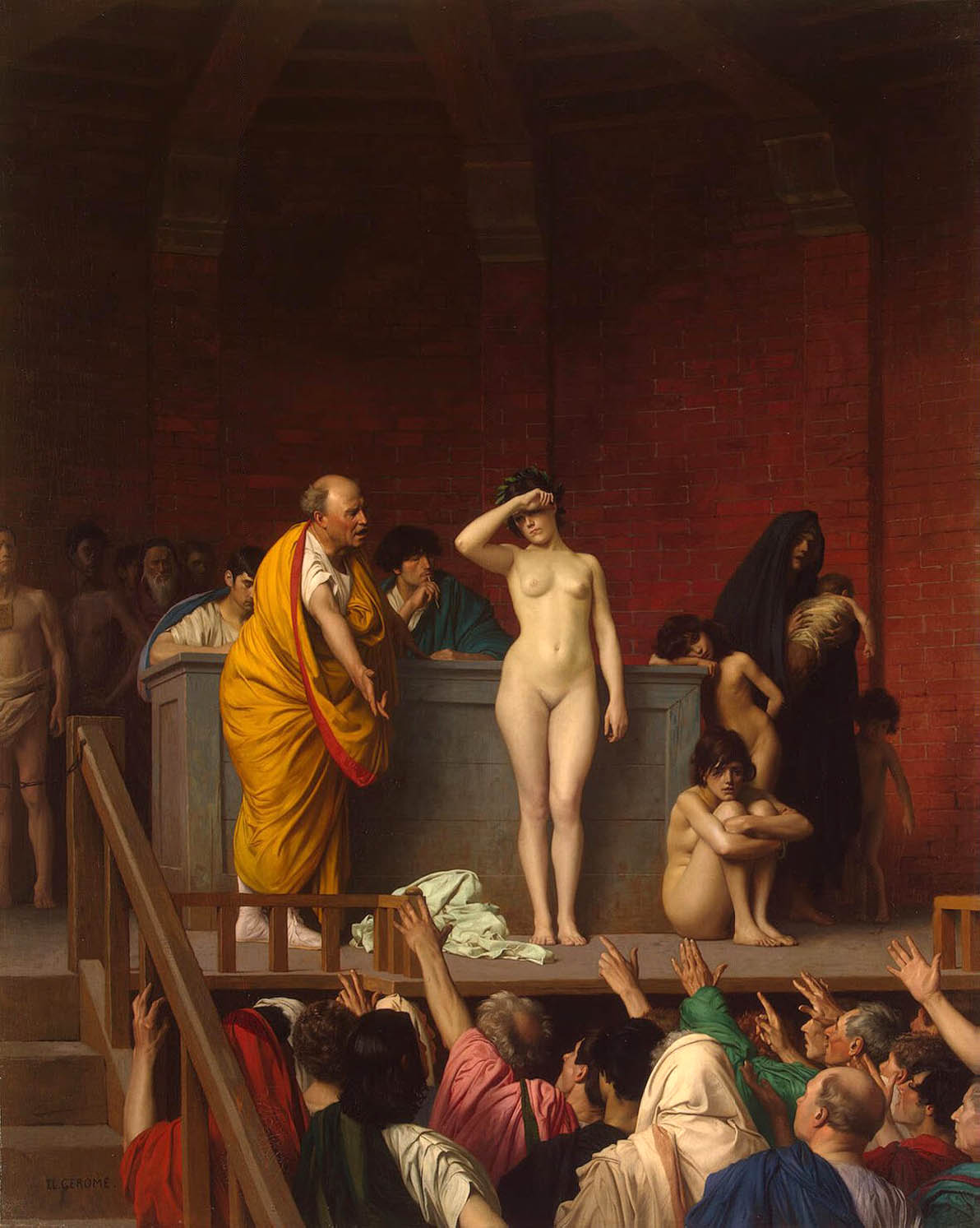


Roma Eterna Antonio Joli
Antonio Joli or Ioli (1700 – 29 April 1777) was an Italian painter of vedute and capricci.
Born in Modena, he first was apprenticed to Rafaello Rinaldi. He then studied in Rome under Giovanni Paolo Panini, and in the studios of the Galli da Bibbiena family of scene-painters. He became a painter of stage sets in Modena and Perugia. In 1732 he moved to Venice, where he worked as stage-painter for opera productions at the Teatro di San Giovanni Grisostomo and the Teatro San Samuele of the Grimani family. In 1742 he went to Dresden, and then to London (1744–48) and Madrid (1750–54).In London, he decorated the Richmond mansion of John James Heidegger, then the director of the King’s Theatre in the Haymarket. Joli returned to Venice in 1754, where he became one of the 36 founding members of the Accademia di Belle Arti di Venezia. He moved to the Bourbon court of Naples in 1761,and died there on 29 April 1777.Wikipedia


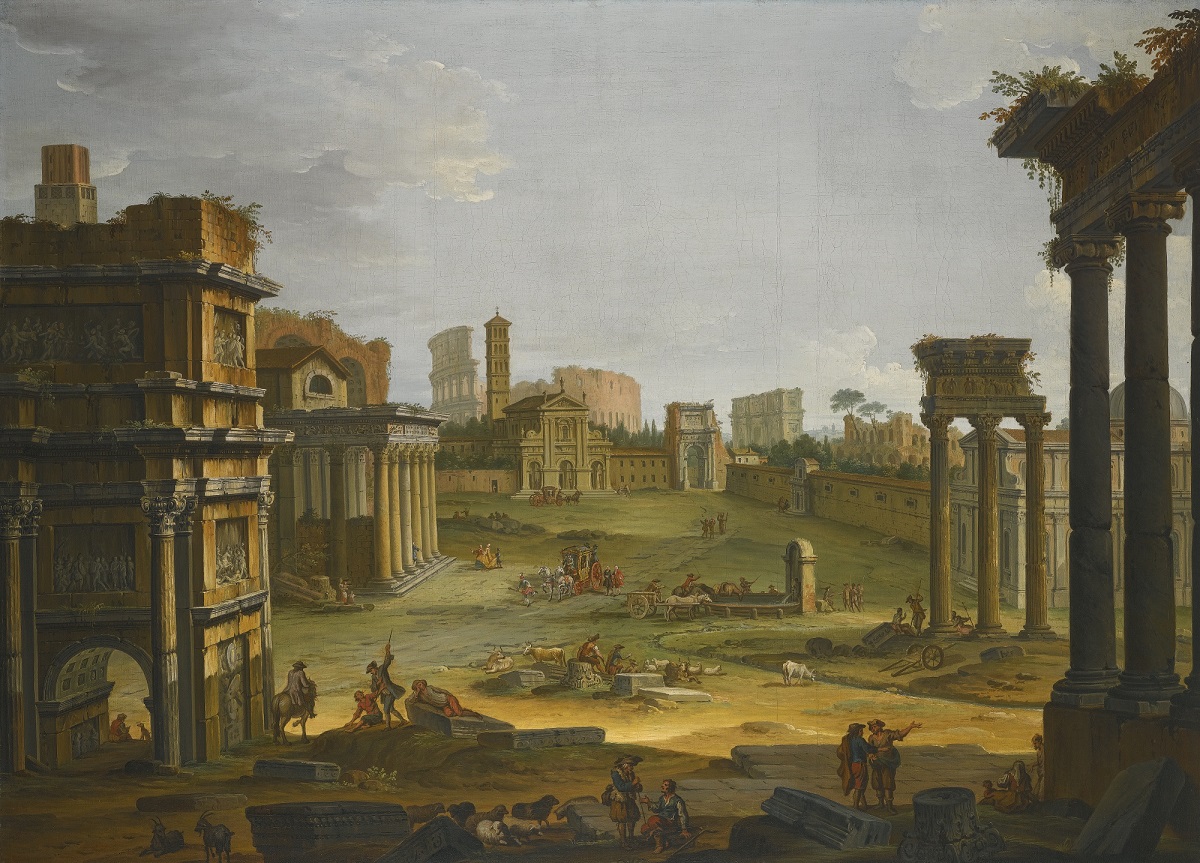


Jean-Auguste-Dominique Ingres
Jean-Auguste-Dominique Ingres ( 29 August 1780 – 14 January 1867) was a French Neoclassical painter. Although he considered himself to be a painter of history in the tradition of Nicolas Poussin and Jacques-Louis David, by the end of his life it was Ingres’s portraits, both painted and drawn, that were recognized as his greatest legacy.
A man profoundly respectful of the past, he assumed the role of a guardian of academic orthodoxy against the ascendant Romantic style represented by his nemesis, Eugène Delacroix. His exemplars, he once explained, were “the great masters which flourished in that century of glorious memory when Raphael set the eternal and incontestable bounds of the sublime in art … I am thus a conservator of good doctrine, and not an innovator.”Nevertheless, modern opinion has tended to regard Ingres and the other Neoclassicists of his era as embodying the Romantic spirit of his time,while his expressive distortions of form and space make him an important precursor of modern art.Wikipedia


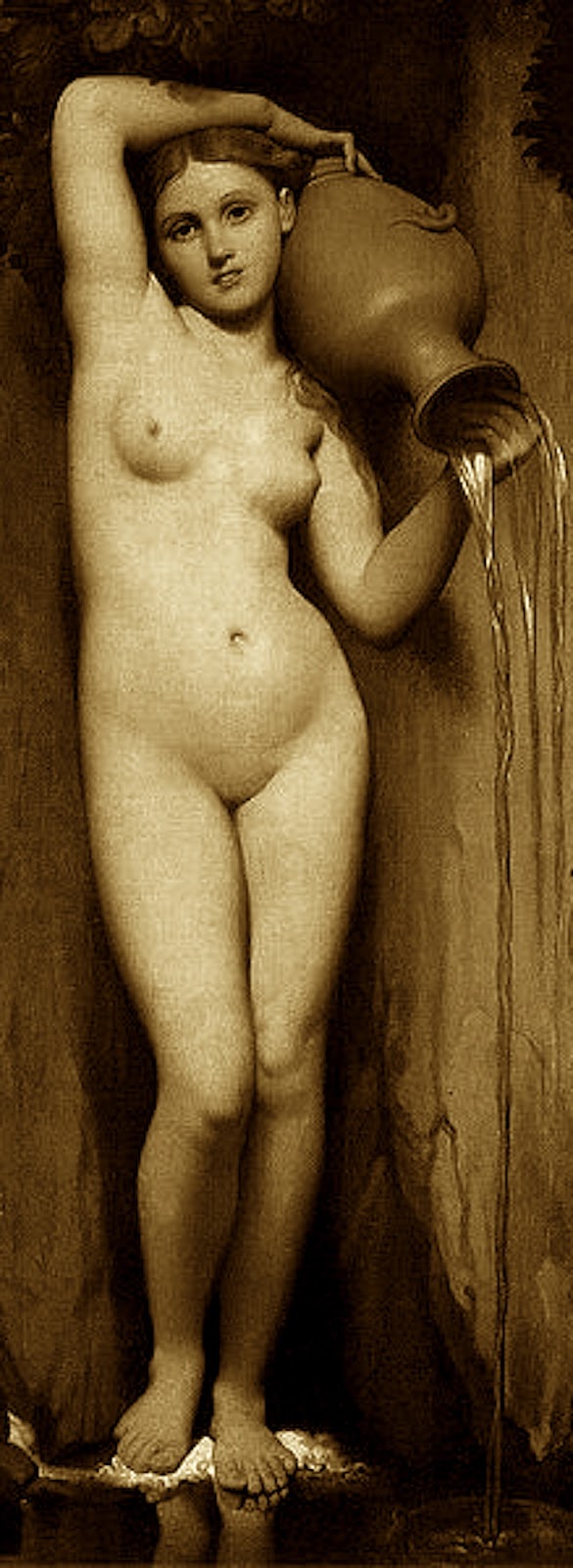

Lorenzo Bartolini
Lorenzo Bartolini (7 January 1777 – 20 January 1850) was an Italian sculptor who infused his neoclassicism with a strain of sentimental piety and naturalistic detail, while he drew inspiration from the sculpture of the Florentine Renaissance rather than the overpowering influence of Antonio Canova that circumscribed his Florentine contemporaries.
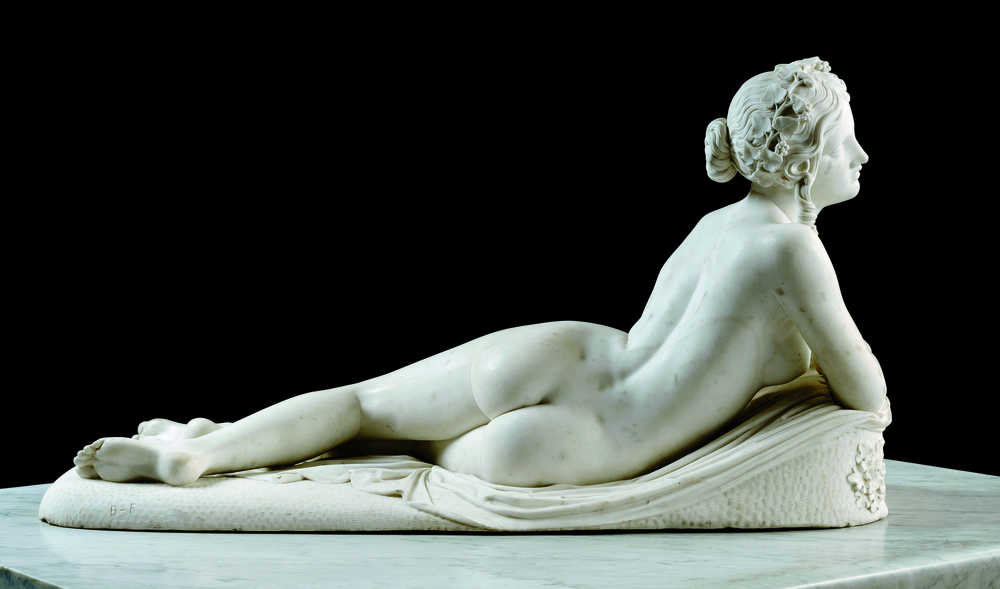
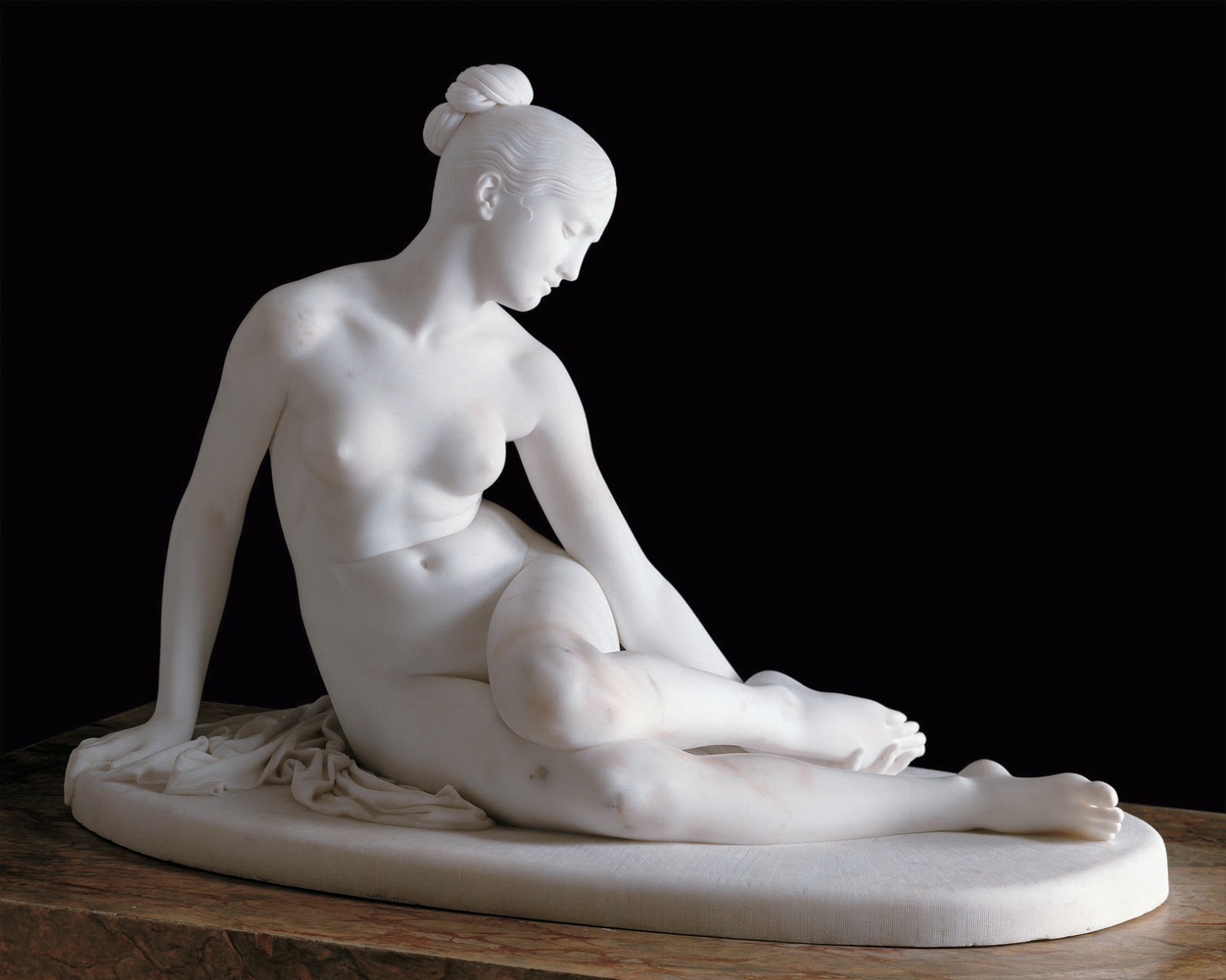

His works are varied and include an immense number of portrait busts. The best are, perhaps, the group of Charity (1824), the Hercules and Lichas and Faith in God, commissioned by the widow of Giuseppe Poldi Pezzoli. His portrait statue of Machiavelli took its place as his only commission among the long series of historical Florentine males provided for the empty exterior niches of the Uffizi.Wikipedia

Michelangelo Buonarroti
Michelangelo was born on March 6, 1475 in Caprese near Arezzo, Tuscany. His family had for several generations been small-scale bankers in Florence but his father, Lodovico di Leonardo di Buonarroti di Simoni, failed to maintain its status, holding to occasional government jobs. At the time of Michelangelo’s birth he was Judicial administrator of small-town Caprese and local administrator of Chiusi. Michelangelo’s mother was Francesca di Neri del Miniato di Siena. The Buonarroti claimed to descend from Countess Mathilde of Canossa; this claim was probably false, but Michelangelo himself believed it. However, several months after Michelangelo’s birth the family returned to Florence where Michelangelo was raised. At later times, during the prolonged illness and after the death of his mother, Michelangelo lived with a stonecutter and his wife and family in the town of Settignano where his father owned a marble quarry and a small farm. Michelangelo once said to the biographer of artists Giorgio Vasari, “If there is some good in me, it is because I was born in the subtle atmosphere of your country of Arezzo. Along with the milk of my nurse I received the knack of handling chisel and hammer, with which I make my figures.”
Michelangelo’s father sent him to study grammar with the humanist Francesco da Urbino in Florence as a young boy. The young artist, however, showed no interest in school, preferring instead to copy paintings from churches and seek the company of painters. Michelangelo was apprenticed in painting with Domenico Ghirlandaio and in sculpture with Bertoldo di Giovanni. Michelangelo’s father managed to persuade Ghirlandaio to pay the 14-year-old artist, which was highly unusual at the time. When in 1489 Florence’s ruler Lorenzo de’ Medici asked Ghirlandaio for his two best pupils, Ghirlandaio sent Michelangelo and Francesco Granacci. From 1490 to 1492, Michelangelo attended Lorenzo’s school and was influenced by many prominent people who modified and expanded his ideas on art, following the dominant Platonic view of that age, and even his feelings about sexuality. It was during this period that Michelangelo met literary personalities like Pico della Mirandola, Angelo Poliziano and Marsilio Ficino. Michelangelo finished Madonna of the Steps (1490-1492) and Battle of the Centaurs (1491-1492). The latter was based on a theme suggested by Poliziano and was commissioned by Lorenzo de Medici.

Michelangelo, who was often arrogant with others and constantly dissatisfied with himself, saw art as originating from inner inspiration and from culture. In contradiction to the ideas of his rival, Leonardo da Vinci, Michelangelo saw nature as an enemy that had to be overcome. The figures that he created are forceful and dynamic; each in its own space apart from the outside world. For Michelangelo, the job of the sculptor was to free the forms that were already inside the stone. He believed that every stone had a sculpture within it, and that the work of sculpting was simply a matter of chipping away all that was not a part of the statue.

On June 25, 1496 at the age of 21, Michelangelo arrived in Rome. On July 4 Michelangelo started to carve an over-life-size statue of the Roman wine god, Bacchus, commissioned by Cardinal Raffaele Riario; the work was rejected by the cardinal, and subsequently entered the collection of the banker Jacopo Galli, for his garden.Subsequently, in November of 1497, the French ambassador in the Holy See commissioned one of his most famous works, the Pieta. The contemporary opinion about this work – “a revelation of all the potentialities and force of the art of sculpture” – was summarized by Vasari: “It is certainly a miracle that a formless block of stone could ever have been reduced to a perfection that nature is scarcely able to create in the flesh.”The contract was agreed in the August of the following year. Though he devoted himself mainly to sculpture, during his first stay in Rome Michelangelo never stopped his daily practice of drawing. In Rome, Michelangelo lived near the church of Santa Maria di Loreto: here, according to the legends, he fell in love with Vittoria Colonna, marquise of Pescara and poet. His house was demolished in 1874, and the remaining architectural elements saved by the new proprietors were destroyed in 1930. Today a modern reconstruction of Michelangelo’s house can be seen on the Gianicolo hill.(michelangelo-gallery)


Rubens
Peter Paul Rubens, (born June 28, 1577, Siegen, Nassau, Westphalia died May 30, 1640, Antwerp, Spanish Netherlands [now in Belgium]), Flemish painter who was the greatest exponent of Baroque painting’s dynamism, vitality, and sensuous exuberance. Though his masterpieces include portraits and landscapes, Rubens is perhaps best known for his religious and mythological compositions. As the impresario of vast decorative programs, he presided over the most famous painter’s studio in Europe. His powers of invention were matched by extraordinary energy and versatility.(Encyclopædia Britannica )


Rubens was a prolific artist. The catalogue of his works by Michael Jaffé lists 1,403 pieces, excluding numerous copies made in his workshop.His commissioned works were mostly religious subjects, and “history” paintings, which included mythological subjects, and hunt scenes. He painted portraits, especially of friends, and self-portraits, and in later life painted several landscapes. Rubens designed tapestries and prints, as well as his own house. He also oversaw the ephemeral decorations of the Joyous Entry into Antwerp by the Cardinal-Infante Ferdinand in 1635.His drawings are mostly extremely forceful but not overly detailed. He also made great use of oil sketches as preparatory studies. He was one of the last major artists to make consistent use of wooden panels as a support medium, even for very large works, but he used canvas as well, especially when the work needed to be sent a long distance. For altarpieces he sometimes painted on slate to reduce reflection problems.Rubens was a great admirer of Leonardo da Vinci’s work. Using an engraving done 50 years after Leonardo started his project on the Battle of Anghiari, Rubens did a masterly drawing of the Battle which is now in the Louvre in Paris. “The idea that an ancient copy of a lost artwork can be as important as the original is familiar to scholars,” says Salvatore Settis, archaeologist and art historian.Wikipedia


Karl Bryullov
Karl Pavlovich Bryullov ( 12 December 1799 – 11 June 1852), and referred to by his friends as”The Great Karl”, was a Russian painter. He is regarded as a key figure in transition from the Russian neoclassicism to romanticism.Karl Bryullov was born on December, 12th (23), 1799 in St. Petersburg,in a family of the academician, the woodcarver and engraver Pavel Ivanovich Briullo (Brulleau, 1760—1833) who was of Huguenot descent. He felt drawn to Italy from his early years. Despite his education at the Imperial Academy of Arts (1809–1821), Bryullov never fully embraced the classical style taught by his mentors and promoted by his brother, Alexander Bryullov. After distinguishing himself as a promising and imaginative student and finishing his education, he left Russia for Rome where he worked until 1835 as a portraitist and genre painter, though his fame as an artist came when he began doing historical painting.
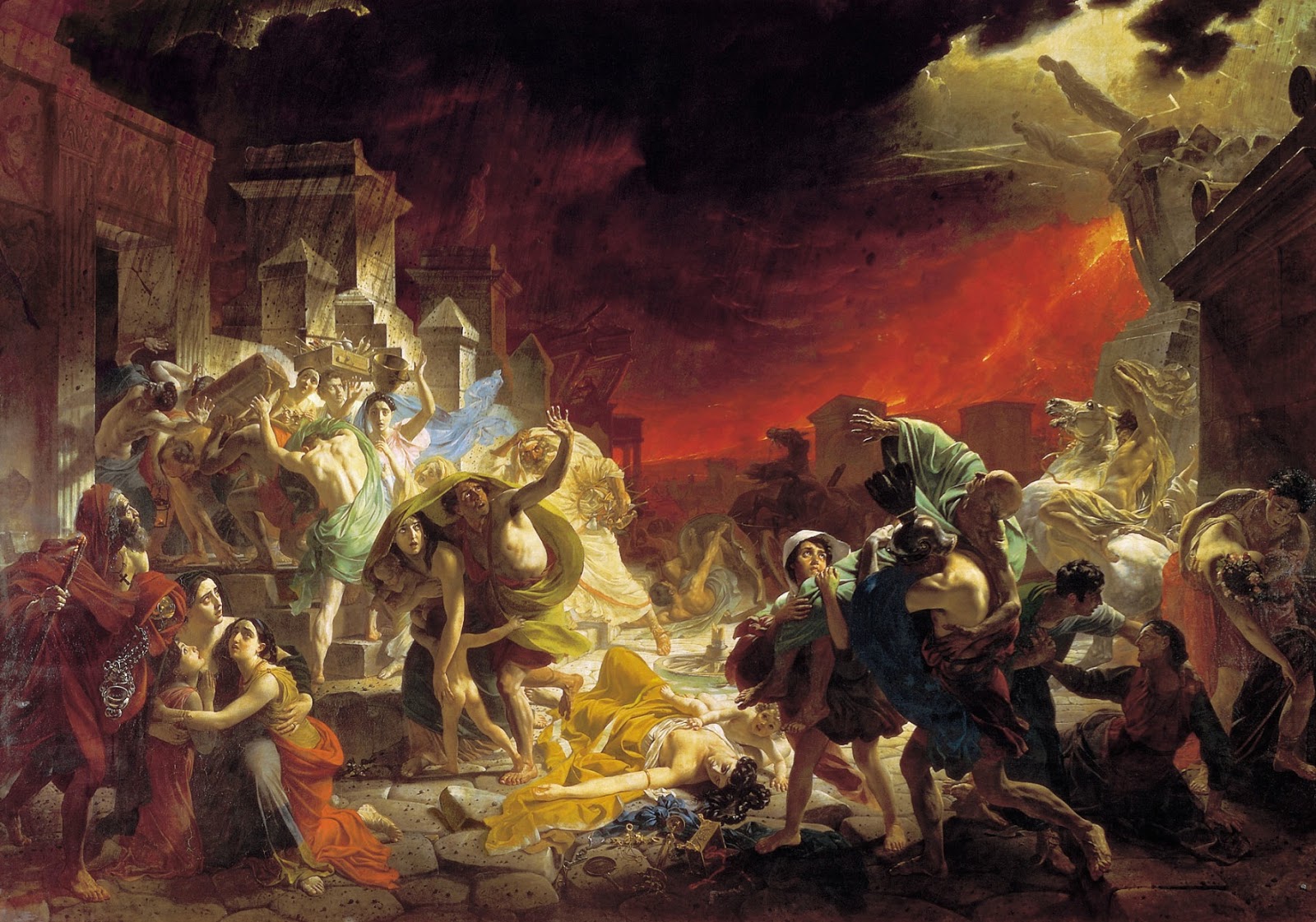
His best-known work, The Last Day of Pompeii (1830–1833), is a vast composition compared by Pushkin and Gogol to the best works of Rubens and Van Dyck. It created a sensation in Italy and established Bryullov as one of the finest European painters of his day. After completing this work, he triumphantly returned to the Russian capital, where he made many friends among the aristocracy and intellectual elite and obtained a high post in the Imperial Academy of Arts.(Wikipedia)