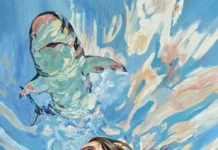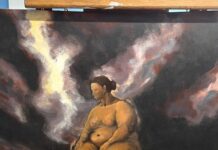
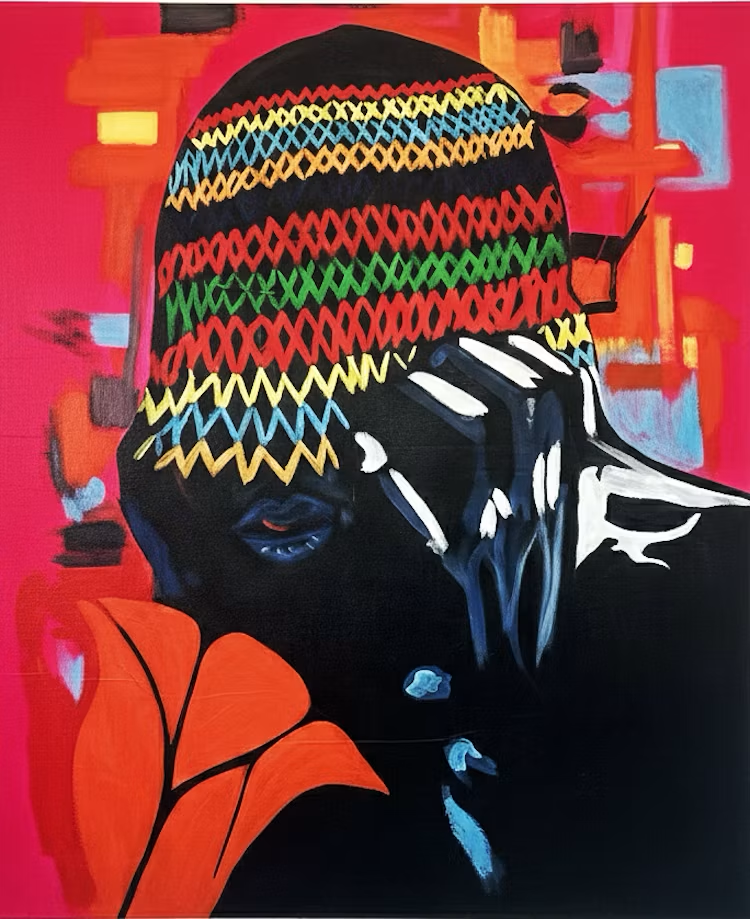
For Anthony Manners, a blank wall is more than an empty surface; it is an opportunity to capture the rhythm, identity, and collective spirit of a neighborhood. Through vibrant murals, lush tropical landscapes, and community-centered imagery, Manners transforms public spaces into visual expressions of joy, freedom, and belonging. His artistic practice is grounded in the belief that art can influence how people experience their surroundings and connect with one another.
In this interview with Art Miami Magazine, Manners reflects on the relationship between public art and community identity, describing his approach as one of observation and listening rather than imposing a predetermined narrative. His philosophy of “painting joy at scale” reveals a conscious commitment to creating environments where color, nature, and imagination offer a temporary escape from the emotional weight of everyday life.
Beyond the celebration of beauty, his work raises questions about memory, education, and personal truth. Images of children immersed in books and trees supported by literature reflect his belief in knowledge as a foundation for individual awareness and collective understanding. Meanwhile, his recurring tropical landscapes suggest an intuitive association between nature, freedom, and happiness.
Yet beneath his exuberant visual language lies a more private artistic dimension. Manners acknowledges the existence of a painting he would create solely for himself, one defined by surprising simplicity and an absence of color. This contrast reveals an intriguing tension between the artist’s public generosity and his private imagination.
Ultimately, Manners approaches painting as both a personal expression and a shared experience, reminding us that joy can be more than an emotion: it can become a deliberate artistic gesture capable of transforming the spaces we inhabit.
Iamkulorblind.org
@iamkulorblind
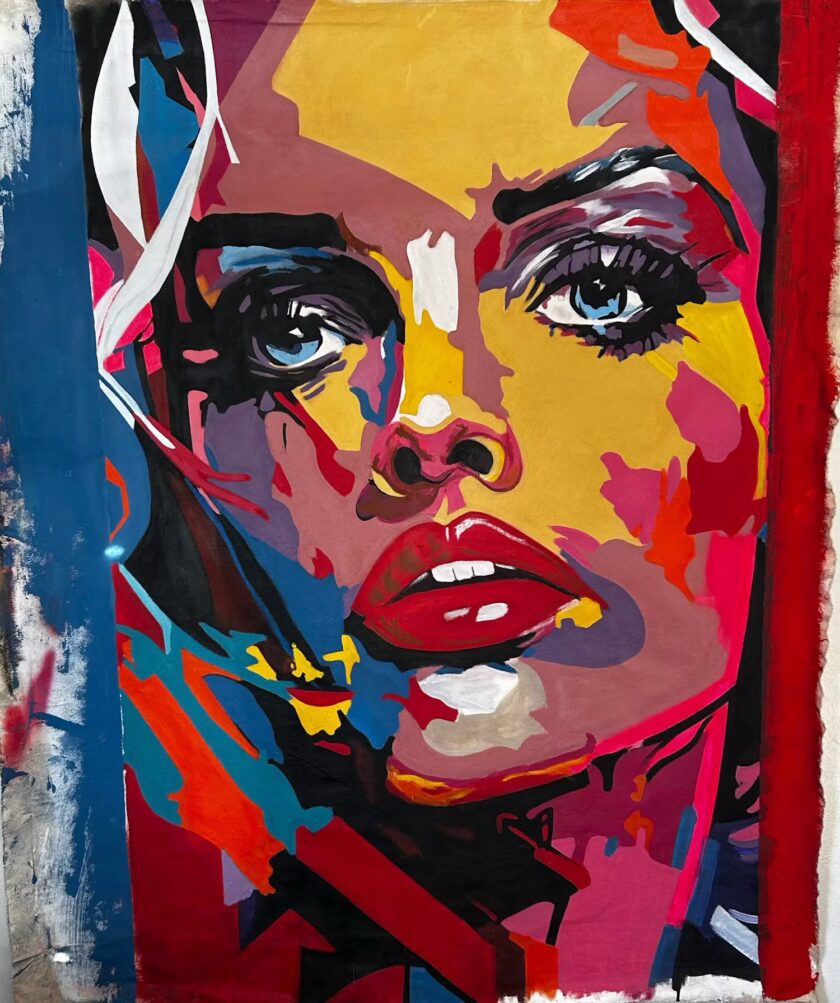
AMM: “A blank wall is a missed opportunity to tell a neighborhood who it is.” That suggests the neighborhood already knows itself and the wall just needs to catch up. But who decides what a neighborhood is — and when are you listening versus telling?
Anthony Manners: The lights. The sounds. The colors. The people and the movement. It’s all about the rhythm — the rhythm of the neighborhood decides what a neighborhood should be. Sometimes it’s crying out for what’s missing, what’s wanted. Like weeds sprouting through a lawn. I just sit and take everything in. I feel it and listen to its rhythm.
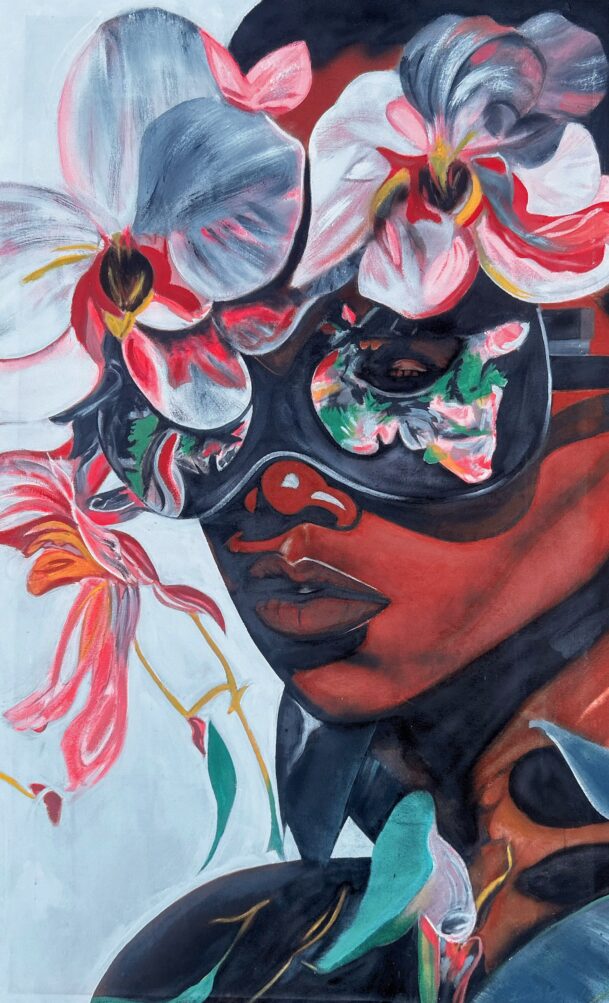
AMM: “I paint joy at scale.” Joy is generous, but it’s also a choice of what to show. What about the feelings that don’t fit — the tiredness, the ambivalence, the sadness? Where do they live, if not on your walls?
AM: I live in the space of joy. Painting at scale is about reinforcing the little things in life that bring happiness. Painting joy at scale is meant to drive away the tiredness, the ambivalence, the sadness — when you stand in front of my work, I want those feelings to leave the room.
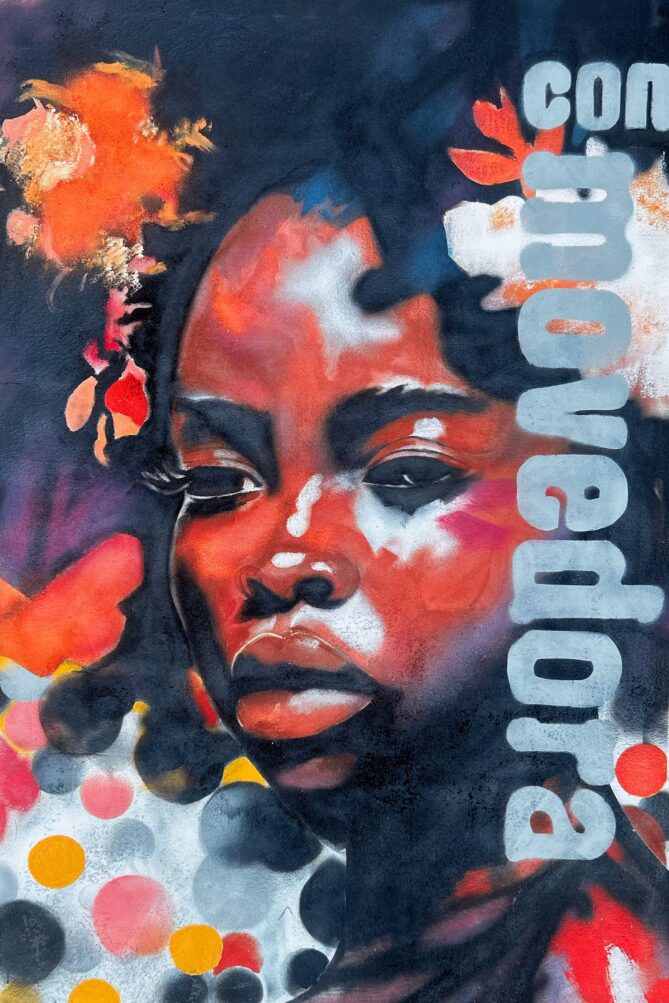
AMM: The tropical foliage, the jungle of green — these are your signature motifs now. Is that a remembered landscape, a longed-for one, or a constructed one? What if the lushness is a way of not looking at something?
AM: I’ve never really sat and thought about the landscape I paint — the greenery. Maybe it’s because I associate lush, open spaces with freedom. And freedom often goes with joy.
AMM: Children absorbed in books, a tree trunk made of books, learning as literally what holds a community up. What did reading hold up in your life? And how much of the child you paint is the child you were versus the child you needed to be?
AM: Reading did two things for me growing up. It made me want to know more — but it also made me want to spread the truth. I grew up knowing who I was. But I felt people, in general, didn’t. Or just wanted to cover up truths.
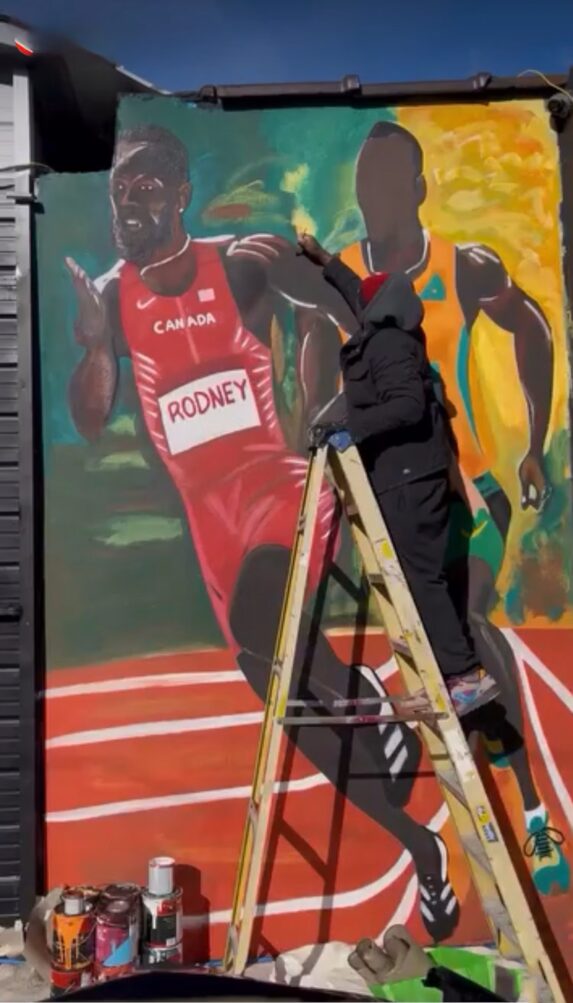
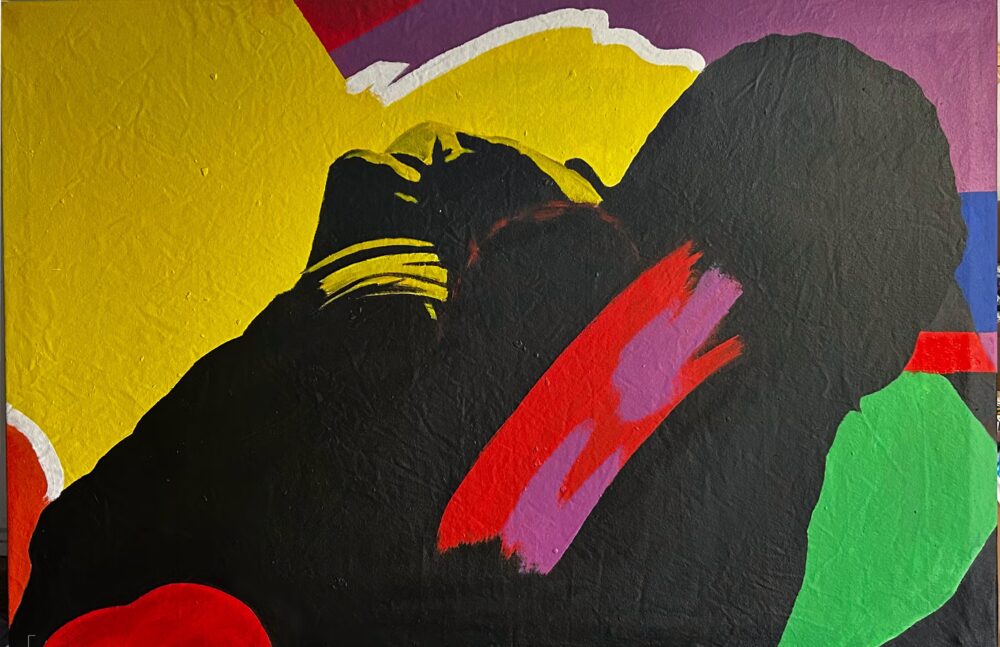
AMM: You move between a three-story wall, a 24-inch canvas, and a paint-and-sip class where strangers make their first marks. As the work gets more generous — more public, more shared — what remains only yours? Is there a painting you’d make only if no one were invited in?
AM: There is. There is a painting I would make just for myself — and I think many people would be surprised at its simplicity, and its lack of color. And to answer the second part of your question: the joy. That’s the part of my work that will always be mine, no matter how much it grows.