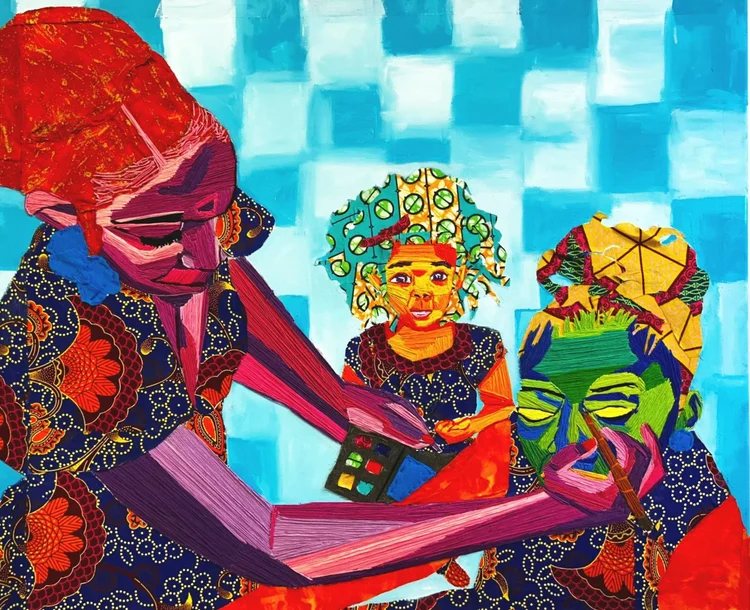
For Haitian-born artist Anne-Valerie Prosper, painting is a space where memory, identity, and vulnerability converge. Drawing from her experiences as a Black woman, immigrant, and mother, her work explores cultural belonging, resilience, and the emotional complexities of everyday life.
In this conversation with Art Miami Magazine, Prosper reflects on the memories she has yet to translate into art, the meaning of home across cultures, and her refusal to let Black womanhood be defined by suffering. As her practice moves from perseverance toward rest, she embraces a powerful idea: rest is not surrender, but a revolutionary act of self-determination.
www.valeriepimparato.com
@vp_visualart
AMM: You describe your art as both an archive and altar, a place where “the past is never far from the surface.” An archive preserves, while an altar makes a demand on the living and the dead. Which memories from your own history have you been unable to place in either category, and what keeps them off the canvas?
Anne-Valerie Prosper: This is a great question. As you know, my art is pretty vulnerable and deeply personal. However, I’ve been unable to make any work about my daughter’s birth. By the grace of God she was fine, but I had “every non fatal complication” known to birth, as the nurses described it. There were points in the hospital where I was treated really badly. I was not shielded by my education, my status, my ability or willingness to advocate for myself- I was another victim of the U.S.’ horrific Black maternal health crisis. The memory of what was supposed to be the best day of my life (and in some ways still was) remains off the canvas. It’s something I think about a lot, an event that is etched into my body and my soul and continues to inform my every day life. But for some reason, I just can’t make art about it. Not yet, at least. It’s been nearly five years.
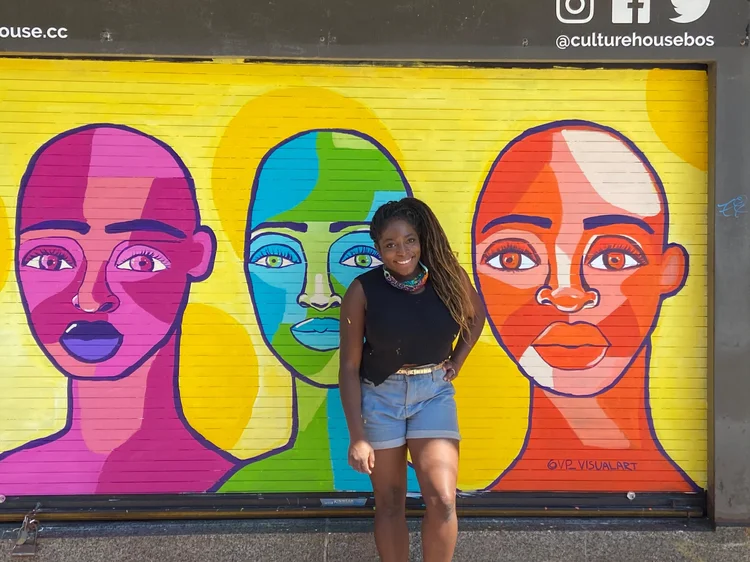
AMM: Your biography begins in Haiti and moves through many countries. When you paint inheritance and belonging through fabric and pattern, are you recovering a home you carry within you, or inventing one you never fully had? Where does memory end and invention begin, and does not knowing ever unsettle you?
Answer:
AVP: I consider myself a TCK, “Third Culture Kid,”and there are millions of us all over the world. The 3 cultures refer to your parents’ home culture, the culture you live in at the time, and a third blended culture that lives in between the two. It doesn’t unsettle me because it’s how I grew up and who I grew up around. All of my friends until the age of 18 were TCKs, and there’s a special way in which we understand each other and have a culture of our own. I guess you could say it’s a home of my “invention,” but it feels real and tangible, and it is transferable aesthetically in my work. I find that when I meet TCKs even today, it’s like meeting someone from your “home country.”
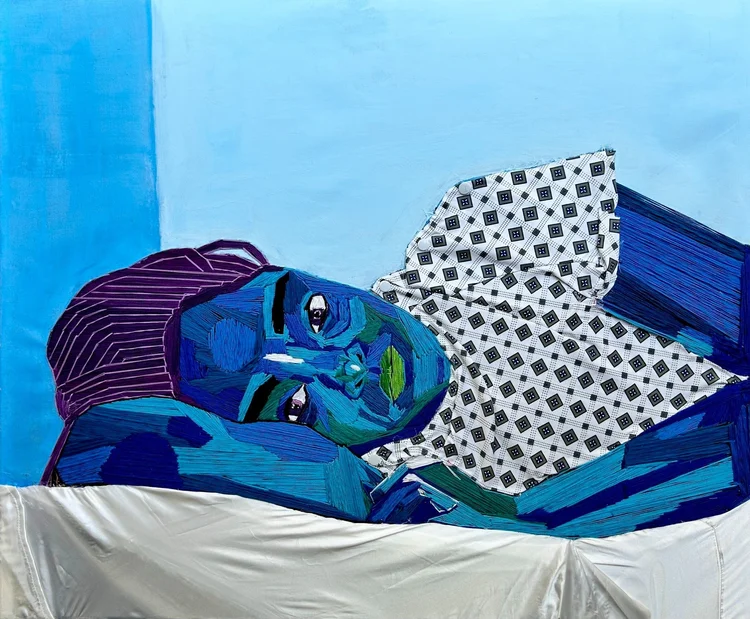
AMM: Your figures “hold space unapologetically,” and your work seeks to challenge stereotypical depictions of Black life. But the mission of correcting an image can become its own obligation. Do you ever feel that representing Black women, immigrants, and mothers limits what you are free to paint, including the ambivalence, anger, or discomfort that might not serve “beauty”?
AVP: I’ve thought about this a lot, but I don’t feel limited at all. I am a Black woman, an immigrant, and a mother. What else would I make? Toni Morrison spoke a lot about this when questioned if she felt limited by making work “for” Black people and exclusively about Black people. She didn’t. It’s what she knew, what she resonated with, and what she was making work for. I don’t think I can claim to represent all Black women or immigrants or mothers, but I think that all artists make art about what they know. I don’t think that I have a mission of correcting erroneous depictions- it’s more like the consequence of my work, the consequence of depicting whole, real, complex and multidimensional Black women is the correction in and of itself.
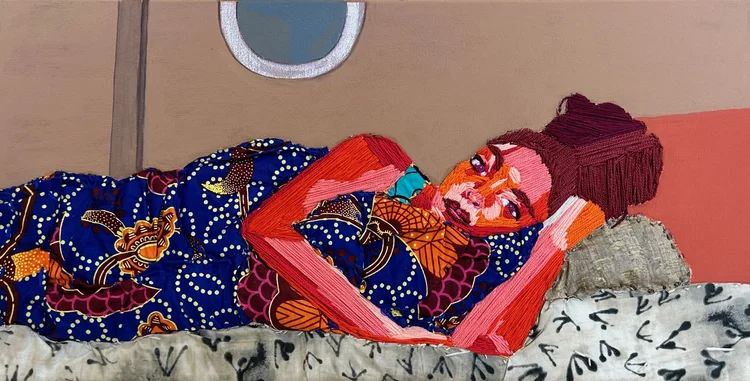
AMM: You honor mothering, suffering, and perseverance as quiet rituals. Yet perseverance is so often praised in women whose pain is expected to remain silent. Do you worry that celebrating endurance risks sanctifying a burden that deserves to be refused? What would a figure who stops persevering look like in your work?
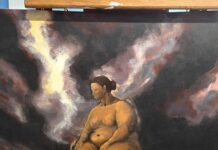
AVP: I do, especially because it’s such a burden placed on black women by society. In fact, my latest series is about rest. Just Black women resting. The work you’ve seen is a reflection of the season I was in at the time I made it, and that was a season of perseverance. Now, I am prioritizing the revolutionary act of rest as a Black woman in America.
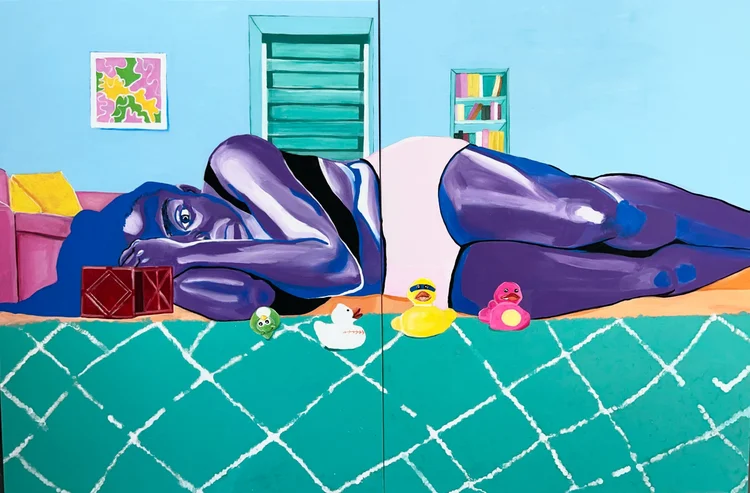
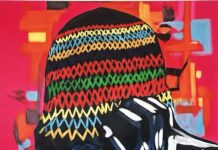
AMM: Color, for you, names grief, pride, rest, and defiance, while pattern and fabric act as protection and inheritance. What do these layers shield? If you stripped them away, which feeling would you be most afraid to see in your figures, or in yourself?
AVP: I sometimes think that my aesthetic and subject matter can seem like an unlikely mix. Due to my cultural influences I love color. I love patterns. It’s the way my eyes work and the way my brain works. I know that color and patterns are usually associated with jovial subject matter, but I don’t think color and patterns have to be limited to happy or light subject matter. I think they can be vehicles for any subject matter and I think my figures are themselves effective in what they are trying to communicate. I don’t think there’s much more I can strip down in my work. It’s by far the place I am most open and raw with the world.