Written By Olga Garcia-Mayoral
At the Lowe Art Museum, two exhibitions—El Pasado Mío/My Own Past and Afrocubanismo: Highlights from the Ramón and Nercys Cernuda Collection—create a powerful dialogue on Afro-Cuban art, Cuban modernism, diaspora, and cultural inheritance. The presentations share histories, but each approaches Afro-Cuban visual culture from a distinct perspective.
El Pasado Mío/My Own Past offers the broader historical arc, bringing together forty-three Afro-Cuban artists active from the nineteenth century to the present. Afrocubanismo, drawn from the Ramón and Nercys Cernuda Collection, focuses more specifically on twentieth-century Cuban modernism and the ways Afro-Cuban culture, ritual, music, and spirituality entered the language of national art. Together, they expand the story of Cuban art while asking viewers to consider who has been represented, who has been overlooked, and how cultural memory is preserved.
For Miami audiences, the pairing carries particular weight. This is a city shaped by Cuban exile, Caribbean migration, memory, and reinvention. To encounter these exhibitions here is to enter a layered conversation about ancestry, race, spirituality, labor, modernism, and identity formation across generations. It is a powerful museum experience and a true reference point for Afro-Cubanismo, Afro-Cuban heritage, and the wider diaspora.
El Pasado Mío/My Own Past: A Wider Field of Afro-Cuban Art
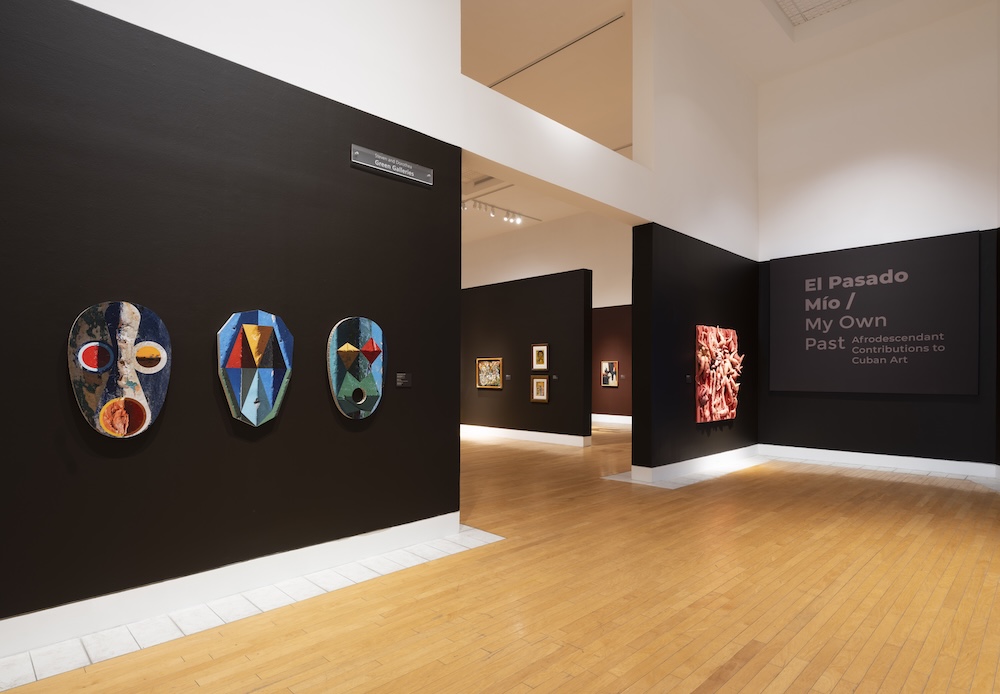
The heart of El Pasado Mío/My Own Past is recovery. The exhibition celebrates artists whose contributions have shaped Cuban art history but have not always received the critical recognition they deserve. Some names are internationally known, while others remain underrepresented in mainstream narratives. By placing them together, the exhibition challenges the exclusions that have shaped both Cuban art history and the broader canon of modern and contemporary art.
El Pasado Mío/My Own Past was originally exhibited at Harvard University and has been reimagined for the Lowe Art Museum by guest curator Dr. Alejandro de la Fuente, Director of Harvard’s Afro-Latin American Research Institute. For the Lowe’s presentation, the exhibition has been expanded to include 30 additional works from Miami collections, deepening its local resonance and placing Afro-Cuban artistic production in direct conversation with the city’s own histories of migration, collecting, memory, and cultural inheritance.
Its strength lies in breadth. Rather than presenting Afro-Cuban art as a singular category, the show reveals a wide range of visual languages: abstraction, figuration, printmaking, painting, sculpture, photography, conceptual gestures, spiritual symbolism, and historical testimony. The works resist any simplified definition of a “black” style or theme. Instead, they insist on multiplicity.
One of the exhibition’s most important gestures is its attention to women artists. A group of eleven female artists is presented together in this context, expanding the field of vision and correcting absences that have long shaped art historical memory. Their inclusion is not simply additive; it changes how the story can be told.
The exhibition also opens a path toward deeper cultural lineages. African-derived spiritual traditions, ceremonial objects, music, masks, and ritual practices provide a foundation for understanding some of the symbols and visual systems that appear throughout the galleries. Yoruba and Ekpe references, Abakuá cosmologies, and Santería-inflected imagery appear not as decorative motifs, but as intellectual and spiritual frameworks. They carry histories of survival, adaptation, and continuity across the violence of slavery and colonization.
That complexity is essential. Afro-Cuban art is not a side chapter of Cuban art. It is foundational to it. El Pasado Mío/My Own Past makes this argument visually, allowing viewers to see how Afrodescendant artists shaped the language of Cuban modernism and contemporary practice, even when historical narratives pushed them to the margins.
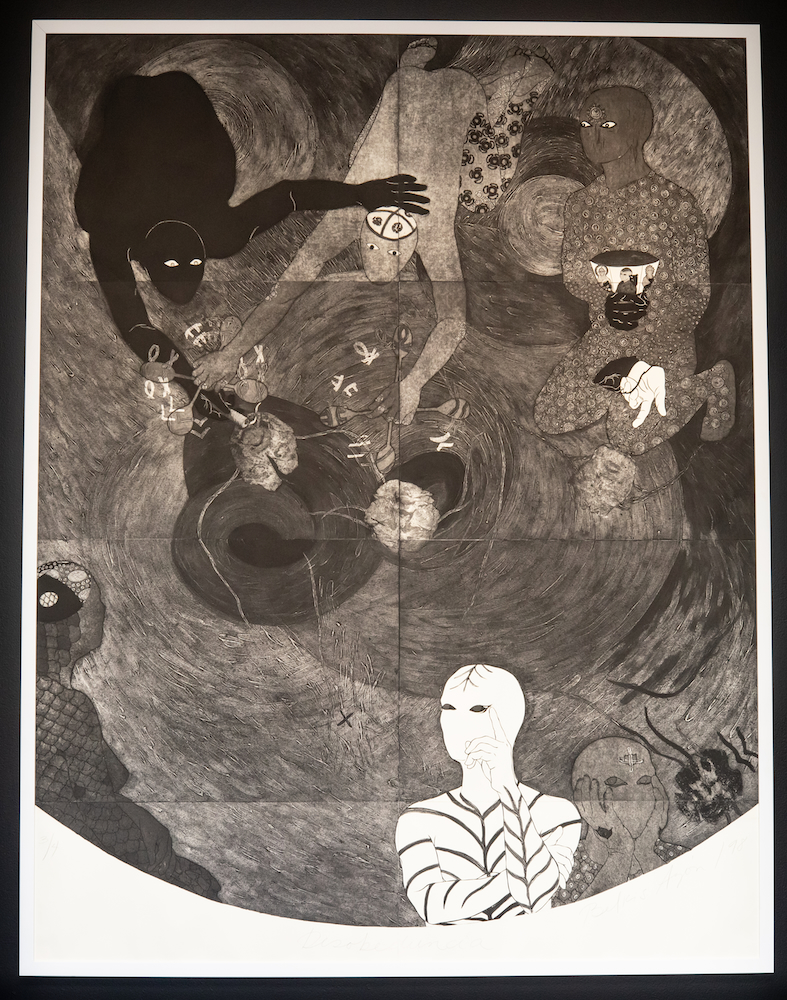
Artists such as Belkis Ayón become especially important within this framework. Her engagement with Abakuá mythology carries a profound intensity, particularly because she entered a visual territory associated with a male secret society and transformed it through her own artistic language. Her work does not merely illustrate myth; it reimagines it through silence, absence, confrontation, and monumental presence.
Throughout the exhibition, the works ask viewers to look again—to question how historical narratives are built, who is remembered, and what forms of knowledge have been overlooked. The exhibition encourages an internal dialogue rather than passive admiration. It is less about closing a gap than about changing the lens through which Cuban art is understood.
Afrocubanismo: Modernism, Representation, and the Cernuda Collection
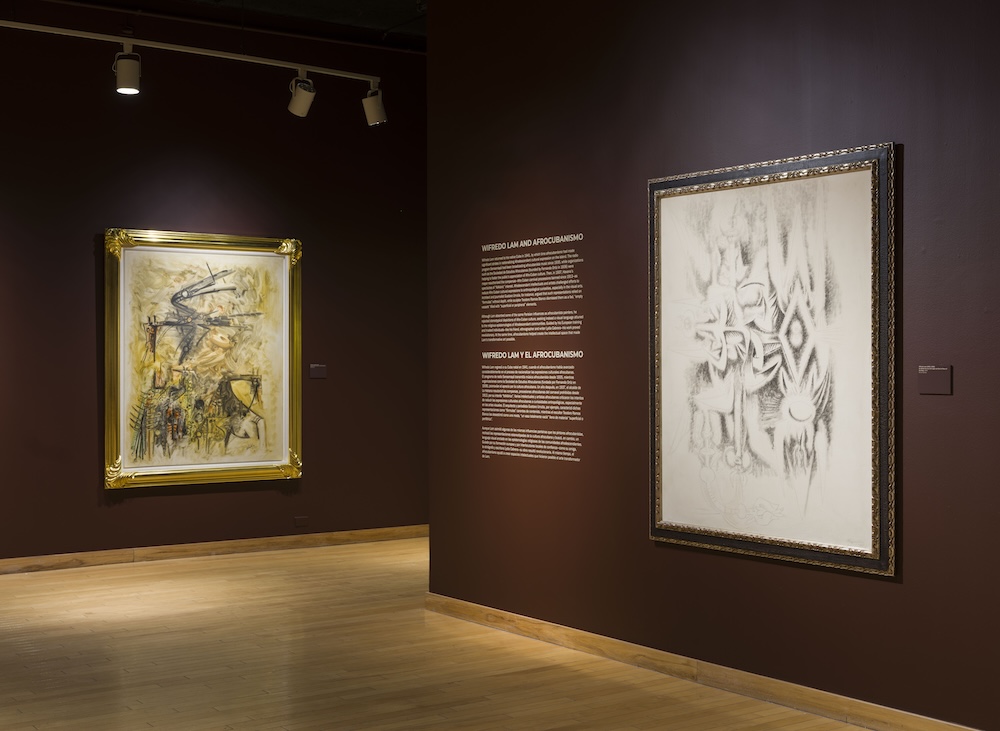
The companion exhibition, Afrocubanismo: Highlights from the Ramón and Nercys Cernuda Collection, narrows the lens. Also guest curated by Dr. Alejandro de la Fuente, Director of Harvard’s Afro-Latin American Research Institute, it draws from one of Miami’s most important private collections of Cuban art to examine how Afro-Cuban imagery, spirituality, music, and ritual shaped twentieth-century Cuban modernism.
Afrocubanismo was not a simple celebration. It was a complex artistic and cultural movement in which artists turned toward Afro-Cuban religion, music, dance, ritual, and popular culture as sources of renewal. The exhibition makes room for both the beauty and the contradictions of that moment. It shows how Afro-Cuban culture became central to Cuban modern art while also raising questions about authorship, representation, and national identity.
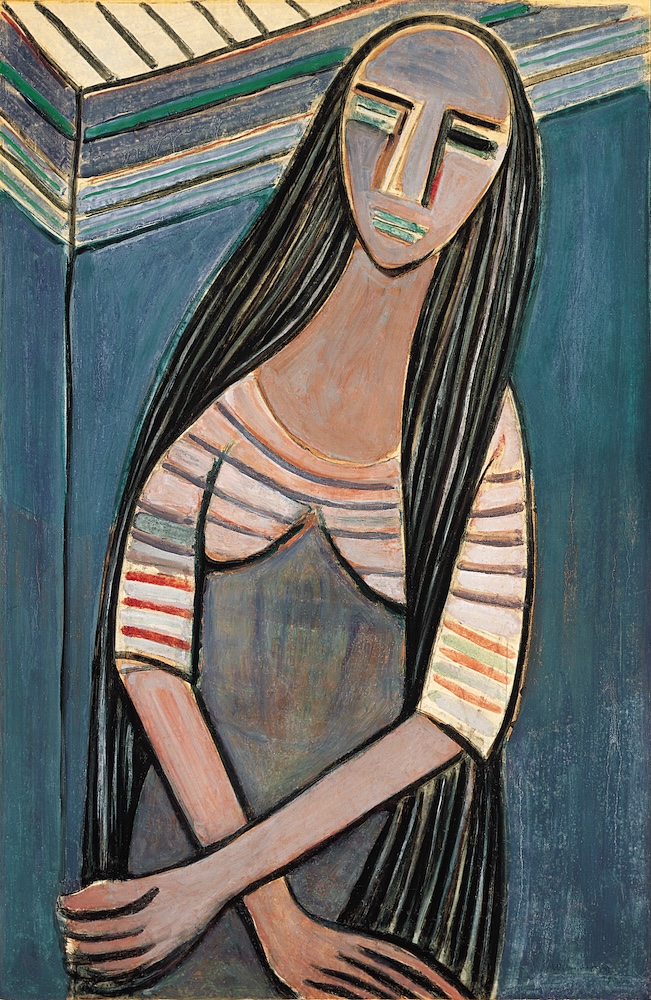
Wifredo Lam’s presence is crucial. Lam’s visual vocabulary—hybrid, symbolic, modernist, and deeply connected to Afro-Cuban spiritual and cultural references—bridges ancestral consciousness and modernist experimentation. His figures often feel assembled from multiple inheritances: African, European, Caribbean, Indigenous, and surrealist. In this context, Lam becomes less an isolated genius than part of a broader field of cultural exchange and reinterpretation.
Where El Pasado Mío/My Own Past foregrounds Afro-Cuban artists across generations, Afrocubanismo examines how Afro-Cuban culture circulated through the visual language of Cuban modernism. The distinction matters. One exhibition centers artists and their lived production; the other studies a movement and its influence. Placed together, they allow viewers to understand both presence and representation, both heritage and interpretation.
Why the Pairing Matters
The strength of the Lowe’s presentation is that the two exhibitions sharpen each other without collapsing into one narrative. El Pasado Mío/My Own Past expands visibility around Afro-Cuban artists themselves, while Afrocubanismo considers the broader cultural movement that brought Afro-Cuban themes into modern Cuban art. One restores breadth; the other offers focus.
This pairing is especially meaningful in Miami, where Cuban identity is often discussed through exile and diaspora, but less frequently through the full complexity of race, African heritage, spiritual syncretism, and Afrodescendant artistic production. These exhibitions insist that Cuban culture cannot be understood as monolithic. It has always been shaped by African, Indigenous, European, Caribbean, and diasporic histories, as well as by the lived realities of race and class.
The experience is powerful because it does not flatten history into celebration alone. It honors artistic achievement while acknowledging omission, appropriation, recovery, and the responsibilities of museums, collections, and scholarship. Paint, paper, sculpture, print, and object become carriers of cultural memory—archives of gesture, belief, resistance, and survival.
Together, El Pasado Mío/My Own Past and Afrocubanismo create one of the most significant museum experiences in Miami this season. They are intellectually rigorous, visually compelling, and emotionally resonant. At the Lowe, the past is not presented as something finished. It is active, layered, and still speaking.
These exhibitions ask us to listen more carefully—and to understand Afro-Cuban art not as a footnote, but as a central force in the story of Cuban art, Caribbean modernism, and the cultural imagination of the Americas.
El Pasado Mío/My Own Past and Afrocubanismo: Highlights from the Ramón and Nercys Cernuda Collection are on view at the Lowe Art Museum through September 12, 2026.