
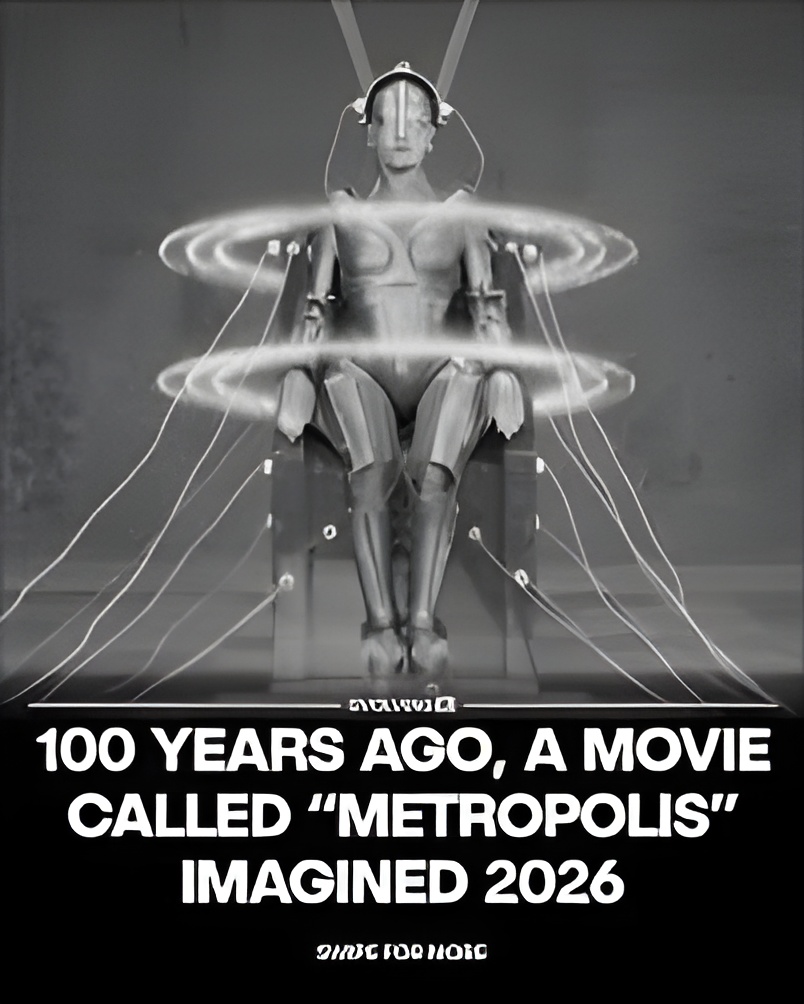
2026 According to Fritz Lang: The Mechanical Prophecy of Metropolis
In 1927, while Europe was still attempting to recover from the physical and psychological ruins of the First World War, Fritz Lang released Metropolis, one of the most influential and visionary films of the twentieth century. What once appeared to be an expressionist fantasy about a distant future now — almost exactly a century later — acquires the disturbing density of cultural prophecy. Lang imagined the year 2026 as a vertical, technocratic, and fractured civilization: a city divided between elites living in the heights and working masses condemned to the underground. It was not merely science fiction; it was a political anatomy of modern capitalism.
It is impossible to look at our present without recognizing the unsettling relevance of that vision. Metropolis anticipated not only the extreme automation of labor and the concentration of economic power, but also the emergence of artificial intelligences capable of replacing human identities and manipulating collective consciousness. The iconic robot Maria — simultaneously seductive and monstrous — stands as one of the earliest cultural representations of an artificial intelligence designed to alter social perception and provoke political chaos. Today, in the age of algorithms, deepfakes, and digital simulations, the film appears less like futuristic fantasy and more like a distorted mirror of contemporary reality.
Visually, Lang created one of the definitive iconographies of modernity. Influenced by German Expressionism, Futurism, and the monumental architectures of industrialization, Metropolis established a visual language later inherited by Blade Runner, Japanese cyberpunk anime, and much of contemporary dystopian aesthetics. The city as devouring machine, bodies transformed into gears, and technological monumentality remain central images within our visual culture.
Yet perhaps the most fascinating aspect of Metropolis is its own material history. After its premiere, the film was severely mutilated by distributors and censors; for decades, significant portions of the original version were believed lost forever. In 2008, however, one of the most extraordinary discoveries in film history took place: at the Museo del Cine in Buenos Aires, archivists uncovered a nearly complete print of Lang’s original cut. The discovery, led by Fernando Martín Peña and Paula Felix-Didier, restored approximately twenty-five missing minutes and returned much of the film’s narrative complexity and original rhythm.
This discovery was not merely an act of cinematic archaeology; it was also profoundly symbolic. The film that warned about the dangers of dehumanized modernity survived fragmented, mutilated, and scattered, only to reappear in Latin America as a rescued memory from the technological collapse of the twentieth century. The restoration of Metropolis further demonstrated how cinema, even in physical deterioration, retains the power to converse with futures not yet fully realized.
Today, in 2026, we inhabit the very year Fritz Lang imagined. Urban inequalities have become extreme, automation is redefining human labor, and artificial intelligences are beginning to replace human voices, faces, and decisions. Yet the central question of Metropolis remains unresolved: can technological progress exist without an ethical structure capable of sustaining humanity?
Lang offered no definitive answer. What he left behind was a visual warning of extraordinary lucidity: every civilization that worships the machine while forgetting the body ultimately constructs its own ruin.