DRAW Project
DRAW Project: The Public Life of the Private Mark
Drawing begins before certainty. It occupies the unstable interval between thought and form, when an image has not yet become a finished object and an idea remains vulnerable to revision, hesitation, accident, and discovery. The DRAW Project, initiated by artist, maker, educator, and activist Tomas Vu, takes this provisional condition as both its subject and its curatorial method. Conceived as an invitation extended from artist to artist and from one artistic community to another, DRAW transforms the intimate gesture of making a mark into a sustained international conversation.
Bringing together private sketches and drawings by more than one hundred artists—and continuing to expand—the project offers access to material that often remains concealed inside sketchbooks, studios, folders, and working archives. These works were not necessarily conceived as autonomous exhibition objects or polished products for the market. Many belong to the uncertain beginning of something: an observation, a private notation, an unfinished proposition, a political reaction, a repeated form, or an image still searching for its final language.
DRAW does not treat incompletion as deficiency. It presents it as knowledge.
Drawing Before Resolution
Within conventional exhibition systems, the public typically encounters an artwork after a long process of selection and refinement. Experiments are removed, surfaces are resolved, and uncertainty disappears behind the authority of the finished object. DRAW reverses that hierarchy. It directs attention toward the moment before resolution, when the artist is still testing the limits of an idea.
The sketch is frequently described as preparatory, as though its value depended upon the painting, sculpture, film, or installation that might eventually emerge from it. Yet drawing possesses its own intellectual and emotional autonomy. A line can record movement, measure distance, outline a memory, invent a body, expose doubt, or visualize something that does not yet exist. It can operate simultaneously as image, language, evidence, plan, confession, and refusal.
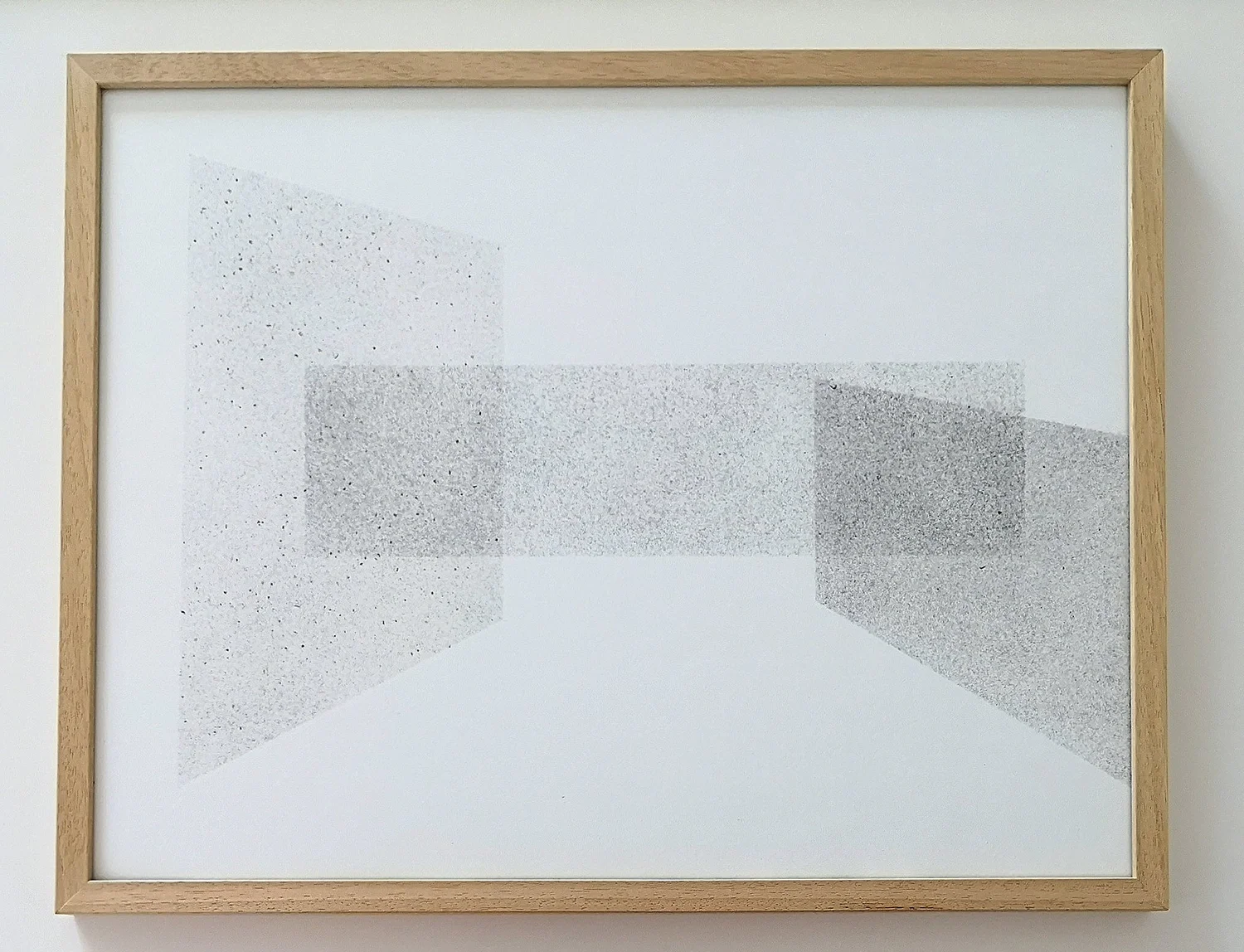
By exhibiting drawings that retain the pressure of their making, DRAW allows viewers to encounter thought as an active process rather than as a completed conclusion. Erasures, corrections, repeated marks, empty spaces, and abrupt transitions become visible traces of decision. The viewer does not merely see what the artist decided; one also senses the alternatives that remained possible.
In this context, drawing becomes a record of consciousness in motion.
The Politics of the Immediate Mark
The urgency of drawing is inseparable from its accessibility. It requires relatively little infrastructure: a surface, a tool, a body, and an impulse to register experience. This material economy has made drawing an essential medium in moments of displacement, censorship, political crisis, social protest, and personal upheaval. A drawing can be produced quickly, transported discreetly, reproduced, circulated, or abandoned. Its apparent fragility can become a form of resistance.
DRAW emerged as a dialogue extending from the political anxieties of one national context toward those of others. Rather than proposing a unified global condition, the project recognizes that artists experience history from radically different positions. Political instability, migration, war, economic inequality, ecological crisis, racial violence, and restrictions on expression do not generate one universal visual language. They produce multiple, sometimes contradictory responses.
The exhibition’s international structure allows those responses to coexist without being reduced to a single narrative. The drawing becomes a point of contact: not proof that all experiences are equivalent, but evidence that the act of marking a surface can establish communication across geographical and ideological boundaries.
Since its early presentations in Beijing and Dali, the project has circulated through museums, universities, and cultural institutions in cities including Boston, Manila, Novi Sad, Split, Belgrade, Miami, Herzliya, Lowell, Santiago, and Yonkers. Each host location has introduced new artists, contexts, and interpretations, allowing DRAW to operate less like a fixed traveling exhibition than an evolving cultural organism.
From Private Space to Public Encounter
DRAW is built upon a productive contradiction. It seeks authenticity in material originating from private spaces, yet the act of exhibiting that material inevitably changes its meaning. A page removed from a sketchbook is no longer entirely private once it enters a gallery. A spontaneous notation becomes framed by curatorial selection, institutional architecture, and public attention.
The project does not eliminate this tension; it makes the tension visible.
To describe a drawing as “unfiltered” does not mean that it exists outside culture or interpretation. Even the most immediate mark emerges from memory, training, desire, fear, habit, and historical circumstance. What DRAW reveals is not an untouched interior self, but the complex threshold where private thought becomes a communicable form.
The visitor is therefore placed in an unusual ethical position. Looking at these works can feel like entering an artist’s studio without encountering the artist’s protective explanations. The drawings may expose uncertainty, repetition, obsession, humor, vulnerability, or contradiction. They offer proximity without complete access. The inner life of another person remains partially unknowable, even when its traces are placed before us.
That distance is important. DRAW does not ask the viewer to decode each work as a transparent psychological document. Instead, it presents drawing as a site where interior experience touches the external world without becoming fully surrendered to it.
An Exhibition That Continually Rewrites Itself
The project’s structure begins with invitation rather than institutional authority. Tomas Vu’s initial gesture—reaching outward toward peers—established a model based on artistic relationships, collaboration, and exchange. Each new presentation can connect one community to another, expanding the exhibition through the social networks that sustain artistic production.
The participating roster crosses generations, geographic regions, disciplinary backgrounds, and levels of public recognition. It includes artists whose practices are closely identified with drawing alongside others better known for painting, sculpture, performance, film, installation, design, or social practice. This plurality resists the idea that drawing is a specialized or isolated discipline. Instead, drawing appears as a foundational mode of thinking that moves through nearly every form of visual culture.
The project is therefore not simply an accumulation of works on paper. It is an archive of relationships. Each contribution points not only toward an individual practice but also toward the invitation that made its presence possible. The exhibition grows through acts of trust: an artist agrees to release something private, a collaborator helps translate the project into a new setting, and a host institution creates conditions for another public encounter.
DRAW’s search for new collaborators and hosts is not a logistical detail added after the curatorial concept. It is central to the work. The project remains unfinished because its meaning depends upon continued movement.
Drawing as Duration
A finished artwork can create the illusion that it arrived all at once. Drawing often refuses that illusion. A densely worked page records accumulation; a rapid line preserves speed; an erased section makes revision visible. Even a nearly empty sheet carries duration through the distance between one mark and another.
Within DRAW, time is not represented only through imagery. It is embedded in the physical behavior of the line. Some drawings appear immediate, produced in a compressed encounter between hand and surface. Others reveal sustained repetition, obsessive attention, or a return to the same image over an extended period. Together they produce a temporal field in which beginnings, interruptions, memories, and unrealized futures remain present.
This is one reason drawing is particularly capable of addressing the contemporary moment. The present is never fully stable or complete. It is experienced through fragments of information, emotional reactions, political uncertainty, interrupted attention, and rapidly changing conditions. Drawing can absorb this instability because it does not require the world to become coherent before responding to it.
Its incompleteness is not an escape from reality. It is a form adequate to reality’s unfinished state.
The First Mark as a Collective Proposition
DRAW ultimately proposes that the beginning of an artwork deserves the same sustained attention often reserved for its conclusion. The first mark contains risk because it commits an internal impulse to an external surface. It separates before from after. Yet it also opens a field of possibilities whose outcome remains unknown.
By assembling these beginnings, the project constructs a collective portrait that refuses to become a single image. The works differ in scale, intention, material, and cultural origin, but they share the condition of drawing as an encounter between thought and matter. Each line is singular; together, they form a network.
DRAW is therefore both intimate and expansive. It enters the private territory of artistic process while building an international platform for exchange. It preserves vulnerability while placing it in public circulation. It acknowledges the ephemerality of paper, gesture, and thought while demonstrating their capacity to travel across institutions, languages, and political borders.
The project does not ask drawing to provide a definitive account of the contemporary world. It asks something more urgent: that drawing remain open enough to register the world while it is still changing.
In DRAW, the unfinished work is not waiting to become meaningful. Its openness is precisely where meaning begins.
PARTICIPATING ARTISTS
Adam Amara
Adrian Rhodes
Aga Ousseinov
Ahmet Arslan
Albert Weaver
Alejandro Contreras
Aleksandra Popovic
Alex Kvares
Alex Sewell
Alexis Callender
Alfonso Fernandez
Alyssa Piro
Amanda Linhares
Ambreen Butt
Ana Albertina Delgado
Andrea Resner
Andy Van Dinh
Anita Milos Tomaic
Antoine Williams
Augusto Cabeza
Aurelien Couput
Bale Creek Allen
Barbara Klain
Bao Lin
Baris Göktürk
Barnaby Furnas
Beau Willimon
Beka Goedde
Ben Hagari
Ben Zawalich
Benjamin Urzua Castillo
Betsabee Romero
Bill Ociepka
Bill Tyers
Bogoljub Dokovic
Brian Novatny
Bruno Castro Santos
Bryan McGovern Wilson
Buckminster Fuller
Camila Estrella
Cara Lynch
Carlos Arias
Carlos Faz
Caroline Carlsmith
Carey Hulbert
Casey O’Dwyer
Catarina Coelho
Cate Holt
Cecily Brown
Cesar Osario
Chire Regans
Chris Jehly
Christy Titus
Claudio Bravo
Constanza Alarcon Tennen
Cecilia Vazquez
Chloe Crookall
Corey Riddell
Corinne Bernard
Cornelius Tulloch
Cristen Shea
Cristobal Leyht
Cy Morgan
Damien Stamer
Damir Sobota
Dan Kennedy
Dana Sherwood
Daniela Montecinos
Dante Migone-Ojeda
Darina Karpov
Dasha Shishkin
David Altmejd
David Phaneuf
Davor Dmitrovic
Dian Hosner
Deanna Lee
Deborah Davidson
Deborah Santoro
Delia Del Carril
Denise Manseau
Dennis Scholl
Dona Altemus
Donald Baechler
Dr Lakra
Dragana B Stevanovic
Duy Hoang
Edvin Dragicevic
Elaine Wood
Elizabeth Alexander
Ellen Wetmore
Emily Henretta
Emma Sulkowicz
Eric Ramos Guerrero
Ernesto Caivano
Ernesto Oroza
Esteban Cabeza de Baca
Eugenio Darnet
Eva Petric
Fab Five Freddy
Farah Mohammad
Felice Grodin
Felipe Mujica
Fernando Krahn
Frank Campion
Frank Gehry
Fred HC Liang
Gandalf Gavan
Ghada Amer/Reza Farkondeh
Glenn Szegedy
Gonzalo Fuenmayor
Gonzalo Vargas
Goran Juresa
Greg Kessler
Gregory Amenoff
Gretchen Scharnagl
Guillermo Deisler
Guillermo Nunez
Gwen Strahle
Hanna Melnyczuk
Hanneline Rogeberg
Heather Gordon
Hedya Klein
Heidi Howard
Heimo Wallner
Hugo Crossthwaite
Hugo Leonello Nunez
Hugo Rivera -Scott
Ian Gerson
Irene Rice Pereira
Ivan Forde
Ivan Prerad
Ivan Sukovic
Ivan Suletic
Ivan Svagusa
Ivana Carman
Ivana Pipal
James Gortner
James Lee
James Roberts
Jasper Johns
Jeff Perrott
Jeffrey Sippel
Jelena Bulajic
Jelena Djuric
Jelena Sredanovic
Jen Sturgill
Jennifer Nuss
Jennifer Printz
Jesse Weiss
Jessica Segall
Jessica Tawczynski
JJ Cromer
Joanna Cortez
Joaquin Reyes Urrutia
Johana Moscosco
John Bailly
John Guthrie
John Walker
Jonathan Adams
Jorge Pantoja
Jose Delgado Zuniga
Jose Luis Cuevas
Jose Mesias
Joshua Rondeau
Juan Hernandez Diaz
Juni Van Dyke
Kambui Olujimi
Kara Walker
Kat Chamberlin
Katarina Ivanisin Kardum
Kate Liebman
Katherine Blackburne
Kayla Mohammadi
Khaulah Naima Nruddin
Kiki Smith
Kreh Mellick
Kristin Plucar
Kristina Restovic
Krystal Hart
Kurt Kemp
Kyle Webster
Laleh Khorromian
Laura Watt
Lautaro Labbe
Leah Piepgras
Leandro Vazquez
Leigh Suggs
Leigh Ann Hallberg
LeRoy Neiman
Li Mu
Li Tainyuan
Lilo Salberg
Lin Jiang
Lisa Sigal
Linn Meyers
Liu Shangying
Loren Zivkovic Kuljis
Loriel Beltran
Lucy Kim
Luis Silva
Luisa Basnuevo
Ma Shuqing
Margaret Braun
Margaret Femia
Maria Mohor
Mario Ferretti
Mario Toral
Mark Iwinski
Mark Perlman
Mark Dion
Marko Markovic
Marko Tadic
Martin Daiber
Mary Hart
Matt Noonan
Megan Foster
Michael Lichtenstein
Michael S Vieira
Miguel Cardenas
Miki Lee
Miran Sabic
Miron Milic
Monika Sigeti
Motohiro Takeda
N3TO
Natalie Birinyi
Natasa Kokic
Nathan Catlin
Nebojsa Lazic
Nemanja Nikolic
Nemanja Radusinovic
Nicola Lopez
Nicole Kathleen Burko
Nicolas Mancini
Nikica Jurkovic
Nikola Markovic
Nikola Radosavljevic
Nils Karsten
Nina Ivanovic
Noah Loesberg
Nora Mesaros
Norman Paris
Olivia Stanislas
Onajide Shabaka
Oscar Tuazon
Pablo Cano
Pamela Wamala
Paul Bright
Paul Rho
Paul J Noel
Paula Wilson
Pauline Shaw
Patricia Fernandez
Patricia Vargas
Peter Wayne Lewis
Phong Bùi
Pia Bahamondes
Pilar Elgueta
Pouya Afshar
Predrag Dimitrijevic
Rafael Domenech
Rafael Villares
Riaki Enyama
Richard Ryan
Richard Tinkler
Rirkrit Tiravanija
Rob Moore
Rob Swainston/Zorowar Sidhu
Roberto Gomez
Rocio Olivares
Rodrigo Arteaga
Rodrigo Canala
Roger Tibbetts
Rose Seilian Theriault
Saint Clair Cemin
Sam Messer
Samnang Riebe
Sandra Allen
Sanford Biggers
Sarah Sze
Scott Hazard
Selva Aparicio
Shahar Yahalom
Shahzia Sikander
Shawna Moulton
Shirin Neshat
Simonetta Moro
Simonette Quamina
Sonja Gasperov
Stephen Mishol
Steve M Cozart
Stipan Tadic
Sun Xun
Susanna Koetter
Suzanne Herrera Li Puma
Tammy Nguyễn
Tan Ping
TARWUK
Ted Lavash
Teodora Rakidzic
Thomas Frontini
Thomas Ray Willis
Tijana Lukovic
Tim Murdoch
Tomas Vu
Tommy White
Travis Head
Trenton Doyle Hancock
Tuguldur Yondonjamts
Ursula Von Rydingsvard
Valentina Cruz
Valentina Soto Illanes
Valerie Hammond
Vedran Perkov
Vice Tomasovic
Victoria Ravelo
Vinko Baric
Virginia Cramer
Wang Hongjian
Wiki Pirela
william cordova
William Kentridge
Xu Bing
Xu Wang
Ximena Borquez
Yang Hongwei
Yasi Alipour
Yuan Shun
Yuan Ye
Yuan Yunsheng
Yuan Zuo
Yuko Udo
Yun-Fei Ji
Yu-Wen Wu
Zhiqian Wang