Home Blog Page 5

Indigenous Artists

Anti-Racist Art Teachers

Indigenous Artists

Best of the best Anti-racist Art Teachers

Aboriginal: inhabiting or existing in a land from the earliest times or from before the arrival of colonists.

Artists have many layered identities and art educators need to present them as such.  
Representing diverse artists in your curriculum is only part of an Anti-Bias, Anti-Racist curriculum.  It needs to be more than a symbolic effort and art educators need to take into account intersectionality when introducing these artists to students.  How do aspects of an artists’ social and political identities (ex. gender, sex, race, class, sexuality, religion, ability, physical appearance, etc.) intersect within their work?   
In addition, we recognize that race is socially constructed and it is impossible to put humans in clearly defined categories by race. Racial identity is deeply personal, and artists within any given subgroup define themselves differently. Race, ethnicity, and nationality are all factors artist’s individually consider as their personal identity. However, as mentioned previously that is not all that there is to their identity. We know that artists have many layered identities and art educators need to do the research to present them as such. These groupings are not perfect, as humans are not meant to be divided into boxes. We hope this resource can help art educators identify who is missing from their curriculum in order to create a curriculum more representative of the incredible diversity among students and artists today.

Terminology 

Aboriginal Peoples: The collective noun used in the Constitution Act 1982 and includes the Indian (or First Nations), Inuit and Metis Peoples so legally it will always have a place at the terminology table.

First Nation(s): First Nation is a term used to identify Indigenous peoples of Canada who are neither Métis nor Inuit. 

Indigenous: ethnic groups who are the original or earliest known inhabitants of an area, in contrast to groups that have settled, occupied or colonized the area more recently.

Inuit: Indigenous people in northern Canada, living mainly in Nunavut, Northwest Territories, northern Quebec and Labrador. Ontario has a very small Inuit population. 

Métis Peoples: people of mixed Indigenous and European ancestry. The Métis National Council adopted the following definition of “Métis” in 2002: “Métis” means a person who self-identifies as Métis, is distinct from other Aboriginal peoples, is of historic Métis Nation Ancestry and who is accepted by the Métis Nation.

Native: An outdated collective term referring to Indians (Status, Non-status, Treaty), Métis, and Inuit but has largely been replaced by Indigenous. While some First Nations individuals refer to themselves as “Native” that doesn’t give non-Indigenous people license to do so.

Terminology defined by Indigenous Peoples terminology guidelines for usage

Name Nationality
Alan Syliboy Mi’kmaq
Alex Janvier Cold Lake
Andrea Carlson Ojibwe
Anita Fields Osage and Muscogee
Arlo Namingha Tewa and Hopi
Athena LaTocha Hunkpapa Lakota
Bill Reid Haida Canadian
Bob Boyer Cree / Métis Nation
Bonnie Devine Serpent River Ojibwa
Brian Jungen Dane-Zaa and Swiss
Bruce Alfred Kwakwa̱ka̱ʼwakw Tribe
Bunky Echo-Hawk Pawnee & Yakama
Cara Romero Chemehuevi
Charlene Teters Spokane
Christi Belcourt Métis Canadian
Crystal Worl Tlingit and Deg Hit’an Athabascan
Courtney M. Leonard Shinnecock
D. Ahsén:nase Douglas Kanien’keha:ka (Mohawk)
Dana Claxton Hunkpapa Lakota
Daphne Odjig Odawa-Potawatomi-English Heritage
David Bernie Ihanktonwan Dakota Oyate
Diego Romero Cochiti Pueblo
Demian Dinéyazhi’ Diné
Dempsey Bob Tahltan and Tlingit
Diane Douglas-Willard Haida
Duane Slick Mesqwaki and Ho-Chunk
Edward Poitras Métis
Emmi Whitehorse Navajo
Erica Lord Iñupiaq and Athabascan
Emily Kewageshig Anishnaabe
Frank Buffalo Hyde Onondaga and Nez Perce
Fritz Scholder Luiseño
Gina Adams Ojibwe, Lakota, Irish, Lithuanian
George Longfish Seneca and Tuscarora
Gregg Deal Pyramid Lake Paiute
Hock E Aye Vi Edgar Heap of Birds Cheyenne and Arapaho
Holly Wilson Delaware and Cherokee
James Lavadour Walla Walla
James Luna Luiseño and Mexican-American
Jamie Okuma Luiseño and Shoshone-Bannock
Jason Garcia (Okuu Pin) Santa Clara Pueblo and Tewa
Jaune Quick-to-See Smith Salish, Kootenai, Métis, Shoshone
Jeffrey A. Gibson Choctaw and Cherokee
Jeffrey Veregge Port Gamble S’Klallam
Joe David Nuu-Chah-Nulth
Jesse T. Hummingbird Cherokee
Jean LaMarr Pit River / Paiute
Kay WalkingStick Cherokee
Kenny Alvin Baird Cree / Métis
Kent Monkman Cree
Kenojuak Ashevak Inuit
Kim Gullion Stewart Métis
Katie Dorame Tongva
Kite (Dr. Suzanne Kite) Oglala Lakota
Lewis deSoto Cahuilla
Linda Lomahaftewa Hopi & Choctaw
Loretta Gould Mi’kmaq
Marcus Cadman Navajo and Kickapoo
Maria Martinez Tewa (San Ildefonso Pueblo)
Margaret Jacobs Mohawk
Marie Watt Seneca
Mary Edmonia Lewis Mississauga Ojibwe and Afro-Haitian
Matika Wilbur Swinomish and Tulalip
Melissa S. Cody Navajo / Diné
Mer Young Hidalgo Mescalero-Chiricahua Apache
Michael Kabotie Hopi
Molly Murphy-Adams Lakota
Mercedes Dorame Tongva
Merritt Johnson Mohawk and Blackfoot
Nadema Agard Lakota, Powhatan, Cherokee
Nathalie Bertin Métis, French, Algonquin
Nayana LaFond Anishinaabe
Neal Ambrose-Smith Salish and Kootenai
Nico Williams Anishinabe
Nicholas Galanin Tlingit and Unangax̂
Nora Naranjo-Morse Santa Clara Pueblo
Norman Akers Osage
Norval Morrisseau Anishinaabek
Preston Singletary Tlingit
Pop Chalee (Merina Lujan) Taos Pueblo
R.C. Gorman Navajo
Rebecca Belmore Anishinaabekwe
Rebecca Gloria-jean Baird Cree / Métis
Robert Davidson Haida
Rose B. Simpson Santa Clara Pueblo
Roxanne Swentzell Santa Clara Tewa
Raven Halfmoon Caddo Nation
Richard Glazer-Danay Mohawk and Jewish
River Garza Tongva & Mexican
Shelley Niro Mohawk
Shonto Begay Navajo
Sonny Assu Kwakwaka’wakw
Sonya Kelliher-Combs Athabaskan
Starr Hardridge Muscogee
Star Wallowing Bull Ojibwe-Arapaho
Steven Yazzie Navajo and Laguna Pueblo
Sydney Pursel Ioway
Tanya Lukin Linklater Alutiiq
Tommy Wayne Cannon Kiowa/Caddo
Virgil Ortiz Cochiti Pueblo
Ursula Johnson Mi’kmaq
Votan Henriquez Maya and Nahua
Wendy Red Star Apsáalooke (Crow)
Will Wilson Navajo / Diné

Contemporary Native American Artists of the Americas by Lori Santos

Native American Art/Artists – Culturally Responsible Art Education by Lori Santos

National Museum of the American Indian

Smithsonian National Museum of the American Indian: Google Arts & Culture

Wendy Red Star Is Teaching Children About the Crow Nation With Her Art

It’s Time Pop Culture Stops Embracing the Term “Spirit Animal” BY ALLISON CACICH

Inuit Art Zone Artists

Decolonizing Native American Design by Sadie Red Wing

Minneapolis Institute of Art: Native Art, Native Voices A Resource for K–12 Learners

Hood Museum of Art: Native American Art Teacher Resources

Heard Museum: The Native American Fine Art Movement: A Resource Guide

Art of Conflict: Portraying American Indians, 1850–1900

National Indian Education Association: ‘Teaching Native American Art Respectfully and Responsibly’

Shanna Ketchum-Heap of Birds: Native American Artists as Agents of Social Change

Explore the West – Kiowa Six

Design of the National Native American Veterans Memorial

National Museum of the American Indian (virtual exhibits)

11 Native American Artists Whose Work Redefines What It Means to Be American

Wendy Red Star and the Indigenous Voice

8 Contemporary Native American Artists Challenging the Way We Look at American History
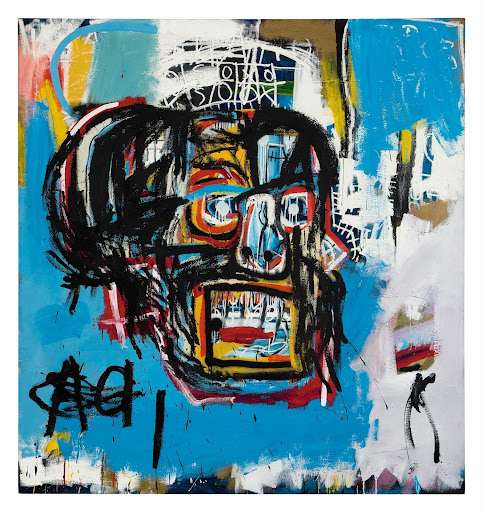
Pérez Art Museum Miami Announces Basquiat: Figures, Signs, Symbols

Jean-Michel-Basquiat-Untitled-Skull-1982.-Private-collection
A rare gathering of Jean-Michel Basquiat’s most iconic works come together in Miami for the first time, generously loaned from the Kenneth C. Griffin Collection. Opening June 25, 2026.

Pérez Art Museum Miami Announces Basquiat: Figures, Signs, Symbols

A rare gathering of Jean-Michel Basquiat’s most iconic works come together in Miami for the first time, generously loaned from the Kenneth C. Griffin Collection. Opening June 25, 2026.

(MIAMI, FL — March 29, 2026) — Pérez Art Museum Miami (PAMM) is pleased to announce Basquiat: Figures, Signs, Symbols, an exhibition bringing together nearly a dozen works by Jean-Michel Basquiat—uniting some of the artist’s most recognizable paintings under one roof for the first time. Opening June 25, 2026, as Miami hosts visitors from around the world for the FIFA World Cup, the exhibition draws on works from the collection of Kenneth C. Griffin, founder and CEO of Citadel and a longstanding PAMM supporter, with the support of Griffin Catalyst, his civic engagement initiative. Basquiat: Figures, Signs, Symbols is co-curated by Sandra and Tony Tamer Director Franklin Sirmans and Kenneth C. Griffin Collection Curator Megan Kincaid.

Basquiat: Figures, Signs, Symbols marks among the most significant presentations to date of the late artist’s work. Across nine paintings and one sculpture—a rarely discussed aspect of Basquiat’s practice—this exhibition concentrates on the artist’s implementation of classic themes such as portraiture and the figure, script and language, and his conceptual amplification of color, form, and composition.

“As Miami prepares to welcome a global audience for the FIFA World Cup, Pérez Art Museum Miami offers an extraordinary opportunity to experience visual art from across the Americas,” said Kenneth C. Griffin. “I am proud to partner with PAMM to present some of the greatest works by one of America’s most iconic artists, Jean-Michel Basquiat, whose art has a unique power to connect across communities and generations.”

While Basquiat’s work has gained extraordinary visibility in the marketplace and has permeated popular culture across fashion, film, music, and more, Basquiat: Figures, Signs, Symbols offers an opportunity to deepen the conversation around the artist’s technical and conceptual contributions. The exhibition will also include a video of the artist speaking about his work, offering visitors a direct window into Basquiat’s voice and self-understanding.

Exhibition highlights include Untitled (1982), a standout example of Basquiat’s long and deep engagement with the human head—his most persistent anatomical motif; In Italian (1983), one of the artist’s richly layered compositions, operating simultaneously as portrait, study, linguistic puzzle, and autobiographical document that reflects his engagement with the Italian Renaissance tradition of anatomical investigation; Pez Dispenser (1984), a painting of the iconic candy dispenser that extends Pop Art’s elevation of consumer goods—void of clean lines and mechanical reproduction, rendered instead with nostalgic affection and irony; and Untitled (Tenant) (1982), in which a distorted, skeletal figure recalls German Expressionist depictions of bodies strained by the weight of the world, surrounded by statistics that transform the figure into a charged conveyor of the elements.

Basquiat: Figures, Signs, Symbols also provides an entry point for looking at and engaging with themes of race, class, religion, and world history that Basquiat investigated in his work. Born to a Puerto Rican mother and Haitian father in Brooklyn, New York, the artist’s Caribbean background deeply influenced his understanding and expressions of the world around him—a perspective that is intimately connected to Miami and its diasporic communities. This unparalleled presentation in Miami encourages a reflection on the interplay of these forces within the context of South Florida.

Basquiat: Figures, Signs, Symbols marks the latest chapter in Sandra and Tony Tamer Director Franklin Sirmans’ history with the late artist, building on PAMM’s 2016 showcase of Basquiat’s notebooks and smaller works. Sirmans first encountered Basquiat as a young New Yorker, resonating with the artist’s intellectual and poetic depth and ability to speak to a generation shaped by hip-hop and graffiti culture. Across scholarly pursuits and curatorial projects that include the seminal 2005 traveling show Basquiat at the Brooklyn Museum and the artist’s first retrospective in 1992 at The Whitney Museum of American Art, Sirmans has been central to the posthumous rise in popularity and visibility of one of today’s most celebrated contemporary artists.

“At PAMM, this exhibition feels both inevitable and vital. Miami’s layered histories, diasporic communities, and global outlook create a context where Basquiat’s visual language—rooted in memory, migration, and cultural hybridity—can be experienced with particular depth and immediacy,” said Franklin Sirmans, Sandra and Tony Tamer director at PAMM. “This is a compelling moment to revisit Jean-Michel Basquiat not as a market phenomenon or pop icon, but as a rigorous, self-taught master of painting and form. By bringing together works that are rarely seen in depth, we’re inviting audiences to slow down, to look closely, and to encounter a new way of understanding an artist whose name is universally known but whose complexity still demands deeper study.” “By bringing these works together, audiences will see how Basquiat constructs meaning—layering references, symbols, and language in ways that forge connections and gain in complexity,” said Megan Kincaid, Kenneth C. Griffin Collection curator. “The works move between art history and contemporary culture, using humor and critique to reflect on mythmaking, socio-historical forces, and power—ultimately inviting viewers to look closely, sensemake, and think together.”

Basquiat: Figures, Signs, Symbols centers the museum experience: close looking, sustained time, and the rare opportunity to see works that are often encountered only as reproductions, headlines, or cultural shorthand.

Basquiat: Figures, Signs, Symbols is organized by Sandra and Tony Tamer Director Franklin Sirmans and Kenneth C. Griffin Collection Curator Dr. Megan Kincaid, with the support of Jaimie Ludwig, Executive Assistant, Director’s Office. The exhibition is made possible with generous philanthropic support from Griffin Catalyst.

ABOUT GRIFFIN CATALYST

Griffin Catalyst is the civic engagement initiative of Citadel founder and CEO Kenneth C. Griffin, encompassing his philanthropic and community impact efforts. Tackling the world’s greatest challenges in innovative, action-oriented, and evidence-driven ways, Griffin Catalyst is dedicated to expanding opportunity and improving lives across six areas of focus: Education, Science & Medicine, Upward Mobility, Freedom & Democracy, Enterprise & Innovation, and Communities. For more information, visit griffincatalyst.org.

ABOUT PAMM

Pérez Art Museum Miami (PAMM), led by Sandra and Tony Tamer Director Franklin Sirmans, promotes artistic expression and the exchange of ideas, advancing public knowledge and appreciation of art, architecture, and design, and reflecting the diverse community of its pivotal geographic location at the crossroads of the Americas. The 41-year-old South Florida institution, formerly known as Miami Art Museum (MAM), opened a new building, designed by world-renowned architects Herzog & de Meuron, on December 4, 2013 in Downtown Miami’s Maurice A. Ferré Park. The facility is a state-of-the-art model for sustainable museum design and progressive programming and features 200,000 square feet of indoor and outdoor program space with flexible galleries; shaded outdoor verandas; a waterfront restaurant and bar; a museum shop; and an education center with a library, media lab, and classroom spaces.

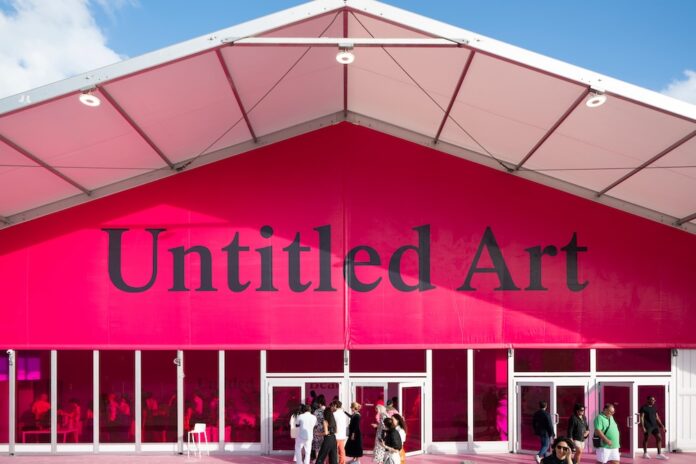
Untitled Art, Miami Beach 2025 — Una plataforma vibrante para el descubrimiento contemporáneo

Untitled Art
Untitled Art

La edición 2025 de Untitled Art, Miami Beach reafirma su lugar como una de las ferias más dinámicas y conceptualmente frescas del circuito internacional. Celebrada del 3 al 7 de diciembre, con un preview el día 2, la feria vuelve a desplegarse sobre la arena de Miami Beach, consolidando una experiencia única donde el arte contemporáneo dialoga directamente con el paisaje.

Con la participación de 157 galerías, la feria logra un equilibrio notable entre propuestas emergentes y espacios consolidados. En la sección principal Galleries, destacan nombres como Bitforms Gallery, The Hole, Yossi Milo y Library Street Collective, cuyas presentaciones refuerzan la calidad curatorial y la diversidad estética del evento.

Uno de los aspectos más interesantes de esta edición es la renovación de la sección Nest, concebida como un espacio de experimentación y descubrimiento. Galerías como Hidrante e IRL Gallery aportan propuestas frescas que amplían el alcance conceptual de la feria, mientras que la inclusión de nuevos participantes —como Meliksetian | Briggs o Soho Revue— evidencia un compromiso real con la expansión del ecosistema artístico.

Más allá de su lista de expositores, lo que distingue a Untitled Art es su constante voluntad de redefinir el formato de feria. Bajo la dirección de Clara Andrade Pereira, el evento continúa apostando por programas curatoriales innovadores, incluyendo una ampliación del Guest Curators Program, que aporta nuevas perspectivas y discursos críticos al recorrido.

El resultado es una feria que no solo presenta arte, sino que construye contexto: un espacio donde el descubrimiento no es incidental, sino estructural. Untitled Art 2025 no busca simplemente exhibir, sino activar conexiones —entre artistas, galerías, coleccionistas y público— demostrando que el futuro de las ferias de arte reside en su capacidad de evolucionar.

En un ecosistema cada vez más competitivo, Untitled Art, Miami Beach se posiciona, una vez más, como un referente de riesgo curatorial, sensibilidad contemporánea y apertura hacia nuevas voces.

Galleries

ExhibitorLocation(s)
193 GalleryParis / Saint Tropez, FR / Venice, IT
ABC-ARTEGenova / Milan, IT
ADA GalleryRichmond, VA
ADRIAN SUTTON GALLERYParis, FR
albertz bendaNew York, NY / Los Angeles, CA
Anna Erickson PresentsNashville, TN
ANNA ZORINA GALLERYNew York, NY
ARDEN + WHITE GALLERYNew Canaan, CT
AuraSão Paulo, BR
B R I N T Z + C O U N T YPalm Beach, FL
Bienvenu Steinberg & CNew York, NY
bitforms galleryNew York, NY
Blouin DivisionMontréal / Toronto, CA
Brandt GalleryAmsterdam, NL
Camille Pouyfaucon GalleryParis, FR
Carl Freedman GalleryMargate, UK
CARVALHOBrooklyn, NY
CURROGuadalajara, MX
DAM ProjectBuenos Aires, AR
Danziger GalleryNew York, NY
Galería FermayPalma, ES
GALERIE FORSBLOMHelsinki, FI
Galerie Isabelle LesmeisterRegensburg, DE
Galerie Nicolas RobertMontréal / Toronto, CA
Galleri UrbaneDallas, TX
GALLERIA STUDIO G7Bologna, IT
Gillian Jason GalleryLondon, UK
GVCCCasablanca, MA / Paris, FR
HAIR+NAILSMinneapolis, MN / New York, NY
Harper’sEast Hampton / New York, NY
HEFTNew York, NY
Hollis Taggart DowntownNew York, NY
Homecoming GalleryAmsterdam, NL
Huxley-ParlourLondon, UK
Il Chiostro Arte & ArchiviSaronno, IT
JECZATimisoara / Bucharest, RO
JO-HSNew York, NY
Kalashnikovv GalleryJohannesburg, ZA
KATES-FERRI PROJECTSNew York, NY
Kavi GuptaChicago, IL
Kravets Wehby GalleryNew York, NY
La Bibi + ReusPalma, ES
La Balsa ArteBogotá / Medellín, CO
Latchkey Gallery / Selenas MountainNew York, NY / New York, NY
Lazy MikeSeoul, KR
Library Street CollectiveDetroit, MI
Louis Buhl & Co.Detroit, MI
Luce GalleryTorino, IT
LUPO – Lorenzelli ProjectsMilan, IT
Marc StrausNew York, NY
Miro PresentsLondon, UK
MKG127Toronto, CA
Morgan Lehman GalleryNew York, NY
Negrón Pizarro (NP01)San Juan, PR
NINO MIER GALLERYNew York, NY / Brussels, BE
Pablo’s Birthday / Patrick Heide Contemporary ArtNew York, NY / London, UK
PALMAGuadalajara, MX
Palo GalleryNew York, NY
PIBI GALLERYSeoul, KR
PIERMARQ*Sydney, AU
Plan XMilan / Capri, IT
RHODESLondon, UK
Richard Heller GallerySanta Monica, CA
RonchiniLondon, UK
SAENGER Galería / COHJUMexico City, MX / Kyoto, JP
SARAHCROWNNew York, NY / Seoul, KR
SARAI GalleryLos Angeles, CA / Tehran / Mahshahr, IR
Sears-Peyton GalleryNew York, NY
SECCIMilan / Pietrasanta, IT
[SN] + Henrique FariaBogota, CO
Soho RevueLondon, UK
Spencer Brownstone GalleryNew York, NY
Stems GalleryBrussels, BE
Sundaram Tagore GalleryNew York, NY / Singapore, SG / London, UK
Swivel GalleryNew York, NY
TERN GalleryNassau, BS
The Ant ProjectMiami, FL / Mexico City, MX
The HoleNew York, NY / Los Angeles, CA
Vigo GalleryLondon, UK
WHATIFTHEWORLDCape Town, ZA
Wishbone GalleryMontréal, CA
WIZARD GALLERYMilan, IT
Yancey RichardsonNew York, NY
Yiwei GalleryLos Angeles, CA / Wuhan, CN
Yossi MiloNew York, NY
Zidoun-Bossuyt GalleryLuxembourg, LU / Paris, FR / Dubai, UAE

Marcel Duchamp Retrospective at MoMA

Marcel Duchamp Retrospective at MoMA

Marcel Duchamp Retrospective at MoMA

April 12 – August 22, 2026 | Museum of Modern Art, New York

Rethinking the Question: What Is Art?

“Why is this art?”—a question that continues to unsettle audiences—finds its most radical articulation in the work of Marcel Duchamp. The 2026 retrospective at MoMA is not merely an exhibition; it is a philosophical reconstruction of modern art’s foundations. Bringing together approximately 300 works, this marks the first major North American survey of Duchamp since 1973, offering a long-overdue reassessment of an artist whose influence permeates contemporary practice.

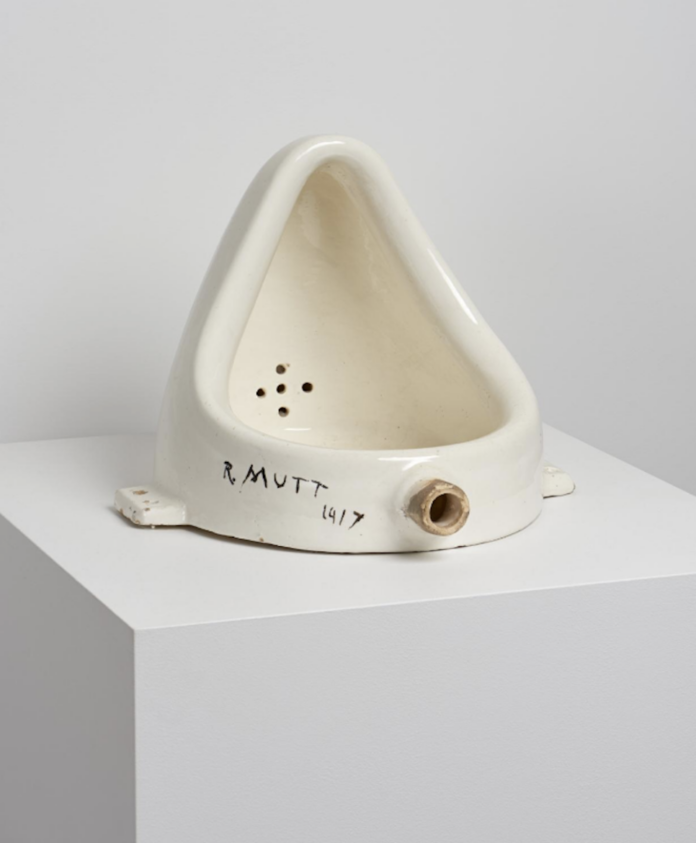
Duchamp’s legacy is not stylistic but conceptual. His early painting, Nude Descending a Staircase (No. 2), fractured the human form into motion, destabilizing perception at the 1913 Armory Show. Yet it is his invention of the readymade—epitomized by Fountain—that irreversibly shifted authorship from craftsmanship to choice. In this gesture, Duchamp dismantled centuries of aesthetic hierarchy, proposing that the act of selection itself could constitute art.

The exhibition’s strength lies in its comprehensive scope: from the enigmatic The Bride Stripped Bare by Her Bachelors, Even (The Large Glass) to the intimate Box in a Valise, Duchamp’s “portable museum.” These works reveal an artist committed to contradiction, resisting coherence as a strategy of intellectual freedom.

Curated by leading figures from MoMA and the Philadelphia Museum of Art, in collaboration with the Centre Pompidou, the retrospective situates Duchamp not as a historical figure, but as an active force. His work continues to define the conditions under which art can exist.

In this sense, the exhibition does not answer the question “Why is this art?”—it reveals that the question itself is Duchamp’s most enduring artwork.

East Asian Artists

Anti-Racist Art Teachers

East Asian Artists

Anti-Racist Art Teachers

Artists have many layered identities and art educators need to present them as such.  
Representing diverse artists in your curriculum is only part of an Anti-Bias, Anti-Racist curriculum.  It needs to be more than a symbolic effort and art educators need to take into account intersectionality when introducing these artists to students.  How do aspects of an artists’ social and political identities (ex. gender, sex, race, class, sexuality, religion, ability, physical appearance, etc.) intersect within their work?   
In addition, we recognize that race is socially constructed and it is impossible to put humans in clearly defined categories by race. Racial identity is deeply personal, and artists within any given subgroup define themselves differently. Race, ethnicity, and nationality are all factors artist’s individually consider as their personal identity. However, as mentioned previously that is not all that there is to their identity. We know that artists have many layered identities and art educators need to do the research to present them as such. These groupings are not perfect, as humans are not meant to be divided into boxes. We hope this resource can help art educators identify who is missing from their curriculum in order to create a curriculum more representative of the incredible diversity among students and artists today.

Asian: a native or inhabitant of Asia, or a person of Asian descent.

East Asia is the eastern region of Asia, which is defined in both geographical and ethno-cultural terms. The region consists of China, Hong Kong, Macau, Japan, Mongolia, North Korea, South Korea, and Taiwan.

Name/Nationality
Adam Chau Asian American
Aki Sasamoto Japanese
Ai Weiwei Chinese
Ariuntuya Jambaldorj Mongolian
Audrey Kawasaki Japanese-American
Aya Takano Japanese
Ayumi Horie Japanese American
Akio Takamori Japanese-American
Baatarzorig Batjargal Mongolian
Barbara Horiuchi Japanese American
Battur Tsedenpil Mongolian
Bian Qing Chinese
Bingyi Chinese
Byron Kim Korean American
Cai Guo-Qiang Chinese
Cao Fei Chinese
Cai Xiaosong Chinese
Cheryll Leo-Gwin Chinese American
Chen Xi Chinese
Chen Ting-shih Chinese
Chen Yujun Chinese
Chen Yufan Chinese
Chen Qi Chinese
Cheong Soo Pieng Chinese
Chiho Aoshima Japanese
Christina Neston Japanese & American
Chuang Che Chinese
Chu Wei-Bor Chinese
D. Tsolmon Mongolian
DALeast Chinese
David Choe Korean American
Do Ho Suh Korean
Dong Shawhwei Taiwanese
Eun-Ha Paek Korean
Eva Kwong Chinese American
Fong Chung-Ray Chinese
Flo Oy Wong Chinese-American
GAO Xingjian Chinese
Gayle Tanaka Japanese American
Greg Ito Japanese American
Godo Dashdondov Bayartsetseg Mongolian
Gu Wenda Chinese (East Asian)
Haegue Yang Korean
Han Hsiang-Ning Chinese
Hang Chunhui Chinese
Haraguchi Noriyuki Japanese
Haruki Japanese
Hieu Nguyen AKA kelogsloops Australian
Hiroshi Sugimoto Japanese
Hong Zhu An Chinese
Hsiao Chin Chinese
Hu Weiyi Chinese
Hung Liu Chinese-Born American
Isamu Noguchi Japanese American
Jean Shin American-Korean
JeeYoung Lee Korean
Jeon Bora Korean
Jiang Cheng Chinese
Jiang Ji’an Chinese
Jingfang Hao & Lingjie Wang (duo) Chinese
Jiha Moon Korean
Jin Jinghong Chinese
Joseph Wu Canadian (Born in Hong Kong)
Jun Ahn Korean
Juliana Kang Robinson Korean
Jun Yang Korean American
Ka-Man Tse Chinese-American
Kao Jun-Honn Taiwanese
Katsushika Hokusai Japanese
Kang Chun-hyuk Korean
Kay Kang Korean American
Kea Tawana Japanese American
Khishigsuren Batdelger Mongolian
Kimsooja Korean
Kitagawa Utamaro Japanese
Koon Wai Bong Chinese
Koshimizu Susumu Japanese
Ko Byung Jun Korean
Lee Bul Korean
Lenore Chinn Chinese-American
Lexy Ho-Tai Canadian-Chinese
Li Chen Taiwanese
Li Yushuang Chinese
Lim Minouk Korean
Lim Young Sun Korean
Ling Chun Chinese
Lily Yeh Chinese American
Liu Dan Chinese
Liu Guosong Taiwanese
Lkhagvadorj Enkhbat Mongolian
Luo Kai Chinese
Louise Jones (née Chen) Chinese American
Ma Paisui Chinese
MA Shuqing Chinese
Mao Chenyu Chinese
Maya Lin Chinese American
Mel Chin Chinese American
Miho Hirano Japanese
Mika Tajima Japanese American
Mina Cheon Korean American
Miné Okubo Japanese American
Moon Kyungwon Korean
Motonaga Sadamasa Japanese
Munkhtsetseg Jalkhaajav (Mugi) Mongolian
Musquiqui Chihying Taiwanese
Nam June Paik Korean American
Nandin Erdene Budzagd Mongolian
Nikki S. Lee Korean
Noriyuki Haraguchi Japanese
Orkhontuul Banzragch Mongolian
Onon Urjinkhand Mongolian
Pan Hsinhua Taiwanese
Peng Yihsuan Taiwanese
Park Chan-kyong Korean
Qin Feng Chinese
Reiko Fujii Japanese American
Roger Shimomura Japanese American
Ruth Asawa Japanese American
Red Hong Yi Chinese-Malaysian
Sarah Sze Chinese American
Sekine Nobuo Japanese
Shen Kelong Chinese
Seund Ja Rhee Korean
Shang Yang Chinese
Shari Arai DeBoer Japanese American
Shen Hao Chinese
Shen Qin Chinese
Shelly Wan Chinese
Stephanie Mei Huang Asian American
Sun Mu Korean
Szeto Lap Chinese
Szu-Han Ho Taiwanese
Takashi Murakami Japanese
Tehching Hsieh Taiwanese
Teruko Nimura Japanese American
Tera Stockdale Japanese American
Taili Wu Taiwanese
Tatsuya Tanaka Japanese
Trinh T. Minh-ha Vietnamese
Utagawa Hiroshige Japanese
Uuriintuya Dagvasambuu Mongolian
Walasse Ting Chinese
Wang Tiande Chinese
Wang Zhiyi Chinese
Wendy Maruyama Japanese American
Wen Zhengming Chinese
Xu Bing Chinese
Yang Chihung Chinese
Yang Yuyu Taiwanese
Yayoi Kusama Japanese
Ye Yongqing Chinese
YIN Zhaoyang Chinese
YING Tianqi Chinese
Yoko Ono Japanese
Yoshitomo Nara Japanese
Yoshio Itagaki Japanese
Yoshitoshi Kanemaki Japanese
Young In Hong Korean
Yun-Fei Ji Chinese
Yodogawa Technique Japanese
Zao Wou-Ki Chinese-French
Zayasaikhan Sambuu Mongolian
Zeng Fanzhi Chinese
Zhang Huan Chinese
Zheng Chongbin Chinese

Black Artists

Anti-Racist Art Teachers

Black Artists

Artists have many layered identities and art educators need to present them as such.  
Representing diverse artists in your curriculum is only part of an Anti-Bias, Anti-Racist curriculum.  It needs to be more than a symbolic effort and art educators need to take into account intersectionality when introducing these artists to students.  How do aspects of an artists’ social and political identities (ex. gender, sex, race, class, sexuality, religion, ability, physical appearance, etc.) intersect within their work?   
In addition, we recognize that race is socially constructed and it is impossible to put humans in clearly defined categories by race. Racial identity is deeply personal, and artists within any given subgroup define themselves differently. Race, ethnicity, and nationality are all factors artist’s individually consider as their personal identity. However, as mentioned previously that is not all that there is to their identity. We know that artists have many layered identities and art educators need to do the research to present them as such. These groupings are not perfect, as humans are not meant to be divided into boxes. We hope this resource can help art educators identify who is missing from their curriculum in order to create a curriculum more representative of the incredible diversity among students and artists today.

Name/Nationality
Aaron Douglas American
Abe Odedina Nigerian
Adia Millett American
Adde Adesokan German / Nigerian
Adrian Brandon American
Afewerk Tekle Ethiopian
Aïda Muluneh Ethiopian
Alyssia Gibson American
Alexandria Smith British
Alice Beasley American
Alma Woodsey Thomas American
Alison Saar American
Amir Abdul-Shakur American
Amir Khadar Sierra Leonean-American
Amy Sherald American
Angela Pilgrim American
Andrea Chung American
Angelica Dass Brazilian
Anna Jane McIntyre Canadian
Andrea Pippins Swedish
Ashanté Kindle American
Asuka Anastacia Ogawa Japanese-Brazilian
Augusta Savage American
Aurélia Durand American
Ashley Chew American
Barbara Jone-Hogu American
Barkley L Hendricks American
Barry Johnson American
Bayeté Ross Smith American
Benny Andrews American
Bee Harris American
Betye Saar American
Bisa Butler American
Brandan “BMike” Odums American
Brittany Williams American
Camille Turner Canadian
Carrie Mae Weems American
Cauleen Smith American
Cbabi Bayoc American
Charles Alston American
Chakaia Booker American
Charles White American
Chip Thomas AKA jetsonorama American
Christo Musinguzi Ugandan
Christopher Myers American
Ciara LeRoy American
Clementine Hunter American
Cy Gavin American
Cedric Michael Cox American
Carolyn Mazloomi American
Dáreece J. Walker American
David Alabo Ghanaian-Moroccan
David Driskell American
David Hammons American
Dawoud Bey American
Deana Lawson American
Deborah Roberts American
Delfin Finley American
Delita Martin American
Derrick Adams American
Délio Jasse Angolan
Derek Fordjour American (Ghanaian heritage)
Devin Allen American
Didier William Haitian
Dissirama Ghanaian
Dewey Crumpler American
Ebony G. Patterson Jamaican
Ejatu Shaw British
Ekow Nimako Ghanaian-Canadian
Ekua Holmes American
El Anatsui Ghanaian
Eliana Rodgers American
Elias Sime Ethiopian
Elizabeth Catlett American & Mexican
Ellis Wilson American
Emma Amos American
Emory Douglas American
Ernie Barnes American
Faith Bebbington British (Jamaican heritage)
Faith Ringgold American
Falko One South African
Francis Robateau Belizean American
Frank Bowling Guyanan/British
Frank Morrison American
Fred Wilson American
Glenn Ligon American
Gordon Parks American
Gerald A. Brown American
Hale Woodruff American
Hamilton Glass American
Hank Willis Thomas American
Harold D. Smith Jr. American
Hebru Brantley American
Henry Ossawa Tanner American
Henry Taylor American
Horace Pippin American
Howardena Pindell American
Hippy Potter American
Iona Rozeal Brown American
Ibrahim el-Salahi Sudanese
Jack Whitten American
Jackie Ormes American
Jacob Lawrence American
Jacolby Satterwhite American
Jade Purple Brown American
Jae Jarrell American
Jalondra Quvon American
Jamaal Barber American
Jamel Shabazz African American
Jean-Michel Basquiat Haitian/Puerto Rican
Jeanette Ehlers Danish-Trinidadian
Jen Hewett American
Jennifer Mack-Watkins American
Jennifer Packer American
Jessi Raulet American
Jessica Spence Jamaican-American
Jibade-Khalil Huffman American
Johnson Eziefula Nigerian
Joiri Minaya Dominican-United Statesian
Jonelle James Guyanese & Jamaican
Jordan Casteel American
Joyce J. Scott African American
Julie Mehretu Ethiopian
Kara Walker American
Kayla Mahaffey American
Kadir Nelson American
Khari Turner American
Kay Brown American
Kay Douglas American
Kerry James Marshall American
Kenyatta AC Hinkle American
Kehinde Wiley American
Kesha Bruce American
Kevin Kabue Kenyan
Kevin Snipes American
Kimmy Cantrell American
Kori Newkirk American
Kip Omolade American
Laci Jordan American
LaKela Brown American
Lakwena Maciver British
LaToya Hobbs American
LaToya Ruby Frazier American
Lauren Halsey American
Laylah Ali American
La Vaughn Belle Virgin Islands
Lavaughan Jenkins American
Lava Thomas American
Leslie Diuguid American
Leeya Rose Jackson American
Lina Iris Viktor British-Liberian
Lois Mailou Jones American
Lonnie Holley American
Lorna Simpson American
LaShawnda Crowe Storm American
Madelyn Sneed Grays American
Magdalene Odundo Kenyan, British
Malaya Lalog American
Malcolm Mobutu Smith American
Mark Bradford American
Mary Jackson American
Manuel Mendive Afro-Cuban
Marlon Riggs American
Martin Puryear American
Mary Edmonia Lewis American
Mia Saine American
Michael C. Thorpe American
Mickalene Thomas American
Michael Zeray African American
Mildred Beltré American
Mimi Moffie Dutch
Moe Brooker American
Musah Swallah Ghanaian
Mike Henderson American
Mildred Howard American
Nadine Robinson Jamaican
Natasha Cunningham Jamaican
Nick Cave American
Nicholle Kobi French
Njideka Akunyili Crosby Nigerian American
Norman Lewis American
Nontsikelelo ‘Lolo’ Veleko South African
Nathan Murray American
Natasha Nayo Ghanaian
Nina Chanel Abney American
Noah Purifoy American
Odili Donald Odita Nigerian
Oge Mora American
Palmer Hayden American
Paul Andrew Wandless American
Paul Briggs American
Pierre Santos British
Prince Gyasi Nyantakyi Ghanaian
Queenbe Moneyi American
Quentin Veracity Canadian
Rashid Diab Sudanese
Rashid Johnson American
Rashod Taylor American
Reggie Laurent American
Renee Cox Jamaican-American
Renée Stout American
Robert S. Duncanson American
Romare Bearden American
Ruby Onyinyechi Amanze Nigerian-British
Sam Gilliam American
Sam Dunson American
Sharee Miller American
Sharif Bey American
Sharon Norwood Canadian, Jamaican, American
Shanée Benjamin American
Simone Leigh American
Simone Saunders Jamaican European
Stanley Whitney American
Stephen Carter American
Stephen Marc American
Stephen Wiltshire British
Stephanie Santana American
Tanekeya Word American
Tatyana Fazlalizadeh American
Tawny Chatmon American
Taylor McManus American
Temi Coker Nigerian
Thomas J. Price British
Thornton Dial African-American
Titus Kaphar American
Tiffany Thomas American
Tre Crews American
Torkwase Dyson American
Toyin Ojih Odutola American-Nigerian
Tyree Guyton American
Umar Rashid AKA Frohawk Two Feathers American
vanessa german American
Vashti Harrison American
Veronica Ryan American
Wangechi Mutu Kenyan
Wayde McIntosh American
Willard Wigan British
William Johnson American
Woody De Othello American
Willie Cole American
Xenobia Bailey African-American
Yinka Shonibare British-Nigerian
Yung Jake American
Zanele Muholi South African
Zipporah Camille Thompson American
Zora J Murff American (Black)

Blink Group

Christian Albarracín

Blink Group

A CONTEMPORARY

Fine Art Gallery in South Florida

Sales & Art Inquiries  
[email protected]
+1 (786) 843-2276
@blinkgroupgallery

Blink Group is a contemporary art gallery founded by Elizabeth Reyes in 2012. We offer extensive experience in art consulting, acquisition advice, sourcing of artists, art collection building, and curated art exhibitions. Blink Group represents both established and emerging international artists who create contemporary art which can include: painting, sculpture, installation, photography, video, and new media. Throughout the year, we participate in international art fairs to introduce our artists to a global audience. This also allows collectors to discover new and original art from around the world. Our mission is to ensure that every detail of our artist/client relationship meets tevery need. We believe that by building meaningful bonds within the art world can lead to unique works of art reaching a broader audience. Blinkgroup Fine Art Gallery wishes to give everyone the chance to be artistically transformed.

FEATURED ARTISTS

Blink Group serves as the representative for a diverse array of artists, encompassing both well-established figures and emerging talents on the global stage. These artists specialize in crafting contemporary artworks spanning various mediums such as painting, sculpture, installation, photography, video, and new media.

Alejandro Frieri

Amy Shekhter

Andres Moreno

Andres Pruna

Anibal Gomescasseres

Billy Monsalve Duffo

Canal-Cheong Jagerroos

Carla D’Amato

Carlos Villabon

Carol Moreno

Christian Abusaid

Christian Albarracin

Claudio Castillo

Cuchi Taborda

Débora Sánchez Viqueira

Diana Beltran

Elizabeth Pruna

Humberto Castro

Ignacio Gana

Javier Valle Perez

Juan Pablo Gutierrez B.

Kaiser Suidan

Lisa Lloyd

LouAnn Wukitsch

Luis Kaiulani

Mactivo

Marco Grassi

Marta Fabregas

Mercedes Jelinek

Monica Agudelo

Pablo Fernandez

Shawn Kolodny

Silvio Porzionato

Solange Heilenkotter

Stef Ross

TBoy

Tiffany Trenda

Tommaso Fattovich

Veronica Matiz

Zack Knudson

Anabel Ruiz

Ariel Vargassal

Jorge Santos Marcos

Mr. Brainwash

Noel Dobarganes Perez

Retna

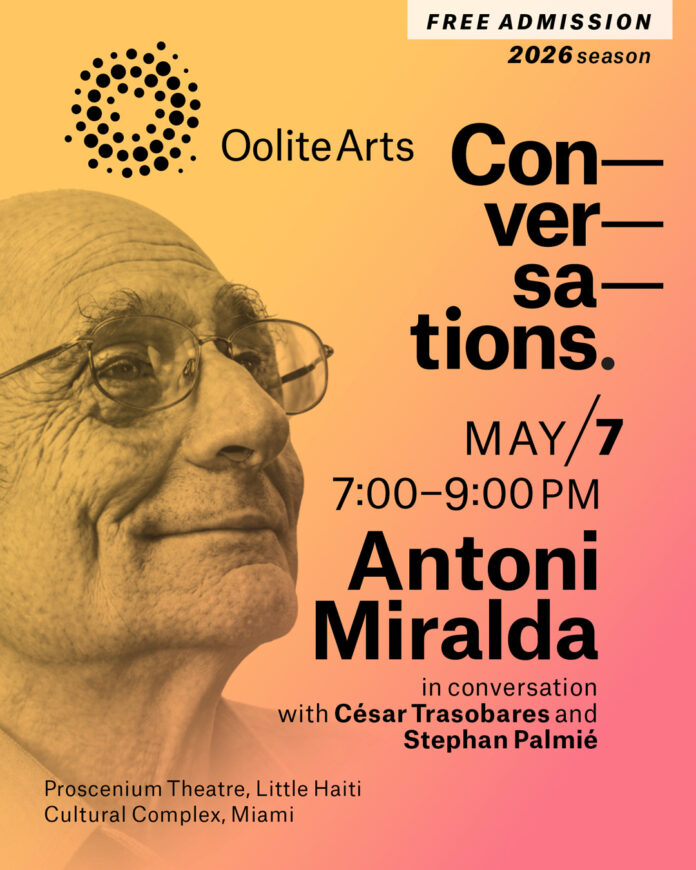
Oolite Arts launches Oolite Arts Conversations with Antoni Miralda indialogue with César Trasobares and Stephan Palmié

Oolite Arts launches Oolite Arts Conversations with Antoni Miralda in dialogue with César Trasobares and Stephan Palmié

Oolite Arts launches Oolite Arts Conversations with Antoni Miralda indialogue with César Trasobares and Stephan Palmié

Oolite Arts is pleased to inaugurate Oolite Arts Conversations, a new public series that convenes artists, curators, museum professionals, and cultural thinkers in rigorous and lively dialogue.

The inaugural event, on May 7, 2026, opens the series with an evening devoted to Antoni Miralda, the internationally renowned artist whose practice has, since the 1960s, transformed food into a powerful artistic, social, and political medium.

Bringing together art, anthropology, and civic history, the conversation will place Miralda in dialogue with César E. Trasobares, artist, curator, and a key architect of Miami’s public art infrastructure and policy framework, and Stephan Palmié, anthropologist and Norman & Edna Freehling Professor of Anthropology and Social Sciences at the University of Chicago. Together, they will examine Miralda’s singular impact on Miami and beyond, tracing the ways food, ritual, and collective participation have shaped his work and its enduring cultural resonance.

Through their respective practices and perspectives, Miralda, Trasobares, and Palmié will explore Miami as both laboratory and crossroads, a city where artistic experimentation, cultural translation, and public life converge. In doing so, the event will inaugurate Oolite Arts Conversations by enacting the very values at the heart of the series—a sustained commitment to contemporary art as a critical framework for understanding the social world.

About the SpeakersBorn in Terrassa, Barcelona, in 1942, Antoni Miralda first established his practice in Paris before relocating to New York in 1972, and has since maintained an active presence between Miami and Barcelona. From his early Happenings with the “Paris Catalans”—collective rituals centered on ceremonial food, color, and symbolism—to his large-scale installations and research-driven projects, Miralda’s work unfolds through a vibrant, baroque, and nonconformist language that brings art directly into the social fabric of everyday life.

Miami has been a crucial site in Miralda’s career since 1981, when he was invited as a guest artist for the New World Festival of the Arts, with interventions at Coral Castle, Vizcaya, the Bass Museum, and the Lowe Art Museum. In 1992, together with chef and longtime collaborator Montse Guillén, he established a base on Española Way, initiating a sustained period of engagement with the city as a site of experimentation that included Big Fish Mayaimi on the Miami River (1996–1999) and a major exhibition at the Miami Art Museum in 1998. Since 2000, his ongoing FoodCulturaMuseum, anchored in both Miami and Barcelona, has functioned as an evolving archive that examines food diversity as a lens through which to understand cultures across the world.

Among Miralda’s landmark projects is Honeymoon Project (1986/1992), a multi-site international undertaking staging the symbolic marriage between the Statue of Liberty in New York and the Columbus Monument in Barcelona, an incisive deconstruction of Old World/New World relations through ritual, food, and collective celebration. His work has been presented at major international platforms, including documenta VI, the 17th São Paulo Biennial, and the 44th Venice Biennale. In 2018, he received Spain’s prestigiousVelázquez Prize for Visual Arts.

César E. Trasobares’ career bridges studio practice, cultural policy, and civic infrastructure. As Executive Director of Metro-Dade County’s Art in Public Places Program (1985–1990), Trasobares oversaw landmark commissions by artists including Ed Ruscha, Claes Oldenburg and Coosje van Bruggen, Nam June Paik, and Betye Saar—projects that helped define Miami’s public art landscape. A longtime collaborator on Miralda’s Miami initiatives, Trasobares brings a deeply informed perspective on the artist’s formative role within the city’s cultural life.

Stephan Palmié’s scholarship on Afro-Caribbean cultures, foodways, slavery, migration, and constructions of race and ethnicity provides a critical framework for understanding the historical and symbolic dimensions of Miralda’s practice. His collaboration with Miralda on Maggi Galaxy, a multidisciplinary project exploring the aesthetics and politics of the Maggi bouillon cube, underscores the rich intersections between artistic production and anthropological inquiry that the evening’s dialogue will bring into focus.

The event will be followed by a reception and book signing of Miralda and Stephan Palmié’s Maggi Galaxy, which will be available for purchase at the event in collaboration with EXILE Projects.

When: May 7, 7:00 – 9:00 p.m.

Where: Proscenium Theatre, Little Haiti Cultural Complex212 NE 59th Terrace, Miami, FL 33137

Admission FreeFree On-Site Parking

How to Write an Artist Statement (2026 Edition)

How to Write an Artist Statement (2026 Edition)

A Curatorial and Critical Approach

In 2026, the artist statement is no longer a simple descriptive text—it is a strategic, conceptual, and curatorial tool that positions your work within contemporary discourse. Far from being a formality, it operates as a bridge between your practice and multiple audiences: curators, collectors, institutions, and the broader cultural field.

An artist statement is not about explaining your work exhaustively, but about articulating a framework of thought. As suggested in contemporary art writing pedagogy, effective statements function as interpretive guides rather than didactic explanations, enabling the viewer to enter the work without closing its meaning (Elkins, What Happened to Art Criticism?).

At its core, the artist statement should address three essential dimensions:
What you do, how you do it, and why it matters.

Clarity is fundamental. Avoid excessive jargon or “artspeak,” which often alienates rather than communicates. Research in art education emphasizes that accessible language fosters broader engagement without diminishing conceptual rigor (Barrett, Criticizing Art).

Structure remains key: a concise introduction, a reflection on process and medium, and a closing that situates your work within a larger conceptual or cultural context.

Writing is iterative. No statement emerges complete in its first draft; it is refined through revision, reflection, and critical feedback.

In an era shaped by artificial intelligence, many tools can assist in drafting text. However, not all AI systems are capable of understanding the nuances of artistic practice. Ultimately, the most meaningful artist statements are those shaped through dialogue—often with a curator or art critic—who can situate your work within a broader intellectual and cultural framework.

The Light of the World: Artist Talk

The Light of the World: Artist Talk

The Light of the World: Artist Talk

Thu Apr 232026 7:00 PM – 9:00 PM EDT

Saladrigas Gallery at Belen Jesuit

The Olga M. and Carlos A. Saladrigas Gallery at Belen Jesuit Preparatory School proudly announces the opening of The Light of the World, a Christ-centered art exhibition exploring the depiction of Jesus Christ across centuries and cultures. The exhibition will be on view from March 12 through May 6, 2026.

A Journey Through Sacred Art

For nearly two thousand years, artists have interpreted the figure of Jesus Christ—shaping some of history’s most profound and visually stunning masterpieces. The Light of the World invites visitors to experience this rich tradition, featuring paintings, sculptures, and drawings from the 16th century to today. The exhibition brings together Russian icons, Renaissance works, paintings from the Cuzco School, late 19th- and early 20th-century Latin American art, and contemporary works by local and international artists—including icons created as prayers in the 21st century.

Curated by Carol Damian, Ph.D., and Adriana Herrera, Ph.D., the exhibition offers an immersive journey through the story of Jesus Christ as seen through the eyes of artists from Europe, Russia, South America, and the United States.

Location

Saladrigas Gallery at Belen Jesuit

500 SW 127th Ave, Miami, FL 33184, USA

Page 5 of 284
1 3 4 5 6 7 284