Home Blog Page 33

Expressionism Art Movement

Expressionism
Expressionism

Expressionism Art Movement

Expressionism was a major German contribution to the development of modern art. An important starting point was the founding of the Brücke artists association in 1905 in Dresden by Ernst Ludwig Kirchner and Erich Heckel, among others. Another centre emerged only a few years later in Munich with the founding of Der Blaue Reiter, which maintained close contacts to Europe’s avant-garde. While the Expressionist artworks are stylistically very divergent, the artists were linked by their criticism of bourgeois life and academic art. Instead of detailed imitations of reality as it was perceived, they sought to give expression to the emotions. Colours and forms attained their own importance. The city of Ludwigshafen increasingly began acquiring Expressionist artists in the 1950s, including Kirchner, Heckel, Wilhelm Lehmbruck, Otto Mueller, Emil Nolde and Max Pechstein. The spectrum was widened with the donation of Wilhelm Hack’s collection that features works by Max Ernst, August Macke, Wilhelm Morgner and Robert Delaunay.

Expressionism: Emotion Over Imitation

Expressionism stands as one of Germany’s most significant contributions to modern art, fundamentally challenging how artists represented the world around them. Emerging in the early 20th century, this revolutionary movement rejected the careful, objective observation that had dominated Western art for centuries. Instead, Expressionist artists sought to externalize internal states—to paint not what they saw, but what they felt.

The Birth of a Movement: Die Brücke (The Bridge)

The official beginning of German Expressionism can be traced to 1905 in Dresden, where a group of young architecture students formed an artists’ association called Die Brücke (The Bridge). The founding members—Ernst Ludwig Kirchner, Erich Heckel, Karl Schmidt-Rottluff, and Fritz Bleyl—chose this name deliberately, envisioning their art as a bridge between traditional academic painting and a new, more vital artistic future.

Die Brücke’s Revolutionary Vision

These artists shared a fierce rejection of bourgeois society and the stifling conventions of academic art. They sought authenticity, raw emotion, and direct expression unmediated by traditional techniques or “good taste.” Their work was characterized by:

  • Bold, non-naturalistic color: Vivid greens, shocking pinks, acidic yellows applied not to represent reality but to convey feeling
  • Distorted forms: Bodies elongated, faces simplified or exaggerated to express psychological states
  • Aggressive brushwork: Visible, energetic strokes that emphasized the act of creation
  • Primitive influences: Inspiration from African masks, Oceanic art, and medieval German woodcuts

Die Brücke artists worked communally, often painting together, sharing models and studios, and developing a distinctive visual language that shocked conservative German audiences. Their subjects—nudes in nature, urban street scenes, circus performers—reflected their interest in authenticity and their rejection of bourgeois propriety.

Key Die Brücke Artists:

  • Ernst Ludwig Kirchner (1880-1938): Angular figures, urban anxiety, street scenes
  • Erich Heckel (1883-1970): Landscapes, figures, woodcuts with spiritual dimension
  • Karl Schmidt-Rottluff (1884-1976): Bold color, simplified forms, religious subjects
  • Otto Mueller (1874-1930): Lyrical figures, often gypsies, softer palette
  • Emil Nolde (1867-1956): Intense color, religious ecstasy, flower paintings (briefly associated)
  • Max Pechstein (1881-1955): South Seas imagery, decorative elements

Der Blaue Reiter (The Blue Rider): Munich’s Answer

Just a few years after Die Brücke’s formation, another crucial Expressionist center emerged in Munich with the founding of Der Blaue Reiter (The Blue Rider) in 1911. Founded by Wassily Kandinsky and Franz Marc, this group represented a more spiritually and theoretically oriented approach to Expressionism.

Der Blaue Reiter’s Spiritual Mission

While Die Brücke artists focused on raw emotion and social critique, Der Blaue Reiter pursued:

  • Spiritual abstraction: Movement toward pure color and form as carriers of meaning
  • Inner necessity: The idea that art should emerge from spiritual need, not external observation
  • Synthesis of arts: Integration of music, visual art, and theory
  • International outlook: Close contacts with European avant-garde, including French Cubists and Italian Futurists

The name “Blue Rider” reflected the group’s interests—blue for spirituality, rider for movement and dynamism. They published an almanac featuring their theoretical writings alongside reproductions of children’s art, folk art, and non-Western art, arguing for the universality of artistic expression.

Key Der Blaue Reiter Artists:

  • Wassily Kandinsky (1866-1944): Pioneer of abstraction, synesthesia, spiritual theory
  • Franz Marc (1880-1916): Animals as spiritual symbols, color theory, killed in WWI
  • August Macke (1887-1914): Colorful urban scenes, figures in landscape, killed in WWI
  • Gabriele Münter (1877-1962): Landscapes, portraits, Kandinsky’s partner
  • Alexej von Jawlensky (1864-1941): Mystical portraits, color experimentation
  • Paul Klee (1879-1940): Whimsical abstractions, associated with the group

The Philosophy: Emotion Over Imitation

What unified these stylistically diverse artists was a fundamental philosophical stance: art should express inner reality, not merely record outer appearance.

Rejection of Academic Tradition

Academic art training in late 19th-century Europe emphasized:

  • Careful observation and realistic rendering
  • Mastery of perspective and anatomy
  • Subdued, “harmonious” color
  • Elevated subjects (history, mythology, classical beauty)
  • Technical polish and finish

Expressionists rejected all of this, arguing that such art was dead—technically proficient but spiritually empty. They wanted art that communicated directly, viscerally, honestly.

The Primacy of Feeling

Instead of asking “Does this look like reality?” Expressionists asked “Does this feel true?” This meant:

Color became emotional, not descriptive: A face might be green not because skin is green, but because green expressed the artist’s feeling about that person—perhaps illness, jealousy, or alienation. The sky could be red, trees could be purple, shadows could be orange—whatever conveyed the emotional truth of the moment.

Form served expression, not accuracy: Bodies could be elongated, compressed, fragmented, or distorted if that served emotional intensity. Perspective could be ignored. Proportions could be exaggerated. The goal was psychological impact, not optical correctness.

Technique emphasized immediacy: Visible brushstrokes, rough textures, unblended colors, and “unfinished” surfaces all testified to the artist’s direct, passionate engagement with the canvas. Polish and refinement felt dishonest, like editing one’s authentic response.

Critique of Bourgeois Society

Many Expressionists connected their artistic revolution to social critique. They saw bourgeois society as:

  • Hypocritical and repressive
  • Materialistic and spiritually empty
  • Disconnected from nature and authentic feeling
  • Stifling individuality and creativity

Their subjects often reflected this critique: prostitutes and outcasts, urban alienation, psychological anxiety, scenes of nature untainted by civilization. They embraced subjects that “proper” society preferred to ignore.

Expressionism’s Expansion: Beyond the Core Groups

While Die Brücke and Der Blaue Reiter formed the movement’s center, Expressionism expanded to include many artists who shared its spirit without formal group affiliation.

Austrian Expressionism

  • Egon Schiele (1890-1918): Contorted nudes, psychological intensity, died in flu pandemic
  • Oskar Kokoschka (1886-1980): Psychologically penetrating portraits, turbulent landscapes

Independent German Expressionists

  • Wilhelm Lehmbruck (1881-1919): Sculptor, elongated melancholic figures
  • Ernst Barlach (1870-1938): Sculptor and printmaker, spiritual and social themes
  • Käthe Kollwitz (1867-1945): Printmaker, social justice, working-class subjects
  • Christian Rohlfs (1849-1938): Late-career Expressionist, influenced by younger artists
  • Wilhelm Morgner (1891-1917): Intense color, mystical subjects, killed in WWI

Related Movements

  • Neue Sachlichkeit (New Objectivity): Post-WWI movement including Otto Dix and George Grosz, more cynical and socially critical
  • Expressionist architecture: Bruno Taut, Erich Mendelsohn—buildings as emotional expression

Expressionism’s International Reach

Though centered in Germany, Expressionism influenced artists across Europe:

France

  • Georges Rouault (1871-1958): Religious subjects, thick black outlines
  • Chaim Soutine (1893-1943): Writhing landscapes and portraits
  • Maurice de Vlaminck (1876-1958): Fauve turned Expressionist, dramatic landscapes

Netherlands/Belgium

  • James Ensor (1860-1949): Grotesque masks, social satire
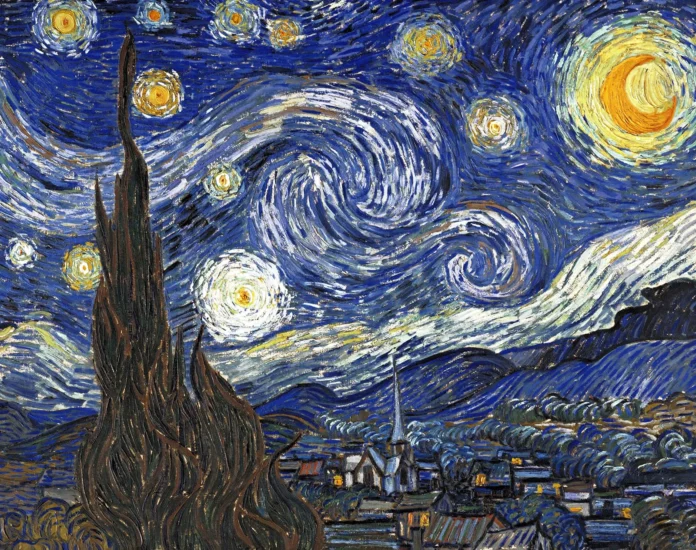
  • Vincent van Gogh (1853-1890): Posthumous influence, emotional intensity

Russia

  • Marianne von Werefkin (1860-1938): Colorful, emotional landscapes
  • Kandinsky and Jawlensky (see above, Russian-born but worked in Germany)

The Ludwigshafen Collection: Preserving Expressionism

The city of Ludwigshafen’s Wilhelm-Hack-Museum houses one of Germany’s most significant Expressionist collections, built through strategic acquisitions and major donations.

Building the Collection (1950s onward)

In the 1950s, as Germany was recovering from World War II and confronting the Nazi regime’s condemnation of modern art as “degenerate,” Ludwigshafen began acquiring Expressionist works. This was both an artistic and a political act—reclaiming cultural heritage that had been suppressed and destroyed.

Early acquisitions included works by:

  • Kirchner: Street scenes, nudes, landscapes
  • Heckel: Contemplative figures and landscapes
  • Lehmbruck: Sculptures of melancholic, elongated figures
  • Mueller: Gentle depictions of figures in nature
  • Nolde: Intense color experiments, religious ecstasy
  • Pechstein: Decorative compositions, exotic subjects

The Wilhelm Hack Donation

The collection expanded dramatically with Wilhelm Hack’s donation, which added crucial works by:

Max Ernst (1891-1976): Though primarily associated with Dada and Surrealism, Ernst’s early work showed Expressionist influence. His fantastic imagery and psychological exploration connected to Expressionist concerns.

August Macke (1887-1914): Der Blaue Reiter member whose colorful scenes of modern life balanced Expressionist emotion with decorative harmony. His tragically brief career (killed in WWI at 27) produced luminous works of remarkable maturity.

Wilhelm Morgner (1891-1917): Less well-known but powerful Expressionist whose mystical, color-saturated works showed both Der Blaue Reiter’s spiritual concerns and Die Brücke’s intensity. Also killed in WWI at just 26.

Robert Delaunay (1885-1941): French artist associated with Orphism, a movement that explored pure color abstraction. While not strictly Expressionist, his work shared Expressionism’s liberation of color from descriptive function and influenced Der Blaue Reiter artists, particularly Macke.

This donation significantly internationalized the collection, showing Expressionism’s dialogue with other avant-garde movements.

Expressionism’s Legacy and Influence

Impact on Subsequent Movements

Expressionism’s emphasis on subjective emotion and formal distortion influenced:

  • Abstract Expressionism (1940s-50s): American artists like Pollock and de Kooning channeled raw emotion into abstraction
  • Neo-Expressionism (1970s-80s): Return to figuration and emotional intensity with artists like Anselm Kiefer, Georg Baselitz
  • Contemporary expressionist painting: Continues in work of artists worldwide who prioritize feeling over representation

Challenges and Controversies

Nazi condemnation: The Nazi regime branded Expressionism “degenerate art,” confiscating thousands of works from museums, destroying or selling many. This persecution paradoxically elevated Expressionism’s importance as a symbol of artistic freedom.

Gender imbalance: While women like Münter, Kollwitz, and Werefkin contributed significantly, the movement’s narrative has historically centered male artists. Contemporary scholarship increasingly addresses this imbalance.

Primitivism questions: Expressionists’ appropriation of African and Oceanic art, while artistically generative, raises questions about cultural borrowing and exoticism that continue to be debated.

Conclusion: The Enduring Power of Expressed Emotion

Expressionism fundamentally changed what painting could be and do. By insisting that art should express rather than imitate, that color and form had inherent emotional power independent of their descriptive function, and that technical “correctness” mattered less than authentic feeling, Expressionists opened possibilities that continue to resonate.

The collections in Ludwigshafen and museums worldwide preserve this revolutionary moment when artists chose emotion over imitation, subjective truth over objective accuracy, and expressive power over academic polish. In doing so, they created works of continuing vitality—paintings and sculptures that still communicate directly, viscerally, honestly across more than a century, fulfilling their creators’ vision of art as a bridge between inner experience and outward expression.

In our contemporary moment, where authenticity and emotional honesty are both celebrated and questioned, Expressionism’s insistence that art must come from deep feeling, not superficial observation, remains provocatively relevant. The movement reminds us that sometimes, to tell the truth about what we see, we must first be truthful about what we feel.

OLD MASTERS AND 19TH CENTURY ARTISTS

OLD MASTERS AND 19TH CENTURY ARTISTS

AIVAZOVSKY, IVAN (1817-1900) Russian landscape painter
http://www.theartwolf.com/galleries/museums-genre-contemporary.htm#north-america

ARCIMBOLDO, GIUSEPPE (1527-1593) Italian Renaissance painter
Giuseppe Arcimboldo – biography

BAROCCI, FEDERICO (1535-1612) Italian Renaissance painter
Federico Barocci at the Saint Louis Art Museum (2012)

BERNINI, GIAN LORENZO (1598-1680) Italian baroque sculptor
Portrait Busts by Bernini at the Getty (2008)
Bernini’s terracotta models at the Metropolitan (2012)

BLAKE, WILLIAM (1757-1827) British artist
The River of Life – William Blake at the Tate Liverpool (2008)
‘A new heaven is begun’ – William Blake at the Morgan Museum (2009)

BOSCH, HYERONIMUS (c.1450-1516) Flemish Renaissance painter
“The garden of delights” – 50 masterworks of painting

BRUEGHEL, PIETER (c.1526/30 – 1569) Flemish Renaissance painter
“The triumph of the death” – 50 masterworks of painting

CHURCH, FREDERIC EDWIN (1826-1900) American romantic painter
Frederic Edwin Church’s Maine landscapes in Portland (2012)
Frederic Church and the Landscape Oil Sketch (2013)

COURBET, GUSTAVE (1819-1877) French realistic painter
Gustave Courbet: from Paris to New York

CRANACH, LUCAS the Elder (1472-1553) German painter
Lucas Cranach the elder at the Royal Academy

DAUMIER, HONORÉ (1808-1879) French realist painter
Honoré Daumier and the Caricature, Cantor Arts Center (2012)

DELACROIX, EUGÈNE (1798-1863) French romantic painter
“Liberty leading the people” – 50 masterworks of painting
Eugène Delacroix at CaixaForum Madrid (2011)

DURER, ALBRECHT (1471-1528) German Renaissance painter
“View of Arco” – 50 masterworks of painting
Albrecht Dürer: self-portrait – 10 great self-portraits

FRANCESCA, PIERO DELLA (c.1415-1492) Italian painter
“The dream of Constantine” – 50 masterworks of painting

FRIEDRICH, CASPAR DAVID (1774-1840) German romantic painter
“Chalk cliffs at Rügen” – 50 masterworks of painting
Friedrich at the Nationalmuseum, Sweden (2009)

GIORGIONE (c.1478-1510) Italian Renaissance painter
“The tempest ” – 50 masterworks of painting

GIOTTO DI BONDONE (1266-1337) Italian Renaissance painter
Giotto di Bondone – biography

GOYA, FRANCISCO DE (1746-1828) Spanish painter and engraver
Dark Goya – a virtual tour on Goya’s Black paintings
Goya – Lights and Shadows, at CaixaForum Barcelona (2012)
Goya’s ‘Disasters of War’ at the Georgia Museum of Art (2012)

GRECO, EL (1541-1614) Greek/Spanish Renaissance painter
El Greco and Modernism – Kunstpalast, Düsseldorf (2012)

HALS, FRANS (c.1582-1666) Dutch Baroque painter
Frans Hals’s brave brushwork at the Metropolitan (2011)

HUI, WANG (1632-1717) Chinese painter
Landscapes Clear and Radiant: The Art of Wang Hui at the Metropolitan (2008)

INGRES, JEAN AUGUSTE DOMINIQUE (1780-1867) French Neoclassical painter
Drawings by Ingres at the Morgan Library and Museum (2011)

KUINDZHI, ARKHIP (1842-1910) Russian landscape painter
Arkhip Kuindzi: “Dnepr in the morning”

LEONARDO DA VINCI (1452-1519) Italian Renaissance painter
Searching the real da Vinci code: a complete analysis
Leonardo da Vinci: self-portrait – 10 great self-portraits
Landmark exhibition of Leonardo opens in London (2011)

LEVITAN, ISAAC (1861-1900) Russian landscape painter
Arkhip Kuindzi: “Lake”

LEYSTER, JUDITH (1609-1660) Dutch Baroque painter
Judith Leyster at the National Gallery of Washington (2009)

LIEVENS, JAN (1607-1674) Dutch baroque painter
Lievens – a Dutch master rediscovered at the NGA (2008)

LOMBARDO, TULLIO (1460-1532) Italian Baroque sculptor
Tulio Lombardo at the National Gallery of Washington (2009)

MELÉNDEZ, LUIS (1715-1780) Spanish Baroque painter
Luis Meléndez at the National Gallery of Washington (2009)

MICHELANGELO (1475-1564) Italian Renaissance artist
“The last judgement” -50 masterworks of painting
Michelangelo’s “The young archer” at the Metropolitan Museum

MURILLO, BARTOLOMÉ ESTEBAN (1617-1682) Spanish baroque painter
Murillo and the Art of Friendship – Prado Museum

POUSSIN, NICOLAS (1594-1665) French baroque painter
Poussin and Nature: Arcadian landscapes – at the Metropolitan

RAPHAEL SANTI (1483-1520) Italian Renaissance painter
“Portrait of a cardinal” – 50 masterworks of painting
Late Raphael at the Prado Museum (2012)

REMBRANDT VAN RIJN (1606-1669) Dutch baroque painter
“The night watch” – 50 masterworks of painting
Rembrandt: self-portrait – 10 great self-portraits
“Rembrandt and the Face of Jesus” in Philadelphia (2012)

SANDBY, PAUL (1731-1809) British landscape painter
‘Picturing Britain’: Paul Sandby at the National Gallery of Scotland

SAVRASOV, ALEXEI (1830-1897) Russian landscape painter
Alexei Savrasow: “The rooks have returned”

SHISHKIN, IVAN (1832-1898) Russian landscape painter
Ivan Shishkin: “Morning in a pine forest”

TITIAN (1485-1576) Italian Renaissance painter
The Triumph of Love: Titian at the National Gallery of London (2009)
Titian’s ‘Diana and Actaeon’ at the National Gallery of London (2009)

TURNER, J.M. WILLIAM (1775-1851) British romantic painter
Joseph Mallord William Turner – master of atmospheres
Turner retrospective at the Metropolitan (2008)
Turner watercolours at the National Galleries of Scotland (2012)
NGA presents ‘Turner Inspired: In the Light of Claude’ (2012)
Turner from the Tate – The Making of a Master (2013)

UCCELLO, PAOLO (1397-1475) Italian Renaissance painter
“The battle of San Romano” – 50 masterworks of painting

VAN DYCK, ANTHONY (1599-1641) Flemish Baroque painter
Museo del Prado presents ‘The Young Van Dyck’ (2012)

VAN EYCK, JAN (c.1390-1441) Dutch Renaissance painter
“The marriage Arnolfini” – 50 masterworks of painting

VASILYEV, FYODOR (1850-1873) Russian landscape painter
Fyodor Vasilyev: “Wet meadow”

VELÁZQUEZ, DIEGO DE (1599-1660) Spanish baroque painter
“Las Meninas” – 50 masterworks of painting

JAN VERMEER (1632-1675) Dutch baroque painter
“View of the Delft” – 50 masterworks of painting

WATTEAU, JEAN ANTOINE (1684-1721) French baroque painter
Watteau: Music and Theater at the Metropolitan Museum (2009)

FIX ME

CLAUDIA AMMIRATA
CLAUDIA AMMIRATA

Public · Hosted by ArtMedia Studio – Gallery

350 NE 75th Street, Unit # 103-2, Miami, Florida 33138

Thursday, May 16, 2019 at 6 PM – 10 PM

FIX ME
Photography & Video
by Claudia Ammirata
At ArtMedia Studio | Gallery
Opening Reception May 16
6 to 10:00 pm

About Artist Claudia Ammirata

Photographer and artist Claudia Ammirata was born in Caracas, Venezuela. Studied photography and drawing at the Academy of Art University in San Francisco, California. She continues to learn new techniques in digital photography in Miami, Florida where she resides.

Claudia finds pleasure in using photography as a vehicle for self-expression. In her work, there is a vision of beauty and meaning in life that is ever-changing and continually expanding.

This vision is shaped by present experiences, places she has lived in, struggles she has overcome and triumphs she has achieved. It’s a reflection of the little things Claudia sees or feels daily, from an inspiring melody to the subtle delicacy of a flower or a dream, that remain engraved in her mind and become part of her work.

She is the author of “Ephemeral Beauty” a photography book that uses flowers as the conduit to interpret the metaphor of life.

Her work has been exhibited at art galleries and fairs including: Art Palm Beach 2018, Art Media Gallery 2017, Pecha Kucha Miami 2017, Miami Twist 2016, Miami Biennale Art Gallery auction 2016, -The Hot Spot show Curator’s Voice Art projects 2015, -The Hardline show 2015, Scope Miami 2014, Artecho “Photography Masters and shooting stars” Art Basel Miami 2014, -Artists and Art juried show 2014.

FIX ME

“An authentic suffering is worth more than an illusory happiness” Emmanuel Carrère

​I still remember the shock that I felt the first time I crossed those cold, steel doors. Being on the other side created a feeling so strange in me that I commonly have a hard time finding the words to describe the experience. We did not belong in that place. It was not a scene from a movie, it was real life, and it was my life.

Fear and sadness took me over. Some may say that enduring the same incident continuously might lessen the pain, molding some sort of resistance. Personally, I cannot sympathize with that thought. What I can assure you is that my world was forever transformed from being so imminently close to the unfortunate episodes that my son has suffered, including periods of psychiatric isolation.

My work has often been characterized for showing the beauty in simple things, and from there I’ve attempted to construct visual poetry. However, the series ‘Fix Me’ has allowed me to delve into perilous, disturbing memories while continuing to preserve an artistic drive. Photography is an art form that is frequently used to tell stories. Those can be perspectives of how we see others or explorations of that one who stands behind the lens.

Although I would not label myself as a documentary photographer, in this work I have taken my camera for the first time to narrate with images a complex and deeply personal story. The misfortunes with my son have taught me to be more compassionate and patient, as well as becoming conscious of human limitations. Surprisingly, I recognized that these extreme situations have led me to a deep transformation and healing of my soul. I did not expect to have this kind of life, but I have chosen to decorate it with dreams, to sustain it with faith and to face it with love, gratitude, and courage.

One in five people in the world will be affected by mental or neurological disorders at some point in their lives, according to the World Health Organization study in 2018. Despite the fact that they are among the leading causes of ill-health and disability worldwide, there is still so little understanding and embarrassment, which leads to discrimination and neglect. By sharing my intimate journey, I hope I may touch the lives of others dealing with similar issues by realizing how common mental disorders really are, encouraging them to talk openly about their struggles.

Personal stories have the power to move people, it is the best way to understand and learn. Perceiving mental health from a more educated lens will, in turn, contribute to the overall reduction of shame and stigma.

Abstract Expressionism

Jackson Pollock
Jackson Pollock

Abstract Expressionism

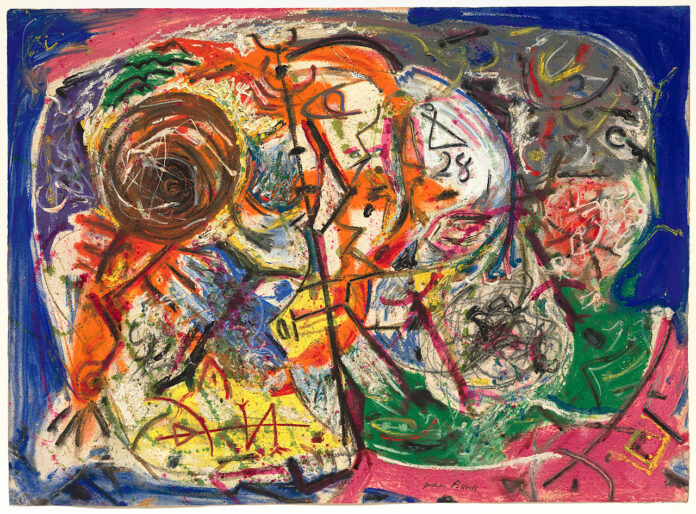
Alongside geometrical abstraction, an approach to abstraction gained in importance that focused on the direct expression of a spontaneous emotion. A gestural painting style with an uncontrolled flow of the paint is characteristic of artists such as Jackson Pollock and Sam Francis. This style of painting became known as Abstract Expressionism in the United States, while various terms were employed in Europe, for example Informalism and Tachisme. As different as the works by artists like Ernst Wilhelm Nay, Karl Otto Götz, Karl Fred Dahmen, Karel Appel, and Asger Jorn are, they share the striving for a means of artistic expression that directs its gaze to the origins.

This form of abstraction rejected the calculated and rational in favor of the intuitive, emotional, and unconscious. The canvas became a field of action—a place where the internal state of the artist could be externalized in dynamic gestures, vigorous brushstrokes, or chance effects of dripping and pouring paint. The artwork was no longer a representation of an object or idea but the record of an encounter—a performance between artist and medium.

Abstract Expressionism marked a pivotal shift in the postwar art world. In the United States, particularly in New York, it signaled the emergence of a new cultural center of modern art, displacing Paris. Artists such as Mark Rothko, Willem de Kooning, Franz Kline, and Helen Frankenthaler expanded the movement’s language, incorporating color fields, mythic symbolism, and large-scale formats that immersed viewers in pure sensation.

In Europe, artists engaged with similar concerns through their own contexts—grappling with the trauma of war, the breakdown of traditional values, and the search for a renewed human expression. The result was a transatlantic dialogue that, while diverse in technique and philosophy, collectively affirmed the expressive potential of abstraction as a response to the complexities of the modern condition.

At its core, Abstract Expressionism is not merely a style, but an attitude: one that embraces risk, affirms individual freedom, and privileges the raw gesture as a direct conduit to the human psyche.

Abstract Expressionism Artists

First Generation (New York School – 1940s-1950s)

Action Painters

  • Jackson Pollock (1912-1956) – Drip paintings, all-over composition
  • Willem de Kooning (1904-1997) – Gestural abstraction, “Women” series
  • Franz Kline (1910-1962) – Bold black and white brushstrokes
  • Lee Krasner (1908-1984) – Dynamic compositions, Pollock’s wife and artist in her own right
  • Joan Mitchell (1925-1992) – Lyrical, landscape-inspired abstractions
  • Norman Lewis (1909-1979) – One of few African American Abstract Expressionists
  • Grace Hartigan (1922-2008) – Figurative-abstract hybrid works
  • Elaine de Kooning (1918-1989) – Gestural portraits and abstractions
  • Helen Frankenthaler (1928-2011) – Soak-stain technique, Color Field pioneer

Color Field Painters

  • Mark Rothko (1903-1970) – Luminous color rectangles, emotional depth
  • Barnett Newman (1905-1970) – “Zip” paintings, vertical bands of color
  • Clyfford Still (1904-1980) – Jagged vertical forms, intense color
  • Ad Reinhardt (1913-1967) – Minimalist approach, black paintings
  • Robert Motherwell (1915-1991) – “Elegy to the Spanish Republic” series

Other Key Figures

  • Arshile Gorky (1904-1948) – Bridge between Surrealism and Abstract Expressionism
  • Hans Hofmann (1880-1966) – Teacher and theorist, “push and pull” technique
  • Philip Guston (1913-1980) – Started abstract, later moved to figurative
  • David Smith (1906-1965) – Sculptor, abstract metal constructions
  • Richard Diebenkorn (1922-1993) – Moved between figuration and abstraction

Second Generation (1950s-1960s)

  • Sam Francis (1923-1994) – Bright, splattered color fields
  • Cy Twombly (1928-2011) – Graffiti-like scribbles and marks
  • Morris Louis (1912-1962) – Stained color paintings
  • Kenneth Noland (1924-2010) – Geometric Color Field works
  • Jules Olitski (1922-2007) – Spray-painted color fields
  • Al Held (1928-2005) – Hard-edge geometric abstractions
  • Joan Brown (1938-1990) – Thick impasto, figurative elements
  • Michael Goldberg (1924-2007) – Energetic gestural abstractions

Women Abstract Expressionists (Often Overlooked)

  • Hedda Sterne (1910-2011)
  • Perle Fine (1905-1988)
  • Judith Godwin (1930-2021)
  • Deborah Remington (1930-2010)
  • Mercedes Matter (1913-2001)
  • Ethel Schwabacher (1903-1984)

International Abstract Expressionism

European

  • Pierre Soulages (1919-2022) – French, black paintings
  • Georges Mathieu (1921-2012) – French, lyrical abstraction
  • Karel Appel (1921-2006) – Dutch, CoBrA movement
  • Antoni Tàpies (1923-2012) – Spanish, matter painting
  • Jean-Paul Riopelle (1923-2002) – Canadian, mosaic-like abstractions

Asian

  • Kazuo Shiraga (1924-2008) – Japanese Gutai movement, foot painting
  • Sadamasa Motonaga (1922-2011) – Japanese Gutai member
  • Tsuyoshi Maekawa (1936-2022) – Japanese Gutai artist
  • Zao Wou-Ki (1920-2013) – Chinese-French, lyrical abstraction

Latin American

  • Wifredo Lam (1902-1982) – Cuban, surrealist-abstract hybrid
  • Rufino Tamayo (1899-1991) – Mexican, color-focused abstraction

Lesser-Known but Important Figures

  • Jack Tworkov (1900-1982)
  • James Brooks (1906-1992)
  • Conrad Marca-Relli (1913-2000)
  • Esteban Vicente (1903-2001)
  • John Ferren (1905-1970)
  • Herbert Ferber (1906-1991) – Sculptor
  • Seymour Lipton (1903-1986) – Sculptor
  • Theodore Roszak (1907-1981) – Sculptor

This list represents the major figures and movements within Abstract Expressionism, though the movement was rich with many more artists who contributed to its development and legacy.

De Stijl

Mondrian style painting, Mondrian art technique, Mondrian grid, Mondrian grid art, Abstract art, Neoplasticism definition, De Stijl, Abstract expressionism,
De Stijl

De Stijl

De Stijl This article is about the artistic movement. For the album (1888–1964), Robert van ‘t Hoff (1887–1979), and J. J. by The White Stripes, see De Stijl (album). P. Oud (1890–1963). The artistic philosophy that formed De Stijl (/də ˈstaɪl/; Dutch pronunciation: [də ˈstɛil]), a basis for the group’s work is known as neoplasticism— the new plastic art (or Nieuwe Beelding in Dutch).

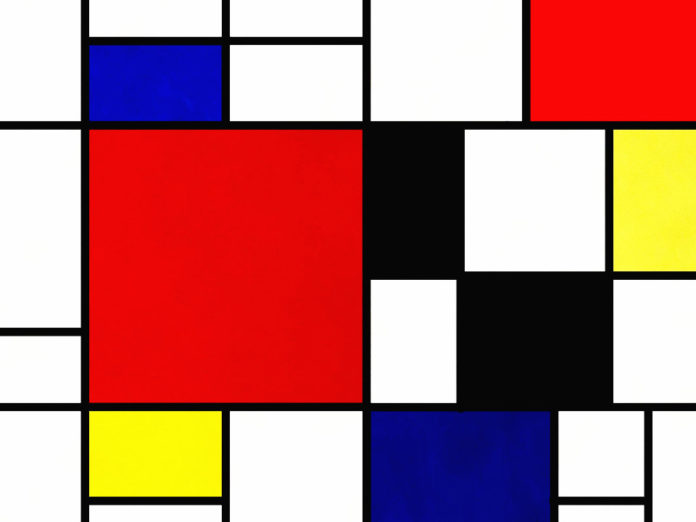
1 Principles and influences Mondrian sets forth the delimitations of neoplasticism in his essay “Neo-Plasticism in Pictorial Art”. He writes, “this new plastic idea will ignore the particulars of appearance, that is to say, natural form and colour. On the contrary, it should find its expression in the abstraction of form and colour, that is to say, in the straight line and the clearly defined primary colour”. With these constraints, his art allows only primary colours and non-colours, only squares and rectangles, only straight and horizontal or vertical lines.[4] The De Stijl movement posited the fundamental principle of the geometry of the straight line, the square, and the rectangle, combined with a strong asymmetricality; the predominant use of pure primary colors with black and white; and the relationship between positive and negative elements in an arrangement of nonobjective forms and lines”.[5] The name De Stijl is supposedly derived from Gottfried Semper’s Der Stil in den technischen und tektonischen Künsten oder Praktische Ästhetik (1861–3), which Curl[3] suggests was mistakenly believed to advocate materialism and functionalism. In general, De Stijl proposed ultimate simplicity and abstraction, both in architecture and painting, by using only straight horizontal and vertical lines and rectangular forms. Furthermore, their formal vocabulary was limited to the primary colours, red, yellow, and blue, and the three primary values, black, white, and grey. The works avoided symmetry and attained aesthetic balance by the use of opposition. This element of the movement embodies the second meaning of stijl: “a post, jamb or support”; this is best exemplified by the construction of crossing joints, most commonly seen in carpentry.

Red and Blue Chair designed by Gerrit Rietveld in 1917.

Dutch for “The Style”, also known as neoplasticism, was a Dutch artistic movement founded in 1917 in Amsterdam. The De Stijl consisted of artists and architects [1] In a narrower sense, the term De Stijl is used to refer to a body of work from 1917 to 1931 founded in the Netherlands.[2][3] Proponents of De Stijl advocated pure abstraction and universality by a reduction to the essentials of form and colour; they simplified visual compositions to vertical and horizontal, using only black, white In many of the group’s three-dimensional works, vertical and primary colors. and horizontal lines are positioned in layers or planes that De Stijl is also the name of a journal that was published do not intersect, thereby allowing each element to exist by the Dutch painter, designer, writer, and critic Theo independently and unobstructed by other elements. This van Doesburg (1883–1931) that served to propagate the feature can be found in the Rietveld Schröder House and group’s theories. Next to van Doesburg, the group’s prin- the Red and Blue Chair. cipal members were the painters Piet Mondrian (1872– De Stijl was influenced by Cubist painting as well as by the 1944), Vilmos Huszár (1884–1960), and Bart van der mysticism and the ideas about “ideal” geometric forms Leck (1876–1958), and the architects Gerrit Rietveld (such as the “perfect straight line”) in the neoplatonic 1

2 HISTORY

philosophy of mathematician M. H. J. Schoenmaekers. The De Stijl movement was also influenced by Neopositivism.[6] The works of De Stijl would influence the Bauhaus style and the international style of architecture as well as clothing and interior design. However, it did not follow the general guidelines of an “-ism” (e.g., Cubism, Futurism, Surrealism), nor did it adhere to the principles of art schools like the Bauhaus; it was a collective project, a joint enterprise. In music, De Stijl was an influence only on the work of composer Jakob van Domselaer, a close friend of Mondrian. Between 1913 and 1916, he composed his Proeven van Stijlkunst (“Experiments in Artistic Style”), inspired mainly by Mondrian’s paintings. This minimalistic—and, at the time, revolutionary—music defined “horizontal” Page from De Stijl magazine. and “vertical” musical elements and aimed at balancing those two principles. Van Domselaer was relatively unknown in his lifetime, and did not play a significant role from the international art world—and in particular, from Paris, which was its centre then. within the De Stijl group.

History

During that period, painter Theo van Doesburg started looking for other artists to set up a journal and start an art movement. Van Doesburg was also a writer, poet, and critic, who had been more successful writing about art than working as an independent artist. Quite adept at making new contacts due to his flamboyant personality and outgoing nature, he had many useful connections in the art world.

2.2 Founding of De Stijl

Theo van Doesburg, neoplasticism: Composition VII (the three graces) 1917. Piet Mondrian, Gray Tree, 1912

Early history

From the flurry of new art movements that followed the Impressionist revolutionary new perception of painting, Cubism arose in the early 20th century as an important and influential new direction. In the Netherlands, too, there was interest in this “new art”. However, because the Netherlands remained neutral in World War I, Dutch artists were not able to leave the country after 1914 and were thus effectively isolated

Around 1915, Van Doesburg started meeting the artists who would eventually become the founders of the journal. He first met Piet Mondrian at an exhibition in Stedelijk Museum Amsterdam. Mondrian, who had moved to Paris in 1912 (and there, changed his name from “Mondriaan”), had been visiting the Netherlands when war broke out. He could not return to Paris, and was staying in the artists’ community of Laren, where he met Bart van der Leck and regularly saw M. H. J. Schoenmaekers. In 1915, Schoenmaekers published Het nieuwe wereldbeeld (“The New Image of the World”), followed in 1916 by

2.5

Influence on architecture

Beginselen der beeldende wiskunde (“Principles of Plastic Mathematics”). These two publications would greatly influence Mondrian and other members of De Stijl. Van Doesburg also knew J. J. P. Oud and the Hungarian artist Vilmos Huszár. In 1917 the cooperation of these artists, together with the poet Anthony Kok, resulted in the founding of De Stijl. The young architect Gerrit Rietveld joined the group in 1918. During those first few years, the group was still relatively homogeneous, although Van der Leck left in 1918 due to artistic differences of opinion. Manifestos were being published, signed by all members. The social and economic circumstances of the time formed an important source of inspiration for their theories, and their ideas The Rietveld Schröder House—the only building realised comabout architecture were heavily influenced by Berlage and pletely according to the principles of De Stijl Frank Lloyd Wright. The name Nieuwe Beelding was a term first coined in 1917 other hand, went back to figurative compositions after his by Mondrian, who wrote a series of twelve articles called departure from the group. De Nieuwe Beelding in de schilderkunst (“Neo-Plasticism in Painting”) that were published in the journal De Stijl. In 1920 he published a book titled Le Neo-Plasticisme. 2.5 Influence on architecture

After 1920

Around 1921, the group’s character started to change. From the time of van Doesburg’s association with Bauhaus, other influences started playing a role. These influences were mainly Malevich and Russian Constructivism, to which not all members agreed. In 1924 Mondrian broke with the group after van Doesburg proposed the theory of elementarism, suggesting that a diagonal line is more vital than horizontal and vertical ones. In addition, the De Stijl group acquired many new “members”. Dadaist influences, such as I. K. Bonset’s poetry and Aldo Camini’s “antiphilosophy” generated controversy as well. Only after Van Doesburg’s death was it revealed that Bonset and Camini were two of his Aubette dance hall, 1929 pseudonyms. The De Stijl influence on architecture remained considerable long after its inception; Mies van der Rohe was 2.4 After van Doesburg’s death among the most important proponents of its ideas. Between 1923 and 1924, Rietveld designed the Rietveld Theo van Doesburg died in Davos, Switzerland, in 1931. Schröder House, the only building to have been created His wife, Nelly, administered his estate. completely according to De Stijl principles. Examples Because of van Doesburg’s pivotal role within De Stijl, of Stijl-influenced works by J.J.P. Oud can be found in the group did not survive. Individual members remained Rotterdam (Café De Unie) and Hoek van Holland. Other in contact, but De Stijl could not exist without a strong examples include the Eames House by Charles and Ray central character. Thus, it may be wrong to think of De Eames, and the interior decoration for the Aubette dance Stijl as a close-knit group of artists. The members knew hall in Strasbourg, designed by Sophie Taeuber-Arp, Jean each other, but most communication took place by letter. Arp and van Doesburg. For example, Mondrian and Rietveld never met in person. Many, though not all, artists did stay true to the movement’s basic ideas, even after 1931. Rietveld, for instance, continued designing furniture according to De Stijl principles, while Mondrian continued working in the style he had initiated around 1920. Van der Leck, on the

2.6 Present day Works by De Stijl members are scattered all over the world, but De Stijl-themed exhibitions are organised regularly. Museums with large De Stijl collections include

the Gemeentemuseum in The Hague (which owns the world’s most extensive, although not exclusively De Stijlrelated, Mondrian collection) and Amsterdam’s Stedelijk Museum, where many works by Rietveld and Van Doesburg are on display. The Centraal Museum of Utrecht has the largest Rietveld collection worldwide; it also owns the Rietveld Schröder House, Rietveld’s adjacent “show house”, and the Rietveld Schröder Archives.

(1907–1981), painter and

• Burgoyne Diller (1906–1965), painter[8] • Theo van Doesburg (1883–1931), painter, designer, and writer; co-founder of De Stijl movement; published De Stijl, 1917–1931[2]

• Jean Gorin (1899–1981), painter, sculptor[9]

• Frederick John Kiesler (1890-1965), architect, theater designer, artist, sculptor[12] • Antony Kok (1882–1969), poet[13]

• Piet Mondrian (1872–1944), painter, co-founder of De Stijl[2] • Marlow Moss (1889–1958), painter

[9]

• J. J. P. Oud (1890–1963), architect (1888–1964),

(1887–1948),

• Art Concret

[2] “De Stijl”. Tate Glossary. The Tate. Retrieved 2006-0731.

[6] Linduff, David G. Wilkins, Bernard Schultz, Katheryn M. (1994). Art past, art present (2nd ed.). Englewood Cliffs, N.J.: Prentice Hall. p. 523. ISBN 0-13-062084-X.

[8] “Burgoyne Diller”. Sullivan Goss. Retrieved 24 September 2015. [9] “de Stijl”. the-artists.org. Retrieved 24 September 2015.

[11] “Vilmos huszar De Stijl”. MoMA. Retrieved 24 September 2015.

painter,[14]

[12] “AD Classics: Endless House / Friedrick Kiesler”. ArchDaily. Retrieved 24 September 2015.

• Friedrich Vordemberge-Gildewart, painter[2]

• Concrete art

[1] Linduff, David G. Wilkins, Bernard Schultz, Katheryn M. (1994). Art past, art present (2nd ed.). Englewood Cliffs, N.J.: Prentice Hall. p. 523. ISBN 0-13-062084-X.

and

architect

• Georges Vantongerloo (1886–1965), sculptor[2]

• Jan Wils (1891–1972), architect[16]

References

[10] “Robert Van ‘T Hoff in The Kröller-Müller Museum”. Het Nieuwe Instituut. Retrieved 24 September 2015.

[2]

• Abstract art

• Rietveld Schröder House

[7] “Ilya Bolotowsky”. Sullivan Goss. Retrieved 24 September 2015.

• Bart van der Leck (1876–1958), painter[2]

See also

• Mathematics and art

[5] The Guggenheim Collection Online: De Stijl

• Vilmos Huszár (1884–1960), painter[11]

4

• Fourth dimension in art

[4] Tate Glossary: Neo-Plasticism

• Robert van ‘t Hoff (1887–1979), architect[10]

• Kurt Schwitters sculptor[15]

• Constructivism (art)

[3] Curl, James Stevens (2006). A Dictionary of Architecture and Landscape Architecture (Paperback) (Second ed.). Oxford University Press. ISBN 0-19-860678-8.

• Cornelis van Eesteren (1897–1981), architect[9]

• Gerrit Rietveld designer[2]

• Abstraction-Création

5 References and sources

Neoplasticists • Ilya Bolotowsky sculptor[7]

REFERENCES AND SOURCES

[13] White, Michael (20 September 2003). De Stijl and Dutch Modernism. Manchester University Press. p. 134. ISBN 978-0-7190-6162-2. [14] Hauffe, Thomas (1998). Design (Reprinted ed.). London: Laurence King. p. 71. ISBN 9781856691345. OCLC 40406039. [15] Spaces for the Permanent Collection, Sprengel Museum Hannover [16] White, Michael (20 September 2003). De Stijl and Dutch Modernism. Manchester University Press. p. 36. ISBN 978-0-7190-6162-2.

Sources

5 • “De Stijl Architecture”. Design Arts. Art and Culture. Retrieved 2006-07-31. • van Doesburg, Theo (1924). “Towards a plastic architecture”. Translation of original published in De Stijl, XII, 6/7. Architecture & CAAD. Retrieved 2006-07-31.

6

Further reading • Blotkamp, Carel (ed.) (1982). De beginjaren van De Stijl 1917–1922. Utrecht: Reflex. • Blotkamp, Carel (ed.) (1996). De vervolgjaren van De Stijl 1922–1932. Amsterdam: Veen. • Jaffé, H. L. C. (1956). De Stijl, 1917–1931, The Dutch Contribution to Modern Art (1st ed.). Amsterdam: J.M. Meulenhoff. • Janssen, Hans; White, Michael (2011). The Story of De Stijl. Lund Humphries. ISBN 978-1-84822094-2. • Overy, Paul (1969). De Stijl (1st ed.). London: Studio Vista. • White, Michael (2003). De Stijl and Dutch Modernism. Manchester [etc]: Manchester University Press.

7

External links • De Stijl • Jakob van Domselaer’s Proeven van Stijlkunst, rare recording. • Essay about Mondrian and mysticism Scans of the complete first volume of the journal.

6

8 TEXT AND IMAGE SOURCES, CONTRIBUTORS, AND LICENSES

8

Text and image sources, contributors, and licenses

8.1

Text

• De Stijl Source: https://en.wikipedia.org/wiki/De_Stijl?oldid=730393839 Contributors: William Avery, Jahsonic, Wapcaplet, Sannse, Ellywa, Jebba, Error, RadRafe, Kaihsu, Jebdogdaddy, Heymarcel, Dysprosia, Wik, KRS, Hyacinth, Spinster, Eugene van der Pijll, Robbot, MathMartin, Puckly, Rasmus Faber, Pontauxchats, Solipsist, Hananeko, Lesgles, Hans castorp81~enwiki, Latitude0116, Jareha, Sonett72, Picapica, Justin Foote, Discospinster, JoeSmack, CanisRufus, Mbroooks, Kwamikagami, RoyBoy, Taarten, Giraffedata, Red Scharlach, Alansohn, Mduvekot, Ronline, Brookie, Dionidium, Mandarax, Sparkit, TwoRivers, Sartas Regem, Lockley, Krash, MapsMan, Husky, FlaBot, RobertG, RexNL, Planetneutral, It’s-is-not-a-genitive, Chobot, Antiuser, Flillibridge, Bgwhite, Kummi, YurikBot, Jaxl, Piet Vollaard, Shinmawa, 1717, Bantosh, Ms2ger, X10, Radioflux, Kf4bdy, SmackBot, JimmyGuano, InverseHypercube, Unyoyega, Hmains, Seylyn, Frédérick Lacasse, Jprg1966, Delfeye, Greatgavini, Can’t sleep, clown will eat me, Шизомби, Dogears, SashatoBot, Neddyseagoon, Majorkev, Qyd, Iridescent, Shoeofdeath, Picklegnome, Tawkerbot2, MarylandArtLover, Mcginnly, Jane023, Manfroze, Biblbroks, Kozuch, Victoriaedwards, Epbr123, Barticus88, Jack Bethune, Mafmafmaf, AntiVandalBot, WinBot, Luna Santin, Stormyhawn, Modernist, Storkk, JAnDbot, Deflective, 100110100, Kerotan, Freshacconci, Jvhertum, Hekerui, JaGa, Rettetast, Bus stop, R’n’B, CommonsDelinker, S.dedalus, Revoranii, Inquam, Bumper12, HiLo48, Chiswick Chap, Geekman3000, Bricology, Adam Zivner, Vinsfan368, Spellcast, VolkovBot, Jeff G., QuackGuru, Philip Trueman, A4bot, Aymatth2, Seraphim, Inventis, Sapphic, Wavehunter, PGWG, FlyingLeopard2014, Badvibes101, SieBot, Coffee, Chimin 07, Platinumbuddha, Bentogoa, OKBot, Ronaldomundo, Coldcreation, Nimbusania, ImageRemovalBot, ClueBot, The Thing That Should Not Be, TheOldJacobite, Niceguyedc, Excirial, 7&6=thirteen, Cowboy456, WikHead, Noctibus, Pataki Márta, Addbot, Lithoderm, Mjackso1, Fieldday-sunday, CanadianLinuxUser, Cst17, Lightbot, Szalax, Zorrobot, Luckas-bot, Yobot, Sageo, Galoubet, Materialscientist, Blaaah24, Fralor, Citation bot, Petropoxy (Lithoderm Proxy), J04n, RibotBOT, Bangabandhu, Arch2all, Marzedu, Vinceouca, Haeinous, I dream of horses, Jasonhdavis, Jamespjgrennan, Elekhh, TobeBot, EHAshgate, Diannaa, Bahnfrend, Orphan Wiki, Look2See1, Dcirovic, K6ka, Bollyjeff, Arman Cagle, Philafrenzy, The Dark Peria, ClueBot NG, Delusion23, Bragz, JanSotkal, Hlk90362, Struwwelpeter, BattyBot, Egeymi, Lugia2453, Mossmanmme, Susumudrm, Monkbot, Zvoru, Prof. Larminie, KasparBot, Dava1234, Thearkid and Anonymous: 193

8.2

Images

• File:Aubette_Ciné-dancing_01.jpg Source: https://upload.wikimedia.org/wikipedia/commons/c/c5/Aubette_Cin%C3% A9-dancing_01.jpg License: Public domain Contributors: digitalgallery.nypl.org : Home : Info : Pic Original artist: Unknown • File:Black_circle.jpg Source: https://upload.wikimedia.org/wikipedia/commons/0/0e/Black_circle.jpg License: Public domain Contributors: (Transferred from en.wikipedia – was: en:Image:Black Square.jpg) Original artist: Kazimir Malevich • File:Commons-logo.svg Source: https://upload.wikimedia.org/wikipedia/en/4/4a/Commons-logo.svg License: CC-BY-SA-3.0 Contributors: ? Original artist: ? • File:Destijl_anthologiebonset.jpg Source: https://upload.wikimedia.org/wikipedia/commons/4/4d/Destijl_anthologiebonset.jpg License: Public domain Contributors: ? Original artist: ? • File:Flag_of_the_Netherlands.svg Source: https://upload.wikimedia.org/wikipedia/commons/2/20/Flag_of_the_Netherlands.svg License: Public domain Contributors: Own work Original artist: Zscout370 • File:Nuvola_apps_package_graphics.png Source: https://upload.wikimedia.org/wikipedia/commons/2/22/Nuvola_apps_package_ graphics.png License: LGPL Contributors: http://icon-king.com Original artist: David Vignoni / ICON KING • File:Piet_Mondrian,_1911,_Gray_Tree_(De_grijze_boom),_oil_on_canvas,_79.7_x_109.1_cm,_Gemeentemuseum_Den_ Haag,_Netherlands.jpg Source: https://upload.wikimedia.org/wikipedia/commons/8/80/Piet_Mondrian%2C_1911%2C_Gray_Tree_ %28De_grijze_boom%29%2C_oil_on_canvas%2C_79.7_x_109.1_cm%2C_Gemeentemuseum_Den_Haag%2C_Netherlands.jpg License: Public domain Contributors: www.gemeentemuseum.nl : Home : Info : Pic Original artist: Piet Mondrian • File:Question_book-new.svg Source: https://upload.wikimedia.org/wikipedia/en/9/99/Question_book-new.svg License: Cc-by-sa-3.0 Contributors: Created from scratch in Adobe Illustrator. Based on Image:Question book.png created by User:Equazcion Original artist: Tkgd2007 • File:RietveldSchroederhuis.jpg Source: https://upload.wikimedia.org/wikipedia/commons/9/9c/RietveldSchroederhuis.jpg License: Public domain Contributors: No machine-readable source provided. Own work assumed (based on copyright claims). Original artist: No machine-readable author provided. Steinbach assumed (based on copyright claims). • File:Rietveld_chair_1.JPG Source: https://upload.wikimedia.org/wikipedia/commons/0/00/Rietveld_chair_1.JPG License: CC-BYSA-3.0 Contributors: ? Original artist: ? • File:Symbol_book_class2.svg Source: https://upload.wikimedia.org/wikipedia/commons/8/89/Symbol_book_class2.svg License: CC BY-SA 2.5 Contributors: Mad by Lokal_Profil by combining: Original artist: Lokal_Profil • File:Theo_van_Doesburg_Composition_VII_(the_three_graces).jpg Source: https://upload.wikimedia.org/wikipedia/commons/ 4/4f/Theo_van_Doesburg_Composition_VII_%28the_three_graces%29.jpg License: Public domain Contributors: kemperartmuseum.wustl.edu : Home : Info Original artist: Theo van Doesburg • File:Wikiquote-logo.svg Source: https://upload.wikimedia.org/wikipedia/commons/f/fa/Wikiquote-logo.svg License: Public domain Contributors: Own work Original artist: Rei-artur

8.3

8.3

Content license

Content license

• Creative Commons Attribution-Share Alike 3.0

7

Marlow Moss Statement

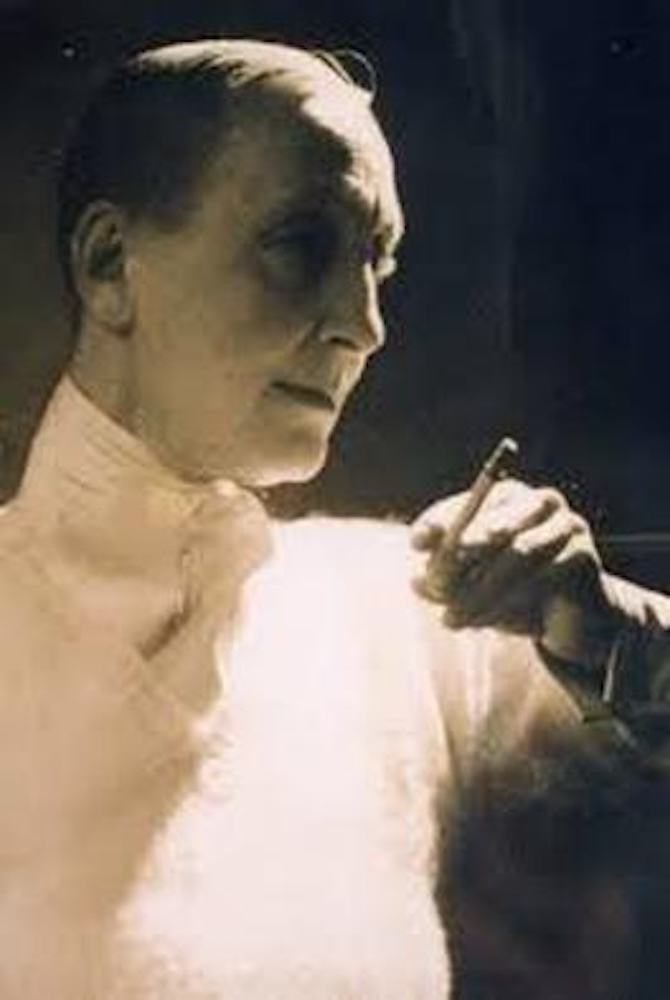
Marlow Moss
Marlow Moss

Abstraction-Création: Art non-figuratif  1932 Marlow Moss página #26

Traducción del del francés al español

Mi objetivo es introducir al público en el dominio del arte no figurativo, quiero limitarme aquí a una breve explicación de los razonamientos que me han llevado hacia esta nueva plástica.

Hasta hoy, la pintura ha empleado como medio de expresión las formas ya hechas por la naturaleza. Sin embargo, el objetivo del artista nunca ha sido simplemente dar una representación de estas formas. El artista se sentía atraído por las formas naturales porque, a pesar de la evidente mutabilidad de sus formas limitadas, parecían comunicarle una verdad inmutable y universal. Sin sentir la necesidad de profundizar en esta verdad, la aceptaba como un misterio.

Pero el pintor moderno ya no se contenta con este sentimiento de misterio. Sigue este razonamiento: si en efecto las formas naturales contienen un elemento de una verdad universal e inmutable, eso significa que estas formas están compuestas de dos elementos, es decir, un elemento cambiante en tanto que son formas visibles, y un elemento inmutable en tanto que pertenecen a esta verdad universal, que no es visible. Su verdadero valor no se encuentra, por lo tanto, en su forma visible, sino en la relación que existe entre esta forma y el universo. La tarea del hombre es, entonces, profundizar su conciencia del universo para poder establecer el equilibrio de relaciones que debe existir mutuamente entre estas formas visibles y lo invisible.

Una vez que ha formado una concepción mental del universo, ya no podrá servirse de las formas naturales para expresar esta concepción, porque estas formas naturales, siendo limitadas y teniendo solo un valor relativo, dan testimonio de esta verdad sin expresarla en su totalidad. El pintor ha sido, por lo tanto, obligado a crear una nueva plástica. He aquí lo que el arte no figurativo busca lograr. Quiere construir una plástica pura que pueda expresar en su totalidad la conciencia del artista hacia el universo.”

Análisis detallado del contenido:

  1. Contexto histórico y artístico:
    • El texto refleja las ideas centrales del movimiento arte no figurativo y abstracción, que floreció en las primeras décadas del siglo XX. Este movimiento buscaba romper con la tradición artística de representar formas naturales y, en su lugar, explorar formas puras, colores y líneas como medios de expresión.
    • El texto menciona explícitamente la necesidad de una “nueva plástica”, lo que sugiere una ruptura con el arte figurativo y una búsqueda de un lenguaje visual más abstracto y universal.
  2. Crítica a las formas naturales:
    • El autor argumenta que las formas naturales, aunque contienen una “verdad universal e inmutable”, son limitadas y no pueden expresar completamente la concepción del universo que el artista moderno busca transmitir.
    • Se plantea que las formas naturales tienen un valor relativo y que su verdadero significado no reside en su apariencia visible, sino en la relación entre lo visible y lo invisible (lo universal).
  3. La tarea del artista moderno:
    • El texto enfatiza que el artista moderno ya no se conforma con la representación de formas naturales ni con la aceptación pasiva de su misterio. En cambio, busca profundizar en su conciencia del universo y crear una nueva plástica que exprese esta comprensión.
    • Esto implica un proceso intelectual y espiritual, en el que el artista debe trascender lo visible para explorar lo invisible y universal.
  4. El arte no figurativo como solución:
    • El arte no figurativo se presenta como la respuesta a esta necesidad de expresar la totalidad de la conciencia del artista. En lugar de depender de formas naturales, el artista crea formas puras y abstractas que pueden comunicar directamente su visión del universo.
    • Este enfoque refleja la influencia de movimientos como el neoplasticismo (Mondrian) y el constructivismo, que buscaban eliminar lo superfluo y centrarse en elementos esenciales como líneas, planos y colores primarios.
  5. Filosofía subyacente:
    • El texto tiene un tono casi filosófico, explorando la relación entre lo visible y lo invisible, lo mutable y lo inmutable, y lo relativo y lo universal.
    • Esta reflexión sugiere una influencia de corrientes filosóficas y espirituales de la época, como el teosofía (que influyó en artistas como Kandinsky y Mondrian) y el idealismo platónico, que busca trascender lo material para alcanzar lo universal.
  6. Estilo y redacción:
    • El texto está escrito en un tono reflexivo y didáctico, dirigido a un público que quizás no está familiarizado con el arte no figurativo. Esto sugiere que podría ser parte de un manifiesto o un ensayo destinado a justificar y explicar el arte abstracto a un público más amplio.
    • La repetición de conceptos como “verdad universal”, “conciencia del universo” y “plástica pura” refuerza la idea de que el arte no figurativo no es solo un estilo, sino una búsqueda espiritual e intelectual.

En resumen: Este texto es un ejemplo fascinante de cómo los artistas y teóricos del arte no figurativo justificaban su ruptura con la tradición artística. No se trata solo de un cambio estético, sino de una búsqueda profunda de expresar lo universal y lo invisible a través de formas abstractas. Si bien Marlow Moss no es una figura ampliamente conocida, su reflexión encaja perfectamente en el contexto del movimiento Abstraction-Création y otros grupos de arte abstracto de la época.

Segunda parte

¿Marlow Moss atea?

Por que una persona no crea en el Dios inventado por la iglesia catolica, no quiere decir que esa persona es ateo

El texto que escribio Moss tiene resonancias filosóficas que pueden relacionarse con el pensamiento de Baruch Spinoza, particularmente con su obra “Ética demostrada según el orden geométrico”. Spinoza es conocido por su visión panteísta de Dios y el universo, donde Dios no es un ser trascendente separado del mundo, sino que es inmanente y se identifica con la naturaleza y el universo en su totalidad. Esta idea de una verdad universal e inmutable que subyace a lo visible tiene claros paralelos con el texto que analizamos.

Relación con Spinoza:

  1. Dios como sustancia infinita:
    • Spinoza define a Dios como la única sustancia infinita que abarca todo lo que existe. En el texto que compartiste, se habla de una “verdad universal e inmutable” que está presente en las formas naturales pero que trasciende lo visible. Esta idea de una verdad universal que subyace a lo visible puede verse como una expresión de la sustancia infinita de Spinoza, que es la base de todo lo que existe.
  2. Lo visible y lo invisible:
    • Spinoza distingue entre los modos finitos (las cosas particulares que vemos en el mundo) y la sustancia infinita (Dios o la naturaleza). En el texto, se habla de las formas naturales como algo limitado y mutable, mientras que la verdad universal es inmutable e invisible. Esto refleja la distinción spinoziana entre los modos finitos (lo visible) y la sustancia infinita (lo invisible).
  3. La tarea del ser humano:
    • Para Spinoza, el objetivo del ser humano es alcanzar un conocimiento racional de Dios (o la naturaleza) para vivir en armonía con ella. En el texto, se menciona que la tarea del artista es “profundizar su conciencia del universo” para establecer un equilibrio entre lo visible y lo invisible. Esto sugiere una búsqueda similar de comprensión y armonía con lo universal.
  4. La creación como expresión de lo universal:
    • Spinoza ve la creación no como un acto de un Dios personal, sino como la manifestación necesaria de la sustancia infinita. En el texto, el arte no figurativo se presenta como una forma de expresar la conciencia del artista hacia el universo, creando una “plástica pura” que trasciende las formas naturales. Esto puede interpretarse como una búsqueda de expresar lo universal (la sustancia infinita) a través del arte.

Análisis comparativo:

  • Spinoza:
    En la Ética, Spinoza argumenta que todo lo que existe es una manifestación de Dios (o la naturaleza). No hay una separación entre lo divino y lo mundano; todo es parte de una misma sustancia infinita. El ser humano, a través de la razón, puede llegar a comprender esta verdad y vivir en armonía con ella.
  • Texto sobre arte no figurativo:
    El texto argumenta que las formas naturales son limitadas y no pueden expresar completamente la verdad universal. El artista, al crear una “plástica pura”, busca expresar su conciencia del universo, trascendiendo lo visible para alcanzar lo invisible. Esto refleja una búsqueda similar de conexión con lo universal, aunque en el ámbito del arte.

Conclusión:

La conexión que haces entre el texto de Moss y el pensamiento de Spinoza es muy acertada. Ambos abordan la idea de una verdad universal que subyace a lo visible y proponen una búsqueda activa de comprensión y expresión de esta verdad. Mientras que Spinoza lo hace desde la filosofía y la razón, el texto lo aborda desde el arte y la creación plástica. Ambos comparten una visión del universo como un todo interconectado, donde lo visible y lo invisible están en constante relación.

How to Build an Art Portfolio

How to Build an Art Portfolio

How to Build an Art Portfolio

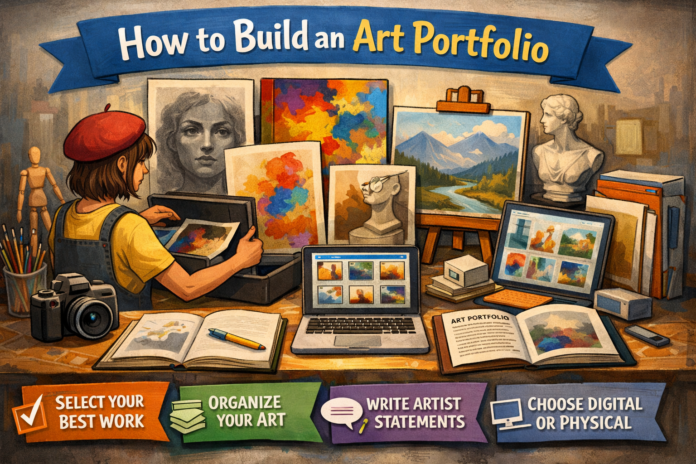
Creating an art portfolio is a critical step in any artist’s journey—whether you’re applying to art school, presenting your work to galleries, or attracting clients online. A well-crafted portfolio doesn’t just showcase your talent; it tells your story, communicates your style, and positions you as a serious creator.

In this guide, you’ll learn what an art portfolio is, why it matters, and how to build one step-by-step.

What Is an Art Portfolio?

An art portfolio is a curated collection of an artist’s best and most representative work. It demonstrates not only your technical skill but also your creative voice, consistency, and range. Portfolios can be physical (printed, mounted) or digital (PDF, website, slideshow), depending on the context and audience.

For students, it’s a requirement for most art school applications. For professional artists, it’s a marketing tool used to book exhibitions, sell work, or secure commissions.

Why a Strong Portfolio Matters (for College, Galleries, Clients)

A strong portfolio is more than just a visual resume—it’s your most powerful introduction.

  • For college admissions, it proves you’re ready for a rigorous creative program.
  • For galleries, it shows your potential for exhibitions and commercial viability.
  • For clients or collectors, it builds trust and communicates your value as an artist.

In all these scenarios, your portfolio helps decision-makers answer the question: Why should we invest in this artist?

Step-by-Step Guide

Select Your Best Work

Less is more. Choose 8 to 20 pieces that represent your highest level of skill, originality, and conceptual depth. Focus on work that is recent (typically within the past two years) and relevant to your current style or goals.

Avoid including unfinished or experimental work unless it’s requested as part of a process section.

Organize by Theme or Medium

Structure matters. You can group your portfolio in a few effective ways:

  • By theme or concept (e.g., identity, environment, memory)
  • By medium (painting, sculpture, digital, etc.)
  • Chronologically, if showing growth is important

The goal is to create a visual and narrative flow. Your work should feel connected, not like a random collection.

Write Artist Statements

For each major piece or project, include a brief artist statement (2–4 sentences). These should explain:

  • The idea or intention behind the work
  • The materials and process
  • Any influences or personal context

Keep the language clear and professional. You’re not trying to “sell” the piece—just invite the viewer into your world.

Choose the Right Format (Digital/Physical)

The format depends on your goal:

  • Art school or grant submissions may require a specific digital format (PDF, slide upload, etc.)
  • Gallery proposals often require both digital (email or website) and printed materials
  • Clients and online sales benefit from a professional website with a portfolio section

Always check submission guidelines before finalizing your format.

Common Mistakes to Avoid

  • Too many pieces: A cluttered portfolio weakens your impact.
  • Inconsistent quality: Including weaker work just to “fill space” lowers your credibility.
  • Poor photography: Blurry or badly lit images can make great art look unprofessional.
  • No context or explanation: Don’t assume the viewer will “just get it.”
  • Ignoring submission guidelines: Every institution or gallery has specific requirements—follow them exactly.

Expert Tips from Portfolio Reviewers

We asked portfolio reviewers and admissions counselors what they look for most:

  • Personal voice: They want to see what makes your work yours.
  • Conceptual depth: Strong portfolios go beyond technical skill.
  • Creative risks: Show that you’re not afraid to push boundaries.
  • Presentation: Professional formatting and consistency matter.

Final Checklist

Before you submit or share your portfolio, go through this checklist:

  • All work is high-quality and recent
  • Pieces are organized logically
  • Artist statements are clear and concise
  • Format meets the specific submission requirements
  • Work is professionally photographed or scanned
  • No typos or formatting issues
  • Final PDF or website looks polished and easy to navigate

A great portfolio takes time, reflection, and care. But when done well, it becomes more than a requirement—it becomes a statement of who you are as an artist and where you’re going next.

Tu marca personal en acción: presencia digital y proyección física

La Marca Personal: El Pilar del Mercadeo para el Artista Visual

Estrategias clave para posicionar tu marca personal en el mundo digital y físico

MUNDO DIGITAL

1. Sitio web profesional

  • Crea un portafolio online bien estructurado con biografía, statement artístico, obras, tienda (si aplica), contacto y eventos.
  • Optimiza para SEO con palabras clave relacionadas con tu estilo, técnicas y ubicación.

2. Presencia activa en redes sociales

  • Usa Instagram como galería visual, TikTok para mostrar procesos y YouTube para documentales o tutoriales.
  • Sé auténtico en tu narrativa: cuenta historias detrás de tus obras.

3. Blog o newsletter

  • Comparte reflexiones sobre arte, procesos creativos, exposiciones y temas culturales.
  • Mantén una base de seguidores comprometidos por correo electrónico.

4. Participación en plataformas de arte

  • Sube tu portafolio a Artsy, Saatchi Art, Behance, ArtStation, o similares.
  • Participa en concursos online o convocatorias internacionales.

5. Colaboraciones digitales

  • Alíate con diseñadores, marcas, escritores o músicos para proyectos interdisciplinarios.
  • Haz lives o entrevistas con otros artistas o curadores.

6. Reputación digital

  • Solicita reseñas, entrevistas o menciones en blogs de arte, revistas digitales y prensa cultural.
  • Comparte testimonios de compradores o coleccionistas.

MUNDO FÍSICO

1. Exposiciones y ferias

  • Participa en exposiciones individuales o colectivas, tanto en galerías como espacios alternativos.
  • Busca espacios no convencionales: cafés, hoteles boutique, centros culturales.

2. Networking y comunidad

  • Asiste a eventos culturales, inauguraciones, charlas o talleres donde puedas conectar con otros artistas, curadores y coleccionistas.
  • Crea tu propia red de contactos e invita a tu estudio (open studio).

3. Charlas y talleres

  • Ofrece talleres o charlas sobre tu técnica, proceso creativo o experiencias personales.
  • Esto te posiciona como experto y genera conexión emocional con el público.

4. Merchandising artístico

  • Crea productos con tus obras (prints, postales, libretas, camisetas).
  • Úsalos como elementos de difusión o venta en ferias y eventos.

5. Prensa local y alianzas culturales

  • Busca entrevistas o artículos en periódicos, radios y revistas locales.
  • Colabora con instituciones culturales, embajadas o colectivos artísticos.

6. Tarjetas de presentación y material impreso

  • Ten siempre tarjetas con diseño profesional y códigos QR a tu sitio o Instagram.
  • Crea catálogos físicos para mostrar en reuniones, ferias o presentaciones.

Consejo clave

Tu marca personal es la huella que dejas en la mente de los demás. Haz que sea coherente entre lo que muestras digitalmente y cómo te presentas en persona.

Art Supplies › Painting Supplies

Art Supplies › Painting Supplies

Art Supplies › Painting Supplies

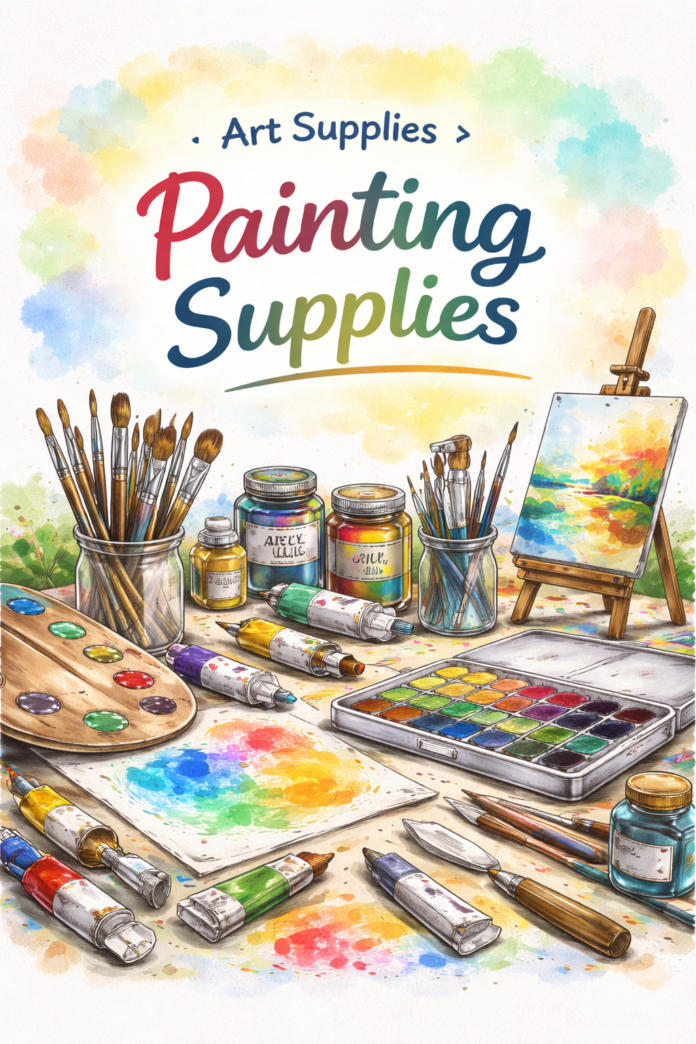
We offer an extensive selection of paints and painting tools for artists of all styles and skill levels. Whether you work in bold acrylics, delicate watercolors, traditional oils, or experimental mixed media, you’ll find high-quality materials that support your creative vision — all at great prices.

Acrylic Aisle
Acrylic paints are among the most versatile and widely used mediums in contemporary art. Their fast-drying nature allows artists to layer quickly, experiment freely, and achieve effects ranging from bold, opaque strokes to delicate, transparent washes. Acrylics can be mixed with gels and mediums to mimic watercolor, thick impasto textures, or even oil-like richness, making them ideal for both beginners and professionals.

Oil Aisle
Oil paint has been favored by the masters for centuries due to its luminous color, rich texture, and long working time. Oils allow artists to blend seamlessly, create depth through glazing techniques, and achieve a wide array of expressive effects. Our Oil Aisle offers a curated range of pigments and formulations suitable for everyone — from novices exploring traditional painting to seasoned professionals.

Browse All Oil Aisle
Explore our full oil painting collection, including student-grade sets, professional pigment lines, mediums, solvents, and varnishes. Designed to guide you through every stage of oil painting, from underpainting to final finish.

Watercolor Paints and Supplies
Watercolor painting is admired for its luminous transparency and spontaneous character. Success with watercolors depends heavily on quality paints and paper, as well as the right brushes and tools. We carry finely graded watercolor sets, premium tubes, professional papers, and essential accessories to help you master this expressive and rewarding medium.

Tempera Paints
Tempera is a fast-drying, water-based paint traditionally made from pigment mixed with a natural binder like egg yolk. It produces matte, vibrant colors and is excellent for school projects or artists exploring historical painting techniques. Tempera is easy to use, non-toxic, and ideal for bold, illustrative styles.

Casein Aisle
Casein paint, derived from milk protein, sits between watercolor and acrylic in texture and behavior. It dries to a matte, velvety finish and can be reactivated with water even after drying. This medium is excellent for expressive layering and quick studies, especially for artists seeking something distinct from traditional paints.

Airbrush Supplies
Whether you’re creating smooth gradients, fine details, or special effects, airbrush tools broaden your creative possibilities. This aisle includes compressors, airbrush guns, cleaning kits, masking materials, and specialized paints formulated for precision and professional results.

Gouache Aisle
Gouache is similar to watercolor but with higher pigment opacity, allowing artists to paint vibrant, flat areas of color. It’s beloved by illustrators, designers, and painters who appreciate its bold matte finish. Our selection includes student and professional grades perfect for classroom projects and fine art.

Enamel Paints
Enamel paints dry to a durable, glossy finish and are often used for models, crafts, signage, and industrial applications. They resist wear and moisture and are ideal for projects requiring hard, resilient color.

Spray Painting
From street art to automotive finishes, spray paints offer quick coverage and dynamic effects. This section covers a wide variety of aerosols in vibrant colors, primers, sealers, and specialty finishes — perfect for artists, designers, and creative makers.

Screenprinting Inks
Designed for use with mesh screens and stencils, screenprinting inks allow you to transfer bold images onto paper, fabric, posters, and more. Our inks deliver strong color payoff and excellent adhesion, whether you’re printing small editions or larger projects.

Artist Canvas and Painting Surfaces
The foundation of your artwork matters. Choose from stretched canvases, canvas panels, paper pads, and boards in a range of textures and weights. From smooth primed surfaces to heavy textile textures, find the perfect foundation for your chosen medium.

Brush Aisle
High-quality brushes are essential to bringing your artistic vision to life. Our Brush Aisle includes natural and synthetic bristles in a variety of shapes — rounds, flats, filberts, fans, and more — tailored for use with different paints and techniques.

Painting Accessories
Enhance your workflow with tools that make painting easier and more enjoyable. This includes palettes, palette knives, mixing trays, water containers, masking tape, mahl sticks, gloves, and more — all designed to help you focus on creativity.

Art Storage and Organization
Keep your creative space neat and functional. Our storage solutions range from brush holders and paint racks to portfolio cases and supply organizers, ensuring your tools are protected, accessible, and well-organized.

Easels & Furniture
Work comfortably and confidently with our selection of easels and furniture for studios, classrooms, and home spaces. Choose from tabletop easels, A-frame models, H-frames, and portable designs that support both lightweight and heavy panels.

The Enduring Art of Fiber: From Ancient Craft to Contemporary Expression

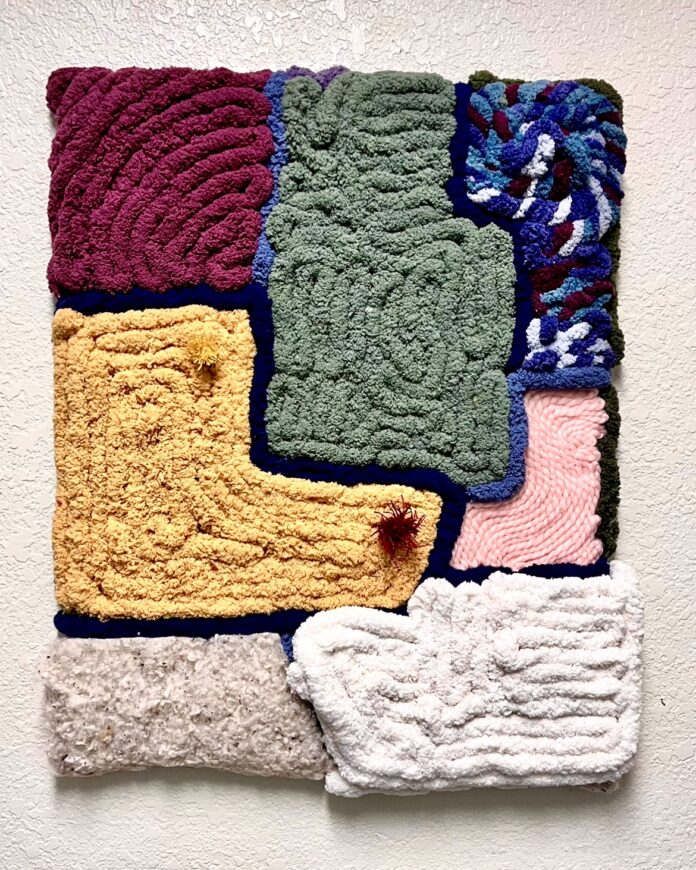
Rafael Montilla textile
The Enduring Art of Fiber: From Ancient Craft to Contemporary Expression

The Enduring Art of Fiber: From Ancient Craft to Contemporary Expression

In an age dominated by digital screens and mass production, fiber arts stand as a powerful reminder of humanity’s deep connection to materials, touch, and the transformative potential of skilled hands. Fiber arts use natural or synthetic fibers like yarn, thread, and fabric to create art, encompassing traditional crafts like knitting, weaving, crochet, quilting, embroidery, and macrame alongside contemporary sculptural and installation art, focusing on materials and skilled handwork to create aesthetic pieces, ranging from functional items to complex, expressive artworks.

This vast artistic territory—at once ancient and urgently contemporary—invites us to reconsider the boundaries between craft and fine art, utility and beauty, tradition and innovation.

Understanding Fiber Arts: A Diverse Landscape

At its core, fiber art involves the manipulation of flexible materials through various techniques to create objects of aesthetic and often functional value. What distinguishes fiber art from mere textile production is intention—the artist’s conscious decision to use fiber as a medium for creative expression, much as a painter chooses oils or a sculptor selects bronze.

The materials themselves vary enormously. Natural fibers—cotton, wool, silk, linen, jute—carry centuries of human history in their very substance. Synthetic fibers—polyester, nylon, acrylic—offer different properties: durability, color vibrancy, weather resistance. Contemporary fiber artists often blend both, creating hybrid works that honor tradition while embracing modernity’s possibilities.

Types of Fiber Art Techniques

The technical vocabulary of fiber arts is as rich and varied as the works themselves. Each technique offers distinct aesthetic possibilities and requires specific skills developed over years of practice.

Weaving forms the foundation of textile creation, involving the interlacing of threads on a loom to create fabric. The warp threads run vertically, held under tension, while weft threads pass horizontally over and under them. This ancient technique can produce everything from simple plain weaves to complex patterns incorporating multiple colors and textures. Contemporary weavers push beyond traditional flat cloth, creating three-dimensional sculptural forms and experimental structures that challenge our assumptions about what weaving can be.

Knitting and crochet both involve looping yarn with needles or hooks to form fabric, but they achieve different results through distinct methods. Knitting typically uses two needles and creates a fabric with multiple active loops, while crochet uses a single hook and completes each stitch individually. These techniques, long associated with domestic craft, have been reclaimed by artists who create everything from delicate lace to massive public installations. The inherent flexibility of knitted and crocheted fabric allows artists to create organic, flowing forms impossible in more rigid mediums.

Quilting involves stitching together layers of fabric, traditionally combining a decorative top, batting for warmth, and a backing. While quilts serve practical purposes, they’ve long carried artistic and cultural significance. From the geometric precision of Amish quilts to the narrative complexity of African American story quilts, this technique combines color theory, composition, and skilled needlework. Contemporary quilters treat fabric as their palette, creating abstract compositions and representational images that rival painting in sophistication.

Embroidery decorates fabric with needle and thread, adding texture, color, and imagery to a base material. Techniques range from simple running stitches to elaborate silk thread paintings that require thousands of hours to complete. Embroidery’s versatility makes it perfect for both traditional folk art preservation and contemporary conceptual work. Artists use embroidery to subvert expectations, adding delicate stitching to unexpected materials or using thread to write text that comments on gender, labor, or domesticity.

Felting creates fabric by matting fibers together, often with heat and moisture, without weaving or knitting. Wool is the traditional fiber for felting, as its microscopic scales interlock when agitated in hot water. The technique produces dense, warm fabric that can be shaped three-dimensionally. Contemporary artists exploit felting’s sculptural possibilities, creating everything from lifelike animals to abstract forms that seem to grow organically from the fiber itself.

Macrame involves knotting cords or yarns into decorative patterns. This ancient technique experienced a revival in the 1970s and has returned again in recent years. Beyond the hanging planters and wall hangings that popularized macrame, artists use knotting techniques to create intricate sculptural works, jewelry, and large-scale installations. The rhythm of repetitive knotting produces meditative, organic patterns that can be both structured and free-flowing.

Basketry weaves natural fibers into vessels, using materials like willow, reed, grass, and bark. One of humanity’s oldest crafts, basketry combines functionality with beauty. Contemporary basket makers expand traditional forms, creating sculptures that maintain the coiling, twining, or plaiting techniques of traditional basketry while serving purely aesthetic purposes. The natural materials connect these works to landscape and season, carrying the colors and textures of the plants from which they’re made.

Tapestry creates decorative woven wall hangings, typically featuring images or patterns. Unlike other weaving where weft threads run continuously across the warp, tapestry weaving builds up areas of color separately, like painting with thread. Medieval European tapestries told elaborate stories in wool and silk; contemporary tapestry artists continue this narrative tradition while also exploring abstraction, creating works that blur the line between weaving and painting.

Forms of Fiber Art: Beyond the Traditional

The ways fiber art manifests in our world extend far beyond the expected.

Wearable art transforms apparel, jewelry, and accessories into artistic statements. These pieces challenge fashion’s commercial imperatives, prioritizing creative expression over mass appeal or conventional beauty. A fiber artist might create a dress from hand-dyed silk that functions as sculpture, or knit jewelry that pushes the boundaries of what counts as adornment. Wearable art exists in the intersection between body, craft, and gallery, making the wearer a collaborator in displaying the work.

Fiber sculpture creates three-dimensional works using fiber techniques, liberating these methods from flat surfaces. Artists might crochet life-sized figures, felt abstract forms, or weave architectural structures. These sculptures possess a softness and flexibility that distinguishes them from metal or stone, inviting touch even when museums forbid it. The tactile quality of fiber sculpture creates an intimacy rarely found in other sculptural mediums.

Installations incorporate fiber art into large-scale works that transform entire spaces. These ambitious projects might fill rooms with suspended threads, creating environments viewers walk through, or wrap buildings in knitted fabric, temporarily softening urban hardness. Fiber installations often involve community participation, with dozens or hundreds of people contributing to collaborative works that express collective identity.

Wall and floor art—including tapestries, rugs, and quilts—occupies the traditional territory of fiber arts while increasingly claiming space in contemporary galleries. These works challenge the hierarchy that privileges painting and sculpture, asking why thread on canvas should be valued differently than paint on canvas. Contemporary artists create wall hangings that incorporate found materials, personal artifacts, and unconventional techniques, pushing the boundaries of what tapestry or textile art can mean.

The Significance of Fiber Arts Today

In the 21st century, fiber arts carry meanings and fulfill functions that extend far beyond decoration or utility.

Bridging craft and fine art remains one of fiber arts’ most important contributions to contemporary culture. For too long, the art world dismissed fiber arts as “craft”—implying something lesser, more domestic, more feminine than “real” art. This hierarchy reflected gendered assumptions about value, with techniques associated with women’s domestic labor considered inferior to male-dominated painting and sculpture. Contemporary fiber artists have fought to elevate traditional techniques beyond pure utility into expressive art, securing places in major museums and commanding serious critical attention. This shift benefits all artists by questioning arbitrary hierarchies and expanding what counts as legitimate artistic practice.

Storytelling through fiber carries particular power. Textiles can carry deep cultural, emotional, and personal messages in ways that feel both universal and intimate. Consider how quilts have documented African American history, preserved family memories, and protested social injustice. Think of how Hmong story cloths record refugee experiences, how AIDS memorial quilts commemorate lives lost, how political banners mobilize movements. Fiber’s association with home, body, and care gives these works emotional resonance that more “prestigious” mediums sometimes lack. When an artist embroiders text onto fabric, the painstaking labor of stitching each letter becomes part of the message—the time invested embodies commitment to the words themselves.

Material focus distinguishes fiber arts from other mediums by emphasizing the tactile quality and manual labor involved. In fiber art, the process remains visible in the finished work. You can see the individual knots in macrame, trace the path of thread in embroidery, understand how a basket was constructed by examining it. This transparency of technique invites appreciation of skill and labor in ways that smooth, finished surfaces do not. Every fiber artwork bears witness to the hours—sometimes thousands of hours—invested in its creation. In our age of instant digital reproduction, this slow making carries countercultural weight, insisting that some things of value cannot be rushed or mechanized.

The Therapeutic and Meditative Dimensions

Beyond their aesthetic and cultural significance, fiber arts offer therapeutic benefits increasingly recognized in healthcare and wellness contexts. The repetitive motions of knitting, the focused attention of embroidery, the problem-solving of weaving—all produce meditative states that reduce anxiety and promote wellbeing. Occupational therapists use fiber techniques to rebuild fine motor skills; psychiatrists recommend them for stress management; community centers teach them as tools for social connection.

This therapeutic dimension doesn’t diminish fiber arts’ artistic legitimacy—rather, it demonstrates how art can serve multiple functions simultaneously. A piece can be technically accomplished, aesthetically sophisticated, culturally meaningful, and personally healing all at once.

Looking Forward: Fiber Arts in the Future

As we move further into the 21st century, fiber arts continue evolving. Artists experiment with smart textiles incorporating electronics, creating works that respond to touch, light, or sound. Others address environmental concerns, using only natural dyes and biodegradable fibers or creating works from ocean plastic and recycled materials. Digital technologies like computerized looms and laser cutting expand what’s possible while raising questions about the role of handwork in defining fiber arts.

Yet even as techniques expand, the fundamental appeal of fiber arts remains constant: the human need to create with our hands, to transform raw materials into objects of beauty, to leave something behind that bears the mark of our presence and care.

Conclusion: The Thread That Connects Us

Fiber arts remind us that we are makers, that our hands possess intelligence, that beauty can emerge from patient, repetitive labor. They connect us to ancestors who spun and wove, to communities that gather to quilt, to strangers whose textiles tell stories we need to hear. In a world that increasingly feels untethered and ephemeral, fiber arts ground us in materiality, in skill, in the satisfying weight of something well-made.

Whether creating a simple scarf or a complex installation, working in centuries-old techniques or inventing new ones, fiber artists participate in humanity’s oldest creative impulse: taking something flexible and formless and, through skill and vision, making it into something that matters. Thread by thread, knot by knot, stitch by stitch—this is how we weave meaning into our lives, how we create beauty from chaos, how we remain, fundamentally and gloriously, human.

Page 33 of 275
1 31 32 33 34 35 275

Recent Posts