AR7SEVEN ABRE LA PRIMRA EXPOSICIÓN DE ARTE PRESENCIAL CON CUIDADOS DE BIOSEGURIDAD
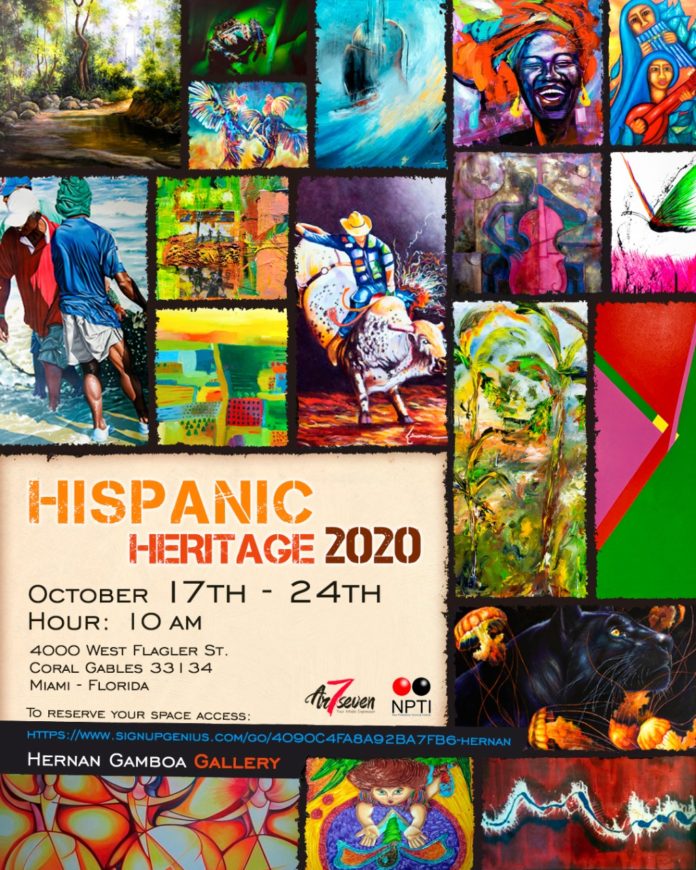
Hernán Gamboa Gallery, recibirá las obras de los 16 artistas plásticos latinoamericanos que conforman el colectivo Ar7seven quienes con este evento se disponen a celebrar el MES DE LA HISPANIDAD.
Más de 16 obras, que también se podrán apreciar de manera virtual en www.ar7seven.com tendrá esta exposición, la primera de carácter presencial que este importante colectivo desarrolla en medio de la pandemia, la cual contará con los más estrictos controles de bioseguridad.
Gamboa Gallery ubicada en 4000 West Flagler St. Coral Gables 33134, abrirá sus puertas a la exposición el 17 de octubre a partir de las 10:00 am e irá hasta el próximo 24 de octubre, con entrada libre de costo. Se requiere reservar su espacio, ya que, habrá cinco (5) espacios disponibles por hora para visitar la exposición. Para reservar su espacio puede accesar el siguiente enlace: https://www.signupgenius.com/go/4090C4FA8A92BA7FB6-hernan
Miami, FL. El importante colectivo Latinoamericano Ar7seven compuesto por 16 artistas plásticos inicia su ciclo de exposiciones presenciales de este año con Hispanic Heritage 2020, un evento diseñado para conmemorar con arte el Mes de la Hispanidad, que tradicionalmente celebra la comunidad hispana en USA. Según Dolly Delgado Belalcazar, Directora Ejecutiva de Ar7seven “ninguna pandemia o evento desafortunado de la humanidad podrá apagar al arte, es la única expresión que trasciende a pesar de cualquier circunstancia desafortunada que esté ocurriendo en la vida. Durante este año, dadas las circunstancias, hemos desarrollado solo exposiciones y eventos virtuales, ya, en esta instancia de la pandemia, estudiamos la posibilidad que el público pueda apreciar las obras de nuestros artistas de manera directa y Hernán Gamboa Gallery nos abrió las puertas” afirmó la Gestora Cultural. Ar7seven lleva 4 años desarrollando giras culturales en los Estados Unidos, inicialmente sólo con artistas colombianos, ya que ese es el país originario de este movimiento, pero con el transcurrir del tiempo, artistas plásticos de otros países de Latinoamérica y Estados Unidos se fueron vinculando al colectivo y en este momento también se cuenta con talento de: Venezuela, México, Cuba, Chile, Perú, Guatemala y Estados Unidos.
¿Quiénes son los artistas de Ar7seven?
COLOMBIA: Carlos David Pérez Bolaños, artista cartagenero egresado de la Escuela de Bellas Artes de la misma ciudad. Es un artista que plasma su esencia Caribe y todas sus multiculturalidades, sus obras están llenas de color, propios de su región y aborda en ellas temáticas basadas en sus costumbres y en su gente alegre, espontánea y pujante. Estudió en la
Institución Universitaria Bellas Artes y Ciencias de Bolívar.
MÉXICO: Katya Du Pond nació en la Ciudad de México, estudió en la Facultad de Bellas Artes de la Universidad Autónoma de Querétaro donde se especializó en Artes Visuales, y culminó sus estudios en el Instituto de Arte de la ciudad de Houston como Diseñadora de Interiores, ampliando así, su pasión por el color.
COLOMBIA: María Claudia Saavedra artista plástica colombiana, nacida en Medellín, ciudad donde está radicada. Es economista de la Universidad de Antioquia y Doctora en Ciencias Económicas de la Universidad Autónoma de Barcelona UAB. En el trabajo pictórico ha explorado principalmente temas de la naturaleza con una permanente búsqueda de las relaciones entre espacio, forma y color.
CUBA: Lilivet Peña Echemendía, nació el 24 de agosto de 1984, en la Ciudad de Camagüey Cuba. Desde los cuatro años su madre la incorporó en talleres de Artes Plásticas. Estudió en la Secundaria Básica Urbana “Mártires de Camagüey”, obteniendo excelentes resultados que le permitieron estar
entre los primeros expedientes. Al llegar al noveno grado, con un promedio de 100, optó por el IPVCE “Máximo Gómez Báez”; y se presentó, además, a los exámenes de Artes Plásticas de la Academia “Vicentina de la Torre”, siendo aceptada en ambas instituciones.
CHILE: Nadra Jacob, Nació en la ciudad de Santiago de Chile en 1970. Se interesó en las artes desde muy temprana edad, siendo autodidacta desde los 12 años, sin embargo, inició sus estudios de arte en el año 1998 tomando clases particulares con varios profesores de dibujo. Más tarde, realizó
estudios en Figura Humana Avanzado en la Pontificia Universidad Católica de Chile, donde a su vez, fue Diplomada de Estudios en Arte,
COLOMBIA: Guillermo Romero. Artista Plástico, nació en Bogotá el 6 de enero de 1958. Se inició como pintor en el año de 1985 en Buenos Aires, Argentina, donde realizó sus primeros bosquejos y aprendió la técnica de la acuarela con la acuarelista Inés Rotenberg Romero.
COLOMBIA: Eibar Castillo. Artista plástico nacido en el Municipio de Tumaco, Departamento de Nariño República de Colombia. Cursó estudios de Artes Plásticas en el Instituto Popular de Cultura (IPC), Cali, Colombia. En 1979, empezó su ejercicio en la pintura ocupando el tiempo “libre” que le
dejara su condición de obrero en una factoría (fábrica) donde pasó 30 años sobreviviendo a tan larga noche de alienación condicionada.
COLOMBIA: Salvador Blanco. Su pasión por el arte nació a muy temprana edad en la Escuela de Bellas Artes de la ciudad de Barranquilla. Más tarde, mientras realizaba sus estudios universitarios, buscó emular en un principio las pinturas de su difunto padre, quien también fue artista, Salvador Leary, a medida que se iba desempeñando en su carrera como publicista y en el arte, fue creando su propia obra que en ocasiones mezcla textura, ensamblaje y texto.
COLOMBIA: Oscar Sir Avendaño. Artista colombiano que permanentemente incursiona en la técnica de la pintura, con el compromiso de apropiarse del quehacer diario, el acontecimiento que de sol a sol hace transcurrir la vida, aquí las formas según su identificación se varían a estados anímicos del artista.
GUATEMALA: Nitrous Beto. Es uno de los artistas y poetas que proviene de una familia humilde y que siempre se distingue por su escancia de un gran ser humano que defiende sus orígenes, todos sus logros son el resultado de la vivencia e historia en que ha crecido y vivido con su familia. Sus
obras han sido una representación e interpretación de momentos y aprendizajes que ha tenido en su andar.
COLOMBIA: Joaquín López de la Ossa. De San Luis pasó a Sincelejo donde ingresó al Instituto Técnico Industrial Antonio Prieto, allí conoció al Maestro Ramiro Blanco, personaje que encausaría su pasión por las artes, alentándolo al aprendizaje formal. En 1991 se alzó con el Premio Alejandro
Obregón en la Categoría Juvenil, al Mejor Pintor del Departamento de Sucre, galardón auspiciado por el Consulado de Francia. En aquella oportunidad presentó la obra “Lo que no pensó descubrir Colón”.
COLOMBIA: Jorge Luis Pantoja Miranda. Ingeniero Electrónico de la Universidad del Norte y Fotógrafo de la Alianza Francesa, nacido en Barranquilla en 1984, recibe desde su infancia una fuerte influencia familiar en las Artes Plásticas;
COLOMBIA: Diego Céspedes. El Artista Plástico durante sus estudios universitarios amplió sus espectros artísticos anclado al mundo bidimensional (grabado, pintura y dibujo), estudiando movimientos artísticos tales como, el Impresionismo y los Románticos.
COLOMBIA: Patricia Amaya. Esta bogotana se crió en Valledupar donde compartió en el colegio con otros niños muy especiales: indígenas Kogis y Arahuacos. También viajó a La Guajira donde estuvo vinculada con la cultura Wayuú, de ahí nace su inspiración en cada una de sus pinturas.
MEXICO: David Triano. Nace en Cuernavaca, Morelos en 1963, radicado en Xalapa, Veracruz. Licenciatura en Artes con mención honorífica. Expone individual y colectivamente en diversos lugares desde 1985, principalmente en Veracruz, Xalapa, México-España Cancún, Puebla; expuso en
el Instituto de Antropología de la Universidad Veracruzana dentro del marco del 5to Congreso Internacional de Mayistas, presentando una serie de reproducciones con técnica “al fresco” de fragmentos murales de la zona maya y en el 2do y 3er Salón de la Plástica en el Ágora de la ciudad.
VENEZUELA: Pedro Javier Linares. Nacido el 4 de marzo de 1962, desde muy pequeño sintió inclinaciones hacia el mundo del arte, una enfermedad limitó su andar con sus piernas, pero jamás sus sueños y brindar sus dones los cuales, perfeccionó en la Escuela de Artes Plásticas Martín Tovar
y Tovar en Barquisimeto.
VENEZUELA: Artista Visual Multidisciplinario, nacido en Caracas Venezuela. Estudio en la Escuela Técnica de Artes Visuales Cristóbal Rojas, Escuela Taller Arte Fuego Cándido Millán y Escultura en el Museo de Arte Contemporáneo de Caracas Sofía Imber. Tomas Regalado, Alcalde de la Ciudad de Miami proclamó el 19 de agosto de 2016 como el Día del Artista Rafael Montilla.
CONTACTO: Dolly Delgado Belalcazar
Directora Ejecutiva
Ar7seven, S.A.S.
832-923-9502
[email protected]