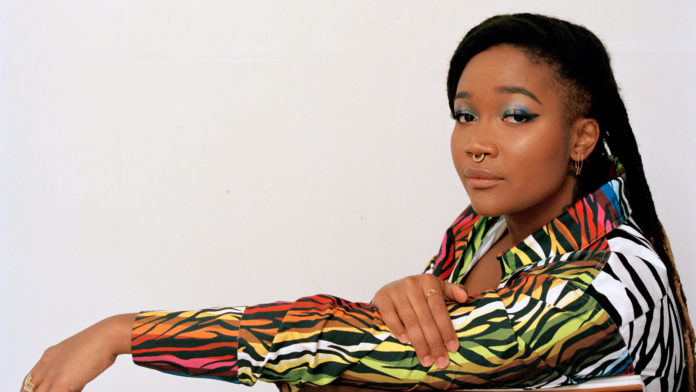
Kimberly Drew (a.k.a. @museummammy) is a writer, curator, and activist with a passion for innovation in art, fashion, and cultural studies. Drew received her B.A. from Smith College in Art History and African-American Studies, with a concentration in Museum Studies. An avid proponent of black spaces, Drew first experienced the art world as an intern in the Director’s Office of The Studio Museum in Harlem. Her time at the Studio Museum inspired her to start the Tumblr blog Black Contemporary Art, sparking her interest in social media.
Since starting her blog, Drew has worked for Hyperallergic, The Studio Museum in Harlem, and Lehmann Maupin. She has delivered lectures and participated in panel discussions at the New Museum, Art Basel, Moogfest, The Schomburg Center for Research in Black Culture, and the Brooklyn Museum. Her writing has appeared in Glamour, W, Teen Vogue, and Lenny Letter. She also serves as a board member for Recess Activities, Inc.
Drew is currently the Social Media Manager at The Met, was honored by AIR Gallery as the recipient of their inaugural Feminist Curator Award, was selected as one of the YBCA100 by the Yerba Buena Center for the Arts, and selected as one of Brooklyn Magazine’s Brooklyn 100. You can follow her at @museummammy on Instagram and Twitter.
Kimberly Drew is an American art curator and writer. She is best known as the former social media manager for the Metropolitan Museum of Art and her use of the social media handle MuseumMammy. Drew released her first book, This Is What I Know About Art in June 2020. Wikipedia
The Neo-Domesticity Performance Art Festival is a 100 hour happening showcasing 35 immersive performances at the hybrid-domestic sphere of Glasshouse in Brooklyn. The festival features original works by mid-career and emerging performance artists across disciplines, including theater, dance, literature, and visual art, spread throughout the gallery space of Glasshouse in Brooklyn, which celebrates in 2017 its 10th season.
Taking place in a domestic environment, the festival aims at the intimate/intimidating experience of home. Works take varied time/space forms: some performances are durational and stretch in time and space or share a room with other performances; others are limited in time or confined to a small cell; while others are allowed to wander around the house, or create micro-environments of their own (by curating their own performance works). The program strives to create a dynamic landscape that fulfills contradicting features of the domestic sphere: nomadic and static, exhibitionist and intimate, public and private, host and guest, etc.
The term NEO DOMESTICITY was coined by artist Lital Dotan in 2013 alongside a manifesto that described Glasshouse and several other art spaces in Brooklyn. It refers to a form of performance that is rooted in the daily life of the artist and becomes a hub for the performance community, bypassing the mediation of established art institutions. NEO DOMESTICITY art centers re-define the domestic settings and allow the artists to engage directly with their audiences and explore mechanisms of sustainable practices – rather than “out of the ordinary” singular acts. These performance acts undermine the private/public dichotomy and question gendered artistic hierarchies as well as economic and political interests that keep performance works away from museums and galleries.
Dotan’s survey ‘A Performance Ecology In NY’ was published by TAR Magazine in 2015.
Glasshouse is the art-life-lab of artist Lital Dotan & photographer Eyal Perry, hosting artistic practices that are based on immersive performance & participatory art in the domestic sphere. Founded in 2007 and operating in Brooklyn since 2012 Glasshouse hosts performances, exhibitions, residency program and festivals, all dedicated to promote deeper understanding of performative practices and discourse.
Performance Schedule
Wednesday, June 21
Beginning 6pm–‘Unsee’ by H.A.M + Ntilit (3h) | ‘Ulysses’ by Simla Civelek (15h+)| ‘Cake Table’ by Miguel Olivares (edible installation)
Beginning 9pm– ‘Chasm‘ by Rebecca Patek (9h) | ‘OLVIDO: of things past and the future present’ by Hector Canonge (3h) | ‘UNTITLED (the purification bath)’ by Michael Freeman (3h)
Thursday, June 22
Beginning 9am– ‘Hangers 101’ by Marie Christine Katz (12h)
Beginning 12pm– ‘At Her Feet’ by Rae Goodwin (6h) | ‘Dr. Mira’ by Mira Treatman (3h)
Beginning 6pm– ‘The Linden Cycle’ by Ethan Primason, Roxy Gordon, Nick Nazmi & Dexter Dine (3h) | ‘Black+Decker’ by Leah Aron (6h) | ‘Comfort Able’ by Barbara Ann Michaels (3h)
Beginning 9pm– ‘725’ by Miao Jiaxin (3h) | ‘Cavern’ by Camila Caneque (3h) | ‘Tyranny’ by Jill McDermid (3h)
Friday, June 23, 2017
Beginning 12am– ‘Constant Vigilance/Our Social Eye(s)’ by Panoply Performance Laboratory- Kaia Gilje, Anaïs Maviel, Lorene Bouboushian, Brian McCorkle, and Esther Neff (12h)
Beginning 12pm– ‘Hot Consumer Trash’ by Andrew Braddock, Alex Chellet, Raquel Mavecq, Antonio Ramos, Isa Frost and Alex Romania (3h)
Beginning 3pm– Experimental music show organized by Lathan Hardy (3h) | ‘The Push and Pull of Proximity’ by Django Voris (3h)
Beginning 6pm– ‘The Substance of Heaven’ by Veronica Pena (6h) |‘Self, Exhibition’ by Scears Lee (24h)
Saturday, June 24, 2017
Beginning 12pm– ‘Foreclosure’ by Joseph Ravens (3h)
Beginning 6pm– Homage to Carolee Schneemann: Mia Schachter (3h)| Arantxa Araujo (3h) | Siw Laurent (3h) | Suzan D. Polat (3h)
Beginning 9pm– Silent House Party with Dj Django Voris (3h)
Sunday, June 25, 2017
Beginning 12am– Performance To A Sleeping Audience by Lital Dotan (6h)
Beginning 6am– ‘Morgenstund hat Gold Im Mund’ A Dawn Performance by Sindy Butz (3h)
Beginning 9am– Movement performance workshop by Stacy Lynn Smithabout:blankREPORT THIS AD
Beginning 12pm– ‘Dr. Mira’ by Mira Treatman | ‘Day In the Life of A Cyborg Monkey’ by Alizarin & Kai | Felix Morello
Beginning 3pm– ‘Post Wor(l)ds’ Literary performance organized by Hanan Elstein
Beginning 6pm– ‘Baking Bobby’ by Anya Liftig (3h)| ‘Widow’ by Jil Guyon (3h)| ‘Undone’ by Katya Grokhovsky (3h)
Closing act– Cleaning The House
THE NEO DOMESTICITY MANIFESTO:
Applied utopia; Cleaning the house is an artistic practice; art and life sustainability = durationality.
Sustaining our life = sustaining our art; Art should be experienced at place that allows staying.
This is a (flux) community generation; Not your bourgeoisie dream; Our home is not a fortress.
We value our independence; No prizes for life= no prizes for art.
Neo Domesticity is a laboratory; We collect empiric truths; No mediators.
Neo Domesticities is (in) movement; Temporary-Autonomous-Zone; A repeated duet of private and public; Time based dynamic interiors.
We avoid encounters with real/estate authorities; Genuine Hospital/ity; Hosting is an artistic practice.
Have some soup
-The above is a manifesto created for the first ‘Neo Domesticity Roundtable’ hosted in 2013 at Glasshouse-
Glasshouse is the art-life-lab of artists Lital Dotan & Eyal Perry, hosting artistic practices that are based on performance, participation and time based art in the domestic sphere; dedicated to promote deeper understanding of performative practices and discourse. Glasshouse is liquid. Have some soup.
BRENDAN MURPHYTO REVEAL NEW ART CREATIONS AT CONTESSA GALLERY EXHIBITION, FOR ART MIAMI, 2020!
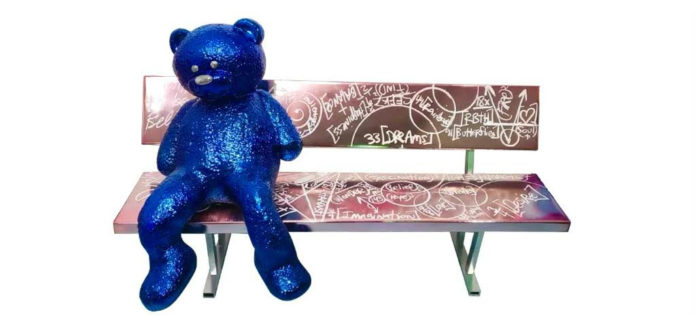
Huggy Bear’ – Brendan Murphy American painter, sculptor and creator Brendan Murphy will reveal his newest works for Contessa Gallery [In partnership with Artsy] exhibition during this year’s virtual edition of Art Miami, from December 2nd – 20th.Art lovers can join into the virtual exhibition via the online viewing rooms.
Best known for his Spaceman sculptures, Brendan Murphy’s annual tradition is to reveal his fresh art creations during Art Miami; the leading global platform connecting collectors, galleries and artists. Although this year is a virtual experience, expect to be impressed with what’s to be revealed. ‘Mamba‘ is a 42″ tall sculpture of the late and loved Kobe Bryant, ‘Huggy Bear‘ is a carbon fibreglass bear with 8 layered chrome painting, sitting on a custom made bench, ‘I Want‘ is a hand crafted steel with 8 layer silver based painting, flock interior and custom light fixtures. You could say that these pieces represent the journey of 2020. The great loss of Kobe Bryant united the world, and opened people’s hearts, ‘Huggy Bear‘ could represent pandemic isolation, inner work, and personal growth, and ‘I Want‘ can remind us to be grateful for everything we already have…25 new creations will be on display in the exhibition.
“The end of each year is kind of the beginning of the art “season.” This year will be a lot different but nonetheless I have been working on some new concepts and always enjoy unveiling them at Contessa Gallery during Art Miami week!” – Brendan Murphy
Charged with colour, emotion and the excitement of limitless boundaries, Brendan’s work invites art-collectors on a journey into his brain and their own minds. His focus is simple—to create art that transports people into the moment. This philosophy, and Brendan’s creations, centre around the fact that this ‘moment’ can differ for each and every individual. As a master creative brain and, simultaneously, an everyday father and husband, his innate, personal simplicity is what makes him one of the most innovative artists of our time, but also what makes his works some of the most complex of the decade. The capacity to which Brendan is able to produce artistic works is a distinguishing factor in his illustrious career. His commitment to craftsmanship, fine materials and precise technique are world-renowned, with his works found across the globe through his gallery network that includes Miami, Palm Beach, Santa Monica, Cleveland, Monaco, Montreal, and Toronto “As a Gallerist – we are known in the art-world for having an uncanny ability to spot artists on their ascension to their mature style and the rising tide of their career. It has been with great pleasure and a profound sense of pride to have helped Brendan in this pursuit and have our collectors participating in that journey. This year’s body of work exemplifies his continued growth in technique, materials, innovation and prodding us to think about the world and the times we are living in.” – Steve Hartman, Owner and Curator of Contessa Gallery Join Brendan Murphy’s virtual exhibition on Contessa Gallery Here.
BRENDAN MURPHY IS AVAILABLE FOR INTERVIEWS ‘I Want’ – Brendan Murphy ‘Mamba’ – Brendan Murphy
ABOUT CONTESSA GALLERY:Founded in 1999, Contessa Gallery is a Fine Art Dealers Association Member (FADA) that offers artworks of exceedingly high quality as well as art acquisition counsel to collectors, museums and institutions. Contessa Gallery is driven by three main principles: passion, integrity and education. Coupled with a strong commitment to service and connoisseurship, Contessa Gallery has developed a notable local, national, and international following and a reputation for integrity and excellence.While many galleries focus primarily upon artist representation and promotion, Contessa Gallery is collector-oriented. Our mission is to assist clients in developing collections that have deep personal meaning. Contessa Gallery encourages its clients to view their collections as a legacy to be passed down through generations of family or to museums.The gallery continues to expand its clientele and reputation through its participation in art fairs such as The Armory Show – Modern, and Art Miami. At the philanthropic level, Contessa Gallery seeks to make a difference in the community through the contribution of time, expertise, sponsorship and educational programming for museums and arts organizations. https://www.contessagallery.com
Brendan Murphy (B 1971 – ) is a widely known contemporary artist whose works are found in prominent private collections and galleries around the world. Since his early career, Brendan has blended abstract and figurative forms to reveal meaning with deeper contemplations through his sculpture and painting. Brendan believes it is in art’s potential where we can most universally transmit positive energy. He recognizes the effect this energy, when experienced as a collective, can have on society as a whole. His commitment to process and true craftsmanship is the unifying thread throughout his body of work.
Brendan currently works from his home-based studios in Malibu, CA and Miami, FL. His work is represented in over 600 private collections and his new works are commonly featured at Art Fairs around the world through his gallery representation in the USA, Canada, Germany, Colombia, England and Monaco.
The sculptural work of Brendan Murphy communicates a rare perspective on the modern human experience through explorations of form, color, language, and universal symbols. Thematically, Brendan Murphy explores the interplay of beauty, power and the need to understand the source of all the energies of life.
The inspirations of the work; formulas, equations, relationships; create a pictorial spectrum of human emotion and the unifying natures of shared humanity. Through the layering of these emblems, Brendan Murphy’s painted works boldly portray careful imagery and density of the human experience, exposing the deep natural beauty that surface in this fragile balance.
Brendan Solo Shows and Art Fairs:
2020
Art Miami Virtual – Contessa Gallery
“96% Stardust” – Solo Show – Haviland Reed
“Timing is Everything” – Solo Show – Nicole Henry Fine Art
Palm Beach Modern + Contemporary – Contessa Gallery
2019
Art Miami – Contessa Gallery
“Internal Reflection” – Solo Show – Contessa Gallery, Cleveland
“RBTH” – Solo Show – Maddox Gallery, London
Art Central Hong Kong – Maddox Gallery
Art Palm Beach – Contessa Gallery
Art Wynwood – Contessa Gallery
2018
Art Palm Beach – Contessa Gallery
Art Wynwood – Contessa Gallery
Solo Show– Contessa Fine Art Gallery, Palm Beach
Art New York – Contessa Gallery
Art Market Hamptons – Contessa Gallery
Art Miami – Contessa Gallery
2017
“The next step” – Monika Olko Gallery, Sag Harbor
“From here to the moon” – Art:ig , Munich
Palm Beach Art Fair – Nicole Henry Fine Art
2016 “Bloom” – Monika Olko Gallery , Sag Harbour, NY “Lets take a walk” – Family House, San Francisco “Stay” – Galleria Ca’ D’ Oro’, New York City “ Nole XL” – Unveil at the Rio Museum of Modern
2015 “Punks and Poets” – Event Farm, Santa Monica, CA “Situations” – KM Fine Arts, Los Angeles CA
2014 Open House at Eagles Watch studios
2013 Art in Motion, 483 Gallery, Brooklyn, NY Art in Motion, Ireland Galleries, Toronto, Canada Love and all her friends, 483 Gallery, Brooklyn, NY
2012 “Lovers and thieves”, Costas Gallery , Art Basel, Miami, FL “Salute to Joe Strummer”, Atelier Building, Manhattan NY “The beat my heart skipped”, Village Hotel, Yountville , CA
2011 “Standing still under the Waterfall”, Solfire Roving Gallery, Miami , FL “Chasing Butterflies”, Solfire Roving Gallery, New York, NY
2010 Open house at Raven’s Eye Studios, Malibu, CA
2009 “To the end of the earth and back again” – Solfire Roving Gallery, Calgary, CA “To the end of the earth and back again” – Solfire Roving Gallery, Southampton, NY “To the end of the earth and back again” – Solfire Roving Gallery, STK , NY, NY “To the end of the earth and back again” – Solfire Roving Gallery, ICON , Miami FL
2008 “The Magic Garden” – Palm Galleries, Boca Raton
2007 “What its like beyond the moon”, Valmorbida Gallery , NY, NY
2006 “Beyond Infatuation” – K.H . Gallery , New York, , NY Open House studio, Culver City, Los Angeles, Ca Solo Show, Neue Gallery, Berlin Germany
Brendan Murphy Group Shows:
2016 Southampton Art Fair, Southampton, New York
2015 Art Miami, KM Fine Arts
2014 Art Miami, KM Fine Arts Silicon Valley Art Expo, KM Fine arts, San Jose, CA
2013 Silicon Valley Art expo, 483 Gallery, San Jose, CA
2007 Scope, Art Basel, Gallery 10g, Miami, FL Scope, Southampton, Gallery 10g, Southampton, Ny
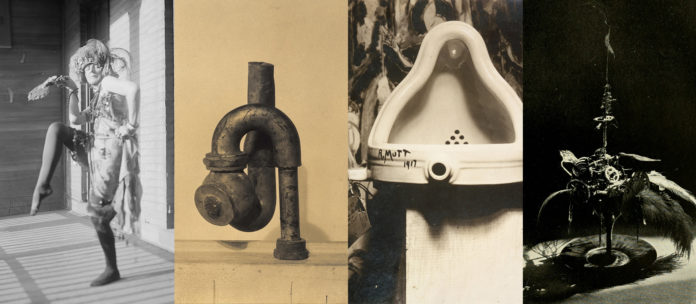
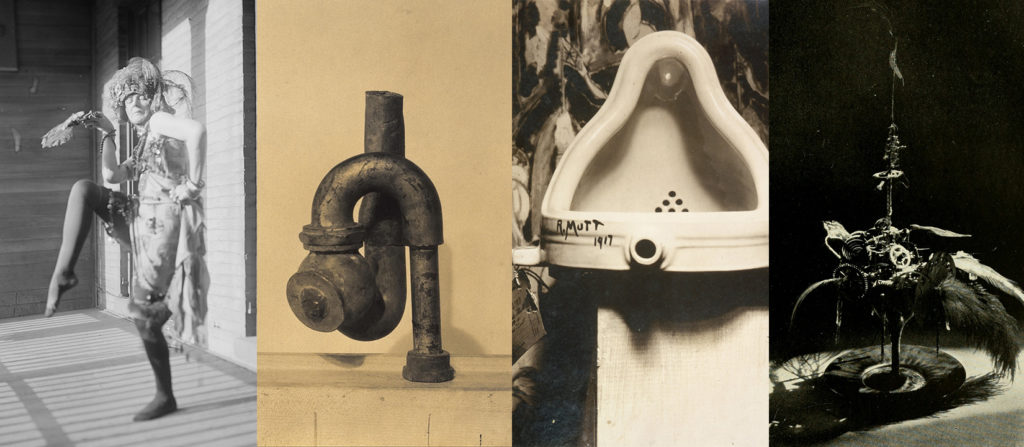
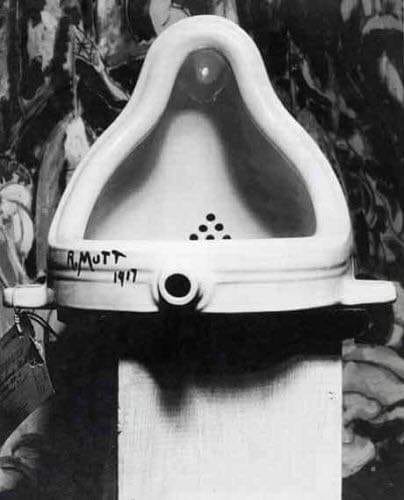
La baronesa Elsa von Freytag-Loringhoven nunca pretendió ser artista, en palabras de Jane Heap: “ella es la única de todo el mundo que viste Dadá, ama Dadá y vive Dadá”. Murió en 1927 en la más absoluta miseria, aunque de su ingenio vivió todo el arte conceptual neoyorkino y su exaltación de lo estrafalario en el mundillo de los Andy Warhol. Jean Duchamp en su emigración a USA aprovechó al máximo las dotes artísticas de Elsa incluso hasta apropiarse de la autoría de la obra de referencia, el urinario fuente. Elsa recolectaba basura y de ella elegía trozos de madera que etiquetaba como Catedral, cañerías fálico-flácidas que denominaba God, etc… y un urinario que denominó Fuente, bajo el pseudónimo de R. Mutt.
Elsa von Freytag-Loringhoven
Como en tantos otros ejemplos del mundo del arte, en ocasiones fluye la antiética. En 1982, en el Archives of American Art Journal, se publicó una carta de Jean Duchamp dirigida a su hermana Suzanne. La carta está fechada el 11 de abril de 1917, en ella escribió que “una amiga con el pseudónimo masculino de Richard Mutt envió, como escultura, un urinario de porcelana para la exposición de los Independientes. Yo tuve que poner mi cargo a disposición y los beatos rumores van a correr en Nueva York”.
Según parece a la muerte del fotógrafo, Duchamp se apropió de la autoría, ya famoso, dado que se habían escrito teorías académicas y curatoriales. Duchamp ya participaba del mito fundador del arte conceptual y se trataba de una importante contribución americana al modernismo, que no podía doblegarse hacia una pordiosera. A raíz de 1982 hay autores, como Glym, que sugieren que Duchamp no solo se apropió de la creatividad de Elsa, sino que también se apropió de su discurso, como se percibe en sus entrevistas.
“La fuente de las Fuentes”, 1917, firmada Richard Mutt, pseudónimo de la baronesa Elsa. Este es la obra original fotografiada por Alfred Stieglitz, quién falleció en 1950.
Fountain – Marcel Duchamp or Elsa von Freytag-Loringhoven?
Instalación artística. El arte de instalación es un tipo de arte contemporáneo en el cual el artista utiliza, como parte de la composición, el propio medio (como paredes, piso, luces e instalaciones) además de objetos diversos. En muchas ocasiones, los materiales escogidos, llenan más o menos el espacio y el espectador es invitado a moverse alrededor de la obra o interactuar con la pieza, en esos casos el espectador mismo deviene parte de esa obra en ese preciso momento y ese preciso tiempo. A veces las instalaciones son frágiles por lo que solo pueden ser vistas desde la puerta o un extremo del espacio.
Existen varios precedentes para este tipo de arte, pero no fue hasta los años 80 que los artistas comenzaron a especializarse en las instalaciones. Materiales de todo tipo, luces y sonido han seguido siendo elementos fundamentales para la instalación artística.
En los inicios, las instalaciones eran usualmente creaciones temporales; eran parte del moderno movimiento que trataba de desechar la idea del arte como objeto coleccionable. Esta tendencia es también vista en el Arte povera y en el Arte conceptual. De cualquier forma, en la actualidad, muchas instalaciones artísticas son realizadas para muestras permanentes y muchas de ellas han sido compradas y vendidas como las obras de arte tradicionales. Uno de los ejemplos más conocidos es la obra “20:50” de Richard Wilson, que consistía en una habitación llena de aceite de cárter y que fue creada en 1987 para la Matt’s Gallery de Londres pero que fue subsecuentemente exhibida en la Royal Scottish Academy de Edimburgo y luego comprada por la colección Saatchi de Londres.
Características de Arte instalación
Como género dentro de las artes plásticas, la instalación se supedita a los sitios de arte o emplazamientos para los que ha sido o fue concebida. Algunas instalaciones son sitios específicos de arte y sólo puede existir en el espacio para el que fue creada.
El uso de materiales diversos, la asimilación de diferentes escalas, la libertad de concepto y de la potenciación de la interactividad entre el producto artístico y el público son algunas de las características más importantes de esta peculiar manera de concebir obras de arte. Otro aspecto dentro de la concepción de instalaciones artísticas es el emplazamiento, en este sentido se hace válido recordar que existen artistas que en su búsqueda de una mayor interacción social, manifiestan su gusto por los espacios exteriores o urbanos, mientras que otros continúan creando dentro de los restringidos límites de las galerías de arte, museos y recintos de exposición.
En la praxis del arte instalativo, más que la apreciación de la escultura tradicional, cuyo fundamento se establece sobre la base del trabajo artístico, en la instalación la intención del artista es primordial debido a su conexión con el Arte conceptual y con las actitudes comunicativas en su obra.
En el arte de la instalación los artistas pueden hacer uso de cualquier medio o material, pueden usar desde materiales naturales y tradicionales hasta los más novedosos medios de comunicación, incluso existen artistas que han llegado a utilizar la energía pura como el plasma o el fuego. Otro elemento importante a acotar dentro del género instalativo es que existen instalaciones en las que el artista incorpora sonidos, olores, sensaciones térmicas, etc., contribuyendo así a propiciar lecturas más profundas y ricas en los expectadores. Uno de los creadores de la instalación artística que utiliza luces es James Turrell.
Orígenes de la instalación artística
Muchos encuentran el origen de este género en artistas como Marcel Duchamp y el uso de objetos cotidianos resignificados en espacios de galerías y museos como obras artísticas. Sin embargo, se puede decir que el más cercano precedente está dado en los Environments (ambientes). Unos de los creadores de los “Environments” fue el artista norteamericano Allan Kaprow con obras realizadas a partir de 1957. En una entrevista sin fechar publicada en 1965 Kaprow decía acerca de su primer Environment: “Yo simplemente rellené toda la galería. Cuando abres la puerta te encuentras en medio de un ambiente integral. Los materiales eran diversos: sábanas de plástico, envoltorios de celofán, trozos de cinta adhesiva, pedazos de esmalte rajados y manchados y piezas de ropa coloreadas”. También había luces colocadas en medio de todo esto y “cinco maquinas de escribir desplegadas alrededor del espacio tocando sonidos electrónicos que yo había compuesto”. Desde ese momento la creación de instalaciones devino una importante corriente del arte moderno, principalmente a partir de la década de 1990.
Otro antecedente interesante puede ser la exposición de 1958 en Paris del artista francés Yves Klein que consistía en una habitación vacía y aunque el término no surgió hasta la década de 1970, este gesto es a veces visto como la primera instalación, en el sentido en que se entiende el término en la actualidad.
En 1961, en Nueva York, Claes Oldenburg creó un ambiente, Counter and Plates with Potato and Ham que, en estos momentos se considera instalación.
The Devil does not exist, It is just a tool used by churches.
In situ: Urban action by Rafael Montilla
I am sure the devil does not exist, It is just a tool used by churches. What exists are demon beings like fidel castro, hitler, hugo chavez, nicolas maduro among others. If we really believe in God, we must know that we don’t need a PR (Priests or Pastors) to get to God. This video is not to make any money, it is for art.
Song: The Rolling Stones – Sympathy For The Devil Circus
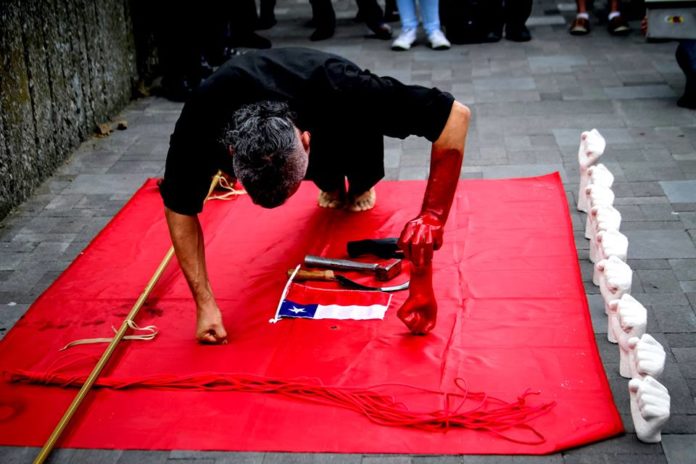
LA TRIENAL DEFORMES 2020 ES UNA INSTANCIA DE NIVEL INTERNACIONAL QUE BUSCA POSICIONAR LA PRÁCTICA DE LA PERFORMANCE EN SUS VARIADAS EXPRESIONES (DANZA, TEATRO, ARTES VISUALES, MÚSICA, POESÍA) CREANDO ESPACIOS DE INTERCAMBIO Y OBRAS DE ARTE ACCIÓN, DEDICADAS A LA FORMACIÓN DE AUDIENCIAS DE DIVERSOS RANGOS ETARIOS.
Nuestra propuesta
Por primera vez la Trienal Deformes reunirá artistas provenientes de Asia, Europa y América, teniendo una fuerte presencia de artistas latinoamericanos. En esta versión seremos testigos de diversas manifestaciones de Performance, ampliando la visión del lenguaje hacia manifestaciones híbridas o provenientes de áreas no puristas, como los son el activismo, el ritual, la performance sonora, el videoperformance, la virtualidad y streaming, la poesía, así como realizaciones más ligadas a las artes escénicas como el teatro y danza. En esta versión tendremos el gusto de contar con importantes artistas nacionales e internacionales. Destaca la participación de Clemente Padin (Uruguay), Alejandra Glez (Cuba), Marton Robinson (Costa Rica), Marcela Cadena (Colombia), Daniela Giebel Aquino (Bolivia), Carmen Berenguer (Chile), Alastair MacLennan (Irlanda), Bartolomé Ferrando (España), Abel Azcona (España), Boris Nieslony (Alemania), Sophie Dupont (Dinamarcana), Nina Claire (Noruega), Peter Baren (Holanda), Razieh Goudarzi (Irán), Mohammed Abd Alwasi (Irak), Seiji Shimoda (Japón), Moon Jaeseon (Corea), Yifei Hu (China), Chumpon Apisuk (Tailandia), Saurganga Darshandhari (Nepal), Harpreet Singh (India).
El diablo no existe, es solo una herramienta utilizada por las iglesias. In situ: Urban action by Rafael Montilla
TRAYECTORIA
Hemos sido organizadores y participantes de Bienal Internacional de Performance DEFORMES 2004-2016 realizadas en Chile (ciudad de Santiago-Valparaíso-Valdivia).
TESIS CURATORIAL
La Máquina de guerra y las organizaciones sin Estado
La Trienal Deformes es una instancia de nivel internacional que busca posicionar la práctica de la performance en sus diversas expresiones (danza, teatro, artes visuales, música, etc.), en un lugar de exhibición relevante. Debido a que esta práctica ha adquirido cada vez mayor complejidad, es difícil conceptualizarla de manera precisa. La performance es el acto, el gesto, la pose, el sonido, del cuerpo del artista o de otra persona, con un expreso interés artístico o creativo. El juego con el movimiento, el ritmo, el sonido y el espacio son claves para analizar este tipo de prácticas y actualmente es una corriente que reúne varios géneros distintos. Queremos revisar esas trayectorias y composiciones y las formas que ha tomado en diversos puntos de mundo.
A su vez, la Trienal será itinerante y se moverá en dos espacios geográficos, abarcando mayores territorios y públicos variados. Santiago-Valparaíso, abarca dos regiones cada una con un diferente acercamiento a la práctica performática, que sería importante introducir a los participantes de la Trienal, con quienes se producirán diálogos y discusiones sobre esta práctica. Cada escena tiene su propio contexto e historia y desde los territorios se emanan materiales que algunos artistas de performance utilizan para su creación, produciendo intervenciones en el espacio público o la irrupción callejera. Por lo tanto, es relevante que la Trienal Deformes se traslade y adquiera un carácter nómade y, al igual que su relación con las instituciones y lugares no oficiales. Que la Trienal se desplace entre los lugares como las academias, galerías, museos; y, también, transite en el espacio público y los barrios ( del cuerpo y los sociales) es una forma de diálogo recíproco entre la vida formal y lo cotidiano de la cultura masiva.
La Trienal Deformes tiene un fundamento técnico que consiste en el período de preparación previa al evento y de su repercusión posterior. Este evento cada tres años irá señalando los caminos que ha tomado la performance en sus versiones más contemporáneas. Al mismo tiempo que realiza un guiño a las prácticas pioneras y experimentales que surgieron en la segunda mitad del siglo XX, algunos de sus referentes más destacados siguen vigentes en el circuito del arte.
De esta manera, la Trienal Deformes se constituirá en el espacio de visibilidad de prácticas performáticas actuales y algunos históricos, activando las redes y los espacios para que esta práctica tenga cabida en la cultura regional.
Para la primera trienal consideramos a Alastair MacLennan, Bartolomé Ferrando y Clemente Padín, entre otros, exponentes que llevan más de 30 años de trayectoria en el campo, con múltiples encuentros, festivales y talleres de performance en sus cuerpos; asimismo reunirá artistas provenientes de Asia, Europa y América más una fuerte presencia de artistas latinoamericanos.
Además, a diferencia de otras instancias de encuentro y prácticas de performance, uno de los ejes de esta Trienal Deformes será su área dedicada a la teoría de la performance. Pensamos desplazar el pensamiento crítico desde los centros dominantes y revisar las escrituras y reflexiones que han surgido en nuestro territorio o hemisferio. Destacados intelectuales han estudiado la performance desde una raíz latinoamericana que le entrega un sentido más radical y político a la práctica, como Víctor Vich, Miguel López, Mildred Duran, Irina Garbatzky, Juan Pablo Sutherland.
ARTISTAS CONVOCADOS PRESENCIALES Y ONLINE
Ítem artistas y teóricos convocadosTrienal Deformes
Artistas Internacionales-Online / noviembre 2020
1- Abel Azcona-España
2- Alastair MacLennan-Irlanda
3- Alejandra Glez-Cuba
4- Alexia Miranda- El Salvador
5- Andrez Olmos-Bolivia
6- Ana Vela-Ecuador
7- Andrea Cárdenas-Argentina
8- Anastasia Yeremeyeva-Rusia
9- Barbara Le Beguec Friedman-Francia
10- Boris Nieslony-Alemania
11- Camillat Camillat-Brasil
12- Carmen Lafran-Alemania
13- Christine Brault-Canadá
14- Chumphunut Phuttha-Tailandia
15- Chumpon Apisuk-Tailandia
16- Cinthia Vargas-Ecuador
17- Daniela Giebel Aquino-Bolivia
18- Dani d’Emilia-Portugal
19- Emilio Santisteban-Perú
20- Evamaria Schaller-Alemania
22- Juan Angel Italiano-Uruguay
23- Javier Sobrino-Argentina
24- Jessica van Deursen-Holanda
25- José Roberto Sechi – Brasil
26- Khaing Su-Myanmar
27- Kiyo Gutierrez-México
28- Olga Kozmanidze- Alemania/Rusia
29- Manuela Maroli-Italia
30- Marcela Cadenas-Colombia
31- Markus Goessi-Suiza
32- Marton Robinson-Costa Rica
33- Mauritz Tistelo-Suecia
34- Mohammed Abd Alwasi-Irak
35- Mongkol Plienbangchang-Tailandia
36- Moon Jaeseon-Corea
37- Nenad Bogdanovic-Serbia-ex-Yugoslavia
38- Nina Claire-Noruega
39- Peter Baren-Holanda
40- Ras Sankara Agbok-Togo
41- Razieh Goudarzi-Irán
42- Smitha Cariappa-India
43- Sanjoy Chakraborty-Bangladesh
44- Saurganga Darshandhari-Nepal
45- Sophie Dupont-Dinamarca
46- Sophie Scheifele and Olivier Schlund -Francia
47- Takumi Hashimoto-Japón
48- Yeuk To-Hong Kong
49- Uma Banerjee-India
50- Vaida Tamoseviciute-Lituania
Presentación especial:
Guillermo Gómez Peña y La Pocha Nostra en confinamiento. Performance para sobrevivir el apocalipsis- México.
Nacionales-Online
1- Carmen Berenguer
2- Hernán Parada Gonzalez
3- Estela Morales
4- Mar Marianne
5- Paz Jara
6- Ginés Olivares
7- Carolina Jerez Berenguer
8- Carolina Alicia Hernández Esguep
9- Gonzalo Rabanal
Taller de Performance-Online
Gustavo Álvarez- México
DEFORMES
DEFORMES es un colectivo transdisciplinario de arte de performance chileno sin fines de lucro, compuesto por artistas visuales y escénicos, activistas culturales, sociólogos, antropólogos, entre otros, que realiza periódicamente bienales, talleres, y encuentros internacionales de arte acción. También es un centro cultural que crea alianzas estratégicas con diversas instituciones nacionales e internacionales. Es una matriz de archivo en torno al arte de la performance en Chile, que implica distintos soportes de registro y documentación.
Nuestra misión: expandir una plataforma de encuentro, diálogo y compromiso entre
performistas de América Latina y el mundo.
Nuestra visión: potenciar redes de intercambio, mediante el lenguaje de performance y medios digitales
Equipo Organizador
Equipo Directivo:
Alejandro de La Fuente
Mila Berrios Palomino
Gonzalo Rabanal
Director proyecto FONDART 2020-21:
Bernardo León Gómez
Coordinación teórica:
Alejandro de La Fuente
Producción en terreno:
Rodrigo Peralta
Mila Berrios Palomino
Difusión Periodística:
María Graciela Romero
Teóricos-Online
Alina Peña (México)
Mildred Duran (Colombia-Francia)
Irina Garbatzky (Argentina)
Juan Pablo Sutherland (Chile)
Miguel Ängel López (Perú)
Víctor Vich Flores (Perú)
Textos
Pancho López (México)
Hernán Pacurrucu (Ecuador)
Mila Berrios (Chile)
Alejandro de la Fuente (Chile)
Gonzalo Rabanal (Chile)
Artistas Internacionales-Presenciales / abril 2021
Learn to Paint While Exploring Your Journey as an Artist
Get A Painter’s Journey Today for Only $139
Learn to Paint – Anne Blair Brown
Anne Blair Brown was born in North Kingstown, Rhode Island and currently resides in Nashville, TN. Her work centers on both rural and urban landscapes, people, and interior spaces. While she enjoys the quiet solitude of her studio, she delights in painting on location. Brown says, “Painting from life creates an intimacy with the subject that I just can’t get from a photograph, and it heightens my sense of spontaneity. That energy is translated to the canvas in and out of the studio.”
What You’ll Learn:
-You will learn confident paint application. -You will learn the skills to edit your subject, eliminate fussy detail, and allow the “soul” of your painting to shine through. -You will learn to create movement and energy in your paintings. -You will learn how to set up the basic shapes at the beginning to ensure plenty of “play-time” with interpretive brushwork and color mixing. -You will come away with a deeper confidence in conceptualizing and executing a painting from start to finish.
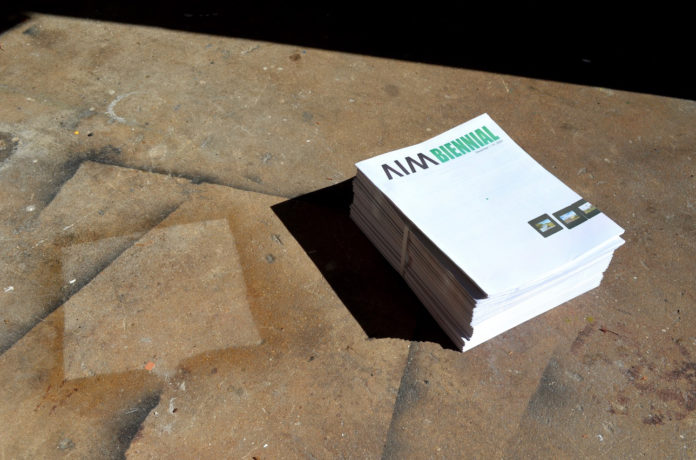
“The A.I.M. Biennial presents site specific installations created by local artists responding to the historically layered landscapes, landmarks, architecture, and communities of South Florida during Miami Art Week 2020.”
A.I.M. is: Art in Movement • Art is Matter • Andedan ici Mwen • Activism is Movement • Ahora imagina Movimiento • Acabamos iniciar Machetes •Art in Miami • Any intimate moment • American Indian Movement…
The AIM Biennial—a project which features new site-specific installations throughout South Florida, created by local cultural practitioners–including visual artists, dancers, activists and performers–who represent our region’s diversity. With an emphasis on ritual, monuments and shrines, these installations have been produced in response to historically layered landscapes, landmark locations, urban vernacular architecture, the Everglades and the various communities of our region.
A published catalogue includes maps and site locations. AIM was organized by william cordova (cultural practitioner, NY/Miami), Marie Vickles (Education director Perez Art Museum / Curator Little Haiti Cultural Center), Gean Moreno (Director, Knight Foundation Art + Research Center at Institute of ContemporaryArt, Miami), and Mikhaile Solomon (Curator / Director of Prizm Art Fair).
ARTISTS AIM Participants Almaz Wilson Aramis O’Reilly Arturo E. Mosquera Barron Sherer Beatriz Monteavaro Carol Jazzar Carol K. Brown Carol Todaro Carol-Anne McFarlane Carolina Cueva Charo Oquet Chire Regans (VantaBlack) Debbie Acevedo Devora Perez Dinizulu Gene Tinnie Dona Altemus Donald McKnight Ena Marrero Ernesto Oroza Frances Trombly Francie Bishop Good Francisco Masó Gavin Perry GeoVanna Gonzalez Glenn Saffo Glexis Novoa Gustavo Matamoros James Allister Sprang Janese Weingarten + Dave Kudzma Jared McGriff Jessica Gispert Jorge Pantoja Julio Mitjans Kabuya Saffo Kandy Lopez Karen and Harold Rifas Kathleen Hudspeth Kerry Phillips Kevin Arrow Kristen Thiele Laura Marsh Leyden Rodriguez-Casanova Liliam Dooley Linda Chamorro + Felice Grodin lou anne colodny Luis Gispert Mariano Bejarano Marisol Blanco Mark Handforth Michiko Kurisu N. Masani Landfair Niki Lopez Onajide Shabaka Rafael Domenech Ralph Provisero Rick Lowe Robert Huff Robert McKnight Robert Thiele Rosemarie Chiarlone Rudolf Kohn Samuel Tommie Sonia Baez-Hernandez Tara Chadwick Terence Price II Tom Scicluna Tom Virgin Wagner, Hand & Pflug Yanira Collado
ORGANIZERS
MARIE VICKLES Director of Education at the Pérez Art Museum Miami andCurator-in Residence at the Little Haiti Cultural Complex (LHCC)
WILLIAM CORDOVA interdisciplinary cultural practitioner
GEAN MORENO Curator of Programs at ICA Miami
MIKHAILE M. SOLOMON Director of Prizm Art Fair
Locations: Homestead, Dade, Broward, Palm Beach Counties, Seminole Indian Reservation. Satellite locations in Georgia, Tallahassee and Texas.
Writing about art is hard. Writing about art that you made can be even harder. We hear artists say, “If I knew how to describe my work in words, I’d be a writer, not an artist.” While this may be true, what’s “truer” is the fact that at some point, you as an artist will be asked to write an artist statement—and whether or not it is good, will matter. So, what makes an artist statement “good”? Whether you’re applying for a residency or grant, or you just want to perfect your elevator pitch, here are a handful of things not to include in your artist statement, plus a few tips to make the process a little less excruciating.
1. Your Artist Statement Is Not “A Piece”
Resist the temptation to use this as an opportunity to write a poem or subvert the “institution of the artist statement.” We get it; you’re an artist. We really do just genuinely want to know what your art is about. Please tell us.
2. Oh, You Loved Art as a Child? Join the Club
The worst way to start an artist statement is with the following words: “Every since I was a little girl, I’ve always loved making art.” Unless you were literally raised by wolves or grew up in a hermetically sealed suite a la Bubble Boy, this is not interesting information. Most kids love art, and regardless, having a long love affair with your craft doesn’t mean much—it’s what you have to show for it that counts. There is really no need to explain when you became interested in art.
3. Avoid These Words:
Juxtapose Humanity Human condition Concerns Chaos Uncanny (unless it truly, truly is uncanny. Look up the definition.) Notions Speculative Explores Rupture Troubled Liminal Controversial (unless it actually sparked controversy.) Deconstructs
4. Just Use Fewer Words in General
Don’t convolute your sentences by beating around the bush. For instance: “My art practice is concerned with exploring notions of gender” really means, “My art is about gender.” Or, “I’m interested in investigating ideas and concepts surrounding notions of race” becomes “I investigate race.” Be specific and don’t use vague words that keep you from getting to the point.
5. If Your Work Is About You, Why Should We Care?
If you’re making art about your personal experience, fine. But the question you have to ask yourself is, “Why is my personal experience relevant to anyone but me?” What does your experience say about the world you live in? What can people learn from your story that might be useful to them? Use your experience to illustrate some larger issue, topic, culture, or idea that others can relate to or learn from.
6. Find Help
Not everyone is a good writer, and that’s totally okay. You shouldn’t need to be able to recite the Chicago Manual of Style verbatim to write a good artist statement. But don’t let your lackluster writing skills be an excuse for a sloppy statement. Find a wordsmith, buy them a beer, and ask them to help you edit your text. Not only will a poorly written statement make your ideas harder to understand, but grammatical errors could also come off as evidence of apathy and irreverence towards whatever opportunity you’re vying for.
7. Don’t Say Your Work Is Interesting—We’ll Be the Judge of That
Remember what your middle school English teacher told you—show, don’t tell. Describing your work as meaningful, captivating, groundbreaking, beautiful, or interesting doesn’t tell your reader anything about what your work actually is. (Plus, it comes off as a little cocky.) Instead, write about your work in a way that shows how it’s interesting.
8. Don’t Reference Deleuze Unless You Absolutely Have To
In general, it’s probably best to avoid relying on the ideas of other people to prop up your work. But if you really must reference a philosopher, critic, or theorist, make sure to write a very brief (could be five words) description of who that person is. Don’t assume everyone who reads your statement had the same liberal arts education you did. In terms of referencing other artists: if your work intentionally and deliberately references other artists, and these references are integral to the meaning of your work, by all means, name the artists you reference. Otherwise, do not compare yourself to other artists, e.g., “Like Picasso, I paint…”
9. Know What “International Art English” Is, And Void Using It
In 2012, Alix Rule and David Levine brilliantly and hilariously wrote about what they called “International Art English”: the “the curious lexical, grammatical, and stylistic features” too commonly found in art-world press releases. Here is a tiny excerpt, but do yourself a favor and read the entire thing:
“IAE has a distinctive lexicon: aporia, radically, space, proposition, biopolitical, tension, transversal, autonomy. An artist’s work inevitably interrogates, questions, encodes, transforms, subverts, imbricates, displaces—though often it doesn’t do these things so much as it serves to, functions to, or seems to (or might seem to) do these things. IAE rebukes English for its lack of nouns: Visual becomes visuality, global becomes globality, potential becomes potentiality, experience becomes… experiencability.”
10. Write About the Most Interesting Aspects of Your Work (Not All Aspects Are Interesting)
Explaining your process can reveal something about your work that isn’t immediately known by just looking at it. If this is the case, explain away. But for most artists, this play-by-play account just isn’t necessary. For instance, if you’re a painter, there is really no need to mention that you begin your day by priming your canvases, or that your artwork always begins with “an idea” or “a sketch.” Figure out what makes your work unlike other people’s and focus on that. For some artists, that is their process, for others it might be their research methods, or concepts, or relationship to art history, etc.
11. Keep It Short and Sweet
If you’re applying for an opportunity like an artist residency, art school, or a grant, chances are your artist statement will be one of many. Keep in mind that the person reading your statement may only have time to skim the first few lines, so if you can succinctly describe your practice in four sentences, do it. Less is more. You don’t want the success of your application to rely on whether or not your panelist can read 2,000 words in 60 seconds.
12. Your Love for Making Art Doesn’t Justify its Worth
Please, please, please don’t write about how much you love painting, or how fun it is to be in the studio, or how ceramics is a form of therapy. Don’t get it wrong—we’re very happy for you if you feel these ways, and we understand that working creatively can be a very uplifting and joyful process. But here’s the thing: your experience of making your art in no way influences our experience of looking at it. This may seem counter-intuitive, but an artist statement is not about you, the artist; its about your work, the art.
13. Talk It Out
If you’re having writers block, don’t give up. Download a voice recording app on your phone and record yourself talking about your work out loud to a friend (or your cat.) After you transcribe your speech and edit out the likes and ums, you might be surprised with how good it sounds. And if not, at least you’ll have something down on the page that you can work from. Text that is conversational and seemingly effortless is easier and more fun to read that text that seems like it was painstakingly laborious to write.
14. Obviously, Describe Your Work
If someone was standing in front of your art, what questions might they ask you? What could you tell them that would give them a richer, more informed viewing experience? Write about your work in a way that will add something to the viewing experience, not just summarize it. If you’re having trouble getting the juices flowing, here are a few questions you can answer to get you started (just remember, you don’t need to address all of these in your statement.):
Why did you make the art that you made? What does it say about the world? What does it help people understand? What does it look like? What did you make it out of and how did you make it? How does it address the history of its medium? What sort of culture, topic, or issue does it describe? What do you expect your audience to gain from it?
 ‘I Want’ – Brendan Murphy
  ‘Mamba’ – Brendan Murphy