Home Blog Page 219

OTHER EXHIBITED ARTISTS

Constructivism Art movement

SQUARE ART PROJECTS

OTHER EXHIBITED ARTISTS

Toni Arellano
Mathieu Asselin
Anthony Banks
Valerie Brathwaite
Jennifer Campbell
Deborah Castillo
Guillermo Carrión
Jaime Castro Oroztegui
Nicola Noemi Coppola
Katherine Di Turi
Jorge Domínguez Dubuc
Enrique Doza Romero
José Fiol
Blanca Haddad
Hanz Hancock
Marielle Hehir
Jutta Immenkötter Bernardita
Rakos Rafael Reverón-Pojan
Luis Romero
Rafael Ulises Serrano Carolina Siefken
Mary T Spence
Alex Strachan
Michael Swaney
Julie Umerle
Piers Veness
Augusto Villalba
Simon Zabell
Daniel Jacoby
Sue Kennington
Jillian Knipe
Sandra Lane
Ivan Larra
Suwon Lee
Lee Marshall
Cipriano Martínez
Julia McKinlay
Wendy McLean
Gabriel Morera
Patrick Morrisey
Federico Ovalles-Ar
Marion Piper
Tomás Pizá
Lucia Pizzani

Miami Dade College’s 39th Miami Film Festival

39th Miami Film Festival

39th Miami Film Festival To Honor Oscar Nominee Penélope Cruz With Precious Gem Icon Award

Written By Wilson Morales

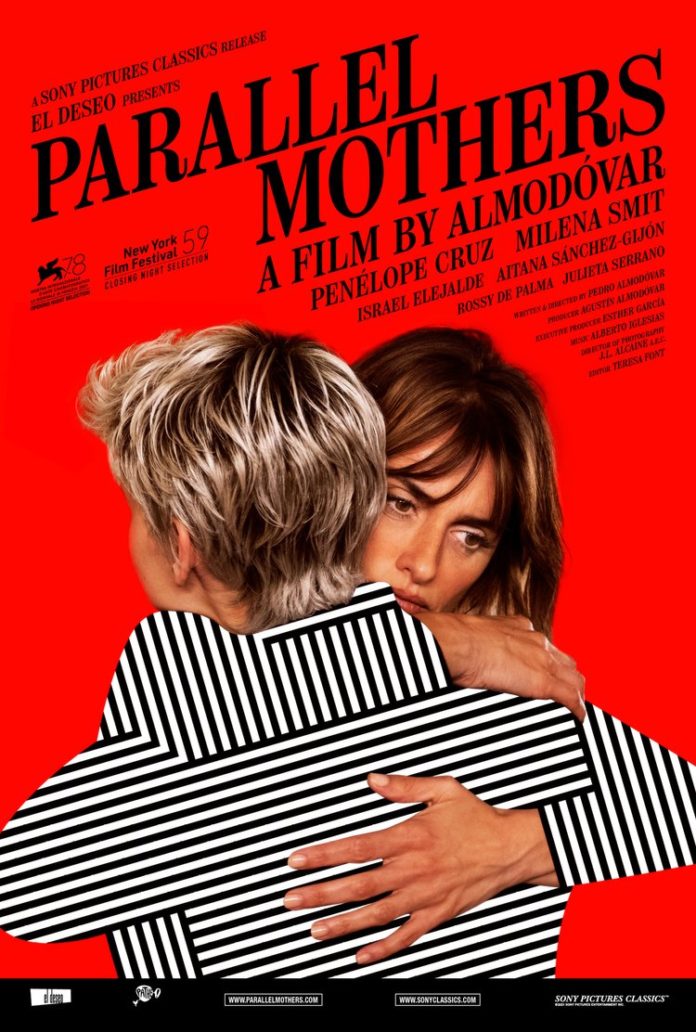
Parallel Mothers star Penélope Cruz will receive Miami Dade College’s (MDC) acclaimed Miami Film Festival’s Precious Gem Icon Award, at its 39th edition. The 2022 Best Actress Academy Award nominee will participate in a virtual award tribute and conversation moderated by Variety’s Film Awards Editor Clayton Davis. The virtual presentation will take place as part of the Awards Ceremony program that includes the Closing Night Screening of Plaza Catedral on Saturday, March 12 at 7:00 pm at the Adrienne Arsht Center. The festival is scheduled from March 4-13, 2022.

“From the moment that Penélope Cruz first appeared on Miami Film Festival screens at our 10th edition in 1993 in her screen debut, Jamon Jamon, she has been a beloved favorite of our audience,” said Miami Film Festival executive director Jaie Laplante. “Over the nearly three decades that have followed, we have been enthralled to follow and screen so much of her extraordinary work, including her complex, overwhelmingly emotional performance in the Oscar-nominated Parallel Mothers.”

Miami Film Festival’s Precious Gem Award is the festival’s signature award, reserved for one-of-a-kind artists whose contributions to cinema are lasting and unforgettable. The Festival will also present its Precious Gem Awards to previously announced Oscar nominees Ryusuke Hamaguchi (Drive My Car) and Ramin Bahrani (The White Tiger, 2nd Chance). Last year’s Precious Gem recipients included Pedro Almodóvar and Rita Moreno.

Cruz stars in the Sony Pictures Classic film Parallel Mothers, written and directed by Pedro Almodóvar. Cruz has received numerous accolades for her performance including a Best Actress Academy Award nomination, Best Lead Actress Goya Award nomination and Best Actress honors from the National Society of Film Critics Awards, LA Film Critics Association Awards and the Venice Film Festival.

Penélope Cruz is an acclaimed film star and producer who has earned a diversity of honors. They include an Academy Award, Cannes Film Festival and Venice Film Festival Best Actress Awards, as well as those from the New York Film Critics, LA Film Critics, BAFTAs, Goya Awards, César Awards, European Film Awards and many others. In addition to numerous projects with director Pedro Almodóvar including Pain & Glory, Volver, Broken Embraces, Live Flesh and All About My Mother, her other films include Don’t Move, Loving Pablo, Murder on the Orient Express, The Queen of Spain, Ma Ma, Elegy, Pirates of the Caribbean: On Stranger Tides, Nine, Vicky Cristina Barcelona, To Rome with Love, All the Pretty Horses, Woman on Top, Open Your Eyes, Twice Born, Everybody Knows, Vanilla Sky, and Belle Epoque. Her U.S. television debut as Donatella Versace in FX’s “American Crime Story: The Assassination of Gianni Versace” earned Emmy, Golden Globe, and SAG award nominations.

Miami Dade College’s 39th Miami Film Festival

Miami Dade College’s 39th Miami Film Festival

Miami Dade College’s 39th Miami Film Festival, EMILIO ESTEFAN Present A Change Of Heart and Croqueta Nation (World Premiere) at Silverspot Cinema, March 11 & 13 

WHAT:

GRAMMY Award winning musician and producer, Emilio Estefan, will present a marquee screening tonight of his 2017 hit movie, A Change of Heart starring Jim Belushi and Gloria Estefan, at Miami Dade College’s 39th Miami Film Festival. The star will walk the red carpet and participate in a pre-screening Q&A with the Festival’s Executive Director Jaie Laplante

Additionally, Estefan will be back this Sunday to premiere his short film, Croqueta Nation, with Co-Producer Bruno del Granado at the close of MDC’s Miami Film Festival. Set in Miami, this feel-good and playful story follows Carlos Gazitua, CEO/owner of Sergio’s Cuban Restaurants, as he sets out to make croqueta history by making the world’s longest croqueta. At Sunday’s film screening, guests will sample the six-foot-long croqueta courtesy of Sergio’s Cuban Restaurants, beer from Festival sponsor Estrella Damm, and enjoy a comedy act from Only In Dade.   

Miami-born filmmaker Guillermo Alfonso directs this epic tale of a small culinary snack from Miami and will also be in attendance, while Estefan is the film’s executive producer. Croqueta Nation features local celebrities who join in the fun including WWE champion Dana Brooke, Iheart radio host Enrique Santos and the Mayor of Miami Francis Suarez. 

WHEN:

Friday, March 11, 2022 – A Change of Heart (Marquee Screening)

6:00 p.m. – Media Check-In

6:30 p.m. – Emilio Estefan on red carpet

7:00 p.m. – Pre-screening Q&A with Emilio Estefan and Miami Film Festival’s Executive Director Jaie Laplante

Sunday, March 13, 2022 – Croqueta Nation (World Premiere)

1:00 p.m. – Media Check-In

1:30 p.m. – Red Carpet 

2:25 p.m. – Post-screening Q&A with Emilio Estefan, Bruno del Granado, Guillermo Alfonso, Carlos Gazitua 

WHERE:

Silverspot Cinema

300 SE 3rd Street, #100

Miami, FL. 33131

***PARKING*** Met 3 parking lot, located at 250 SE 3rd Avenue (Whole Foods parking lot). Miami Film Festival is validating parking tickets ($10). 

LOCAL MEDIA CONTACTS:

Rachel Pinzur / Pinzur Communications

305-725-2875 or [email protected]

Andrea Salazar / Pinzur Communications

954-756-0652 or [email protected]

About Miami Dade College’s Miami Film Festival

Celebrating cinema in two annual events, Miami Film Festival (March 4-13, 2022) and Miami Film Festival GEMS (November 3-9, 2022), Miami Dade College’s Miami Film Festival is considered the preeminent film festival for showcasing Ibero-American cinema in the U.S., and a major launch pad for all international and documentary cinema. The annual Festival welcomes more than 45,000 audience members and more than 400 filmmakers, producers, talent and industry professionals. It is the only major festival housed within a college or university. In the last five years, the Festival has screened films from more than 60 countries, including 300 World, International, North American, U.S. and East Coast Premieres. Major sponsors of Miami Film Festival GEMS include Knight Foundation, Telemundo, American Airlines, Estrella Damm, Telemundo, NBC6 and Miami-Dade County. The Festival also offers unparalleled educational opportunities to film students and the community at large. For more information, visit miamifilmfestival.com or call 305-237-FILM (3456). 

Queens of the Revolution

Queens of the Revolution

‘Don’t Say Gay’ / Queens of the Revolution / Miami Film Festival

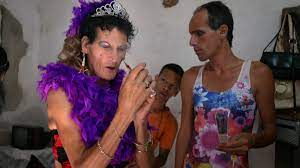
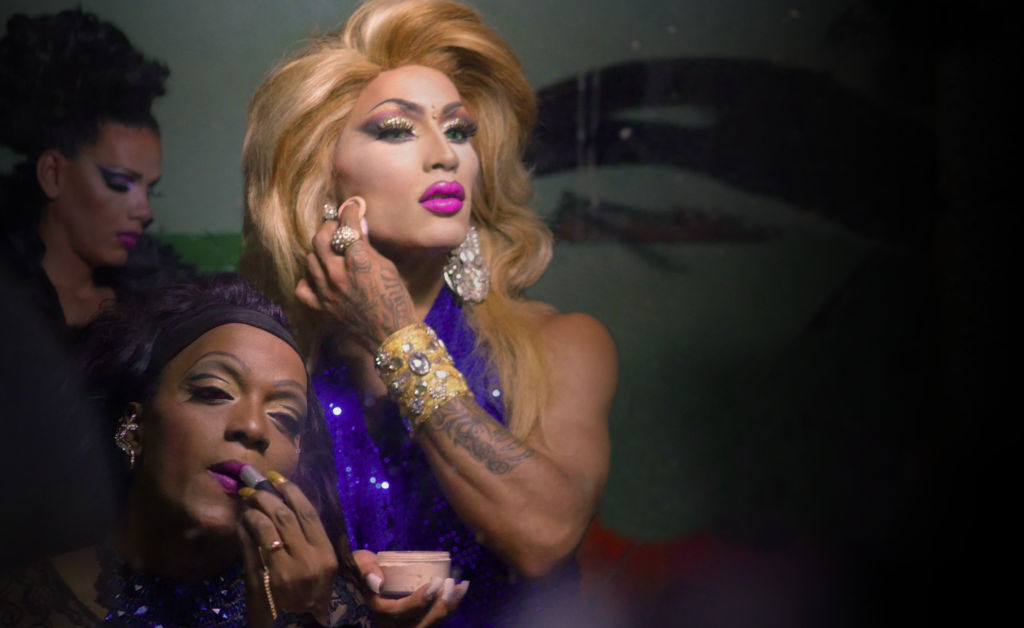
“Rebecca Heidenberg’s insightful new documentary Queens of the Revolution introduces a community of queer people who have remained in Cuba during its dynamic and sometimes dangerous history to form Mejunje, a safe space in Santa Clara, that they can call their own. The documentary is a testament to their resilience and a gentle treatise on what it means to lead a queer revolutionary life.” B.L. Panther, The Spool

“In Queens of the Revolution, we witness world builders, carving out a safer, more beautiful, and entirely new place to call home.” Sara Hutchinson, The Austin Chronicle

Aspect Ratio: 1.85
Audio Format: Stereo
TRT: 80 minutes

Language: Spanish with English Subtitles
view trailer @ www.queensoftherevolution.com/trailer

Director: Rebecca Heidenberg
[email protected] | 646-703-4473
www.queensoftherevolution.com

SHOWINGS
Queens of the Revolution
Sun, Mar 13th 1:15PM at Silverspot Cinema 16
Q&A with Director following screening
*Streaming March 14-16
Tickets: https://miamifilmfestival2022.eventive.org/films/61f189536239a200d2d658f6

Queens of the Revolution

SYNOPSIS
Queens Of The Revolution is a portrait of El Mejunje, a cultural center in Santa Clara that paved
the road for LGBTQ+ rights in Cuba. Since 1985, El Mejunje has offered refuge for people
marginalized under Castro and a stage for their drag shows, punk rock and spoken word
performances. From the beginning, El Mejunje’s performers risked persecution and violence
from both the Cuban state and society at large. The subjects of Queens of Revolution offer oral
histories of violent oppression alongside riveting, jubilant performances.
The film highlights the bravery of people who have fought for their lives and identities for
decades. Meandering through the streets of Santa Clara, into the homes of drag performers and
on to the stage, the film tells the story of Mejunje through a chorus of voices. This community was
violently persecuted but instead of fleeing, they chose to stay and fight for change in the country
they love. We follow them as they look towards the future, bringing the ethos of inclusion and
diversity fostered by Mejunje to the country at large with touring performances in Cuba’s rural
hinterlands. This is a story about resilience, resistance, and survival.
Granted exclusive access through years-long relationships with El Mejunje’s community, Queens
of The Revolution also offers a template for activism through grassroots organizing and
performance. In a time of increasing government legitimized hostility towards LGBTQ+ citizens in
the United States and in many places around the world, the film proposes a remarkably successful
model for the preservation of diversity in the face of intolerance, brutality, and hate.

CREW BIOS
REBECCA HEIDENBERG

Producer/Director/Editor/Director of Photography
Rebecca is an independent filmmaker and a partner at Dreamsong, an art gallery, residency and
cinema in Minneapolis. Her production company is Koan Films and “Queens of the Revolution”
is Rebecca’s debut feature-length film. After studying Communications and Photography at the
University of Pennsylvania, Rebecca worked as a curator and gallerist in New York City for over 10
years and was the Co-Founder and Director of RH Gallery, a multidisciplinary art space in TriBeCa.
In 2018, she completed a Master’s Degree in Media Studies at The New School and was awarded
the distinguished thesis award for her short film “The Water Children,” a personal essay film about
pregnancy loss and a late-term abortion, which premiered at Anthology Film Archives. Rebecca
is currently in post-production on “Janus”, a short film about migration, which weaves together
stories about refugees crossing borders and is anchored around Walter Benjamin.


XIMENA HOLUIGUE
Associate Producer / Field Producer
Ximena is a facilitator, project manager and curator of interdisciplinary projects in Cuba. She
was the Assistant Curator of the 2105 Havana Biennia and since 2016, she has been the project
manager of the Montreal-Havana art exchange, funded by the Montreal Arts Council and led by
the RCAAQ institution in Montreal. Ximena has acted as a facilitator for the TV Series Infiltration
by Urbania Productions, Interrupt this Program with CBC Productions and as an Associate
Producer for the Cuba! exhibition at the American Museum of Natural History.


KRISTEN BROWN
Director of Photography
Kristen is an independent documentary filmmaker based in Montreal. Her work in film grew out
of a decade of work as a community organizer on projects in Canada and internationally in a
range of areas including LGBTQ+ rights, housing rights, community agriculture, music, arts, and
advocacy for marginalized communities. Kristen received a Bachelor’s degree in Communication
Studies from Concordia University, Montreal. She is currently in the development phase of her
next feature documentary, which is being produced by Cinema Politica Productions.


LANI RODRIGUEZ
Sound Recordist/Production Assistant
Lani is a designer and illustrator from the San Francisco Bay Area. She received her Master’s
Degree in Media Studies from the New School. Lani is the co-founder of Backtalk Videográfica, a
visual resistance art studio that creates media which informs, provokes, and meets today’s urgent
need for complex storytelling.
RAÚL E. GUTIERREZ GARCIA
Sound Recordist/Production Assistant
Raúl (El Yuca) is a freelance photographer and videographer based in Santa Clara, Cuba and a
proud member of Mejunje’s community.

A Very Abbreviated Version of Black Art History

A Very Abbreviated Version of Black Art History

A Very Abbreviated Version of Black Art History

By Shantay Robinson

When Africans were brought to the United States, their culture was stripped from them. As the enslaved people were packed into the bottom of ships, they were chained to other people who did not speak the same languages or share the same cultures. There was a concerted effort on the part of the enslavers to keep like-people separate in order to weaken them and eliminate communication between them for fear of an uprising. Once enslaved, they were prohibited from performing rituals or practicing the religions they had before being captured, so they became creative in how they could hold on to some of their culture without being punished. From the start of this country, African American culture developed separately from that of the dominant culture because black people were prohibited from participating except if they were the main attractions singing or dancing for the entertainment of white audiences. While African Americans have been producing visual art in this country since slavery, only recently have they been accepted into mainstream culture.

Early African American painters like Robert S. Duncanson, (b. 1821), who was best known for his landscape paintings, had no formal training. He learned to paint by copying prints and European artworks. He is the first internationally known African American artist. And today his work hangs in the Smithsonian American Art Museum. Artist, Edward Mitchell Bannister (b. 1828) was able to gain some education in the arts at the Lowell Institute, and while slavery was still an institution until 1865, he created ties with abolitionists to establish a livelihood as an artist. Henry Osawa Tanner (b. 1859), the first internationally acclaimed African American painter, attended the Philadelphia Academy of the Fine Arts and studied in Paris. Tanner’s most famous work, The Banjo Lesson, is a painting of an elderly black man teaching a young black boy how to play the banjo. While we’re able to look at these artists’ works in museums today, they faced hardships to be artists. According to the Smithsonian American Art Museum website, Edward Mitchell Bannister was harshly critiqued by a reviewer who said, “… the negro has an appreciation for art while being manifestly unable to produce it.” This statement was published in the New York Herald in 1867.

While the 19th century canon of black artists is scant, the most celebrated time for the arts in black history, the Harlem Renaissance (1918-1937), ushered in a wave of black visual artists. At the time, African American people were better able to afford education to obtain degrees in the arts. Because Alain Locke was a champion of the arts, his assessments of the movement established norms for black art. While the visual artists of the Harlem Renaissance tend to be overshadowed by authors and musicians, the visual arts of the period were salient to the time, as well. Artists like Aaron Douglas, Hale Woodruff, and Augusta Savage played a huge role in establishing black aesthetics in an art world that wouldn’t readily accept them. While they created their own opportunities in Harlem, their presence made it known that African Americans can create great art and that they possess the artistic and cognitive skills to do so. The Harlem Renaissance was a time for visual artists to create aesthetics distinct to the black experience in the U.S. This movement also steered the art of Jacob Lawrence and Romare Bearden who would go on to be well-known African American artists within the dominant culture. Although the Great Depression (1929-1939) devastated the country, it also created opportunities for African American artists. With aid from the Works Progress Administration (WPA), Augusta Savage was able to lead the Harlem Community Center and The New Deal’s Federal Arts Projects encouraged black artists to create art for upliftment.

The 1950s and early 1960s saw a decrease in the emergence of African American artists, as the country became more concerned with equality and race relations. But there was a movement to preserve the legacy of African Americans through the establishment of museums. In order to preserve the rich history of African Americans, the following museums were established: The African American Museum (formerly the Afro-American Cultural and Historical Society Museum) in Cleveland, Ohio was formed in 1953; the African American Museum and Library at Oakland, California (formerly the East Bay Negro Historical Society, Inc.) started as a private collection in 1946, and opened to the public in 1964; and DuSable Museum of African American History in Chicago, Illinois was founded in 1961.

As the Black Power Movement surged in the late 1960s, so did the Black Arts Movement. According to the MoMA website, one of the most famous artists of the time, Charles White, who is known for chronicling African American subjects in his work, stated, “Art must be an integral part of the struggle. It can’t simply mirror what’s taking place. … It must ally itself with the forces of liberation.” Jeff Donaldson one of the founding members of AfricCOBRA also emerged from the movement as a major artist. The collective of African American artists, AfriCOBRA, which is still in existence today, formed in Chicago in 1968 because they wanted to develop a black aesthetic and serve black liberation. This period was a time of black revitalization. The Civil Rights Movement had gained some traction, and The Black Power Movement attempted to establish black pride and racial empowerment among the people. And the artists of the period wanted the same.

The 1980s, we can say, belonged to Jean-Michel Basquiat. The ever-present art star that passed away too soon, Basquiat is the patron saint for many black artists today because he did the unprecedented: He achieved art world superstar status as a black man. The myth of this man is what will make this era in black art history especially remembered. He allowed those black artists successful in contemporary art today, the space to do that.

The postmodern era of the 1990s, saw the dominance of the black female artist. Black women artists, Emma Amos, Deborah Willis, and Renee Cox gained recognition for their work in a way that black women hadn’t done before then. Today, African American women can be found exhibited around the world. In 1990, Lorna Simpson was the first black woman to present art at Venice Biennale, allowing the most marginalized of people in the United States, black women, to take center stage as the world looked on. From the outside it might have seemed all was right in the world. During the 1990s more marginalized artists than ever were accepted into the mainstream art world, allowing them exposure, and thus the compensation to create lives as full-time artists. There were and continue to be a compendium of voices and perspectives on exhibit that attempt to critique the establishment.

And as Thelma Golden and Glen Ligon put it as we entered into this millennium, the arts were in a state of post-blackness. But what of the aesthetics that the intellectuals of the Harlem Renaissance and the Black Arts Movement tried to instill? Have they been co-opted? Are we taking them for granted? How have they morphed as they’ve been more widely accepted into the mainstream? While more African Americans than ever are making art today, do they tend to play to the dominant culture? Are there any successful black contemporary artists relishing in black culture, or would that be too black to be accepted? Can black artists today get away with being unapologetically black?

The Guardian published, “The roots of the US black art renaissance: ‘It wouldn’t have been OK in any other city’” an article by Patrice Worthy on October 23. The article, about the Atlanta art scene, describes the proliferation of black art in the city. More people moving to urban centers across the country seems to be having a positive effect on the visual art world. The decentralization of New York as the art world, and the rise of social media as a networking tool has helped artists around the country to gain some traction with their careers in art. But it also seems to be destabilizing as there is no general consensus as we’ve seen with the Harlem Renaissance or Black Arts Movement. Although the artists working at either period were able to move and spread their awareness to other parts of the country or world, and often did, the New York area served as the center. Worthy is pronouncing that Atlanta is the center of the contemporary black art renaissance.

Because black people were ostracized from the dominant culture through slavery, the culture they create has formed isolated from mainstream culture. Throughout history, African American culture has formed in the confines of the black community and may have entered the mainstream culture, but for the most part, it is developed in isolation from the influence of the dominant culture. Is this still the case? Black people have contributed greatly to the larger American cultural landscape by way of their culture. While some of it may be co-opted and filtered into a whole new form by the dominant culture, it’s important for black people to be aware of their history and they should be made known of the contributions they do make to the fabric of the country.

Sign up for our free email course on how to begin your collection.

Would you buy stock in BAIA if you could? Well we invite you to join us in becoming a monthly supporter, starting at just $3 a month YOU become a stakeholder and begin to help us transform lives through art. We are growing the BAIA team and will use your contributions to hire more team members for the purpose of creating more educational and marketing resources for schools and universities about african american artists both past and present.

BAIA FOUNDATION

WHO WE ARE

BLACK ART IN AMERICA™ (BAIA) is the leading portal and network focused on African American Art in the nation. BAIA’s mission is to document, preserve and promote the contributions of the African American arts community. THE BLACK ART IN AMERICA (BAIA) FOUNDATION is a 501c3 organization that applies what we’ve learned over our 12 years as a multifaceted arts company to facilitate the growth of artists while cultivating the relationships and opportunities that bring Black artists and communities together.

THE BAIA FOUNDATION believes that a significant challenge for communities of color is their lack of access to and education on the visual arts, particularly those that effectively reflect and represent themselves. 

Goals of THE BAIA FOUNDATION

  1. To center the legacy of African-American art and artists through visual art, literature, lesson plans, oral histories, and the distribution of our bi-monthly magazine
  2. To promote intersections between art and activism in Black neighborhoods and schools while encouraging a strong sense of purpose and unity and using art as a catalyst for economic development
  3. To create opportunities for Black artists and writers to grow by facilitating their skill sets, giving them the space and tools to create, and expanding their professional networks.

2022 – Initiatives:

  • Distribute BAIA, the mag, to the 107 HBCUs in the country
  • Design art centered lesson plans for middle schools, summer camps, and homeschoolers 
  • Fund artists lead community impact based workshops and programs targeting the youth and seniors 
  • Launch (virtual) professional development series
  • Institute marketing assistance for African American Museums and Cultural Centers.

How to Get Involved:

  1. Become a stakeholder who helps us transform lives through art. 
  2. Make a one-time donation or sign up for scheduled monthly contributions.

Constructivism

Constructivism art Rafael Montilla

Constructivism Art

What is the concept of Constructivism art?

The Constructivists sought to influence architecture, design, fashion, and all mass-produced objects. In place of painterly concerns with composition, Constructivists were interested in construction. Rather than emerging from an expressive impulse or an academic tradition, art was to be built.

What is Constructivism art examples?

Constructivism in Two-Dimensional Art

In ‘Pure Red Color, Pure Yellow Color, Pure Blue Color‘ (1921), for example, constructivist painter Alexander Rodchenko reduced the art of painting to its simplest form, in a tryptic of colored squares.

What is Constructivism in art appreciation?

What Is Constructivist Art? Constructivism was a Russian avant-garde art movement that used geometric shapes and industrial materials. Constructivists created artworks that reflected communist ideals, dedicated to benefiting the common good, and promoted a utopian society.

What was the main goal of constructivism?

The seed of Constructivism was a desire to express the experience of modern life – its dynamism, its new and disorientating qualities of space and time. But also crucial was the desire to develop a new form of art more appropriate to the democratic and modernizing goals of the Russian Revolution.

Why is constructivism theory important?

Constructivism is crucial to understand as an educator because it influences the way all of your students learn. Teachers and instructors that understand the constructivist learning theory understand that their students bring their own unique experiences to the classroom every day.

What is the origin of constructivism?

Constructivism can be traced back to educational psychology in the work of Jean Piaget (1896–1980) identified with Piaget’s theory of cognitive development. Piaget focused on how humans make meaning in relation to the interaction between their experiences and their ideas.

What are the characteristics of Constructivism art?

The basic formal characteristics of Constructivist art, included the use of geometric or technoid primary forms, arranged in a space or surface in harmonious order. Constructivist painters rejected bright, colourful palates and experimented with the effects of light and movement.

What is constructivism and examples?

Constructivism calls upon each student to build knowledge through experience such that knowledge can’t simply be transferred from the teacher to student. As such, teachers play a facilitation role. For example, a school that has students pursue their own projects with the teacher playing a advisory role.

What is your definition of constructivism?

Constructivism is based on the idea that people actively construct or make their own knowledge, and that reality is determined by your experiences as a learner. Basically, learners use their previous knowledge as a foundation and build on it with new things that they learn.

What is the main focus of constructivism?

Constructivism is based on the idea that people actively construct or make their own knowledge, Constructivism’s central idea is that human learning is constructed, that learners build new knowledge upon the foundation of previous learning. This prior knowledge influences what new or modified knowledge an individual will construct from new learning experiences (Phillips, 1995).

What are the types of constructivism?

Typically, this continuum is divided into three broad categories: Cognitive Constructivism, Social Constructivism, and Radical Constructivism.

What are the advantages of constructivism?

Constructivism promotes social and communication skills by creating a classroom environment that emphasizes collaboration and exchange of ideas. Students must learn how to articulate their ideas clearly as well as to collaborate on tasks effectively by sharing in group projects.


Constructivism:

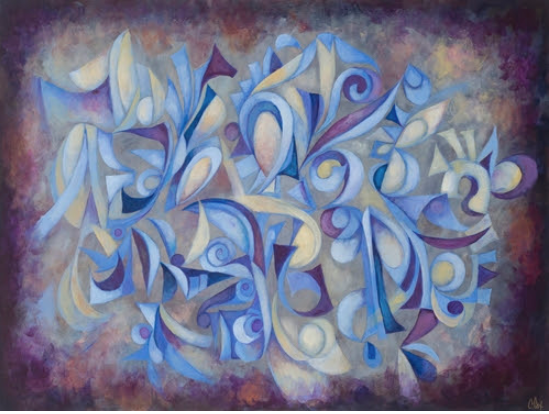
Constructivism is a style that emerged in Russia, in c.1913. Constructivism completely rejected mimetic representation and was a consistent form of geometric abstract art, which as reflected in its name, was characterised by a high level of technical and mathematical perfection. The Constructivist avant-garde movement also served a social function, in that it was intended to put architecture, painting and sculpture in the service of society, as universal and collective art,
The basic formal characteristics of Constructivist art, included the use of geometric or technoid primary forms, arranged in a space or surface in harmonious order. Constructivist painters rejected bright, colourful palates and experimented with the effects of light and movement.
Vladimir Tatlin (1885-1953) was the key exponent of Constructivist sculpture. His counter reliefs (from c. 1914) were the most important part of his sculptural oeuvre. As part of an ongoing focus on Pablo Picasso’s Cubism, Tatlin abandoned any association with materiality in his works, adopting pure geometric and technoid solutions, using their material character, tension and weight ratio.
These works also represented a necessary step of development towards Machine Art, which Tatlin also founded.
With the term “proun” (which derives from “pro unowis”) El Lissitsky (1890-1941) defined a reference point for his geometric-abstract art, which manifested itself in paintings, sculpture and large installations. László Moholy-Nagy’s (1895-1946) artistic output was also predominantly influenced by Constructivism. In the 1920s, he executed technoid, kinetic objects and in 1930, created his first “Light-Space Modulator”, which was constructed from sticks, metal discs, glass plates and light sources, which generated a fascinating abstract play of light.
The main exponents of Constructivist art were El Lissitzky, Vladimir Tatlin, László Moholy-Nagy, Naum Gabo, Katarzyna Kobro, Antoine Pevsner and Alexander Rodchenko. Constructivism provided the conditions for contemporaneous (and non-contemporaneous) artistic movements such as Suprematism and Machine Art.

Source: https://www.kettererkunst.com/dict/constructivism.php

Visual Artists

Constructionist Geometric Abstract Art

Visual artists

Artists reflect the city’s vibrant cultural mosaic, bringing together influences from the Caribbean, Latin America, Europe, and beyond. Their work spans painting, sculpture, photography, performance, digital art, and experimental media, often exploring identity, migration, urban life, and the ecological tensions of South Florida. United by innovation and diversity, Miami-based artists contribute to a dynamic creative community that continues to shape the city as a global destination for contemporary art.

Tomma Abts

Tomma Abts is known for her meticulously constructed abstract paintings, where geometric forms emerge through a slow, intuitive process that yields precise, intimate compositions.

Vito Acconci

Vito Acconci was a pioneering conceptual and performance artist whose provocative actions and architectural interventions reshaped ideas about public space, the body, and viewer participation.

Horst Ademeit

Horst Ademeit created obsessive photographic records documenting what he believed were “cold rays” affecting his environment, producing a unique archive that blurs art, paranoia, and daily life.

Anni Albers

Anni Albers, a Bauhaus master, revolutionized textile art with her innovative weavings, merging modernist abstraction with craft traditions to elevate fiber into a fine-art discipline.

Josef Albers

Josef Albers was a central modernist figure whose rigorous studies of color—especially his Homage to the Square series— transformed the understanding of perception and visual interaction.

Peter Alexander

Peter Alexander, associated with the Light and Space movement, created luminous resin sculptures and atmospheric paintings exploring color, transparency, and the sensory experience of space.

Pedro Álvarez

Pedro Álvarez blended Cuban historical imagery with American pop culture, creating witty, politically charged paintings that examine identity, colonialism, and contemporary visual language.

Francis Alÿs

Francis Alÿs is known for poetic conceptual actions and videos that explore urban space, political borders, and human futility, often using simple gestures to reveal complex social realities.

Francis Alÿs

(duplicate on your list — same description above)

Mamma Andersson

Mamma Andersson creates evocative paintings that merge landscape, interior space, memory, and Nordic folklore into dreamlike scenes layered with texture and psychological depth.

Diane Arbus

Diane Arbus was a groundbreaking photographer celebrated for her intimate portraits of individuals on society’s margins, revealing the humanity and complexity of unconventional subjects.

Wifredo Arcay

Wifredo Arcay documented Afro-Cuban religious rituals and cultural life through deeply atmospheric photography that captures spiritual intensity, community, and the cadence of everyday Havana.

Arman

Arman was a key figure of Nouveau Réalisme, known for his sculptural accumulations and “destructions,” which transform everyday objects into critiques of consumer culture and material excess.

Lucas Arruda

Lucas Arruda creates intimate, atmospheric paintings—often landscapes or seascapes—that explore light, memory, and the psychological depth of minimal imagery.

Ruth Asawa

Ruth Asawa is celebrated for her hand-woven wire sculptures, whose ethereal, biomorphic forms redefine space through transparency, repetition, and rhythmic line.

Morton Bartlett

Morton Bartlett produced haunting, hyper-detailed sculptures and photographs of childlike figures, creating a private, psychologically charged body of outsider art.

Larry Bell

Larry Bell, associated with the Light and Space movement, uses glass, coated surfaces, and optical phenomena to investigate perception, reflection, and the materiality of light.

James Bishop

James Bishop created subtle, meditative abstractions characterized by translucent layers, restrained palettes, and a quiet, contemplative sense of space.

Karla Black

Karla Black works with delicate, ephemeral materials—cosmetics, powders, plastics—constructing sculptural environments that explore fragility, color, and sensory experience.

Paul Bloodgood

Paul Bloodgood was known for lyrical abstract paintings rooted in gesture and atmosphere, balancing emotion, structure, and painterly intuition.

Michaël Borremans

Michaël Borremans creates enigmatic, meticulously rendered figurative paintings that blend psychological tension, surreal undertones, and cinematic stillness.

Carol Bove

Carol Bove produces sculptural assemblages that combine industrial materials with organic forms, exploring modernist legacies, spatial harmony, and mythic abstraction.

Marcel Broodthaers

Marcel Broodthaers, a major conceptual artist, used text, objects, and institutional critique to question language, museums, and the construction of cultural meaning.

Leonard Bullock

Leonard Bullock creates intuitive abstract paintings characterized by layered marks, shifting rhythms, and a sense of improvisation balanced with structural clarity.

Chris Burden

Chris Burden is known for radical performance and sculptural works that test limits—physical, psychological, and societal—challenging ideas of danger, authority, and public space.

Werner Büttner

Werner Büttner uses irony, dark humor, and raw painterly gestures to critique contemporary culture, politics, and the contradictions of everyday life.

Mario Carreño

Mario Carreño’s work bridges Cuban modernism and postwar abstraction, combining rhythmic geometry, bold color, and influences from Afro-Cuban culture.

John Chamberlain

John Chamberlain transformed crushed metal and industrial materials into dynamic abstract sculptures, merging spontaneity with sculptural force.

Christo

Christo, working with Jeanne-Claude, realized monumental environmental installations that wrapped buildings and landscapes, transforming perception through temporary, poetic interventions.

George Condo

George Condo is known for his “artificial realism,” creating hybrid, cartoon-like figures that merge classical portraiture with distortion, humor, and psychological complexity.

Bruce Conner

Bruce Conner was a pioneering experimental filmmaker and assemblage artist whose work used found footage, collage, and countercultural imagery to critique mass media and modern society.

Ron Cooper

Ron Cooper creates light-based sculptures and installations that explore color, perception, and spatial experience through glass, neon, and reflective surfaces.

Joseph Cornell

Joseph Cornell is renowned for his poetic assemblage boxes, which combine found objects into intimate dreamlike worlds that evoke nostalgia, memory, and surrealist imagination.

Salvador Corratgé

Salvador Corratgé, a significant figure in Cuban abstraction, developed a vibrant geometric language marked by rhythmic structures and spiritual intensity.

Mary Corse

Mary Corse, associated with the Light and Space movement, creates minimalist paintings that incorporate glass microspheres to shift appearance with the viewer’s movement and ambient light.

Njideka Akunyili Crosby

Njideka Akunyili Crosby blends painting, collage, and photo-transfer techniques to explore diaspora, domestic space, and cultural hybridity through richly layered figurative compositions.

R. Crumb

R. Crumb is a legendary underground cartoonist whose raw, satirical drawings critique American culture through iconic, exaggerated, and often controversial characters.

Sophie Crumb

Sophie Crumb works across drawing and comics, producing expressive, autobiographical works that merge humor, vulnerability, and sharp observational detail.

Walter Dahn

Walter Dahn, part of the 1980s Neue Wilde movement, creates energetic paintings and multimedia works that draw on pop culture, music, and punk aesthetics.

Sandú Darié

Sandú Darié, a leading figure of Cuban Concrete Art, developed geometric constructions and kinetic forms that merge mathematics, movement, and optical experimentation.

Noah Davis

Noah Davis created emotionally resonant figurative paintings rooted in Black life, memory, and surreal atmospheres, and founded the influential Underground Museum in Los Angeles.

Roy DeCarava

Roy DeCarava captured the profound everyday beauty of African American life through poetic, low-light photographs marked by deep tonal nuance and human intimacy.

Philip-Lorca diCorcia / Phillip-Lorca diCorcia

Philip-Lorca diCorcia is known for cinematic photographs that blur documentary and staged imagery, exploring chance, identity, and the psychological tension of contemporary life.
(Note: spelling varies but refers to the same artist — “Philip-Lorca diCorcia” is standard.)

Laddie John Dill

Laddie John Dill, associated with Light and Space, uses light, glass, cement, and pigment to create luminous sculptural and environmental works shaped by material and atmosphere.

Jim Dine

Jim Dine is known for expressive paintings, sculptures, and prints that combine personal symbolism—hearts, robes, tools—with vigorous, tactile mark-making.

Jiri Georg Dokoupil

Jiri Georg Dokoupil works across diverse experimental techniques—soot, soap bubbles, unconventional materials—to create unpredictable, process-driven paintings.

Stan Douglas

Stan Douglas creates conceptually rigorous films, photographs, and installations that examine history, technology, and the constructed nature of narrative.

Marcel Duchamp

Marcel Duchamp transformed the course of modern art through his conceptual “readymades,” challenging authorship, taste, and the very definition of art.

Marlene Dumas

Marlene Dumas creates emotionally charged figurative paintings that probe desire, identity, politics, and the psychological tension of the human body.

Marcel Dzama

Marcel Dzama produces intricate drawings and mixed-media works populated by surreal, folkloric characters that blend fantasy, violence, and dark humor.

William Eggleston

William Eggleston revolutionized photography by elevating color images into fine art, capturing the beauty and strangeness of everyday American life.

Dan Flavin

Dan Flavin is known for minimalist installations using commercial fluorescent lights, transforming space through color, geometry, and pure light.

Günther Förg

Günther Förg explored modernism’s legacy through painting, photography, and sculpture, using bold color fields and architectural references to examine structure and surface.

Suzan Frecon

Suzan Frecon creates contemplative abstract paintings based on subtle color relationships, curved forms, and the quiet power of balanced composition.

Isa Genzken

Isa Genzken works across sculpture, installation, photography, and assemblage, creating raw, inventive forms that reflect urban life, modernity, and cultural fragmentation.

Tina Girouard

Tina Girouard was a key figure in performance and installation art of the 1970s, blending ritual, dance, and community-based practices with vibrant, material-driven environments.

Robert Gober

Robert Gober creates meticulously crafted sculptures and installations that revisit domestic objects to explore memory, vulnerability, and the psychological undercurrents of everyday life.

Felix Gonzalez-Torres

Felix Gonzalez-Torres produced poetic conceptual works using light strings, candy piles, and billboards to address love, loss, identity, and social fragility.

Robert Graham

Robert Graham was known for figurative bronze sculptures characterized by refined anatomical detail, expressive realism, and monumental public commissions.

David Hammons

David Hammons uses found materials, performance, and biting humor to confront race, power, and cultural politics with sharp conceptual clarity.

Suzanne Harris

Suzanne Harris, associated with the 1970s SoHo performance scene, created kinetic sculptures and body-focused performances exploring movement, architecture, and spatial awareness.

George Herms

George Herms, a central figure in West Coast assemblage, transforms found objects into poetic sculptural works that celebrate improvisation, spirituality, and the beauty of the discarded.

Georg Herold

Georg Herold creates conceptual sculptures and paintings using unconventional materials—bricks, caviar, wood—infusing his work with irony, critique, and formal tension.

Jene Highstein

Jene Highstein is known for monumental, organic sculptural forms that explore mass, void, and the primal physical presence of abstract shape.

Jenny Holzer

Jenny Holzer uses text as her primary medium, projecting and installing powerful language-based works in public space to confront themes of politics, violence, and truth.

Yun Hyong-keun

Yun Hyong-keun, a key Dansaekhwa painter, created meditative compositions of deep umber and blue-black, evoking gates, silence, and spiritual austerity.

Robert Irwin

Robert Irwin’s work investigates perception itself through subtle manipulations of light, space, and environment, making the act of seeing the core of the artwork.

Donald Judd

Donald Judd defined Minimalism with precise, industrially fabricated forms that emphasize clarity, structure, and the autonomy of the object in space.

Craig Kauffman

Craig Kauffman, associated with the Light and Space movement, created luminous acrylic wall reliefs that play with reflection, transparency, and sculptural color.

On Kawara

On Kawara is known for his conceptual “date paintings” and daily telegrams, works that meditate on time, existence, and the record of being alive.

Mike Kelley

Mike Kelley explored memory, pop culture, and trauma through installations, performances, and sculptures that mix dark humor with sharp cultural critique.

Raoul De Keyser

Raoul De Keyser created intimate, subtly abstract paintings defined by compressed gestures, fragmented forms, and a poetic sense of everyday observation.

Toba Khedoori

Toba Khedoori produces large, meticulous drawings and paintings depicting architectural and fragmentary forms, creating contemplative images suspended between detail and emptiness.

Edward Kienholz

Edward Kienholz created immersive, politically charged assemblage installations using found materials to critique American society, violence, and institutional hypocrisy.

Martin Kippenberger

Martin Kippenberger worked with relentless humor and provocation across media to challenge artistic authority, cultural norms, and the mythology of the artist.

Konrad Klapheck

Konrad Klapheck painted machine-like objects with surreal precision, transforming typewriters, sewing machines, and tools into iconic, psychologically charged symbols.

Paul Klee

Paul Klee blended abstraction, music, color theory, and playful imagination in paintings that explore rhythm, line, and the inner architecture of the visible world.

Aline Kominsky-Crumb

Aline Kominsky-Crumb was a pioneering underground cartoonist whose raw, autobiographical comics confront gender, desire, and domestic life with biting wit and expressive line.

Jeff Koons

Jeff Koons creates high-gloss sculptures and installations that explore consumer culture, desire, and mass spectacle through kitsch aesthetics and industrial fabrication.

Barbara Kruger

Barbara Kruger uses bold text-and-image compositions to critique power, gender, consumerism, and the construction of social identity.

Yayoi Kusama

Yayoi Kusama’s immersive installations, paintings, and sculptures use repetition, dots, and infinite mirrors to explore obsession, psychology, and cosmic interconnectedness.

Greg Kwiatek

Greg Kwiatek creates atmospheric landscape-inspired abstractions, using delicate color transitions to evoke memory, perception, and emotional terrain.

Sherrie Levine

Sherrie Levine challenges authorship and originality through appropriated photographs, sculptures, and paintings that interrogate art history and the circulation of images.

Roy Lichtenstein

Roy Lichtenstein, a leading Pop artist, reimagined comic-book imagery through bold Ben-Day dots and graphic lines that questioned high and low culture.

Nate Lowman

Nate Lowman repurposes pop-cultural and mass-media symbols—bullet holes, smiley faces, signage—to critique American violence, celebrity, and consumerism.

Rosa Loy

Rosa Loy paints enigmatic figurative scenes populated by women, blending surrealism, symbolism, and personal mythology in lush, dreamlike narratives.

Konrad Lueg

Konrad Lueg, co-founder of Capitalist Realism, created works that critique consumer society through irony, painterly experimentation, and conceptual staging.

Kerry James Marshall

Kerry James Marshall is renowned for monumental figurative works that center Black life, history, and representation within the canon of Western art.

Gordon Matta-Clark

Gordon Matta-Clark created radical “building cuts,” carving into architecture to reveal social critique, spatial perception, and the politics of urban environments.

John McCracken

John McCracken’s minimalist sculptures—lacquered planks and geometric forms—use reflective surfaces and pure color to bridge painting and sculpture.

Alberto Menocal

Alberto Menocal is known for expressive, symbol-rich compositions that draw on Cuban cultural history, spirituality, and the dynamics of human emotion.

José Mijares

José Mijares, a key figure in Cuban modernism, blended geometric abstraction with expressive color, creating lyrical compositions rooted in formal exploration.

Larry Miller

Larry Miller is a conceptual artist associated with Fluxus, known for performances, installations, and works that examine systems of belief, language, and the body.

Joan Mitchell

Joan Mitchell was a leading Abstract Expressionist whose gestural, lushly colored paintings evoke landscape, memory, and emotional intensity.

Piet Mondrian

Piet Mondrian pioneered geometric abstraction through his iconic grids of primary color, seeking spiritual harmony and universal balance through pure form.

Giorgio Morandi

Giorgio Morandi created quiet, contemplative still lifes, transforming simple bottles and vessels into meditations on light, subtlety, and perception.

Juan Muñoz

Juan Muñoz produced psychologically charged installations and figurative sculptures that play with narrative, architecture, and the uncanny presence of the viewer.

Oscar Murillo

Oscar Murillo works across painting, installation, and social engagement, exploring global labor systems, displacement, and the movement of bodies and ideas.

Bruce Nauman

Bruce Nauman is a central figure in contemporary art whose work—spanning video, sculpture, performance, and neon—confronts embodiment, language, and psychological tension.

Alice Neel

Alice Neel painted intimate, unflinching portraits that reveal the emotional depth, vulnerability, and humanity of her sitters across decades of American life.

Barnett Newman

Barnett Newman, a key Abstract Expressionist, used bold vertical “zips” and expansive fields of color to evoke the sublime and the spiritual in painting.

Jockum Nordström / Jockum Nordstrom

Jockum Nordström creates whimsical collages, drawings, and small sculptures that blend folk art, fantasy, and fragmented narrative with delicate, playful precision.

Albert Oehlen

Albert Oehlen pushes painting to its conceptual limits through chaotic gestures, digital manipulation, and self-reflexive humor that critique the medium itself.

Chris Ofili

Chris Ofili blends mythology, pop culture, and spiritual symbolism in richly layered paintings that incorporate unconventional materials and bold color.

Claes Oldenburg

Claes Oldenburg is known for his large-scale soft sculptures and monumental public artworks that transform everyday objects into humorous, iconic forms.

Pedro de Oraá

Pedro de Oraá, a founding figure of Cuban Concrete Art, produced geometric abstractions defined by clarity, optical tension, and the pursuit of visual order.

Eric Orr

Eric Orr, associated with the California Light and Space movement, explored perception, silence, and metaphysics through sculptural environments and elemental materials.

Palermo

Palermo (Peter Heisterkamp) created vibrant, minimalist paintings and textile works that balance abstraction, color, and architectural sensitivity with subtle emotional charge.

Helen Pashgian

Helen Pashgian makes luminous resin sculptures and spheres that investigate transparency, color, and the immaterial qualities of light.

Luis Martínez Pedro

Luis Martínez Pedro, a member of Los Diez Pintores Concretos, developed a refined geometric vocabulary marked by rhythmic forms and serene chromatic structure.

Raymond Pettibon

Raymond Pettibon is known for ink drawings that blend text, satire, and cultural critique, drawing on punk culture, literature, and American iconography.

Sigmar Polke

Sigmar Polke experimented with alchemical materials, photography, and painting to produce irreverent works that critique authority, history, and visual culture.

Richard Prince

Richard Prince appropriates mass-media imagery—advertising, celebrity culture, pulp fiction—to question authorship, desire, and the construction of American identity.

Neo Rauch

Neo Rauch blends surrealism, social realism, and personal mythology into enigmatic figurative paintings marked by dreamlike narratives and dislocated time.

Ad Reinhardt

Ad Reinhardt, known for his “black paintings,” pushed abstraction toward pure form and visual stillness, seeking the elimination of all non-essential elements in art.

Jason Rhoades

Jason Rhoades created sprawling installations using neon, found objects, and chaotic assemblage to confront globalization, consumer culture, and American identity.

Gerhard Richter

Gerhard Richter moves fluidly between realism and abstraction, using blurred imagery and squeegee-driven color fields to explore memory, perception, and the instability of images.

Michael Riedel

Michael Riedel generates works through processes of repetition, copying, and transformation, reflecting on authorship and the circulation of information in contemporary culture.

Bridget Riley

Bridget Riley is a central figure of Op Art, creating precise, rhythmic compositions that use optical vibration and color interaction to activate visual perception.

Larry Rivers

Larry Rivers blended painting, sculpture, and performance with a brash, narrative style that bridged Abstract Expressionism and Pop, infusing everyday life with bold visual commentary.

José Ángel Rosabal

José Ángel Rosabal, a member of Los Diez Pintores Concretos, developed crisp geometric abstractions rooted in Constructivist rigor and the vibrant modernism of Cuba.

Dieter Roth

Dieter Roth created radical works using ephemeral materials—food, waste, printed matter—challenging permanence, authorship, and the boundaries of artmaking.

Thomas Ruff

Thomas Ruff redefines photography through large-scale portraits, manipulated images, and typologies that explore digital culture, surveillance, and the nature of photographic truth.

Fred Sandback

Fred Sandback used acrylic yarn to draw lines in space, creating minimalist sculptures that redefine volume, edge, and perception through near-immaterial form.

Alan Saret

Alan Saret is known for his delicately tangled wire sculptures, where airy, organic forms suggest networks, energy flows, and the geometry of natural systems.

Katy Schimert

Katy Schimert works across sculpture, drawing, and installation to explore myth, nature, and the body through fluid forms and atmospheric materiality.

Jan Schoonhoven

Jan Schoonhoven created sculptural reliefs of white paper and cardboard, using repetitive grids to achieve meditative, rhythmic surfaces central to the Dutch Nul movement.

Kurt Schwitters

Kurt Schwitters pioneered collage with his “Merz” works—assemblages of found materials that transformed everyday detritus into poetic abstract compositions.

Annabelle Selldorf

Annabelle Selldorf is an architect known for refined, human-centered designs that bring clarity, material sensitivity, and modernist restraint to museums and cultural spaces.

Spotlight Series (category)

The Spotlight Series highlights significant artists, movements, or themes deserving focused attention, offering deeper insight into influential voices shaping contemporary art.

Richard Serra

Richard Serra is celebrated for monumental steel sculptures that engage viewers through weight, scale, and movement, transforming space into a physical, embodied experience.

Seeing Shakespeare (category)

Seeing Shakespeare explores artistic interpretations of Shakespeare’s characters, narratives, and themes across contemporary visual culture.

Cindy Sherman

Cindy Sherman is known for her staged photographic portraits in which she performs multiple identities, critiquing representation, gender, and the construction of the self.

Tamuna Sirbiladze

Tamuna Sirbiladze created expressive, gestural paintings marked by fluid brushwork and sensual immediacy, blending abstraction with hints of figuration.

Josh Smith

Josh Smith’s work spans painting, collage, and sculpture, using repetition, bold color, and improvisation to question authorship and the conventions of contemporary painting.

Loló Soldevilla

Loló Soldevilla was a leading figure in Cuban Concrete Art, known for her refined geometric constructions and inventive use of color and spatial rhythm.

Rafael Soriano

Rafael Soriano’s luminous, spiritual abstractions draw on mysticism and inner experience, creating atmospheric compositions of soft forms and radiant depth.

Daniel Spoerri

Daniel Spoerri, associated with Nouveau Réalisme, transforms everyday objects—often dining remains—into assemblages that freeze moments of life into artistic relics.

Al Taylor

Al Taylor produced playful, inventive sculptures and drawings using humble materials, exploring movement, perception, and the poetic possibilities of line and form.

Diana Thater

Diana Thater creates immersive video installations that examine the relationship between humans, nature, and technology through color, light, and environmental observation.

Miroslav Tichý

Miroslav Tichý used handmade cameras to create soft-focus, dreamlike photographs that capture quotidian moments with raw, outsider-art intimacy.

Tillmans / Wolfgang Tillmans

Wolfgang Tillmans expands the language of photography through abstract experiments, intimate portraits, and observational images that explore perception, vulnerability, and contemporary culture.

Jean Tinguely

Jean Tinguely created kinetic sculptures and mechanical installations that celebrate movement, humor, and the absurdity of modern machinery.

Bill Traylor

Bill Traylor, a self-taught master of American folk and outsider art, depicted memories, figures, and animals in bold silhouettes that convey narrative power and personal history.

Rosemarie Trockel

Rosemarie Trockel works across sculpture, installation, and drawing, often using textiles and conceptual strategies to challenge gender norms and modernist hierarchy.

James Turrell

James Turrell transforms light into physical presence through immersive environments that explore perception, celestial phenomena, and the act of seeing itself.

Richard Tuttle

Richard Tuttle creates delicate, understated works using humble materials, blurring the boundaries between drawing, sculpture, and painting with poetic restraint.

Luc Tuymans

Luc Tuymans is known for restrained, haunting paintings that reinterpret historical memory, photography, and political trauma through muted color and ambiguity.

Alan Uglow

Alan Uglow created minimalist paintings defined by precision, subtle geometry, and a meditative attention to surface and spatial balance.

De Wain Valentine

De Wain Valentine, a key figure in the Light and Space movement, produced large, translucent resin sculptures that explore luminosity, color, and atmospheric depth.

Andy Warhol

Andy Warhol, central to Pop Art, used repetition, celebrity imagery, and industrial processes to examine consumer culture, fame, and modern identity.

Peter Fischli / David Weiss

Peter Fischli and David Weiss collaborated on playful, philosophical works that transform everyday objects and gestures into humorous meditations on time, balance, and human ingenuity.

James Welling

James Welling experiments with photographic processes—color, abstraction, digital manipulation—to explore perception, materiality, and the nature of images.

John Wesley

John Wesley created stylized, graphic paintings blending pop culture, eroticism, and deadpan humor through bold outlines and flat color.

Franz West

Franz West produced sculptures, installations, and interactive “adaptives” that embrace humor, awkwardness, and the tactile, blurring art and everyday experience.

H.C. Westermann / HC Westermann

H.C. Westermann crafted meticulously detailed sculptures and assemblages that critique war, mythology, and American culture with dark humor and emotional precision.

Doug Wheeler

Doug Wheeler creates immersive light installations that dissolve architectural boundaries, placing viewers inside luminous, perceptual environments.

George Widener

George Widener, a self-taught artist, uses calendars, numerology, and intricate diagrams to construct visionary works rooted in pattern, memory, and systems thinking.

Christopher Williams

Christopher Williams uses conceptual photography to critique commercial imagery, production systems, and the mechanics of visual culture with meticulous precision.

Jordan Wolfson

Jordan Wolfson creates provocative videos and animatronic sculptures that confront violence, identity, technology, and the darker edges of contemporary culture.

Christopher Wool

Christopher Wool is known for bold text paintings, abstract gestures, and photographic works that explore language, repetition, and the limits of painting.

Rose Wylie

Rose Wylie paints large, exuberant canvases whose bold, childlike forms reinterpret pop culture, memory, and daily life with wit and spontaneity.

Liu Ye

Liu Ye creates refined, dreamlike paintings combining minimalism, cartoon imagery, and art historical references to explore innocence, desire, and cultural symbolism.

Lisa Yuskavage

Lisa Yuskavage blends classical technique with exaggerated, surreal figures, creating psychologically complex works that challenge conventions of the erotic and the feminine.

Portia Zvavahera

Portia Zvavahera paints emotionally charged, multilayered images rooted in dreams, spirituality, and personal ritual, using expressive patterns and luminous color.

Portafolio Artístico

Big Bang Rafael Montilla Kubes in Action Street Art

Portafolio Artístico

Tú me dices: “Me encanta crear, pintar… ¡qué sé yo! de tantas áreas artísticas que
manejo y que, según mi familia, debería proyectar y que alguien las conozca y las
valore”.
Yo te respondo que si sientes el arte visual como parte de tu vida es el momento de
proyectarte, como una catapulta, a que muchas personas te conozcan y reconozcan.
¿Alguna vez escuchaste el término “portafolio artístico”?
¿Has escuchado que para ingresar a alguna institución o proyecto te exigen ese
“bendito portafolio”? Pues no es otra cosa que reunir en una sola carpeta tus
creaciones; esas que te hacen sentir orgulloso, que te han brindado elogios de
algunas personas, conocedoras o no de arte. En fin, una muestra de lo que has hecho
y haces, relacionado con arte, visual o no. Algo que hable de ti y lo haga bien.
¿Te gusta la fotografía, el dibujo o la pintura? O más bien te inclinas hacia el diseño
y o el interiorismo?
Hay quienes se sienten motivados por el diseño de modas. Algunos más audaces lo
hacen por la escultura o la arquitectura. Y habrá artistas que se sienten identificados
con los comics y dibujan maravillas.
Aquí te vamos a presentar algunas recomendaciones para preparar ese famoso
Portafolio Artístico que tantos dolores de cabeza puede producir.
La primera es: Reunir tus creaciones, las más recientes, donde demuestras tu talento,
experiencia, trayectoria… La cual puede ser corta o larga, no importa, lo que nos
interesa es reunirlas. Tu me dirás: ¿Y eso para qué? Por si quieres optar por un
empleo, o simplemente continuar profesionalizandose.
—No tengo mucho tiempo dedicado al arte.
No importa, se necesitan solamente algunas piezas representativas de tu estilo y
originalidad, así como tus preferencias.
No te preocupes porque tu amiguito reunió una muestra “así o asao”, es tu
imaginación y creatividad lo que hace tu portafolio algo individual, único e
irrepetible.
Lo primero que recomiendan los expertos es que ¡Comiences ya a crear! Esto
significa: dedicar tiempo a que tu talento se vuelque a tu inspiración.
En segundo lugar: ¡Observa y crea..! Todos los artistas, novatos o no, deben incluir
esos dibujos que han realizado en un momento de ocio, cuando observaban algo que
los inspiró. Escenas de la vida real… Eso está cargado de detalles maravillosos y
enriquecerán tu portafolio.
No dudes en plasmar cualquier concepto o idea que encuentres interesante, con los
colores que te provoque, con lo que te recuerde alguna experiencia de vida. Esto
significa que no te reprimas, confía en ti y añade tu toque particular.
Algunos pasan un mes diseñando la portada de su portafolio para que luzca
atractivo, yo te aconsejo que nunca una fachada puede valer más que el contenido,
eso es lo que se busca: “calidad”, es mejor que cantidad.

Te traigo algunas sugerencias que te servirán de apoyo en el momento de armar y
lograr tu atractivo portafolio profesional
Sé tú mismo. La originalidad es clave en ese momento. Refleja quién eres y es tu
tarjeta de presentación. Es lo que te diferencia de los demás. ¡Y, por supuesto tú no
quieres ser del montón..!
La calidad de tu habilidad. Es importante destacar por encima de la cantidad.Es
preferible una pequeña muestra, digamos 10 a 20 imágenes con tu mejor trabajo que
muchas imágenes que no sean tan dignas de elogio.
Coherencia y consistencia en el trabajo. Aunque seas múltiple en tus habilidades,
es importante mantener una continuidad y destacarse en una o dos técnicas, recuerda
que “el que mucho abarca, poco aprieta” y es mejor evitar incluir exceso de obras
que desentone. De ti y de tu buen juicio depende la escogencia de lo que sea
conexo y coherente.
La Paciencia es una cualidad y la mejor forma es encontrar la oportunidad adecuada
para introducirse como artista con un concepto sólido. No abrumar queriendo
mostrar todo lo que hay en ti en una sola presentación. Se recomienda mostrar tu
serie más sólida y adecuada y confiar en que se te abrirán las puertas para exponer tu
trabajo y todos sus aspectos.
Actualizar tu carpeta de trabajo es obligatorio. Cada cierto tiempo debes revisar y
desechar lo que a tu criterio ha quedado obsoleto. Ya sea porque tus habilidades
técnicas han mejorado o porque ya no estás interesado en promoverlas.
¿Y qué me dices del orden? Teniendo en mente a las personas que vayan a ver la
muestra de tu obra, lo más lógico es presentarte de una manera cuidada, sencilla y
adecuada. Un ejemplo podría ser agruparlas por temas, por técnicas y/o estilos. O
bien por su orientación o agrupación.
¿Cómo debo ordenar las obras? Sencillamente, de la manera que tú quieres que las
vean. Por supuesto que la mejor debe abrir el grupo, ya que la primera abrirá la
puerta a las demás. Y que tu segunda mejor obra sirva para cerrar el portafolio, para
que quede esa última buena impresión.
¿Debe ser personalizada? Si. No te olvides de ese detalle, y deberás incluir toda la
información que te hayan solicitado y la que consideres conveniente. Puedes
preguntar qué es lo que quieren ver y qué tipo de información exigen. También es
necesario información de las imágenes, formato, etc. Procura mostrar lo más
reciente de tu trabajo, indicando siempre las técnicas o herramientas que usaste para
lograrlo. En lo posible, evita repetir imágenes, así no sean la misma, pero si son
parecidas no causa buena impresión.

Ser profesional, es importante, porque además de tu trabajo se te va a valorar a ti
como persona con la que trabajar. No significa que tengas un título universitario, se
trata de irradiar esa profesionalidad que representa el hecho de prestar atención a los
detalles, crear una carpeta cuidando la calidad en las imágenes y textos que la
puedan acompañar; sobre todo mostrar don de gentes y amplitud mental.
¿Cuántas obras incluir? Los expertos recomiendan no menos de diez, pero
respetando: 1, tu estilo; 2, pulcritud y habilidad y 3, integración armónica de la
muestra. Siempre deberás mostrar obras terminadas, incluso si incluyes imágenes del
proceso creativo o bocetos.
Un último consejo: Si no te sientes listo, no vayas a crear un portafolio. Ser honesto
es lo mejor y así podrás evitar una decepción. Ya ves que la paciencia es la mejor
consejera. Espera, confía y produce, son los mejores consejos para estar seguros de
mostrar lo mejor de nuestro talento.

BEYOND MONET

BEYOND MONET

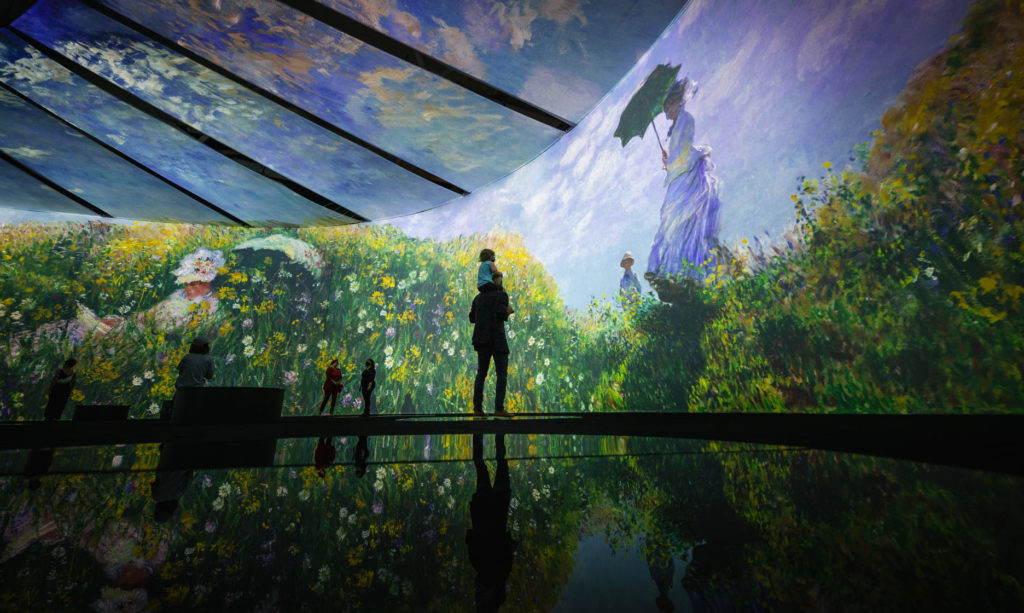
“BEYOND MONET”, LA EXHIBICIÓN INMERSIVA DE UNO DE LOS MÁXIMOS EXPONENTES DEL IMPRESIONISMO, CLAUDE MONET.
 
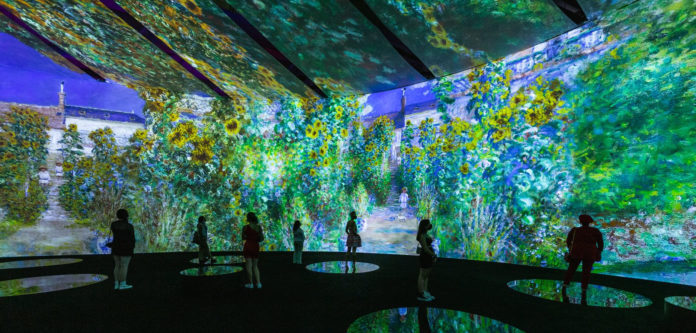
“BEYOND MONET, THE IMMERSIVE EXPERIENCE” SE ENCUENTRA EN MIAMI, CON UN MUNDO MULTISENSORIAL DE MÁS DE 400 OBRAS DEL PINTOR FRANCÉS.

Tras el éxito arrasador de “Beyond Van Gogh” con millones de boletos vendidos en Estados Unidos y el mundo, ahora pueden visitar en Ice Palace Studios de Miami, “Beyond Monet”, la exhibición inmersiva del máximo exponente y creador del impresionismo Claude Monet. Esta fascinante propuesta cultural, lleva a los asistentes a un mundo multisensorial, presentando más de 400 obras emblemáticas del pintor francés (www.miamimonet.com)

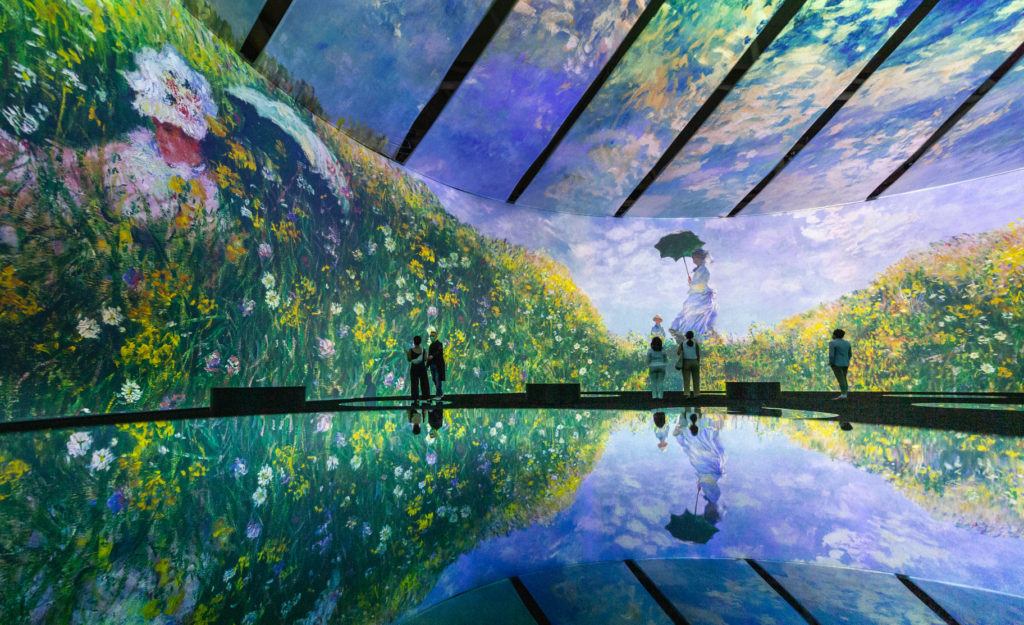
“Beyond Monet” ofrece al público un vistazo a las emociones, pensamientos y sueños de Claude Monet combinando tecnología con piezas diseñadas a la perfección. Las impresionantes imágenes del artista, rodean todas las superficies del salón, desde el piso hasta el techo, sumergiendo a los invitados al interior de las pinturas, que cobran vida fuera de los marcos a través de proyecciones animadas y tecnología de vanguardia. “Beyond Monet” es toda una experiencia inmersiva para despertar los sentidos, ambientada a la perfección por una banda sonora.

Cortesía fotos: Beyond Exhibitions

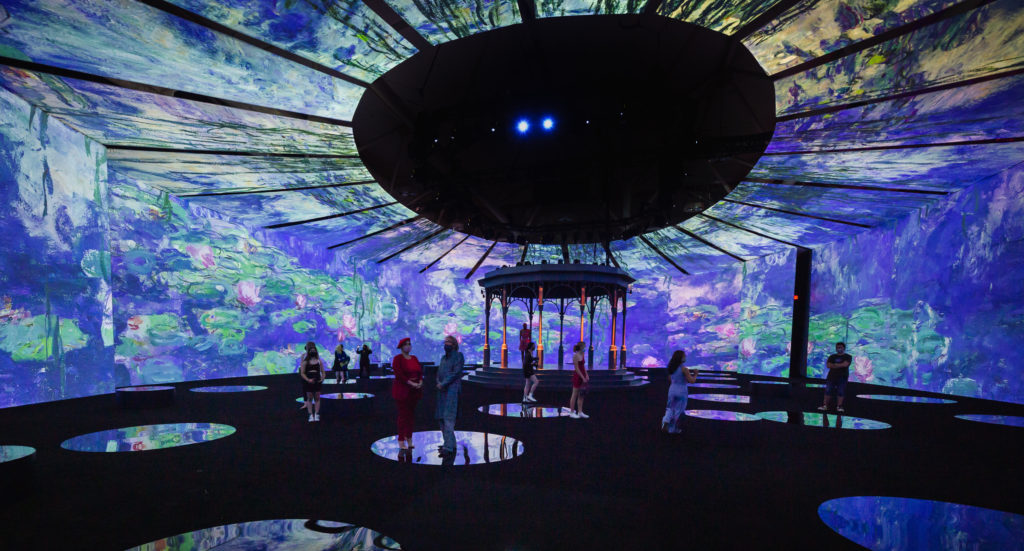
Despues de ingresar al Garden Gallery, los visitantes llegan al área más grande de la exhibición. Inspirándose en el Musée de l’Orangerie de París, el hogar de las obras maestras de Monet, los asistentes pueden caminar libremente por el Infinity Room, un espacio de forma ovalada, y cautivarse con las pinturas más icónicas del artista como la serie “Nenúfares”, “El puente japonés”, “Impresión, sol naciente” (el cuadro más famoso de Monet pues es el que dió origen al estilo impresionista), entre otras obras, que pueden ser apreciadas por diferentes tipos de público, amantes del arte y la familia en general.

Cortesía fotos: Beyond Exhibitions

“Beyond Monet” se basa en el éxito global de “Beyond Van Gogh” que estuvo recientemente en el Ice Palace de Miami por 6 meses recibiendo a más de 200 mil asistentes. Abarca 50.000 pies cuadrados, lo que la convierte en una de las exposiciones inmersivas más grandes de Estados Unidos.  Creada por el responsable de Beyond Van Gogh, el franco canadiense Mathieu St-Arnaud, uno de los mejores diseñadores audiovisuales del mundo y su equipo creativo de Normal Studio.

“Beyond Monet,The Immersive Experience”:
Tickets a la venta en www.miamimonet.com
Ice Palace Studios: 1400 N. Miami Ave. Miami, FL

 “Beyond Monet”, una experiencia inmersiva como ninguna otra, la nueva forma de apreciar el arte. 

Para más información y boletos de “Beyond Monet”:
www.miamimonet.com
Instagram: @monet.miami
Facebook: Beyond Monet Miami

Cortesía fotos: Beyond Exhibitions

All you need to know about Geometric Abstraction

Constructivism Art movement

All you need to know about Geometric Abstract Art…

        5/5 (2)

In 1852, renowned writer Gustave Flaubert wrote a letter of what today seems like a premonition of what was about to happen back then in the world of art: “Perhaps beauty will become a feeling useless to humanity, and art [will become] something half-way between algebra and music.” Little time after this words were written down, meaning and representation would radically change the limits of visual perception and understanding through a series of artists and styles that would define the geometric abstract art movement and the different artists and facets that have represented it. 

Cezanne and Seurat began to complete Flaubert’s prophecy, setting preconditions for abstract geometric art. Cezanne created his art on the strict and specific laws of geometry, treating nature through different figures like a cylinder, a sphere, a cone, everything seen through perspective, in a way in which every possible side of an object in the composition would be directed towards a central point. Cezanne attempted to go beyond nature and find the laws that composed it, hence his allegory of the divine which would later influence other painters as well. Seurat on the other hand, found harmony in an almost musical perception of reality, highlighting use of primary colours and simple shapes. He said “Art is Harmony. Harmony is the analogy of the contrary and of similar elements of tone, of colour and of line, considered according to their dominance and under the influence of light, in gay, calm or sad combinations”.

0,10 Exhibition: A section of Suprematist works by Kazimir Malevich exhibited for the first time.

These two artists established the grounds for what was to come afterwards and we now recognize purely as fauvism and even expressionism which would be the transcendental basis of geometric abstraction. Geometric abstraction arrived after many decades of figurative painting where sensitive images of detailed landscapes, and portraits of pompous characters where featured in many paintings. This fundamental change consisted in the use of simple geometric figures (squares, circles, triangles) combined inside subjective compositions that lived inside surreal spaces. There was no reference to the real world, only fictional, utopic scenarios as if the goal was to say that painting is something that simply one does. It was born as a reaction towards the excess of subjectivity of the visual artists of previous movements in an attempt to distance themselves from the purely emotional. Abstract geometrical art tried to be precise, sticking to the rules of nature and science.  

Kazimir Malevich, Black Square, 1915, oil on linen, 79.5 x 79.5 cm, Tretyakov Gallery, Moscow (Image By Kazimir Malevich – Tretyakov Gallery, Public Domain
Piet Mondrian, Composition with color fields, oil on vanvas, 48cm x 60.5 cm, Museum Boijmans Van Beuningen

One of the pioneers and most emblematic artists of abstract geometric art was Kazimir Malevich, who founded the Suprematist movement. His purpose was the search of an absolute and pure expression, nonfigurative, unlike customary art. During his twenties Malevich established contact with Larionov, which opened the doors for him to new experiences and international relationships, getting to know fauvists, cubists and Italian futurists, playing a huge role on his own creations. His first experiments lead him to create this movement, based on an acute visual language which consisted of abstract geometric figures and neutral colours. He developed his work between 1912 and 1923. Along with his career, he created a series of numerous black and white geometric abstract art paintings. In 1915 he presented his most iconic and historically transcendental piece, called Black Square. Malevich promoted values of logic, mathematics and objectivity contrary to the subjective sensitive technicality of art established then. Claiming superiority in the abstract arts, this piece also rejected mainstream art of the moment and was considered the beginning of a new current, representing the death of conventional art, opening the doors to a new tradition of art. 

Piet Mondrian, Composition number iii, oil on canvas, 19 ¾ x 19 ¾ in. (50 x 50.2 cm), 1929.

Another transcendental exponent of modern abstract geometric art Piet Mondrian. He would be initiated in the art world by his uncle Frits, a landscape impressionist painter. The early youth days of Mondrian, influenced mostly by Amsterdam’s pictorial environment, included still life paintings, landscapes and academic studies. In order to survive, young Mondrian created copies of paintings that were exposed at the Rijksmuseum (Amsterdam) and drawing illustrations for books. Around 1901, he took on a trip to Spain to watch the bullfights, he was completely shocked and entered in a sort of mystical crisis that leads him to isolate himself in search of a new order, a new synthetic law. Between 1907 and 1908, he started getting in touch with fauvist artists before going to study cubism based on straight lines. During those years, he created a series of now-famous geometric abstract art paintings simply called “composition”. 

Theo van Doesburg. Simultaneous Counter-Composition. 1929-30. Oil on canvas. 19 3⁄4 x 19 5⁄8” (50.1 x 49.8 cm). The Sidney and Harriet Janis Collection

In 1914 Mondrian went back to the Netherlands and in 1917 established a connection with Theo Van Doesburg with whom he created the “De Stijl” (The Style) magazine and its manifesto where we would write many theoretical articles of how art was supposed to be done. He created his first compositions of blue, yellow and red compact rectangles on a white background with primary colours and abstract geometric art with black and white. The purpose of his art was to re-establish the balance between man and nature. In 1920, due to disagreements with Van Doesburg Mondrian separated from the De Stijl movement and started getting in touch with the Bauhaus current and its players. Layer in his life he moved to New York, where we stopped using lines and started substituting them for rectangles and squared figures. Mondrian’s painting changed to be based completely on absolute thorough mathematics. He pretended to create a mix between art, matter and spirit to capture neo-plasticism (De Stijl) the universal harmony (using right angles and primary colours): an approach which goal was to discover the deep spiritual essence of reality and life. In the De Stijl movement, the principles that dominated artistic creation were always absolute abstraction, no reference to reality was allowed, and the language was restricted to lines and right angles, the three primary colours (blue, yellow and red) and the three non-primary colours, grey, white and black. 

Theo Van Doesburg, CompositionVIII_(The Cow), circa 1918, oil on canvas, Height: 37.5 cm (14.7 in); Width: 63.5 cm (25 in), Museum of Modern Art

Famous geometric abstract art painter Van Doesburg, (co-founder of De Stijl) created a series of figurative studies to abstract them into geometric figures composed of lines, colourful rectangles and squares. He would later move on from the movement’s aesthetics by inserting lines of different lengths and widths and colours, this would be a cause of rupture with Mondrian inside the De Stijl since the artist was taking a different path to the one established in the manifesto. Van Doesburg lived a vivid political and educational life, establishing contact with different Bauhaus and constructivism artists, he even got involved in architecture and was a key promoter of the Dadaist movement all across Europe. Since the role of Van Doesburg was so essential to the De Stijl, the movement was not able to survive after his death, although many members stayed active and in touch with each other. Many of its original artists, especially Mondrian continued however to create artworks that would be heavily influenced by the current. 

Bart Van der Leck, Composition, 1918, Oil on canvas, 21 3/8 x 16 3/4 (53.5 x 42.5). Tate Museum

Bart Van der Leck, was another transcendental member of De Stijl, who despite having participated for a brief period of time, was extremely meaningful for the movement. Even though the artist refused to sign the manifesto, he created a series of geometrical abstract artworks in which his conception of geometrical painting and his colour palette had a determining influence on the creations of Piet Mondrian and Theo Van Doesburg. The artist would later still create realistic and figurative paintings and would sporadically continue experimenting with geometrical abstraction without sticking to the previously established rigid geometrical rules of De Stijl. 

Bart van der Leck, Study for Compositions No. 7 and No. 8, 1917, Gouache on tracing paper, 100 x 154 cm, Museo Thyssen-Bornemisza

Geometric abstract art has had many different stages and facets across the history of art starting from the early XX century and expanding towards the present day. The influences of geometric abstract art could be seen along with different decades and continents, having also new waves in Latin-American art during the 60s and 70s. Its influence can still be identified in contemporary art and other movements of the XX century. 

Cover image: Theo Van Doesburg, CompositionVIII_(The Cow), circa 1918, oil on canvas, Height: 37.5 cm (14.7 in); Width: 63.5 cm (25 in), Museum of Modern Art.

Written by Eduardo Alva Lòpez

Page 219 of 277
1 217 218 219 220 221 277