DVCAI Presents Riddims of Graffiti: A Celebration of Caribbean Visual Culture and Diasporic Narratives
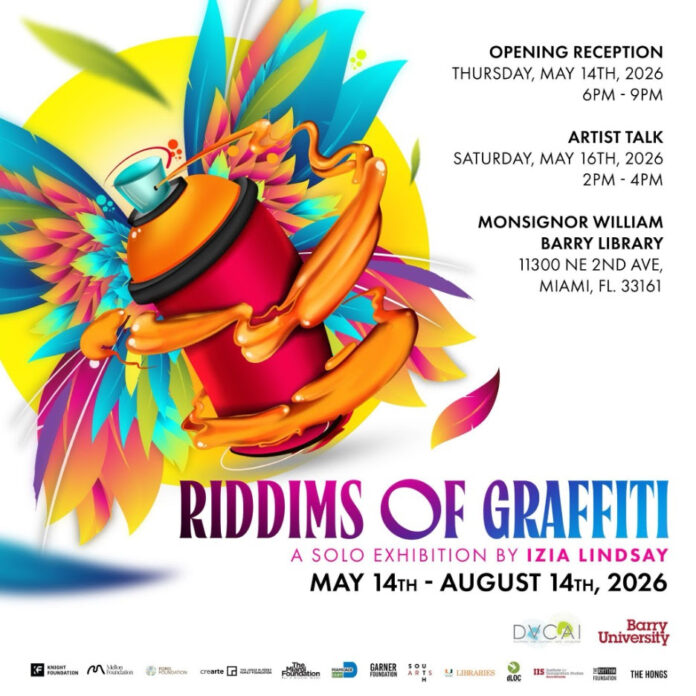
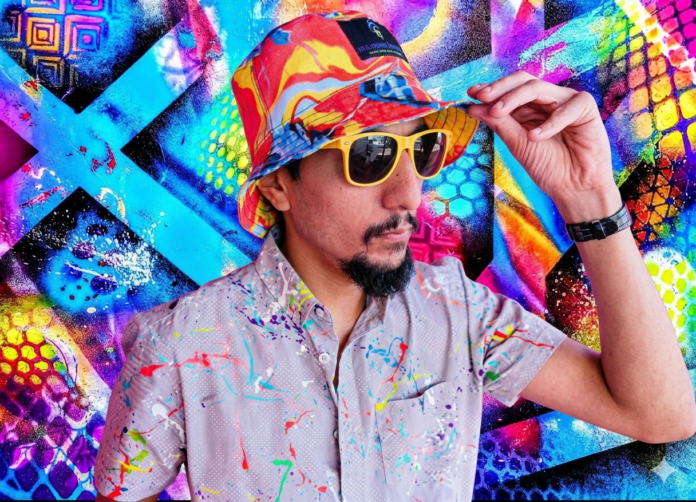
DVCAI at Barry University presents Riddims of Graffiti, a solo exhibition featuring Izia Lindsay, MFA, Assistant Professor of Art at Augustana University.
The exhibition opens May 14, 2026 and runs through August 22, 2026.
Riddims of Graffiti: A Solo Exhibition by Izia Lindsay opens May Thursday 14, 2026 6:00 PM and runs through August 22, 2026. RSVP + details: https://bit.ly/Riddims2026
Riddims of Graffiti: Artist ConversationSaturday, May 16 • 2 PM – 4:30 PMRSVP + details:https://bit.ly/Riddims2026
DVCAI proudly invites the public to experience Riddims of Graffiti, a dynamic solo exhibition by mixed media artist Izia Lindsay, whose work moves with the visual rhythms, layered histories, and cultural pulse of the Caribbean Diaspora.
Working across both digital and traditional media, Lindsay creates immersive compositions rooted in Caribbean iconography and contemporary life. His practice merges texture, memory, urban aesthetics, and storytelling into vibrant multi-layered narratives that reflect the complexity of diasporic identity and lived experience.
This exhibition marks a significant milestone in Lindsay’s artistic journey and is presented in recognition of his selection as a DVCAI Catalyst Award 30-Year Anniversary Fellow—a distinguished honor supporting the development and presentation of a mid-career solo exhibition.
For decades, Lindsay has been an active member of the DVCAI community, participating in residencies, international cultural exchange initiatives, and creative programs that have helped shape and expand his artistic practice. His exhibition reflects DVCAI’s enduring mission to foster long-term support systems for Caribbean and diasporic artists while cultivating meaningful cross-cultural dialogue within Miami’s global cultural landscape.
“Every artist we support carries the story of a community,” says DVCAI Founder and Curator Rosie Gordon-Wallace. “Our fellowships and residencies ensure that those stories continue to travel, to be seen, and shared.”
Riddims of Graffiti invites audiences into a space where contemporary visual language intersects with migration, memory, music, and identity—transforming graffiti-inspired aesthetics into powerful meditations on cultural continuity and belonging.
The exhibition stands not only as a celebration of Lindsay’s evolving practice, but also as a testament to the importance of sustained institutional support for artists whose voices shape the cultural fabric of the Caribbean Diaspora.
For additional information, exhibition dates, and programming, please contact DVCAI.
Please join us for two opportunities to experience Riddims of Graffiti this week:
Opening Reception — Thursday, 5.14.26
Celebrate the exhibition’s opening with us in community.
Whether you can attend one event or join us for both, thank you for continuing to stand with DVCAI as stewards of Caribbean and Latin American artistic excellence—and for investing in the artists who shape our cultural future.
As Founder and Curator Rosie Gordon-Wallace reminds us: “Every artist we support carries the story of a community. Our fellowships and residencies ensure that those stories continue to travel, to be seen, and shared.”
Please join us for two opportunities to experience Riddims of Graffiti this week: Opening Reception — Thursday, 5.14.26 Celebrate the exhibition’s opening with us in community.RSVP + details: https://bit.ly/Riddims2026 Artist Talk — Saturday, 5.16.26 Come hear directly from the artist(s) and deepen the conversation behind the work.RSVP + details: https://bit.ly/Riddims2026 Whether you can attend one event or join us for both, thank you for continuing to stand with DVCAI as stewards of Caribbean and Latin American artistic excellence—and for investing in the artists who shape our cultural future.
Rosie Gordon WallaceFounder + Curator, DVCAI Tanya DesdunesExecutive Director, DVCAI Confirm Your Attendance
About DVCAI Diaspora Vibe Cultural Arts Incubator, Inc. is a virtual artist space dedicated to promoting, nurturing, and cultivating the vision and diverse creativity of emerging artists from the Caribbean and Latin American Diaspora through experimentation, exhibitions, artists-in-residence programs, international cultural exchanges, and dialogue in contemporary art. www.dvcai.org. DVCAI partners with organizations to enhance residency experiences in the Caribbean region, nationally, and internationally. For more information, please visit www.dvcai.org and follow our activities at https://www.instagram.com/dvcai/https://twitter.com/DiasporaVibe. Our narrative embraces issues of race, gender, class, and all topics that are important to the Black Brown Divide. We have created safe places for the discussions, and practice transformative strategic entry points to the Contemporary narrative and create programmatic visual themes that contribute to racial healing in our communities. Your donation makes all of this possible.
Leonora Carrington ya no puede leerse como una figura lateral del surrealismo. Durante décadas, la historia del arte la colocó demasiado cerca de Max Ernst, del mito de la “mujer excéntrica” o de la etiqueta cómoda de “pintora surrealista”. Sin embargo, la investigación reciente, el renovado interés curatorial y sus ventas millonarias han confirmado algo más importante: Carrington fue una de las grandes arquitectas simbólicas del siglo XX.
Nacida en Lancashire, Inglaterra, en 1917, Carrington fue educada dentro de un ambiente familiar acomodado, católico y socialmente rígido. Pero su vida artística comenzó precisamente como una desobediencia. Desde joven rechazó el destino decorativo que se esperaba de ella: matrimonio, disciplina, buenas maneras y obediencia social. En lugar de eso, se inclinó hacia la mitología celta, los animales, las narraciones fantásticas, la alquimia, la magia, la transformación y el humor negro. Esa ruptura temprana aparece con fuerza en el texto base que compartiste, donde se señala que Carrington “no quiso ser musa” ni “esposa decorativa”, sino construir un mundo propio de caballos, hienas, cocinas alquímicas, ancianas insurrectas y mujeres que no piden permiso.
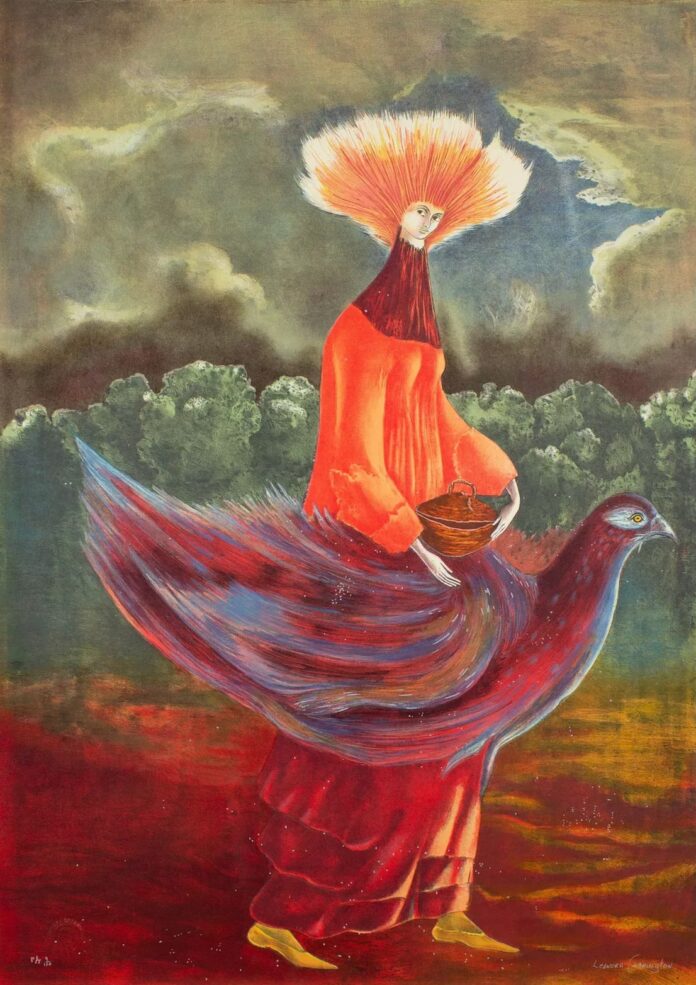
Su obra no representa simplemente sueños extraños. Construye sistemas alternativos de pensamiento. En pinturas como Self-Portrait (Inn of the Dawn Horse), Carrington no se retrata como objeto de deseo, sino como una presencia indomesticable. El caballo blanco, la hiena y el espacio interior funcionan como símbolos de fuga, alianza animal y resistencia psicológica. Esta lectura coincide con estudios recientes que insisten en que Carrington problematizó la feminidad impuesta y rechazó el papel de musa dentro del surrealismo masculino.
De Europa a México: no un refugio, sino una transformación
La vida de Carrington atravesó una fractura decisiva durante la Segunda Guerra Mundial. Tras el arresto de Max Ernst, huyó a España, sufrió una crisis psíquica y fue internada en Santander. Más tarde transformó esa experiencia en Down Below, texto autobiográfico donde el colapso mental no aparece como simple confesión, sino como una experiencia límite de pérdida, encierro y reconstrucción simbólica. Investigaciones recientes sobre trauma y escritura en Carrington subrayan precisamente esta dimensión: su obra no debe reducirse a la enfermedad, sino entenderse como un proceso de elaboración estética y filosófica del trauma.
México fue el territorio donde su lenguaje alcanzó plena madurez. Allí convivió con Remedios Varo y Kati Horna, desarrollando una iconografía donde la cocina se vuelve laboratorio, la casa se convierte en altar, los animales poseen inteligencia espiritual y las mujeres ancianas funcionan como figuras de poder. Carrington vivió gran parte de su vida en México, y su práctica incluyó pintura, dibujo, escultura, textiles, grabado y escritura.
En este sentido, Carrington no solo amplió el surrealismo: lo corrigió. Mientras muchos surrealistas varones idealizaron a la mujer como aparición, musa o detonante erótico, Carrington imaginó mujeres alquimistas, viejas sabias, criaturas híbridas y cuerpos en permanente transformación. Su feminismo no fue panfletario; fue mitológico, visual y estructural.
Carrington hoy: ecofeminismo, posthumanismo y pensamiento contemporáneo
Uno de los aspectos más importantes de la investigación actual sobre Carrington es su relación con el ecofeminismo y el pensamiento posthumano. Ensayos recientes han estudiado su obra como una forma de conocimiento alternativo, donde lo humano deja de ocupar el centro absoluto y entra en diálogo con animales, plantas, fuerzas invisibles y entidades híbridas. Un ensayo académico de 2025 sobre estética ecofeminista vincula la obra de Carrington con el surrealismo, el ocultismo y las relaciones complejas entre humanos y no humanos.
Esta lectura es fundamental porque explica por qué Carrington se siente tan actual. Su obra parece anticipar debates contemporáneos sobre identidad fluida, ecología, corporalidad, espiritualidad, género y crítica al racionalismo dominante. En sus pinturas, el ser humano no manda sobre la naturaleza; convive con ella, se mezcla con ella, se transforma en ella.
También se ha estudiado su influencia en artistas contemporáneas. El libro académico The Medium of Leonora Carrington: A Feminist Haunting in the Contemporary Arts, de Catriona McAra, analiza cómo Carrington funciona como una presencia activa en la imaginación de creadoras actuales, no solo como influencia histórica, sino como una especie de “fantasma feminista” que continúa operando en el arte, la literatura y la performance contemporánea.
La Bienal de Venecia y el regreso global de Carrington
El reconocimiento internacional de Carrington alcanzó un punto clave cuando la 59ª Bienal de Venecia de 2022 tomó su título de The Milk of Dreams, uno de sus libros. La Bienal describió ese universo como un mundo mágico donde la vida puede ser constantemente reinventada a través de la imaginación y donde todos pueden cambiar, transformarse o convertirse en otra cosa.
Ese gesto curatorial fue histórico. No era solo un homenaje; era una declaración de actualidad. Carrington se convirtió en una clave para pensar el presente: cuerpos mutantes, identidades inestables, mundos no humanos, imaginación como resistencia y transformación como posibilidad política.
El mercado: ventas millonarias y una corrección histórica
El mercado también ha reconocido con fuerza su importancia. En mayo de 2024, Les Distractions de Dagobert se vendió en Sotheby’s Nueva York por 28.5 millones de dólares, estableciendo un récord para Carrington y también para una artista británica de nacimiento. Sotheby’s señaló que la obra superó ampliamente su estimación inicial de 12 a 18 millones de dólares.
Ese resultado fue mucho más que una cifra espectacular. Marcó una corrección simbólica del mercado frente a décadas de subvaloración de las mujeres surrealistas. La obra superó el récord anterior de Carrington, que Sotheby’s ubicaba en 3.3 millones de dólares, mostrando un salto extraordinario en la percepción de su importancia histórica.
Otras ventas recientes confirman esta tendencia. En octubre de 2024, Christie’s vendió Faet Fiada (The Appearance of a Wild Beast) por 1,134,000 dólares. En 2025, Christie’s anunció Ikon como lote principal de una venta de arte latinoamericano, con una estimación de 1.2 a 1.8 millones de dólares.
Sotheby’s también informó que Temple of the Word se vendió por 4.6 millones de dólares en 2024, convirtiéndose en uno de los precios más altos alcanzados por la artista en subasta.
Por qué importa Leonora Carrington
Leonora Carrington importa porque su obra no pide permiso. No explica el mundo: lo reorganiza. Sus animales no son símbolos decorativos; son inteligencias alternativas. Sus mujeres no son musas; son guardianas, brujas, científicas, madres, ancianas, alquimistas y monstruos sagrados. Sus cocinas no son espacios domésticos pasivos; son laboratorios de transformación.
Carrington entendió antes que muchos que la imaginación no es evasión. Es una forma de conocimiento. Su arte propone que la realidad oficial es apenas una versión pobre de lo posible. Por eso sigue siendo tan urgente: porque en una época que clasifica, simplifica y comercializa la identidad, Carrington nos recuerda que el yo puede ser múltiple, animal, ancestral, femenino, monstruoso, espiritual y libre.
Su reciente ascenso académico, curatorial y comercial no es una moda. Es una reparación. Leonora Carrington no fue la compañera de nadie. Fue una creadora de mundos.
Referencias
La Biennale di Venezia. Leonora Carrington – The Milk of Dreams, Biennale Arte 2022.
Cecilia Alemani. The Milk of Dreams, 59th International Art Exhibition, Venice Biennale 2022.
Catriona McAra. The Medium of Leonora Carrington: A Feminist Haunting in the Contemporary Arts. Manchester University Press, 2022.
V. Ferentinou. “The Cabbage is a Rose: Feminist Eco-aesthetics from Surrealism to Contemporary Art,” 2025.
H. Bremm. “Feminist Perspectives on Materials and Making in Leonora Carrington,” 2025.
Sotheby’s. Leonora Carrington, Les Distractions de Dagobert, Modern Evening Auction, New York, May 2024.
Sotheby’s. “Leonora Carrington and Joan Mitchell Lead Exceptional Results for Women Artists,” 2024.
Christie’s. Latin American Art Totals $12,824,280, October 2024.
Christie’s. Latin American Art, February 2025.
Art Monthly. Anna Dezeuze, “Why Surrealism Matters: The Medium of Leonora Carrington,” 2024.
Inside Dolce&Gabbana at ICA Miami: An Experience Beyond Fashion A Pilgrimage Through Craft, Devotion, and the Art of Making
There are exhibitions one visits out of curiosity, and there are exhibitions that alter one’s internal landscape. From the Heart to the Hands: Dolce&Gabbana at Institute of Contemporary Art, Miami belongs emphatically to the latter.
I arrived without expectations. Perhaps that was the greatest luxury of all. No anticipation, no pressure to be impressed—only openness. Yet from the very first room, I understood that this was not simply a fashion exhibition. It was an immersive act of devotion to craftsmanship, memory, Italian culture, and the meditative discipline of making beauty by hand.
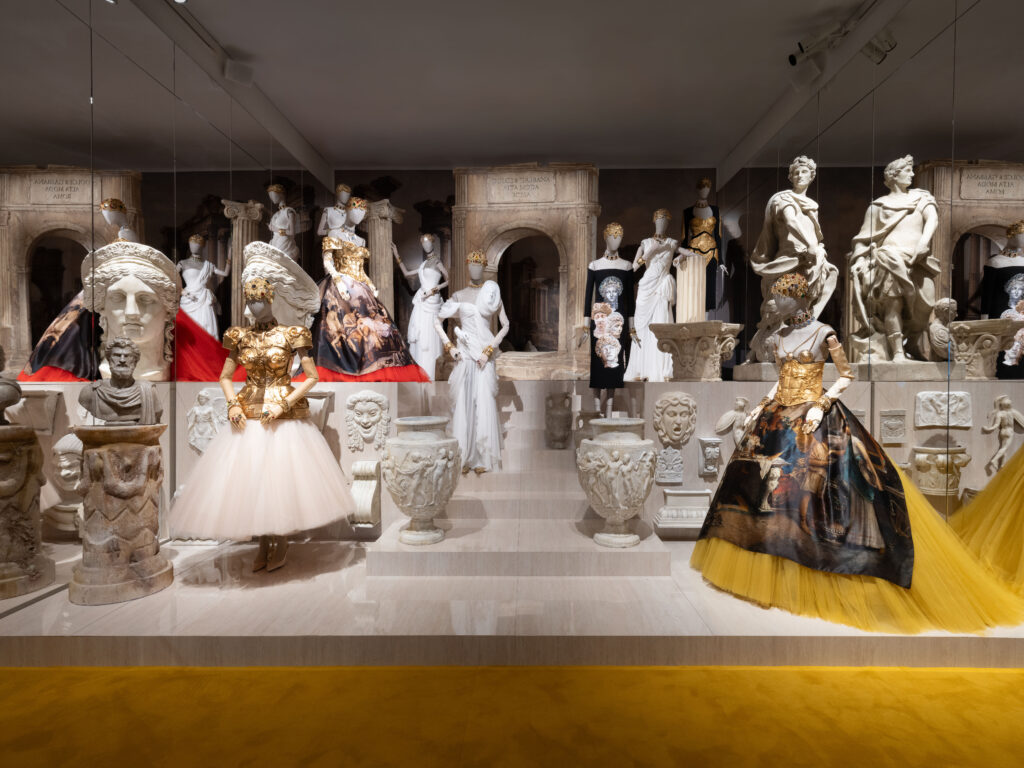
The exhibition unfolds like an Alta Moda pilgrimage: sacred, theatrical, deeply human. Each room feels like entering a different dimension of Italian imagination, where fashion transcends garment and becomes architecture, sculpture, painting, opera, religion, and mythology simultaneously. The curatorial vision is extraordinary—precise without becoming rigid, emotionally overwhelming without descending into spectacle. Every transition between spaces feels intentional, almost cinematic.
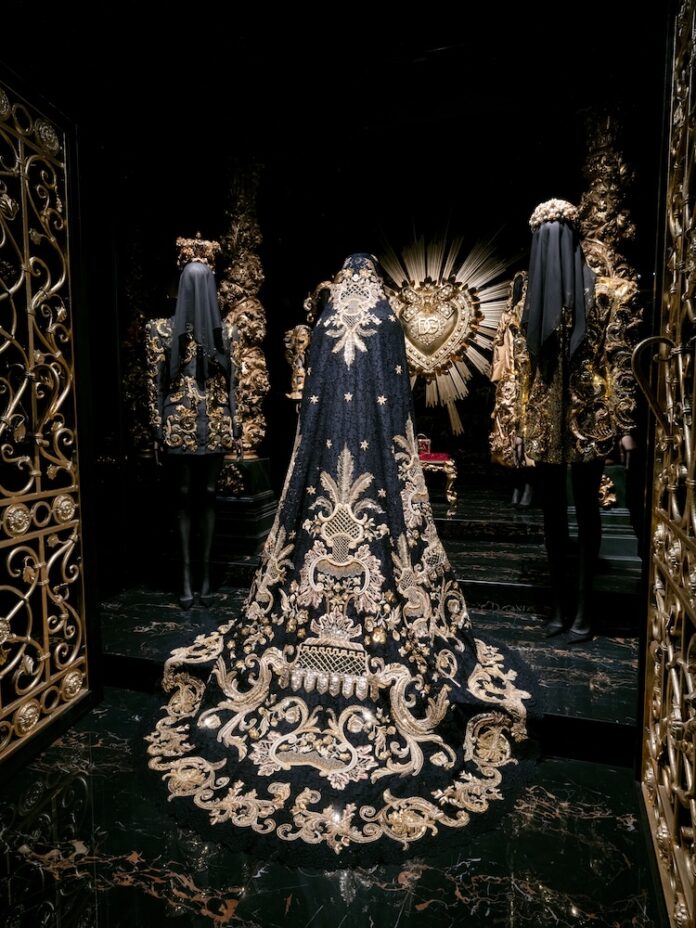
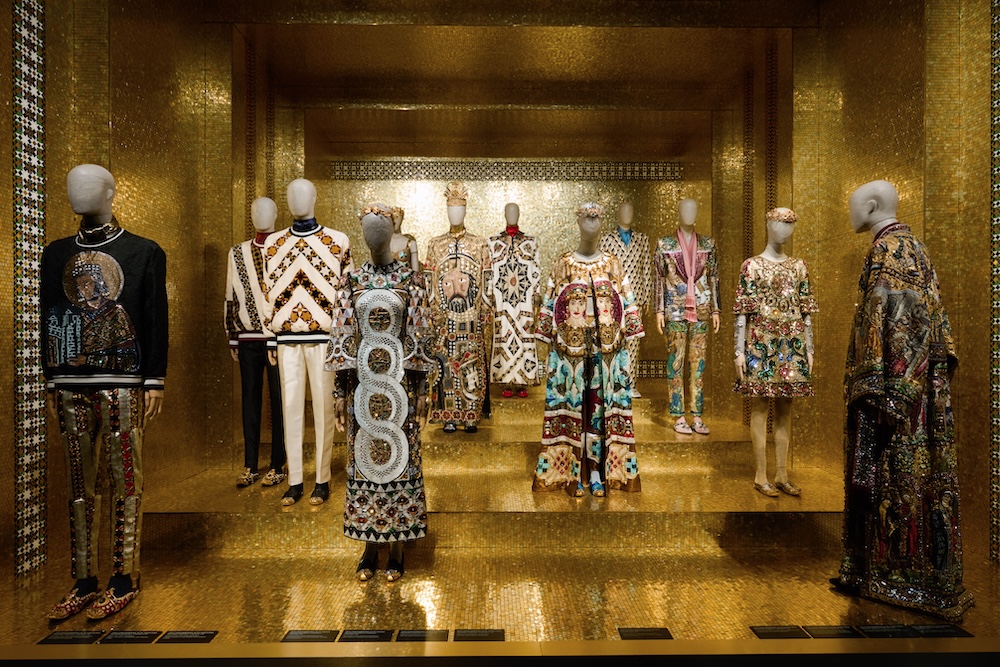
As someone profoundly drawn to textiles, jewelry, haute couture, and artisanal processes, I believed I understood the value of craftsmanship. I was wrong. What I encountered here exists on another level entirely. The embroidery, beadwork, tailoring, mosaics, hand-painted surfaces, gold embellishments, and devotional references are so obsessive in their execution that they verge on the impossible. These are not merely dresses; they are monuments to patience, labor, and imagination.
Every gown, jewel, painting, and installation operates as an autonomous work of art. Some pieces possess the silence and gravity of Renaissance paintings; others explode with the ecstatic maximalism that has become synonymous with Dolce & Gabbana. Yet beneath all the visual opulence lies something more profound: reverence for the human hand. In an era increasingly dominated by speed, automation, and disposable aesthetics, this exhibition insists on slowness, mastery, and emotional intensity.
What surprised me most was not only the beauty, but the psychological effect of the experience. I left with my mind racing. New ideas arrived faster than I could process them. My creativity no longer fit inside my head. Few exhibitions achieve that rare state in which inspiration becomes almost physically overwhelming. This one does.
These were some of the best dollars I have ever spent. Every creative person should experience this exhibition. More than that: every child in Miami should see it. Not simply to admire luxury, but to understand what human beings are capable of creating when discipline, imagination, heritage, and passion converge completely.
Another extraordinary aspect of the exhibition was its sound and moving-image design. The music and videos were exquisite—sensual, cinematic, and emotionally immersive. They did not function merely as background elements, but as integral components of the experience, deepening the emotional resonance of each room. The carefully orchestrated soundscapes, combined with archival footage and visual narratives, transformed the exhibition into something almost operatic. One did not simply observe the work; one entered into its rhythm, its memory, and its emotional universe.
From the Heart to the Hands is not about fashion alone. It is about the spiritual dimension of craftsmanship—about beauty born through devotion, patience, meditation, and the intelligence of the human hand. The power emanating from each piece comes from love, from the heart, from hours of contemplative labor transformed into material form. That emotional and spiritual energy is something profoundly human, something no artificial intelligence will ever truly replicate. Above all, the exhibition is a reminder that the handmade object still possesses the power to astonish, move, and transform us.
Miami is no stranger to spectacle, but “From the Heart to the Hands: Dolce&Gabbana” at ICA Miami offers something more enduring than glamour: it offers devotion. On view February 6 through June 14, 2026, this exhibition—curated by the formidable Florence Müller—unfolds as a kind of secular cathedral for the handmade. It is haute couture not as a trend, but as testimony: a spiritual journey through art history, regional memory, philosophy, and the excellence of craft. Tickets are on sale now.
The exhibition’s title is more than poetic framing—it is a thesis. Ideas begin as emotional impulses, sharpen into images and references, then move into the studio where artisans translate vision into matter. At ICA Miami, that translation becomes the exhibition’s true protagonist: the invisible human labor behind beauty made visible. The show presents a vast selection of works—drawn from archival and newer creations—while staging them in a sequence of immersive gallery rooms, each with its own theme, atmosphere, and historical register.
A museum built like a pilgrimage route
This is not an exhibition you “scan.” It’s one you move through with attention—like chapels in a basilica, or rooms in an encyclopedic museum where each threshold changes your sense of time. ICA’s presentation is newly conceived in dialogue with the museum’s expanded home, and it uses that architecture to its advantage: corridors become transitions, lighting becomes dramaturgy, and each room becomes a concentrated world.
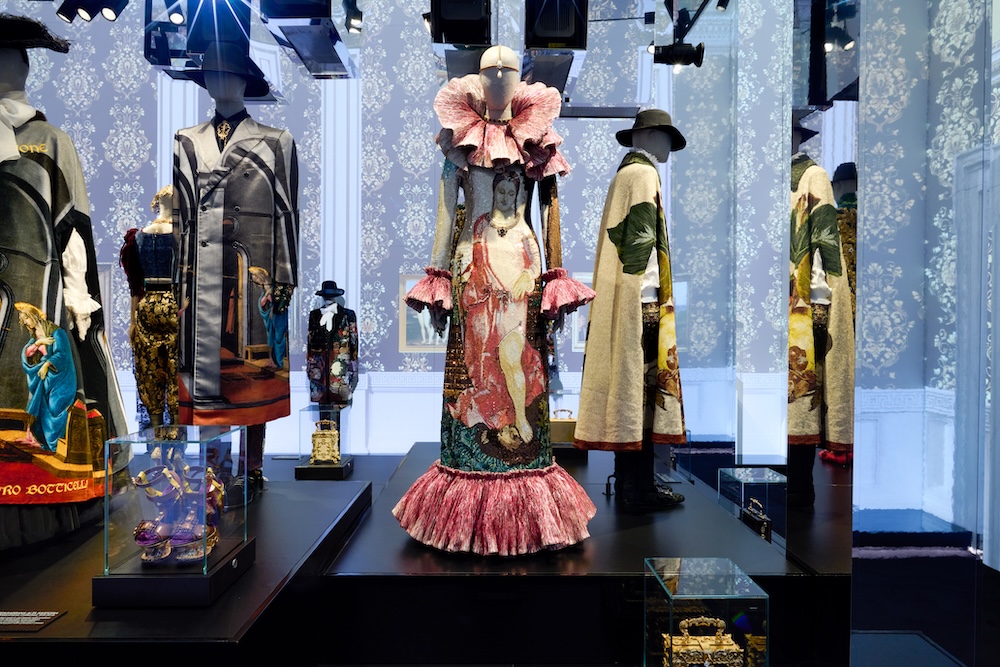
What immediately distinguishes Müller’s approach is her refusal to treat fashion as isolated. Here, Alta Moda functions as a time capsule—a vessel carrying fragments of Italy’s visual culture: architecture, folklore, opera, regional topographies, artisanal techniques, and the long lineage of ornament as meaning. You begin to understand that the garments are not simply “inspired by” art history—they behave like art history, absorbing and reinterpreting it with a fluency that feels less like costume and more like conversation.
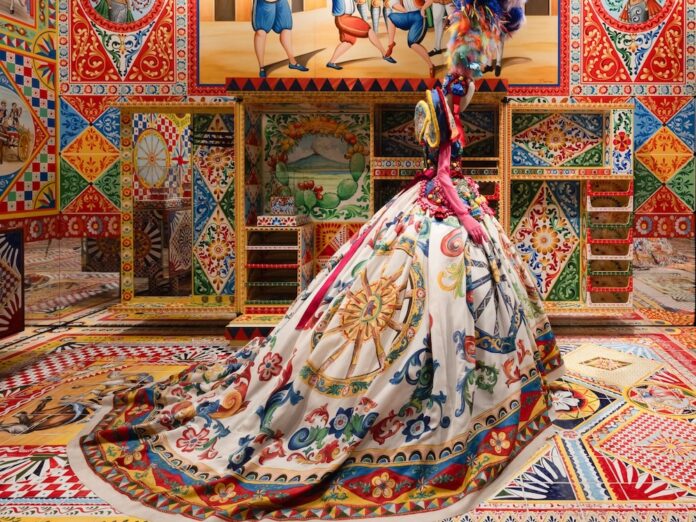
In the Heart of Milan_Photo By Greg Kessler 2
Each room, its own cosmology
One of the great pleasures of From the Heart to the Hands is its room-by-room intelligence. Each gallery reads as a thesis in miniature: a distinct focus, an aesthetic temperature, a curated rhythm of silhouettes, surfaces, and iconography. You feel the curatorial hand not in didactic wall text, but in the choreography of what meets your eye first—and what is saved for the turn of your head.
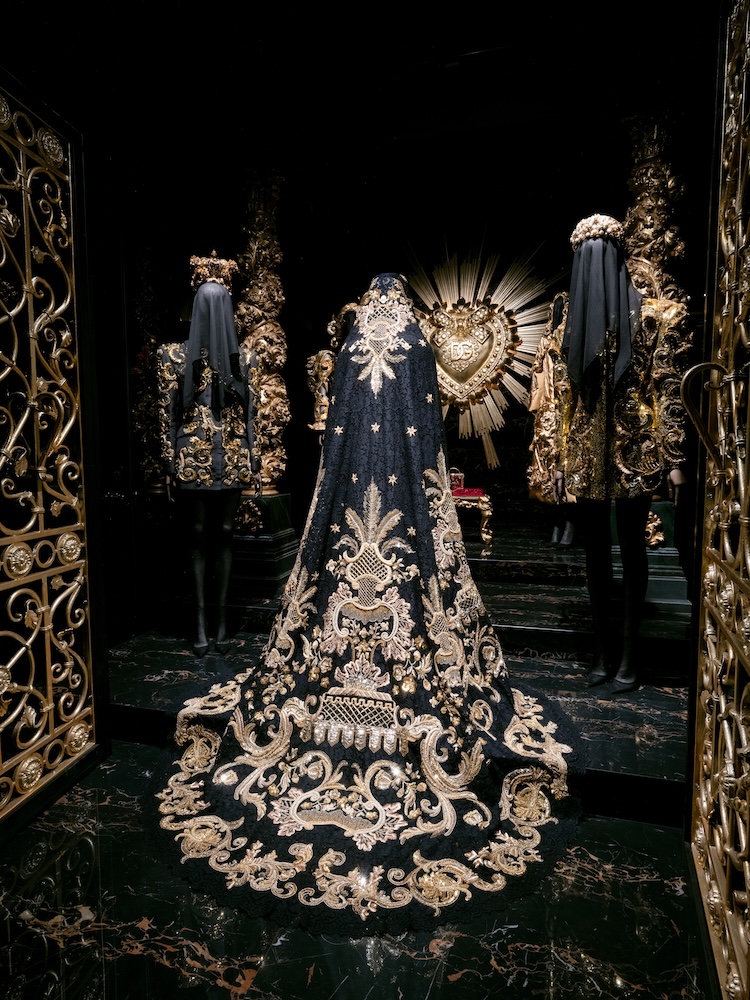
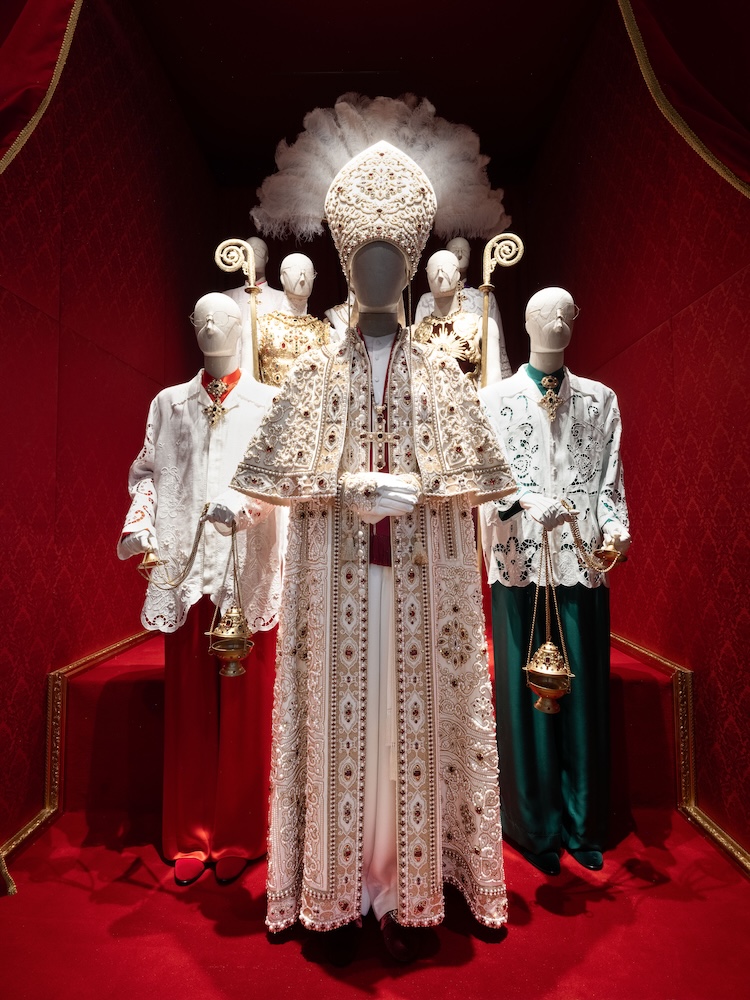
There are rooms that lean into ritual—garments that suggest procession, ceremony, and the human desire to transform through clothing. There are rooms that feel operatic, where scale, volume, and theatrical detail push fashion toward stagecraft. There are rooms that read like regional altars, honoring the specificity of Italian heritage—its materials, symbols, and artisanal legacies—while translating them into a contemporary visual language.
Even without describing individual looks as a list (which would miss the point), you can feel the exhibition’s core structure: every room asks a different question about beauty. Is beauty devotion? Is it humor? Is it memory? Is it craft as philosophy? And—crucially—what does it mean to take the handmade seriously in an era of speed and disposable image?
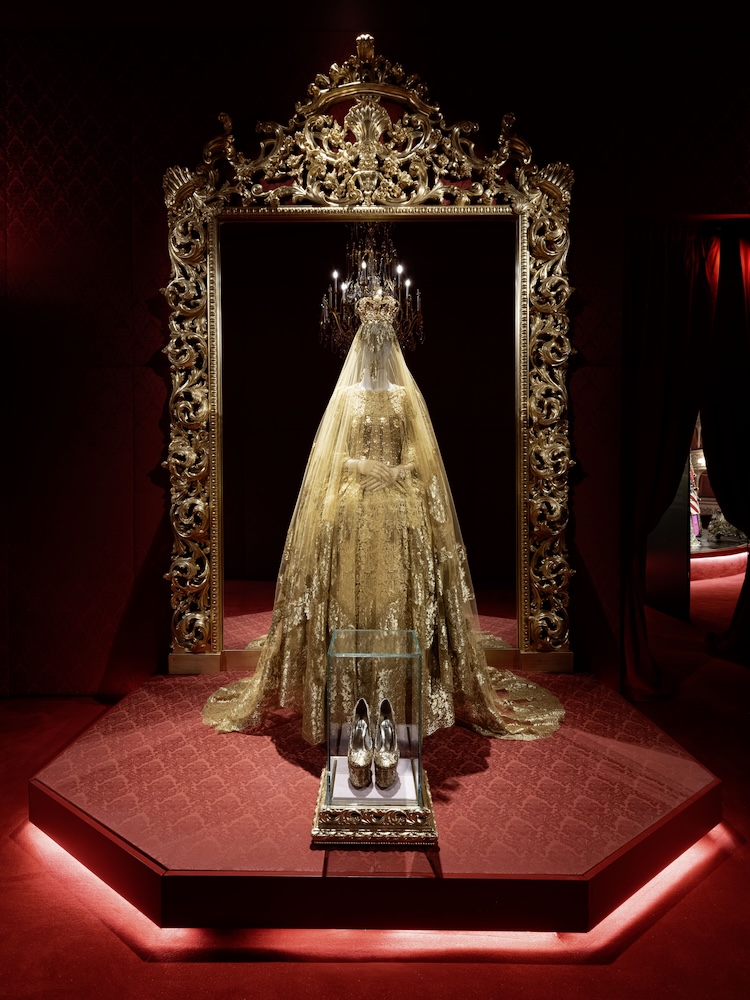
Devotion_Photo By Greg Kessler
Craft as a form of belief
If there is one message that lands in the body, it’s that this is a show about the hand: about the stubborn human choice to make slowly, meticulously, and with reverence for detail.
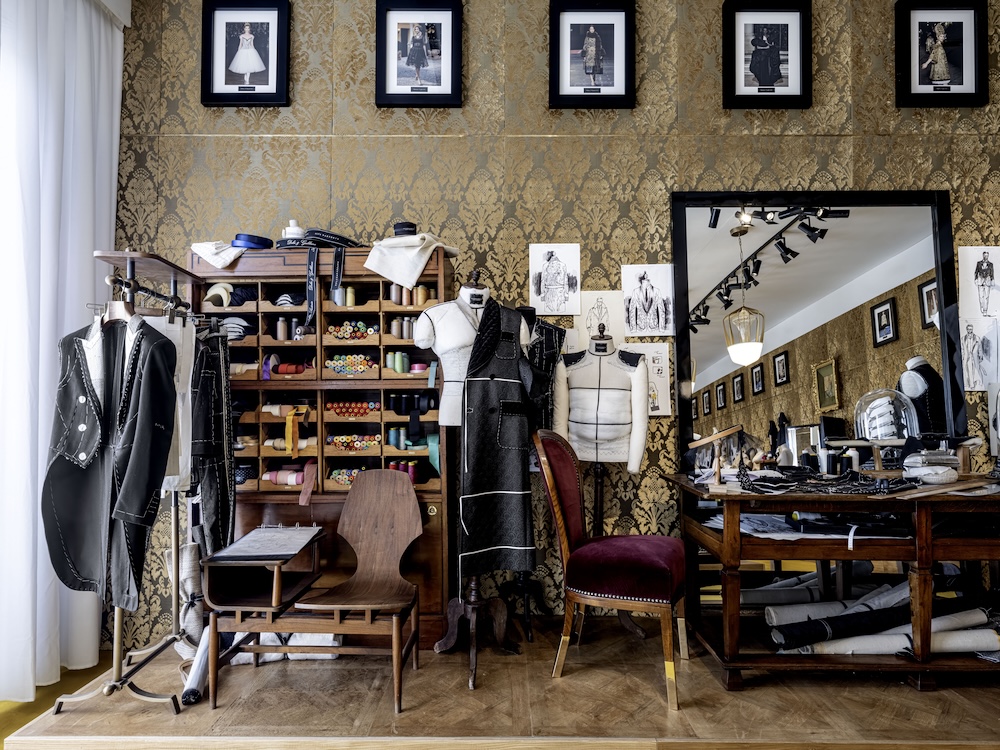
The exhibition’s success lies in the way it makes craft feel not merely impressive, but existential. You don’t just admire the embroidery—you start thinking about time. You don’t just register the construction—you start thinking about discipline. You don’t just notice the embellishment—you start thinking about devotion, and the ways artisans transmit knowledge across generations without ever needing to declare themselves as philosophers.
That’s why “spiritual journey” isn’t an exaggeration here. The spirituality isn’t tied to doctrine; it’s tied to attention—the kind of attention that turns labor into art. The show treats the atelier not as backstage but as sacred ground: the place where imagination is forced to become real.
Architectural and Pictorial_Photo by Greg Kessler
A love letter—without nostalgia
The exhibition is frequently described as a love letter to Italian culture, but it avoids nostalgia by insisting on transformation. Heritage is not presented as fixed; it is reimagined continually. The most compelling moments aren’t the ones that “reference” the past—they’re the ones that metabolize it, making old forms feel alive in the present.
This is where Müller’s curatorial gift is clearest: she understands that fashion exhibitions often fail when they become either purely celebratory or purely academic. Here, the show is both sensorial and intelligent—pleasure with structure. The rooms are immersive, but never empty of meaning; exuberant, but not sloppy; maximal, but controlled.
In the Heart of Ancient Rome_Photo by Greg Kessler
Miami as the right stage
Bringing this exhibition to Miami feels precise, not opportunistic. ICA Miami is a museum dedicated to contemporary visual culture, and From the Heart to the Hands asserts fashion’s rightful place within that field—not as retail, but as visual philosophy and material intelligence.
Miami, too, understands the language of surfaces and ceremony. But it also understands diaspora, hybridity, and the way culture travels through objects. In that sense, the exhibition’s insistence on cross-disciplinary references—art, architecture, folklore, design, performance—lands naturally here. This is not “fashion coming to the museum.” It’s the museum acknowledging that fashion has always been one of the most complex visual arts: the only one built to move through life on a body.
Divine Mosaics_Photo by Greg Kessler
Why you should go—and how to go
You leave this exhibition with your eyes recalibrated. You notice stitching differently. You notice materials differently. You notice what it means to make something that can outlast a season—not because it is expensive, but because it is carefully conceived and executed. And you leave with a renewed respect for the human capacity to translate imagination into form—patiently, precisely, beautifully.
“From the Heart to the Hands: Dolce&Gabbana” is on view at ICA Miami from February 6 to June 14, 2026, and tickets are currently on sale. To purchase tickets, go to the official exhibition website.
Eternal Beauty_Photo by Greg Kessler
Ateliers Ornaments and Volumes_Photo By Greg Kessler
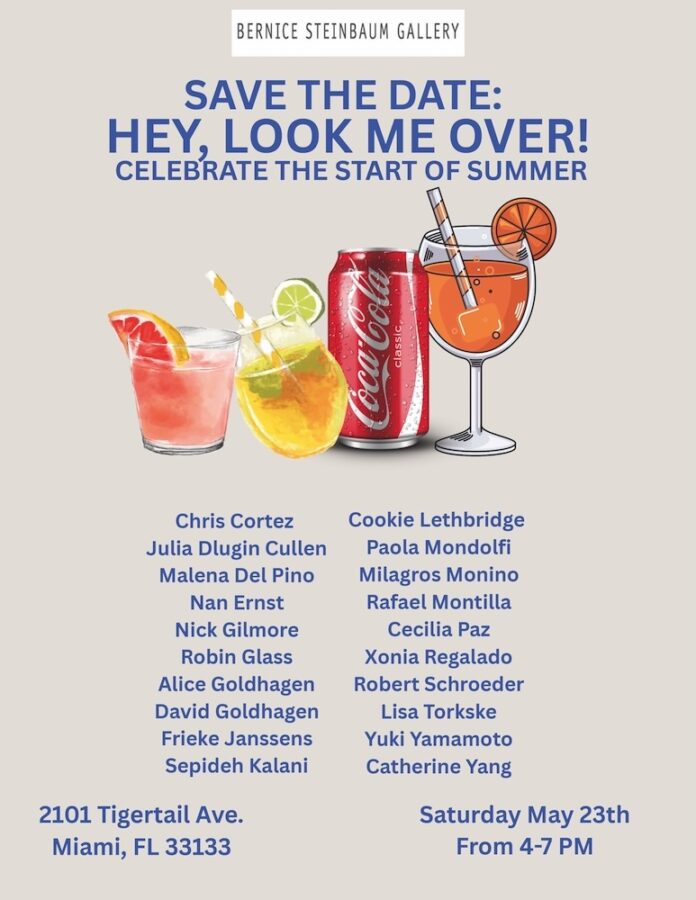
When we think about summer, we think of Aperol Spritz and ice cream. Those of you who know the gallery, however, know that neither is allowed inside these walls. What is always welcome here is art.
Of course, we cannot exhibit everyone we would like to throughout the year. But in the spirit of summer—a season that invites a little more openness and possibility—we allow ourselves that privilege.
We are truly delighted that the twenty (20) artists we selected have agreed to share their work with us. None of the artists included in the exhibition currently have gallery representation in Miami—though we believe they absolutely should. This exhibition is our way of fostering connection, dialogue, and a stronger sense of community within the art world.
We will have Coca-Cola and Bloody Marys available, hidden in the bar, along with snacks (fattening) for you to enjoy.
Artists: Chris Cortez Julia Dlugin Cullen Malena Del Pino Nan Ernst Nick Gilmore Robin Glass Alice Goldhagen David Goldhagen Frieke Janssens Sepideh KalaniCookie Lethbridge Paola Mondolfi Milagros Monino Rafael Montilla Cecilia Paz Xonia Regalado Robert Schroeder Lisa Torkske Yuki Yamamoto Catherine Yang
Mejores museos de arte en Miami: un campo de fuerzas entre lo moderno y lo contemporáneo
Pocas ciudades en el mundo han experimentado una transformación museística tan acelerada y tan cargada de contradicciones como Miami. En apenas tres décadas, la metrópolis del sur de la Florida ha pasado de ser un destino asociado casi exclusivamente al turismo de playa a convertirse en uno de los nodos más activos del circuito internacional del arte contemporáneo. Este fenómeno no puede entenderse sin tomar en cuenta la presencia de Art Basel Miami Beach, que cada diciembre actúa como catalizador de una semana que redefine el pulso cultural de la ciudad. Sin embargo, reducir el ecosistema museístico de Miami a ese evento anual sería un error crítico: las instituciones que aquí se analizan operan los trescientos sesenta y cinco días del año, con colecciones, programas y agendas curatoriales de calado genuino.
Lo que sigue es un recorrido analítico por los principales museos de arte contemporáneo de Miami, evaluados desde la perspectiva de sus colecciones permanentes, sus decisiones curatoriales y su posición dentro del ecosistema cultural más amplio de la ciudad.
I. Institución pública
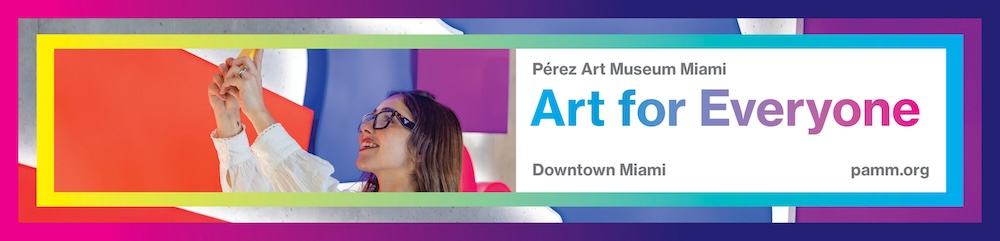
Pérez Art Museum Miami (PAMM) Museum Park, Downtown Miami · Fundado 1984
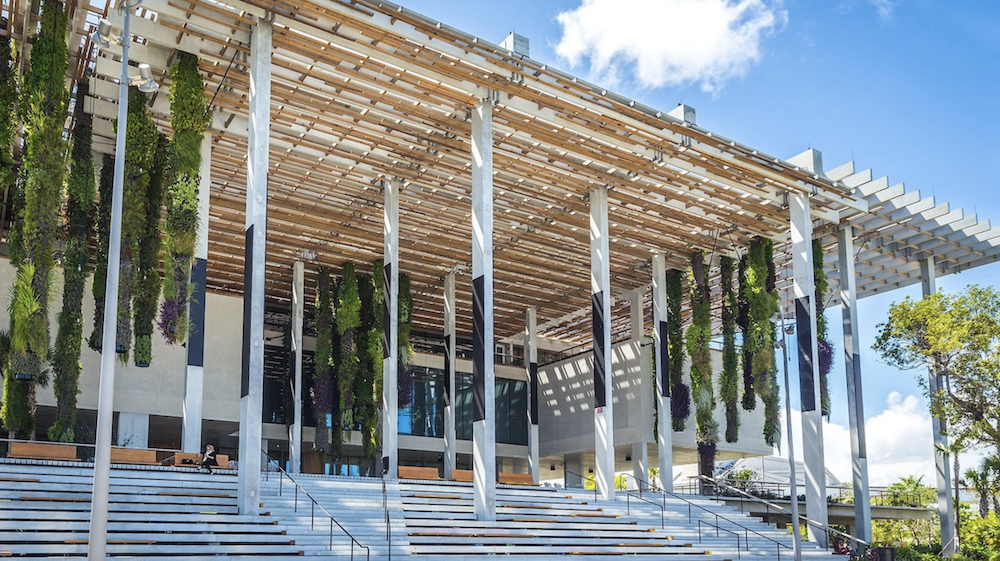
El PAMM es, sin lugar a dudas, el museo insignia de Miami. Inaugurado en su sede actual en diciembre de 2013, el edificio diseñado por el estudio suizo Herzog & de Meuron —responsables también de la Tate Modern en Londres y el estadio Olímpico de Pekín— es en sí mismo una declaración de intenciones. Con sus terrazas envolventes, sus voluminosos aleros y sus jardines verticales de plantas tropicales diseñados por el botánico francés Patrick Blanc (con ochenta especies distintas), el edificio tiende un puente sutil entre el paisaje de la bahía de Biscayne y el universo conceptual del arte contemporáneo.
“La colección permanente del PAMM ha crecido hasta acumular cerca de tres mil obras de arte de los siglos XX y XXI, con un énfasis declarado en el arte latinoamericano, el Caribe, la diáspora africana y la experiencia Latinx en los Estados Unidos.”
Esta orientación geopolítica de la colección no es accidental: refleja tanto la demografía de Miami —una ciudad en el cruce de las Américas— como las donaciones estratégicas de su principal mecenas, el promotor inmobiliario Jorge M. Pérez, quien en 2016 aportó más de doscientas piezas de arte cubano contemporáneo y diez millones de dólares adicionales, convirtiendo al PAMM en el museo con una de las mayores colecciones de arte cubano contemporáneo en los Estados Unidos. La colección incluye obras de figuras como Wifredo Lam, Diego Rivera, Beatriz González, Jean-Michel Basquiat, y artistas de la diáspora caribeña como Glexis Novoa y José Bedia.
En 2019, el museo recibió un millón de dólares de la Fundación Andrew W. Mellon para consolidar su Instituto Cultural del Caribe, una plataforma curatorial e investigativa dedicada al arte de la región y sus diásporas. Esta apuesta institucional por los márgenes geográficos del canon occidental es uno de los gestos más coherentes y significativos dentro del panorama museístico del país.
La programación reciente del PAMM refuerza esta vocación. Entre las exposiciones más relevantes de 2025 y 2026 destaca la primera exposición individual en Miami de Woody De Othello, artista de herencia haitiana cuyas esculturas cerámicas exploran la relación entre el cuerpo, la tierra y la espiritualidad a través del vocabulario de la cerámica y los objetos domésticos. También merece atención la exposición dedicada a Cecilia Vicuña y su instalación Quipu Gut, presente hasta agosto de 2026, así como el ambicioso proyecto expositivo Language and Image, con más de cien obras de más de cincuenta artistas de todo el mundo extraídas de la colección Jorge M. Pérez. Para 2026 el museo anuncia Basquiat: Figures, Signs, Symbols, la primera gran presentación monográfica de Jean-Michel Basquiat en el sur de la Florida.Arte latinoamericano Diáspora caribeña Arte cubano Arte africano Video art.
P +1 305 375 3000 A 1103 Biscayne Blvd., Miami, FL 33132 @pamm Pamm.org
Rubell Museum Allapattah, Miami · Fundado 1993 · Sede actual 2019
Si el PAMM representa el vector institucional público del arte contemporáneo en Miami, el Rubell Museum encarna su contraparte: la colección privada que se convierte en fuerza modeladora del paisaje cultural urbano. Don y Mera Rubell comenzaron a coleccionar en los años sesenta, cuando Don estudiaba medicina y Mera enseñaba en el programa Head Start. Su metodología fue siempre directa: visitas a estudios de artistas, confianza en la intuición, y apuestas tempranas por talentos antes de que el mercado los consagrara.
En 1993, los Rubell abrieron su colección al público en un antiguo almacén confiscado por la DEA en el barrio de Wynwood, en una decisión que contribuyó decisivamente a la transformación de ese distrito deteriorado en el corazón del arte contemporáneo de la ciudad. En 2019 dieron otro salto: un campus de cien mil pies cuadrados en Allapattah, diseñado por el estudio Selldorf Architects, que les permitió desplegar cuatro exposiciones simultáneas y albergar más de siete mil doscientas obras de más de mil artistas acumuladas en cinco décadas.
“La colección Rubell es notable por su capacidad de yuxtaponer lo consagrado y lo emergente: obras de Keith Haring, Jeff Koons, Jean-Michel Basquiat y Cindy Sherman conviven con artistas en residencia y adquisiciones de primera hora.”
Entre los hitos de la colección destacan dos instalaciones de Yayoi Kusama, incluyendo una de sus célebres Infinity Mirrored Rooms; cinco galerías dedicadas a los artistas de la apropiación neoyorkina de principios de los ochenta (Peter Halley, Jenny Holzer, Louise Lawler, David Salle, Christopher Wool); y obras monumentales de El Anatsui, Rashid Johnson, William Kentridge, Mickalene Thomas y Kehinde Wiley. La institución además opera un programa de artistas en residencia apoyado por la Knight Foundation, que para 2025 seleccionó a la artista Joanna van Son.
La programación también trasciende las artes visuales: en 2024, el museo colaboró con Michel Hausmann y la compañía Miami New Drama en The Museum Plays, una experiencia de teatro inmersivo donde obras breves —encargadas a dramaturgos como Marco Ramirez y Carmen Pelaez— se representaban junto a piezas específicas de la colección, en un intento de generar nuevas formas de encuentro entre el espectador y el objeto artístico.
Wednesday: 11:30 am – 5:30 pm Thursday: 11:30 am – 5:30 pm Friday: 11:30 am – 7:30 pm Saturday: 11:30 am – 7:30 pm Sunday:11:30 am – 5:30 pm Monday: Closed Tuesday: Closed
III. Arte e ideas sin costo de admisión
Institute of Contemporary Art, Miami (ICA Miami) Miami Design District · Fundado 2014 (reapertura 2017)
El ICA Miami tiene una historia institucional compleja que merece atención. El museo desciende del Museum of Contemporary Art (MOCA) de North Miami, fundado en 1979, que en 2014 protagonizó una escisión amarga tras el fracaso de un referéndum municipal para financiar su expansión y la salida de su directora Bonnie Clearwater. El resultado fue un acuerdo arbitral que dividió la colección: el MOCA de North Miami conservó el nombre pero no las mejores obras; el nuevo ICA Miami se instaló en el Design District con un perfil más contemporáneo y combativo.
Desde su inauguración en diciembre de 2017 en un edificio diseñado por el estudio madrileño Aranguren + Gallegos Arquitectos —una caja de cristal y acero con una fachada sur de triángulos metálicos entrelazados—, el ICA ha mantenido una política de acceso gratuito que lo convierte en una excepción notable dentro del ecosistema museístico de la ciudad. En 2024, la institución adquirió la antigua sede de la De la Cruz Collection por veinticinco millones de dólares, añadiendo treinta mil pies cuadrados de espacio expositivo gracias a contribuciones de decenas de filántropos del sur de la Florida.
El ICA no mantiene una colección permanente de envergadura comparable a la del PAMM o el Rubell, pero compensa este aspecto con una programación temporal de alta exigencia intelectual y un compromiso explícito con artistas emergentes y subreconocidos. Exposiciones como la retrospectiva de Charles Gaines, el homenaje a Nam June Paik en su conexión con Miami, y la memorable retrospectiva de Keiichi Tanaami han articulado un discurso curatorial coherente alrededor de las intersecciones entre arte conceptual, cultura popular, tecnología e identidad. El museo también opera programas como ICA Speaks, ICA Performs e ICA Residents, que vinculan a los artistas de las exposiciones con la comunidad local.
Miami Design District 61 NE 41st St, Miami, FL 33137 (305) 901-5272 @icamiami Icamiami.org
IV. Museum of Contemporary Art North Miami (MOCA)
MOCA North Miami: comunidad, experimentación y acceso
El Museum of Contemporary Art North Miami (MOCA) se ha consolidado como una de las instituciones más comprometidas con el acceso y la experimentación dentro del panorama artístico de Miami. Fundado en 1981 y ubicado en su sede actual desde 1996, el museo ha desarrollado una programación que prioriza tanto a artistas emergentes como a voces históricamente subrepresentadas, estableciendo un puente entre la producción contemporánea y su contexto social inmediato.
Más que un espacio de exhibición, MOCA opera como un laboratorio curatorial. Sus exposiciones, que rotan constantemente a lo largo del año, se acompañan de una sólida agenda de programas públicos, educativos y comunitarios, posicionando al museo como un agente activo dentro de North Miami. Este enfoque no solo amplía el alcance del arte contemporáneo, sino que redefine su función: el museo deja de ser un contenedor pasivo para convertirse en un espacio de diálogo y construcción cultural.
En un ecosistema marcado por la influencia del mercado, MOCA insiste en una lógica distinta: la del proceso, la investigación y la inclusión. Su relevancia radica precisamente en esa capacidad de sostener prácticas que, lejos del espectáculo, construyen nuevas narrativas desde la base.
Joan Lehman Building 770 NE 125 Street North Miami, FL 33161 305-893-6211 Mocanomi.org @mocanomi
Monday : Closed Tuesday : Closed Wednesday : 12 – 7 PM Thursday : 10 AM – 5 PM Friday : 10 AM – 5 PM Saturday : 10 AM – 5 PM Sunday : 10 AM – 5 PM
V. The Bass
The Bass Museum: institucionalidad y expansión contemporánea
El The Bass, fundado en 1964 y situado en un edificio Art Deco en Miami Beach, representa una de las instituciones más consolidadas del circuito cultural de la ciudad. A lo largo de su evolución—particularmente tras su renovación arquitectónica en 2017—el museo ha reforzado su posicionamiento como una plataforma internacional para el arte contemporáneo.
Bajo una dirección curatorial enfocada en el diálogo interdisciplinario, The Bass ha ampliado su alcance más allá de las categorías tradicionales, integrando arte contemporáneo con diseño, moda y cultura visual. Sus exposiciones suelen presentar artistas de reconocimiento global, articulando discursos que conectan lo local con problemáticas y lenguajes internacionales.
A diferencia de espacios más experimentales, The Bass opera desde una lógica institucional clara: construir legitimidad, contexto y proyección global. Su programación no solo exhibe obras, sino que enmarca el arte contemporáneo dentro de debates más amplios sobre tecnología, identidad y cultura visual.
En este sentido, The Bass encarna una forma de contemporaneidad que no se limita a lo emergente, sino que se expande hacia una comprensión más amplia y estructurada del arte en el presente.
The Bass Museum of Art 2100 Collins Avenue Miami Beach, FL 33139 305-673-7530 Thebass.org [email protected] @thebassmoa @basscreativitycenter
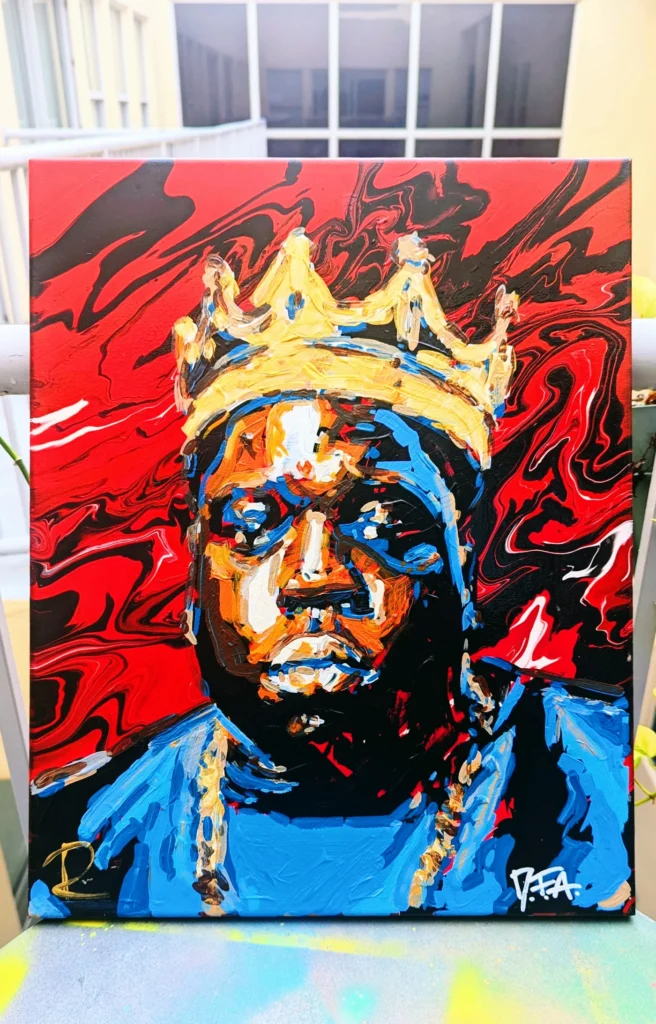
Operating at the intersection of music, community, and visual art, this artist has developed a practice that extends beyond the studio into the social fabric of Miami’s creative scene. Drawing from the energy of funk—particularly the legacy of George Clinton—the work embraces rhythm, improvisation, and what can best be described as a controlled chaos, where structure and spontaneity coexist.
Through the performative alter ego of Dr. Funkenstein and a growing network of events, collaborations, and educational initiatives, the practice expands into a broader cultural movement. More than producing artworks, it actively builds community, creating platforms that connect artists, collectors, and audiences in meaningful ways. In this conversation, the artist reflects on authorship, opportunity, and the evolving dynamics of Miami’s art ecosystem.
AMM. Your practice exists at the intersection of music, community, and painting. How does the energy of funk—particularly the influence of George Clinton—translate into formal decisions within your visual work?
DrFA. Funk is about blending freedom and rhythm. A game of how far can I go or take this and still come back to where I started. I do George Clinton, the original Dr. Funkenstein, is a pioneer; an explorer. He’s not afraid to try new things, yet he’s also a master of controlled chaos. I create my art with that same controlled chaos. Like the famous George Clinton & PFunk lyric says, “Free Your Mind, and Your Ass Will Follow”
AMM. The use of the alter ego Dr. Funkenstein introduces a performative dimension to your artistic identity. To what extent does this persona function as an extension of your practice, and how does it shape notions of authorship and authenticity in your work?
DrFA. Dr. Funkenstein isn’t someone else. It’s me, amplified. It’s me not being afraid to be myself, almost like when musicians are wearing sunglasses or a different persona on stage. It gives me the confidence to find new opportunities while still being me and the freedom to keep expanding my creative toolbox.
AMM. You have developed a practice that not only produces artworks but also builds community through events and teaching. How do you understand the role of the contemporary artist as both creator and cultural facilitator?
DrFA. I really enjoy teaching and inspiring others. Over the last 3 years, I’ve had the amazing opportunity to teach and inspire over 6,000 students through a variety of art classes, workshops, and courses.
For me, being an artist is about creating and inspiring. But my roots and business background made me realize that Miami needs more than just your average art gallery and art classes. It needs a community and artists need more opportunities. So after some encouraging feedback, I took it upon myself to create a supportive community and brand that brings the collectors closer to the creators. We need to realize it’s important to support each other. Everyone in my community knows my motto is a High Tide Raises All Ships.
AMM. What type of opportunities has your art led you to or what doors has it opened up?
DrFA. Over the past several years, my art has brought me countless opportunities and connections. From my experience, I know how important it is to capitalize on these opportunities and expand them into something larger. From my art came several opportunities. From those opportunities to came my events. And most recently, I’ve been manifesting more and more opportunities including being the featured artist for Jam Cruise 22 as well as showcasing and selling my art at the first annual PFunk Festival with George Clinton in Tallahassee, which were both huge, game-changing, and eye-opening experiences.
AMM. Your trajectory in Miami—marked by collaborations, alternative spaces, and participation in events such as Art Basel—places your work across multiple art circuits. How do you navigate the tension between the spontaneity of underground culture and the structures of the global art market?
DrFA. I enjoy having the freedom and confidence to explore both worlds and seize whatever opportunities I can. Having a strong community and business background has now enabled me to bring together both worlds to provide more opportunities to other artists. I have the confidence to be myself while also supporting others. Now I have a collective of 350+ artists I’ve featured through my own events. I did not participate in Art Basel, but I did have my own set of events over the past two years during Miami Art Week called FUNK BASEL, in which I featured 100+ artists from all over the world!
AMM. Aside from Funk Basel, what other events do you do and how did they start?
DrFA. I curated my first local event within 7 months of moving to Miami, and by my third event, I named it Dr. Funk’s Rooftop Fam because I realized the importance of the supportive family and community I was growing. What once started with less than 20 people on a rooftop in December 2023 has now grown into my own collective of artists known as The F.A.M. (aka Funky Art Movement), which I’ve featured through my events. Now I’m curating up to 5 events a month, collaborating with different brands and artists from all over the world!
AMM. How do you perceive the current state of the art ecosystem within Miami’s artistic community, and what role should government and cultural institutions play in fostering conditions that allow art to reach—and meaningfully support—the next generation of emerging artists?
DrFA. Right now we’re in what I sometimes refer to as the “Instagram or TikTok Era… Unfortunatekt sometimes it feels like we put in so much work just for a few likes and comments. The next generation doesn’t just need exposure—they need opportunity and sustainability. Real life opportunities, not just a couple comments or likes on social media. So I think it’s important to keep investing in local galleries, events, and the local communities. It’s the next generation that will be leading us, let’s continue to support and inspire each other.
Dr. Funkenstein Acrylics
About The Artist
Born and raised in Richmond, VA, Eric Mohta, aka Dr. Funkenstein Acrylics, had the opportunity to engage in art and design from an early age. Among his friends in RVA, he was always known for bringing people together with music, whether it was his funky house parties or emceeing for huge music festivals! As a tribute to his funky influences, he undertook the alter ego Dr. Funkenstein, a tribute to one of his favorite musicians, George Clinton of Parliament Funkadelic.
Driven by a desire to immerse themselves in a more vibrant and diverse art & music scene, Dr. Funk relocated to Miami, FL. His goal? To paint anything he can get his hands on! He especially loves the freedom of fluid art and lets the music speak to him when he paints.
He now also curates art events to help bring the local Miami community together and lives by the motto: A High Tide Raises All Ships. Since moving to Miami, Dr Funk has also taught art classes and workshops at a number of local venues and art galleries, including the Fluid Bear Workshop and Majorwavez Lab, where he has helped guide over 6000+ students.
He has also collabed with amazing artists and brands such as Robohood Inc, Klientel Art, Wandering Crafts, Rosewood, Exti, Porti, Zapico, and KEDS.
Along with his own curated events, Dr Funk has also had the opportunity to showcase his art at events and venues such as: Art Basel, Miami Art Week, Cookies Grand Opening, Sacred Cloth Company Gala, 7 Layer Studio, Essentials Gallery, Kava Villa, BuroWynwood, Sunny Side Up Market, Skatebird, MODE, Open Air Markets 4 U, Bay 13 Brewing, Unbranded Brewing, Ark Smoke Shop, Grails, Tripping Animals Brewery, and The Atrium Downtown.
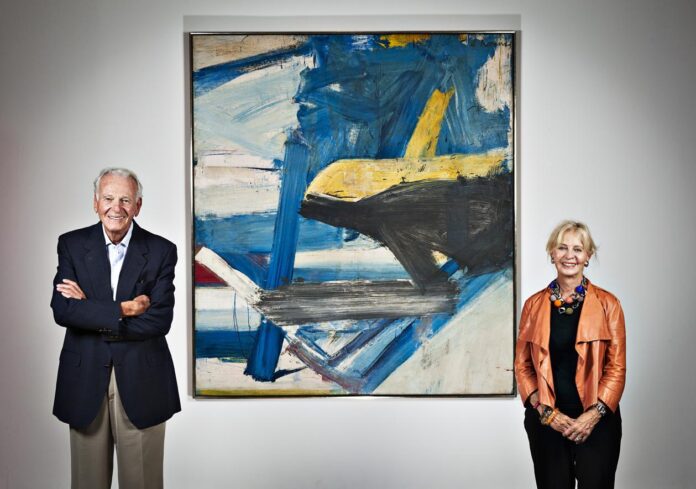
En el mapa del coleccionismo global, pocas figuras han operado con la precisión estratégica de Norman Braman. Su nombre suele asociarse con la llegada de Art Basel Miami Beach en 2002, pero reducir su influencia a ese gesto sería ignorar lo esencial: Braman no solo colecciona arte, construye condiciones para que el arte exista.
El origen de una colección: del descubrimiento a la convicción
Como muchos grandes coleccionistas de la segunda mitad del siglo XX, la historia de Braman comienza con un encuentro. A finales de los años 70, junto a su esposa Irma, descubre la obra de Alexander Calder en la Fundación Maeght. Ese momento no fue anecdótico: fue estructural. A partir de allí, desarrollan una colección que, con el tiempo, alcanzaría un valor estimado cercano a los 900 millones de dólares .
No se trata de acumulación, sino de coherencia. La colección Braman se caracteriza por una profunda afinidad con el arte moderno y contemporáneo, especialmente con la tradición americana del siglo XX. Según The Art Newspaper, ha sido considerada “una de las grandes colecciones privadas de arte americano clásico” .
La casa como museo: el coleccionismo como experiencia
El verdadero núcleo de esta colección no está en vitrinas institucionales, sino en el espacio doméstico. Su residencia en Indian Creek ha sido descrita como un entorno donde las obras no se exhiben, sino que se habitan. Esta es una diferencia crítica.
En el modelo Braman, el arte no es decorativo ni especulativo: es arquitectónico. Las piezas organizan el espacio, condicionan la circulación, construyen una experiencia sensorial. Este enfoque lo acerca más a coleccionistas como los Rubell o los Margulies, pero con una diferencia clave: Braman traduce esa experiencia privada en infraestructura pública.
ICA Miami: de colección privada a institución
La transición de lo privado a lo público se materializa en el Institute of Contemporary Art Miami. Financiado en gran parte por Braman y su esposa, este museo no es un gesto filantrópico aislado, sino la extensión lógica de su pensamiento como coleccionista.
El ICA no nace como un museo tradicional, sino como una plataforma curatorial contemporánea, libre de las limitaciones de las colecciones permanentes. Su creación respondió incluso a tensiones institucionales previas en Miami, consolidando un nuevo modelo de museo impulsado por coleccionistas .
Además, su financiamiento fue decisivo para la construcción de su sede en el Design District , integrando arte, urbanismo y mercado en un mismo ecosistema.
El gesto invisible: coleccionar como poder cultural
Uno de los aspectos más sofisticados de Braman es su comprensión del poder simbólico del coleccionismo. No busca protagonismo mediático; su influencia opera en la estructura.
Impulsa ferias → transforma mercados
Financia museos → redefine instituciones
Dona obras públicas → reconfigura el espacio urbano
Ejemplo de esto es la comisión de esculturas públicas, como la obra de Jaume Plensa en Miami Beach, que inserta el arte contemporáneo directamente en la experiencia ciudadana .
Miami: de periferia a capital cultural
Para entender la colección Braman, hay que entender Miami antes de ella. A finales de los 90, la ciudad tenía menos de diez galerías relevantes. Hoy es un nodo global del arte contemporáneo. Ese cambio no fue orgánico: fue inducido.
Braman jugó un rol clave en convencer a la organización suiza de Art Basel de apostar por Miami, alterando permanentemente la geografía del mercado del arte . Su colección, en este contexto, funciona como capital cultural activo, no como patrimonio estático.
Conclusión: el coleccionista como arquitecto del sistema
Norman Braman representa una figura cada vez más relevante en el arte contemporáneo: el coleccionista que trasciende la adquisición para convertirse en productor de contexto.
Su colección no es solo un conjunto de obras. Es un sistema que conecta mercado, institución, ciudad y narrativa cultural.
Para artistas y galeristas, la lección es clara: el verdadero poder en el arte no reside únicamente en la obra, sino en la capacidad de crear el ecosistema donde esa obra adquiere significado.
Y en ese terreno, pocos han operado con la claridad —y la discreción— de Norman Braman.
En la historia del coleccionismo en Miami, la familia Soffer ocupa una posición singular: no son coleccionistas tradicionales, sino coreógrafos de experiencia. Su legado no se limita a adquirir obras, sino a integrarlas dentro de estructuras donde arte, arquitectura, comercio y vida cotidiana se funden en un mismo lenguaje.
De territorio a narrativa: el origen de Aventura
En 1967, Donald Soffer adquirió 785 acres de terreno pantanoso en el norte de Miami-Dade, un gesto que parecía especulativo pero que terminaría dando origen a la ciudad de Aventura .
Lo relevante aquí no es solo la transformación física, sino conceptual: Soffer no construyó un proyecto inmobiliario, construyó un ecosistema completo donde el lujo, el ocio y la cultura coexistieran.
Ese modelo —hoy replicado globalmente— anticipa una idea clave del siglo XXI: la ciudad como experiencia curada.
Aventura Mall: el mall como museo contemporáneo
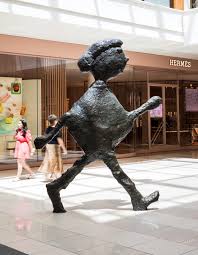
El punto de inflexión en la relación de la familia con el arte ocurre con el desarrollo del Aventura Mall, uno de los centros comerciales más grandes de Estados Unidos .
Bajo la dirección de Jackie Soffer, el mall se transforma en algo inesperado: una plataforma de arte contemporáneo accesible.
La colección incluye obras y comisiones de artistas como:
Louise Bourgeois
Robert Indiana
Carsten Höller
Daniel Arsham
The Haas Brothers
Lejos de la lógica museística tradicional, aquí el arte no exige contemplación silenciosa; convive con el flujo cotidiano. Según Architectural Digest, el programa artístico del mall rivaliza con el de muchos museos, convirtiéndolo en un destino cultural en sí mismo .
Este gesto redefine una pregunta fundamental: ¿Dónde ocurre hoy el arte contemporáneo?
El arte como estrategia de valor
La familia Soffer entendió algo que muchos coleccionistas institucionales tardaron en reconocer: el arte no solo tiene valor simbólico, sino también valor experiencial y económico.
Integrar arte en un entorno comercial:
Aumenta el tiempo de permanencia del visitante
Eleva la percepción de lujo
Diferencia el espacio en un mercado saturado
Pero más allá de la estrategia, hay una visión: convertir el consumo en experiencia cultural.
Fontainebleau: estética, historia y diseño
La adquisición y desarrollo del Fontainebleau Miami Beach añade otra capa al ecosistema Soffer.
Este ícono arquitectónico, originalmente diseñado por Morris Lapidus, no es solo un hotel: es una pieza fundamental en la narrativa estética de Miami Beach. La familia no solo lo preserva, sino que lo reactiva como espacio donde convergen diseño, arte y espectáculo .
Aquí, el arte no se presenta como colección explícita, sino como atmósfera total: interiorismo, arquitectura y programación cultural forman una experiencia inmersiva continua.
Coleccionar sin museo: un modelo expandido
A diferencia de figuras como Norman Braman o Jorge Pérez, los Soffer no consolidan su colección en una institución tradicional.
Su modelo es más radical:
El mall como museo
El hotel como escenografía cultural
La ciudad como obra total
Este enfoque se alinea con una tendencia contemporánea donde el arte se desplaza fuera del cubo blanco para insertarse en la vida cotidiana.
Conclusión: el arte como infraestructura invisible
La familia Soffer representa una evolución del coleccionismo: ya no se trata de poseer obras, sino de integrarlas en sistemas de experiencia.
Para artistas y galeristas, esto implica un cambio de paradigma: el valor del arte no reside únicamente en su circulación en ferias o museos, sino en su capacidad de activar espacios, generar interacción y construir identidad.
En Miami, ese modelo tiene un precedente claro. No es un museo. No es una colección privada.
Es una ciudad.
Y en ese sentido, la verdadera obra de la familia Soffer no cuelga en paredes: se habita.
La familia Soffer, liderada por el fallecido desarrollador Donald Soffer y su hija Jackie Soffer (CEO de Turnberry), es una influyente dinastía inmobiliaria y coleccionista de arte en Miami. Han transformado el paisaje de Aventura, destacando por integrar arte público de alto nivel en propiedades comerciales como el Aventura Mall.
Jackie Soffer: Además de dirigir Turnberry, es conocida por su pasión por el arte, integrando obras de renombre en el Aventura Mall, lo que convierte al centro comercial en una experiencia cultural.
Don Soffer: Fundador de Turnberry y visionario que desarrolló gran parte de Aventura, dejando un legado tanto en bienes raíces como en filantropía.
Influencia en Miami: La familia ha sido pionera en el desarrollo inmobiliario de lujo en el sur de Florida, incluyendo hoteles, residencias y centros comerciales.
Conexión con el Arte: La familia Soffer apoya el arte, con Jackie participando en conversaciones sobre el impacto del arte en espacios públicos.
A Constellation of Place and Spirit: A Must-See Exhibition at MOCA North Miami
Through October 4, 2026 Museum of Contemporary Art, North Miami (MOCA)
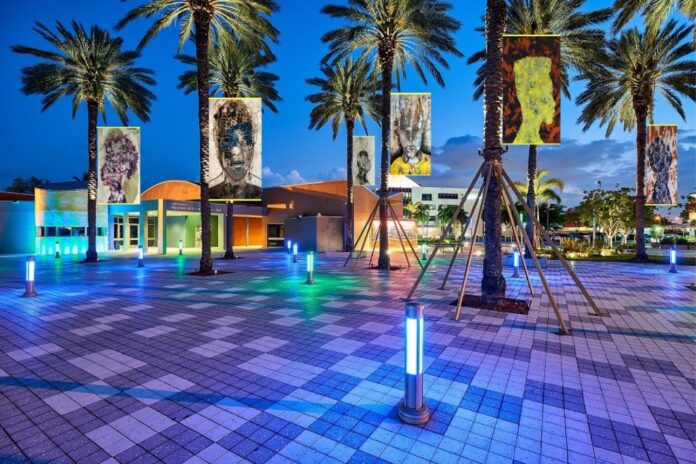
In a moment when regional narratives are gaining renewed critical attention, the Museum of Contemporary Art North Miami presents a compelling group exhibition that invites viewers to reconsider the relationship between spirituality, heritage, and place. Organized as part of MOCA’s 30th anniversary programming, this exhibition stands not only as a celebration, but as a statement—one that positions South Florida as a site of complex cultural production.
Co-curated by Kimari Jackson and Laura de Socarraz-Novoa, the exhibition brings together a diverse group of artists whose practices move fluidly across ceramics, textiles, photography, film, and installation. What emerges is not a singular narrative, but a field of interconnected perspectives, each engaging with transformation—personal, ecological, and cultural.
Artists in Focus
Jen Clay
Clay’s work operates within immersive installation, often blending mythological narratives with contemporary anxieties. Her environments feel both playful and unsettling, inviting viewers into psychological and emotional terrains.
Luke Jenkins
Jenkins engages with materiality through sculptural interventions that question permanence and decay. His work reflects an acute sensitivity to time and transformation within physical structures.
Gerbi Tsesarskia
Tsesarskia’s practice navigates identity and displacement, often through layered visual languages that merge personal history with broader geopolitical narratives.
Mark Delmont
Delmont’s work examines the intersection of memory and place, constructing visual frameworks that echo the fragmented nature of lived experience.
Elliot and Erik Jimenez
Working collaboratively, the Jimenez brothers explore duality—both in form and concept—creating works that reflect dialogue, tension, and shared authorship.
Diana Larrea
Larrea’s conceptual approach often revisits overlooked histories, challenging dominant narratives and questioning systems of representation.
Amanda Linares
Linares investigates cultural identity through material exploration, often embedding personal and collective memory within her work.
Rachelle Salnave
Salnave’s multidisciplinary practice centers on diaspora and storytelling, weaving together sound, image, and performance to create layered narratives.
Onajide Shabaka
Shabaka’s work is deeply rooted in spirituality and ritual, engaging with ancestral knowledge and the continuity of cultural practices.
Lauren Shapiro
Through ceramics, Shapiro explores fragility and transformation, often referencing the natural world and its processes of change.
Nina Surel
Surel’s installations blur the boundaries between object and environment, creating spaces that engage perception and bodily experience.
Lisu Vega
Vega’s work reflects on landscape and belonging, often addressing the emotional and political dimensions of place.
Lauren McAloon
McAloon’s practice engages with abstraction as a language of introspection, exploring internal states through material form.
Carol Munder
Munder’s work often reflects on systems—biological, social, and ecological—creating visual dialogues that connect micro and macro realities.
Manuela Gonzalez
Gonzalez’s practice centers on cultural memory and identity, weaving together personal narratives with broader social contexts.
A Regional Vision with Global Resonance
What distinguishes this exhibition is not only its diversity of media, but its conceptual coherence. Each artist, while distinct, contributes to a broader meditation on how identity is shaped—by geography, by history, and by invisible systems of belief.
South Florida, often perceived through the lens of its art fairs and market dynamics, here reveals another dimension: one of depth, introspection, and cultural layering.
An Invitation
This is not simply an exhibition to see—it is one to experience slowly.
To walk through these works is to encounter a series of questions:
How do we locate ourselves within a place?
What histories do we carry, and which do we inherit?
How does art mediate between the visible and the intangible?
In its 30th anniversary, MOCA does not look back—it expands outward.
And in doing so, it offers one of the most thoughtful exhibitions in the region this year.
On view through October 4, 2026 Wed: 12:00 PM – 7:00 PM | Thu–Sun: 10:00 AM – 5:00 PM
About the South Florida Cultural Consortium
The South Florida Cultural Consortium (SFCC) is an alliance of the arts councils of Broward, Martin, Miami-Dade, Monroe and Palm Beach Counties. Established in 1988, this Interlocal Agreement works to foster cooperation across the South Florida region to help develop and promote the work of cultural organizations, artists, and the audiences that they serve. Its programs and services range from the Visual and Media Artists Grant Program to regional arts education and cultural tourism cooperative ventures. grants visual and media artists. The 2026 Visual and Media Artist exhibition featuring the program’s 2025 grant recipients is co-curated by MOCA Curatorial Assistant Kimari Jackson and guest curator Laura Novoa. The group show features 14 artists and one artist collaborative exploring themes of spirituality, heritage, and reconnection to home. Participating artists include: Jen Clay, Luke Jenkins, Gerbi Tsesarskaia, Mark Delmont, Elliot & Erick Jiménez, Diana Larrea, Amanda Linares, Rachelle Salnave, Onajide Shabaka, Lauren Shapiro, Nina Surel, Lisu Vega, Lauren McAloon, Carol Munder, and Manuela Gonzalez.
Spanning ceramics, textiles, photography, film, and installation, the exhibition reveals the rich conceptual and material diversity of the region’s contemporary art scene. Through these varied approaches, the show traces a cyclical meditation on life, transformation, and place, creating a cohesive dialogue that situates individual artistic practices within the broader cultural and ecological narratives shaping South Florida today.
The South Florida Cultural Consortium is a regional initiative in support of the arts governed by an Interlocal Agreement among the counties of Broward, Martin, Miami-Dade, Monroe and Palm Beach. The Consortium’s members are the local arts agencies of these five counties, including the Broward County Cultural Division, the Arts Council of Martin County, the Miami-Dade County Department of Cultural Affairs, the Florida Keys Council of the Arts, and the Cultural Council for Palm Beach County. The Consortium works to foster cooperation across the South Florida region to help develop and promote the work of cultural organizations and artists and the audiences that they serve. Its programs and services range from the Visual and Media Artists Program to regional arts education and cultural tourism cooperative ventures. Each year, more than 300 artists who live and work throughout the five counties submit their applications for consideration to the South Florida Cultural Consortium’s Grant Program for Visual and Media Artists. Regional and national panels comprised of experts in visual art, film, and media from a variety of academic and major visual arts institutions are given the responsibility of recommending the final recipients. The South Florida Cultural Consortium is one of the most successful regional arts alliances in the nation, demonstrating that by sharing resources and best practices, the arts can thrive across a burgeoning five-county area.
The South Florida Cultural Consortium is made possible with major support from the Miami-Dade County Department of Cultural Affairs and the Cultural Affairs Council, the Miami-Dade County Mayor and Board of County Commissioners, and the Boards of County Commissioners of The Broward County Cultural Division, The Cultural Council for Palm Beach County, The Arts Council of Martin County, and the Florida Keys Council of the Arts.