Home Blog Page 17

The Ephemeral Permanence of Water – Eugenia Vargas Pereira’s AGUAS at Art Palm Beach 2026

aguas eugenia vargas pereira
PROJECT: AQUAS ARTIST: EUGENIA VARGAS PEREIRA CURATED BY: MARISA CAICHIOLO

The Ephemeral Permanence of Water – Eugenia Vargas Pereira’s AGUAS at Art Palm Beach 2026

In the cacophony of an art fair, where the visual noise often leans towards the commercial and the spectacle, finding a moment of genuine, meditative introspection is rare. Yet, at the 2026 edition of Art Palm Beach, within the curated section of DIVERSEartPB, Chilean artist Eugenia Vargas Pereira offered precisely that—a sanctuary of shadow and light titled AGUAS. Curated by the astute Marisa Caichiolo, this immersive installation stood as a poignant testament to the fragility of our ecological tether.

Having followed Vargas Pereira’s trajectory—an artist who has consistently interrogated the boundaries of the body, the landscape, and the ephemeral nature of performance—AGUAS feels like a maturation of her ecological consciousness. It is a work that moves beyond the mere representation of nature to enact a ritual of restoration.

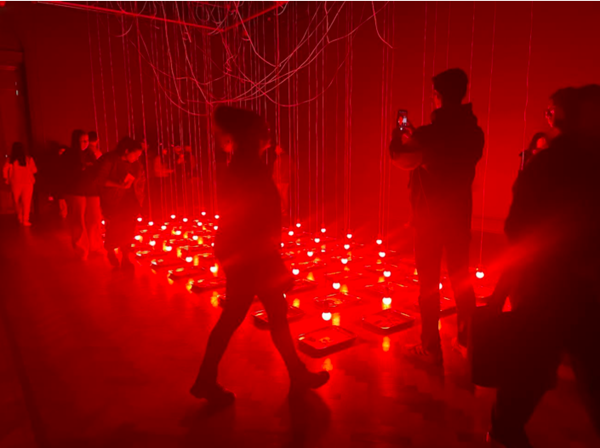
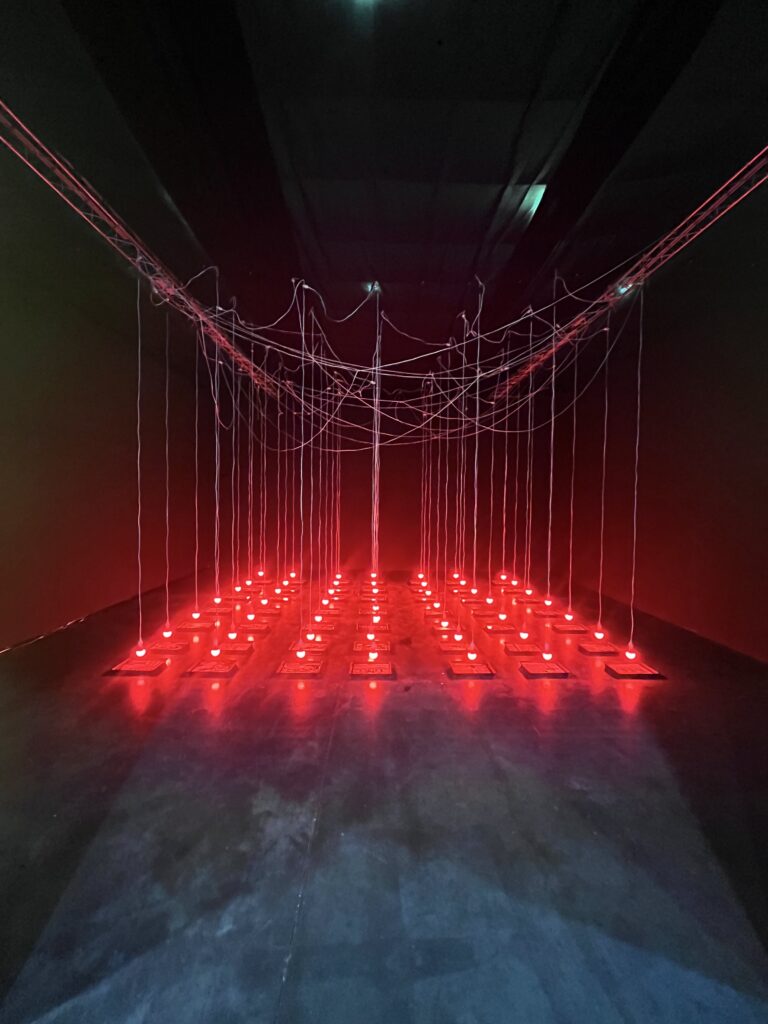
The installation’s physical presence was commanding yet delicate. Stepping into the space, one was immediately transported into the belly of a large-scale analog darkroom. The lighting, a dim constellation of amber and red bulbs suspended from the ceiling, created a visceral, womb-like atmosphere. The white electrical cables, cascading from a tangled mass overhead, suggested a nervous system or perhaps the complex, unseen root networks that bind our ecosystem together. This “intricate network” served as a visual metaphor for the interdependence that the piece seeks to highlight.

aguas eugenia vargas pereir

Beneath this canopy lay 55 developing trays, the tools of a fading analog trade repurposed here as vessels of memory. Submerged in water within these trays were photographs—images of men and women interacting with rivers. But the brilliance of AGUAS lay in its participatory element. In a profound gesture of “collaborative care,” volunteers and visitors were invited to place their own selfies into the trays.

As an art critic, I was struck by the conceptual layering of this act. The darkroom is traditionally a place of fixing an image, of making the transient permanent. Here, Vargas Pereira inverts this logic. The images in the water are subject to the slow violence of the elements; they emerge and fade, mirroring the “tragic and relentless transformation of the natural world.” The viewer becomes a “visual narrator,” witnessing their own image—their own ego—dissolve into the fluid medium that sustains all life. It is a humbling reminder that we are not observers of nature, but permeable parts of it.

The connection to the Casablanca Biennial 2026 adds another layer of geopolitical urgency to the work. By linking the waters of the Americas with those of North Africa, Vargas Pereira suggests that the crisis of water—and the ritual of cleansing—is a universal narrative, transcending borders.

AGUAS is not merely an installation; it is a “meditation on environmental degradation” that refuses to succumb to despair. Instead, it offers a “quiet potential.” In the dimly lit room, surrounded by the smell of water and the ghostly glow of red lights, the community participation became a form of collective resistance. It reminded us that while our connection to the natural world is fragile, it is also the only thing that creates a true “unity of being”—a concept I often return to in my own philosophical inquiries.

Eugenia Vargas Pereira has created a space where aesthetic expression dissolves into ethical action. AGUAS was, without a doubt, one of the most powerful and necessary works of Art Palm Beach 2026.

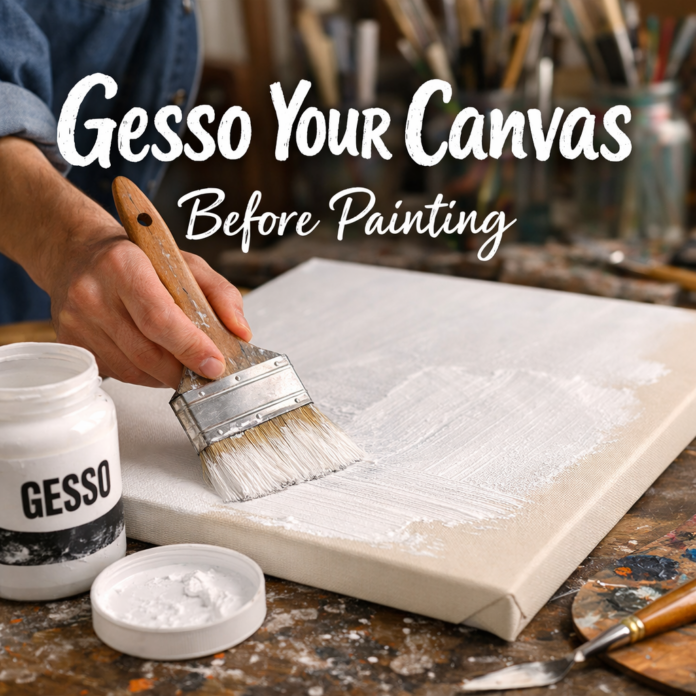
Gesso Your Canvas Before Painting

Gesso Your Canvas Before Painting

Gesso Your Canvas Before Painting

Whether you’re working in acrylic, oil, or mixed media, applying gesso to your canvas is a crucial step that can significantly impact the final result of your artwork. Here’s why:

What Is Gesso?

Gesso (pronounced “jess-o”) is a white acrylic-based primer made from a combination of chalk, pigment, and binder. It prepares and protects the canvas surface by:

  • Creating a slightly textured “tooth” for paint adhesion
  • Sealing the surface to prevent paint from soaking through
  • Preventing degradation of the fabric or surface over time

Benefits of Priming with Gesso

1. Better Paint Adhesion
Raw canvas is absorbent and rough. Gesso smooths out the surface and creates a barrier that helps your paint sit on top rather than soak in, making colors more vibrant and your brushstrokes more controlled.

2. Increased Longevity
By sealing the fibers of the canvas, gesso protects against the corrosive effects of paint over time—especially with oil paints, which can rot untreated canvas.

3. Enhanced Texture Control
Gesso lets you build a consistent surface tailored to your technique. You can apply multiple coats and even sand between layers to create an ultra-smooth or heavily textured ground.

4. Uniform Absorption
A properly gessoed surface ensures that paint doesn’t behave unpredictably, especially with water-based media like acrylics or water-mixable oils.

When You Might Skip Gesso

If you’re working on a pre-primed canvas (which most store-bought canvases are), you might not need to gesso unless:

  • You want a smoother or more customized surface
  • You’re painting with oils and want a double-primed barrier
  • You’re experimenting with special textures or techniques

Pro Tips

  • Use acrylic gesso for both acrylic and oil paints.
  • Apply 2–3 thin coats for best results, letting each dry completely.
  • Sand lightly between coats for a smooth finish (ideal for realism or fine detail).

Gesso is more than just a technical step—it’s the foundation of your artwork. By taking the time to properly prepare your surface, you’re ensuring that your colors sing, your brushstrokes glide, and your work stands the test of time.

Nomadic Thought and Contemporary Practice: Reflections on the MoCAA Conference and Roundtable

Moca

Nomadic Thought and Contemporary Practice: Reflections on the MoCAA Conference and Roundtable

Last Saturday, the headquarters of the Museum of Contemporary Art of the Americas (MoCAA) became a site of convergence for artists, curators, critics, and scholars from across the Ibero-American world, hosting a keynote lecture and roundtable led by curator and researcher Hernán Pacururu. More than a conventional academic encounter, the event unfolded as a space of shared inquiry, where artistic practice, political imagination, and collective experience intersected.

At the center of Pacururu’s lecture was the notion of artistic nomadism, approached not as a romanticized metaphor of movement, but as an aesthetic, ethical, and epistemological position. Nomadism, in this framework, challenges fixed territorial logics, stable institutional roles, and the presumed neutrality of museum spaces. Rather than emphasizing displacement alone, Pacururu articulated nomadic practice as a mode of thinking and working that privileges process over spectacle, situated knowledge over abstraction, and relational engagement over market visibility.

Drawing from international experiences connected to the Nomadic Biennial, Pacururu traced a constellation of practices developed across Latin America and Europe through site-specific interventions, residencies, congresses, and long-term collaborations. These projects, deliberately decentralized and extended in time, operate outside the accelerated rhythms of the global exhibition circuit. In contrast to the conventional biennial model—often tied to spectacle, branding, and cultural consumption—the Nomadic Biennial proposes art as a situated and collective practice, deeply entangled with specific social, political, and affective contexts.

One of the most compelling aspects of the lecture was its insistence on horizontal knowledge exchange and the centrality of affective bonds. Pacururu framed nomadic artistic practice as an exercise in listening: to territories, to communities, and to forms of knowledge that are frequently marginalized within institutional and academic frameworks. In doing so, the lecture foregrounded art not as representation, but as a form of relational action—capable of generating temporary yet meaningful configurations of community.

The subsequent roundtable expanded these ideas through an active dialogue with the audience. Questions and interventions opened a plural space for reflection on the contemporary conditions of artistic production, addressing tensions between institutional validation and experimental practices, as well as the role of art in relation to migration, precarity, identity fragmentation, and the reconfiguration of cultural communities. Rather than seeking consensus, the discussion embraced productive friction, underscoring the necessity of critical discomfort as a catalyst for thought.

Within the context of South Florida and Miami-Dade County, the event marked a significant moment of regional and international articulation. The strong presence of voices from across the Ibero-American cultural field reaffirmed MoCAA’s role as a platform for transnational dialogue and critical exchange. More importantly, it highlighted a growing urgency to reconsider how art circulates, convenes publics, and generates meaning beyond dominant institutional and economic paradigms.

Seen alongside MoCAA’s forthcoming exhibition The Garden of Earthly Delights (opening January 30, 2026), the conference and roundtable suggest a coherent institutional trajectory—one committed to questioning normative frameworks, amplifying historically underrepresented perspectives, and understanding contemporary art as a field of ethical and political engagement. Together, these initiatives position MoCAA not merely as an exhibition space, but as a site of thought, encounter, and collective imagination.

In a moment marked by global instability and cultural fragmentation, the gathering served as a reminder that nomadism—understood as attentiveness, mobility of thought, and relational practice—remains a vital tool for reimagining both art and community today.

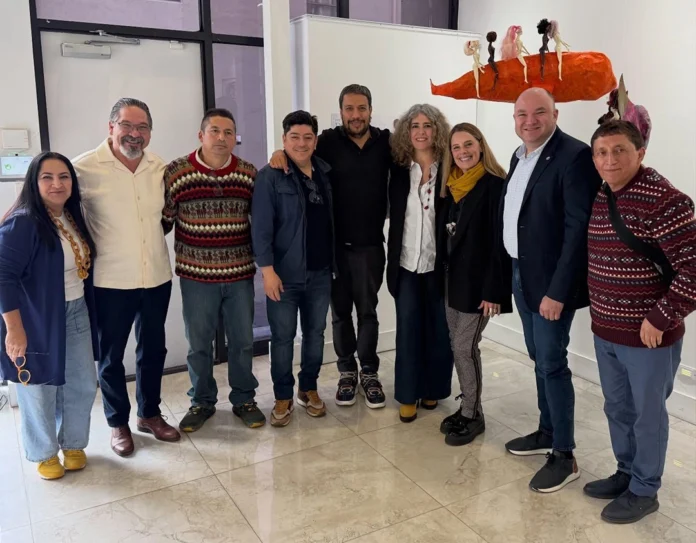
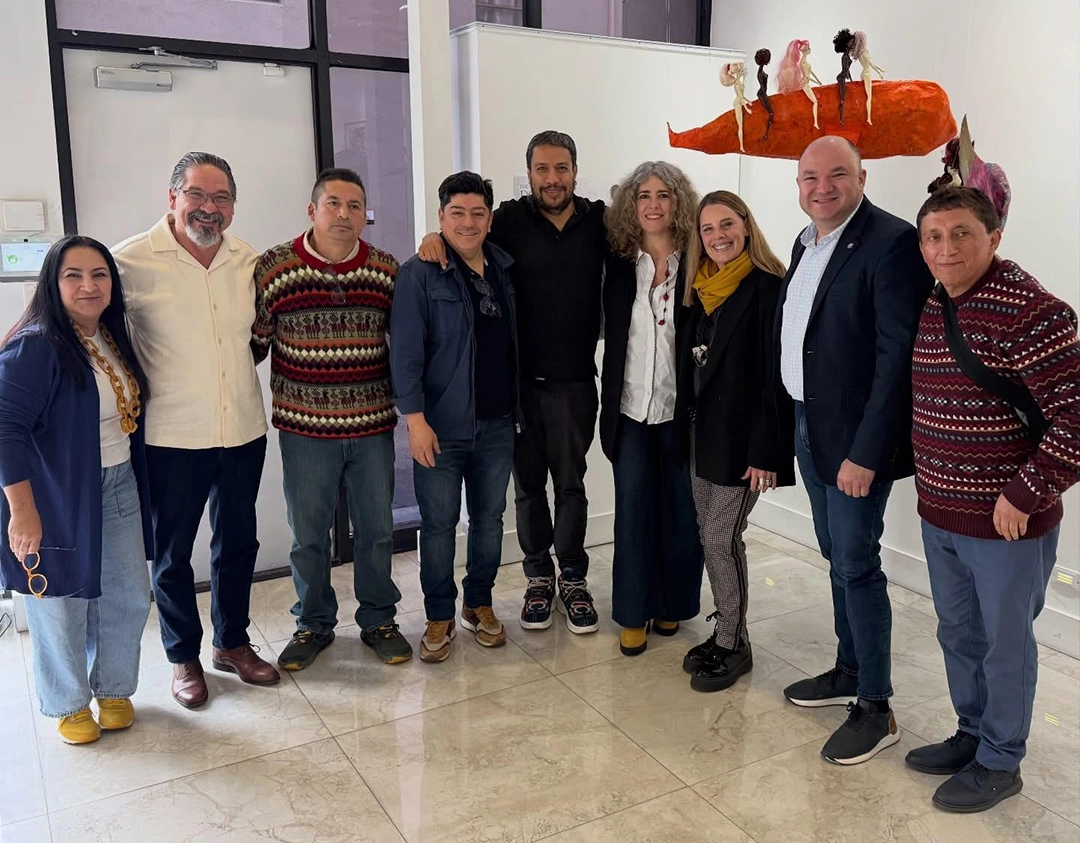
From left to right: Milena Martínez Pedrosa, artist and Vice Director of the Fine Arts Ceramic Center; Leonardo Rodríguez, Founder and Executive Director of the Museum of Contemporary Art of the Americas; Ángel Mendoza, Ecuadorian visual artist based in Miami; Martín Cano, Ecuadorian visual artist; Hernán Pacucuru; Ivonne Ferrer, visual artist and Vice Director of MoCAA; Carola Bravo, Venezuelan-American visual artist and Director of the hARTvest Project at Pinecrest Gardens; Jesús Alberto Fuenmayor, PhD in General Sciences and Director Professor of DIAF; and Hernán Illescas, Ecuadorian visual artist.

Address: 12063 SW 131st Ave
Miami, Fl 33186 United States
Website: Mocaamericas.org
Email: [email protected]
Phone:+1 786 624 0182
+1 305 213 4162

About MOCA:

After six successful years of exhibitions, events, traveling shows, publications, community education, and unique artists projects, the Kendall  Art Center evaluates its future; in terms of thinking to ensure a relevant and innovative institution for the audiences of tomorrow. After months of intense work, research, and discussions, the Museum of Contemporary Art of the Americas emerges…

Painting surfaces: Canvas, Paper & Wooden Panels

Art Canvas
Art Canvas

Painting surfaces: Canvas, Paper & Wooden Panels

Painting surfaces, or supports, include common options like canvas, wood, and paper, as well as less common ones like metal, glass, and plastic. The best surface depends on the type of paint you are using and your artistic goals, and it’s important to properly prepare the surface for durability and to prevent cracking or other issues.

Canvas Rolls & By The Meter

Canvas rolls offer artists the freedom to work at any scale, from intimate studies to monumental large-format pieces. Available in cotton, linen, or synthetic blends, rolls can be purchased in continuous lengths or by the meter, making them ideal for custom stretching or mural projects. Artists choose this format for its versatility, cost-effectiveness, and ability to control every detail—from surface texture to priming.

Stretched Canvas

Stretched canvas provides a ready-to-use painting surface mounted on wooden stretcher bars for optimal tension. Pre-primed and available in countless sizes and profiles, it is the most convenient option for artists who want to begin painting immediately. Its balanced surface makes it suitable for acrylic, oil, and mixed-media work, and its professional presentation is favored for exhibitions and gallery display.

Canvas Stretcher Bars

Stretcher bars form the structural foundation of custom-made canvases. Crafted from kiln-dried wood, these bars interlock to create a stable frame over which canvas is stretched and secured. Available in various thicknesses—from lightweight profiles to museum-grade deep bars—they allow artists precise control over scale, tension, and archival quality. Ideal for large pieces or artists who demand specific dimensions.

Canvas Boards & Panels

Canvas boards and panels feature primed canvas mounted onto rigid backings such as MDF, cardboard, or hardwood. They offer a sturdy, portable alternative to stretched canvas and prevent sagging over time. This makes them especially popular for plein-air painters, students, and artists working in high detail. Their durability and affordability also make them excellent for studies, workshops, and travel.

Canvas Pads

Canvas pads contain sheets of primed canvas bound together like a sketchbook, giving artists the feel of traditional canvas with the convenience of a tear-off format. Ideal for experimentation, practice, and mixed-media studies, the sheets can be removed for stretching or display. Lightweight and versatile, they are a favorite among students, beginners, and artists producing fast series or concept explorations.

Canvas Samples

Canvas samples provide small, curated swatches of different canvas types—varying in weight, weave, material, and priming. These allow artists to test surfaces before committing to a full roll or stretched canvas. Samples are essential for understanding how a surface responds to different media such as oil, acrylic, or heavy impasto, making them a practical tool for professionals seeking the perfect match for their technique.

Paper Sheets

Individual paper sheets offer artists maximum flexibility in format, weight, and surface. Available in cotton rag, cellulose, handmade, deckle-edge, and specialty textures, paper sheets are ideal for fine art, printmaking, watercolor, drawing, and archival work. Their larger size options make them a preferred choice for professional artists, studios, and exhibitions.

Sketchbooks

Sketchbooks provide a portable, bound format for drawing, planning, ideation, and on-the-go creativity. Available in hardbound, softcover, layflat, and travel-friendly designs, sketchbooks come in a range of paper types from smooth drawing surfaces to heavyweight mixed-media pages. Perfect for daily practice, visual journaling, and capturing ideas anywhere.

Gummed Pads

Gummed pads contain stacks of loose sheets bound at the top with gum adhesive, allowing for easy, clean removal without tearing. They offer convenience for students, designers, and illustrators who want smooth sheet extraction for scanning, framing, or sharing.

Paper Blocks

Paper blocks—or glued watercolor blocks—are sealed on all four sides to keep the sheet perfectly flat while painting. This eliminates the need for stretching and prevents buckling during wet techniques. Ideal for watercolorists, gouache painters, and artists working with heavy washes.

Spiral Pads

Spiral pads feature a wire binding that allows pages to lie completely flat or fold back on themselves. Rugged and highly portable, they are favored by students, sketchers, urban artists, and anyone who needs a flexible, easy-to-flip working format. Excellent for drawing, mixed media, and field studies.

Stitched Pads

Stitched pads are bound with sewing rather than spirals, offering a sleek, minimal profile and extra stability. They prevent pages from loosening and provide a more refined, archival-quality format for artists who prefer structured organization. Ideal for professional sketching and presentation.

Paper Boards

Paper boards combine high-quality art paper laminated onto rigid support like chipboard, MDF, or archival board. They offer a firm surface resistant to warping—perfect for detailed work, wet media, display, and plein-air painting. A favorite among illustrators, watercolorists, and mixed-media artists.

Digital Printing Paper

Digital printing paper is engineered for inkjet or laser printers, ensuring accurate color reproduction, sharp detail, and professional print quality. Available in matte, glossy, satin, and fine-art finishes, it is used by photographers, designers, digital artists, and galleries producing archival prints and giclées.

Paper Rolls

Paper rolls offer long, continuous sheets perfect for murals, large-scale works, installation projects, and classroom use. Available in kraft, watercolor, drawing, and printmaking varieties, rolls provide freedom for oversized creativity and economical bulk production.

Paper Stretching

Paper stretching refers to the process of wetting and taping paper to a board so it dries taut, preventing buckling during watercolor or heavy-wash techniques. This category includes the tools and materials used for the process: stretching boards, gummed tape, staples, and absorbent surfaces.

Specialist Paper & Surfaces

This category includes unique and high-performance surfaces such as handmade papers, synthetic papers (like Yupo), rice papers, printmaking papers, vellum, drafting film, textured art boards, metallic papers, and niche materials tailored for specific techniques. Designed for professional and experimental artists seeking distinctive results.

Paper Packs

Paper packs provide multiple sheets in uniform sizes and finishes, offering excellent value for studios, classrooms, and high-volume artists. Available in drawing, watercolor, mixed media, printmaking, and specialty varieties, packs are perfect for practice, production work, and bulk projects.

Wooden Panels for Painting

Wooden panels are one of the oldest and most trusted painting surfaces in art history, dating back to ancient Egyptian portraits, Renaissance masterpieces, and early iconography. Today, they remain a favorite among contemporary artists seeking stability, precision, and a refined painting experience.

Unlike flexible supports such as canvas, wooden panels provide a durable, rigid foundation that preserves artwork for centuries. Their smooth surface, resistance to warping, and compatibility with multiple mediums make them an essential material for artists who value technical excellence and archival quality.

PALM BEACH SHOW: EXCLUSIVE PRESENTATIONS FOR 2026

PALM BEACH SHOW 2026

PALM BEACH SHOW ANNOUNCES CURATED GUIDED TOURS AND EXCLUSIVE PRESENTATIONS FOR 2026

February 12-17, 22026 | Presidents’ Day Weekend | Palm Beach Convention Center

Palm Beach Show Group is pleased to announce a dynamic lineup of curated guided tours and exclusive presentations as part of the 2026 Palm Beach Show programming. Designed to enrich the visitor experience, this year’s offerings invite attendees to engage with expert insights, immersive discussions, and intimate explorations of art, design, jewelry, and collecting.

The 2026 Palm Beach Show opens with its Opening Preview Party on Thursday, February 12, offering guests an elegant first look at the fair. From Friday, February 13 through Tuesday, February 17, attendees may participate in a series of curated guided tours and special presentations held directly on the show floor at the Palm Beach County Convention Center. The full schedule is available online.

Curated Guided Tours

Each guided tour provides an intimate look into exceptional collections and creative perspectives. Tour themes include:

  • The Art of Adornment
  • Collecting the Extraordinary
  • Art Within Reach
  • Jewels Through Time
  • The Now Movement
  • Masters of Time
  • Curator’s Choice

Tours are led by knowledgeable guides and limited to 15 guests per session, offering rare access to gallery insights and collecting expertise.

Exclusive Presentation

In addition to the guided tours, the Palm Beach Show will feature an exclusive presentation by Fred Savage, founder of Timepiece Grading Specialists (TGS), on Saturday, February 14, from 4:00–5:00 pm. Savage will share his personal journey into watch collecting and discuss how TGS is helping to transform transparency and confidence in the pre-owned watch market.

“We are delighted to offer a multi-layered program that brings deeper understanding and appreciation to the works on display,” said Scott Diament, President and CEO of the Palm Beach Show Group. “These guided tours and presentations enhance the collecting experience and provide meaningful engagement for both seasoned collectors and new enthusiasts.”

Advance purchase and registration are required for curated tours and the exclusive presentation. Visitors are encouraged to explore the complete 2026 programming schedule and reserve their spots online.

For full details and the complete schedule, visit:
https://www.palmbeachshow.com/2026-palm-beach-show-programming/


About the 2026 Palm Beach Show

Opening Night Preview Party
Thursday, February 12, 2026 | 2:00–9:00 pm

  • Exclusive Preview — 2:00 pm Entry (Invitation or $200 Multi-Day Ticket per person)
  • VVIP Preview — 4:00 pm Entry (Invitation or $100 Multi-Day Ticket per person)
  • VIP Preview — 6:00 pm Entry (Invitation or $50 Multi-Day Ticket per person)

General Show Days
(Invitation or $30 Multi-Day General Admission Ticket per person)

  • Friday, February 13 | 11:00 am – 6:00 pm
  • Saturday, February 14 | 11:00 am – 6:00 pm
  • Sunday, February 15 | 11:00 am – 6:00 pm
  • Monday, February 16 | 11:00 am – 6:00 pm
  • Tuesday, February 17 | 11:00 am – 6:00 pm

Location
Palm Beach County Convention Center
650 Okeechobee Boulevard
West Palm Beach, FL 33401

Admission

  • $50–$200 for Opening Night Preview tickets
  • $30 for General Admission tickets
    (All purchased tickets are valid for all General Show Days)

For More Information
Call 561.822.5440 or visit www.PalmBeachShow.com

Exhibitors | Palm Beach Show 2026

Aaron Faber Gallery — New York, NY | Booth 906
ABA Gallery — New York, NY | Booth 1111
Alexander Laut — New York, NY | Booth 225
Allegro Studio Art — West Bloomfield, MI | Booth 431
Andrew Ford Fine Art — Sarasota, FL | Booth 640
Anna Paola Cibin — Venice, Italy | Booth 632
Anne Howard Gallery — Dublin, NH | Booth 405
Antico Contempo — New York, NY | Booth 432
Arader Galleries — Philadelphia, PA | Booth 703
Art New Line — Lake Worth, FL | Booth 1204
Artnew Gallery JD — Sant Julià de Lòria, Andorra | Booth 904

Benchmark of Palm Beach — Palm Beach, FL | Booth 502
Berengo Studio — Murano–Venice, Italy | Booth 226
Beto Oliveros Studio — New York, NY | Booth 910
Betsy Frank Gallery — Miramar, FL | Booth 431A
Boccara Gallery — New York, NY | Booth 1110
Butchoff Antiques — London, United Kingdom | Booth 406 / 507

Callaghans of Shrewsbury — Shrewsbury, United Kingdom | Booth 1100
Camilla Dietz Bergeron — New York, NY | Booth 533
Cavalier Gallery — Palm Beach, FL | Booth 418 / 521
Charamonde Jewelers — Palm Beach, FL | Booth 701
CHARLES OUDIN Paris — Paris, France | Booth 400 / 501
CICADA — New York, NY | Booth 219
Classic Antiques — Chicago, IL | Booth 1019
Corey Friedman Fine Jewels — New York, NY | Booth 319

Daniels Antiques — Fort Lauderdale, FL & Aspen, CO | Booth 732
Daphne Alazraki Fine Art — New York, NY | Booth 200 & 1101
Darnley Fine Art — London, United Kingdom | Booth 115 / 115A
David Brooker Fine Art — Woodbury, CT | Booth 1002
David Harber — Aston Upthorpe, Oxfordshire, UK | Booth 124
Dinan & Chighine — London, United Kingdom | Booth 413

Fazzino Art by Amazing Animation — Lake Worth Beach, FL | Booth 321
FerriFirenze — Florence, Italy | Booth 112
Ford Art & Antiques — Sarasota, FL | Booth 644
Frederic Got — Paris, France | Booth 830

Galerie Fledermaus — Palm Beach, FL | Booth 601
Galerie STP — Greifswald, Germany | Booth 729
Gallery Je’ — Stuart, FL | Booth 1022
Gallery Josée Nadeau — Montréal / Palm Beach, FL | Booth 135 & 143
Gladwell & Patterson — London, United Kingdom | Booth 800 / 901
Glen Leroux Gallery — Westport, CT | Booth 1008
Greenwich Bazaar — New York, NY | Booth 1016
Greg Pepin Silver Denmark — Hellerup, Denmark | Booth 1114
Guarisco Gallery — McLean, VA | Booth 724

Hakimian Gem Company — Chicago, IL | Booth 924
Heera Moti Fine Gems & Jewelry — New York, NY | Booth 1025
Imperial Fine Books & Oriental Art — New York, NY | Booth 713
Itay Noy Timepieces — Old Jaffa, Tel Aviv, Israel | Booth 429

J. S. Fearnley — Atlanta, GA | Booth 300
J. Ruel Martin Gallery of Wood Sculptures — Acworth, GA | Booth 1207
Janice Paull Antiques & Design — New Castle, DE | Booth 1013
Janina Fine Art — Madrid, Spain | Booth 933
Jardin Jewels — New York, NY | Booth 118
Jimmy & Kathy Gallery — Flushing, NY | Booth 1012
JM Insurance Agency Partners — Neenah, WI | Booth 329

Kodner Galleries — Dania Beach, FL | Booth 330
Kofski’s — West Palm Beach, FL | Booth 424 / 525

L.E. Gallery — Brussels, Belgium | Booth 117
Lawrence Steigrad Fine Arts — New York, NY | Booth 600
Leighton Fine Art — Marlow, United Kingdom | Booth 919
Lester Lampert Fine Jewelry — Chicago, IL | Booth 129
Lueur Jewelry — New York, NY | Booth 218
Lydia Courteille — Paris, France | Booth 106

M.S. Rau — New Orleans, LA | Booths 606 / 707 & 700 / 801
Maison Palm Beach / Mark Lukas Fine Art — Palm Beach, FL | Booth 1010
Market Gallery of Palm Beach — Lake Worth, FL | Booth 1038
Martinez Art Gallery — Southampton, NY | Booth 1030
Masterworks Fine Art Gallery — Palo Alto, CA | Booth 206 / 307
MASTOUR Est. 1890 — New York, NY | Booth 1200
Mazal Diamonds — Boca Raton, FL | Booth 123
Michael S. Haber — Wynnewood, PA | Booth 417
Mikaël Dan — Paris, France | Booth 630
Miseno — Naples, Italy | Booth 324
Modern Fine Art — New York, NY | Booth 412 / 515

Nelson Rarities — Falmouth, ME | Booth 1000
Nicolas Auvray Gallery — New York, NY | Booth 306

Palm Beach Art, Antique & Design Showroom — Lake Worth Beach, FL | Booth 132 / 233
Palm Beach Estate Empire — Weston, FL | Booth 1211
Pampillonia Jewelers — Bethesda, MD | Booth 209
Pascoe Gallery — Miami, FL | Booth 428 / 529
Pash Art Studio — New York, NY | Booth 319A
Pavel Novak Glass — Collingswood, NJ | Booth 425
Pearl Masters USA — New York, NY | Booth 301
Persian Galleries — Brentwood, TN | Booth 1213
Premier Rare Coins — West Palm Beach, FL | Booth 715
Prochazka Glass — Prague, Czech Republic | Booth 731

Provident Fine Art — Palm Beach, FL | Booth 614 / 721
Provident Jewelry — Florida (Multiple Locations) | Booth 624 / 725
Provident Realty of South Florida — West Palm Beach, FL | Booth 1039

Rebecca Koven — New York, NY | Booth 419
Rehs Contemporary Galleries — New York, NY | Booth 506 / 607
Rehs Diamonds — New York, NY | Booth 504 / 605
Renssen Art Gallery — Amsterdam, Netherlands | Booth 833
RIZLANE — Granby, Canada | Booth 133
Robert Fontaine Gallery — Miami Beach, FL | Booth 310
Robert Simon Fine Art — New York, NY | Booth 1112
Roberto Freitas American Antiques & Decorative Arts — Stonington, CT | Booth 401
Rosaria Varra Fine Jewelry — Miami, FL | Booth 1009
Rosior — Lisbon & Porto, Portugal | Booth 718 / 817
Ruchi New York — New York, NY | Booth 212 / 313

S. Georgios Inc. — Astoria, NY | Booth 234
Scarselli Diamonds — New York, NY | Booth 612
Schillay Fine Art — New York, NY | Booth 203
Shaw Jewelry / Hughes Bosca — Northeast Harbor, ME | Booth 322
SICIS Jewels — Milan, Italy | Booth 824 / 925
SmithDavidson Gallery — Amsterdam, Netherlands | Booth 516 / 617
Steidel Contemporary — Lake Worth Beach, FL | Booth 438 / 539
Steven Neckman, Inc. — Miami, FL | Booth 312

Takat — New York, NY | Booth 900 / 1001
The Back Vault — New York, NY | Booth 816
The Jade Gallery — Starke, FL | Booth 1018
The MK Artem House — Coral Gables, FL | Booth 331
The Parker Gallery — Hampshire, United Kingdom | Booth 201
Toulouse Antique Gallery — Los Angeles, CA | Booth 812 / 913
Traum Safe — New York, NY | Booth 916
Treasure Fine Jewelry — Miami, FL | Booth 1034
Trissi Corporation — Scarsdale, NY | Booth 125

Urban Larsson — Amsterdam, Netherlands | Booth 831
VANT Jewellery — London, United Kingdom | Booth 409
Vendome Collection — San Antonio, TX | Booth 918
Viggi — Palm Beach, FL | Booth 412 / 515
VK Gallery — Amsterdam, Netherlands | Booth 832

Willow Gallery — St. James’s, London, United Kingdom | Booth 100
Winick-Runsdorf-Dauria — New York, NY | Booth 1045
Winsor Birch — Marlborough, United Kingdom | Booth 1005
Worldwide Investments — Bal Harbour, FL | Booth 213

Yafa Signed Jewels — Palm Beach, FL | Booth 712 / 813
Yossi Shua — Jerusalem, Israel | Booth 433
Yvel — Palm Beach, FL | Booth 538 / 639

Zdzisław Beksiński

Zdzisław Beksiński
Zdzisław Beksiński

Zdzisław Beksiński: Architecture of Ruin and the Refusal of Meaning

Zdzisław Beksiński (1929-2005) was a Polish painter, photographer, and sculptor whose work defied conventional interpretation by refusing titles and explicit meaning. His statement “I don’t want to say or convey anything. I just paint what comes to my mind” represents not evasion but a radical aesthetic position: the image exists as experience, not message. This essay examines Beksiński’s oeuvre through documented analysis from established institutions, focusing on his architectural training, photographic experimentation, and the development of what he termed his “fantastic period”—work that transformed dystopian surrealism into a visual language of universal unease.

Biographical Context: Poland 1929-2005

Born on February 24, 1929, in Sanok, southern Poland, Beksiński’s formative years coincided with World War II. He survived the war and continued creating provocative work during Communist times in Poland, when many art forms faced government censure. While biographical determinism can oversimplify artistic output, the historical context remains significant: Beksiński emerged from a Europe that had witnessed industrial-scale destruction, yet he consistently rejected interpretations that reduced his work to trauma illustration or political commentary.

In 1947, Beksiński began studying architecture at Kraków Polytechnic, completing his MSc degree in 1952. This educational foundation proved crucial. Unlike painters trained in academic traditions of representation, Beksiński learned to conceive space structurally—understanding volume, perspective, and the relationship between bodies and built environments. Upon returning to Sanok in 1955, he worked as a construction site supervisor but found the position unfulfilling.

The Photographic Foundation: 1950s

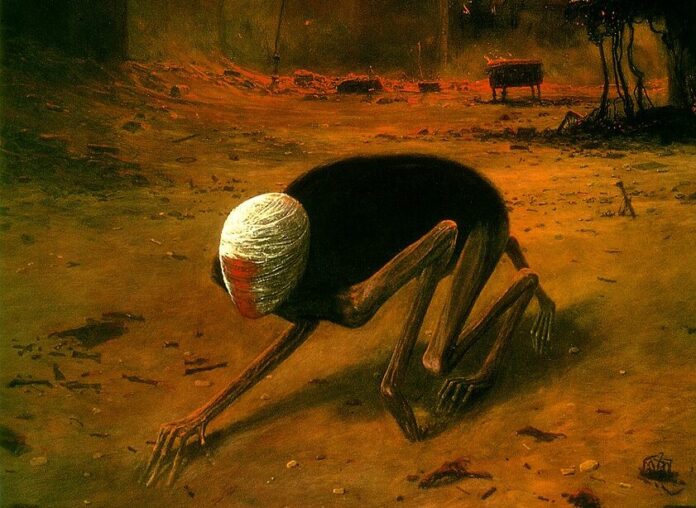
Beksiński began working as a photographer in the 1950s, holding a solo exhibition at the Photographic Society in Gliwice in 1958. His photographic work, now housed at the National Museum in Wrocław, represents one of the most significant achievements of Polish photography in the 20th century. These images—depicting wrinkled surfaces, desolate landscapes, bandaged faces, and decaying materials—established his aesthetic vocabulary.

In 1958, Beksiński wrote “Crisis in Photography and the Prospects of Overcoming It,” published in the journal Periodical Photography, which became one of the most important theoretical writings on photography produced in Poland during the 20th century. His photographic practice challenged aesthetic conventions and anticipated conceptual art, body art, and photo-media developments.

By the early 1960s, Beksiński abandoned photography, disappointed by the limited possibilities of altering captured images. Painting and drawing offered the freedom to manipulate reality beyond photographic constraints—to create what he described as “photographing dreams.”

1964: The Warsaw Exhibition and Critical Recognition

The turning point in Beksiński’s career occurred in 1964 when critic Janusz Bogucki organized an exhibition in Warsaw that became his first major success—all paintings sold. This success came without titles, without artist statements, without the explanatory apparatus typically demanded of contemporary art. In a cultural environment where socialist realism had dominated, Beksiński’s refusal to make his work “useful” or explicable constituted quiet resistance.

He soon became a leading figure in contemporary Polish art, not through manifestos or group affiliations but through the unsettling power of images that demanded engagement without offering resolution.

The “Fantastic Period”: Late 1960s to Mid-1980s

In the late 1960s, Beksiński entered what he called his “fantastic period,” which lasted until the mid-1980s—his most celebrated phase, during which he created disturbing images of gloomy, nightmarish environments featuring death, decay, skeleton-filled landscapes, deformed figures, and deserts.

His famous declaration captures his methodology: “I wish to paint in such a manner as if I were photographing dreams”. The photographic metaphor is significant—it suggests documentation rather than invention, objectivity applied to the oneiric. His architectural training manifested in precise perspectival construction, measured diagonals, and volumetric exactitude applied to impossible spaces.

Beginning around 1970, Beksiński painted in oils on masonite, and his ability to manipulate light effects quickly became a hallmark of his work, comparable to the renowned abilities of J.M.W. Turner. Yet where Turner’s light suggested transcendence, Beksiński’s illumination is clinical, exposing rather than redeeming.

Importantly, despite the grim subject matter, Beksiński claimed some works were misunderstood—he considered them optimistic or even humorous. This statement confounds easy readings. The artist’s subjective experience diverged from viewer reception, further emphasizing his position that meaning resides in encounter, not authorial intent.

The Radical Act: Refusing Titles

Beksiński was adamant that he did not know the meaning of his artworks and was uninterested in possible interpretations; consistent with this position, he refused to provide titles for any drawings or paintings. Every work remains “Untitled.”

This decision exceeds aesthetic preference. Titles direct interpretation, create narrative frames, anchor images in conceptual schemas. By withholding them, Beksiński forced viewers into direct phenomenological engagement. The work could not be reduced to “The Horror of War” or “Meditation on Mortality”—it remained stubbornly itself, demanding that viewers confront their own responses without interpretive guidance.

As he stated, “I cannot conceive of a sensible statement on painting,” and he was especially dismissive of those seeking simple answers to what his work meant. This dismissal was not arrogance but epistemological rigor: visual experience precedes and exceeds verbal translation.

Technique and Material Practice

Beksiński’s paintings were mainly created using oil paint on hardboard panels that he personally prepared, though he also experimented with acrylics. He abhorred silence and always listened to classical music while painting, though he also appreciated rock music. He credited music as his main source of inspiration, claiming not to be influenced by literature, cinema, or other artists’ work, and almost never visited museums or exhibitions.

This methodological isolation meant his visual language developed independently. He created not in dialogue with art historical movements but in response to internal necessity and musical structure.

Later Developments: The “Gothic Period” and Digital Work

Beksiński’s art in the late 1980s and early 1990s focused on monumental, sculpture-like images rendered in restricted, often subdued color palettes, including a series of crosses. He described this later phase as his “gothic period,” characterized by deformed heads and less dreamlike figures displaying specific plastic harmony.

In the later part of the 1990s, he became interested in computers, the Internet, digital photography, and photo manipulation—media he focused on until his death. While many artists his age rejected digital tools, Beksiński embraced them, extending his vision into new technical possibilities. His digital works maintained his aesthetic concerns while demonstrating formal adaptability.

Before relocating, Beksiński burned a selection of works in his own backyard without documentation, claiming some were “too personal” while others were unsatisfactory—he didn’t want people to see them. This destruction suggests he maintained strict standards for what entered public circulation, exercising posthumous control through pre-emptive erasure.

Life in Warsaw and Personal Tragedy

In 1977, Beksiński moved to Warsaw with his wife Zofia and their son Tomasz. Although his art was often grim, he himself was known as a pleasant person who enjoyed conversation and had a keen sense of humor—modest, somewhat shy, avoiding public events including his own exhibition openings.

He had obsessive-compulsive disorder, which made him reluctant to travel; he referred to his condition as “neurotic diarrhea”. This clinical detail humanizes the artist while explaining his reclusive working method—isolation was not romantic pose but psychological necessity.

Beksiński’s wife Zofia died in 1998; a year later, on Christmas Eve 1999, his son Tomasz died by suicide by drug overdose. Beksiński discovered his son’s body. On February 21, 2005, Beksiński was murdered in his Warsaw apartment by Robert Kupiec, the teenage son of his longtime caretaker, reportedly because Beksiński refused to lend him money. Robert was sentenced to 25 years in prison; his cousin Łukasz received five years.

The violence that ended Beksiński’s life was not metaphorical or aesthetic but banal—a refusal to lend money, a sudden attack. Unlike his paintings, which transform suffering into carefully constructed images, his death had no formal coherence.

Institutional Recognition and Legacy

The town of Sanok houses a museum dedicated to Beksiński; the Historical Museum in Sanok possesses the world’s largest collection of his work, with approximately 600 pieces. A museum housing 50 paintings and 120 drawings from the Piotr Dmochowski collection—the largest private collection of Beksiński’s art—opened in 2006 at the City Art Gallery of Częstochowa. On May 18, 2012, with participation from Minister of Regional Development Elżbieta Bieńkowska, the ceremonial opening of The New Gallery of Zdzisław Beksiński took place in the rebuilt wing of Sanok Castle.

During his lifetime, Beksiński received various accolades including the Award of the Minister of Culture and Art in 1980 and the Award of the Polish Culture Foundation in 1992. His work has been exhibited in numerous galleries and museums across Poland and internationally.

Film director Guillermo del Toro credits Beksiński’s influence on Pan’s Labyrinth, which won del Toro an Oscar in 2006. According to del Toro, “In the medieval tradition, Beksinski seems to believe art to be a forewarning about the fragility of the flesh—whatever pleasures we know are doomed to perish—thus, his paintings manage to evoke at once the process of decay and the ongoing struggle for life”.

Beksiński and his family are portrayed in the 2016 drama film The Last Family directed by Jan P. Matuszyński, with Andrzej Seweryn playing Beksiński.

Critical and Academic Reception

Academic analysis has attempted various interpretive frameworks, including psychoanalytic approaches examining Beksiński’s “fantastic period” paintings as expressions of early childhood experience. However, such readings exist in tension with the artist’s explicit rejection of interpretive closure.

Beksiński’s work has been studied in academic circles for its striking visuals, rich symbolism, and connection to Polish history and culture. Some scholars contextualize his imagery within Poland’s traumatic 20th-century history—World War II, communist repression—while others focus on formal analysis, compositional strategies, and his manipulation of light and space.

The challenge for critics remains Beksiński’s own position: he produced images of extraordinary power while insisting they meant nothing beyond themselves. This creates interpretive paradox—work that seems laden with meaning but whose creator denies semantic content.

Conclusion: The Function of Discomfort

Beksiński’s significance extends beyond dystopian surrealism as genre. His work performs a specific cultural function: it refuses consolation. In an era saturated with images designed for rapid consumption and emotional management, his paintings demand sustained attention. They cannot be scrolled past, reduced to captions, or domesticated through explanation.

His architectural training produced images of spatial logic applied to impossible scenarios—ruins that were never buildings, figures that were never fully human, light sources that illuminate without warmth. The precision of execution intensifies rather than diminishes horror: these are not chaotic nightmares but methodically constructed visions.

By refusing titles and interpretations, Beksiński insisted that art’s primary function is not communication of predetermined meaning but creation of phenomenological encounter. The viewer stands before the work without mediation, forced to acknowledge their own response—discomfort, fascination, revulsion, recognition.

The world’s largest exhibition of Beksiński’s work at the Historical Museum in Sanok presents approximately 600 pieces, documenting his artistic evolution across photography, painting, sculpture, and digital media. This institutional preservation ensures continued engagement with work that refuses to become comfortable, familiar, or fully explained.

Beksiński created images of ruin—architectural, corporeal, civilizational. Yet the ruins are not memorials to specific catastrophes but structural conditions. His work suggests that decay, deformation, and death are not aberrations but fundamental aspects of existence that polite culture works to obscure. His painting’s function, then, is not to explain these conditions but to make them visible—to hold them before the viewer until recognition occurs.

The discomfort his work generates is not incidental but essential. It marks the distance between aesthetic experience and intellectual containment, between what can be shown and what can be said. In this gap, Beksiński’s untitled works continue to operate—not as messages but as encounters that remain stubbornly, productively, irresolvable.


References

All factual claims in this essay are supported by the following authoritative sources:

  • Historical Museum in Sanok (official institutional repository housing the world’s largest Beksiński collection)
  • Wikipedia entries on Zdzisław Beksiński (citing multiple scholarly sources)
  • DailyArt Magazine art historical analysis
  • National Museum in Wrocław (repository of Beksiński’s photographic work)
  • Academic papers including Beata Sokołowska-Smyl’s “Zdzisław Beksiński’s Paintings of the ‘Fantastic Period’ as an Expression of Early Childhood Experience” (2014)
  • Morpheus Gallery biographical documentation
  • Sanok Historical Museum official documentation
  • WikiArt scholarly database
  • Culture.pl (Polish Cultural Institute)

Paint Brushes for Oil, Acrylic, and Watercolor Painting: Choosing the Right Tools for Each Medium

Paint Brushes for Oil, Acrylic, and Watercolor Painting
Paint Brushes for Oil, Acrylic, and Watercolor Painting: Choosing the Right Tools for Each Medium

Paint Brushes for Oil, Acrylic, and Watercolor Painting: Choosing the Right Tools for Each Medium

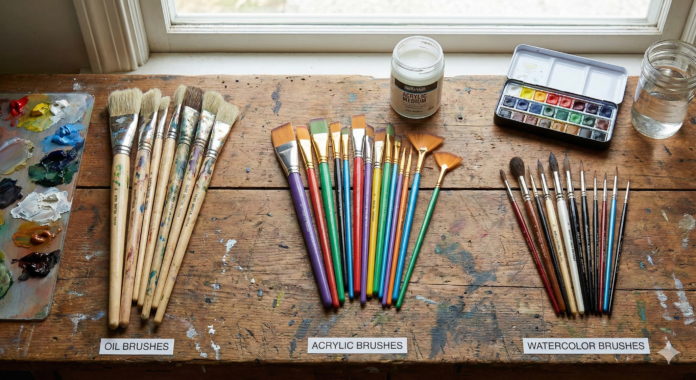
The three major painting media—oil, acrylic, and watercolor—each have distinct physical properties that demand specific brush characteristics for optimal results. Oil paint’s thick, buttery consistency requires brushes that can push and manipulate heavy pigment. Acrylic paint’s quick-drying nature and variable viscosity calls for resilient bristles that maintain their shape under repeated use. Watercolor’s fluid, translucent washes need soft, absorbent brushes that hold and release diluted pigment with precision. Understanding these relationships between paint properties and brush design helps artists build an effective toolkit and achieve the results each medium can offer.

Oil Painting Brushes: Built for Body and Texture

Oil painting brushes are engineered to handle paint at its thickest and most substantial. Traditional oil painting involves applying layers of pigment suspended in linseed or other oils, creating mixtures that range from thick impasto to thinner glazes. The brushes must be robust enough to move this heavy material across canvas without collapsing or losing their shape.

Natural hog bristles have been the standard for oil painting for centuries, and for good reason. These coarse, stiff fibers possess natural strength and a slightly rough texture that grips oil paint effectively. The bristles’ natural flagged tips—split ends at a microscopic level—help distribute paint evenly while creating the characteristic textured brushstrokes many oil painters prize. Hog bristle brushes can withstand the physical demands of moving thick paint and scrubbing color into canvas weave. They create visible, expressive marks that become part of the painting’s surface character.

High-quality synthetic brushes designed for oil painting offer a viable alternative, especially for artists seeking animal-free options or working in educational settings where budget matters. Modern synthetic bristles for oil painting are manufactured to mimic the stiffness and resilience of hog bristle while offering greater consistency from brush to brush. They maintain their shape well, clean more easily, and can be more affordable while delivering performance that rivals natural bristles for many applications.

Oil painting brushes typically feature long handles, usually twelve to fifteen inches or more. This extended length serves multiple purposes beyond simple reach. Long handles allow artists to work at arm’s length from the canvas, providing better perspective on the overall composition rather than focusing too closely on isolated details. This distance encourages looser, more confident brushwork and helps artists see relationships between colors and forms more accurately. The handle length also provides leverage, making it easier to apply pressure when working with thick paint or covering large areas.

The brushwork itself becomes part of oil painting’s visual language. The stiff bristles leave traces of their passage—ridges, grooves, and directional marks that catch light and create surface interest. This visible texture, whether subtle or pronounced, distinguishes oil painting from smoother media. Choosing brushes that complement your desired surface quality, from heavily textured impasto to smoother, more refined passages, becomes an essential part of developing your artistic voice.

Acrylic Painting Brushes: Engineered for Resilience

Acrylic paint presents unique challenges that have driven brush innovation. This relatively modern medium, developed in the mid-twentieth century, combines aspects of both oil and watercolor while introducing characteristics all its own. Acrylics dry quickly through evaporation rather than oxidation, can be used thick like oils or thin like watercolors, and when dry form a tough, water-resistant plastic film. These properties demand brushes that can handle both consistency extremes while surviving the medium’s harsh nature.

Synthetic bristles reign supreme for acrylic painting. Materials like taklon, a high-grade synthetic fiber, offer the perfect combination of strength, resilience, and what brush manufacturers call “snap”—the ability to return quickly to the bristle’s original shape after bending. This spring-like quality proves essential when working with acrylics, as the paint’s body and quick-drying nature constantly test the brush’s structure. Quality synthetic bristles maintain their shape stroke after stroke, neither splaying outward nor clumping together as inferior brushes do.

Natural bristles perform poorly with acrylics for several reasons. The water content in acrylic paint causes natural hairs to absorb moisture, becoming soft and losing the firmness needed to control the medium. More critically, dried acrylic paint is notoriously difficult to remove completely, and its plastic nature can destroy natural bristles’ delicate structure. Natural hair brushes used with acrylics often become permanently damaged after just a few uses, making them an impractical choice despite their effectiveness with other media.

The resilience of synthetic brushes for acrylics extends beyond their performance with paint. They withstand aggressive cleaning, which becomes necessary given acrylic’s tendency to dry quickly on bristles. They tolerate the solvents and soaps sometimes needed to remove stubborn dried paint. They maintain consistent performance through hundreds of painting sessions when properly cared for, offering long-term value that justifies investment in quality synthetic brushes.

Like oil painting brushes, acrylic brushes typically feature long handles. Artists working on canvas or board benefit from the same perspective advantages and leverage that oil painters enjoy. The handle length facilitates working on vertical surfaces like easels while maintaining comfortable posture and viewing distance. For studio painting where the artist stands or sits at a comfortable distance from the work, long handles feel natural and support effective technique.

Acrylics’ versatility means these brushes must perform across a range of consistencies. Used straight from the tube, acrylics approach the thickness of oil paint, requiring brushes that can push substantial material. Thinned with water or medium, acrylics become fluid enough for watercolor-like techniques, asking the same brushes to handle delicate washes. Quality acrylic brushes navigate this spectrum effectively, demonstrating the engineering sophistication behind modern synthetic bristle design.

Watercolor Painting Brushes: Designed for Absorption and Release

Watercolor painting operates on entirely different principles from oil or acrylic work. The paint itself is transparent pigment bound with gum arabic, always diluted with water to varying degrees of transparency. Success in watercolor depends on controlled wetness—managing how much water-diluted paint the brush holds and how it releases that liquid onto absorbent paper. Brushes for watercolor prioritize softness, absorbency, and the ability to form fine points or edges for precise work.

Natural sable brushes represent the traditional pinnacle of watercolor brush quality. Sable hair, particularly from the tail of the Kolinsky sable (actually a type of weasel), possesses remarkable properties. The hairs are exceptionally soft yet springy, returning to their shape after each stroke. They absorb substantial amounts of water while maintaining their form. Most notably, quality sable brushes come to extremely fine points when wet, allowing for detailed work despite the brush’s overall size. A large sable round might hold enough diluted paint for broad washes yet still create delicate lines with its pointed tip.

The cost of genuine Kolinsky sable brushes reflects both the material’s rarity and its superior performance. A single quality sable brush can cost as much as an entire set of synthetic alternatives. For professional watercolorists and those who can justify the investment, sable brushes offer unmatched responsiveness and longevity. A well-maintained sable brush can serve an artist for decades, developing a familiar feel that becomes integral to their working method.

Modern synthetic watercolor brushes have evolved dramatically, with premium synthetics approaching natural sable’s performance at a fraction of the cost. High-quality synthetic watercolor brushes made from fine nylon or taklon fibers form good points, hold reasonable amounts of water, and perform admirably for most watercolor techniques. While connoisseurs might detect differences in how synthetic bristles release water compared to natural sable, many artists work exclusively with synthetics and achieve excellent results. For students, hobbyists, and those building initial collections, synthetic watercolor brushes offer outstanding value and performance.

Watercolor brushes traditionally feature shorter handles than those used for oil or acrylic painting. This design reflects watercolor’s typical working position—artists usually sit close to their paper, which lies flat or at a slight angle on a table or drawing board. Short handles provide maximum control for the precise, detailed work watercolor often demands. The brush becomes an extension of the hand in a more direct way than with longer handles, facilitating the delicate touch watercolor techniques require.

The shapes common to watercolor brushes serve the medium’s specific needs. Round watercolor brushes are fundamental, used for everything from broad washes to fine details depending on their size. Flat watercolor brushes create distinctive rectangular strokes useful for architectural elements or geometric shapes. Mop brushes, with their large, soft, rounded shapes, excel at applying even washes across large areas. Rigger or liner brushes, featuring long, thin bristles, create the continuous fine lines needed for branches, rigging on ships, or delicate botanical details.

The Crossover Question: Can Brushes Serve Multiple Media?

The dream of a universal brush collection that serves all media appeals to practical and economic sensibilities. In practice, some overlap exists, though compromises inevitably arise when asking one tool to serve multiple distinct purposes.

High-quality synthetic brushes represent the most versatile option for artists working across multiple media. Premium synthetics, particularly those marketed as multi-media or featuring advanced fiber technology, can perform credibly with watercolor, acrylic, and even some oil painting techniques. They won’t match specialized brushes’ performance in each medium, but they offer respectable results across the board. For artists exploring different media, building an initial collection of quality synthetic brushes in various shapes and sizes provides the flexibility to experiment without investing in separate brush sets for each medium.

Acrylic brushes transition to oil painting reasonably well. Their synthetic bristles handle oil paint’s body effectively, and the stiff resilience that serves acrylics works similarly with oils. Artists can confidently use their acrylic brushes for oil painting, though they should dedicate specific brushes to each medium rather than switching back and forth. Once a brush has been used with oils, cleaning it thoroughly enough for water-based acrylics becomes difficult, and residual oil can contaminate acrylic paint.

Oil painting brushes perform poorly for watercolor, however. Their stiffness, designed for moving heavy paint, proves far too coarse for watercolor’s delicate washes and details. Using an oil painting brush for watercolor would be like writing calligraphy with a housepainting brush—technically possible but missing the point entirely. The stiff bristles don’t absorb water effectively, won’t form the points needed for detail work, and create harsh, uncontrolled marks on delicate watercolor paper.

Watercolor brushes can technically be used with thinned acrylics, though this practice risks damaging these often-expensive tools. Acrylic paint, even when diluted, maintains its tendency to dry into a tough plastic that can ruin the delicate structure of fine watercolor brushes. Artists who work in both media typically maintain separate brush collections to preserve their watercolor brushes’ condition and performance.

Building a Practical Brush Collection

For artists beginning to assemble their toolkit or those looking to work across media, a thoughtful approach balances versatility with specialization. Start with quality synthetic brushes in fundamental shapes—rounds in small, medium, and large sizes, flats of varying widths, and perhaps an angled brush. These form the core of a functional collection suitable for acrylic painting and decent for watercolor work.

As you develop preferences for particular media, invest in specialized brushes that elevate your work in that direction. If oil painting becomes your focus, add natural bristle brushes that create the texture and handle the paint body this medium offers. If watercolor captures your attention, gradually acquire sable or premium synthetic watercolor brushes that bring out the medium’s subtle beauty. If acrylics remain your primary medium, expand your synthetic brush collection with shapes and sizes that support your evolving techniques.

Consider brush care as integral to building a collection. Properly maintained brushes last exponentially longer than neglected ones. Clean brushes thoroughly after each session, using appropriate cleaners for your medium. Store them properly to maintain bristle shape. Rotate through your collection rather than relying on a few favorites until they wear out. Quality brushes represent an investment that pays dividends through years of reliable performance.

The relationship between painter and brush becomes intuitive with experience. You’ll develop preferences for certain brushes for specific tasks, reaching for familiar tools that feel right for the mark you want to make. This personal relationship with your tools represents part of painting’s deeper satisfaction—the harmony between intention, tool, and result that transforms technique into expression.

The Path Forward: Choosing Wisely for Your Practice

Understanding brush characteristics for different media empowers better choices, but actual use teaches more than any guide can convey. Purchase a few quality brushes rather than large sets of mediocre ones. Experiment with how different bristle types interact with your chosen medium. Pay attention to which brushes feel responsive in your hand and which produce marks that match your vision. Notice how brush size, shape, and bristle stiffness affect your work’s character.

The market offers overwhelming options, from student-grade brushes costing pennies to handcrafted artisan brushes priced like precious tools. The sweet spot for most artists lies somewhere between these extremes—professional-grade brushes from reputable manufacturers that offer excellent performance without extreme cost. These brushes reward the investment by maintaining their quality through extensive use, making them more economical than cheap brushes that quickly deteriorate.

Your brush collection will evolve with your practice. Techniques you explore will suggest new brush types to try. Frustrations with existing brushes will clarify what characteristics matter most for your work. Over time, you’ll accumulate favorites that become extensions of your artistic vision, tools so familiar they disappear from conscious thought, leaving only the direct connection between what you envision and what appears on canvas or paper. This journey from confusion to confidence, from basic understanding to intuitive mastery, represents part of every artist’s development—and having the right brushes for your chosen media accelerates that growth considerably.

Why Visual Artists Trust AMM for Off-Page SEO

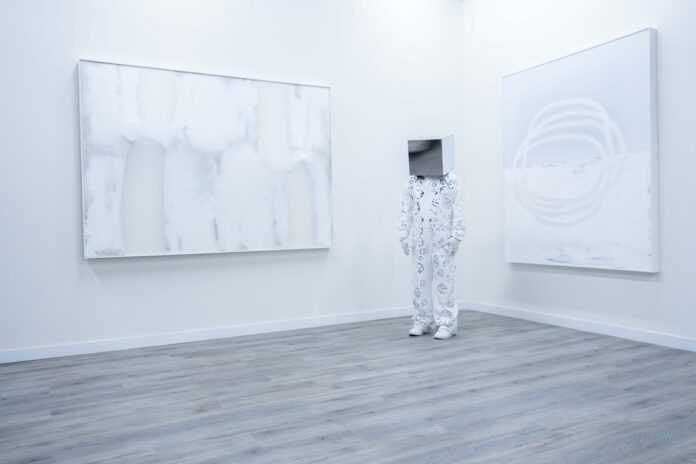
Kube Man by Rafael Montilla - photo Ricardo Cornejo

Why Visual Artists Trust AMM for Off-Page SEO

Art-Focused Expertise
Our team of writers and SEO specialists understands the art world. We craft compelling content that speaks your artistic language while following best SEO practices to increase your reach.

Customized Strategies for Artists
Every artist is unique. That’s why we tailor our link-building and content strategies to fit your medium, goals, and audience—whether you’re promoting gallery exhibitions, online sales, or growing your personal brand.

Results You Can See
We don’t just create content—we deliver visibility. Our data-driven approach tracks the impact of your content and SEO, refining it as needed to ensure continued growth.

How We Work with Artists

  1. Discovery Call
    We start by getting to know you, your art, and your goals for visibility and engagement.
  2. Strategy Design
    We build a personalized plan focused on content writing and high-quality backlinks from trusted art and culture platforms.
  3. Creative Execution
    We produce blog posts, artist features, and social content that highlight your practice and elevate your voice.
  4. Monitoring & Growth
    With detailed reporting and real-time insights, you’ll see how your audience grows and where your traffic is coming from.
  5. Ongoing Refinement
    Art evolves—and so should your strategy. We keep optimizing to help you stay visible and relevant.

Services for Visual Artists

Content Writing

  • Artist Spotlights: Articles that tell your story and connect with new audiences
  • Exhibition Features: Promote your shows with engaging, SEO-optimized write-ups
  • Social Media Content: Increase engagement with posts tailored to your visual brand
  • Website Copy: Elevate your portfolio with compelling bios and project descriptions

Let’s Make Your Art Discoverable

Ready to get more eyes on your work? Contact us today for a free consultation. At AMM, we’re passionate about helping artists expand their reach and build lasting visibility. Let’s create a digital presence that does justice to your talent.

New West Palm Beach gallery spotlights overlooked postwar American artists, underrepresented groups

Joe Overstreet
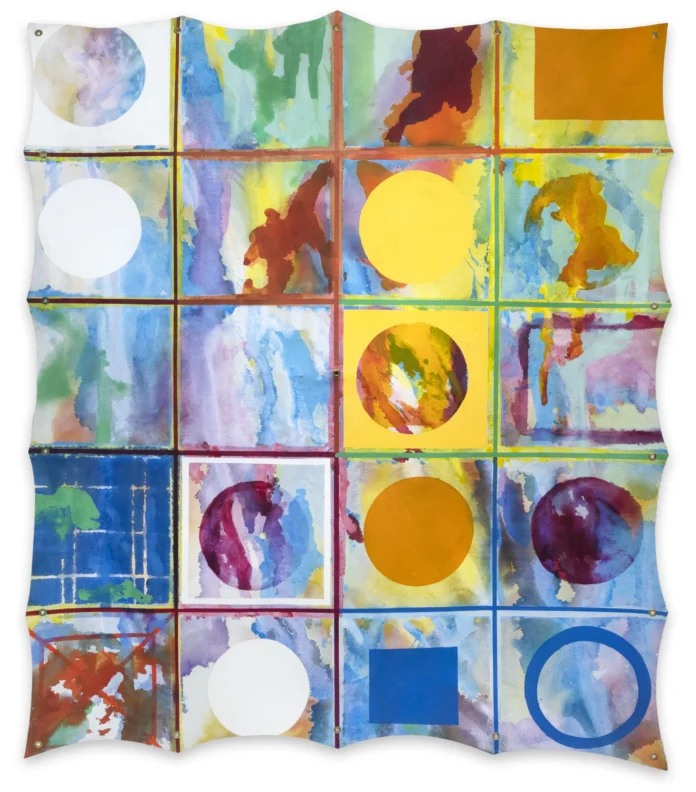
The exhibition Cross Generational: 1950 to Now at the new Eric Firestone Gallery in West Palm Beach includes a focused look at the late Joe Overstreet, the legendary Black abstract painter and activist who first gained recognition in California’s Bay Area. Untitled, 1970 acrylic on canvas

New West Palm Beach gallery spotlights overlooked postwar American artists, underrepresented groups

WLRN Public Media | By Wilkine Brutus

Seven decades’ worth of overlooked postwar American artists and underrepresented groups will see the light at a newly expanded art space in the historic Flamingo Park neighborhood of West Palm Beach.

By pairing historical works with contemporary artists, the inaugural exhibition — “Cross Generational: 1950 to Now” — at the new Eric Firestone Gallery strives to foster dialogue around shared themes, ideas and techniques.

Curator and gallery owner Eric Firestone told WLRN that the show will feature works by 25 emerging and established artists, with an official opening on Jan. 31.

Firestone, a Florida native “who  used to be dragged to a lot of art antique shows when he was a young kid in South Miami,” has a knack for scholarly reexaminations of artists he says are too often overlooked by the art world.

“ Reexamining American artists tends to be women artists and minority artists. And the reason why is 40, 50 years ago, if not further, there really wasn’t as much visibility for the demographics in the market,” Firestone told WLRN.

“ Become aware. And the only way that we really become aware is by familiarity.”

The exhibition includes a focused look at the late Joe Overstreet, the legendary Black abstract painter and activist who first gained recognition in California’s Bay Area. His Civil Rights–inspired abstractions date to the late 1950s, and after moving to New York, he and his partner Corrine Jennings founded Kenkeleba House, a gallery that has championed artists of color and women.

Firestone’s exhibition also highlights works by the late Pat Passlof, a prominent New York–based Abstract Expressionist active in the late 1950s and earlier, who lived and worked in a former synagogue. Her work is widely recognized for its abstracted landscapes, and she was a student of the late Dutch-American artist Willem de Kooning.

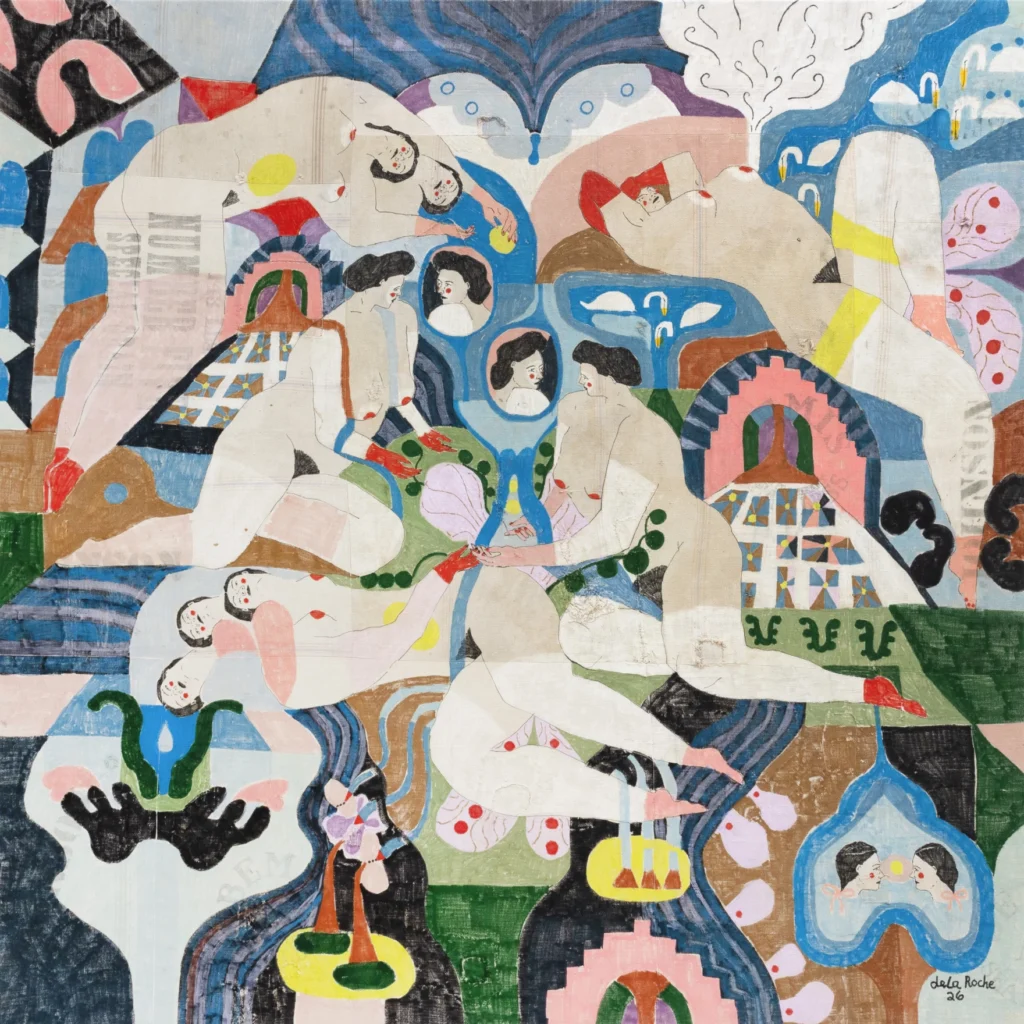
Contemporary artists featured include Huê Thi Hoffmaster, a Connecticut-based artist known for large-scale floral abstractions inspired by Eastern and Western traditions, and Lauren dela Roche, a St. Louis–based artist recognized for her dreamlike paintings of elongated nude female figures.

Firestone said there’s a “whole wave of younger artists” inspired by those who came before them.

Lauren dela Roche
Lauren dela Roche is a St. Louis–based artist recognized for her dreamlike paintings of elongated nude female figures.

A new space in a growing creative hub

The New York–based gallery, with current locations in New York City and East Hampton, has grown from a pop-up in the area into a permanent space in the historic Flamingo Park neighborhood of West Palm Beach.

The neighborhood has emerged as a growing arts hotspot, surrounded by several notable museums and galleries, including the Norton Museum of Art, the Armory Art Center, the Ann Norton Sculpture Gardens, Kristin Hjellegjerde Gallery and The Peach.

Eric Firestone Gallery is going to be a rotating exhibition space where curators will change works throughout the season. And it will include community engagement programs with panel discussions.

It’s “necessary” for there to be a burgeoning creative hub in a residential area like Flamingo Park, Firestone said.

IF YOU GO
What: Cross Generational: 1950 to Now
When: From Saturday, January 31, through April 2026
Where: Eric Firestone Gallery: 2412 Florida Avenue West Palm Beach, FL 33401

Weaving Pine Needles into Baskets

Tom Firth textile artist
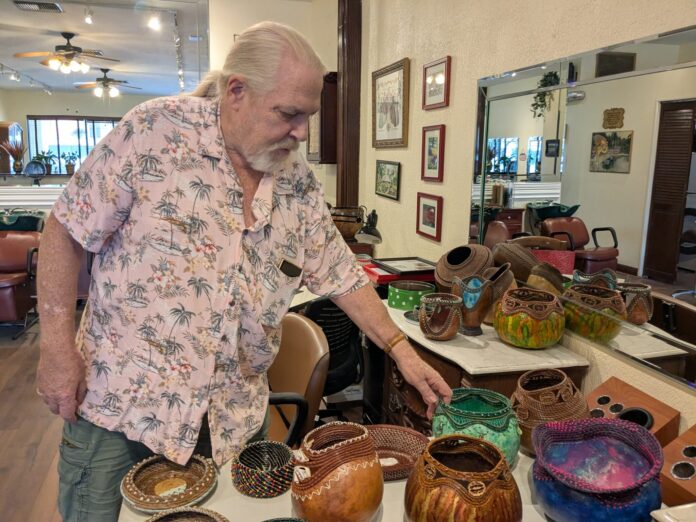
Tom Firth has made hundreds of baskets along with other pine needle creations. -ANDREA STETSON / FLORIDA WEEKLY

One man’s yard waste is a Bonita man’s basket art

BY ANDREA STETSON
FLORIDA WEEKLY CORRESPONDENT

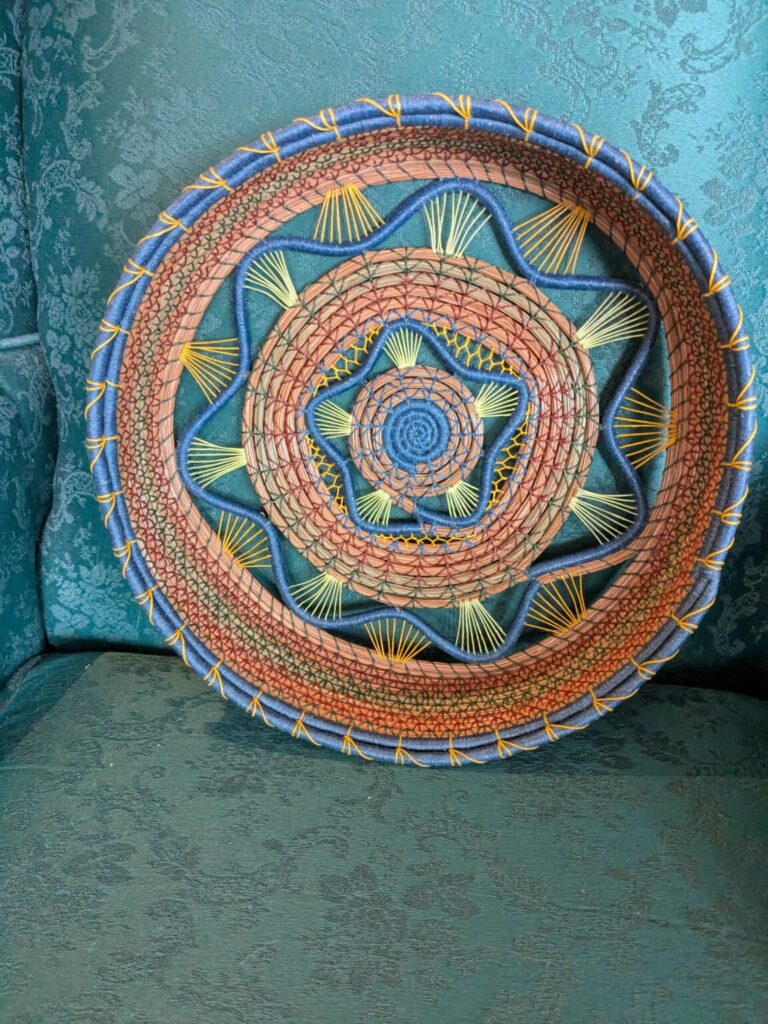
Piles of fallen pine needles carpet the ground by many homes in Southwest Florida. They can be raked up, used as mulch, as an aid in composting or just left to slowly disintegrate. But Bonita Springs resident, Tom Firth, has another use for these needles that fall from the tall pine trees. He turns them into baskets. It is an art he has been perfecting since 2018 when he made his first basket and became hooked on the hobby.

Tom Firth textile artist
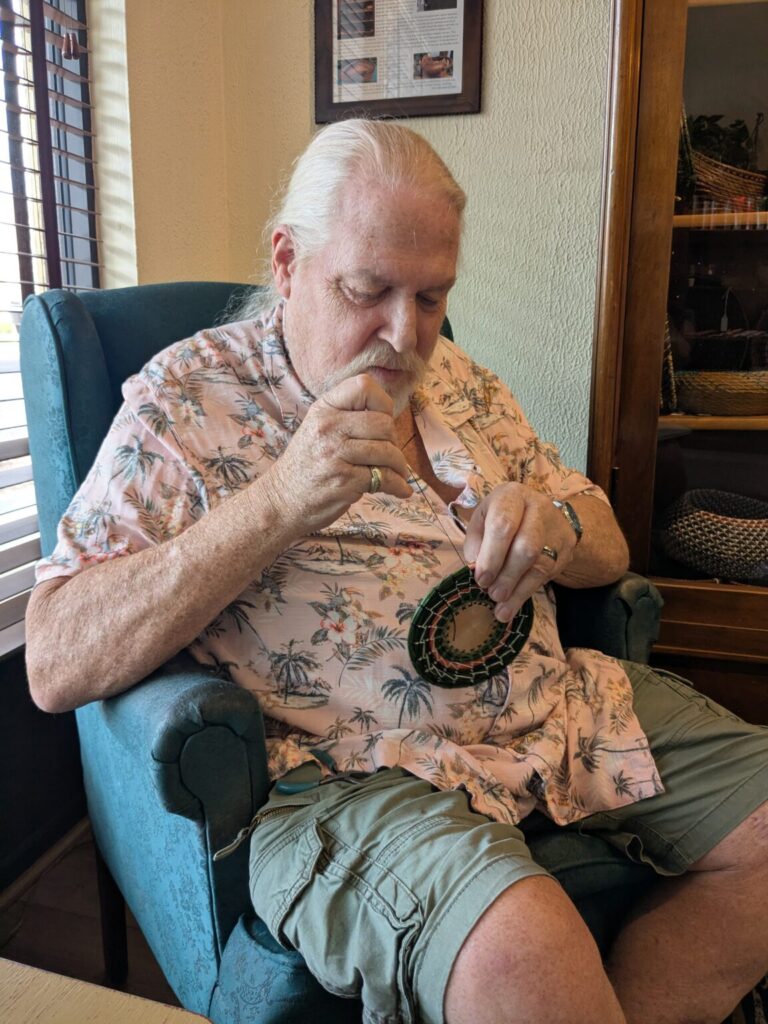
Tom Firth weaves the bottom of a basket he is making out of pine needles. -ANDREA STETSON / FLORIDA WEEKLY

“It is fun, and it is creative,” Firth began. “I think of all these designs myself. I lay in bed at night and think ‘I have this color needles and this color thread what should I make’. Half the fun is thinking about it and coming up with a plan. Sometimes it does not come out like I planned, but there is no wrong. It is my own creation.”

It all began when the local hair stylist was cutting a customer’s hair, and she suggested he join a pine needle basket weaving group.

“I started by watching this friend of mine and I was just taking to it and liking it,” he described.

Firth said the group was originally taught by a retired local elementary school teacher named Georgia Horton, who died at age 100 shortly before Firth started weaving.

“When Georgia was doing it, it was sort of like a class, but by the time I started, it was not a class. It was just a group of people doing it. You just watched people, and they gave pointers, and then there was a show and tell where you would show people what you were doing. It is like an old-fashioned quilting bee where people just sit around and work on baskets and talk about things.”

That’s how Firth learned, and soon he was dying his own needles and making unique creations. It’s a complicated process of getting the needles pliable enough to weave without using too much water that makes them expand and then contract.

“I usually put them in some water with vegetable glycerin and when I dye them, I simmer them in an electric turkey roaster 4-5 hours and put in dye and vegetable glycerin,” he described.

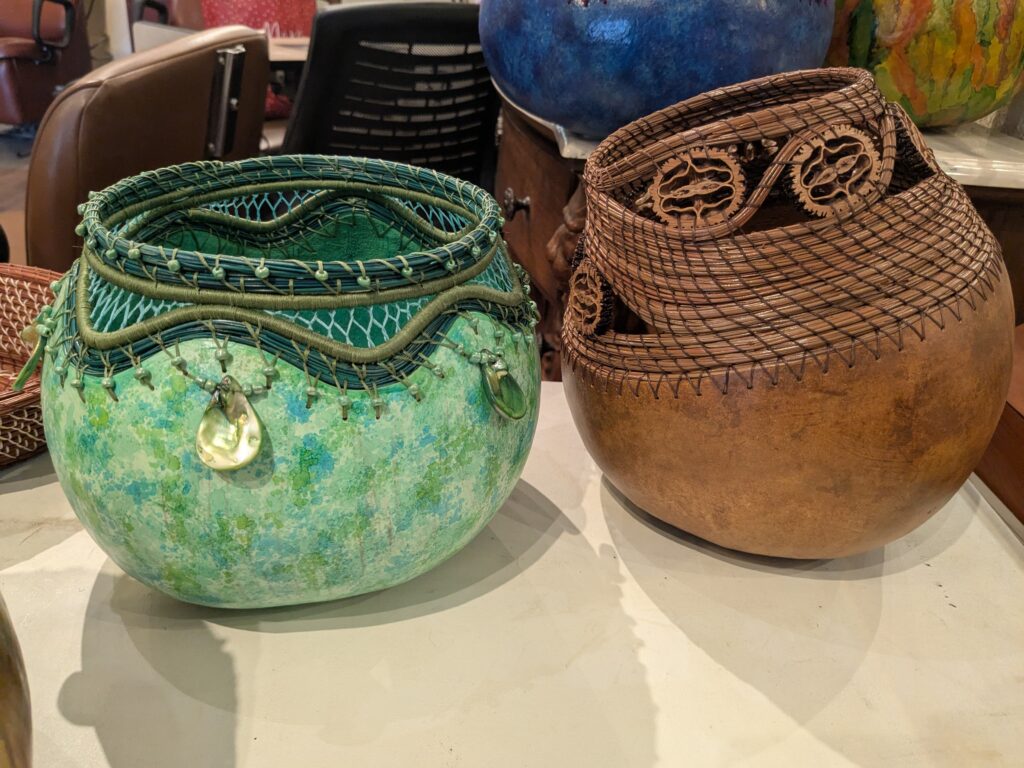
Other times he uses a special powder that makes brighter colors with less work. After making dozens of baskets, Firth started to expand his hobby by making a variety of items. He takes hollowed out gourds, paints the base and then adds intricate pine needle stitching on top. He also makes bowls, trivets, holiday ornaments and hair clips.

Tom Firth textile artist
Tom Firth paints gourds and then weaves pine needles to decorate the top of the baskets that he makes. -ANDREA STETSON / FLORIDA WEEKLY

“It started out as just baskets and at some point it gets to ‘I am tired of making round baskets’, so you start to think outside the box,” he described.

For the first year, Firth kept everything he made. Then he started running out of room and decided to sell some. He goes to markets and festivals and special events where he sells pieces that range in price from $50 to more than $400. During season he is at the monthly craft show at Shangri La in Bonita Springs. He also does events in Ave Maria. Firth is excited that he was recently chosen to be part of a huge craft festival in Mount Dora Oct 25-26. He also does commissioned work and he sells items at his workplace, About Face Salon in Bonita Springs.

“I don’t do anything online. I am kind of a neanderthal,” Firth admitted.

Some of his customers love the baskets so much they have made numerous purchases.

“He is amazing,” exclaimed Monica Mier of Bonita Springs. “I bought a lot of his baskets for gifts and for my house. I am a sound healer, and I needed a basket for my mallets, and he made me the most beautiful basket.”

Mier likes the quality and the uniqueness.

“It lasts. It is durable and you never get that kind of workmanship anymore,” she stressed. “The things that he makes is so amazing. There is so much you can do with them, and they are so sturdy. The love that he is putting into it is just so amazing.”

“They are fabulous,” added Terry Reel of Bonita Springs. “I probably bought 12-15 baskets from him. I am going to buy more at Christmas. He is a real treasure. I see all the time he puts into it. He is a real artist. And he is the nicest person as well. If I want to give something special to someone, I give them a basket, because they are so unique. It is not like you are buying something off the shelf. He puts so much into each one and each basket has a story.”

Tom Firth textile artist
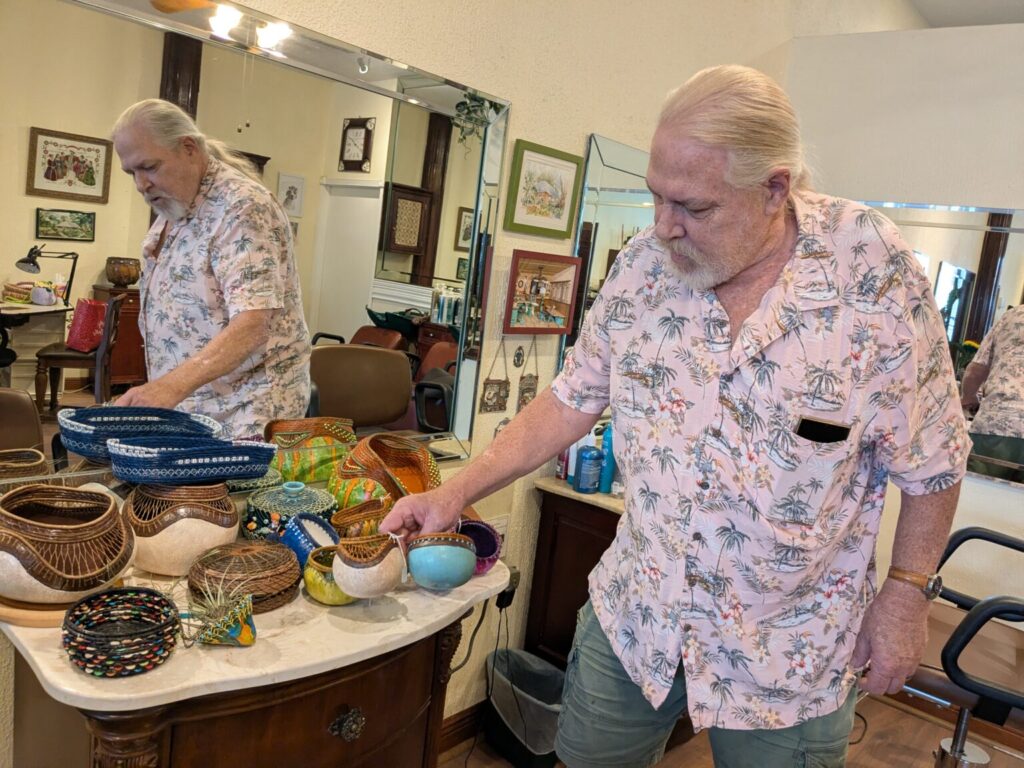
Tom Firth has made hundreds of baskets along with other pine needle creations. -ANDREA STETSON / FLORIDA WEEKLY

Tom Firth has made hundreds of baskets along with other pine needle creations. -ANDREA STETSON / FLORIDA WEEKLY

Linda Waterhouse, of Bonita Springs, commissioned Firth to create some special pieces. She had one made for her granddaughter with an underwater theme and unique beads. She has another in her guest bathroom that she fills with toiletries for visitors.

“I have quite a variety,” Waterhouse described. “I have some hanging up in my office on the wall. I have some that I bought as Christmas baskets as a gift to give away, but then I liked them so much I felt like I had to keep them. They are so unique. I don’t even know where he gets all his creativity. I just feel like the quality of them is just perfect. You would think that a machine made them.”

Many of his first creations are quite large, but Firth added smaller baskets to his inventory.

“People have to think about paying $300 to $400 on a basket,” he explained. “So, I started whipping out these little $50 baskets and 5-6 little baskets can equal one big one, and people don’t think as much about dropping 50-60 bucks.”

While his baskets and bowls might seem expensive, Firth said they are much more than a simple place to put things, they are a work of art. Each one takes one to two weeks to complete, and the stitching is quite intricate.

“People look at my things and the price, and they can buy a basket (at a store) for $10, but that is something made in Vietnam. Mine is made right here. Mine is art,” Firth stressed.

Tom Firth textile artist
An intricate basket woven by Tom Firth. -ANDREA STETSON / FLORIDA WEEKLY

Firth collects all his pine needles locally. He doesn’t waste time picking up individual ones off the ground. Instead, he looks for fallen branches and grabs them by the fistful. Once the needles are dyed and dry, he creates a center and coils around that. Firth said that method is quite different from traditional basket weaving. The artist says there is a lot people can do with his creations.

“People ask what can you put in these. You can put anything that you want in them: cell phones, keys, letters, bread, plants, remotes whatever you want, or you can just have them sit empty and they are pretty. I have a friend that has three hanging on the wall.”

Firth makes his baskets at home and at his salon. His creations fill cabinets, bookcases and the counters around his hair cutting stations.

“I love the creativity and the thrill of the completed project,” Firth concluded. “Sometimes it still surprises me that I made this. I am really proud of this. It is pride in what you create. It is thinking things up and making it happen. Being a hairdresser, I have always been creative. I can’t draw, but I have done hair since 1973. I have done macrame, embroidery and stained glass and all the different fads, but this one has taken something as basic as a pine needle and made something beautiful out of it.”

Page 17 of 277
1 15 16 17 18 19 277