Home Blog Page 16

How to Appreciate Art? Art Evaluation

Carson Fox
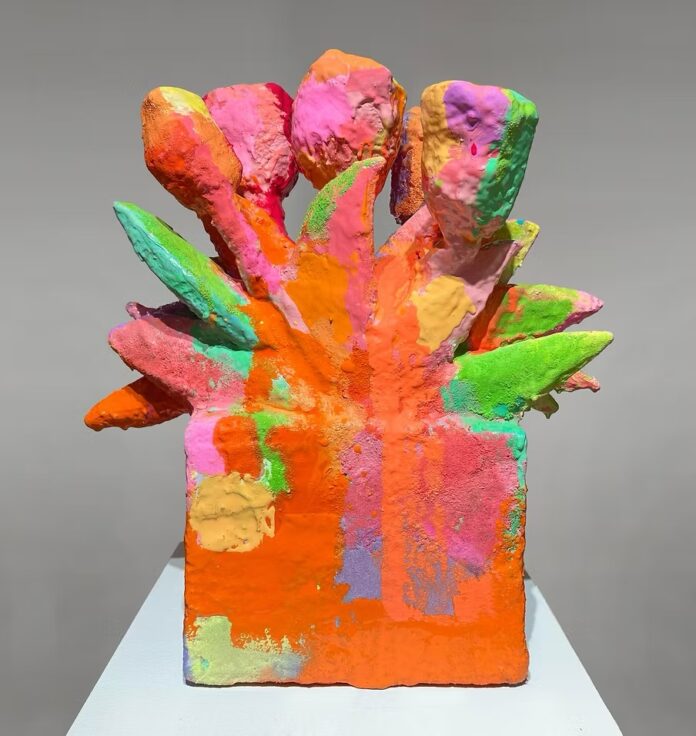
Carson Fox ​I Miss You, Donald Baechler, 2025, resin, cardboard, colored sand, foam, and wire, 19.5 x 18 x 10 in.

Art Evaluation: How to Appreciate Art?

What is Art Evaluation? The task of evaluating a work of art, such as a painting or a sculpture, requires a combination of objective information and subjective opinion. Yes, it’s true that art appreciation is highly subjective, but the aim of evaluating a picture is not simply to ascertain whether you like/dislike a picture, but WHY you like/dislike it. And this requires a certain amount of knowledge. After all, your assessment of a drawing produced by a 14-year old child in a school playground, is likely to be quite different from a similar drawing by a 40-year old Michelangelo. Similarly, one cannot use the same standards when evaluating the true-to-life qualities of a realist portrait compared with an expressionist portrait. This is because the expressionist painter is not trying to capture the same degree of visual objectivity as his realist counterpart. To put it simply, art evaluers need to generate facts upon which to base their opinions: namely, facts about (1) the context of the artwork; and (2) the artwork itself. Once we have the facts, we can then make our assessment. The more information we can glean about the context, and the work of art itself, the more reasoned our assessment will be.

Definitions & Terminology
Please note that in this article, the terms “art evaluation”, “art assessment” and “art appreciation” are used interchangeably. Art Evaluation is Not Simply Liking or Disliking Before going into detail about how to evaluate art, let us again re-emphasize that the whole point of art appreciation is to explain WHY we like or dislike something, not simply WHETHER we like it or not. For example, you may end up disliking a picture because it is too dark, but you may still like its subject matter, or appreciate its overall message. To put it simply, saying “I don’t like this painting” is insufficient. We need to know the reasons behind your opinion, and also whether you think the work has any positive qualities. How to Appreciate a Work of Art The easiest way to get to understand and therefore appreciate a work of art is to investigate its context, or background. This is because it helps us to understand what was (or might have been) in the mind of the artist at the time he created the work in question. Think of it as basic detective work. Start with these questions.

A. How to Evaluate the Context/Background of the Work?
When was the Painting Created?
Knowing the date of the work helps us to gauge how it was made, and the degree of difficulty involved. For instance, landscapes produced before the popularity of photography (c.1860), or the appearance of collapsible tin paint tubes (1841), had a greater level of difficulty. Oil painting produced before the Renaissance, or after the Renaissance by artists of modest means, will not contain the fabulous but astronomically expensive natural blue pigment Ultramarine, made from ground up mineral Lapis Lazuli.


Is the Painting Abstract or Representational?
A painting can be wholly abstract (meaning, it has no resemblance to any natural shapes: a form known as non-objective art), or organically abstract (some resemblance to natural organic forms), or semi-abstract (figures and other objects are discernible to an extent), or representational (its figurative and other content is instantly recognizable). Obviously an abstract work has quite different aims to that of a representational work, and must be judged according to different criteria. For example, a wholly abstract picture makes no attempt to divert the viewer with any naturalism and thus depends entirely for its effect on its formal qualities (line, shape, colour and so on).


What Type of Painting is It?
Paintings come in different types or categories (known as painting genres). The established genres are: Landscape, Portraiture, Genre-Paintings (everyday scenes), History, and Still Life. During the 17th century, the great European Academies, such as the Academy of Art in Rome, the Academy of Art in Florence, the Parisian Academie des Beaux-Arts, and the Royal Academy in London followed the rule laid down in 1669, by Professor Andre Felibien, Secretary to the French Academy, who ranked the genres as follows: (1) History Painting – with religious paintings being perhaps an independent category; (2) Portraiture; (3) Genre Painting; (4) Landscape Painting; (5) Still Life. This hierarchy reflected the moral impact of each genre. Experts believed that a moral message could be conveyed much more clearly through a history picture, a portrait or a genre painting, rather than a landscape or still life.
Other types of painting, in addition to the above five, include: cityscapes, marine paintings, icons, altarpieces, miniatures, murals, illuminations, illustrations, caricatures, cartoons, poster art, graffiti, animal pictures, and so on.
A number of these painting-types have traditional rules concerning composition, subject matter and so on. This applies especially to religious art. Christian themes, for instance, which appear many times in Renaissance and Baroque paintings, are obliged to contain certain Holy figures, and must conform to certain compositional rules. In addition, painters often hark back to earlier pictures within the same genre (Francis Bacon’s Screaming Pope was modelled on one of the greatest portrait paintings – the Portrait of Innocent X by Velazquez). Because of all this, paintings are best evaluated against other works of the same type. For more tips, see: How to Appreciate Paintings.

What School or Movement is the Painting Associated With?
A “School” can be a national group of artists (eg. the Ancient Egyptian School, the Spanish School, German Expressionism) or a local group (eg. Delft School of Dutch Realism, New York Ashcan School, Ecole de Paris), or a general aesthetic movement (eg. Baroque, Neoclassicism, Impressionism, Fauvism, Cubism, Dada, Surrealism, Pop Art), a local or an artist group (eg. Der Blaue Reiter, New York School of abstract expressionism, Cobra Group, Fluxus, St Ives School), or even a general tendency (realism, expressionism). Alternatively, the School may concern itself with a particular genre (eg. Barbizon School and Newlyn School, both landscape groups; Pre-Raphaelite Brotherhood, historical or literary-themed pictures), or painting method (eg. Neo-Impressionism, based on Pointillism – a variant of the colour theory of Divisionism), or aspect of the natural world (eg. Constructivism, devoted to reflecting the modern industrial world), or politics, or mathematical symbols (eg. the austere Neo-Plasticism).
Knowing which of many art movements the painting belongs to can give us a greater understanding of its composition and meaning. In the school of Egyptian art, for instance, painters had to adhere to specific rules of painting concerning composition and colour. Thus figures were sized according to their social status, rather than by reference to linear perspective. Head and legs were always shown in profile, while eyes and upper body were viewed from the front. Egyptian painters used no more than six colours: red, green, blue, yellow, white and black – each of which symbolized different aspects of life or death. Other cultures and cultural schools have their own specific guidelines. Dutch Realist artists valued exact, true-to-life replication of interiors and surroundings – except in portraiture, where the aim was to flatter the subject: cf. The Night Watch, by Rembrandt. Impressionist painters typically valued loose brushwork in order to capture fleeting impressions of light. Cubists spurned the normal rules of linear perspective and, instead, disassembled their subject into a series of flat transparent geometric plates that overlapped and intersected at different angles. De Stijl artists like Piet Mondrian only used geometrical forms in their pictures, while lines were always horizontal or vertical – never diagonal. And so on.
Note that Occidental art is very different from Oriental art. Chinese Painting, for instance, focuses on the spiritual inner essence of things rather than exterior appearance.


Where Was the Picture Painted?
Knowing where and under what circumstances a painting is created can often improve our appreciation and understanding of the work concerned. Here are some examples.
Balancing dangerously on top of rickety scaffolding, Michelangelo painted the ceiling of the Sistine Chapel (a gigantic area of 12,000 square feet) virtually unaided, during the course of 4 years between 1508 to 1512. Knowing that this masterpiece of Christian art was created in situ, rather than in a nice warm studio, helps us to appreciate the enormity of the task.
Monet, the leader of French Impressionism, devoted his life to plein-air painting. In his later years, he had a Japanese water garden with lily ponds laid out next to his house, and it was here that he produced his huge series of water-lily paintings. Pissarro also painted mostly outdoors and therefore always had a large number of unfinished paintings, because the light often faded before his work was done. This explains why he painted the same scene or motif (to capture the different light) and why his brushwork was so rapid and loose. On the other hand, Manet and Degas were both city folk and worked exclusively in their studio, where they could polish and perfect their work. Other exceptional plein-air painters included the Scandinavians Kroyer and Hammershoi (known as ‘the painters of light’), who produced a number of exceptional landscapes at Skagen in Denmark.
Surroundings can have a major impact on an artist’s mood, and therefore on his painting. Van Gogh and Gauguin are cases in point. In his 10 years of painting, Van Gogh relied on dark colours while he was painting during the difficult days in Holland (eg. The Potato Eaters, 1885); switched to lighter, brighter colours in Paris as he came under the influence of Impressionism; turned to vivid yellows when he was painting in Arles, near the Riviera (Cafe Terrasse by Night, 1888); before reverting to darker pigments in his final period (The Olive Pickers, 1889, and the ominous Wheat Field with Crows, 1890). In 1891, one year after Van Gogh’s death, the French artist Paul Gauguin set sail for Tahiti and the Pacific Islands, where he spent most of the last 10 years of his life in acute poverty. Nevertheless, his return to nature infused his paintings with enormous life and colour, as well as a Primitivism which found echoes in Picasso and others.
A particularly interesting artist is the French Intimist Edouard Vuillard, who lived for 60 years with his mother, a dressmaker, in a series of apartments in Paris. His mother ran her corsetiere from home, giving Vuillard plenty of opportunity to observe the patterns, materials, colours and shapes of her dresses. All this was carefully reflected in the patternwork of his paintings.
Once, during his artistic youth, the pioneer Pop artist Robert Rauschenberg was (allegedly) so poor that he stayed in his apartment and painted the quilt on his own bed, decorating it with toothpaste and fingernail polish. The iconic work was entitled Bed (1955).


At What Point Was the Artist in His Career? What Was His Background?
Knowing whether a painting was created early or late in a painter’s life can often assist our appreciation of the work.
Artists typically improve their painting technique with time, achieve a high point sometime in mid-career, and then fade in later years. Some artists, however, have died at the height of their powers. Such artists include: Raphael (1483-1520), Caravaggio (1571-1610), Jan Vermeer (1632-75), Thomas Girtin (1775-1802), Richard Parkes Bonington (1802-28), Van Gogh (1853-90), Aubrey Beardsley (1872-98), Isaac Levitan (1860-1900), Henri de Toulouse-Lautrec (1864-1901), Amedeo Modigliani (1884-1920), Nicolas de Stael (1914-1955) and Jackson Pollock (1912-56), to name but a few. On the other hand, some artists blossom early and, while they might continue painting for decades, fail to repeat their early success. In this category we might find modern artists like Marcel Duchamp, Georges Braque, Oskar Kokoschka, Andre Derain, Maurice de Vlaminck, Kees Van Dongen – even, arguably, Picasso. Only a relatively small proportion maintain their creativity into extreme old age, in the manner of Tintoretto, Monet, Renoir, Joan Miro and Lucian Freud.
Understanding the background of the artist can also explain a huge amount about his/her painting.
The Norwegian expressionist Edvard Munch reportedly never recovered from a number of early deaths in the family. His consequent neurotic, morbid nature can be seen in many of his works. The Mexican painter Frida Kahlo never fully recovered the use of her right leg after contracting polio at age 6, and at 18 suffered serious injuries after a bus accident. This helps to explain her endless series of self-portraits, capturing her lack of mobility.
Paul Cezanne (Mont St Victoire landscapes, Bathers, and still-lifes) and Edgar Degas (ballet dancers) painted endless painstaking versions of certain subjects. One probable reason for this, is that neither depended on their art for their living. Certainly neither attempted much portraiture, which was the most financially rewarding of the genres. On the other hand, both men were more classicist in their outlook than their Impressionist colleagues, which helps to explain their precise and meticulous methods of working.


Where Was the Intended Location of the Painting? (if any)
Obviously a painting designed to occupy a large space on the wall of a 16th century Spanish monastery dining hall (monumental, inspirational religious picture) is going to be radically different from one intended for the study of a prosperous textile merchant in 17th century Amsterdam (small-scale, polished portrait, interior or still life). Likewise, a painting designed for the reception area of a hi-tech software in California (large modern abstract picture, possibly geometric or expressionist) is likely to be different from one installed in the boardroom of a private bank in the City of London (traditional 19th century landscape). Of course, these suggestions are no more than stereotypical possibilities, but they serve to illustrate the role and characteristics of site-specific works of art.
 
B. How to Evaluate the Work of Art Itself
Once we have investigated or researched the context of the painting, we can begin to appreciate the work itself. Knowing how to appreciate a painting is itself an art rather than a science. And perhaps the most difficult aspect of art evaluation is judging the painting method itself: that is, how the actual painting has been done? It is with great humility therefore that we offer these suggestions for how to evaluate the actual painting technique used.


What Materials were Used in the Creation of the Painting?
What sort of paint was used? What type of ground or support did the painter employ? The answers to these questions can furnish interesting information about the intentions of the artist. The standard materials are oil paint on canvas. Oil because of its richness of colour, canvas because of its adaptability. However, acrylics or watercolours are used instead of oils when thin glazes are required, and acrylics are also better when large flat areas of colour are called for. The American abstract expressionists Mark Rothko and Barnett Newman, both famous for their monumental coloured canvases, experimented in the 1950s with a mixture of oil and acrylics. Watercolour and acrylic paints also dry much faster than oils, and are therefore ideally suited for rapidly worked paintings. Wooden panel paintings are sometimes used as an alternative to canvas when very precise paintwork is intended (miniatures were/are still painted on wood, copper or even slate panels), or in conjunction with tempera or acrylics when the artist wants to build up the paint in very thin layers.
Sometimes the painting surface, its support and its frame is made a specific feature of the work of art. In the early 1960s French contemporary art was dominated by the far-left avant garde Supports-Surfaces group, whose members painted large-scale canvases without stretchers (the physical support behind the canvas), while materials were often cut, woven, or crumpled. The Italian painter Lucio Fontana also made a name for himself in the 60s with his “slashed” canvases, allowing the spectator to see through the picture plane to the three-dimensional space beyond, which itself becomes part of the work. Recently, Angela de la Cruz, one of the contemporary artists nominated for the 2010 British Turner Prize, has become noted for her canvases which, after being painted, are then taken off their stretcher support and crumpled, and rehung.


What is the Content & Subject Matter of the Painting?
What is being depicted in the painting? If it’s a historical picture or mythological painting, ask yourself these questions: What event is being shown? What characters are involved, and what are their roles? What message does the painting contain? If it’s a portrait, ask yourself these questions: Who is the sitter? How does the artist portray him/her? What features or aspects of the sitter are given prominence or attention? If it’s a genre-scene, ask yourself these questions: What scene is being depicted? What is happening? What message (if any) does the painter have for us? Why has he chosen this particular scene? If it’s a landscape, ask yourself these questions: What is the geographical location of the view in the picture? (eg. Is it a favourite haunt of the painter?) What is the artist trying to convey to us about the landscape? If it’s a still-life, ask yourself these questions: What objects – no matter how seemingly insignificant – are included in the picture? Why has the artist chosen these particular items? Why has he laid them out in the way he has? Still lifes are known for their symbolism, so it’s worth analyzing the objects painted, to see what each might symbolize.


How to Appreciate Composition in a Painting?
Composition means the overall design (disegno), the general layout. And how a painting is laid out is vital since it largely determines its visual impact. Why? Because a well composed painting will attract and guide the viewer’s eye around the picture. Painters who excelled at composition were invariably classically trained in the great academies, where composition was a highly regarded element in the painting process. Three supreme examples are Nicolas Poussin (1594-1665), J.A.D Ingres (1780–1867) and Edgar Degas (1834-1917).
Lack of space prevents us from going into detail here, but we recommend a study of the following works: The Holy Family in Egypt (1655-7, Hermitage, St Petersburg) by Poussin; The Bather of Valpincon (1808, Louvre, Paris) by Ingres; and Absinthe (1876, Musee d’Orsay) by Degas.
In the first work – which shows Joseph and Mary resting next to a temple in a town – Poussin’s demonstrates his amazing ability to position everything in the painting exactly as it should be, for maximum optical harmony, and to convey important messages that are consistent with the overall theme. Put simply, everything in the picture has a very specific purpose, and a specific position. In the second work – a simpler interior of a windowless bedroom in which we see the back of an anonymous female nude who is sitting on the bed – Ingres creates a highly symbolic arrangement of colours, forms and angles, which infuses the picture with voyeuristic mystery. The third picture – one of the greatest genre paintings ever – depicts a prostitute sitting in a Paris cafe, with a glass of absinthe in front of her; another man sits next to her; both are lost in thought and in their own world. In this work, Degas uses a series of angles and lines, as well as gloomy dark colours, to capture the cell-like isolation and depressing solitude of individuals in the heart of a major metropolis. All three works offer a number of important insights that will help you to appreciate the composition of paintings.
 
How to Appreciate Line and Shape in a Painting?
The skill of a painter is often revealed in the strength and confidence of his line (outline), creating and delineating the various shapes in his picture. In a famous story, an important patron sends a messenger to Giotto, the great pre-Renaissance painter. The messenger asks Giotto for proof of identity, whereupon the artist produces a paintbrush and a piece of linen, on which he paints a perfect circle. He then hands it to the messenger, saying: “your Master will know exactly who painted this.” Line is a crucial element in the structure of a painting, and explains why drawing was regarded by all Renaissance experts as the greatest attribute of an artist. In fact, when the great European Academies of Fine Arts first opened, students were not taught painting (colorito) at all – just drawing. Some of the finest draftsmen were portrait painters, whose line could be almost faultless: a modern example is the classically trained portraitist John Singer Sargent (1856–1925) who was a master of the “au premier coup” technique – one exact stroke of the brush, with no re-working. Among modern artists with no classical training, the paintings of Van Gogh and Gauguin stand out as having exceptionally strong and confident lines.
In figurative painting: (1) examine how the artist uses chiaroscuro to optimize the 3-D quality of his figures; (2) see whether he uses tenebrism as part of his plan of illumination in order to put the spotlight on certain parts of the picture; (3) look if the painter is using the technique of sfumato in the blending of colour.


How to Appreciate Colour in a Painting?
Colour in painting is a major influence on our emotions, and therefore plays a huge part in how we appreciate art. Curiously, although we can identify up to 10 million variants of colour, there are only 11 basic colour terms in the English language – black, white, red, orange, yellow, green, blue, purple, pink, brown and grey. So talking precisely about colour is not easy. Incidentally, as regards terms: a “hue” is a synonym for colour; a “tint” is a lighter version (eg. pink) of a particular colour (red); a “shade” is a darker version (eg. magenta); “tone” is the lightness, intensity or brilliance of a colour. Incidentally, many works by Old Masters are beginning to darken with age, which makes them look less attractive. It can also make even the best art museums look extra gloomy!
Colour is used by painters in several ways. Take Mark Rothko’s paintings for example. Rothko was one of the first painters to create huge abstract canvases saturated with rich colours – yellows, oranges, reds, blues, indigos and violets. His aim was to stimulate an emotional response from the viewer. And why not? After all, colour psychology is already exerting a huge influence on interior designs for hospitals, schools and other institutions.
Historically, Impressionism and expressionism (notably Fauvism) were the first international movements to exploit the full potential of colour. Academic painters adhered to conventional colour schemes – green grass, blue/grey sea and so on, but modern artists painted what they saw (Impressionists) or how they felt (Expressionists): if that meant painting red grass, so be it. Figurative art was given the same treatment as landscapes: thus the “Russian Matisse” Alexei von Jawlensky (1864-1941) set new standards for the use of colour in portraiture, while Degas used colour to add gloss to his ballet stars, and despair to his absinthe drinker. Other artists employ a monochrome tonal colour scheme across the whole picture in order to create a particular mood. Supreme exemplars include Corot’s romantic landscapes, Atkinson Grimshaw’s nocturnal scenes, Whistler’s tonal nocturnes, Peter Ilsted’s interiors, Kroyer’s landscapes, Hammershoi’s interiors, and the “Blue” and “Rose” period works by Picasso (1881-1973), to name but a few.
To sum up, painters use colour to stimulate the emotion, capture the naturalist effects of light, lend character to a figure or scene, and add depth to an abstract or semi-abstract work. It may also be used to attract the viewer’s eye. If you want to learn how to appreciate paintings, pay close attention to how the artist employs colour. Ask yourself: Why has he/she chosen this/that particular hue? How does it contribute to the mood or composition of the picture? How do the differing colours used relate to each other: do they create harmony or friction?


How to Appreciate Texture and Brushwork in a Painting?
When it comes to learning how to evaluate texture and brushwork in painting, there is no substitute for visiting a gallery or museum and seeing some canvases for yourself. Even the best art books are incapable of replicating texture to any extent. Once again, it tends to be classically trained painters who excel at differing textures, and use of impasto. Ingres would even choose certain subjects (eg. The Valpincon Bather 1808, La Grande Odalisque 1914) in order to show off his skill in capturing the texture of materials like nacre, mother-of-pearl and silk. At any rate, how well a painter handles texture is a good guide to the strength of his/her painting technique.
Brushwork can be tight (slower, precise, controlled) or loose (more rapid, more casual, more expressionistic). It is largely determined by the style and mood of the painting, rather than (say) the temperament of the artist. Caravaggio had a violent hot temperament, yet his paintings were models of controlled brushwork. Cezanne had a slow temperament: he painted so slowly that all the fruit in his still lifes rotted away weeks before he finished. Yet the brushwork in many of his works is exceptionally loose. Generalising wildly, we might say that the brushstrokes of realist painters tend to be more deliberate, and more controlled than expressionists. When the Impressionists held their first exhibition in Paris, in 1874, critics and spectators were horrified at what they called the “sloppiness” of the brushstrokes. They had to stand much further away from the paintings before the exact image took shape. Nowadays we are quite at ease with Impressionism, but in the beginning its super-loose brushwork caused a scandal.


When it comes to evaluating a picture, the question to ask is: Does the brushwork add or detract from the painting?

Yes, that’s exactly the right question to ask when evaluating brushwork in a painting.

Brushwork should serve the overall purpose and effect of the painting. It’s not about whether the brushwork is technically smooth or expressively visible in itself—it’s about whether it enhances what the artist is trying to achieve.

When brushwork adds to a painting:

  • Visible, energetic brushstrokes can convey movement, emotion, spontaneity, or the artist’s physical presence (think Van Gogh’s swirling skies or Franz Kline’s bold gestural marks)
  • Smooth, invisible brushwork can create illusion, focus attention on subject matter rather than technique, or convey refinement and control (like in Renaissance portraits or Vermeer’s luminous interiors)
  • Varied brushwork within a single painting can create texture, distinguish between different surfaces (rough bark vs. smooth skin), or guide the eye to focal points

When brushwork detracts from a painting:

  • When it’s technically awkward or unintentional in ways that undermine the image
  • When visible brushwork fights against the intended effect (sloppy handling in a work requiring precision)
  • When it feels like technique for technique’s sake without serving the composition or concept
  • When it’s inconsistent in a way that creates confusion rather than purposeful contrast

The key is appropriateness: Does the handling of paint support the artist’s vision? A portrait requiring psychological intimacy might suffer from overly showy brushwork that draws attention away from the subject. Conversely, a landscape meant to capture fleeting light and atmosphere might feel dead with overly controlled, invisible brushstrokes.

There’s no single “correct” type of brushwork—only brushwork that either strengthens or weakens the particular painting in question.
 
How to Appreciate Beauty in a Painting?
Aesthetics is an intensely personal subject. We all see things differently, including “art”, and especially “beauty”. In addition, painting is first and foremost a visual art – something we see, rather than think about. So if we are asked whether we think a painting is beautiful, we are likely to give a fairly instant response. However, if we are then asked to evaluate the beauty (or lack thereof) of a painting – meaning, explain and give reasons – well, its a different story. So to help you analyze the situation, here are some questions to ask yourself about the painting. Most are concerned with the harmony, regularity and balance that is visible.
What Proportions are Evident in the Picture?Greek art and Renaissance art was often based on certain rules of proportion, which accorded with classical views on optical harmony. So maybe the beauty you see (or not) can be partly explained by reference to the proportions (of objects and figures) in the work.
Are Certain Shapes or Patterns Repeated in the Painting?According to psychologists, repetition of pleasing shapes, especially in symmetrical patterns, can relax the eye and the brain, causing us to feel pleasure.Do the Colours Used in the Painting Complement Each Other?Colour schemes with complementary hues or tonal variations are known for their appealing effect on the senses.
Does the Picture Draw You in? Does it Maintain Your Attention?The greatest paintings are the easiest to look at. They attract our attention, and then “signposts” guide our eye around the work.
How Does the Painting Compare With Others?
Everything is relative. So how does the painting in front of you compare with similar types of painting by the same artist? If it’s a mature work, you may find it improves on earlier ones, and vice versa. If you can’t find others by the same artist, try looking at similar works by other artists. Ideally, start with works painted in the same decade, and then gradually move forward in time. You can’t look at too many paintings!
Tips on How to Appreciate Abstract Art
Abstract paintings are not easy to evaluate. It’s okay when they follow a general theme, like Cubism, or when they include recognizable features, but purely concrete art – which uses only geometric symbols – tends to be too cerebral for comfort! That said, many abstract painters have made a huge contribution to contemporary culture, and we need to try to understand them. So here are a few tips.
Wholly abstract painting frees us, the viewers, from any optical associations with real life. (This is why many artists work in the abstract idiom). So we are not distracted by anything outside the painting and we can concentrate exclusively on the painterly aspects of the work: that is, the line, shape, colour, texture, brushwork etc.
In particular, ask yourself: (1) How does the artist divide up the canvas? (2) How does the artist direct our eye, and where does it linger? (3) How does the artist use colour to create depth, attract attention, or endow certain shapes with particular significance or meaning? (4) What specific forms does the work contain, and what do you think they mean? (5) Sometimes abstract artists use colour very sparingly, and deliberately create a minimalist look. If you find yourself unable to say much about such works, don’t worry: everyone has difficulty with them! The best thing to do is to research one particular work, and find out what a top “art expert” thinks about it. You may still not like it, but at least you will know what to look for. (6) In general, abstract paintings are much more cerebral than other works. They need to be deciphered! So instead of throwing up your hands and saying – “I don’t understand this awful painting!”, treat it like a puzzle and see if you can work out what the artist is aiming at.
See also: How to Appreciate Paintings.
How to Evaluate Art: A Few Final Questions
After investigating the context of the painting, and the work itself, we come to a few final questions.
• What is the Painting Trying to Say?This general question involves everything you have discovered or decided about the work.• How Does the Painting Make you Feel?This focuses exclusively on your subjective reaction to the work.• Is the Impact of the Painting Mostly Visual, or Mostly Cerebral?This obliges you to analyze your reaction.• Would You Like to See it Hanging on a Wall in your house?This allows you to consider the work from a different angle.• Would you Like to See More Examples of Similar Types of Paintings?You might not be wild about this work, but you might like the style.
History of Art Criticism: Famous Critics
You don’t have to know anything about art critics or their history in order to know how to appreciate art. So we won’t bore you with details. However, a few snippets might help to reassure you that even experts can disagree about whether a painting is a work of genius or complete rubbish.
Denis Diderot (1713-84) is regarded as the founding father of art criticism, due to his editorship of the Encyclopedie (1751-2). Rather sentimental in his artistic taste, he did lots of important things, most of which are too boring to mention.
Theophile Thore (1807-69) is more interesting: he was the French art writer and historian who famously ‘rediscovered’ Jan Vermeer (1632-75) and established him as one of the greatest ever painters. Not much help to Vermeer, though. The poor man could hardly pay his bread bills, made no money from his painting and fell into obscurity after an early death.
Another celebrated art critic was the 19th century poet Charles Baudelaire (1821-67). He famously launched the career of Felicien Rops (ever heard of him?), and also singled out the artist Constantin Guys for special mention (never heard of him, either). Nice one Charles. He was also a regular writer on the annual Paris Salon, whose old fashioned authorities banned all the really good artists who eventually staged a number of rival exhibitions including the Salon des Refuses (1863), the Salon des Independants (1884-1914) and the Salon d’Automne (1903-onwards).
In Switzerland and within the German-speaking world, arguably the greatest art historian after Johann Winckelmann, was Jacob Burckhardt (1818-97), Professor of History at Basel University. His most famous book – “The Civilization of the Renaissance in Italy” (Die Kultur der Renaissance in Italien), published in 1860 – explored the totality of the Italian Rinascimento and had a major impact on 19th century art critics.
Over in England, the greatest 19th century art critic was John Ruskin (1819-1900). A talented artist and beautiful writer, remembered for classics like his 5-volume Modern Painters (1843-60), the Seven Lamps of Architecture (1849) and the 3-volume Stones of Venice (1851-3), he eventually went mad, but not before he lost a famous libel case to Whistler.
See also: Greatest Modern Paintings (1800-1900).
Roger Fry (1866-1934) was a highly influential English art critic who had a beautifully mellifluous voice. He built up his reputation as an expert on the Italian Renaissance and became curator of paintings at the Metropolitan Museum of Art in New York (1906-10). However, in 1907 Fry ‘discovered’ Cezanne, and switched his interest to Post-Impressionism – becoming the movement’s greatest champion. In London, in 1910 and 1912 he curated two seminal exhibitions of Post-Impressionism. Many visitors thought Fry was insane. His chief apostle was the writer, art critic and formalist Clive Bell (1881-1964).
Herbert Read (1893-1968) was a famous 20th century English art critic and the foremost interpreter of modern art. Published numerous works including The Meaning of Art (1931), Art Now (1933), Education Through Art (1943), A Concise History of Modern Painting (1959) and A Concise History of Modern Sculpture (1964). Enough said.
Back in France, the leading art critic of the early 20th century was the poet Guillaume Apollinaire (1880-1918). A brilliant propagandist of Picasso, Cubism, Orphism, Marc Chagall, Giorgio de Chirico, Andre Derain, Henri Matisse, Henri Rousseau and Marcel Duchamp, his art evaluation was impeccable.
Surrealism had its own in-house propagandists like Andre Breton (1896-1966), and by the time World War II broke out just about every artist had left Paris and gone to New York, which now became the World centre of art. Its leading art critics were Clement Greenberg (1909-94), Harold Rosenberg (1906-78) and John Canaday (1907-85). Greenberg, a former Trotskyist, favoured abstract works like Jackson Pollock’s paintings and wrote Art and Culture (1961) along with monographs on Miro (1948) and others. Unfortunately while he certainly knew how to appreciate painting, much of the avant-garde art he liked so much is almost indecipherable – rather like Greenberg himself. Rosenberg, like Greenberg, was a follower of avant garde abstraction. Canaday, the New York Times art reviewer, was one of the few influential critics of abstract expressionism.
Kenneth Clark (1903-83), despite being more of a traditionalist than most 20th century critics, was arguably the most influential, due to his creation of the award-winning BBC TV documentary series “Civilisation” which was highly successfull in both Britain and America, and across the English-speaking world.
It’s Impossible to Appreciate All Art
French Impressionism is one of the most successful and influential art movements of all time. Yet in the beginning it was met with derision, not just by the critics but by all sections of the viewing public. Monet, Renoir and Pissarro nearly starved. Sisley died in poverty.
In the Spring of 1913, the Armory Show – the greatest exhibition of modern art ever seen in the United States – was held in Manhattan, before travelling to Chicago and Boston. About 300,000 Americans saw the 1300 exhibits, which featured the most up-to-date European painting plus a selection of the best contemporary American art. Opinions varied enormously, especially when it came to Cubist and other 20th century works. Riots broke out in response, and the artist Marcel Duchamp was physically attacked by a mob who were determined to burn down the show.
The lesson? Not all high quality art is easily appreciated or understood.
Feria Material, Vol. 12: Semana del Arte de Ciudad de México

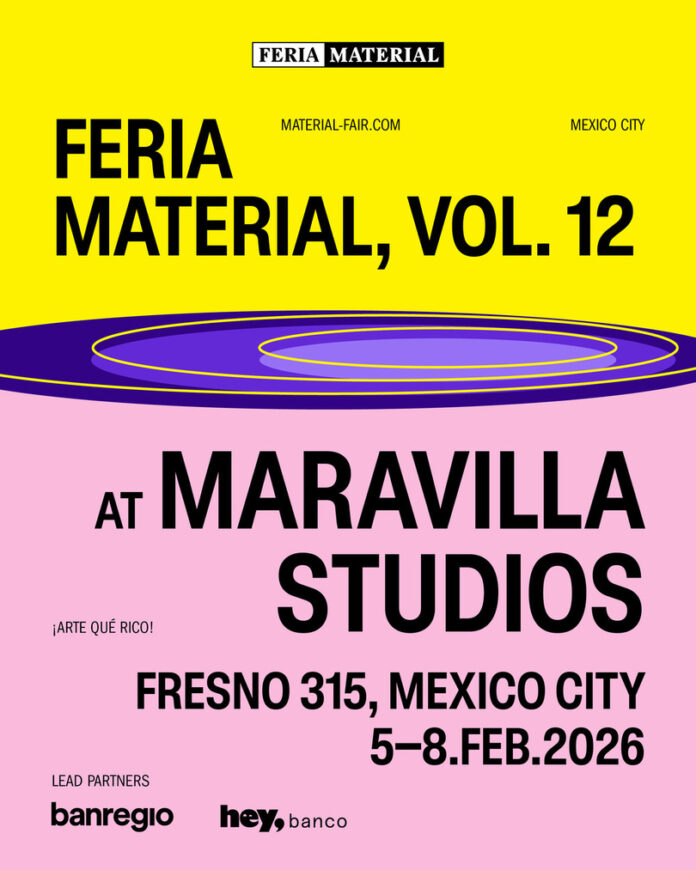
Feria Material, Vol. 12
Feria Material, Vol. 12: Semana del Arte de Ciudad de México

Feria Material, Vol. 12: expansión, comunidad y energía crítica en la Semana del Arte de Ciudad de México

Art Fair

Date05 Feb 2026 – 08 Feb 2026
Year2026
OrganizerMaterial Art Fair
VenueMaravilla Studios
Fresno 315
06450 Mexico City
Mexico

En el entramado cada vez más complejo y vibrante de la Semana del Arte, Feria Material reafirma su posición como uno de los proyectos curatoriales más relevantes de América Latina. Su duodécima edición, que se celebrará del 5 al 8 de febrero de 2026, marca un punto de inflexión tanto simbólico como espacial: la feria inaugura Maravilla Studios como su nueva sede, un recinto recientemente renovado ubicado en la colonia Atlampa, muy cerca del histórico tejido cultural de Santa María la Ribera.

Desde su fundación, Material ha sabido construir una identidad clara: una feria ágil, rigurosa y profundamente conectada con las prácticas emergentes, sin perder de vista a artistas y galerías ya consolidadas. Vol. 12 no es la excepción y llega con cifras que hablan de su alcance internacional: 78 expositores de 21 países, con más de la mitad provenientes de América Latina, reforzando un diálogo sur–sur que distingue a la feria dentro del circuito global.

Maravilla Studios: un nuevo capítulo

El traslado a Maravilla Studios no es un mero cambio logístico. Este complejo industrial rehabilitado ofrece una arquitectura flexible que dialoga con la propuesta curatorial de Material: espacios amplios, circulación abierta y una atmósfera que favorece tanto la contemplación como el encuentro. La sede simboliza también el crecimiento orgánico de la feria y su voluntad de seguir experimentando con formatos y escalas.

Proyectos: apostar por la infraestructura independiente

Uno de los anuncios más significativos de esta edición es la presentación de la tercera generación del programa Proyectos (2026–2027), coordinado por Lorena Peña Brito. Concebido como un programa de largo aliento, Proyectos ofrece a iniciativas curatoriales independientes en México acompañamiento profesional, talleres, mentorías personalizadas y espacio gratuito dentro de la feria durante dos años.

En un contexto donde la precariedad institucional sigue siendo un reto para los espacios autogestionados, Proyectos funciona como una plataforma de sostenibilidad y profesionalización, ampliando el impacto de Material más allá de los días de feria.

Immaterial: el cuerpo como territorio crítico

El programa de performance Immaterial, curado por Michelangelo Miccolis y producido por Nick von Kleist, se despliega en dos sedes clave: Casa del Lago UNAM y Maravilla Studios.

El miércoles 4 de febrero, el artista australiano Ivan Cheng presenta por primera vez en América Latina Mood Ring (Temor Teflon), una obra que explora los estados emocionales como superficies performativas. El viernes 6 de febrero, Adriana Lara cierra el programa en esta sede con la participación de Jessy Bulbo, como parte de su proyecto Red Social, donde arte, música y cultura popular se entrelazan con agudeza crítica.

Vocal: conversaciones necesarias

Del 6 al 8 de febrero, el programa Vocal activa el foro de la feria con una serie de charlas en español enfocadas en los grupos de coleccionismo y patronazgo en México. Lejos del formato académico tradicional, estas conversaciones buscan desentrañar las dinámicas, relaciones y estructuras que sostienen —y tensionan— el ecosistema del arte contemporáneo en el país.

Material Monday: la ciudad como escenario

Antes de la apertura oficial, Material Monday (lunes 2 de febrero) vuelve a convertir la ciudad en un circuito expandido de exposiciones. Más de 15 galerías locales abren simultáneamente, conectadas por un shuttle gratuito, culminando con una fiesta nocturna en la colonia Doctores. Más que un evento social, Material Monday funciona como un gesto de integración urbana, invitando a visitantes y locales a experimentar la escena artística desde dentro.

Un nodo clave del arte contemporáneo

Feria Material, Vol. 12, no se limita a exhibir obra: articula comunidad, pensamiento crítico y experimentación. En una semana dominada por grandes ferias y flujos internacionales, Material mantiene una escala humana y una claridad curatorial que la convierten en un punto de referencia indispensable para entender hacia dónde se mueve el arte contemporáneo en México y América Latina.

En Atlampa, entre estudios renovados, performances, conversaciones y encuentros improbables, Material vuelve a demostrar que el futuro del arte no solo se muestra: se construye colectivamente.

Galerías y espacios participantes en Feria Material, Vol. 12

  • LLANO — Ciudad de México
  • Galería Grasa — Buenos Aires
  • PEANA — Ciudad de México
  • Salón Silicón — Ciudad de México
  • la oficina — Madrid
  • Super Super Markt — Berlín
  • Galleria Macca — Cagliari
  • Campeche — Ciudad de México
  • guadalajara 90210 — Ciudad de México / Guadalajara
  • DS Galerie — París
  • MICKEY — Chicago
  • CRISIS — Lima / Madrid
  • Portas Vilaseca — Río de Janeiro
  • PASTO — Buenos Aires
  • Parallel Oaxaca — Oaxaca
  • EMBAJADA — San Juan
  • Management — Nueva York
  • Studio/Chapple — Londres
  • Galerie Hugues Charbonneau — Montreal
  • Longtermhandstand — Budapest
  • VUNU — Bratislava / Košice / Viena
  • Season 4 Episode 6 — Londres
  • Lodos — Ciudad de México
  • Instituto de Visión — Bogotá / Nueva York
  • Ulterior Gallery — Nueva York
  • General Expenses — Ciudad de México
  • DES BAINS — Londres
  • SKETCH — Bogotá
  • Pequod Co. — Ciudad de México
  • Galería MUY — San Cristóbal de Las Casas
  • PROXYCO — Nueva York
  • Abra — Caracas
  • Tütar gallery — Tallin
  • Pangée — Montreal
  • BEVERLY’S — Nueva York
  • Soup — Londres
  • Galería [SN] — Bogotá
  • Hidrante — San Juan
  • anonymous gallery — Nueva York / Ciudad de México
  • Podium Oslo — Oslo
  • Copperfield — Londres
  • Plaga — Ciudad de México
  • Galerie Nicolas Robert — Montreal / Toronto
  • PALMA — Guadalajara
  • Escombro — Guadalajara
  • Galería Nora Fisch — Buenos Aires
  • Brooke Benington — Londres
  • Cerámica Suro — Guadalajara
  • CONSTITUCIÓN — Buenos Aires
  • two seven two — Toronto
  • Climate Control — San Francisco
  • Encarte — Ciudad de México
  • Ginsberg + Tzu — Lima / Madrid
  • ZALUCKY — Toronto
  • NAC — Santiago de Chile
  • Galerie Christian Lethert — Colonia
  • COHJU — Kioto
  • SAENGER GALERÍA — Ciudad de México
  • Keijsers Koning — Dallas
  • Charlie James Gallery — Los Ángeles
  • KDR — Miami
  • HAIR+NAILS — Mineápolis / Nueva York
  • Selvanegra Galería — Buenos Aires
  • New Discretions — Nueva York
  • SITUATIONS — Nueva York
  • El Chico — Madrid
  • ILY2 — Portland / Nueva York
  • NOON Projects — Los Ángeles
  • Patel Brown — Toronto / Montreal
  • Islera — Ciudad de México
  • CIMBRA — Oaxaca
  • Rastro Galería — Torreón
  • Proyectos Espectra — Mérida
  • Un dique — Ciudad Juárez
  • CROMA — Ciudad de México
  • Centro Roberto Garza Sada de Arte, Arquitectura y Diseño – UDEM — San Pedro Garza García

Salón ACME No. 13

Salón ACME No. 13
Salón ACME No. 13

Art Fairs

Salón ACME No. 13

Proyectos Públicos, Calle Gral. Prim 30, Juárez, Cuauhtémo

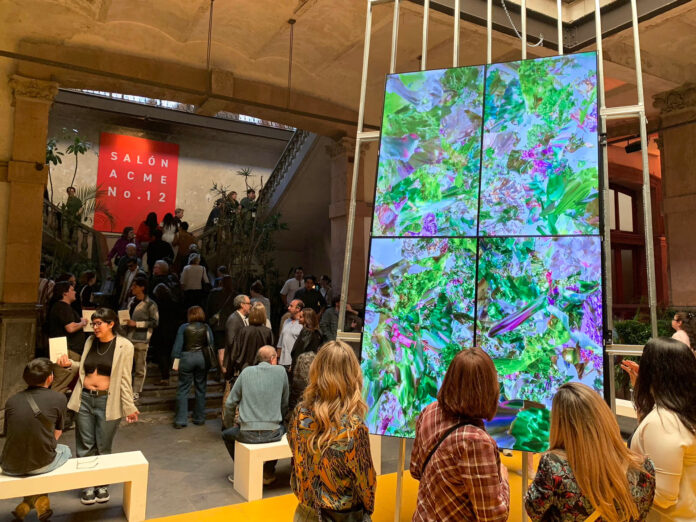
Salón ACME is a platform created by artists for artists. It provides visibility, support, and promotion for emerging creators in dialogue with established agents in a unique curated event during art week in Mexico City. Salón ACME has twelve editions, fostering new audiences and consolidating a growing community of artists, curators, and collectors

Open Call
Curatorial Council Santiago Borja Charles (artist and educator), Maya Renée Escárcega (curator and writer), Lena Solà Nogué (curator), Silvana Lagos (curator, writer and cultural strategist), Polina Stroganova (curator, art consultant and educator), and Emiliano Valdés (curator and strategic advisor)
The Open Call received over 1,600 applications from countries including Argentina, Colombia, Chile, Brazil, Spain, France, the United Kingdom, Russia, the United States, Canada, China, South Korea and Japan, among others.

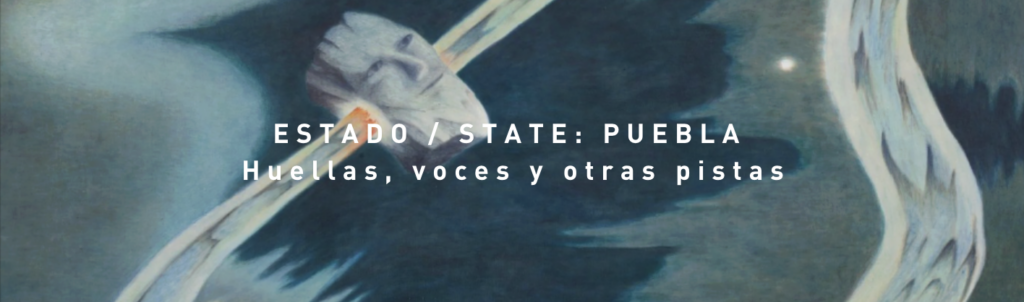
Estado (State)
The invited state is Puebla, with a curatorship by Nina Fiocco (Feltre, Italy, 1985), an art historian from the Università degli Studi di Milano and a graduate of the Master’s in Visual Arts from IUAV Venice.

Patio
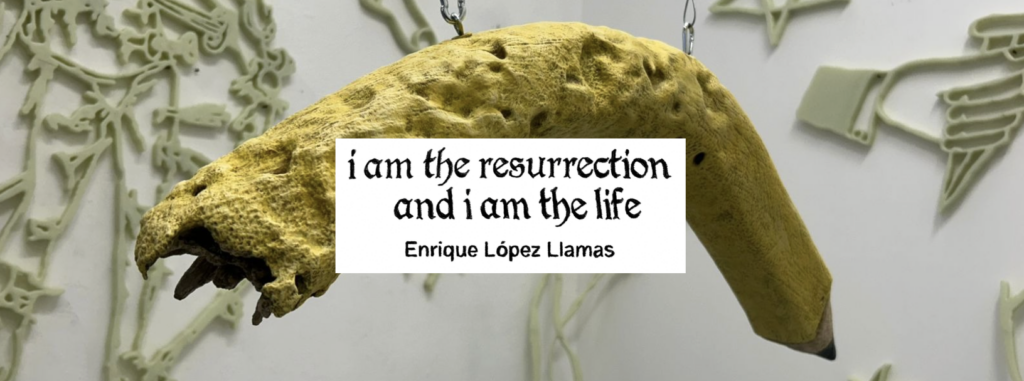
The Patio showcases a work by Mexican artist Enrique López Llamas.

Bodega
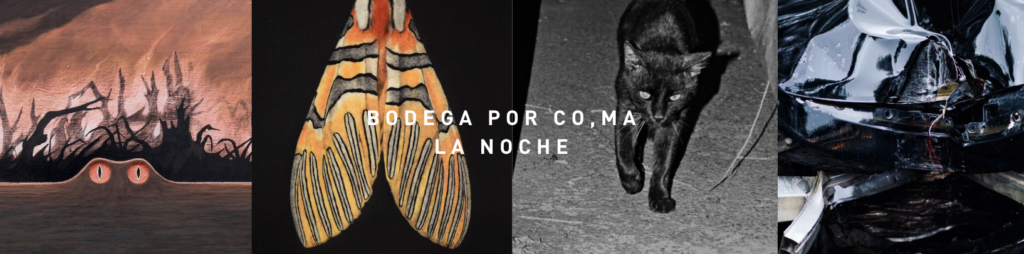
The curatorship of Bodega is handled by CO.MA, a collective made up of Andrea Paasch, Andrea Fernández, and Mercedes Gómez, which specialises in advisory, management, curatorship, and handling of contemporary art and 20th-century design collections.

Projects
The Projects section presents the work of 26 invited artists making specific site interventions.

Sala
For the first time, the Sala section is curated by Hernán A. Cortés and Romain Roy-Pinot.

IVP (International Visitors Programme)
For the third consecutive year, in partnership with the Material Art Fair, the IVP (International Visitors Program) showcases international curators featuring a series of talks.

Contacts & Details

OPENING TIMES:
Feb 05, 4pm – 8pm;
Feb 06, 11am – 8pm;
Feb 07, 11am – 8pm;
Feb 08, 11am – 7pm;

M: [email protected]
Website: https://salonacme.com/en

ADDRESS
Proyectos Públicos, Calle Gral. Prim 30, Juárez, Cuauhtémoc

Salón ACME No. 13 (5–8 de febrero de 2026) Ciudad de México

Salón ACME No. 13
Salón ACME No. 13 (5–8 de febrero de 2026): el pulso experimental de la Semana del Arte en Ciudad de México

Salón ACME No. 13 (5–8 de febrero de 2026): el pulso experimental de la Semana del Arte en Ciudad de México

De artistas para artistas

Por estos días, Ciudad de México vuelve a confirmarse como una de las capitales culturales más intensas del circuito global. Del 5 al 8 de febrero de 2026, Salón ACME celebra su edición número 13, consolidando una plataforma nacida de artistas para artistas que, lejos de replicar los modelos comerciales tradicionales, propone un ecosistema curatorial de riesgo, comunidad y descubrimiento.

Fundado como un gesto colectivo para dar visibilidad, apoyo y proyección a creadores emergentes, Salón ACME ha sabido crecer sin perder su espíritu experimental. Doce ediciones después, el proyecto ha tejido una red sólida de artistas, curadores y coleccionistas, al tiempo que ha formado nuevos públicos y ha ampliado la conversación sobre qué significa producir y mostrar arte hoy en México.

Un formato curatorial que apuesta por el proceso

La edición 13 se articula, como ya es tradición, en seis secciones que funcionan como capas de lectura del presente artístico:

  • Convocatoria Abierta (Open Call): el corazón del proyecto, donde una selección internacional de artistas emergentes presenta obras inéditas.
  • Estado (State): sección dedicada a una región invitada, que permite una lectura territorial y contextual del quehacer artístico.
  • Bodega: espacio de archivo, memoria y experimentación, donde el montaje y el gesto curatorial son protagonistas.
  • Proyectos (Projects): iniciativas independientes, colaboraciones y propuestas híbridas.
  • Sala: exposiciones curatoriales con una narrativa más concentrada.
  • Patio: el espacio de encuentro, cruce social y expansión performativa.

Este esquema no solo ordena el recorrido, sino que rompe jerarquías y favorece el diálogo entre prácticas emergentes y agentes consolidados del sistema del arte.

La Semana del Arte y el momento de Ciudad de México

La fuerza de Salón ACME se potencia en el contexto de una semana excepcional. En paralelo abren Zona MACO, Material Art Fair y Unique Design X, confirmando la densidad y diversidad del ecosistema artístico local. Más que competir, estas ferias configuran un mapa complejo donde conviven mercado, experimentación, diseño y pensamiento crítico.

No es casual que tantos artistas internacionales hayan elegido establecerse en la ciudad. Como ha señalado Jérôme Sans, curador y figura clave del circuito contemporáneo, Ciudad de México ofrece espacios de producción amplios, costos relativamente accesibles y una historia cultural profunda que alimenta la creación contemporánea. Sans, quien visitó la ciudad por primera vez hace dos décadas como director del Palais de Tokyo por invitación del coleccionista Eugenio López, es hoy una de las voces que mejor entiende el pulso local.

Actualmente, Sans dirige creativamente LagoAlgo, espacio interdisciplinario ubicado en un edificio modernista emblemático del Bosque de Chapultepec y respaldado por la histórica galería OMR. Su presencia subraya algo evidente: Ciudad de México ya no es una promesa, es una realidad central del arte contemporáneo.

Salón ACME: comunidad, riesgo y futuro

En este contexto, Salón ACME No. 13 se presenta como el termómetro más sensible de las prácticas emergentes. Aquí importan tanto las obras como los procesos, las conversaciones y los cruces improbables. Más que una feria, es un laboratorio vivo, un espacio donde el arte se piensa desde la cercanía, el afecto y la experimentación.

Durante cuatro días, la ciudad no solo exhibe arte: lo produce, lo discute y lo pone en tensión. Y en ese mapa vibrante, Salón ACME sigue siendo el lugar donde mirar hacia adelante.

Artistas Seleccionados / Selected artists Irene Abello, Karen Aixa, Bayo Álvaro, Clara Andrada, Juni Aranda, Johann Arens, Enrique Argote, Adrián Aroko, Melisa Arreola, Sonia Bandura, Julio Barrita, Sebastián Beltrán, Silvestre Borgatello, Liene Bosquê, Camila Cáceres Landavere, Luis Canseco, Javier Carro Temboury, Alejandro Castañeda, Anna de Castro Barbosa, Jimena Chávez Delion, Mateo Cohen Monroy, Pilar Córdoba Longar, Paola Dávila, Lucas Dupin, Mariana Dussel, Lucas Emanuel, EMPLEADOS, Oscar Esteban, Lucrezia de Fazio, Janina Frye, Ana García Jácome, Helena Garza, Santiago Gómez, Nicolás González, Antoine Granier, Jamie Hammill, Sofía Hinojosa, Carmen Huízar, Silvana Hurtado Dianderas, Ángela Jiménez Durán, Isabel Judez, Manuel La Rosa, Mimi Laquidara, Esteban Leñero, Jessie Lewis, César López, Uriel López, Felipe Lozano, Cristiano Di Martino, Perla Mata Chairez, Natalia Mejía Murillo, Esther Merinero, Eugenio Merino & Pierre Valls, Thomas Mopin Viers, Jorge Morocho, Alejandra Moros, Roger Muñoz, Rodrigo Navarro, Teresa Olmedo, Víctor del Oral, Bernardo Orduño Guerra, Mariana Parisca, Cosa Rapozo, Daniel Rey, Alessandra Risi, Pablo Rubín, Maximiliano Ruelas, Simón Sepúlveda, Lucas Sere Peltzer, Ernesto Solana, Benjamín Stephenson, Rodolfo Suárez-Montesinos, Daniela Tinoco, Cecilia Torri, Urmeer, Vanessa Valero, Eduardo Vargas Rico, Isis Vargas, Marianne Wasowska, Rogelio Zárate, Yerko Zlatar.

Santiago Borja Charles, Maya Renée Escárcega, Lena Solà Nogué,

Silvana Lagos, Polina Stroganova, Emiliano Valdés.

Curatorial Board SA13 2026

Curado por / curated by Nina Fiocco

Artistas / Artists Sofía Abraham, Blanca Alonso, Antonio Barrientos, Marcelino Barsi, María José Benítez, Angel Flores, Oscar Formacio, Sebastián Hidalgo, Canis Ludens, Nur Matta, Ulises Matamoros, Katya Mora, Santo Miguelito Pérez, MUNA, Roberto Rugerio, Itzell Sánchez, Daniela Tinoco + Martha Morales, Sihuame Tlatsahuane + Túmitl, Adrián White.

Performance Itzell Sánchez, El tiempo de los cacomixtles. Sábado Saturday 7, 12pm.

Encuentro 3 ¿Cómo sostener todo esto? Infraestructuras del arte, materiales, instituciones y relatos en Puebla Con With Ramiro Martínez, Canis Ludens, Nina Fiocco, Aranzazú Ayala y Refacciones Ramírez. Modera: Alma Cardoso. Sábado Saturday 7, 1pm.

Música / Music Mexican Rare Groove, Orihuela, Jonas Diip, Pato Watson, Velvet Stripes, Sábado Saturday 7, 7pm – 2am.

Invitado gastronómico / gastronomic guest Augurio, Chef Angel Vázquez.

PATIO
 
La pieza de Enrique López Llamas  (Aguascalientes, 1993) representa un giro introspectivo y ambicioso, fusionando pintura y escultura en una exploración del cuerpo y la identidad como productos de un contexto social complejo y opresivo. A través de esculturas flotantes y pictóricas, se plantea un retrato fragmentario de la identidad como vulnerable e incierta, invitando a reflexionar sobre la posibilidad de resistencia y el poder de la comunidad frente a la estandarización y la explotación de la cultura contemporánea.
 
The commissioned piece by Enrique López Llamas (Aguascalientes, 1993) represents an introspective and ambitious turn, merging painting and sculpture in an exploration of the body and identity as products of a complex and oppressive social context. Through floating and pictorial sculptures, it presents a fragmentary portrait of identity as vulnerable and uncertain, inviting reflection on the possibility of resistance and the power of community in the face of standardization and the exploitation of contemporary culture.

Artistas / Artists  Alejandro Espinosa, Dario Fernández, Jaime Ruiz Otis, Marco Ramírez, Emilio Valdés, Jessica Wozny y Trilce Zúñiga.
 
Fundada en 2020 por Mercedes Gómez y Andrea Fernández y dirigida por Andrea Paasch, CO,MA Art Services se especializa en la asesoría, adquisición, gestión y curaduría de colecciones de arte y diseño, con un enfoque en arte moderno y contemporáneo, así como en el diseño del siglo XX.
 
Founded in 2020 by Mercedes Gómez and Andrea Fernández, and directed by Andrea Paasch, CO,MA Art Services specializes in the advisory, acquisition, management, and curation of art and design collections, with a focus on modern and contemporary art, as well as 20th-century design.

 
Curado por Curated by   Hernán A. Cortés & Romain Roy-Pinot
 
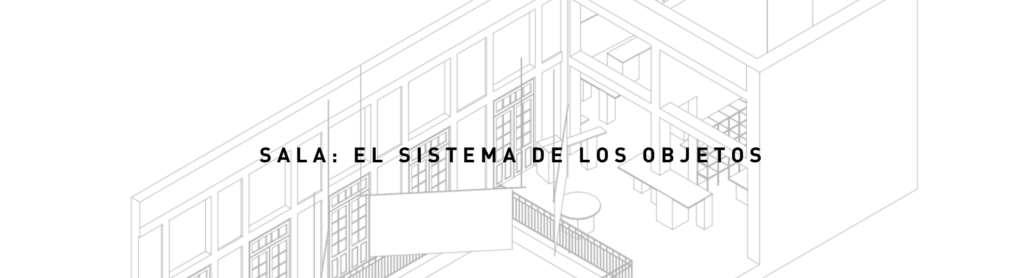
El sistema de los objetos propone un diálogo entre publicaciones, objetos, archivos y múltiples que cuestiona el acto de editar. Inspirada en Jean Baudrillard, la sección aborda los objetos como signos dentro de un sistema simbólico y social, y reflexiona sobre su participación en dinámicas de valor, deseo y consumo, así como en nuevas formas de circulación y pertenencia.
 
The system of objects proposes a dialogue among publications, objects, archives, and multiples that questions the act of editing. Inspired by Jean Baudrillard, the section addresses objects as signs within a symbolic and social system, reflecting on their participation in dynamics of value, desire, and consumption, as well as in new forms of circulation and belonging.


Link RADIO NOPAL
PROJECTS
 
Diego Zelaya por Sala:GAM / Ciudad de México, Catherine Chinatree por Quench  / Margate, UK, Jay Lee por KOIK Contemporary / Ciudad de México, Ángel Pahuamba por CAM Galería / Ciudad de México, Sol Golden-Sato por The Bomb Factory Art Foundation /  Londres, UK. Saelia Aparicio por Somers Gallery / Londres, UK. Christian Wedel por BASE Proyectos / Ciudad de México. Emiliano V. Massimini por Mooni / Ciudad de México. Rocío Englender por Moria Galería / Buenos Aires, Argentina. Juan Carlos León por SAENGER Galería / Ciudad de México. José Romussi por Marchante Arte Contemporáneo / Ciudad de México. Santiago Paredes por Proyecto H / Ciudad de México – Madrid. Andrea Echeverri por Salón Comunal / Bogotá, Colombia. Gonzalo Beccar Varela por María Casado Home Gallery / Buenos Aires, Argentina, Andrea Sotelo por Consigna / Ciudad de México, Cynthia Yee por The Black Piglet / Ciudad de México, Gaby Lobato por Agencia de Arte / Ciudad de México, Candela Bado por mimo / Nueva York, Juni Aranda por Proyectos Multipropósito / Ciudad de México, Juana Martínez por Nina Menocal / Ciudad de México, Puki de Alabama por Bellas Hartas / Ciudad de México, Andrés Henao y Talia Pérez Gilber por Sala de Espera / Tijuana, México, Adriana Martínez y  Bobby Cruz por @}‘-}—,—‘- r054 -‘—,—{-‘{@  / San Juan, Puerto Rico, Alonso Robles por Azul Arena / Chihuahua, México, Anaís Vasconcelos por La Guerrera / Ciudad de México.

Zdzisław Beksiński

Zdzisław Beksiński
Zdzisław Beksiński

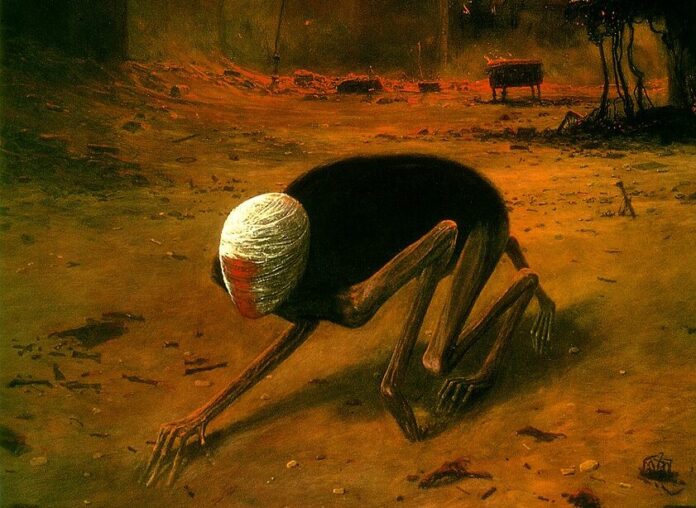
Zdzisław Beksiński: Arquitectura de la Ruina y el Rechazo del Significado

Zdzisław Beksiński (1929-2005) fue un pintor, fotógrafo y escultor polaco cuya obra desafió la interpretación convencional al rechazar títulos y significados explícitos. Su declaración “No quiero decir ni transmitir nada. Solo pinto lo que viene a mi mente” no representa una evasión sino una posición estética radical: la imagen existe como experiencia, no como mensaje. Este ensayo examina la obra de Beksiński a través del análisis documentado de instituciones establecidas, centrándose en su formación arquitectónica, experimentación fotográfica y el desarrollo de lo que él denominó su “período fantástico”—una obra que transformó el surrealismo distópico en un lenguaje visual de inquietud universal.

Contexto Biográfico: Polonia 1929-2005

Nacido el 24 de febrero de 1929 en Sanok, sur de Polonia, los años formativos de Beksiński coincidieron con la Segunda Guerra Mundial. Sobrevivió a la guerra y continuó creando obra provocadora durante los tiempos comunistas en Polonia, cuando muchas formas de arte enfrentaban censura gubernamental. Si bien el determinismo biográfico puede simplificar excesivamente la producción artística, el contexto histórico sigue siendo significativo: Beksiński emergió de una Europa que había presenciado destrucción a escala industrial, sin embargo, rechazó consistentemente las interpretaciones que reducían su obra a ilustración de trauma o comentario político.

En 1947, Beksiński comenzó a estudiar arquitectura en el Politécnico de Cracovia, completando su MSc en 1952. Esta formación educativa resultó crucial. A diferencia de los pintores entrenados en tradiciones académicas de representación, Beksiński aprendió a concebir el espacio estructuralmente—entendiendo volumen, perspectiva y la relación entre cuerpos y entornos construidos. Al regresar a Sanok en 1955, trabajó como supervisor de obra de construcción, pero encontró la posición insatisfactoria.

El Fundamento Fotográfico: Década de 1950

Beksiński comenzó a trabajar como fotógrafo en la década de 1950, realizando una exposición individual en la Sociedad Fotográfica de Gliwice en 1958. Su trabajo fotográfico, ahora alojado en el Museo Nacional de Wrocław, representa uno de los logros más significativos de la fotografía polaca del siglo XX. Estas imágenes—representando superficies arrugadas, paisajes desolados, rostros vendados y materiales en descomposición—establecieron su vocabulario estético.

En 1958, Beksiński escribió “Crisis en la Fotografía y las Perspectivas de Superarla”, publicado en la revista Periodical Photography, que se convirtió en uno de los escritos teóricos más importantes sobre fotografía producidos en Polonia durante el siglo XX. Su práctica fotográfica desafió las convenciones estéticas y anticipó el arte conceptual, el body art y los desarrollos fotomediáticos.

A principios de la década de 1960, Beksiński abandonó la fotografía, decepcionado por las posibilidades limitadas de alterar las imágenes capturadas. La pintura y el dibujo ofrecían la libertad de manipular la realidad más allá de las restricciones fotográficas—crear lo que él describía como “fotografiar sueños”.

1964: La Exposición de Varsovia y el Reconocimiento Crítico

El punto de inflexión en la carrera de Beksiński ocurrió en 1964 cuando el crítico Janusz Bogucki organizó una exposición en Varsovia que se convirtió en su primer gran éxito—todas las pinturas se vendieron. Este éxito llegó sin títulos, sin declaraciones del artista, sin el aparato explicativo típicamente exigido al arte contemporáneo. En un ambiente cultural donde el realismo socialista había dominado, el rechazo de Beksiński a hacer su obra “útil” o explicable constituía una resistencia silenciosa.

Pronto se convirtió en una figura destacada del arte polaco contemporáneo, no a través de manifiestos o afiliaciones grupales, sino mediante el poder inquietante de imágenes que exigían compromiso sin ofrecer resolución.

El “Período Fantástico”: Finales de los 60 a Mediados de los 80

A finales de la década de 1960, Beksiński entró en lo que llamó su “período fantástico”, que duró hasta mediados de los años 80—su fase más celebrada, durante la cual creó imágenes perturbadoras de ambientes lúgubres y pesadillescos que presentaban muerte, descomposición, paisajes llenos de esqueletos, figuras deformadas y desiertos.

Su famosa declaración captura su metodología: “Deseo pintar de tal manera como si estuviera fotografiando sueños”. La metáfora fotográfica es significativa—sugiere documentación más que invención, objetividad aplicada a lo onírico. Su formación arquitectónica se manifestó en construcción perspectival precisa, diagonales medidas y exactitud volumétrica aplicada a espacios imposibles.

Comenzando alrededor de 1970, Beksiński pintaba con óleos sobre masonita, y su capacidad para manipular efectos de luz rápidamente se convirtió en un sello distintivo de su obra, comparable a las reconocidas habilidades de J.M.W. Turner. Sin embargo, donde la luz de Turner sugería trascendencia, la iluminación de Beksiński es clínica, exponiendo en lugar de redimir.

Significativamente, a pesar del sombrío tema, Beksiński afirmaba que algunas obras fueron malinterpretadas—él las consideraba optimistas o incluso humorísticas. Esta declaración confunde lecturas fáciles. La experiencia subjetiva del artista divergía de la recepción del espectador, enfatizando aún más su posición de que el significado reside en el encuentro, no en la intención autoral.

El Acto Radical: Rechazar Títulos

Beksiński era inflexible en que no conocía el significado de sus obras de arte y no estaba interesado en posibles interpretaciones; consistente con esta posición, se negó a proporcionar títulos para cualquier dibujo o pintura. Toda obra permanece “Sin título”.

Esta decisión excede la preferencia estética. Los títulos dirigen la interpretación, crean marcos narrativos, anclan imágenes en esquemas conceptuales. Al negarlos, Beksiński forzó a los espectadores a un compromiso fenomenológico directo. La obra no podía reducirse a “El Horror de la Guerra” o “Meditación sobre la Mortalidad”—permanecía obstinadamente ella misma, exigiendo que los espectadores confrontaran sus propias respuestas sin guía interpretativa.

Como declaró, “No puedo concebir una declaración sensata sobre la pintura”, y era especialmente desdeñoso con aquellos que buscaban respuestas simples sobre qué significaba su obra. Este desdén no era arrogancia sino rigor epistemológico: la experiencia visual precede y excede la traducción verbal.

Técnica y Práctica Material

Las pinturas de Beksiński fueron creadas principalmente usando pintura al óleo sobre paneles de masonita que él personalmente preparaba, aunque también experimentó con acrílicos. Aborrecía el silencio y siempre escuchaba música clásica mientras pintaba, aunque también apreciaba la música rock. Acreditaba a la música como su principal fuente de inspiración, afirmando no estar influenciado por la literatura, el cine o la obra de otros artistas, y casi nunca visitaba museos o exposiciones.

Este aislamiento metodológico significaba que su lenguaje visual se desarrolló independientemente. Creaba no en diálogo con movimientos histórico-artísticos sino en respuesta a necesidad interna y estructura musical.

Desarrollos Posteriores: El “Período Gótico” y el Trabajo Digital

El arte de Beksiński a finales de los 80 y principios de los 90 se enfocó en imágenes monumentales similares a esculturas renderizadas en paletas de colores restringidas, a menudo tenues, incluyendo una serie de cruces. Describió esta fase posterior como su “período gótico”, caracterizado por cabezas deformadas y figuras menos oníricas que mostraban una armonía plástica específica.

En la última parte de la década de 1990, se interesó en computadoras, Internet, fotografía digital y manipulación fotográfica—medios en los que se enfocó hasta su muerte. Mientras muchos artistas de su edad rechazaban las herramientas digitales, Beksiński las abrazó, extendiendo su visión hacia nuevas posibilidades técnicas. Sus obras digitales mantuvieron sus preocupaciones estéticas mientras demostraban adaptabilidad formal.

Antes de mudarse, Beksiński quemó una selección de obras en su propio patio trasero sin documentación, afirmando que algunas eran “demasiado personales” mientras otras eran insatisfactorias—no quería que la gente las viera. Esta destrucción sugiere que mantenía estándares estrictos para lo que entraba en circulación pública, ejerciendo control póstumo a través de borrado preventivo.

Vida en Varsovia y Tragedia Personal

En 1977, Beksiński se mudó a Varsovia con su esposa Zofia y su hijo Tomasz. Aunque su arte era a menudo sombrío, él mismo era conocido como una persona agradable que disfrutaba la conversación y tenía un agudo sentido del humor—modesto, algo tímido, evitando eventos públicos incluyendo las inauguraciones de sus propias exposiciones.

Tenía trastorno obsesivo-compulsivo, lo que lo hacía reacio a viajar; se refería a su condición como “diarrea neurótica”. Este detalle clínico humaniza al artista mientras explica su método de trabajo reclusivo—el aislamiento no era pose romántica sino necesidad psicológica.

La esposa de Beksiński, Zofia, murió en 1998; un año después, en Nochebuena de 1999, su hijo Tomasz murió por suicidio por sobredosis de drogas. Beksiński descubrió el cuerpo de su hijo. El 21 de febrero de 2005, Beksiński fue asesinado en su apartamento de Varsovia por Robert Kupiec, el hijo adolescente de su cuidadora de toda la vida, supuestamente porque Beksiński se negó a prestarle dinero. Robert fue sentenciado a 25 años de prisión; su primo Łukasz recibió cinco años.

La violencia que terminó la vida de Beksiński no fue metafórica o estética sino banal—una negativa a prestar dinero, un ataque repentino. A diferencia de sus pinturas, que transforman el sufrimiento en imágenes cuidadosamente construidas, su muerte no tuvo coherencia formal.

Reconocimiento Institucional y Legado

La ciudad de Sanok alberga un museo dedicado a Beksiński; el Museo Histórico de Sanok posee la colección más grande del mundo de su obra, con aproximadamente 600 piezas. Un museo que alberga 50 pinturas y 120 dibujos de la colección de Piotr Dmochowski—la colección privada más grande del arte de Beksiński—abrió en 2006 en la Galería de Arte de la Ciudad de Częstochowa. El 18 de mayo de 2012, con la participación de la Ministra de Desarrollo Regional Elżbieta Bieńkowska, tuvo lugar la apertura ceremonial de La Nueva Galería de Zdzisław Beksiński en el ala reconstruida del Castillo de Sanok.

Durante su vida, Beksiński recibió varios reconocimientos incluyendo el Premio del Ministro de Cultura y Arte en 1980 y el Premio de la Fundación de Cultura Polaca en 1992. Su obra ha sido exhibida en numerosas galerías y museos en Polonia e internacionalmente.

El director de cine Guillermo del Toro acredita la influencia de Beksiński en El Laberinto del Fauno, que le valió a del Toro un Oscar en 2006. Según del Toro, “En la tradición medieval, Beksiński parece creer que el arte es una advertencia sobre la fragilidad de la carne—cualquier placer que conozcamos está destinado a perecer—así, sus pinturas logran evocar a la vez el proceso de descomposición y la lucha continua por la vida”.

Beksiński y su familia son retratados en el filme dramático de 2016 The Last Family dirigida por Jan P. Matuszyński, con Andrzej Seweryn interpretando a Beksiński.

Recepción Crítica y Académica

El análisis académico ha intentado varios marcos interpretativos, incluyendo enfoques psicoanalíticos que examinan las pinturas del “período fantástico” de Beksiński como expresiones de experiencia infantil temprana. Sin embargo, tales lecturas existen en tensión con el rechazo explícito del artista al cierre interpretativo.

La obra de Beksiński ha sido estudiada en círculos académicos por sus visuales impactantes, rico simbolismo y conexión con la historia y cultura polacas. Algunos académicos contextualizan su imaginería dentro de la traumática historia de Polonia del siglo XX—Segunda Guerra Mundial, represión comunista—mientras otros se enfocan en análisis formal, estrategias compositivas y su manipulación de luz y espacio.

El desafío para los críticos sigue siendo la propia posición de Beksiński: produjo imágenes de extraordinario poder mientras insistía en que no significaban nada más allá de sí mismas. Esto crea una paradoja interpretativa—obra que parece cargada de significado pero cuyo creador niega contenido semántico.

Conclusión: La Función de la Incomodidad

La significancia de Beksiński se extiende más allá del surrealismo distópico como género. Su obra realiza una función cultural específica: rehúsa la consolación. En una era saturada de imágenes diseñadas para consumo rápido y manejo emocional, sus pinturas exigen atención sostenida. No pueden ser deslizadas, reducidas a leyendas o domesticadas mediante explicación.

Su formación arquitectónica produjo imágenes de lógica espacial aplicada a escenarios imposibles—ruinas que nunca fueron edificios, figuras que nunca fueron completamente humanas, fuentes de luz que iluminan sin calidez. La precisión de ejecución intensifica en lugar de disminuir el horror: estas no son pesadillas caóticas sino visiones metódicamente construidas.

Al rechazar títulos e interpretaciones, Beksiński insistió en que la función primaria del arte no es la comunicación de significado predeterminado sino la creación de encuentro fenomenológico. El espectador se encuentra ante la obra sin mediación, forzado a reconocer su propia respuesta—incomodidad, fascinación, repulsión, reconocimiento.

La exposición más grande del mundo de la obra de Beksiński en el Museo Histórico de Sanok presenta aproximadamente 600 piezas, documentando su evolución artística a través de fotografía, pintura, escultura y medios digitales. Esta preservación institucional asegura el compromiso continuo con una obra que se niega a volverse cómoda, familiar o completamente explicada.

Beksiński creó imágenes de ruina—arquitectónica, corporal, civilizacional. Sin embargo, las ruinas no son memoriales a catástrofes específicas sino condiciones estructurales. Su obra sugiere que la decadencia, la deformación y la muerte no son aberraciones sino aspectos fundamentales de la existencia que la cultura educada trabaja por ocultar. La función de su pintura, entonces, no es explicar estas condiciones sino hacerlas visibles—sostenerlas ante el espectador hasta que ocurra el reconocimiento.

La incomodidad que su obra genera no es incidental sino esencial. Marca la distancia entre experiencia estética y contención intelectual, entre lo que puede mostrarse y lo que puede decirse. En esta brecha, las obras sin título de Beksiński continúan operando—no como mensajes sino como encuentros que permanecen obstinadamente, productivamente, irresolubles.


Referencias

Todas las afirmaciones fácticas en este ensayo están respaldadas por las siguientes fuentes autorizadas:

  • Museo Histórico de Sanok (repositorio institucional oficial que alberga la colección más grande de Beksiński del mundo)
  • Entradas de Wikipedia sobre Zdzisław Beksiński (citando múltiples fuentes académicas)
  • Análisis histórico-artístico de DailyArt Magazine
  • Museo Nacional de Wrocław (repositorio del trabajo fotográfico de Beksiński)
  • Artículos académicos incluyendo “Zdzisław Beksiński’s Paintings of the ‘Fantastic Period’ as an Expression of Early Childhood Experience” de Beata Sokołowska-Smyl (2014)
  • Documentación biográfica de Morpheus Gallery
  • Documentación oficial del Museo Histórico de Sanok
  • Base de datos académica WikiArt
  • Culture.pl (Instituto de Cultura Polaco)

BANANA ART WEEK MEXICO: Una Semana de Arte, Diálogo y Conexión en la Ciudad de México

BANANA ART WEEK MEXICO: Una Semana de Arte, Diálogo y Conexión en la Ciudad de México

BANANA ART WEEK MEXICO: Una Semana de Arte, Diálogo y Conexión en la Ciudad de México

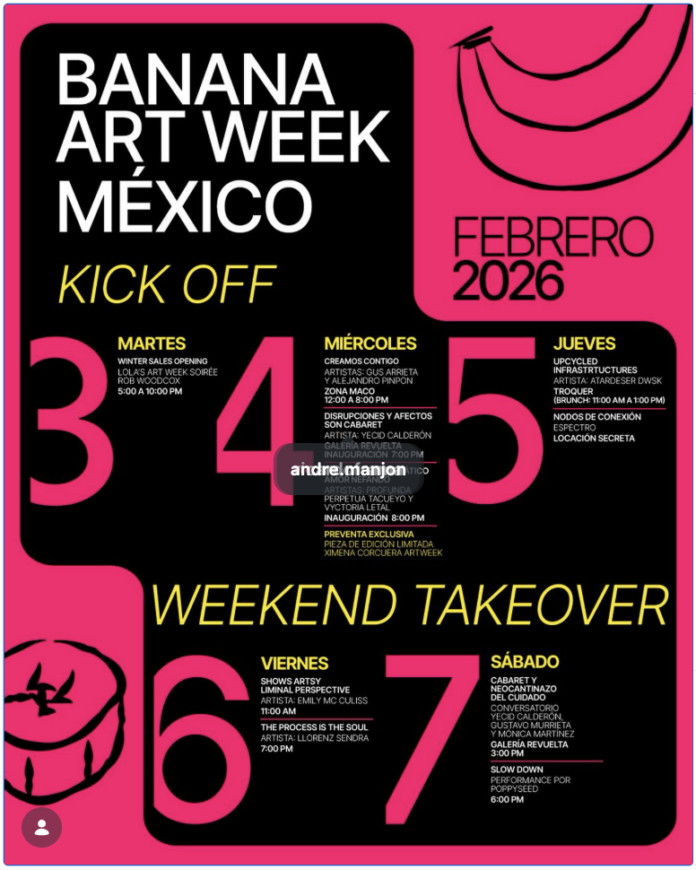
Ciudad de México, febrero de 2026All-Around Art, plataforma generadora de diálogo y conexión entre el arte contemporáneo y sus públicos, presenta BANANA ART WEEK MEXICO, un programa especial de eventos que forma parte de la Art Week 2026 en la Ciudad de México, cuando la capital se convierte en uno de los epicentros más vibrantes del arte contemporáneo mundial.

Del martes al sábado, la programación reúne presentaciones performativas, encuentros con artistas, inauguraciones, instalaciones y experiencias de conexión entre creadores y el público en distintos formatos:

Martes – Kick Off & Winter Sales
La semana inicia con Lola’s Art Week Soirée con la participación del artista Rob Woodcox, abriendo puertas de 5:00 a 10:00 pm para celebrar el inicio de la BANANA ART WEEK.

Miércoles – Creación y Colaboración
La jornada “Creación contigo” trae a los artistas Gus Arrieta y Alejandro Pinpon Zona Maco en diálogo con la escena local desde el mediodía hasta las 8:00 pm.

Jueves – Preventa Exclusiva & Ediciones Limitadas
La artista Yecid Calderón (DIYAFECTOS) presenta obra y piezas de edición limitada, con la inauguración de Profunda Perpetua Tacueyo y Vyctoria Letal a partir de las 8:00 pm.

Jueves – Upcycled Infrastructures
En una locación secreta, el colectivo Atardeser Dwsk Troquer invita a un brunch creativo (11:00 am–1:00 pm) y nodos de conexión para experimentar procesos artísticos desde esquemas de reutilización e infraestructura conceptual.

Viernes – Shows & Liminal Perspectives
Con presentaciones de Emily Mc Culis (Shows Artsy) desde las 11:00 am, seguido de la propuesta performativa The Process Is the Soul del artista Llorenz Sendra, la jornada explora formatos emergentes de expresión visual y sensorial.

Sábado – Cabaret y Conversatorio
La programación culmina con un cabaret y un conversatorio en Galería Revuelta protagonizado por Yecid Calderón, Gustavo Murrieta y Mónica Martínez, a partir de las 7:00 pm, junto con performances como Slow Down por Poppyseed (6:00 pm) y propuestas que integran música, cuerpo y discurso crítico.

Banana Art Week se inserta en el momento más relevante del calendario artístico de Ciudad de México: la Art Week 2026 — del 4 al 8 de febrero — que incluye ferias internacionales como ZⓈONAMACO, la más grande de América Latina con cerca de 200 galerías de 27 países, así como múltiples exposiciones, espacios alternativos y encuentros entre artistas, curadores y coleccionistas.

Durante estos días, la ciudad entera se transforma en un museo viviente, con eventos en barrios como Roma, Condesa, Juárez y Polanco, donde museos, galerías y espacios independientes multiplican su oferta cultural.

Acerca de All-Around Art
All-Around Art es una plataforma dedicada a generar diálogo, conectar prácticas contemporáneas y ampliar el acceso del arte a múltiples públicos, impulsando experiencias que profundizan la relación entre creadores, espacios y audiencias en el marco de la escena global del arte contemporáneo.

The Ephemeral Permanence of Water – Eugenia Vargas Pereira’s AGUAS at Art Palm Beach 2026

aguas eugenia vargas pereira
PROJECT: AQUAS ARTIST: EUGENIA VARGAS PEREIRA CURATED BY: MARISA CAICHIOLO

The Ephemeral Permanence of Water – Eugenia Vargas Pereira’s AGUAS at Art Palm Beach 2026

In the cacophony of an art fair, where the visual noise often leans towards the commercial and the spectacle, finding a moment of genuine, meditative introspection is rare. Yet, at the 2026 edition of Art Palm Beach, within the curated section of DIVERSEartPB, Chilean artist Eugenia Vargas Pereira offered precisely that—a sanctuary of shadow and light titled AGUAS. Curated by the astute Marisa Caichiolo, this immersive installation stood as a poignant testament to the fragility of our ecological tether.

Having followed Vargas Pereira’s trajectory—an artist who has consistently interrogated the boundaries of the body, the landscape, and the ephemeral nature of performance—AGUAS feels like a maturation of her ecological consciousness. It is a work that moves beyond the mere representation of nature to enact a ritual of restoration.

The installation’s physical presence was commanding yet delicate. Stepping into the space, one was immediately transported into the belly of a large-scale analog darkroom. The lighting, a dim constellation of amber and red bulbs suspended from the ceiling, created a visceral, womb-like atmosphere. The white electrical cables, cascading from a tangled mass overhead, suggested a nervous system or perhaps the complex, unseen root networks that bind our ecosystem together. This “intricate network” served as a visual metaphor for the interdependence that the piece seeks to highlight.

aguas eugenia vargas pereir

Beneath this canopy lay 55 developing trays, the tools of a fading analog trade repurposed here as vessels of memory. Submerged in water within these trays were photographs—images of men and women interacting with rivers. But the brilliance of AGUAS lay in its participatory element. In a profound gesture of “collaborative care,” volunteers and visitors were invited to place their own selfies into the trays.

As an art critic, I was struck by the conceptual layering of this act. The darkroom is traditionally a place of fixing an image, of making the transient permanent. Here, Vargas Pereira inverts this logic. The images in the water are subject to the slow violence of the elements; they emerge and fade, mirroring the “tragic and relentless transformation of the natural world.” The viewer becomes a “visual narrator,” witnessing their own image—their own ego—dissolve into the fluid medium that sustains all life. It is a humbling reminder that we are not observers of nature, but permeable parts of it.

The connection to the Casablanca Biennial 2026 adds another layer of geopolitical urgency to the work. By linking the waters of the Americas with those of North Africa, Vargas Pereira suggests that the crisis of water—and the ritual of cleansing—is a universal narrative, transcending borders.

AGUAS is not merely an installation; it is a “meditation on environmental degradation” that refuses to succumb to despair. Instead, it offers a “quiet potential.” In the dimly lit room, surrounded by the smell of water and the ghostly glow of red lights, the community participation became a form of collective resistance. It reminded us that while our connection to the natural world is fragile, it is also the only thing that creates a true “unity of being”—a concept I often return to in my own philosophical inquiries.

Eugenia Vargas Pereira has created a space where aesthetic expression dissolves into ethical action. AGUAS was, without a doubt, one of the most powerful and necessary works of Art Palm Beach 2026.

Gesso Your Canvas Before Painting

Gesso Your Canvas Before Painting

Gesso Your Canvas Before Painting

Whether you’re working in acrylic, oil, or mixed media, applying gesso to your canvas is a crucial step that can significantly impact the final result of your artwork. Here’s why:

What Is Gesso?

Gesso (pronounced “jess-o”) is a white acrylic-based primer made from a combination of chalk, pigment, and binder. It prepares and protects the canvas surface by:

  • Creating a slightly textured “tooth” for paint adhesion
  • Sealing the surface to prevent paint from soaking through
  • Preventing degradation of the fabric or surface over time

Benefits of Priming with Gesso

1. Better Paint Adhesion
Raw canvas is absorbent and rough. Gesso smooths out the surface and creates a barrier that helps your paint sit on top rather than soak in, making colors more vibrant and your brushstrokes more controlled.

2. Increased Longevity
By sealing the fibers of the canvas, gesso protects against the corrosive effects of paint over time—especially with oil paints, which can rot untreated canvas.

3. Enhanced Texture Control
Gesso lets you build a consistent surface tailored to your technique. You can apply multiple coats and even sand between layers to create an ultra-smooth or heavily textured ground.

4. Uniform Absorption
A properly gessoed surface ensures that paint doesn’t behave unpredictably, especially with water-based media like acrylics or water-mixable oils.

When You Might Skip Gesso

If you’re working on a pre-primed canvas (which most store-bought canvases are), you might not need to gesso unless:

  • You want a smoother or more customized surface
  • You’re painting with oils and want a double-primed barrier
  • You’re experimenting with special textures or techniques

Pro Tips

  • Use acrylic gesso for both acrylic and oil paints.
  • Apply 2–3 thin coats for best results, letting each dry completely.
  • Sand lightly between coats for a smooth finish (ideal for realism or fine detail).

Gesso is more than just a technical step—it’s the foundation of your artwork. By taking the time to properly prepare your surface, you’re ensuring that your colors sing, your brushstrokes glide, and your work stands the test of time.

Nomadic Thought and Contemporary Practice: Reflections on the MoCAA Conference and Roundtable

Moca

Nomadic Thought and Contemporary Practice: Reflections on the MoCAA Conference and Roundtable

Last Saturday, the headquarters of the Museum of Contemporary Art of the Americas (MoCAA) became a site of convergence for artists, curators, critics, and scholars from across the Ibero-American world, hosting a keynote lecture and roundtable led by curator and researcher Hernán Pacururu. More than a conventional academic encounter, the event unfolded as a space of shared inquiry, where artistic practice, political imagination, and collective experience intersected.

At the center of Pacururu’s lecture was the notion of artistic nomadism, approached not as a romanticized metaphor of movement, but as an aesthetic, ethical, and epistemological position. Nomadism, in this framework, challenges fixed territorial logics, stable institutional roles, and the presumed neutrality of museum spaces. Rather than emphasizing displacement alone, Pacururu articulated nomadic practice as a mode of thinking and working that privileges process over spectacle, situated knowledge over abstraction, and relational engagement over market visibility.

Drawing from international experiences connected to the Nomadic Biennial, Pacururu traced a constellation of practices developed across Latin America and Europe through site-specific interventions, residencies, congresses, and long-term collaborations. These projects, deliberately decentralized and extended in time, operate outside the accelerated rhythms of the global exhibition circuit. In contrast to the conventional biennial model—often tied to spectacle, branding, and cultural consumption—the Nomadic Biennial proposes art as a situated and collective practice, deeply entangled with specific social, political, and affective contexts.

One of the most compelling aspects of the lecture was its insistence on horizontal knowledge exchange and the centrality of affective bonds. Pacururu framed nomadic artistic practice as an exercise in listening: to territories, to communities, and to forms of knowledge that are frequently marginalized within institutional and academic frameworks. In doing so, the lecture foregrounded art not as representation, but as a form of relational action—capable of generating temporary yet meaningful configurations of community.

The subsequent roundtable expanded these ideas through an active dialogue with the audience. Questions and interventions opened a plural space for reflection on the contemporary conditions of artistic production, addressing tensions between institutional validation and experimental practices, as well as the role of art in relation to migration, precarity, identity fragmentation, and the reconfiguration of cultural communities. Rather than seeking consensus, the discussion embraced productive friction, underscoring the necessity of critical discomfort as a catalyst for thought.

Within the context of South Florida and Miami-Dade County, the event marked a significant moment of regional and international articulation. The strong presence of voices from across the Ibero-American cultural field reaffirmed MoCAA’s role as a platform for transnational dialogue and critical exchange. More importantly, it highlighted a growing urgency to reconsider how art circulates, convenes publics, and generates meaning beyond dominant institutional and economic paradigms.

Seen alongside MoCAA’s forthcoming exhibition The Garden of Earthly Delights (opening January 30, 2026), the conference and roundtable suggest a coherent institutional trajectory—one committed to questioning normative frameworks, amplifying historically underrepresented perspectives, and understanding contemporary art as a field of ethical and political engagement. Together, these initiatives position MoCAA not merely as an exhibition space, but as a site of thought, encounter, and collective imagination.

In a moment marked by global instability and cultural fragmentation, the gathering served as a reminder that nomadism—understood as attentiveness, mobility of thought, and relational practice—remains a vital tool for reimagining both art and community today.

From left to right: Milena Martínez Pedrosa, artist and Vice Director of the Fine Arts Ceramic Center; Leonardo Rodríguez, Founder and Executive Director of the Museum of Contemporary Art of the Americas; Ángel Mendoza, Ecuadorian visual artist based in Miami; Martín Cano, Ecuadorian visual artist; Hernán Pacucuru; Ivonne Ferrer, visual artist and Vice Director of MoCAA; Carola Bravo, Venezuelan-American visual artist and Director of the hARTvest Project at Pinecrest Gardens; Jesús Alberto Fuenmayor, PhD in General Sciences and Director Professor of DIAF; and Hernán Illescas, Ecuadorian visual artist.

Address: 12063 SW 131st Ave
Miami, Fl 33186 United States
Website: Mocaamericas.org
Email: [email protected]
Phone:+1 786 624 0182
+1 305 213 4162

About MOCA:

After six successful years of exhibitions, events, traveling shows, publications, community education, and unique artists projects, the Kendall  Art Center evaluates its future; in terms of thinking to ensure a relevant and innovative institution for the audiences of tomorrow. After months of intense work, research, and discussions, the Museum of Contemporary Art of the Americas emerges…

Painting surfaces: Canvas, Paper & Wooden Panels

Art Canvas
Art Canvas

Painting surfaces: Canvas, Paper & Wooden Panels

Painting surfaces, or supports, include common options like canvas, wood, and paper, as well as less common ones like metal, glass, and plastic. The best surface depends on the type of paint you are using and your artistic goals, and it’s important to properly prepare the surface for durability and to prevent cracking or other issues.

Canvas Rolls & By The Meter

Canvas rolls offer artists the freedom to work at any scale, from intimate studies to monumental large-format pieces. Available in cotton, linen, or synthetic blends, rolls can be purchased in continuous lengths or by the meter, making them ideal for custom stretching or mural projects. Artists choose this format for its versatility, cost-effectiveness, and ability to control every detail—from surface texture to priming.

Stretched Canvas

Stretched canvas provides a ready-to-use painting surface mounted on wooden stretcher bars for optimal tension. Pre-primed and available in countless sizes and profiles, it is the most convenient option for artists who want to begin painting immediately. Its balanced surface makes it suitable for acrylic, oil, and mixed-media work, and its professional presentation is favored for exhibitions and gallery display.

Canvas Stretcher Bars

Stretcher bars form the structural foundation of custom-made canvases. Crafted from kiln-dried wood, these bars interlock to create a stable frame over which canvas is stretched and secured. Available in various thicknesses—from lightweight profiles to museum-grade deep bars—they allow artists precise control over scale, tension, and archival quality. Ideal for large pieces or artists who demand specific dimensions.

Canvas Boards & Panels

Canvas boards and panels feature primed canvas mounted onto rigid backings such as MDF, cardboard, or hardwood. They offer a sturdy, portable alternative to stretched canvas and prevent sagging over time. This makes them especially popular for plein-air painters, students, and artists working in high detail. Their durability and affordability also make them excellent for studies, workshops, and travel.

Canvas Pads

Canvas pads contain sheets of primed canvas bound together like a sketchbook, giving artists the feel of traditional canvas with the convenience of a tear-off format. Ideal for experimentation, practice, and mixed-media studies, the sheets can be removed for stretching or display. Lightweight and versatile, they are a favorite among students, beginners, and artists producing fast series or concept explorations.

Canvas Samples

Canvas samples provide small, curated swatches of different canvas types—varying in weight, weave, material, and priming. These allow artists to test surfaces before committing to a full roll or stretched canvas. Samples are essential for understanding how a surface responds to different media such as oil, acrylic, or heavy impasto, making them a practical tool for professionals seeking the perfect match for their technique.

Paper Sheets

Individual paper sheets offer artists maximum flexibility in format, weight, and surface. Available in cotton rag, cellulose, handmade, deckle-edge, and specialty textures, paper sheets are ideal for fine art, printmaking, watercolor, drawing, and archival work. Their larger size options make them a preferred choice for professional artists, studios, and exhibitions.

Sketchbooks

Sketchbooks provide a portable, bound format for drawing, planning, ideation, and on-the-go creativity. Available in hardbound, softcover, layflat, and travel-friendly designs, sketchbooks come in a range of paper types from smooth drawing surfaces to heavyweight mixed-media pages. Perfect for daily practice, visual journaling, and capturing ideas anywhere.

Gummed Pads

Gummed pads contain stacks of loose sheets bound at the top with gum adhesive, allowing for easy, clean removal without tearing. They offer convenience for students, designers, and illustrators who want smooth sheet extraction for scanning, framing, or sharing.

Paper Blocks

Paper blocks—or glued watercolor blocks—are sealed on all four sides to keep the sheet perfectly flat while painting. This eliminates the need for stretching and prevents buckling during wet techniques. Ideal for watercolorists, gouache painters, and artists working with heavy washes.

Spiral Pads

Spiral pads feature a wire binding that allows pages to lie completely flat or fold back on themselves. Rugged and highly portable, they are favored by students, sketchers, urban artists, and anyone who needs a flexible, easy-to-flip working format. Excellent for drawing, mixed media, and field studies.

Stitched Pads

Stitched pads are bound with sewing rather than spirals, offering a sleek, minimal profile and extra stability. They prevent pages from loosening and provide a more refined, archival-quality format for artists who prefer structured organization. Ideal for professional sketching and presentation.

Paper Boards

Paper boards combine high-quality art paper laminated onto rigid support like chipboard, MDF, or archival board. They offer a firm surface resistant to warping—perfect for detailed work, wet media, display, and plein-air painting. A favorite among illustrators, watercolorists, and mixed-media artists.

Digital Printing Paper

Digital printing paper is engineered for inkjet or laser printers, ensuring accurate color reproduction, sharp detail, and professional print quality. Available in matte, glossy, satin, and fine-art finishes, it is used by photographers, designers, digital artists, and galleries producing archival prints and giclées.

Paper Rolls

Paper rolls offer long, continuous sheets perfect for murals, large-scale works, installation projects, and classroom use. Available in kraft, watercolor, drawing, and printmaking varieties, rolls provide freedom for oversized creativity and economical bulk production.

Paper Stretching

Paper stretching refers to the process of wetting and taping paper to a board so it dries taut, preventing buckling during watercolor or heavy-wash techniques. This category includes the tools and materials used for the process: stretching boards, gummed tape, staples, and absorbent surfaces.

Specialist Paper & Surfaces

This category includes unique and high-performance surfaces such as handmade papers, synthetic papers (like Yupo), rice papers, printmaking papers, vellum, drafting film, textured art boards, metallic papers, and niche materials tailored for specific techniques. Designed for professional and experimental artists seeking distinctive results.

Paper Packs

Paper packs provide multiple sheets in uniform sizes and finishes, offering excellent value for studios, classrooms, and high-volume artists. Available in drawing, watercolor, mixed media, printmaking, and specialty varieties, packs are perfect for practice, production work, and bulk projects.

Wooden Panels for Painting

Wooden panels are one of the oldest and most trusted painting surfaces in art history, dating back to ancient Egyptian portraits, Renaissance masterpieces, and early iconography. Today, they remain a favorite among contemporary artists seeking stability, precision, and a refined painting experience.

Unlike flexible supports such as canvas, wooden panels provide a durable, rigid foundation that preserves artwork for centuries. Their smooth surface, resistance to warping, and compatibility with multiple mediums make them an essential material for artists who value technical excellence and archival quality.

Page 16 of 277
1 14 15 16 17 18 277