Home Blog Page 102

The Sculpted Space: Architecture Between Utility and Art

is architecture art?

The Sculpted Space: Architecture Between Utility and Art

The question of whether architecture qualifies as art is one that sparks lively debate. On one hand, architecture undeniably serves a functional purpose: providing shelter, facilitating movement, and defining spaces for human activity. Yet, to reduce it solely to its utility is to overlook the profound impact it has on our senses, our emotions, and our cultural landscape.

Consider the architect’s vision. It often transcends mere practicality, aiming to create an experience, to evoke a feeling. The manipulation of form, light, and materials can stir emotions ranging from awe and serenity to excitement and intimacy. Think of the soaring vaults of a grand cathedral, designed to inspire reverence, or the harmonious proportions of a Palladian villa, intended to embody classical ideals of beauty and order. These are not simply buildings; they are deliberate artistic expressions in three dimensions.

However, the constraints inherent in architecture – the need to adhere to structural integrity, budgetary limitations, and the demands of clients – distinguish it from more purely expressive art forms like painting or sculpture. Yet, these very constraints can become a catalyst for creativity. Just as a sonnet’s rigid structure can inspire poetic brilliance, architectural limitations can push designers to find innovative and aesthetically compelling solutions. The art lies in elevating the necessary to the extraordinary.

To further explore this intersection, let’s consider the diverse tapestry of architectural styles that have shaped our world:

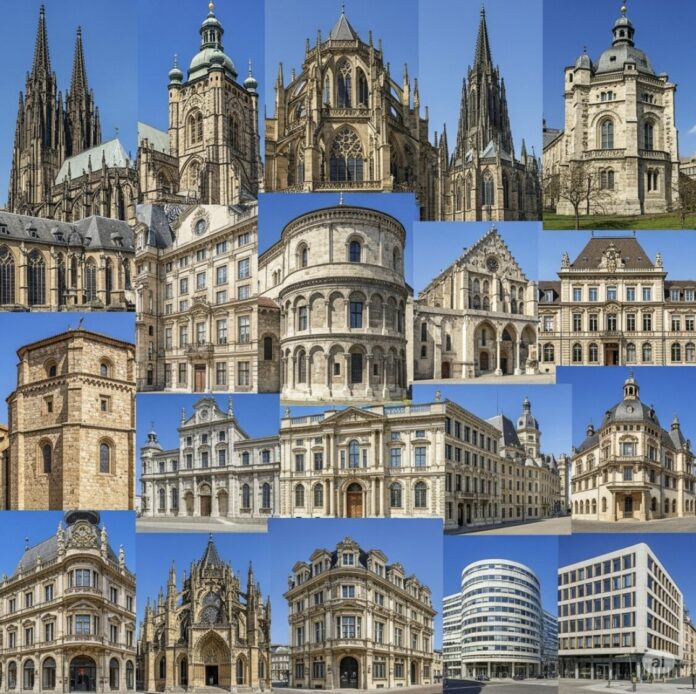
  • Classical: Rooted in ancient Greece and Rome, characterized by symmetry, columns, arches, and a sense of balance and order. Think of the Parthenon or the Roman Colosseum.
  • Gothic: Flourishing in the medieval period, defined by pointed arches, ribbed vaults, flying buttresses, and an emphasis on verticality and light, as seen in Notre Dame Cathedral.
  • Renaissance: Reviving classical principles with an emphasis on proportion, harmony, and humanism. The architecture of Filippo Brunelleschi exemplifies this style.
  • Baroque: A dramatic and theatrical style of the 17th and 18th centuries, featuring elaborate ornamentation, curves, and a sense of grandeur, such as the Palace of Versailles.
  • Art Nouveau: Emerging at the turn of the 20th century, characterized by organic, flowing lines, inspired by nature, as seen in the work of Antoni Gaudí.
  • Bauhaus: A modernist movement emphasizing functionality, clean lines, and the integration of art, craft, and technology.
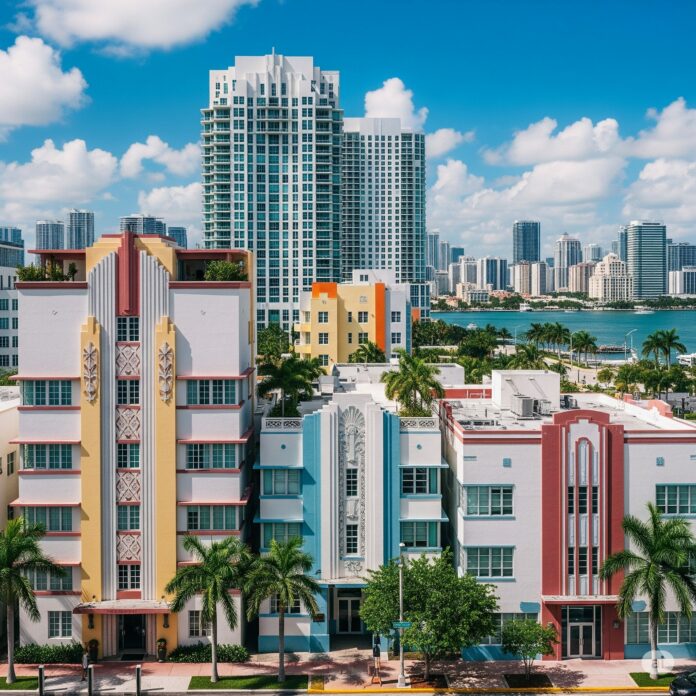
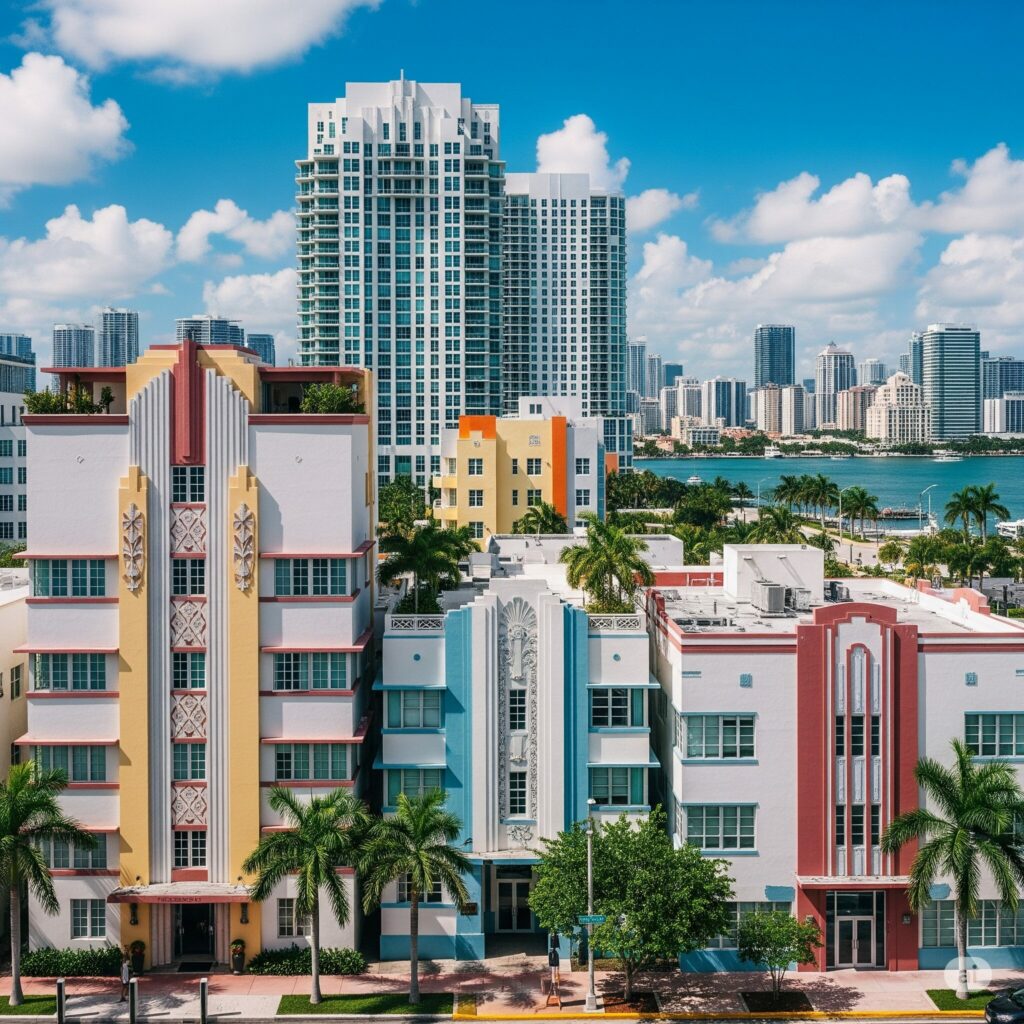
  • Art Deco: Popular in the 1920s and 30s, featuring geometric shapes, bold colors, and luxurious materials, evident in the architecture of Miami South Beach.
  • Modernism: A broad movement characterized by a rejection of ornamentation, an emphasis on function, and the use of new materials like steel and concrete.
  • Postmodernism: A reaction against the austerity of modernism, incorporating eclectic references, ornamentation, and a playful approach to design.

Each of these styles represents not just a way of building, but a distinct artistic and cultural expression. They reflect the values, technologies, and aesthetics of their time.

Ultimately, whether architecture is “art” may depend on one’s definition. However, it is undeniable that the best architecture transcends mere utility, becoming a powerful form of artistic expression that shapes our experience of the world.

Let us know: What architectural styles resonate most with you, and why? Do you see a clear distinction between building and art in architecture?

ArtServe Celebrates the Opening of “WILD: Invasive Species of South Florida” 

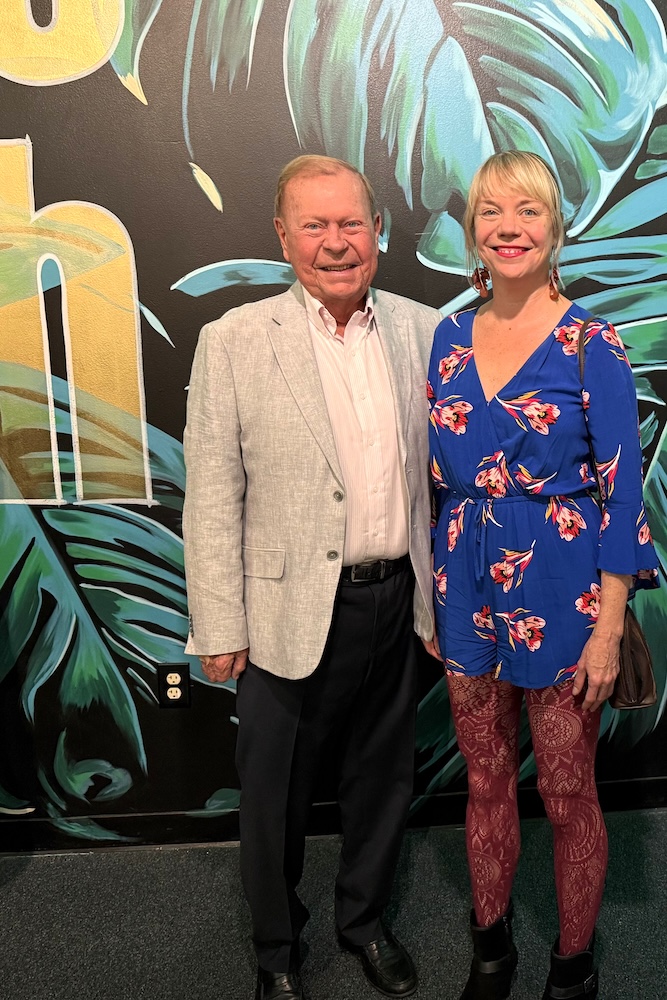
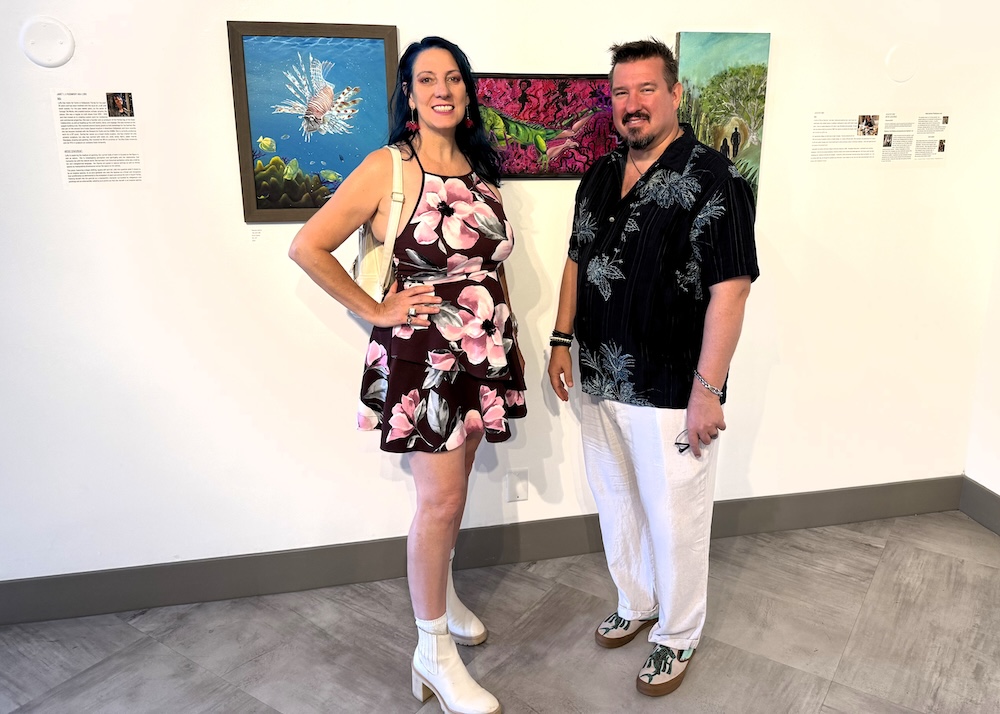
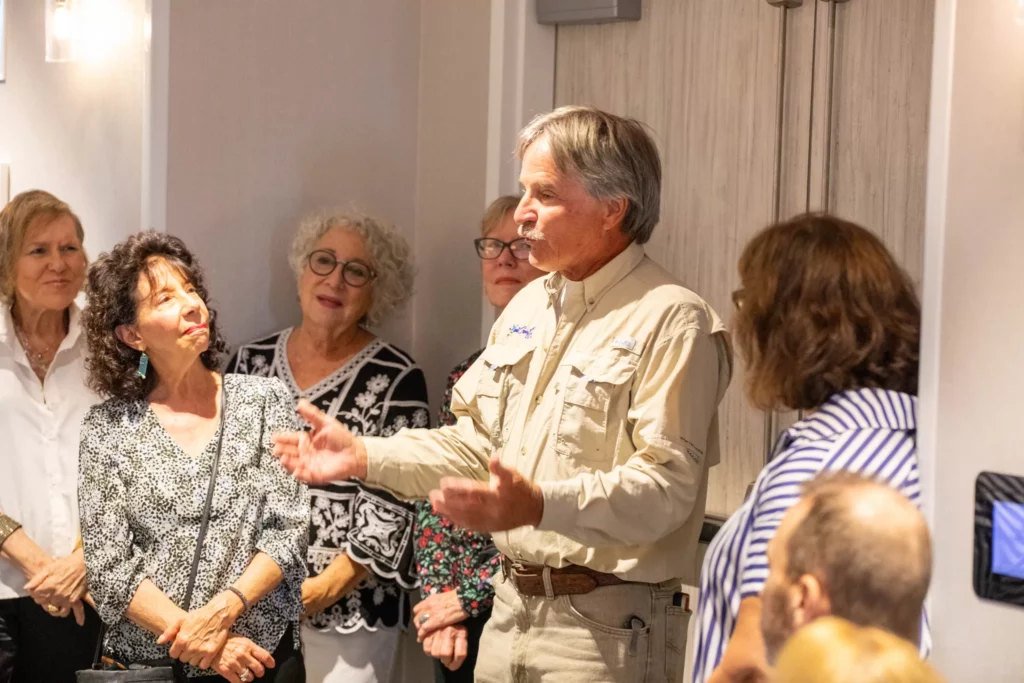
Bo Pettersson and Co-Chair of WILD Exhibit Christina Pettersson

ArtServe Celebrates the Opening of “WILD: Invasive Species of South Florida” 

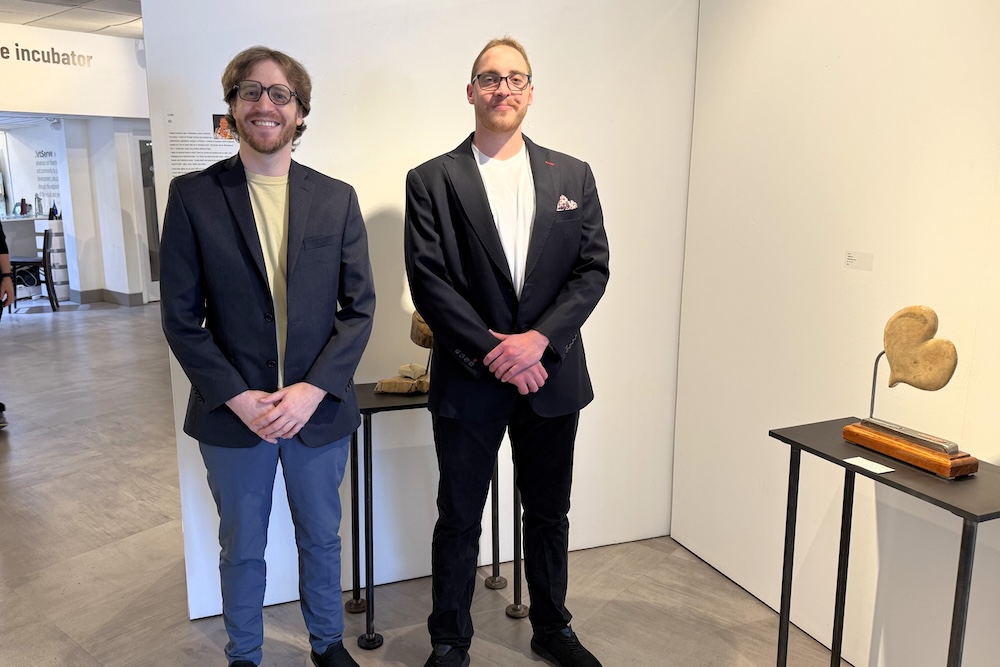
ArtServe welcomed guests to the opening night of its new environmental art exhibition, “WILD: Invasive Species of South Florida,” earlier this month. The free public reception featured a special screening of the PBS documentary, “Battleground Everglades – War on Invasive Species,” setting the stage for the multi-media exhibit, which runs through June 20.

Supported by grants from the Broward Cultural Division and Funding Arts Broward, with sponsorship from Topo Chico, WILD blends artistic expression with ecological education to explore the impact of non-native species on South Florida’s unique ecosystems.

Exhibition highlights include works by Debbie Scott-Queenin, whose photography captures the delicate balance between native and invasive species, and LuRu, a mixed-media artist who challenges viewers to reflect on their own role in nature. 

Other featured artists include Alette Simmons-Jiménez, Alex Nuñez, Bruno Esposito, Diane Arrieta, Eric Beare, Feza Madenli Aktan, G.man, India Foster, Jasmin Genao, Jason Aponte, Josh Aronson, Julia Outland, Kim Heise, Maitejosune Urrechaga, Malcolm Lauredo, Russell Beans, Robert Colón, Sterling Rook, VanShun Brown, Venessa Monokian and Veronica Cabrera.

The evening also included a reading by Coconut Creek Poet Laureate Laura McDermott Matheric, who shared her original poem titled “Invasive.” Dr. Matthew Hoch, a professor of environmental sciences at Nova Southeastern University with a Ph.D. in Ecology and Evolution, also spoke during the event.

ArtServe is located at 1350 East Sunrise Boulevard in Fort Lauderdale and is open Monday through Friday from 9 a.m. to 6 p.m., and Saturdays from 10 a.m. to 6 p.m. Daily admission is free. For more information about these events, or to become a member, volunteer, or support ArtServe’s mission, please visit www.artserve.org or email [email protected].

About ArtServe 

Named a “Top-Rated Nonprofit” by GreatNonprofits, the leading provider of user reviews of charities and nonprofits, Fort Lauderdale-based ArtServe is an award-winning arts incubator that is advancing the arts for social good as a creative laboratory and hub for experimental artists committed to diversity, equity and inclusion. Now in its 36th year, ArtServe has won several awards for innovation in the arts and is supported in part by the Broward County Board of County Commissioners as recommended by the Broward Cultural Council and the Community Foundation of Broward. Most recently, ArtServe was named 2025 Non-Profit Organization of the Year: The Arts at the Community Care Plan Non-Profit Awards, hosted by 211 Broward. Each year, ArtServe programs contribute tangibly to the region’s economy, helping 2,000+ artists sell their work, build businesses and engage the community. To do that, ArtServe secures financial support through donations, sponsorships and memberships. 

Samantha Van Nuys

Vice President

O: 954.776.1999  ext. 115 |C: 954.648.9132

6451 North Federal Highway, Suite 1200 |Fort Lauderdale, Florida 33308

CGAF Awards $45,000 in Scholarships to Miami-Dade’s Rising Art Stars

CGAF Awards $45,000 in Scholarships to Miami-Dade’s Rising Art Stars

CGAF Awards $45,000 in Scholarships to Miami-Dade’s Rising Art Stars

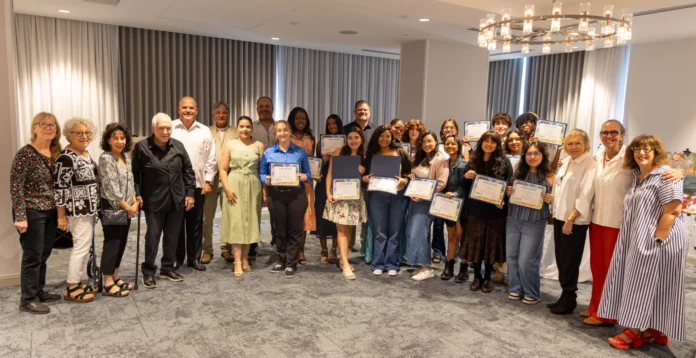
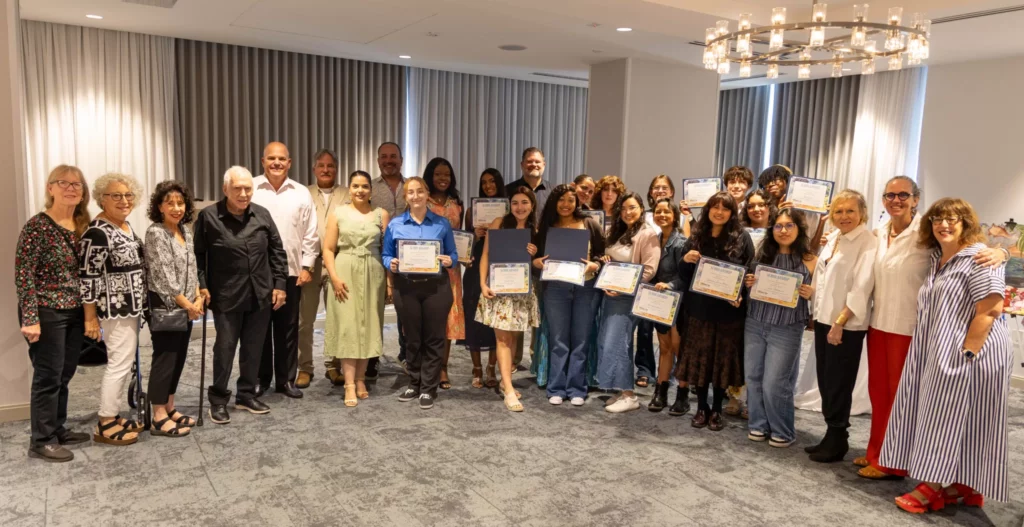
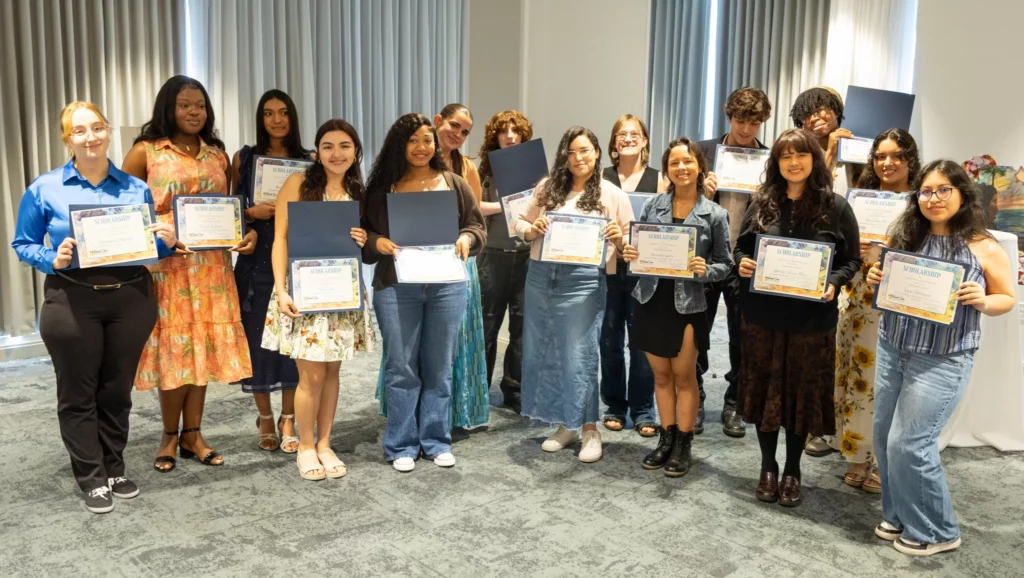
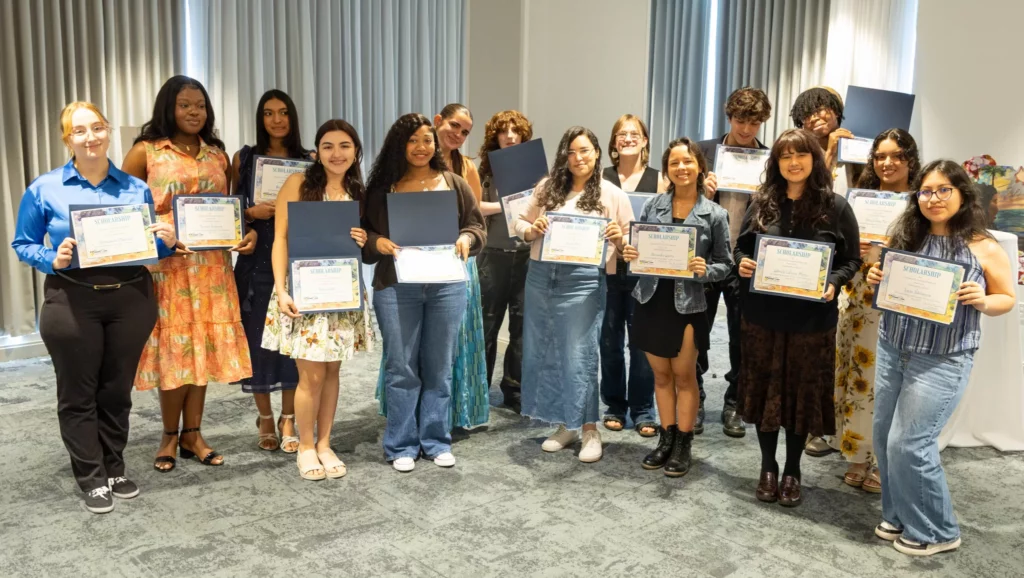
The Coconut Grove Arts Festival (CGAF) Board of Directors announced the 2025 recipients of its prestigious student scholarship program, awarding $45,000 in scholarships to 15 outstanding high school seniors from Miami-Dade County. Each student received a $3,000 scholarship in recognition of their exceptional artistic talent and dedication.

The private scholarship ceremony was held on Sunday, May 18, from 4 to 6 p.m. at the Courtyard Miami Coconut Grove, located at 2649 S. Bayshore Dr., Miami, FL 33133. Only friends and family of the honored students were invited to attend the event, where they could view some of the students’ artwork.

As one of the most celebrated outdoor fine arts festivals in the country, the Coconut Grove Arts Festival had long recognized that the future of the arts rested in the creativity and passion of the next generation. “Supporting our vision is at the heart of the festival’s mission. These young artists are truly extraordinary,” said Dave Hill, Chairman of the CGAF Board of Directors. “Recognizing their contributions to our creative community and helping them pursue their dreams through education is one of the most meaningful things we do each year.”

The $45,000 awarded this year was part of CGAF’s broader $75,000 annual scholarship fund, which also supported students currently enrolled in Florida International University’s art programs.

Camille Marchese, CGAF’s Executive Director, emphasized the transformative power of art in young lives. “We were deeply committed to fostering new talent, and our scholarship program was a vital part of that,” said Marchese. “By supporting these promising young artists, we not only helped them develop their craft—we helped them find a voice, a purpose, and a creative future.”

This year’s recipients used a variety of mediums to explore their relationship with culture, religion, family, and self. The 15 students represented the very best of Miami-Dade’s young creative talent. They included:

CGAF Awards $45,000 in Scholarships to Miami-Dade’s Rising Art Stars
  • Alexandra Guerra (Design and Architecture Senior High)
  • Anacarolina Paz (Barbara Goleman Senior High School)
  • Anisia Mike (New World School of the Arts)
  • Brianna Vargas (Miami Lakes Educational Center)
  • Emma Chala (New World School of the Arts)
  • Gabriela Cabrera-Flores (Arthur and Polly Mays Conservatory of the Arts)
  • Janae Crespo  (New World School of the Arts)
  • Konstantina Papadaki (Dr. Michael M. Krop Senior High)
  • Layla Hanfland (New World School of the Arts)
  • Leonna Anderson (Dr. Michael M. Krop Senior High)
  • Lucia Adrianzen (Design and Architecture Senior High)
  • Megan Diaz (Miami Senior High), Nyle Jones (Design & Architecture Senior High)
  • Rome Negas (Design and Architecture Senior High)
  • Sofia Lataczewski (New World School of the Arts)

The CGAF scholarship program was available to graduating seniors from Miami-Dade County Public Schools. Finalists were selected through a rigorous review process. This year’s recipients were chosen by the founding members of the Fund for Design & Art Education, who originally established the scholarship. Marlen Kohn, Marilyn Traeger, and Cathi Rivera assessed students’ art portfolios, artist statements, and teacher recommendations. The CGAF Board expressed gratitude to these retired art educators for their continued dedication to arts education and support of visual arts students in the community.

Beyond scholarships, the CGAF remains committed to nurturing young talent year-round through a variety of educational and engagement initiatives. These include the Emerging Artists Program, a two-year mentorship designed to help artists build a strong foundation for their careers; Visiting Artists Workshops held in local schools; the Young Collectors Club, which was hosted during the annual festival to encourage young attendees to start collecting art; and regular donations of art supplies to area schools.

3390 Mary Street Suite 260
Coconut Grove, FL 33133

ARTIST INQUIRIES
[email protected]

Phone:
305-447-0401

About CGAF

The Coconut Grove Arts Festival® is presented by the nonprofit, 501(c)(3), Coconut Grove Arts
and Historical Association. Proceeds help fund
year-round arts programs.

TEAM

Our team is comprised of a professional staff and a volunteer board of directors with a diversity of experience in the arts, non-profit and business world. Highly motivated by the desire to showcase the highest caliber of arts and entertainment, our team produces a festival especially designed for our visitors and collectors.

EXECUTIVE COMMITTEE

DAVE HILL, JR
Chair

Pam Mayer
Chair- Elect

Marshall Steingold
Secretary

Flavio Carrillo
Treasurer

Michelle Barton King
Past Chair

BOARD OF DIRECTORS

Nathan Kurland

CURTIS CRIDER

JACK EADS

LILIA GARCIA

LOLA GARCIA

THOMAS KORGE

BENEDICT KUEHNE

EXECUTIVE DIRECTOR

Camille marchese
[email protected]

ATTORNEY

MARK NEUBERGER
Foley and Lardner, L.L.P

EMERITUS BOARD MEMBERS

MONTY TRAINER

DAN EGGLAND

JANE BLAKE

CARLOS CHIALASTRI

DARYL GRICE

DAVE HILL, SR

JOSE MATUTE

DONNA SWEENY

HONORARY BOARD MEMBERS

TODD CARPENTER

TEOFILO CHAPA

PAT DAHNE

THELMA GIBSON

JUDGE JEFFREY ROSINEK

La Danza Inconsciente: Pintura Automática e Intuición en el Arte

El arte intuitivo como meditación en movimiento.

La Danza Inconsciente: Pintura Automática e Intuición en el Arte

Pintar lo que se siente, no lo que se ve.

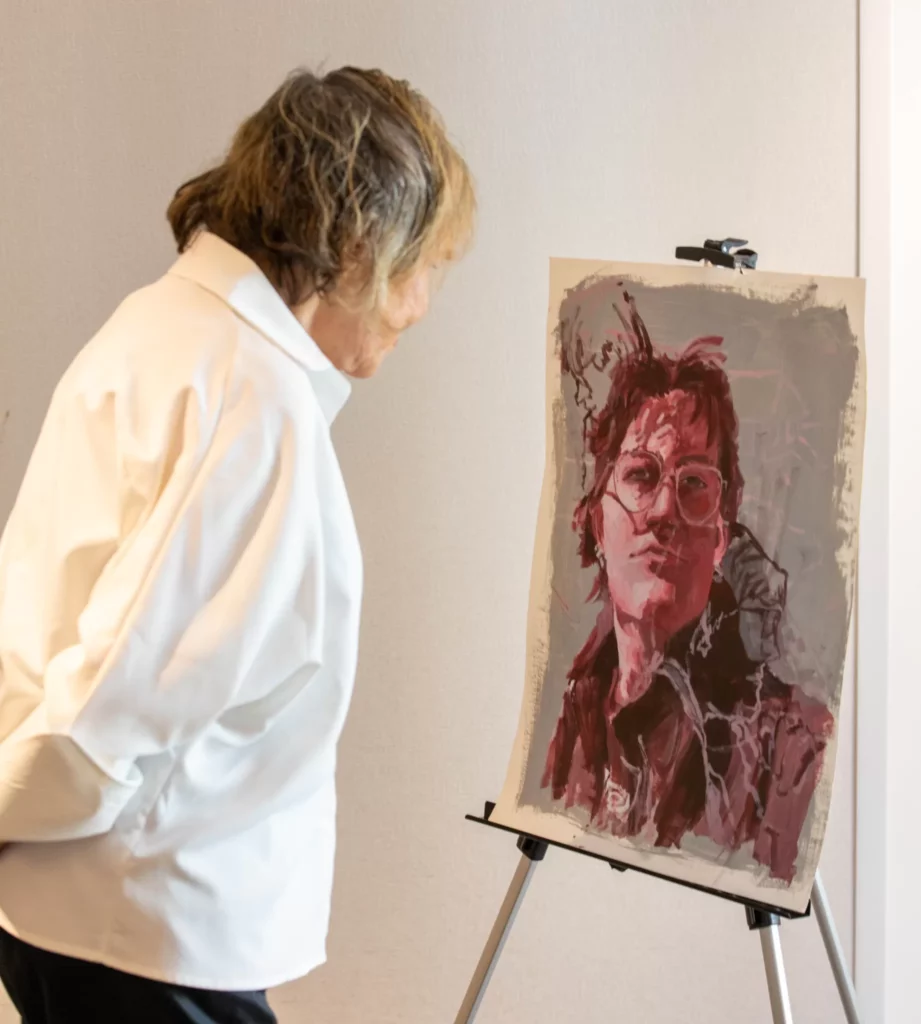
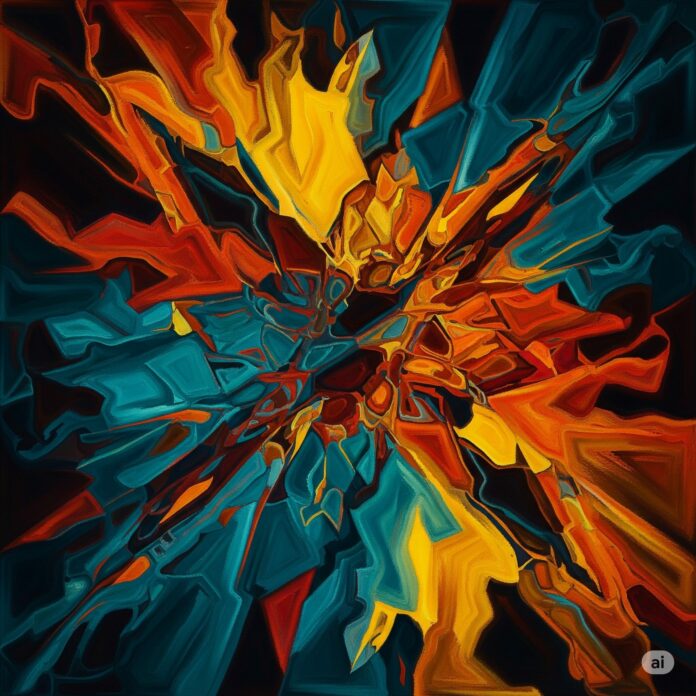
El movimiento de la pintura automática surge como una exploración fascinante de la psique, un intento de liberar la creatividad de las ataduras de la razón y la premeditación. En su núcleo reside la convicción de que la verdadera fuente de la expresión artística emana del inconsciente, manifestándose directamente sobre el lienzo a través de la intuición.

La pintura automática, estrechamente ligada al Surrealismo, buscaba romper con las convenciones artísticas tradicionales, aquellas que dictaban la planificación y el control consciente de la obra. En cambio, proponía un acto creativo más visceral y espontáneo, donde la mano del artista se convierte en un vehículo para las pulsiones internas, los sueños y los pensamientos que fluyen libremente desde las profundidades de la mente.

La técnica en sí varía, pero la esencia radica en la ausencia de una guía intelectual predefinida. Un artista practicando la pintura automática podría comenzar con una línea, una mancha de color, dejando que la siguiente acción sea dictada por la respuesta visual a lo que ya existe en la superficie. Es un diálogo entre el artista y el material, una conversación que se desarrolla sin un guion previo. Se permite que surjan formas inesperadas, texturas imprevistas y composiciones que escapan a la lógica consciente.

La intuición juega un papel central en este proceso. Es la brújula interna que guía la mano del artista, la voz silenciosa que señala el siguiente movimiento, el color a elegir, la dirección de una línea. En la pintura automática, la intuición no es vista como algo misterioso o irracional, sino como una forma válida y poderosa de conocimiento, una conexión directa con una sabiduría que reside más allá del pensamiento lógico.

Artistas como André Masson fueron pioneros en la exploración de estas técnicas, permitiendo que el azar y el flujo libre de la energía guiaran sus composiciones. Sus obras a menudo presentan una sensación de dinamismo y una cualidad orgánica, como si hubieran brotado directamente de un paisaje onírico. Otros surrealistas también experimentaron con diversas formas de automatismo, buscando desvelar las ricas imágenes que yacían ocultas en el subconsciente.

La belleza de la pintura automática reside precisamente en su imprevisibilidad. Cada obra se convierte en un registro único de un momento de flujo intuitivo, una ventana a un paisaje interior que de otra manera permanecería inaccesible. Nos invita a contemplar formas que no necesariamente “representan” algo concreto, sino que evocan sensaciones, atmósferas y quizás incluso vislumbres de nuestro propio inconsciente.

¿Qué te parece esta idea de dejar que la intuición guíe tu mano en el arte? ¿Alguna vez has experimentado esa sensación de crear sin una planificación consciente? ¿Qué surgió de ello?

Where Form Meets Feeling: Is Architecture Art?

Is Architecture Art?

Where Form Meets Feeling: Is Architecture Art? & Miami’s Unique Palette.

Where Form Meets Feeling: Is Architecture Art? & Miami’s Unique Palette

The age-old question of whether architecture is art often sparks debate in gallery openings and academic halls. On one side, pragmatists emphasize architecture’s essential functionality – shelter, utility, and structure. On the other, romantics view buildings as large-scale sculptures, expressions of vision, culture, and emotion. To explore this, let’s consider whether architecture meets key criteria of art: the intentional use of form to evoke an aesthetic or emotional response.

Perez Art Museum PAMM

The architect’s process offers a compelling argument for architecture’s artistic merit. It typically begins with a concept, a feeling, or an abstract idea that evolves into tangible form through sketches, models, and detailed plans. This process mirrors the journey of a painter or sculptor. Architects manipulate space, light, and materials to evoke a response, creating an experience that transcends mere shelter. Consider the soaring grandeur of a Gothic cathedral, designed to inspire awe and spiritual reflection. Or the serene harmony of a Japanese tea house, crafted to foster tranquility and connection with nature. These structures communicate, move us, and tell stories, arguably fulfilling the essence of art.

However, architecture undeniably faces constraints – gravity, budget, and client needs. Does this inherent practicality disqualify it from being considered “pure” art? Perhaps not. Great artists often thrive within limitations, using them as a springboard for innovation. Just as a poet adheres to the structure of a sonnet, architects can find creative freedom within the parameters of their projects. The artistic challenge lies in elevating the functional to the sublime, imbuing necessary structures with artistic intent.

Transitioning from this broader discussion, let’s examine how this artistic intent manifests in the vibrant architectural landscape of Miami. This city serves as a living testament to how architecture can define a place.

Miami’s architectural identity is a dazzling fusion of influences, reflecting its history and tropical environment. The Art Deco of South Beach, with its pastel hues, geometric motifs, and whimsical details, evokes a sense of playful glamour connected to its past. These buildings are more than just places to stay; they are iconic visual statements that contribute significantly to Miami’s cultural identity by representing the glamour of the past.

The “Miami Modern” or MiMo style, emerging in the post-war era, features clean lines, dramatic angles, and integrated lush landscaping. MiMo embraced the subtropical climate with breezeways, jalousie windows, and shaded patios, exuding a sleek, futuristic optimism that reflected the era’s aspirations.

More recently, Miami’s skyline has been punctuated by daring contemporary designs: sleek glass towers defying gravity, organic forms that twist and curve, and bold expressions of color and light. Architects here push boundaries, creating structures that are not only functional but also sculptural elements in the urban landscape, contributing to Miami’s evolving identity as a hub of innovation.

Miami’s architecture compels us because of its embrace of vibrancy and innovation. The city isn’t afraid to be bold, to experiment with form and color, mirroring its thriving contemporary art scene. Architectural designs here transcend mere shelter; they create a visual feast, a unique sense of place reflecting Miami’s energy and spirit.

Ultimately, whether architecture is art may best be answered by experiencing spaces that move us, spark our imagination, and become integral to our cultural identity. Miami’s architecture undeniably achieves this, demonstrating the artistic potential inherent in the very buildings that shape our daily lives.

We invite you to share your thoughts: When you observe the buildings around you, particularly in Miami, do you perceive art? What elements elevate a structure beyond mere functionality? Share your insights in the comments below!

Is Architecture Art?

Source:

Postcards From the Artist

The Contemporary Art Modern Project

Postcards From the Artist

May 23 – June 27, 2025

The CAMP Gallery

791-793 NE 125th St.

North Miami, FL 33161

United States

(786) 953-8807

The Contemporary Art Modern Project announces its May exhibition: Postcards from The Artist with a group exhibition featuring works from: Milton Bowens, Laetitia Adam and Oluwatomisin Olabode. Each of these artists creates work explaining their journeys through life and the art world brimming with lived experience, ancestral and historical experiences inherited. The history of an individual is deeply connected to the stories passed down, the experiences encountered and witnessed and the interpreter of all of the above. Identity is a condition constantly influx, due to not just the external world and its ever revolving revolt of both history and perception, but also due to time, and the experiences that come with time. The optimistic child full of imagination and dreams can often become the bogged down adult witnessing not only the loss of innocence in imagination, but also the burden of an imposed identity. What is left is a quagmire of opinions, voices, disagreements, all swarming to remove the identity one lives, the history one lives. Responding to this, these artists lay before the viewer both history lived and inherited, as evidence of how that history, that postcard from the moment effects the artist and becomes the inspiration behind the work. 

Milton Bowens is an artist and a preservationist of both the history and the present of African Americans. Often using paraphernalia from archives of American history he reminds the viewer, informs the viewer of the treatment, history and experience of people enslaved in the U.S. His focus looks at the beginnings and explores how they still effect the present. Laetitia Adam Rabel exposes her reality as a woman in America, and how her race and ancestry mark her, and give her the ability to navigate, as best as she can, the labyrinth that is modern society. Deeply feminine her works bring forth and shine on her experiences with her life, her body and her artistic voice. Oluwatomisin Olabode based in Lagos, often toys with ideas of the grotesque, not only in his artistic voice, but also in his subject matter. Over stylized subjects confront the viewer usually in a one dimensional depiction, suggesting that the social eye can only perceive what is on the surface.

The art world is overflowing with rules and ideas of what is art, often from the perspective of the financial, which typically results in trends on what is unique, new, and catchy. Naturally this is fine, but it can overlook artists responding from an internal that cannot be limited or ignored by ‘market demand.’ Artists as the above make works that resonate with a myriad of shared aspects of the human condition – where the exact depictions may be different, they all do speak on being human with both lived and inherited history and how we all carry that weight.

Julie Peppito Chooses Hope

Julie Peppito Chooses Hope

Julie Peppito Chooses Hope

April 11 – May 17, 2025

Statement and curation by Melanie Prapopoulos

The CAMP Gallery

791-793 NE 125th St. North Miami, FL 33161

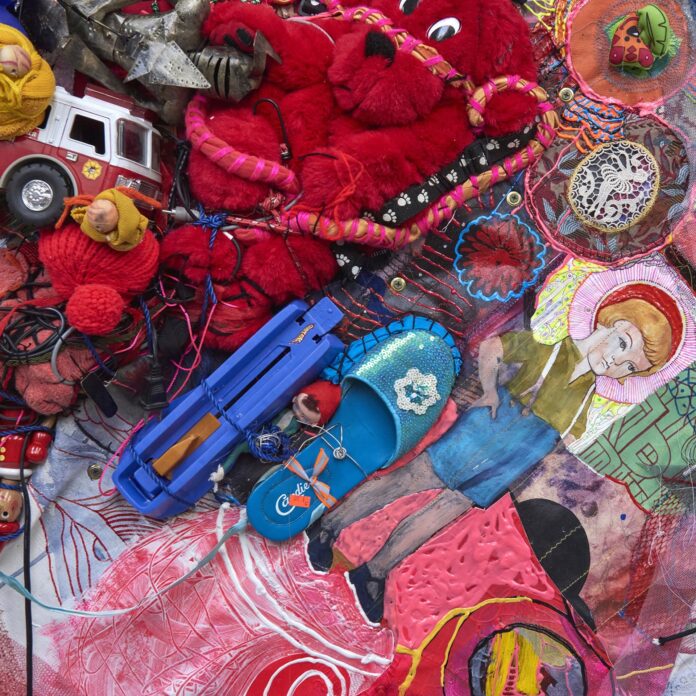
The solo exhibition, Julie Peppito Chooses Hope, suggests a guide on how to navigate life through mixed mediums of fiber, paint, found objects and her own innate belief in preserving the positive. Peppito tackles the daily distractions of life by creating multi layered works exploring where she is in the present as a means of establishing order in a life that is chaotic. Chaos can be found in any segment of life where reality clashes with self imposed expectations, where time flies uncontrollably out of ones’s  grasp, and much more. Peeling back life as we cross the social landscape, Peppito responds to the world she inhabits by offering hope. Coming into her own in an ever  changing art world and practice, Peppito spends a great deal of time with not only  the work that evolves, often from one object, but also with her thoughts on the piece. Her thoughts can travel through the everyday and mundane, through her own life,  and through the climate she encounters. This multifaceted looking around her is clearly seen in works such as; Growth 1 & 2 (2025). The works offer the concept of  growth in many ways. For example, it can be seen as two unequal stages of growth, two direction for growth—or a limit to growth because of the different sizes. But in both  there lies hope, simply because the works are bordered by a literal blank canvas, thereby giving one the freedom to move out of the work and into a new stage. 

Peppito often creates a tableaux both overflowing with action and thought, but also  one open and dependent on interpretation. Dividing for example, Holding Pattern (2025) into two sections, one is able to skip through the left portion only to attentively explore the right side. The piece is divided by color, historical references, the artist, and elements of culture. Once you travel through the labyrinths Peppito creates, you may  enter into the unformed, the unknown. The work holds an intentionally ambiguous landscape, one with a shadowy figure lurking in the window, an empty chair, and less—but even through this almost ‘void,’ Peppito places her bird, a muse, a symbol of the  imagination—fully formed, fully identifiable—showing that come what may, there is  always hope and somethings can never be erased. This is the key in Peppito’s philosophy—there is always hope, and we can all work towards the beautiful  tomorrow of our imagination.  

In all of Peppito’s work one can witness her artistic practice as her search for  materials rises from both conscious choices to something that catches her eye. This ‘eye-catching’ object is usually the idea of a work in its moment of becoming, akin to an unconscious stage, but as more than one idea holds space in anyone’s mind— new ideas often come hurdling towards her, calling her to listen to the ideas, and thus  one idea evolves into many. These ‘many’ are then masterfully composed by Peppito to tell the story that she wishes to tell, as well as to listen to the stories that come from her works when viewed. Her work stands on the precipice of optimism forever leaning towards hope. The hope lies in the future, what she likes to envision for a ‘beautiful  tomorrow,’ and the hope that her work stimulates, awakens and leads into  conversations and connections bound in the hope for caring connections amongst all.  

The Jorge M. Pérez Family Foundation Announces Open Call for 2025-2026 CreARTE Grants Program

CreARTE Grants Program

The Jorge M. Pérez Family Foundation Announces Open Call for 2025-2026 CreARTE Grants Program

The Jorge M. Pérez Family Foundation at The Miami Foundation (the Pérez Family Foundation) is proud to launch the fourth edition of the Pérez CreARTE Grants Program (Pérez CreARTE), awarding over $5 million to arts-first organizations across Miami-Dade County that seek to cultivate a vibrant, connected and engaging arts ecosystem. In celebration of its 10th year of philanthropic impact, the Pérez Family Foundation’s 2025–2026 program will have a renewed focus on Arts Access, Arts Education and Artist Fellowships and Residencies. Applications opened on Tuesday, April 29, with winners announced in the fall. Eligible organizations may apply here.

Current arts-first grantees are invited to apply for renewed funding through a separate but parallel process. The Pérez family remains committed to supporting and strengthening the work of past and current partners while also making space for fresh ideas and new investments. The application window will close on June 13, 2025. All interested applicants should direct their inquiries to Jacki Altman, Community Investments Manager, at [email protected] and Belissa Alvarez, Director of the Jorge M. Pérez Family Foundation, at [email protected], who will be managing applications and the awards process. Full guidelines for Pérez CreARTE can be found in English, Spanish and Haitian Creole.

The Miami Foundation40 NW 3rd Street, Suite 305
Miami, FL 33128 United States


The Art of Stickers by Alexander Martínez and Alejandro Caiazza

Art of Stickers
Art of Stickers

The Art of Stickers by Alexander Martínez and Alejandro Caiazza

Por: José Gregorio Noroño

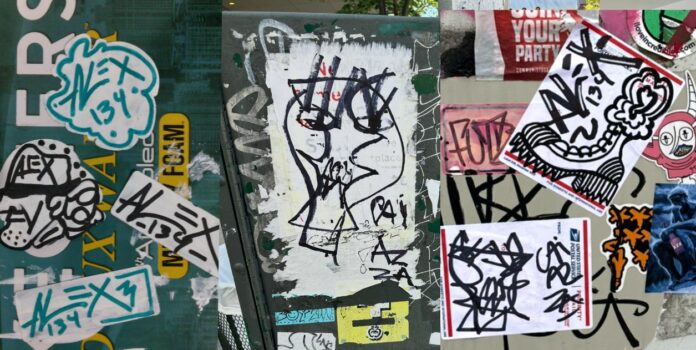
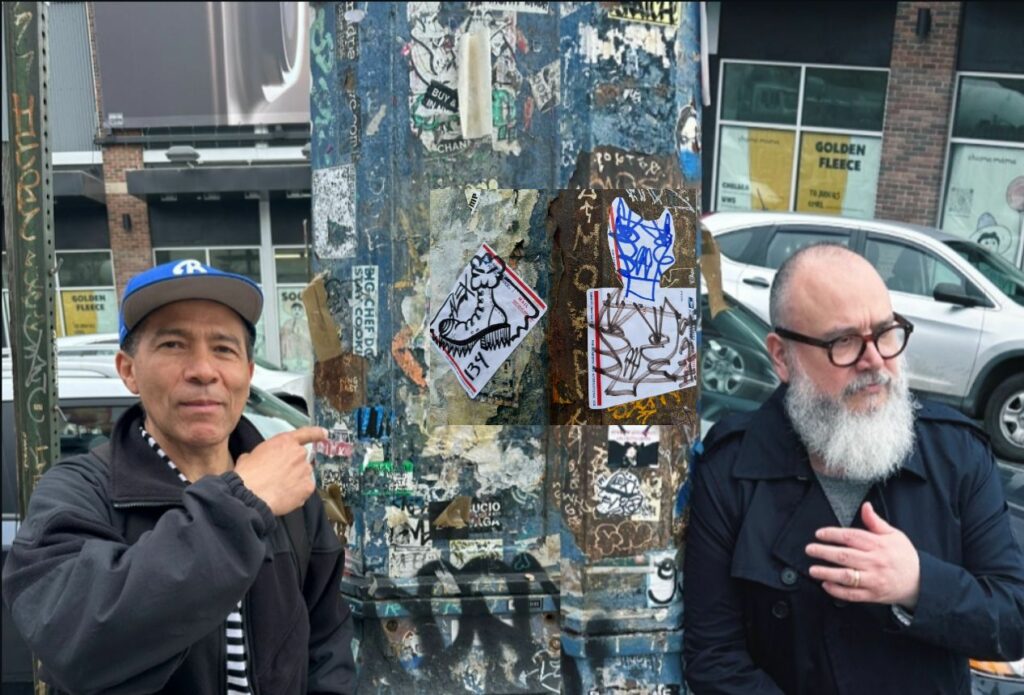
Alexander Martínez and Alejandro Caiazza, two Venezuelan visual artists based in New York, act as street artists when not exhibiting in closed gallery spaces. They take over the city streets as urban galleries to display their stickers, a form of street art in the context of graffiti. Through their images captured on the United States Postal Service Label 228s, they are able to maintain their creative and exhibition activity, express messages that contain their particular vision of the world, and allude to political, social, and cultural issues.
The recurring image in Martínez’s sticker is a boot, which breaks away from his pictorial compositions to occupy the public spaces of New York City. Its representation transcends its functional meaning as simple footwear to protect the feet. Beyond this, the boot is visually configured with a spiked sole and a toe shaped like a target practice wheel, attributes that imbue it with aggression and violence, perhaps alluding to military regimes and oppression; in short, this image leads us to associate it with lethal weapons.
In Caiazza’s case, his sticker represents the scribbled figure of a cat’s face, an enigmatic creature with a wide range of meanings. For example, for this artist, it symbolizes good luck, nonconformity, and mystery; a stealthy being that escapes all control; it represents independence, rebellion, and resistance to the imposition of the established order. Together with Martínez, Caiazza stealthily walks the streets of New York, displaying his stickers with gesticulating cat faces in public spaces, thus breaking established boundaries.
I take this opportunity to announce that on May 17, 2025, between 6:00 and 8:00 pm, Alexander Martínez, Alejandro Caiazza, Sergio “el Hase” Barrios and Luis Salazar will be exhibiting at the William V. Musto Cultural Center under the title “Heartbeats of the South”.

Bogotá, 2025

Alexander Martínez (izq) Alejandro Caiazza (der) en Buschwick Brooklyn NY junto a sus emblemáticos stickers

Art on the Plaza: Avi Young – Bearing Bonds

Art on the Plaza: Avi Young - Bearing Bonds

Art on the Plaza: Avi Young – Bearing Bonds

Through May 31, 2025

All Day

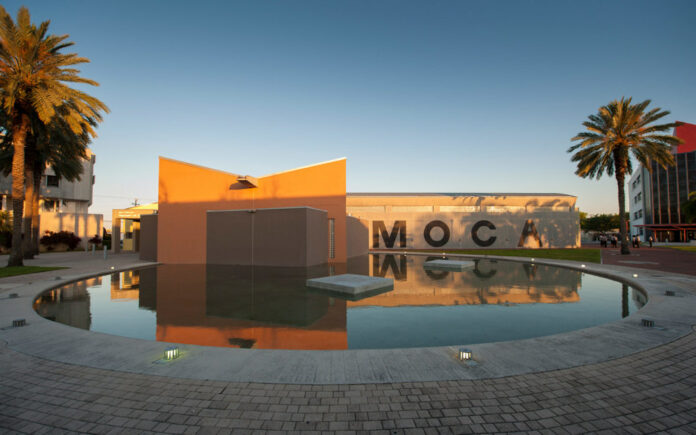
MOCA’s Art on the Plaza returns with a thought-provoking installation examining the complexities of human connection. Avi Young’s Bearing Bonds, on display through May 31 at MOCA Plaza at the Museum of Contemporary Art, North Miami, features two figures—an adolescent and mentor—with arms extended toward each other but unable to touch.

The installation explores themes of separation, whether from physical distance, systemic barriers or emotional divides. Young ingeniously connects the silhouettes with melodic chimes, creating a symbolic bridge of communication despite the inability to physically connect.

As a queer Afro-Latinx artist, Young brings their vibrant cultural heritage and storytelling passion to their work. Their artistic practice often centers on tender portrayals of marginalized communities, celebrating identity while fostering empathy and highlighting the power of connection through textured, intimate narratives.

Young’s artistic journey began at the Design and Architecture Senior High, where they balanced artistic pursuits with STEM studies, including marine biology research at the Frost Science Museum. They later refined their skills at the Kansas City Art Institute, focusing on ceramics and material exploration. Since 2021, Young has been an associate artist at the Bakehouse Art Complex, contributing to Miami’s creative landscape.

Bearing Bonds is part of MOCA’s Art on the Plaza series, launched in 2020 to activate the museum’s outdoor space with temporary public art installations. The 2025 series showcases South Florida artists, including Young, Magnus Sodamin and Nathan Justice Moyer, with site-specific works rotating throughout the year to engage and connect the community.

Page 102 of 279
1 100 101 102 103 104 279