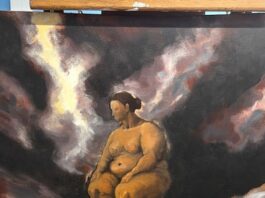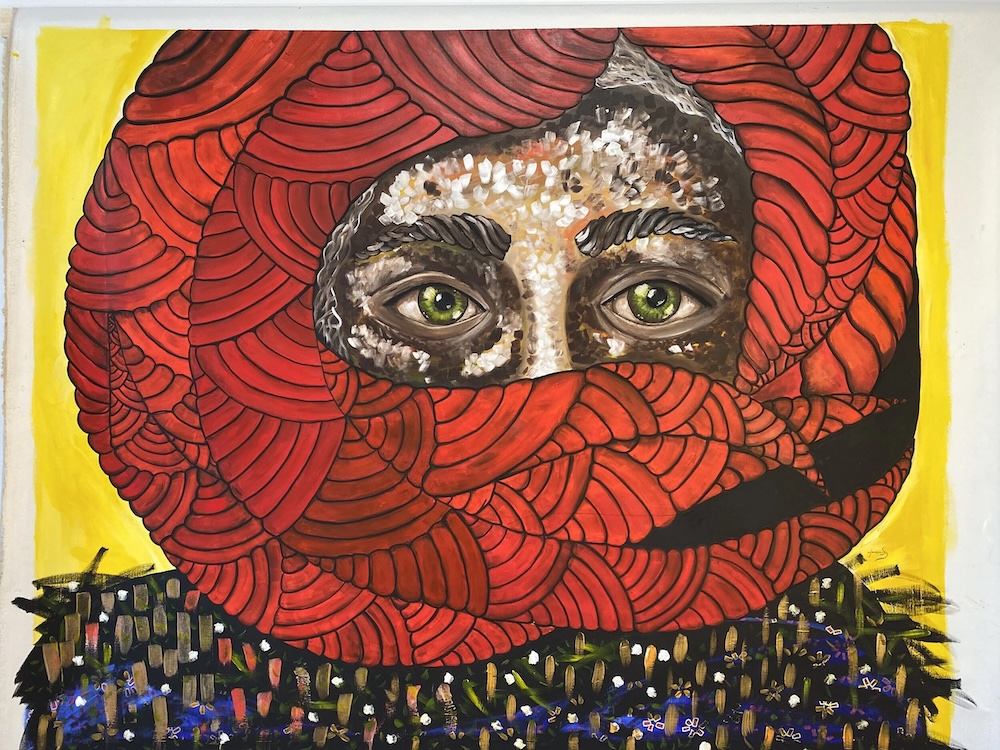
At the intersection of art, biology, memory, and migration, Andrea Facusse has developed a visual language in which the natural world becomes both subject and metaphor. Her paintings emerge from close observation of living systems, but they move beyond scientific representation into imagined environments shaped by personal history, ecological awareness, and emotional experience.
Drawing from her Honduran heritage, her background as a biologist, and her life as an immigrant, Facusse creates what she describes as “imagined ecosystems”—spaces where species, landscapes, structures, and memories coexist and transform one another. Color plays a central role in this process. Rather than treating beauty as an escape from difficult realities, she uses vivid, saturated imagery to address environmental loss, displacement, gender inequity, mental health, and the fragility of endangered species.
For Facusse, accessibility does not mean simplification. Her paintings invite viewers through color and rhythm before gradually revealing more complex ecological, social, and psychological narratives. They ask for time and attention in a culture increasingly shaped by speed and visual consumption.
In this conversation with Art Miami Magazine, Andrea Facusse reflects on the porous boundary between scientific observation and artistic invention, the role of beauty in confronting environmental crisis, and the deeper sense of connection that remains at the core of her practice.
Andreafacusse.com
@andreafacusseart
AMM: You describe your paintings as “imagined ecosystems” that feel alive. As both a biologist and an artist, where do you locate the boundary between observation and invention, and what does that boundary reveal about your own way of understanding life?
Andrea Facussé: For me, the boundary is porous — and that’s the point. Observation gives me the truth of a thing: the architecture of a cell, the branching logic of a coral reef, the exact iridescence of a quetzal’s feather. Invention begins where the specimen ends.
In the lab, I learned that an ecosystem is not a collection of objects; it is a set of relationships. Painting lets me build relationships that don’t exist yet — species, structures, and rhythms from my Honduran childhood and my Florida present growing into one another.
Where I cross from observation into invention is exactly where knowledge becomes feeling. I think that’s how I understand life itself: not as a catalog of separate things, but as everything in the act of connecting, adapting, and surviving together.
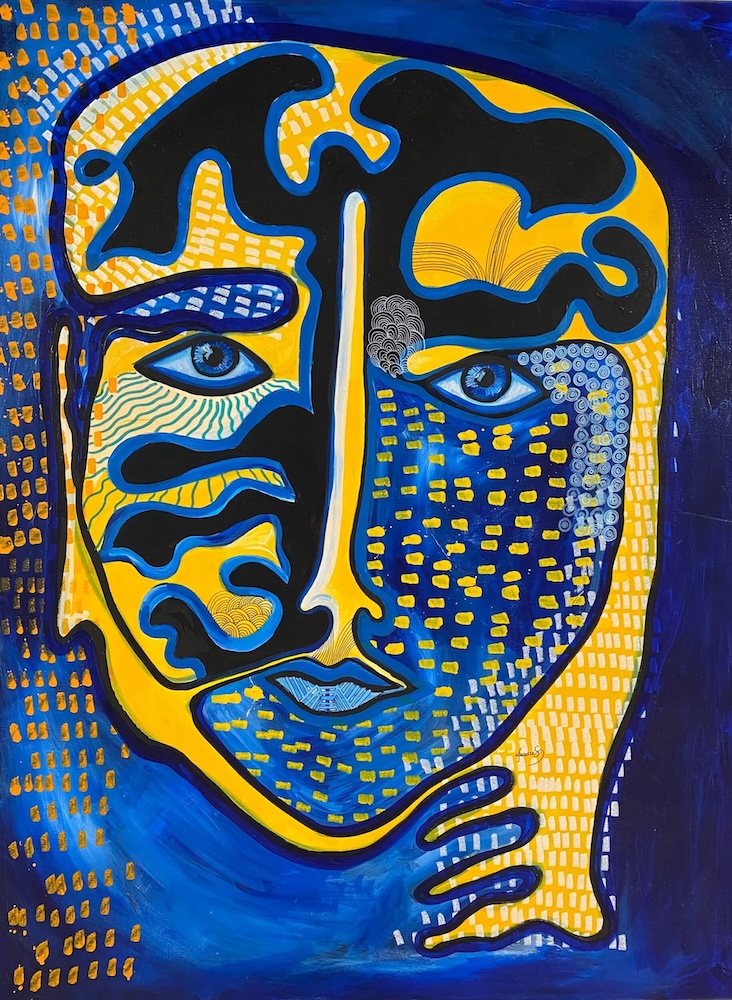
AMM: Your endangered species work confronts environmental disruption, yet your visual language remains vivid, celebratory, and beautiful. Do you see beauty as a way of drawing people closer to difficult truths, or does beauty risk softening the urgency of the crisis you are addressing?
AF: Beauty is the doorway, not the distraction. People protect what they love, and they love what they have truly seen.
If I painted endangered species only as elegy — muted, mournful, already gone — viewers would turn away, the way we turn away from bad news. Instead, I paint the quetzal, the toucan, the reef in full glory, at full saturation, because that glory is precisely what is at stake.
The celebration is the alarm. When a viewer falls in love with the color and the life in the painting, the urgency stops being an abstraction and becomes personal: this exists, it is extraordinary, and we are losing it.
Beauty and urgency share the same canvas in my work because in nature they were never separate.
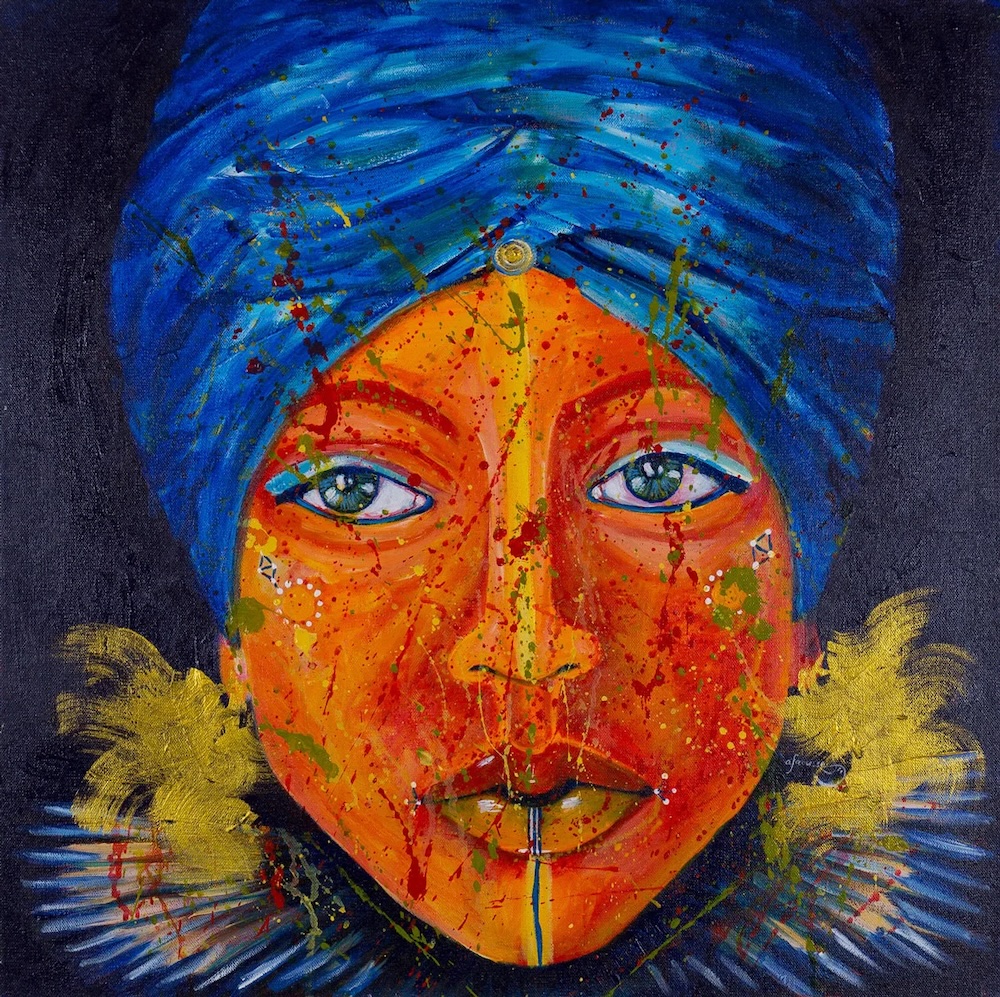
AMM: Your work engages mental health, gender inequity, immigration, and environmental loss, while also insisting on accessibility and connection. How do you prevent the desire to communicate broadly from diluting the personal, emotional, or political complexity of the subjects you care about most?
AF: I don’t simplify the subjects — I layer the entry points.
A painting of mine can be met first as pure color and rhythm; anyone can stand in front of it and feel something before they know anything. Then the forms start to resolve: a species under threat, a figure between two landscapes, a structure that is growing and straining at the same time.
The complexity is in the layering, and it reveals itself at the pace of the viewer. Accessibility, to me, is not dilution — it is hospitality.
These subjects are my life: I am an immigrant, a woman, a scientist, a mother. I don’t need to make them smaller to share them. I need to make the door wide enough that people walk in and find the full weight of them waiting inside.
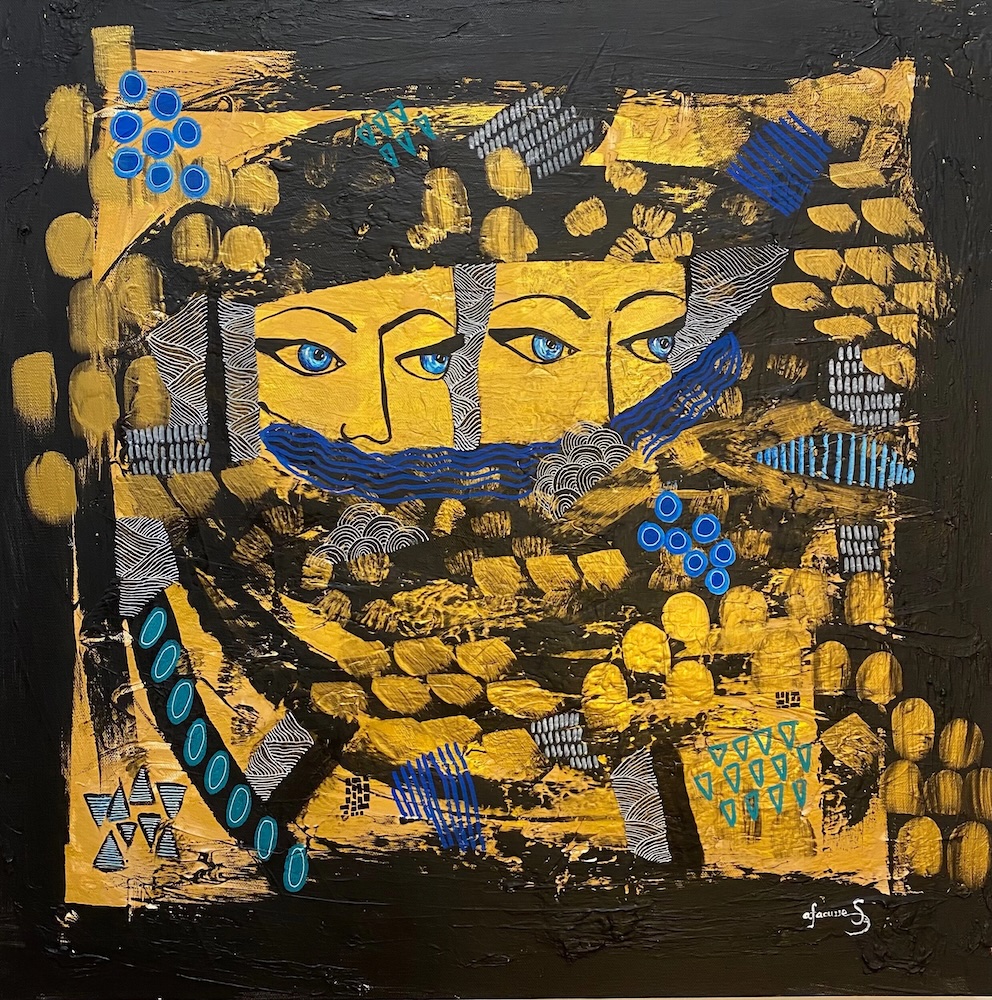
AMM: You speak about slowing people down and creating spaces of presence. In a culture defined by speed, distraction, and constant visual consumption, is your work asking the viewer merely to pause — or to confront something within themselves that they might otherwise avoid?
AF: A pause is only the beginning.
We scroll past hundreds of images a day and retain almost none of them; I build paintings that refuse to be consumed at that speed — dense, layered, rhythmic surfaces that keep unfolding the longer you stay.
And staying is where the confrontation happens. In stillness, people meet themselves: their grief for a changing natural world, their own experience of displacement or rootlessness, the mental noise they carry.
My series is called Unrooted because so many of us are living between places, between who we were and who we are becoming.
I can’t resolve that for anyone. But I can build a space of presence where avoiding it is no longer the easiest option — and where what surfaces is met with color, not judgment.
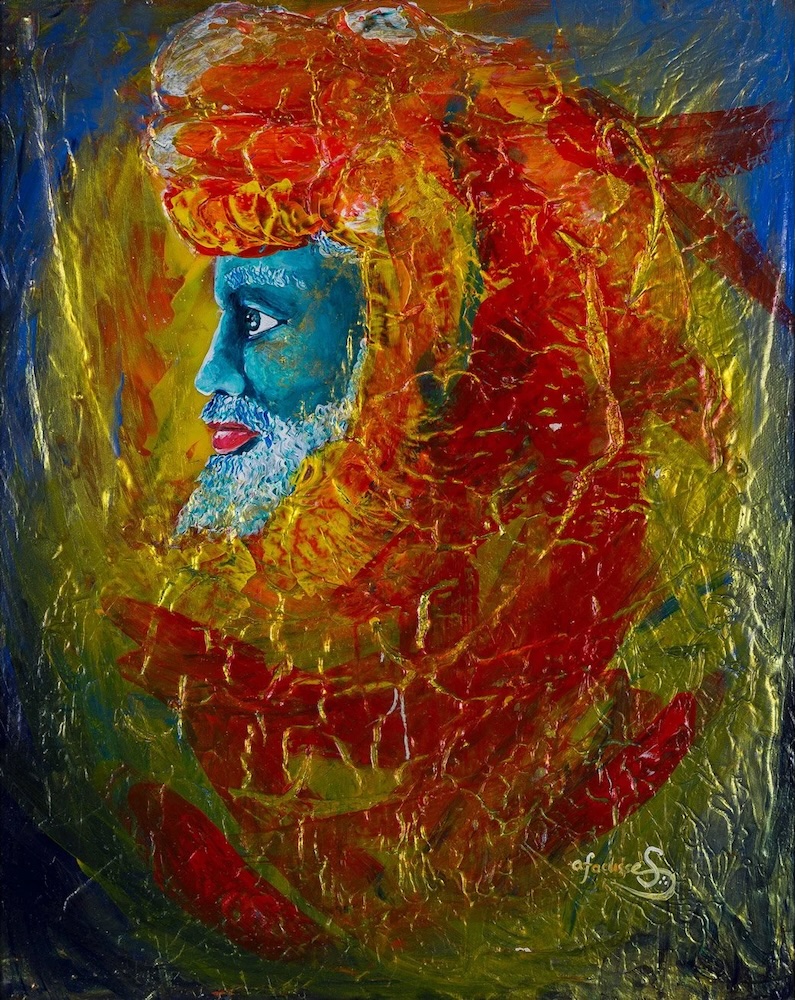
AMM: Your Honduran heritage, scientific background, and experience as an immigrant all shape your practice. If you removed those identities and histories from the work, what would remain at its core — and what would that answer reveal about who you are beyond biography, profession, and cultural origin?
AF: What would remain is the engine underneath all of it: curiosity, and reverence for living things.
Before I was a biologist, I was a child in Honduras mesmerized by how much life a single landscape could hold; before I was an immigrant, I was someone who believed the world is interconnected and worth celebrating.
Strip away the biography and you would still find an artist building worlds where forms reach for each other, where growth wins over decay, where color insists on joy as an act of survival.
My heritage and my science gave that instinct its language and its subjects — but the instinct itself is who I am: someone who looks at life, in a cell or a forest or a stranger’s story, and sees something sacred enough to slow down for.