Martín Chambi: The Andean Gaze, Indigenous Modernity, and the Ethics of Photography
“Martín Chambi was one of the first major Indigenous photographers in Latin America, and one of the most consequential photographers of twentieth-century Peru.”
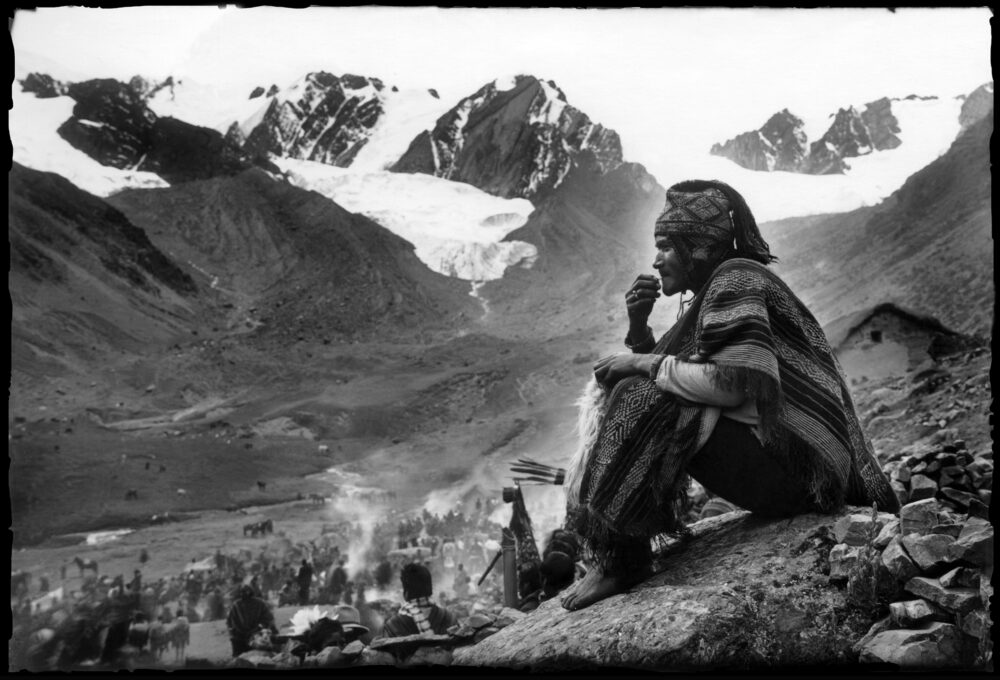
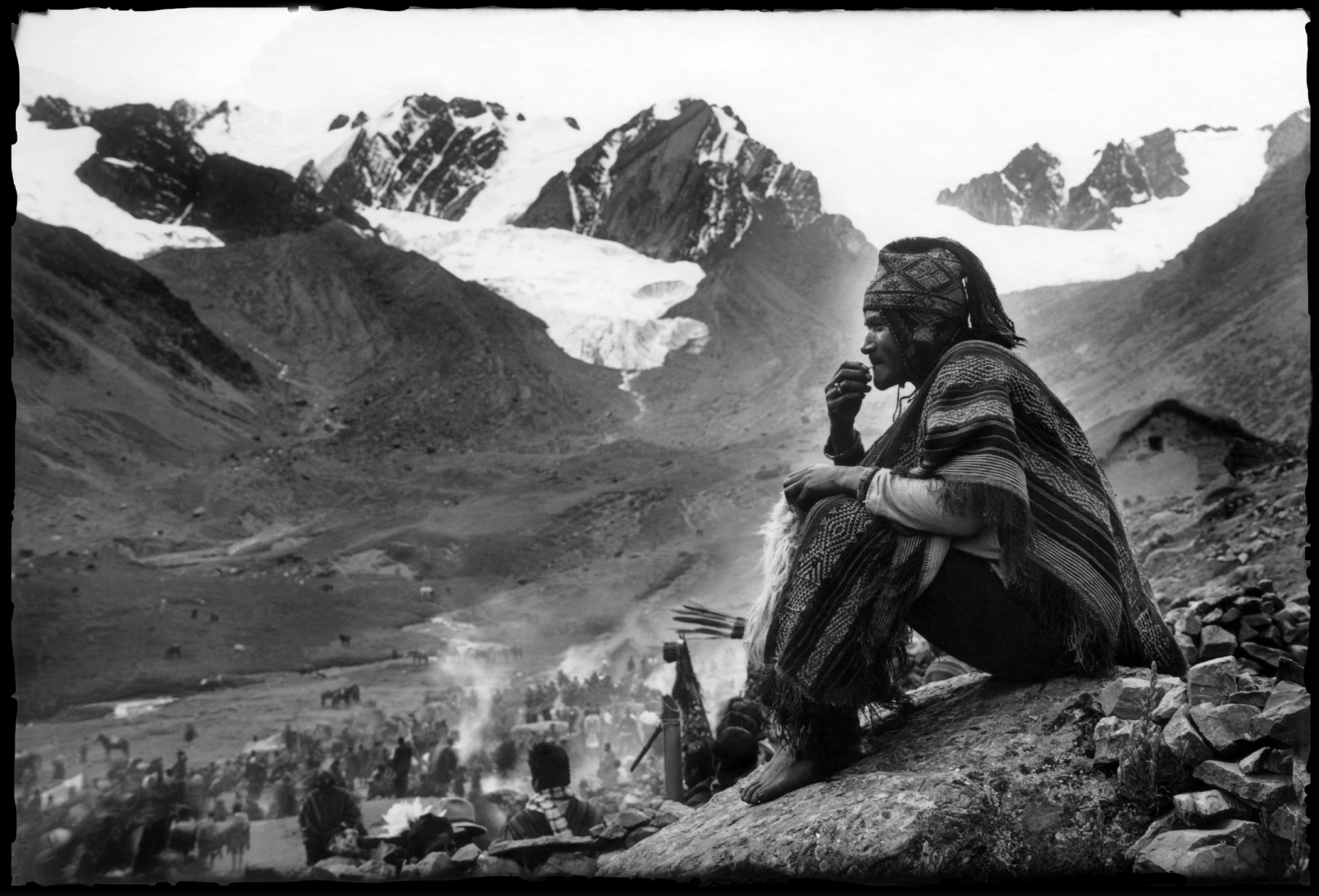
Martín Chambi Jiménez occupies a singular position in the history of photography. Born in 1891 in Coasa, in the southern Peruvian region of Puno, into a Quechua farming family, Chambi transformed photography from an imported technological medium into an extraordinarily sophisticated instrument of self-representation, social memory, aesthetic inquiry, and cultural affirmation. His photographs move easily between Indigenous communities and urban elites, archaeological monuments and modern machines, agricultural labor and bourgeois ceremony, solitude and collective celebration. They form neither a picturesque catalogue of an exotic Andes nor a neutral documentary inventory. Instead, they constitute something considerably more complex: a visual philosophy of a society observing itself during a profound historical transformation.
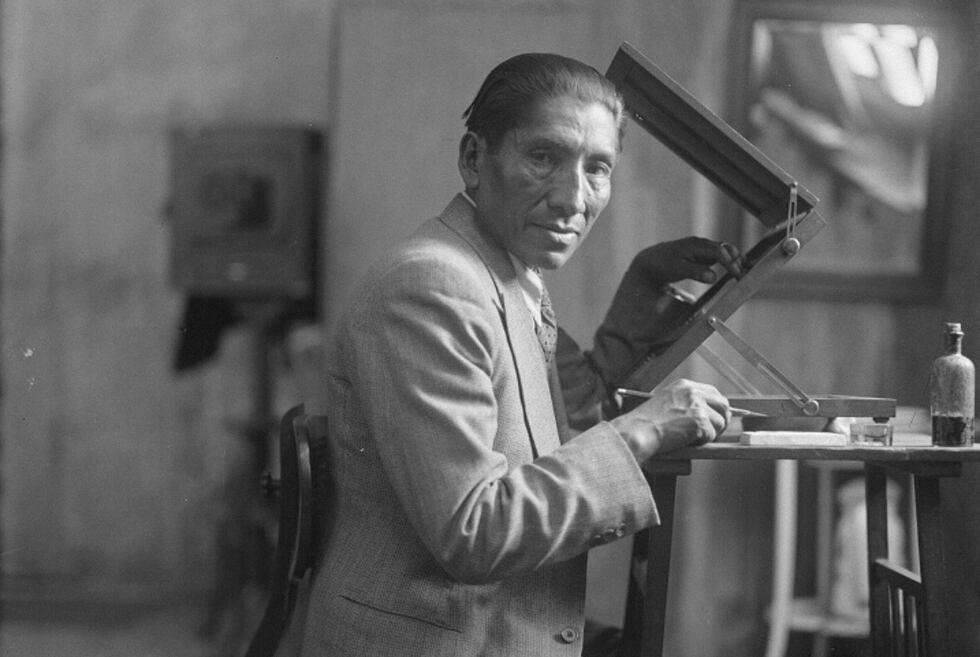
Chambi’s importance therefore cannot be reduced to his status as a photographer “of Indigenous people.” What makes his position historically exceptional is that he photographed the Andean world from a perspective rooted within it. His mother tongue was Quechua, and his biography connected him directly to the communities and territories that became central to his imagery. The testimony supplied by his descendants emphasizes that this linguistic and cultural proximity enabled him to communicate directly with the people he photographed.
This distinction changes everything.
Chambi did not merely place Indigenous subjects before the camera.
He altered who had the authority to construct the image.
From Coasa to the Camera
Chambi’s biography reads almost like an allegory of photography itself: a journey from darkness into light.
As a young man he worked in the mining region of the Inambari basin. It was there, in an environment organized around the extraction of gold, that he encountered photography. The current scholarship and archival research trace his first contact with the medium to photographers working around the mining enterprise. Instead of remaining in the mining economy, Chambi pursued another form of extraction: not minerals from the earth, but images from light, time, landscape, and human presence.
In 1908 he moved to Arequipa and entered the studio of the celebrated photographer Max T. Vargas. The period was decisive. Chambi learned not merely how to operate a camera but the complete professional culture of photography: composition, portraiture, lighting, processing, studio practice, and the commercial organization necessary for an independent photographer to survive. He later established his own practice in Sicuani and subsequently consolidated his career in Cusco, the city most closely associated with his mature work.
It is important to recognize this professional dimension. Romantic interpretations sometimes transform Chambi into an instinctive Indigenous genius whose authenticity supposedly existed outside modernity. The historical record suggests almost the opposite.
Chambi was profoundly modern.
He mastered one of the defining technologies of modern visual culture. He understood photography as art, profession, business, archive, journalism, communication, and cultural circulation. The 2026 catalogue of the Centro Cultural Inca Garcilaso explicitly describes him as a modern artist who understood himself as an author and who sought to circulate images of the Andean region beyond Peru.
His Indigeneity and his modernity were not opposites.
They existed simultaneously.
That is essential to understanding his work.
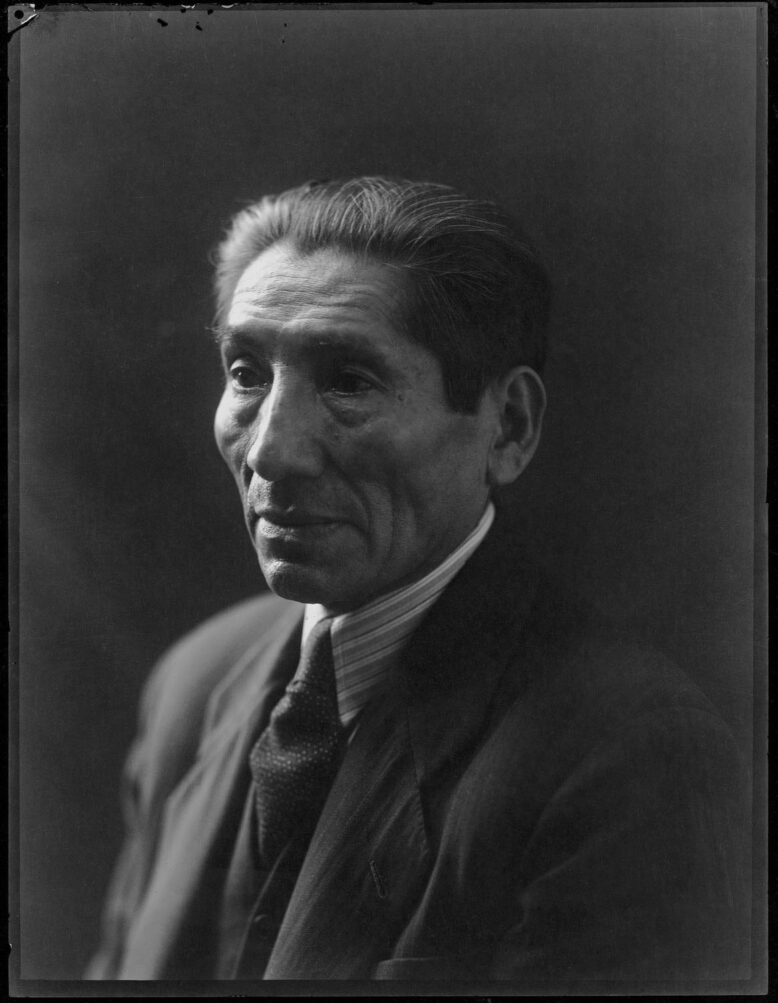
Martin Chambi: “I Am Not Hispanic: I am Pre-Hispanic.”
Who Has the Right to Look?
Photography has always contained an unequal relationship of power.
One person possesses the camera.
Another person becomes the image.
The photographer chooses the frame, the moment, the background, the distance, the exposure, and ultimately the representation that survives.
This asymmetry becomes particularly complicated in the history of colonial and ethnographic photography, where Indigenous peoples were frequently represented by outsiders as objects of scientific classification, racial difference, primitivism, disappearance, or exotic fascination.
Chambi’s position destabilizes this structure.
He was himself born into a Quechua family and photographed people whose language, cultural environment, and social reality were deeply familiar to him. This does not mean that every photograph automatically escapes hierarchy or that an Indigenous photographer cannot reproduce social conventions. But the direction of the gaze has fundamentally changed.
The camera is no longer exclusively arriving from outside.
The photographed world has acquired a camera of its own.
Chambi summarized this consciousness powerfully in 1936:
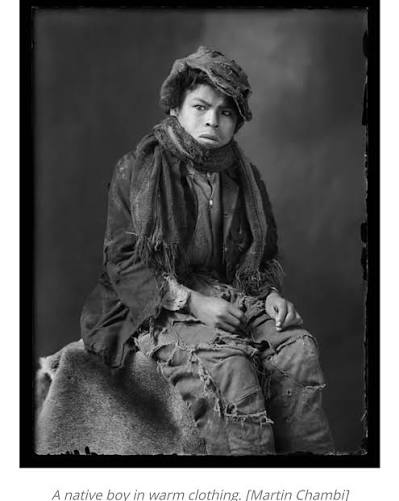
“I feel that I am a representative of my race; my people speak through my photographs.”
The statement is preserved in the current archival exhibition and encapsulates the political and philosophical importance of his practice.
Photography here becomes more than representation.
It becomes enunciation.
His people are not merely seen.
They speak through the image.
The Radical Equality of the Portrait
One of the most remarkable characteristics of Chambi’s archive is its social breadth.
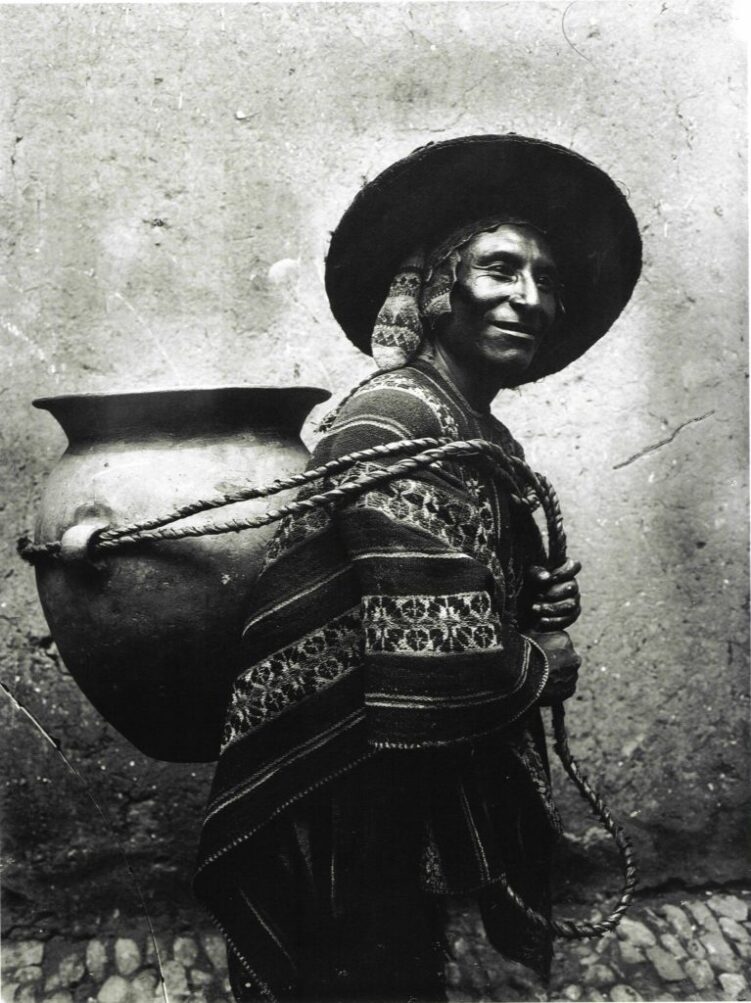
His camera entered the houses and studios of prosperous Cusco families, but it also encountered campesinos, laborers, musicians, women, children, workers, travelers, Indigenous communities, public celebrations, streets, archaeological sites, and landscapes. His commercial practice and his personal photographic investigations existed beside one another rather than in separate aesthetic universes.
The curators of the recent exhibition make an especially important observation: Chambi could photograph different social classes with the same technical mastery and dignity.
This may be one of the most radical aspects of his photography.
Equality in Chambi is not necessarily announced through slogans.
It occurs through attention.
The same intelligence of light.
The same compositional seriousness.
The same patience.
The same acknowledgment that the person before the camera deserves to occupy the image fully.
This produces what might be called an ethics of visibility.
To photograph someone seriously is already to make a proposition about that person’s importance.
A portrait says:
This person deserves to be seen.
A carefully constructed portrait says something more:
This life possesses complexity.
From the perspective of the psychology of perception, this matters enormously. Human beings read status through posture, clothing, spatial position, facial expression, lighting, scale, and visual context. Portrait photography can therefore amplify social hierarchy—or interrupt it.
Chambi repeatedly understood the photograph as a space in which presence could be intensified.
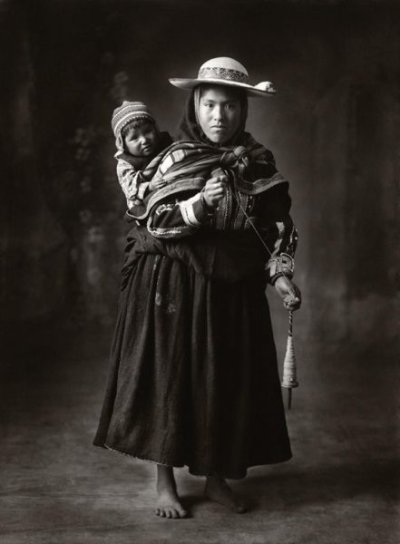
His subjects do not simply illustrate sociological categories such as “Indian,” “worker,” “peasant,” or “elite.” At their strongest, the photographs return individuality to categories that historical discourse had made abstract.
A face interrupts the stereotype.
The Psychology of Chambi’s Gaze
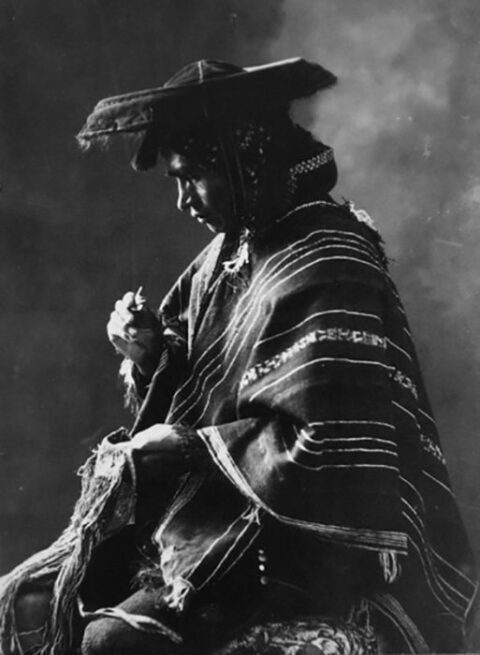
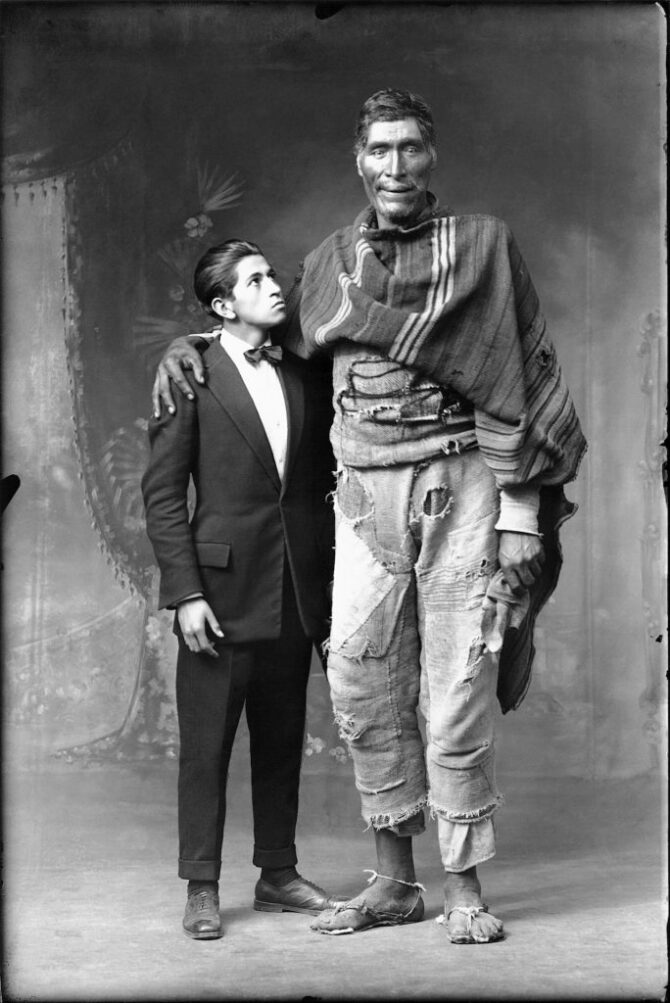
There is an unusual psychological stillness in many of Chambi’s portraits.
The camera does not seem impatient.
That quality is partly technological. Large-format photography demanded preparation, controlled exposure, and physical stillness. But Chambi transforms those technical constraints into psychological intensity.
Bodies acquire weight.
Faces acquire duration.
The spectator is given time to encounter another person.
This is profoundly different from contemporary visual culture, in which photographs are produced and consumed almost instantaneously. The interview material accompanying the recent exhibition makes precisely this contrast: Chambi’s photography returns us to another mode of observation, one in which taking and viewing an image demanded a different relationship to time.
This slowness matters philosophically.
The contemporary viewer often asks an image to reveal itself immediately.
Chambi’s photographs ask the viewer to remain.
The longer one looks, the less the person represented can remain merely a “type.” Small details become psychologically significant: the position of a hand, tension in the mouth, a direct or diverted gaze, clothing chosen for the occasion, a gesture between family members, the distance separating one body from another.
The photograph gradually becomes an encounter.
In this sense, Chambi’s portraits participate in a central ethical problem of visual culture:
Can we look at another human being without reducing that person to what we already believe about them?
His best photographs resist easy answers.
Indigenous Modernity
Chambi’s images are sometimes approached primarily as records of an ancestral Andes.
That interpretation is incomplete.
His archive is equally concerned with change.
Cusco and the southern Andes were undergoing modernization: railways, automobiles, aviation, new roads, tourism, industrial labor, expanding urban life, new political actors, and changing relationships among social classes all entered the photographic field.
Silvia Spitta’s research situates Chambi within a wider Cusco photographic culture that documented a city transformed by railways, electricity, trams, archaeological tourism, and modern urban aspirations.
The 2026 curatorial research similarly emphasizes that Chambi’s photographs register the tension between rural and urban worlds, Indigenous continuity and modernization, cultural affirmation and inequality.
This prevents us from imprisoning Chambi inside the idea of “tradition.”
His Indigenous subjects do not belong exclusively to the past.
They inhabit modernity.
This is crucial because colonial visual culture often situated Indigenous peoples outside historical time. They were represented as remnants—figures supposedly surviving from an earlier civilization while modernity belonged to someone else.
Chambi complicates that fantasy.
The Andes in his photographs contains archaeological ruins and airplanes.
Traditional clothing and modern commerce.
Agriculture and industrial labor.
Festivals and new infrastructure.
Indigenous identity and technological transformation.
Modernity is not something happening elsewhere.
Modernity is happening in the Andes.
Chambi and Indigenismo
Chambi’s career developed during the cultural and political emergence of Peruvian Indigenismo, a heterogeneous intellectual and artistic movement concerned with Indigenous culture, national identity, social inequality, and the place of the Andean world in definitions of Peru.
His relationship to Indigenismo should nevertheless be understood carefully. To reduce every photograph to political illustration would diminish the complexity of his work. Chambi operated simultaneously as artist, commercial portraitist, photojournalist, entrepreneur, traveler, cultural mediator, and documentarian.
His imagery intersected with Indigenist debates without becoming reducible to a single ideological program.
Scholar Joanna Crow’s study of Chambi’s 1936 exhibition in Chile demonstrates that his photographs also circulated within broader transnational debates about Indigeneity, race, diplomacy, and national identity between Peru and Chile.
This circulation matters.
Chambi was not simply documenting “local culture” for a local audience.
His photographs participated in constructing an image of Peru itself.
The camera became involved in the production of the nation.
Landscape as Cultural Consciousness
Chambi’s landscapes deserve the same attention as his portraits.
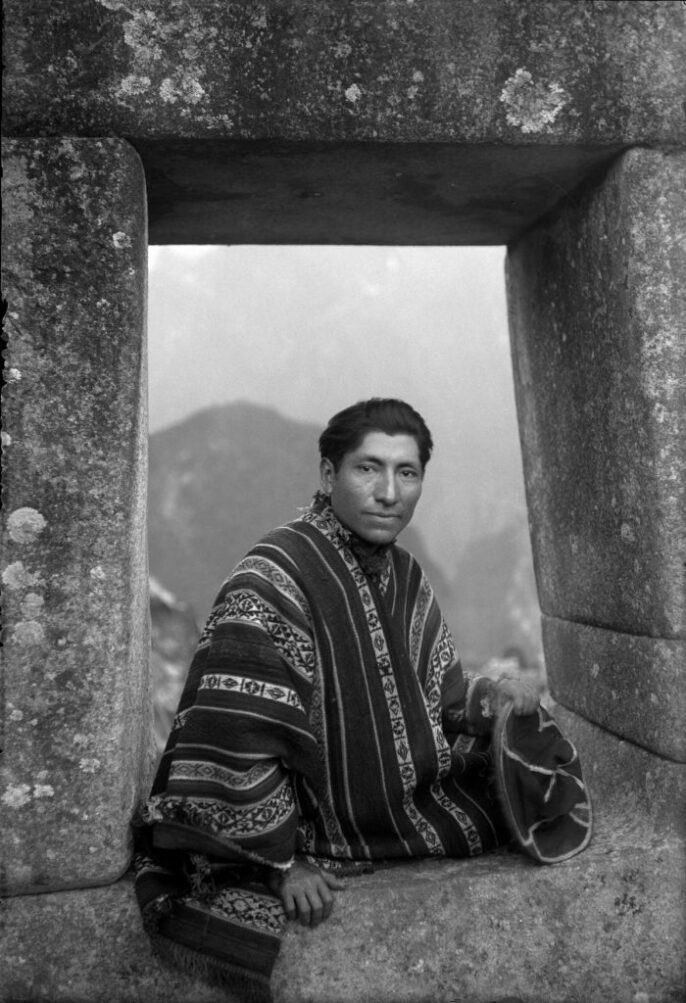
Mountains, archaeological complexes, streets, valleys, stone architecture, and Machu Picchu appear repeatedly throughout his work. Yet his landscapes are rarely empty exercises in picturesque beauty.
They establish relationships among human beings, history, territory, and scale.
For Chambi, the Andes is not background.
It is an actor.
The landscape carries memory.
Mountains contain social and spiritual histories. Archaeological architecture makes previous civilizations materially present. Roads reveal modernization. Agricultural land speaks of labor. Cities reveal layers of Indigenous, colonial, republican, and modern history occupying the same physical territory.
Landscape therefore becomes a form of historical consciousness.
The extraordinary control of tonal range and light found throughout Chambi’s photography further intensifies this relationship. Light does not simply illuminate the Andes; it articulates its surfaces, distances, architectures, bodies, and atmospheres.
Chambi understood photography at its most elemental:
writing with light.
But his light also writes history.
The Archive as a Second Artwork
Perhaps one of Chambi’s greatest creations is not a single photograph.
It is the archive.
The surviving collection contains more than 40,000 negatives, hundreds of vintage prints, albums, cameras, personal documents, notebooks containing chemical formulas, press clippings, magazines, and other materials accumulated across decades. Chambi himself preserved this material and communicated its importance to his family; subsequent generations continued that work.
This changes how we should think about his artistic consciousness.
An archive implies a relationship to the future.
The photographer takes a photograph in the present.
The archivist understands that somebody not yet born may need to see it.
Chambi was both.
Photography arrests time, but the archive extends time.
The negative remains latent, capable of producing another image years or generations later. In this sense, every preserved negative contains a future viewer inside it.
Today, that future has arrived.
The preservation and digitization of the archive are allowing researchers and audiences to encounter images that remained unseen for decades. The current exhibition CHAMBI. History, Craft, Archive and Legacy, organized by the Centro Cultural Inca Garcilaso with the Martín Chambi Association and curated by Peruska Chambi and Karen Bernedo, presents almost 200 photographs, many previously unpublished. It is open in Lima through September 6, 2026.
The exhibition’s four concepts—history, craft, archive, and legacy—are particularly appropriate because they reveal that Chambi cannot be understood through iconic photographs alone.
His real artwork is cumulative.
It is a visual ecosystem.
From Cusco to the History of World Photography
Chambi received recognition during his lifetime, but his international position expanded dramatically after his death. In 1979, the Museum of Modern Art in New York presented Projects: Martín Chambi and Edward Ranney. MoMA today holds and presents numerous Chambi works within its history of modern photography.
His growing international recognition changed not merely the reputation of one photographer but the geography of photographic history.
For much of the twentieth century, canonical histories of photography were overwhelmingly organized around Europe and the United States.
Chambi makes such a geography impossible to sustain.
Modern photography was also being produced in Cusco.
And not as a provincial imitation of European modernity.
It was being used to negotiate questions that remain central to visual culture today:
Who represents whom?
Who controls the archive?
Who possesses the right to define a culture visually?
Can documentary photography simultaneously function as art?
How can marginalized communities enter visual history without becoming ethnographic objects?
What happens when the subject historically observed by the camera becomes the author behind it?
These questions make Chambi not merely historically significant.
They make him contemporary.
“My People Speak Through My Photographs”
One photograph disappears quickly into another in today’s visual economy.
Chambi’s photographs behave differently.
They insist on duration.
Their extraordinary technical precision first attracts the eye: the luminosity of a face emerging from darkness, the architecture of a group portrait, the immensity of the Andes, the tonal richness of stone and sky.
But technical mastery alone does not explain their persistence.
Something deeper occurs.
Chambi understood that photography could make a person visible without making that person picturesque; that it could document poverty without converting poverty into spectacle; that it could photograph an elite family without surrendering to social hierarchy; that an Indigenous subject could inhabit modern photography not as anthropological evidence but as a contemporary human presence.
His photographs reveal a Peru divided by class, geography, ethnicity, and histories of colonial domination. Yet inside that divided society Chambi repeatedly establishes another visual possibility: a field in which people of radically different positions are granted photographic presence.
This does not abolish inequality.
Photography cannot do that.
But it can alter the regime of visibility through which inequality is imagined.
And that is where Chambi’s work becomes more than documentation.
It becomes philosophical.
The deepest question in his photography may ultimately be remarkably simple:
How should one human being look at another?
Martín Chambi’s answer was not written as a theoretical treatise.
He wrote it with glass negatives, silver, darkness, patience, and light.
More than a century later, those images remain alive because the people within them have not become silent historical objects.
They continue to look back at us.
And through them, as Chambi himself understood,
a people continues to speak.
Selected References
- Crow, Joanna. “Photographic Encounters: Martín Chambi, Indigeneity and Chile–Peru Relations in the Early Twentieth Century.” Journal of Latin American Studies. Cambridge University Press, published online 2018.
- Centro Cultural Inca Garcilaso / Asociación Martín Chambi. CHAMBI. Historia, oficio, archivo y legado. Exhibition catalogue, Lima, 2026.
- Museum of Modern Art, New York. “Martín Chambi.” Collection and exhibition records.
- Spitta, Silvia. Out of the Archive and Into the Streets: El Cusco de Martín Chambi. Hemispheric Institute Digital Publishing.
- Archivo Fotográfico Martín Chambi / Asociación Martín Chambi. Institutional biography and archive.